What happens when air pressure changes? How do warm and cold air move? And can you really make snow indoors?
Third-grade students have been exploring these questions and more in the science lab as they investigate the forces behind weather and changes in our atmosphere.
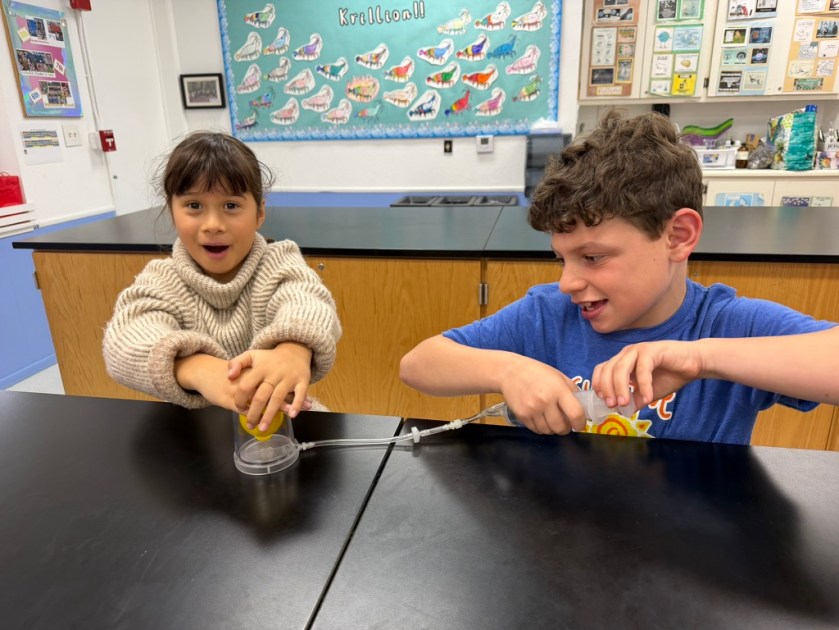
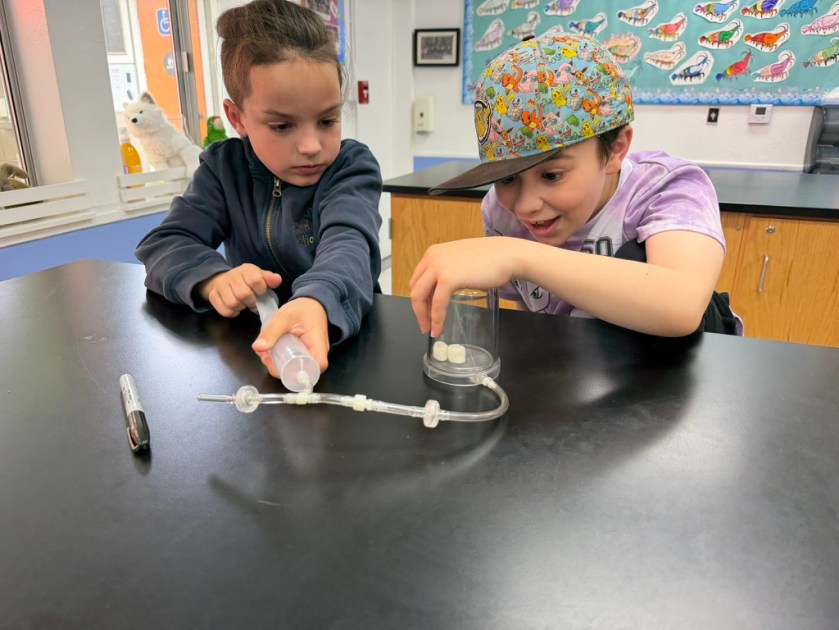
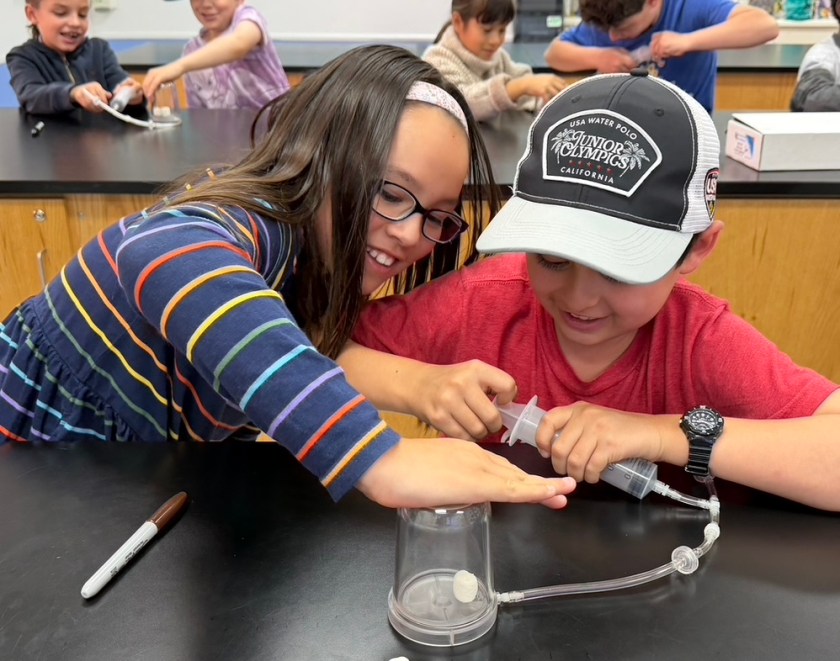
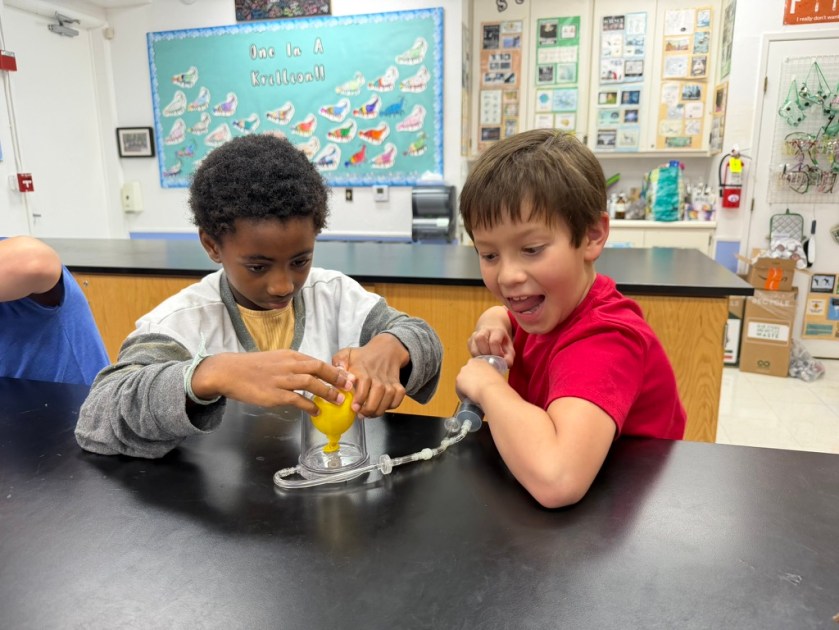
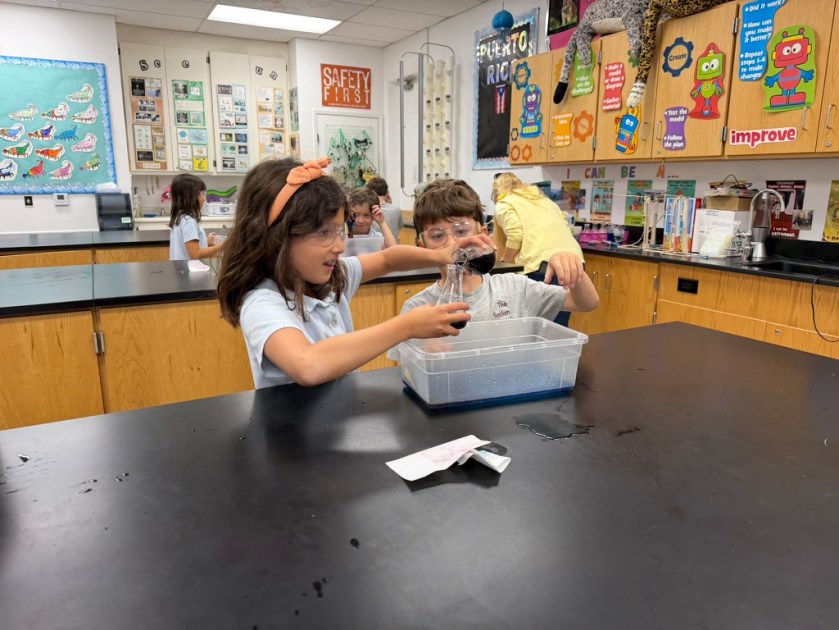
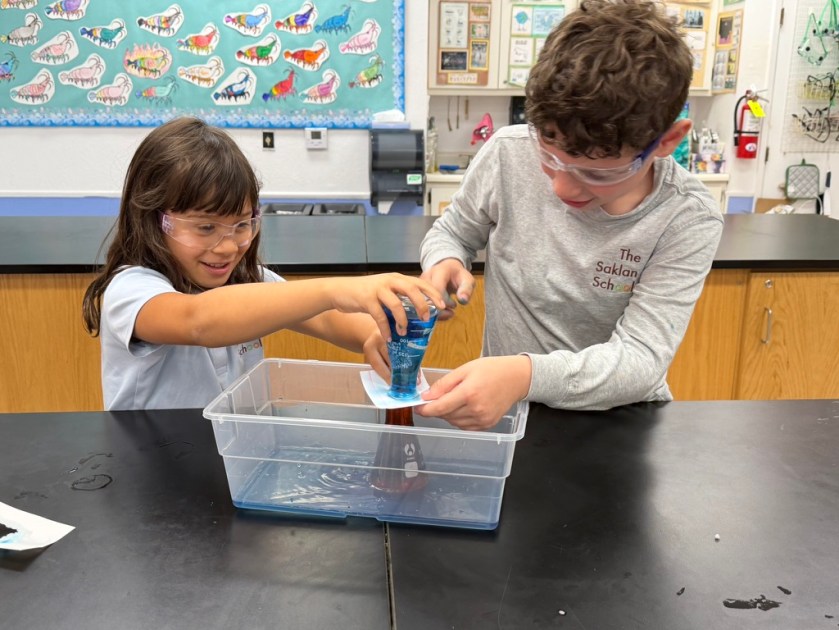
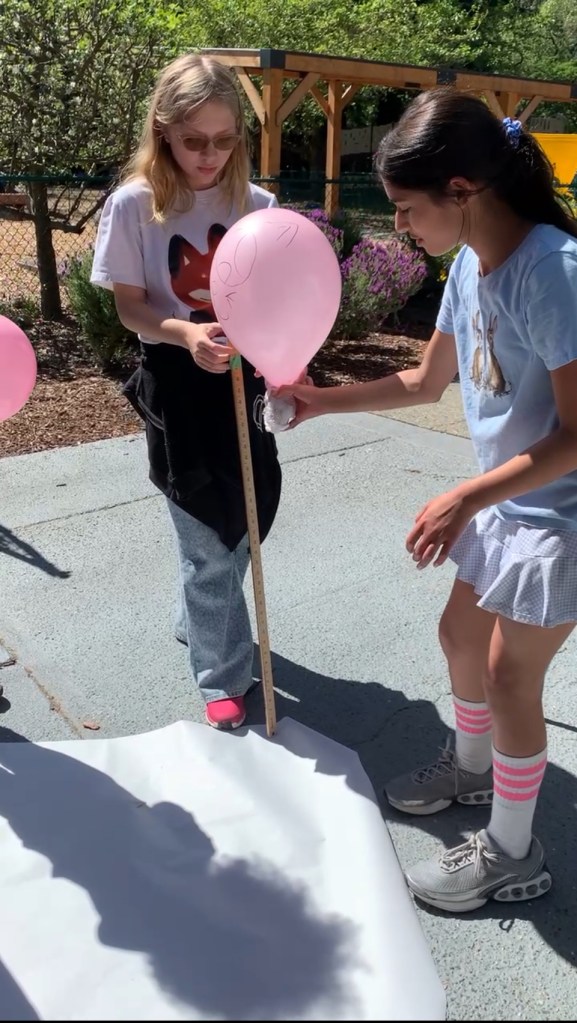
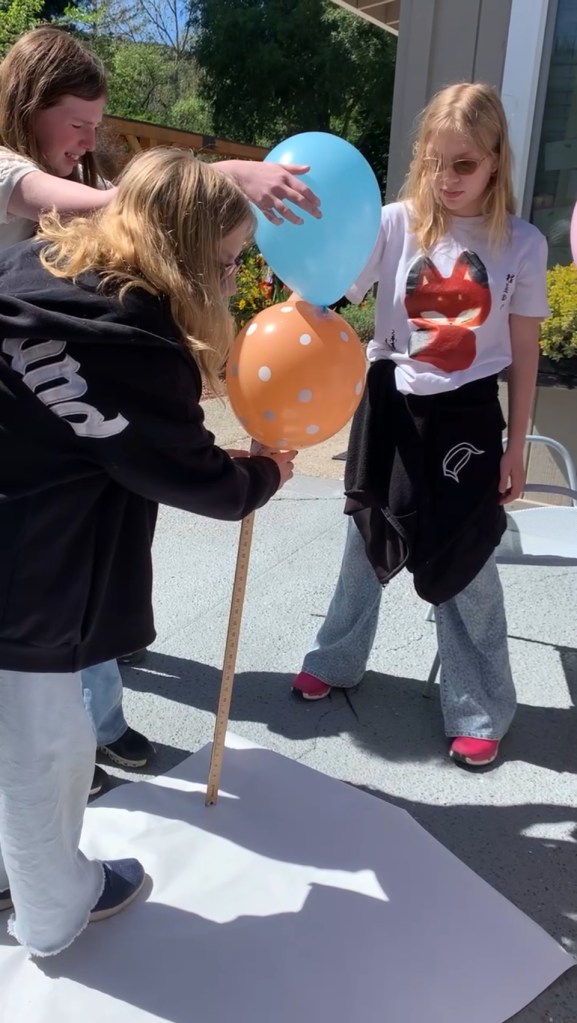
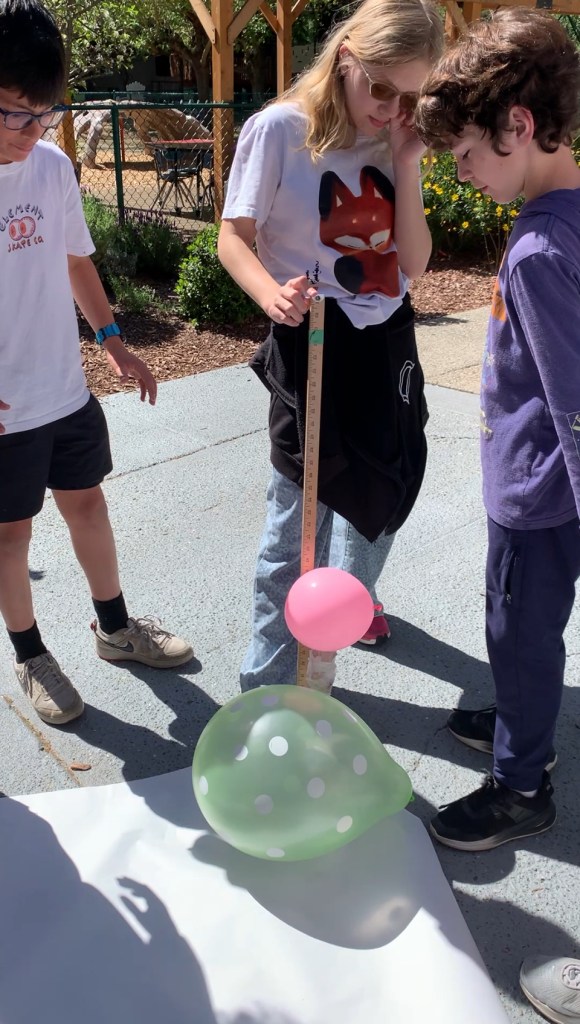
Over three weeks, students conducted hands-on experiments that made these concepts come to life. They watched balloons expand and marshmallows shrink as they explored the effects of air pressure. Using beakers filled with hot and cold colored water, they observed convection currents and saw how temperature differences cause air and fluids to move.
The weather investigations didn’t stop there. Students even made snow indoors and explored different types of clouds, creating cloud collages to capture and demonstrate what they learned.
Through each experiment, students asked questions, made observations, and used evidence to understand the science behind the weather they experience every day.
For these young scientists, learning about weather isn’t just something they read about; it’s something they can see, touch, test, and discover for themselves.
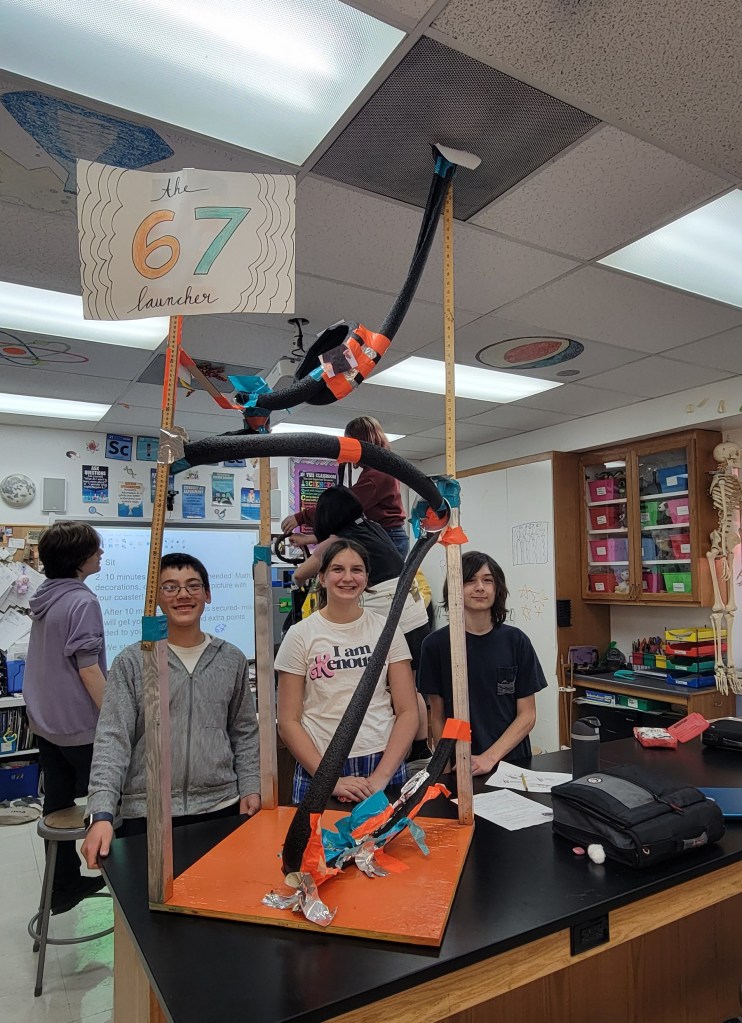
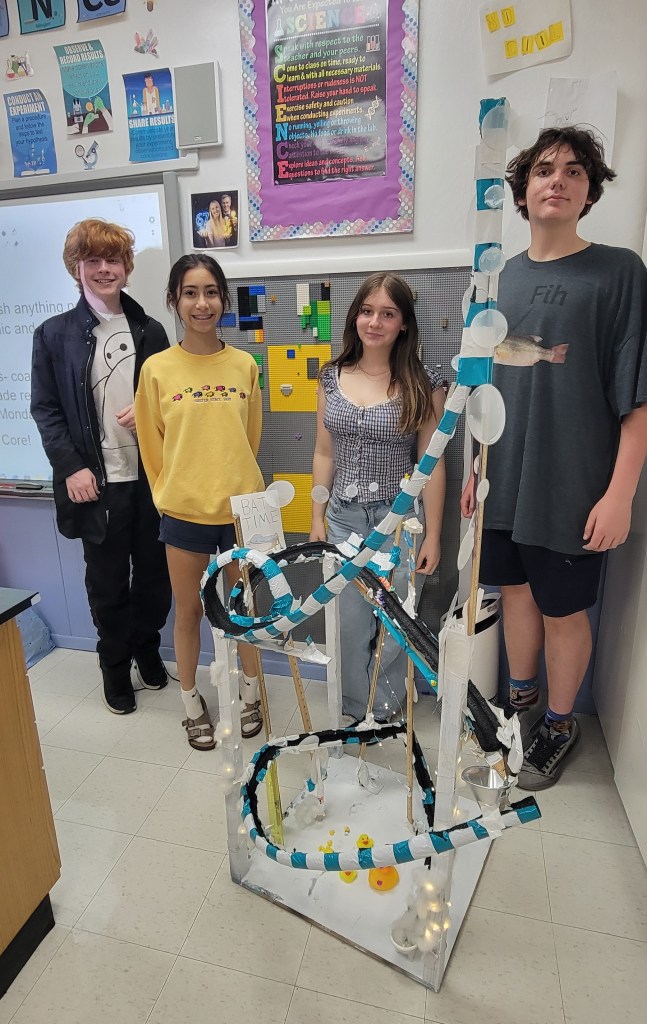
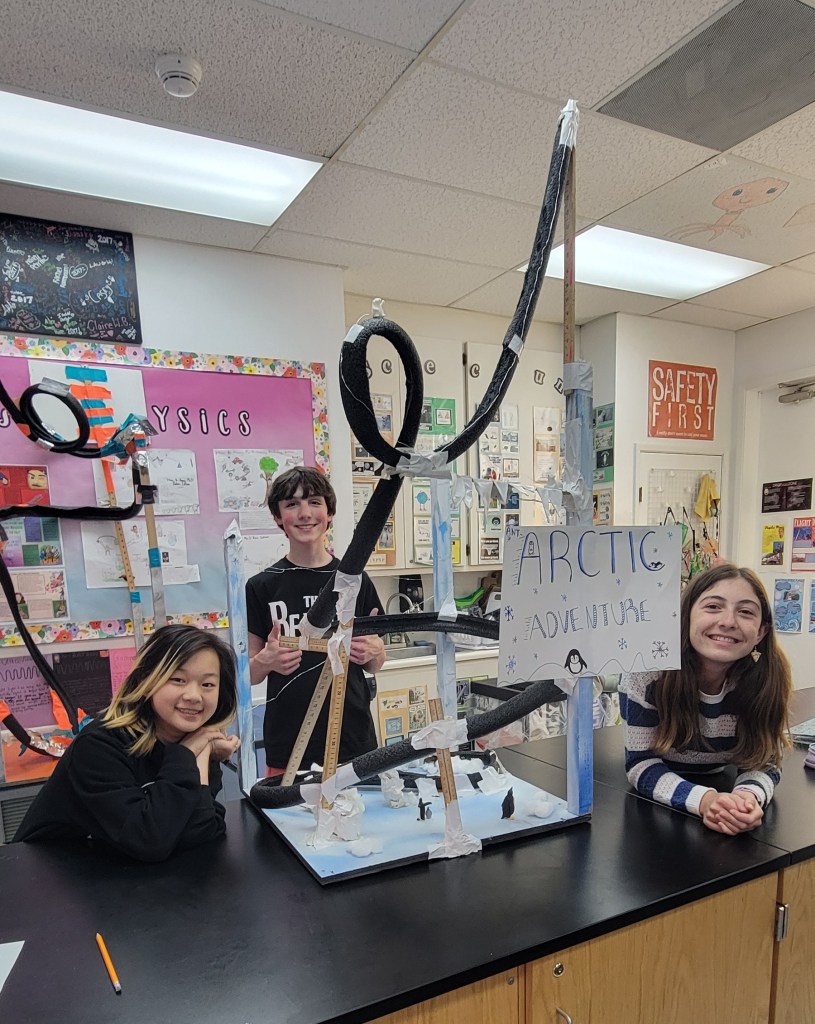
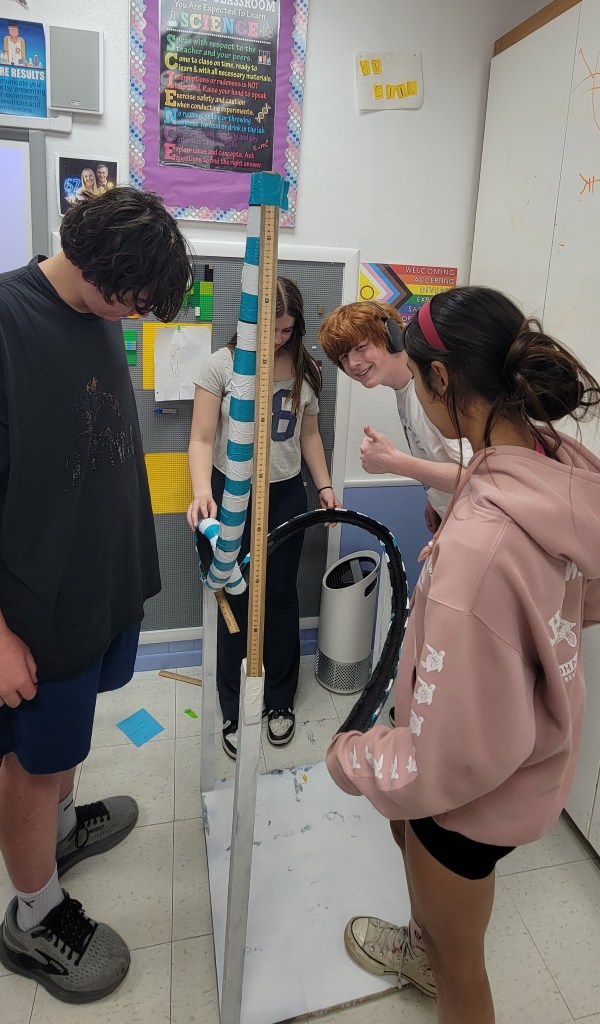
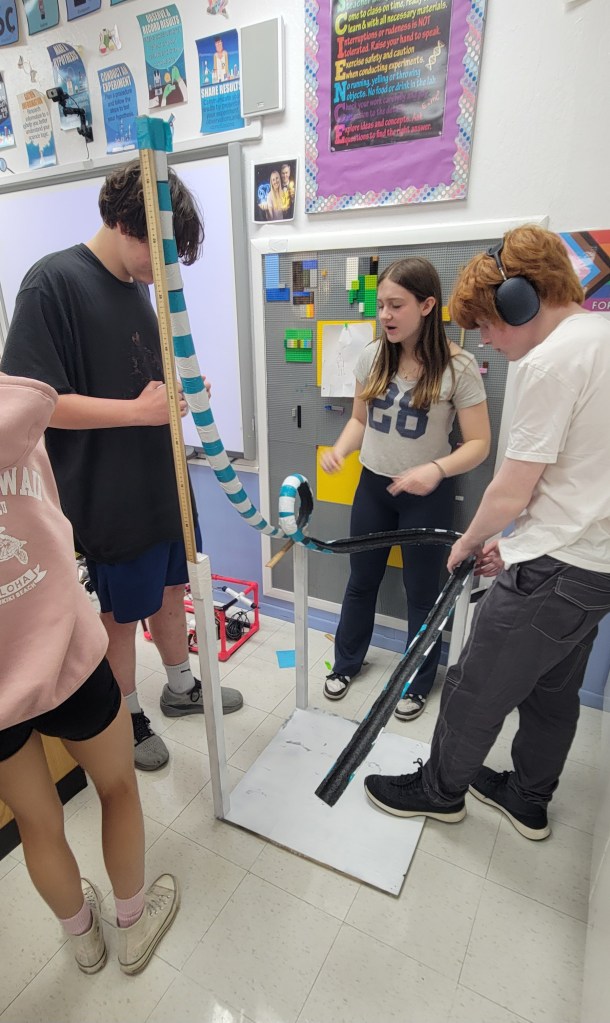
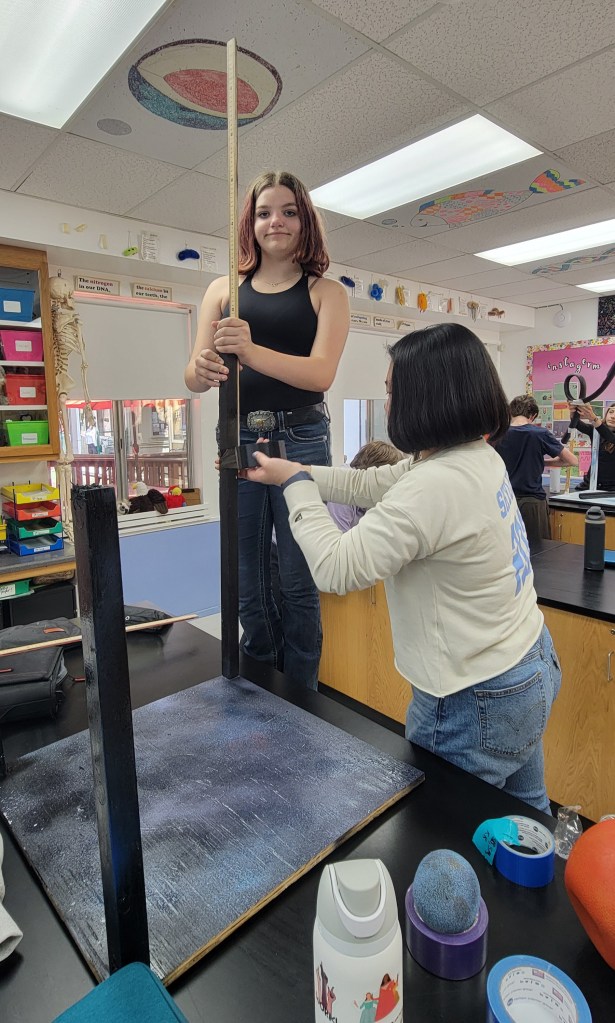
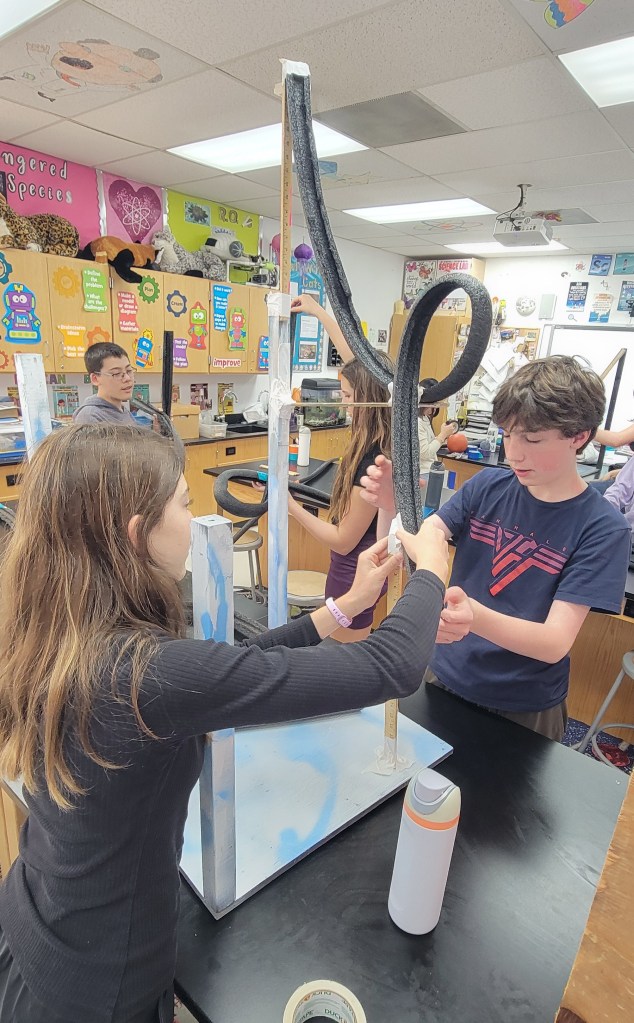
The end of the year in Saklan’s eighth grade physics class is filled with hands-on science, engineering, and problem-solving. As the culmination of their physics studies, students recently worked in teams to design and build their own roller coasters for marbles to ride.
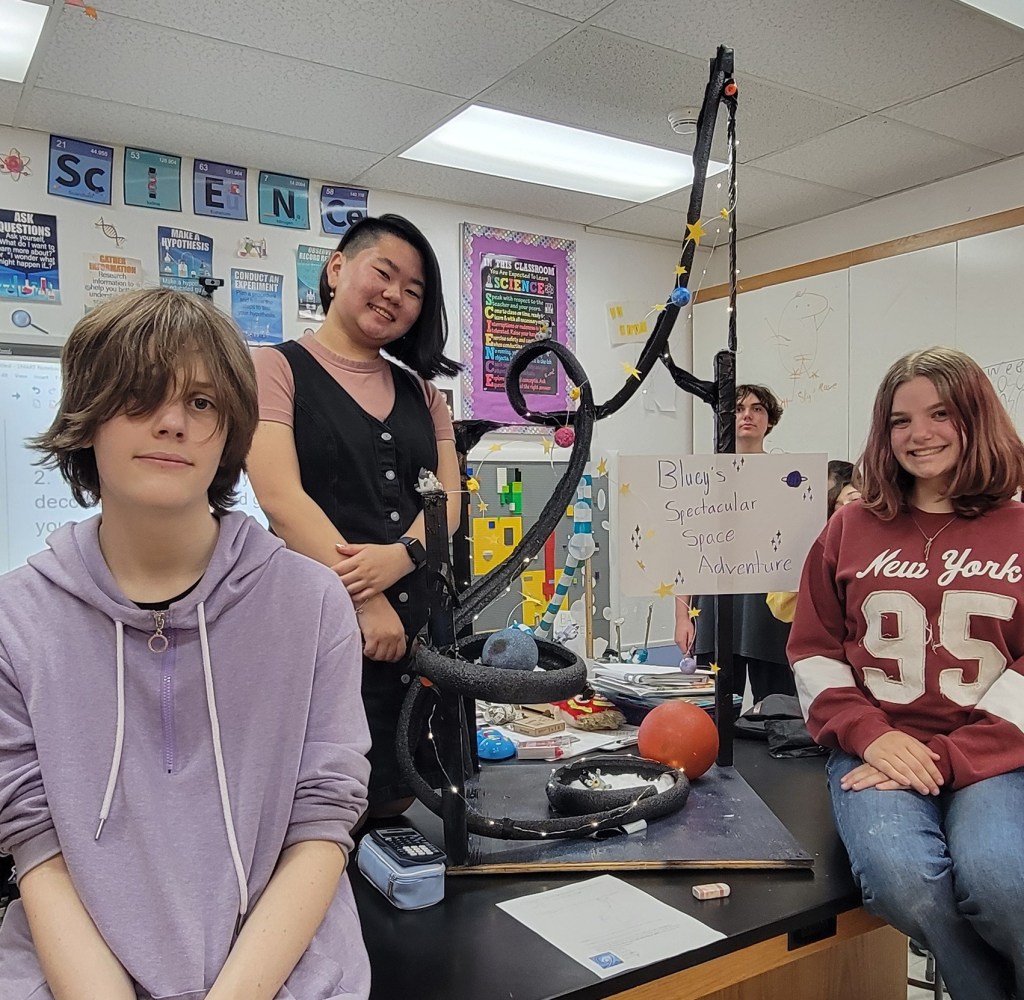
Each group created an eight-foot-long coaster that incorporated the major physics concepts they studied throughout the year, including force, momentum, motion, and energy transfer. To meet the project requirements, every coaster needed to include at least one loop, a slow-down stop, and creative decorations inspired by the themed roller coasters found at amusement parks.
Throughout the project, students relied on creativity, collaboration, math skills, and the scientific method as they designed, tested, redesigned, and refined their creations. Groups analyzed what worked, identified challenges, made adjustments, and in some cases started over entirely before successfully completing their final designs.
The project challenged students to apply their understanding of the four forces studied in class while ensuring their coaster had enough momentum to complete a loop and safely guide the marble to a stop. More importantly, it gave students the opportunity to experience physics in action through experimentation, teamwork, and hands-on learning.
The final roller coasters showcased not only impressive engineering and creativity, but also the persistence and problem-solving skills students developed throughout the process.
As part of their Earth Science studies, sixth grade students have been exploring how pests and invasive species impact ecosystems. One focus has been the Crown-of-Thorns (COT) sea star, a species currently threatening the Great Barrier Reef. Students learned how the sea star’s rapid reproduction and lack of natural predators have led to significant damage in this delicate ecosystem. By feeding on coral, COTs are contributing to the reef’s decline at an alarming rate.
To better understand real-world solutions, students investigated how scientists are responding to this challenge. They explored using Remotely Operated Vehicles (ROVs) to identify and inject vinegar into sea stars, a method that effectively eliminates them. These ROVs can operate continuously and in a variety of ocean conditions, making them a powerful tool for conservation efforts.
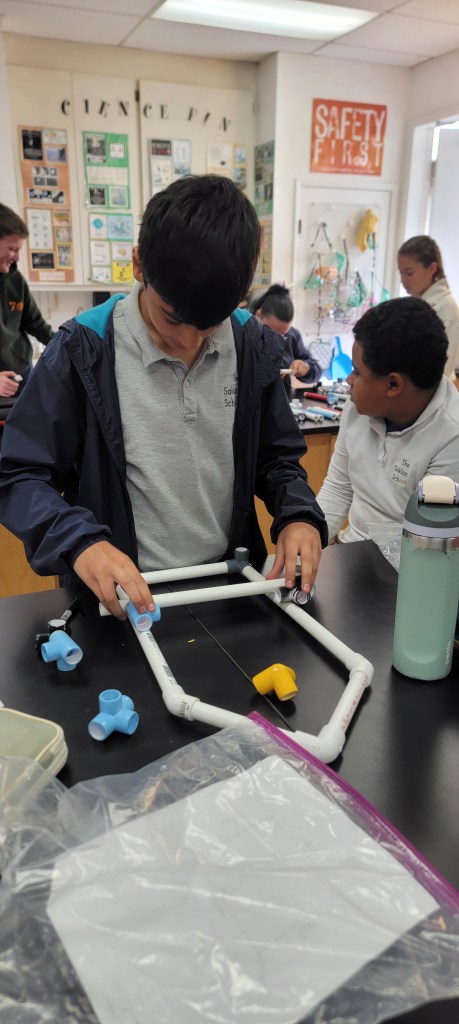
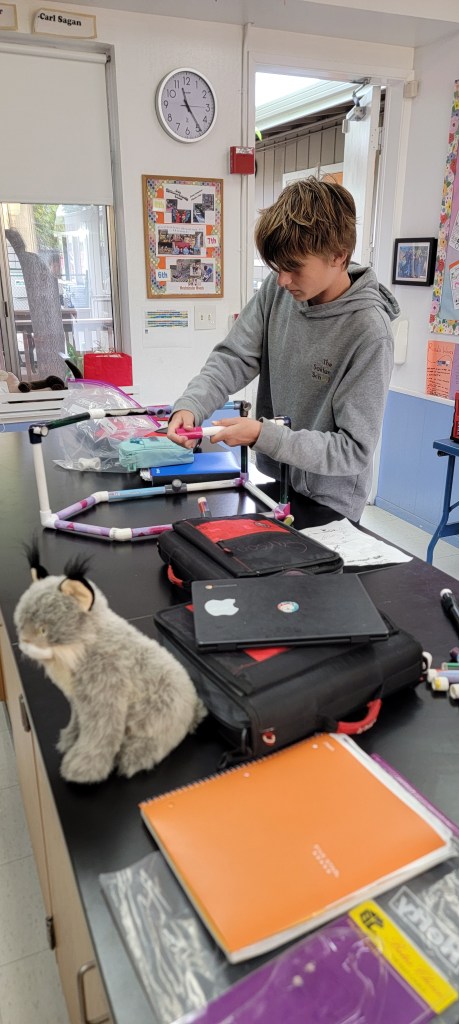
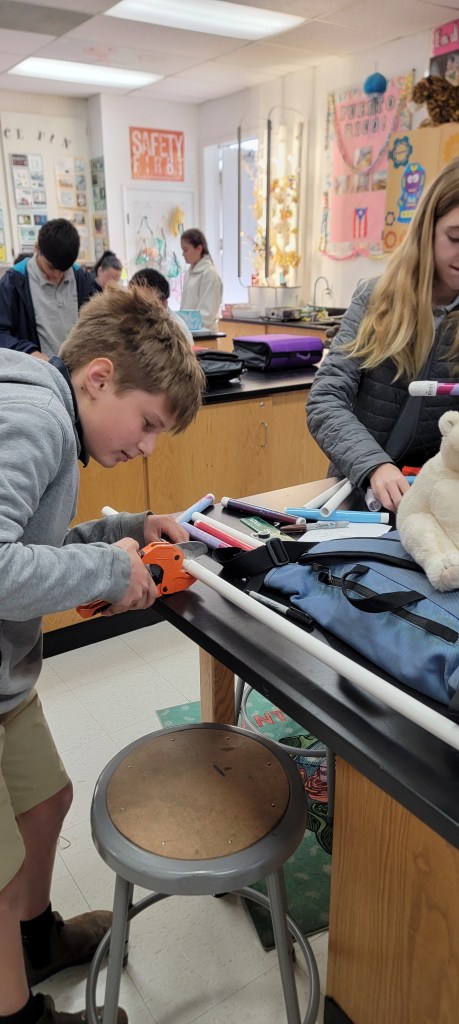
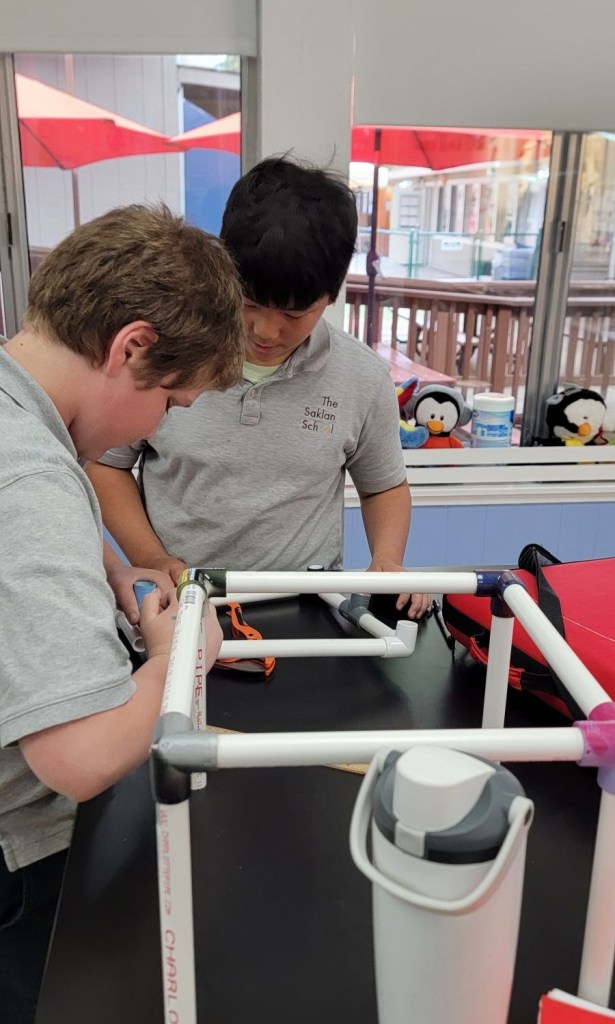
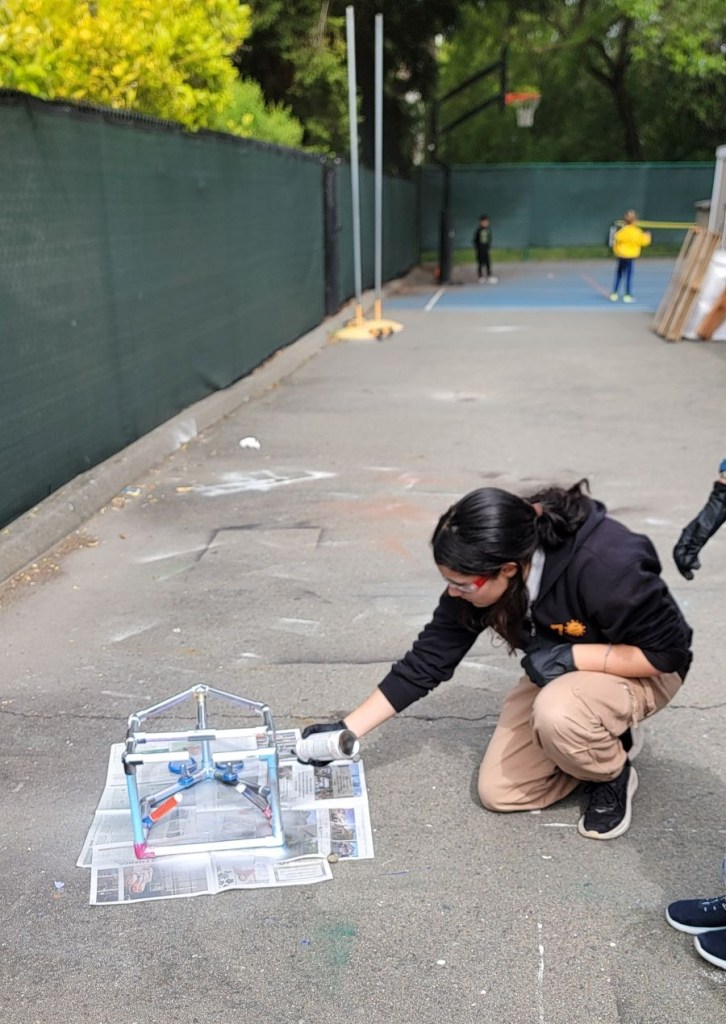
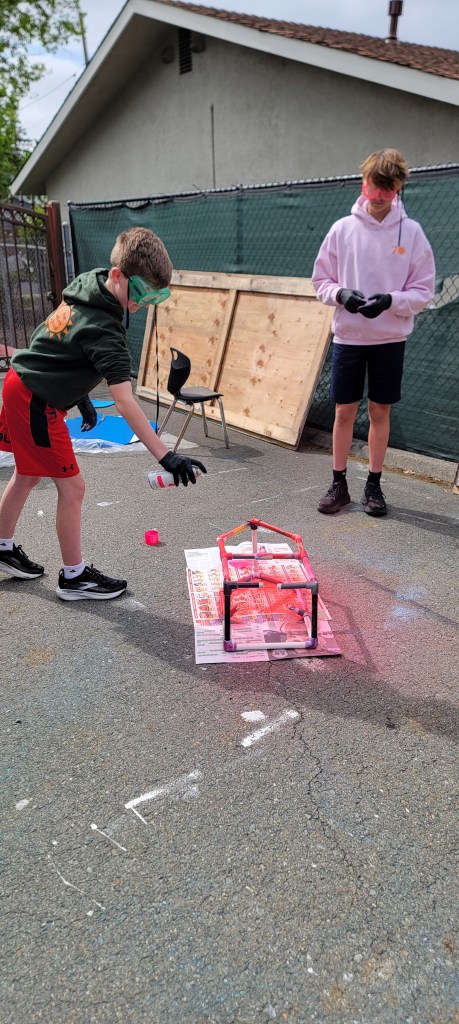
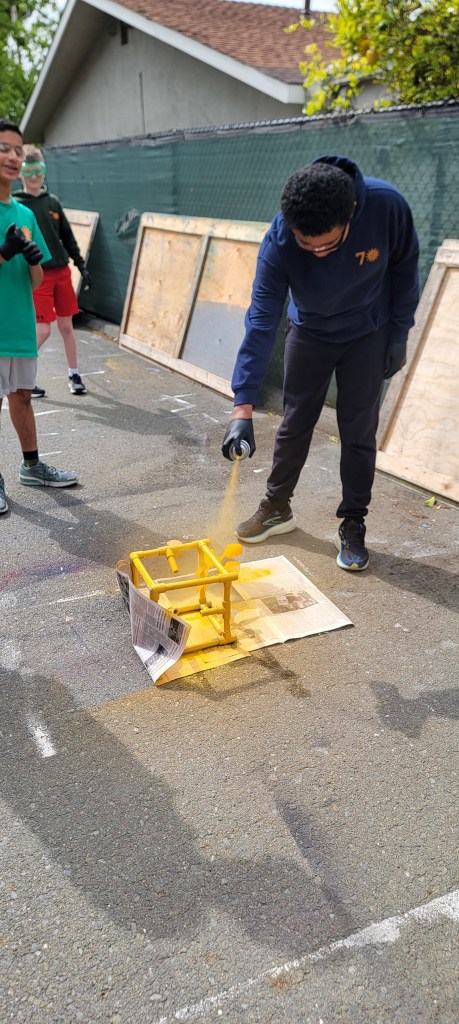
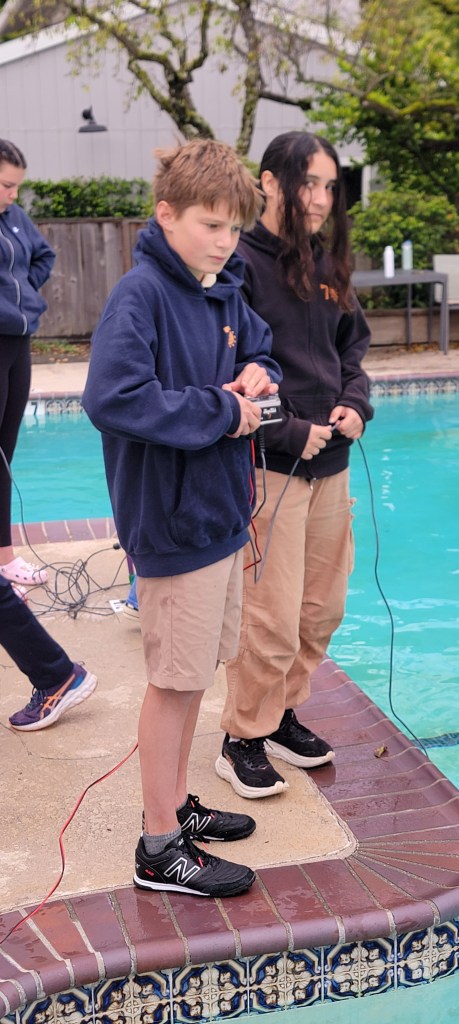
Bringing this learning to life, students worked collaboratively to design and build their own ROVs. Teams engineered frames, installed motors, learned to operate control systems, and added creative design features as they stepped into the roles of engineers and marine scientists.
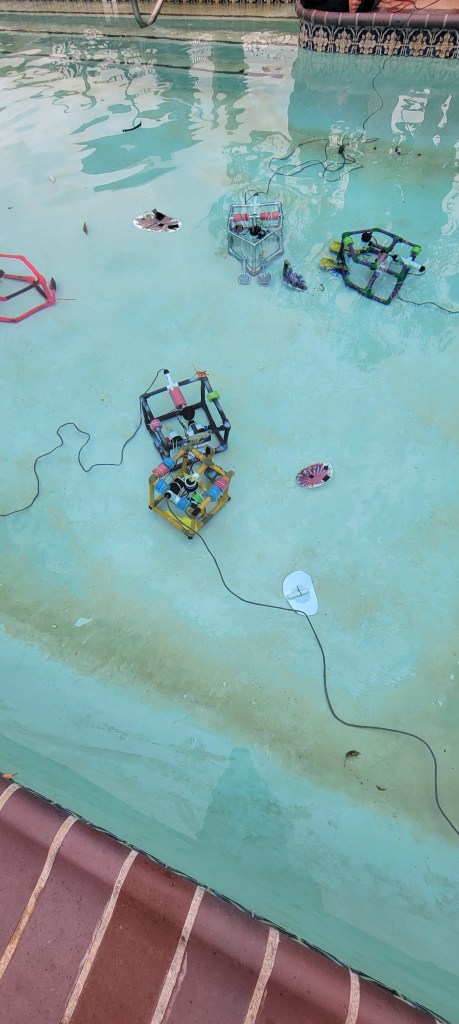
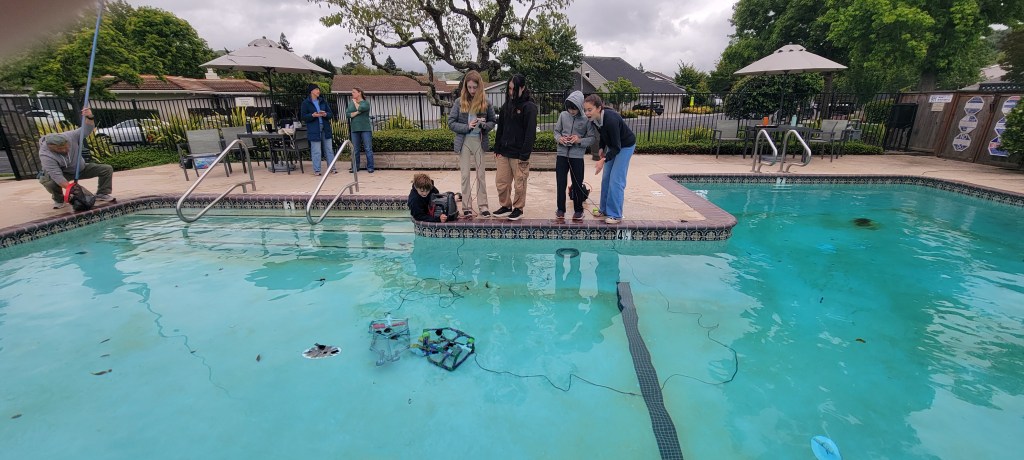
On Tuesday, students put their designs to the test at the MCC Augusta Pool. Their challenge was to navigate their ROVs underwater and retrieve imitation Crown-of-Thorns sea stars, simulating the work of marine conservation teams on the Great Barrier Reef.
Students spent the first part of the session learning to maneuver their ROVs and coordinate as teams. Once they became comfortable operating the controls, teachers released the imitation COT sea stars into the pool for retrieval.
Armed with creative retrieval tools such as shovels, Velcro, and scoops, teams worked together to collect the sea stars from the bottom of the pool. By the end of the challenge, the class had successfully retrieved a record 38 Crown-of-Thorns sea stars.
This hands-on experience allowed students the opportunity to fully engage in the engineering design process while tackling a real-world environmental issue. Through collaboration, problem-solving, and innovation, students saw firsthand how science and technology can be used to protect ecosystems and make a meaningful impact on the world around them.
What does it look like when students take what they know about the brain and use it to help others? That question came to life as our fifth graders stepped into the heart of their project work.
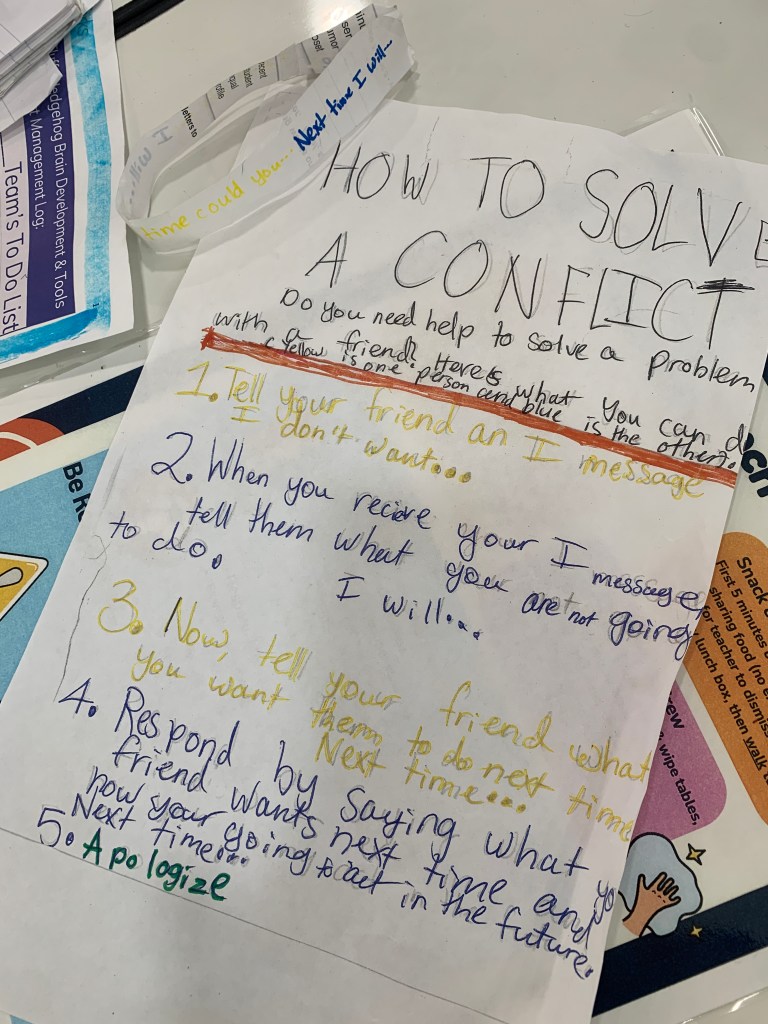
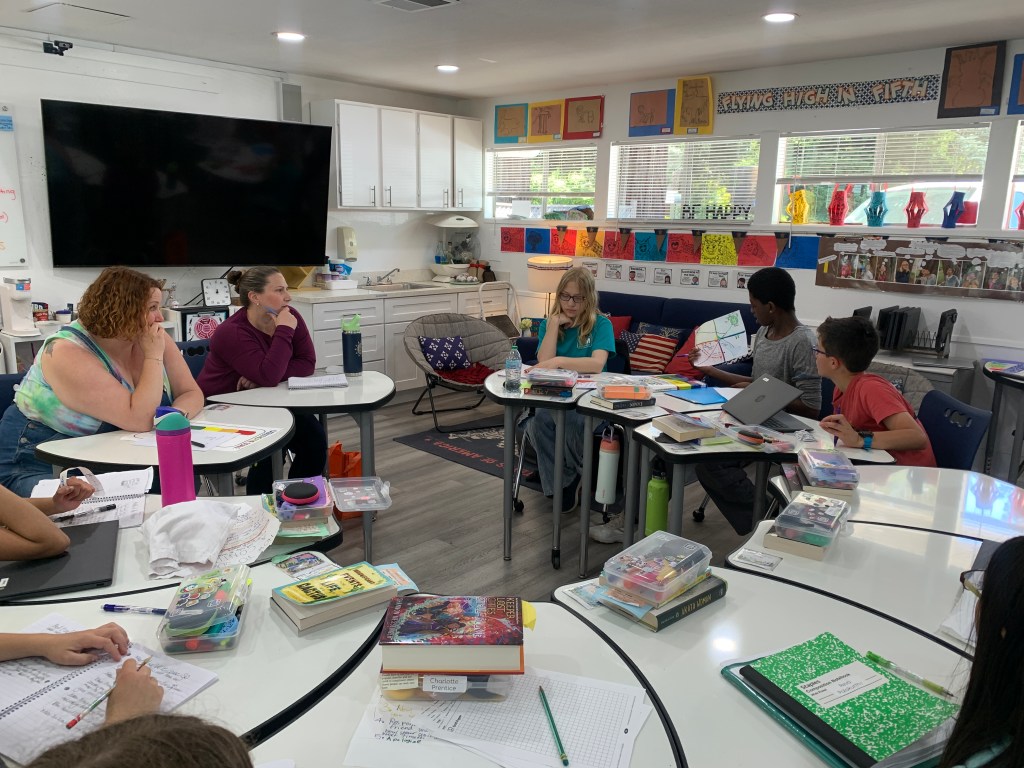
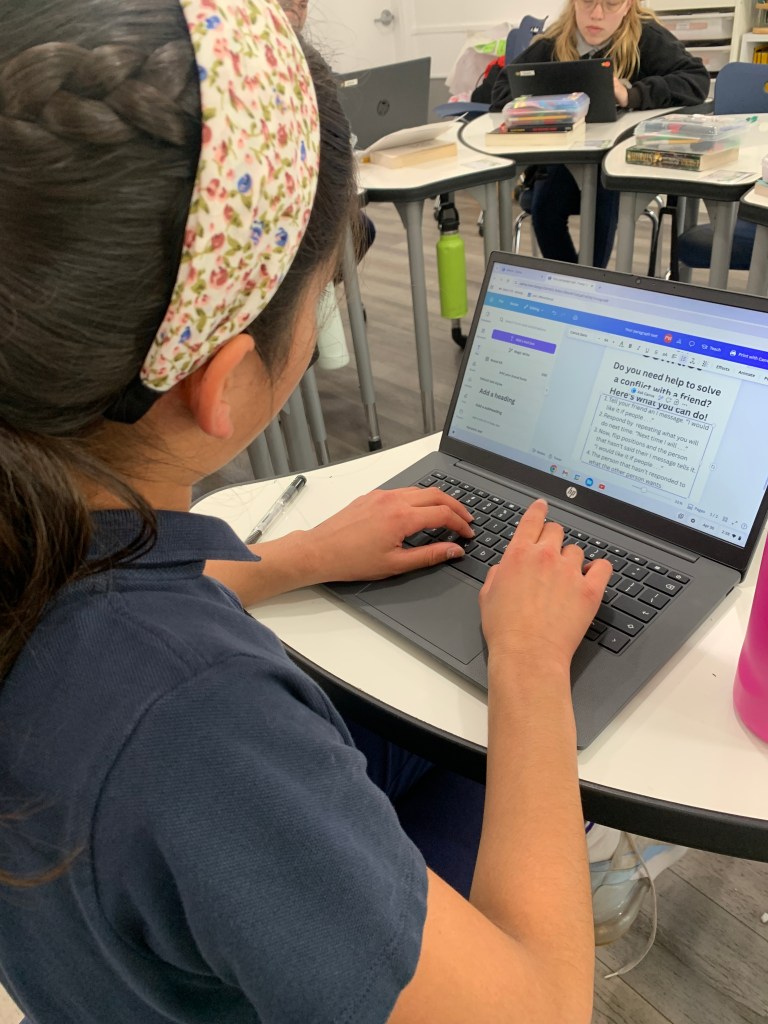
Building on their recent brain science studies, students are now applying their understanding of how the brain interprets, reacts, and sometimes gets it wrong to design tools that help people better understand and manage emotions and relationships. Working in three teams, they are focused on self-awareness (naming feelings), self-regulation (calming tools), and connection (conflict resolution, active listening, and problem-solving). Each team is designing visual teaching tools and co-creating stories that show characters using the strategies, and younger students will soon get to help shape key elements.
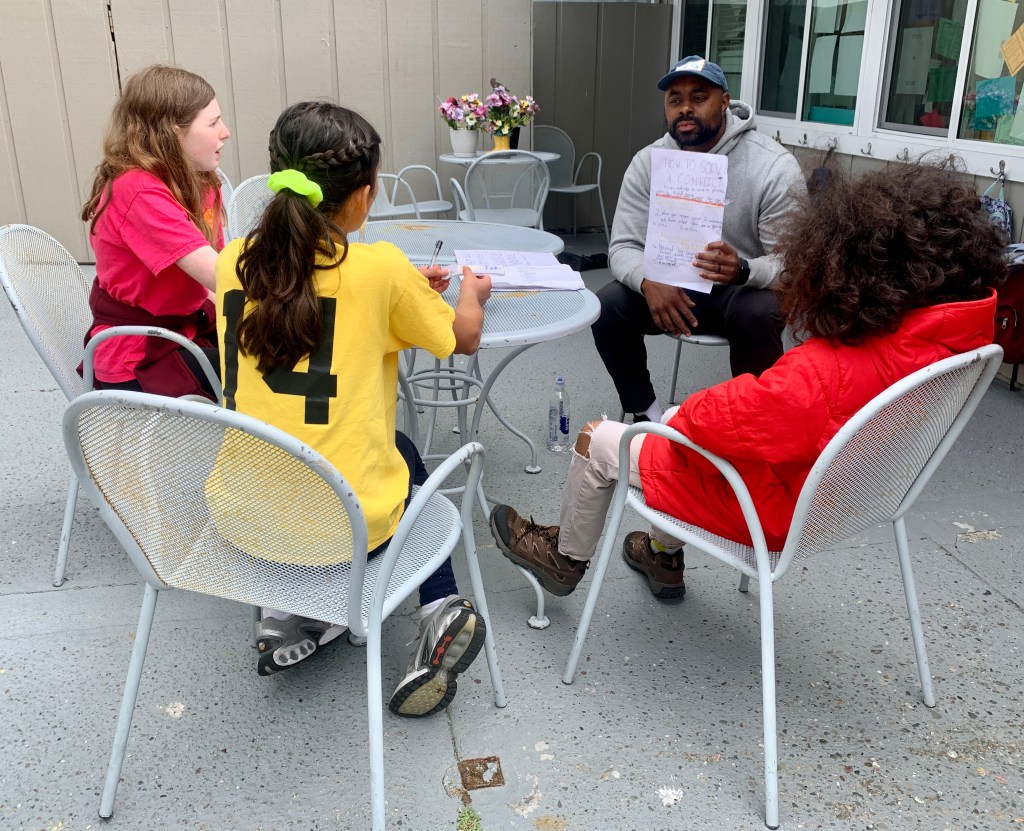
Last week, teams presented their prototypes and story drafts to guest experts who support children every day. Riva and Emily joined the self-regulation team, bringing calming tools for students to test. Annette and Coach Rob shared their Peace Talks training and Conflict Corner guidelines with the connection team, and Peta supported the self-awareness team in refining their tools using Zones of Regulation strategies.
Students listened carefully, asked thoughtful questions, and immediately began refining their work.
One fifth grader captured the spirit of the project perfectly:
“We have a voice in project work. We made a real impact on the Redwood Grove earlier this year, and now we’re doing something that can help people understand their emotions and relationships. I like knowing our work matters.”
Families are invited to see this important work in action at CLAS on May 15, when fifth graders will present their projects and share the impact of their learning.
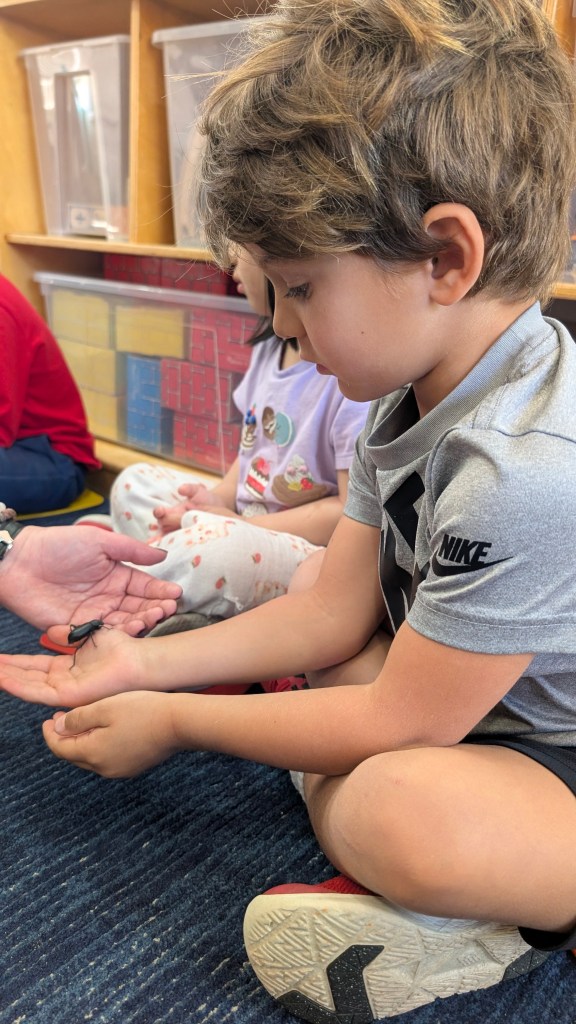
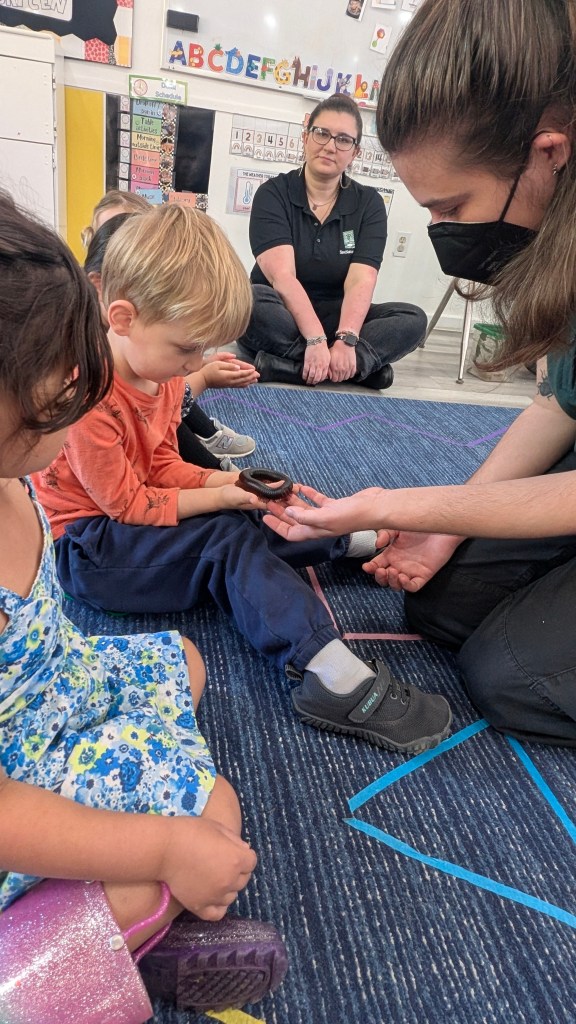
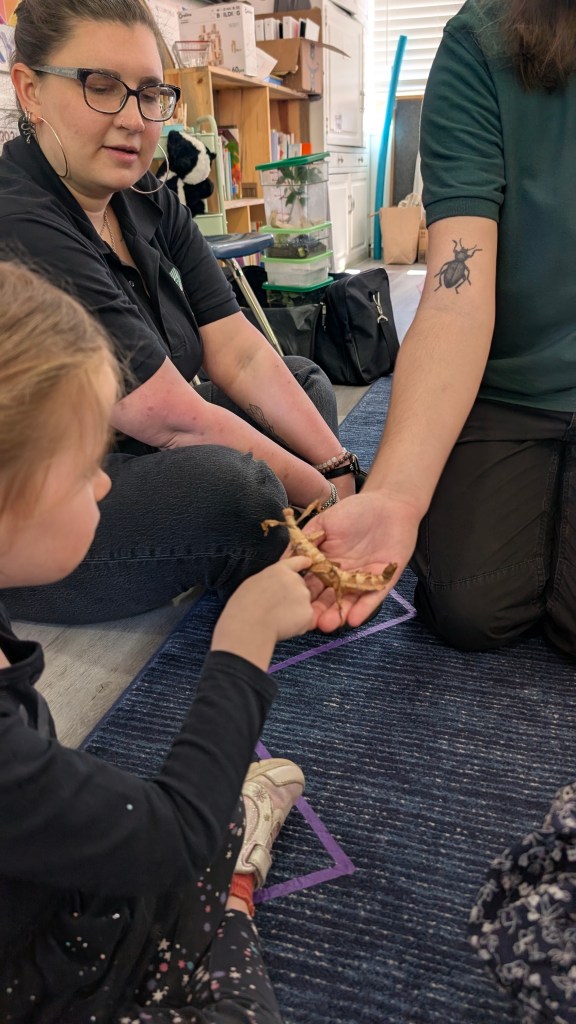
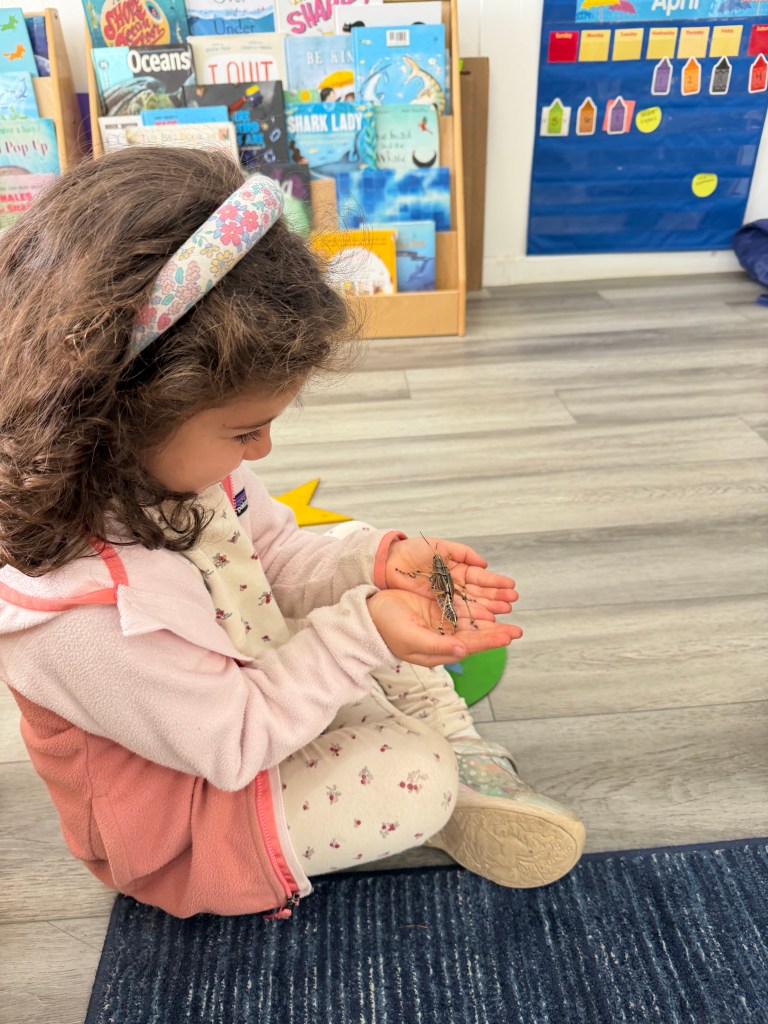
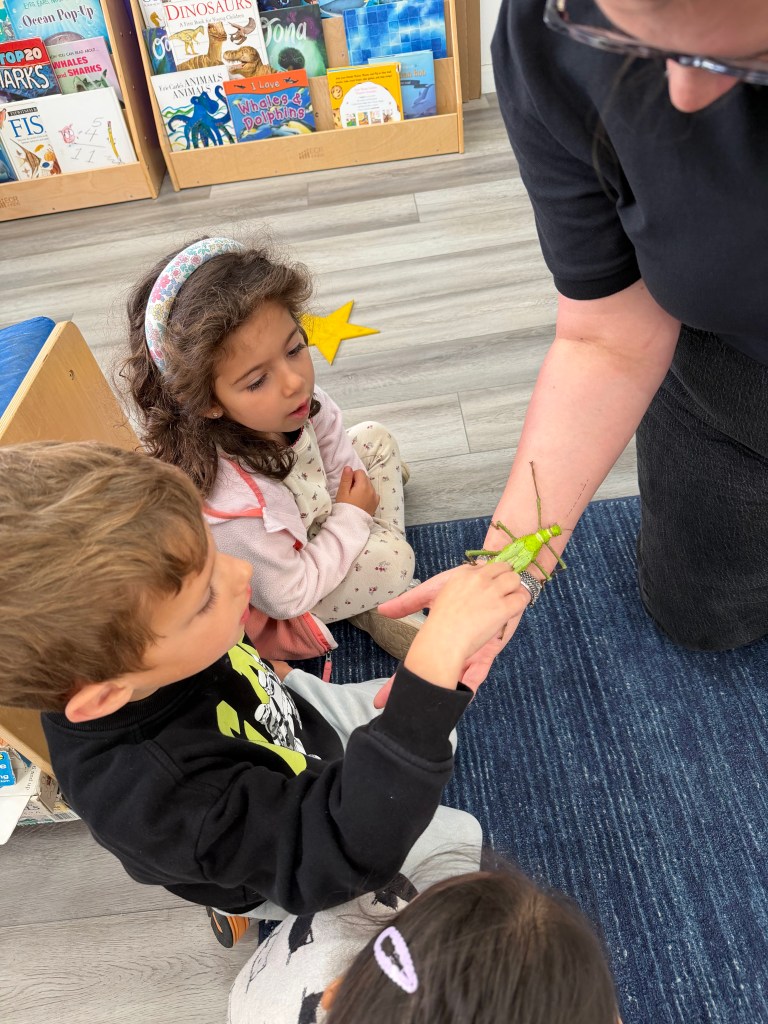
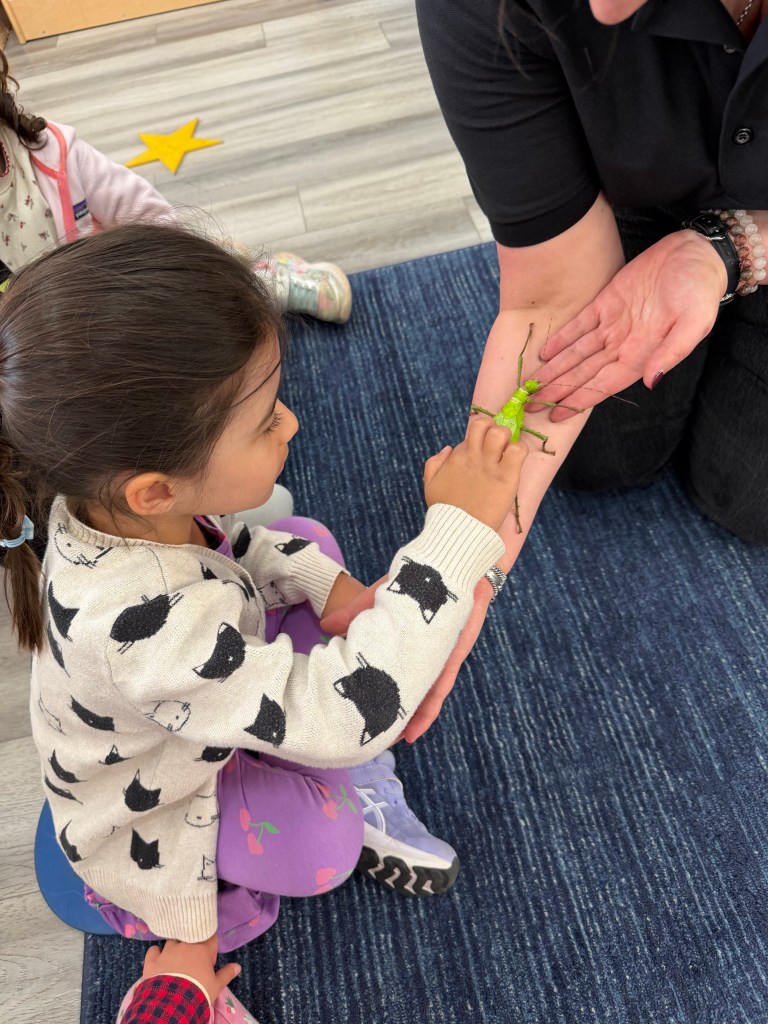
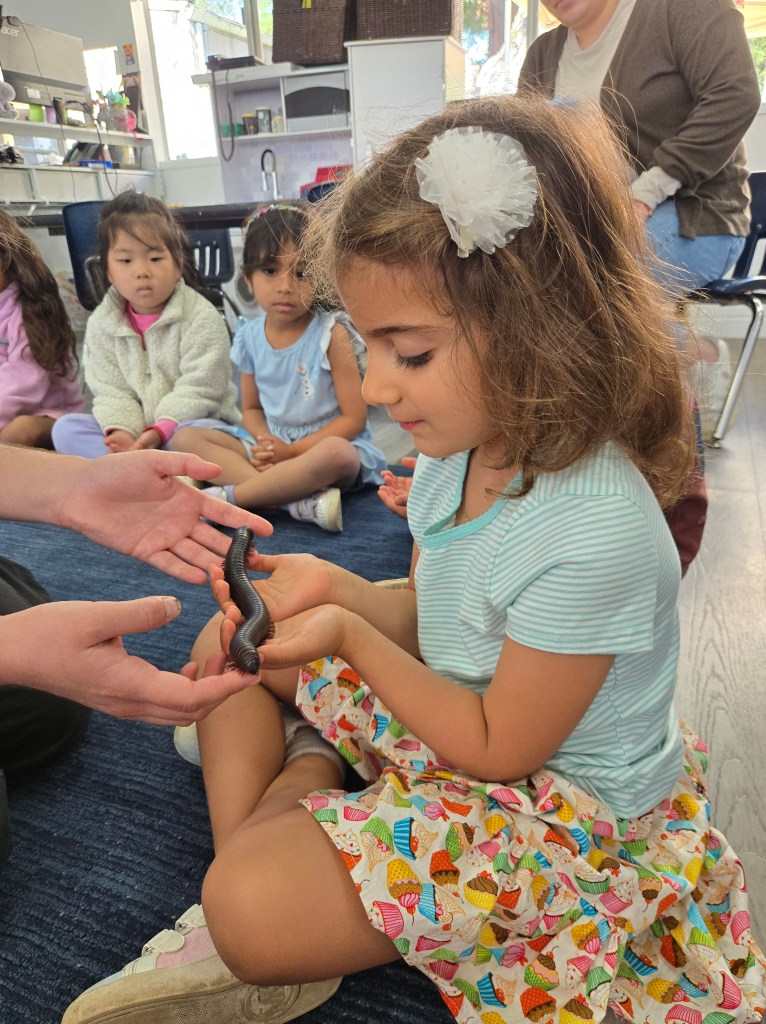
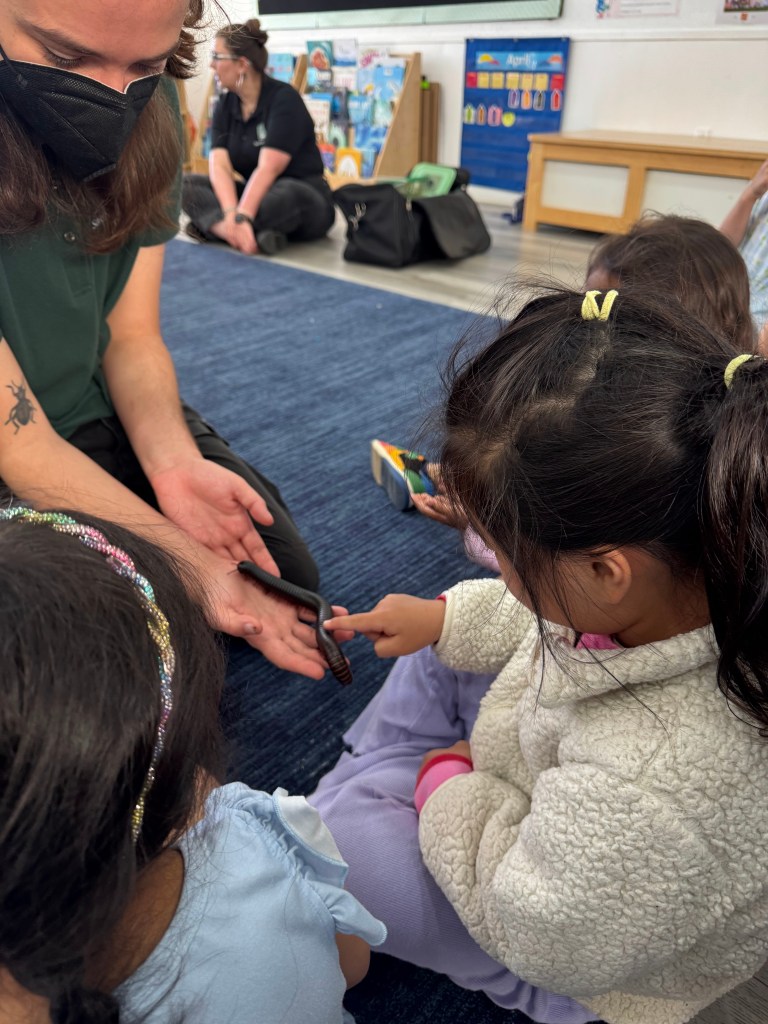
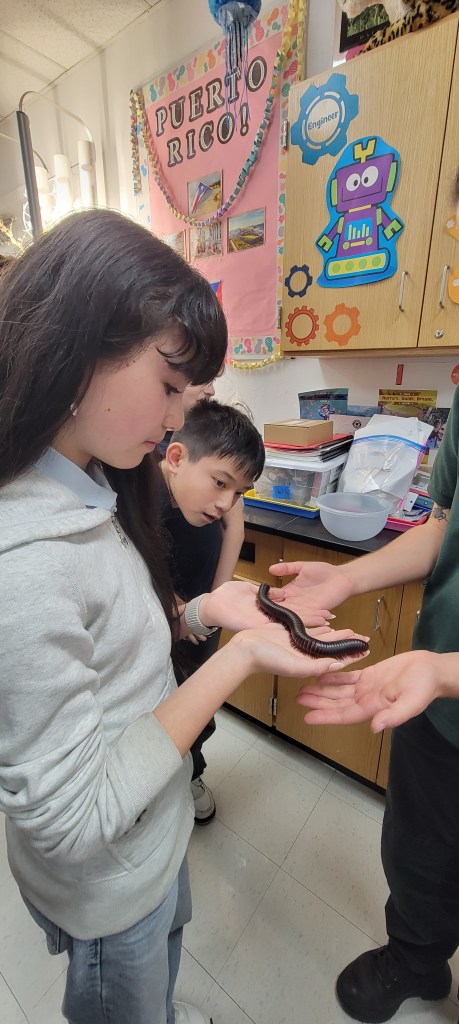
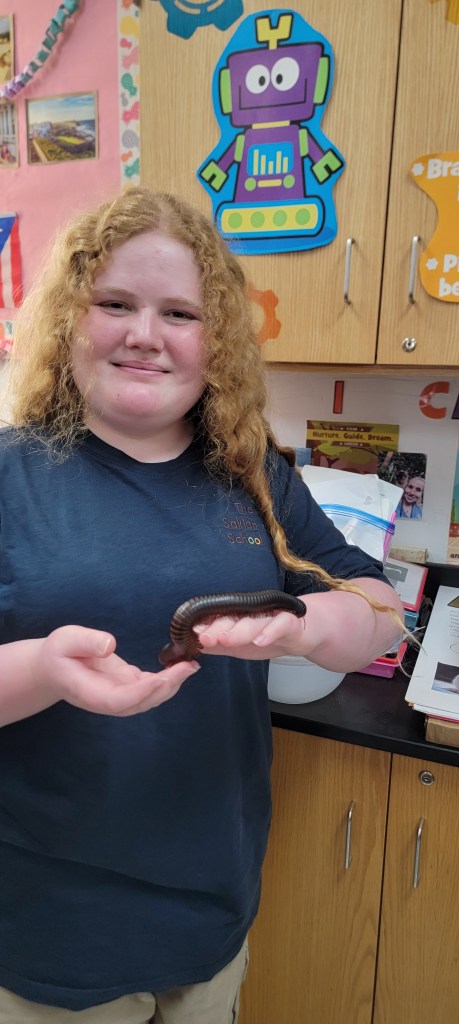
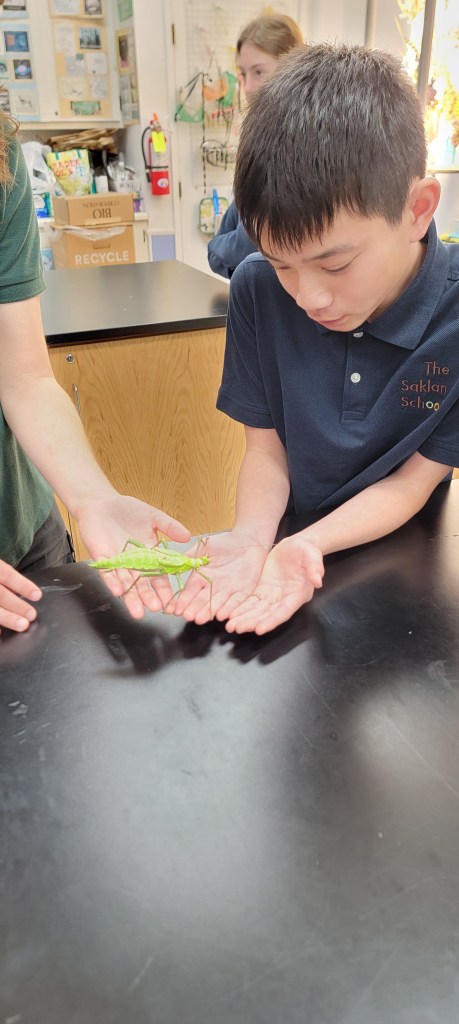
Students across multiple grade levels at Saklan recently had a hands-on encounter with the fascinating world of arthropods, thanks to a special visit from guest experts from SaveNature.org.
Preschool, Pre-K, and seventh-grade students all took part in this engaging learning experience, exploring how different arthropods survive and thrive in their environments. The visiting experts introduced students to key concepts such as camouflage, defense mechanisms, and adaptation, bringing science to life in memorable ways.
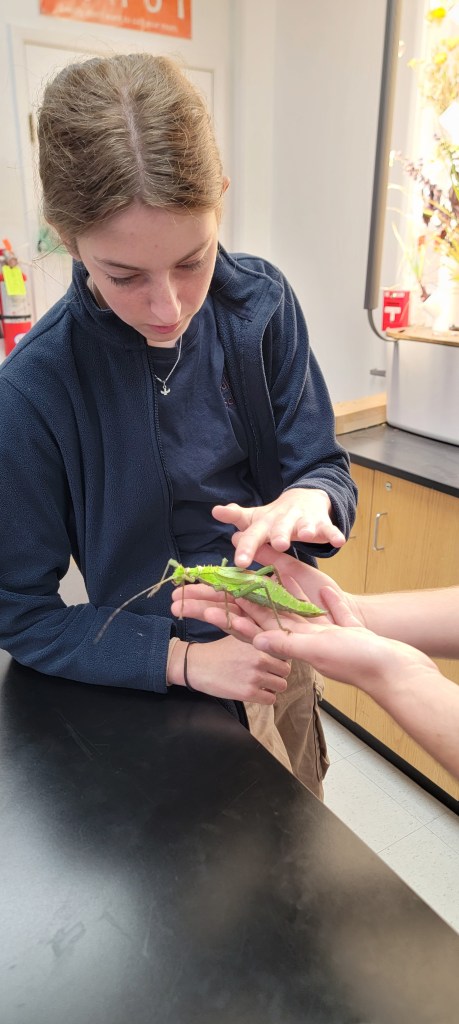
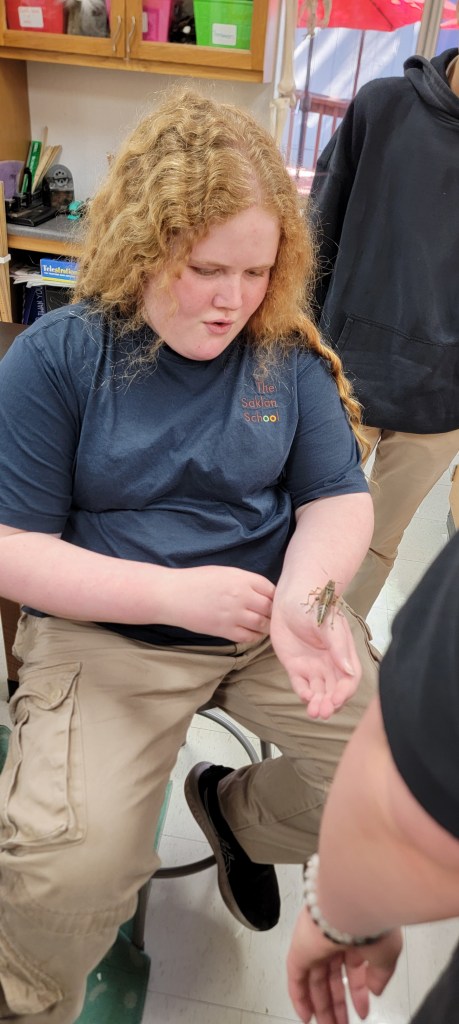
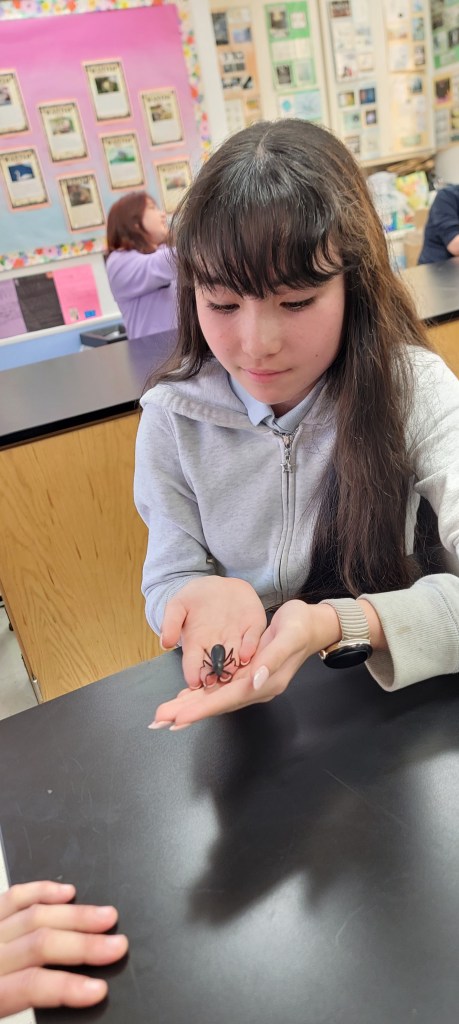
The highlight of the visit was the opportunity for students to interact directly with a variety of live creatures. With a mix of curiosity and courage, students were able to pet, hold, and even smell some of the arthropods, including stink beetles, two types of walking sticks, grasshoppers, a whip scorpion, and an African millipede.
These up-close encounters sparked excitement and wonder, giving students a deeper appreciation for the diversity and ingenuity of the natural world. Experiences like this not only build scientific understanding but also inspire curiosity, encouraging students to ask questions and explore the world around them in new ways.
Fifth graders at Saklan are investigating a powerful question: What if everything we see, feel, and react to isn’t exactly what it seems?
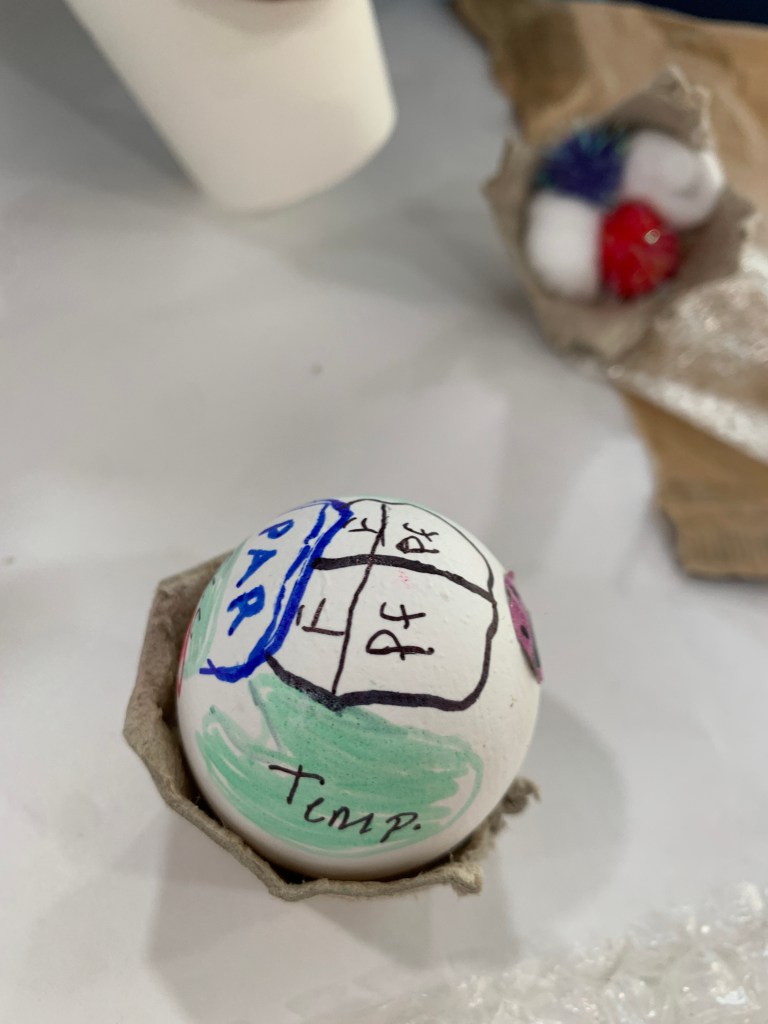
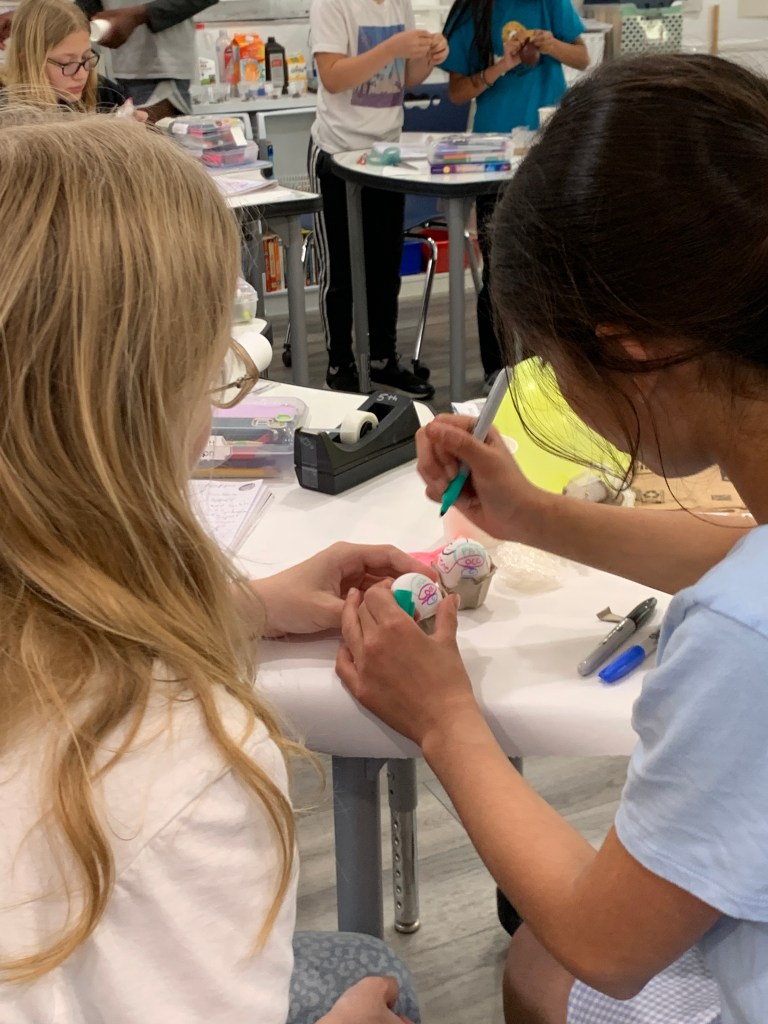
Their study began with an exploration of the brain as both remarkably capable and inherently imperfect. Through hands-on learning, students mapped the different lobes of the brain onto eggs, creating a tangible model to better understand how the brain functions, and what happens when it doesn’t.
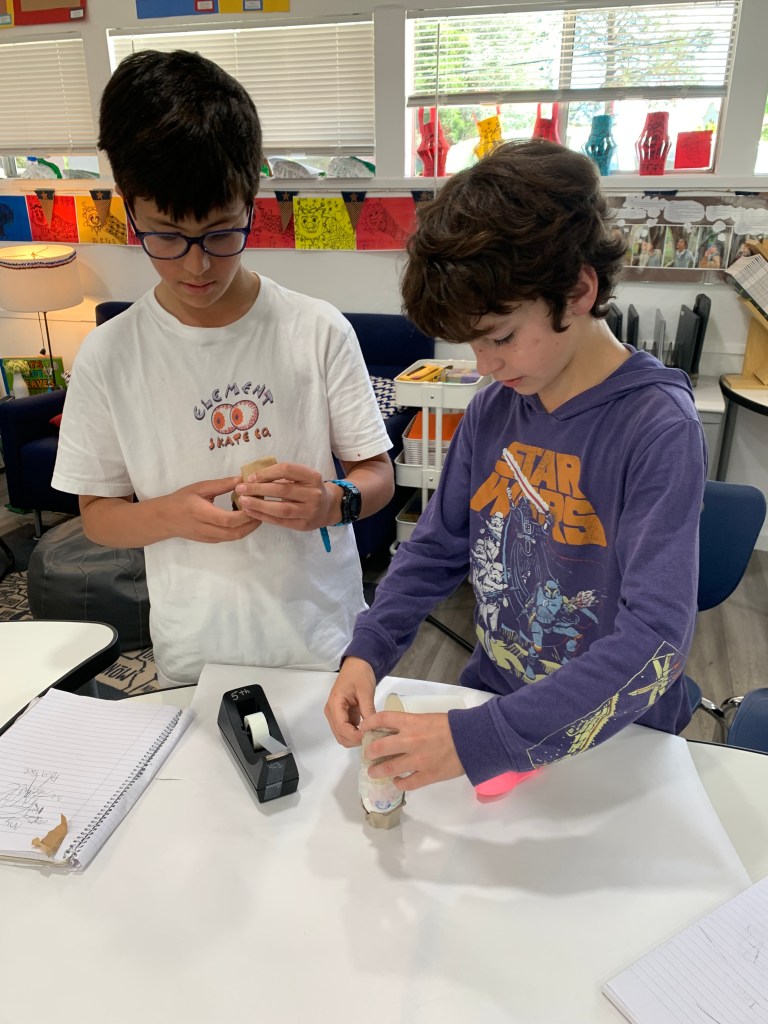
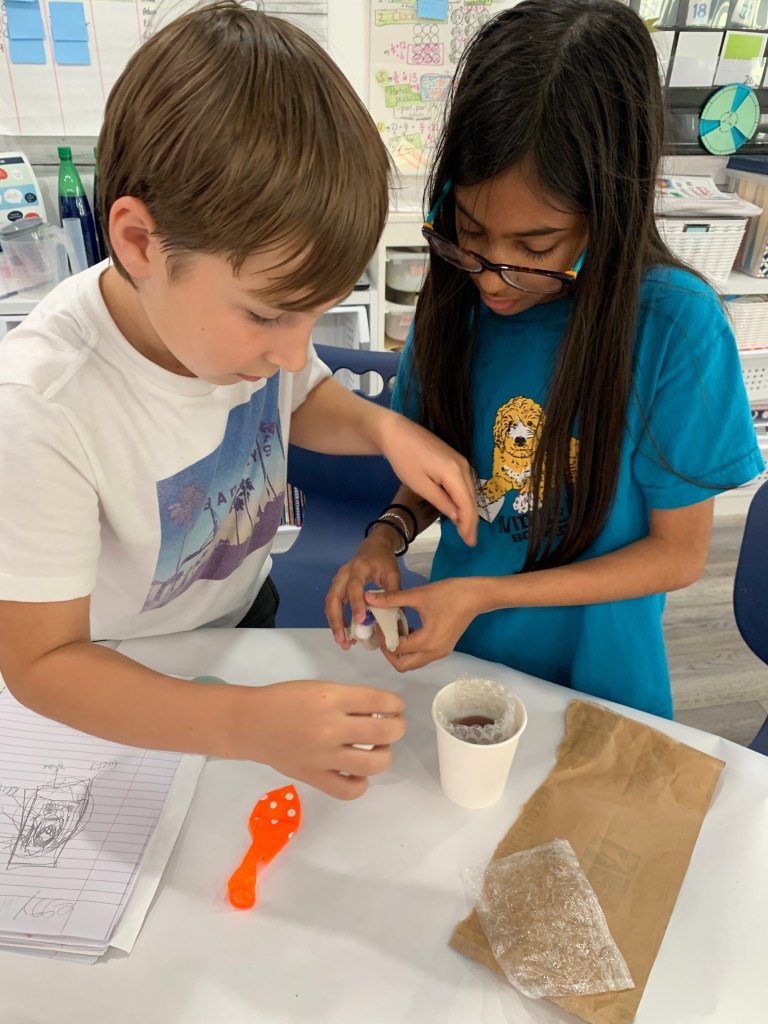
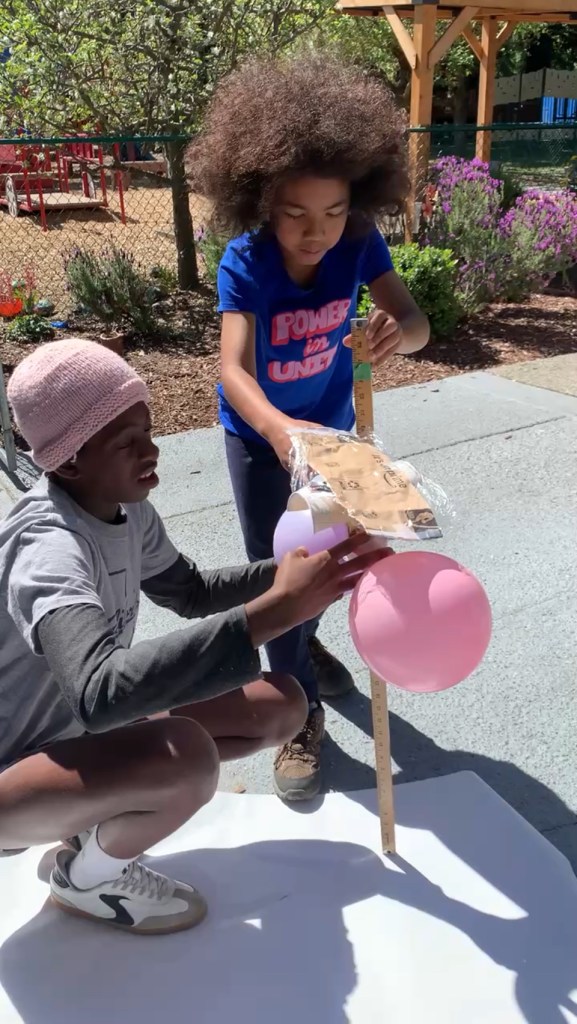
From there, students moved into a full engineering cycle, planning, designing, and testing “crash helmets” to protect their egg “brains.” Using materials like balloons, cotton balls, bubble wrap, and pompoms, they built creative prototypes with focus and purpose. The classroom quickly transformed into a hub of innovation and collaboration.
The excitement peaked during crash testing. When one “patient,” affectionately named Eggie, sustained a fracture through the temporal lobe and prefrontal cortex, students immediately shifted into diagnosis mode. Drawing on their growing understanding of brain function, they predicted how such injuries might impact memory, impulse control, and decision-making. In that moment, science became immediate and real.
Students were especially captivated by how the brain interprets, and sometimes misinterprets, what we see. When examining the viral image known as The Dress, the class was split, with about 20% seeing white and 80% seeing blue. In another activity featuring color illusions, students debated what they saw with complete confidence, only to discover that others perceived the same image entirely differently.
These moments sparked both curiosity and reflection. Students began to grapple with an important realization: our brains construct our experience of the world, and those constructions can vary from person to person. If it’s possible to feel completely certain and still be mistaken, or simply see things differently, what does that mean for how we navigate disagreements and treat one another?
This question lies at the heart of the project.
Earlier this year, fifth graders worked to restore the Redwood Grove, using physical tools to care for a shared environment. Now, they are beginning to design a different kind of toolkit: one that helps people pause, understand what is happening in their brains, and respond with greater awareness. Like redwoods, strong communities are built through connection, not just proximity.
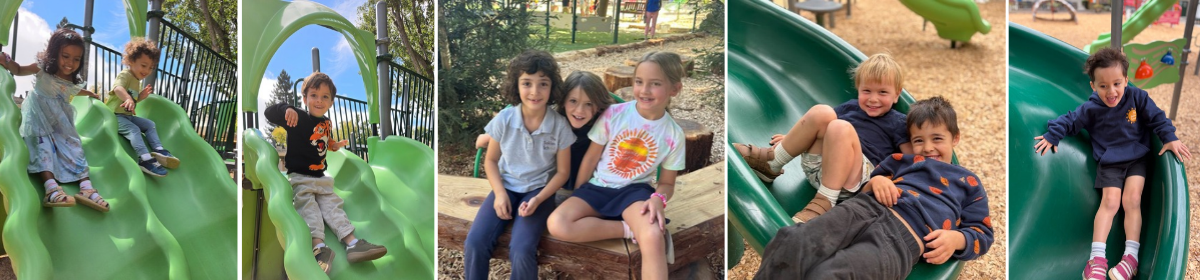
The Hoot Owls recently embarked on an exciting outer space adventure, diving deep into the wonders of our solar system through books, art, and hands-on exploration.
Their journey began with the shining star at the center of it all: the Sun. After reading Sun! One in a Billion by Stacy McAnulty, students discovered that the sun is actually a dwarf star. They learned that it is constantly spinning, with its middle rotating faster than its top and bottom, and that all the planets in our solar system orbit around it. The Hoot Owls were fascinated to learn that it takes 365 days for Earth to travel around the sun and that when the moon passes in front of the sun, it creates an eclipse.
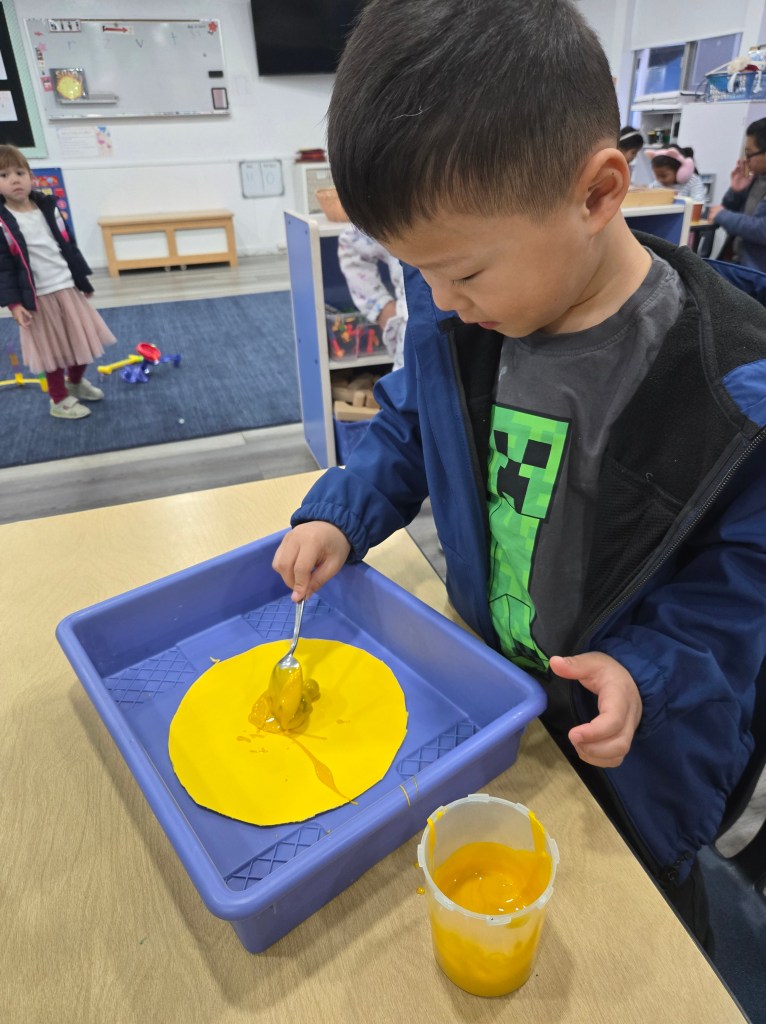
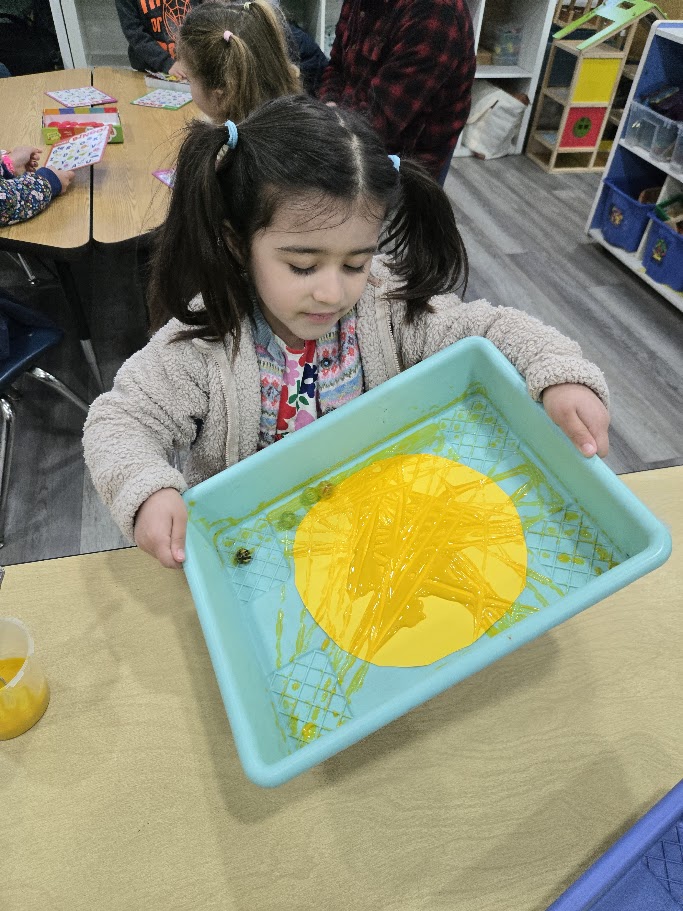
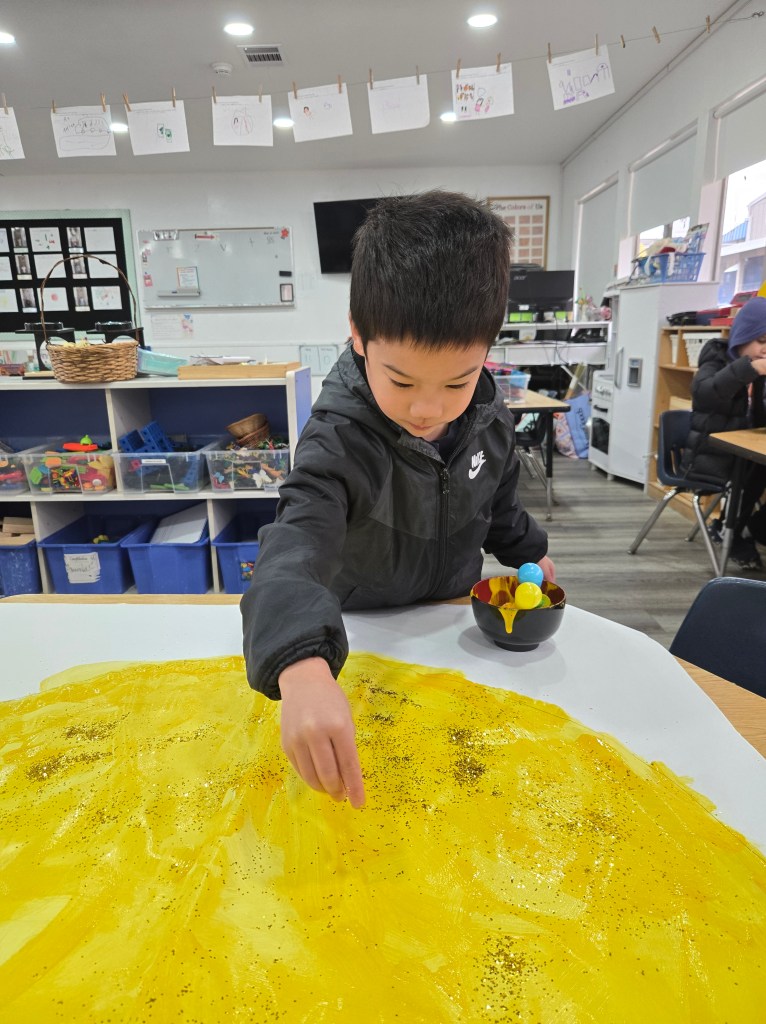
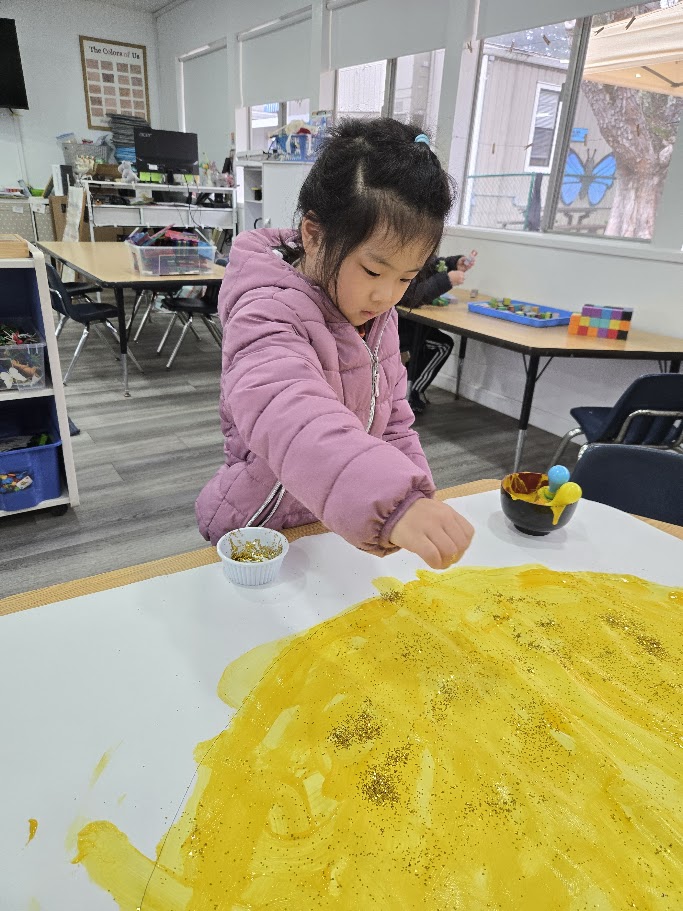
To bring their learning to life, students created their own suns by using marbles to roll paint around a circular template, demonstrating the sun’s constant motion. They also worked together to paint a giant glittering sun for their classroom solar system display.
Next, the Hoot Owls turned their attention to our home planet. After reading Earth! My First 4.54 Billion Years, also by Stacy McAnulty, they learned about Earth’s dramatic beginnings. They discovered that early Earth was extremely hot and gassy before it experienced thousands of years of rain, which eventually allowed land to form. Over time, life began to appear: plants, insects, dinosaurs, and eventually humans.
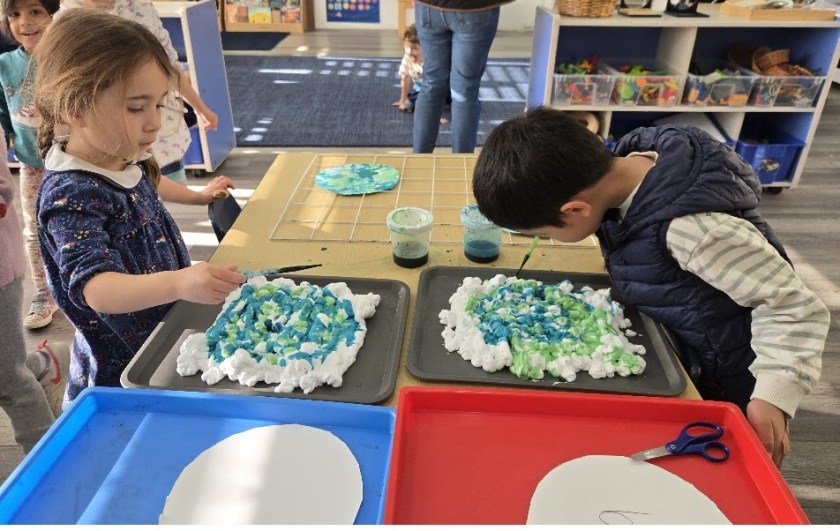
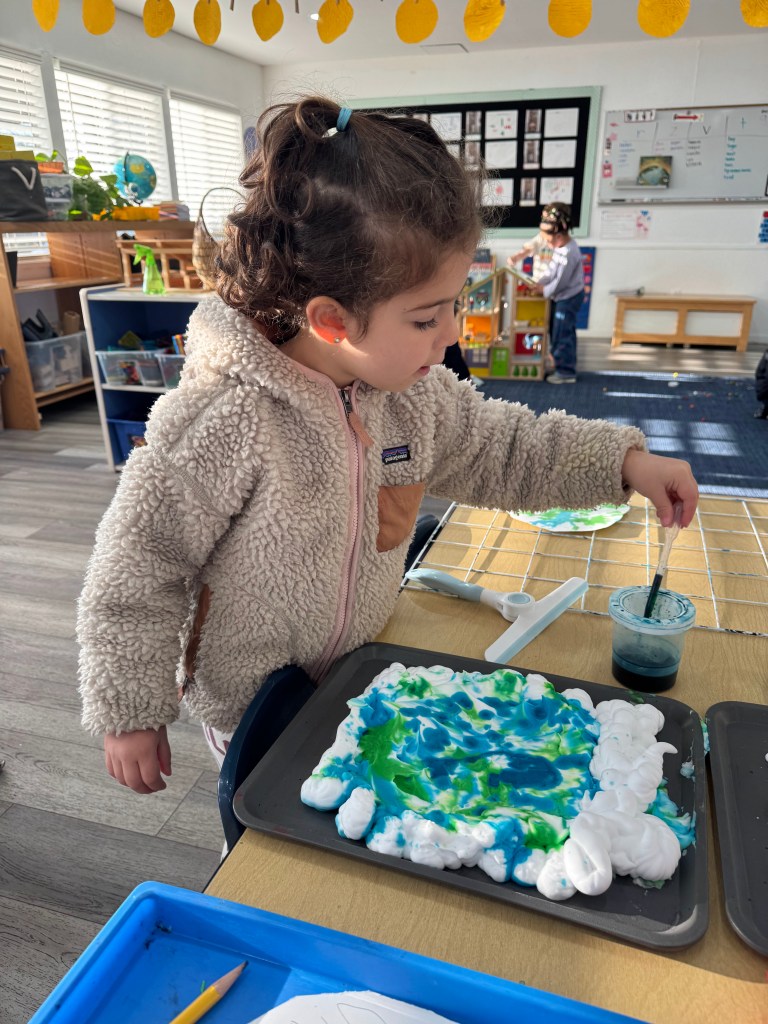
To represent “our beautiful marble,” students used shaving cream, blue and green watercolor, pipettes, and squeegees to create stunning Earth prints.
Of course, learning about Earth meant learning about its closest companion, the Moon. Students discovered that the moon is Earth’s natural satellite and explored its phases. They were amazed to learn that gravity is six times stronger on Earth than on the moon. Their curiosity soared as they discussed items astronauts have left behind on the moon, including a hammer, a flag, nail clippers, and even a golf ball. They also explored scientific theories about the moon’s formation, that it may have been created from pieces of Earth after a massive asteroid collision billions of years ago.
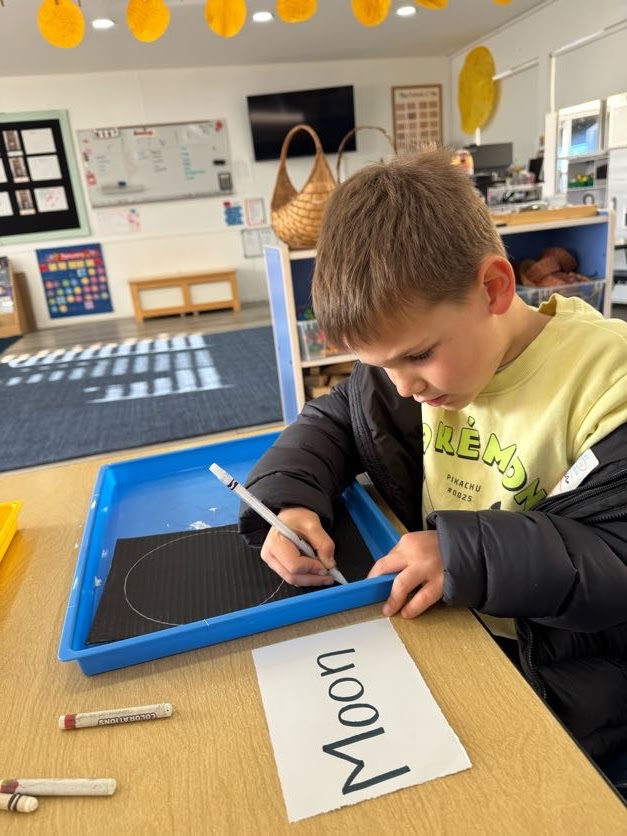
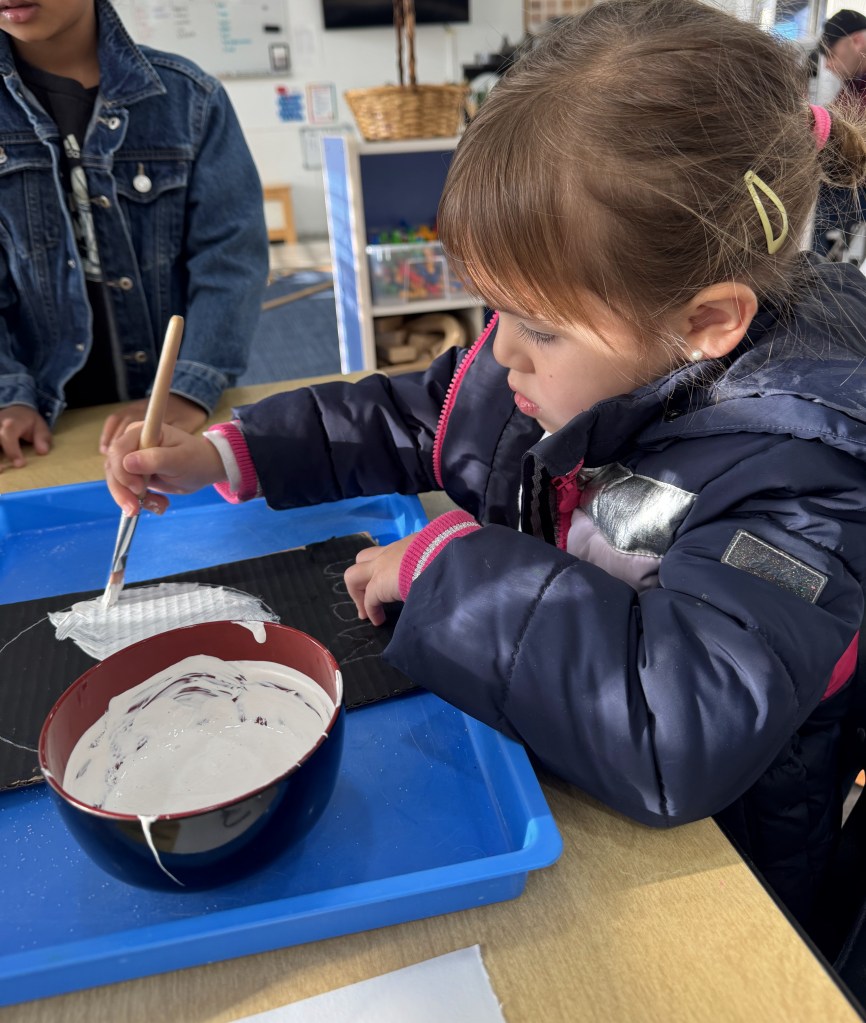
The Hoot Owls created textured moons by painting black backdrops, adding white circles, and sprinkling salt to mimic the moon’s rocky surface. They even practiced writing “Moon” on their artwork.
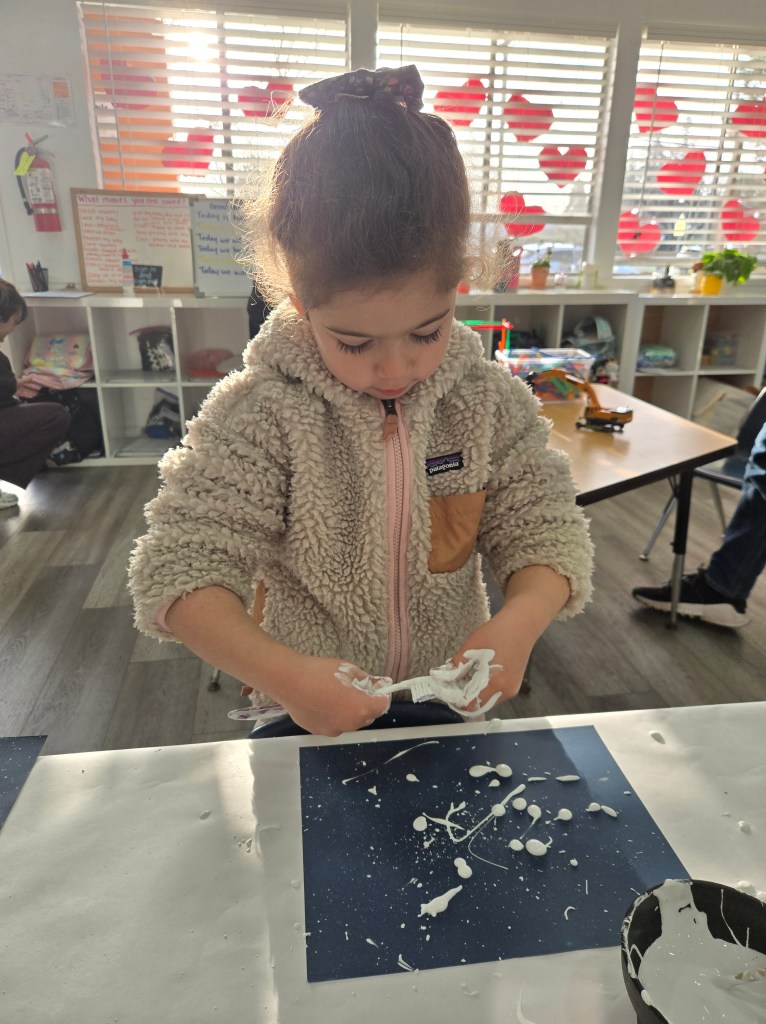
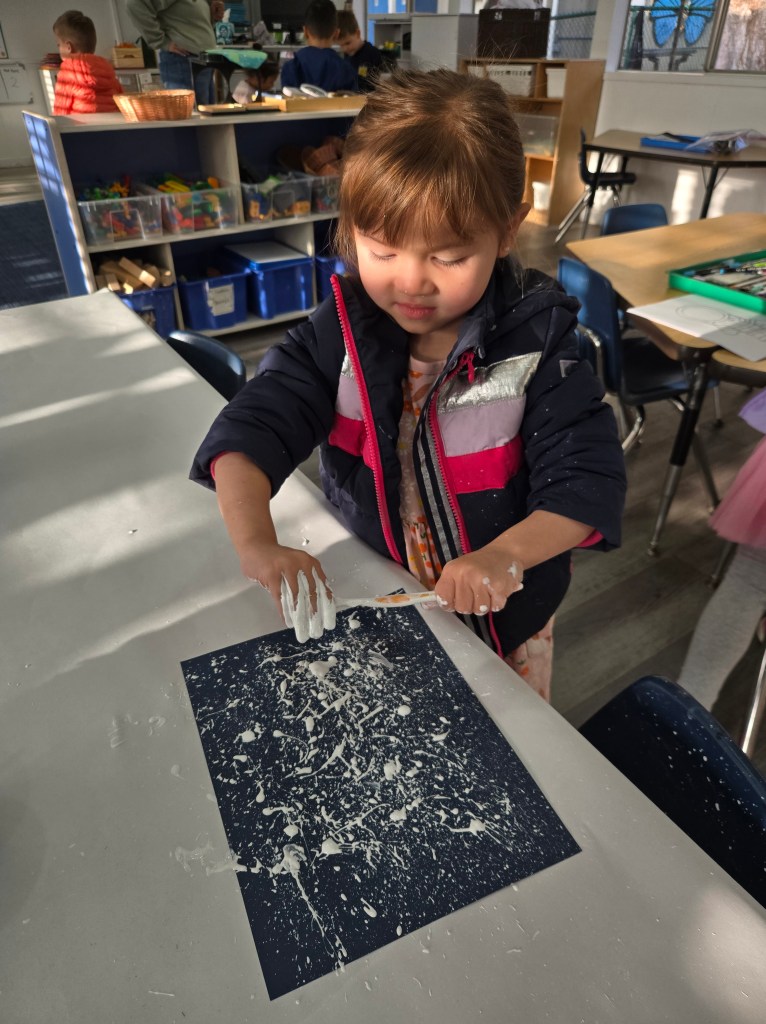
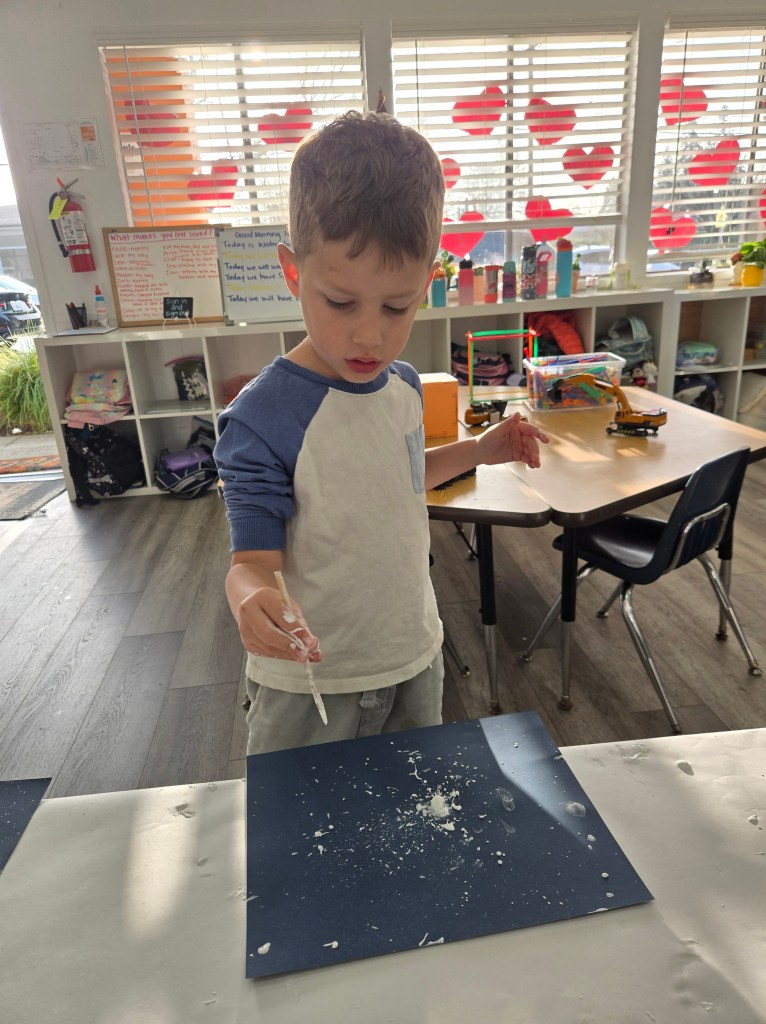
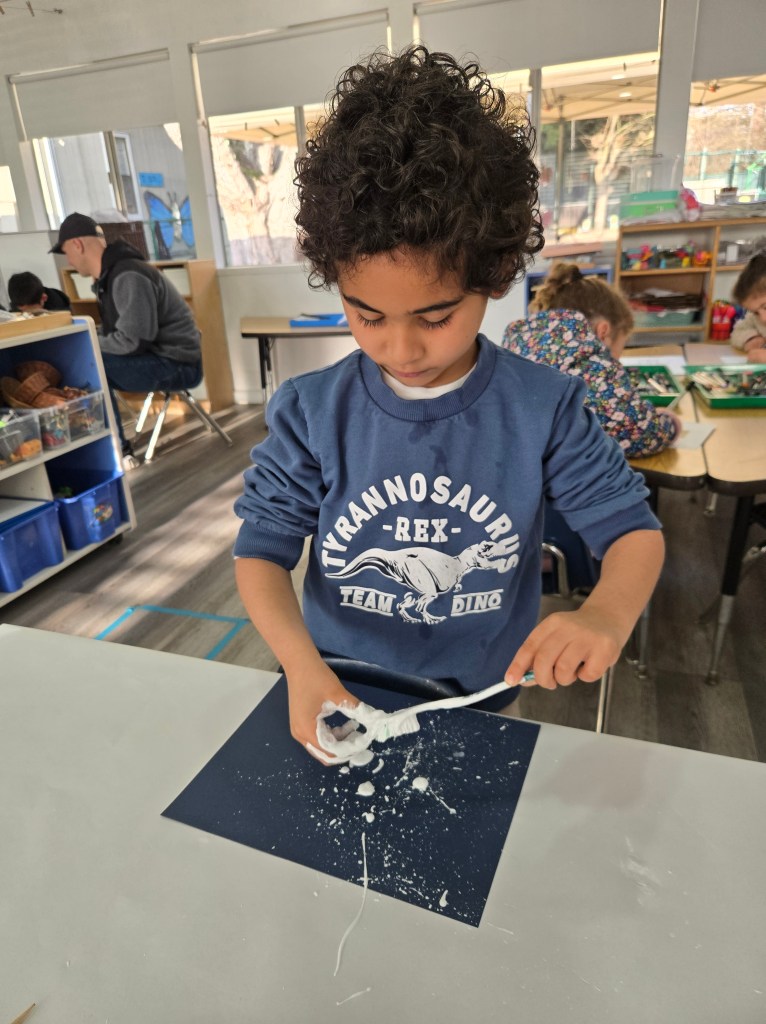
As their solar system expanded, students added billions of stars, using toothbrushes and sticks to splatter white paint across dark blue paper. They wondered aloud whether any constellations could be spotted in their creations.
Through literature, science discussions, creativity, and collaborative art, the Hoot Owls have built a deeper understanding of space while nurturing their natural curiosity about the universe. Their classroom has truly become a place where imagination and learning take flight.
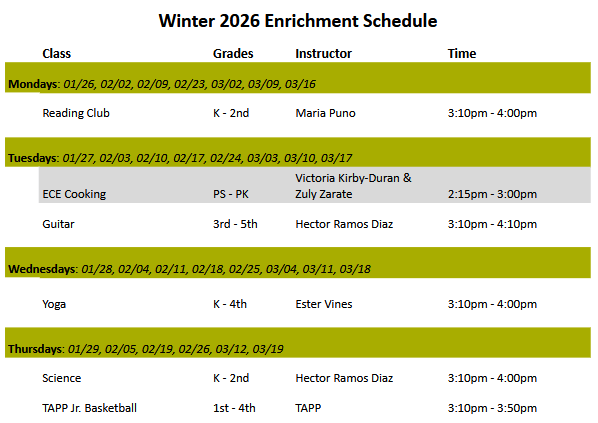
Now that the fall session of enrichment has come to an end, we are excited to share the classes that will be offered during the next enrichment session! For the winter session, the following classes are available:
Check out the class descriptions here. Classes begin the week of January 26th, and have limited space available. Registration for winter enrichment classes is now available on the Saklan Enrichment Webpage.
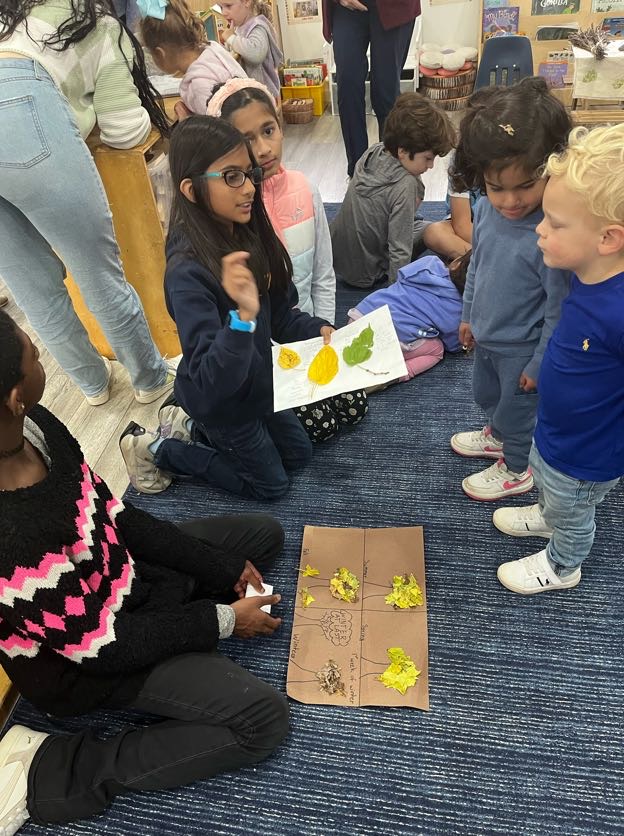
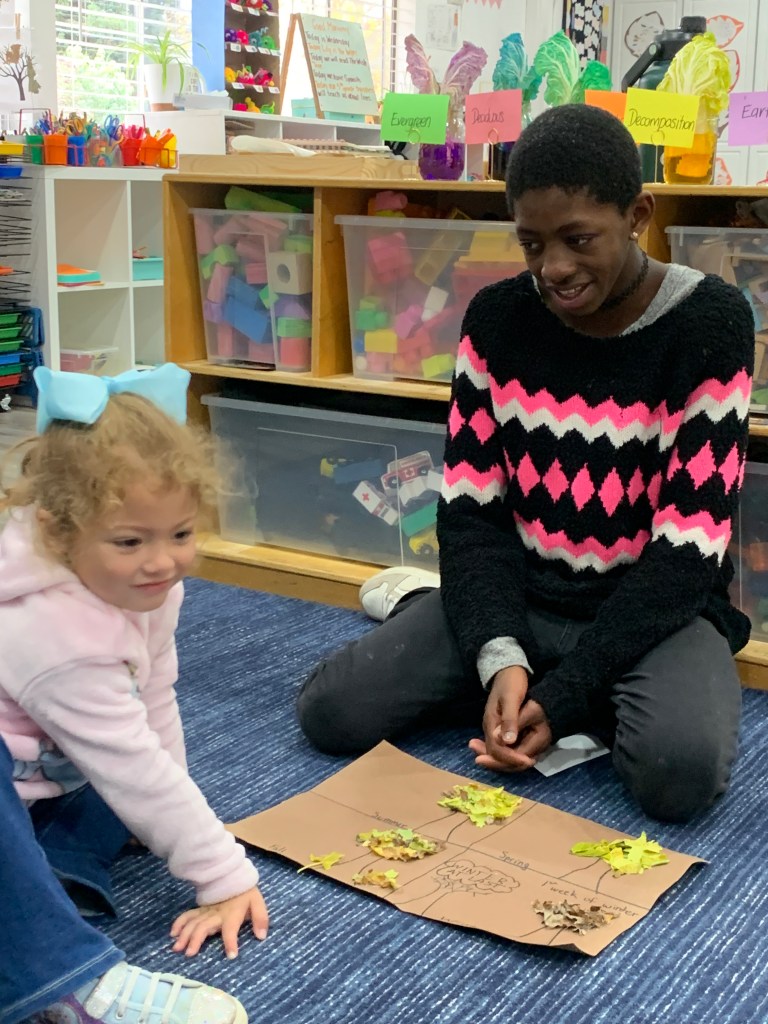
Saklan’s cross-grade learning was on full display as the Owlet buddies and fifth graders came together for a hands-on science experience rooted in their respective Project Based Learning (PBL) units. The Owlets have been exploring leaves, while the fifth graders have been studying trees—making their recent research on Redwoods the perfect launching point for peer teaching.
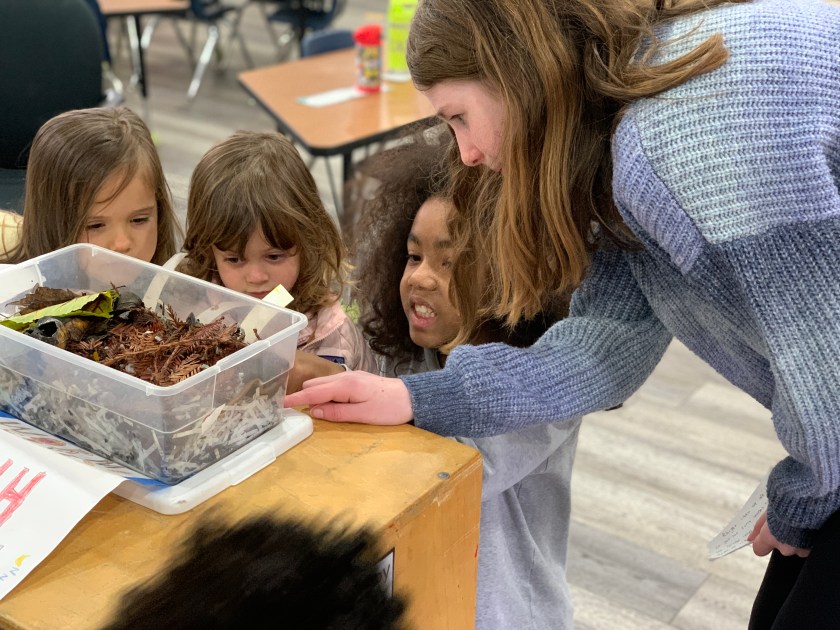
The fifth graders were tasked with becoming “experts” on several big questions the Owlets had been wondering about: the difference between evergreen and deciduous leaves, why leaf colors change, and how fallen plant matter breaks down and becomes soil, including the important role earthworms play in decomposition.
Students worked in teams with real focus and purpose. They were given 45 minutes to choose a topic and collaborate on a mini-presentation that was both accurate and engaging. Each group created a visual or hands-on element to support their teaching. Another 45 minutes were spent practicing, presenting to peers, and refining their work with the help of candid “Dancing with the Stars-style” feedback. The growth from practice to final presentation was remarkable.
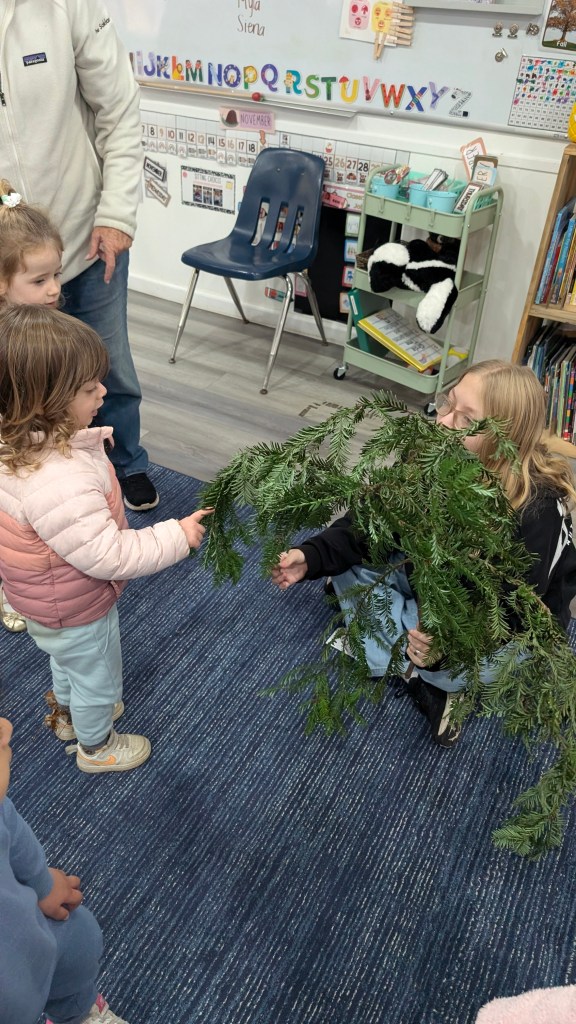
When it was time to meet with the Owlets, the fifth graders were ready. Their presentations were clear, lively, and thoughtfully geared toward 3- and 4-year-old learners. The Owlets eagerly leaned in, asking big, earnest questions such as, “Do worms have eyes?” and “Is that the head or the tail?” Fifth graders knelt beside tiny tables, held leaves up for close inspection, and invited younger students to touch, compare, and wonder.
Not only did the Owlets gain new insights through this joyful experience, but the fifth graders deepened their own understanding by explaining complex scientific ideas in simple, accurate ways—a skill that strengthens mastery and confidence.
Saklan’s PBL focus continues to create meaningful opportunities for students of all ages to learn with and from each other, building both knowledge and community along the way.
At The Saklan School, off-campus education is not a field trip – it’s a field experience: an intentional extension of the classroom that nurtures independence, curiosity, and responsibility. Each year, students take part in experiences that grow in both depth and duration—from a single night away in 4th grade to a full environmental science week in Hawaii by 7th grade, and a culminating cultural and stewardship trip to Puerto Rico in 8th grade.
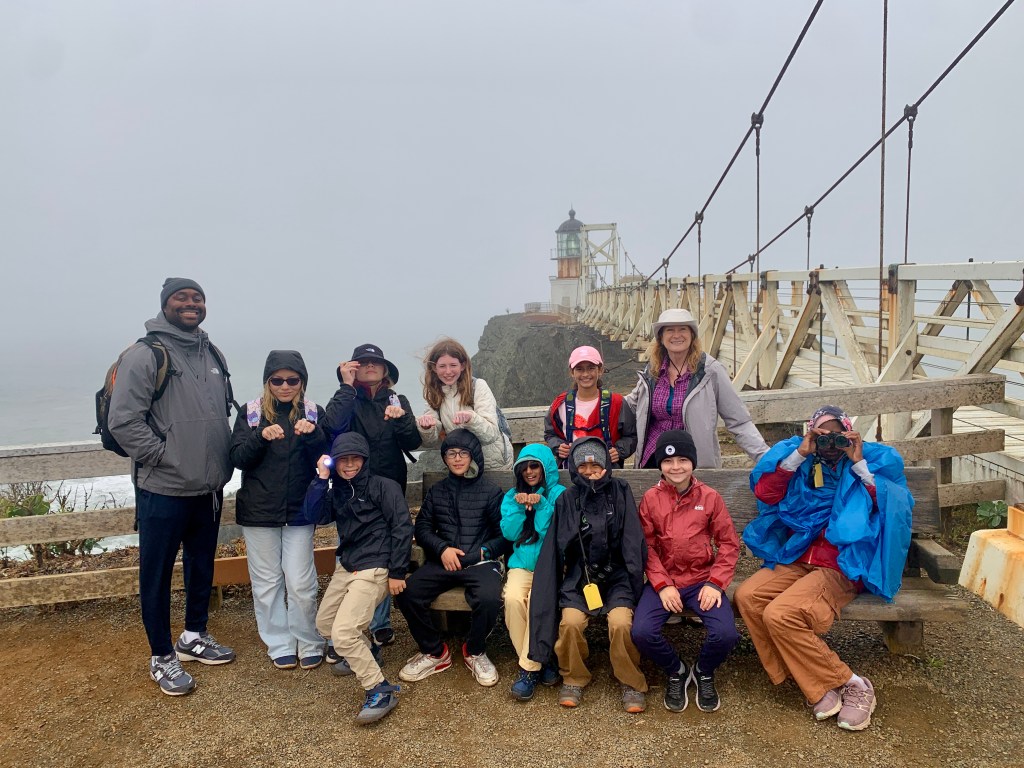
Earlier this month, Saklan’s fifth graders embarked on the next chapter of this journey with a three-day adventure in the Marin Headlands, combining science, stewardship, and teamwork. From the moment they loaded the van and set up dorms to their final project, preparing seedling pots for NatureBridge’s native plant nursery, students learned through hands-on discovery, cooperation, and reflection.
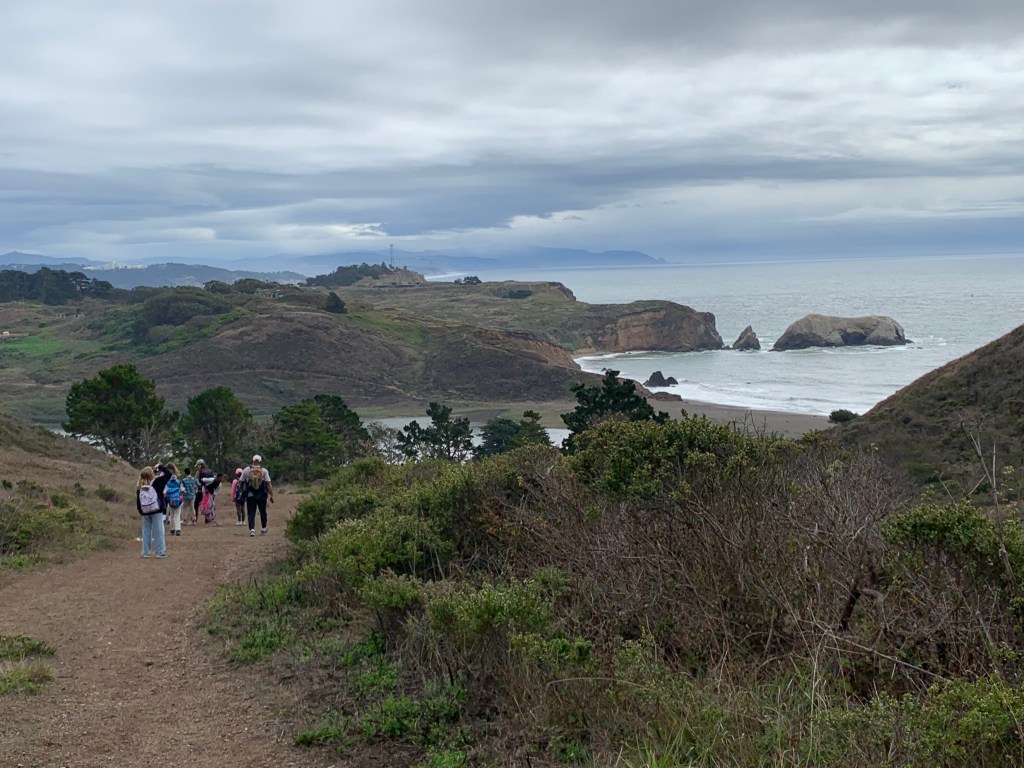
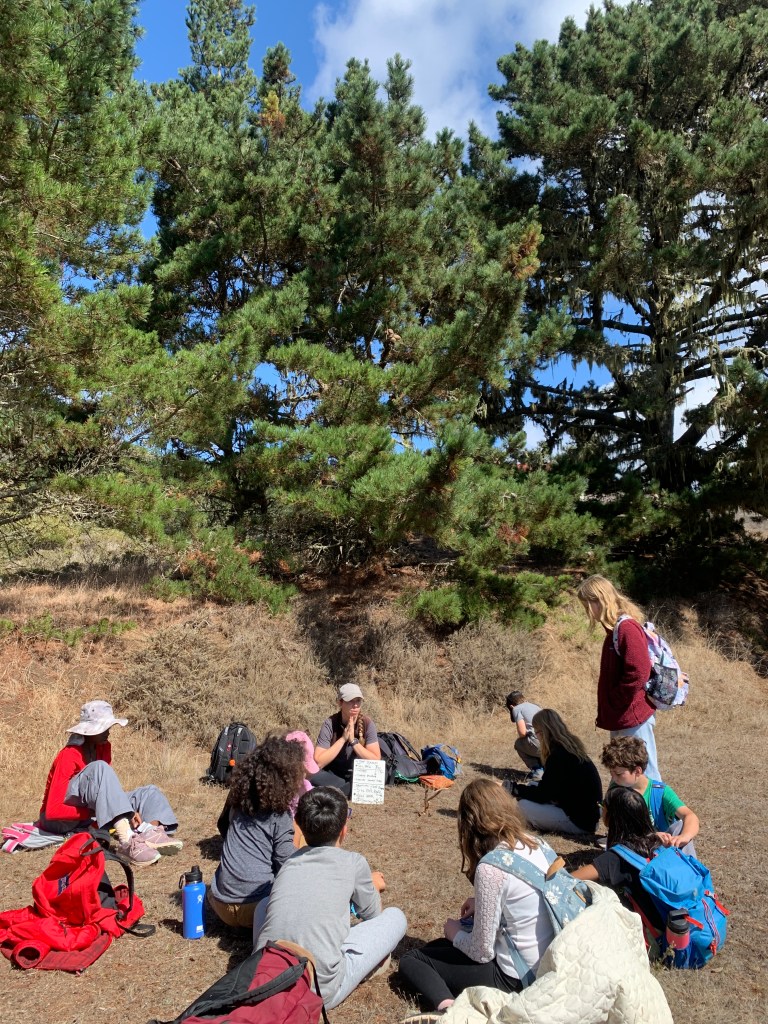
The trip began with a dorm orientation and an introduction to the area’s ecosystems. Students explored native plant greenhouses before hiking up Hawk Hill, where they studied the park’s only endemic tree—the coastal willow—and observed the biodiversity of the surrounding landscape.
After dinner, the group set out for a night hike to the beach, where they were treated to a magical surprise: glowing noctiluca, tiny bioluminescent plankton that illuminated the sand beneath their feet.
Day two brought a full day of coastal ecology—hiking from Rodeo Beach to Point Bonita, observing harbor seals, and studying plant adaptations, including tasting ice-plant bulbs. Students wrote sensory poems by the lighthouse and collected real scientific data for the National Park Service.
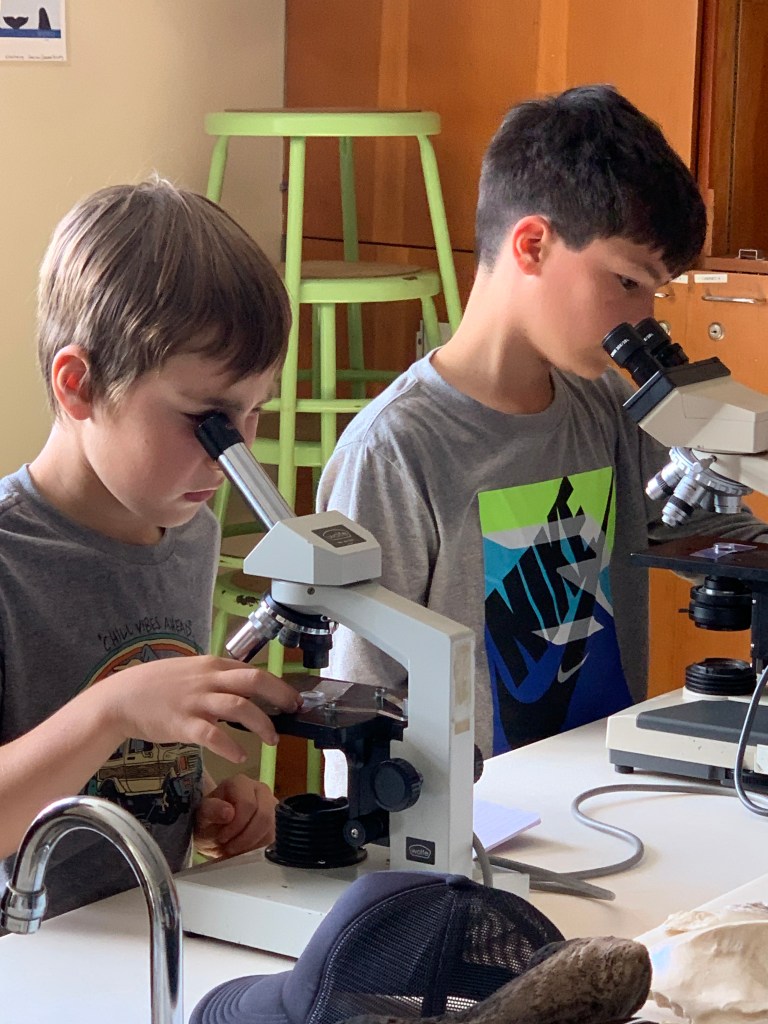
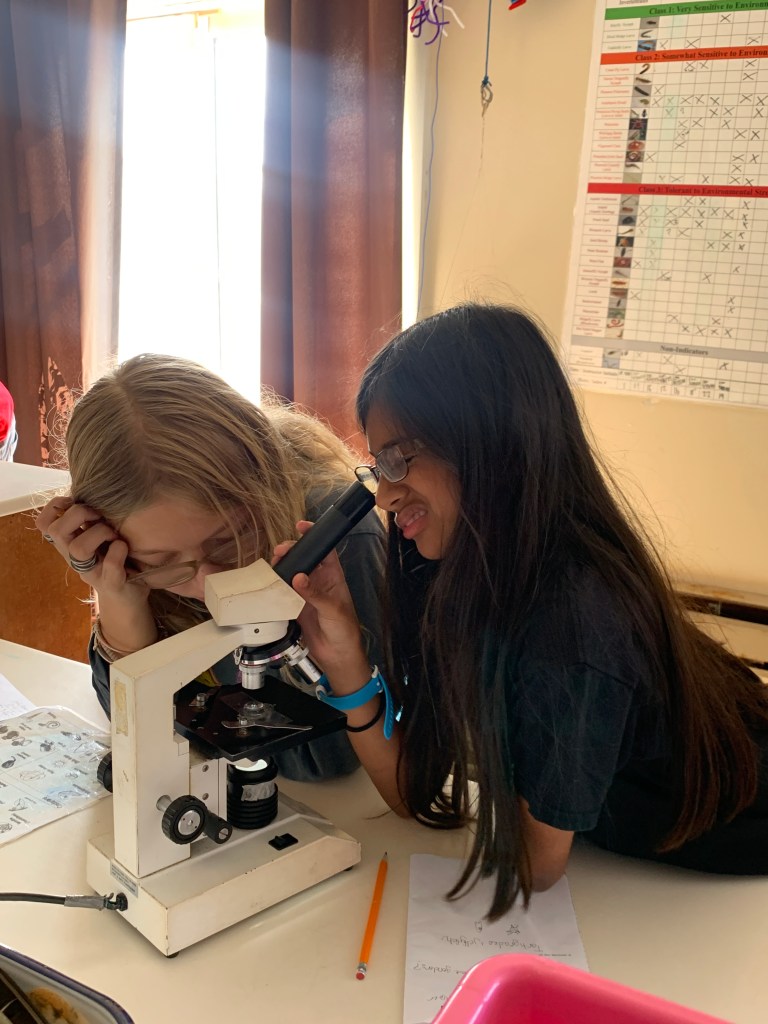
By day three, field science came to life. Students examined plankton under microscopes, studied local plant systems, and discussed how redwood ecosystems sustain life. Their fieldwork concluded with hands-on nursery stewardship, cleaning hundreds of pots to prepare for the next generation of seedlings.
Back at Saklan, this experience has sparked new curiosity about our trees and excitement about the upcoming redwood grove playground. Students are wondering how they might help with its design – how to make the space not only a place for play and discovery, but also the best possible ecosystem for the trees that tower above us, offering shade, shelter, and awe.




You must be logged in to post a comment.