Head’s Corner: 24 Acceptances, 1 Waitlist, and a Class Ready for What Comes Next

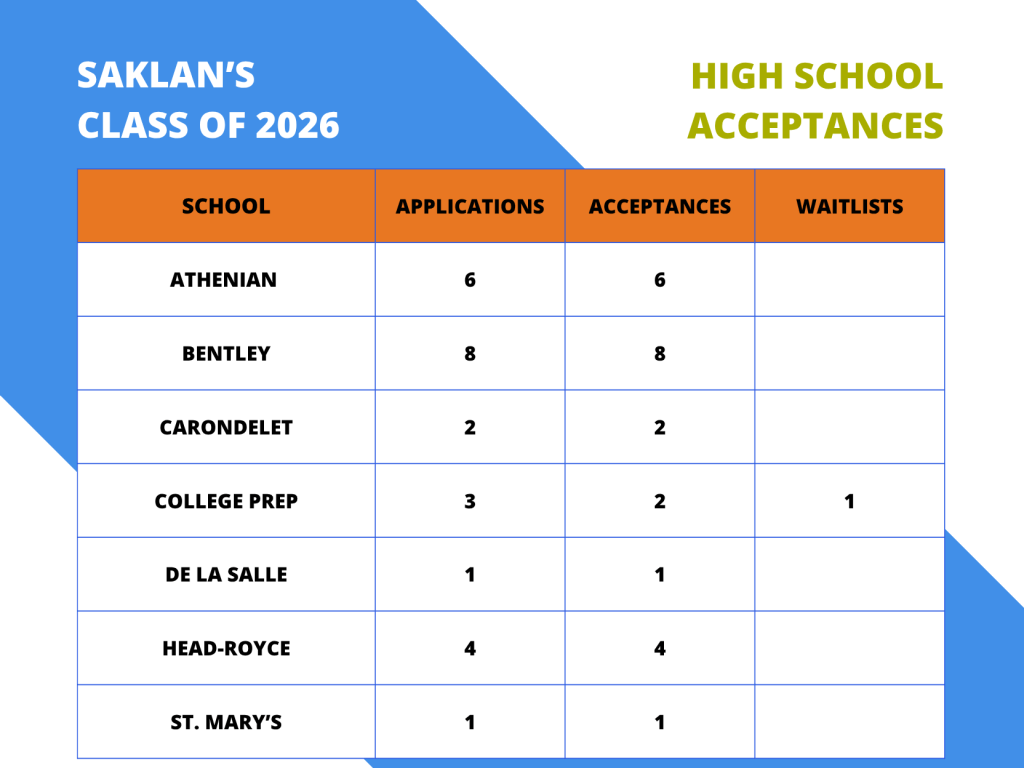
There are some years when the numbers tell a strong story on their own. This is one of those years. Saklan’s 8th-grade class submitted 25 applications to local independent high schools and earned 24 acceptances, along with 1 waitlist.

That is an outstanding result, and one we are proud to celebrate.

Our students received offers from an excellent group of schools, including Athenian, College Prep, Head-Royce, Bentley, Carondelet, De La Salle, and St. Mary’s. But as strong as those outcomes are, what matters most to me is what they reflect.

They reflect years of growth—students who are deeply known by their teachers and supported along the way. They reflect young people who have learned to think critically, speak with confidence, navigate challenges, and contribute meaningfully to a community. Most importantly, they reflect students who are not only academically prepared but ready to step into their next chapter with confidence, character, and curiosity.

At Saklan, we work hard to do both: challenge students and know them deeply. We want them to leave here with strong skills, certainly, but also with the confidence that comes from being seen, supported, and stretched over time.

Saklan alum Levi Kim, now at Brown, spoke at our auction about the impact Saklan had on him. He talked about the adaptability, critical thinking, empathy, and creativity he developed here — and how those qualities have mattered well beyond middle school. That is what we hope for our students. Yes, a Saklan education helps open doors. But more importantly, it helps students walk through those doors ready to thrive.

That is what makes these admissions results so meaningful.

I am proud of this class and of the way they represented themselves throughout the process. They showed who they are, and these results reflect that. We are excited to see where their journeys lead next.

Warmly,

David

Head’s Corner: Investing in the Human Qualities That Matter Most

At this year’s auction, our Fund-a-Need is about something that feels especially important right now.

The world our children are growing up in is changing quickly. A lot of attention is paid to what students need to know to keep up. That matters, of course. But I would argue that more importantly is who they are becoming.

Are they learning to work with others?
Can they solve problems?
Can they listen across differences?
Can they stick with something hard?
Can they stay grounded in themselves while also growing in empathy for people whose lives may look very different from their own?

Those are not nice to haves in the work of education. They are central to it.

At Saklan, we believe those qualities are built through experience. They grow when children are well-known by their teachers. They grow when students are given meaningful opportunities to collaborate, create, persist, and solve real problems together. They grow when a school makes space for belonging, challenge, reflection, and joy.

At Saklan, that kind of growth starts early and deepens over time.

It looks like our youngest students noticing that some trees on the playground have already dropped their leaves while others are still holding on, and turning that simple observation into a real investigation—sorting leaves, sketching them in observation notebooks, learning their parts, and filling a Wonder Wall with questions.

It looks like kindergartners exploring the stories behind their names—interviewing their families, learning about one another. In the process, they begin to navigate friendship, identity, and belonging while practicing the problem-solving skills that help communities thrive.

And it looks like 8th graders in Puerto Rico, working side by side to help rebuild, listening to the stories of people whose lives were changed by Hurricane Maria, and coming to understand that service, resilience, and empathy are not just ideas we talk about at school—they are things you live.

These are very different experiences, but they are connected by the same purpose. In each case, students are learning habits that matter deeply: how to notice, how to wonder, how to solve problems, how to connect, and how to contribute.

That kind of learning takes intention, skill, and care. It takes talented teachers. It takes intentional programs. It takes time, trust, and experiences that invite students to lean in fully.

That is why this year’s Fund-a-Need matters.

Your support helps make possible the relationships that allow children to feel known and valued. It creates the kinds of projects and experiences that spark curiosity, challenge students to think deeply, and give them meaningful opportunities to solve problems together. And it strengthens the environments where students build confidence, empathy, and resilience over time.

Join me in supporting this work.

By making a Fund-a-Need donation, you are investing in more than a single program. You are investing in the daily work of helping children become thoughtful, capable, compassionate people who can contribute meaningfully to the world around them.

That is work worth supporting, and I am deeply grateful to be part of a community that understands its value.

Warmly,
David

A Vision Takes Root

This weekend, an exciting new chapter begins at Saklan.

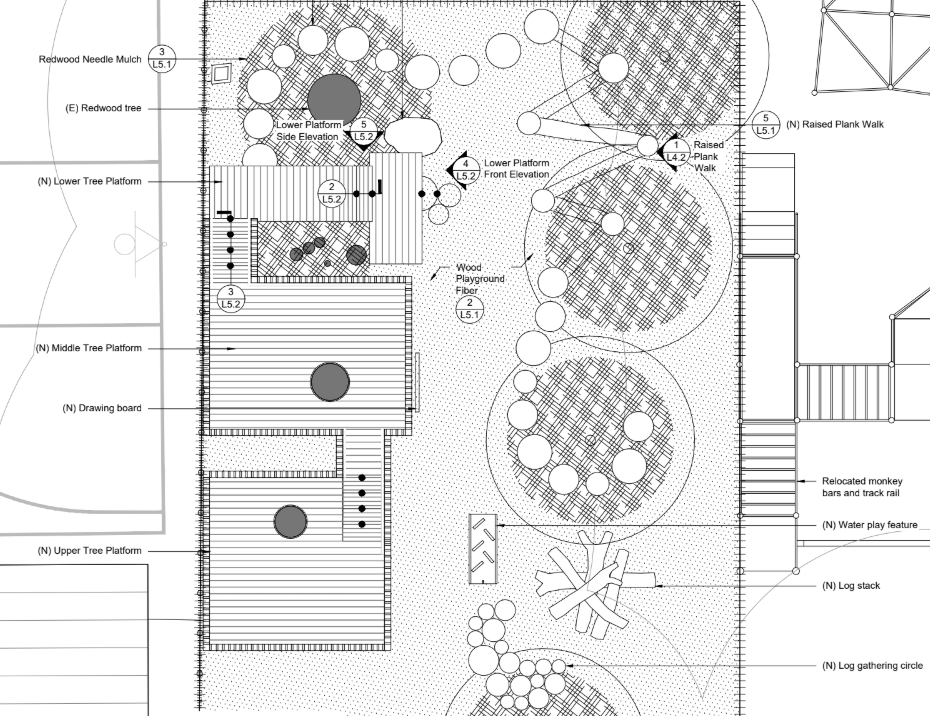
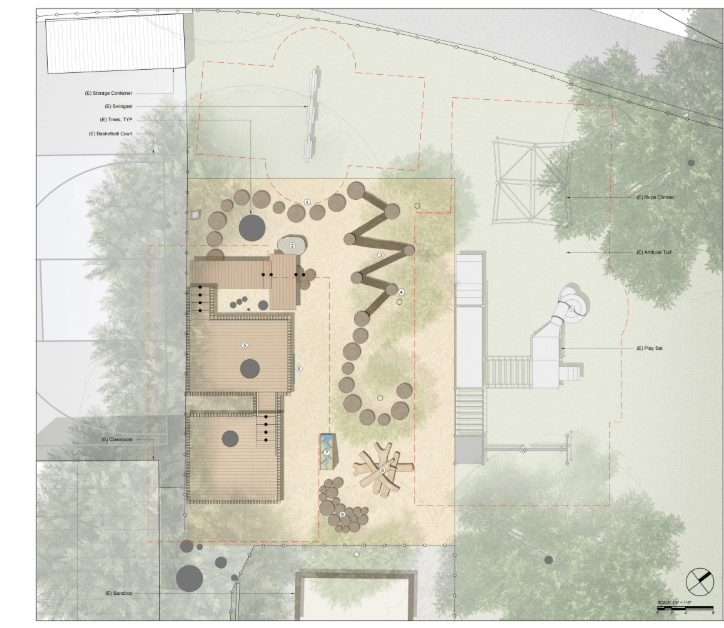
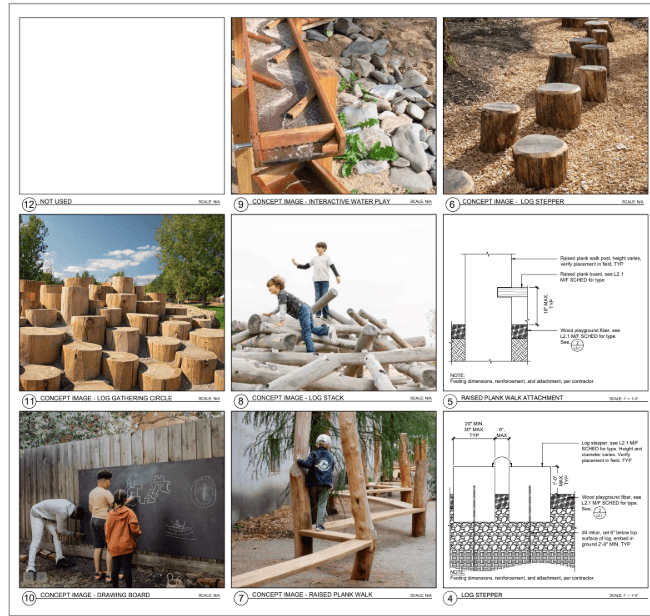
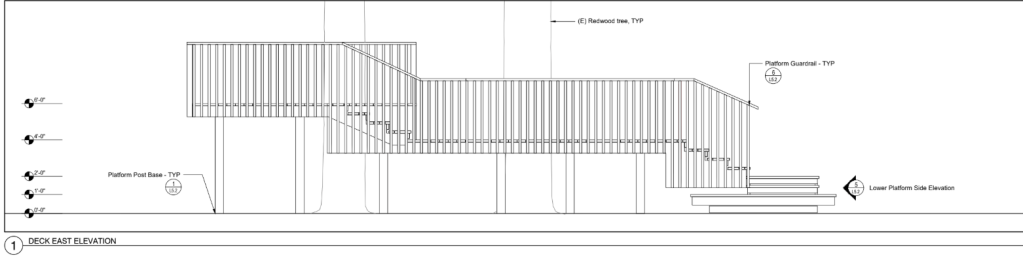
Construction on the first phase of the Redwood Grove Treehouse, made possible through the generous support of our community at last year’s auction, officially starts on Saturday. Two of the three elevated decks will be installed during this initial phase, with the more complex and intrusive work scheduled for June. To ensure safety, the area surrounding the redwoods will be carefully fenced, and the majority of heavier construction will take place over the weekend.

But the Redwood Grove was never just about building platforms in trees.

It has always been about creating a space where imagination expands, where confidence grows, and where children stretch themselves—physically, socially, and creatively—within the safety of community. It is designed to be a place of collaboration and storytelling, of challenge and belonging. A place where students test their balance, their bravery, and their ideas.

In many ways, the Grove is a living extension of how Saklan teaches: experiential, relational, and rooted in curiosity (pun very much intended). It reflects our commitment to learning that is hands-on, heart-centered, and deeply connected to the natural world.

And the momentum doesn’t stop there.

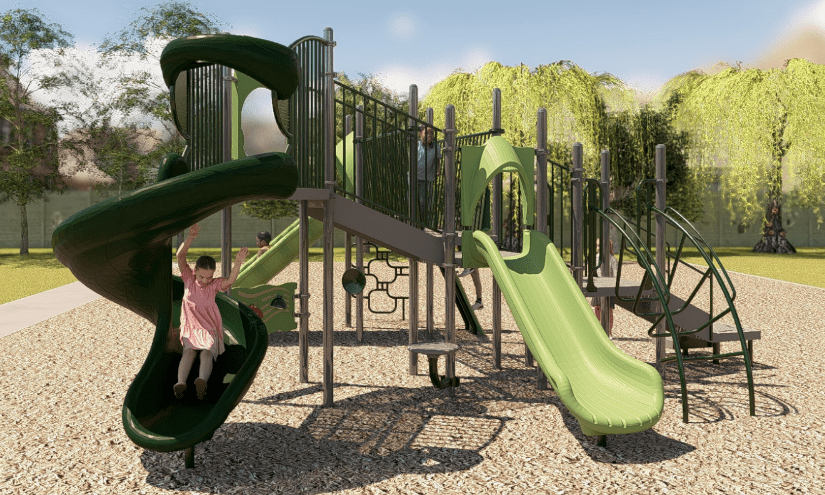
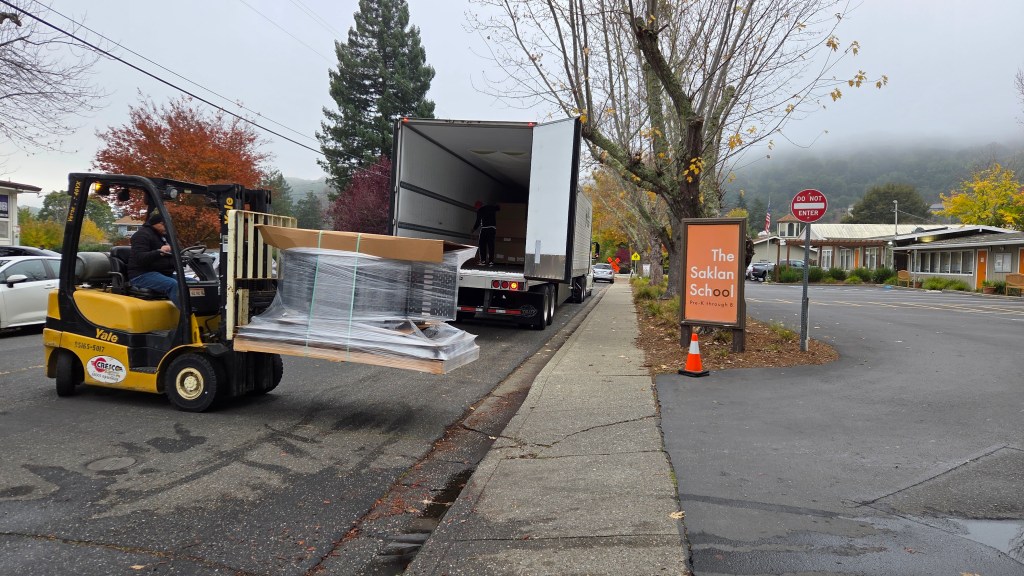
Installation of our new Early Childhood play structure—also made possible through generous community support—will begin in late May. The pieces arrived on campus earlier this year, offering a tangible reminder that our youngest learners will soon have a space intentionally designed for exploration, coordination, imagination, and joyful risk-taking.

These projects represent more than new equipment. They represent environments where children climb, balance, create, problem-solve, and connect. Spaces where resilience is built alongside friendships. Where confidence grows branch by branch.

Because of this shared vision, what once existed only as drawings and dreams is now becoming reality.

We look forward to sharing photos of the Grove as it rises—and to watching the countless moments of growth that will unfold within it for years to come.

#SaklanCommunity

Head’s Corner: Whitewaters

How do we prepare children for a world we can’t fully predict?

Our students are growing up in what can best be described as a climate of whitewaters — a period of rapid change marked by social fragmentation, global uncertainty, and accelerating artificial intelligence. The world they will inherit will demand more than information. It will require judgment, empathy, adaptability, and wisdom.

Last month, at the CAIS Trustee/Heads Conference, I heard Pedro Noguera, Dean of the USC Rossier School of Education, speak directly to this challenge. He reframed what many see as societal crises as something else entirely: learning challenges. As he spoke, I found myself thinking — this is the work we are already doing at Saklan.

Preparing students for the future requires cultivating the human capacities that technology cannot replicate — imagination, empathy, ethical reasoning, and sound judgment.

It also means addressing what some describe as an “empathy gap.” Too often, we care most deeply about problems only when they affect us personally. Schools can help close that gap by teaching students how to listen across differences, collaborate meaningfully, and build authentic relationships. 

At Saklan, this belief shapes daily practice. Relationships are not separate from rigor; they make rigor possible. Curiosity is not enrichment; it is the engine of deep learning. Intrinsic motivation fuels risk-taking, persistence, and lasting confidence — the kind that grows not from ease but from learning to navigate challenges. 

Hearing Dr. Noguera did not feel like a call to change direction. It felt like an affirmation of what we do at Saklan. The work of cultivating curious, compassionate, and capable learners is not peripheral to education — it is essential.

Helping students learn how to navigate these whitewaters with wisdom, grit, and empathy may be the most important work we do.

Warmly, 

David

If you would like to view Dr. Noguera’s full speech, click here.

Head’s Corner: What Belonging Looks Like at Saklan

On a regular basis, we ask students in grades 3-8 to complete an anonymous survey about their experience of belonging and inclusion at Saklan. At its core, the survey asks a simple question: Are we keeping our promise that Saklan is a place where students feel seen, heard, and valued? Do they experience Saklan as a safe learning environment—one where relationships are central to learning?

The survey serves as an important check for us. It helps us understand what is working well and where we may need to pause, reflect, and make adjustments based on what students are telling us.

We are currently analyzing the first semester’s results from students in grades 3–8, and we are proud of both the work we do and the community we share. The data points to a strong sense of belonging at Saklan, while also highlighting a few areas where we can continue to grow.

One of the most illuminating parts of the survey is the open-ended question that invites students to elaborate on what helps them feel they belong at Saklan. Their responses, shared below, tell a powerful and authentic story.

Belonging through relationships

  • “When people hang out and talk with me, support me, and accept my options.”
  • “When people invite me to play with them.”
  • “When I’m sad, my friends make me feel better, and my friends just make me laugh.”
  • “Even when I don’t want to play the same game as my friends, there is always someone to play with.”

Belonging through acceptance and inclusion

  • “Having friends, and being accepted for who I am.”
  • “Being respected a lot, for who I am.”
  • “I like how everyone hangs out with whoever they want, rather than being separated by gender or how you act.”
  • “I feel like I belong at Saklan.”

Belonging through adult care and attention

  • “I always know I can go to a teacher when I am sad or need help with my homework.”
  • “My teacher always helps me and tries to make me understand the answer.”
  • “Teachers pay a lot of attention to me.”
  • “When teachers explain why they can’t get to me yet, I still feel heard.”

Belonging through safety and voice

  • “I feel safe to share my thoughts and ideas.”
  • “Saklan is such a small community, so everyone knows each other.”
  • “If I feel left out, there is always a teacher who will help work it out.”

Belonging through structure, leadership, and shared experiences

  • “Something that helps me feel like I belong is advisory.”
  • “Family groups, the ability to be creative, and the fun interactive experiences.”
  • “When I am teaching a younger student, I feel a sense of joy and it makes my day.”
  • “When I come back from being sick or a trip, my classmates welcome me back with smiles and hugs.”

We believe transparency and listening are essential to building a strong school community. For those interested in exploring the data more deeply, the full student survey results are linked here. We’re grateful to our students for their honesty and thoughtfulness, and we remain committed to using their feedback to strengthen belonging, relationships, and learning at Saklan.

With Gratitude,

David  

Head’s Corner: Relationships Before Rigor

At Saklan, when it comes to learning, we believe that strong relationships and strong academics are not in competition with one another. In fact, they depend on each other.

Think back to your own school experience. Most of us can picture a teacher we truly connected with: someone who knew us well, cared about us, and held us to high expectations. For many of us, those were the classrooms where learning felt more profound and meaningful.

That’s not a coincidence.

Students spend thousands of hours with their teachers over the course of their school years, and research consistently shows that the quality of those relationships matters. Large-scale studies following millions of students have found that trusting, supportive relationships between teachers and students are linked to higher academic achievement, stronger self-regulation, improved behavior, and a greater sense of belonging—particularly as students get older.

At Saklan, we intentionally make the time and space to build those relationships. We want children to feel seen, known, and cared for—not only because it helps them grow into kind, grounded people, but because it directly supports learning.

When students feel safe and connected, their brains are more open to learning. They are more willing to take intellectual risks, persist through challenges, and accept feedback.

Relationships aren’t a “nice to have.” They are a foundation for real rigor.

This is why we believe relationships before rigor isn’t a slogan—it’s a strategy. One grounded in research, lived out daily in classrooms, and central to who we are at Saklan.

Head’s Corner: Gratitude for a Community That Shows Up

As we come to the end of the first semester, I have been reflecting on how Saklan comes alive because people show up — not just physically, but thoughtfully and generously.

We’ve seen it in our middle school students stepping outside the classroom to serve at the Alameda County Community Food Bank, working side by side to bag thousands of pounds of produce while learning what it means to contribute to something larger than themselves. We’ve seen it in our 8th graders traveling to Puerto Rico, engaging deeply with culture, history, and service, and learning firsthand how resilience, empathy, and hard work intersect in the real world.

We’ve also felt it right here on campus. Families gathering on a weekend to paint, build, problem-solve, and laugh together as they work to bring SpongeBob alive. Grandfriends sitting next to students in classrooms, sharing curiosity, pride, and connection. Parents, caregivers, teachers, and staff creating moments that remind students their learning matters — and that they are supported by a community that cares.

This kind of learning doesn’t happen in isolation. It happens because teachers design meaningful experiences, students lean into challenge, and families trust, support, and partner with us. It happens when people give their time, energy, creativity, and resources — whether that’s volunteering at an event, contributing to the Annual Giving Fund, or simply being present and engaged.

I’m deeply grateful for the Saklan community and for the many ways you help make this a place where students learn with purpose, feel a sense of belonging, and develop compassion for the world around them. What your children experience here is the result of a shared commitment, and it is something we don’t take for granted.

Thank you for showing up — for our students, for one another, and for Saklan.

Warmly,
David

Head’s Corner: Celebrating Connection, Joy, and Learning

Just before the Thanksgiving Break, our campus was filled with joy, laughter, and heartfelt moments as we welcomed beloved grandparents, family friends, and special adults to celebrate Grandfriends’ Day at Saklan. It was a beautiful morning that highlighted the power of connection across generations and the vibrant learning that happens in our classrooms every day.

From the moment guests arrived, students were beaming with pride, eager to share their school, their work, and the people who guide their learning. The morning began with CLAS, where student voices, hard work, creativity, and compassion were showcased. 

After CLAS, grandfriends joined students in their classrooms for activities designed to spark curiosity, conversation, and connection. Some collaborated on art projects, others explored math games, science challenges, or writing prompts, and many simply enjoyed the chance to sit side-by-side and experience learning through a child’s eyes. Classrooms buzzed with energy as students proudly introduced their grandfriends to classmates and teachers, and shared their daily routines.

The magic of the morning wasn’t just in the activities; it was in the relationships. When students see someone they love and trust engaging with their school world, it deepens their sense of belonging and strengthens their emotional connection to learning. Grandfriends’ Day isn’t just a celebration; it’s an important part of how we cultivate confidence, curiosity, and community at Saklan.

We are deeply grateful to everyone who joined us and helped make the day meaningful. Your presence enriches our students’ lives in ways that extend far beyond the classroom.

Thank you for being part of our community, and for helping us nurture joyful, connected, and courageous learners. We can’t wait to welcome you back next year!

Warmly,

David

#SaklanCommunity

Head’s Corner: Where is the Rigor?

Every so often, I get the question from a prospective parent about rigor. They love our approach, and are firm believers that students need to have a “love of learning” and a “love in learning”. But they ask: Is it rigorous? 

As adults, our concept of rigor is informed by our own experiences. When many of us think of rigor, we think of lots of homework, long tests, sitting at a desk, and grinding it out. While that kind of work may be hard, is it rigor or compliance? Is it the type of learning that benefits future-facing students? 

True rigor is about the level of thinking kids are doing, not how stressed they are. Can they analyze, design, and create? Do they grapple with open-ended questions well? Can they explain their thinking, defend their work? Do they persist and have grit?  

Our project-based approach demands synthesis, application, and transfer—the highest levels of Bloom’s Taxonomy. It also requires something traditional rigor often ignores: motivation. When students care about what they’re doing, they naturally push themselves further.

This type of work is cognitively rigorous; what we grew up with feels more like compliance rigor.  

If you are not sold on the idea that what we do is truly rigorous, let our MAP results speak for us. NWEA administers the MAP test to over 35,000 schools across the country. Of those schools, 3,500 are private schools like Saklan. If you look at our results, we not only rank well against schools in general, but score significantly higher than most of our private school cohort. 

What we do may not look like the rigor of our childhoods. But it’s the rigor kids need today—and the rigor that prepares them for tomorrow.

Warmly,
David

#SaklanAcademics

Head’s Corner: Loving the Teen You Have by Joining the Resistance 

Last week, Saklan co-hosted a conversation with Dr. Ann-Louise Lockhart, author of Love the Teen You Have, in partnership with ParentMap—a consortium of schools that brings thoughtful authors and researchers to school communities like ours.

Dr. Lockhart’s message to parents was simple but radical: join the resistance. Resist the urge to fix, control, or over-teach your teens. Resist the pressure to be perfect. Resist the voice that says if you just say it one more time, they’ll finally listen. This conversation was full of gems—here are some of my takeaways.

Meet Them Where They Are and Join the Resistance

When your child resists, don’t fight it—join it. If your teen doesn’t want to talk, don’t push. Maybe text. Maybe just sit quietly beside them. Be attuned to what they need in the moment, not what you need. Joining the resistance isn’t about giving in; it’s about shifting from confrontation to connection. It’s realizing that presence—not persuasion—is what keeps the door open.

Do Less, Be Present

When our kids were little, we tried to make every moment a teachable one—narrating, correcting, guiding. But the older they get, the less that works. Teens don’t need a constant teacher; they need a calm, steady presence. Sometimes love means doing less—being available, not instructional. It can be surprising how zen it can feel just to “be” with them.

Nagging Is Kryptonite

Few things shut a teenager down faster than repetition. Nagging doesn’t motivate; it hardens resistance. Instead of asking the same question again, try curiosity: “I’ve noticed that assignment’s been hard to start—what do you think’s getting in the way?” That one shift invites conversation instead of combat.

Connection Over Correction

Everything comes back to relationships. When we focus less on managing behavior and more on understanding emotion, we help teens develop self-regulation and trust. They don’t need perfect parents—they need present ones.

At Saklan, this message resonates deeply. Our teachers know that learning—academic, social, or emotional—happens in the space between curiosity and connection. And our partnership with parents is strongest when we, too, resist the urge to over-manage and instead choose to be attuned, curious, and grounded.

So this weekend, take a breath, step back, and love the teen you have—right where they are.

You can view the recording of the conversation with Dr. Ann-Louise Lockhart here, using the access password: edTalks*2526.

Warmly,
David

#HeadsCorner