From Brain Science to Real-Life Application

What does it look like when students take what they know about the brain and use it to help others? That question came to life as our fifth graders stepped into the heart of their project work.

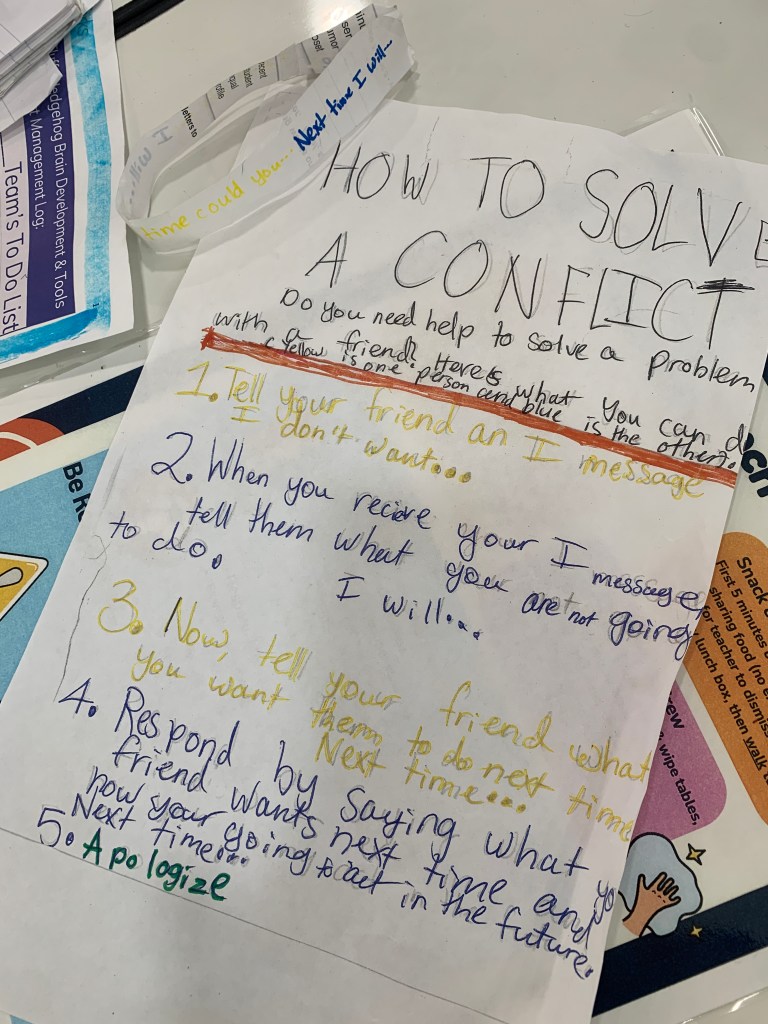
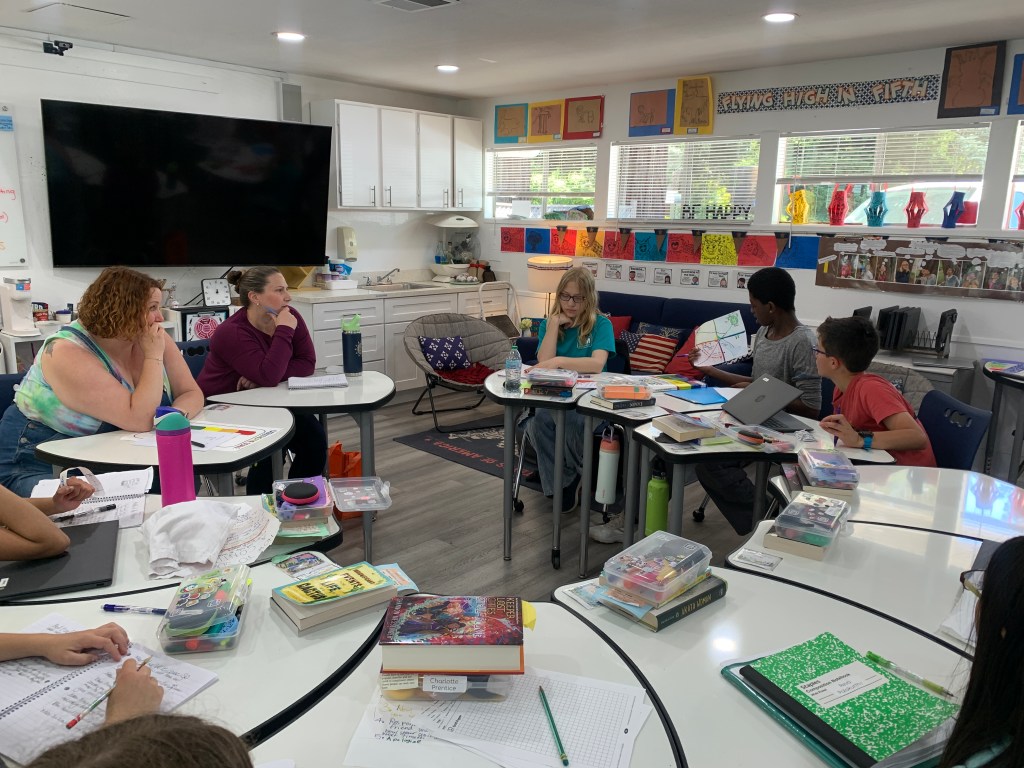
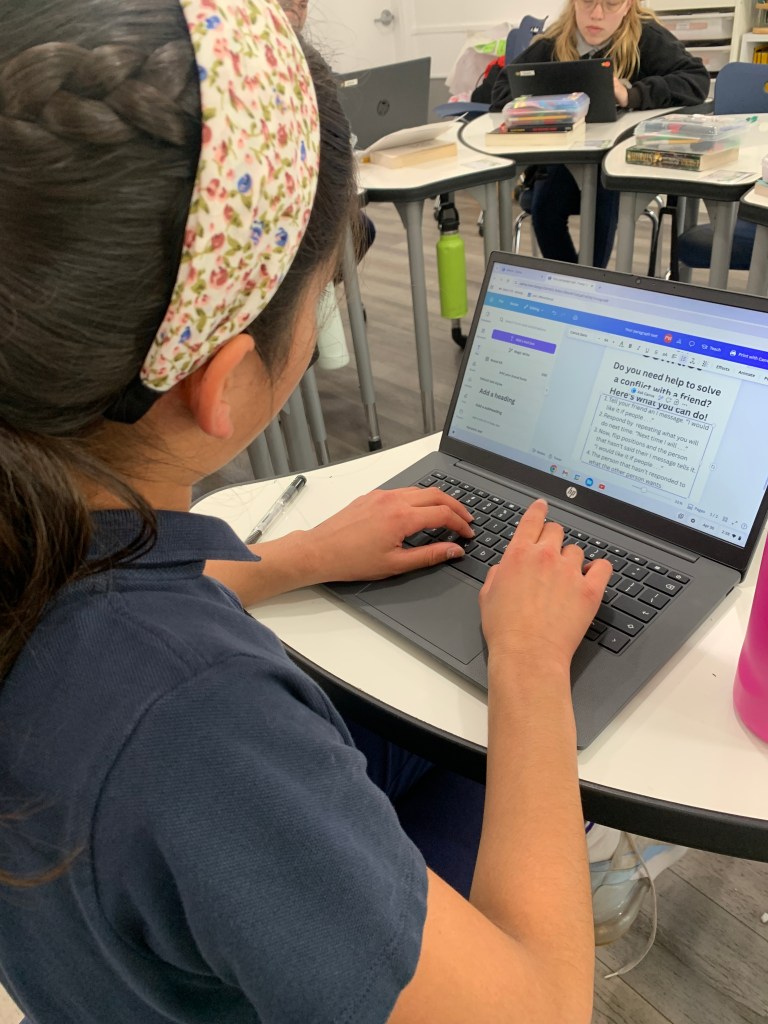
Building on their recent brain science studies, students are now applying their understanding of how the brain interprets, reacts, and sometimes gets it wrong to design tools that help people better understand and manage emotions and relationships. Working in three teams, they are focused on self-awareness (naming feelings), self-regulation (calming tools), and connection (conflict resolution, active listening, and problem-solving). Each team is designing visual teaching tools and co-creating stories that show characters using the strategies, and younger students will soon get to help shape key elements.

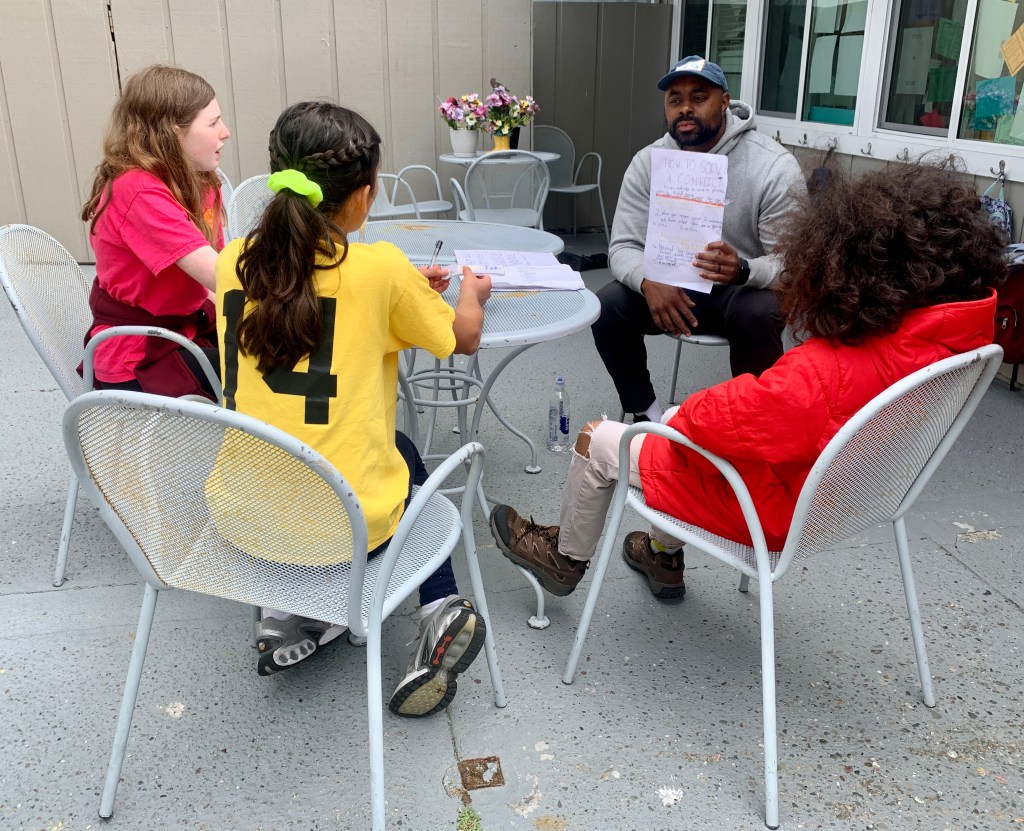
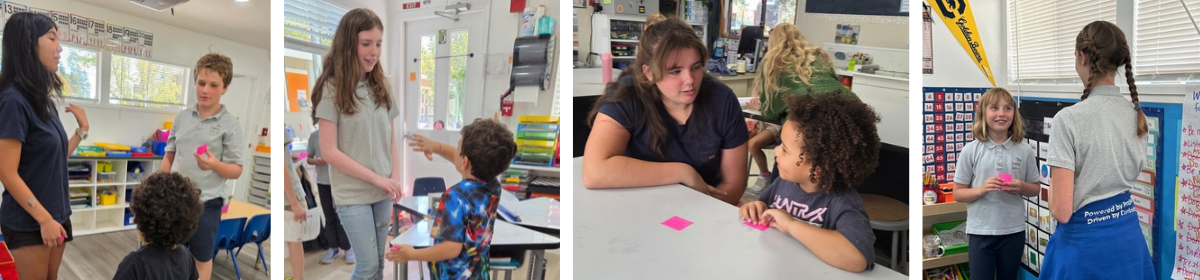
Last week, teams presented their prototypes and story drafts to guest experts who support children every day. Riva and Emily joined the self-regulation team, bringing calming tools for students to test. Annette and Coach Rob shared their Peace Talks training and Conflict Corner guidelines with the connection team, and Peta supported the self-awareness team in refining their tools using Zones of Regulation strategies. 

Students listened carefully, asked thoughtful questions, and immediately began refining their work.

One fifth grader captured the spirit of the project perfectly:

“We have a voice in project work. We made a real impact on the Redwood Grove earlier this year, and now we’re doing something that can help people understand their emotions and relationships. I like knowing our work matters.”

Families are invited to see this important work in action at CLAS on May 15, when fifth graders will present their projects and share the impact of their learning.

#SaklanProjectWork

Angles in Action

Saklan’s “Color Out” Spirit Day brought more than just vibrant energy to campus; it set the stage for an immersive and memorable learning experience in fifth grade.

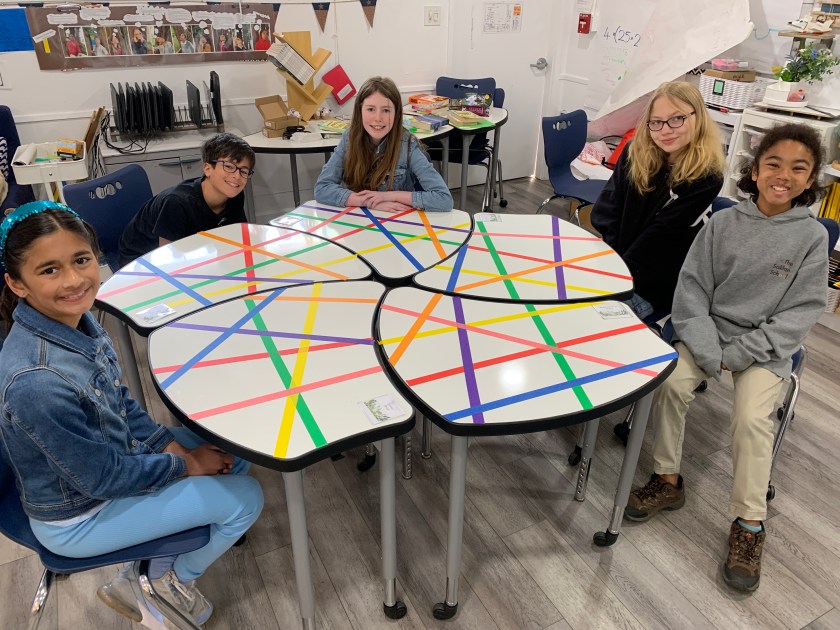
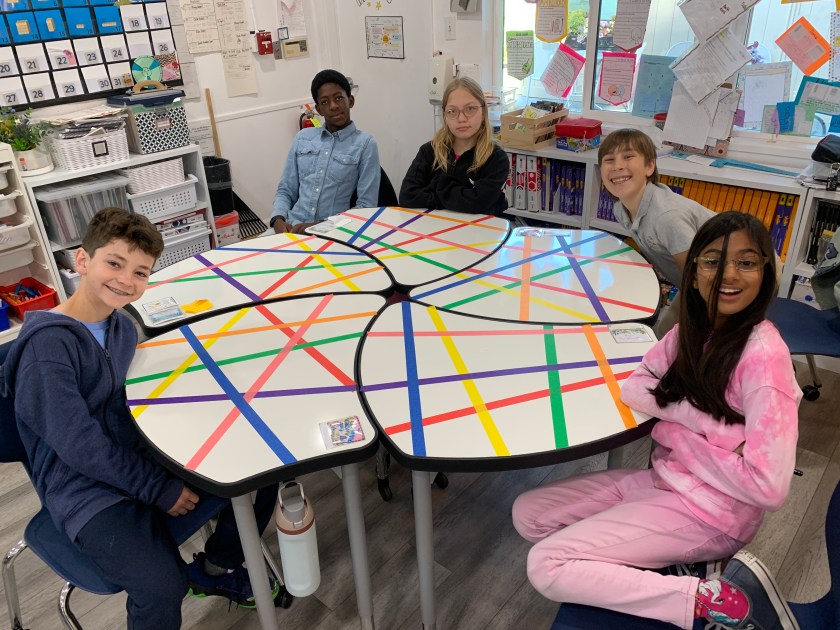
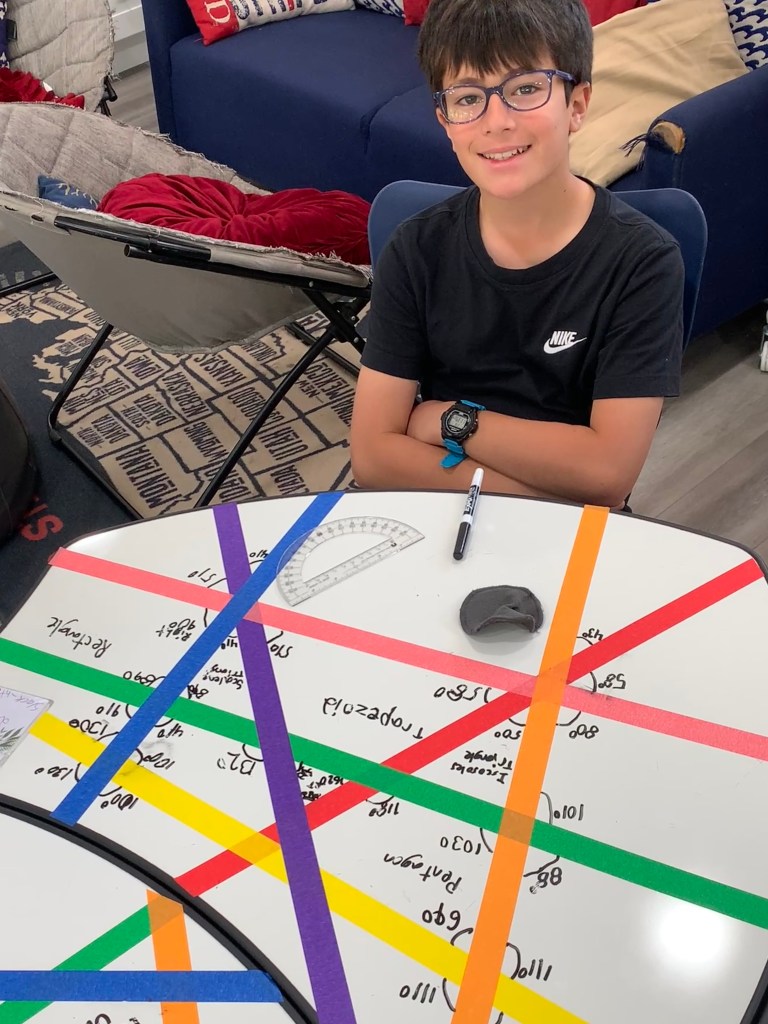
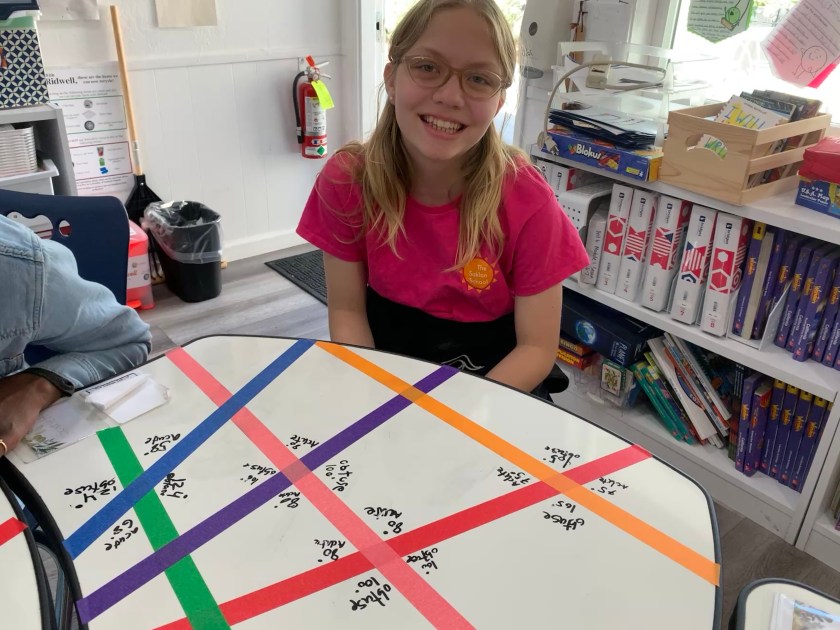
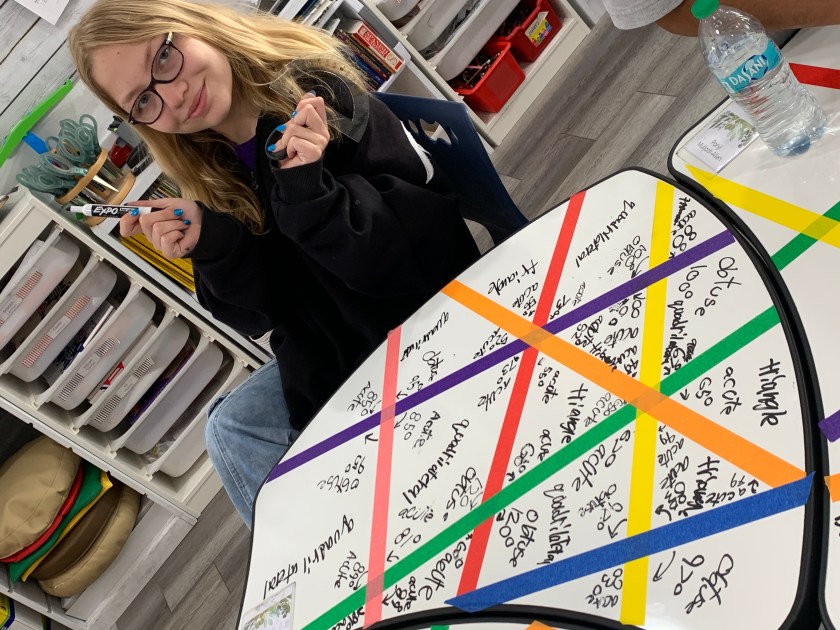
As colorful tape stretched across desks in every direction, the classroom quickly transformed into a giant geometry puzzle. Students were immediately drawn in, asking questions like, “What’s happening?” “Are the lines supposed to match across the tables?” and “I think we’re finding triangles and quadrilaterals!” In true Saklan fashion, curiosity led the way as students eagerly investigated the patterns around them.

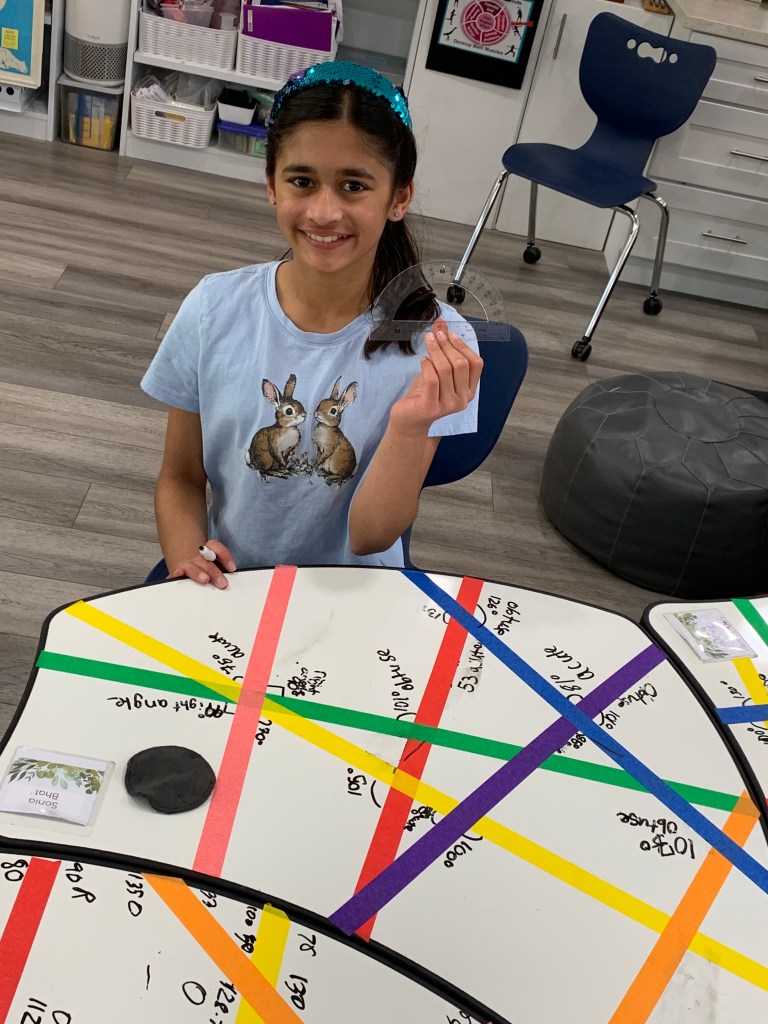
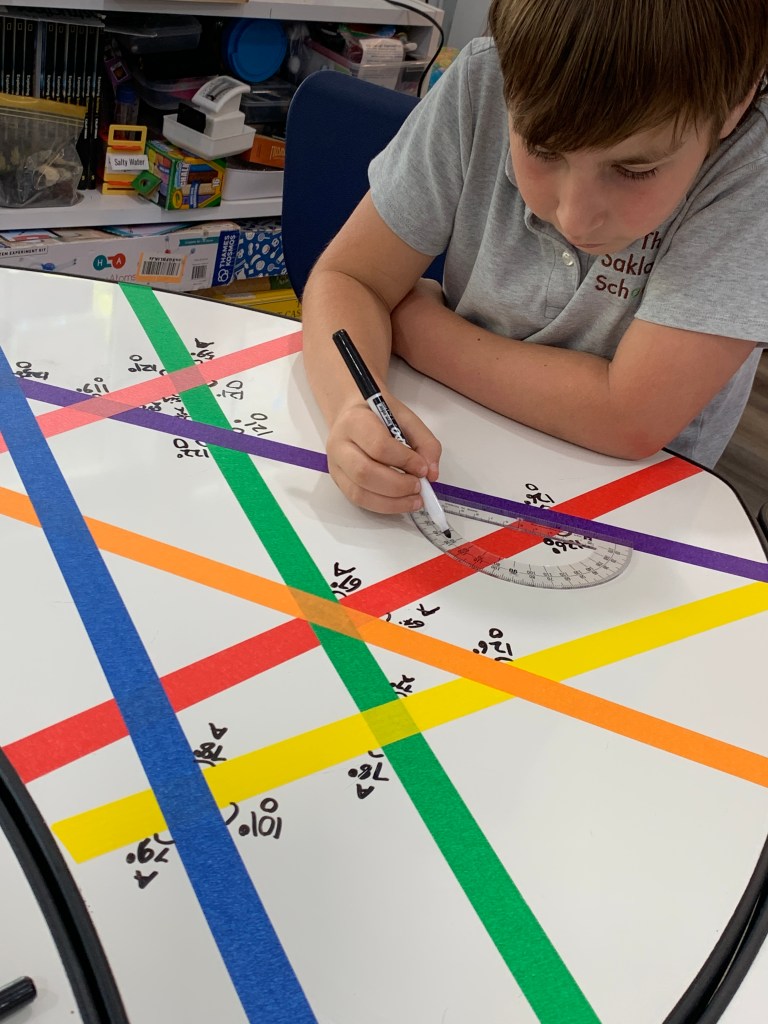
It wasn’t long before they discovered that the web of lines was part of a hands-on geometry challenge. Armed with protractors, students measured angles, recorded their findings directly on the desktops, and classified them as acute, obtuse, or right. As they worked, key mathematical concepts came to life: angles along a straight line add up to 180 degrees, and angles around a point total 360 degrees.

With each new discovery, excitement grew. Students identified a wide variety of shapes hidden within the intersecting lines, including kites, trapezoids, quadrilaterals, and triangles of all kinds, from scalene to isosceles, as well as perfectly formed right angles.

What made this experience especially meaningful was not just the math itself, but how students engaged with it. Rather than working through problems on paper alone, they moved, collaborated, and explored concepts in a dynamic, shared space.

This kind of visual and experiential learning helps deepen understanding while building confidence, persistence, and flexible thinking. It also reflects the essence of education at Saklan: rigorous academics paired with hands-on challenges and opportunities for creative problem-solving.

#SaklanHandsOn

The Brain, Perception, and Human Connection

Fifth graders at Saklan are investigating a powerful question: What if everything we see, feel, and react to isn’t exactly what it seems?

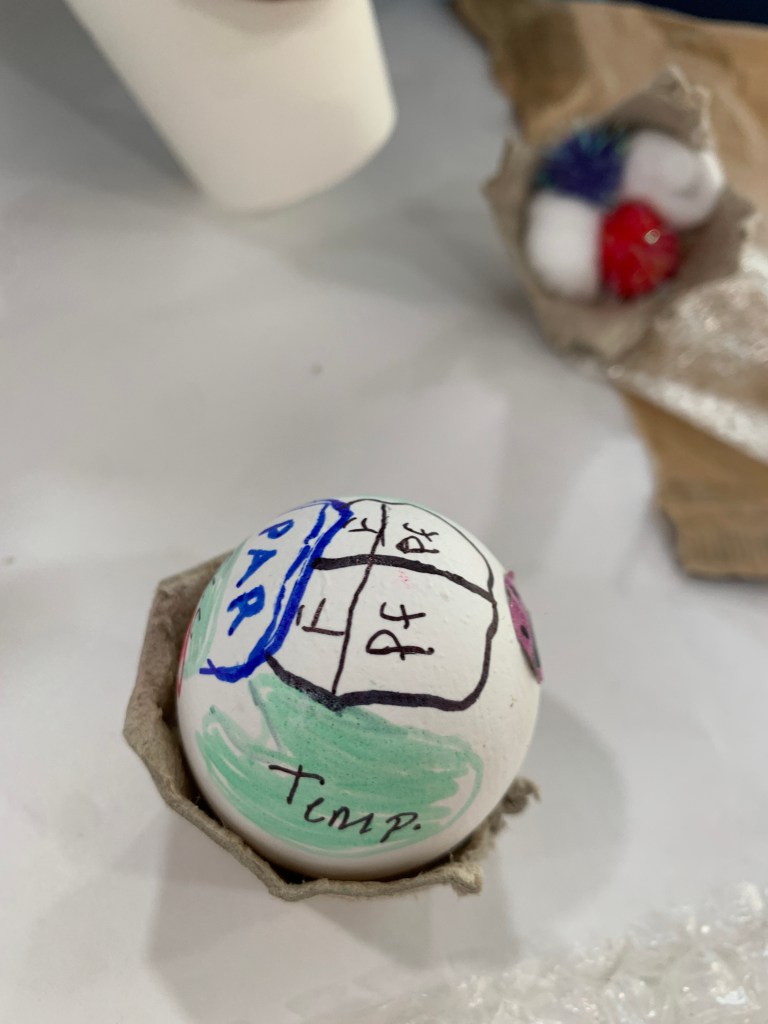
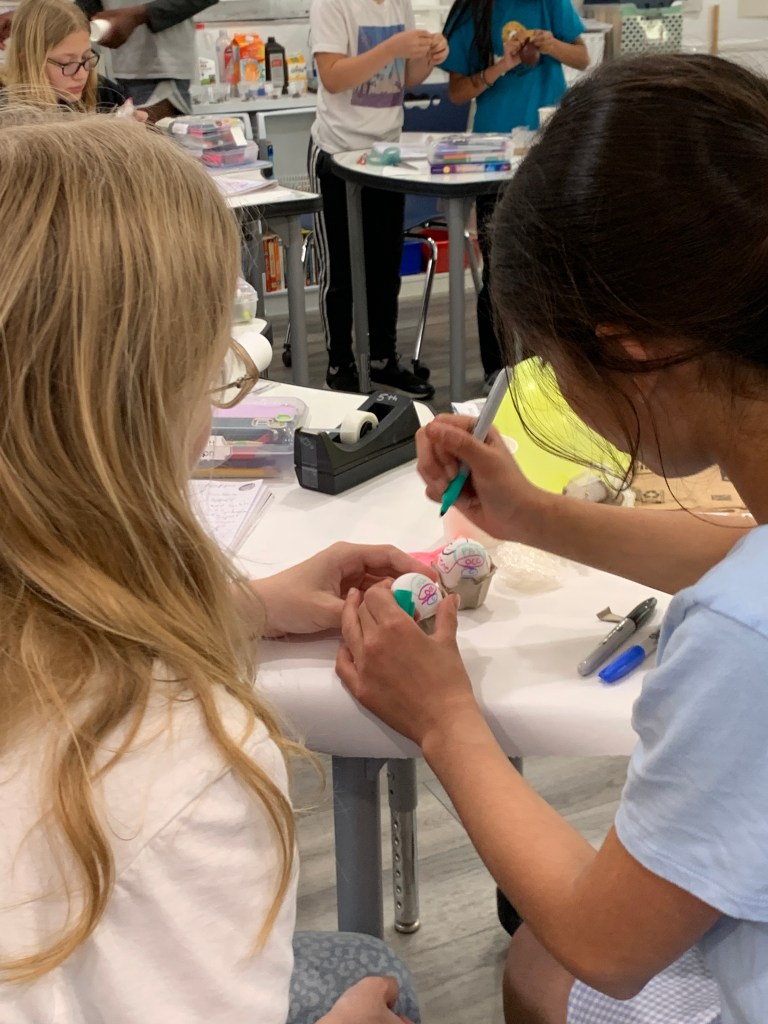
Their study began with an exploration of the brain as both remarkably capable and inherently imperfect. Through hands-on learning, students mapped the different lobes of the brain onto eggs, creating a tangible model to better understand how the brain functions, and what happens when it doesn’t.

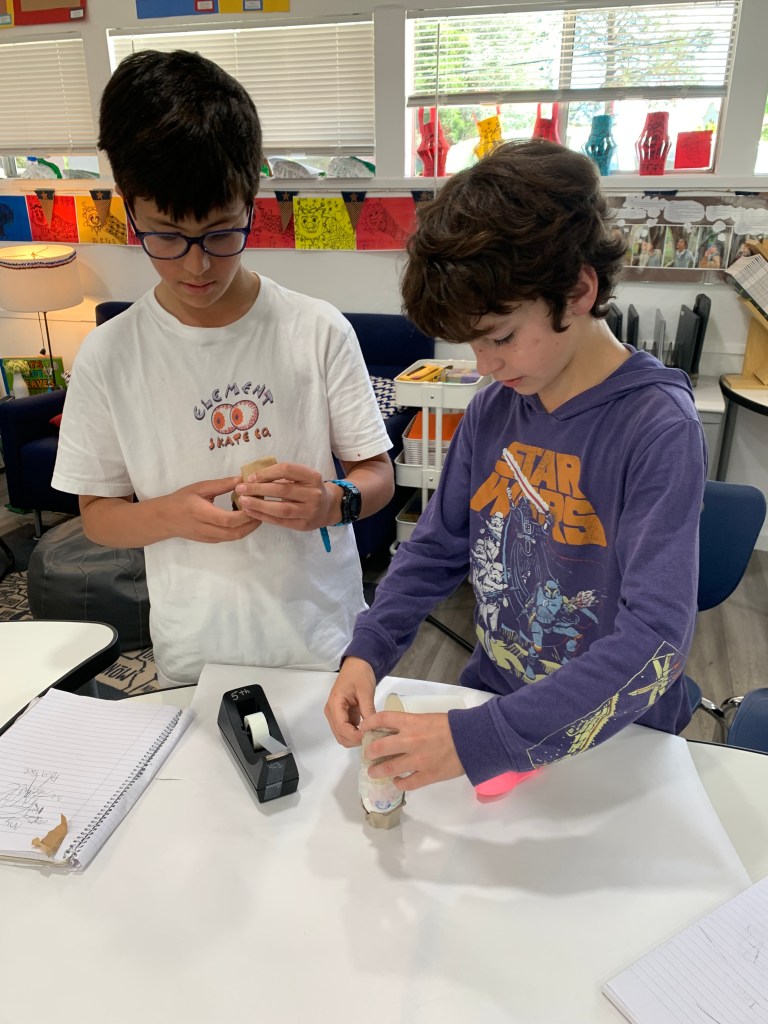
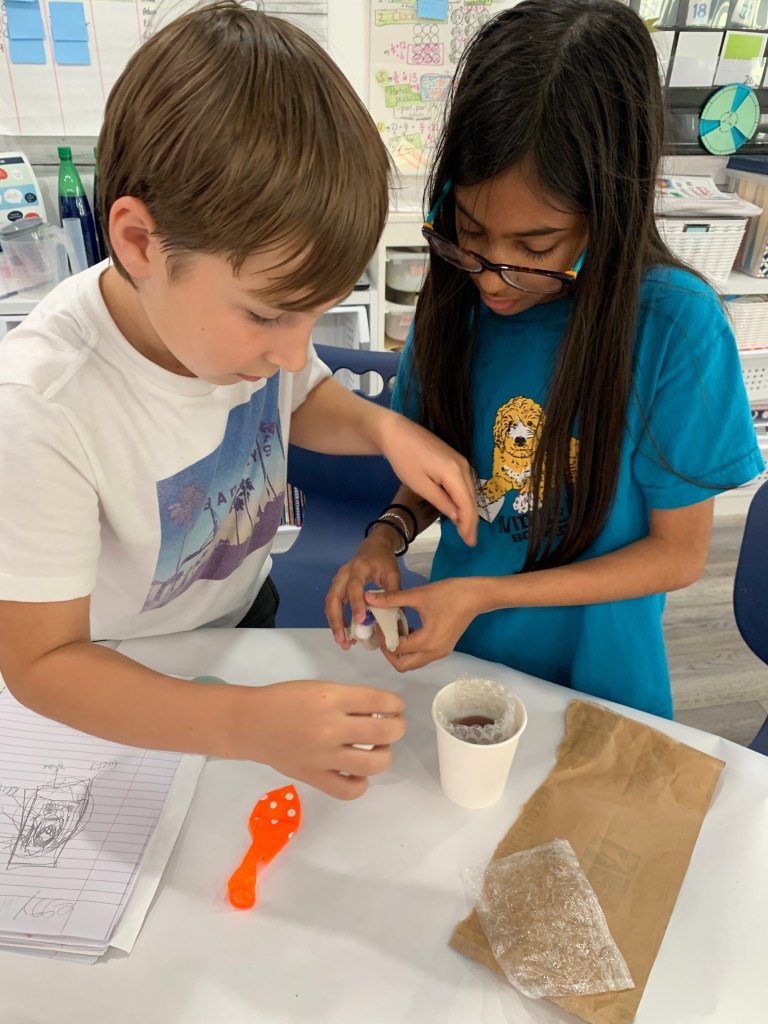
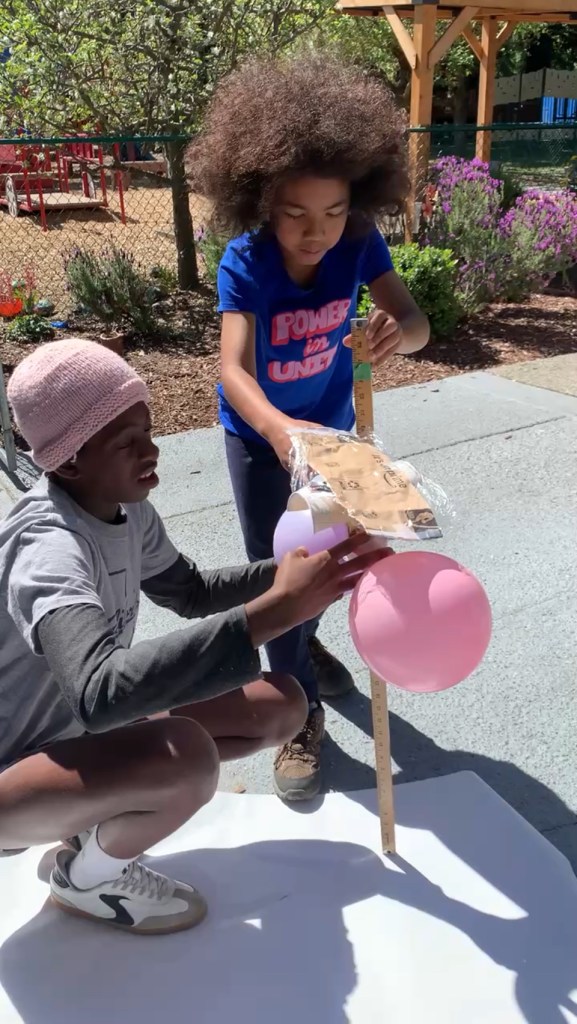
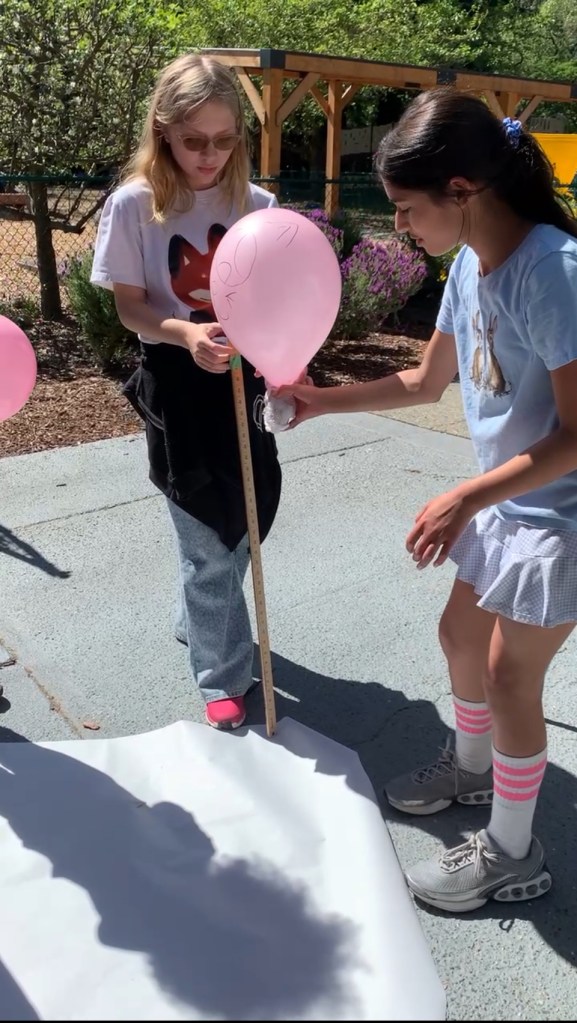
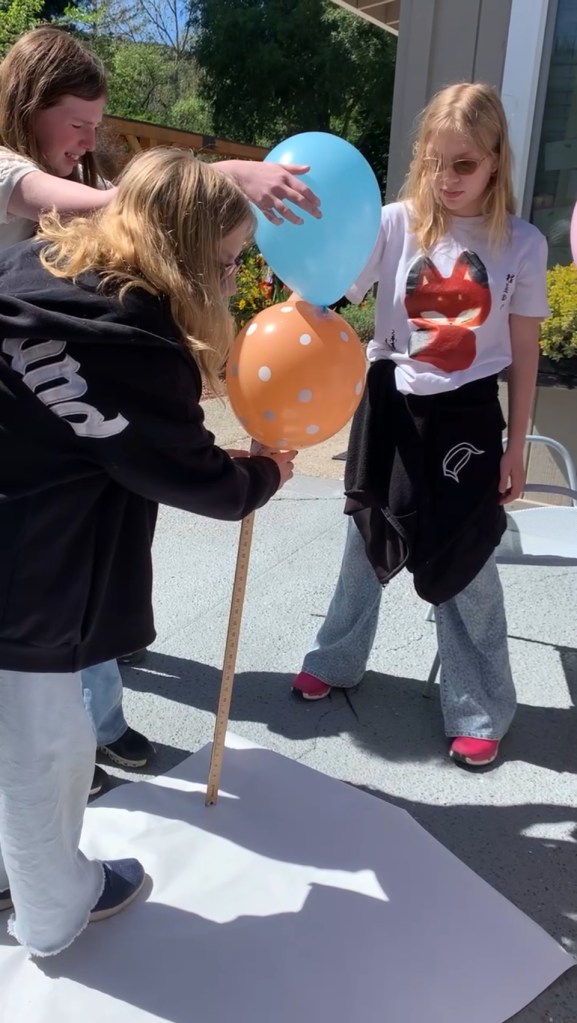
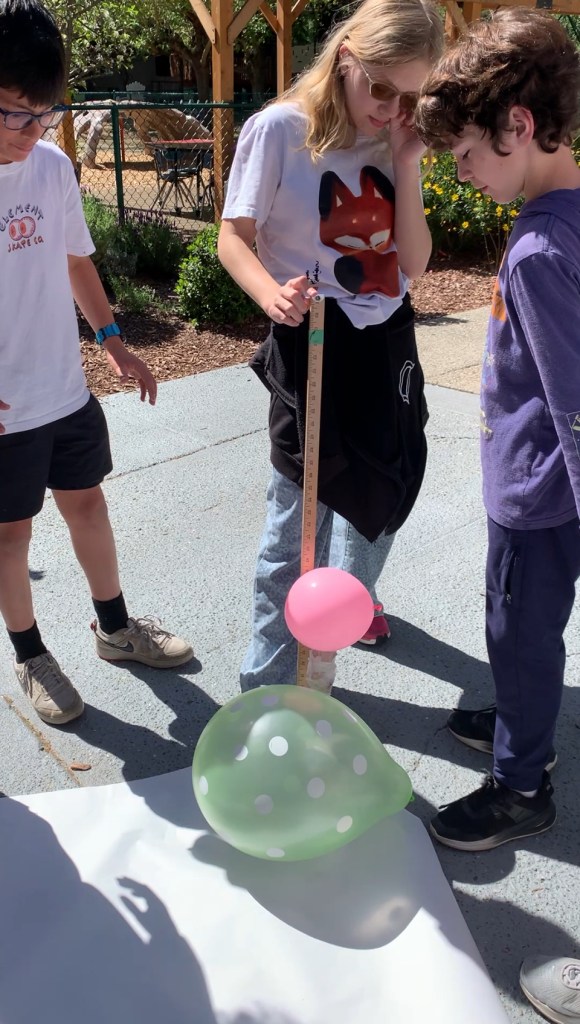
From there, students moved into a full engineering cycle, planning, designing, and testing “crash helmets” to protect their egg “brains.” Using materials like balloons, cotton balls, bubble wrap, and pompoms, they built creative prototypes with focus and purpose. The classroom quickly transformed into a hub of innovation and collaboration.

The excitement peaked during crash testing. When one “patient,” affectionately named Eggie, sustained a fracture through the temporal lobe and prefrontal cortex, students immediately shifted into diagnosis mode. Drawing on their growing understanding of brain function, they predicted how such injuries might impact memory, impulse control, and decision-making. In that moment, science became immediate and real.

Students were especially captivated by how the brain interprets, and sometimes misinterprets, what we see. When examining the viral image known as The Dress, the class was split, with about 20% seeing white and 80% seeing blue. In another activity featuring color illusions, students debated what they saw with complete confidence, only to discover that others perceived the same image entirely differently.

These moments sparked both curiosity and reflection. Students began to grapple with an important realization: our brains construct our experience of the world, and those constructions can vary from person to person. If it’s possible to feel completely certain and still be mistaken, or simply see things differently, what does that mean for how we navigate disagreements and treat one another?

This question lies at the heart of the project.

Earlier this year, fifth graders worked to restore the Redwood Grove, using physical tools to care for a shared environment. Now, they are beginning to design a different kind of toolkit: one that helps people pause, understand what is happening in their brains, and respond with greater awareness. Like redwoods, strong communities are built through connection, not just proximity.

Making Sense of Fractions

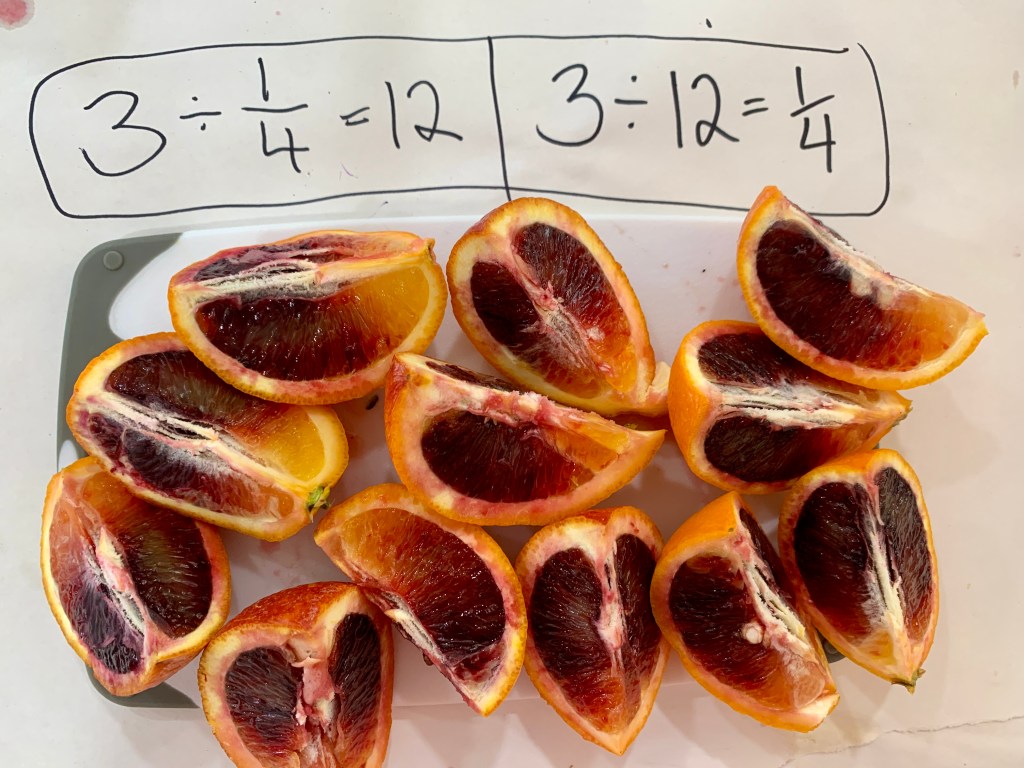
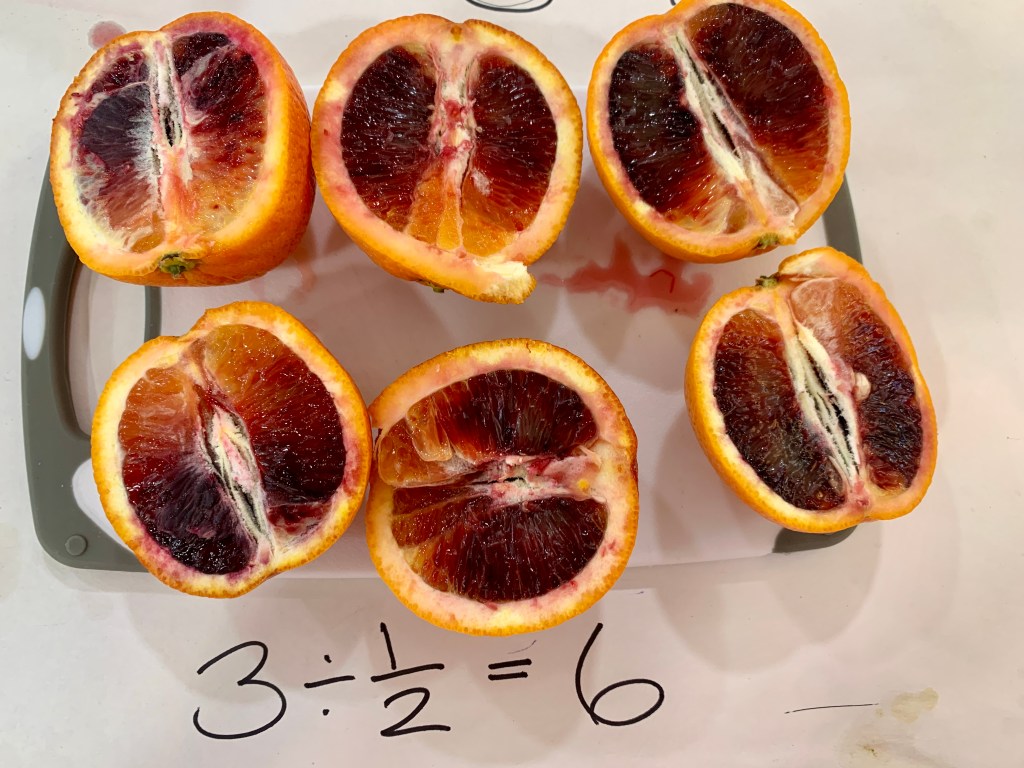
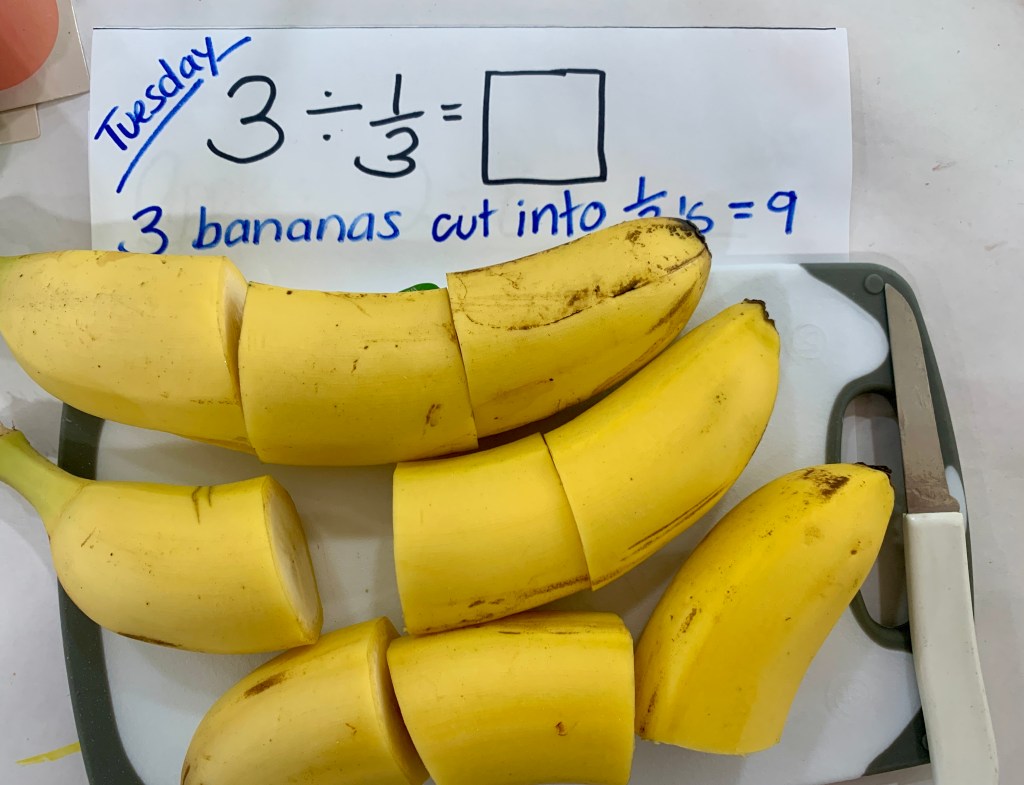
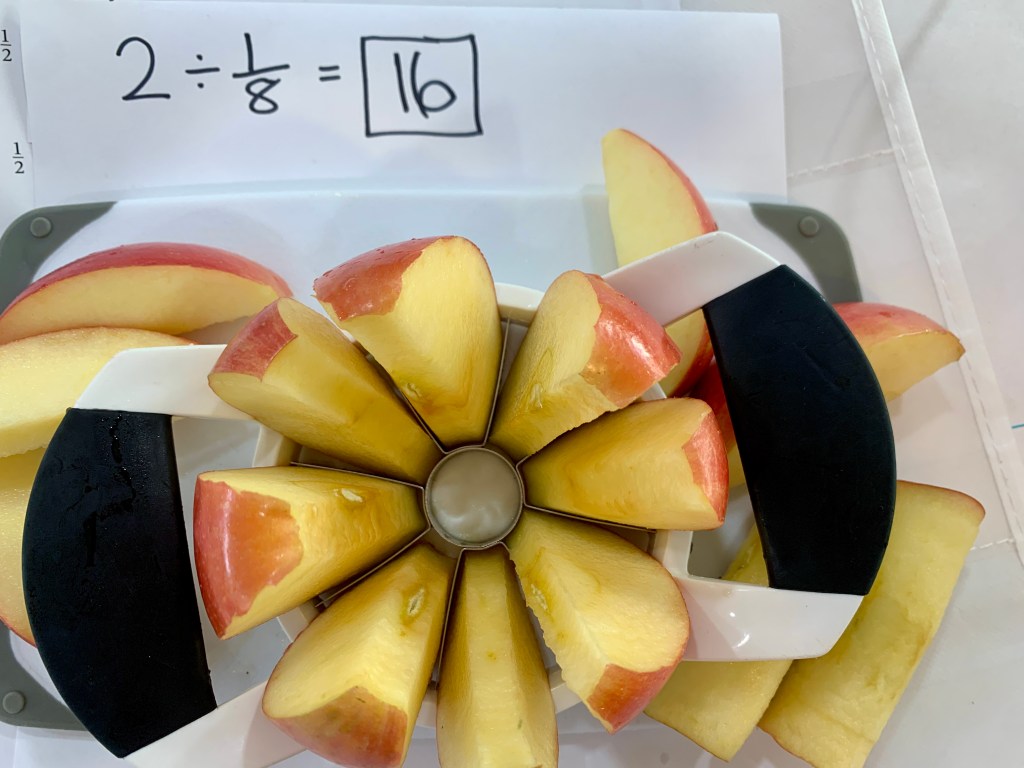
Fractions have taken center stage in the fifth-grade classroom, with the students focusing on understanding why fraction operations work. Rather than jumping straight to procedures, students have used visual models, discussion, and hands-on exploration to build a strong conceptual foundation—one that allows them to reason through problems, explain their thinking, and apply their learning in new situations.

One particularly memorable example came from the class’s daily fruit demonstrations. When students worked through fraction problems using numbers alone, answers sometimes varied. But when fruit appeared on the cutting board, and students could see fractional pieces in relation to a whole, their thinking quickly aligned. Concepts that once felt abstract suddenly became clear, and earlier mistakes turned into meaningful learning moments.

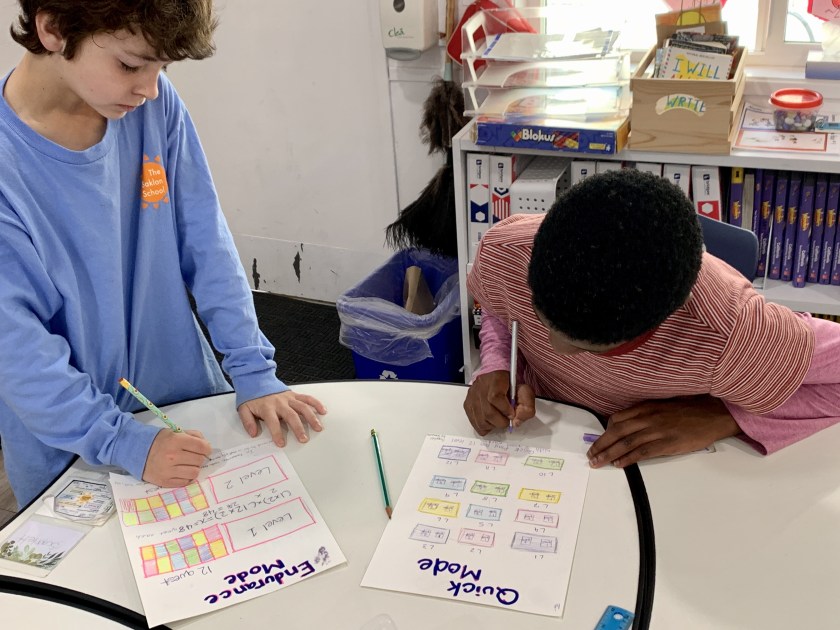
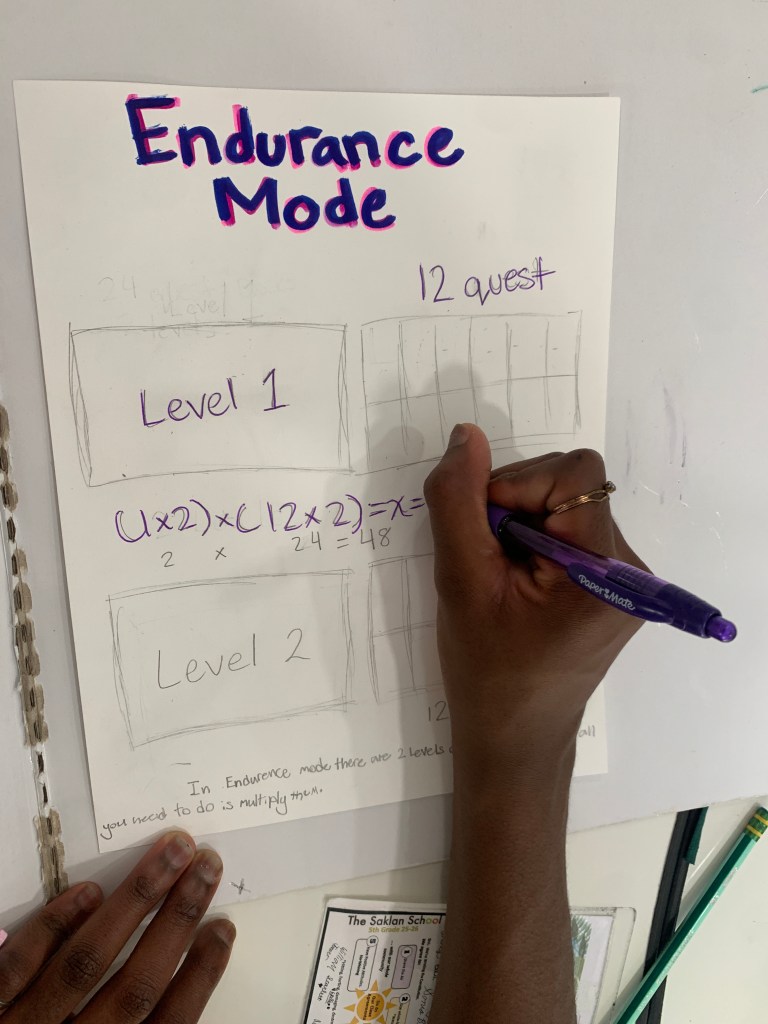
Students also tackled a real-world-inspired challenge from Mateo of BRAD Co., who needed help organizing 24 quests across game levels. Through modeling and discussion, students discovered that the expression 24 ÷ 2 can represent two valid interpretations: 12 quests in each of two levels, or 12 levels with two quests each. By the end, students demonstrated that both solutions were correct, supporting their reasoning through clear and thoughtful representations.

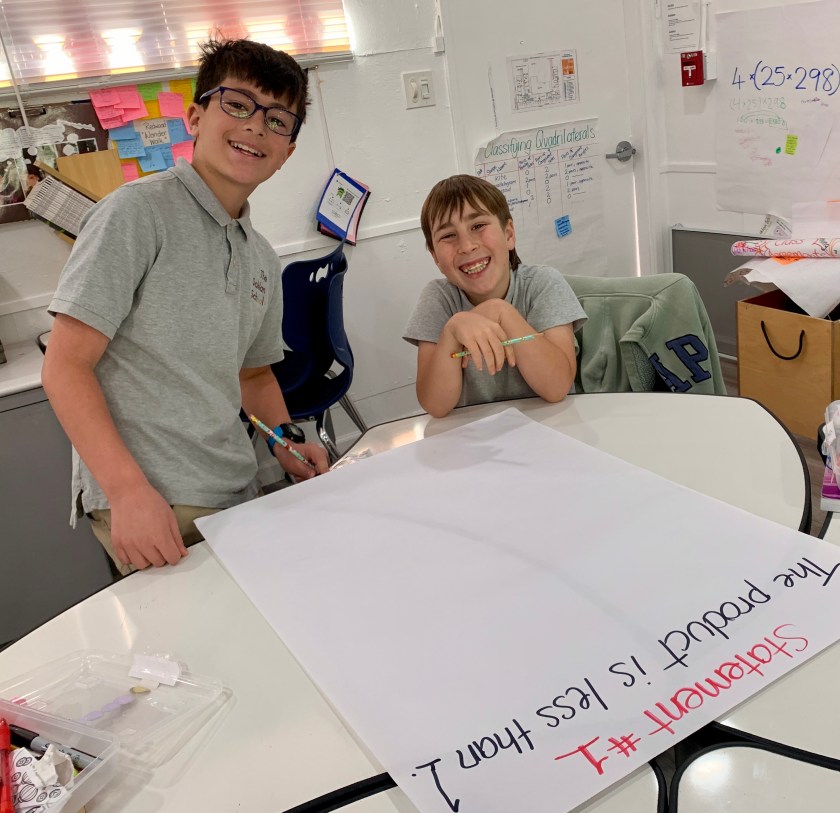
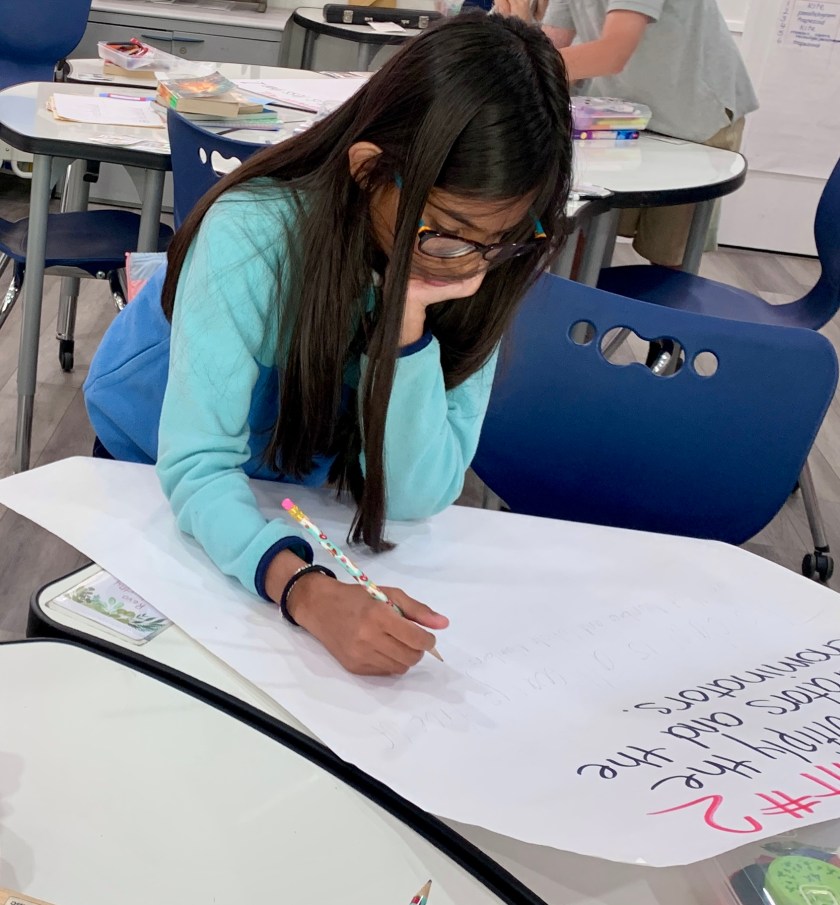
In another activity, students evaluated mathematical claims, determining whether statements were always true, sometimes true, or never true. They backed up their conclusions with examples, diagrams, and models, strengthening their ability to generalize relationships between factors and products when working with fractions.

This kind of reasoning: making claims, defending them with evidence, and revising thinking through discussion, builds the mathematical communication and problem-solving skills that prepare students well for middle school mathematics and beyond.

Perseverance in Action

Last Friday, Saklan’s February Social-Emotional Learning (SEL) focus on perseverance came to life in a memorable way for students in third, fourth, and fifth grade.

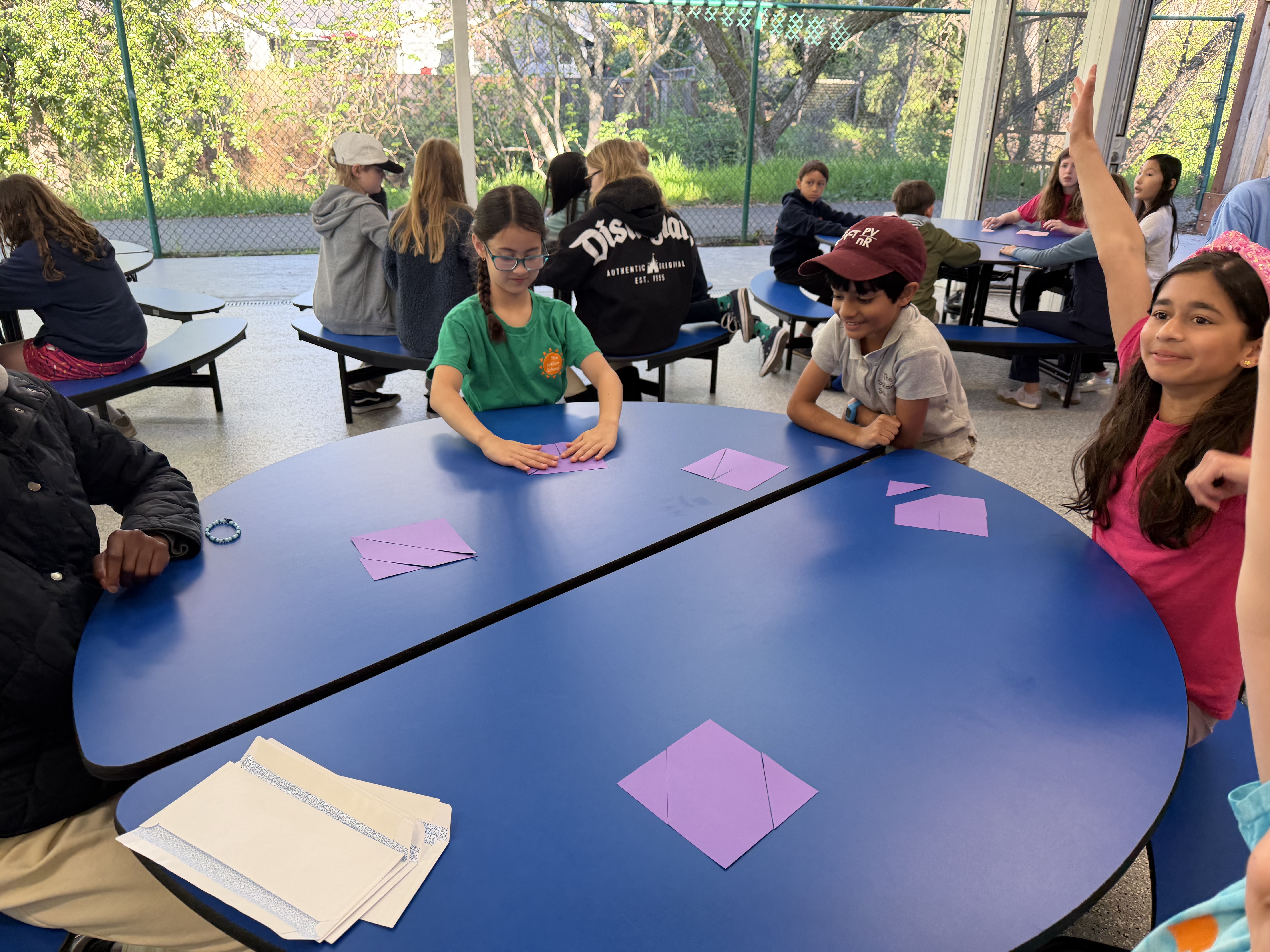
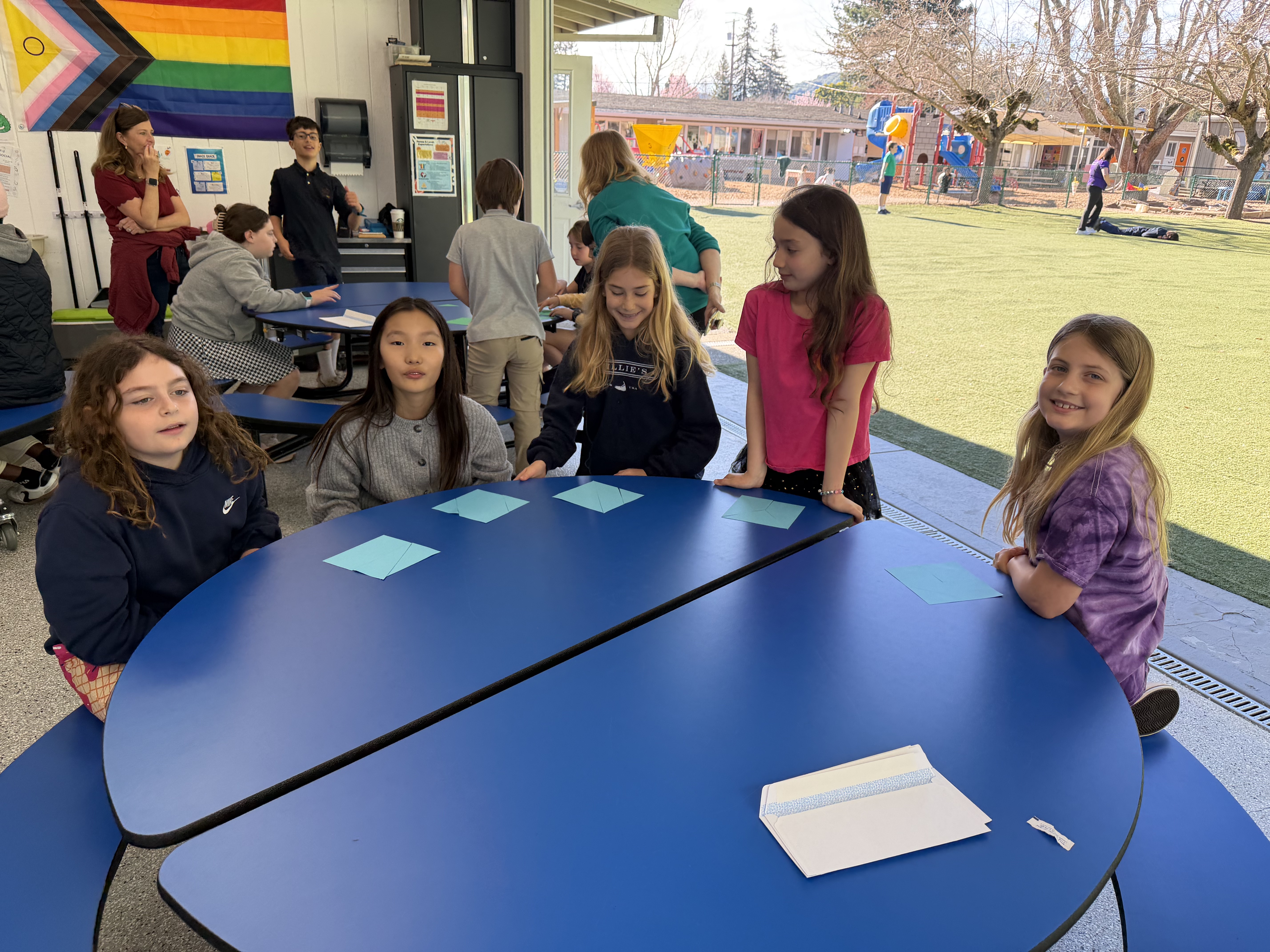
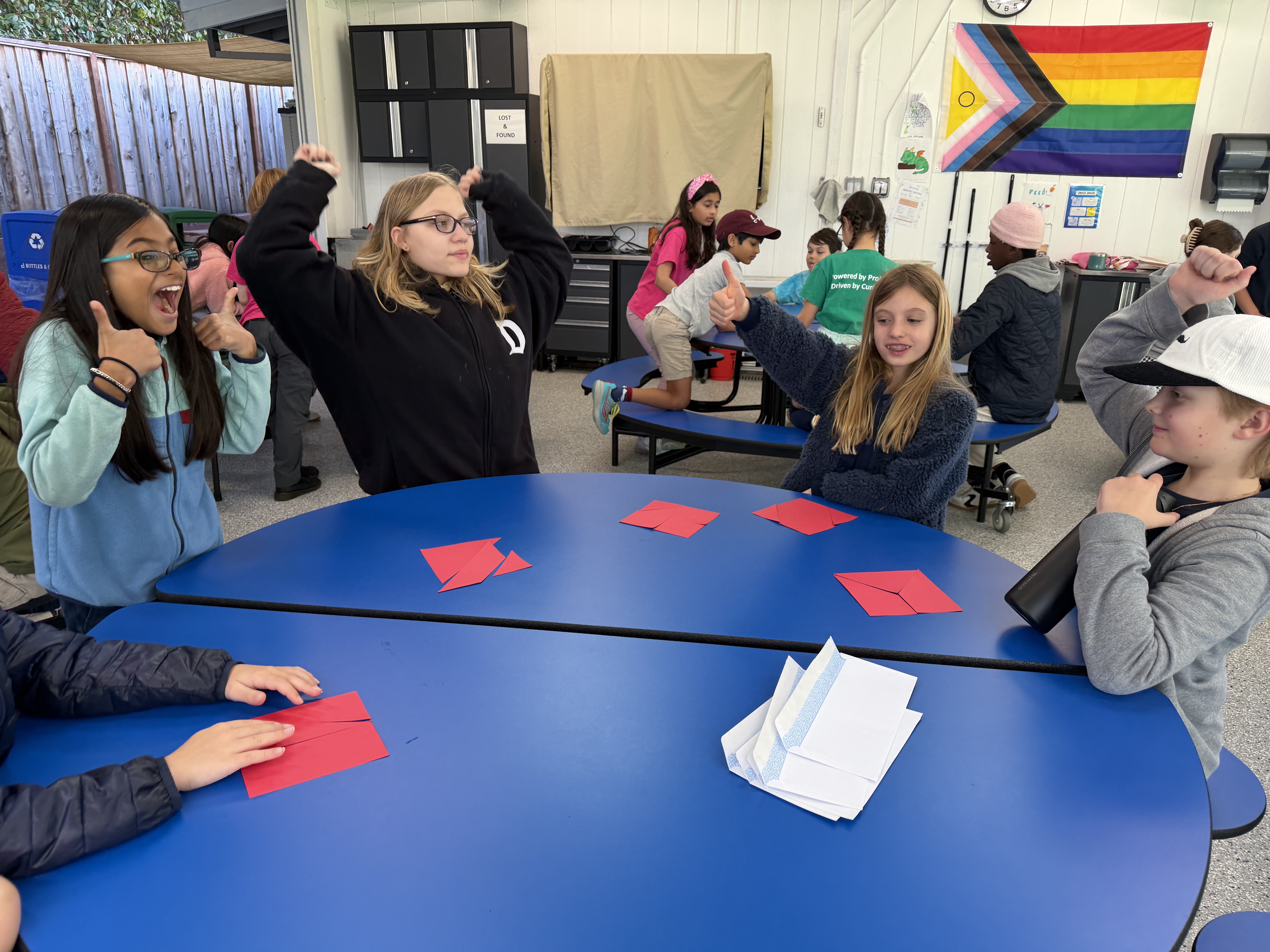
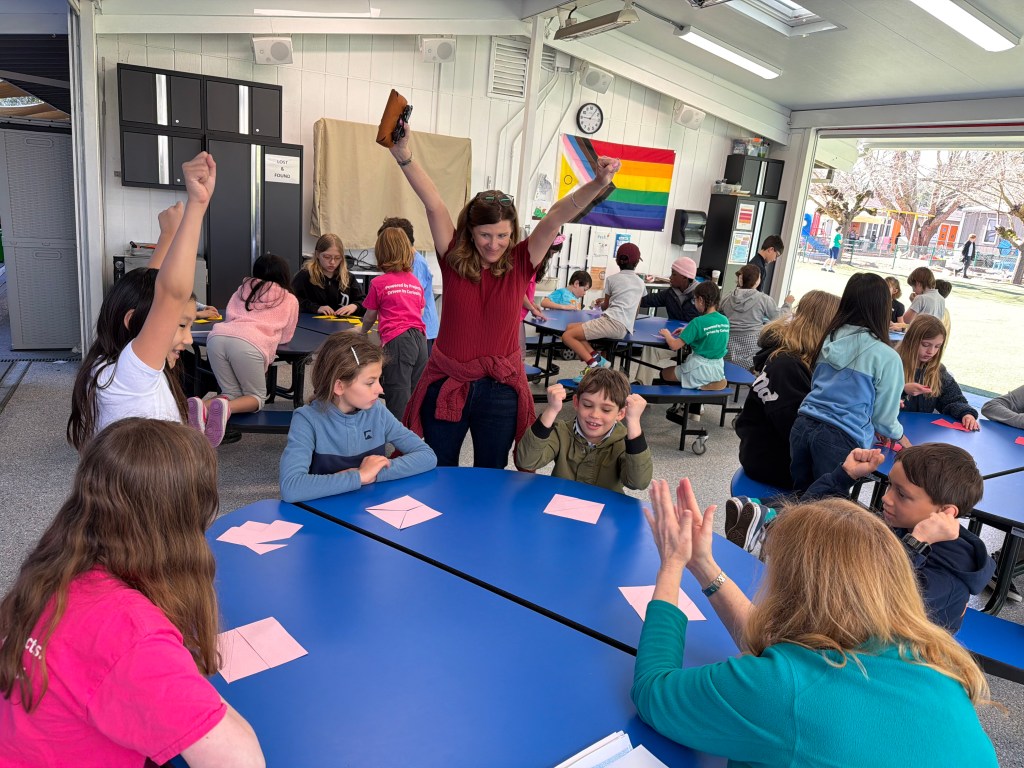
Students gathered in mixed-grade groups of five for a silent puzzle challenge that quickly proved to be about much more than fitting shapes together. Each student began with three puzzle pieces, and together their group needed to complete five square puzzles. There was just one twist: students had to trade pieces without speaking. While they were allowed to offer a piece if they noticed someone needed it, they could not ask for one themselves.

At first, the rules prompted puzzled looks and raised eyebrows. One student even asked, “Wait… we can’t talk at all?” before the challenge began. Soon, however, the pavilion filled with intense focus, expressive gestures, and quiet determination. Without words, students leaned in, carefully studied one another’s progress, and began noticing—really noticing—what their teammates needed.

Gradually, the groups found their rhythm. Students passed pieces across the table, pointed gently to openings, and patiently waited for the right moment to help a teammate. When the final squares clicked into place, the groups celebrated in their own silent way, pumping their arms and grinning with pride.

The activity was more than a puzzle-solving exercise. It was a powerful opportunity for cross-age collaboration and social-emotional growth. Students practiced perseverance as they worked through frustration and uncertainty. They also strengthened empathy and social awareness by learning to observe others closely and respond thoughtfully.

During reflection afterward, many students shared how challenging it was to wait patiently and trust their teammates. Teachers helped connect the experience to friendship and community, encouraging students to look beyond their own needs and pay attention to those around them.

It was a meaningful reminder that perseverance often involves patience, teamwork, and the willingness to support others.

#SaklanSEL #SaklanCommunity

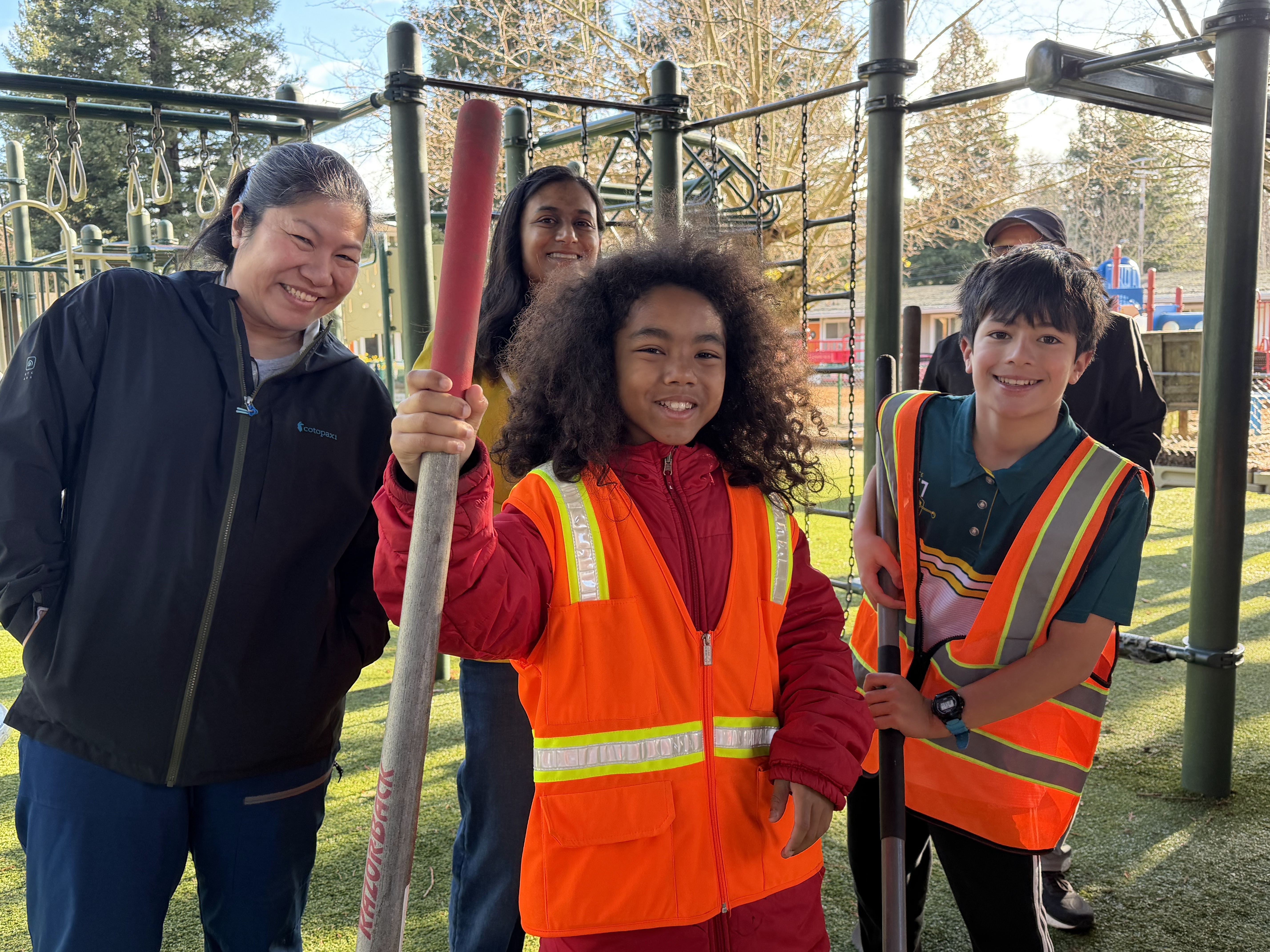
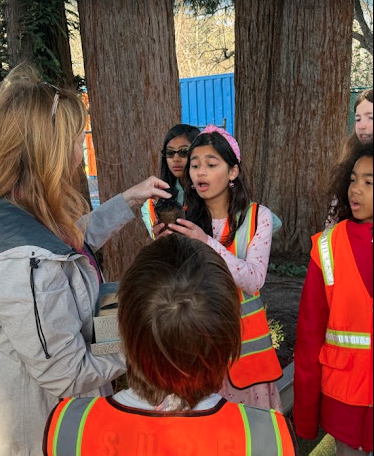
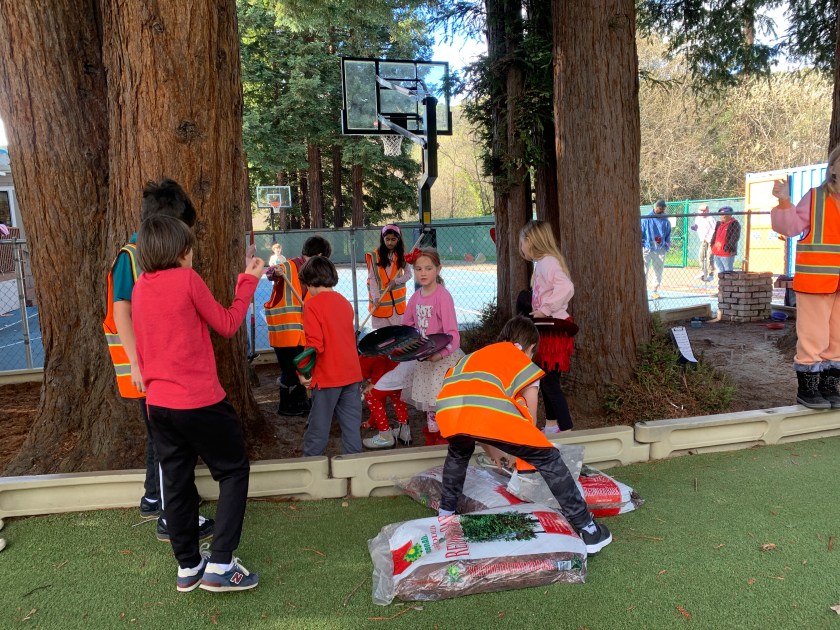
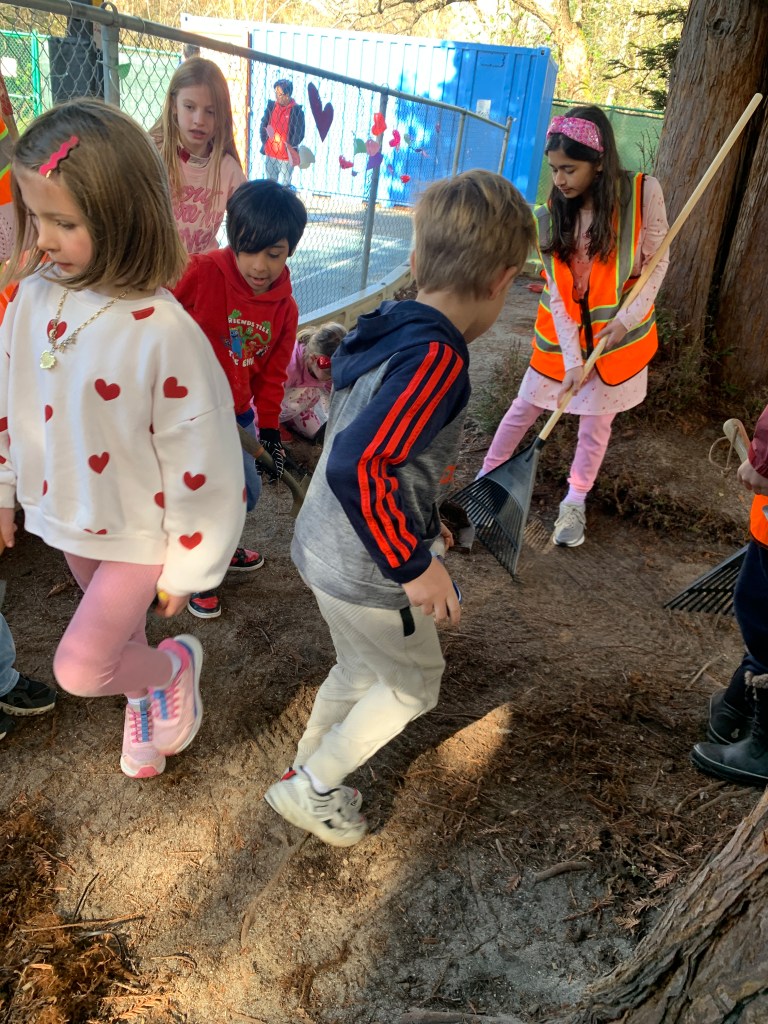
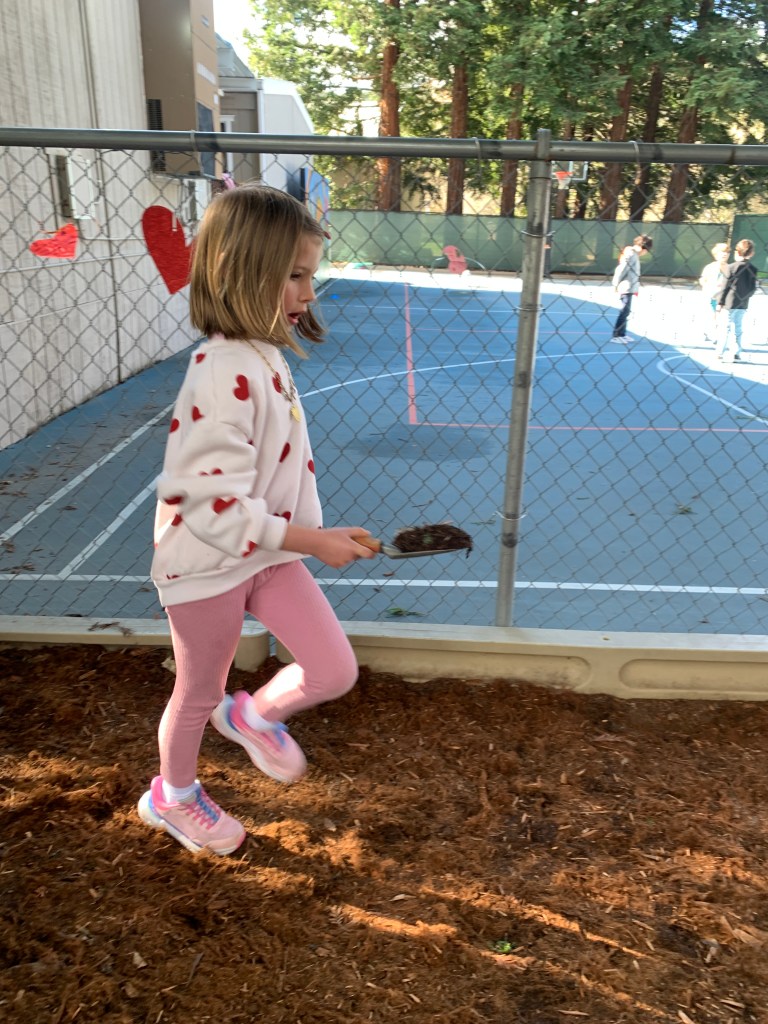
Fifth Grade Leads Redwood Grove Restoration Project

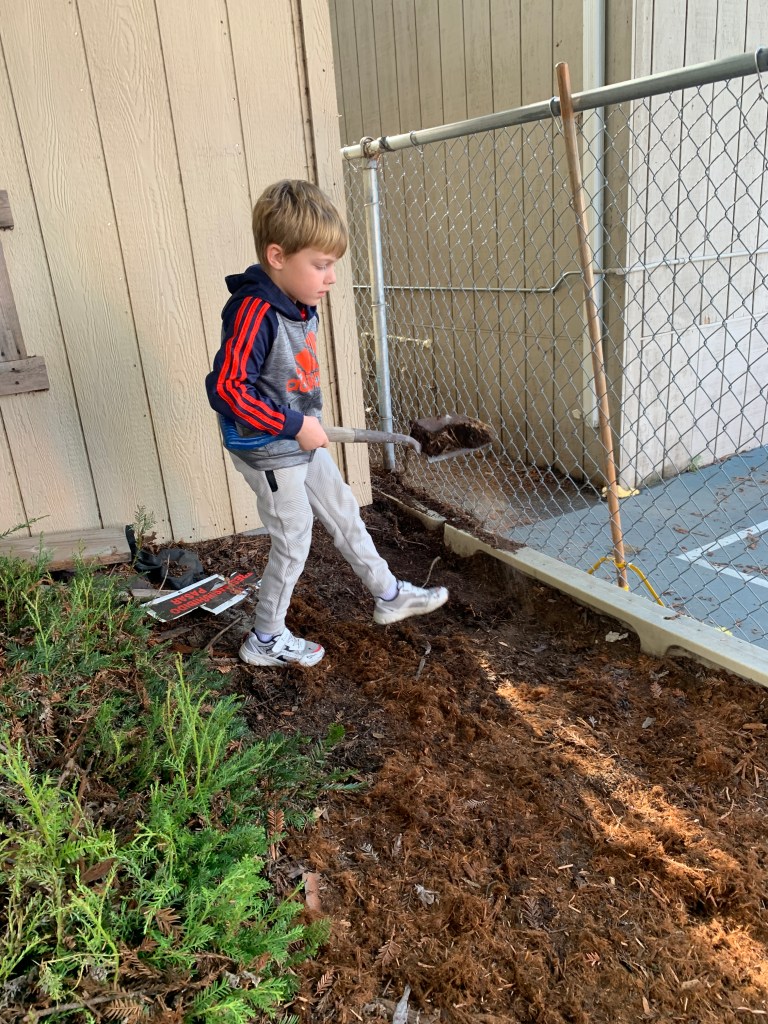
The culmination of fifth grade’s Redwood Grove Project Based Learning unit was a powerful example of student leadership in action. After weeks of studying forest ecosystems and soil health, students led a shared effort to show their beloved redwood grove some love, restoring natural forest-like conditions to support the trees’ long-term health.
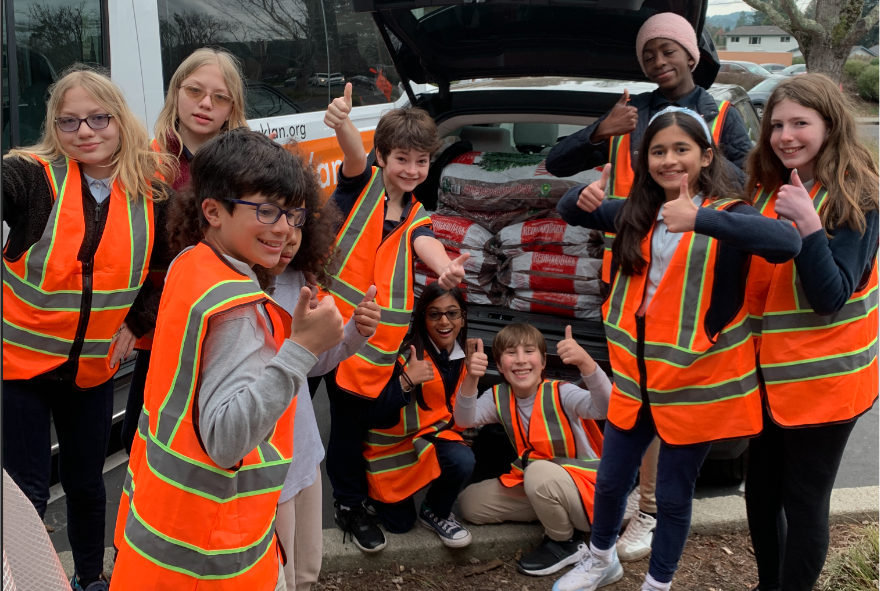
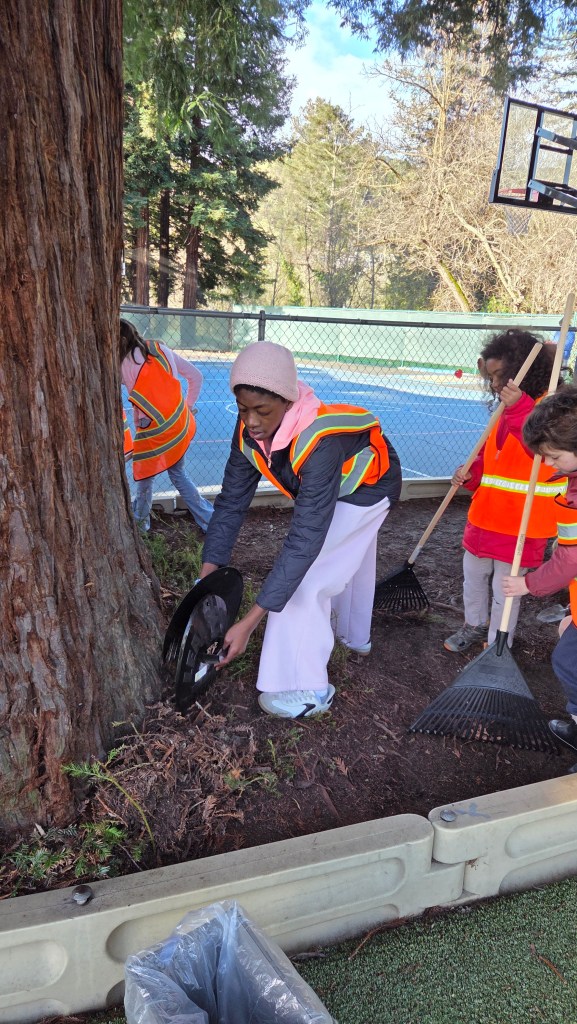
The culmination began with a purposeful walk to Outdoor Supply Hardware, where garden staff offered just the expert advice students needed. Rather than “feeding” the trees, they learned that the grove required a return to natural conditions. Mulch would help retain moisture and encourage the healthy decomposition of fallen leaves, needles, and twigs. With this knowledge, students selected shredded redwood mulch, leaf scoops, and rakes, tools that will allow fallen leaf litter to be returned to the grove year-round.

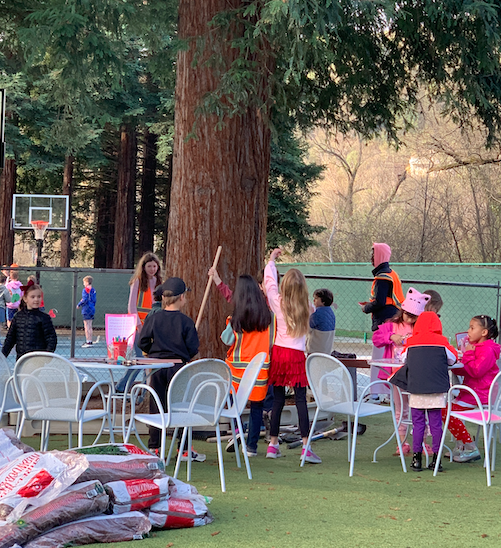
Back on campus, students worked collaboratively and followed their team contracts to prepare for service day. They drafted a formal purchase request, created hearts and ribbons with messages of appreciation, designed and hung posters, unloaded supplies, and set up tables and chairs. Every detail was thoughtfully planned and entirely student-led.

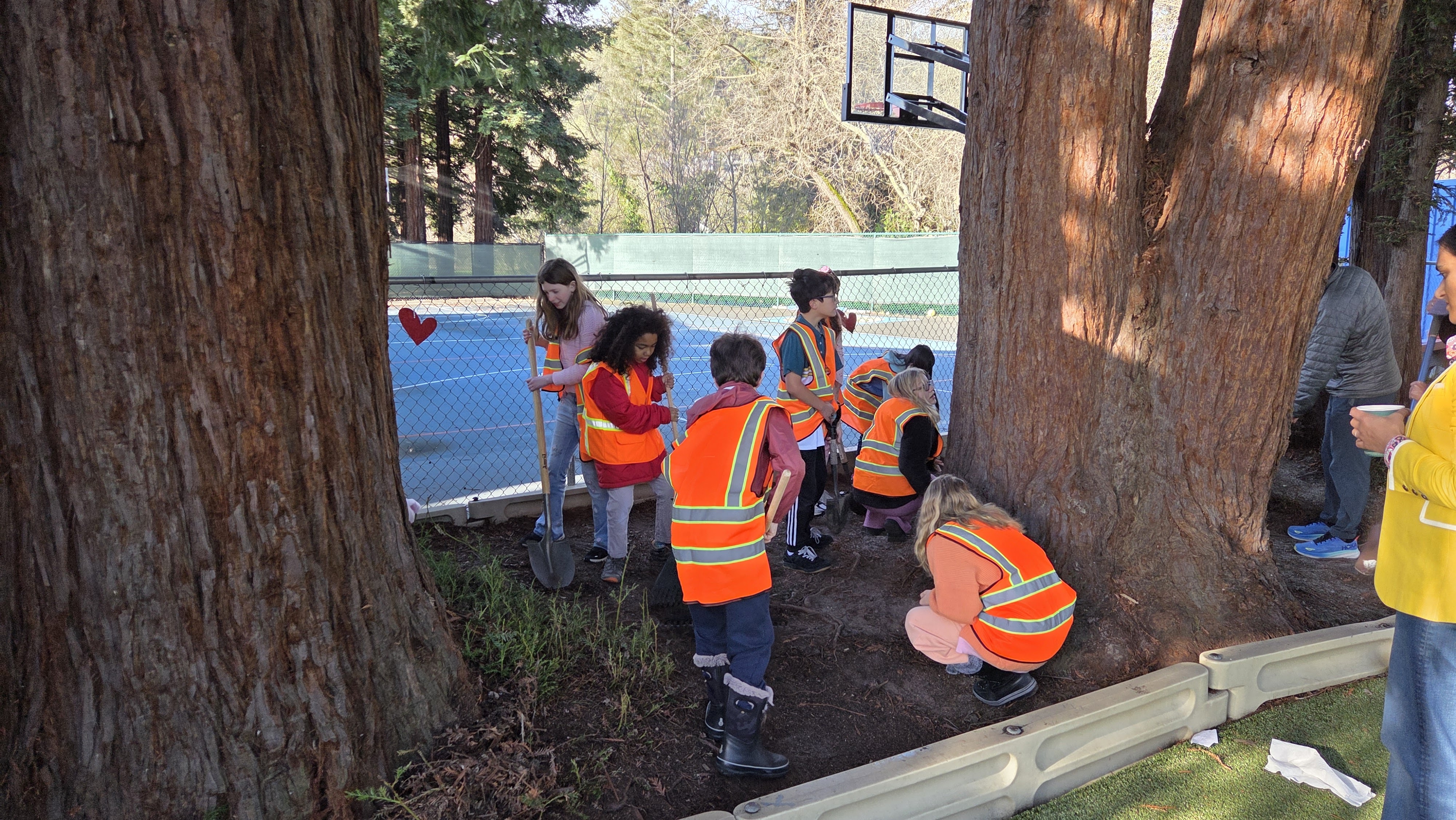
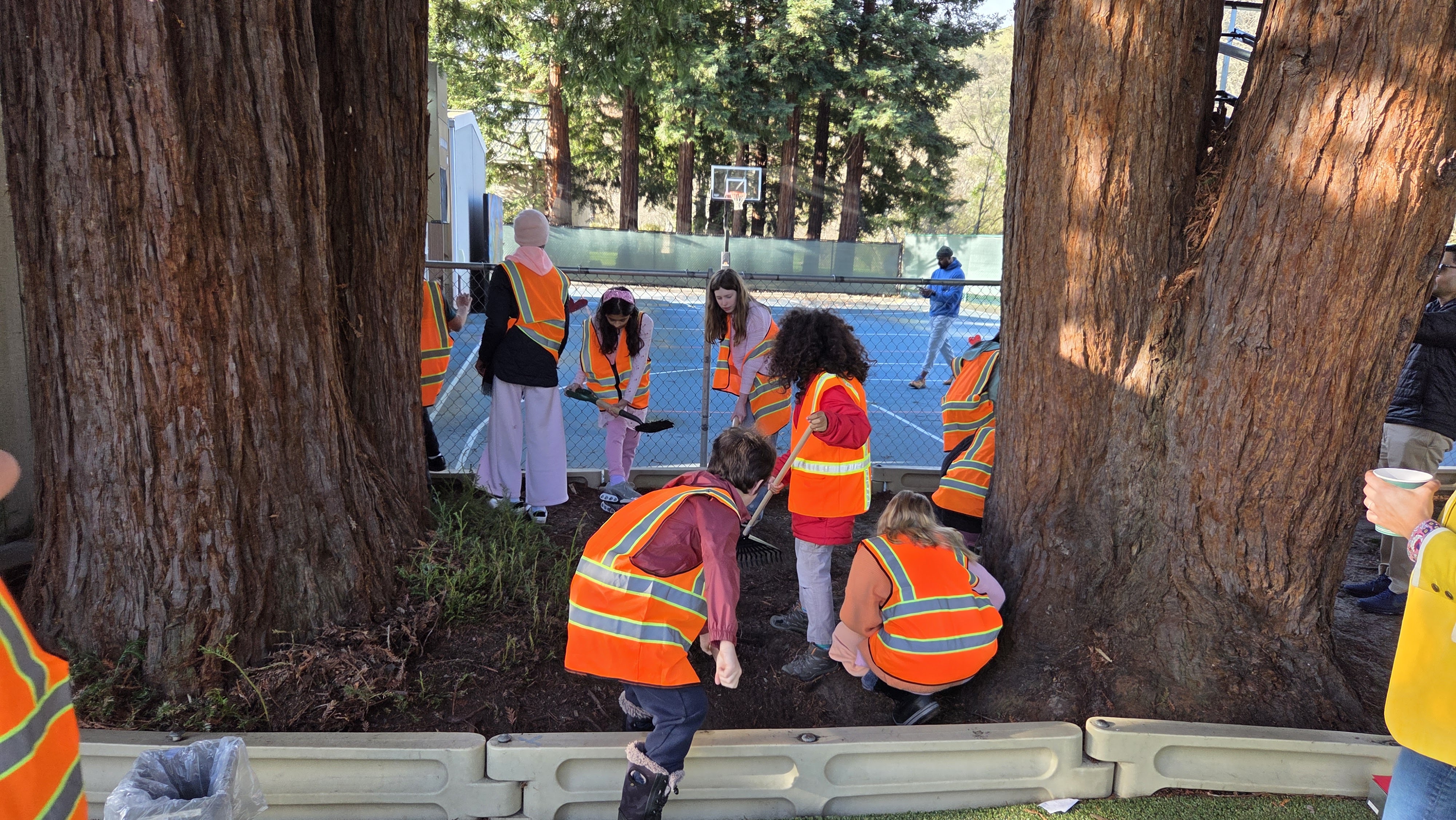
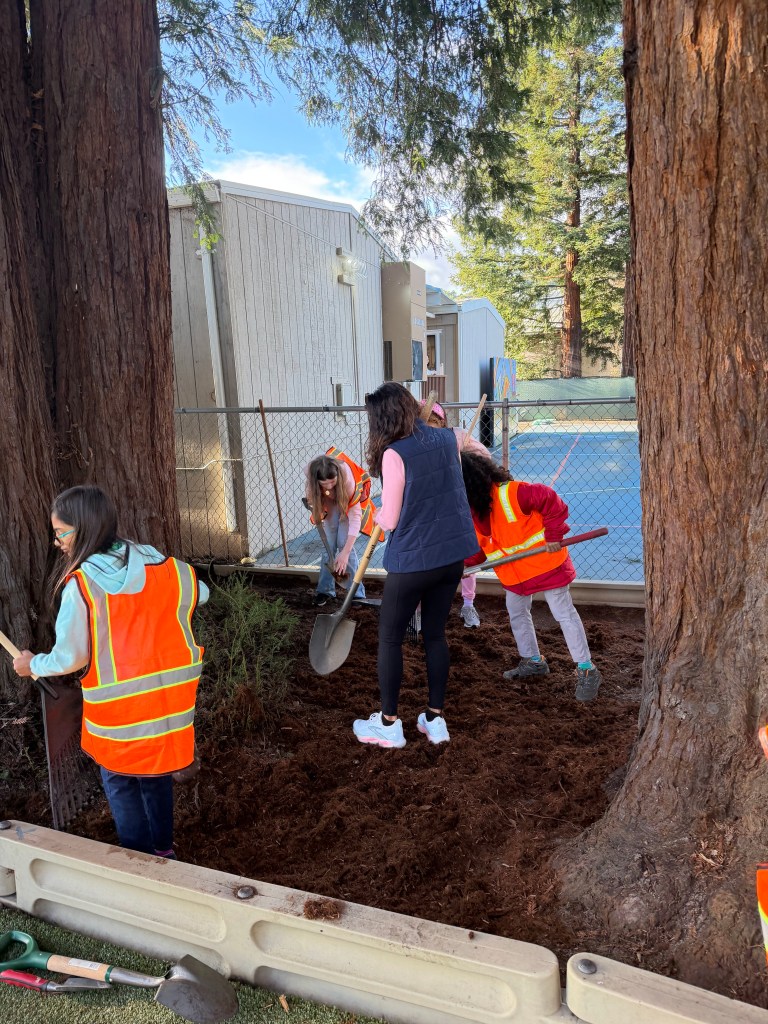
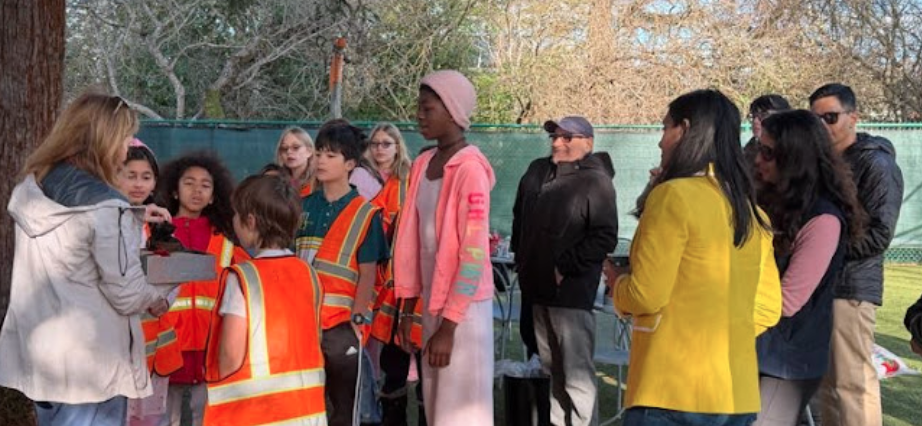
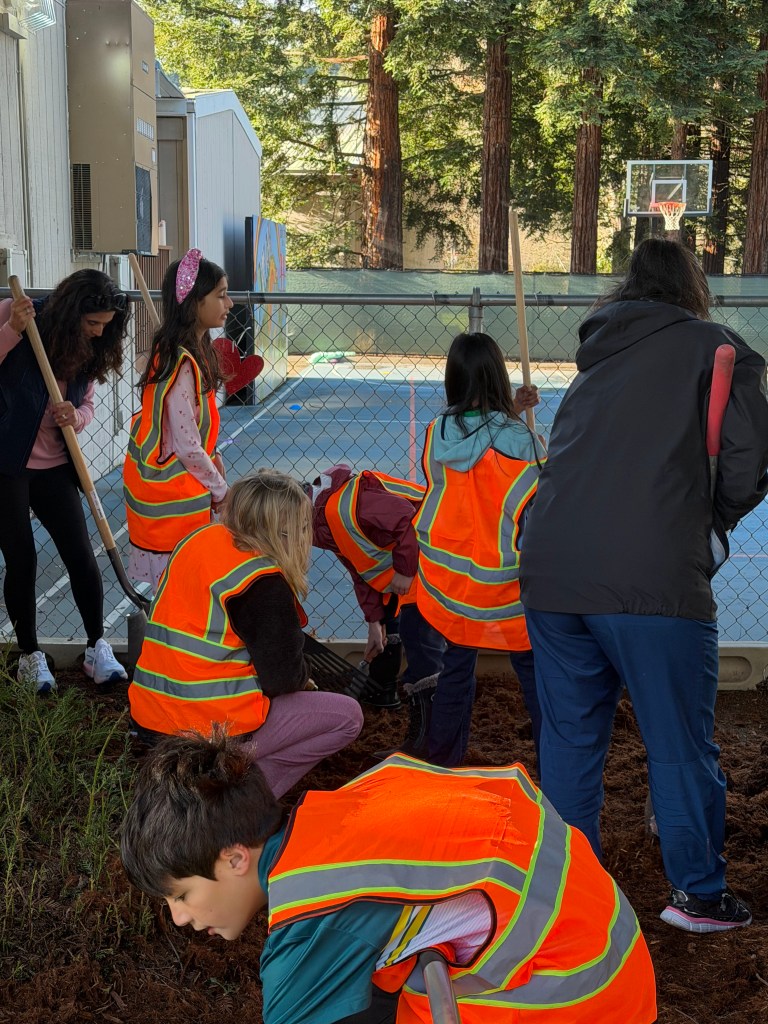
On the morning of the restoration, they were ready. Students shared their research, explained their decisions for the grove, and confidently guided family members through the work they had prepared: loosening compacted sand, carefully spreading mulch, and protecting exposed roots in one section of the grove.

As the first section wrapped up, students received a surprise gift: Dawn Redwood seeds. If successfully grown, one may eventually stand in the new redwood playground, becoming a living learning legacy for future students.

The work didn’t stop there. During recess, fifth graders invited younger students to help restore the next section of the grove, modeling leadership and stewardship. Even steady rain at lunchtime could not dampen their momentum. Paths were raked, clear “go” and “no-go” zones were established, and by the end of the day, the transformation of the grove was visible.
This project was more than a lesson in ecology. It was a lesson in agency. When students are trusted to lead meaningful work, motivation and engagement flourish.

#SaklanPBL

A Splashing Success

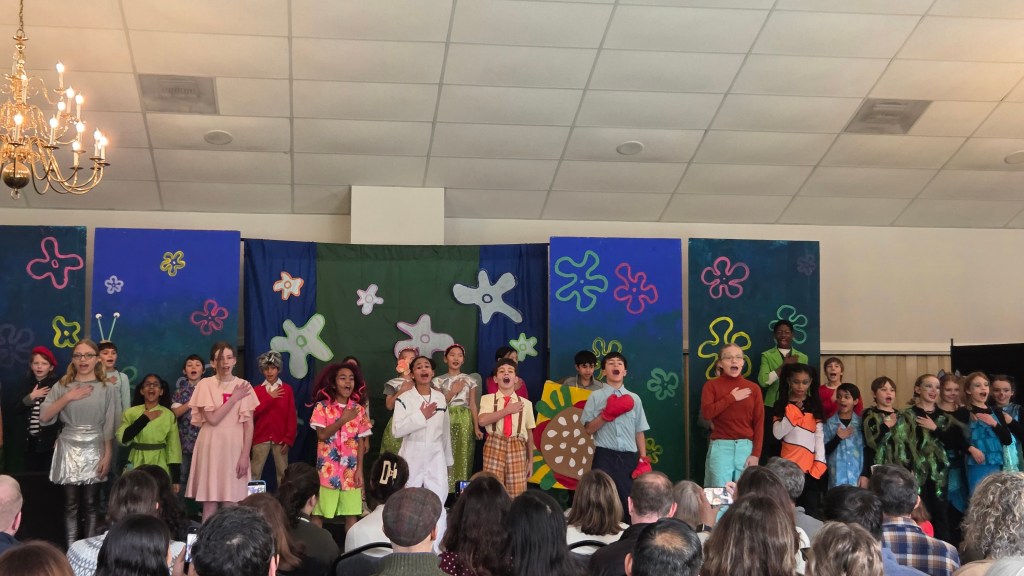
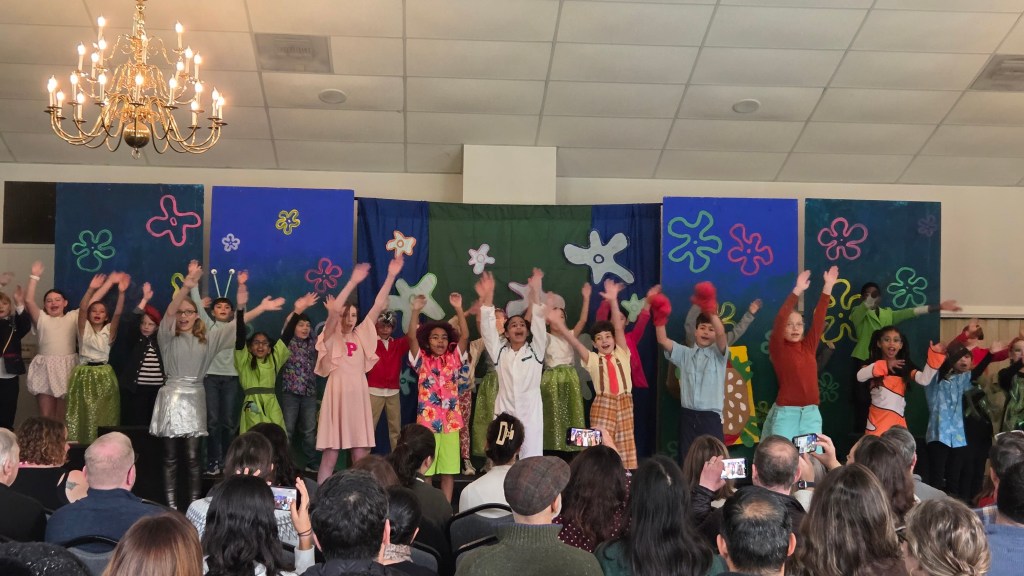
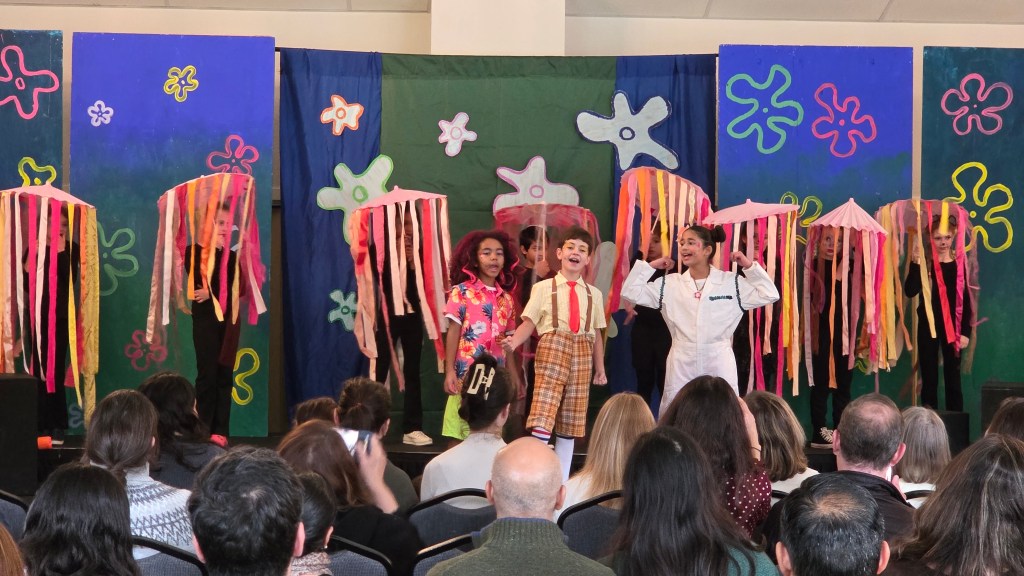
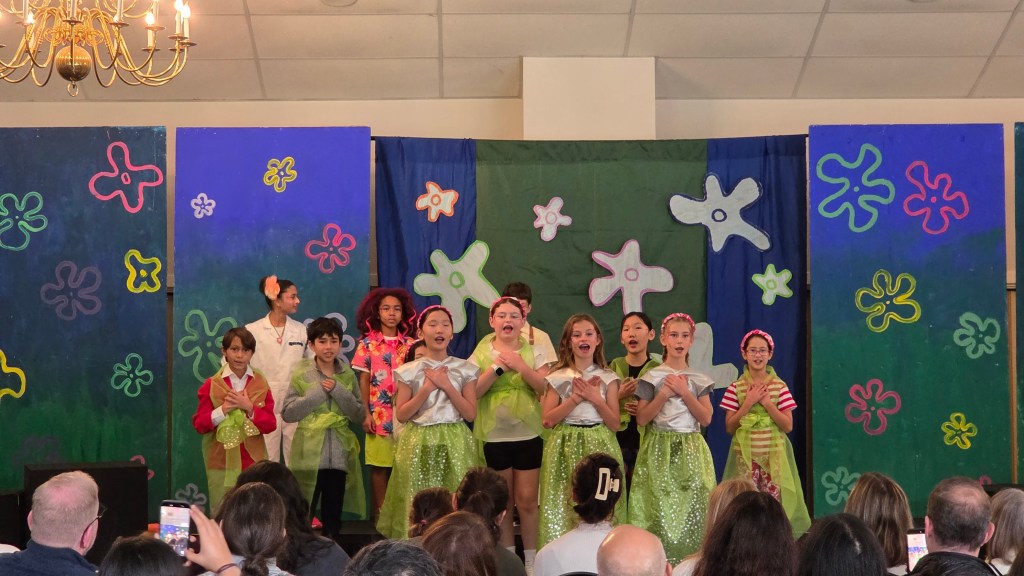
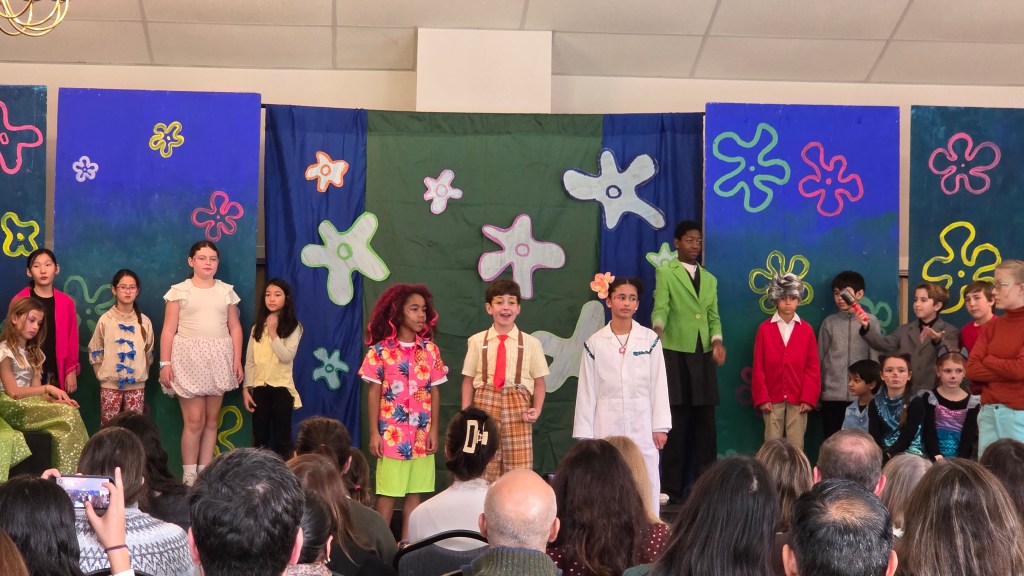
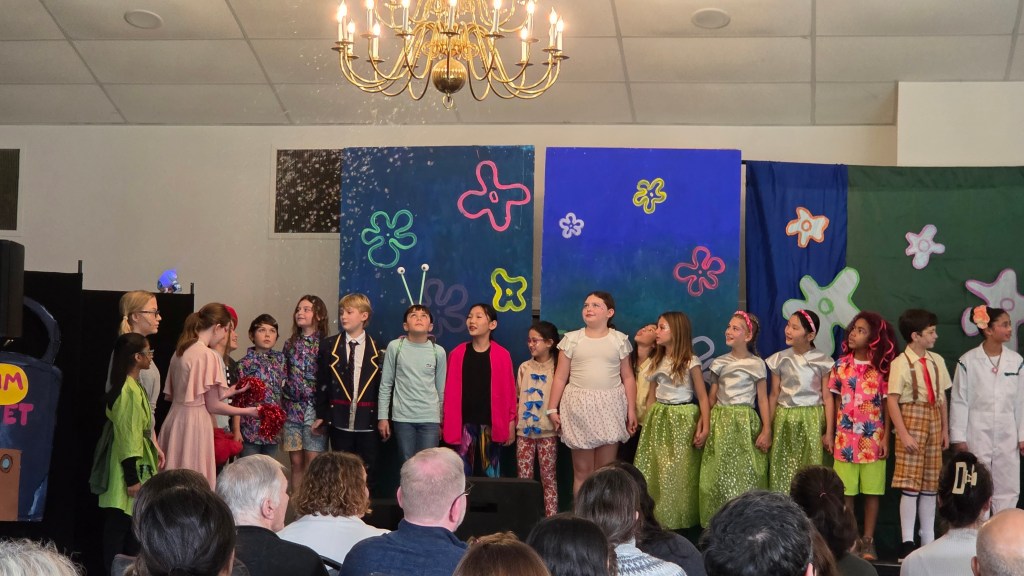
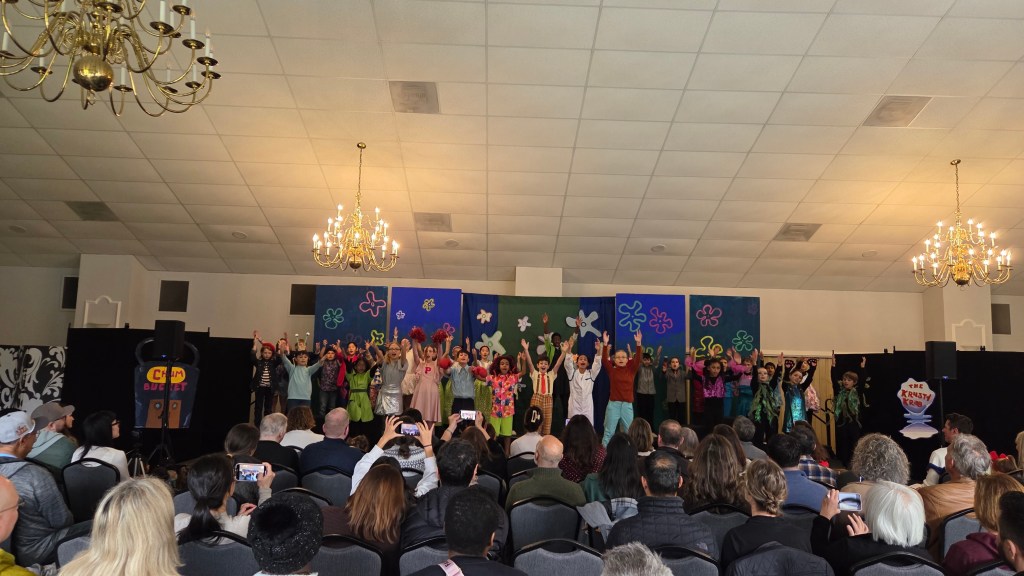
Congratulations to our third, fourth, and fifth-grade students on their fantastic performance of The SpongeBob Musical just before Winter Break!

From memorizing lines and stepping into character to finding costumes, designing sets, and applying makeup, it truly takes a village to bring a production like this to life. Our performers showed incredible courage, creativity, and teamwork on stage, and we could not be prouder.

A heartfelt thank you to the parents who supported behind the scenes by running lines, organizing base costumes, and helping with hair and makeup. And thank you to everyone who joined us for the performance and cheered on our talented cast. Your support made this celebration of creativity and collaboration even more special.

Additionally, we have a few special thank yous we would like to share:

  • To Dianne Hurvitz for directing the lower school students’ wonderful performance. Her hard work, dedication, and love for the students were evident throughout the show.
  • To Javier Yacarini for his hard work constructing the stage.
  • To Jayme Feldhammer for her work on the costumes.
  • To Sarah Gardner for her incredible help with providing and applying sparkly fishy makeup!
  • To Meredith Ware for sea anemone support and last-minute sewing on anemone accessories.
  • To everyone who joined us on our Saturday work day to build sets, props, and costumes.

It was a fabulous show! We hope you enjoy the photos from the performance below.

The SpongeBob Musical

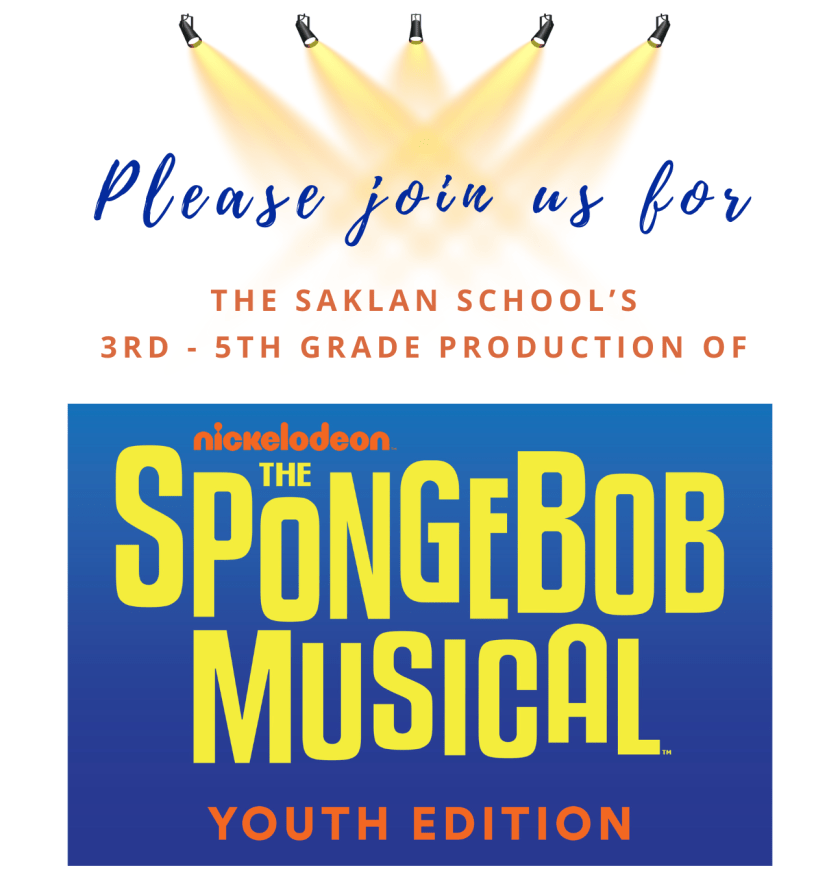
All Saklan community members are invited to join us for The Saklan School’s 3rd – 5th grade production of The SpongeBob Musical on Friday, December 19th at 10:30 a.m. The show will take place in the Holy Trinity Cultural Center (next door to Saklan). Doors will open at 10:15 a.m.

If you will attend and haven’t already done so, please RSVP here. There is no cost to attend; we want to ensure we have enough seats for all!

#SaklanCreative #SaklanCourage

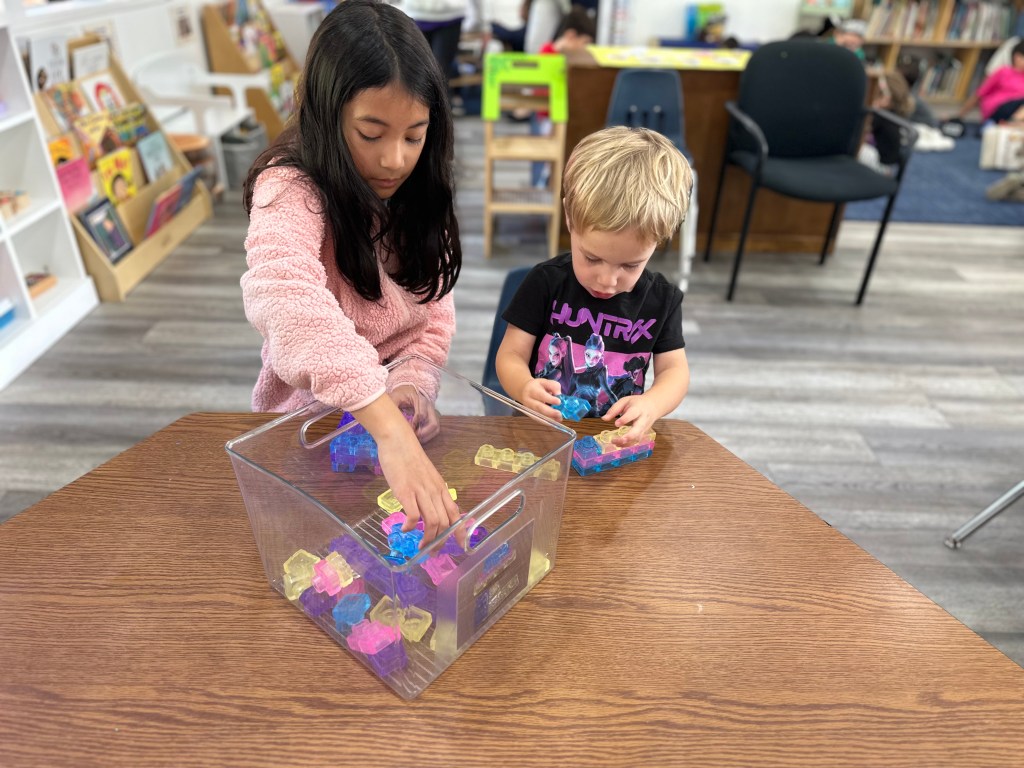
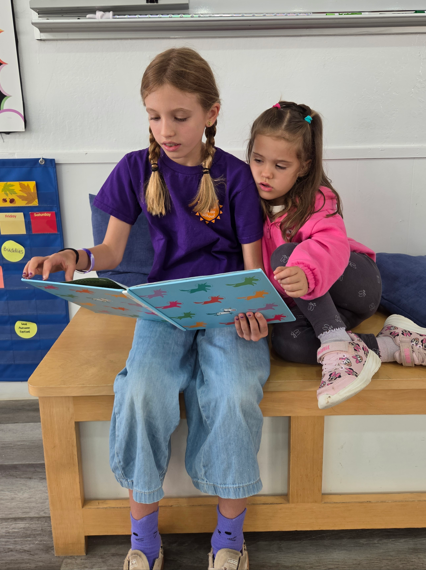
Cross-Age Learning in Action

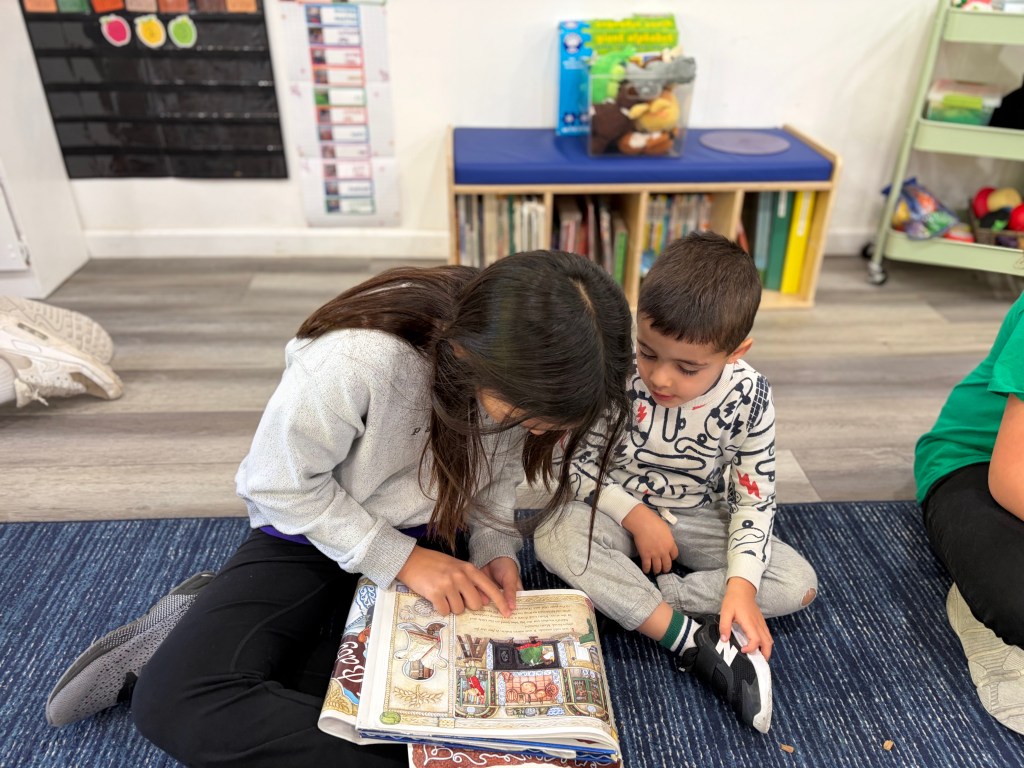
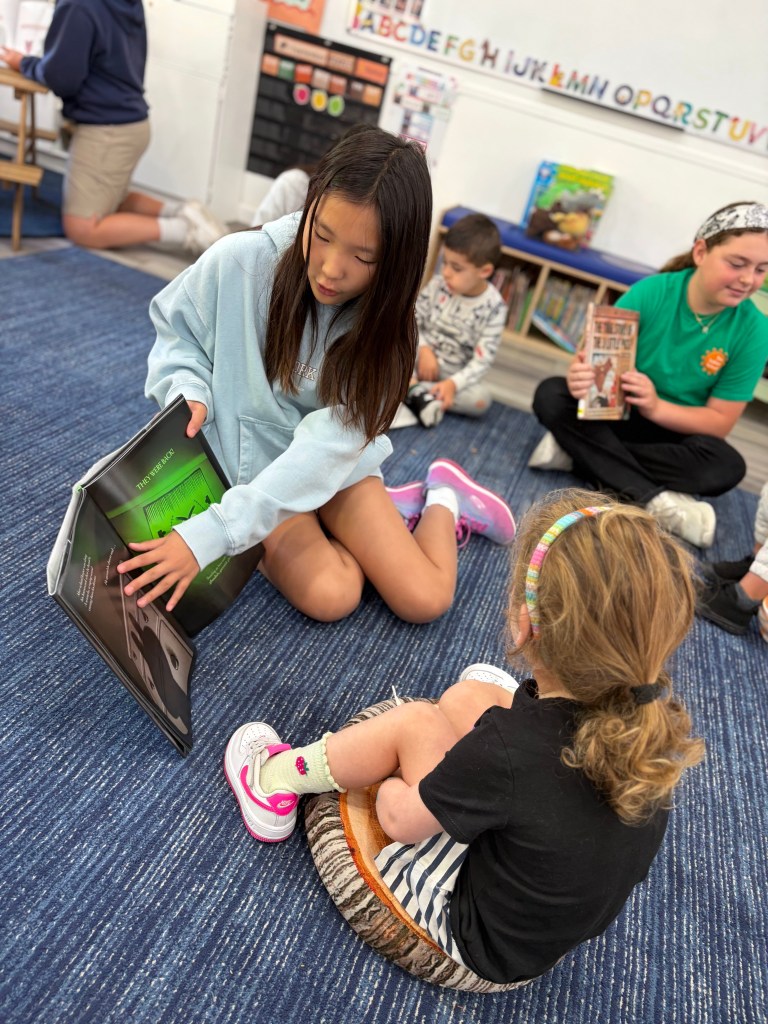
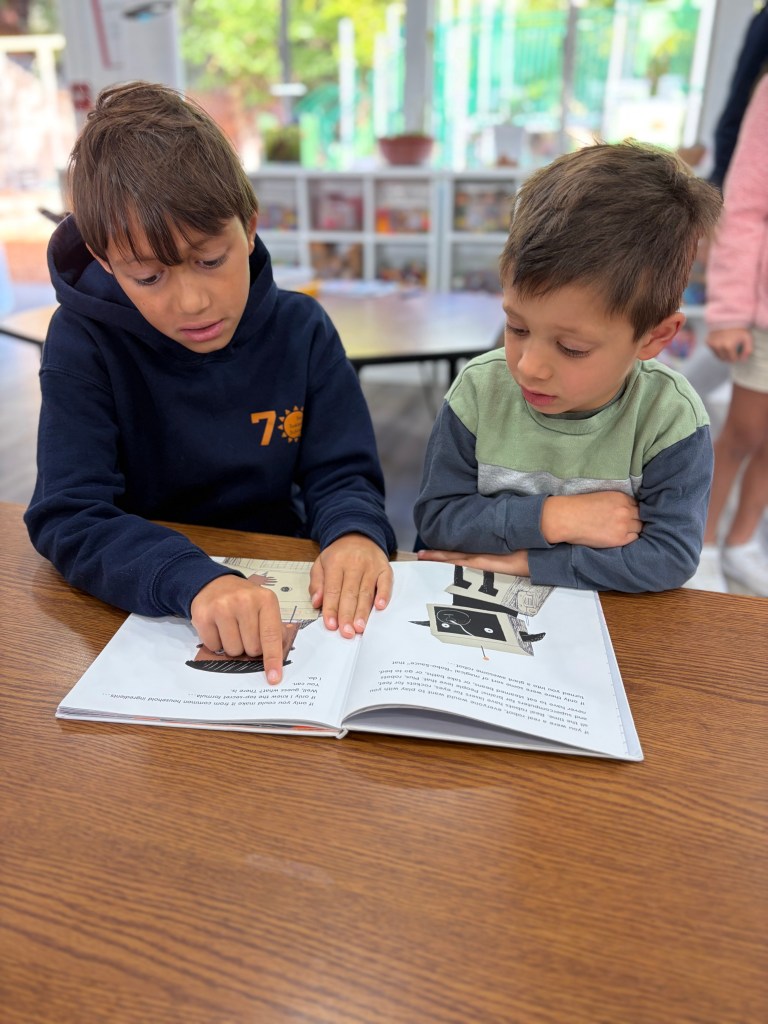
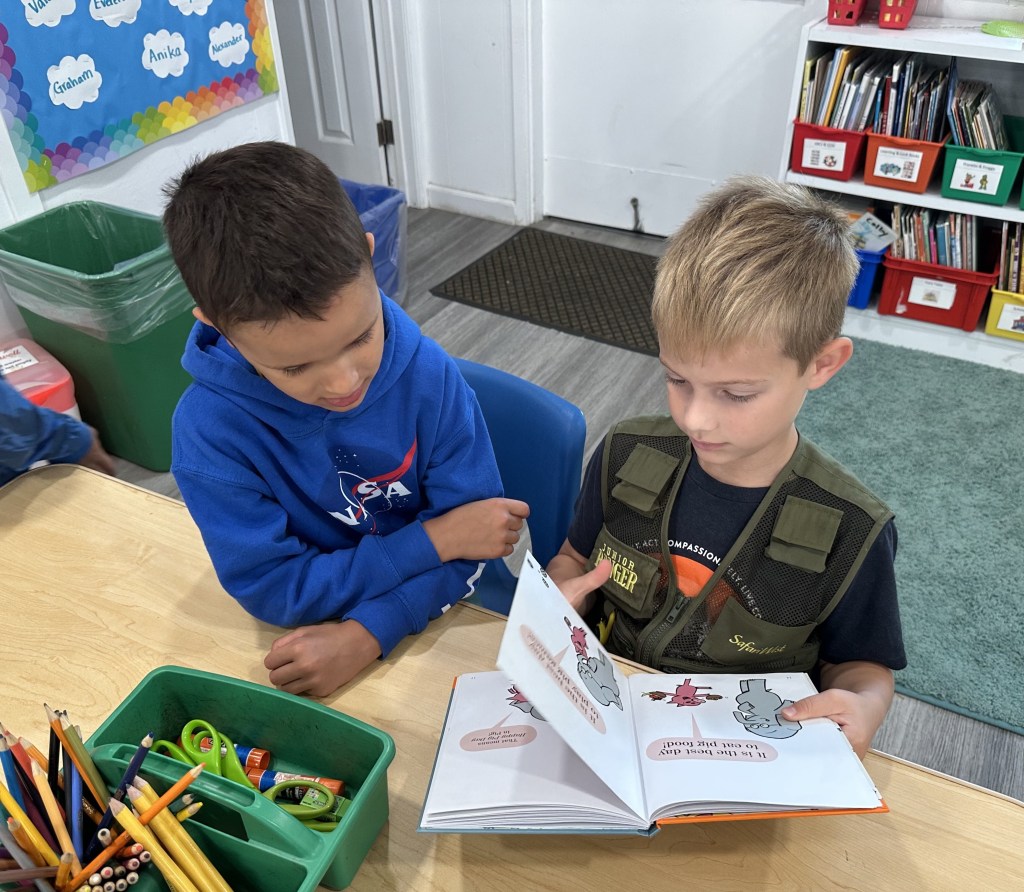
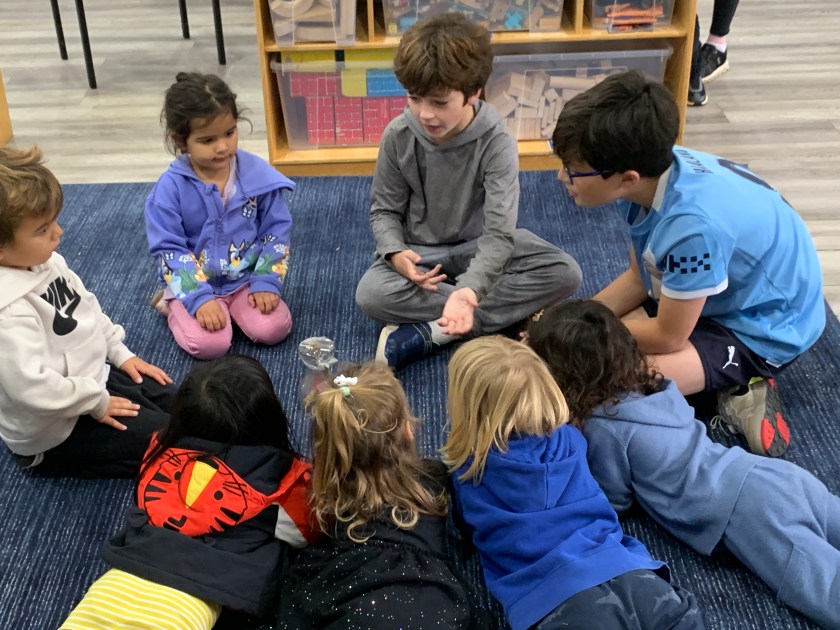
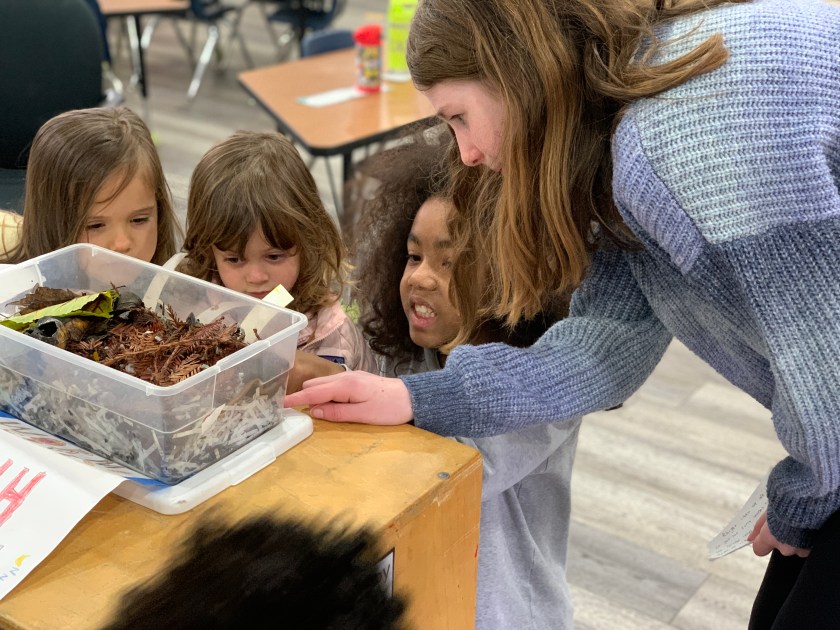
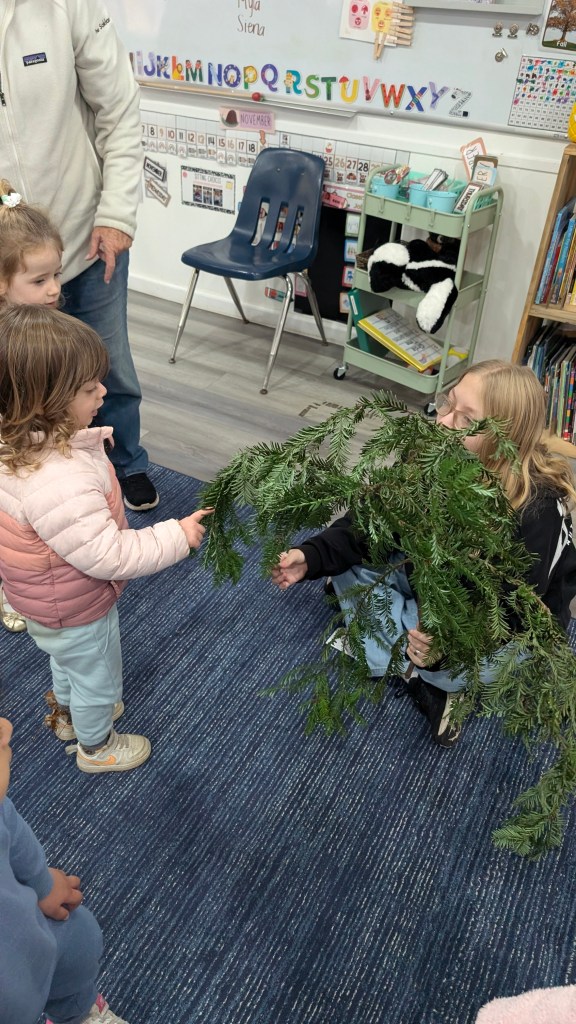
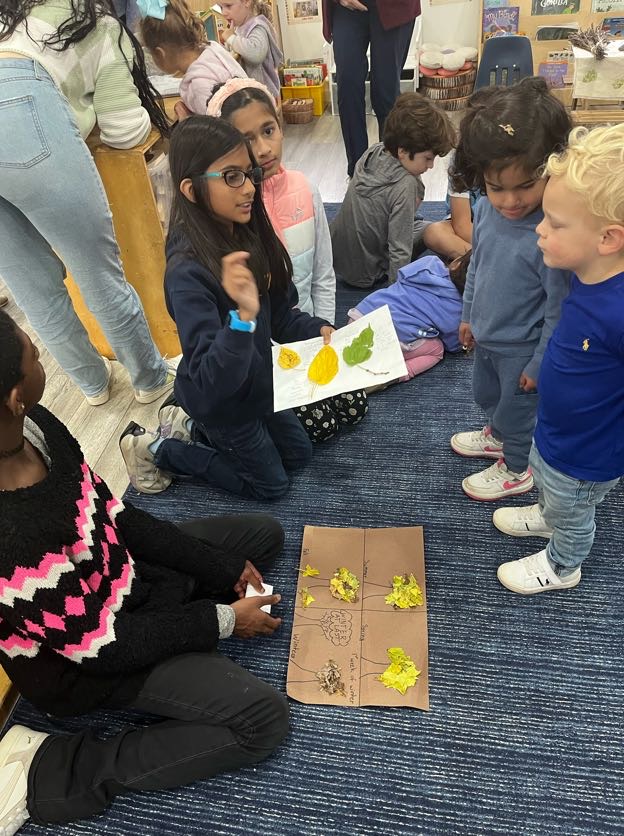
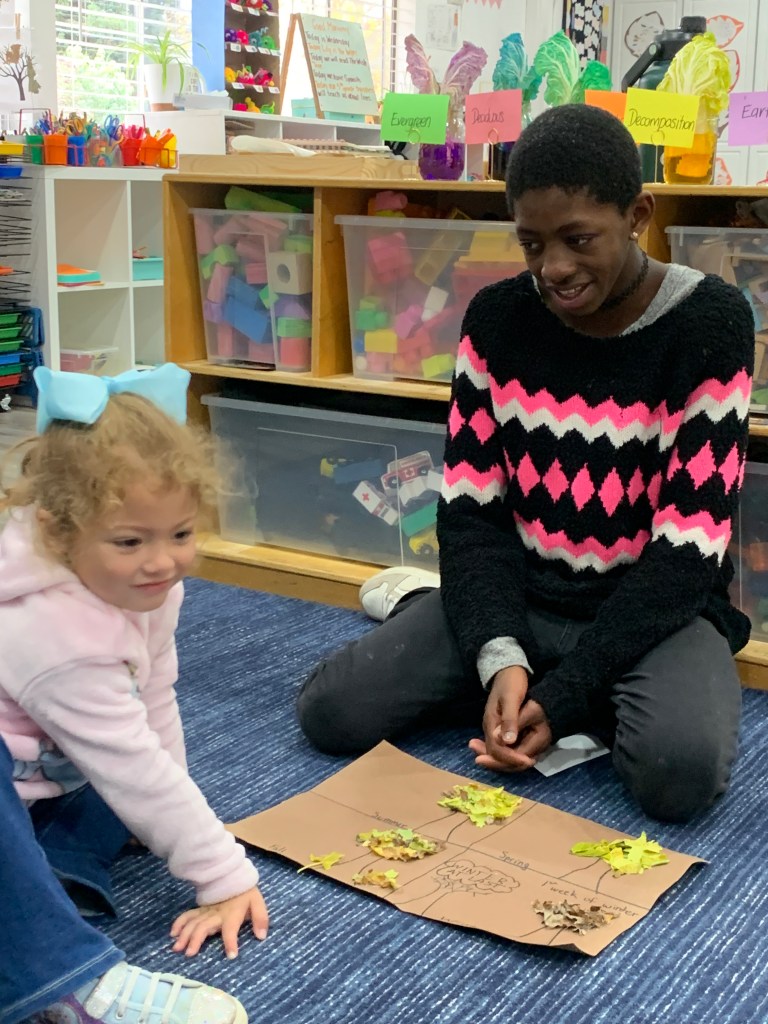
Saklan’s cross-grade learning was on full display as the Owlet buddies and fifth graders came together for a hands-on science experience rooted in their respective Project Based Learning (PBL) units. The Owlets have been exploring leaves, while the fifth graders have been studying trees—making their recent research on Redwoods the perfect launching point for peer teaching.

The fifth graders were tasked with becoming “experts” on several big questions the Owlets had been wondering about: the difference between evergreen and deciduous leaves, why leaf colors change, and how fallen plant matter breaks down and becomes soil, including the important role earthworms play in decomposition.

Students worked in teams with real focus and purpose. They were given 45 minutes to choose a topic and collaborate on a mini-presentation that was both accurate and engaging. Each group created a visual or hands-on element to support their teaching. Another 45 minutes were spent practicing, presenting to peers, and refining their work with the help of candid “Dancing with the Stars-style” feedback. The growth from practice to final presentation was remarkable.

When it was time to meet with the Owlets, the fifth graders were ready. Their presentations were clear, lively, and thoughtfully geared toward 3- and 4-year-old learners. The Owlets eagerly leaned in, asking big, earnest questions such as, “Do worms have eyes?” and “Is that the head or the tail?” Fifth graders knelt beside tiny tables, held leaves up for close inspection, and invited younger students to touch, compare, and wonder.

Not only did the Owlets gain new insights through this joyful experience, but the fifth graders deepened their own understanding by explaining complex scientific ideas in simple, accurate ways—a skill that strengthens mastery and confidence.

Saklan’s PBL focus continues to create meaningful opportunities for students of all ages to learn with and from each other, building both knowledge and community along the way.

#SaklanProjectBasedLearning #SaklanGuestExperts

Learning Through Light, Color, and Connection

Over the past week, many Saklan students learned about Diwali, the festival of lights, which is observed by Hindus, Jains, and Sikhs around the world—including members of our own community. Diwali lasts for five days in October or November and honors the triumph of light over darkness and good over evil.

To deepen their understanding, students read books about the festival and participated in hands-on activities that brought Diwali’s traditions and meanings to life.

Kindergarten, first grade, and second grade students gathered in the pavilion to meet with Saklan parents Molly and Manju, who read Diwali by Hannah Eliot. Inspired by the story, students created vibrant rangoli—decorative designs traditionally made on the floor or tabletops using colored powders, rice flour, sand, or flower petals—to celebrate the spirit of joy, color, and togetherness that defines the festival.

In fifth grade, two students, along with their parents, led their classmates in a beautiful Diwali celebration. Together, they explored the meaning of the five days of Diwali, the symbolism of the auspicious colors red and yellow, and the ways families honor the festival through stories, food, and traditions. Students created their own diyas—small oil lamps traditionally made of clay—and colorful rangoli designs, discovering how light, color, and creativity represent hope and goodness shining through.

Two sixth graders also shared their family traditions, teaching classmates about Diwali’s symbolism and the use of marigold garlands and diyas. After learning and crafting, the class enjoyed traditional sweets—gulab jamun and milk cake—while connecting their discussion to the novel The Night Diary and previewing their upcoming study of ancient India and Hinduism.

A heartfelt thank-you to the students and parents who shared their traditions and stories with us! Celebrations like this strengthen our community and remind us of the beauty of learning from one another—honoring the many ways light, family, and culture connect us all.

#SaklanCommunity