Learning in the Field: O’ahu Edition

Field trip? Field experience? These terms may feel synonymous; however, at Saklan we draw an important distinction between a field trip and a field experience. Instead of trips that may loosely connect in terms of content, a field experience takes students into the field to work directly with experts, answer key need-to-know questions, and drive our project work forward. 

One example of connecting with experts in the field is the 7th grade field experience to the island of O’ahu. The driving question for this science PBL unit is, “What can we do to help reduce the single use plastics in our area?” 

Prior to arriving on the island, students watched the Mockumentary: Majestic Plastic Bag and looked at photos of different animals impacted by plastic waste including sea turtles and albatrosses. They also saw direct evidence of animals ingesting plastic waste via the dissection of an albatross bolus, in which they found: a lighter, fishing lures, fishing line, bottle caps, toy parts, plastic flatware, and many small plastic fragments. They came to the realization that, if there is trash in the ocean, animals will ingest it. 

Still, for students, an albatross and their food sources can feel removed from our local environment and experiences. They wondered what type of waste is in our local environment. Students went “foraging” for “food” around Saklan and found many waste and plastic items that animals could ingest. It became clear that, despite our best efforts, waste still finds its way into our local ecosystem and therefore ends up in our waterways, and ultimately oceans and ocean animals. 

So how can we reduce the plastic waste that impacts our environment? The field experience to O’ahu helps students better understand the impacts of pollution on ocean life, connect with Hawaiian organizations already working to reduce waste, and learn about sustainable alternatives that already exist, as they prepare to answer the driving question by developing their own single-use plastic alternative. 

Students met Rebecca, Hideki, and Lynn from Sustainable Coastlines Hawaii, a local nonprofit organization that runs beach clean-ups, partners with schools, and educates the community at local events. Together they had the opportunity to mālama, care for, the ocean by completing a beach clean-up at the Mālaekahana Beach. Using a sieve-like tool, students removed 30 pounds of waste! Much of it could be classified as “micro-plastics,” or plastics that are less than 5mm in size. While students did find a large blue plastic jug on the sand, most of what they collected were super tiny bits of blue plastic, evidence of many different large blue plastic jugs that have broken down over time. Another surprise was the tiny white disks called nurdles, which are pre-production microplastics that are super tricky to recover from accidental spills into the ocean. The class was reminded that choices on land impact the oceans and that beach clean-ups can only take us so far! The staff from Sustainable Coastlines provided some great inspiration and ideas for alternatives to these plastics that are washing up on Hawaiian shores each day.
Sustainable Coastlines was just the beginning, while on O’ahu, students also connected with experts at Hanauma Bay Nature Preserve and Project Genki Ala Wai where they made and deployed Genki balls in the Ala Wai Canal to restore its ecosystem making it safer for both people and animals. 
The 7th graders will take these many rich learning experiences in the field back to the classroom to help them answer their driving question and refocus on sustainable alternatives to single-use plastics in our local environment. 

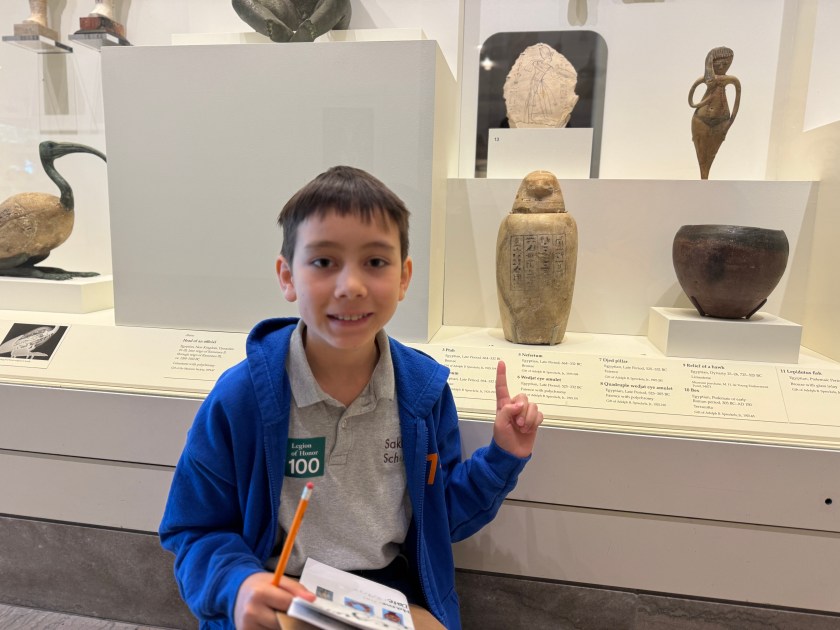
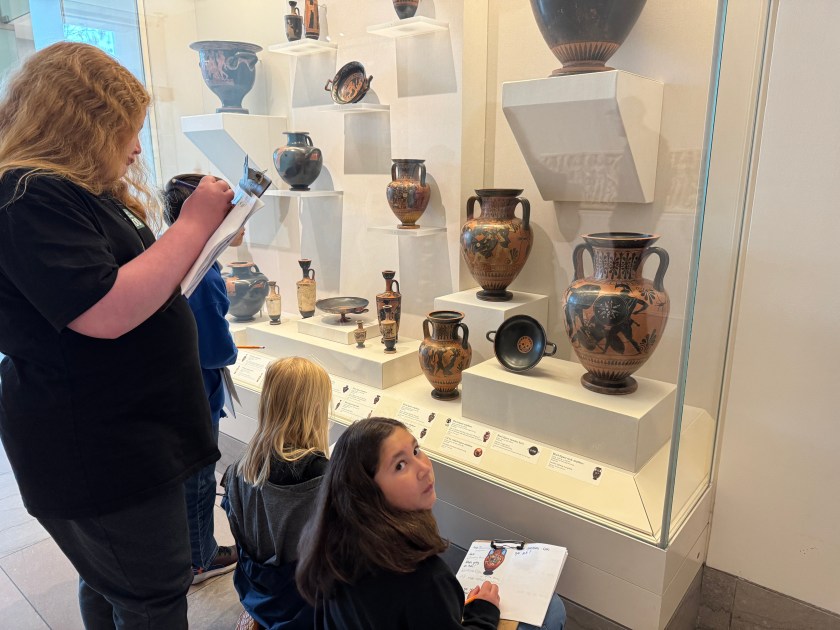
As always, the students aren’t the only ones gaining inspiration and connections to drive their work forward! While on the island, Linda Lathrop visited Punahou School to learn about how they approach projects and design thinking. From the integration of native Hawaiian language, music, food, and dance to design projects in their STEM labs and art rooms, it is always enriching to connect with other teachers to hear about their practices. Just like our 7th graders are out in the field grappling with the content of their project, our staff enjoyed the opportunity to discuss project hurdles and successes from another school site. Opportunities like these to connect with different schools give us new ideas and potential solutions to our own project hurdles! It is also exciting to see practices we have in common too! Can you spot any in the photos below?

We look forward to hearing more about all this rich teacher and student learning when the students and teachers return to campus next week!

#SaklanPBL

Celebrating 100 Days

Did you know that on Thursday, February 6th, Saklan students celebrated the 100th day of school?  

The Owlets celebrated by making crowns and searching for 100 hidden pictures of themselves throughout the classroom.

The Hoot Owls celebrated by searching for 100 meteors around their classroom, making 100-day crowns, and counting to 100.

The Kindergartners celebrated by inviting 1st, 2nd, 3rd, 4th, 5th, 6th, and 8th graders to their classroom to make crowns with 100 stickers on them, write about what they would do with $100 and what they can eat 100 of, dance for 100 seconds, and make necklaces with 100 fruit loops on them.

It was a great day of celebrating 100 days of learning so far this school year!

Alumni Corner: Dash Nowak

Dash Nowak, a member of Saklan’s Class of 2022, is currently a junior at Holden High School in Orinda. Dash has long been riding horses, and these days he and his horse Daisy are actively involved in rodeo competitions. In 2024 they qualified for the California State Championship in barrel racing!

Dash and Daisy are already looking to the future, and plan to attend a university with an active rodeo program.

We are proud of our alumni and love seeing what they are up to, whether it be in high school, college, or beyond. If you or your alum have an update to share with us, we would love to hear it!

#SaklanAlumni

Summer Camp Registration Open

A summer of creative exploration awaits your child during Summer@Saklan! This summer, camp will run in one-week sessions from June 16th – August 1st, and is open to all children ages 3 – entering 3rd grade. Each session of camp consists of fun art and science-related activities including art, crafts, science experiments, games, and more. Additionally, Friday afternoons will feature fun activities including water play, a bounce house, and special guests such as a magician or puppeteer. Summer@Saklan is sure to be tons of fun!

To learn more about Summer@Saklan 2025, check out the summer camp webpage today!

We look forward to another amazing summer of hands-on learning, growing friendships and lots of fun!

#Summer@Saklan

Moving Up Day Enthusiasm

On Thursday morning, all Saklan students participated in Moving Up Day. Preschool – 5th graders had the opportunity to move up to the classroom of their rising grade and spend time with the teacher, learning about what the next year holds and getting to know the teacher better. The 6th, 7th, and 8th-grade students helped host 5th graders on the middle school side of campus and show them what a day in the life of a middle schooler is like. The students and teachers alike were buzzing with excitement!

This annual tradition allows the students to get a snapshot of what next year will hold. The teachers planned special activities that highlighted their grade level and enjoyed getting to know their rising students a little better. Morning meeting activities, awkward games, questions, book readings, optical illusions, classroom scavenger hunts, and enthusiasm for next year filled the classrooms! If you know a child who “moved up” on Thursday, please ask them all about it. They will likely have something enthusiastic to share!

Celebrating Lunar New Year

Saklan students celebrated Lunar New Year with some special activities on Wednesday. Lunar New Year, which celebrates the start of the lunisolar Chinese calendar, is celebrated in China, Vietnam, Korea, Malaysia, and Singapore, among other countries.

Preschool students welcomed two guest experts to share about Lunar New Year. Samantha, an Owlet parent, read a book to the class and shared red envelopes with them. Sharon, an Owlet grandparent, shared Lunar New Year traditions that take place in China, told the story of The Great Race, and shared tangerines with the students. The Owlets also enjoyed making snake paper lanterns, Lunar New Year yoga, and listening to traditional Chinese music.

Pre-K students celebrated by welcoming Heidi, a Hoot Owl mom, into their class. Heidi shared that Lunar New Year is based on the Moon instead of the sun and talked about the Chinese word for fortune, 福, and its importance. Heidi shared pictures of her children wearing special Lunar New Year outfits and then treated the class to some bao filled with custard.

Maggie also taught the Hoot Owls about her family’s Lunar New Year traditions, including cleaning their homes and putting up Chinese sayings with good wishes for the new year. The Pre-K students enjoyed watching a video of a lion dance, as well as talking about and receiving red envelopes.

To help with the campus celebrations, the 5th graders put together a dragon which Peta hung on the pergola to welcome students to campus on Wednesday. The fifth graders also made lanterns and dragon drawings.

In humanities class, Christina shared some of her family traditions with the 6th graders, including the tradition of eating tangerines, which are believed to bring good fortune, and of giving red envelopes with money in them as a symbol of good luck. She also shared the proper etiquette for giving and receiving the red envelopes to show respect. The 6th graders also talked about the importance of the Chinese word for fortune and then learned how to write it.

The 6th graders then took their newly acquired skills over to the Hoot Owl classroom, where they taught the Hoot Owls how to write the word for fortune with brushes and ink.

May the Year of the Snake be prosperous for all!

#SaklanCommunity

Creativity & Fine Motor Skills

The Owlets have been working on a mini-inquiry into one of their favorite things: sticks! To kick off their exploration, the Owlets brought in sticks they found at home to examine. They noted the differences in the sticks and brainstormed many ways they could be used.

After brainstorming creative ways to use sticks, the Owlets practiced wrapping sticks with ribbons, threading beads on them, painting them, creating pictures with them, and transforming them into unique wands, and beautiful nature-inspired paint brushes. It’s been a wonderful way to nurture their creativity and fine motor skills.

The preschoolers had a wonderful time experimenting with making their sticks into nature-inspired paintbrushes! They crafted their own brushes using various materials from nature and then had fun painting with their creations to see the unique effects they could achieve.

Their work with sticks has been a wonderful way to nurture their creativity and fine motor skills!

#SaklanHandsOn

Ecosystems and Adaptations

In science, the 6th graders recently explored Earth’s biomes. Working in pairs, they created educational slideshows to teach their classmates about our planet’s incredible variety of ecosystems. Afterward, they dove deeper into the topic by examining how organisms adapt to survive in diverse environments. This culminated in an engaging “Adaptation Auction,” focusing on two contrasting ecosystems: the ocean and the desert.

The 6th graders explored the stark differences between these ecosystems, identifying particularly beneficial adaptations in each. The desert’s unique ability to preserve species, culture, and history—due to its dry climate, fewer large scavengers, and minimal decomposers—sparked fascinating discussions. To bring this concept to life, students mummified apples in class! They created a narin mixture of salt and baking soda to act as our drying agent. Students then carved a face into an apple and let it sit in the narin mixture for a week. They observed how the drying agent caused noticeable changes in size, texture, and weight after just one week.

Next, the students moved on to studying the relationships between species within ecosystems, such as mutualism, parasitism, and commensalism. They created comics that illustrate these interactions in real-world scenarios to demonstrate their understanding. Below are examples of their creative work.

#SaklanHandsOn #SaklanCreativity

Showcasing a Growth Mindset

On Monday, Saklan’s 1st – 8th graders gathered in Family Groups to discuss January’s SEL focus: growth mindset. The students shared what growth mindset means to them and then shared ways they have applied a growth mindset in their own lives. Then the groups enjoyed a digital escape room, where they had to work together and use a growth mindset until the end to be successful.

The groups then brainstormed a list of reasons it is good to have a growth mindset, and then wrote reasons on brain-shaped puzzle pieces. Check them out below!

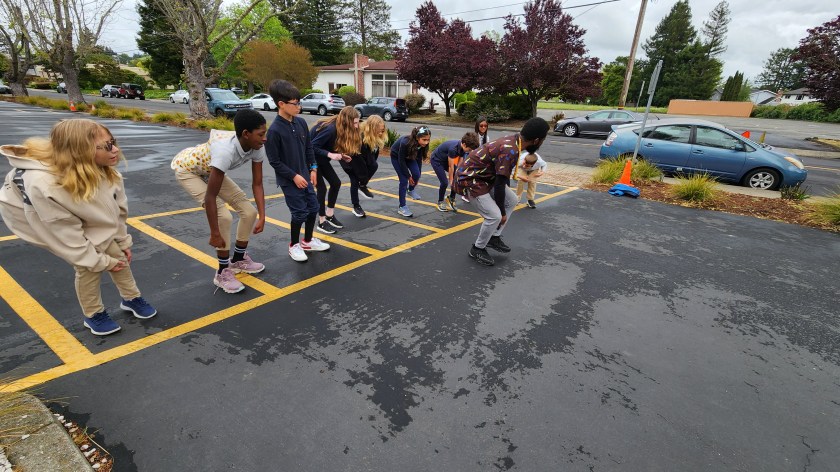
The groups also participated in some challenges with a hula hoop. These challenges helped the family groups further bond as they collaborated to prevail.

#SaklanFamilyGroups

Head’s Corner: Teaching How to Think, Not What to Think

As someone who has taught history for a good portion of my professional life, I’ve always felt that how history is taught in the U.S. is a disservice to students. There is an emphasis on students “knowing” the country’s entire history, without understanding it. The curriculum will lean into a simplified version of history that leads students to a particular perspective. Rarely does history teaching slow down and ask students to wrestle with both sides of an issue and develop their own opinions. (Think Moraga Police Chief King reading All American Boys along with our eighth-grade class and then coming in to discuss his take on the novel.)

The other sin of how we approach history teaching in the U.S. is one of omission. We simplify complicated stories into fables that are easy to digest. For example, unpack the popular myth of Rosa Parks and her famous refusal to give up her seat on a Montgomery bus – the story that a meek, tired seamstress was too exhausted to walk to the back of the bus and accidentally started a movement that changed civil rights. There is a romanticism to that story, but it is wrong.

In reality, Rosa Parks had been an activist fighting for racial justice for decades before her bus stand. Though described as “quiet” in most of the obituaries that ran after her 2005 death, she was anything but.

The fable of Rosa Parks and the civil rights movement of the time betrays the reality, pain, and sacrifice of those who fight the good fight. It ignores how resistant Americans worked to challenge the status quo. It is also a disservice to the country.

As educators, we owe it to society to examine the fables and myths we have heard and those we have perpetuated – from Christopher Columbus to American Exceptionalism. We also owe it to our students to help them know less but understand more and reach their own conclusions, not ours.

Peace,

David