Improving Saklan’s Community Spaces

Saklan’s seventh-grade students have been exploring the role of community spaces through an engaging Humanities Project Based Learning unit centered on the driving question: How can we improve our shared public spaces to better meet the needs and reflect the values of our community?

As the culminating project for the unit, students are developing thoughtful and practical proposals for improving one of the most meaningful shared spaces in their daily lives: The Saklan School campus. Families are invited to join the seventh graders on Wednesday, May 20, at 10:15 a.m. in the Humanities Room to hear students present their ideas for enhancing our campus community.

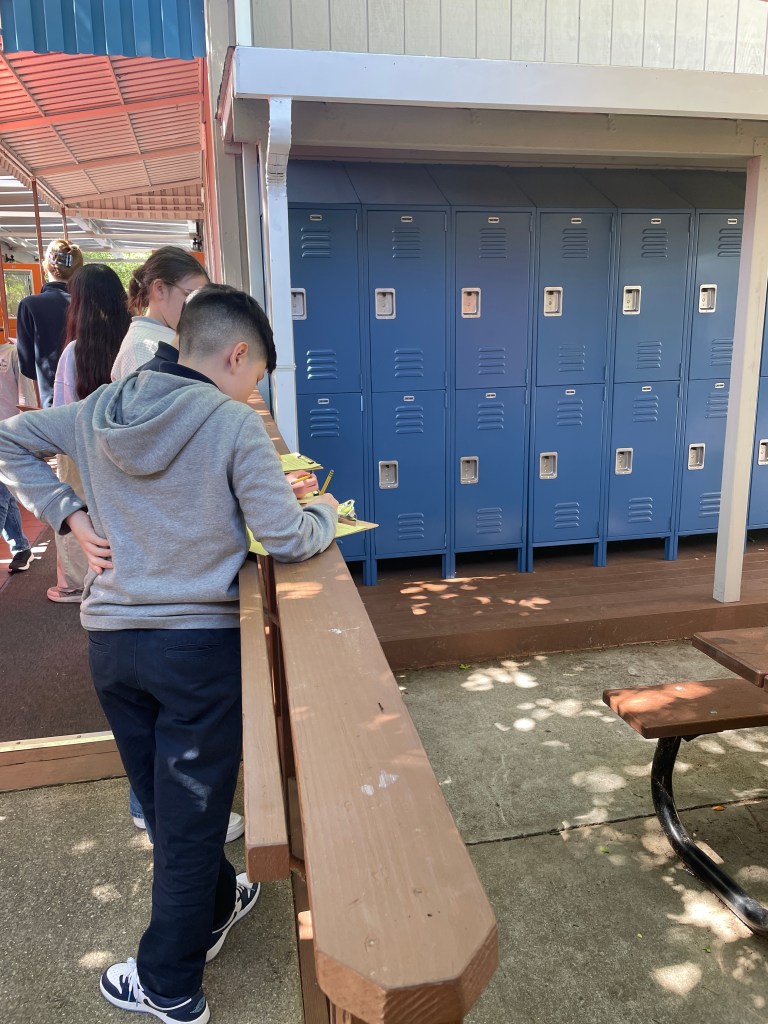
The project began with students reflecting on the changes already made to Saklan’s campus during the current school year. Together, they identified several updates, including the addition of all-gender bathrooms in the Lower School, a new net above the sports court fence, the construction of the redwood deck, and the installation of larger middle school lockers. Working in small groups, students evaluated whether these changes improved the campus experience and considered how they might be enhanced further.

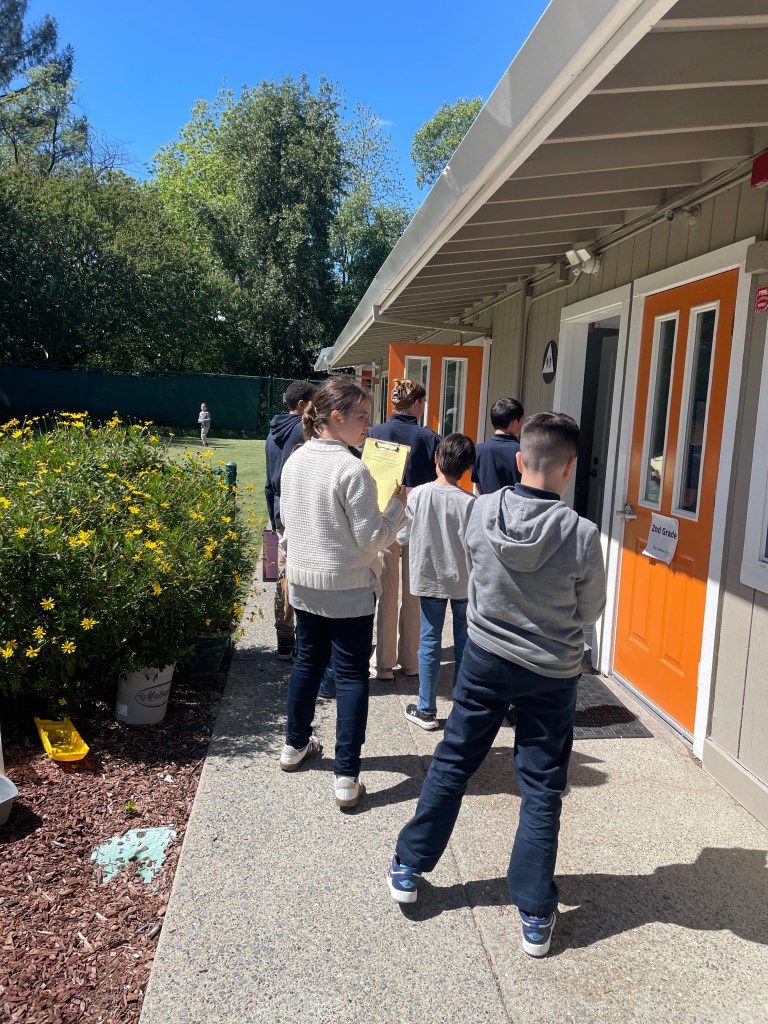
From there, students conducted a detailed assessment of the school grounds, examining buildings, outdoor areas, and the campus perimeter. Each group identified spaces that were functioning successfully, areas that could be improved, and the reasons behind their evaluations. This process encouraged students to think critically about how design impacts the way people interact with and experience shared environments.

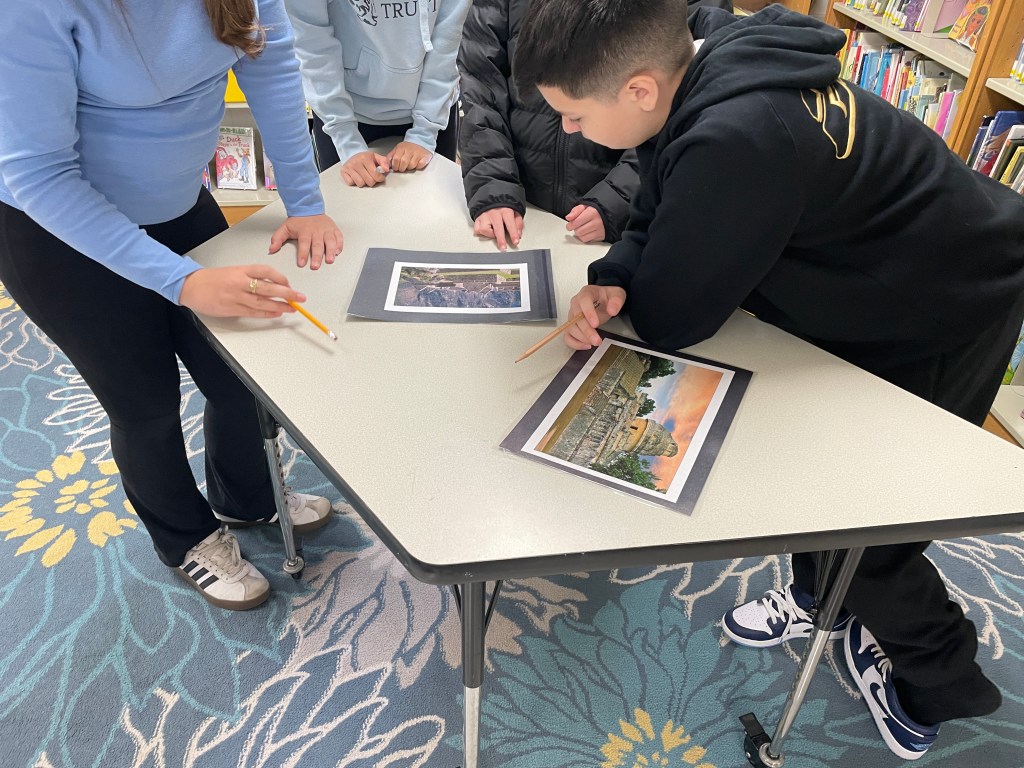
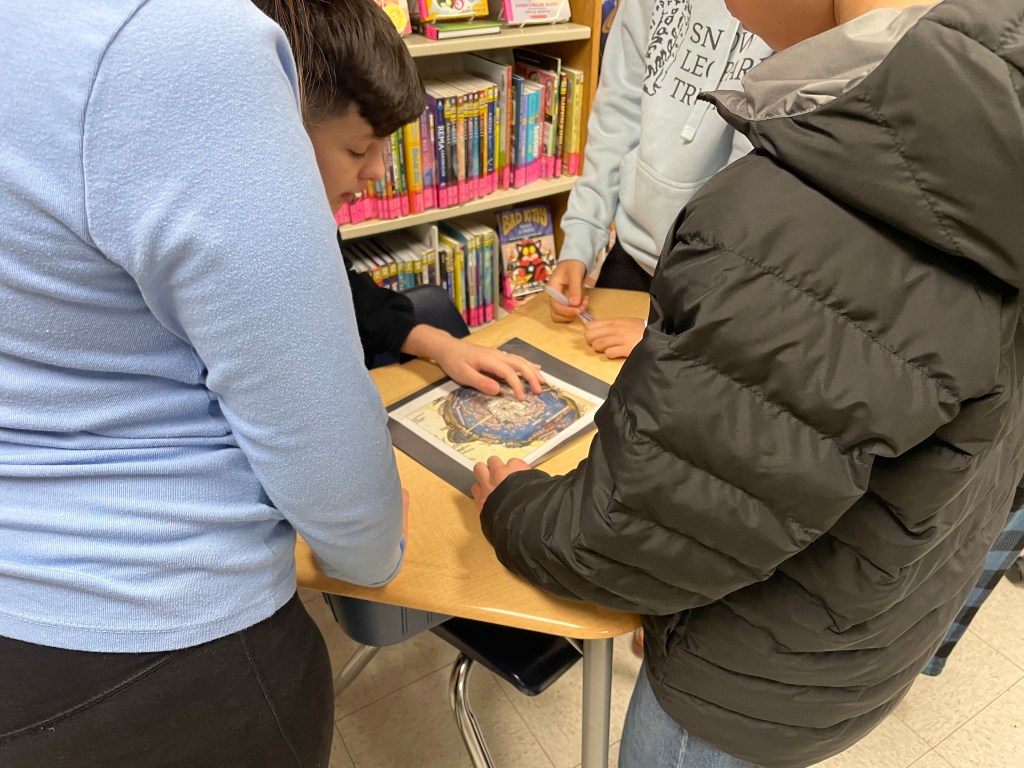
The unit then expanded into a historical exploration of community spaces in pre-Columbian Mesoamerican civilizations. Through a gallery walk featuring unlabeled images from the Maya, Aztec/Mexica, and Inka civilizations, students analyzed architecture and public spaces while considering the cultural values they reflected. Students also engaged in discussions about the legacy of Christopher Columbus, examining differing perspectives on why he remains widely recognized and whether he should continue to be celebrated.

Working in expert groups, students studied one of the three civilizations in greater depth, learning about the geography, climate, and major achievements that shaped each society. Individually, students then selected a pre-Columbian structure or community space to investigate more closely. They explored why the space was created, how it was used, what needs it fulfilled, the materials used in its construction, and the factors that influenced its design.

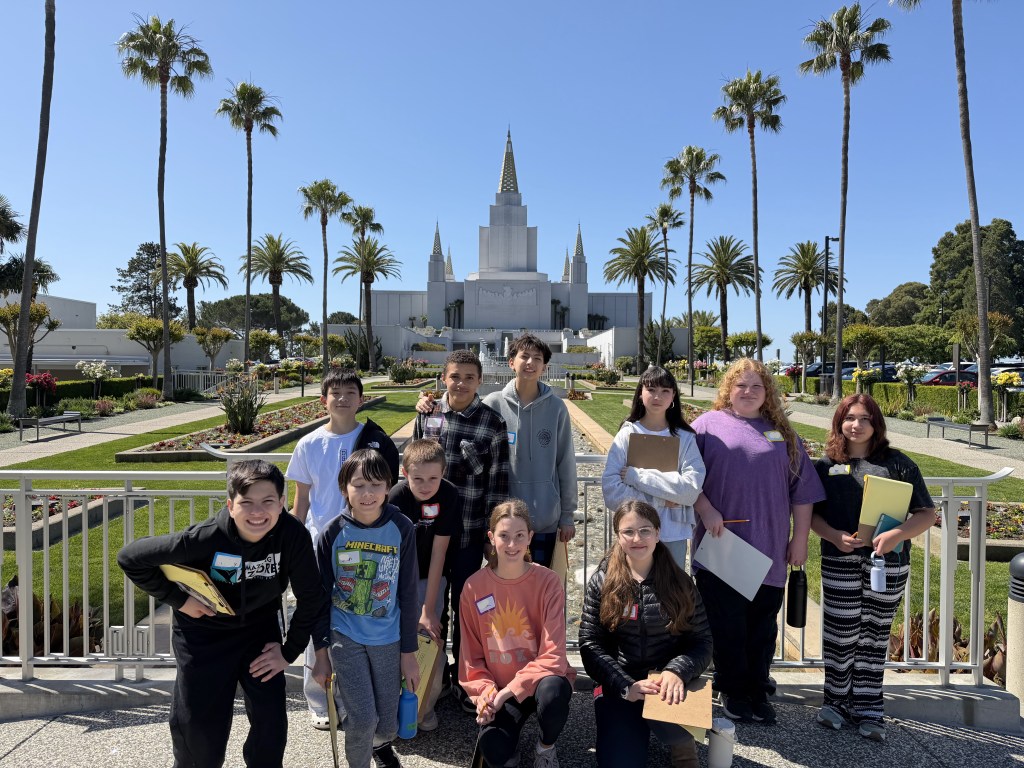
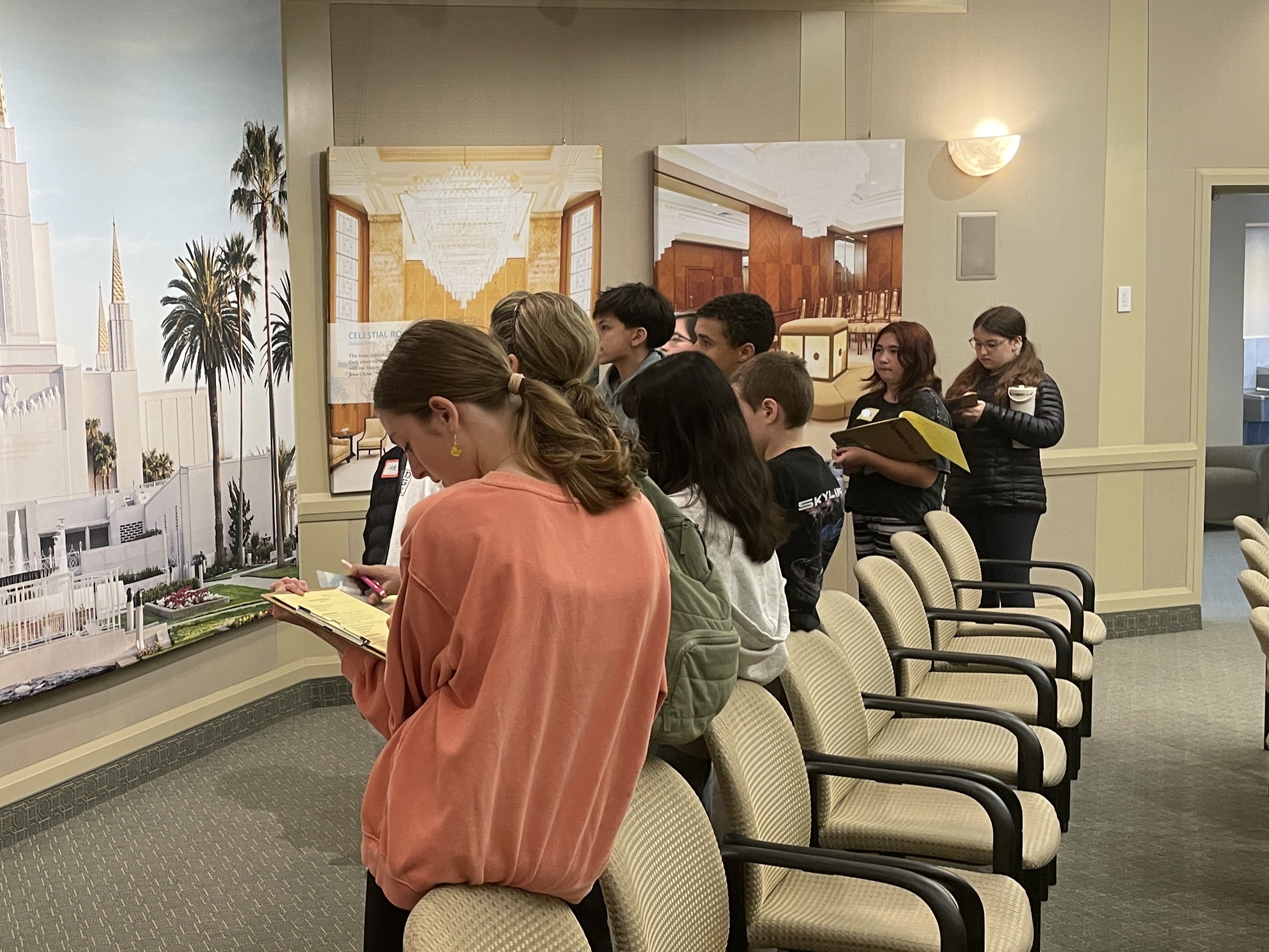
As students continued refining their understanding of successful community spaces, they also examined examples from the modern world, including a visit to a contemporary temple. Throughout the process, students connected lessons from the past and present to their own campus community, using their research and observations to inform their final proposals.

The project has encouraged seventh graders to think deeply about the relationship between physical spaces and community values, while empowering them to imagine how thoughtful design can improve everyday experiences for others.

#SaklanProjectWork #SaklanCommunity

Experiencing the Industrial Revolution

Eighth graders at Saklan are bringing history to life through an immersive exploration of the Industrial Revolution and its impact on American society in the early 20th century.

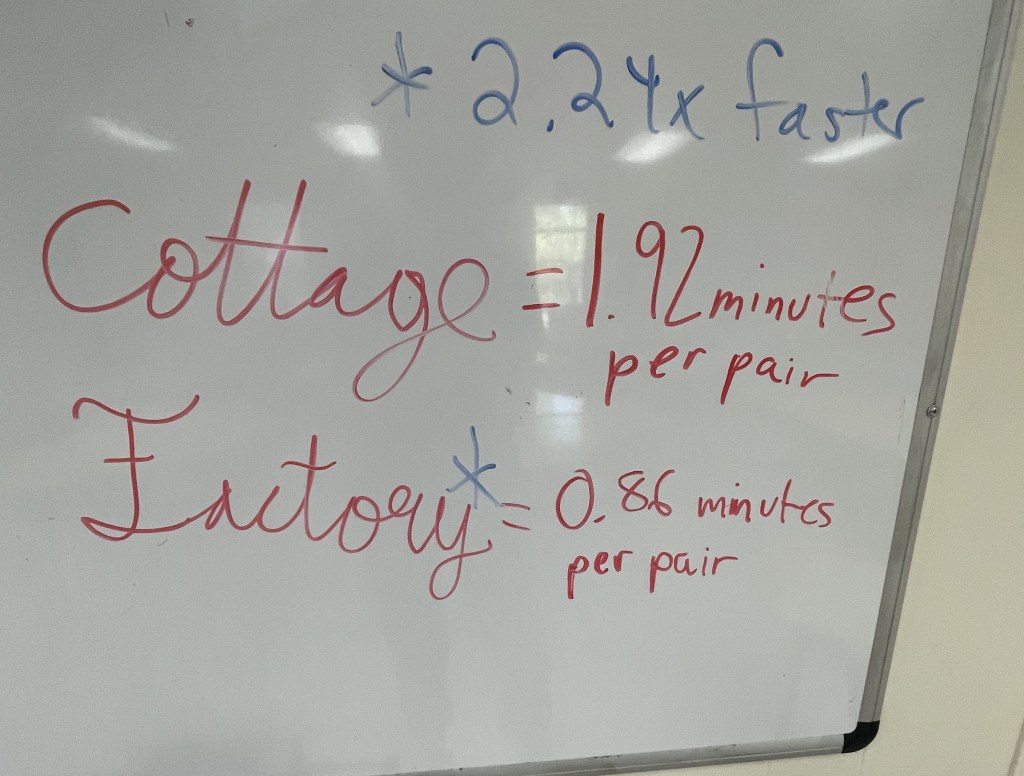
As part of their studies, students have been examining how rapid technological and social changes transformed the way people lived and worked. They learned how home-based craftsmanship gave way to factory systems, where workers performed repetitive tasks on assembly lines, each contributing a small but essential part to a larger process.

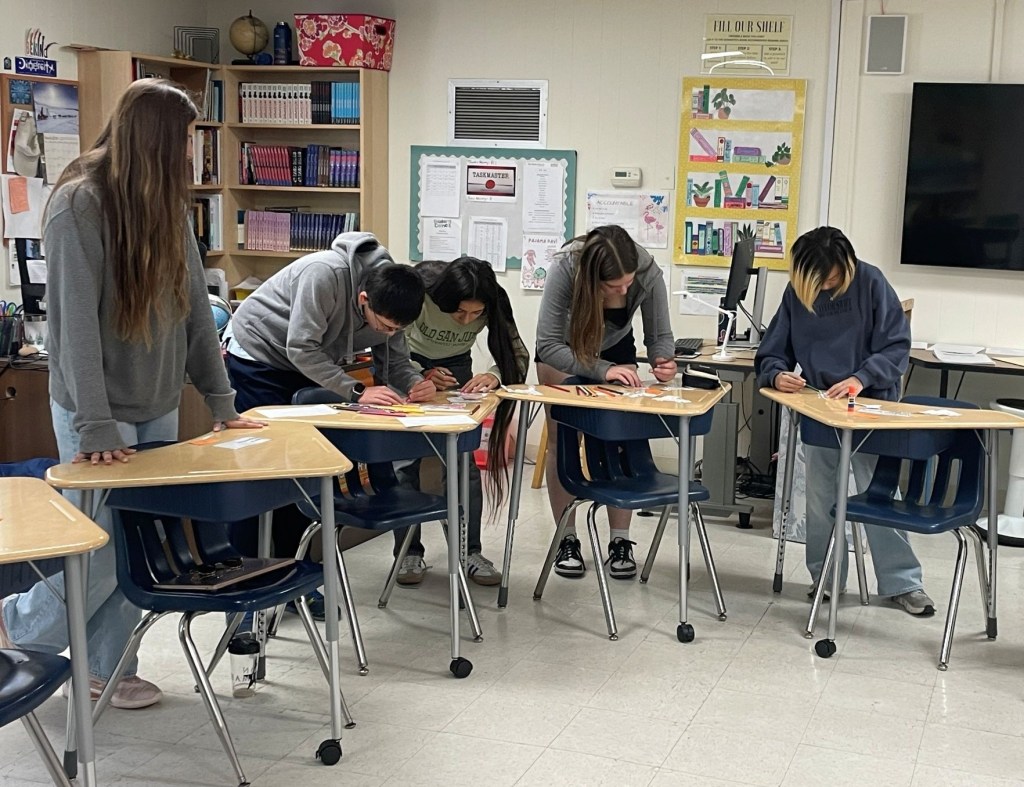
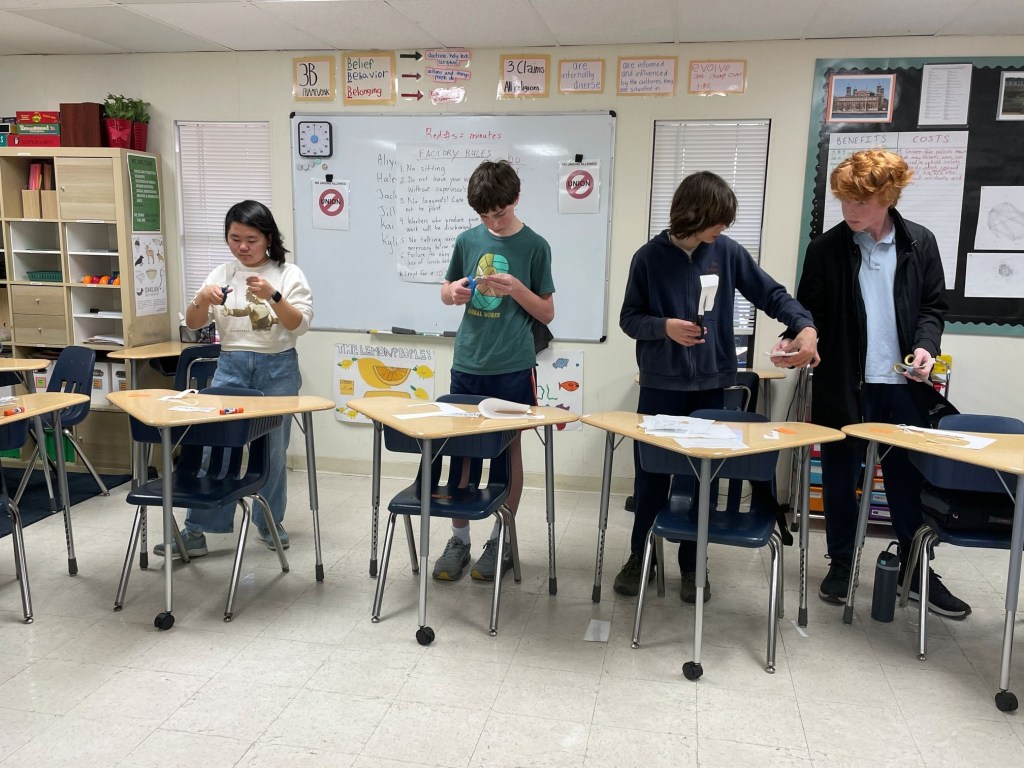
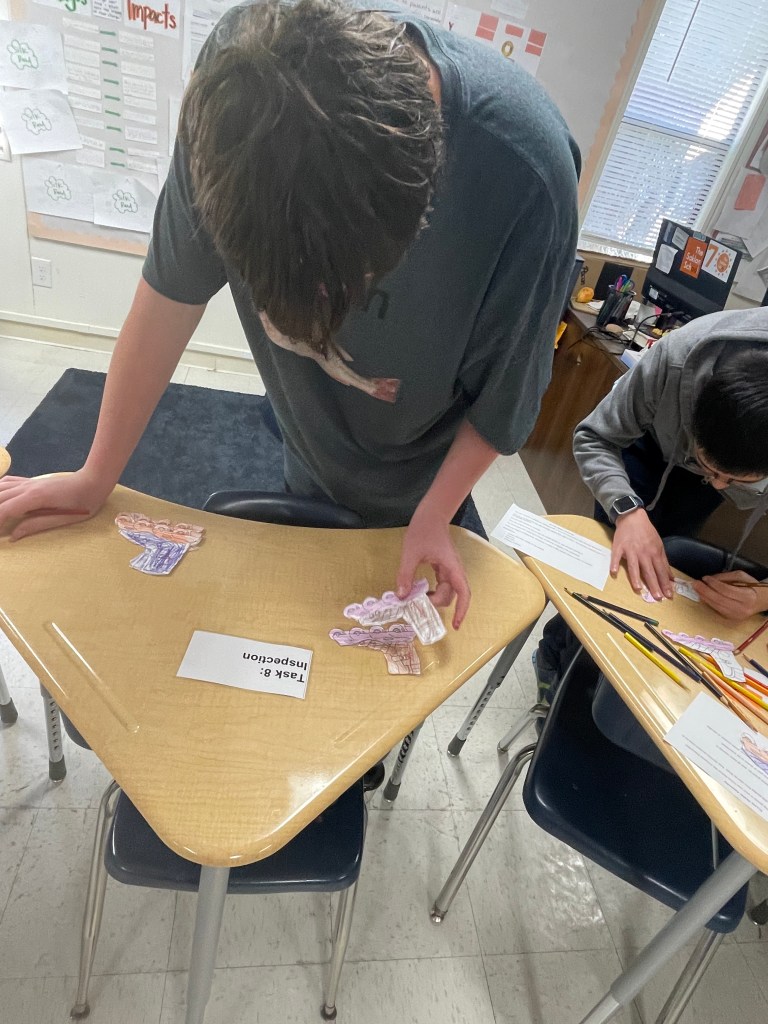
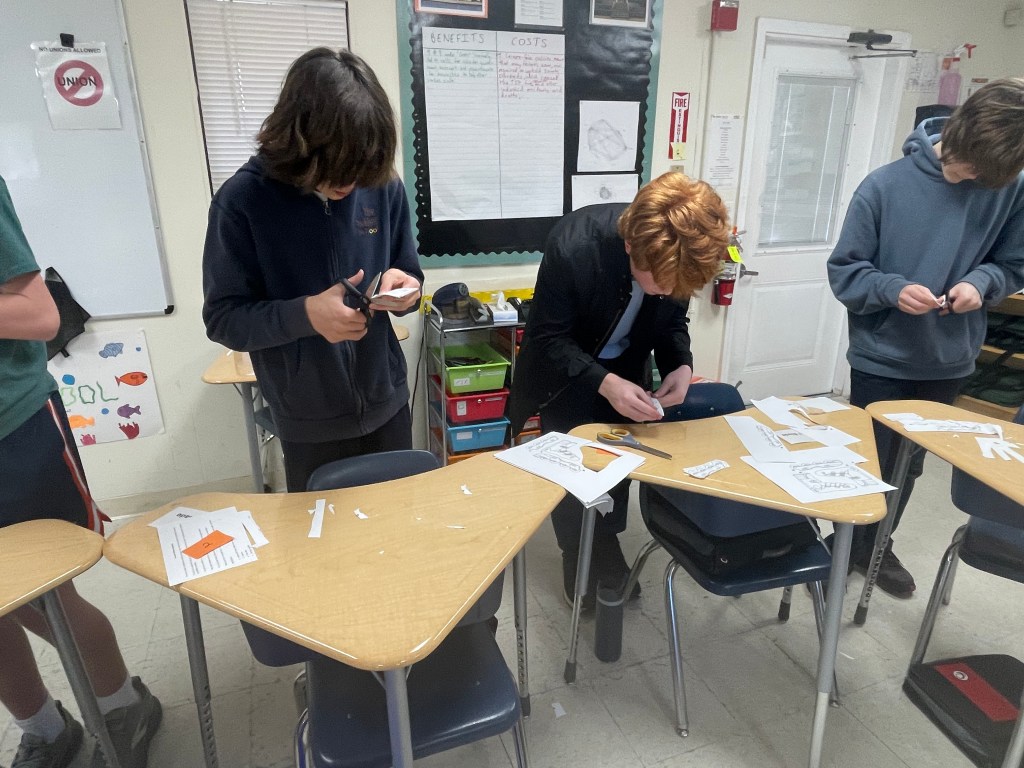
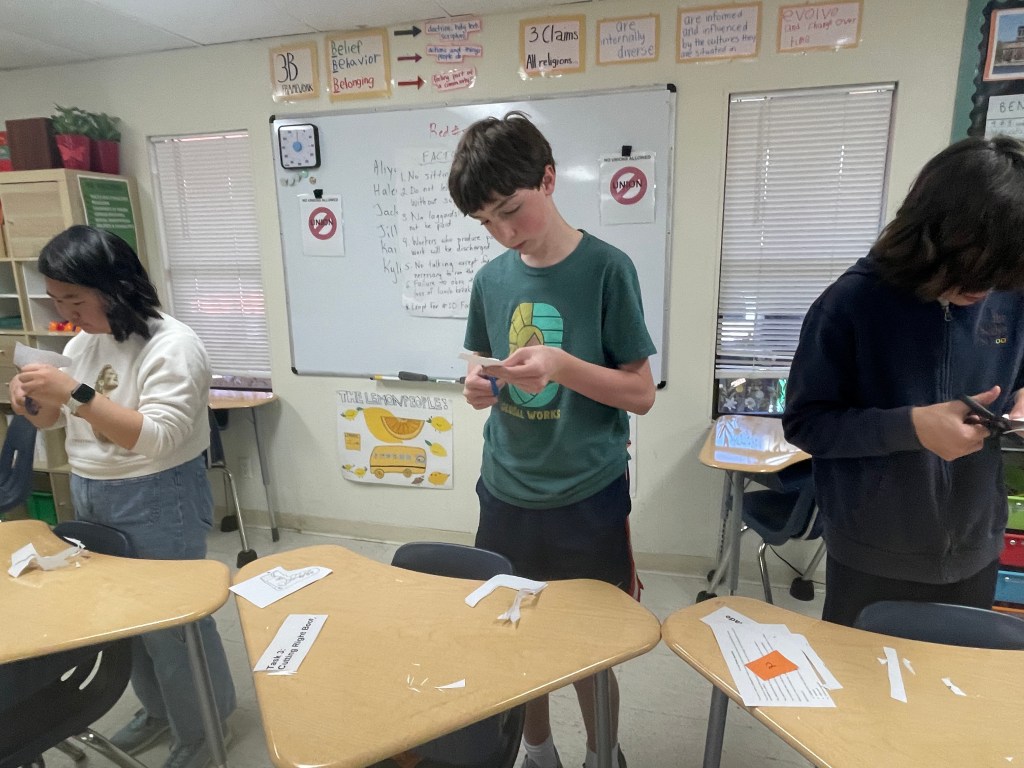
To deepen their understanding, the Humanities classroom was transformed into a bustling factory floor. Students took on the roles of assembly-line workers for the fictional “Get In Line Skating Company,” mass-producing inline roller skates. Each student was assigned a specific task: cutting out right or left boots and blades, assembling pieces with glue or tape, or adding color to the finished product.

Just like in real factories of the time, efficiency and quality were key. Each pair of skates had to pass a final inspection, and any that didn’t meet the standard were sent back down the line. Students also experienced the physical demands of factory work; they were required to remain standing and continuously engaged throughout the 40-minute production period.

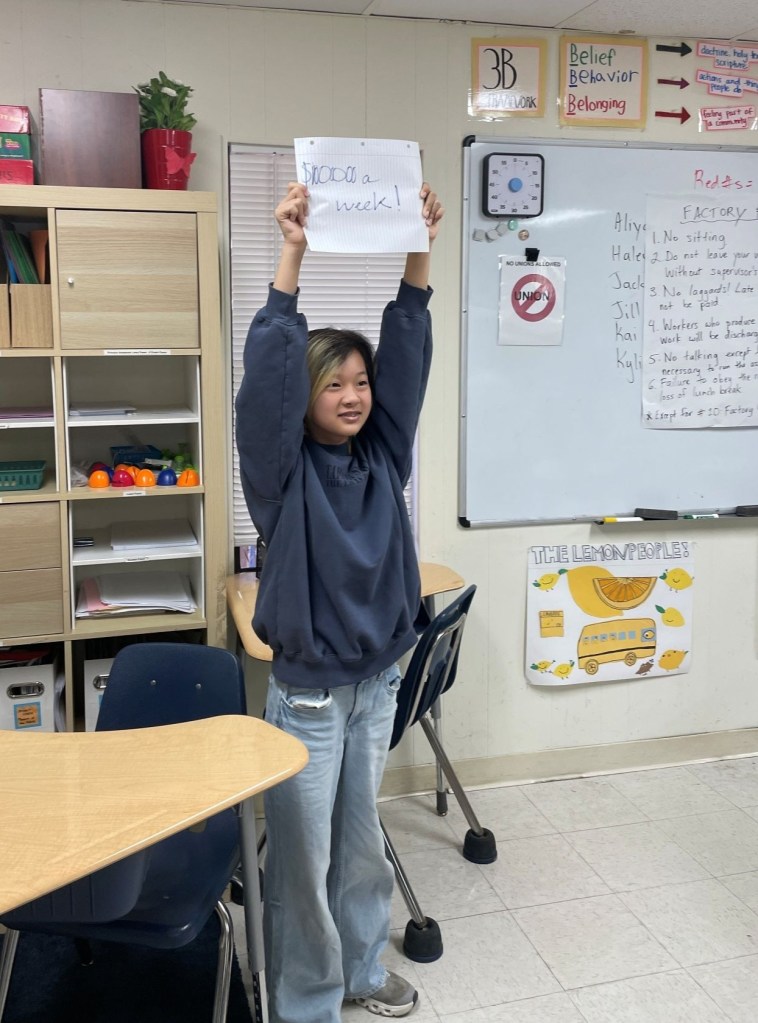
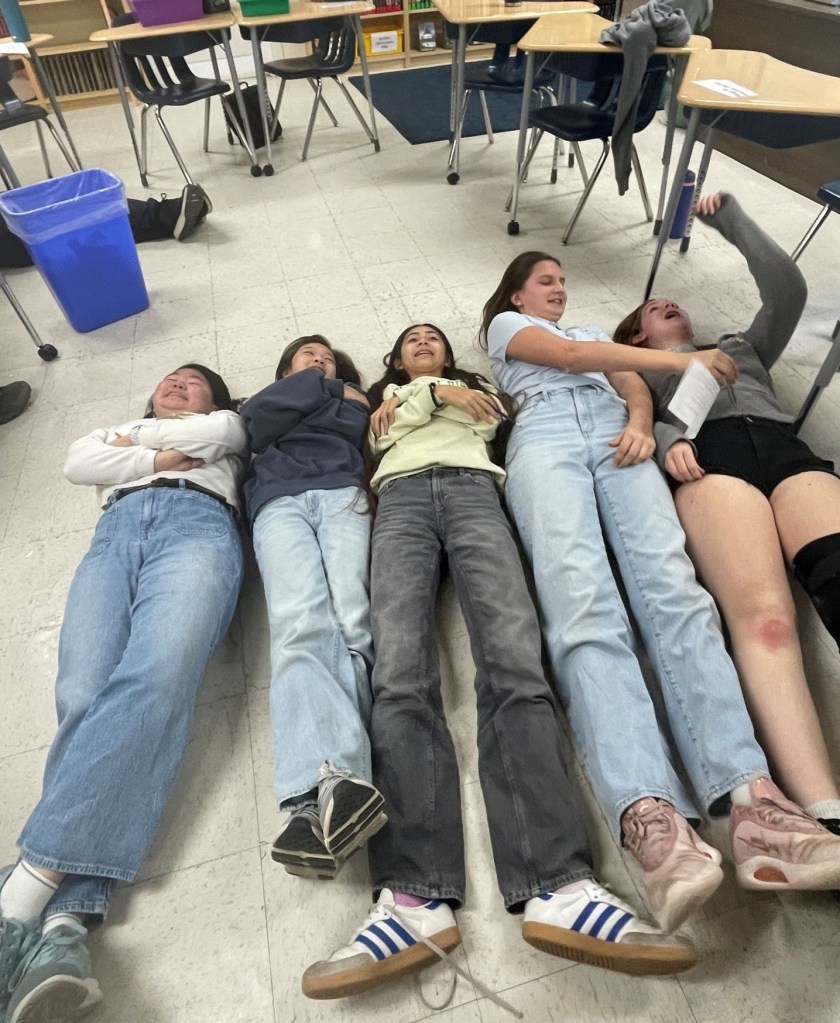
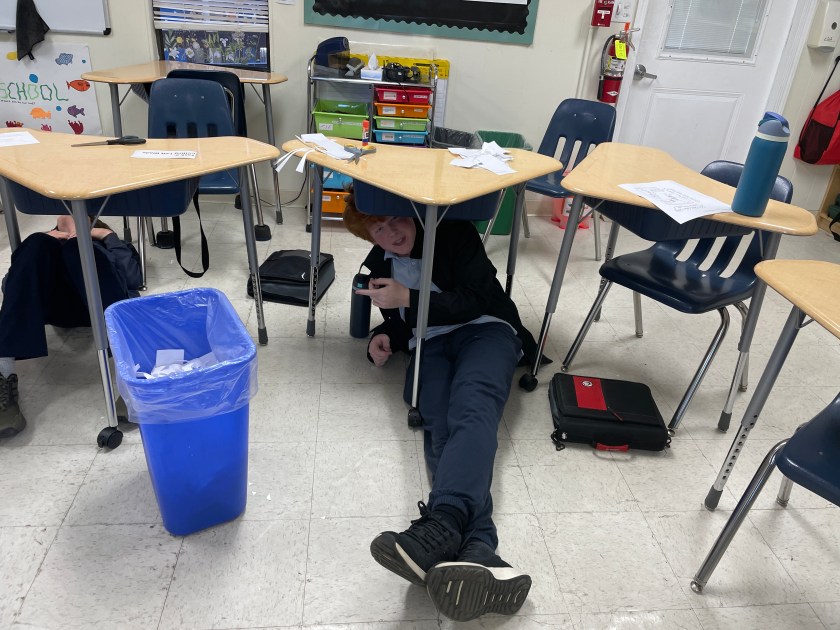
In a moment that captured the tensions of the era, the simulation took an unexpected turn when a spontaneous “wildcat strike” broke out. Despite posted warnings discouraging unions, several student workers halted production, with some even lying down on the factory floor in protest. One student called for higher wages, echoing the real labor struggles faced by workers during this time.

Although production temporarily stopped, the class ultimately produced 37 pairs of roller skates. Following some negotiation and a boost in morale, students completed their work and proudly displayed their finished products in the Humanities Room.

This hands-on experience gave students a deeper, more personal understanding of the realities of factory life during the Industrial Revolution—highlighting not only the efficiencies of mass production, but also the human cost and the importance of workers’ voices.

#SaklanHandsOn

The Owlets’ California Adventure

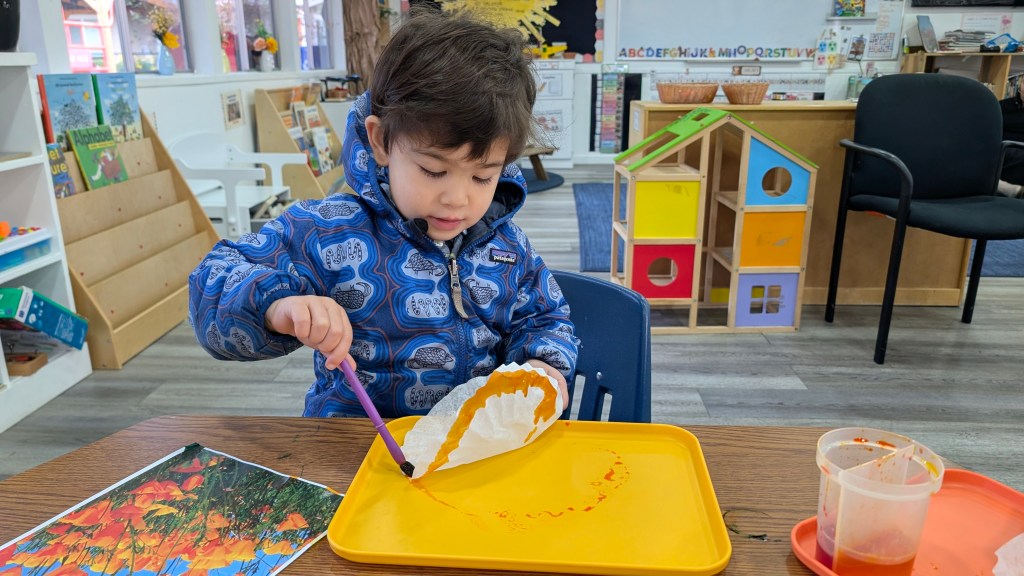
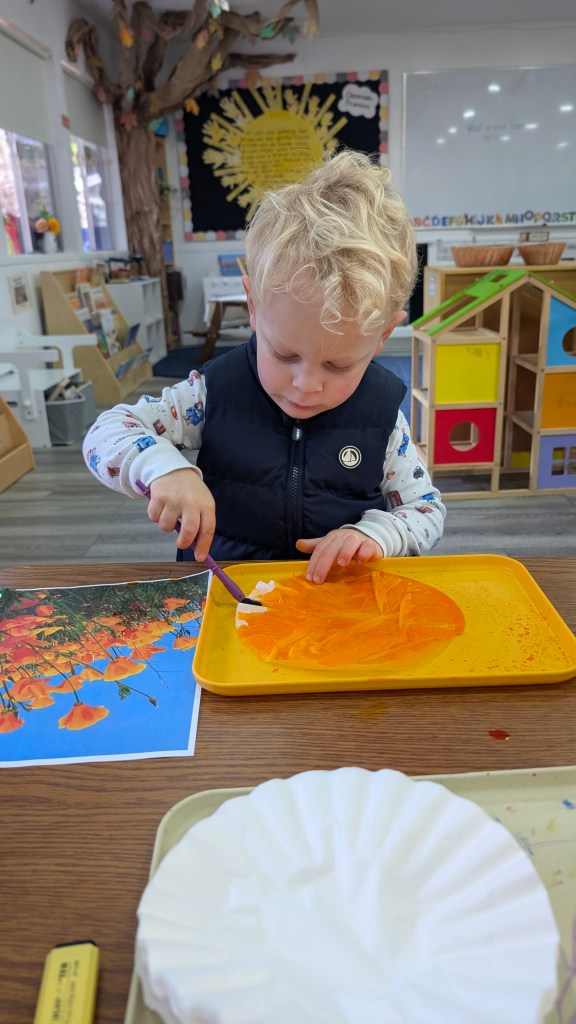
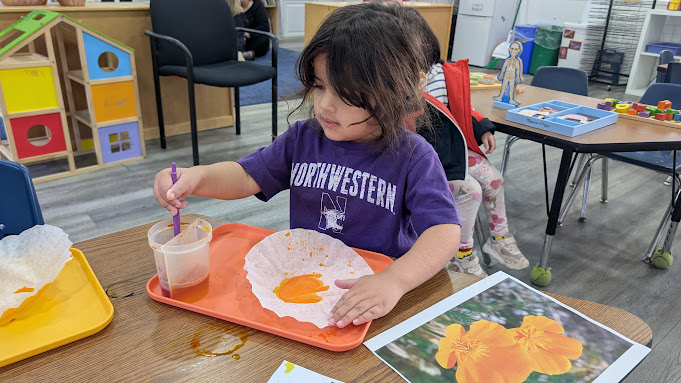
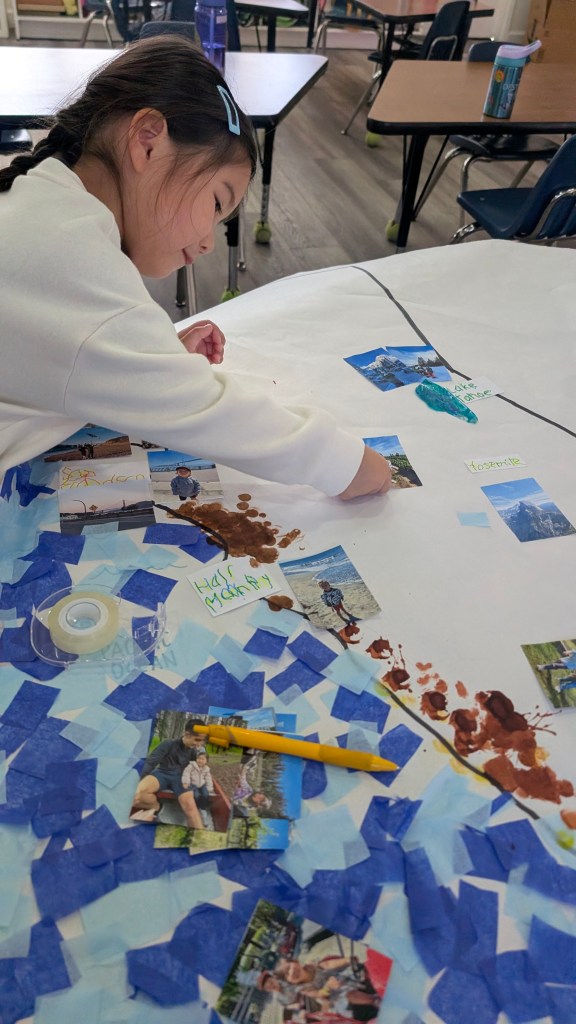
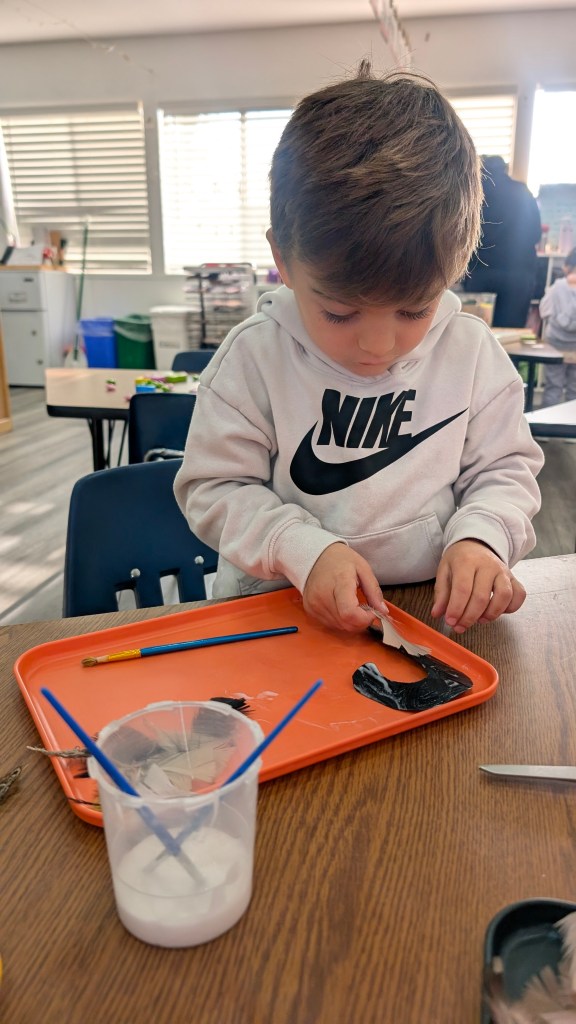
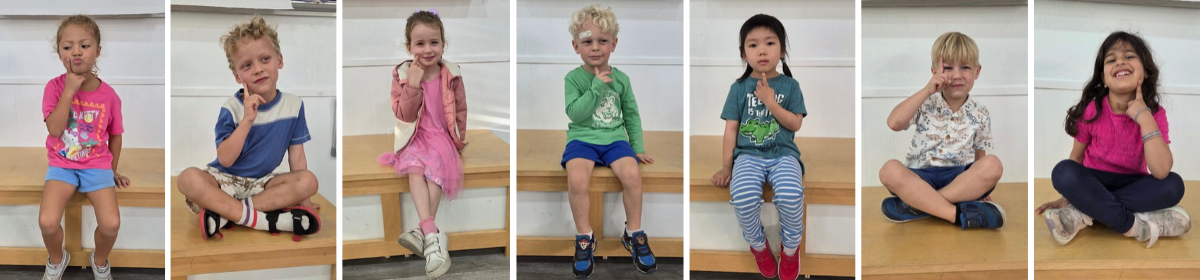
The Owlets have been busy learning all about California through a joyful, hands-on mini-inquiry inspired by curiosity, creativity, and discovery. Their exploration began in early January with a classroom art project focused on California poppies. After closely studying photos of the state flower and noticing its bright orange and yellow colors, the Owlets used liquid watercolors to create their own vibrant poppies. Although poppies typically bloom in the spring, they bloomed early in the Owlet classroom!

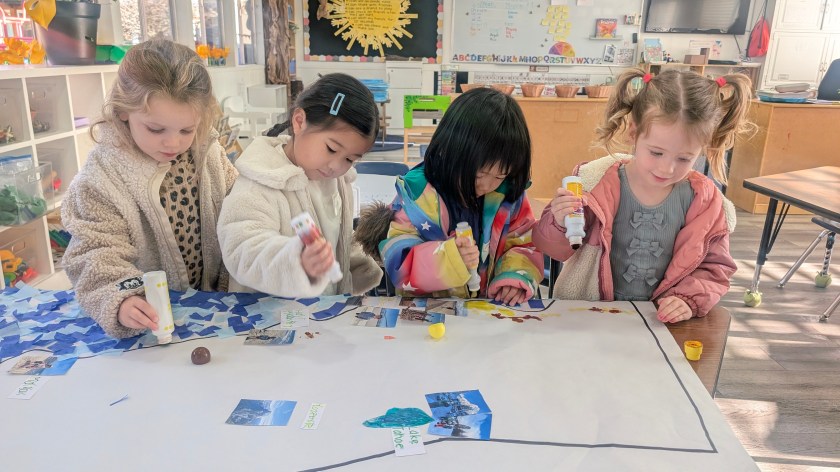
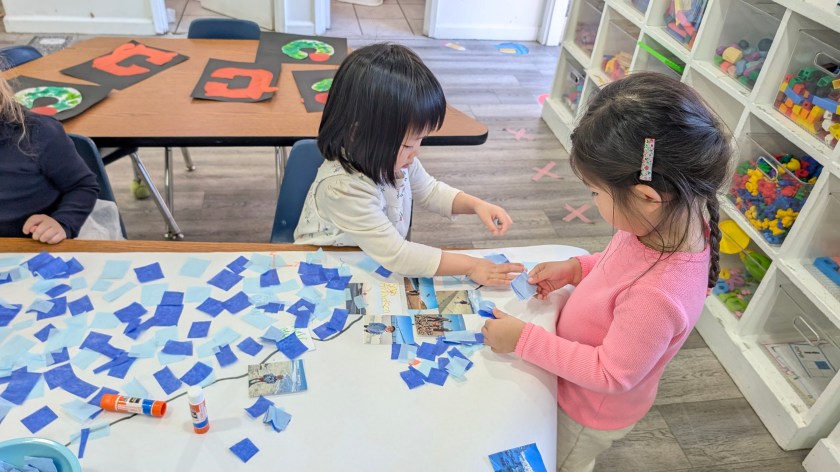
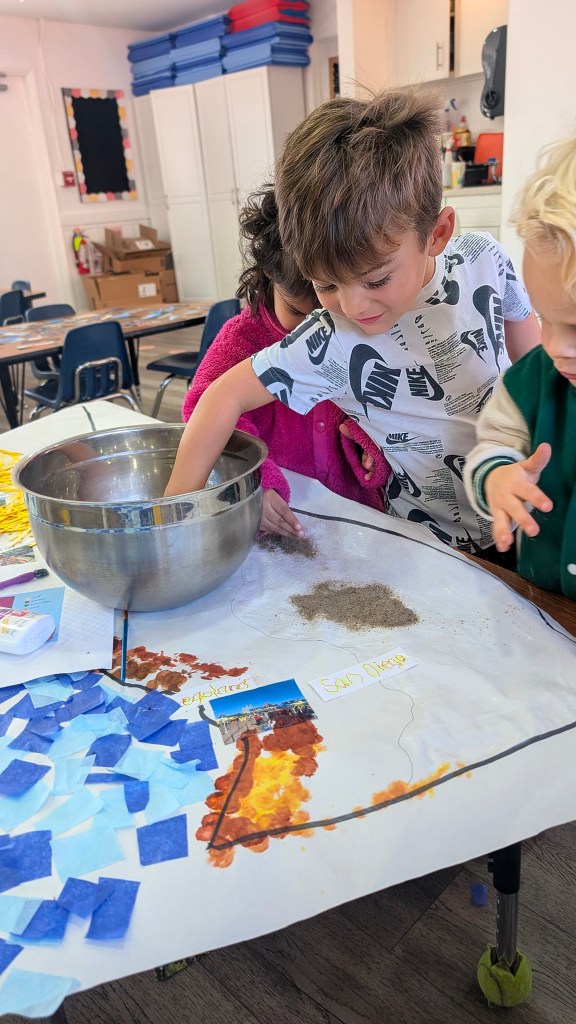
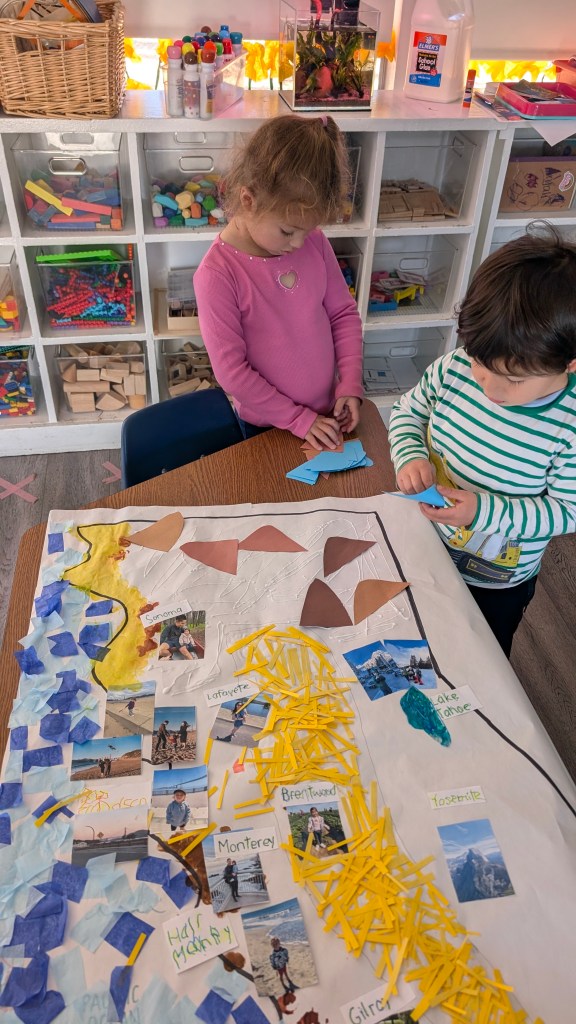
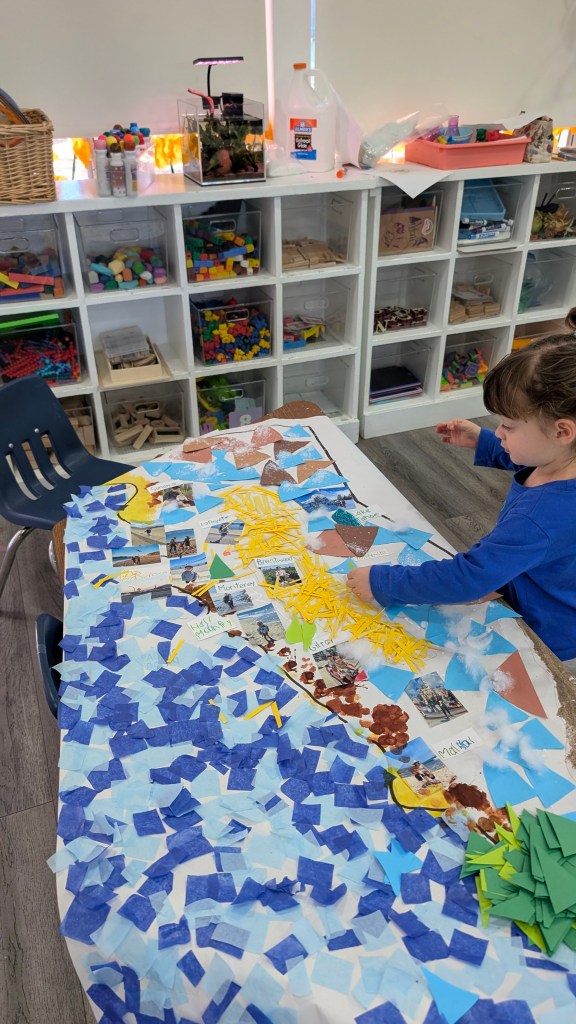
The inquiry officially began with the book Welcome to California, which introduced students to the basics of the state and continued to serve as a reference throughout the project. The Owlets eagerly shared places they have visited across California and quickly realized just how diverse the state’s landscapes are. To bring this learning to life, they worked together to create a large map of California, discovering coastal beaches, farmland, snowy mountains, forests, and deserts along the way.

In small groups, the Owlets used a variety of materials to represent where each landscape is located on the map. They also examined real photos shared by Owlet families and practiced matching each image to the correct region.

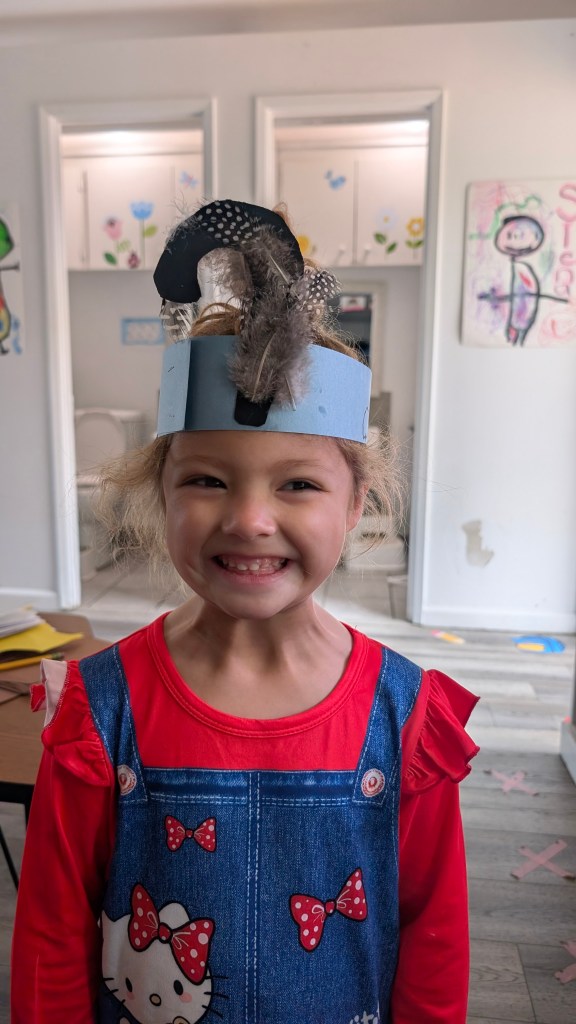
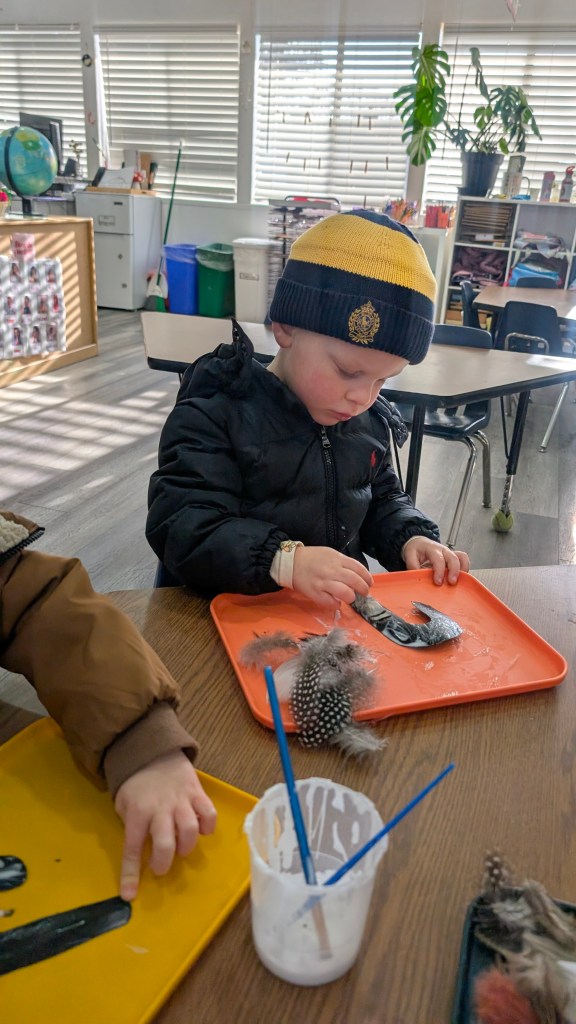
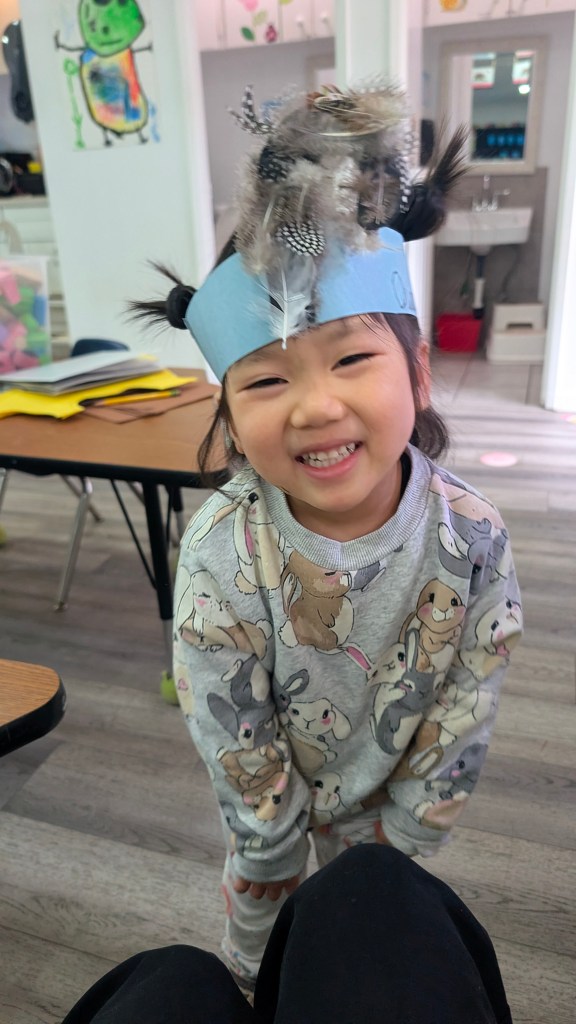
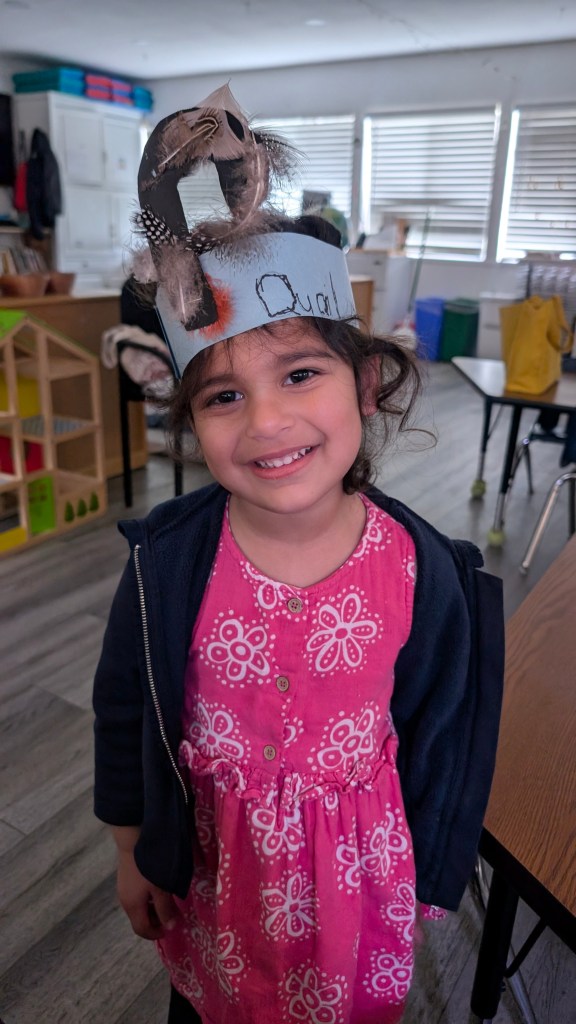
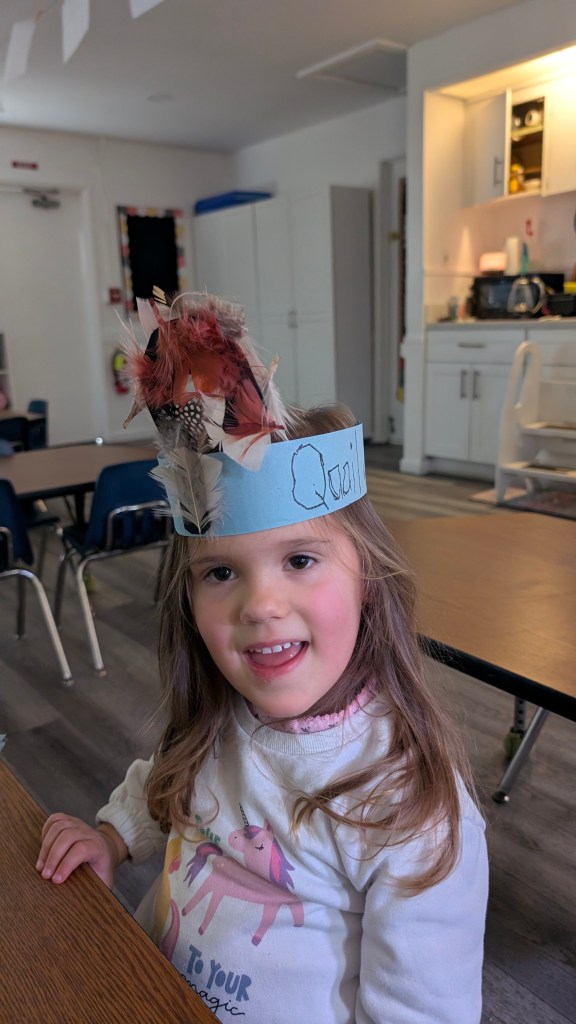
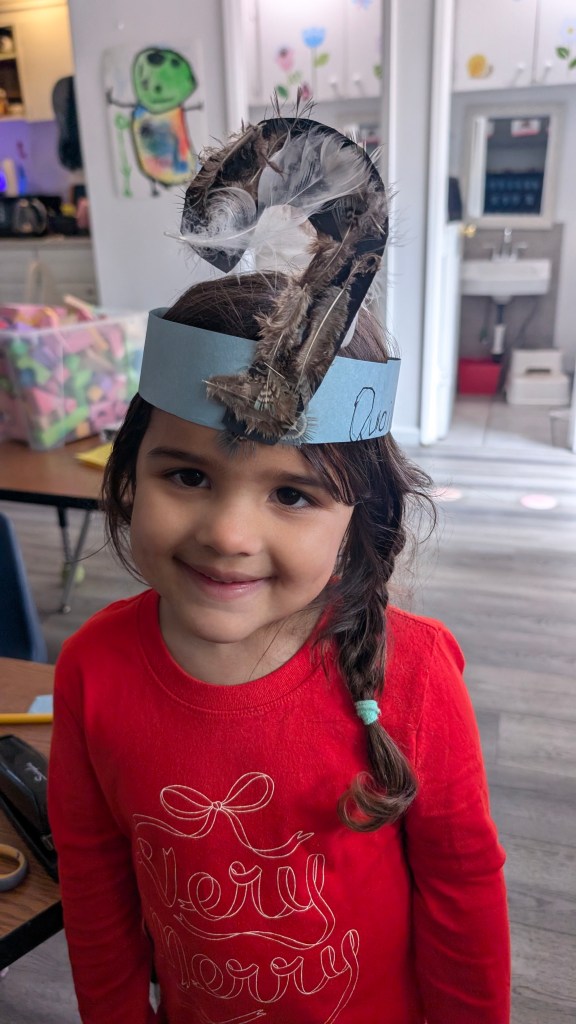
The Owlets also learned about California’s weather patterns and the animals that live in each region. They noticed that the desert is hot and home to animals that wouldn’t survive in cooler mountain climates. While studying the California state flag, they spotted the large brown grizzly bear and learned that grizzly bears no longer live in the state. This led to an exploration of animals that currently call California home, including black bears, foxes, coyotes, mountain lions, bobcats, and quails. Students were especially excited to discover a few “hidden” quails right in their classroom.

The inquiry wrapped in elements of California history as well, including a discussion of the Gold Rush and how people once traveled to the state in search of gold. Through art, literature, mapping, and imaginative play, the Owlets have built a strong foundation of knowledge about California—its landscapes, animals, symbols, and history—while nurturing curiosity and a love of learning along the way.
#SaklanHandsOn

Raising Awareness about the World of Islam

If you attended CLAS on December 12th, you heard the 7th-graders share facts they learned from their World of Islam unit in Humanities. Today, more than 1.9 billion people follow the teachings of the Prophet Muhammad, and Islam is the world’s fastest-growing religion. Yet despite its global reach, the origins, beliefs, and faith-based practices of Muslims are often misunderstood in Western societies.

As students prepared for their CLAS presentations, Humanities teacher Jennifer asked them to reflect on a deeper question:

Is there anything you have learned that might help people be more tolerant of Muslims today? If yes, please explain it.

The students’ responses demonstrated thoughtfulness, empathy, and a growing awareness of the power of education and understanding. Here are a few of their responses:

“People can educate themselves and others on the religion of Islam and challenge negative stereotypes.” – Amelia

“They are a very kind community helping the homeless and other things.” – Jason

“I think that the world isn’t perfect, and some people won’t listen to people who won’t be inclusive to others who don’t look the same as them or who are of another nationality. But if people really try to show those kinds of people that others are still human, this world could be a bit better.” – Caleb

“Yes, from reading the book Once Upon an Eid, I have learned that many Muslims, refugees or not, have faced lots of unfair discrimination because of their clothing and what their school textbooks say. However, when I learned about Muslim culture and wondrous celebrations, I realized that people who discriminate against Muslims don’t know how full of life Muslim culture is. Also, they clearly haven’t met a Muslim, because Muslims are normal people just like you and me.” – Willow

These reflections highlight the heart of Saklan’s Humanities program: encouraging students to think critically, ask meaningful questions, and develop empathy through learning.

The 7th graders will share their comprehensive research and learning with the community at the World of Islam Symposium on Monday, January 12, 2026, from 1:45 – 2:45 p.m. in the Humanities Room and Library. All Saklan families are warmly invited to attend and engage with this thoughtful and important work.

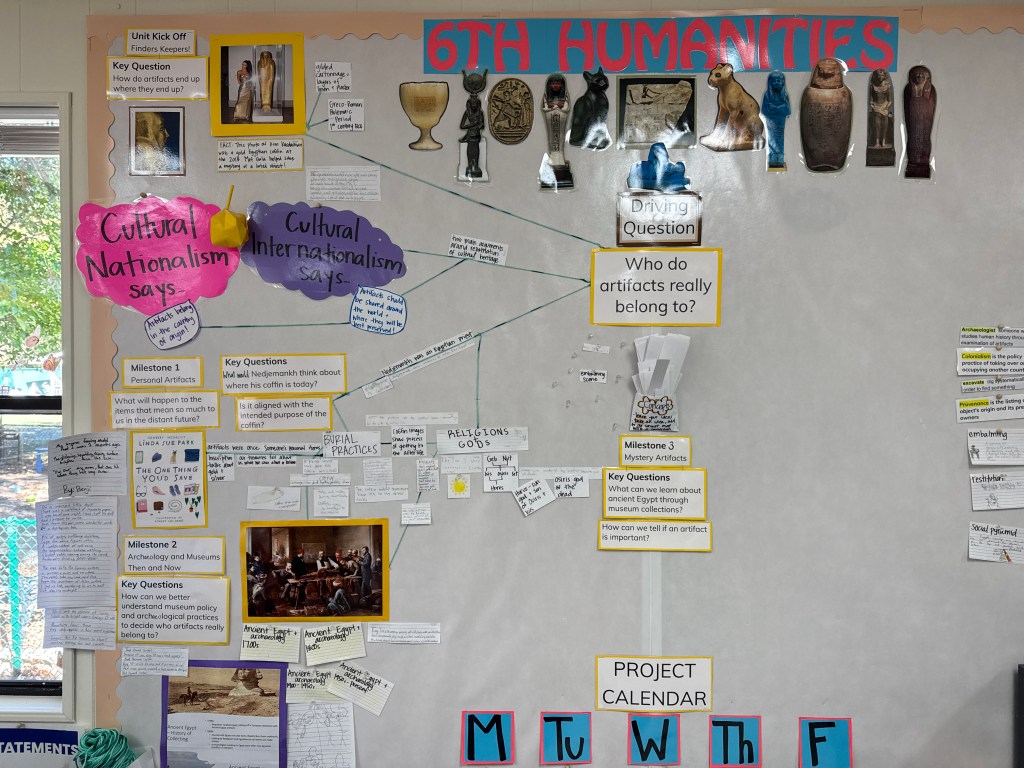
Who Do Artifacts Really Belong To?

Sixth graders have begun their first PBL unit of the year, in which they seek to answer the driving question: Who do artifacts really belong to? During this unit, students will develop an understanding of what cultural heritage is, how artifacts tell the stories of people’s lives, the role of museums, the history of changing archaeological practices, ancient Egyptian civilization, history research skills, as well as sijo poetry, narrative, expository, and argumentative writing.

Recently, they’ve been thinking about the purpose of ancient artifacts, such as Nedjemankh’s stolen gold coffin, and about their connections to their own treasured possessions. The class read The One Thing You’d Save, by Linda Sue Park, before writing personal narratives about their own treasured artifacts. Students got lots of practice giving and receiving both teacher and peer critique on these pieces before turning in their final drafts.  

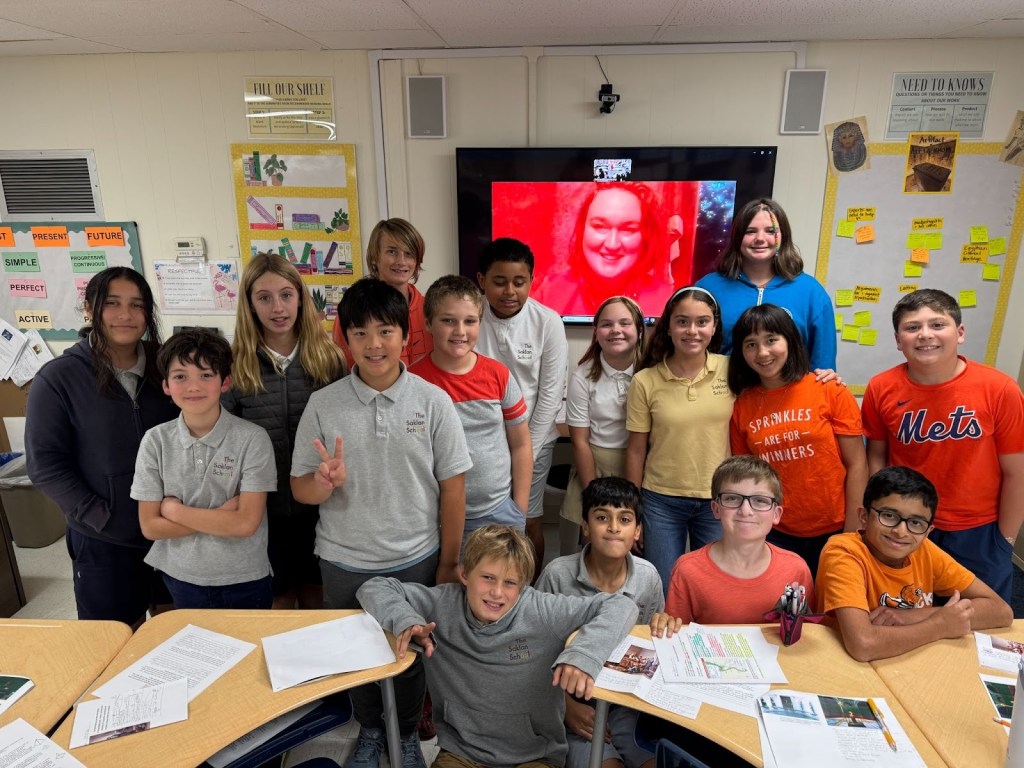
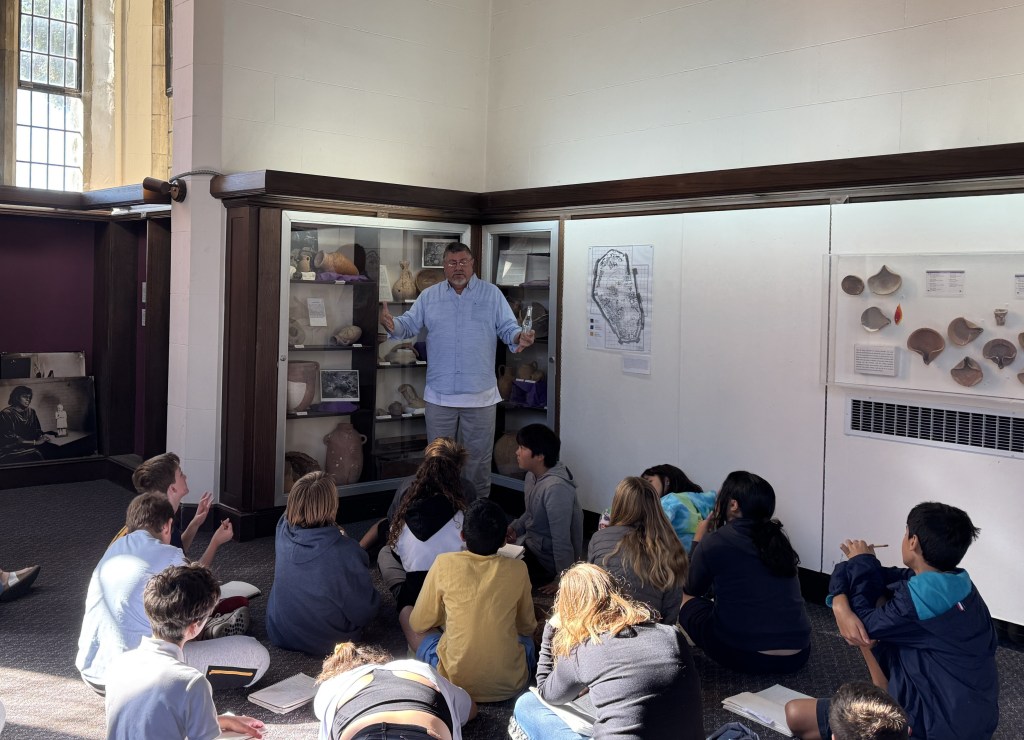
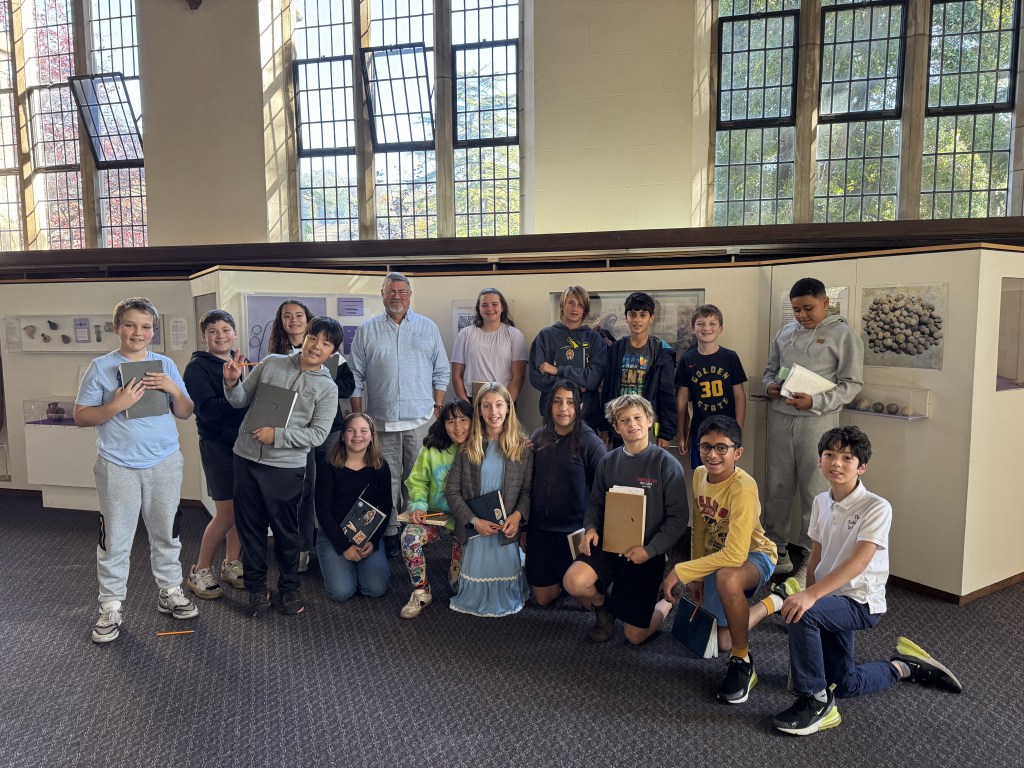
Last week, they zoomed with an archaeologist, Dr. Hannah Wellman. She shared the evolution of ancient mummification practices, as well as changes in legal practices and ethical arguments regarding the treatment of ancient Egyptian cultural heritage. Dr. Wellman’s example of Nefertiti’s Bust as an example of the significance of museum context of artifacts gave the class a great launching point for discussions in preparation for visiting the Badè Museum this week. 

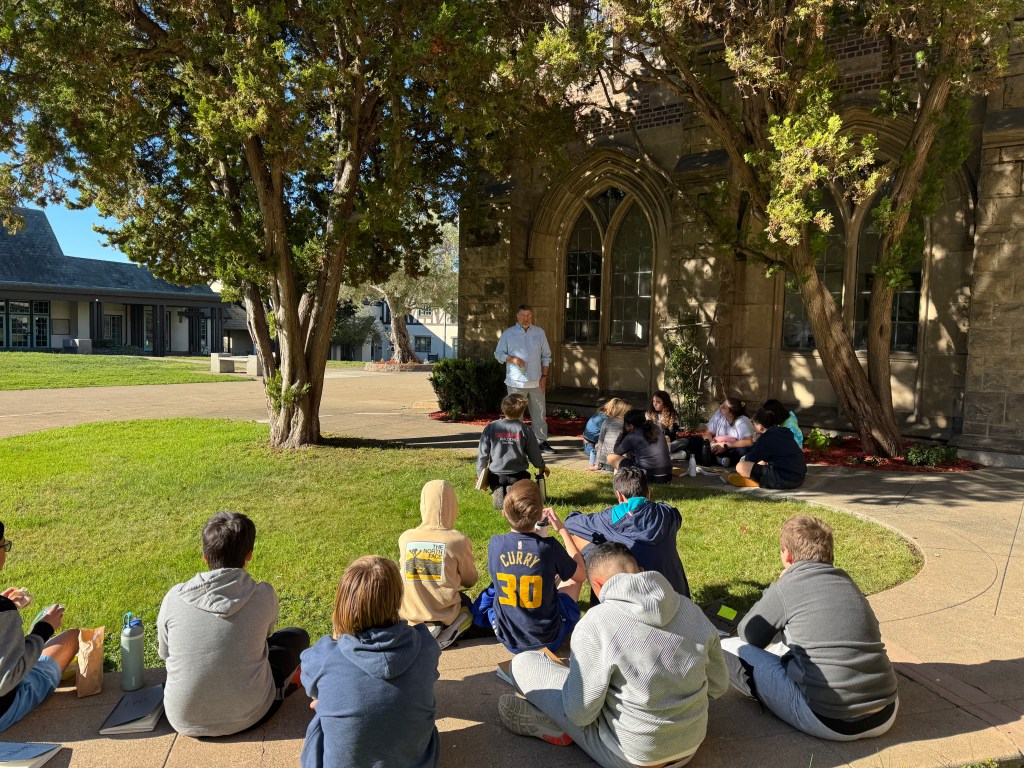
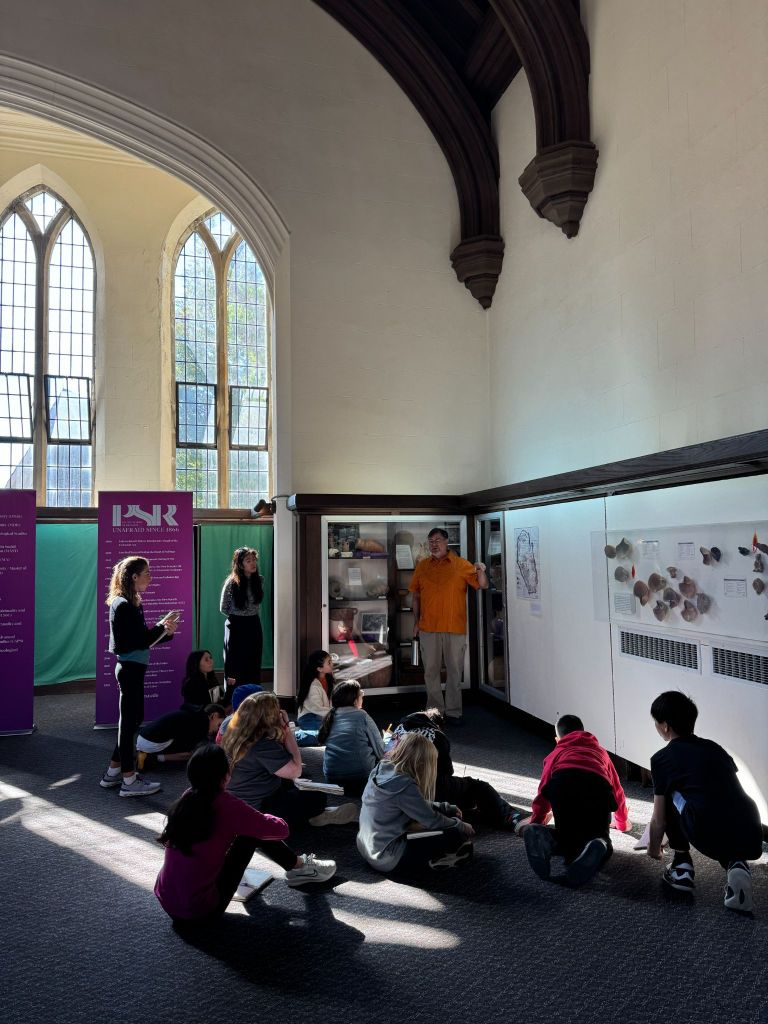
Dr. Aaron Brody, an archaeologist and Badè Museum director, taught the sixth graders about their collection, the benefits of a high degree of context for artifacts, and why repatriation in this case may not be ideal or desired for the museum or the country of origin. Both experts helped the class understand how repatriation conflicts came to be and why people have reached different conclusions about repatriation in various situations. 

#SaklanPBL

Journey Back to the Gold Rush

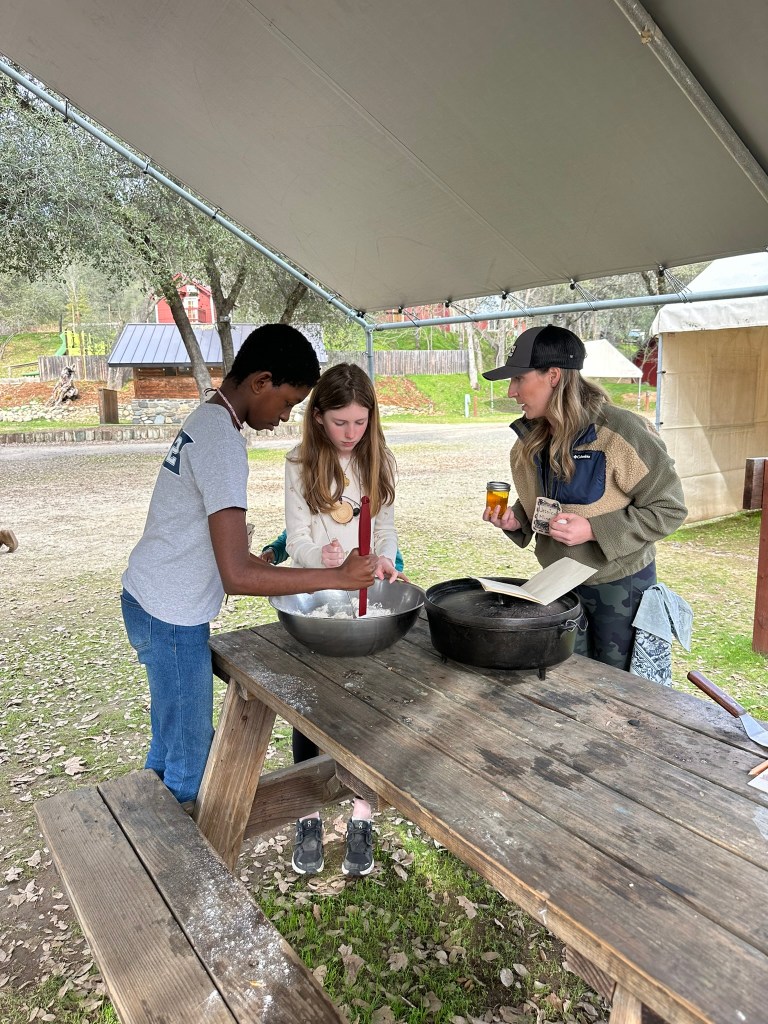
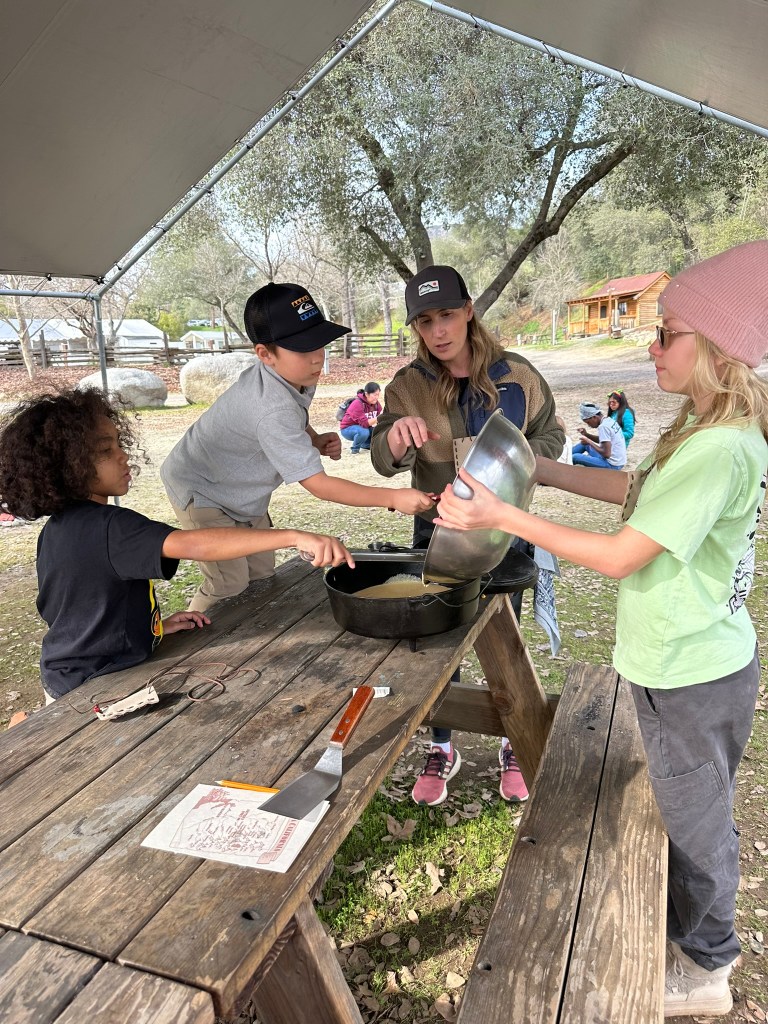
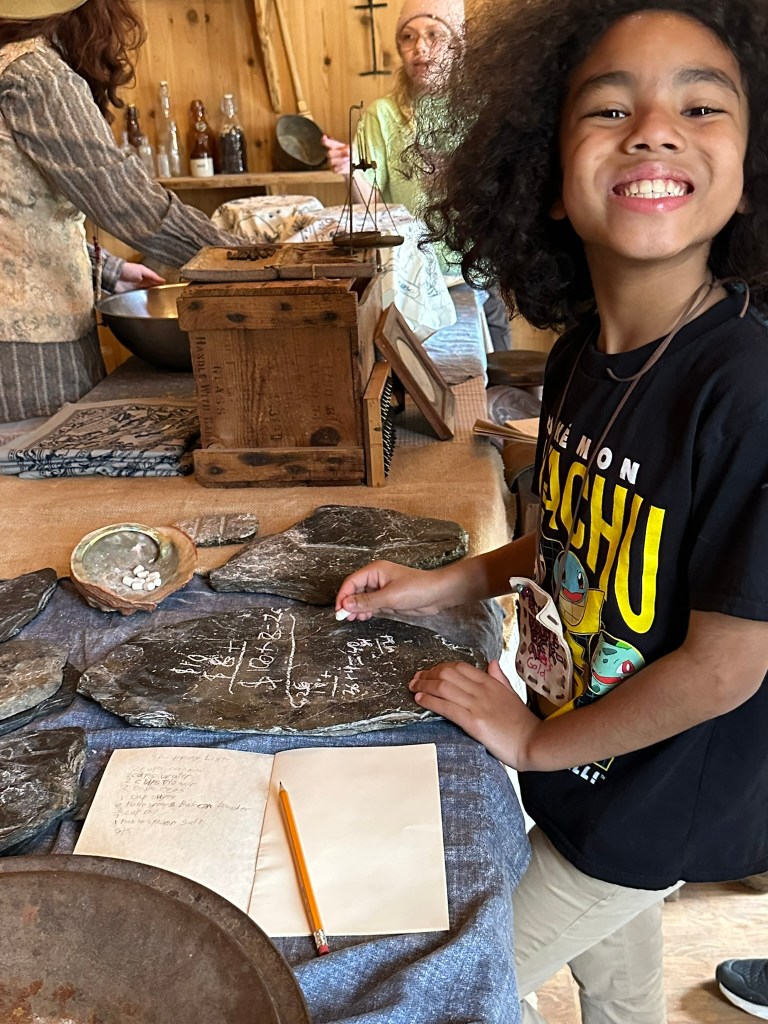
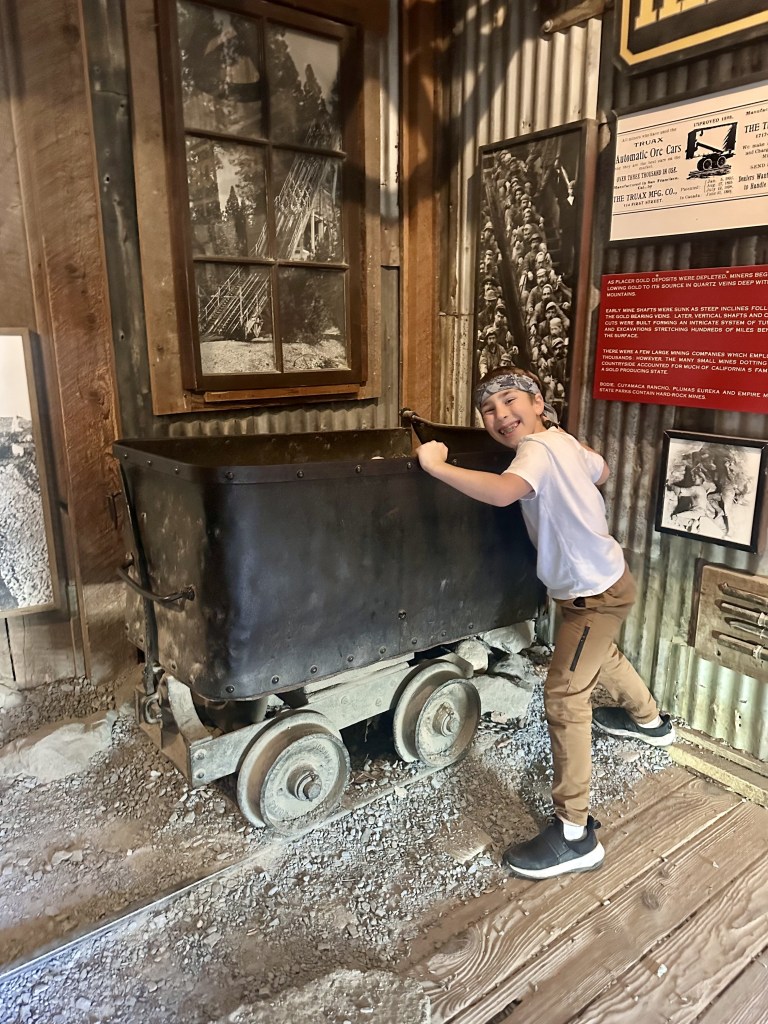
The Saklan 4th graders recently embarked on an unforgettable journey to Coloma, where history came alive in the heart of Gold Rush country. Stepping into the past, they laced up their miner boots and experienced life as it was in 1849, guided by their enthusiastic program leader, Tim.

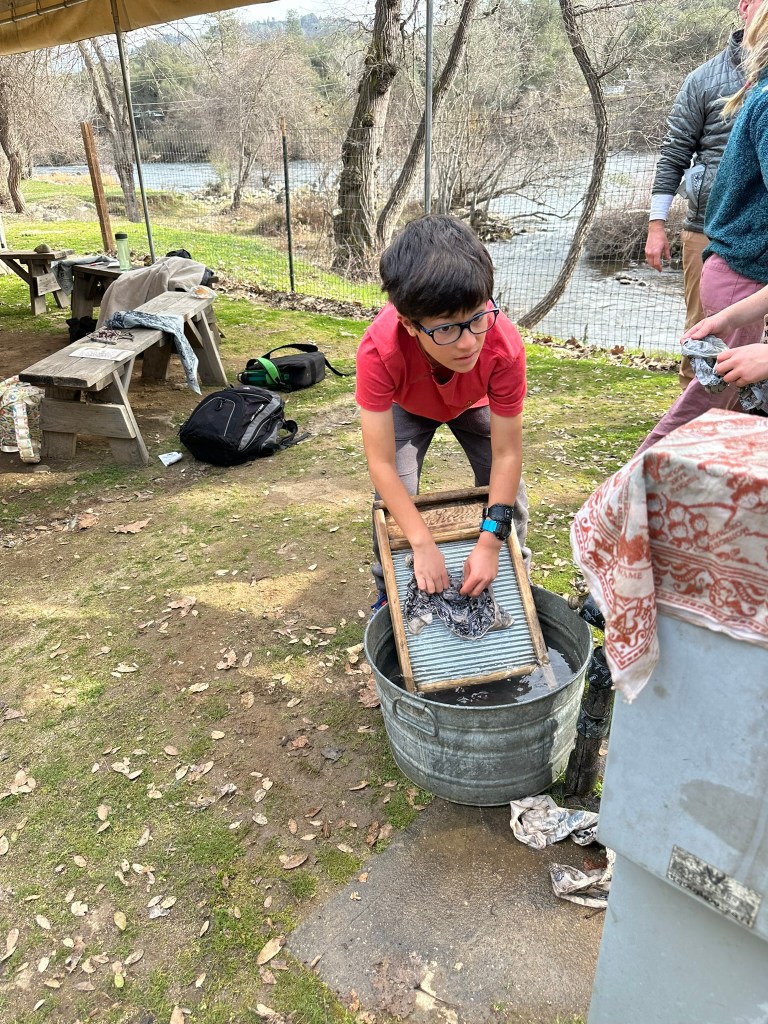
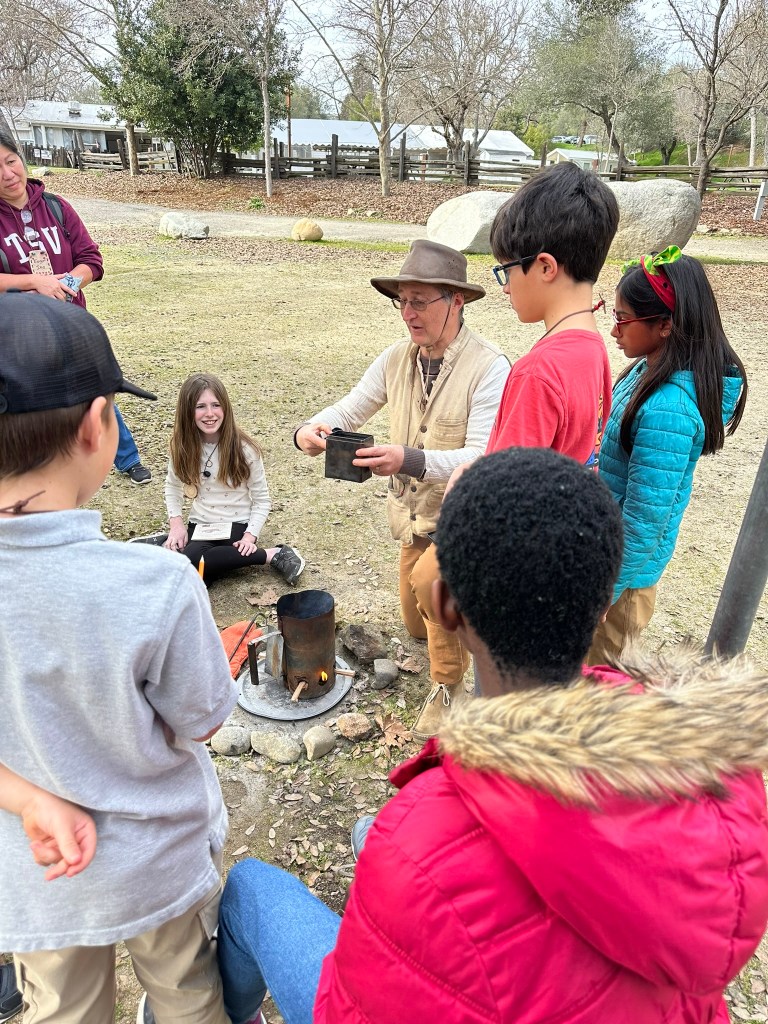
The adventure began with a visit to a bustling mining camp, where the aroma of freshly baked cornbread filled the air. The students purchased ingredients from a general store, just as miners once did, and patiently waited as the bread cooked over an open fire in a cast-iron Dutch oven. While the cornbread baked, they learned essential pioneer skills—sewing, washing clothes on a washboard, and working together to build a shelter. Living the life of a Coloma miner along the riverbanks provided a first-hand glimpse into the daily challenges and triumphs of those seeking fortune in the golden hills.

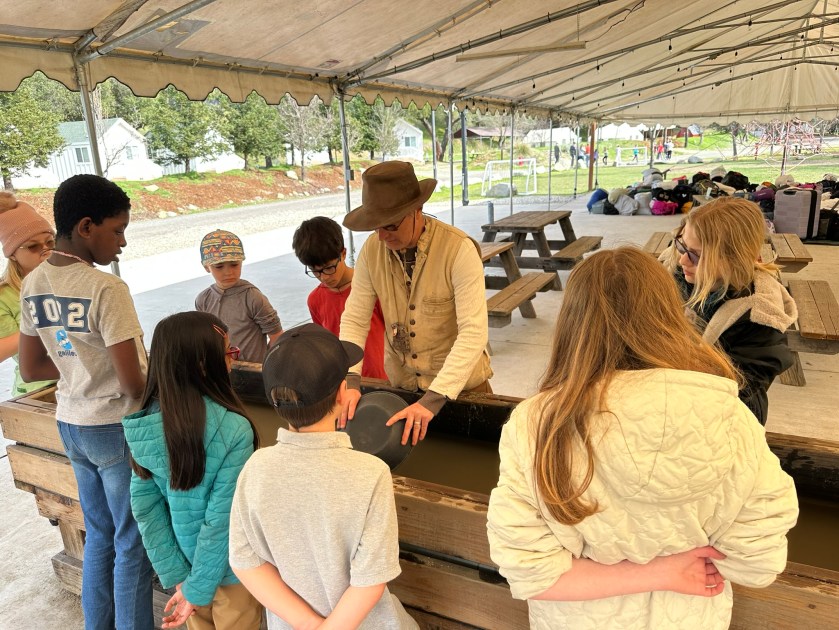
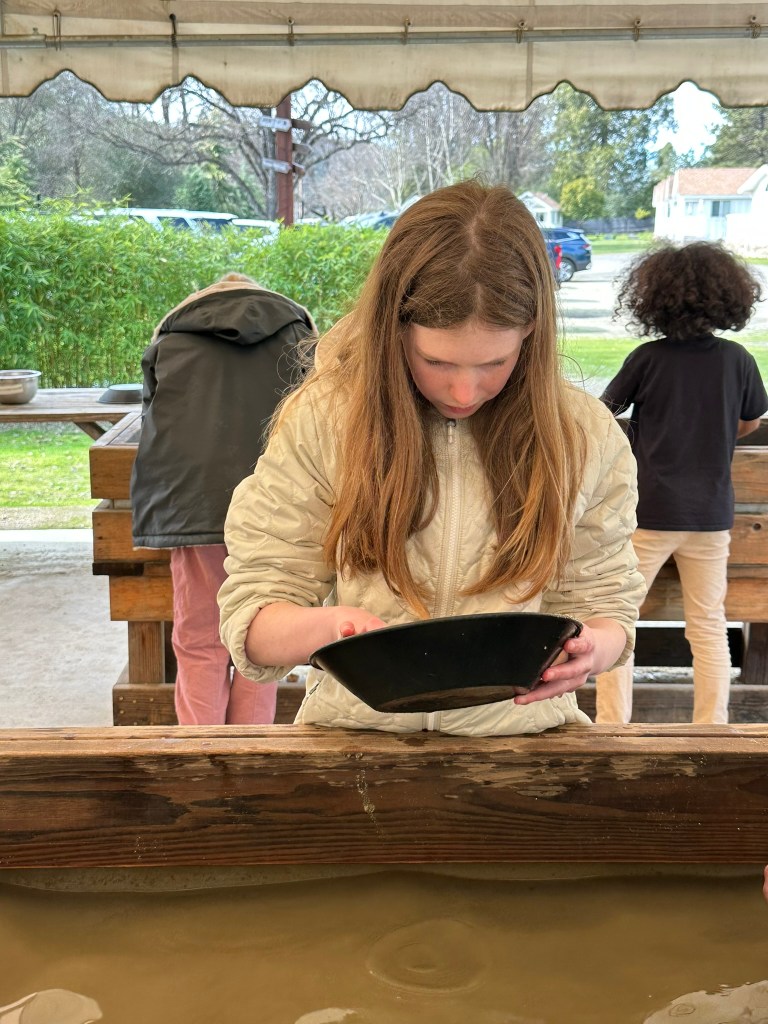
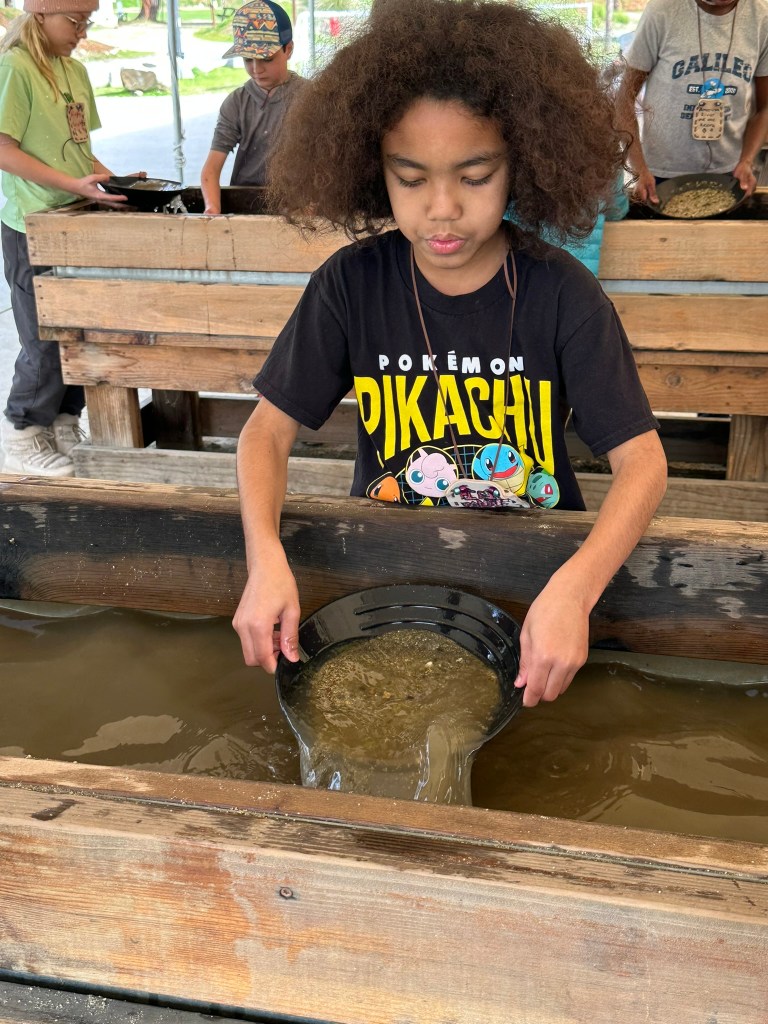
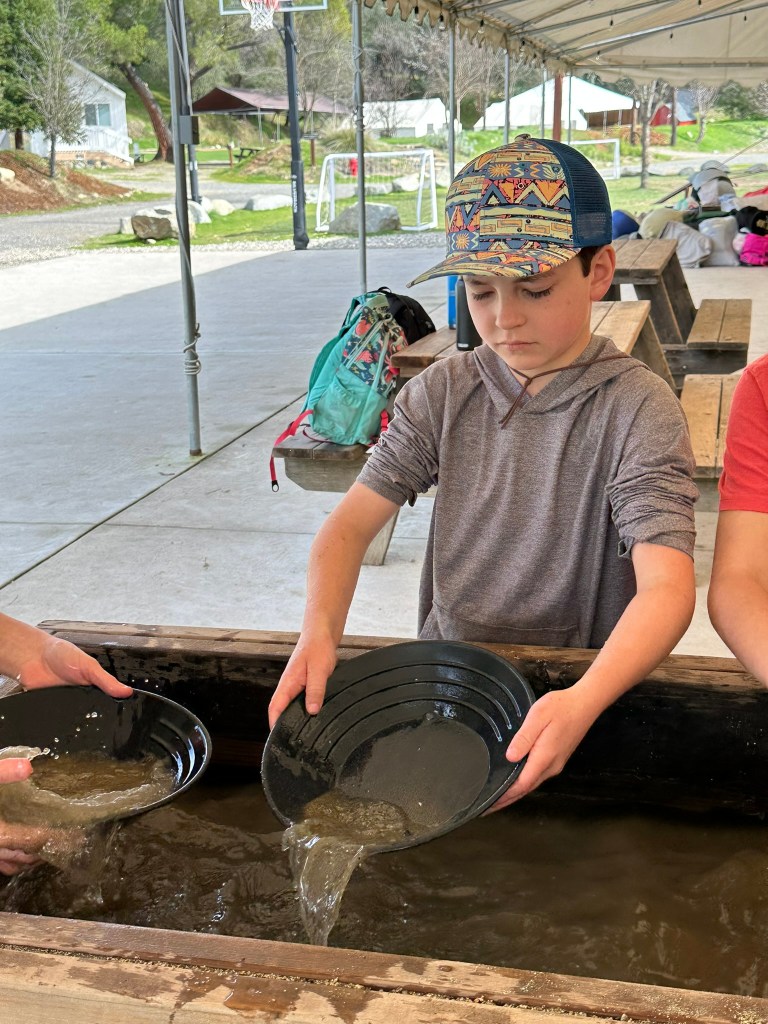
Of course, no trip to Coloma would be complete without the thrill of gold panning! Armed with pans and determination, the young prospectors eagerly sifted through pay dirt from the American River, their excitement growing with every swirl of water. Shouts of EUREKA! rang through the air as gold fever took hold, mirroring the elation of those who had once sought their fortunes in the very same spot.

The journey through time deepened when the group met with a local Miwok cultural leader, who shared stories and traditions from an indigenous perspective. Through this powerful experience, the students gained a richer understanding of the impact of the Gold Rush on the Native American communities of California.

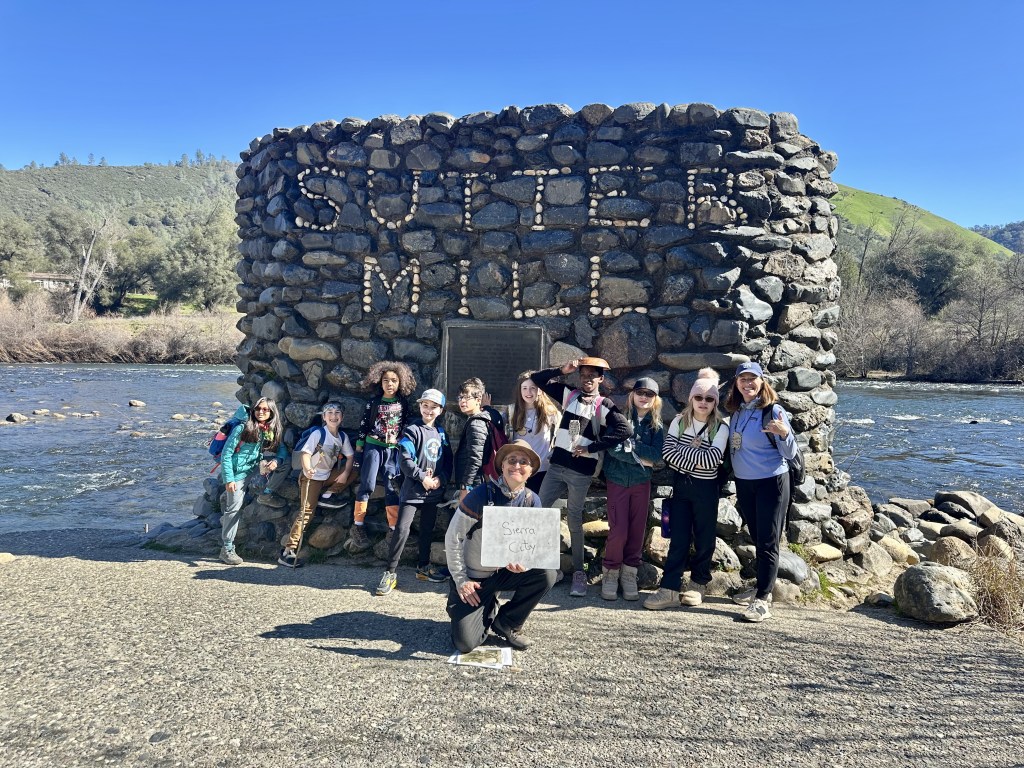
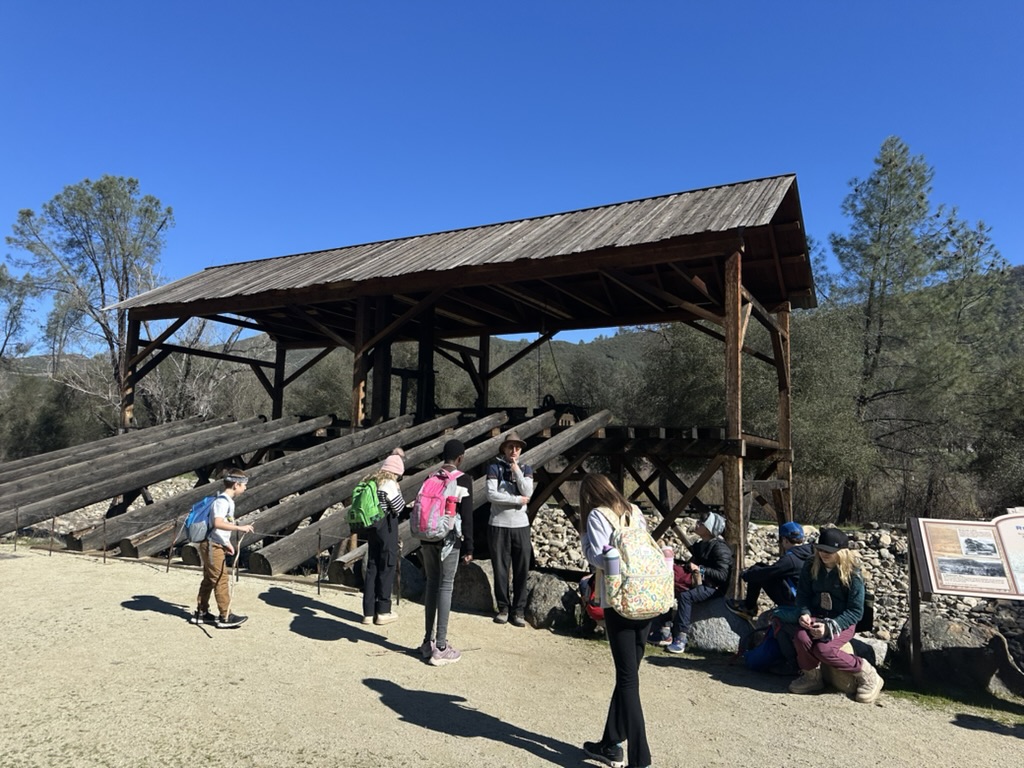
On the second day of their adventure, the students hiked through Coloma’s rolling hills, exploring key historical sites, including Sutter’s Mill, where the first famous gold nugget was discovered. Standing on the very ground where history was made, they connected even more deeply with the past.
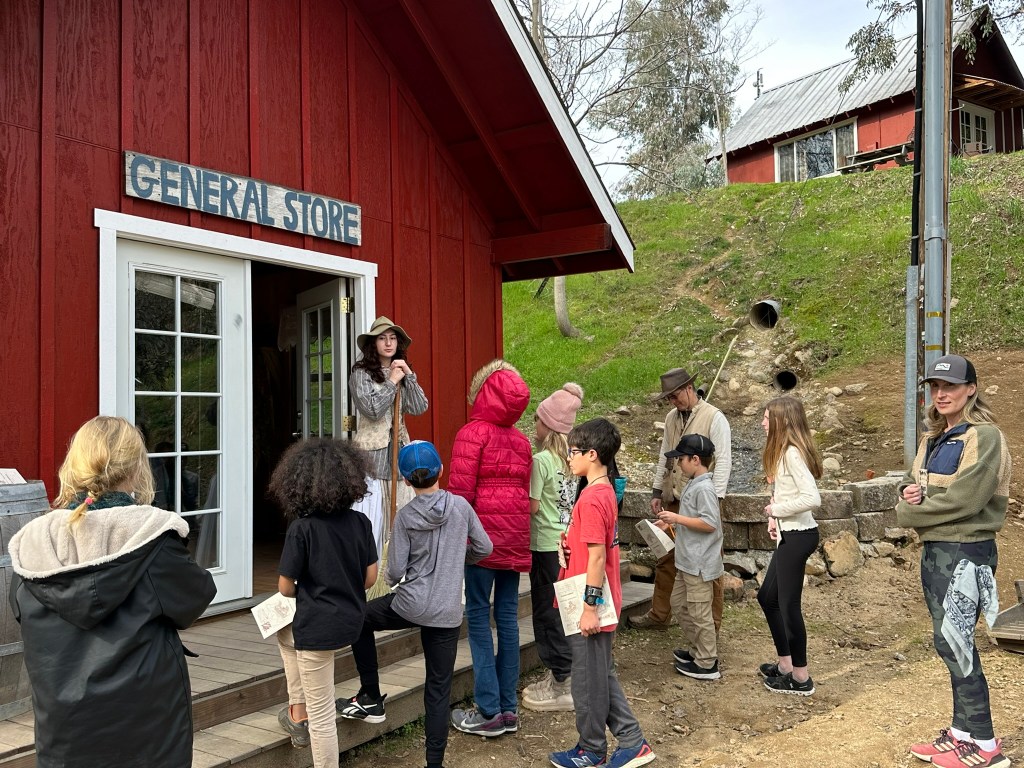
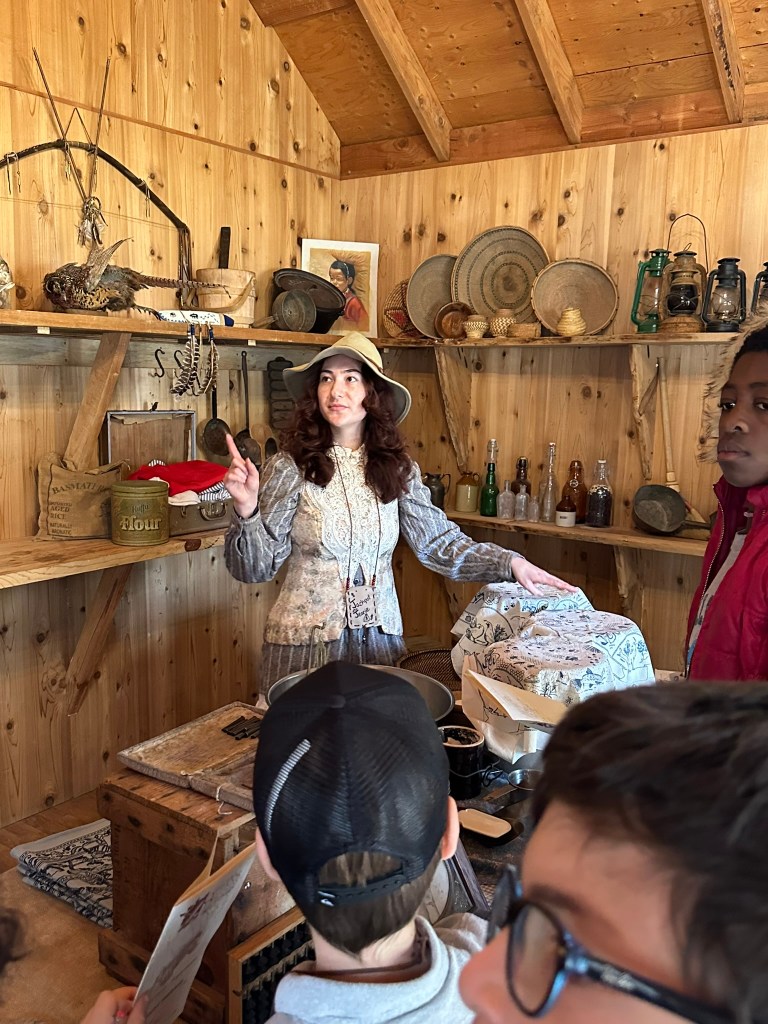
As they packed up their belongings and bid farewell to Coloma, the 4th graders carried with them more than just memories—they brought home a deeper understanding of the trials and triumphs of those who came before them.

#SaklanFieldExperience #SaklanHandsOn

Head’s Corner: Teaching How to Think, Not What to Think

As someone who has taught history for a good portion of my professional life, I’ve always felt that how history is taught in the U.S. is a disservice to students. There is an emphasis on students “knowing” the country’s entire history, without understanding it. The curriculum will lean into a simplified version of history that leads students to a particular perspective. Rarely does history teaching slow down and ask students to wrestle with both sides of an issue and develop their own opinions. (Think Moraga Police Chief King reading All American Boys along with our eighth-grade class and then coming in to discuss his take on the novel.)

The other sin of how we approach history teaching in the U.S. is one of omission. We simplify complicated stories into fables that are easy to digest. For example, unpack the popular myth of Rosa Parks and her famous refusal to give up her seat on a Montgomery bus – the story that a meek, tired seamstress was too exhausted to walk to the back of the bus and accidentally started a movement that changed civil rights. There is a romanticism to that story, but it is wrong.

In reality, Rosa Parks had been an activist fighting for racial justice for decades before her bus stand. Though described as “quiet” in most of the obituaries that ran after her 2005 death, she was anything but.

The fable of Rosa Parks and the civil rights movement of the time betrays the reality, pain, and sacrifice of those who fight the good fight. It ignores how resistant Americans worked to challenge the status quo. It is also a disservice to the country.

As educators, we owe it to society to examine the fables and myths we have heard and those we have perpetuated – from Christopher Columbus to American Exceptionalism. We also owe it to our students to help them know less but understand more and reach their own conclusions, not ours.

Peace,

David

Artifact or Art Opinion

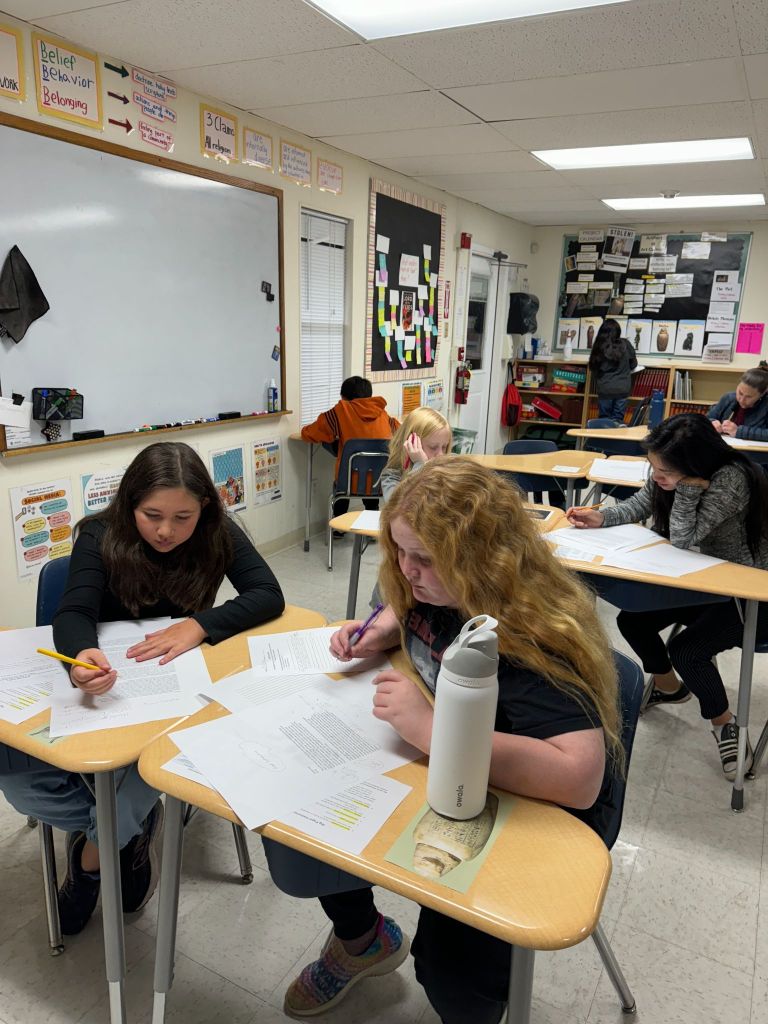
The 6th graders recently wrapped up their second milestone in their Project Based Learning unit, Artifact or Art Opinion. The driving question for the unit is, “Who do artifacts really belong to?”

During this unit, students explore arguments for and against the repatriation of Egyptian artifacts. They develop an understanding of museums, the history of archaeological practices, museum bias, perspective taking, and of course, dive into the content standards connected to ancient Egyptian civilization. This year, it has been great fun to add in mini lecture recordings and videos from the Egyptologist that Linda and Vickie traveled with over the summer, too! 

The unit kicked off in early October with an entry event highlighting a modern example of an artifact purchased by the Met that was, in fact, stolen! This helped the class to wonder how do museums end up with the artifacts they have in their collection? They then selected mystery Egyptian artifacts held at museums outside of Egypt to research. Through studying their artifacts, students began to build an understanding of what these artifacts are and why they are important. During their research, the 6th graders learned about ancient Egyptians and started sorting through some of the complexities of each artifact’s provenance. Students learned sometimes it is tricky to get to the bottom of how a museum acquired a particular artifact! 

Recently, the sixth graders met with two experts who helped them start to understand how museum and archaeological practices have changed over time. They visited a small museum in Berkeley at the Pacific School of Religion called the Badè Museum. There, the class met with archaeologist and Museum Director Dr. Aaron Brody to understand the unique history of the collection and their perspective on repatriation.

Sixth graders also zoomed in with archaeologist, Dr. Hannah Wellman, who shared a detailed timeline about changing archaeological practices, mummification, and the impact of context in a museum exhibit.

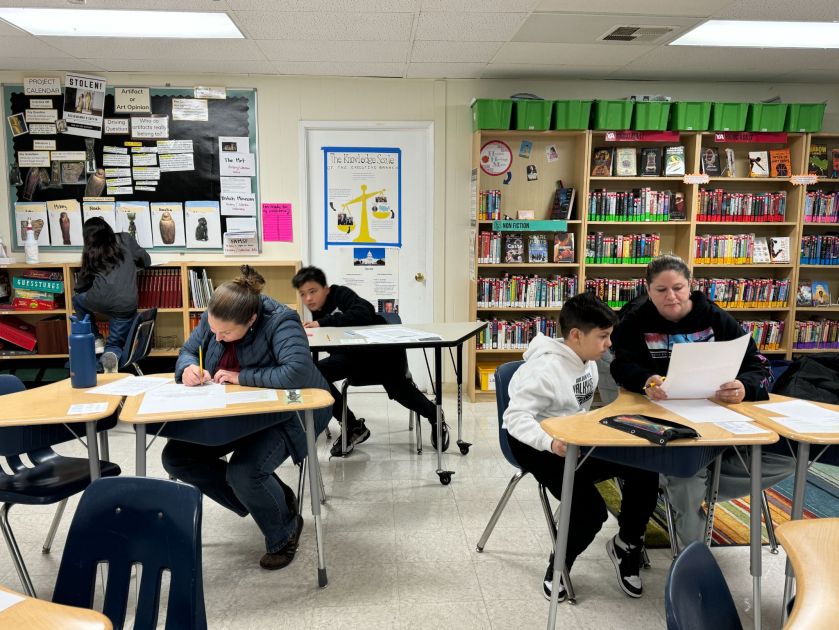
Students have been working on compiling all their research from the first two milestones into a research paper. After a first draft, teacher conferences, and initial revisions, they participated in a feedback routine called “Big Paper” with the help of David, Emily, and Kim. The 6th graders did a great job providing constructive feedback, glows, and questions to improve each other’s work.

In the final two milestones, students will learn how ancient and modern public art help individuals express their opinions and share their own answers to the driving question with the community. The sixth graders will showcase their work in this project at CLAS on November 22. We hope to see you there! 

#SaklanPBL