Curious About Termites

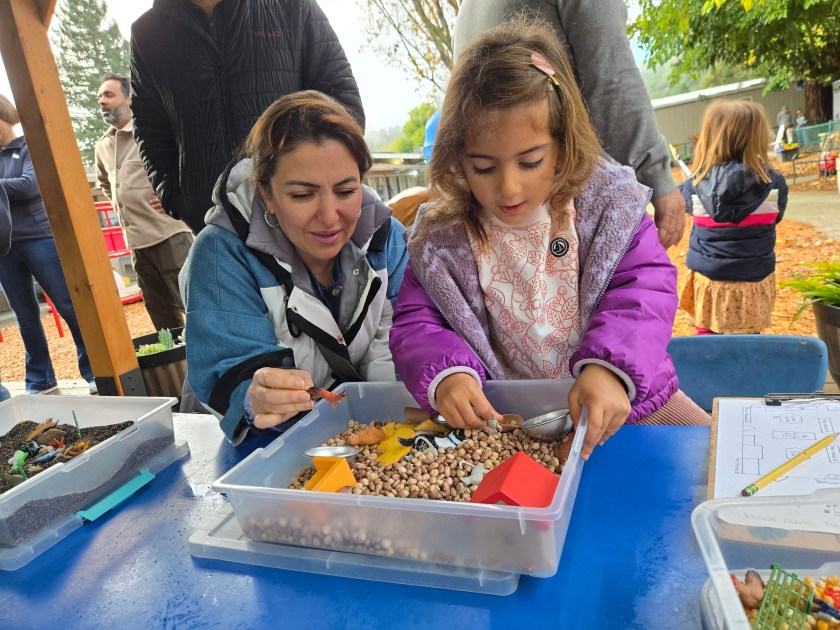
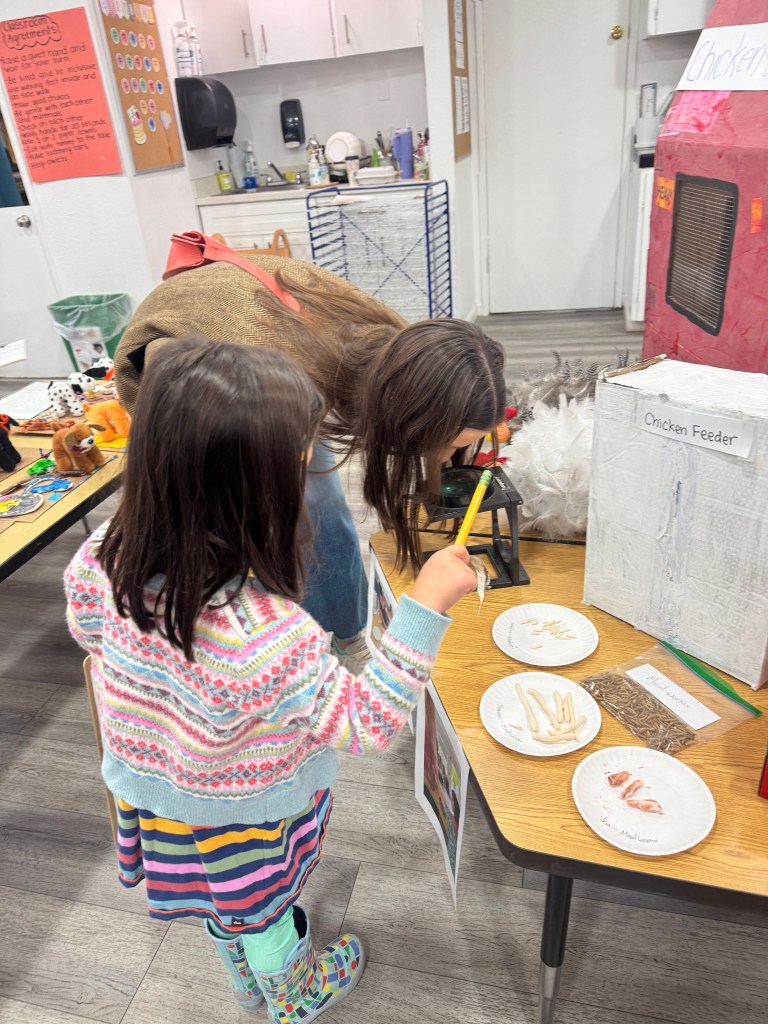
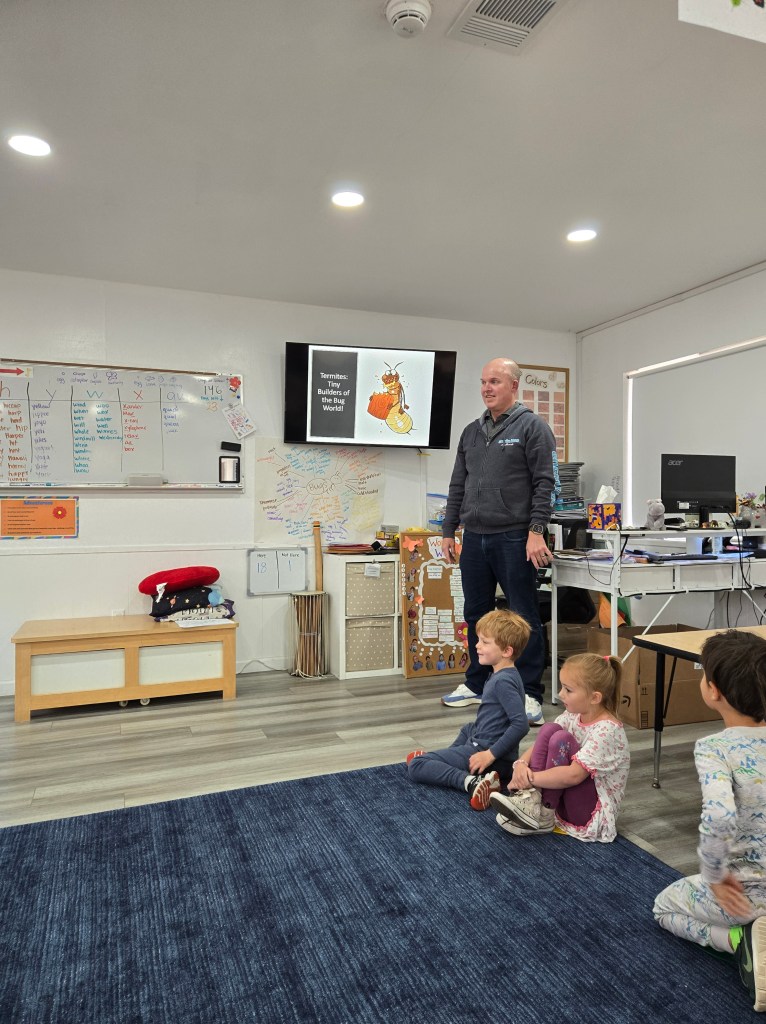
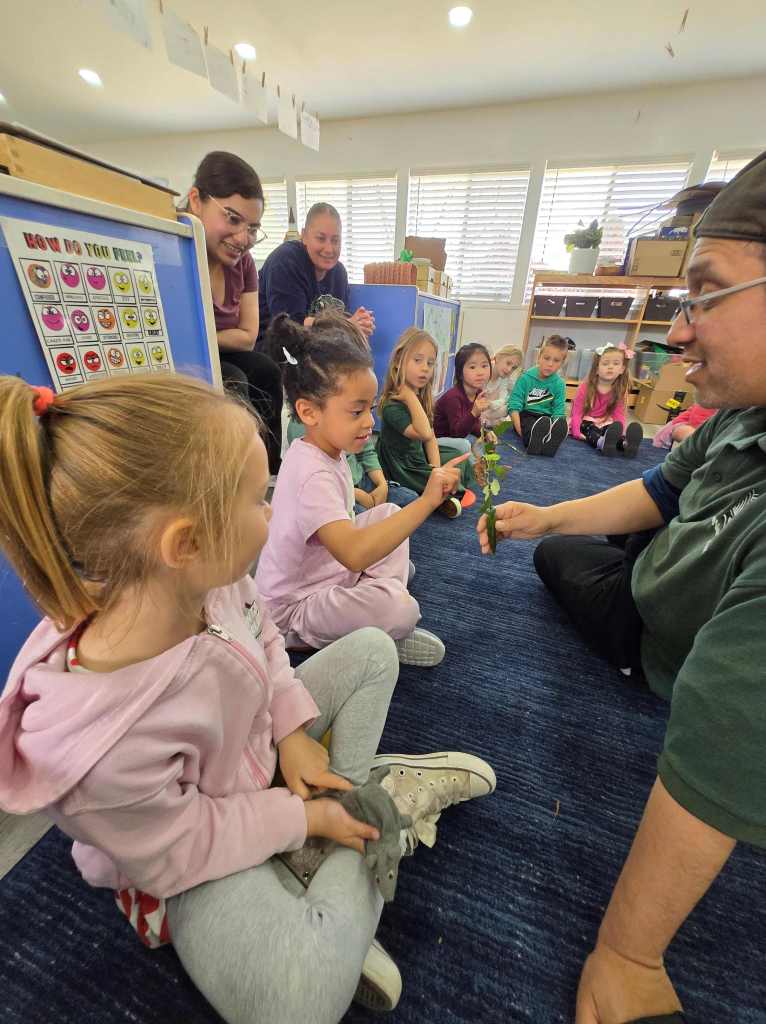
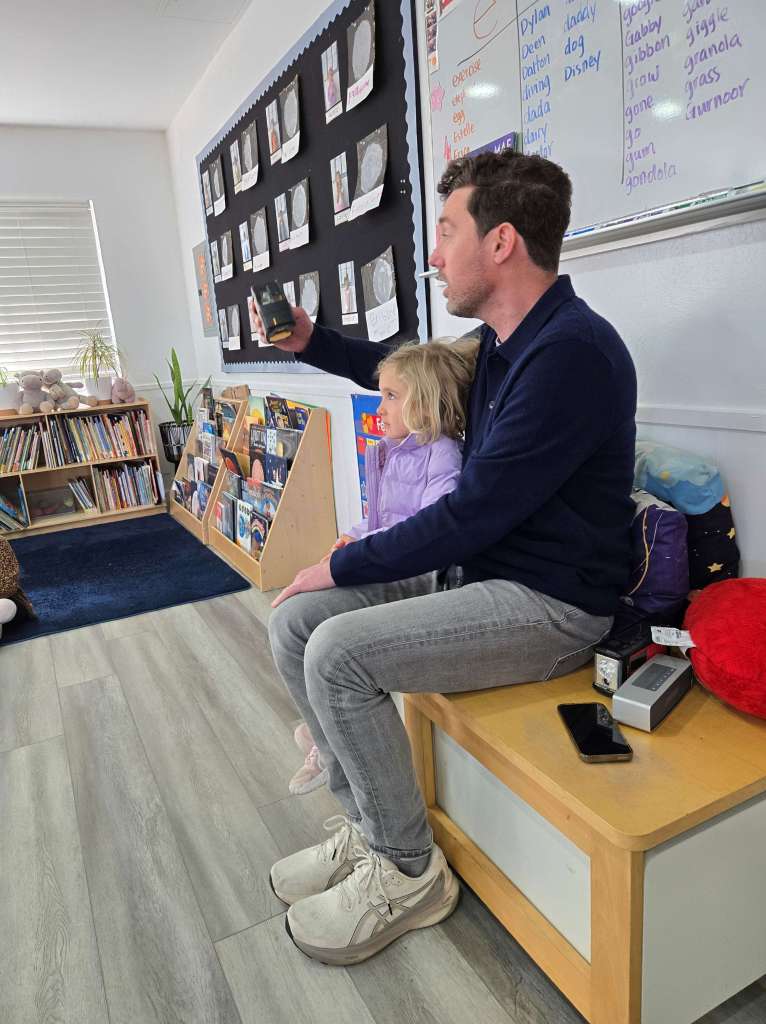
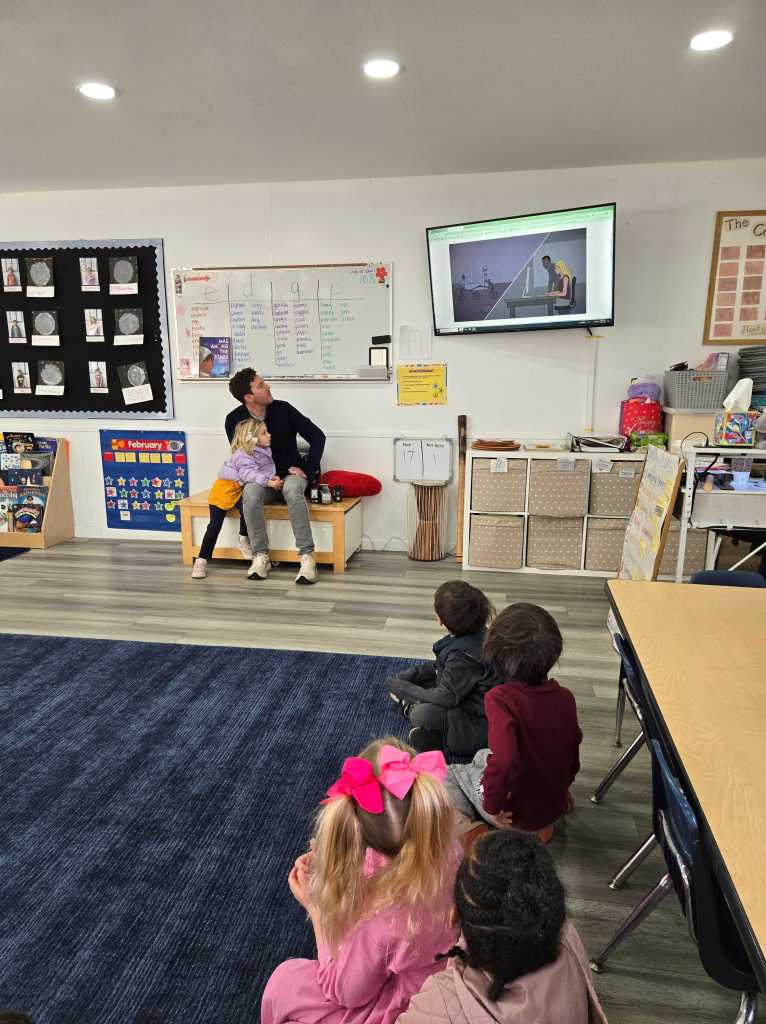
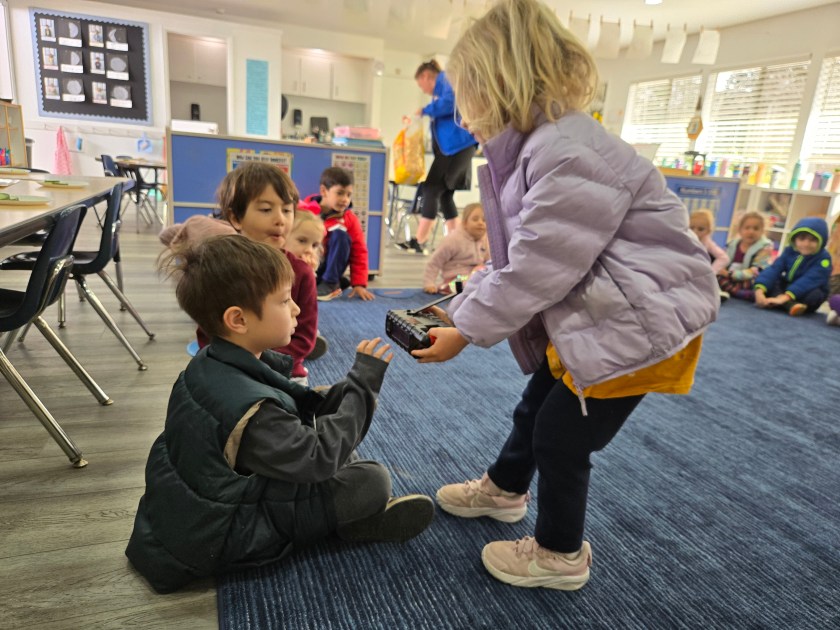
As part of their project learning about bugs, the Hoot Owls recently dove into the fascinating world of termites! The spark for this part of their investigation came from Gabriel, who asked a great question: “Why do termites like eating wood?” To help them find out, the class invited a special guest—Joe, a termite expert and proud Hoot Owl parent!

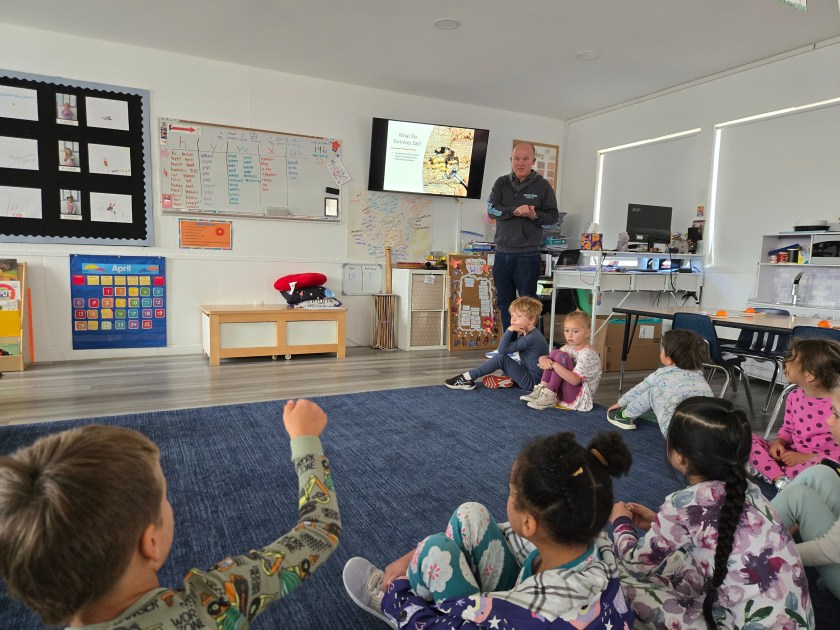
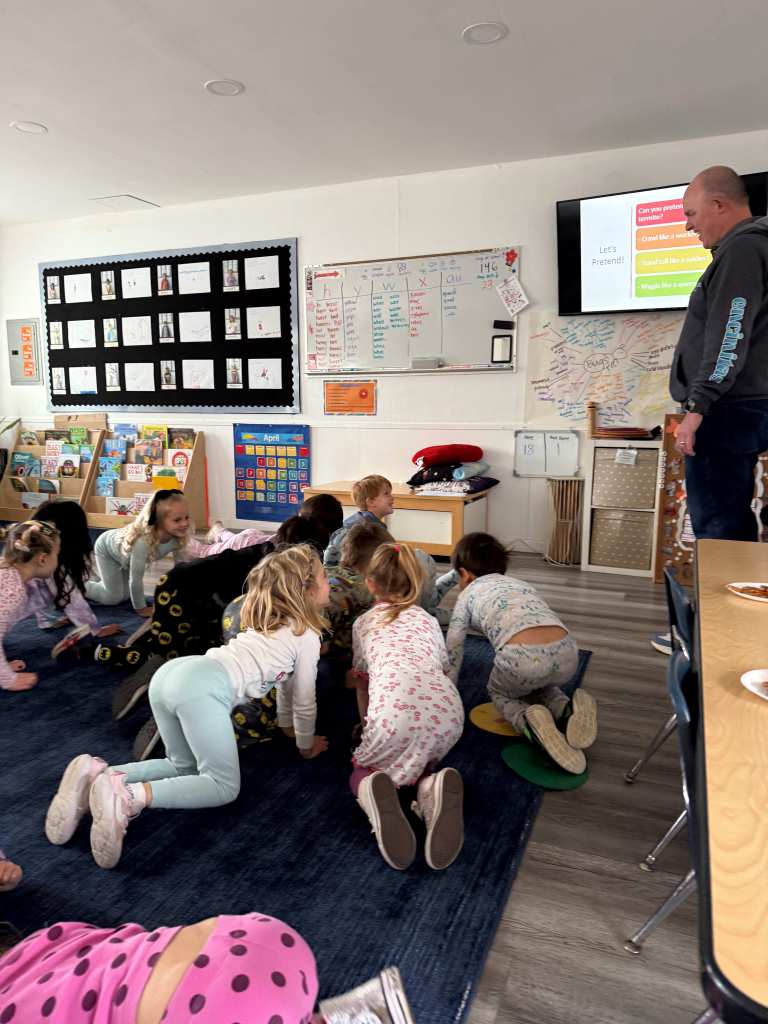
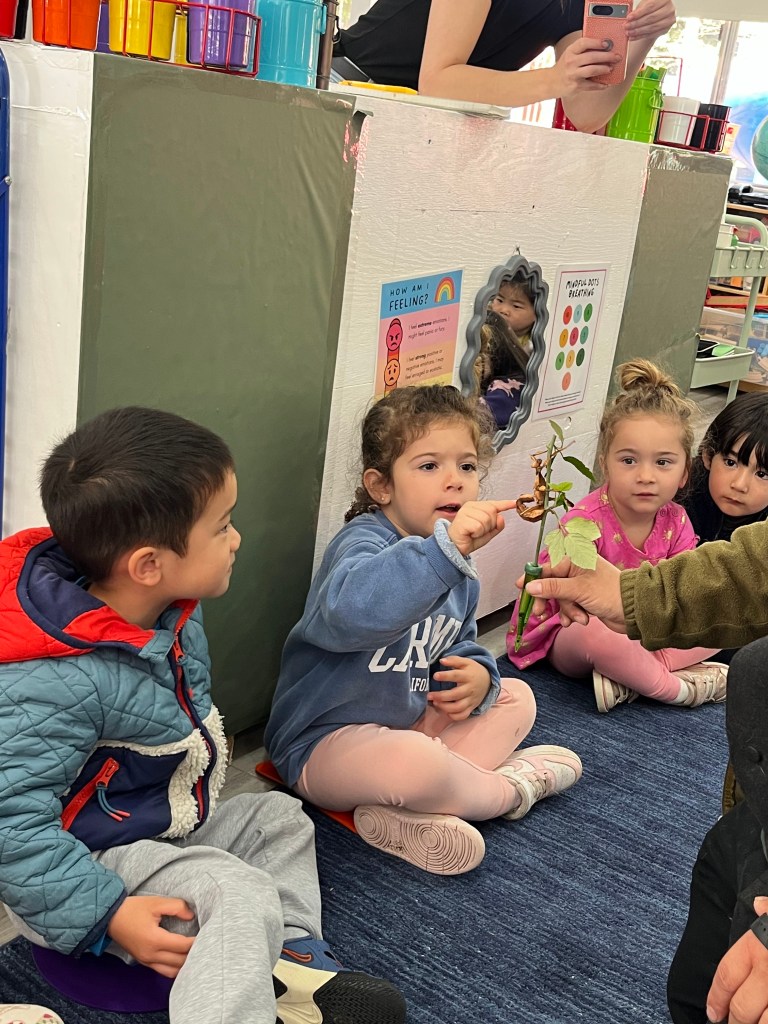
Joe captivated the class with fascinating facts about termites. While termites can be pests in homes, Joe explained that in nature, they’re incredibly important decomposers, helping to break down fallen logs and branches and turn them into rich, fertile soil. The class learned about the different types of termites in a colony: the queen, king, soldiers, workers, flyers, and, the student favorites—baby termites!

Joe also shared pictures of termite mounds with the class, which the Hoot Owls were very intrigued by! He explained how these intricate structures are built and why it’s important, when building houses, to leave at least a foot of space between the building and the dirt, to help keep termites from sneaking in.

The Hoot Owls all agree – termites are very interesting! Thank you, Joe, for sharing your expertise with the Hoot Owls.

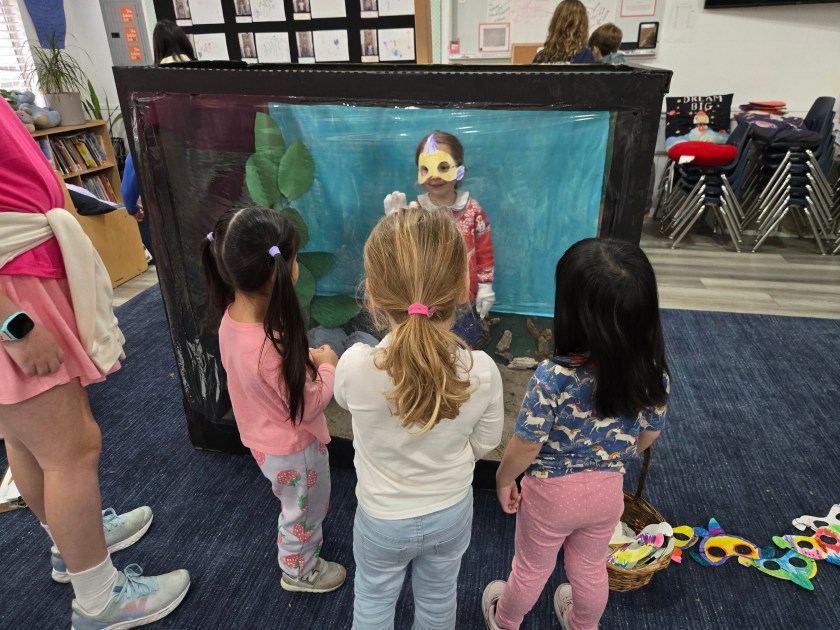
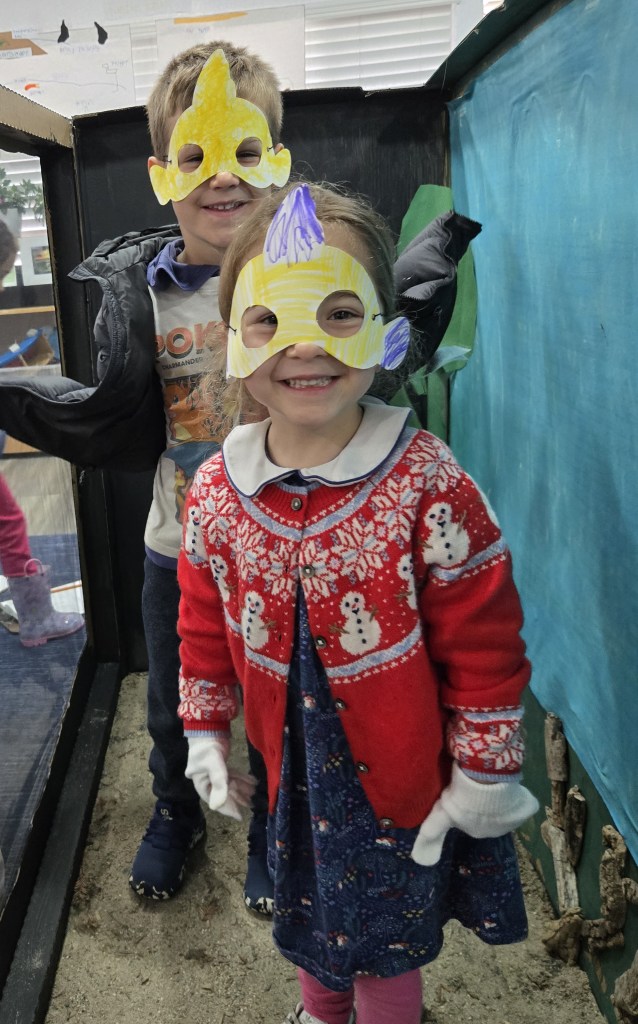
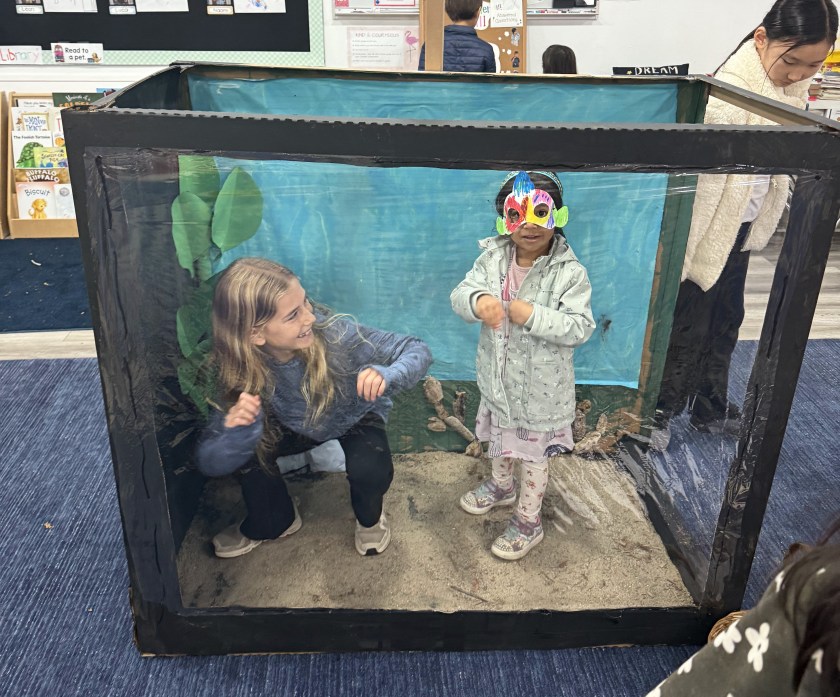
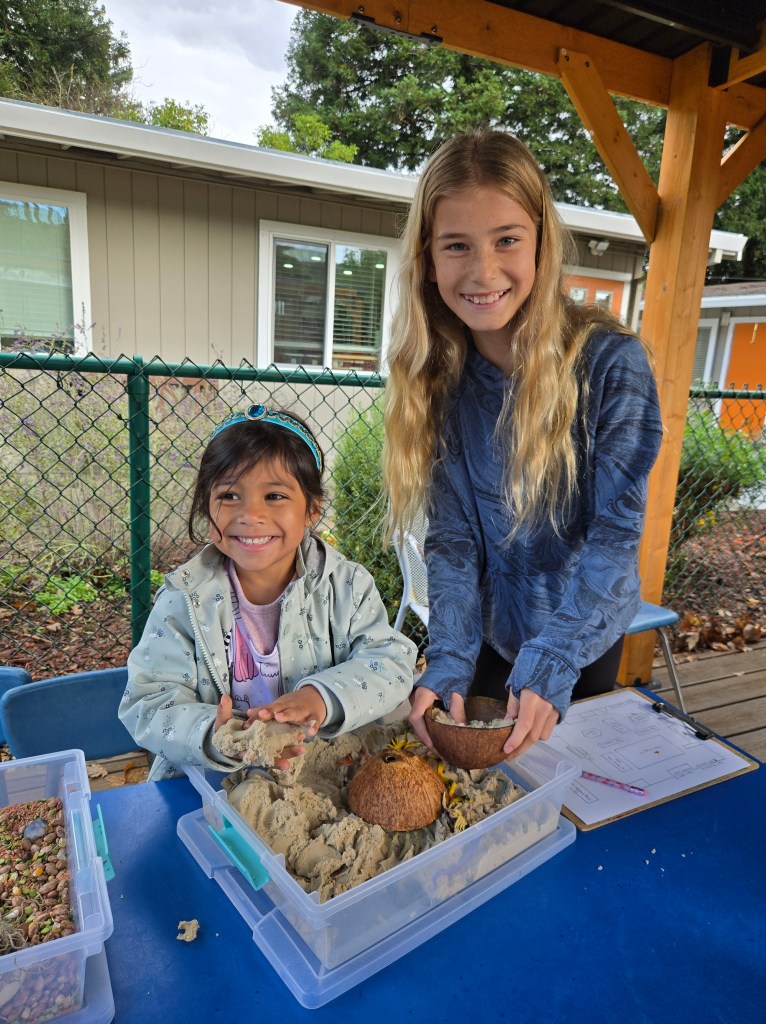
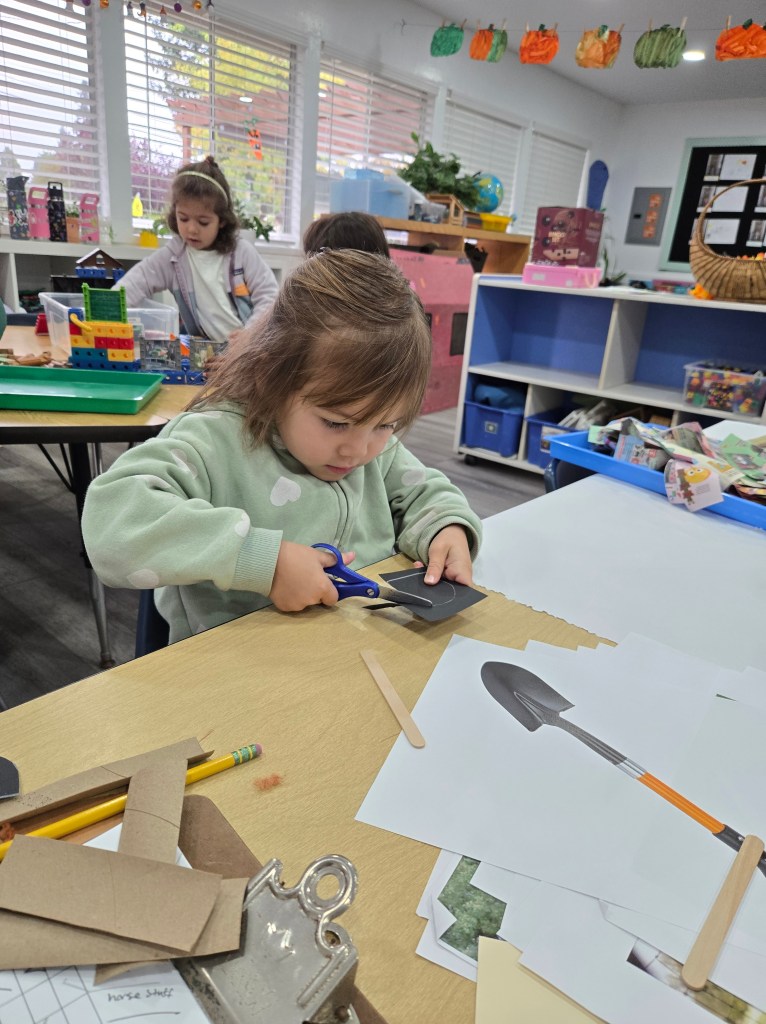
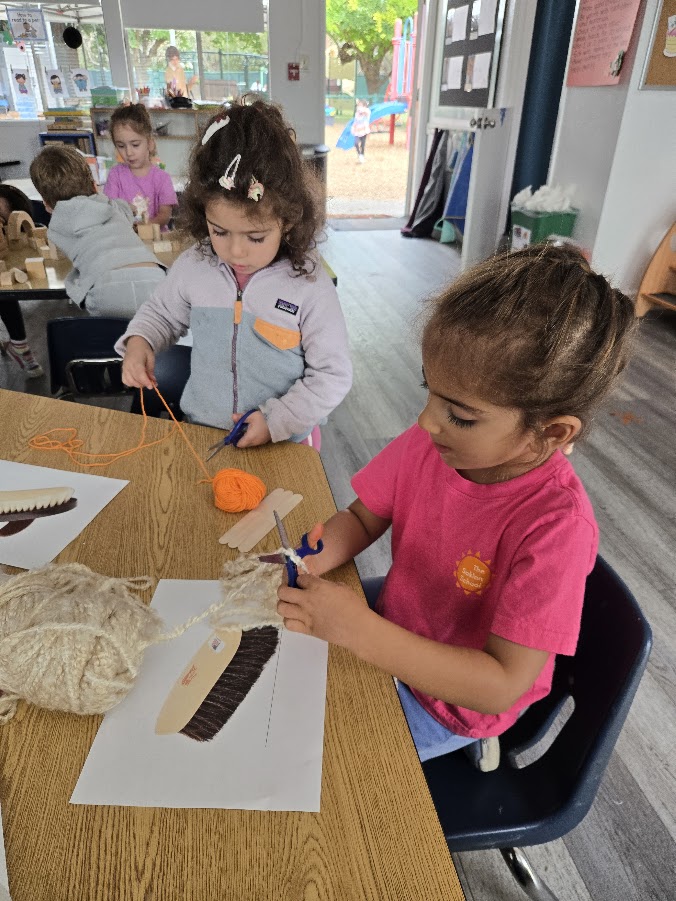
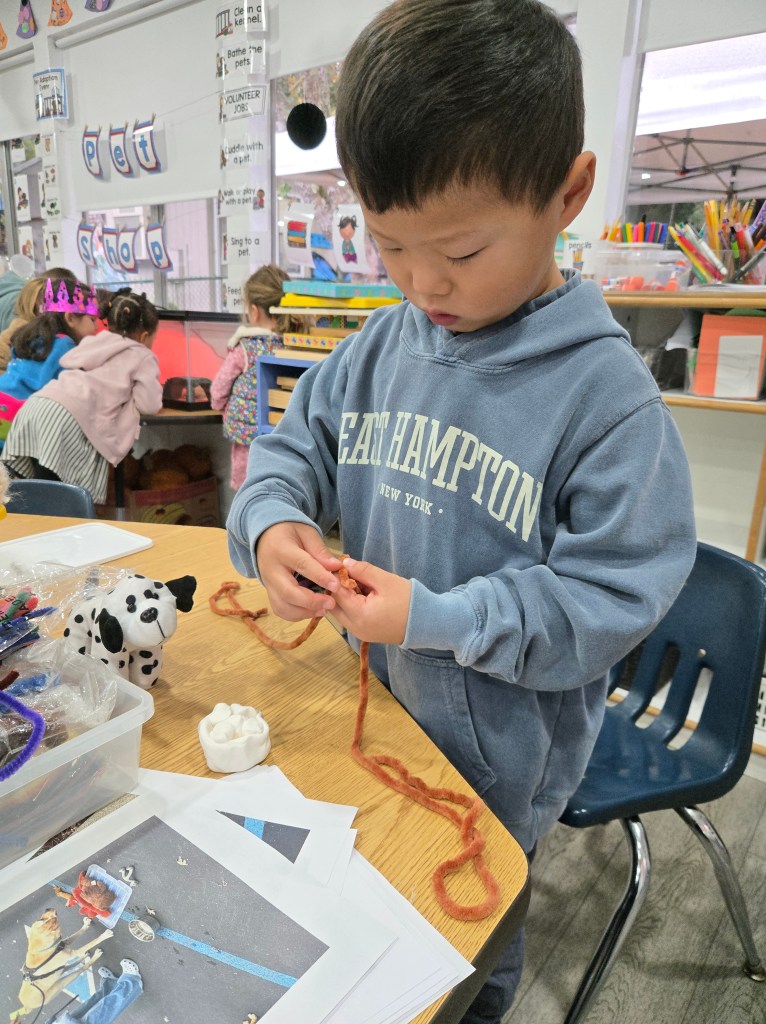
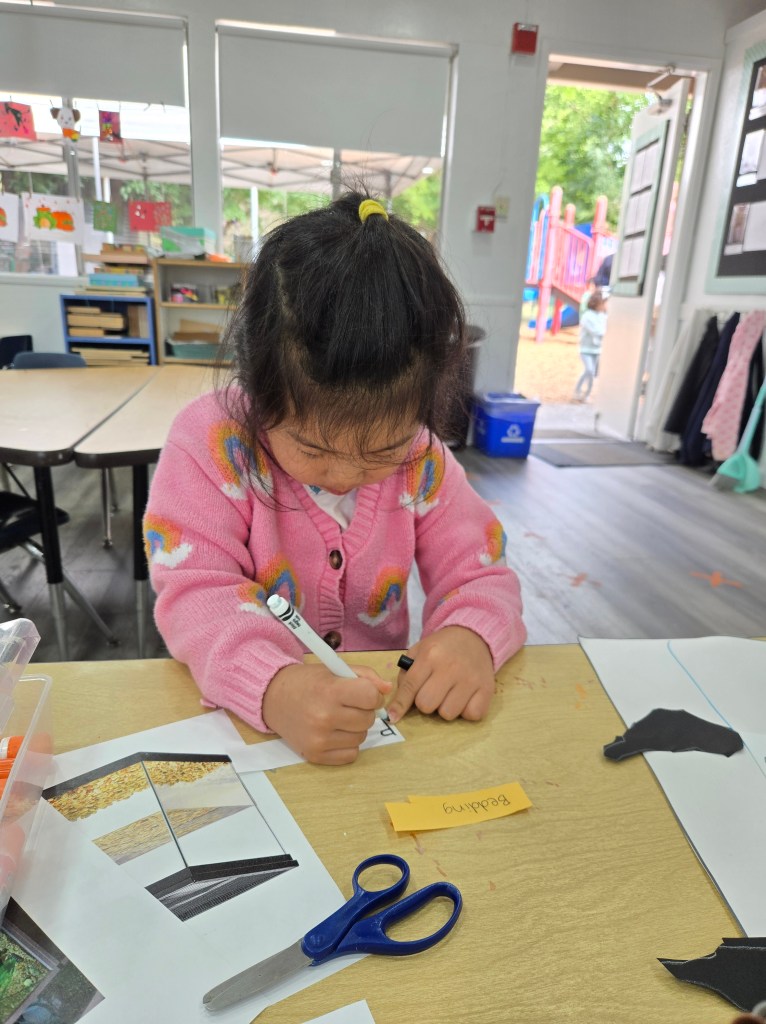
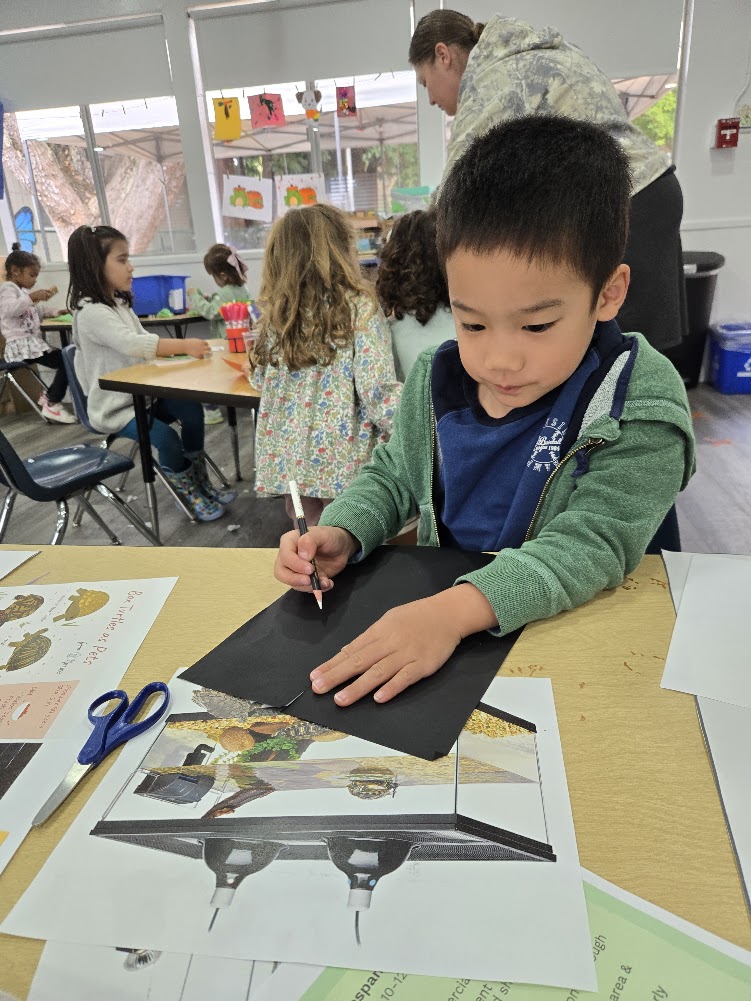
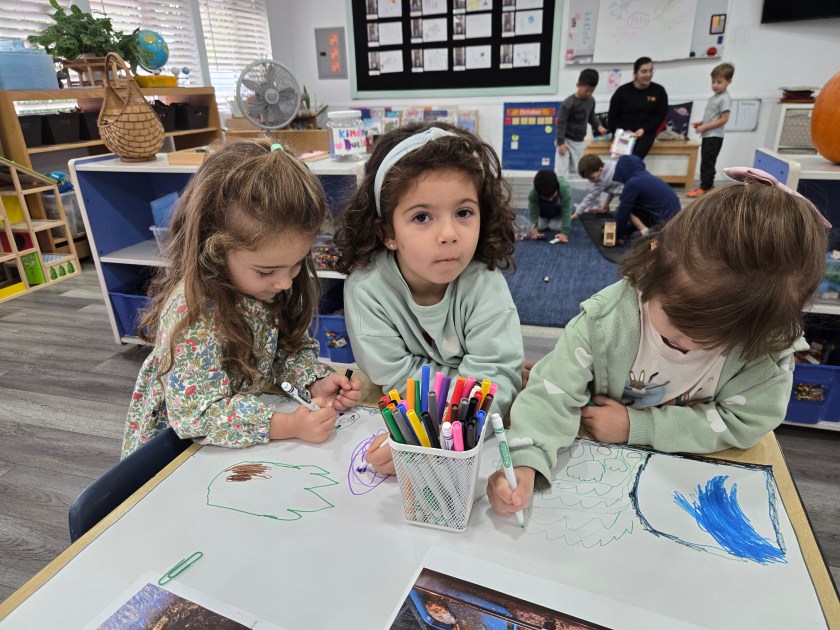
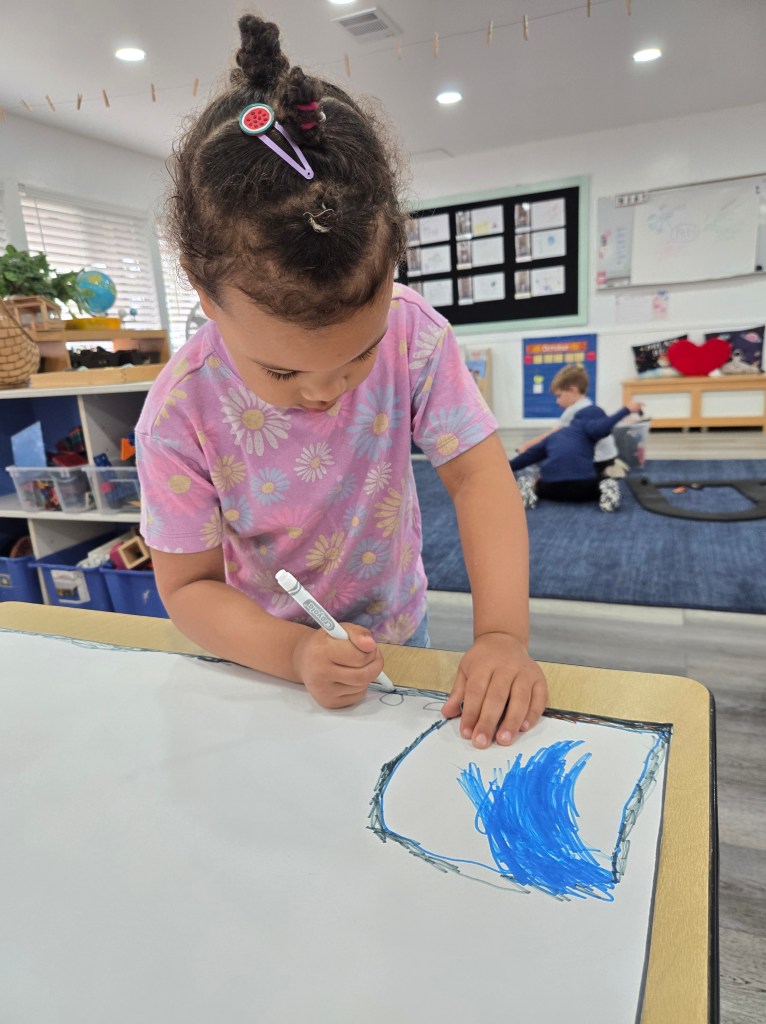
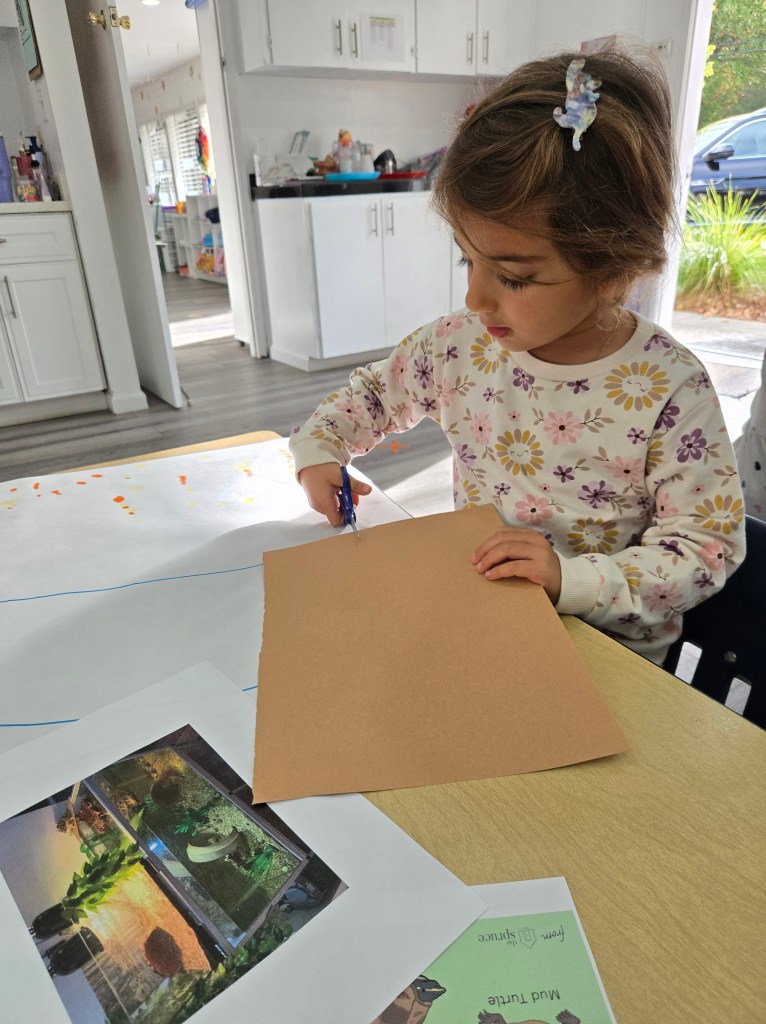
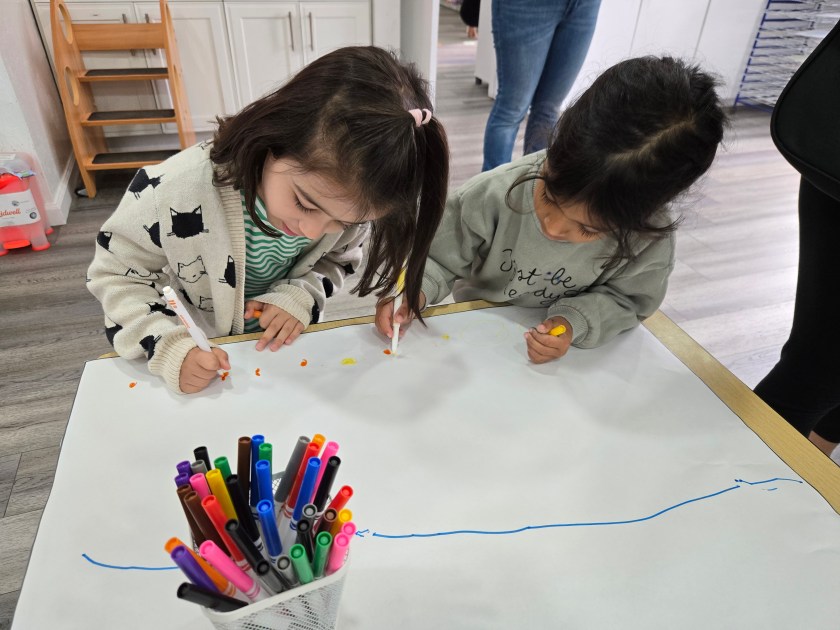
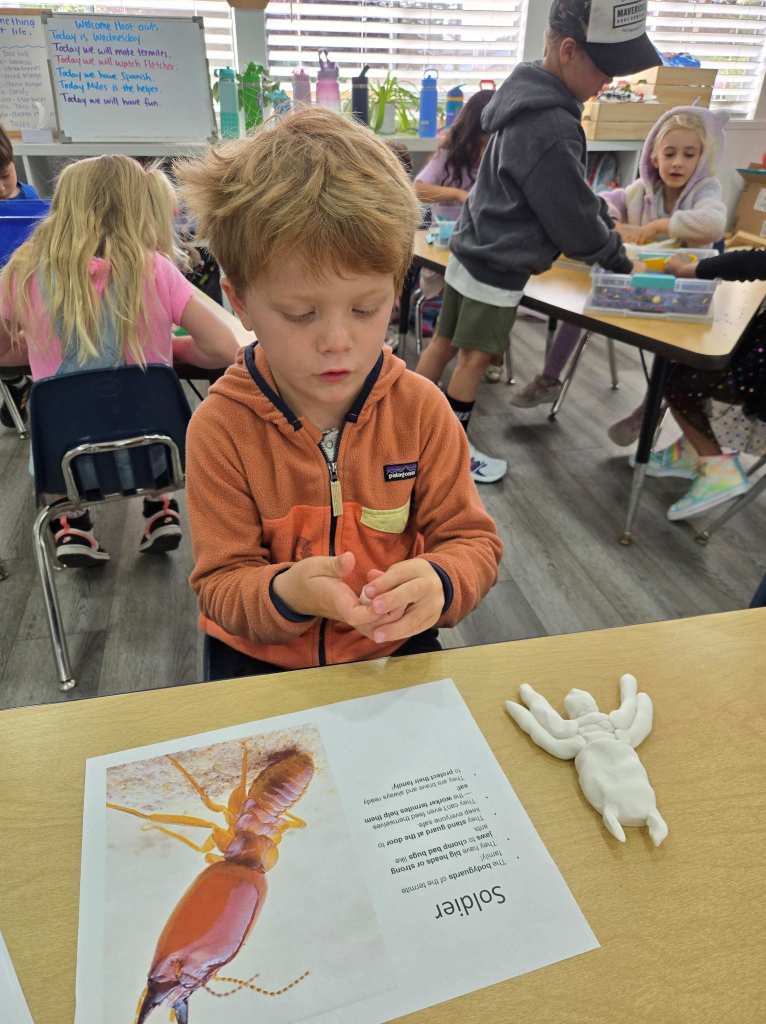
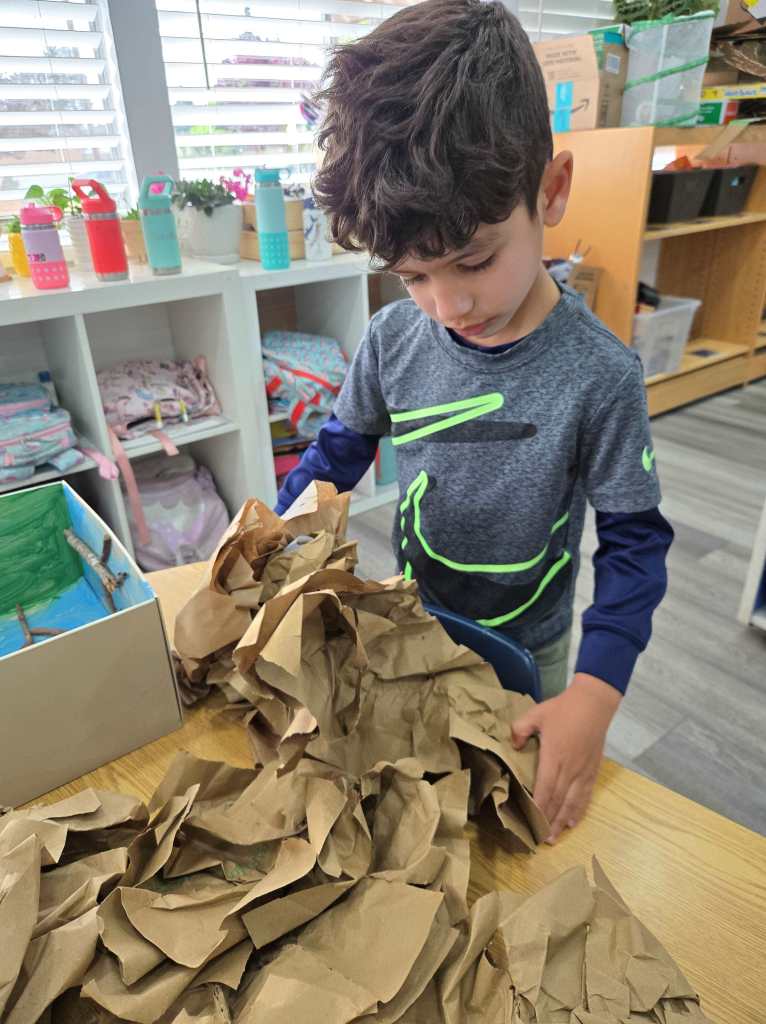
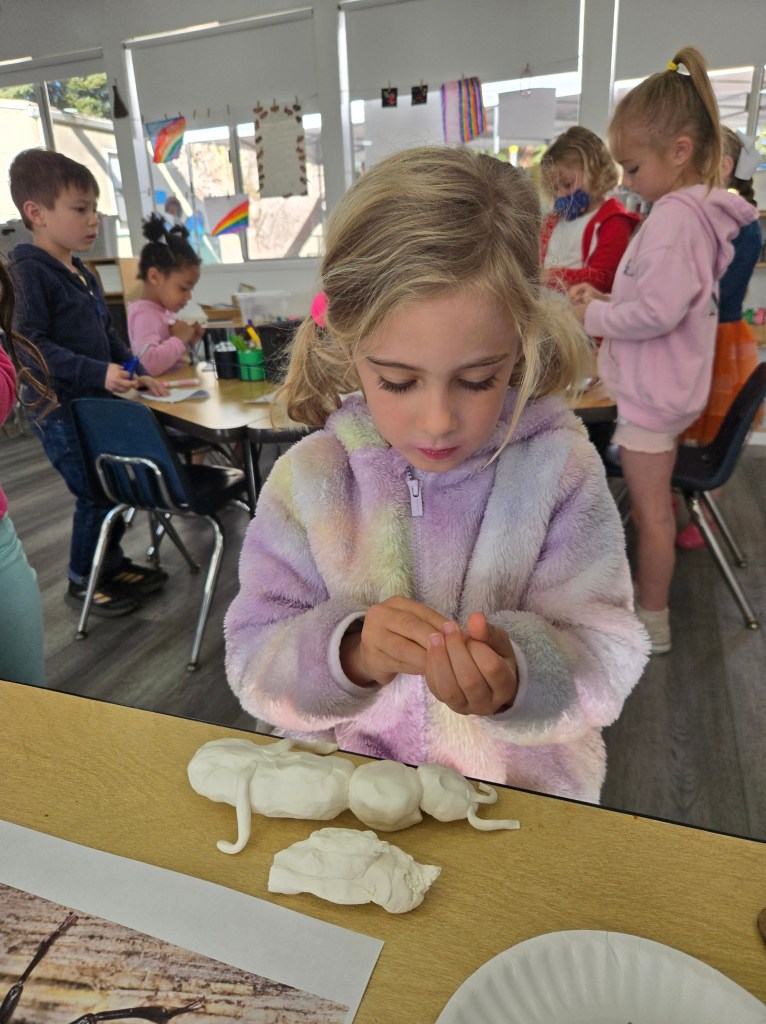
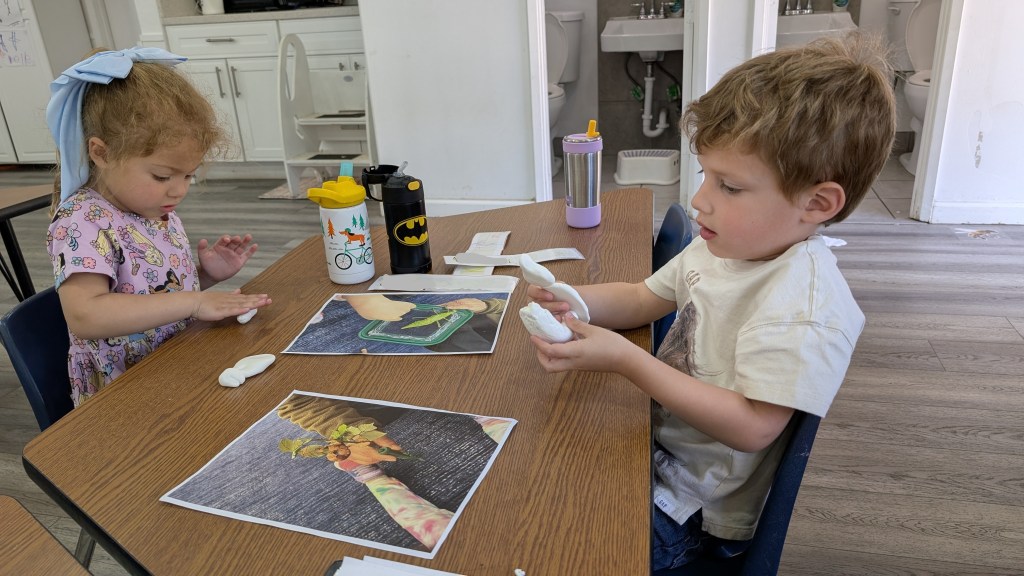
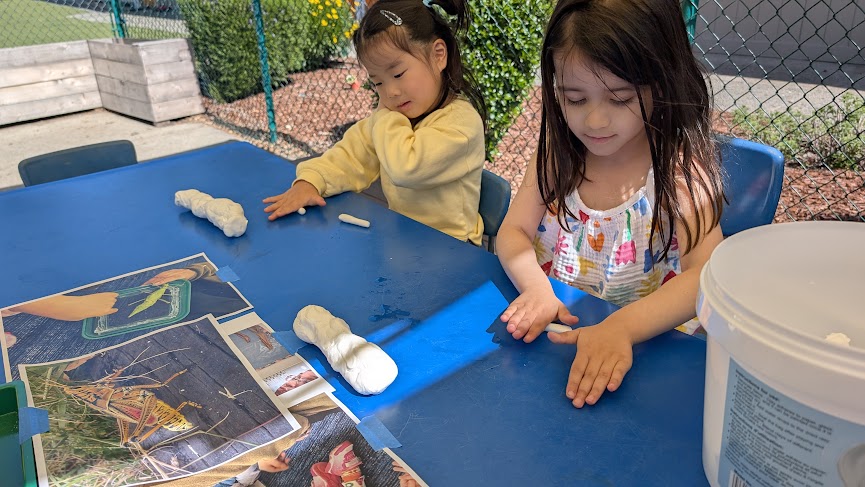
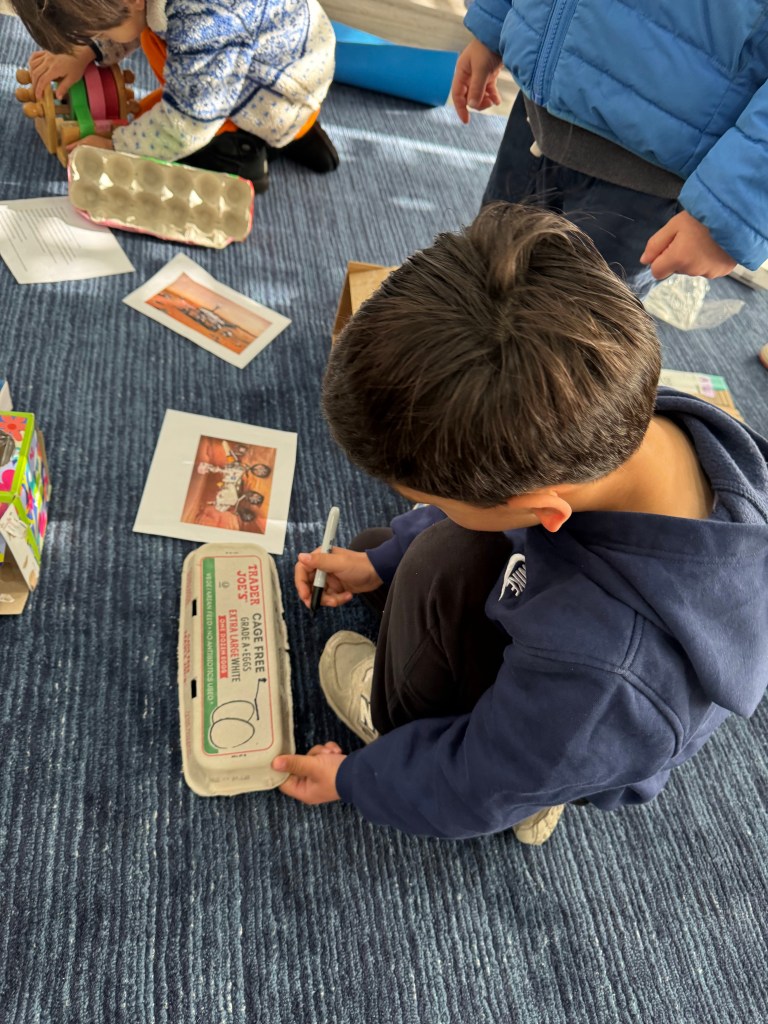
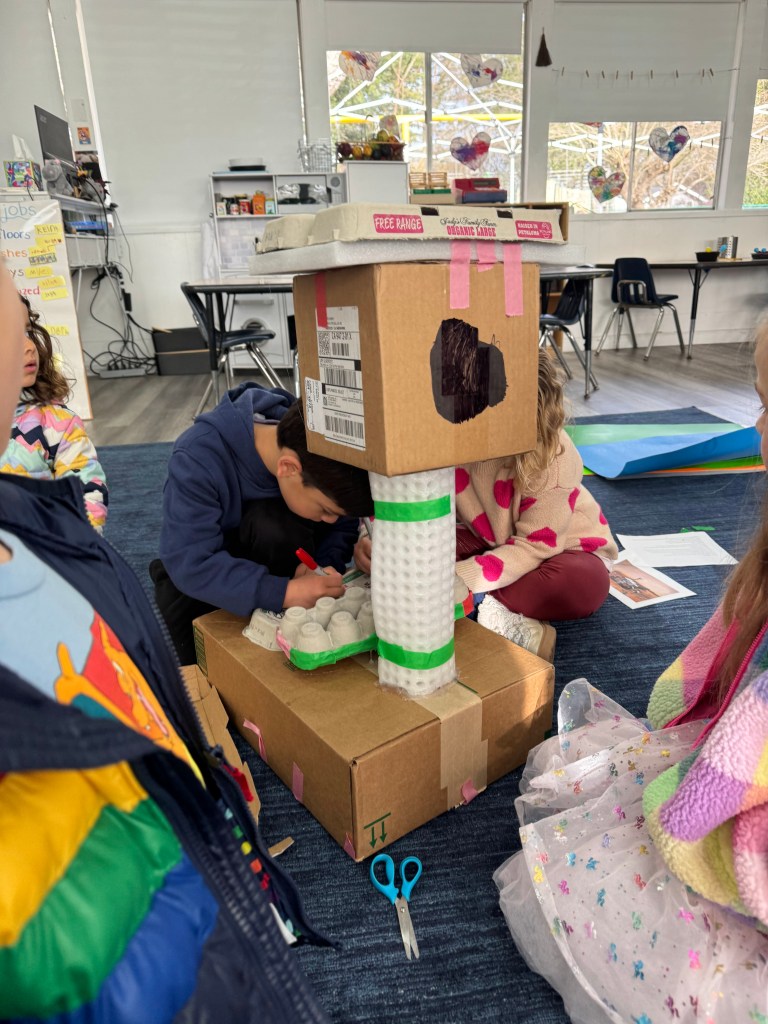
After learning so many fascinating things from Joe about termites, the students decided to make their favorite type of termite and also a termite mound. These items and many others will be on display during their unit culmination event on May 20th at 9:00 a.m. We hope you can join us to celebrate their learning!

#SaklanProjectWork

Bug-tastic Learning

Saklan’s Preschool, Pre-K, and 7th grade students have been diving into the fascinating world of bugs, and recently had a visit from a special guest expert, Los from SaveNature.org, and some of his six-legged (and many-legged!) friends!

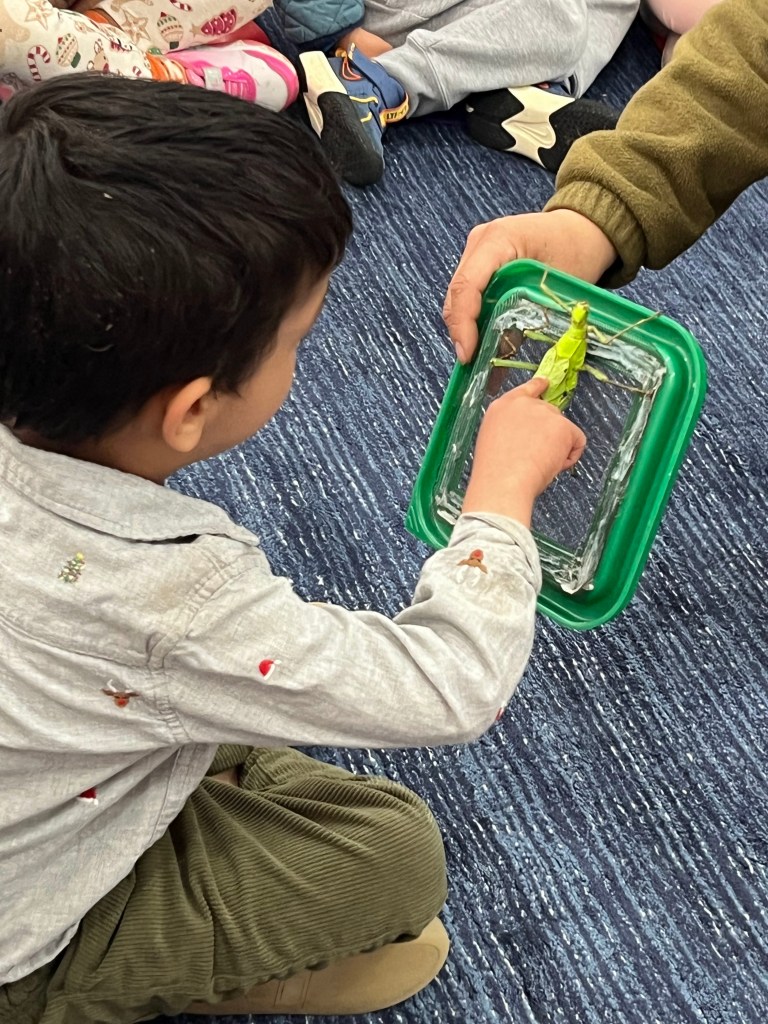
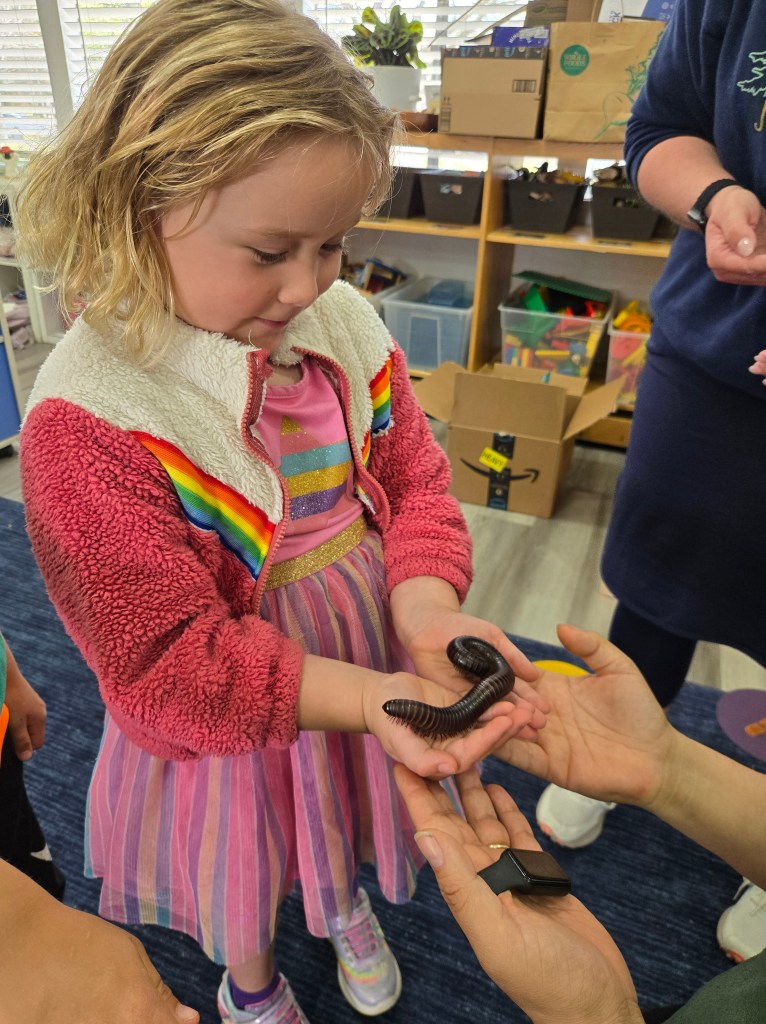
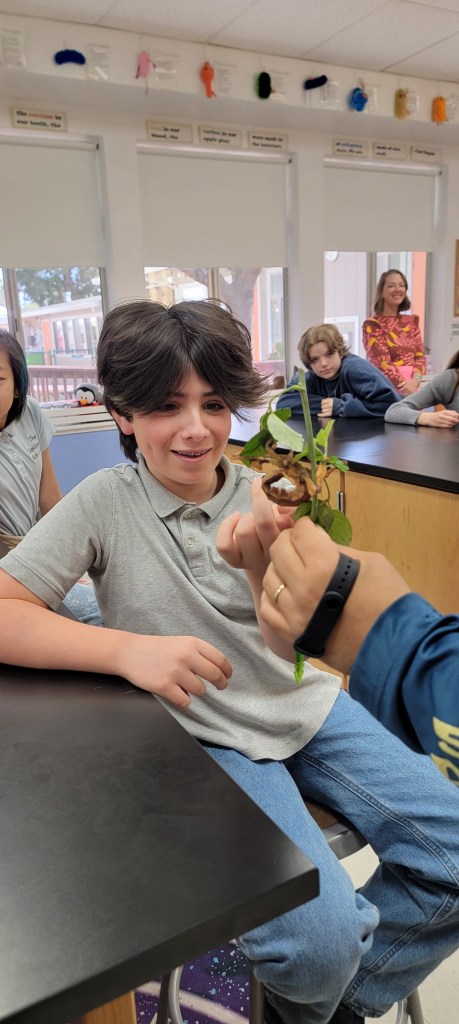
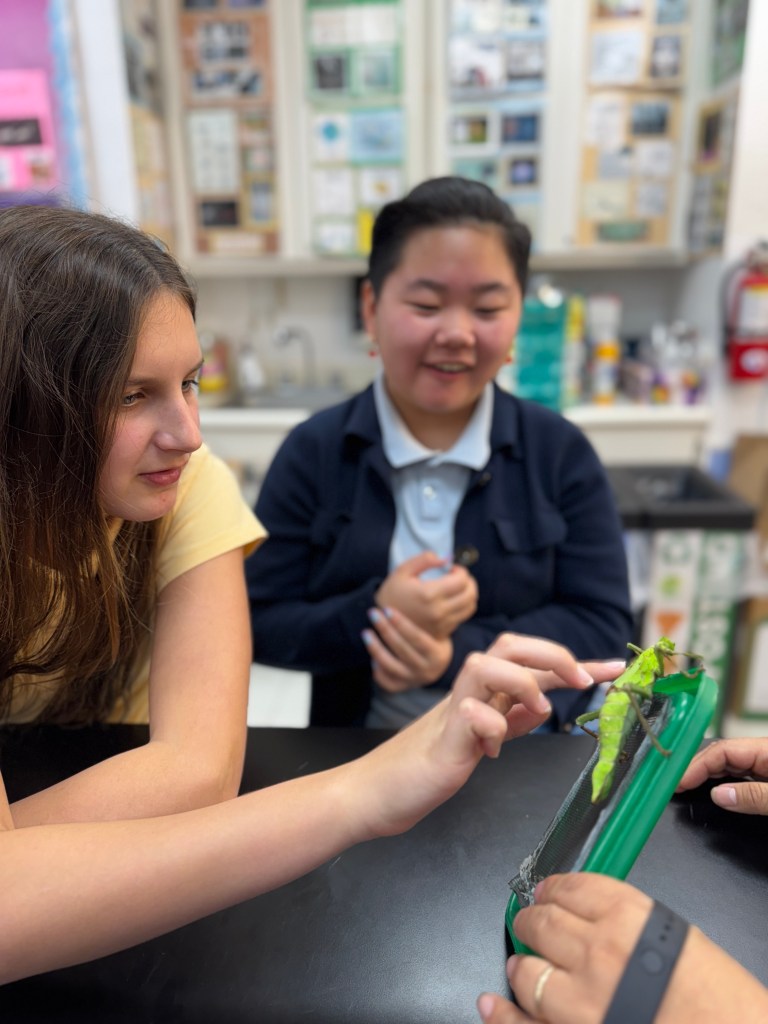
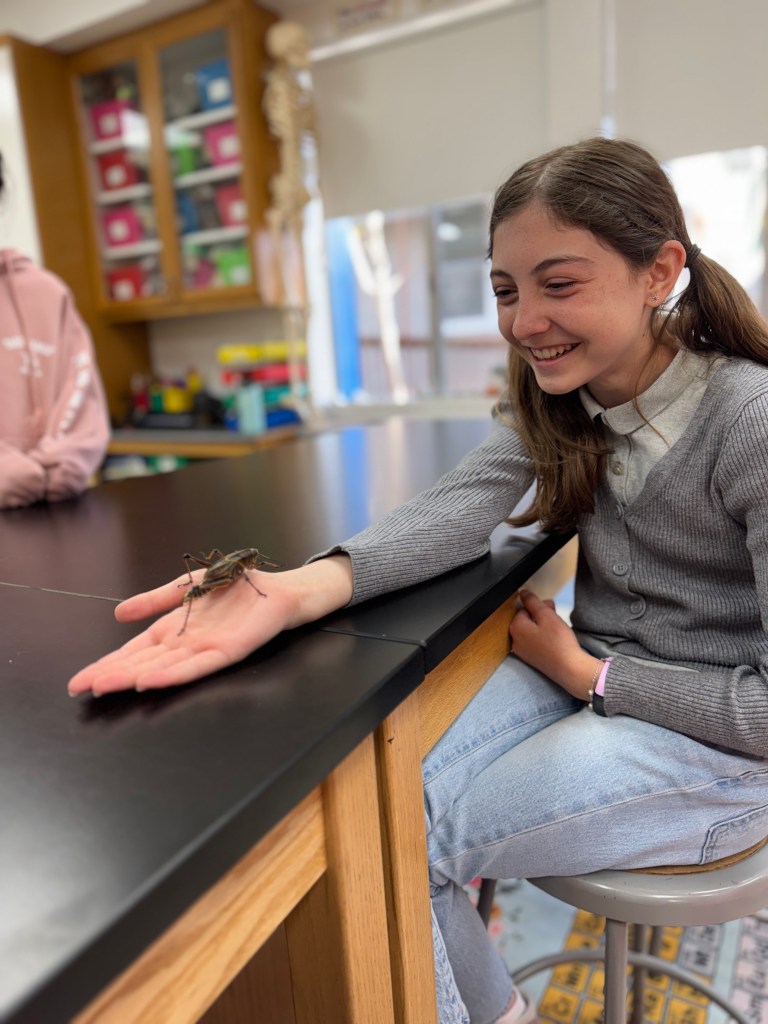
Los brought the Insect Discovery Lab to Saklan, where students had the opportunity to meet live invertebrates up close and learn what makes a bug a true bug. It turns out, not all the little creatures we find crawling around are actually bugs! Thanks to Los, our students learned that millipedes, snails, slugs, and spiders are all invertebrates (animals without backbones), just like insects—but they aren’t classified as true bugs. To be a real bug, a creature must have three body parts—a head, thorax, and abdomen—and exactly six legs. That means slugs and snails (with no legs) and millipedes (with way too many legs!) don’t qualify.

Los introduced the students to some truly incredible insects, including:

  • Darkling Beetles – Nocturnal neighbors we might spot nearby!
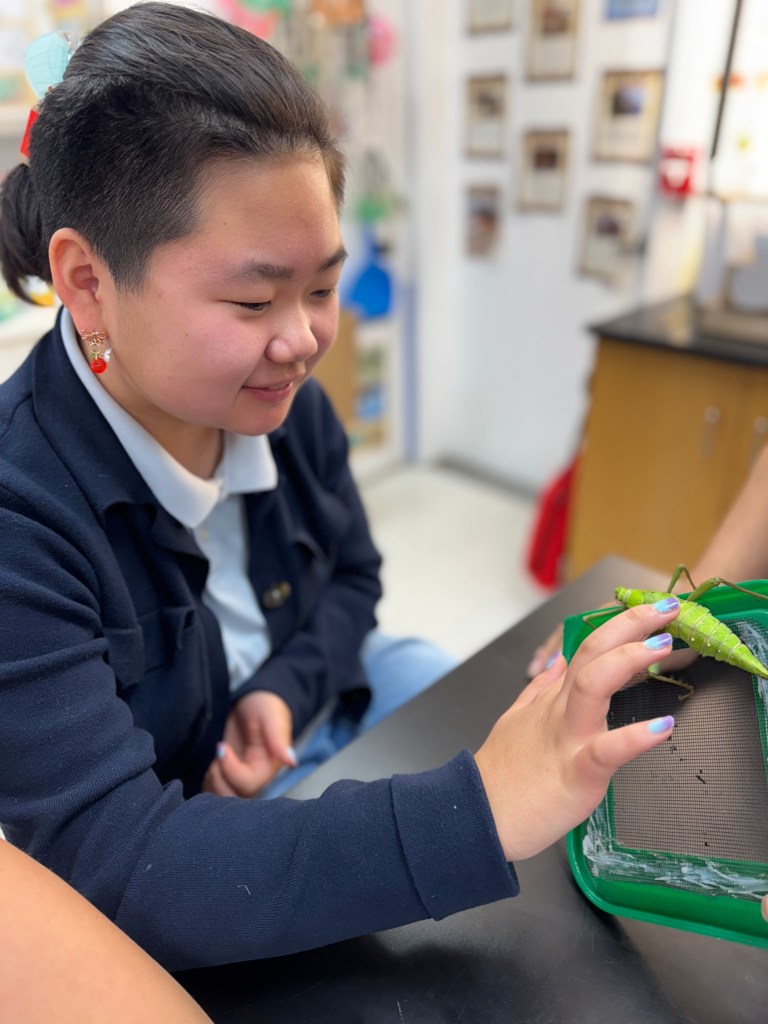
  • Malaysian Thorny Stick Bugs – Experts at camouflage.
  • Australian Giant Stick Bugs – Mimic scorpions to scare off predators!
  • Eastern Lubber Grasshoppers – So toxic that predators steer clear.
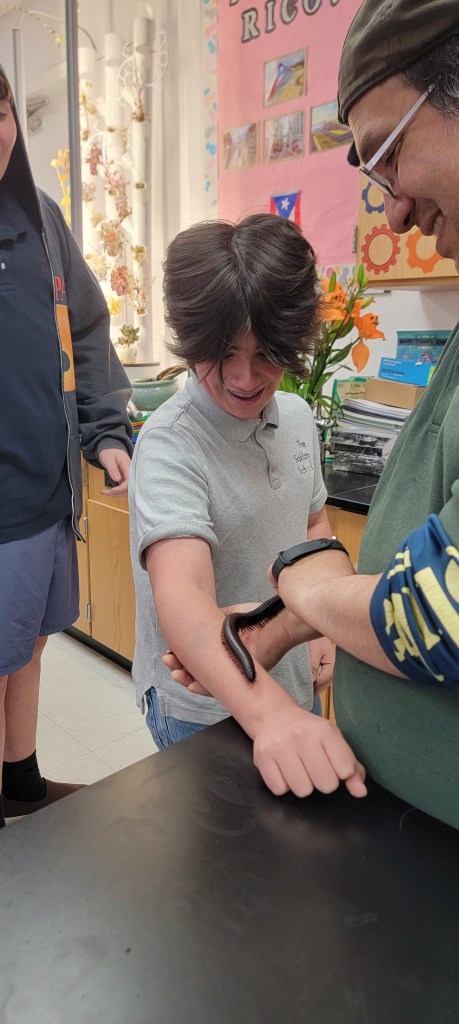
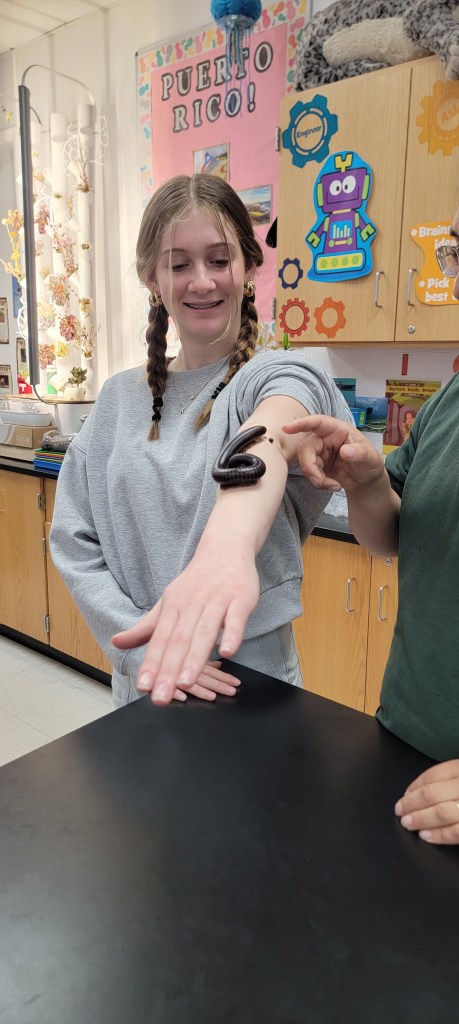
  • Giant African Millipede – The star of the show!

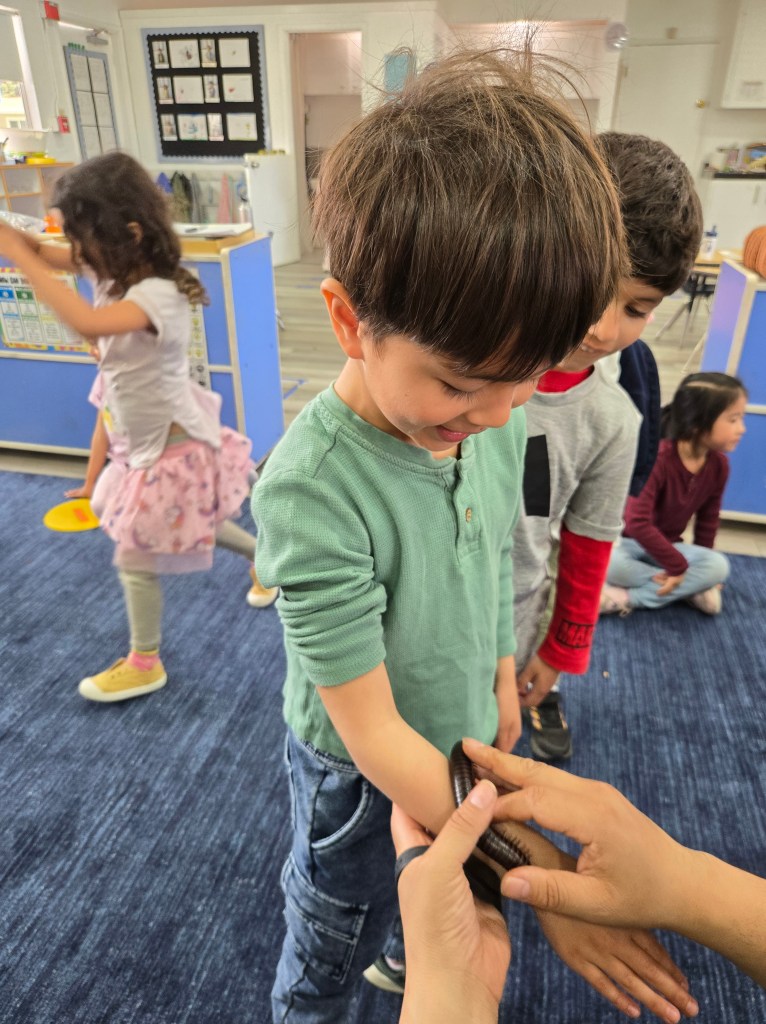
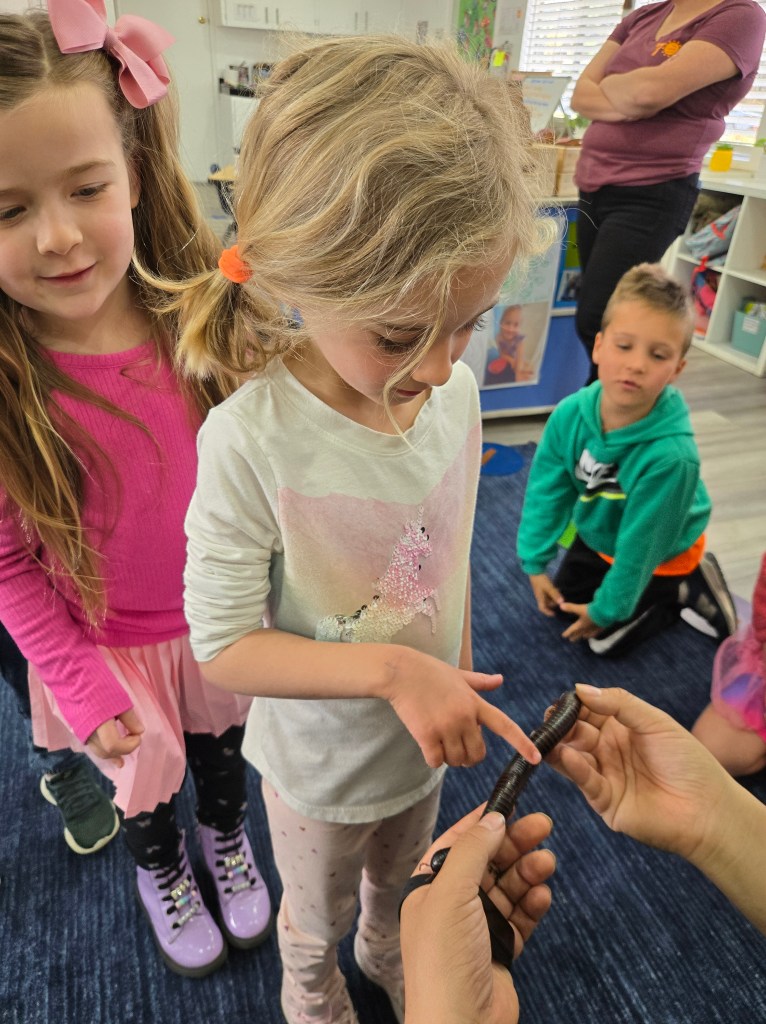
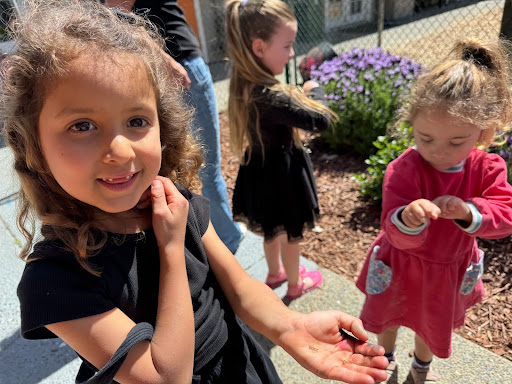
Our youngest learners—the Owlets—showed amazing bravery and curiosity. Every single one held or touched one of Los’s fascinating bugs, and some even did so more confidently than the adults! After the visit, the class voted on their favorite, and the winner was no surprise… the Giant Millipede stole everyone’s hearts.

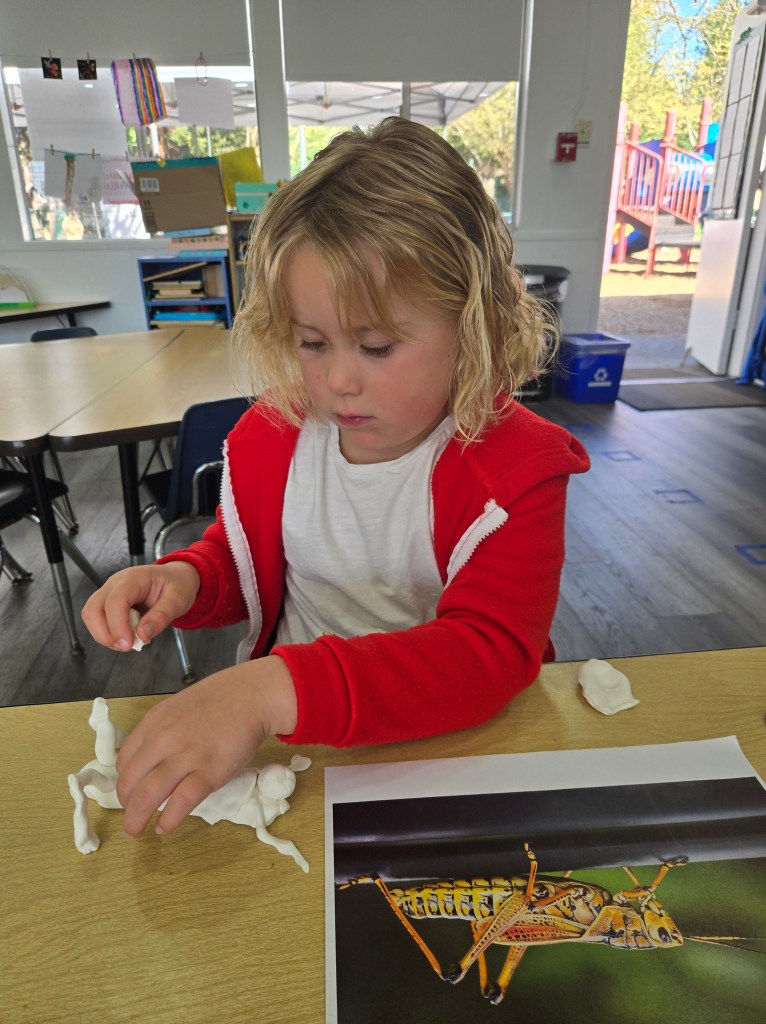
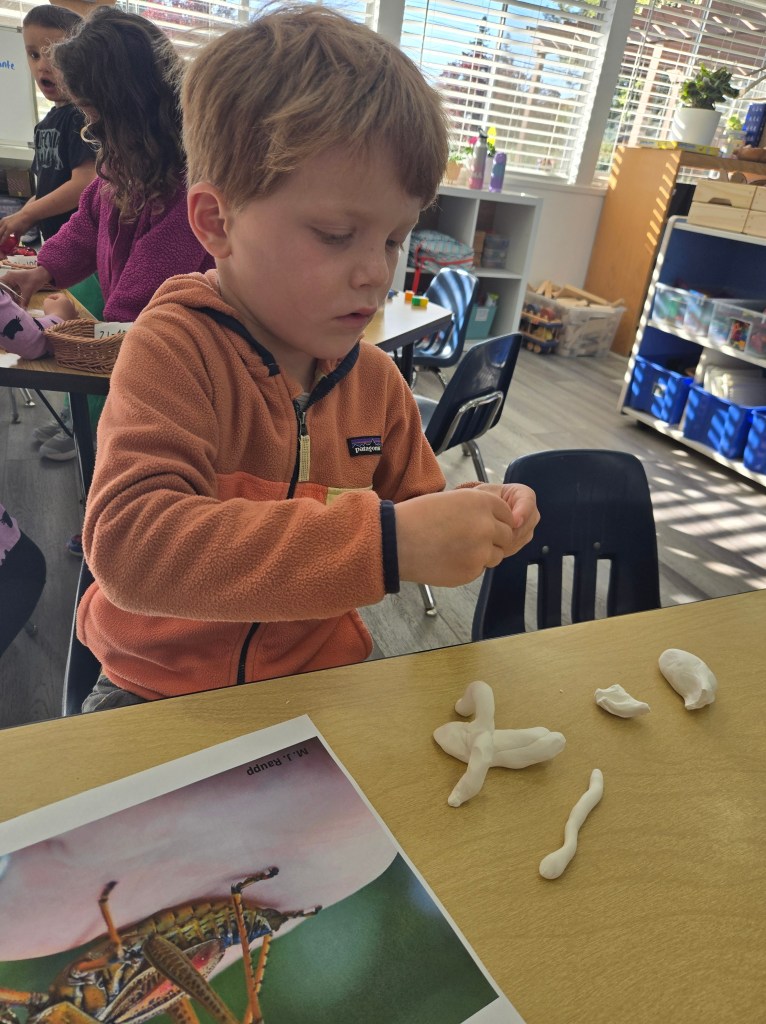
To reflect on the experience, the Owlets used Model Magic to sculpt their favorite bugs from the visit and then dictated fun facts they had learned. The Hoot Owls also jumped right into hands-on learning, creating models of the bugs and sharing their knowledge. From mimicking scorpions to ward off predators to being brightly colored to warn of toxicity, our students discovered just how smart and strange bug adaptations can be.

#SaklanHandsOn

Staff Spotlight: Maggie

You may think that to know Maggie is to know her love of hippos– just check out how many of them her students have lovingly gifted her over the years next time you’re in the Hoot Owl classroom! But Maggie brings so much more to our ECE! Saklan is lucky to have such a dedicated, conscientious, and thoughtful Director of Early Childhood Education and lead teacher of our Pre-K Hoot Owl class. Take a moment to read about what she loves most about teaching our youngest learners.

The ECE students love to be outside, rain or shine. What do you think is the most important part of outdoor play for this age group?

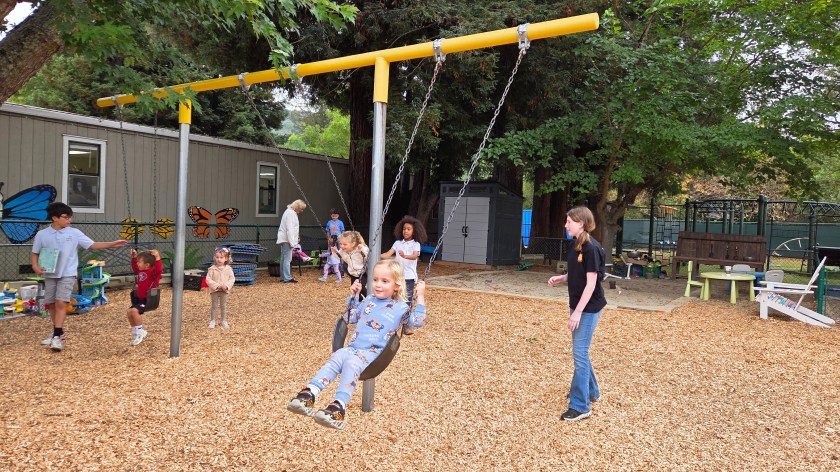
Outdoor play isn’t just fun; it’s one of the most impactful parts of our students’ day. For young learners, the playground is more than just a place to run and climb—it’s where some of the most important learning happens. One of our primary goals in ECE is teaching social-emotional skills, and outdoor play is where these lessons come to life. It’s where children navigate real-life situations: negotiating over toys, practicing patience while waiting for a turn on the swing, or learning how to respond with empathy when someone gets hurt.

Outdoor play also builds confidence. We are lucky to have such a large playground, giving our students a lot of opportunities to build their gross motor skills. A favorite recent moment? One of our Owlets, who used to ask for only “medium big pushes” on the swing, now gleefully asks for “big pushes!” Moments like these show us how outdoor spaces empower children to take safe risks, try new things, and celebrate their own growth.

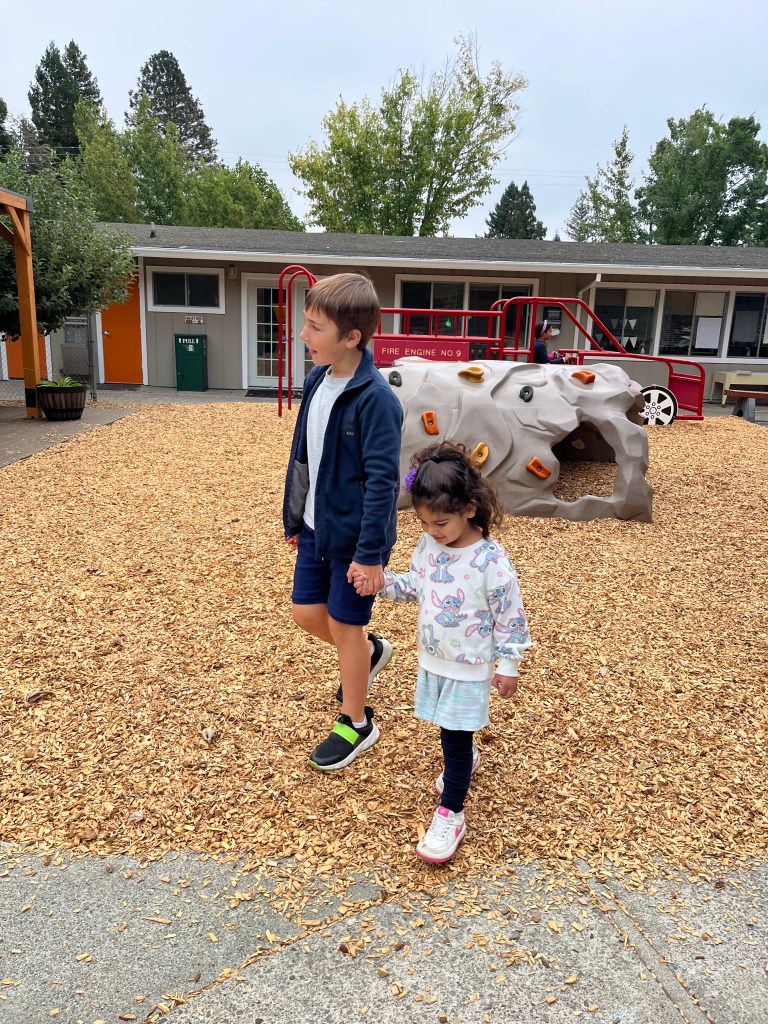
Whether it’s showing off a new trick on the Fire Truck or proudly calling a teacher to “come watch,” our students light up with joy and confidence as they take safe risks and master new skills on the playground. Seeing how proud of themselves the students are as they show you the amazing flip they just learned learned to do is one of my favorite parts of each day. Maintaining a safe, updated, and dynamic outdoor play space is essential to supporting these magical, everyday learning experiences.

Your newest project unit is on bugs! How does the ECE yard support learning outside of the walls of the classroom? 
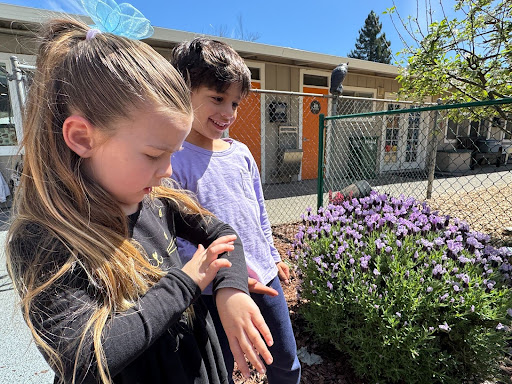
In all my years of teaching early childhood, one thing has always been true—nothing captures a young child’s attention quite like a bug. They could be running in a race with each other, and the moment someone spots a bug, everything stops. Then, there will soon be a big crowd, with someone shouting “I can’t see” and trying to squeeze their way in for a closer look. With our current project on bugs, the playground has transformed into an outdoor science lab. It’s so cute watching them carefully use bug catchers and magnifying glasses to get a closer look. These moments are powerful, allowing the students to have hands-on learning experiences and explore their natural curiosity in real time.

A few years ago, we added a small raised garden with help from one of our ECE teachers and her dad. Since then, we’ve grown veggies to support various units and teach them where food comes from. We’ve seen that a garden space like this means they are more willing to try new foods when they have a hand in helping grow it. Recently, the Hoot Owls have been digging for worms and putting them in our garden bed because they learned that worms are helpful decomposers that our garden needs. The yard isn’t just a place to run and play—it’s a true extension of our classroom. It offers space to wonder, explore, experiment, and grow. Providing a dynamic outdoor environment is one of the best ways we can support their development.

What do you hope your students learn from you that you don’t explicitly teach? 

I really hope I impart my great love for hippos to my students. Just kidding! (mostly…) I hope my students learn to be able to laugh even when things get hard. I always like to joke around with my class whenever I get the opportunity. I like to joke around when I make mistakes, because I want them to learn not to be too hard on themselves. Life is about having fun and laughing with those around you. Nothing beats hearing the kids laugh because of silliness!

Each year around the mid-autumn festival you have made model mooncakes in the ECE. What are your favorite parts of bringing your traditions to the classroom and/or opening space for families and students to share theirs?

I love having families come in to share their family traditions. Even if people share the same culture, how they celebrate can be completely different. We have a wealth of experts right in our classroom to share about so many cultures and traditions, so why not take advantage?! 

When members of our community come in to share their knowledge or experiences, the classroom lights up with engagement. The students are very excited to learn from a real-life person they know! I also personally love learning about others’ traditions. Growing up, I didn’t experience that in my classroom, and if I did, it was very basic stuff. I would feel ashamed of my family’s traditions because I was different. I don’t want anyone else to feel that way. I want my class to feel love and pride for their heritage and traditions. What better way to develop that love and pride than to have their family and community members share, learn, and celebrate together?

Mission to Mars

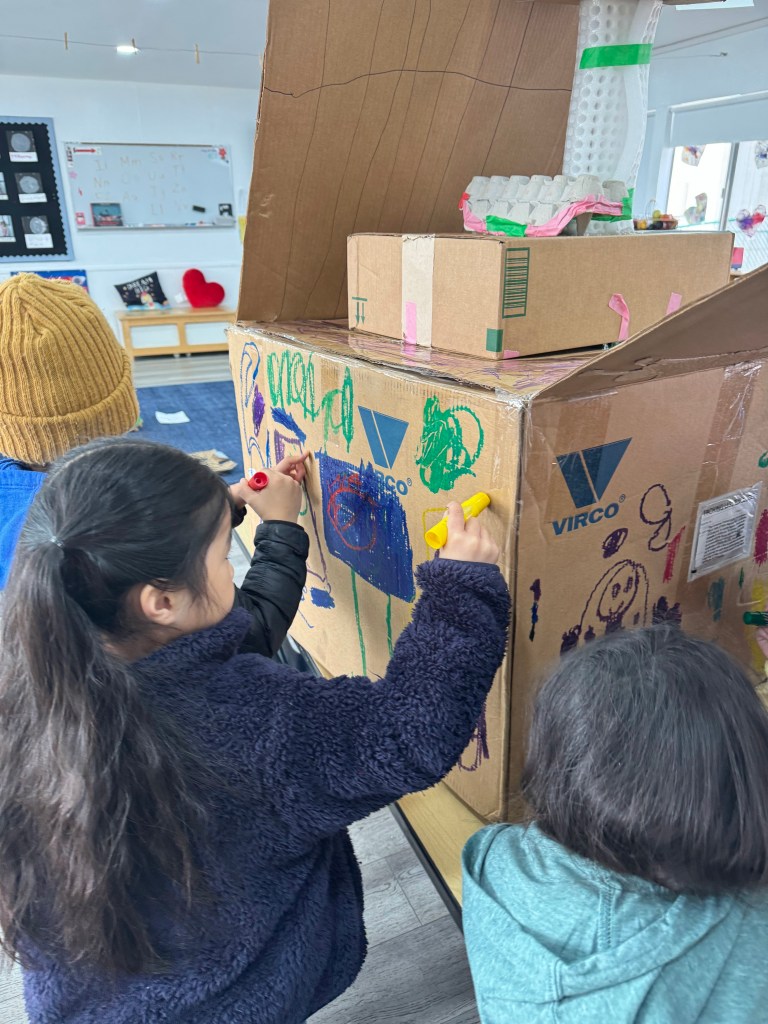
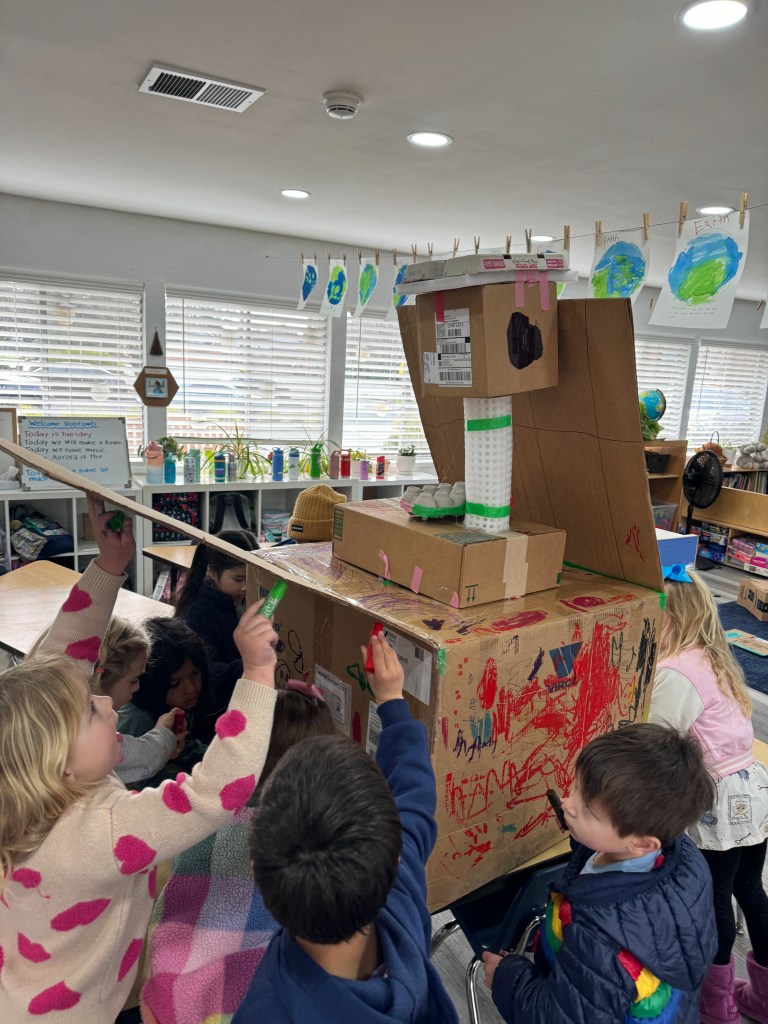
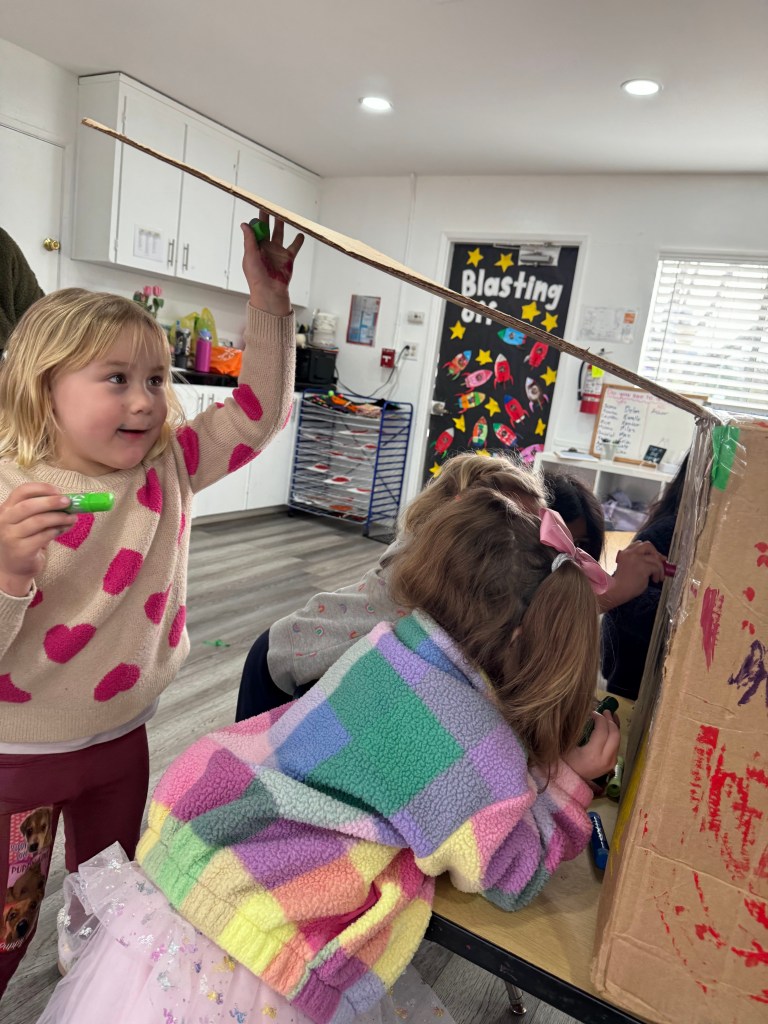
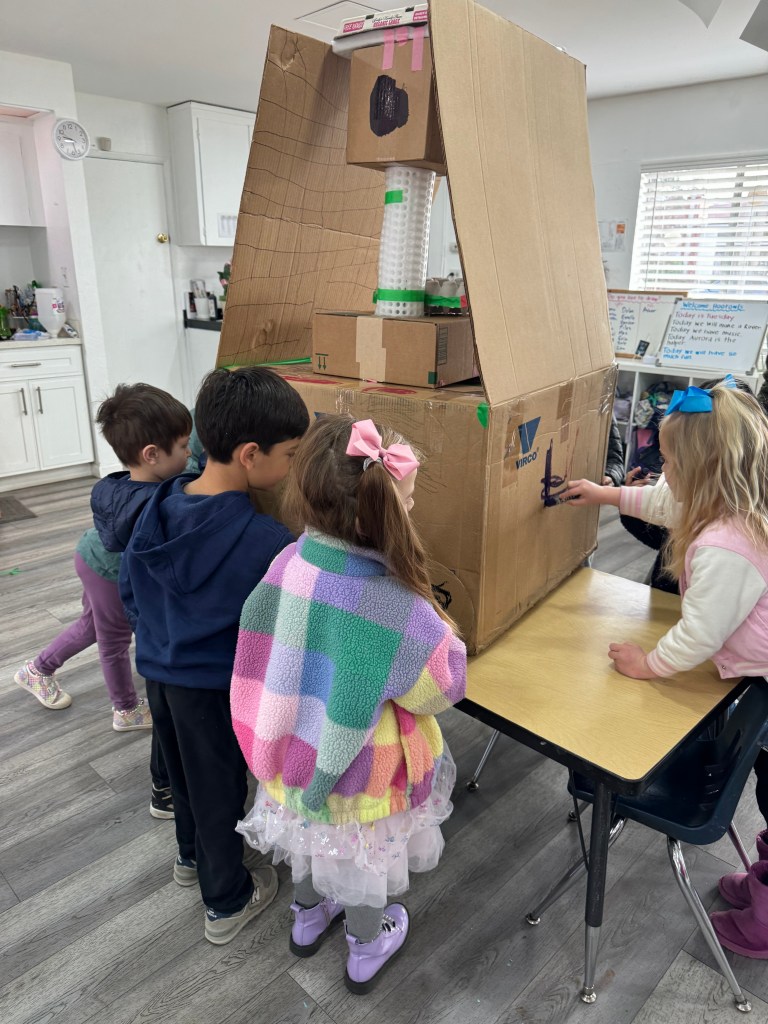
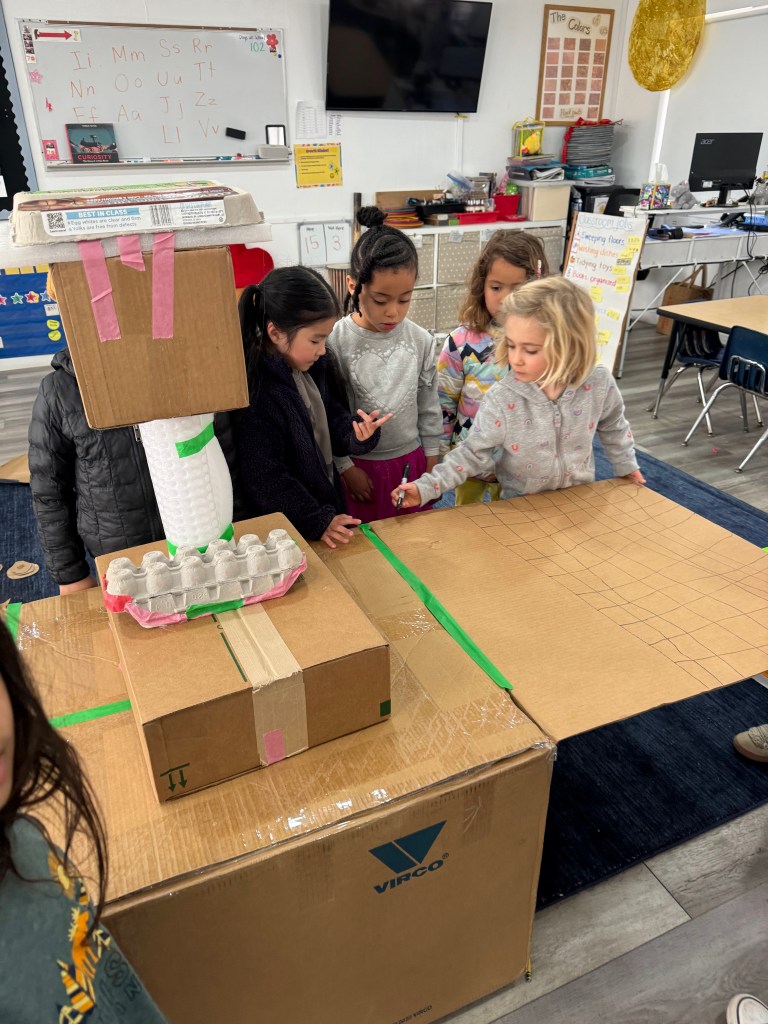
The Hoot Owls have continued their adventure into space. One planet the students were very excited to learn more about was Mars, and especially the rovers on Mars! After watching a Mars Rover video, the students were inspired to create their own rover. After gathering useful items from around their classroom, the Hoot Owls used a huge box to create a rover. Next, the class brainstormed ways to supply the Rover with energy to move around: solar panels and batteries were the winning ideas. The class worked as a team, with some friends making solar panels while other friends made batteries to attach to the rover.

The Hoot Owls welcomed guest expert Jordan to teach them more about rovers and answer their questions. Jordan worked with the people who constructed the head for NASA’s Mars Perseverance rover. He shared that Perseverance’s head is about the size of a shoe box, and contains its eyes (cameras) and a bigger eye that is a laser, which is used to examine rocks. The students were intrigued to learn that scientists tell the rover where to go to find a special rock, then they zap the rock, which causes dust to puff up, which allows scientists to examine the dust and determine what the rocks is made of. 

Thank you, Jordan, for sharing your knowledge and experience with the Hoot Owls!

#SaklanGuestExpert

Adventure in Space

The Hoot Owls have taken on a new inquiry topic: Space! Space is something that the class was very curious about, and just like any new inquiry, they started by asking questions. Amongst their many wonders, the Hoot Owls shared:

  • “How come there is no gravity in space?”
  • “Why is there an eclipse?” 
  • “What are the little red rovers on different planets?” 

The class read Moon! Earth’s Best Friend by Stacy McAnulty, in which they discovered that the moon has different phases. Next, to address one of the student’s questions, “Why is there a moon in space?” the class watched a video about the formation of the moon. The Hoot Owls then created moon representations to showcase what they learned about the moon phases. 

Since the Hoot Owls were very curious about gravity, the class watched a video that taught them that gravity is a strong force that pulls things toward the center. They learned that gravity is what keeps people on Earth and why things fall to the ground. 

Next, the class read Sun! One in a Billion by Stacy McAnulty, which taught them that the sun is a dwarf star that gives us light. From Earth! My First 4.54 Billion Years by Stacy McAnulty, the class learned that Earth started as a big flaming ball of hot molten lava, and then it cooled with long periods of rain until it formed land. The Hoot Owls also learned about the four parts that make up the Earth: the crust, mantle, outer core, and inner core. They were amazed to learn that the sun’s gravitational pull keeps the Earth orbiting around the sun.

To reflect on what they learned, the class made Earth representations by looking at a globe and water-coloring what they saw. They are also working to create a representation of the solar system in our classroom.

Celebrating Lunar New Year

Saklan students celebrated Lunar New Year with some special activities on Wednesday. Lunar New Year, which celebrates the start of the lunisolar Chinese calendar, is celebrated in China, Vietnam, Korea, Malaysia, and Singapore, among other countries.

Preschool students welcomed two guest experts to share about Lunar New Year. Samantha, an Owlet parent, read a book to the class and shared red envelopes with them. Sharon, an Owlet grandparent, shared Lunar New Year traditions that take place in China, told the story of The Great Race, and shared tangerines with the students. The Owlets also enjoyed making snake paper lanterns, Lunar New Year yoga, and listening to traditional Chinese music.

Pre-K students celebrated by welcoming Heidi, a Hoot Owl mom, into their class. Heidi shared that Lunar New Year is based on the Moon instead of the sun and talked about the Chinese word for fortune, 福, and its importance. Heidi shared pictures of her children wearing special Lunar New Year outfits and then treated the class to some bao filled with custard.

Maggie also taught the Hoot Owls about her family’s Lunar New Year traditions, including cleaning their homes and putting up Chinese sayings with good wishes for the new year. The Pre-K students enjoyed watching a video of a lion dance, as well as talking about and receiving red envelopes.

To help with the campus celebrations, the 5th graders put together a dragon which Peta hung on the pergola to welcome students to campus on Wednesday. The fifth graders also made lanterns and dragon drawings.

In humanities class, Christina shared some of her family traditions with the 6th graders, including the tradition of eating tangerines, which are believed to bring good fortune, and of giving red envelopes with money in them as a symbol of good luck. She also shared the proper etiquette for giving and receiving the red envelopes to show respect. The 6th graders also talked about the importance of the Chinese word for fortune and then learned how to write it.

The 6th graders then took their newly acquired skills over to the Hoot Owl classroom, where they taught the Hoot Owls how to write the word for fortune with brushes and ink.

May the Year of the Snake be prosperous for all!

#SaklanCommunity

Classroom Jobs

Jobs at school can help students build a sense of excitement, community, and interdependence. Tasks such as putting up the flag, cleaning the tables after lunch, or being the class helper give students the opportunity to exercise and practice decision-making and reasoning. They also give students a chance to be responsible in a meaningful way: the children know that completing their jobs helps their school, classmates, and/or teachers.

Upon returning to school in January, the Hoot Owl teachers noticed how much the students had matured since the beginning of the year and decided they were ready to take on more responsibility in the classroom. As part of a new project unit on cleaning, the class brainstormed ways to help keep their classroom clean. From that list came new classroom jobs that the students will take turns doing each week for the remainder of the year.

To kick off their jobs work, the class worked on a big cleaning task together – cleaning all the chairs in their classroom. Using buckets of soapy water and sponges, the students scrubbed down their chairs. They noticed that the water in the buckets didn’t look so clean when they were done, so we know the Hoot Owls did a great job of cleaning the chairs! After the chairs were scrubbed, they were rinsed off using the hose, and then students dried them. Some of the Hoot Owls took such pride in their work that they wanted to make sure the chair legs were shining!

Project Culminations at Saklan

A key element of Saklan Project Based Learning units is a public product. This looks different depending on the division and, hopefully, over the last month, you have had the opportunity to share in a culminating event on campus! 

In our Early Childhood Education program, our projects culminate with a public event where students share all the expertise they have gained over the course of the project. It’s a joyful time to celebrate their hard work with family, friends, and other students and staff. It is also a rich opportunity for them to be the experts in the room and develop their speaking and listening skills. Recently our Pre-K (Hoot Owl) class culminated their project unit on farmers’ markets. 

In our lower and middle school projects, products are created for an audience beyond the teacher and students in the classroom. One key aspect of a public product in these divisions is that it must raise the stakes of the work in a meaningful and authentic way. Students aren’t doing something just for the sake of doing it or solely regurgitating information learned from teacher-directed lessons.

Instead, the work students engage in mirrors what adults do in their various career pursuits. After student-led inquiry and teacher guidance to address the content standards, students make or do something that serves some purpose in the Saklan or broader community. Students are creating, educating, or advocating beyond the context of our classrooms. Some examples of recent products that answer the driving question and serve an authentic public purpose are below:

GradeDriving QuestionPublic Product
2ndCan animals survive in any habitat?Lunch table mini posters advocating for food swaps that help avoid palm oil. 
2ndHow can we use color to communicate feelings?Design and creation of the concert backdrop for our Spring Concert at the Lesher Center
3rdHow can we show respect to the people whose ancestral land our school is on?Research, design, and creation of the hopscotch and four square murals on the sports court to reflect the Saklan Bay Miwok culture.
6thWho do artifacts really belong to?Public art graffiti stencils to share options on repatriation of artifacts with the community. 

The final products differ but all include authentic sharing and action beyond our classrooms. At Saklan, students feel a sense of purpose that is hard to replicate in other styles of teaching and learning. This brings the work alive and prepares them for the critical thinking challenges, complex communication needs, and creative problem-solving they will encounter in high school, college, and beyond.

If you’d like to dive deeper into the various design elements of a Project Based Learning (PBL) unit, check out the recording of our October 22nd Saklan Projects! virtual event. And we hope you can join us at our culminating events next week.

Upcoming Project Culminations

  • Preschool (Owlets)- Nocturnal Animals Culmination Celebration at 8:35 a.m. on December 12th
  • Kindergarten- Names Unit Culmination at 8:45 a.m. on Thursday, December 12th

#SaklanProjects

Farmers’ Market Project

The Hoot Owls have begun a Project in which they are diving deep to learn about the Farmers’ Market! First, they worked on writing and illustrating stories about their real-life experiences at the farmers’ market. If the students hadn’t been to one, they imagined what it might be like. The Hoot Owls then took turns sharing their stories at circle time. This helps the children get more comfortable speaking in front of a large group and helps them feel proud of their work. Their fellow Hoot Owls asked questions about the stories, which allowed them to practice using the question sentence structure and to ask questions relevant to the topic. 

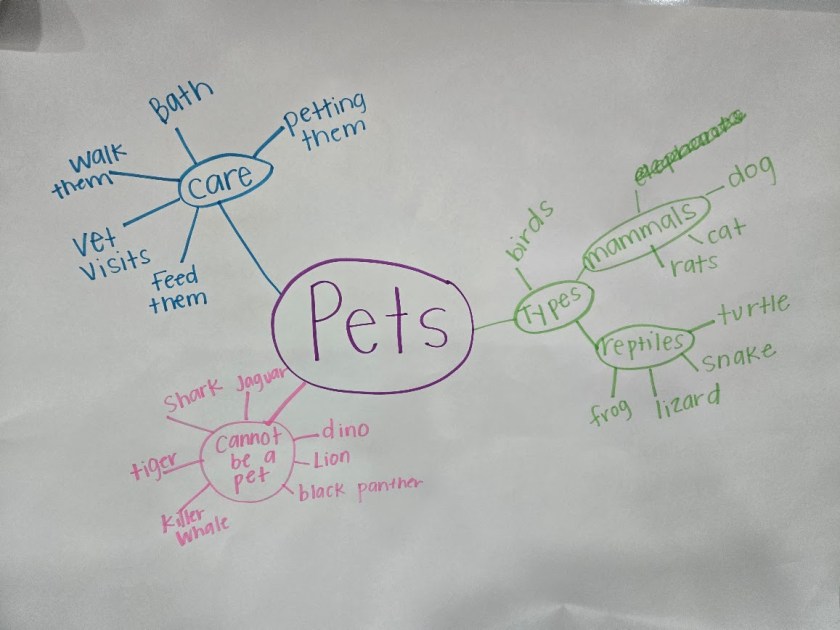
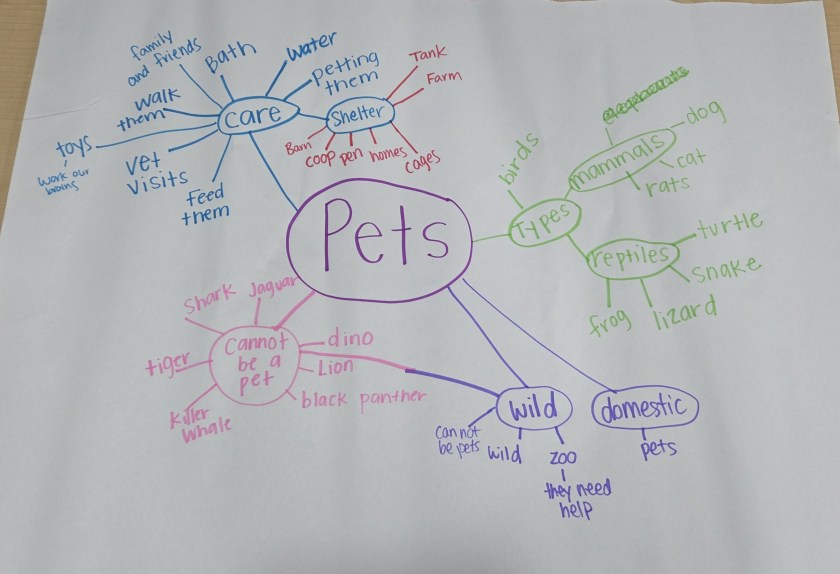
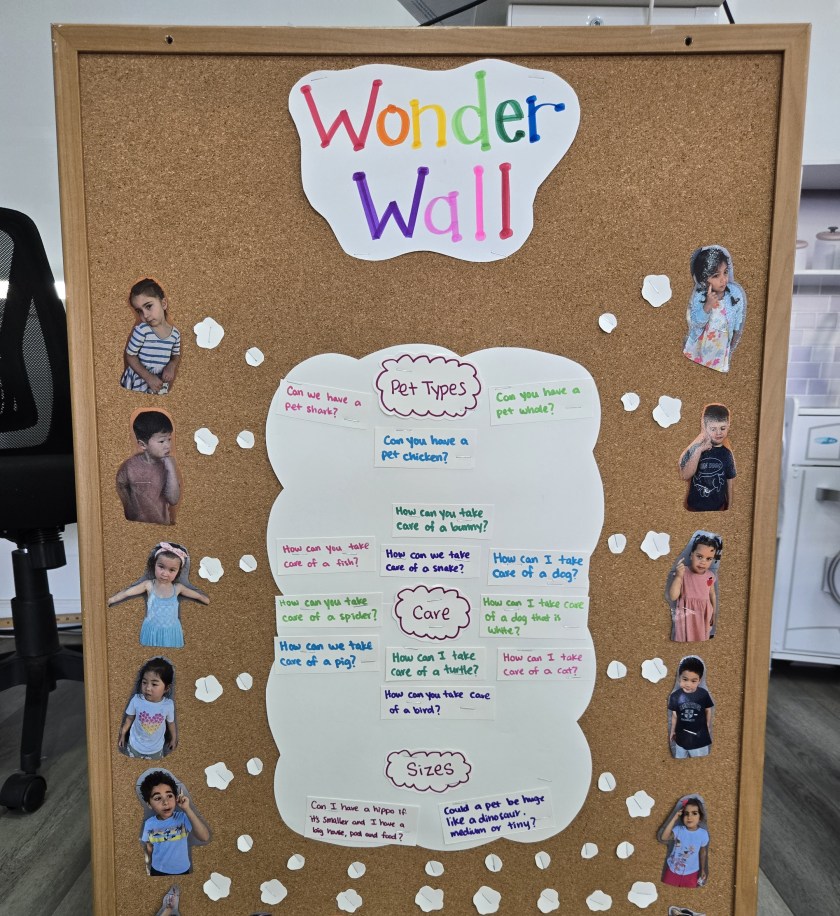
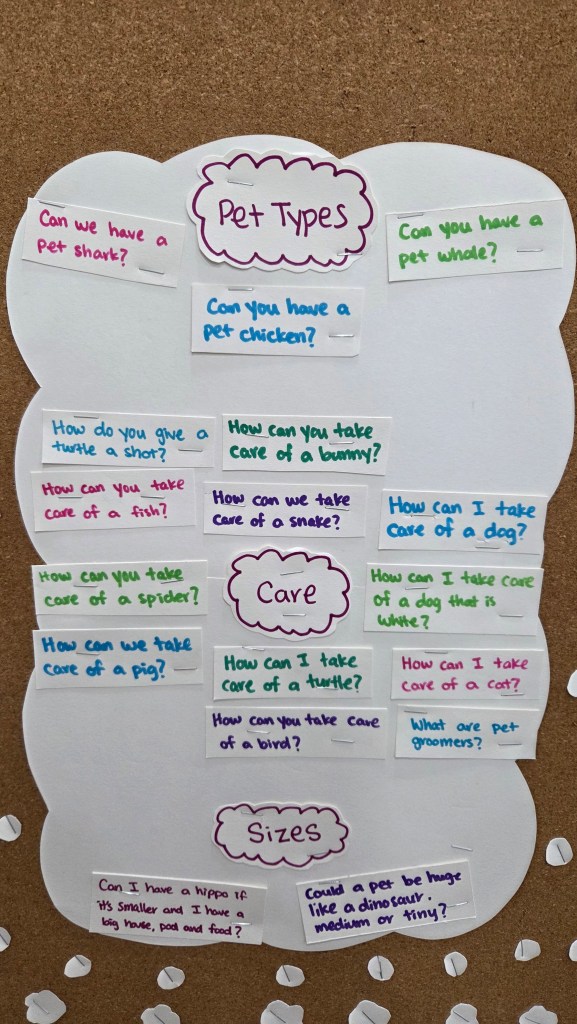
The Hoot Owls also practice questioning skills with their Wonder Wall. The Wonder Wall is how the class keeps track of what students are curious about. The teachers help the class review the questions they have posed as they progress through the Project. When they uncover the answer to one of the questions they add it to their Topic Web. This web helps the class track what they already know and what they learn. Both the Wonder Wall and Topic Web are growing mediums to display the students’ curiosities and knowledge.

The Hoot Owls have enjoyed talking about things found at the farmers market: fruits, vegetables, cheese, flowers, crepes, popcorn, and more. The class wondered where cheese comes from, so they invited a dairy cow expert, Erin, to help answer their question. They also came up with other questions about cows:

  • “Do cows drink?”
  • “How do cows eat carrots?”
  • “How do baby cows drink the milk?”

The students learned that only baby cows, or calves, drink milk. Adult cows only drink water and can drink as much as 6 bathtubs per day! They discovered that cows eat 100 pounds of food daily, mostly hay, but sometimes carrots, other vegetables, or grains. The Hoot Owls found out that cows only have teeth on their bottom jaw, the top is just a hard leathery piece. To help digest food, cows have four chambers in their stomach. Calves drink milk from the mother’s udders. The udders are also where farmers milk the cows. The milk is then used to make items like cheese and yogurt.

After learning new things, the students make representations. Not everyone makes the same things, as each student makes what they are interested in. Some molded a cow out of model magic and others built a cow using big Styrofoam pieces!

The Pre-K students are enjoying their journey to learn more about the Farmers’ Market. Stay tuned to see where this Project takes them!

#Prekindergarten #SaklanProjectWork

Thanking the Moon

Last Tuesday, September 17th, the Hoot Owls, 1st graders, and 2nd graders learned about the Mid-Autumn Festival, or Moon Festival, that is celebrated in East and Southeast Asia to mark the end of the autumn harvest. The Hoot Owls read the book Thanking the Moon by Grace Lin, and learned how Maggie, one of the Pre-K teachers, celebrates the festival with her family by sharing a dinner with her family under the moon. During the picnic, her family will eat fruits and mooncakes and thank the moon for a bountiful harvest.

The first and second graders welcomed Dana, a first-grade parent, who also read a book about the Mid-Autumn Festival, and then shared her experience and family traditions with the festival. The students were excited to try mooncakes, a pastry filled with lotus seed paste and an egg yolk in the middle, which Dana brought in for them to try. Some students really enjoyed the mooncakes, others not so much, but it was fun to try!

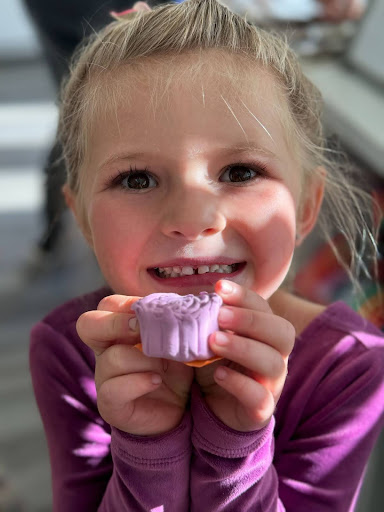
The Pre-K students also used mooncake presses to make their own mooncakes out of clay. This was a great opportunity to exercise their creativity and fine motor skills, as they each decorated their mooncakes, making very colorful creations!

#SaklanDiversity #SaklanCommunity