Head’s Corner: What Our Parents Are Telling Us

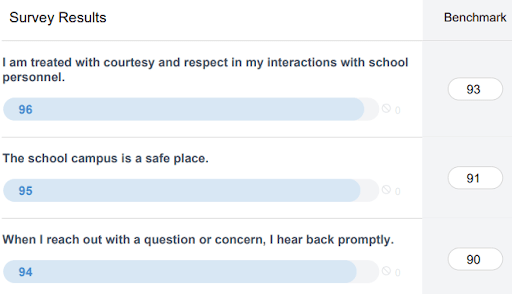
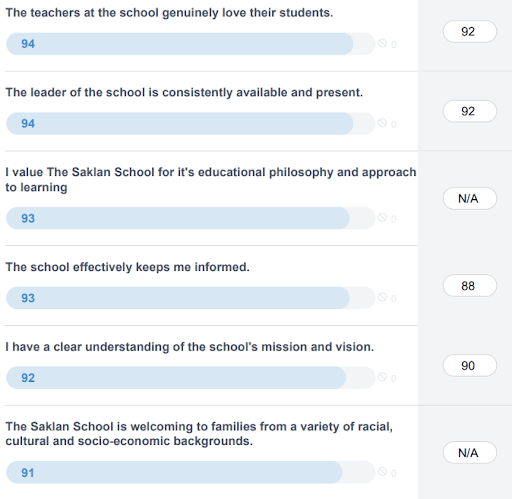
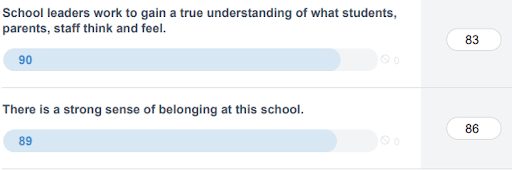
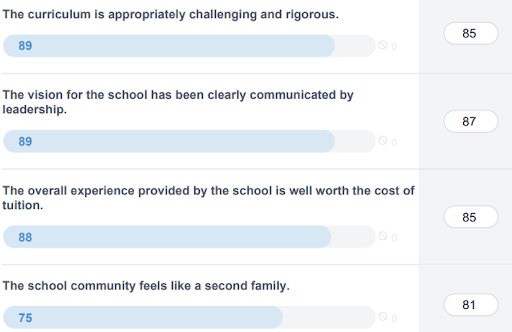
This year, we introduced a new way of listening to our parent community – Parent Pulse surveys that flow throughout the semester, capturing your feedback and insights over time. The results paint a vivid picture that matches what we see daily: engaged learners, strong connections, and a creative, compassionate, courageous community. 

Let me share what we’ve learned.

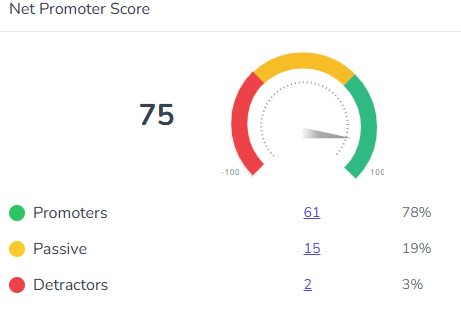
When 94% of parents see teachers who genuinely love their students, 89% find our curriculum challenging and engaging, and 93% value our approach to learning, it tells us something important. Add to this our Net Promoter Score (NPS) of 75 – far above what’s considered excellent.  These aren’t just numbers to us; they validate how we think all schools should work with children.  

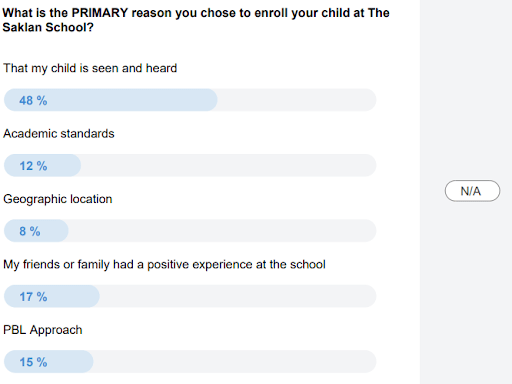
Our commitment shines through in two key ways: making every child feel “seen and heard” (the primary reason 48% of families choose Saklan) and our project-based learning approach that creates meaningful connections between classroom learning and real-world challenges. Walking through our classrooms, you see this dual promise in action – teachers who know each student deeply, partnering with them through learning experiences that spark curiosity and build confidence.

While 91% of parents agree that Saklan welcomes families from all backgrounds, we know there’s more work to be done. Building a diverse, kind, inclusive community requires ongoing commitment and growth.

The type of work we do at Saklan is never finished; the school, like the humans that inhabit it, is always a work in progress. To those who filled in the survey last semester, thank you- your feedback is both validating and instructive. To our faculty and staff, parents, and students, your work making Saklan a model of what education should be is deeply appreciated. 

With gratitude and warmth,

David

PS- Keep an eye out for the next round of surveys.

Head’s Corner: Eating Sushi & Playing Piano

What Do Eating Sushi and Playing Piano Have in Common?

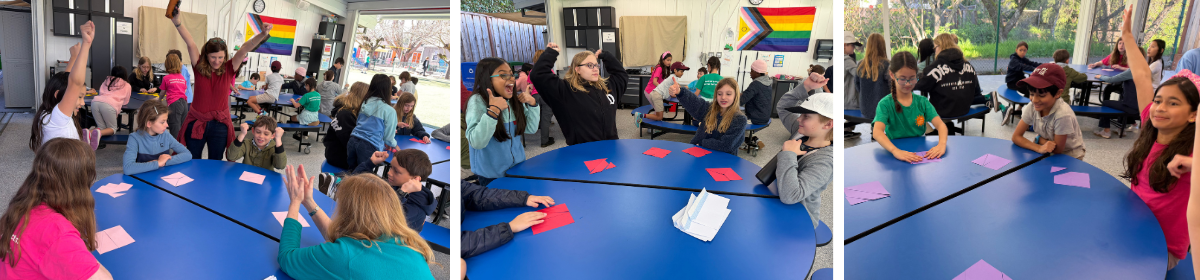
During Family Groups last week, students explored the concept of growth mindset – the belief that abilities and intelligence can be developed through effort, learning, and persistence. This idea, fundamental to our approach at Saklan, was developed by Stanford researcher Carol Dweck, and contrasts with a “fixed mindset” that sees abilities as static and unchangeable (think “I’m no good at math,” or “I can’t draw.”)

As I listened to their conversations, two insights perfectly captured this concept. One first-grade student shared how “eating sushi” exemplified developing new abilities – from initial resistance to eventual enjoyment. The eighth-grader in the group then remarked, “When I play hard pieces on the piano, I get better,” recognizing how tackling challenges develops skills.

These observations illustrate a growth mindset in action. Whether at the piano bench or the sushi bar, our abilities grow through practice, persistence, and embracing challenges. In our Family Groups, together, our older and younger students discover important social and emotional traits, creating bonds beyond the Family Group.

What makes these monthly gatherings special is how naturally such insights emerge through these peer interactions. While Standford researchers study growth mindset in laboratories, our students discover its power through shared experiences, creating a space where they teach and inspire each other across all grade levels.

#HeadsCorner

Head’s Corner: Teaching How to Think, Not What to Think

As someone who has taught history for a good portion of my professional life, I’ve always felt that how history is taught in the U.S. is a disservice to students. There is an emphasis on students “knowing” the country’s entire history, without understanding it. The curriculum will lean into a simplified version of history that leads students to a particular perspective. Rarely does history teaching slow down and ask students to wrestle with both sides of an issue and develop their own opinions. (Think Moraga Police Chief King reading All American Boys along with our eighth-grade class and then coming in to discuss his take on the novel.)

The other sin of how we approach history teaching in the U.S. is one of omission. We simplify complicated stories into fables that are easy to digest. For example, unpack the popular myth of Rosa Parks and her famous refusal to give up her seat on a Montgomery bus – the story that a meek, tired seamstress was too exhausted to walk to the back of the bus and accidentally started a movement that changed civil rights. There is a romanticism to that story, but it is wrong.

In reality, Rosa Parks had been an activist fighting for racial justice for decades before her bus stand. Though described as “quiet” in most of the obituaries that ran after her 2005 death, she was anything but.

The fable of Rosa Parks and the civil rights movement of the time betrays the reality, pain, and sacrifice of those who fight the good fight. It ignores how resistant Americans worked to challenge the status quo. It is also a disservice to the country.

As educators, we owe it to society to examine the fables and myths we have heard and those we have perpetuated – from Christopher Columbus to American Exceptionalism. We also owe it to our students to help them know less but understand more and reach their own conclusions, not ours.

Peace,

David

Head’s Corner: Power of Agency

Agency- Latin agentia “ability,” and ag(ere) “to do, drive”

Over the Winter Break, I received several emails from parents sharing with me a New York Times opinion piece they felt described Saklan perfectly. The article “Giving Kids Some Autonomy Has Surprising Results” should not be a surprise to anyone familiar with our work at Saklan.

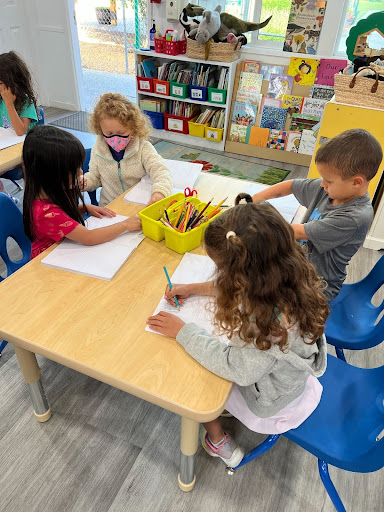
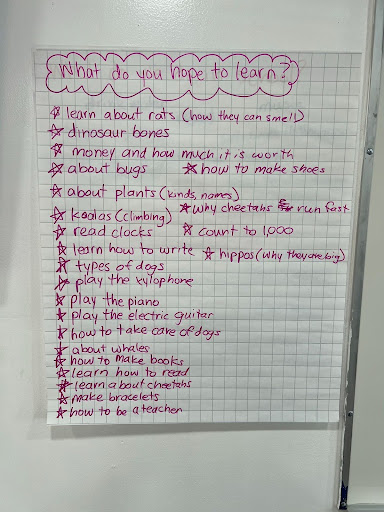
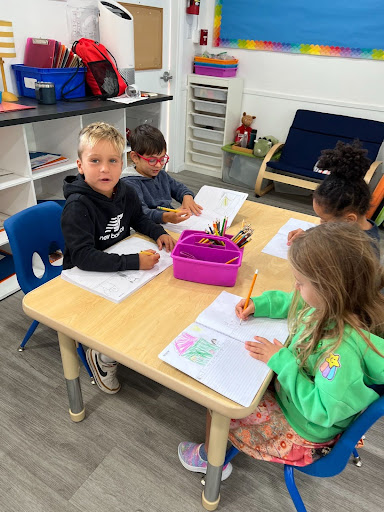
“Agency” is a core value at Saklan. Students having “voice and choice” in their learning is a central tenet of Project Based Learning and our approach to SEL. Student agency honors students’ experiences and curiosities while giving them a locus of control over their lives. In short, it creates “buy-in” to learning. 

According to surveys by the Brooking Institution, very few students feel they have control over what they are learning. “The more time they spend in school, the less they feel like the author of their own lives, so why even try.”

In a majority of classrooms today, teachers introduce a topic and share with students what they will be learning. They have their standards to check off and material to cover. Just looking at those two sentences feels dispiriting.

Why not introduce a topic, ask students what they know about the topic (they know so much more than we often realize), and ask them what they want to investigate next? There are subtle differences between these two approaches, but student engagement is markedly different in the one that gives agency.

Giving agency raises academic standards by requiring students to invest in their own learning, reflect on their progress, and course-correct. If that sounds familiar, it is what we do as adults in our working lives. 

Agency creates a love of learning and a love in learning- and as if that is not enough to convince society that this is the right approach to education then a look at our standardized testing data should convince the doubters. 

Head’s Corner: Saklan Tuition Assistance

At Saklan, we strive to make education available to families who share what matters most to us: a love of learning and love in learning. Our tuition assistance program is part of that commitment, helping to create a vibrant community that strengthens our school.

Families are often surprised to learn that tuition assistance isn’t just for families with a below-average income. Our tuition assistance supports a wide range of family circumstances and income levels. Whether you’re managing multiple children’s educational needs, working to support your parents, or experiencing an unusual financial event, we encourage you to explore your options. While we can’t guarantee assistance to every family that applies, we work diligently to support as many qualified applicants as possible.

Moreover, we understand the sensitive nature of financial discussions. All aspects of tuition assistance applications are handled with confidentiality. Only our financial aid committee has access to your information, and all applications and decisions are kept private.

We are dedicated to growing and fostering our community. Applications for Tuition Assistance for the 2025-26 school year are now available through Clarity. If you have any questions concerning your eligibility for tuition assistance, please don’t hesitate to contact Mylesa, Saklan’s Director of Admissions, at admissions@saklan.org.

Head’s Corner: Activating Oxytocin

Recently, I shared a blog about how emotions drive high academic achievement. In short, when students feel emotionally connected to what they’re learning and who they’re learning with, strong academics follow. This month, I’d like to dive a little deeper into the science behind this connection and explore the role oxytocin plays in academic success.

Oxytocin, often called the “love hormone,” is released in the brain in response to positive social interactions. It plays a powerful role in learning by deepening connection, trust, and emotional well-being—all of which help students thrive academically. When oxytocin levels rise, students feel more connected and supported, lowering anxiety and creating a sense of security. This emotional safety is essential: it allows students to focus, think creatively, and remember what they’ve learned.

But Oxytocin does even more. It strengthens emotional memory, meaning lessons tied to positive, supportive experiences are more likely to stay with students. It also boosts empathy, fostering teamwork and cooperation that strengthens learning. Oxytocin makes learning meaningful and rewarding—values that lie at the very heart of the Saklan Approach. By creating an environment where students feel truly connected and supported, we’re nurturing not only their academic success but also their sense of belonging and purpose, setting them up to thrive both in school and beyond.

Warmly,

David  

Head’s Corner: The Importance of Risk

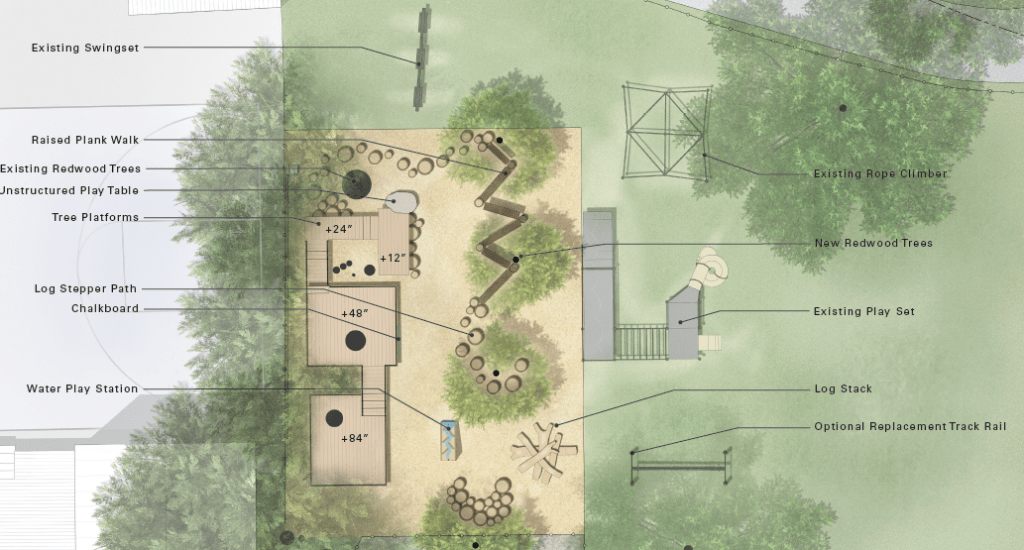
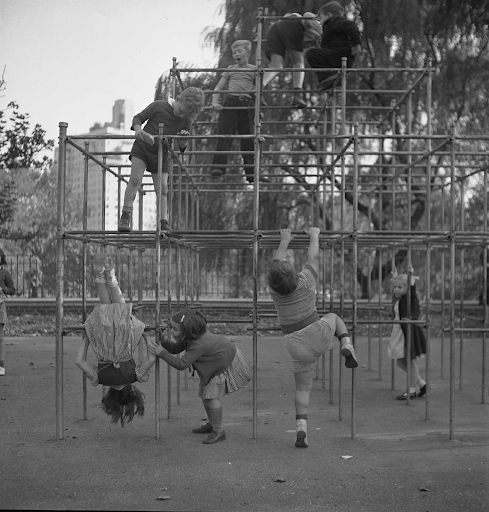
Think back to your favorite childhood play memory. Where were you? What were you doing? Was there an adult supervising you?

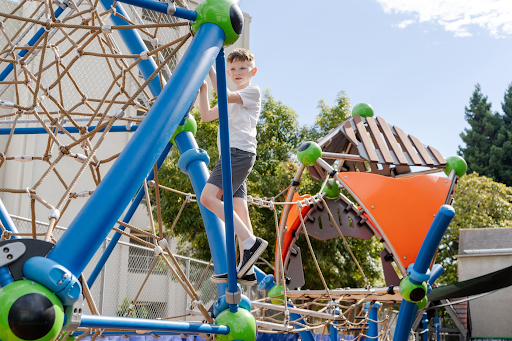
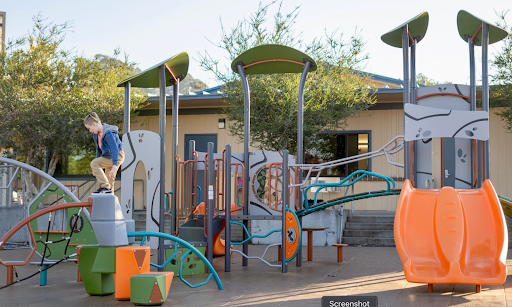
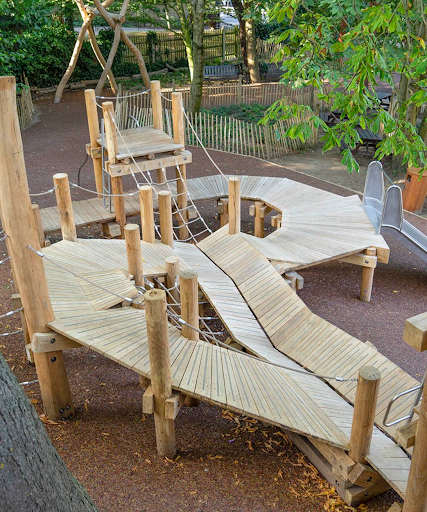
This past weekend, I took my daughter to the Adventure Playground in Berkeley. For those of you who have not been there, the best way to describe it would be a playground built by kids and made out of items found in a scrapheap. It is also a playground in constant transition; kids are given saws, hammers, nails and paint in order to “make improvements” to current structures. Adults are around, keeping an eye out, but are also encouraged to keep suggestions and advice to themselves. To my adult eyes, the place looked like a liability lawyer’s dream. To my daughter, it was the best playground ever, splinter and all. To Marioni Brussoni, the author of Why Children Need Risk, Fear and Excitement in Play it likely strikes an ideal balance between risk and a safety net. As she puts it, “Children should be kept as safe as necessary, not as safe as possible.”

Brussoni writes, that like all mammals, children are wired for risky play, as it provides opportunities to develop physically and cognitively and face new and unusual challenges. It helps them overcome fears, enhances creativity, and scratches the itch of curiosity. Often, though, our own fears and modern societal expectations get in the way of a child’s opportunity to learn. Since the 1970’s children have seen a significant decline in unstructured free time and outdoor play.  Too often kids’ experiences are curated, and supervised. While independent playtime, freedom, and opportunity for adventure have dropped, screen time has increased.  

As parents and educators, we must strike a balance between safety and individual growth.  Allowing children to experience risk and fear, does not mean parents are neglecting their duty of care; but in fact, fulfilling a crucial part of it. We are giving them the tools they need to navigate life’s uncertainties with resilience and creativity.

Oh, and one of my favorite childhood memories. Ten-year-old me, during winter in Michigan, trying to cross an iced-over creek with my friends.  I clearly remember the sound of cracking ice, trying to scurry to safety, plunging in the cold water, and the freezing walk home. 

Warmly, 

David

P.S.  If you have time, the linked article is worth a read.

P.P.S. If you attended this morning’s SEL session, you can access the slide deck here.

Head’s Corner: We Are “Really Doing It”

Last year, a Saklan Trustee and I had the privilege of attending the California Association of Independent Schools (CAIS) Heads and Trustees Conference. This annual gathering brings together nearly 500 school leaders and trustees, all focused on learning, sharing ideas, and discussing the future of independent schools.

During one of the many breakout sessions, we found ourselves mingling with trustees and heads from other independent schools, exchanging experiences and posing questions to each other. Among all the conversations that day, one in particular stood out. As we discussed various educational models, the topic of Project Based Learning (PBL) came up. A fellow school leader, well-acquainted with the educational landscape of the Bay Area, turned to the group and said: “There are lots of schools in the Bay Area claiming to be PBL schools, but Saklan is the only one really doing it.”

This simple statement was a powerful reminder of how far we’ve come. When we embarked on this journey to make PBL a cornerstone of Saklan’s approach, our goal wasn’t just to enhance academic rigor and engagement. We aimed to redefine what rigor and high engagement should look like in a modern school setting.

This week, we took another step in that journey by officially launching a video that showcases the incredible work we’ve been doing at Saklan. This is more than just a celebration of our accomplishments; it’s an invitation for others to see how we’re shaping the future of education—where students are deeply engaged, challenged, and, most importantly, truly prepared for the world ahead.

At Saklan, we’re not just talking about Project Based Learning. We’re living it. And we’re proud to say—we’re really doing it.

Warmly, 

David

#HeadsCorner

Head’s Corner: The Power of Emotion

In the fall of 1991, I began as a Social Studies student teacher at Redford High School in Detroit, Michigan. On my first day, my mentor teacher offered a piece of advice that seemed essential at the time: “Don’t crack a smile until Thanksgiving; it undermines your authority.” Back then, this felt like sound wisdom—I was there to deliver information and make sure students took me seriously. Building emotional connections with them felt like it would take precious time away from academic instruction. It seemed logical, right? The more time spent on connection, the less time there is for learning history.

But I couldn’t have been more wrong.

Over the past 20 years, our understanding of how we learn has evolved dramatically, and neuroscience has made one thing clear: emotions fuel learning. The people we learn with, and how connected we feel to them, have a profound impact on academic success. This is why, at Saklan, we prioritize building relationships with students and making sure they feel like they truly belong. It’s not just about helping them grow into well-rounded individuals; it also leads to better academic outcomes.

Research shows that learners need an emotional connection to the content itself, too. That’s where Project Based Learning (PBL) shines. PBL taps into students’ experiences, motivations, and natural curiosity, creating meaningful, emotionally-charged learning experiences that foster deeper understanding and translate into real academic achievement.

At Saklan, we’ve always understood the power of emotion. We focus on connecting emotionally with students (“Love in Learning”) and helping them connect emotionally to the material (“Love of Learning”). We do this because it works, but more importantly, because it speaks to the learner inside all of us.

Warmly,

David

Head’s Corner: The Power of Love in Learning

If you attended one of our Back-to-School-Nights, I hope one of your main takeaways was understanding the transformative power relationships have on learning. The connection between a student and their teacher is important and essential to deep, meaningful learning. David Brooks of The New York Times highlights an idea we hold dear: “Students learn from people they love.” This isn’t just about affection or care; it’s about a profound, holistic connection where students feel seen, heard, and supported as whole individuals.

Brooks shares how emotions are an integral part of learning. Neuroscience has shown that students struggle to stay motivated, navigate challenges, or retain what they learn without emotional engagement. It’s a reminder that true education is more than just the transfer of information from teacher to student —it’s about creating a space where students are emotionally and intellectually connected and inspired.

During your BTSN sessions, I hope this approach to how children learn rang true. Our teachers bring passion to the classroom, not just for the subjects they teach but for the students themselves. They recognize that to spark curiosity, foster perseverance, and encourage intellectual bravery, there must first be a foundation of trust and emotional connection. We know that students thrive when they feel supported not just academically but personally, when teachers are more than instructors—they are mentors, guides, and partners. 

In a world that often focuses on test scores and metrics, it’s crucial to remember that one of the most important measurements of a school’s success is the quality of the relationships within its walls. How well do students feel known? How much trust and care flow between students and teachers? How much joy is present in the classroom? These are the questions that define our success at Saklan. We see every day that when relationships are nurtured, academic achievement naturally follows- and we have the data to prove it (check my next blog post).

So, as we move forward into this school year, let’s keep in mind that in order to create a love of learning, one needs to also focus on the love in learning.  

Warmly,  

David