Authenticity and Student Inquiry

Doing a project is not the same as Project Based Learning. The differences may seem minor at first glance, but the impact on student learning and engagement is tremendous. Two vital components that differentiate “doing a project” from Project Based Learning are authenticity and student-driven inquiry. 

High-level Project Based Learning has an authentic context. It involves tasks, questions, or ideas that connect to the world outside of the school walls: students’ personal experiences, concerns, interests, or identity. Student-driven inquiry means students are engaged in an iterative process of asking questions, gathering and interpreting data, and developing solutions or deeper questions to investigate. 

Two fantastic examples of these elements in high-level Project Based Learning at Saklan are the Kindergarten Names unit and the Owlet Leaf unit. 

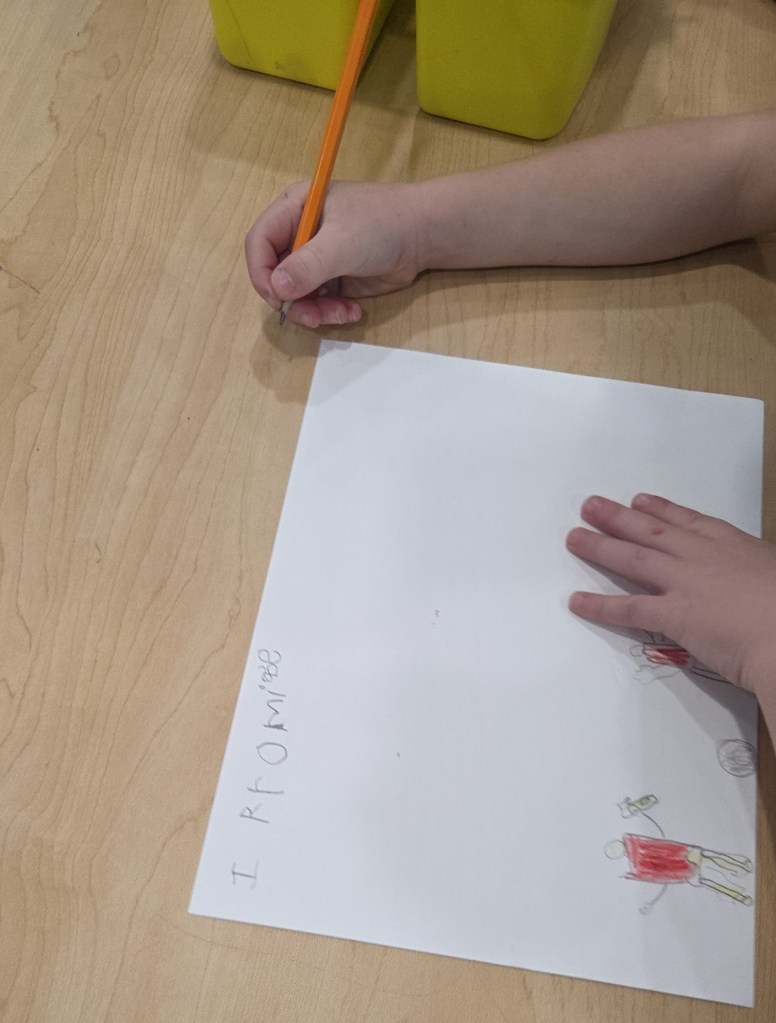
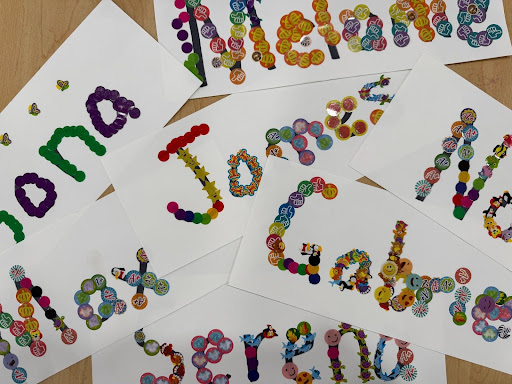
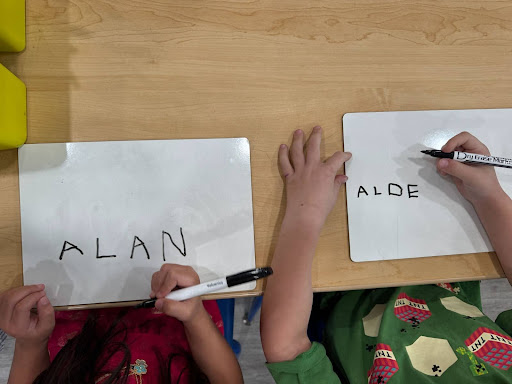
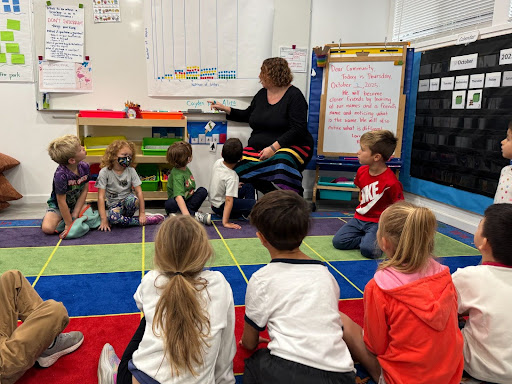
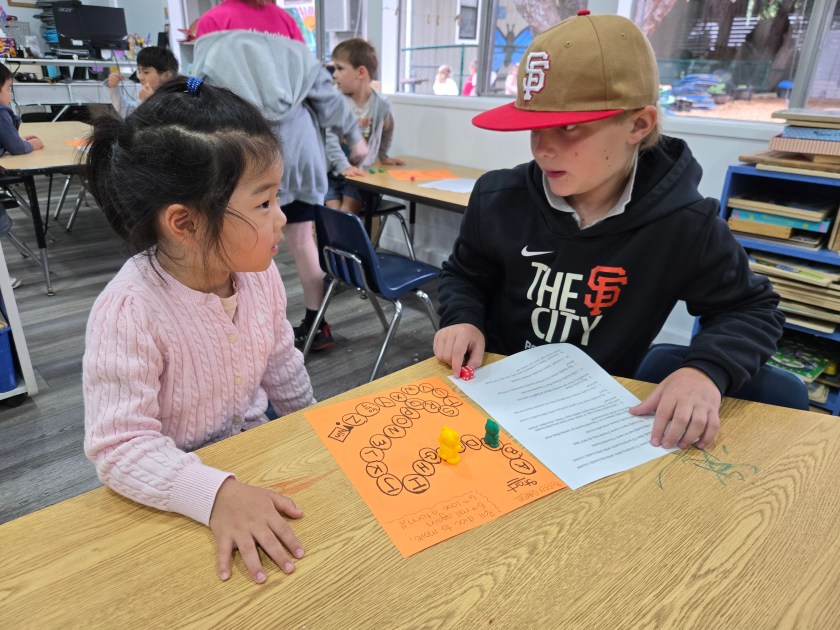
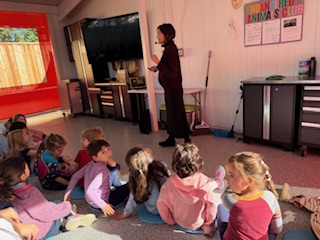
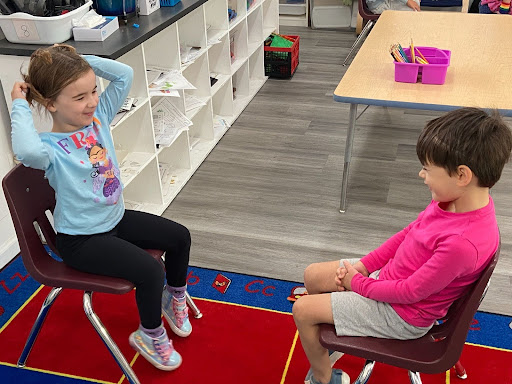
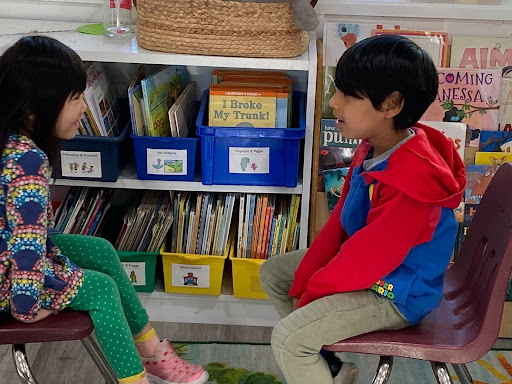
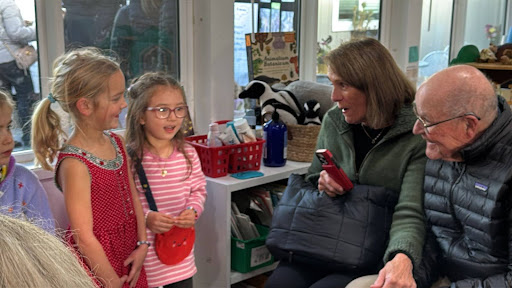
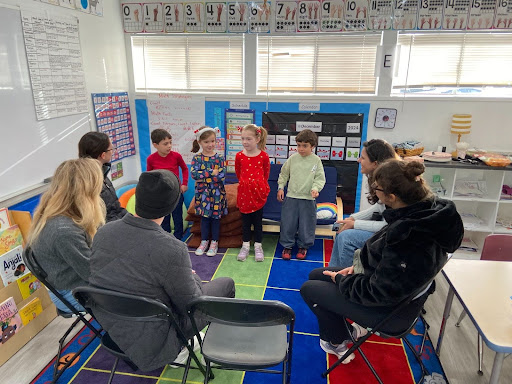
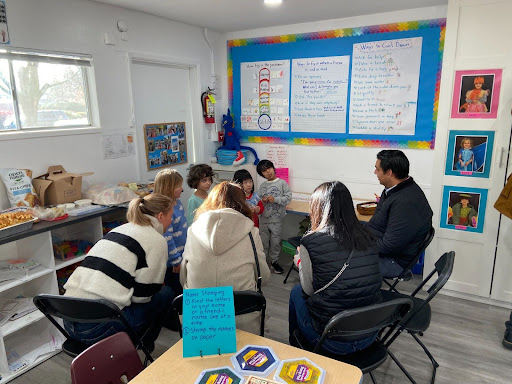
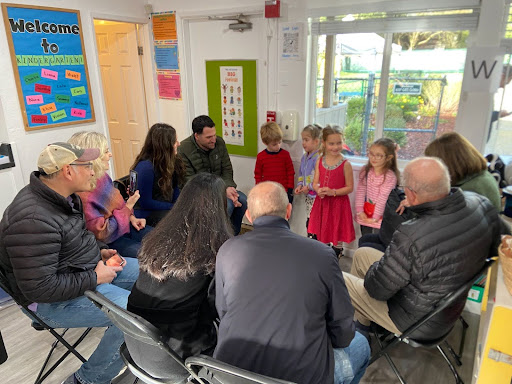
Our Kindergarten names unit brings students’ family stories and cultures to the forefront of learning. The students investigate how to become better friends by learning about each other’s names. Closer bonds and deeper friendships are developed by bringing students’ rich family lives and stories into the classroom. They interview their families and each other about their names, learn to read and write each other’s names, explore ways to represent the meaning of their names together, and study how people share their names through picture books.

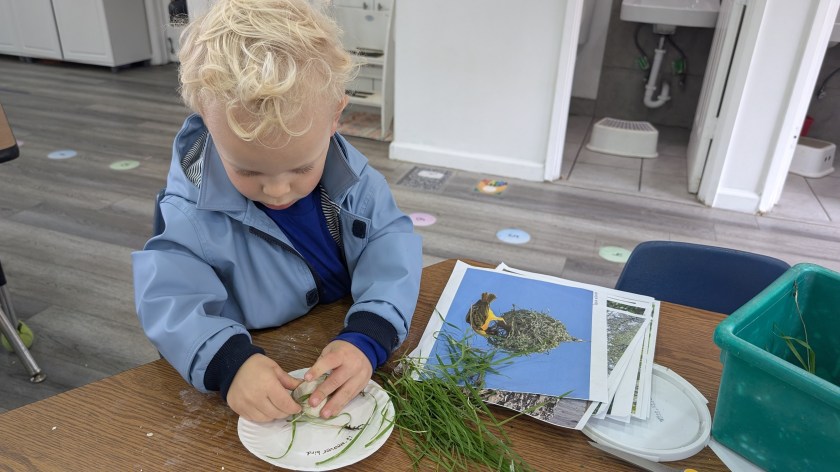
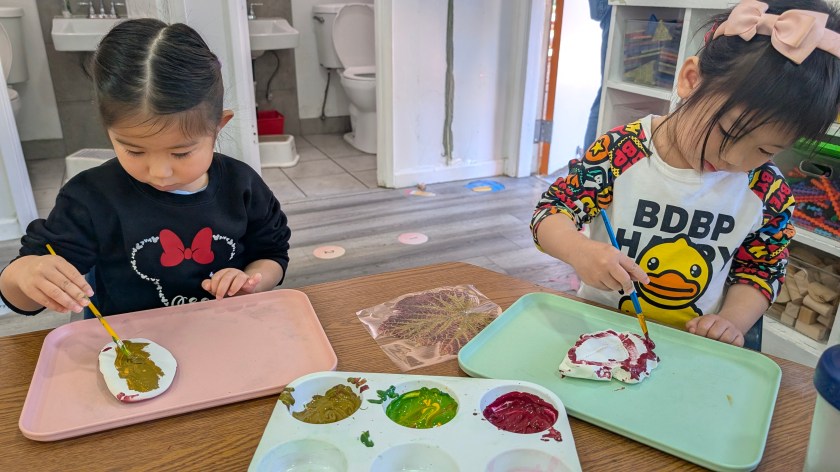
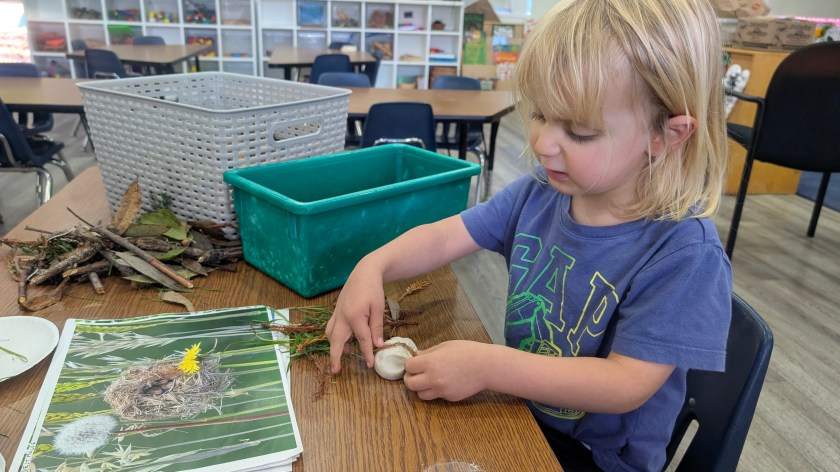
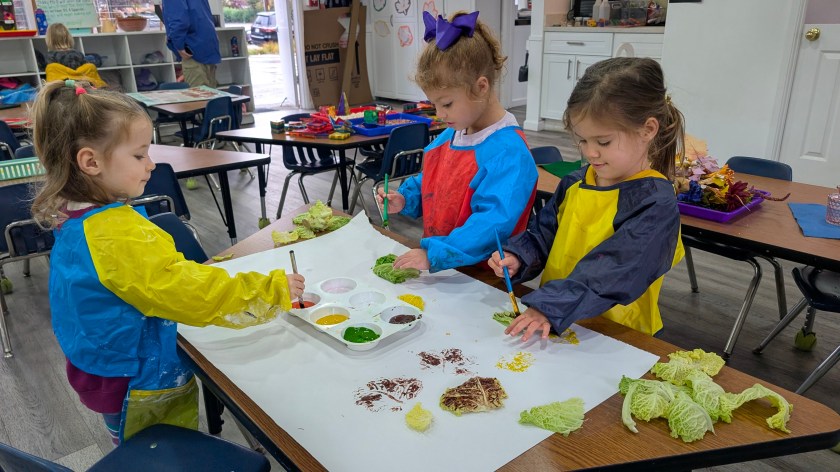
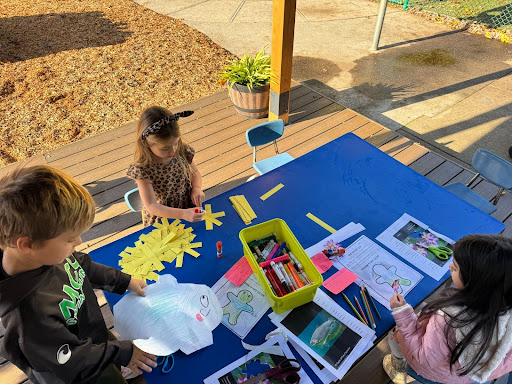
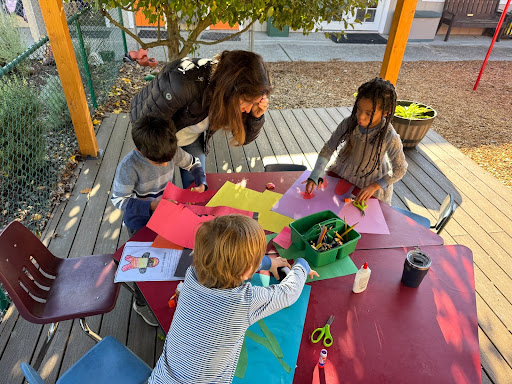
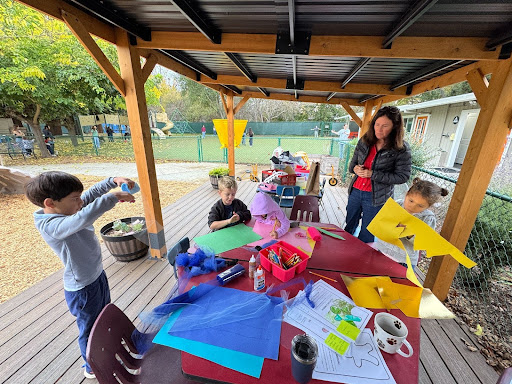
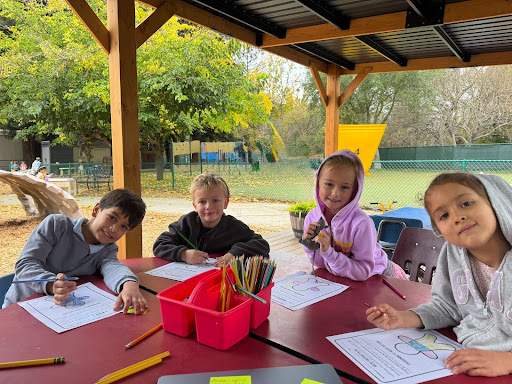
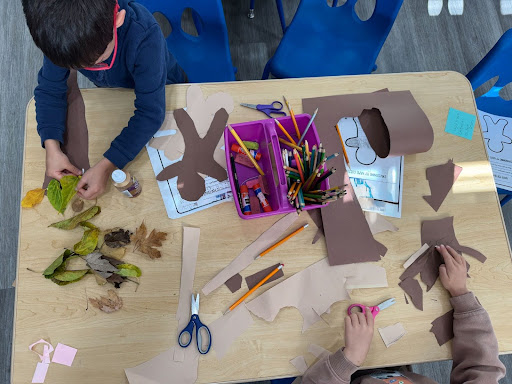
Our youngest learners, the Owlets, have been engaging in a deep exploration of leaves. For our ECE students, part of an authentic unit means pursuing a topic that they experience in their daily lives. During this time of year, when the trees are changing colors and leaves are falling to the ground all around us, student questions about leaves are abundant. They first began their study by sharing their own knowledge about leaves before generating questions. Next, the class engaged in experiences that helped them answer their questions, and then made physical representations of their growing knowledge of leaves. 

For both of these units, students engaged in multiple rounds of inquiry and had the rich opportunity to explore a topic with personal meaning while also tackling academic, social, and emotional learning goals. You are invited to join us on December 11th at 8:40 a.m. to celebrate the culmination of both of these project units. We hope you join us! 

#SaklanProjectBasedLearning

Spotlight on Riva: Guiding Kindergartners With Joy & Purpose

If you’ve ever stepped into Saklan’s Kindergarten classroom, you’ve likely felt it: the spark, the laughter, the hum of curiosity and care. It’s a space where little moments become big milestones, and where joy seems to live in every corner. That joy is no accident. It’s fueled, every day, by a teacher who brings heart, intention, and deep respect for childhood into everything she does.

Recently, we sat down with Riva, Saklan’s Kindergarten teacher, to learn more about what inspires her, what she loves most about working with our youngest learners, and why Saklan’s approach to Project Based Learning feels so special.

You bring so much joy to the Saklan campus- what fuels your joy and excitement the most when it comes to your teaching day? 

“My joy comes from the relationships I get to build with my students and their families. Kindergarteners arrive each morning with such openness and enthusiasm, and I love being part of a community that celebrates their strengths, quirks, and emerging identities. Saklan is a place where students are truly known, and getting to guide them through their first steps in school — emotionally, socially, and academically — is a privilege that motivates me every day.”

What do you love the most about working with Kindergarten?

“What I love most about working with kindergarteners is the unique magic of this developmental stage. Everything is new, everything is possible, and their sense of wonder is contagious. I get to watch them discover their own abilities, whether they’re decoding a word for the first time, writing a brave sentence, or learning how to take a deep breath and reset. Kindergarteners grow in such joyful, visible ways, and being part of those early milestones feels incredibly meaningful.”

She also shared a favorite program that brings this magic to life: Kinder Korner.

“One of my favorite parts of teaching kindergarten at Saklan is our Kinder Korner program. Our students become “big buddies” to the Hoot Owls, teaching them what life in kindergarten is like. It’s beautiful to see my students step into leadership roles with such care and pride. They show empathy, patience, and confidence as they guide their younger buddies through activities, routines, and little moments of discovery. Watching them light up when they realize they are the ‘experts’ is truly heartwarming. Those cross-grade connections deepen our community and remind me how capable and kind young children can be when given the chance to lead.”

You have had a lot of experience with projects at previous schools- what makes Saklan’s approach to PBL special?

“What I love about Saklan’s approach to Project Based Learning is the way it connects our standards to work that feels genuinely meaningful for young children. Our projects grow from what students are naturally curious about, and that makes the learning feel joyful and authentic for all of us.”

She highlighted The Names Project as a powerful example.

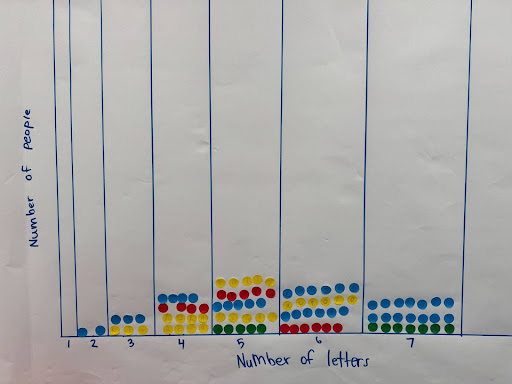
“The Names Project is one of my favorites for exactly that reason. Kindergarteners are already captivated by their own names, so it becomes a perfect entry point into letters, sounds, phonics, and even math as we compare and graph the number of letters in each name. But what makes this project so special to me is the sense of community it builds. As students learn to read each other’s names, discover the stories behind them, and create portraits inspired by their name meanings, they also learn about one another in a really meaningful way. The academic growth is wonderful, but the connections they build are the true heart of the project for me.”

You can see this joyful learning in action by joining the Kindergartners for their Names Project culmination on Thursday, December 11th, at 8:40 a.m.

From the joyful morning greetings to the thoughtful projects that build community and confidence, it’s clear that Kindergarten at Saklan is filled with intention, wonder, and deep care. And at the center of it all are teachers like Riva, who make learning feel magical—one moment, one question, and one joyful discovery at a time.

#SaklanStaff

Learning Through Light, Color, and Connection

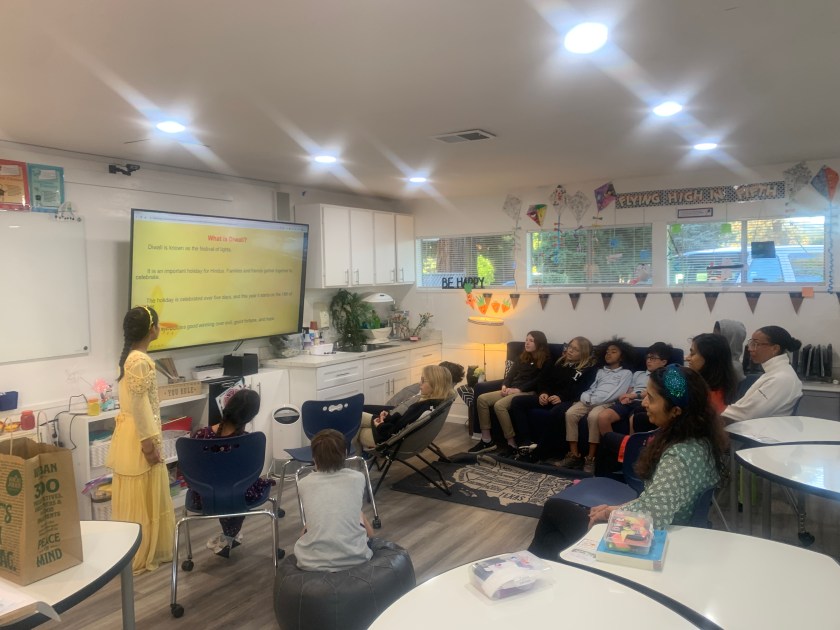
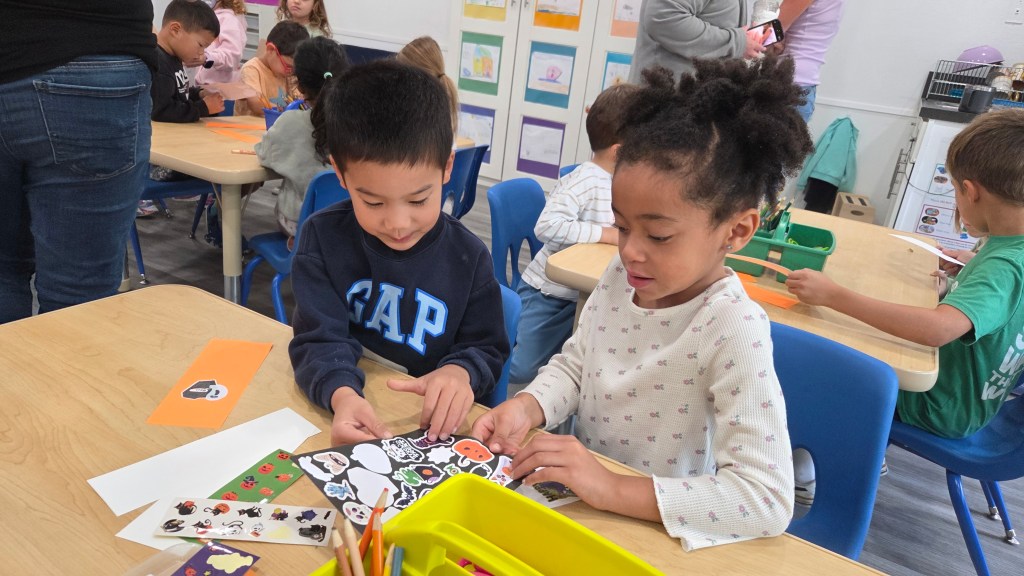
Over the past week, many Saklan students learned about Diwali, the festival of lights, which is observed by Hindus, Jains, and Sikhs around the world—including members of our own community. Diwali lasts for five days in October or November and honors the triumph of light over darkness and good over evil.

To deepen their understanding, students read books about the festival and participated in hands-on activities that brought Diwali’s traditions and meanings to life.

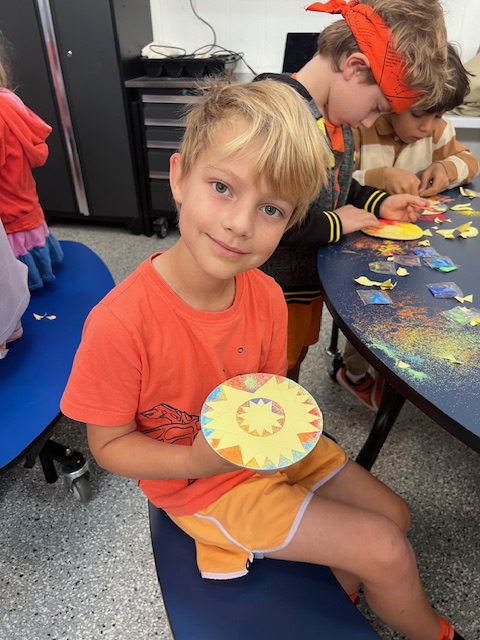
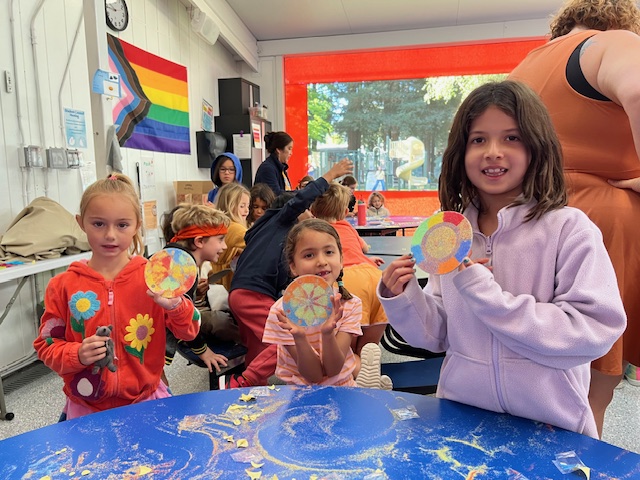
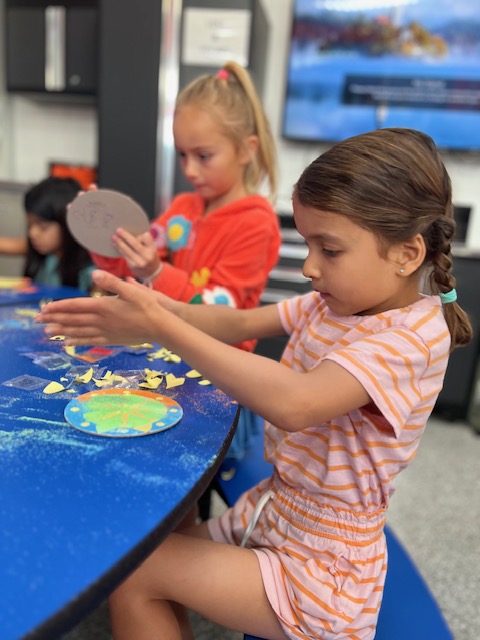
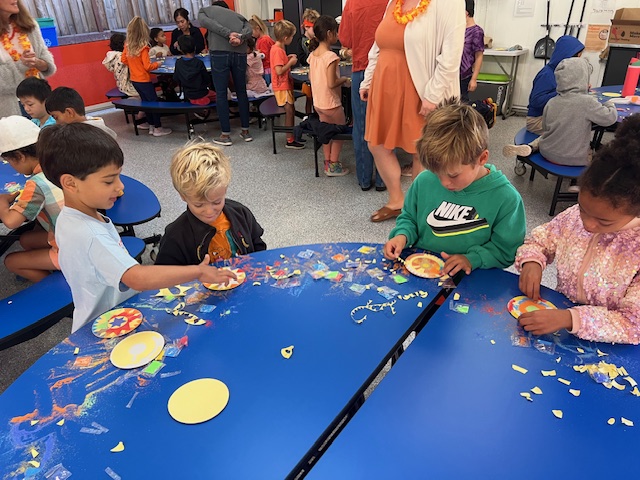
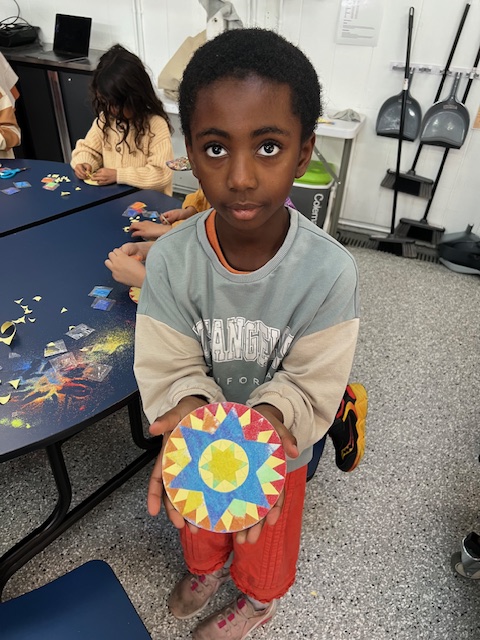
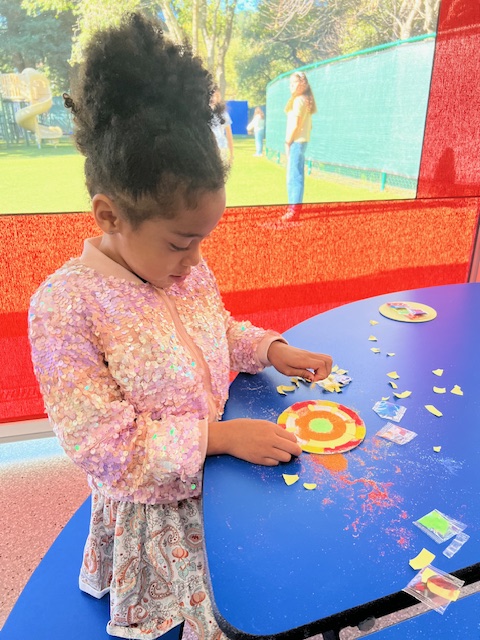
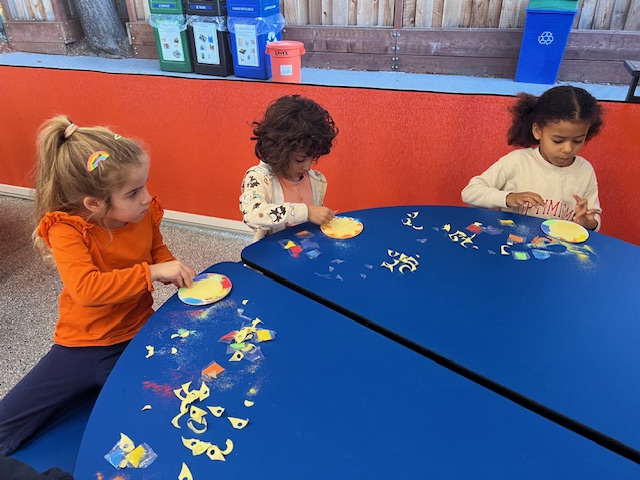
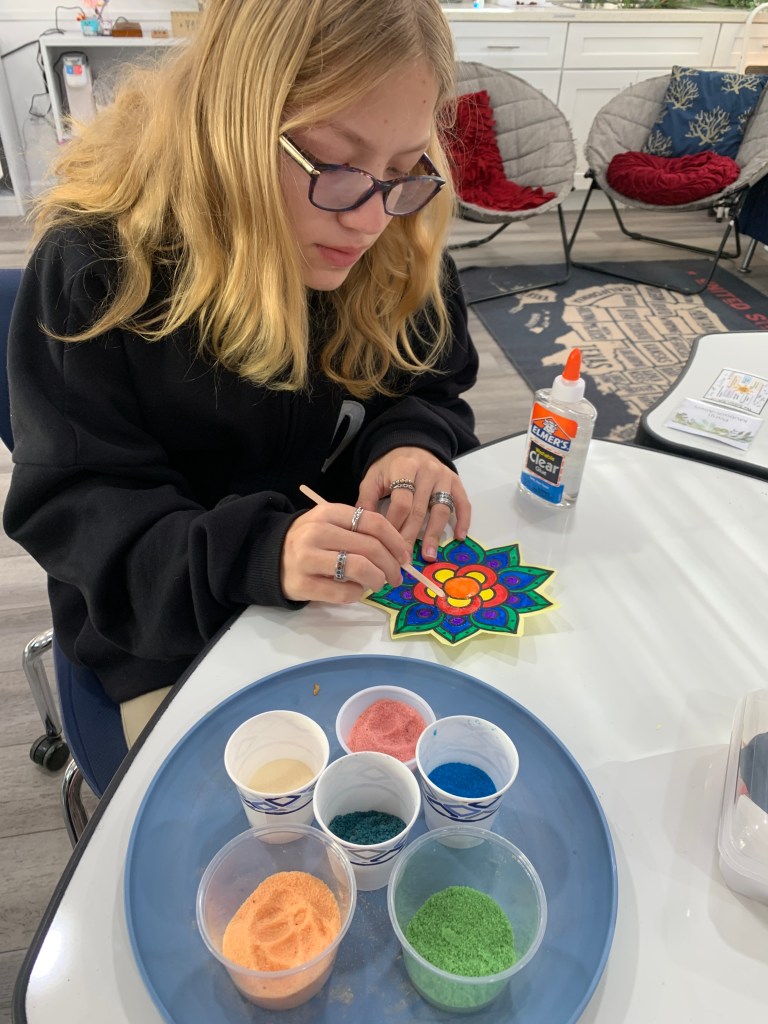
Kindergarten, first grade, and second grade students gathered in the pavilion to meet with Saklan parents Molly and Manju, who read Diwali by Hannah Eliot. Inspired by the story, students created vibrant rangoli—decorative designs traditionally made on the floor or tabletops using colored powders, rice flour, sand, or flower petals—to celebrate the spirit of joy, color, and togetherness that defines the festival.

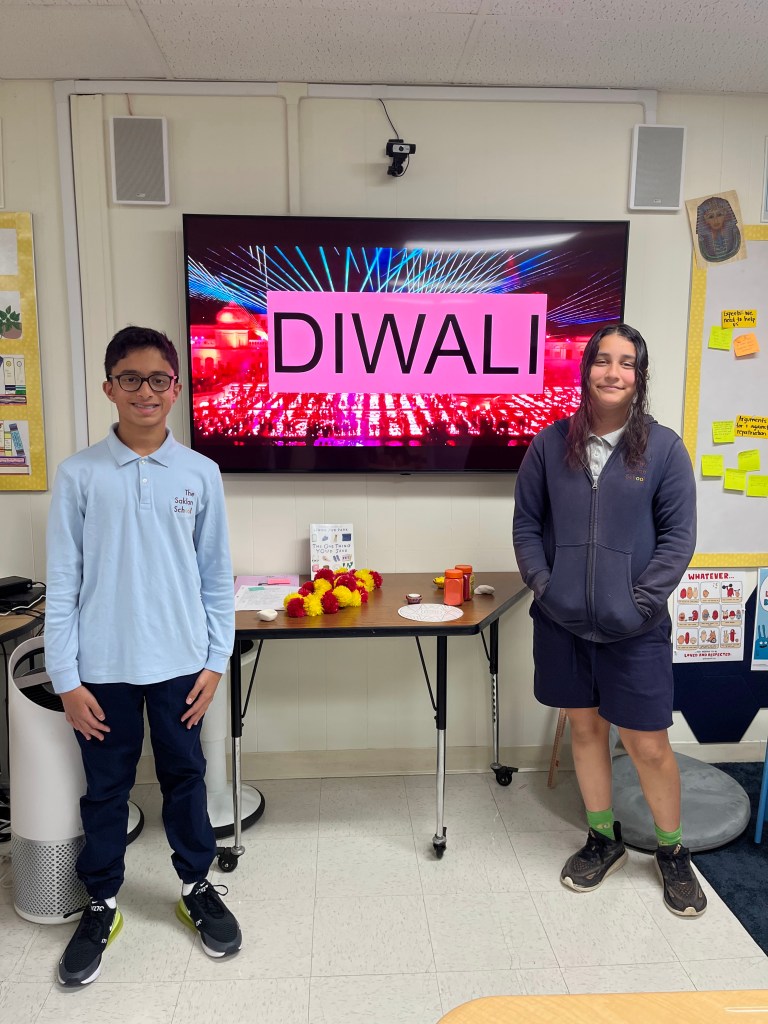
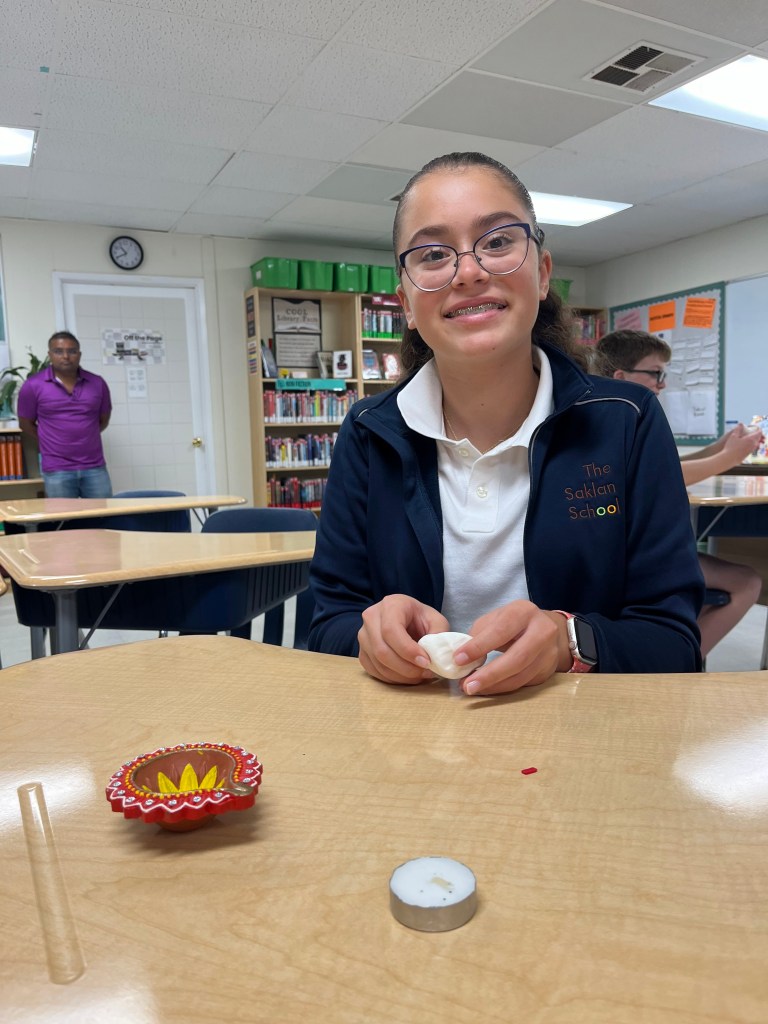
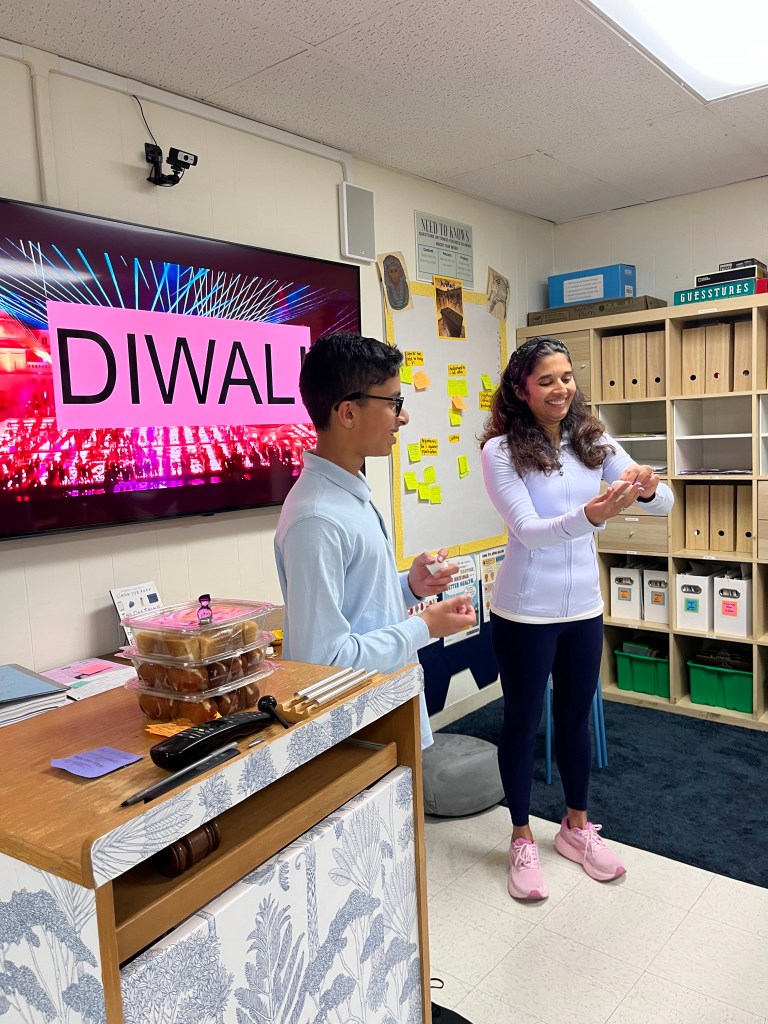
In fifth grade, two students, along with their parents, led their classmates in a beautiful Diwali celebration. Together, they explored the meaning of the five days of Diwali, the symbolism of the auspicious colors red and yellow, and the ways families honor the festival through stories, food, and traditions. Students created their own diyas—small oil lamps traditionally made of clay—and colorful rangoli designs, discovering how light, color, and creativity represent hope and goodness shining through.

Two sixth graders also shared their family traditions, teaching classmates about Diwali’s symbolism and the use of marigold garlands and diyas. After learning and crafting, the class enjoyed traditional sweets—gulab jamun and milk cake—while connecting their discussion to the novel The Night Diary and previewing their upcoming study of ancient India and Hinduism.

A heartfelt thank-you to the students and parents who shared their traditions and stories with us! Celebrations like this strengthen our community and remind us of the beauty of learning from one another—honoring the many ways light, family, and culture connect us all.

#SaklanCommunity

How Project Work Deepens Learning and Connection

Project work at Saklan drives strong academic outcomes through creating units where students feel represented and included. Building this deep sense of belonging begins with our specific Social Emotional Learning (SEL) programming, like family groups and Responsive Classroom, and is intentionally woven into our academic PBL units through the equity levers like knowledge of students. 

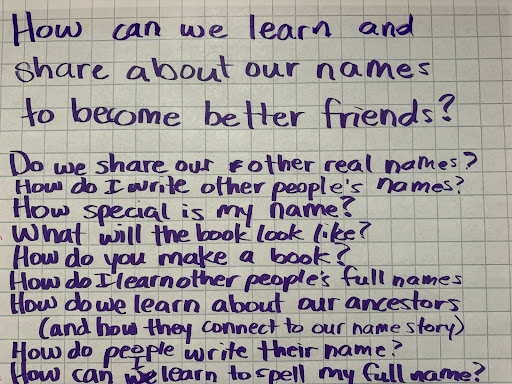
Knowledge of students means not only building relationships with students but also creating project work that can capture their interests, needs, and strengths. A wonderful example of a unit that is relevant to students’ lives, has meaningful context, and includes robust academic learning is our Kindergarten Names Unit. The driving question for this unit is, “How can we learn and share about our names to become better friends?”

This unit tackles academic standards such as letter and sound correspondence, formulating relevant questions, and listening to and remembering responses to communicate what they have learned with others. To achieve these learning goals, the Names unit maintains high authentic relevancy to honor students’ unique identities through sharing their name stories, which often connect to their family, ancestry, culture, or religious traditions. As they strengthen their classroom community through this work, there are also many authentic opportunities for learning in other content areas too. 

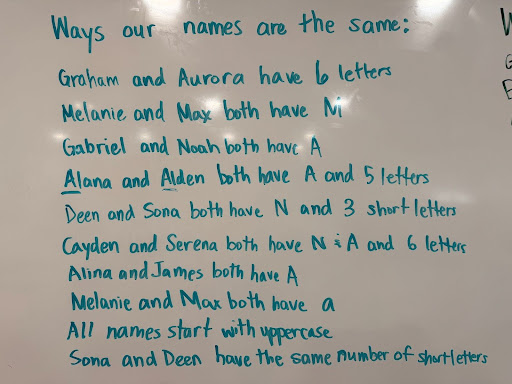
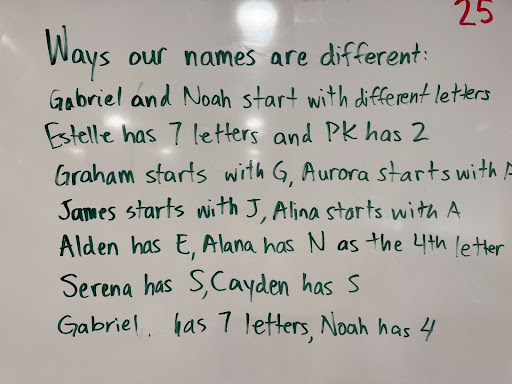
This week, while students focused on how to spell, read, and write each other’s names, they also began to sort their names in a variety of ways. They compared names by looking at letter shape (whether they are tall, short, or ascending), identified names with certain vowels and consonants, and ultimately arranged them by the number of letters each has in a class bar graph. Students eagerly engaged in rich math conversations all stemming from the authentic work of sharing about and reading each other’s names. 

Grounding academic content in what really matters to students allows them to learn at deep levels and feel part of our Saklan school community. 

Join us on October 21st for a Saklan Projects virtual event! We will talk about how teachers design and implement units like this one across all content areas in our Lower School and Middle School. This event is open to all!

#SaklanProjects

Kinder Korner: Building Connections Through Learning

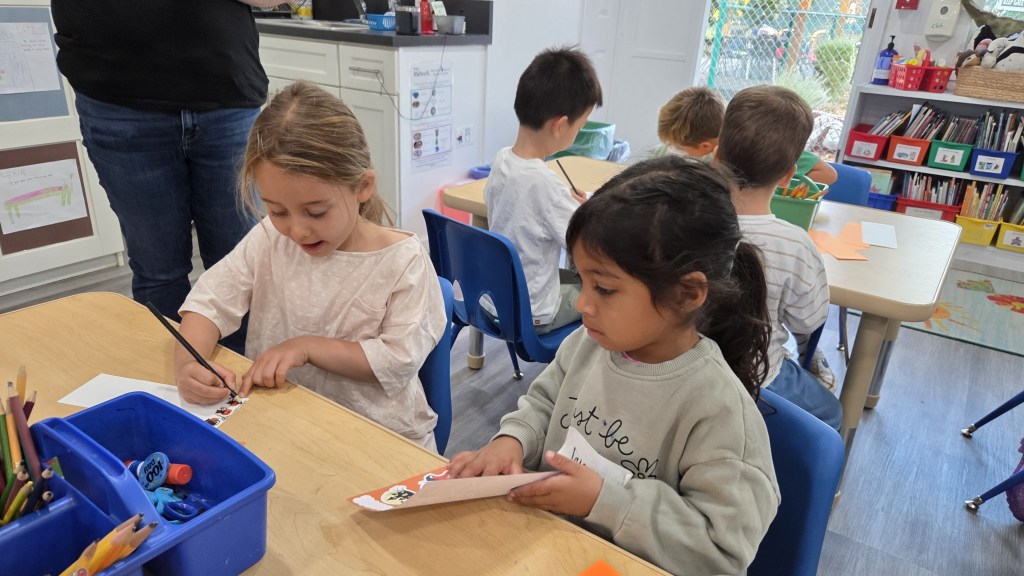
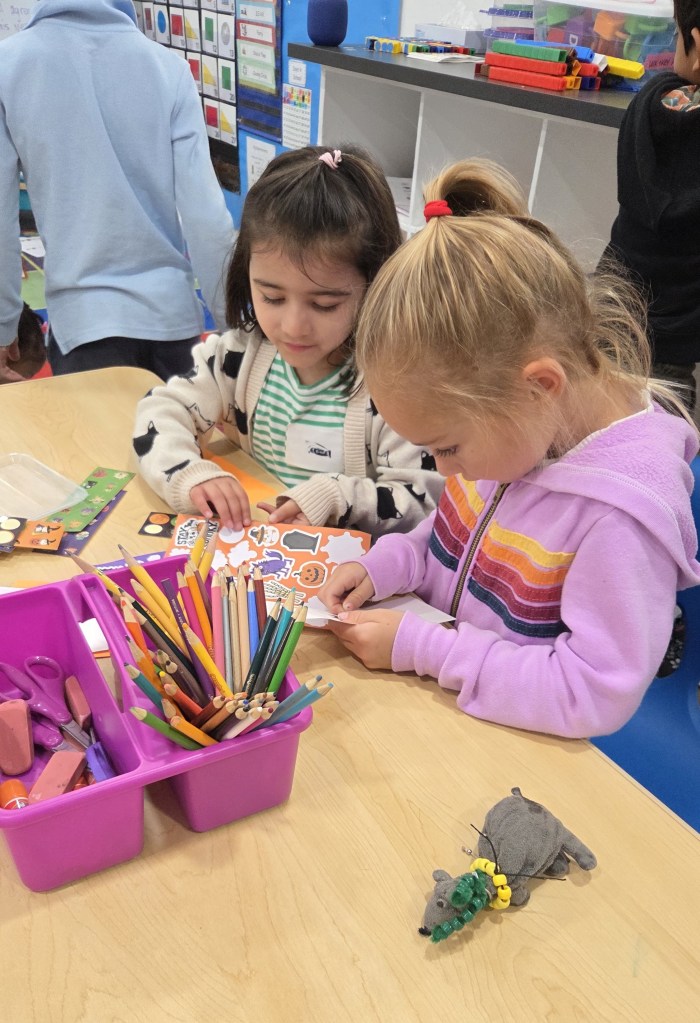
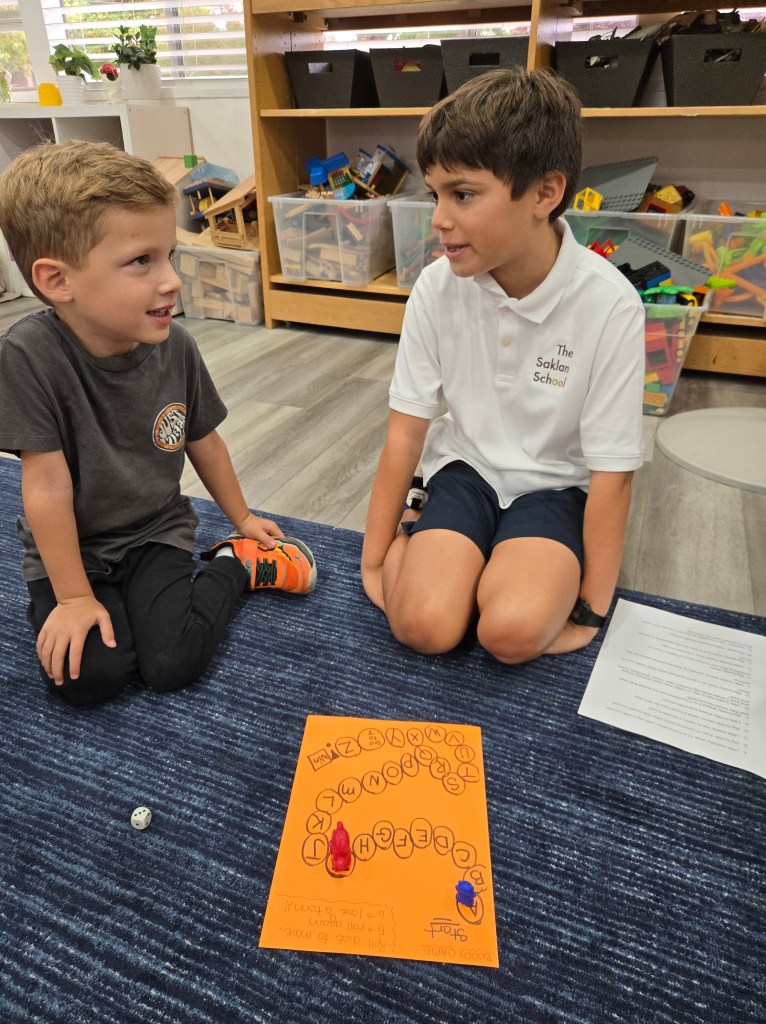
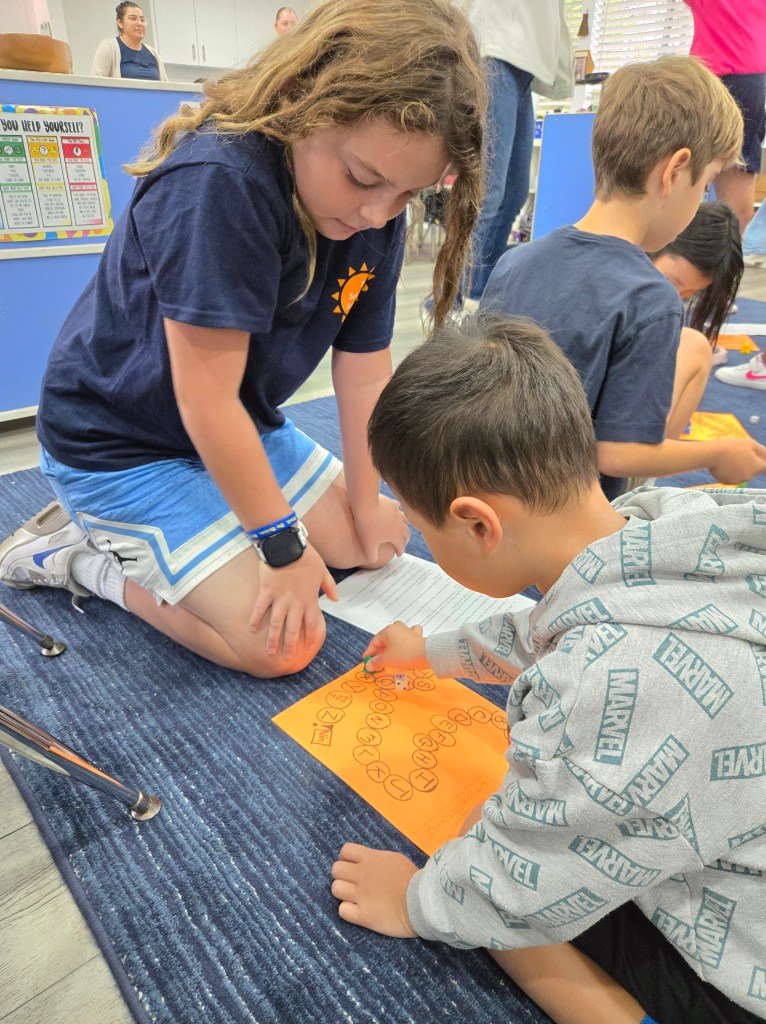
Once a month, our Pre-Kindergarten Hoot Owls head over to the Kindergarten classroom for a special tradition: Kinder Korner. These gatherings give Kindergarteners the chance to step into leadership roles as they guide the Hoot Owls through fun, educational activities in math, reading, or science. For our youngest learners, it’s an exciting introduction to Kindergarten, while also fostering meaningful connections between students and teachers across the two grades.

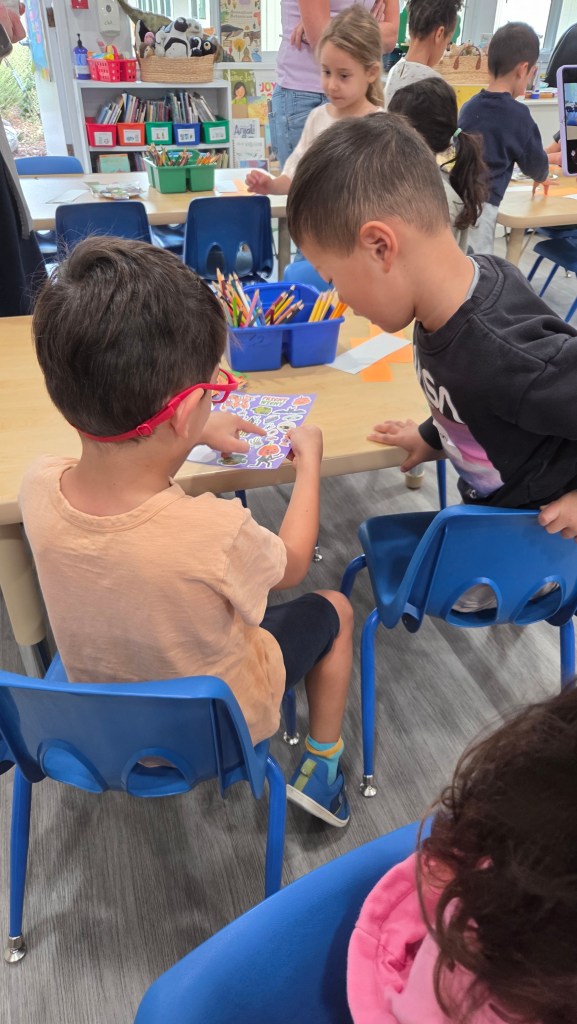
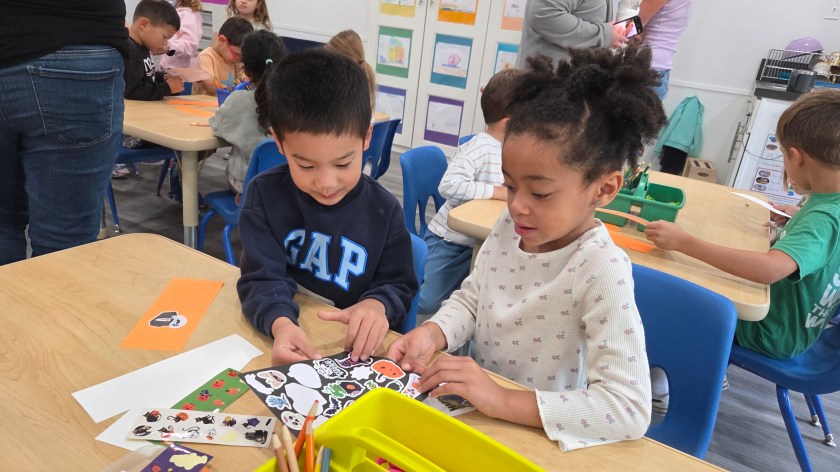
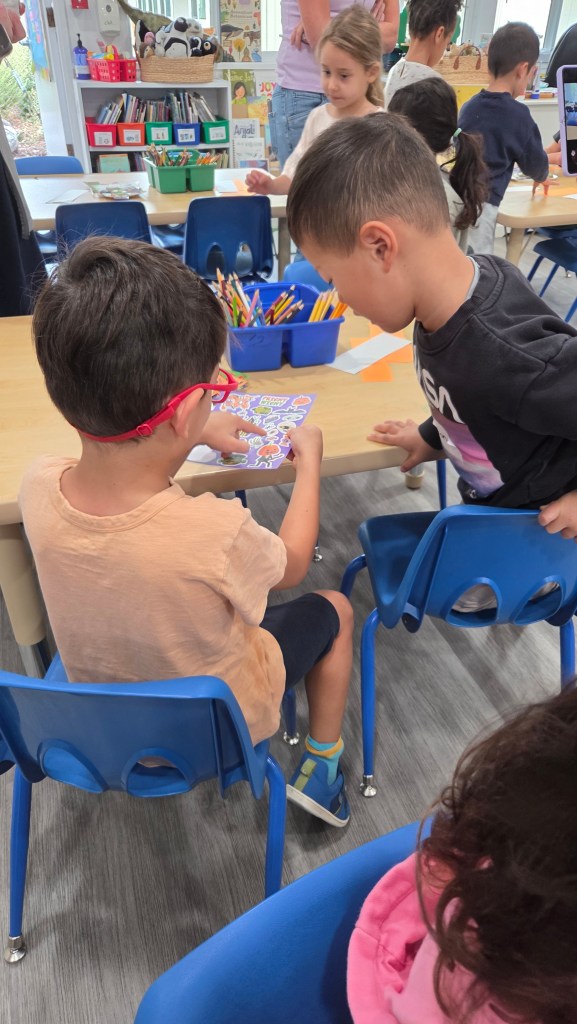
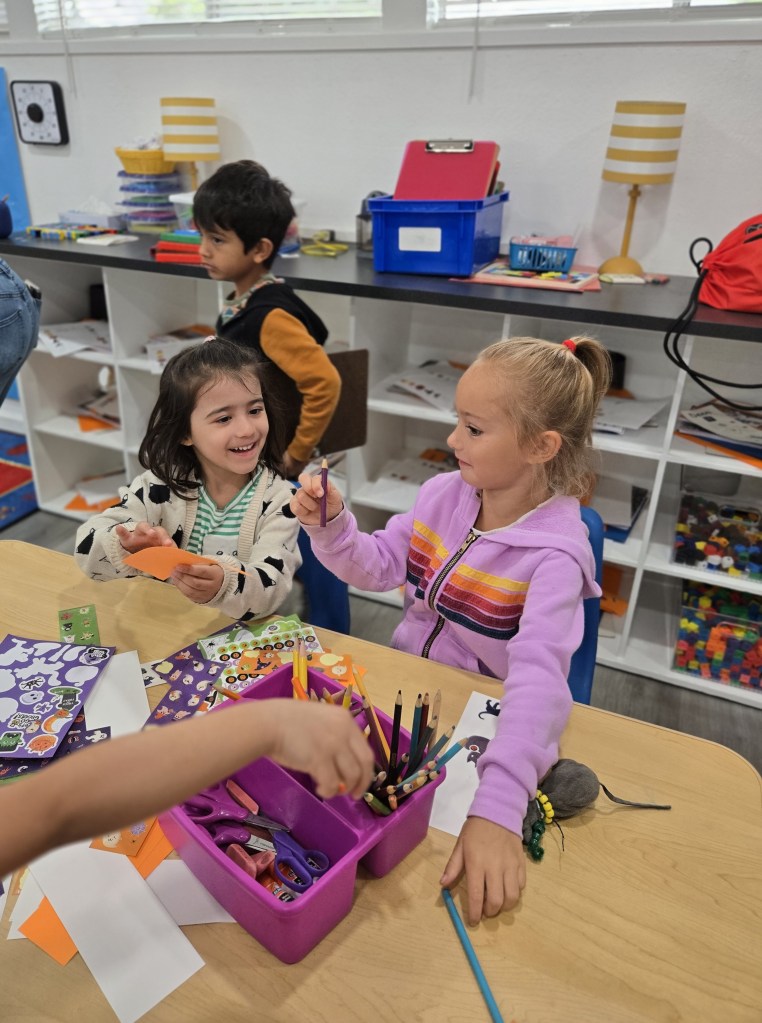
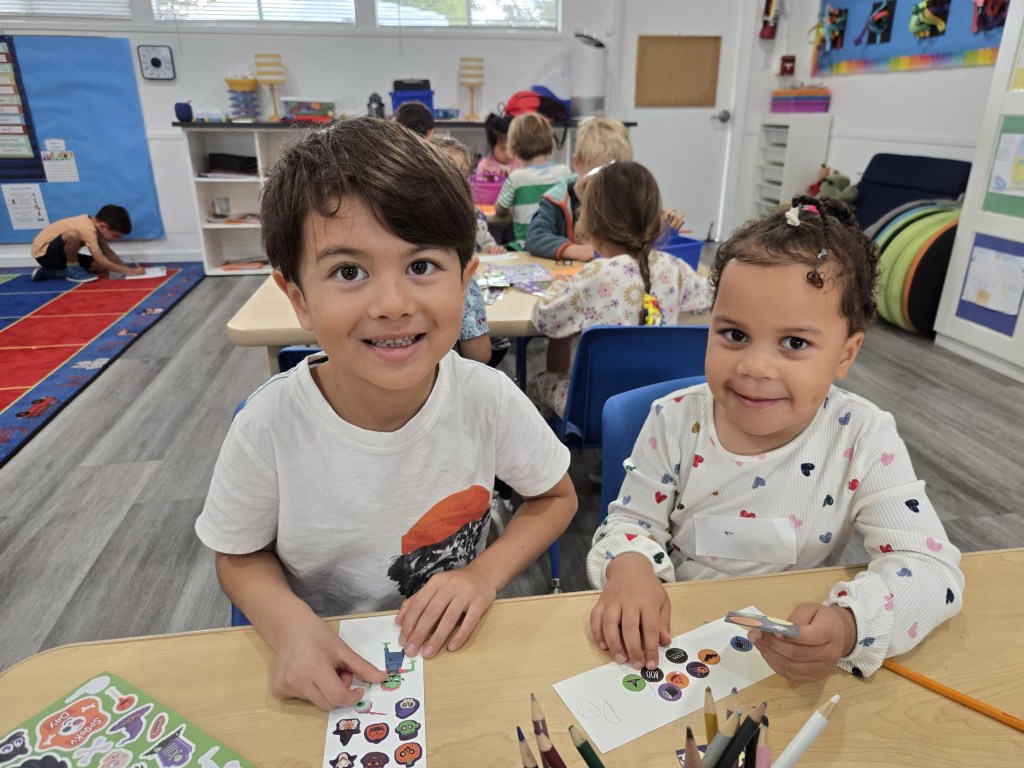
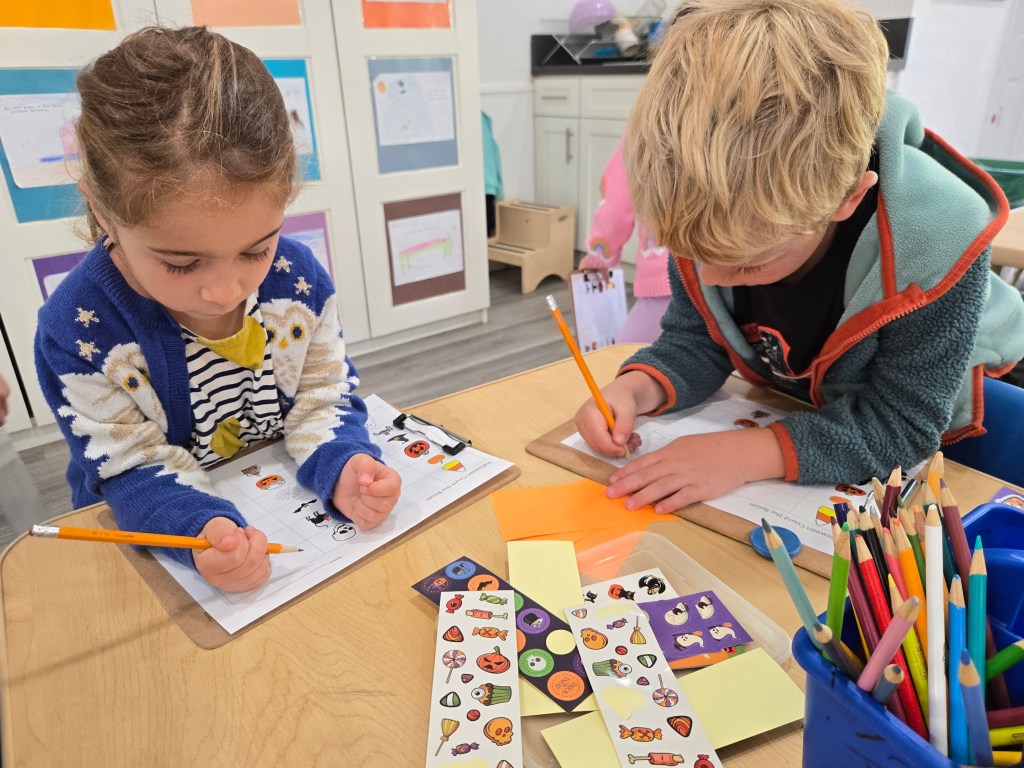
The first Kinder Korner of the year took place on Tuesday, and it was a wonderful success! Together, the Hoot Owls and Kindergarteners created colorful bookmarks and participated in a fun “count the room” activity. Smiles, laughter, and new friendships filled the classroom.

Both groups of students are already looking forward to their next Kinder Korner—and all the opportunities it brings to learn, lead, and grow together.

#SaklanCommunity

Learning Buddies Kick Off a Year of Connection and Growth

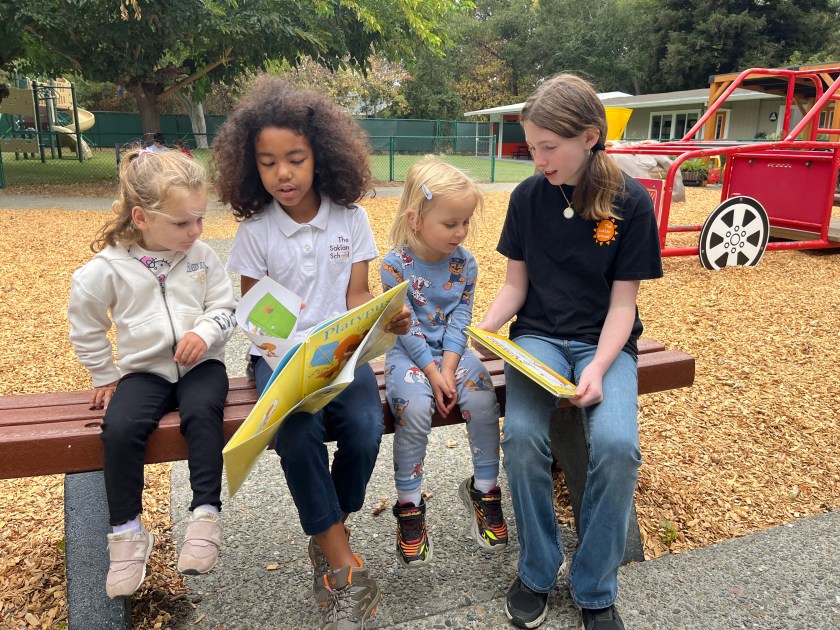
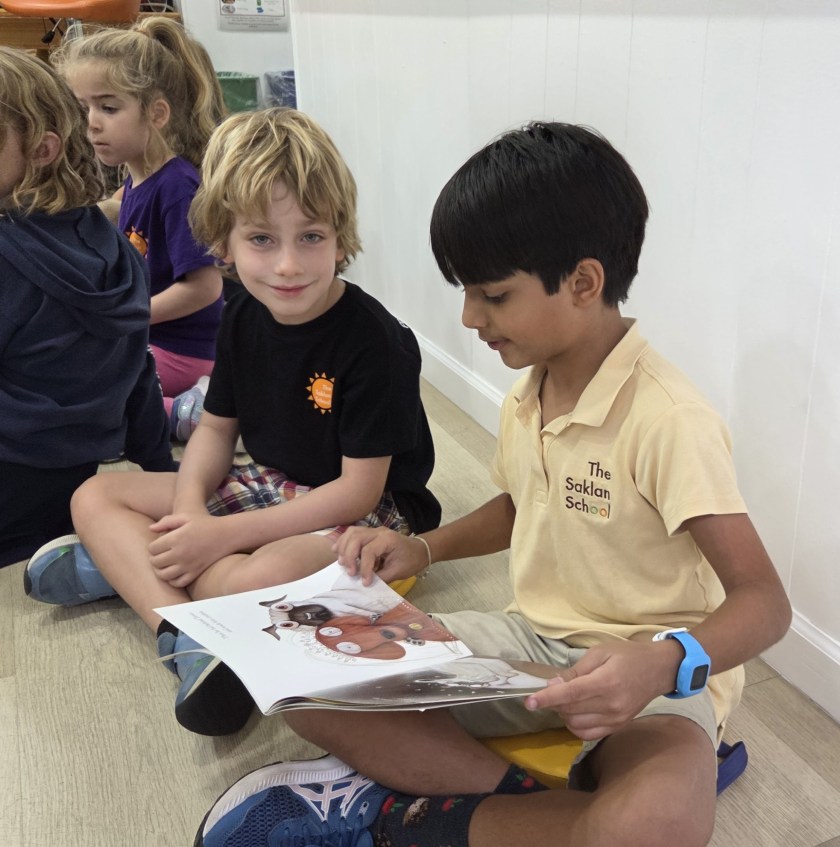
This morning, campus was buzzing with excitement as we launched our Learning Buddy program for the year! Designed to encourage cross-grade friendships, foster responsibility and mentorship, and make learning engaging and fun, Learning Buddies are a treasured Saklan tradition.

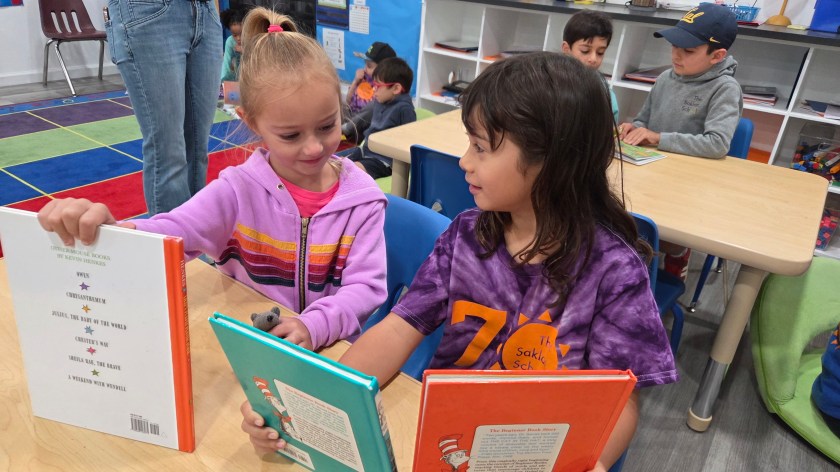
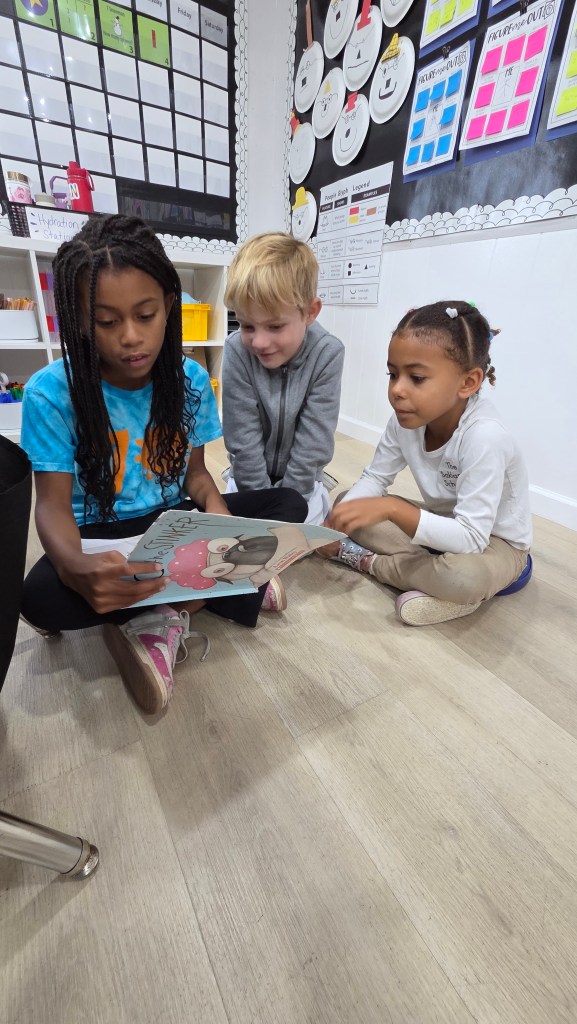
During their first meeting, buddies took time to get to know one another before diving into some shared reading. Older students modeled strong reading behaviors—using expression, fluency, and confidence—while also listening attentively as their younger buddies proudly read aloud.

The joy was evident on both sides: older students embraced their roles as mentors, while younger students felt supported, inspired, and eager to spend more time with their new friends. By the end of the morning, many were already asking the same question: When do we get to meet with our buddies again?

We look forward to seeing these relationships blossom throughout the year as students learn, grow, and shine together.

#SaklanCommunity

When to Speak Up, When to Let It Go

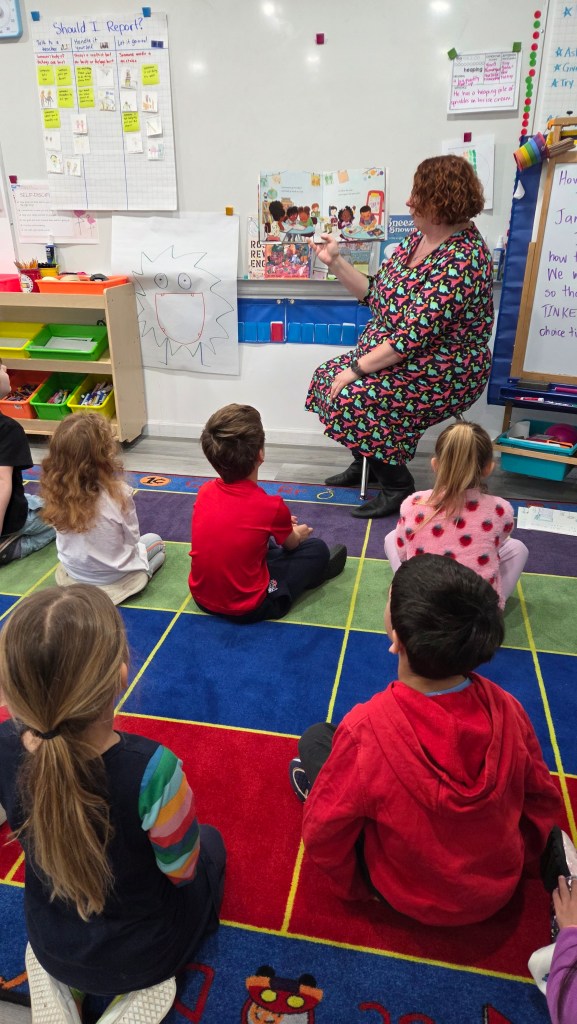
Over the past few weeks, the Kindergarten class has been engaging in thoughtful conversations and activities designed to help them understand an important social-emotional skill: knowing when to report a problem to a teacher and when it’s best to “let it go.”

The journey began with a classroom discussion about how the word “tattling” is often used to describe someone telling a teacher about a peer’s behavior. But terms like “tattletale” carry a negative tone, and at Saklan, teachers want students to feel safe and supported when seeking help. So, the kindergartners and Riva decided together to use the word “reporting” instead—a more neutral and empowering term that acknowledges that asking for help is never a bad thing.

However, the class also recognized that not all situations require adult intervention. Some students were beginning to feel like they were being “policed” by their classmates, prompting the need for clear guidelines around what situations are appropriate to report.

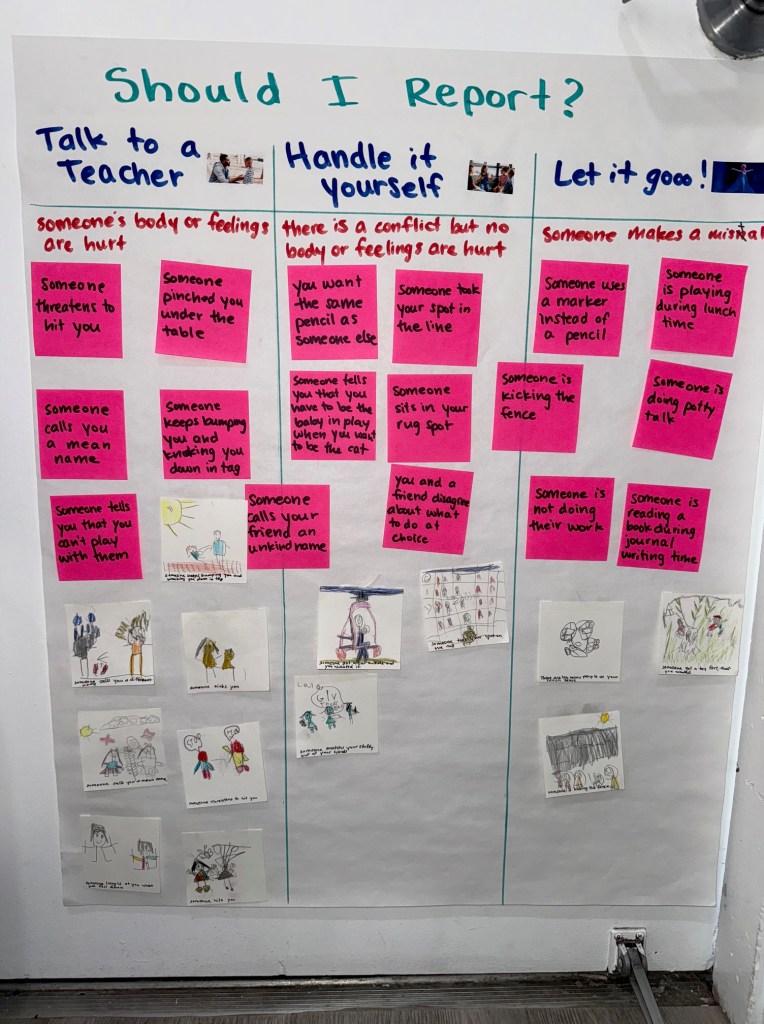
Together, the class created a simple, helpful framework:

  • If someone’s body or feelings are hurt, always report it to a teacher.
  • If there’s a conflict but no one is hurt, try to handle it on your own (and ask for help with conflict resolution if needed).
  • If someone is simply making a mistake, let it go.

Students practiced applying this framework by discussing different scenarios and categorizing them as “report it,” “handle it,” or “let it go.” The thoughtful conversations that followed showed how seriously kindergartners took their role in creating a safe and kind classroom community.

To make the guidelines even more accessible, especially for younger students and non-readers, students illustrated different examples to accompany the categories. These illustrations were compiled into a chart, now displayed in the classroom. If a student ever feels uncertain about whether they should report something, they can refer to the chart to help make the decision themselves.

This exercise not only supported the class in developing self-awareness and empathy but also reinforced problem-solving and communication skills that will serve them well beyond kindergarten.

#SocialEmotionalLearning

Inspiring Author Visit

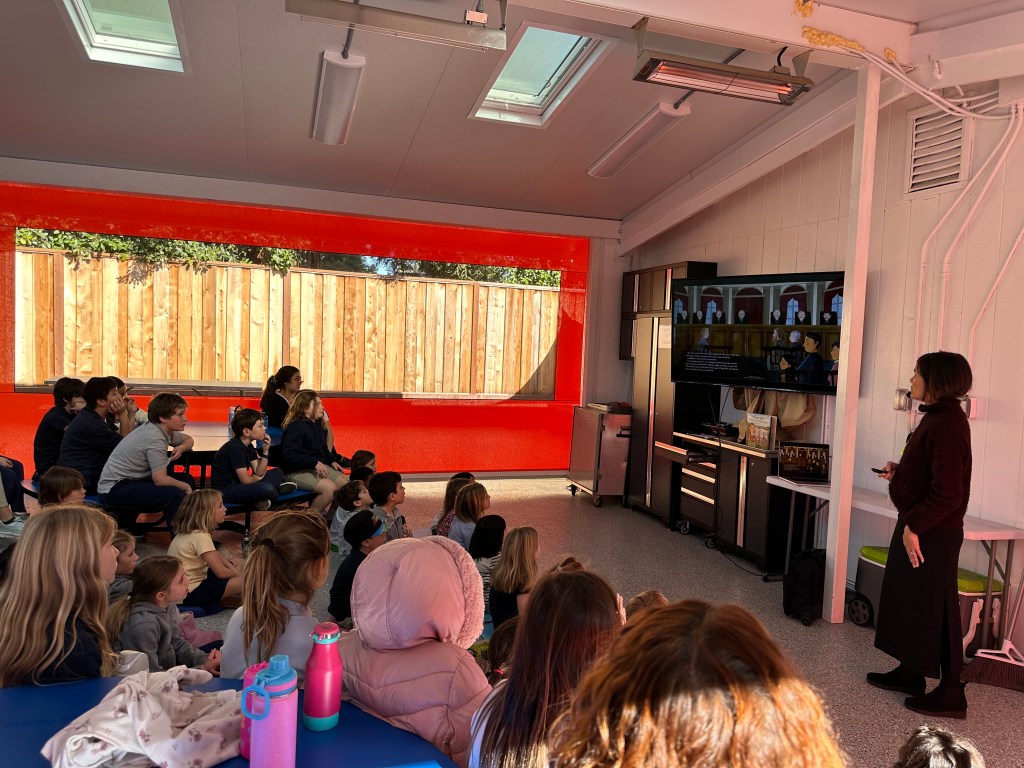
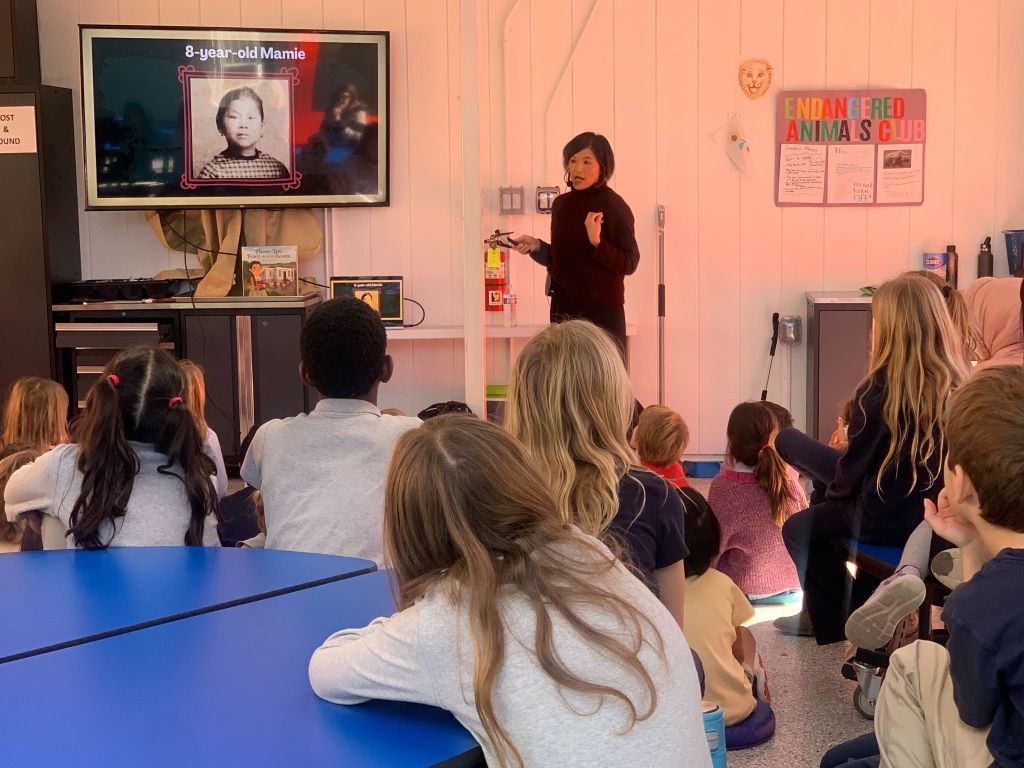
Our lower school students were recently thrilled to welcome author Traci Huahn to Saklan for an inspiring visit centered around her book, Mamie Tape Fights to Go to School. During the 45-minute session, students enjoyed a captivating read-aloud of the book, learned about the historical significance of Mamie Tape’s fight for school desegregation during the era of the Chinese Exclusion Act, and explored how this moment in history connects to the broader civil rights movement.

Ms. Huahn also shared her journey as an author, offering an inside look at the research, writing, revising, and publishing process. Students were delighted by a special video message from the book’s illustrator, Michelle Jing Chan, who revealed her creative process and behind-the-scenes details.

The visit sparked engaging discussions about bravery, standing up for your rights, and the power of storytelling. Students asked thoughtful questions during the Q&A, deepening their understanding of the themes and lessons in the book.

Collaborative Group Work

Collaborating to solve problems is a key element of PBL work at Saklan and a skill that many of us need to employ in our workplaces too. Intentionally building this skill is one of many ways that project work benefits Saklan students long after they leave our campus. Here are some ways we develop our skill of collaboration! 

To effectively collaborate, we must develop relationships that are grounded in trust, interdependence, and shared accountability. Rich learning experiences that develop the skill of effective collaboration do not happen by chance, but are instead, intentionally woven throughout our project design. Teachers use success skills rubrics alongside content-specific learning goals, directly teach and model collaboration, and create driving questions and topics that encourage students to share and showcase their stories, skills, and talents. 

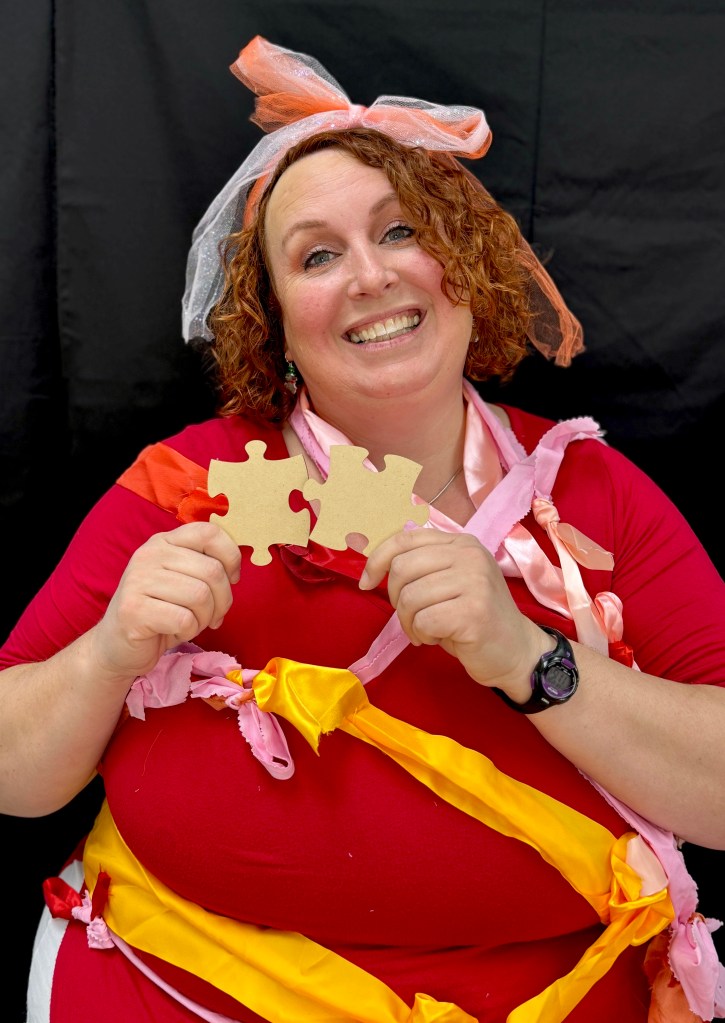
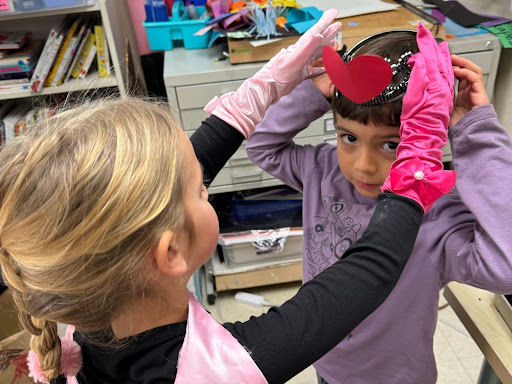
A recent student example can be found in Kindergarten’s PBL unit on names. During this unit students explored the driving question, “How can sharing about our names help us become better friends?” Throughout the unit milestones, students worked on their capacity to tell their own name stories, ask questions about each other’s names, and really listen to their peers. Name stories open endless opportunities to share about culture, language, and family histories. Throughout each stage of this unit, learning experiences were designed to not only meet academic learning goals but also foster students’ trusting relationships and their sense of interdependence. Whether it was helping design a name story costume for self-portraits in art class, sharing their favorite part of their name stories with each other, or telling our families about each other’s names, the fruits of intentionally collaborative project design were on full display in this unit. Our Kindergarteners undoubtedly grew their capacity for collaboration.

At Saklan it isn’t just the students working to deepen their collaboration and sense of interdependence. The teachers at Saklan are also actively improving our practice.

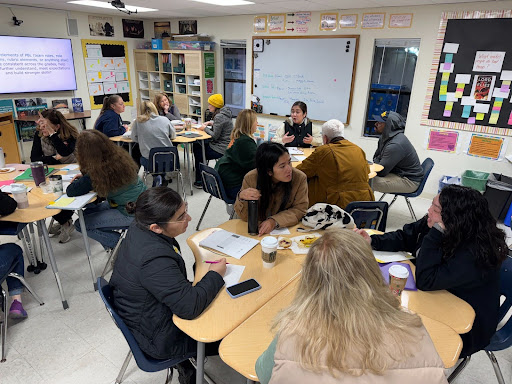
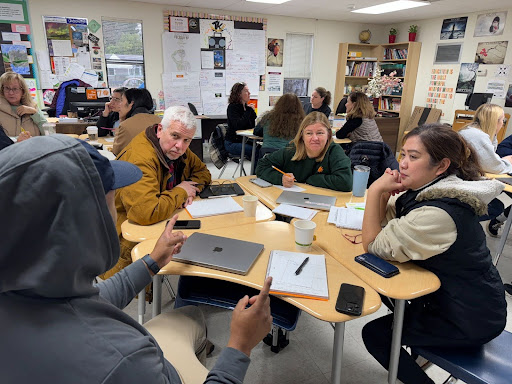
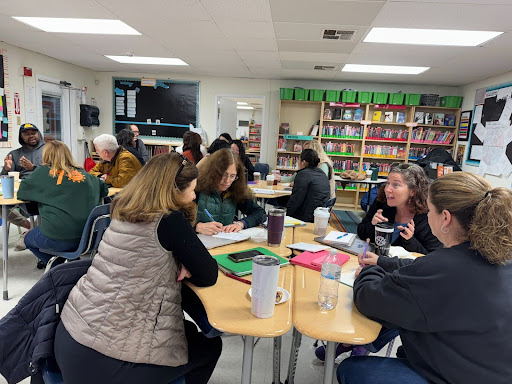
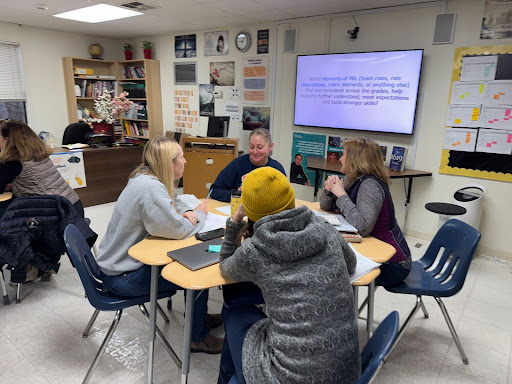
One way we are doing this as faculty is through our Professional Learning Community. A Professional Learning Community (PLC) is a way for our staff to share and grow in our capacity for project based learning with a pervasive, ongoing impact on the structure, style, and culture of PBL at Saklan. Instead of a series of stand-alone meetings, a PLC is intended to be an ongoing process in which educators work collaboratively in recurring cycles of collective inquiry and action research to achieve better results for Saklan students. 
At our most recent session on the January 6th PD day, there were two elements to our PLC work. Each teacher met as part of their year-long small group focused on one particular area of interest: using rubrics, managing team tasks, sustaining inquiry, and differentiation. Before these breakout sessions, the whole group worked on deepening our understanding of Universal Design for Learning (UDL) and discussed how we can increase our alignment of collaborative work expectations across grade levels and divisions. It was a lively discussion and we are excited to implement our learning from the research we’ve discussed AND from each other.

#SaklanCollaboration #SaklanLifeLongLearners

Name Stories

In their Names Project, kindergartners have been sharing and learning about each other’s names to build community and deepen friendships. The students have learned and shared the letters in their names, compared the number of letters, and found similarities and differences with friends’ names. The class has read a variety of mentor texts that highlight the unique characteristics of characters’ names. The kindergartners learned about interviewing and listening to plan for and interview their parents about their name stories. The class will bring all this together in a book about their name stories.

To prepare to write their own book, Saklan Kindergarteners were delighted to host guest expert and children’s book author Matt Hintze on Wednesday, November 13th. Matt read his newest book, Santa Stole My Cookies, to the class. They loved it! 

After the reading came the most important part of the expert visit: the class interviewed Matt about writing and publishing books. The kindergartners planned for the visit the day before by coming up with questions they wanted to know about making books, which might be useful when creating their name books.

Matt was so impressed by the students’ smart, thoughtful questions, and the kindergartners were very happy with the helpful information Matt provided.

The kindergartners will share their name books and other aspects of their learning during their Names Project Culmination on Thursday, December 12th at 8:45 a.m. They would love for you to attend their culmination!

#SaklanProjectWork