Communicating Through Color

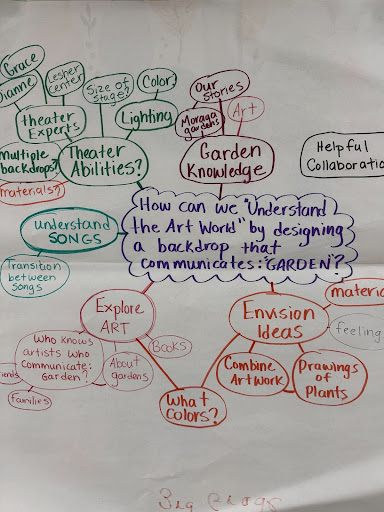
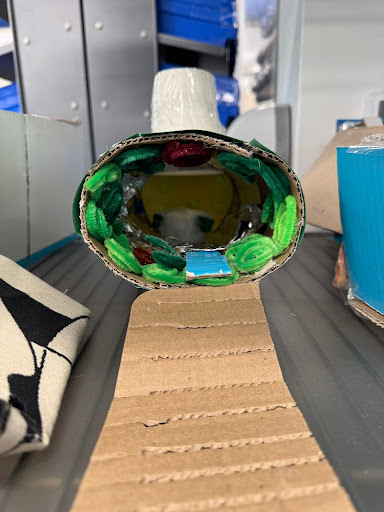
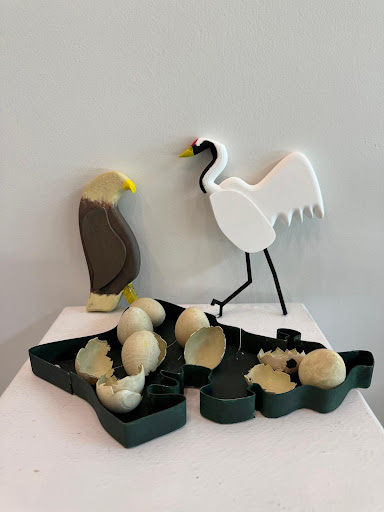
One of the most special elements of Saklan Project-Based Learning is the ways in which annual units take on different elements each year. For the last three years 2nd and 3rd grade students have designed the backdrop for our spring concert at the Lesher Center as part of a PBL unit on color and communication. This unit centers on the driving question: How can we understand the art world to design a backdrop that communicates “garden?”

This year there has been an intentional focus on one particular Studio Habit of Mind: Understanding the Art World. This studio habit, one of eight developed by the researchers at Project Zero, focuses on the study of art history and contemporary practices to learn how to act as an artist in collaboration with other artists in broader society.

The unit began with students sharing their own experiences of gardens. This process activated their prior knowledge and began to elicit ideas, feelings, and questions connected to the concert theme. Next, they completed a whole class brainstorm of ideas, colors, experiences, feelings, and connections to the driving question. This work helped guide the decisions about which artists students would focus their learning on as they worked toward the design and creation of the concert backdrop.

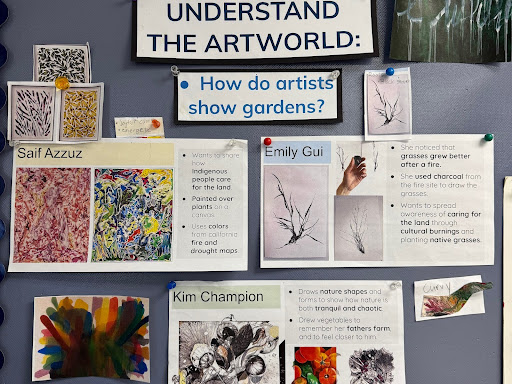
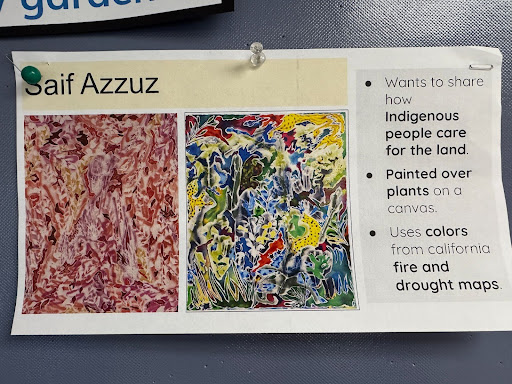
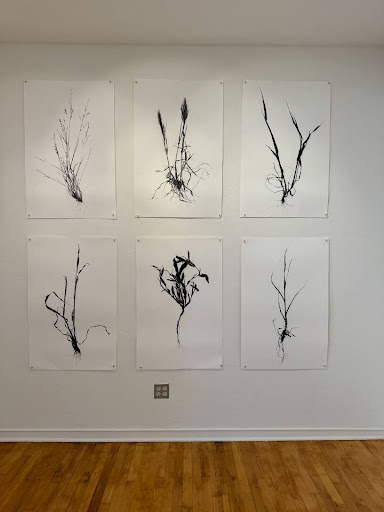
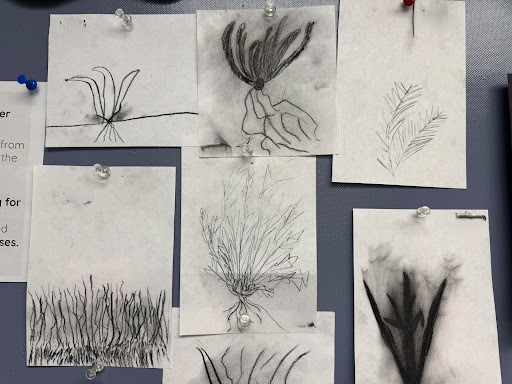
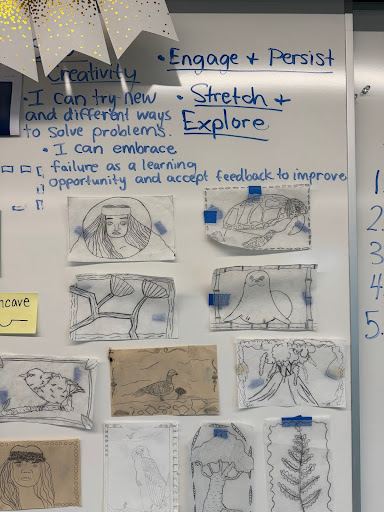
The unit then moved on to explore artists whose work focuses on gardens, nature, and tending to the environment. Made with charcoal scavenged from the scorched earth after a wildfire, Emily Gui’s drawings of wild grasses that emerged after the fire, connected to the 3rd graders’ research on native plants earlier this year. It was also a jumping off point to help expand the students’ definition of what a garden may mean to different peoples. They compared drought maps to the work of Saif Azzuz, which often focuses on the importance of tending the California landscape through the Indigenous wisdom of cultural burns and the varied medicinal uses of native plants, as seen in his recent installation at Stanford Research Park. Finally, students considered the impact of color, and what happens to our interpretation of artworks when color is removed using works by Kim Champion. It struck students that when the color was removed from her art, often much of the meaning was lost and the figures became harder to identify.

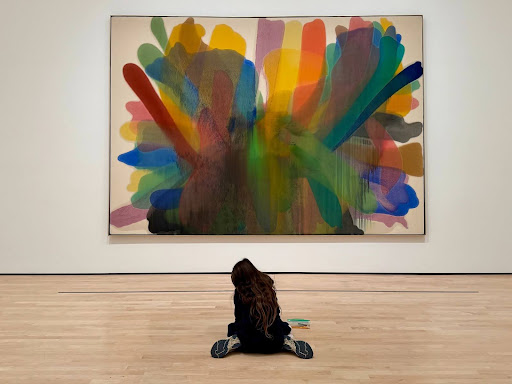
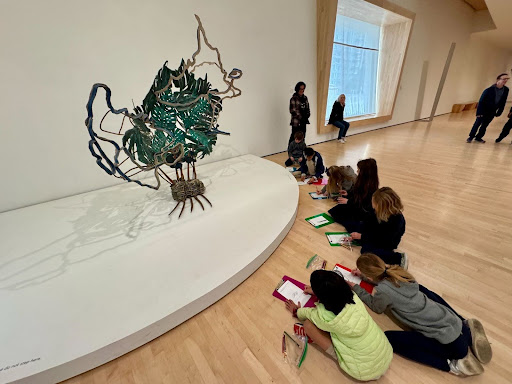
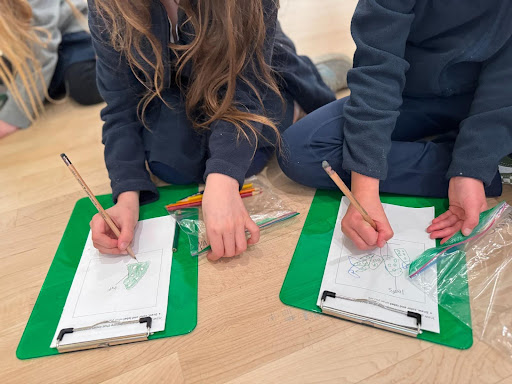
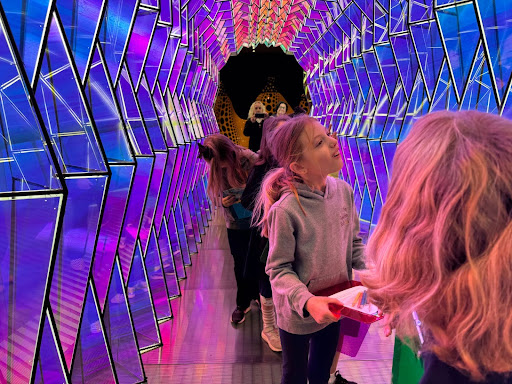
Visiting SFMOMA as part of this PBL unit was a highlight for our second graders. This opportunity to engage with large works in a museum space gave students a chance to observe a variety of ways artists convey the theme of garden. They explored many different types of works and interpretations of our theme.

After exploring different artists’ interpretations of garden, students reflected on the feelings and connections to the theme that they wanted to express through their backdrop art. Three distinct groups emerged. One group most associated gardens with the feelings of excitement and joy, another with a sense of awe for life, and a third associated gardens with calm. Each feeling group identified colors to communicate those feelings using their growing understanding of the art world. 

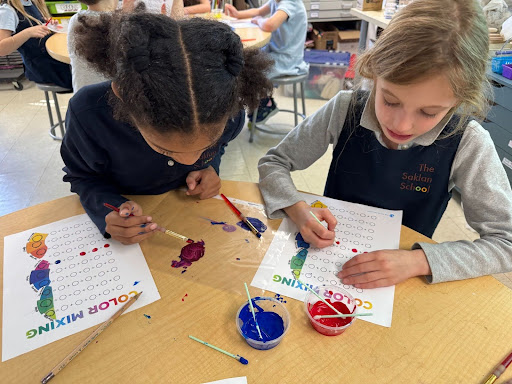
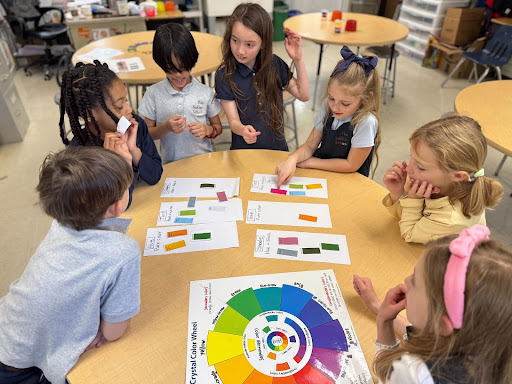
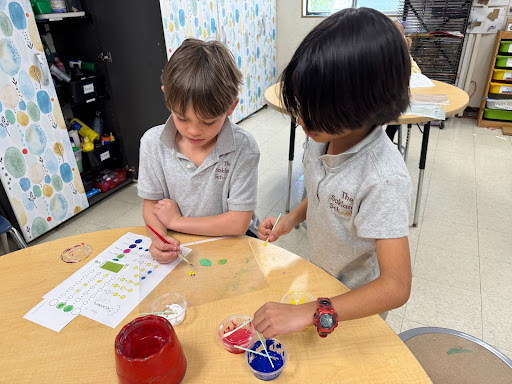
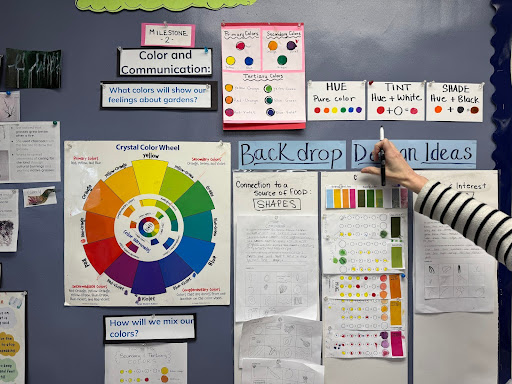
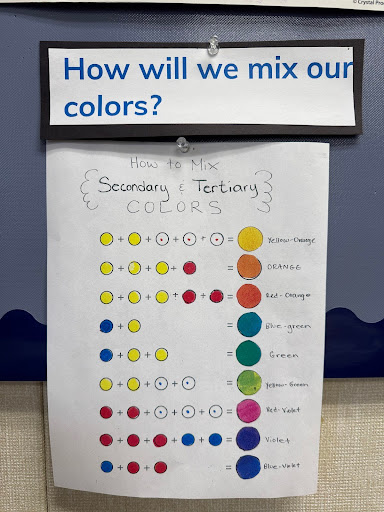
Knowing how colors impact each other when side by side and gaining an understanding of the need for balance between colors were the next key elements to successful communication through color that students began to explore. Color mixing recipes were iterated on to figure out how to mix just the right tint, shade, or hue of the desired colors.

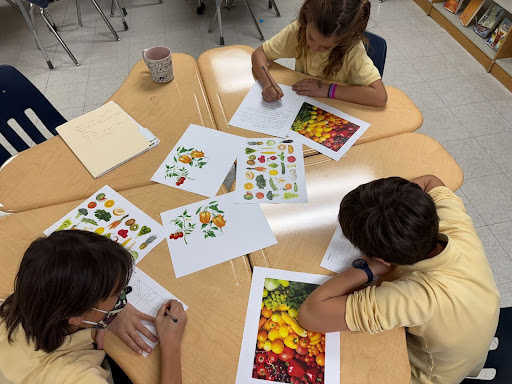
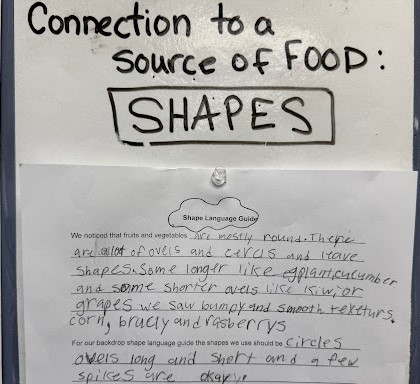
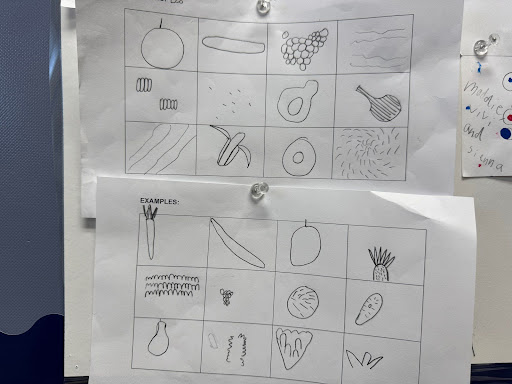
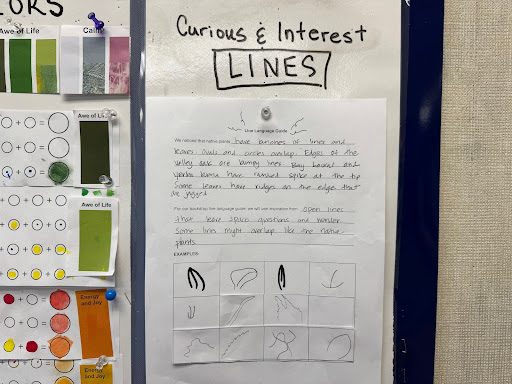
Additionally two small groups considered the ways line and shape can help us communicate our theme. One group felt a sense of curiosity when considering the theme of “garden” and worked to create a line language for our backdrop. Another considered the connection between the theme of “garden” and fruits and vegetables. 

At the concert, look for the line and shape language they developed among the beautiful colors the students have so carefully selected and balanced. You may spot many ovals, circles, and textures that mimic overlapping yerba buena leaves, curved lines like the edges of a valley oak leaf and its branches, or the texture of corn on the cob.

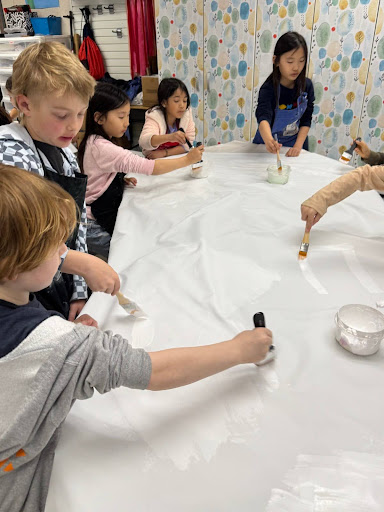
The students are now preparing the backdrop canvases by applying a base coat and will begin painting their version of “garden” very soon. We are excited to unveil the finished product at the All-School Concert on Friday, March 21st. See you there!

#SaklanPBL #SaklanCreative

Learning in the Field: O’ahu Edition

Field trip? Field experience? These terms may feel synonymous; however, at Saklan we draw an important distinction between a field trip and a field experience. Instead of trips that may loosely connect in terms of content, a field experience takes students into the field to work directly with experts, answer key need-to-know questions, and drive our project work forward. 

One example of connecting with experts in the field is the 7th grade field experience to the island of O’ahu. The driving question for this science PBL unit is, “What can we do to help reduce the single use plastics in our area?” 

Prior to arriving on the island, students watched the Mockumentary: Majestic Plastic Bag and looked at photos of different animals impacted by plastic waste including sea turtles and albatrosses. They also saw direct evidence of animals ingesting plastic waste via the dissection of an albatross bolus, in which they found: a lighter, fishing lures, fishing line, bottle caps, toy parts, plastic flatware, and many small plastic fragments. They came to the realization that, if there is trash in the ocean, animals will ingest it. 

Still, for students, an albatross and their food sources can feel removed from our local environment and experiences. They wondered what type of waste is in our local environment. Students went “foraging” for “food” around Saklan and found many waste and plastic items that animals could ingest. It became clear that, despite our best efforts, waste still finds its way into our local ecosystem and therefore ends up in our waterways, and ultimately oceans and ocean animals. 

So how can we reduce the plastic waste that impacts our environment? The field experience to O’ahu helps students better understand the impacts of pollution on ocean life, connect with Hawaiian organizations already working to reduce waste, and learn about sustainable alternatives that already exist, as they prepare to answer the driving question by developing their own single-use plastic alternative. 

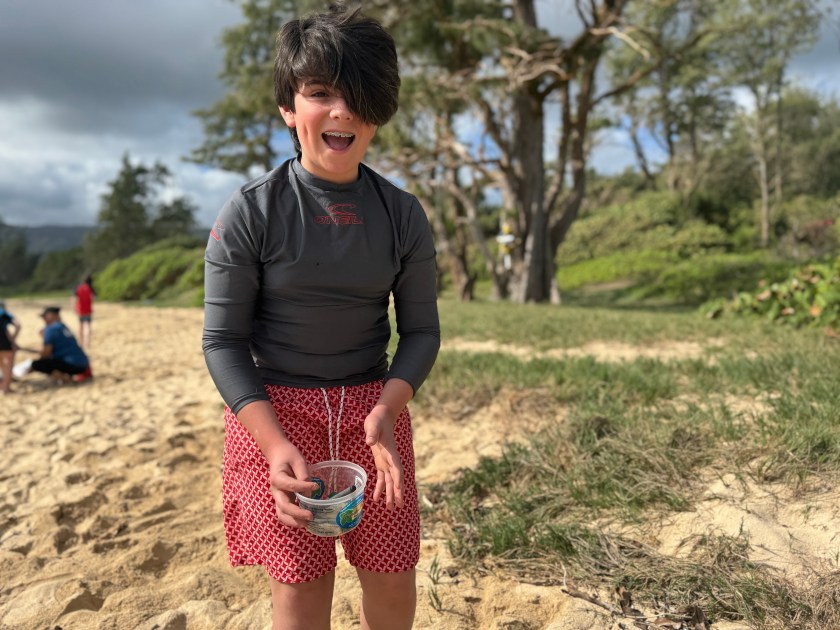
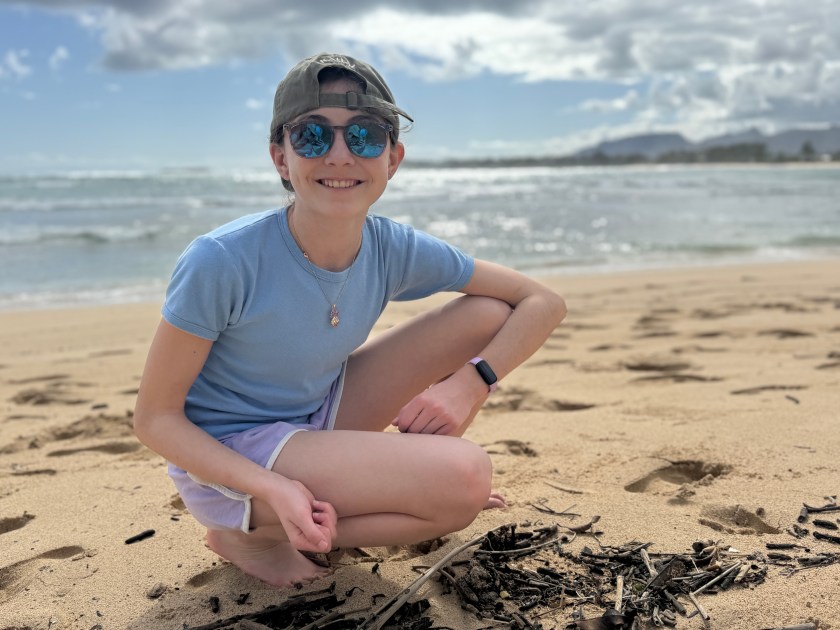
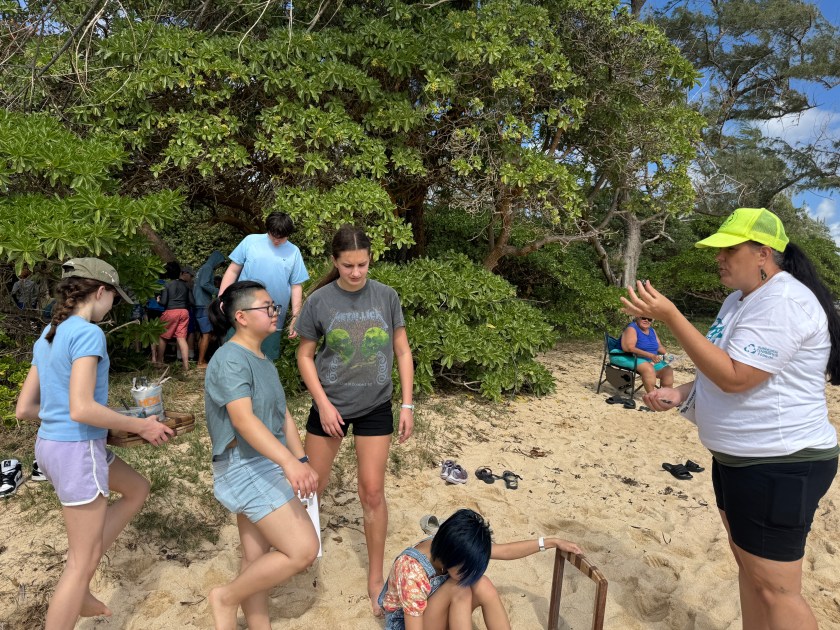
Students met Rebecca, Hideki, and Lynn from Sustainable Coastlines Hawaii, a local nonprofit organization that runs beach clean-ups, partners with schools, and educates the community at local events. Together they had the opportunity to mālama, care for, the ocean by completing a beach clean-up at the Mālaekahana Beach. Using a sieve-like tool, students removed 30 pounds of waste! Much of it could be classified as “micro-plastics,” or plastics that are less than 5mm in size. While students did find a large blue plastic jug on the sand, most of what they collected were super tiny bits of blue plastic, evidence of many different large blue plastic jugs that have broken down over time. Another surprise was the tiny white disks called nurdles, which are pre-production microplastics that are super tricky to recover from accidental spills into the ocean. The class was reminded that choices on land impact the oceans and that beach clean-ups can only take us so far! The staff from Sustainable Coastlines provided some great inspiration and ideas for alternatives to these plastics that are washing up on Hawaiian shores each day.

Sustainable Coastlines was just the beginning, while on O’ahu, students also connected with experts at Hanauma Bay Nature Preserve and Project Genki Ala Wai where they made and deployed Genki balls in the Ala Wai Canal to restore its ecosystem making it safer for both people and animals. 

The 7th graders will take these many rich learning experiences in the field back to the classroom to help them answer their driving question and refocus on sustainable alternatives to single-use plastics in our local environment. 

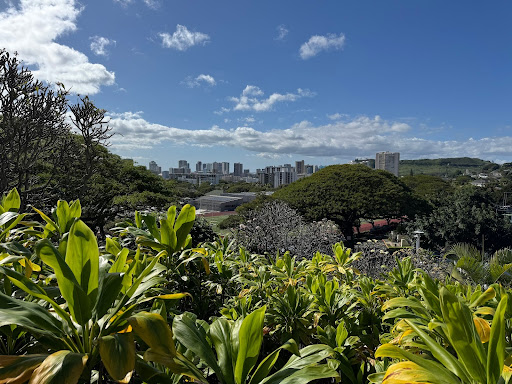
As always, the students aren’t the only ones gaining inspiration and connections to drive their work forward! While on the island, Linda Lathrop visited Punahou School to learn about how they approach projects and design thinking. From the integration of native Hawaiian language, music, food, and dance to design projects in their STEM labs and art rooms, it is always enriching to connect with other teachers to hear about their practices. Just like our 7th graders are out in the field grappling with the content of their project, our staff enjoyed the opportunity to discuss project hurdles and successes from another school site. Opportunities like these to connect with different schools give us new ideas and potential solutions to our own project hurdles! It is also exciting to see practices we have in common too! Can you spot any in the photos below?

We look forward to hearing more about all this rich teacher and student learning when the students and teachers return to campus next week!

#SaklanPBL

Collaborative Group Work

Collaborating to solve problems is a key element of PBL work at Saklan and a skill that many of us need to employ in our workplaces too. Intentionally building this skill is one of many ways that project work benefits Saklan students long after they leave our campus. Here are some ways we develop our skill of collaboration! 

To effectively collaborate, we must develop relationships that are grounded in trust, interdependence, and shared accountability. Rich learning experiences that develop the skill of effective collaboration do not happen by chance, but are instead, intentionally woven throughout our project design. Teachers use success skills rubrics alongside content-specific learning goals, directly teach and model collaboration, and create driving questions and topics that encourage students to share and showcase their stories, skills, and talents. 

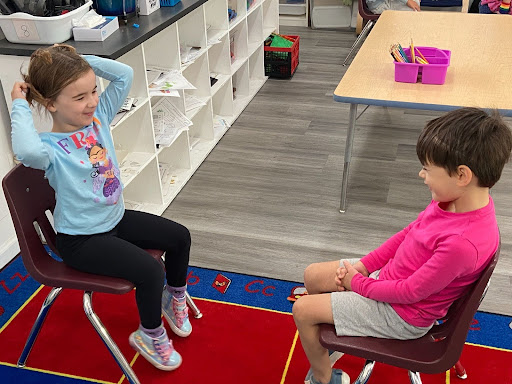
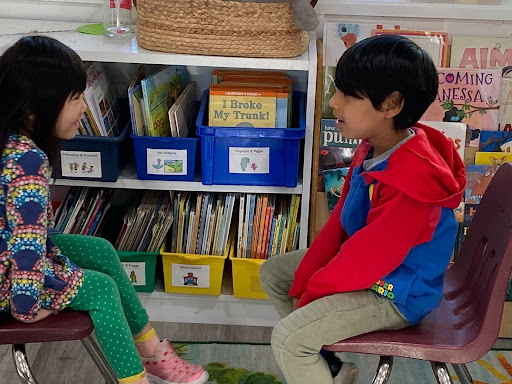
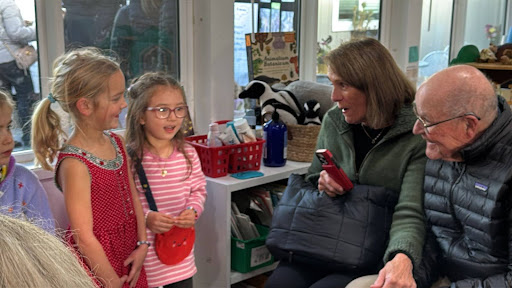
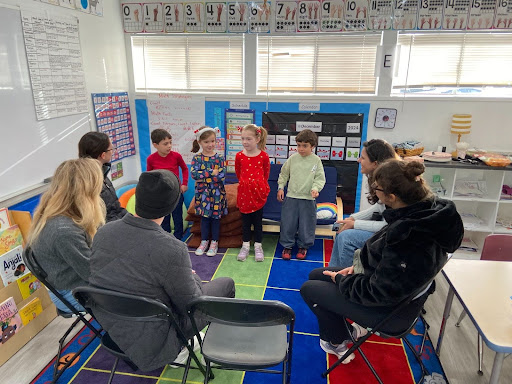
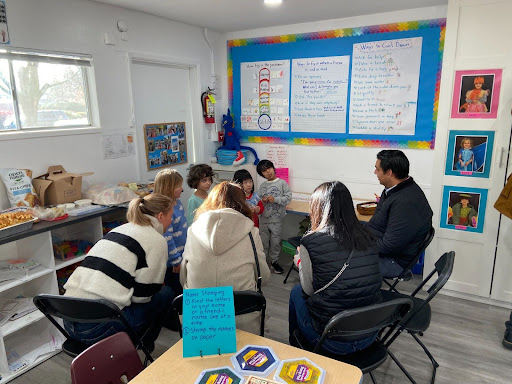
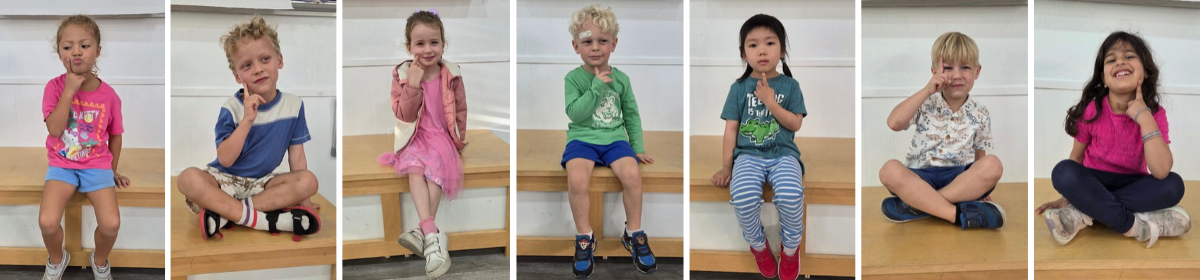
A recent student example can be found in Kindergarten’s PBL unit on names. During this unit students explored the driving question, “How can sharing about our names help us become better friends?” Throughout the unit milestones, students worked on their capacity to tell their own name stories, ask questions about each other’s names, and really listen to their peers. Name stories open endless opportunities to share about culture, language, and family histories. Throughout each stage of this unit, learning experiences were designed to not only meet academic learning goals but also foster students’ trusting relationships and their sense of interdependence. Whether it was helping design a name story costume for self-portraits in art class, sharing their favorite part of their name stories with each other, or telling our families about each other’s names, the fruits of intentionally collaborative project design were on full display in this unit. Our Kindergarteners undoubtedly grew their capacity for collaboration.

At Saklan it isn’t just the students working to deepen their collaboration and sense of interdependence. The teachers at Saklan are also actively improving our practice.

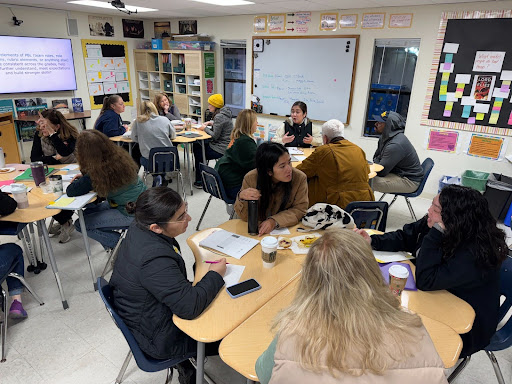
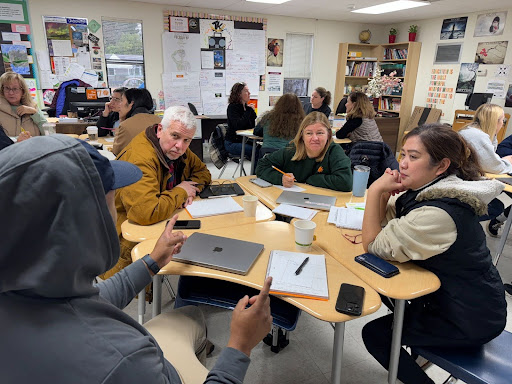
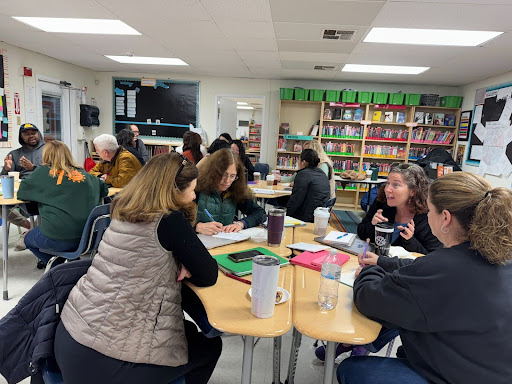
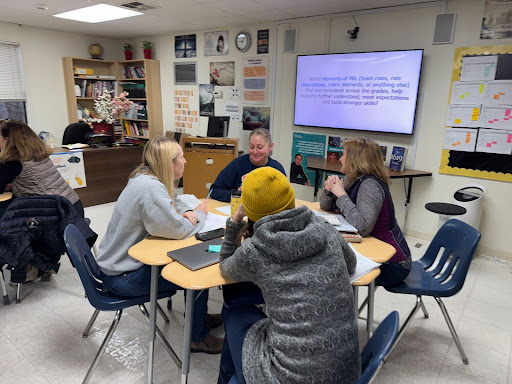
One way we are doing this as faculty is through our Professional Learning Community. A Professional Learning Community (PLC) is a way for our staff to share and grow in our capacity for project based learning with a pervasive, ongoing impact on the structure, style, and culture of PBL at Saklan. Instead of a series of stand-alone meetings, a PLC is intended to be an ongoing process in which educators work collaboratively in recurring cycles of collective inquiry and action research to achieve better results for Saklan students. 
At our most recent session on the January 6th PD day, there were two elements to our PLC work. Each teacher met as part of their year-long small group focused on one particular area of interest: using rubrics, managing team tasks, sustaining inquiry, and differentiation. Before these breakout sessions, the whole group worked on deepening our understanding of Universal Design for Learning (UDL) and discussed how we can increase our alignment of collaborative work expectations across grade levels and divisions. It was a lively discussion and we are excited to implement our learning from the research we’ve discussed AND from each other.
#SaklanCollaboration #SaklanLifeLongLearners

Head’s Corner: Power of Agency

Agency- Latin agentia “ability,” and ag(ere) “to do, drive”

Over the Winter Break, I received several emails from parents sharing with me a New York Times opinion piece they felt described Saklan perfectly. The article “Giving Kids Some Autonomy Has Surprising Results” should not be a surprise to anyone familiar with our work at Saklan.
“Agency” is a core value at Saklan. Students having “voice and choice” in their learning is a central tenet of Project Based Learning and our approach to SEL. Student agency honors students’ experiences and curiosities while giving them a locus of control over their lives. In short, it creates “buy-in” to learning. 

According to surveys by the Brooking Institution, very few students feel they have control over what they are learning. “The more time they spend in school, the less they feel like the author of their own lives, so why even try.”

In a majority of classrooms today, teachers introduce a topic and share with students what they will be learning. They have their standards to check off and material to cover. Just looking at those two sentences feels dispiriting.

Why not introduce a topic, ask students what they know about the topic (they know so much more than we often realize), and ask them what they want to investigate next? There are subtle differences between these two approaches, but student engagement is markedly different in the one that gives agency.

Giving agency raises academic standards by requiring students to invest in their own learning, reflect on their progress, and course-correct. If that sounds familiar, it is what we do as adults in our working lives. 

Agency creates a love of learning and a love in learning- and as if that is not enough to convince society that this is the right approach to education then a look at our standardized testing data should convince the doubters. 

Portraits of Kindergarten

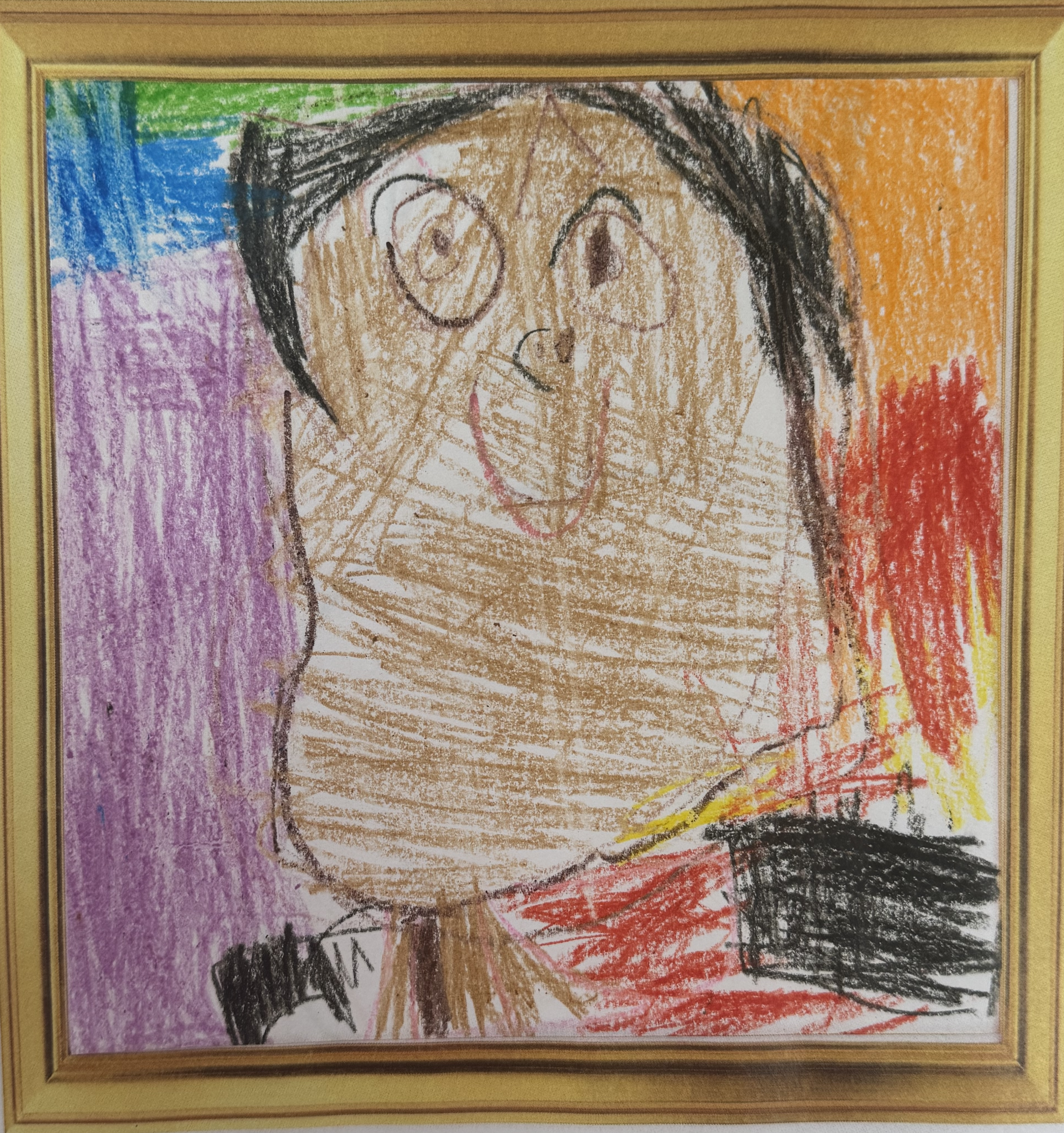
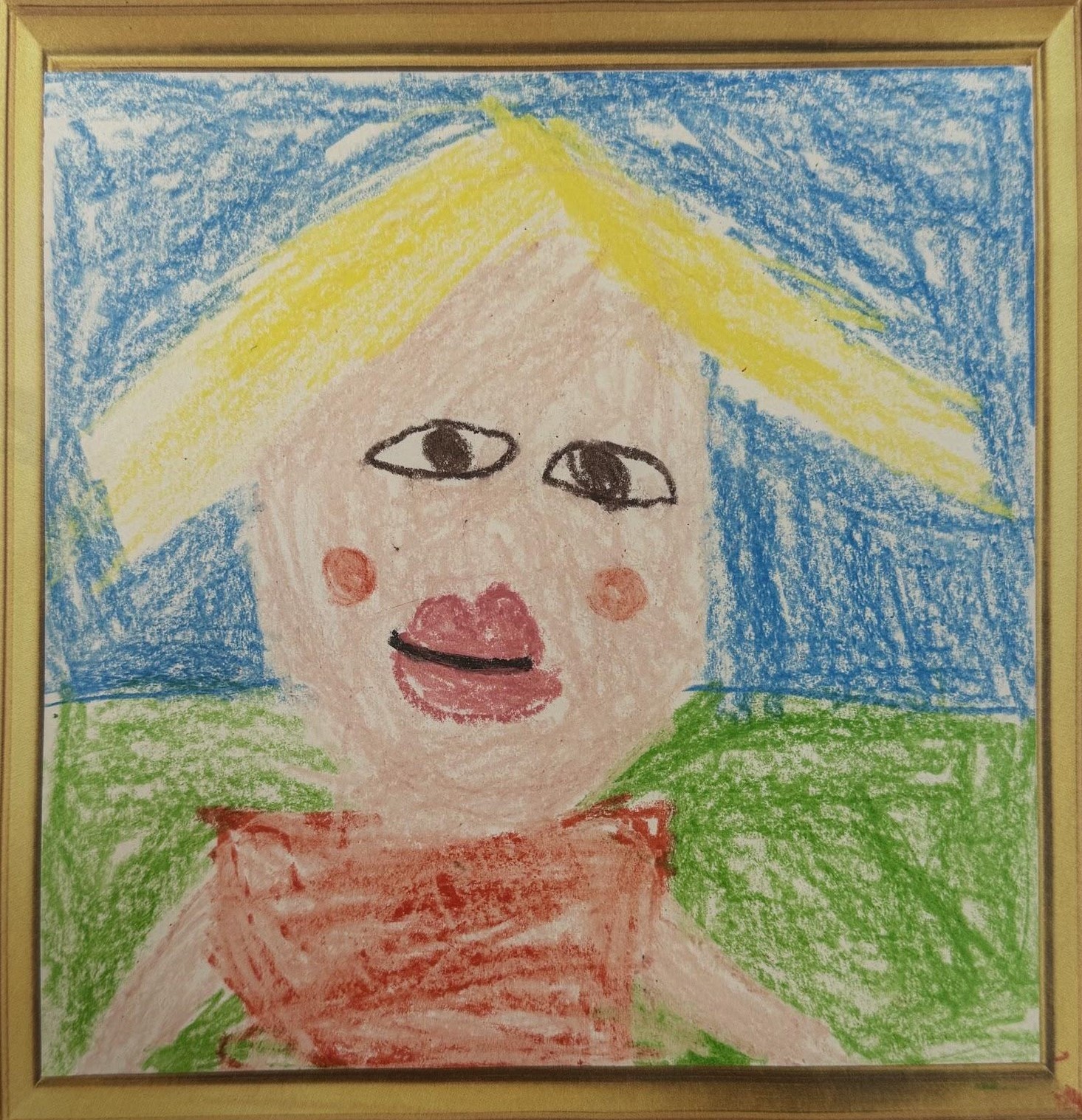
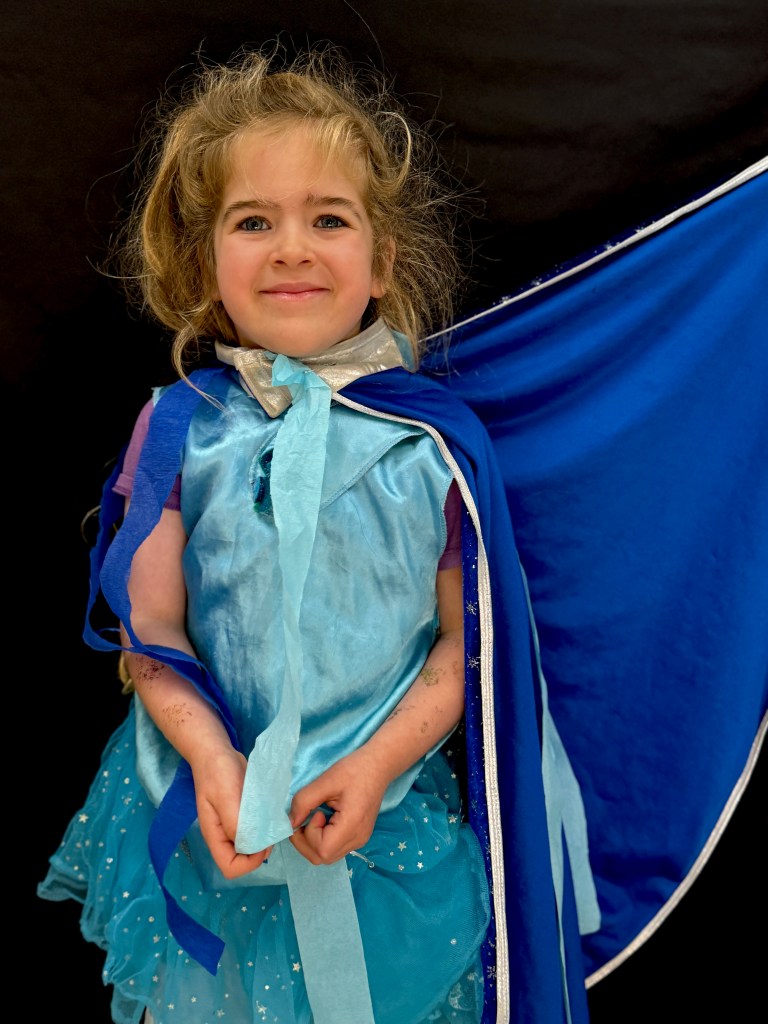
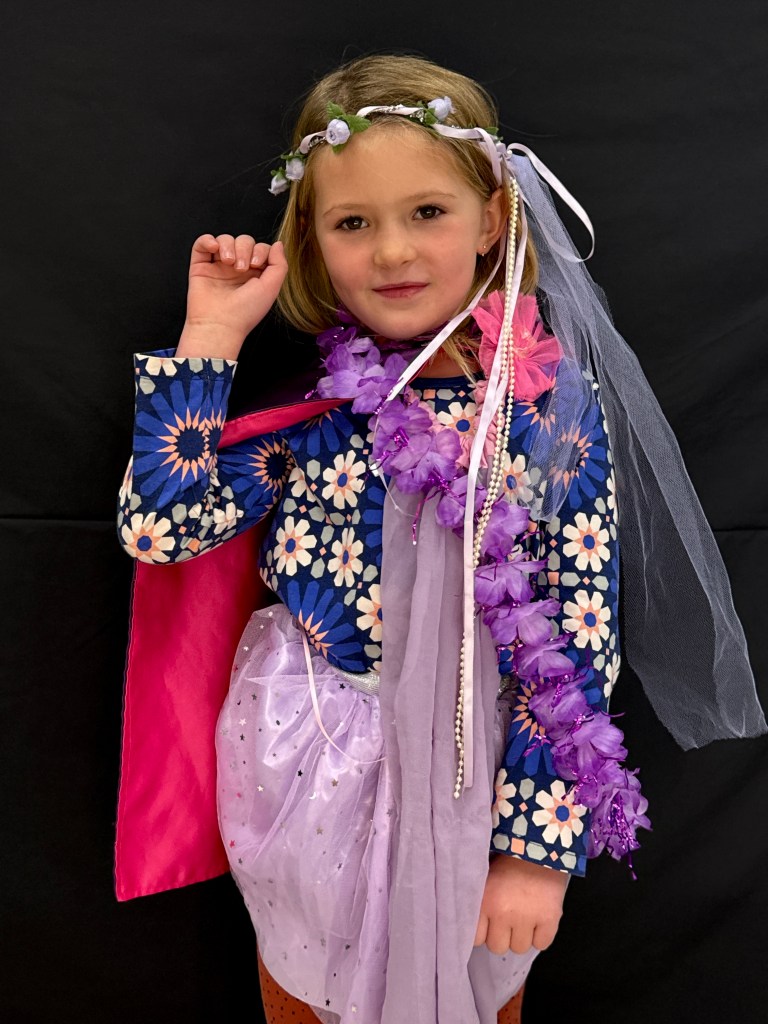
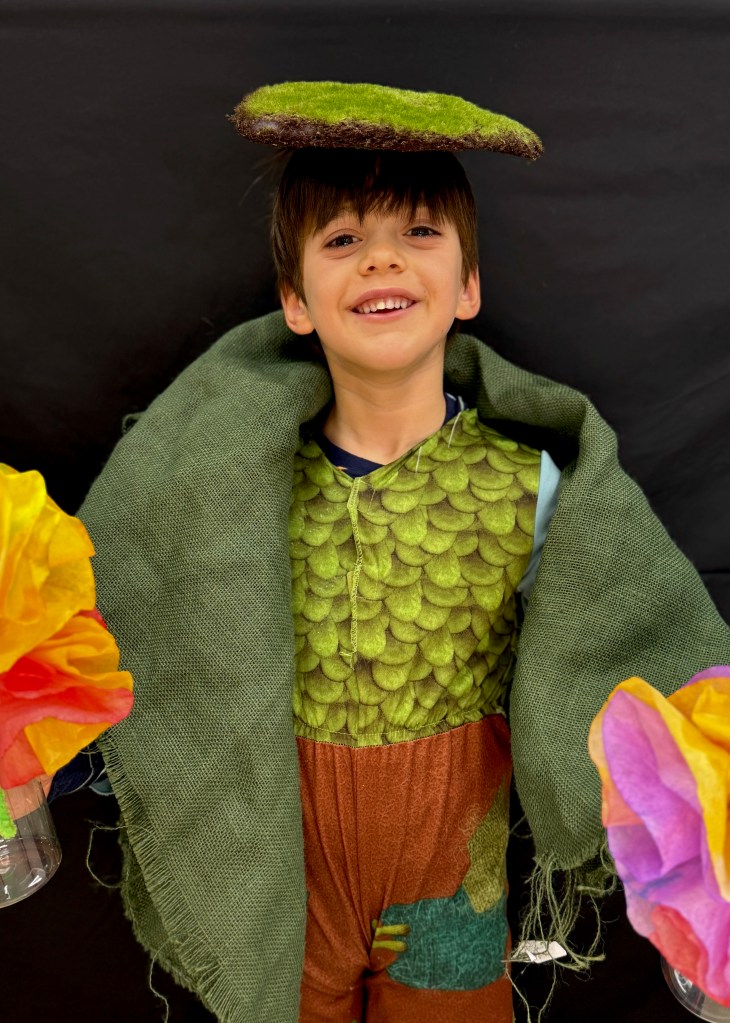
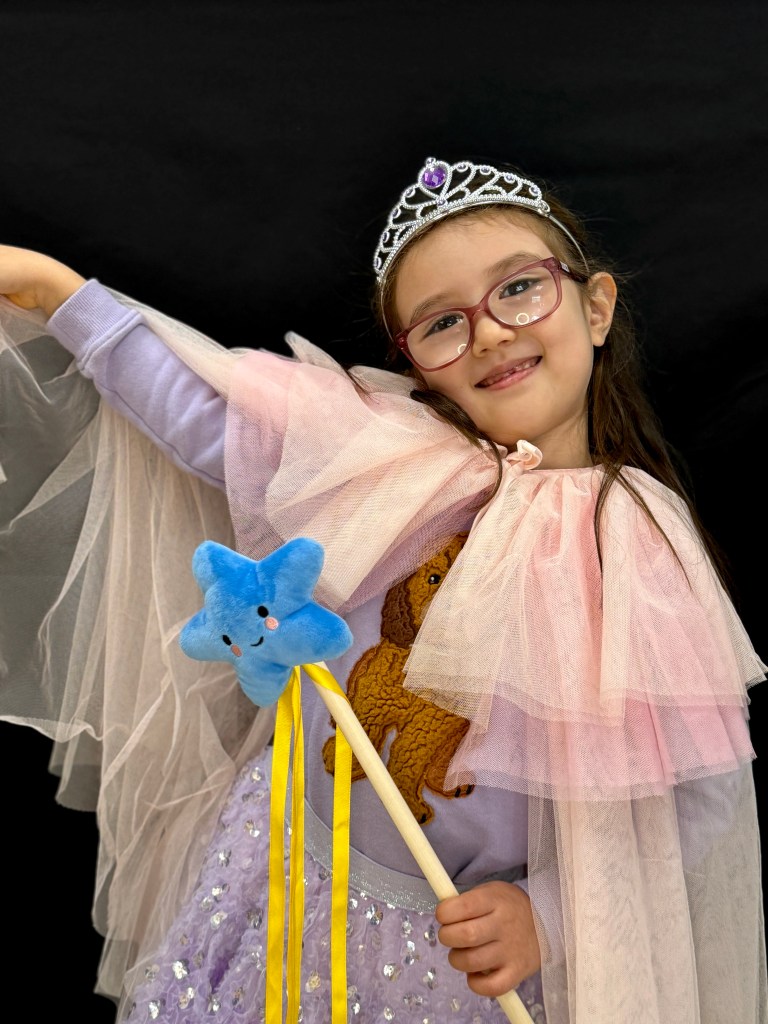
In art class, kindergartners recently worked on representing themselves through portraits. First, students observed well-known self-portraits by Vincent VanGogh and Frida Kahlo, and then used the art elements of line, shape, and color to create their own self-portrait drawings.

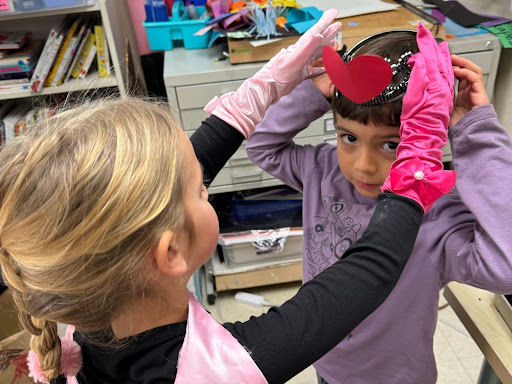
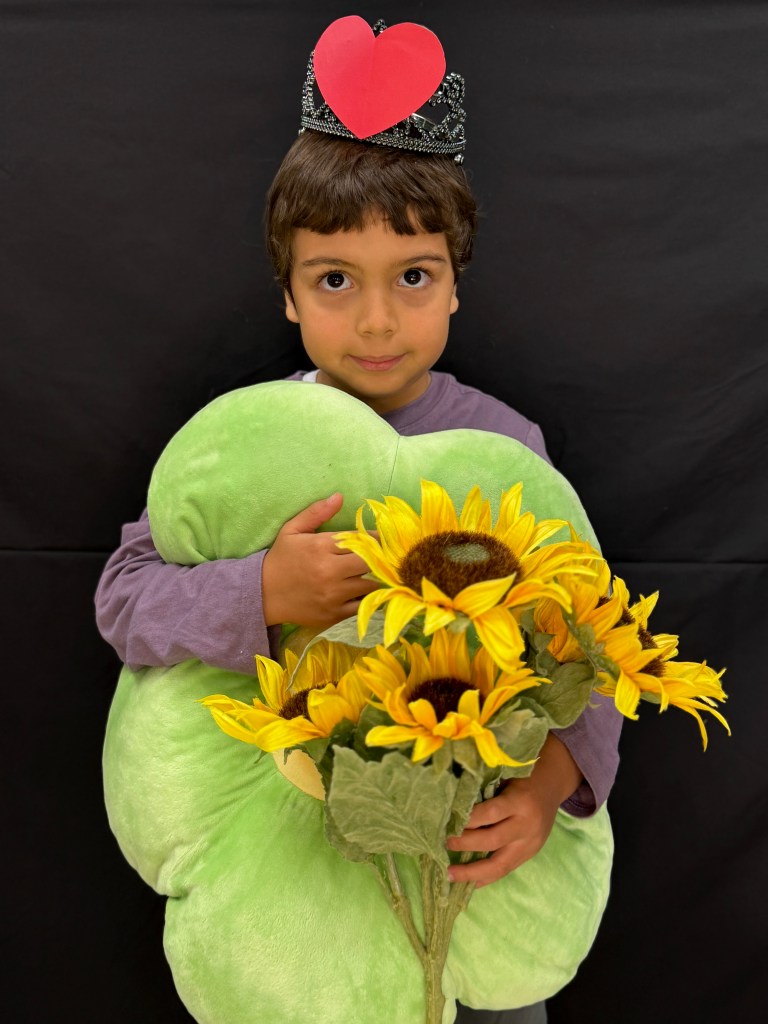
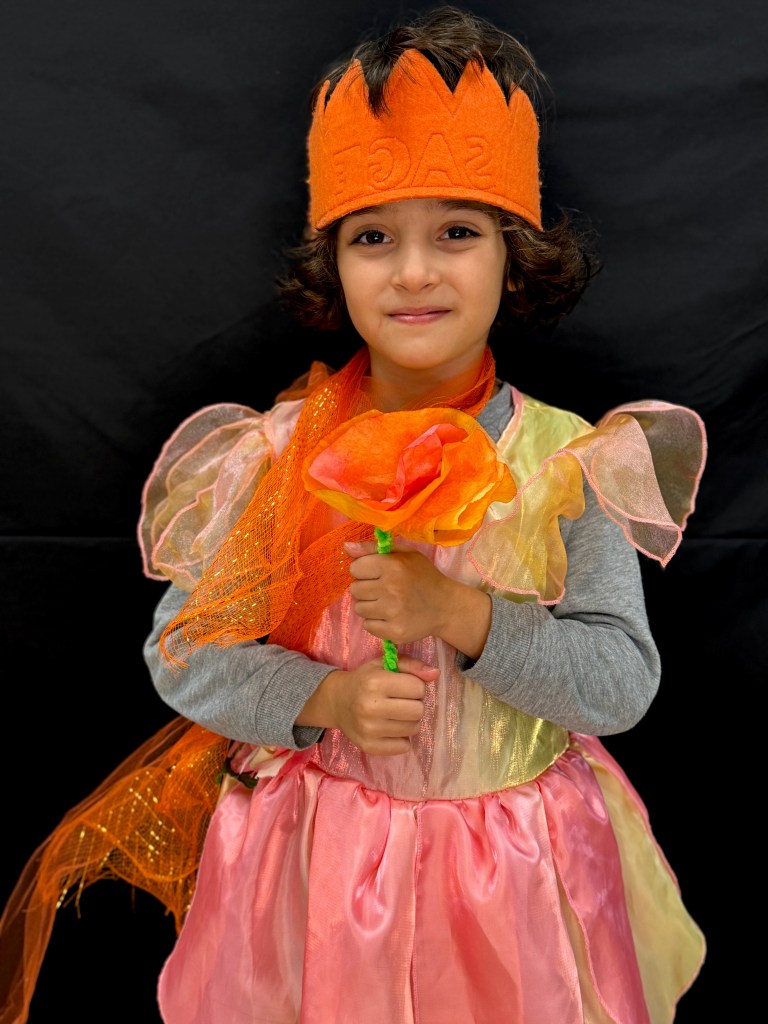
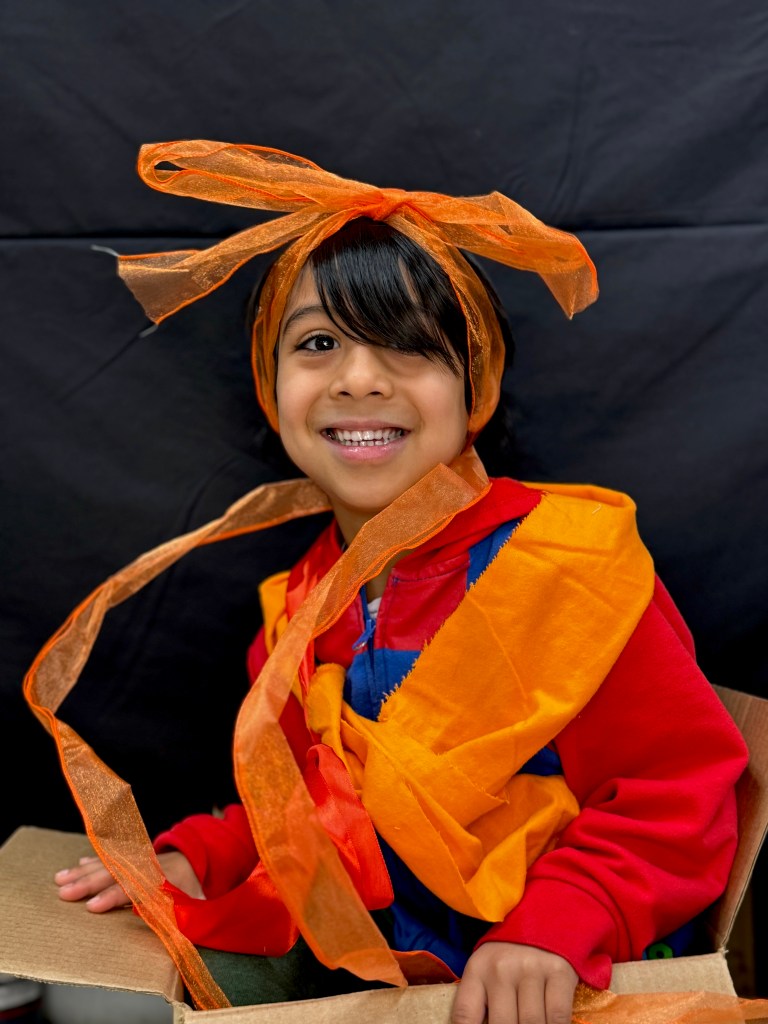
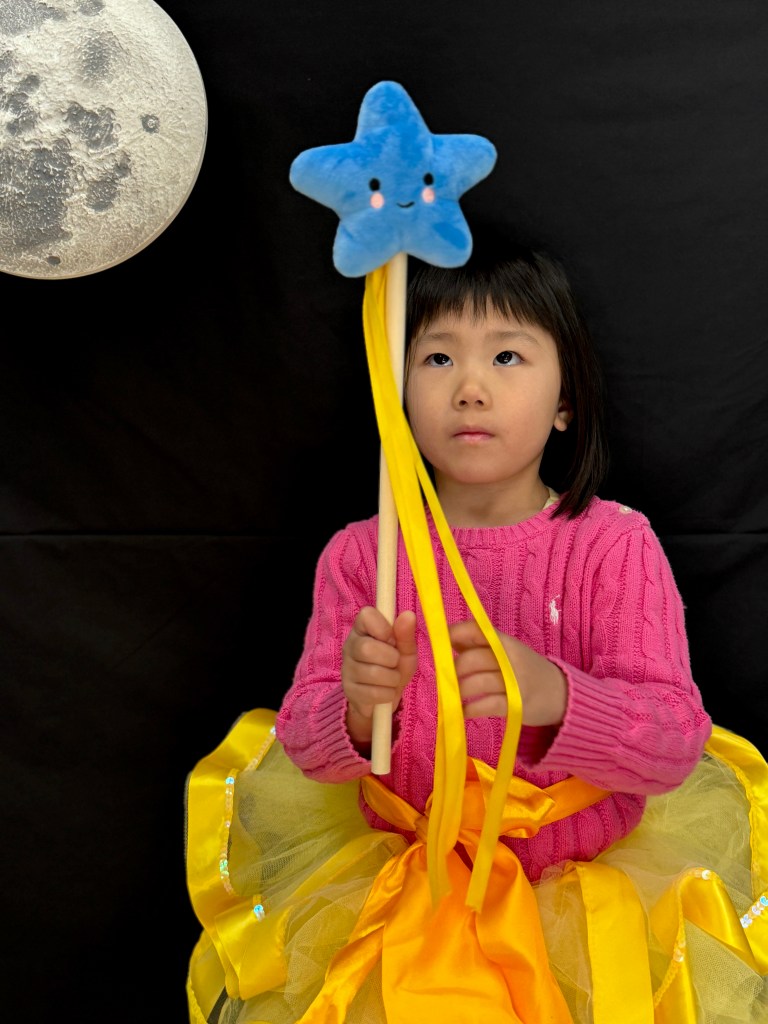
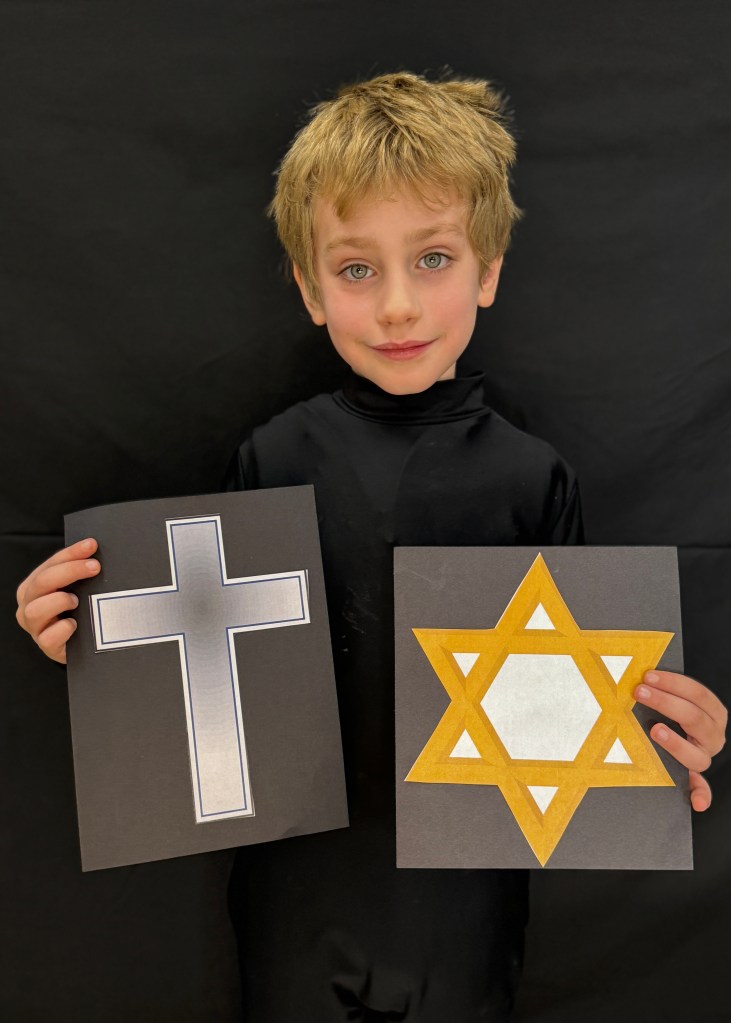
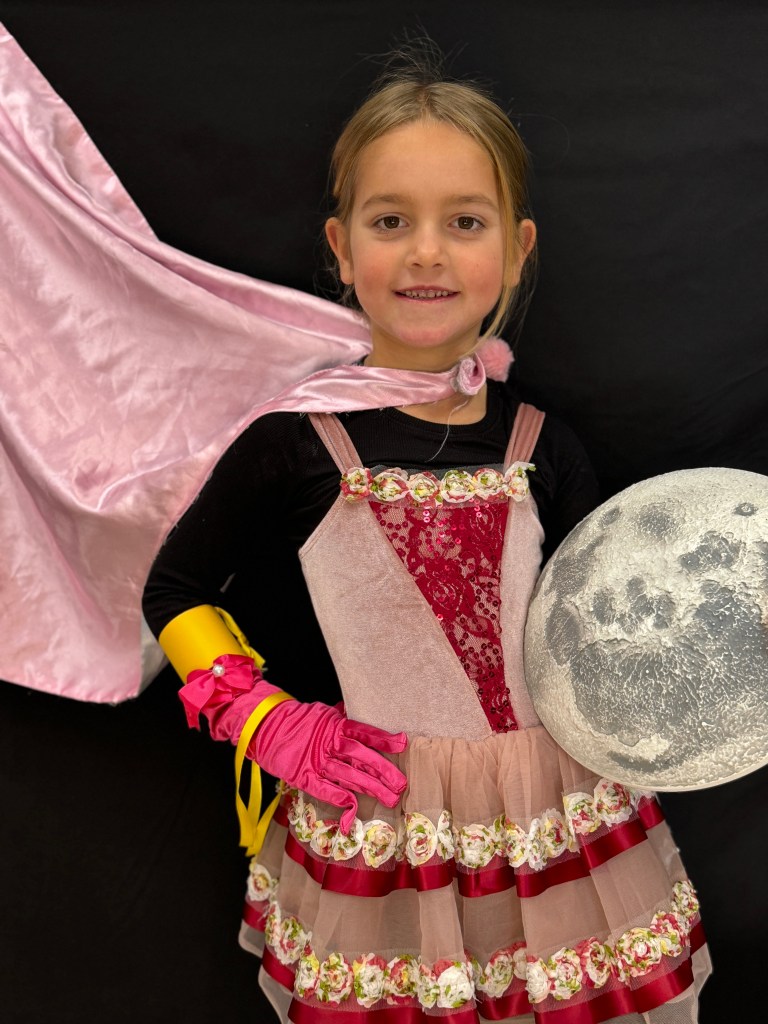
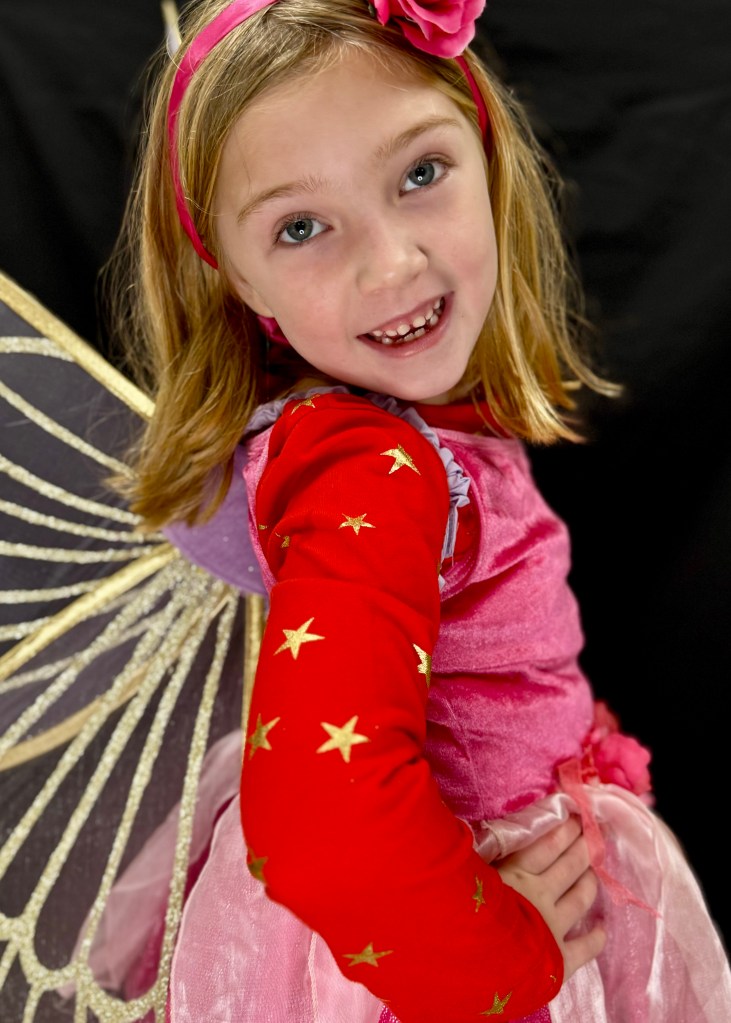
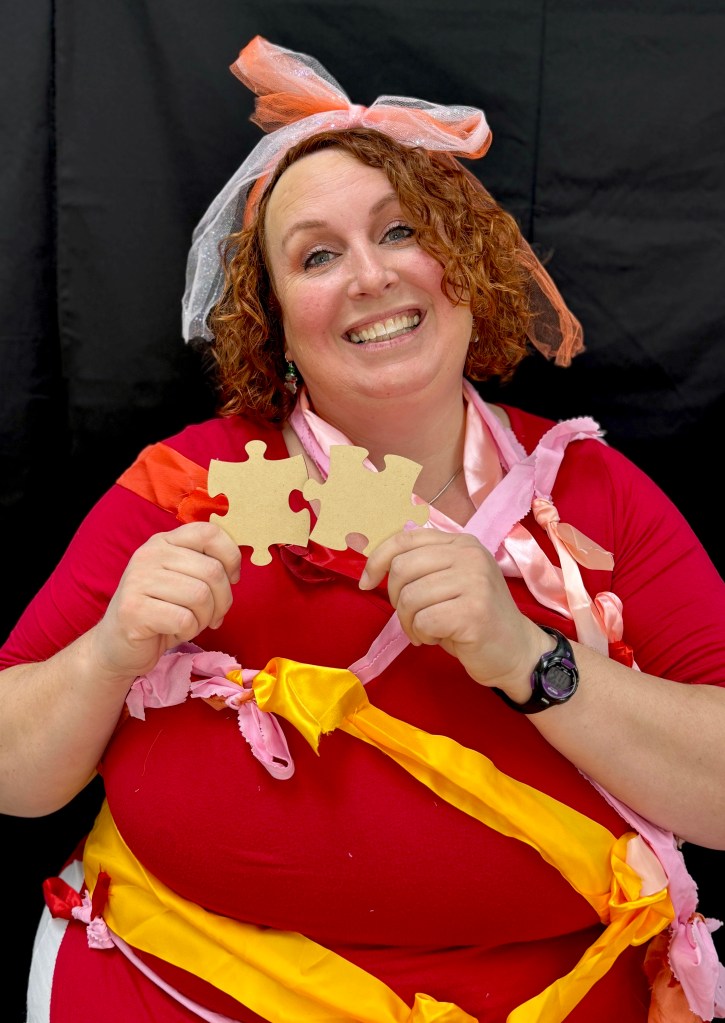
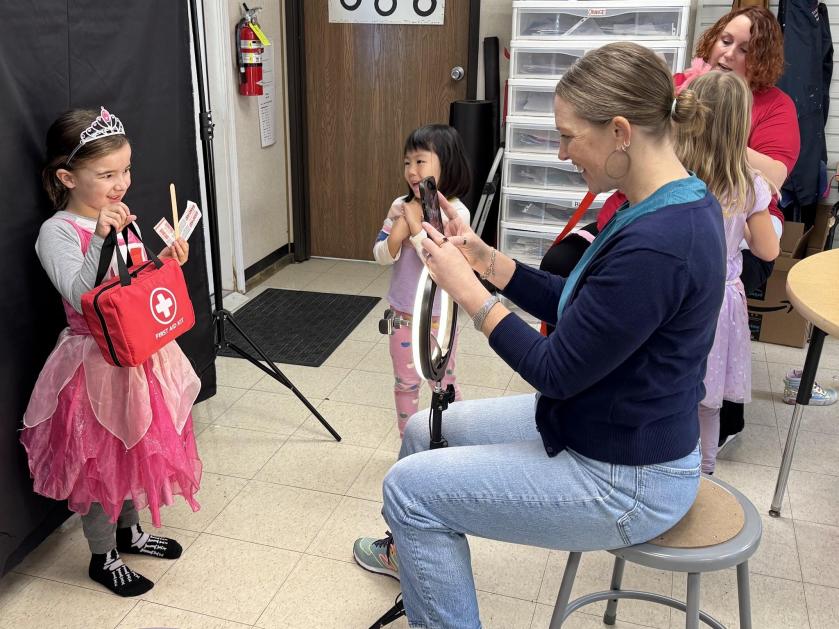
Next, the kindergartners observed the artwork of contemporary artist Cindy Sherman, who photographs herself dressed up as different imagined characters. In collaboration with their PBL unit exploring the driving question of “How can learning about each other’s names make us better friends?” students planned their own Cindy Sherman-inspired photoshoot that visualized the meaning and stories behind their names. Each student posed for photographs wearing costumes and props that not only represented their names but that superbly matched their unique personalities. Check out their photos below! 

#SaklanProjectBasedLearning

Amazing Tour Guides

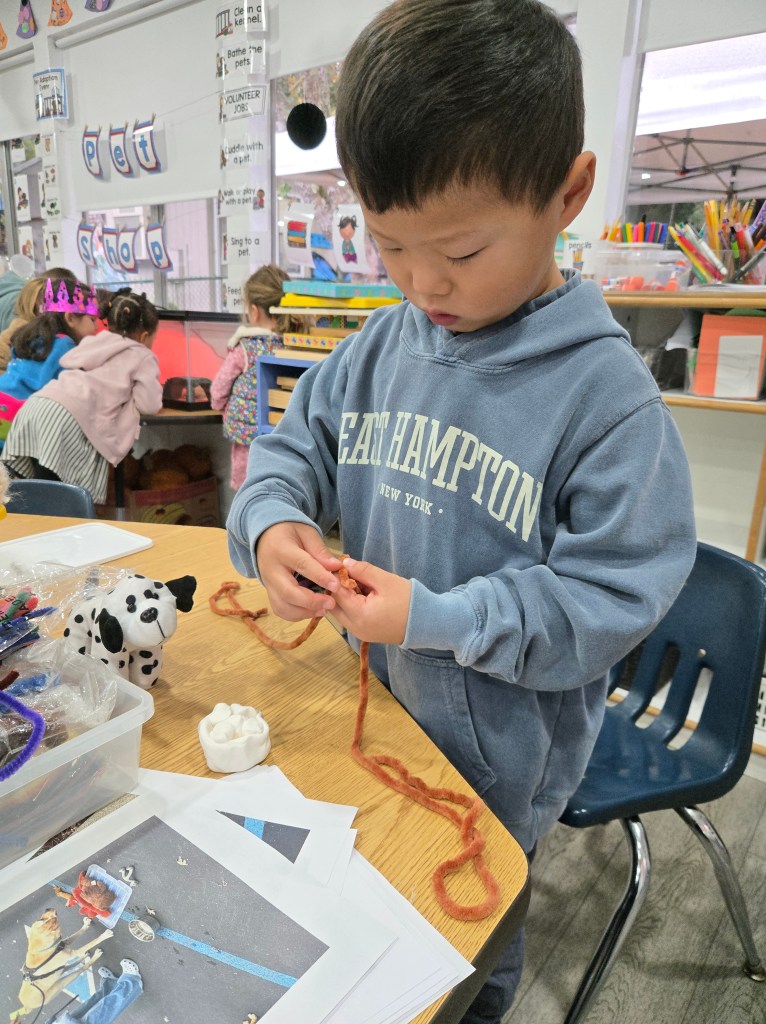
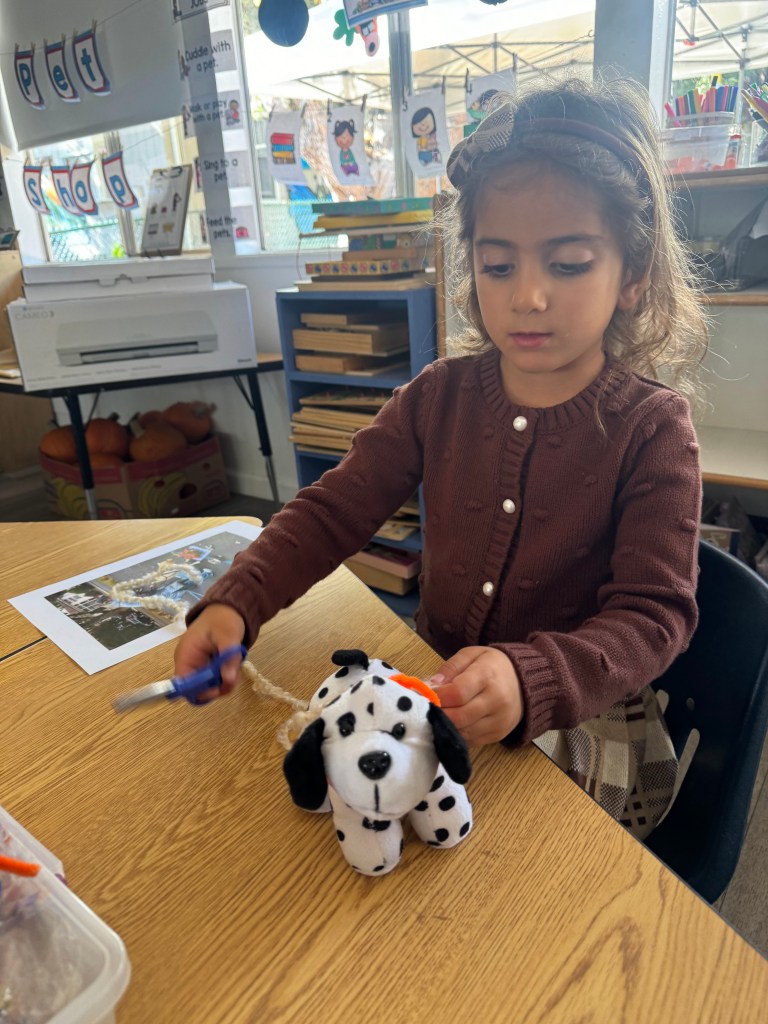
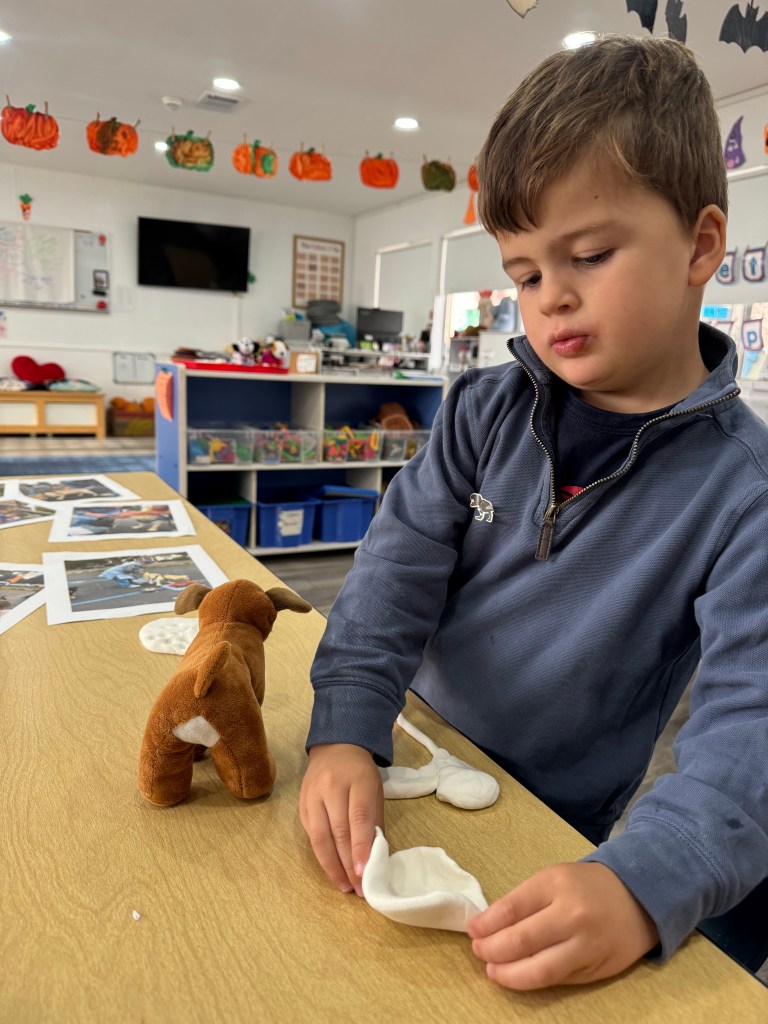
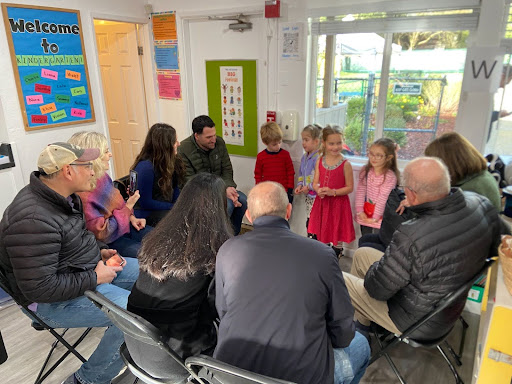
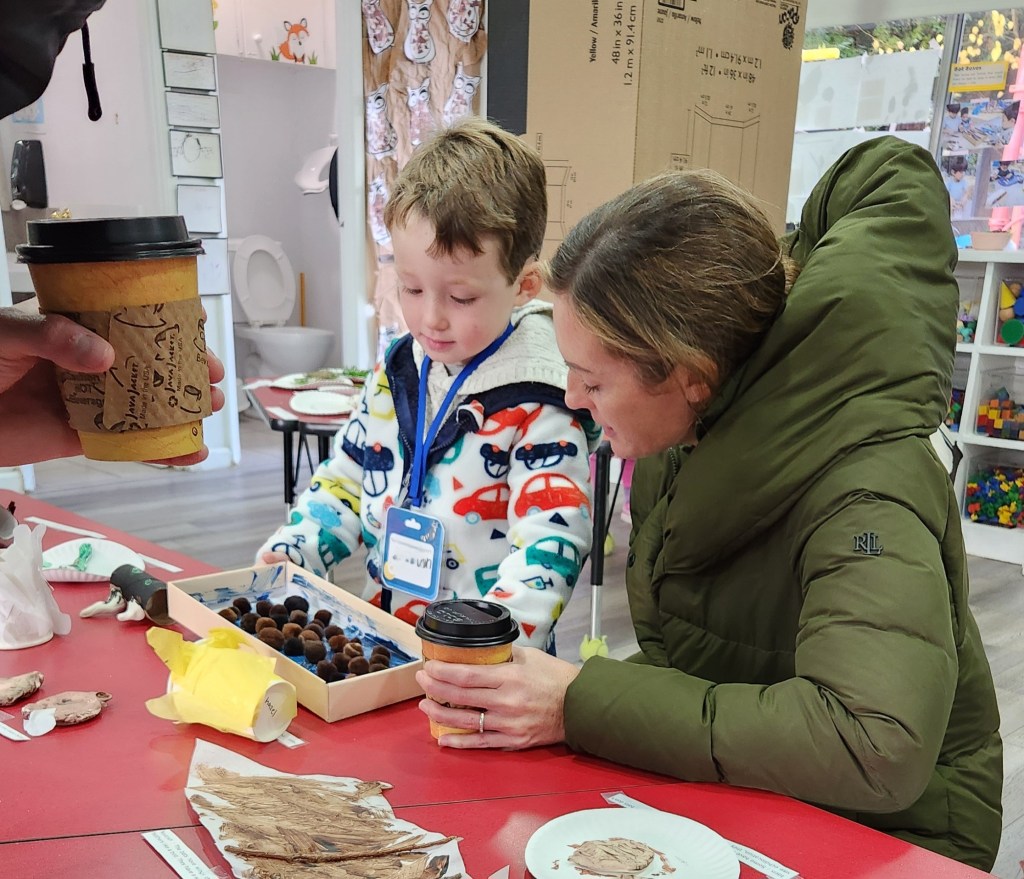
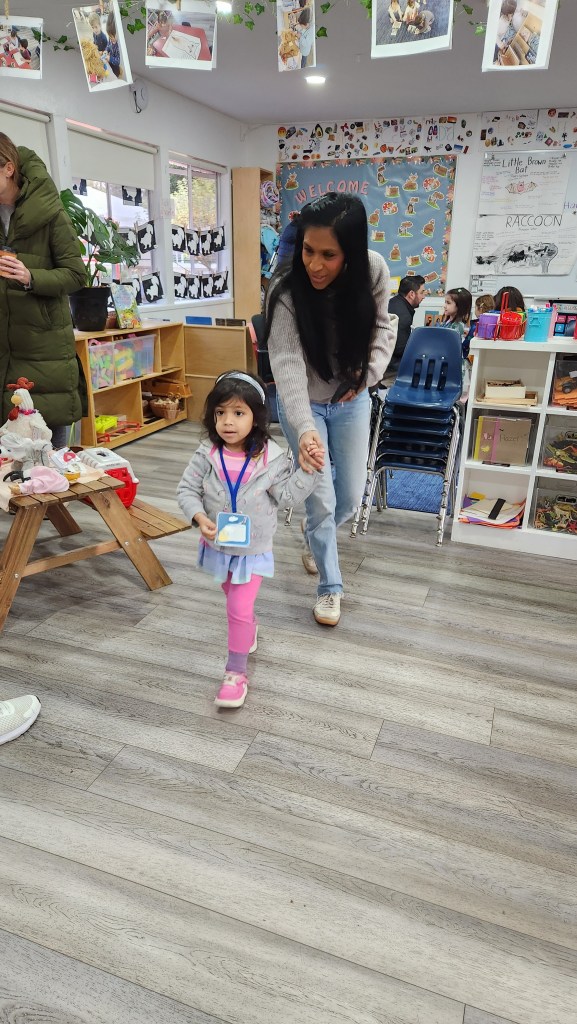
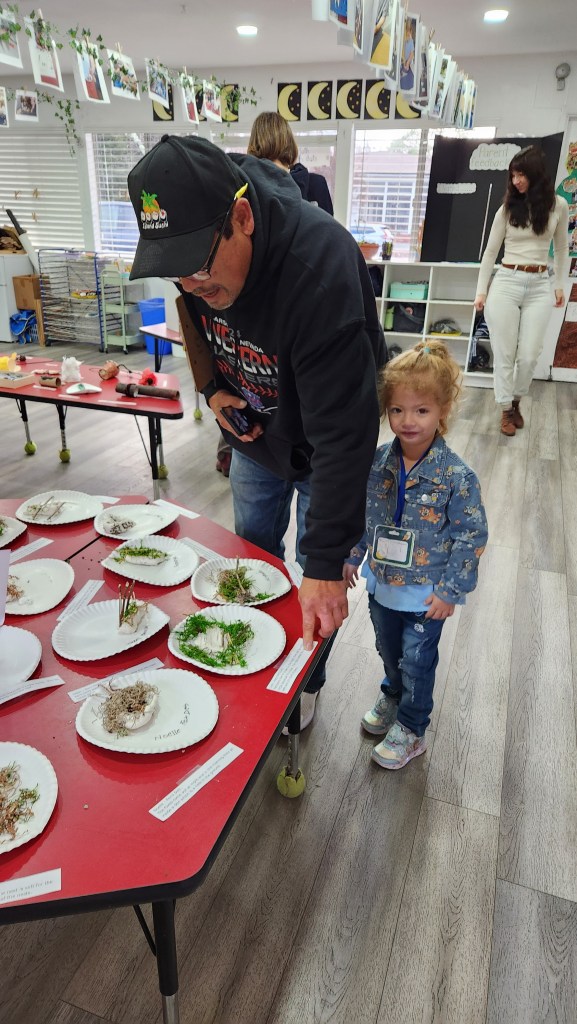
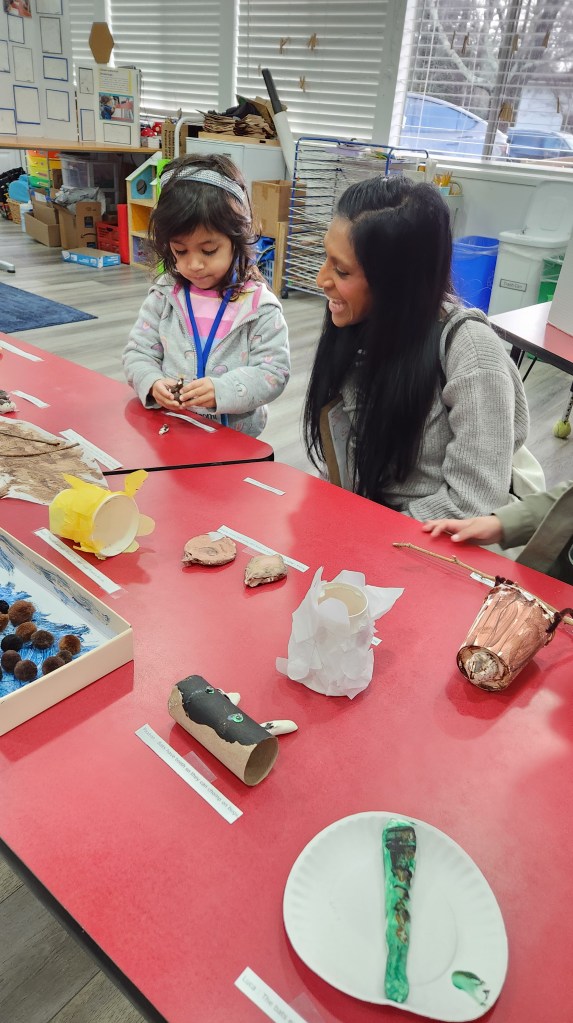
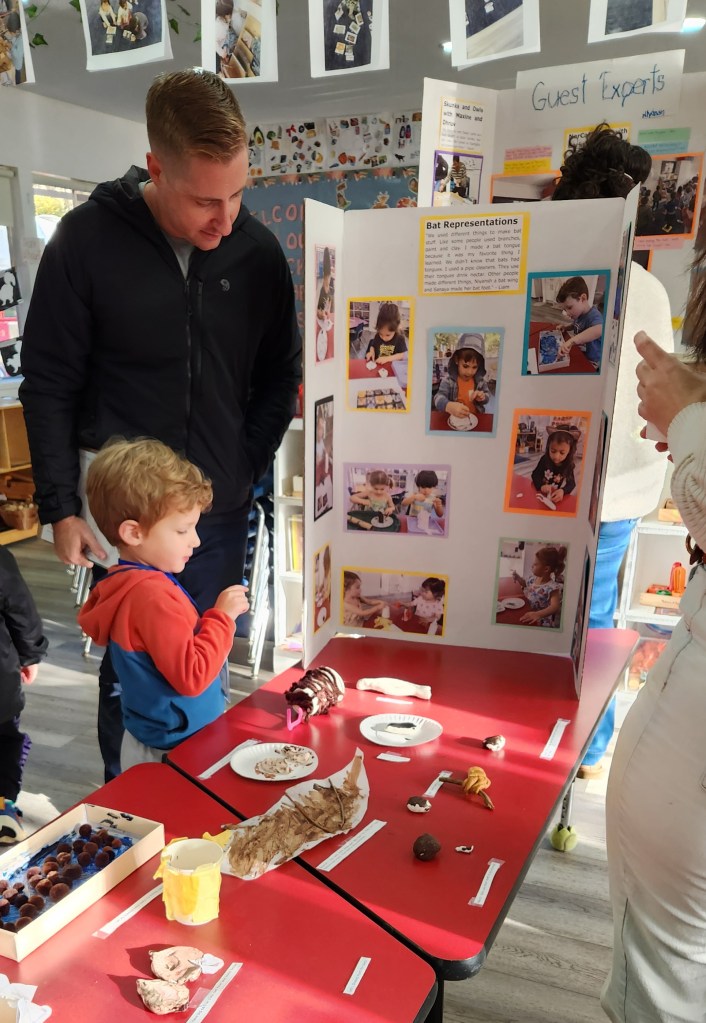
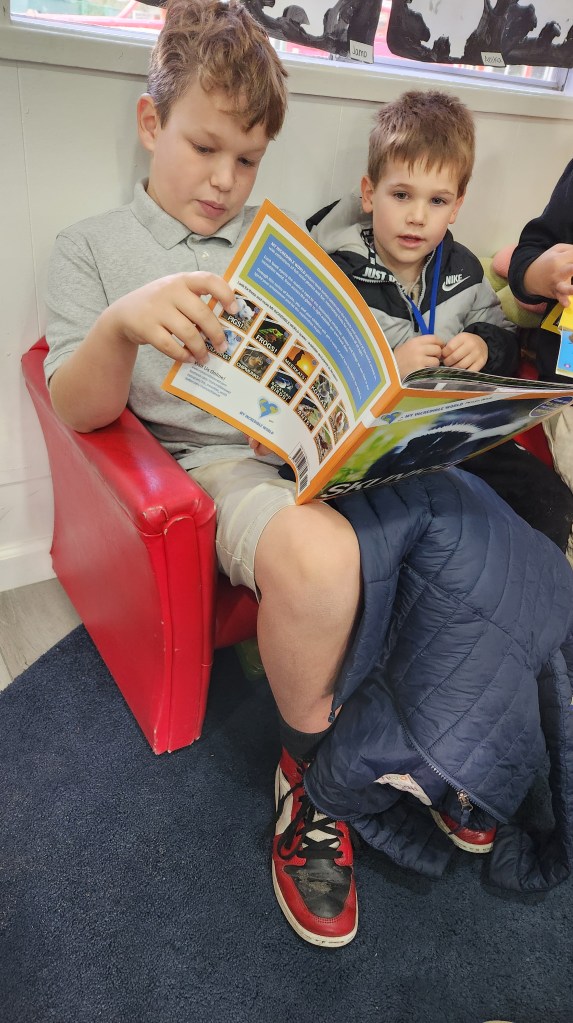
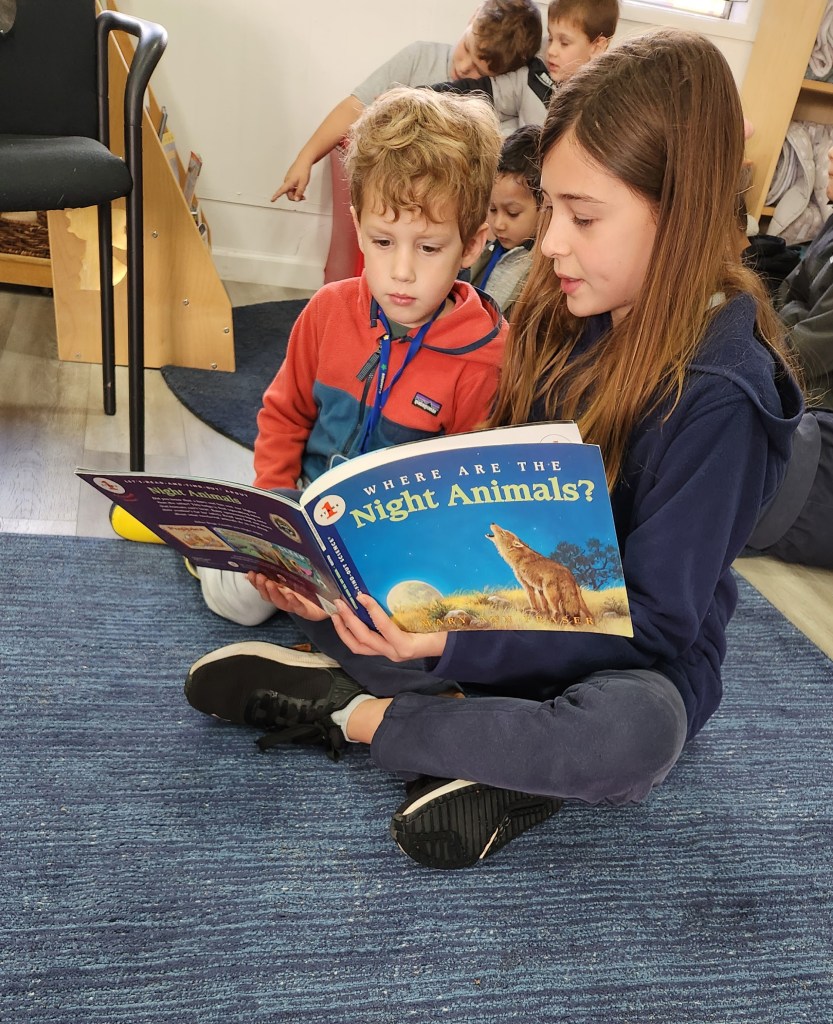
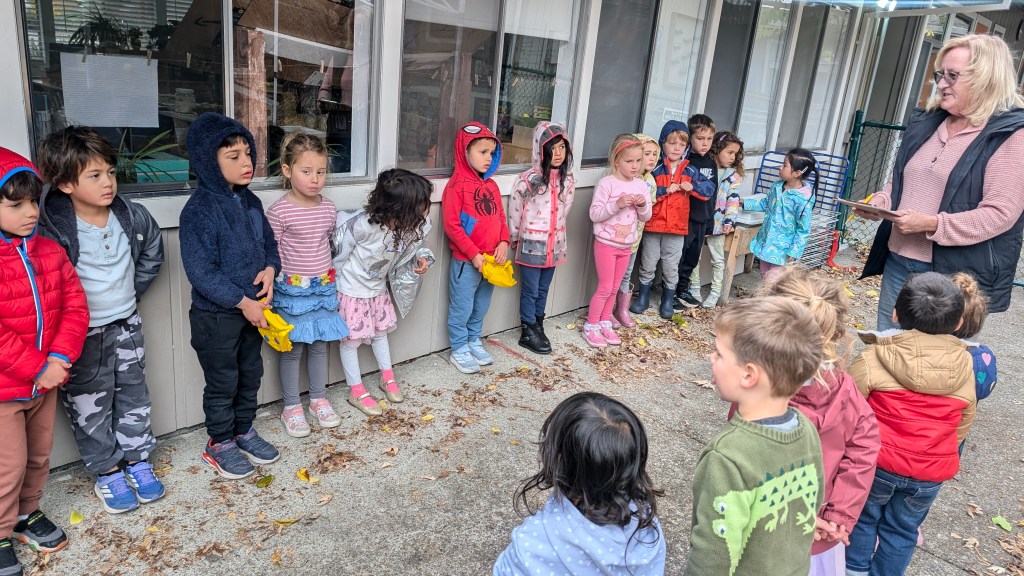
Last week, the preschoolers were very excited to welcome their parents, buddies, and other community members into their classroom for their Nocturnal Animal Project Culmination.

The Owlets spent two months learning about nocturnal animals after a student brought up the concept during circle time at the beginning of the year. The other students had a lot of prior knowledge about animals and were very interested in learning about animals that are more active at night, so the teachers designed a project based on their natural curiosities.

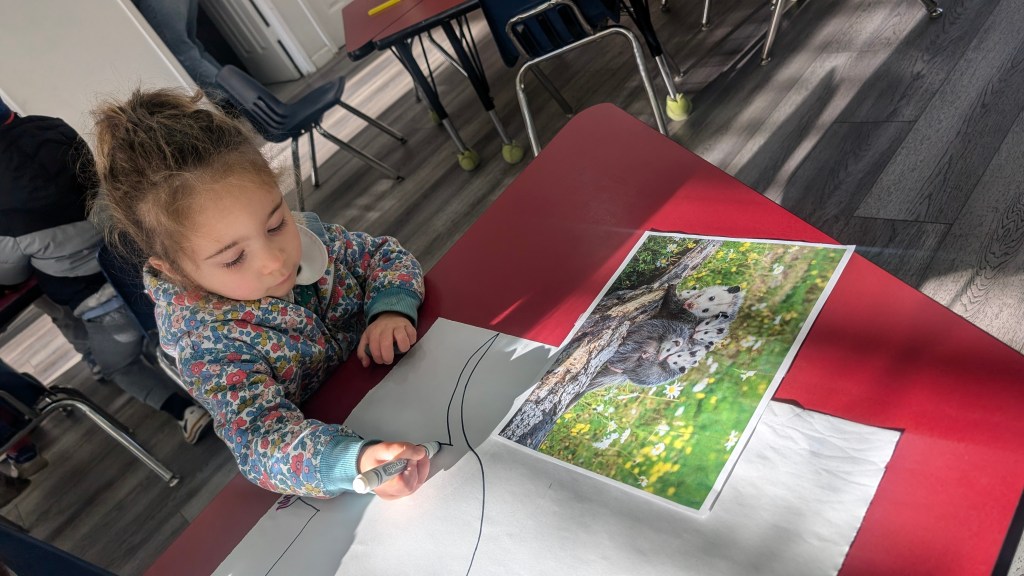
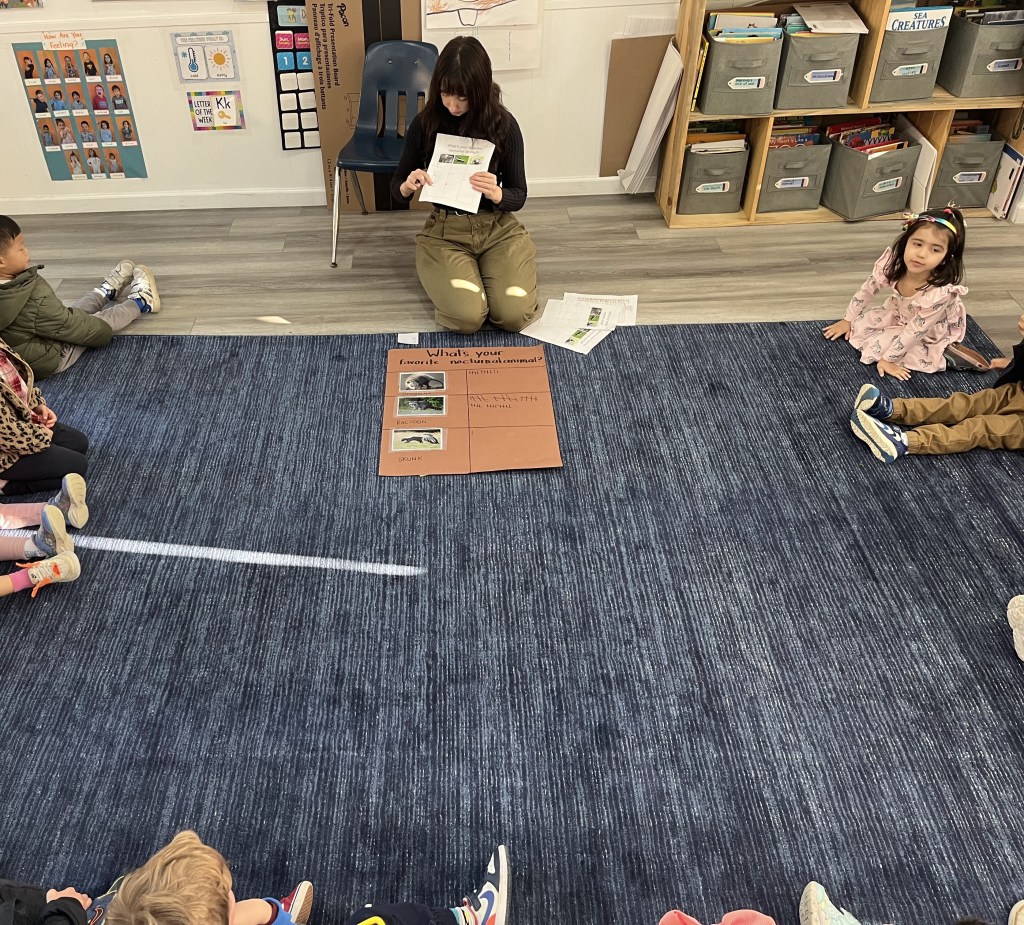
As part of their project, the Owlets took on the role of surveyors, going around the school to ask other classes an important question: Which garbage collector is your favorite—raccoon, opossum, or skunk? After gathering all the votes, they counted them together as a class. It was a close race, but in the end, the preschoolers discovered that Saklan’s favorite animal is… the raccoon!

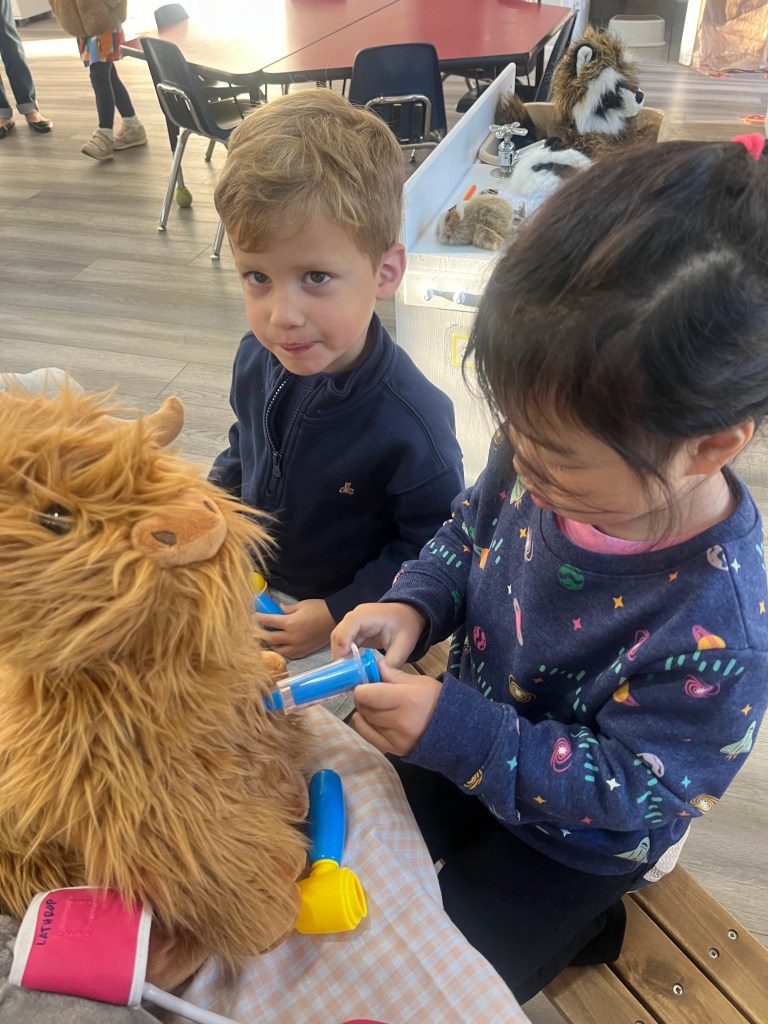
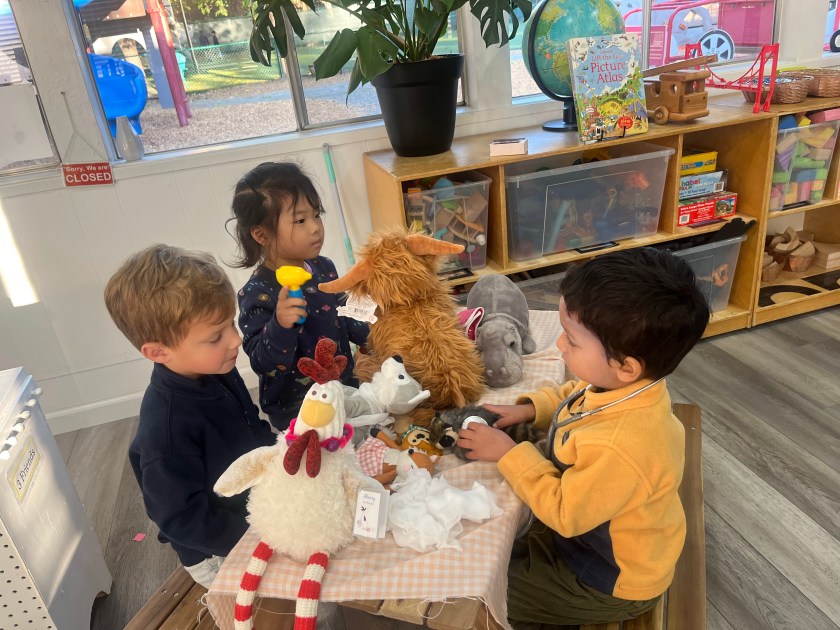
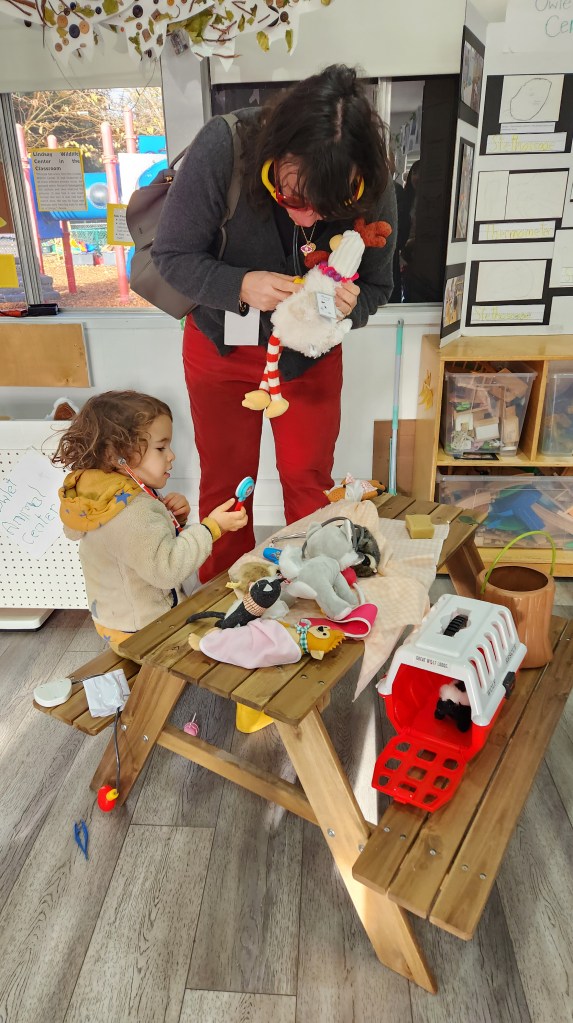
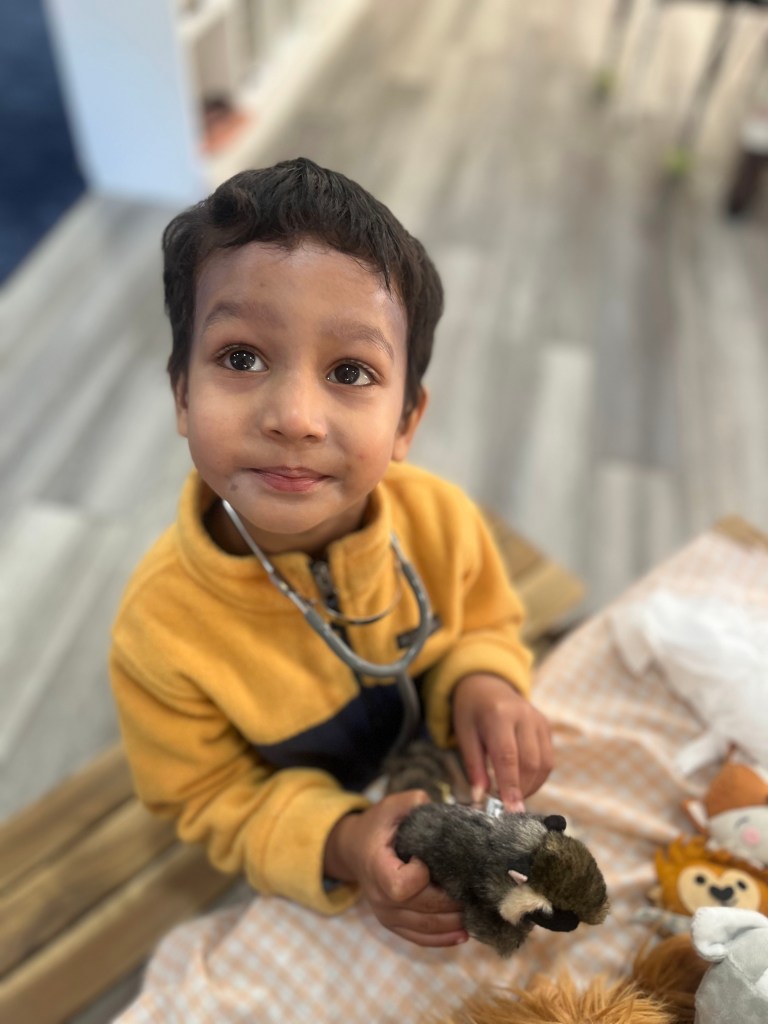
During the project, the Owlets created an Owlet Wildlife Center, after learning about Lindsay Wildlife’s Rehab Hospital. During their study they learned an important lesson: once an injured animal heals, vets usually release it back into its natural habitat. With this in mind, it was time to return the now-healed animals in their care. Maggie’s hippo and Shay’s hairy cow were delivered with care back to their “homes.” Maggie and Shay were so happy to be reunited with their stuffies, and the Owlets were just as excited to see their hard work pay off!

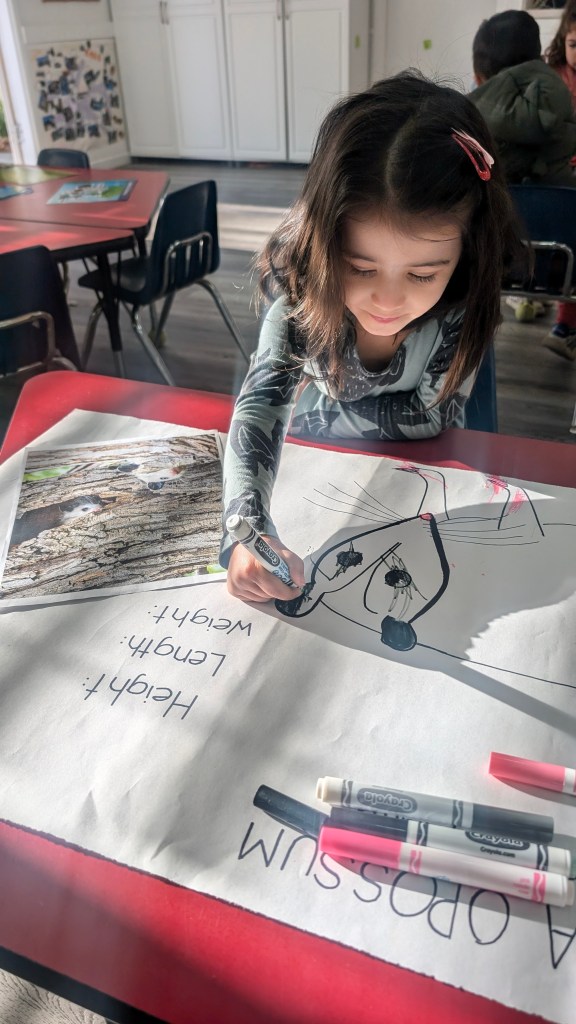
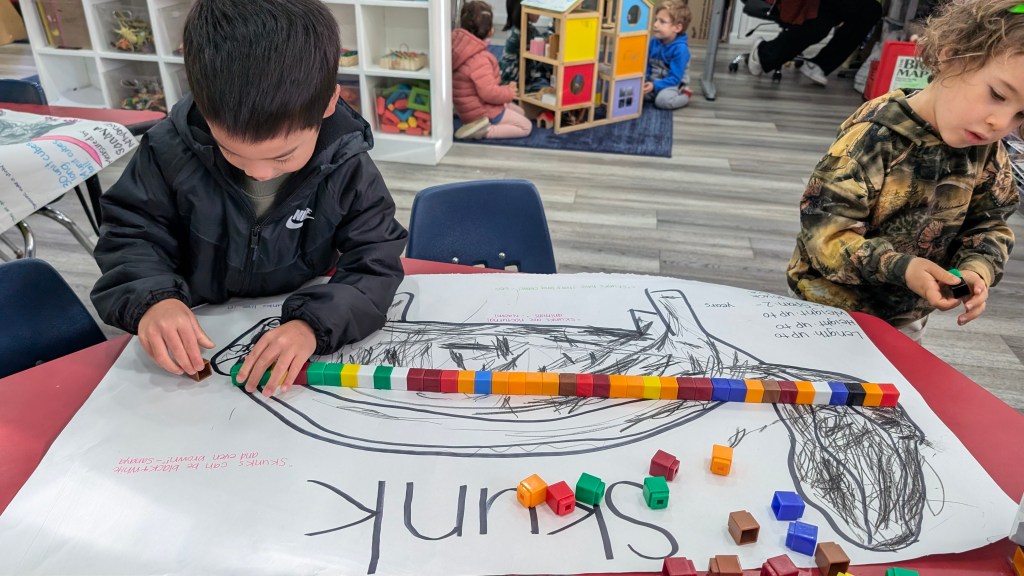
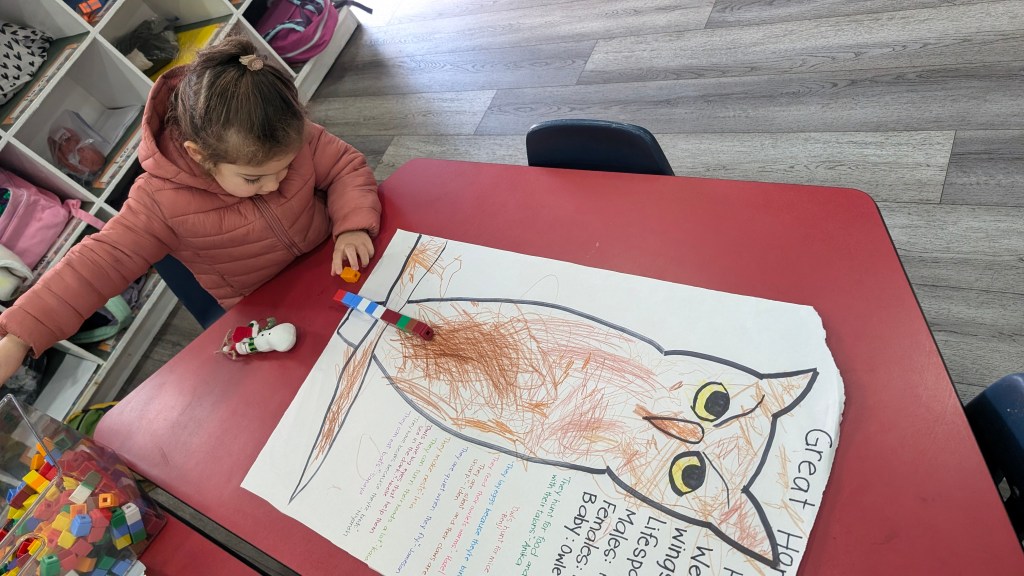
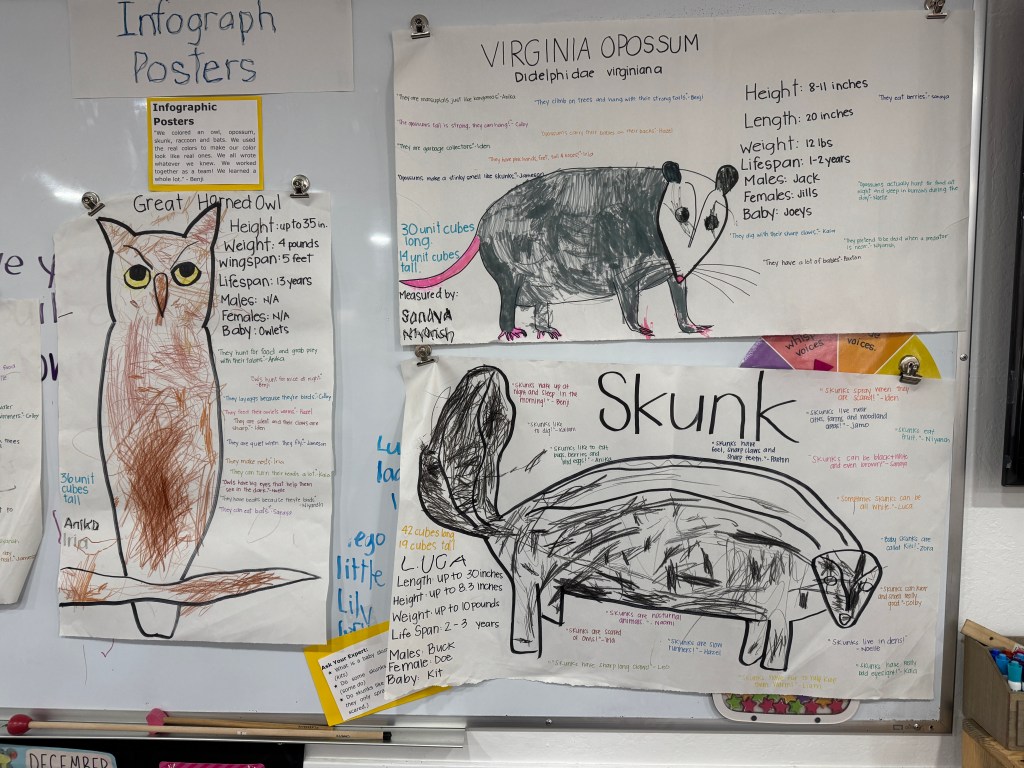
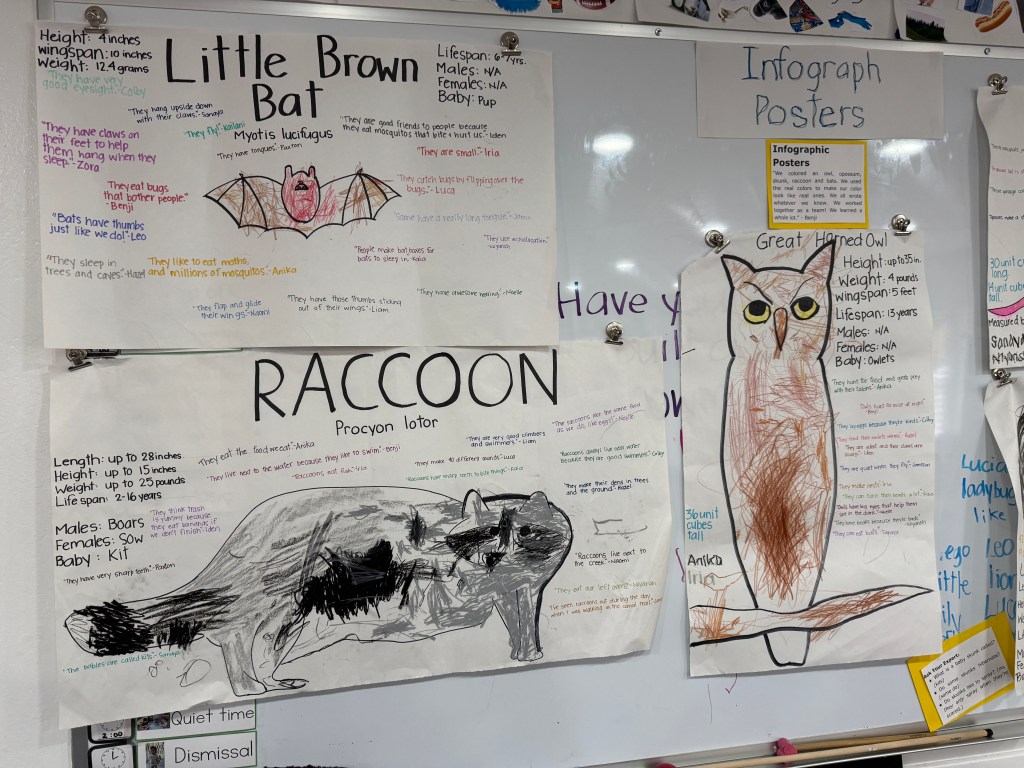
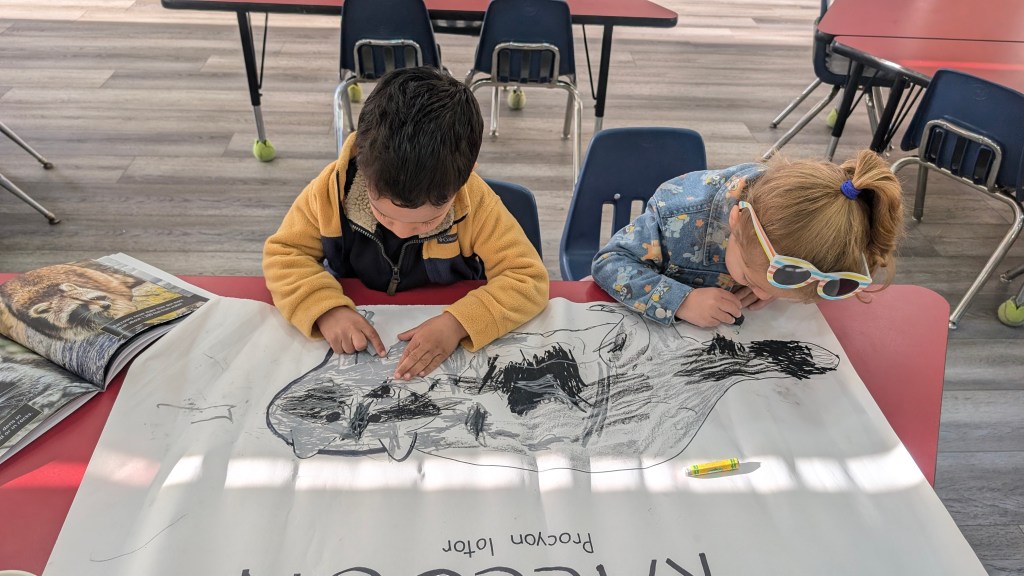
To get ready for the culmination, the Owlets reviewed all the facts they had learned by creating colorful infographic posters. Their attention to detail was spot on as they helped color the giant animal drawings, carefully choosing the real-life colors of each animal. In addition to coloring the posters, they did some fun math with them, measuring the length and width of the animals using unit cubes.

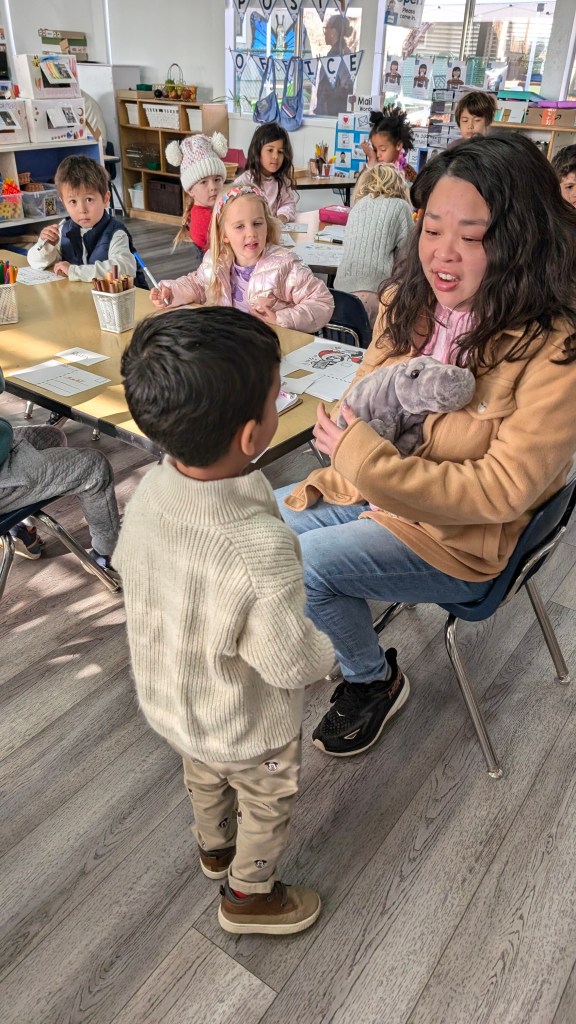
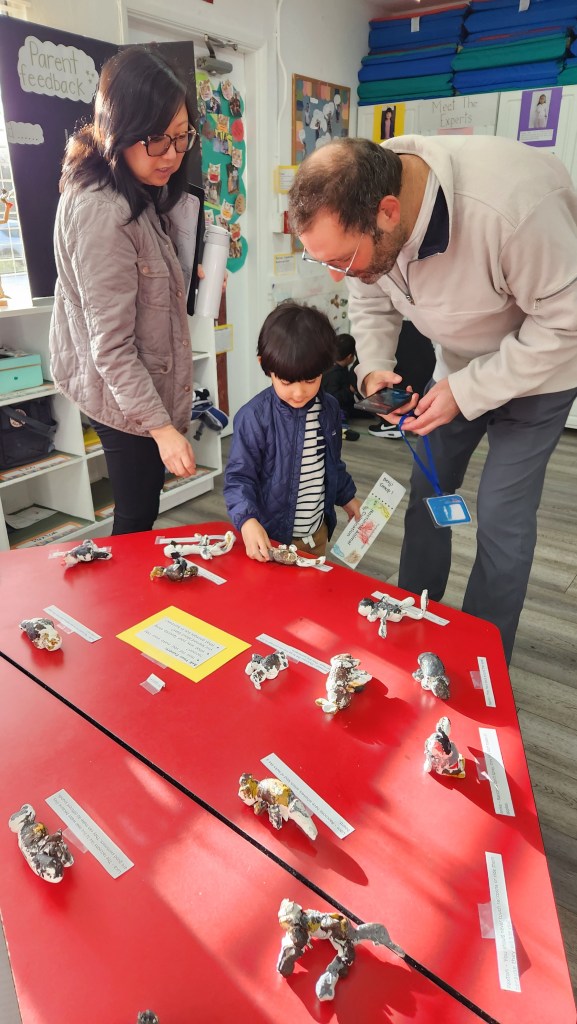
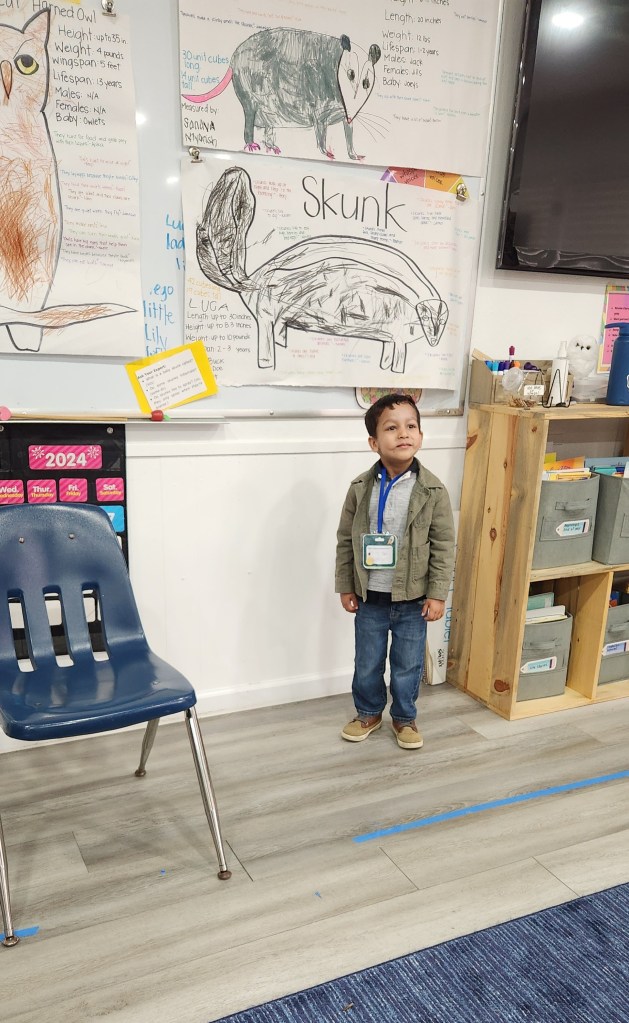
Finally, all their learning and hard work came together for their Nocturnal Animal Culmination, which was a great success! Teachers, parents, and buddies were all very proud of the Owlets. They were amazing tour guides, confidently sharing everything they’ve learned.

Head’s Corner: We Are “Really Doing It”

Last year, a Saklan Trustee and I had the privilege of attending the California Association of Independent Schools (CAIS) Heads and Trustees Conference. This annual gathering brings together nearly 500 school leaders and trustees, all focused on learning, sharing ideas, and discussing the future of independent schools.

During one of the many breakout sessions, we found ourselves mingling with trustees and heads from other independent schools, exchanging experiences and posing questions to each other. Among all the conversations that day, one in particular stood out. As we discussed various educational models, the topic of Project Based Learning (PBL) came up. A fellow school leader, well-acquainted with the educational landscape of the Bay Area, turned to the group and said: “There are lots of schools in the Bay Area claiming to be PBL schools, but Saklan is the only one really doing it.”

This simple statement was a powerful reminder of how far we’ve come. When we embarked on this journey to make PBL a cornerstone of Saklan’s approach, our goal wasn’t just to enhance academic rigor and engagement. We aimed to redefine what rigor and high engagement should look like in a modern school setting.

This week, we took another step in that journey by officially launching a video that showcases the incredible work we’ve been doing at Saklan. This is more than just a celebration of our accomplishments; it’s an invitation for others to see how we’re shaping the future of education—where students are deeply engaged, challenged, and, most importantly, truly prepared for the world ahead.

At Saklan, we’re not just talking about Project Based Learning. We’re living it. And we’re proud to say—we’re really doing it.

Warmly, 

David

#HeadsCorner

Egypt + Humanities

Written by Guest Blogger & Saklan Project Curriculum Instructional Coach and 6th grade Humanities Teacher, Linda Lathrop

If you read the blog post from Saklan Science Specialist, Vickie Obenchain, on September 13th, or followed along with our adventures via Instagram, you know a bit about our 2 weeks exploring Egypt with the help of an excellent Egyptologist. The goal of our trip was to soak in as much information as possible and bring our experiences back to enrich classroom curriculum. 

Back at Saklan it was a pleasure watching the 8th graders apply knowledge from our hot air balloon trip over Luxor to their hot air balloon experiments in science. I know Vickie is looking forward to sharing all about camel adaptations with the 2nd graders during their animal adaptations PBL unit, and I even recently shared with 7th grade a presentation on the Library of Alexandria as part of their Community Spaces PBL unit too!

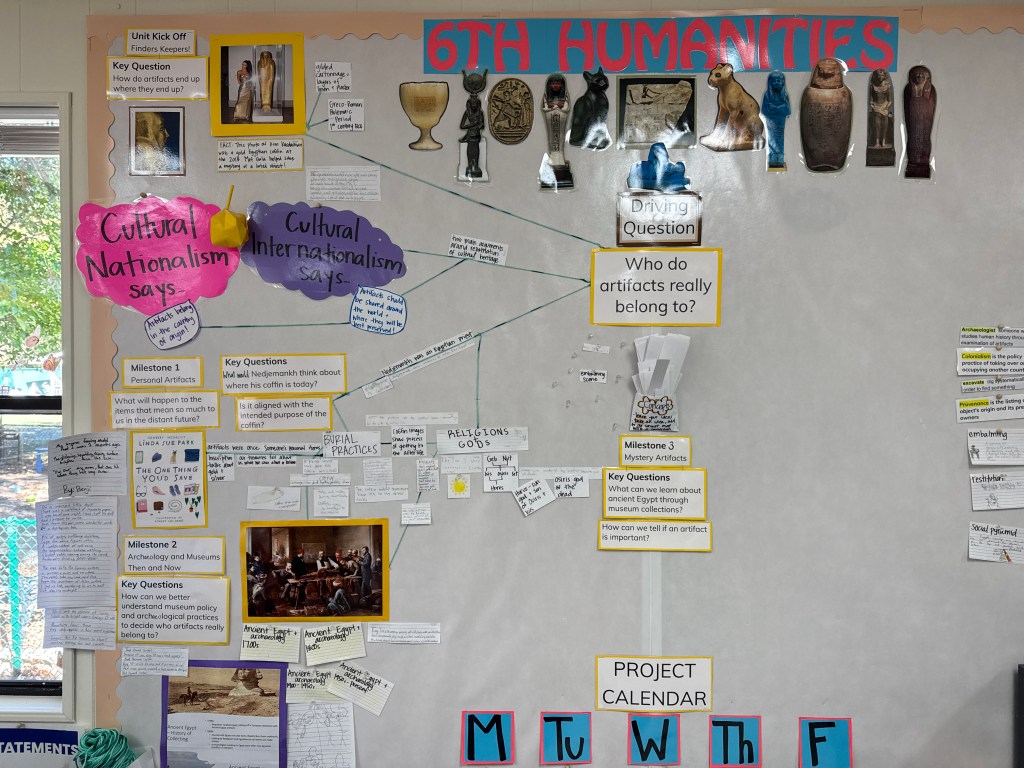
However, I can’t help but be most excited about how our trip informs the 6th grade humanities PBL unit: Artifact or Art Opinion. 

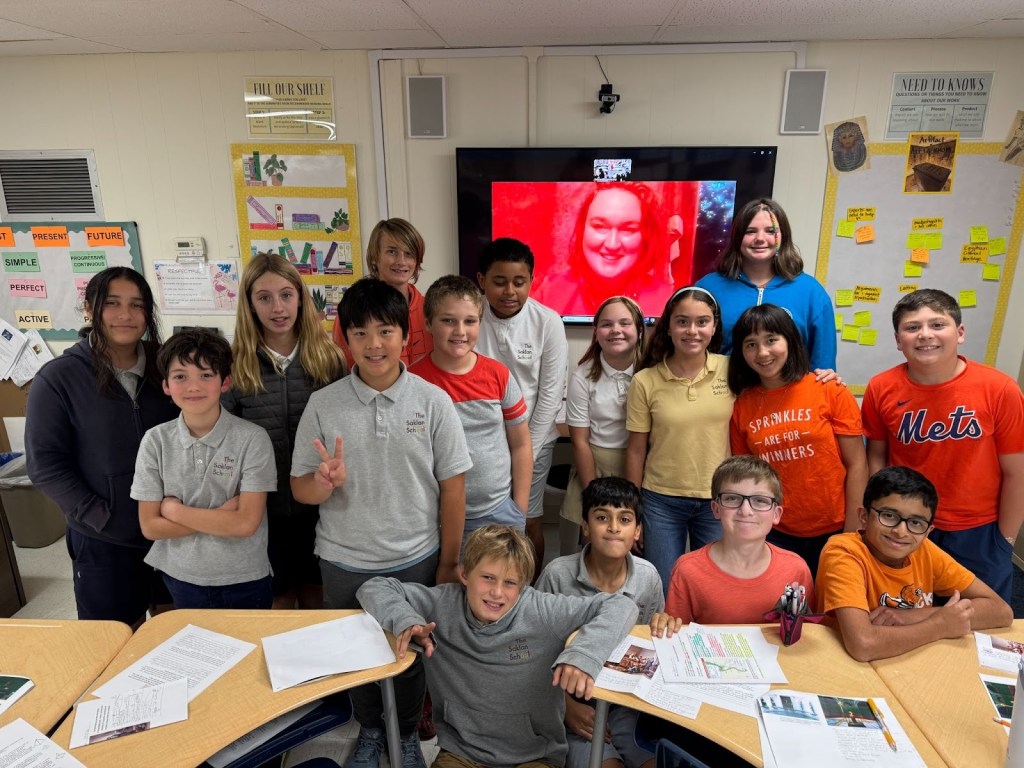
In this unit we explore the driving question, “Who does art really belong to?” To kick off our unit we imagine ourselves at the Met Gala of 2018. Believe it or not, a viral photo from that event helped uncover that the Met paid nearly $4 million dollars for a looted Egyptian artifact- the golden coffin of a high priest named Nedjemankh. 

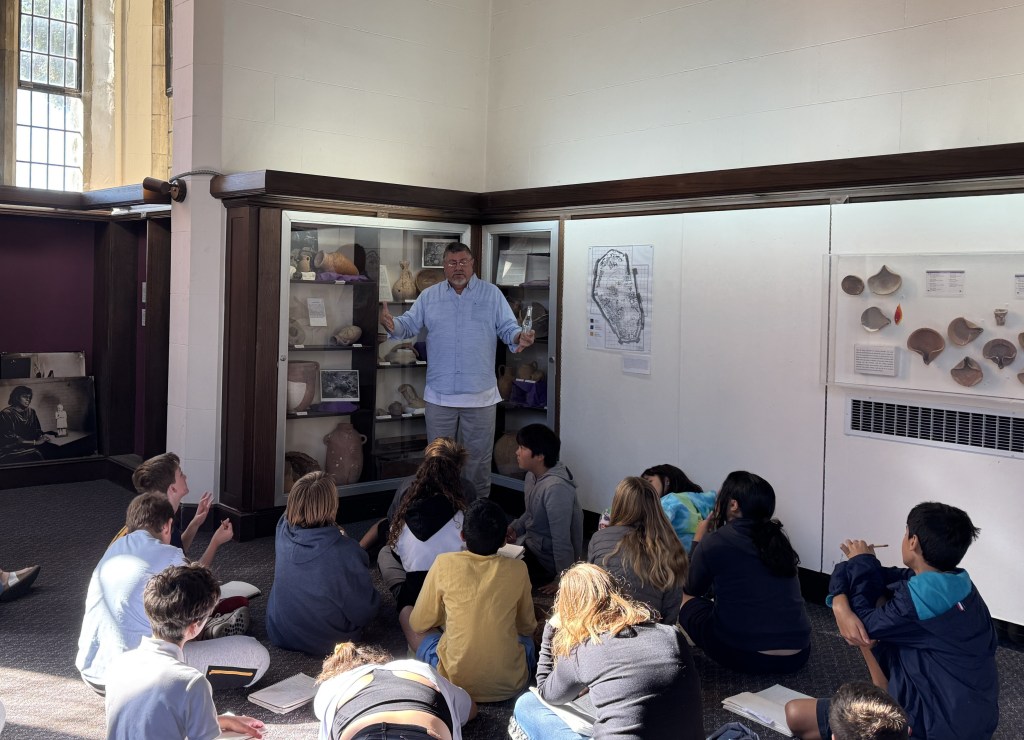
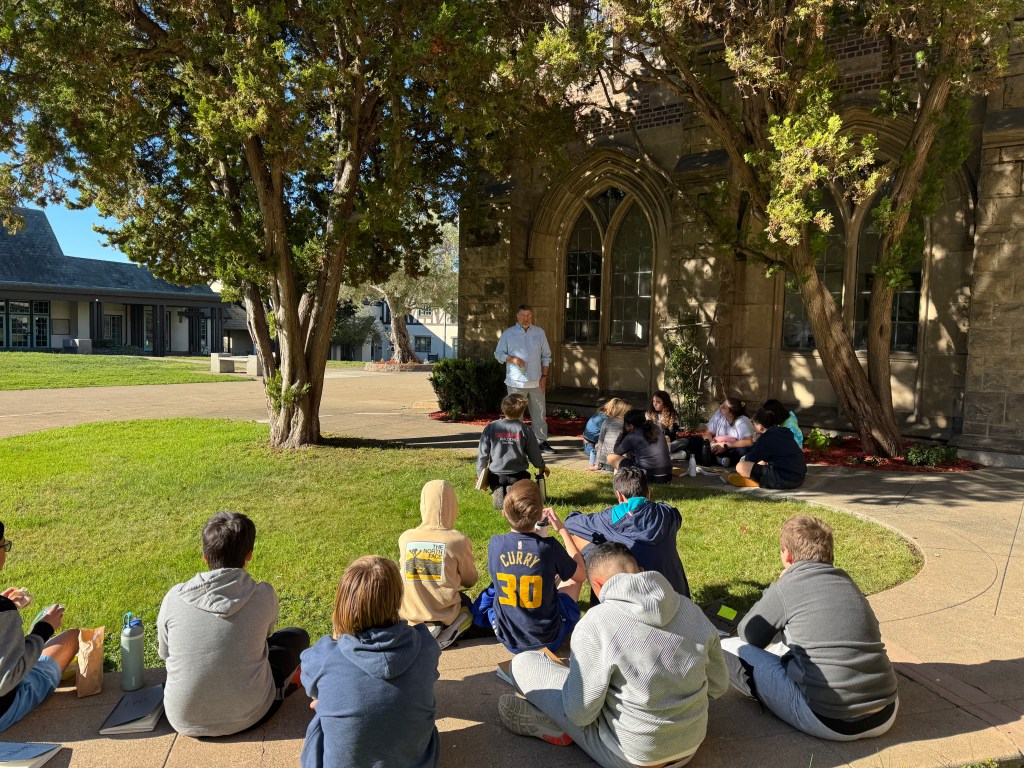
In sixth grade over the next 7 weeks we will dive into researching specific Egyptian artifacts held outside of Egypt, explore the arguments for and against repatriation of artifacts, and learn directly from archaeologists and museum experts. In the end students will have developed arguments for how they believe the driving question is best answered- stay tuned! 

Thanks to our incredible summer experience in Egypt, this year students will get to expand upon the resources I have used in previous iterations of this PBL unit. I’ll be able to share my photos of ancient temples and tombs that speak directly to their classroom research, as well as video clips with mini lectures from our Egyptologist, to enrich the PBL experience. 

One additional highlight of the trip was visiting an after school program called the Funtasia Project in Luxor. A handful of these programs exist around the world and are designed to engage students in project work after school. This particular site in Luxor also collaborates with local schools and teachers to extend project learning into the academic day. We met with the leaders of the organization, as well as some students who took us on a bike tour through the neighborhood and later shared about the impact the program has had on their lives and educational experience. It was fascinating to learn that across an ocean and thousands of miles, there are students working to build their collaboration, communication, and complex thinking skills through project work, just like we are doing here at Saklan. 

It is hard to put into words all the ways witnessing these incredible historic sites has impacted what we can bring back to Saklan students. I remain humbled by the opportunity to attend this professional development trip and look forward to continued opportunities to weave our learning into Saklan units. 

Saklan Projects!

To learn more about project work at Saklan please join us for Saklan Projects! on Tuesday, October 22 at 6:00 p.m. This virtual presentation is for current and prospective families! During the event you will hear more about how teachers design projects to address learning goals and maintain academic rigor while providing immersive, joyful learning experiences for your children. RSVP today to receive the event link!

#SaklanPBL