Exploring the Elements

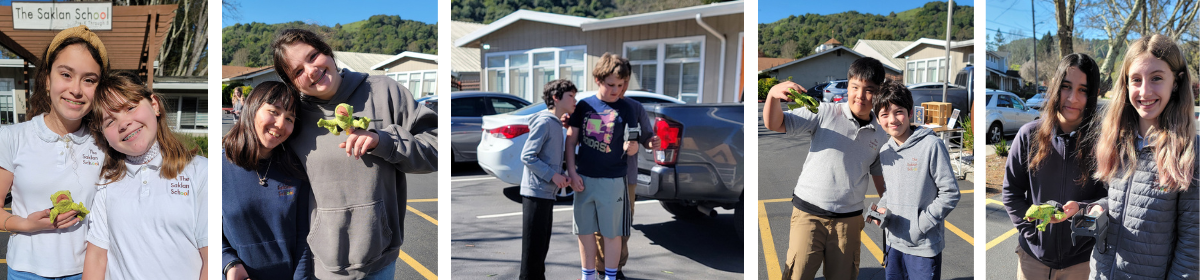
In chemistry, eighth graders explored the periodic table of elements, often described as the ultimate map of matter. They learned to read the table like scientists—discovering how atomic numbers and atomic masses reveal information about each element’s structure, bonding potential, and the shared properties within each column. With each lesson, students grew more confident in understanding how the periodic table organizes and explains the world around us.

One question that sparked lively curiosity was: “How can an element have a negative boiling point?” To find out, students conducted a hands-on Dry Ice lab. Wearing goggles and gloves, they observed how this compound sublimates, changing directly from a solid to a gas at room temperature. They watched Dry Ice “boil” on the counter, producing dense vapor clouds, and experimented with how everyday objects reacted to the extreme cold. From squealing pennies to bubbling vapors, the lab brought to life the concept of boiling points and how temperature affects different substances on Earth.

To deepen their understanding, each student selected an element to research in depth. They created Bohr models, uncovered the discovery stories behind their elements, and explored everyday uses—from technology and medicine to construction and art. To showcase their creativity and knowledge, students designed custom T-shirts celebrating their chosen element. The results were as stylish as they were scientific!

#SaklanHandsOn

Head’s Corner: Where is the Rigor?

Every so often, I get the question from a prospective parent about rigor. They love our approach, and are firm believers that students need to have a “love of learning” and a “love in learning”. But they ask: Is it rigorous? 

As adults, our concept of rigor is informed by our own experiences. When many of us think of rigor, we think of lots of homework, long tests, sitting at a desk, and grinding it out. While that kind of work may be hard, is it rigor or compliance? Is it the type of learning that benefits future-facing students? 

True rigor is about the level of thinking kids are doing, not how stressed they are. Can they analyze, design, and create? Do they grapple with open-ended questions well? Can they explain their thinking, defend their work? Do they persist and have grit?  

Our project-based approach demands synthesis, application, and transfer—the highest levels of Bloom’s Taxonomy. It also requires something traditional rigor often ignores: motivation. When students care about what they’re doing, they naturally push themselves further.

This type of work is cognitively rigorous; what we grew up with feels more like compliance rigor.  

If you are not sold on the idea that what we do is truly rigorous, let our MAP results speak for us. NWEA administers the MAP test to over 35,000 schools across the country. Of those schools, 3,500 are private schools like Saklan. If you look at our results, we not only rank well against schools in general, but score significantly higher than most of our private school cohort. 

What we do may not look like the rigor of our childhoods. But it’s the rigor kids need today—and the rigor that prepares them for tomorrow.

Warmly,
David

#SaklanAcademics

Grandfriends’ Day – RSVP Today!

Saklan is excited to host Grandfriends’ Day on Friday, November 21st, from 8:45 to 10:30 a.m. We have an exciting morning lined up for grandfriends, including student presentations, time in classrooms, a photo booth, and other fun activities for students and grandfriends to work on together!

Please remind your grandparents and special friends (a friend or family member that your child looks up to and/or has a grandparent-like relationship with) about this event, so they join us! 

If your child doesn’t have a grandfriend who can attend, please don’t worry. All students will be included in the activities and be paired up to experience a morning of cross-generational fun!

#SaklanCommunity

Saklan Student Council at Work

Snack Shack

Every Saklan student knows how rewarding a snack can be at the end of a busy day of learning and having fun with one another here at school. Our dedicated and resourceful Student Council has been busy planning the return of Snack Shack this year!

Student Council officers and representatives in grades 1 through 8 selected the final items for sale based on desirability, minimizing waste, and setting reasonable prices ranging from 50 cents to $3.00 per item. Yummy snacks for sale this year will include: Goldfish crackers, gummies, chips, Veggie Straws, Hello Panda, Pirate’s Booty, Rice Krispies treats, La Croix bubble water, Honest Juice, and Martinelli’s apple drinks. 

Last year’s Student Council voted to allocate most of the proceeds from Saklan’s Snack Shack to support Sustainable Coastlines Hawaii, a non-profit organization. Their mission is to inspire communities to care about coastlines. Additionally, each February, our 7th-grade students have the opportunity to work with this organization to clean up a section of Waikiki Beach in Oahu, Hawaii, helping to reduce the amount of microplastics in the local environment. Last year, our Saklan students sifted the sand and removed 30 pounds of microplastics! By purchasing snacks at Snack Shack, this money is converted into donations to support Sustainable Coastlines Hawaii’s vital work. Stay tuned for which charity or cause this year’s Student Council selects!

Snack Shack will open outside David’s office from 3:00 p.m. to 3:30 p.m. every Thursday.  Saklan students are invited to come by and purchase a snack from our hardworking Student Council members. Cash only, please. 
Food Drive

The Saklan Student Council is partnering with the Town of Moraga to collect food donations for the Food Bank of Contra Costa and Solano. All families are invited to contribute non-perishable food items (no glass, please) to support our local community. Here are the most needed items:

  • Nut butters (peanut, almond)
  • Jam/jelly/honey
  • Canned tuna and chicken (in water)
  • Boxed macaroni and cheese
  • Shelf-stable milk
  • Applesauce 
  • Beans/lentils (dry or canned)
  • Rice 
  • Whole grain cereals/crackers
  • Oat/oatmeal/farina
  • Whole wheat/grain pasta
  • Canned soups/vegetables/tomato products (low sodium, easy open)
  • Nonperishable ready-to-eat meals: chili, ravioli, meats, etc. (low sodium)

Drop off non-perishable food items in the containers located outside the Saklan office. All collection containers will remain on campus until Thanksgiving Break.

Thank you, students and parents, for your support of our Student Council.

#SaklanCommunity #SaklanLeadership

The Book Fair Is Almost Here!

The Saklan Librarians are excited to share their love of books with our families at the annual Book Fair next week! This beloved event is a wonderful opportunity for students and parents to discover new stories, support a passion for reading, and help grow our school’s book collection.

Book Fair Hours:

  • Thursday: 2:00–4:00 PM
  • Friday: 8:00–11:30 AM (closed during CLAS, approximately 9:00–9:40 AM)
  • Friday: 2:00–4:00 PM

The Book Fair will be held in the parking lot, with a move into the Library if it rains.
We look forward to seeing you there and celebrating the joy of reading!

#SaklanCommunity

Why I Give: Investing in a Community That Invests in Children

I chose Saklan because it offers a different kind of education. One that helps students understand subjects deeply and reach their own conclusions. In a world where this generation has information and misinformation at their fingertips, it’s crucial they learn how to think, not what to think—and to show up with the courage to do the right thing.

Saklan is also where my son is seen, not as a test score or a kid to mold, but as himself. Here he’s encouraged to think independently, follow his own developmental timeline, and nurture his genuine love of learning. I don’t take that for granted. I know it isn’t true everywhere.

I give to Saklan my most limited resource: my time. To me, community isn’t an extra; it’s formative. I want my son to see that showing up matters, that relationships shape the places we care about, and that being part of something means taking responsibility for it. You don’t just show up—you help build the places you belong. That looks like reading to a class, organizing a potluck, cheering at CLAS, lending a skill to a project, or helping a new family find their footing. It’s introducing yourself at drop-off, showing up when someone needs a hand, and caring about others’ well-being.

I also give financially to Saklan because I want it to endure. Like many independent schools, Saklan operates with a gap between what tuition covers and what it actually costs to sustain small classes, rich programming, and support the teachers who pour so much into all the kids. Each year, I make a contribution that’s meaningful for our family. I see it as investing in the future of a community that invests in our children.

Join Ani and her family in supporting Saklan’s Annual Giving Fund.

#SaklanGiving #SaklanCommunity

Raising Future Ready Kids

What will learning look like in five years — or even next fall? As artificial intelligence rapidly transforms education, families are faced with big questions: How should my child use AI? How do I know which tools to trust? Could AI replace teachers? What about screen time and privacy?

Join ParentMap and Saklan on Nov. 18 for an urgent and inspiring ParentEd Talk. Khan Academy founder Sal Khan will share how families can harness AI to support learning in healthy, thoughtful ways, while preserving the creativity and curiosity that make childhood special.

#SaklanParentEd

Celebrating Learning at Saklan

This week, our campus buzzed with excitement as second and seventh-grade students showcased their learning during two incredible culmination events. Culminations are opportunities to bring community members together to celebrate student learning and provide a platform for learners to share their knowledge, creativity, and growth.

As part of their Welcome to Saklan PBL unit, second grade explored the question: How can we help newcomers to Saklan feel welcome? After considering what may be the most important elements of our campus to teach newcomers about, students dove deep into mapping, writing, and presentation standards. With help from a critique and revision session with Mylesa, our Director of Admissions, second graders have created a complete self-guided tour of our Saklan campus that can be shared with new families. The digital and interactive components can be used by newcomers for years to come! To celebrate their work, they led families on a live version of their tour this week with great success! Come hear more about this unit at CLAS on November 14th. 

In a seventh-grade math PBL unit, students coded Scratch video games based on their interests. Seventh graders used math knowledge of graphing rotations, reflections, and translations to design an original or remix an existing Scratch game. To culminate this work, they shared the games they made with other students! Third through fifth-grade students were invited to learn about how the seventh graders designed their games and then were given an opportunity to play them!

Culminations like these highlight the power of Project Based Learning, where curiosity drives discovery and students share their learning with pride.

#SaklanProjectWork

Smiles, Songs, and Spooky Fun

What a fun and festive Halloween day we had at Saklan! From the moment students arrived on campus, excitement was in the air. The morning kicked off with our beloved Costume Parade, a joyful tradition that brought the entire Saklan community together. It was wonderful to see so many smiles, creative costumes, and parents cheering from the sidelines!

While the day was filled with laughter and fun, it was also infused with compassion and connection; two hallmarks of the Saklan spirit.

For our Kindergarteners, first graders, and 8th-grade choir members, the morning brought a visit to Moraga Royale, where they performed Halloween-themed songs for the residents. Their performance was met with warm applause and smiles all around!

Later in the day, our Middle School Student Council hosted a spooky celebration for Preschool through 8th-grade students, complete with Halloween story readings and trips through a haunted house they had designed themselves.

The afternoon concluded with classroom parties featuring food, games, and laughter.

A huge thank you to all our amazing families who helped make the day so memorable. Your time, creativity, and enthusiasm make events like this so special for our students, and remind us all what a strong, joyful community Saklan truly is.

#SaklanConnectedCommunity

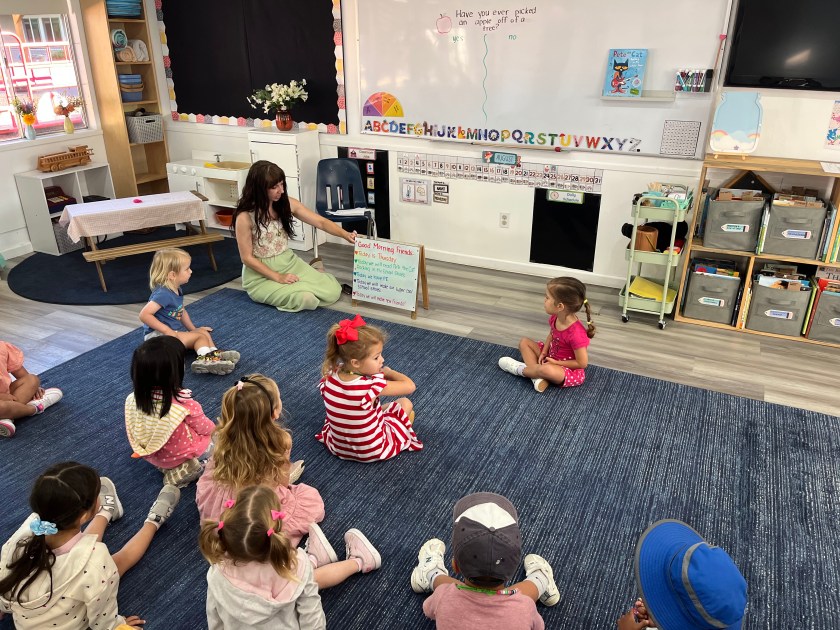
From Horses to Hounds: The Hoot Owls Explore Pets

As part of their Pets Project, the Hoot Owls have been exploring how to care for different kinds of animals—both big and small! When teachers noticed several students showing a special interest in the horses and stable set in the classroom, they decided to dive deeper into learning about how to care for horses.

The class discovered that horses can make wonderful pets, but they also require a lot of care and space. Together, the Hoot Owls learned that horses need shelter, lots of hay and grass to eat, and regular brushing to stay clean. They also learned that taking care of a horse includes cleaning up after them—using shovels to tidy up their stalls! Students found out that horses can be ridden using saddles and reins, which led to lots of imaginative play. To represent what they learned, the class created their own model horse brushes, water and food troughs, and even shovels for stable cleanup.

Next, the Hoot Owls turned their attention to one of the class’s favorite animals—dogs! They were thrilled to welcome two special guests: Saul, Saklan’s Middle School Math Teacher, and Mel, who brought along their two dogs, Banksy and Bixby. The Pre-K students came prepared with thoughtful questions, and Saul and Mel were happy to share their expertise.

The class learned that the amount of food a dog needs depends on its size and age. Banksy eats one small bowl of food at dinner, while Bixby eats twice a day—and even uses a special puzzle bowl to slow down his eating. Students also discovered that dogs can earn treats when they perform tricks. Banksy has already mastered “sit” and “roll over,” while Bixby is still learning!

Exercise was another key topic. The students were amazed to hear that Banksy and Bixby had already walked a full mile before arriving at school! To stay active and engaged, dogs also need toys like ropes, chew toys, and stuffies. The class discussed how important it is to keep dogs clean—by brushing them, especially as they grow their thick winter coats, and giving them baths when needed. They also loved hearing about Banksy and Bixby’s matching jackets and learning that collars and leashes are important tools to keep dogs and people safe.

After the visit, the Hoot Owls had the opportunity to apply what they learned by creating their own “pet care kits” for small toy dogs. They made leashes, collars, food and water bowls, treat bags, toys, and even jackets! Each student thoughtfully considered what their dog would need and designed items to help care for their new pet.

Through hands-on exploration, creativity, and expert insight, the Hoot Owls deepened their understanding of what it truly means to care for an animal. From brushing a horse to walking a dog, these young learners are discovering that responsibility, empathy, and kindness are at the heart of being a good pet owner.

#SaklanProjectWork