Last Friday, Saklan’s February Social-Emotional Learning (SEL) focus on perseverance came to life in a memorable way for students in third, fourth, and fifth grade.
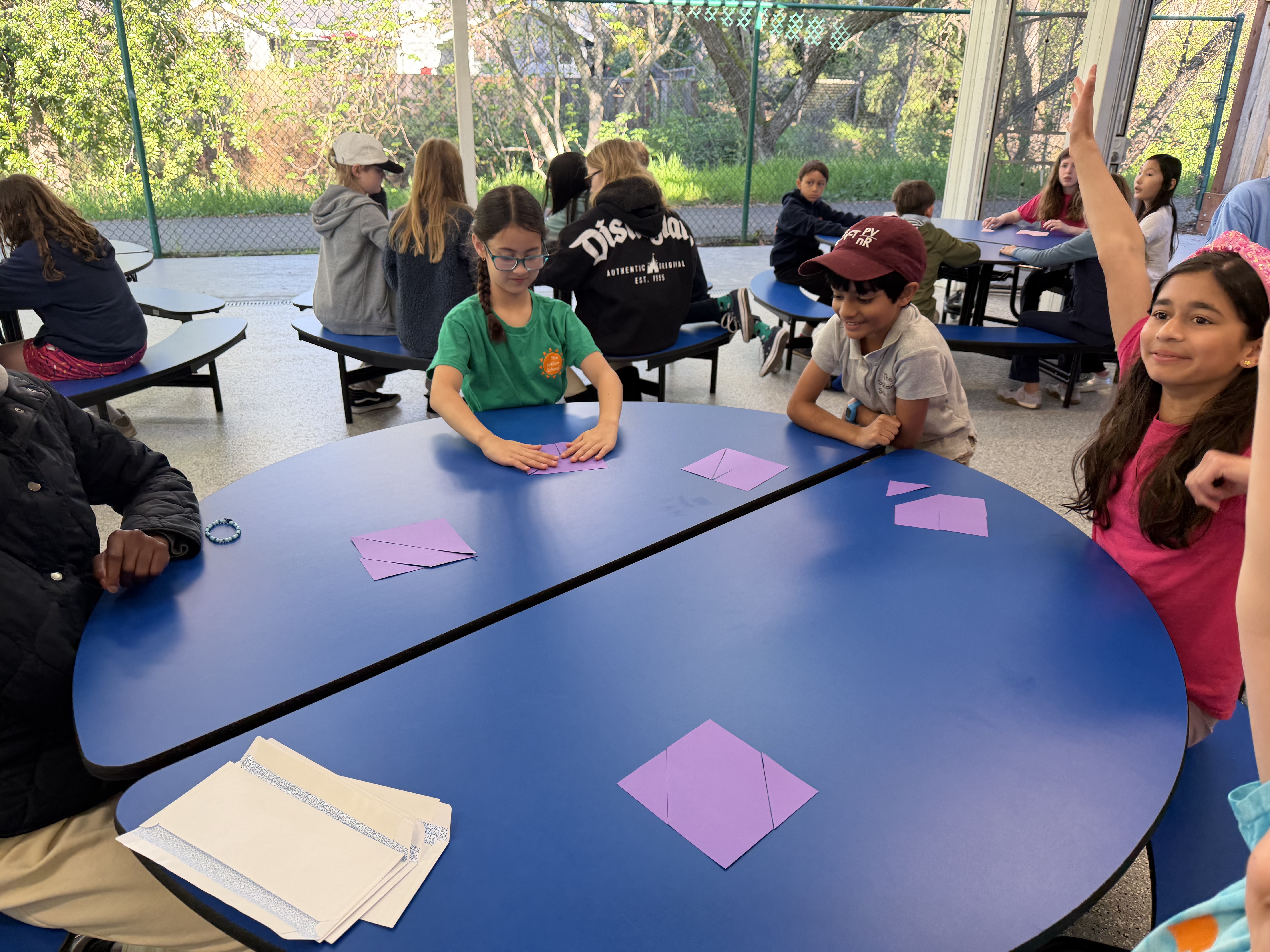
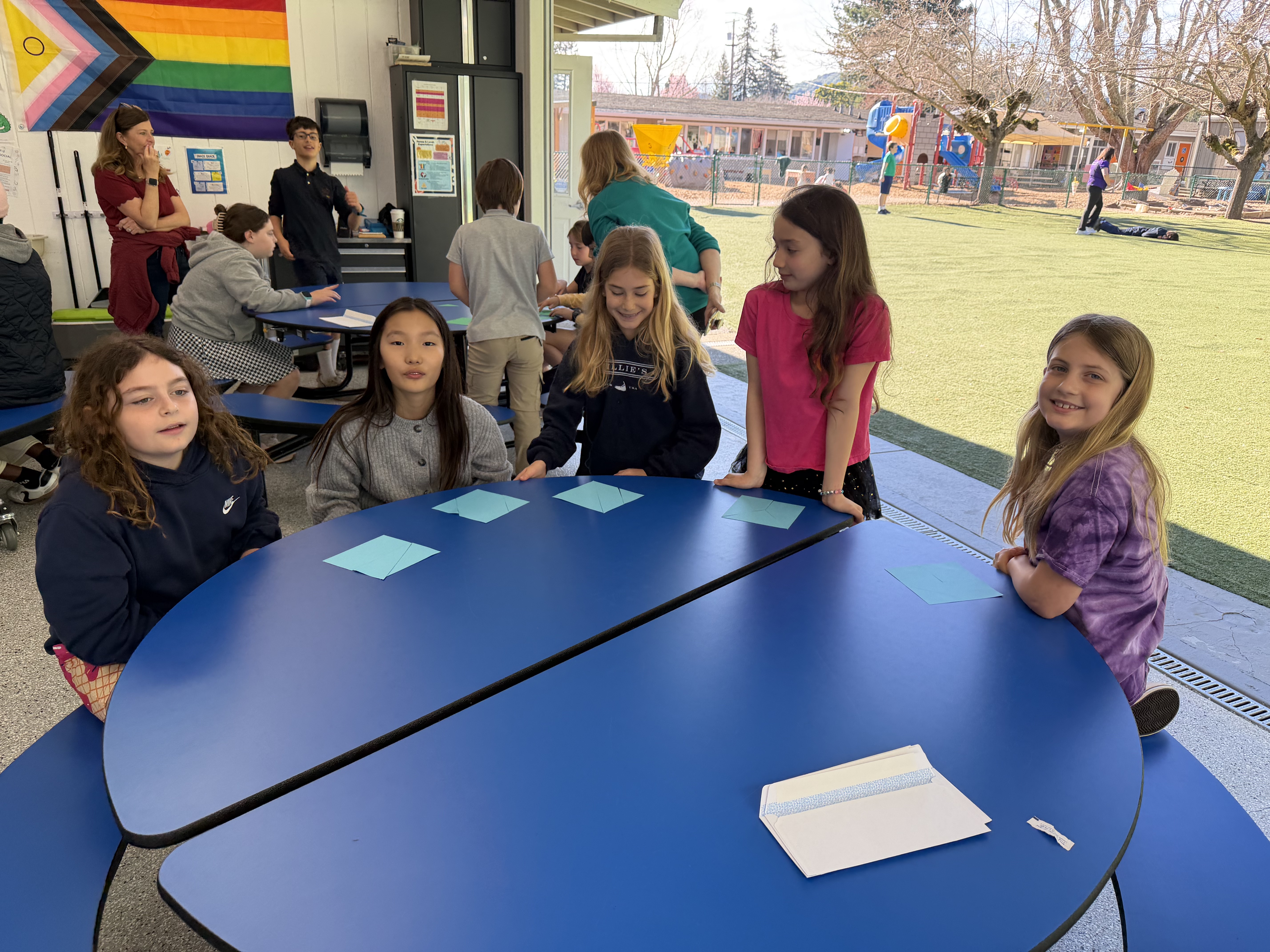
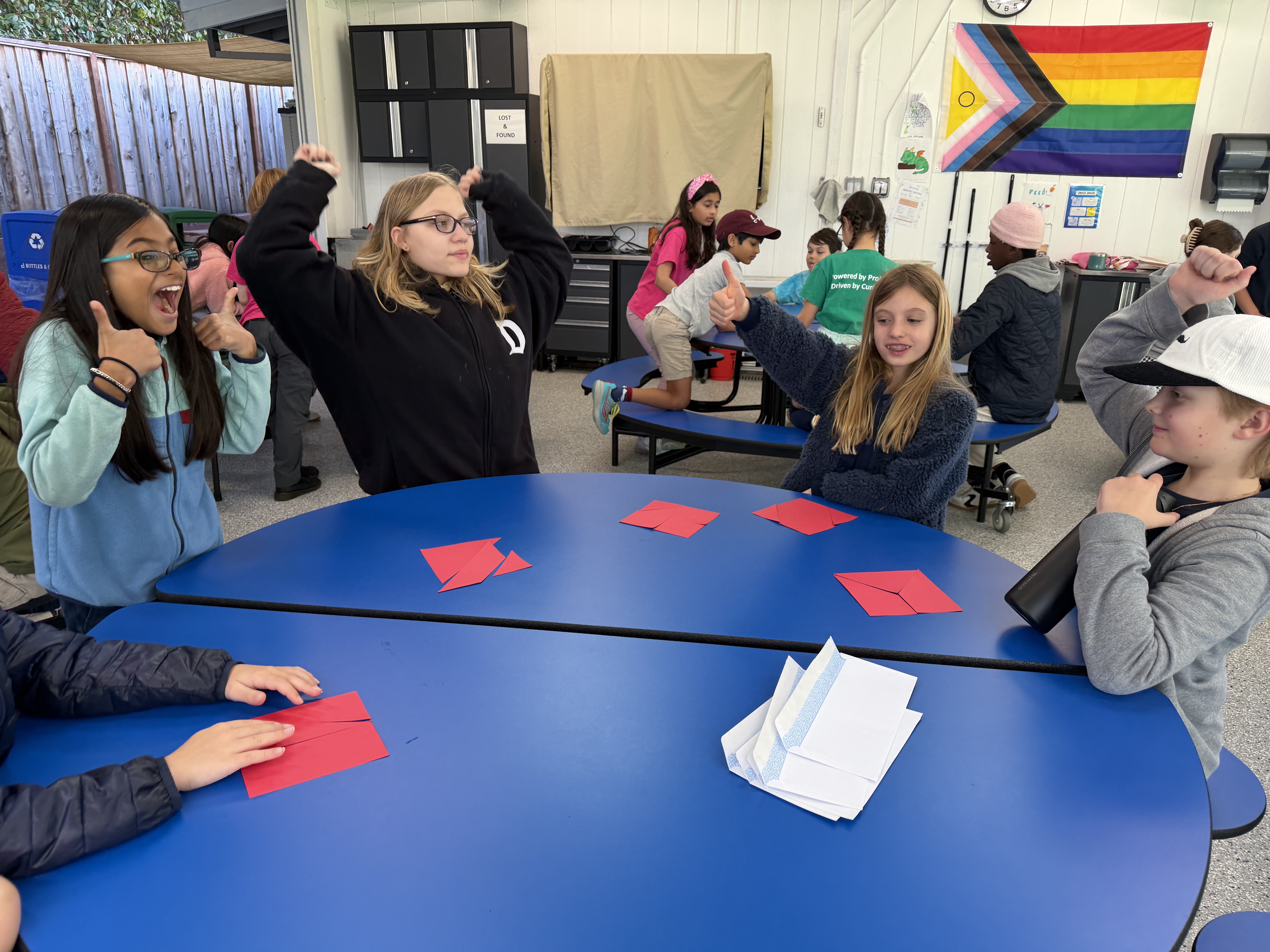
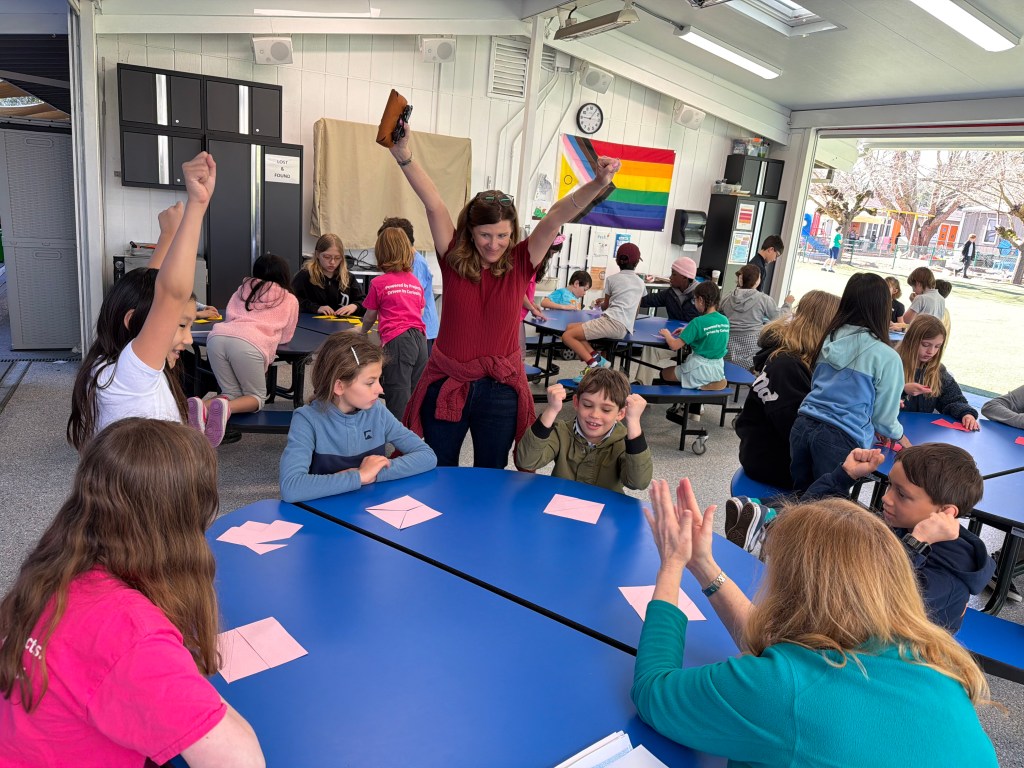
Students gathered in mixed-grade groups of five for a silent puzzle challenge that quickly proved to be about much more than fitting shapes together. Each student began with three puzzle pieces, and together their group needed to complete five square puzzles. There was just one twist: students had to trade pieces without speaking. While they were allowed to offer a piece if they noticed someone needed it, they could not ask for one themselves.
At first, the rules prompted puzzled looks and raised eyebrows. One student even asked, “Wait… we can’t talk at all?” before the challenge began. Soon, however, the pavilion filled with intense focus, expressive gestures, and quiet determination. Without words, students leaned in, carefully studied one another’s progress, and began noticing—really noticing—what their teammates needed.
Gradually, the groups found their rhythm. Students passed pieces across the table, pointed gently to openings, and patiently waited for the right moment to help a teammate. When the final squares clicked into place, the groups celebrated in their own silent way, pumping their arms and grinning with pride.
The activity was more than a puzzle-solving exercise. It was a powerful opportunity for cross-age collaboration and social-emotional growth. Students practiced perseverance as they worked through frustration and uncertainty. They also strengthened empathy and social awareness by learning to observe others closely and respond thoughtfully.
During reflection afterward, many students shared how challenging it was to wait patiently and trust their teammates. Teachers helped connect the experience to friendship and community, encouraging students to look beyond their own needs and pay attention to those around them.
It was a meaningful reminder that perseverance often involves patience, teamwork, and the willingness to support others.
What do sunflower drawings, pattern blocks, rulers, and a classroom clothesline have in common? In third grade, they have all been bringing fractions to life.
Over the past several weeks in both Number Corner and their Bridges unit, third graders have been developing a meaningful understanding of fractions as numbers: not just pieces of shapes, but values that can be measured, compared, and located on a number line.
The learning began with a scenario challenge: How could an art club fairly share wall space for a mural? As students explored dividing the same whole among two, three, four, six, and even eight artists, they discovered the important role of the denominator and noticed how the size of each share changes as the whole is partitioned into more equal parts.
This foundational idea — that fractions represent equal parts of the same whole — helped students understand why fractions must refer to the same whole to be meaningfully compared.
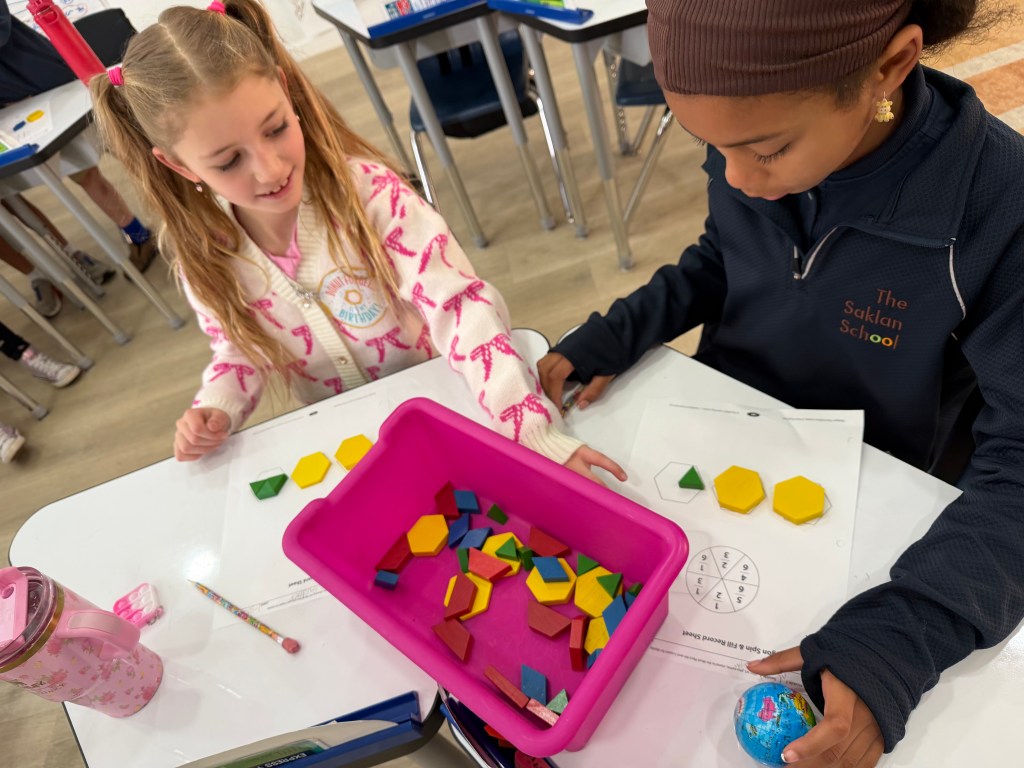
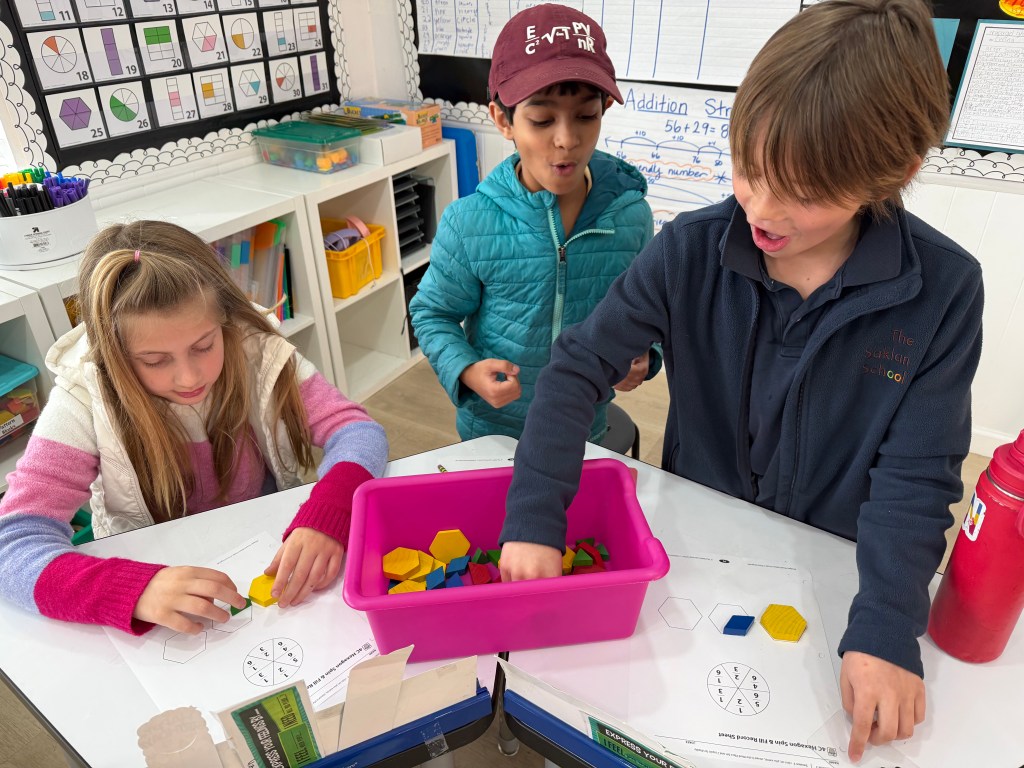
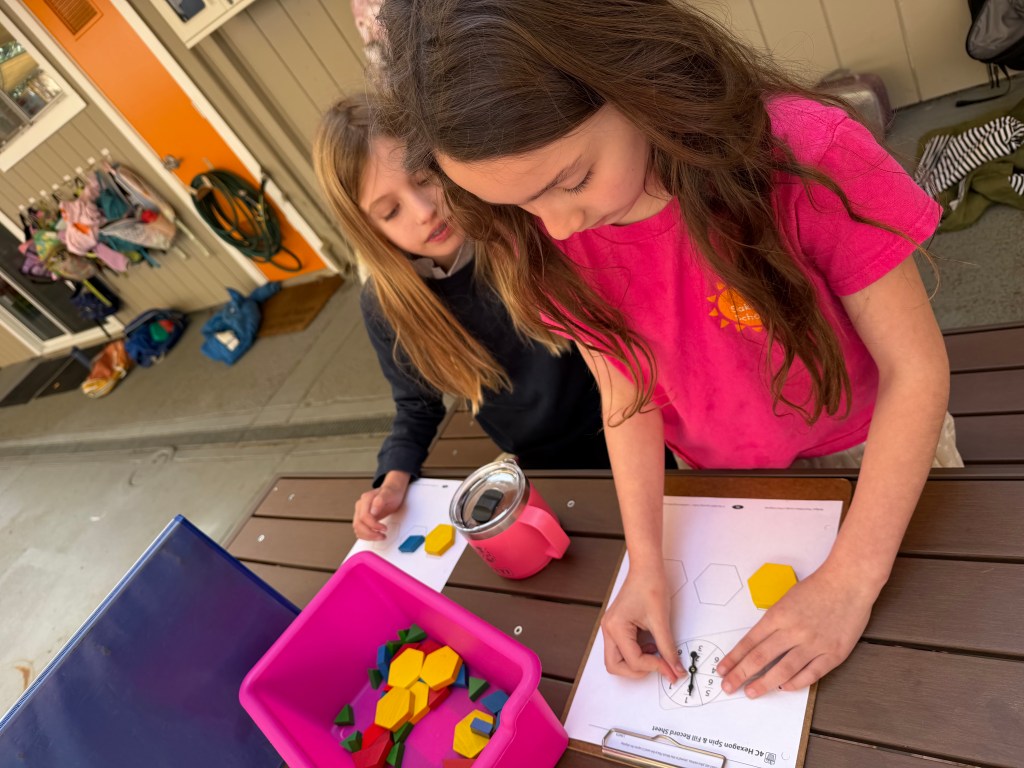
Hands-on exploration anchored the learning. Students folded paper into equal parts, modeled fractions with pattern blocks, and represented their thinking symbolically using numerators and denominators. Using a clothesline number line, students hung fractions in the correct location and justified their reasoning.
Through this visual and interactive experience, students discovered equivalent fractions and explored numbers greater than one, strengthening their understanding that fractions are numbers with precise locations and relationships.
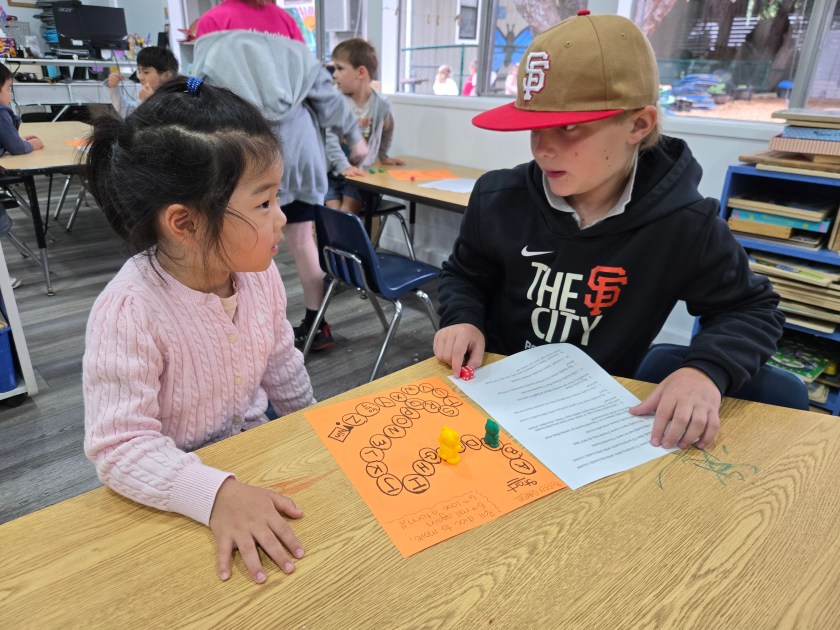
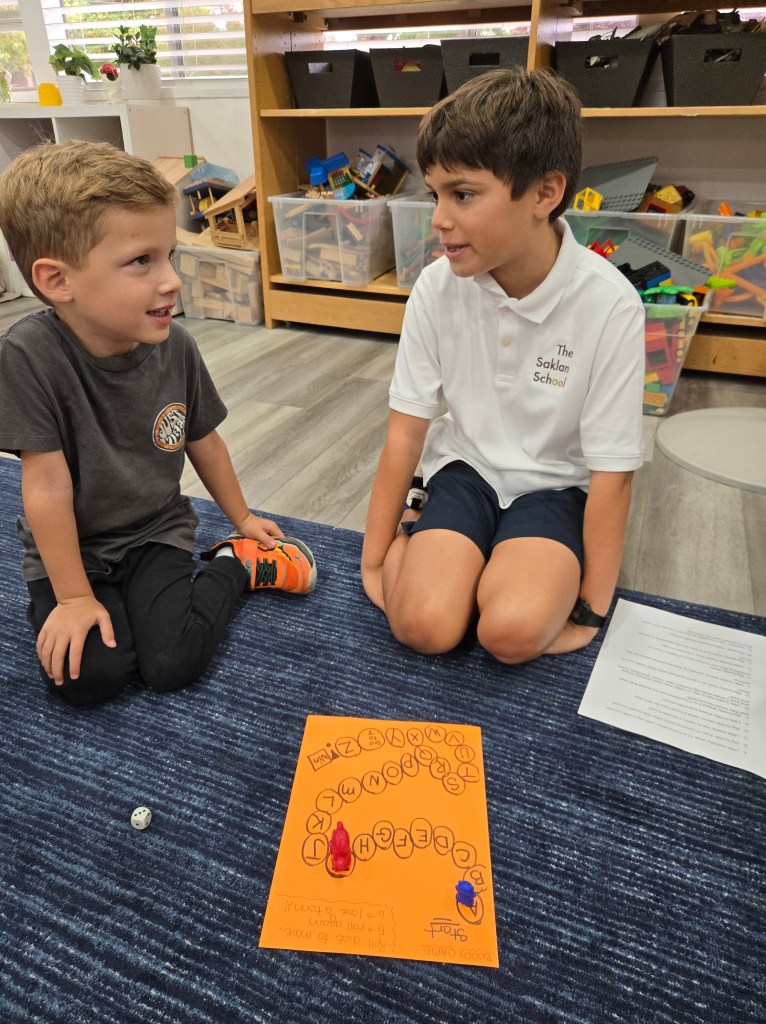
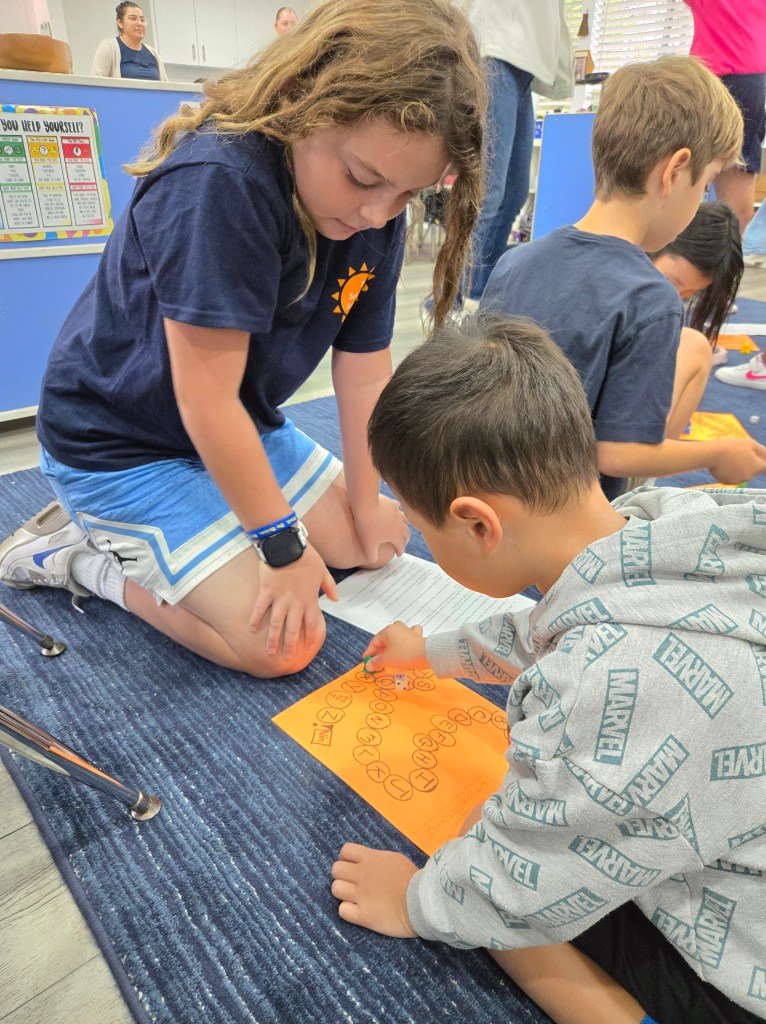
Fractions and measurement intersected when student pairs created detailed sunflower drawings and measured leaf lengths to the nearest ½ and ¼ inch. Workplace games like Fraction Tic-Tac-Toe and Hexagon Spin & Fill encouraged strategy, collaboration, and joyful practice.
These rich, hands-on experiences are building far more than fraction skills; they are strengthening mathematical confidence, perseverance, and flexible thinking.
Sometimes the most meaningful learning moments are the ones that unfold organically, and last week, Saklan’s third graders experienced one of those magical surprises.
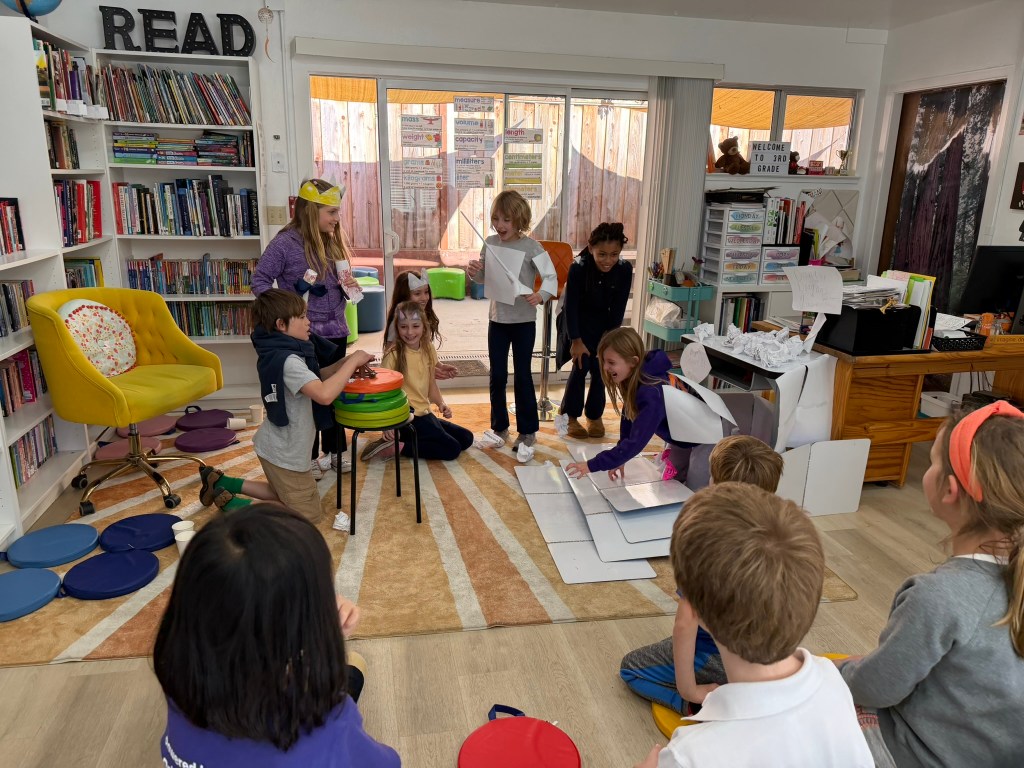
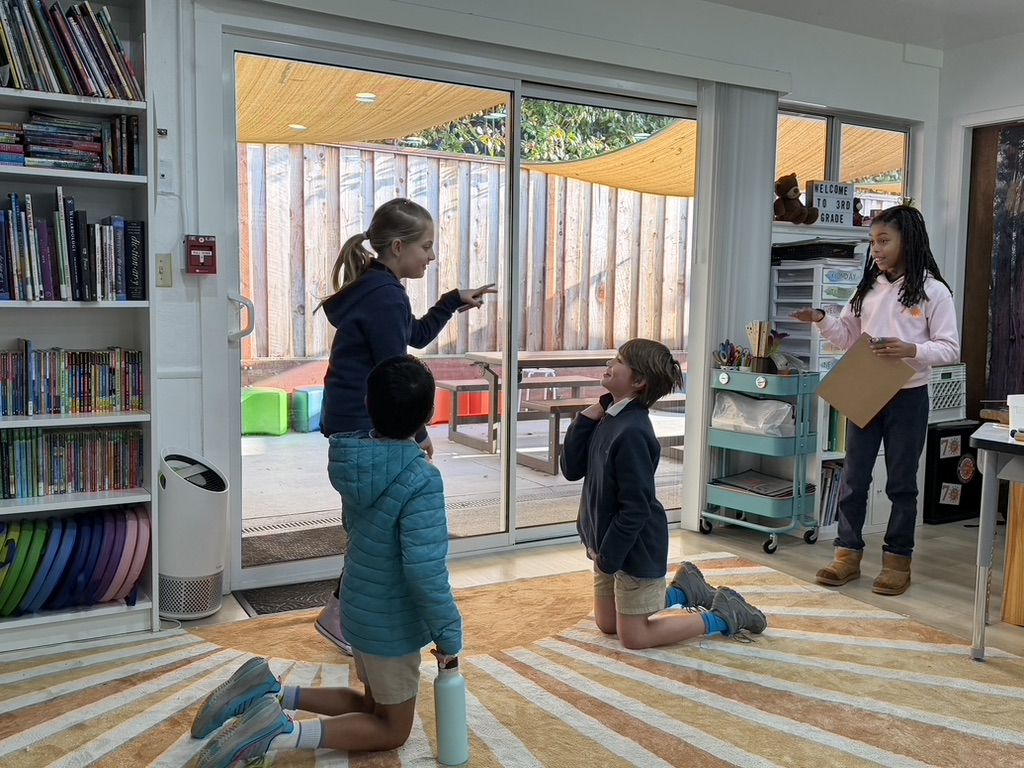
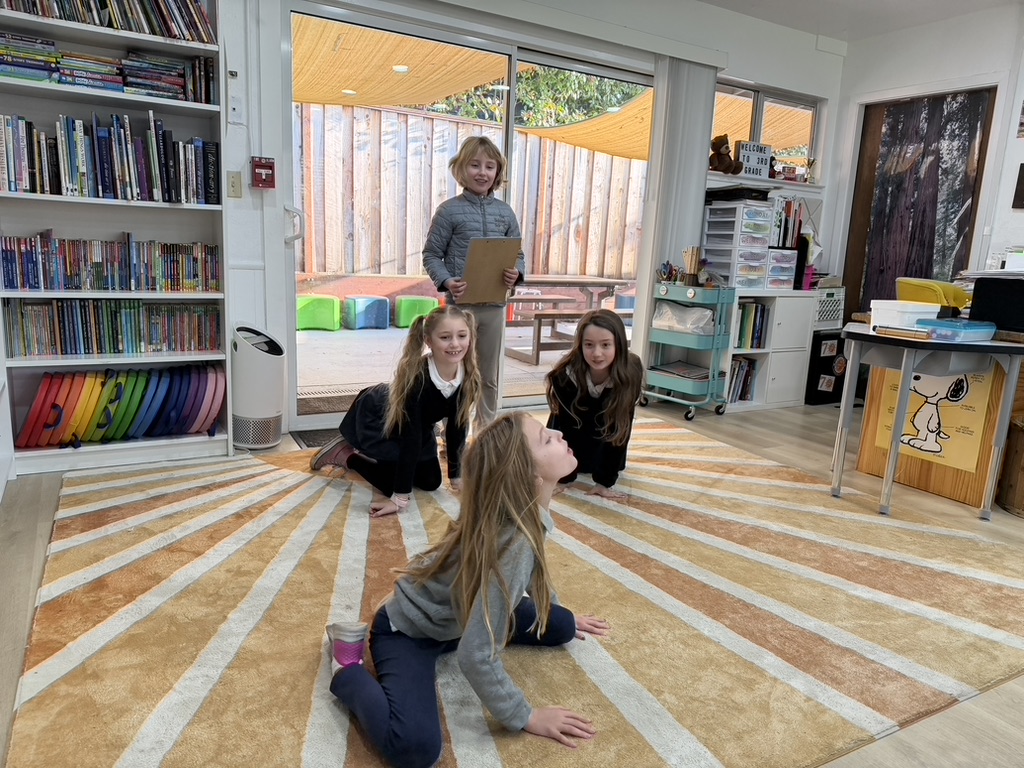
What began as a simple vocabulary exercise quickly evolved into a joyful, student-led experience filled with creativity, collaboration, and enthusiasm for learning. As part of the lesson, students were invited to bring new vocabulary words to life by creating short skits. Almost immediately, the classroom buzzed with excitement. Laughter, brainstorming, and endless “What if we…?” moments filled the air as students worked together to imagine scenes and assign roles.
The excitement didn’t end when the lesson was over. Students proudly shared that they continued inventing skits during recess, eager to keep the momentum going.
By Friday, the class had fully taken ownership of the experience. During recess, they collaboratively planned one large skit as a whole group, listening carefully to one another’s ideas and working through challenges together. Later, during quiet time, students independently chose to design and build props, thoughtfully negotiating materials and responsibilities.
This was authentic, student-driven learning at its best: hands-on, deeply engaging, and shaped entirely by student curiosity and agency.
The experience became even more meaningful when the third graders invited their first-grade buddies to be the audience. Watching the students perform with confidence and pride—and seeing every child shine—was a powerful snapshot of teamwork, leadership, and social-emotional growth in action. One student summed it up perfectly, exclaiming, “We should do this every day!”
Moments like these are a joyful reminder of what’s possible when students lead the way.
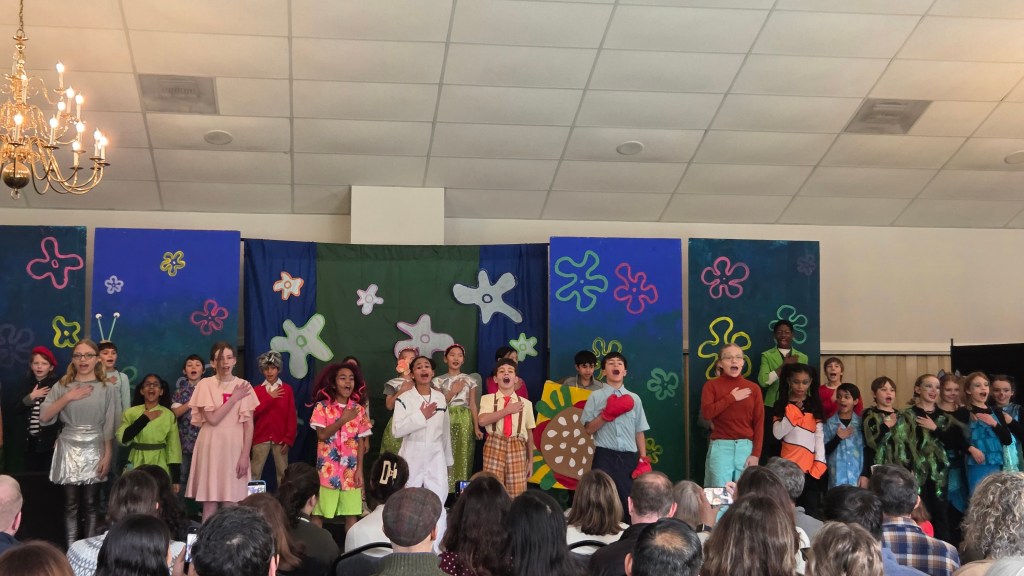
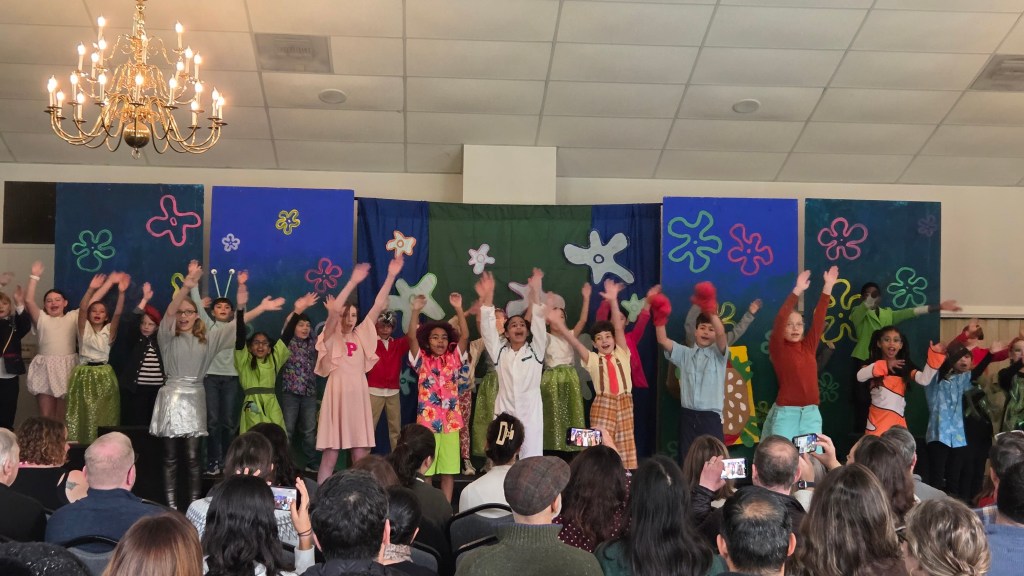
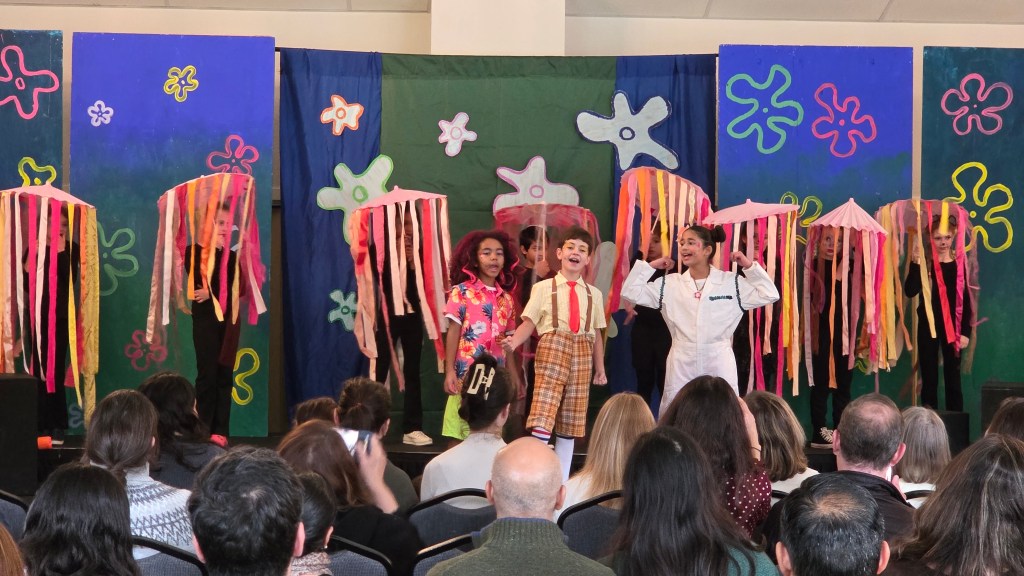
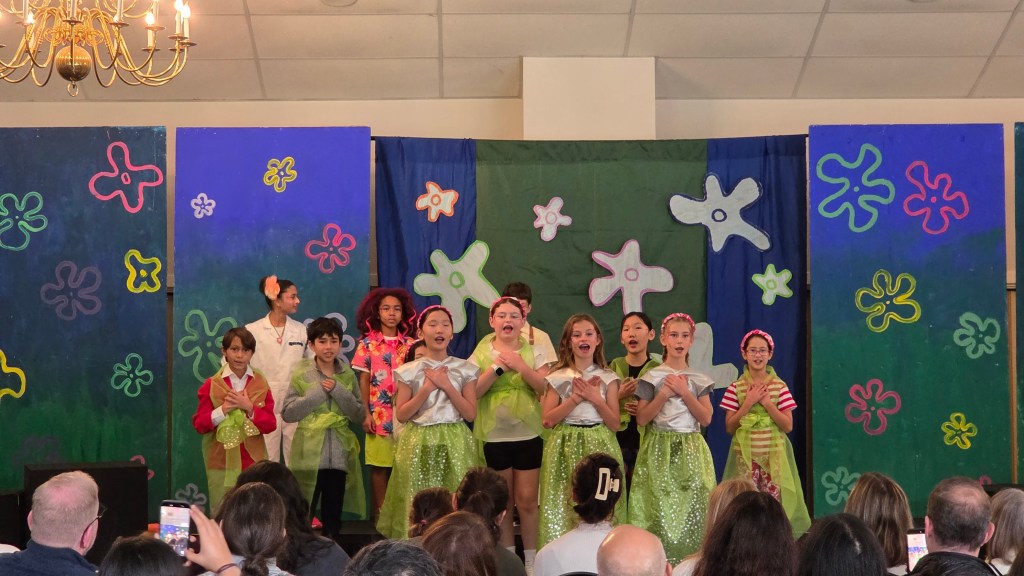
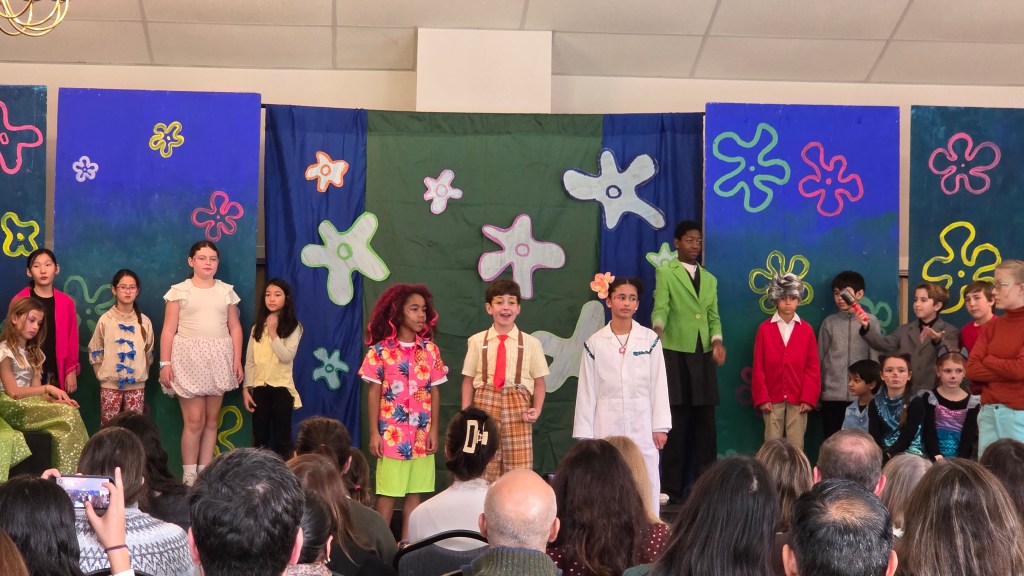
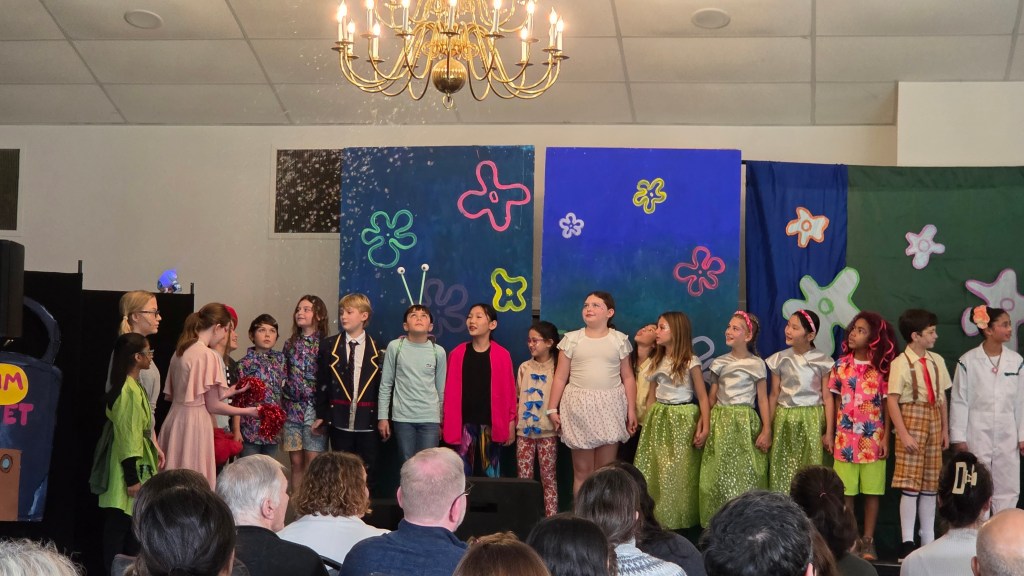
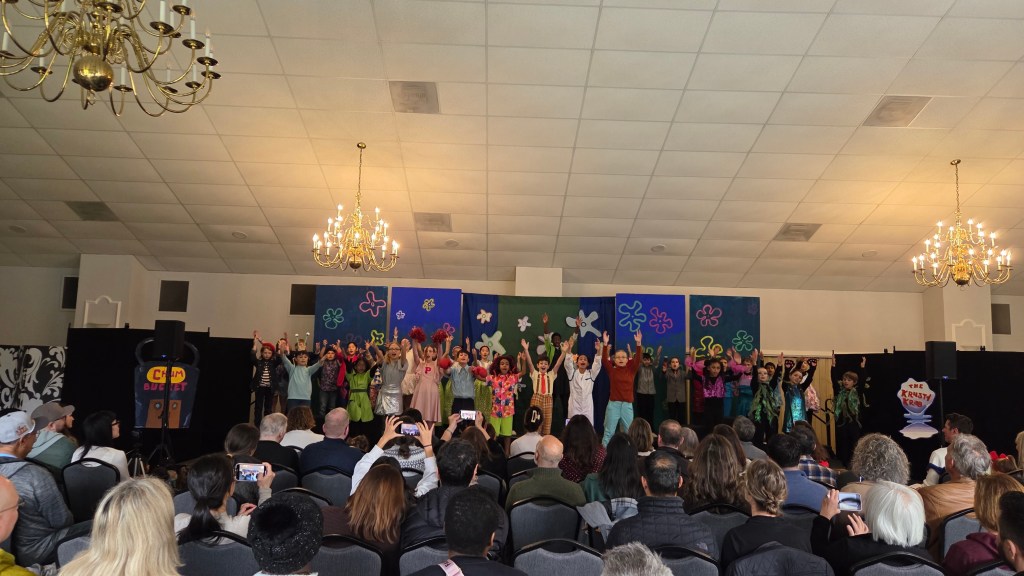
Congratulations to our third, fourth, and fifth-grade students on their fantastic performance of The SpongeBob Musical just before Winter Break!
From memorizing lines and stepping into character to finding costumes, designing sets, and applying makeup, it truly takes a village to bring a production like this to life. Our performers showed incredible courage, creativity, and teamwork on stage, and we could not be prouder.
A heartfelt thank you to the parents who supported behind the scenes by running lines, organizing base costumes, and helping with hair and makeup. And thank you to everyone who joined us for the performance and cheered on our talented cast. Your support made this celebration of creativity and collaboration even more special.
Additionally, we have a few special thank yous we would like to share:
To Dianne Hurvitz for directing the lower school students’ wonderful performance. Her hard work, dedication, and love for the students were evident throughout the show.
To Javier Yacarini for his hard work constructing the stage.
To Jayme Feldhammer for her work on the costumes.
To Sarah Gardner for her incredible help with providing and applying sparkly fishy makeup!
To Meredith Ware for sea anemone support and last-minute sewing on anemone accessories.
To everyone who joined us on our Saturday work day to build sets, props, and costumes.
It was a fabulous show! We hope you enjoy the photos from the performance below.
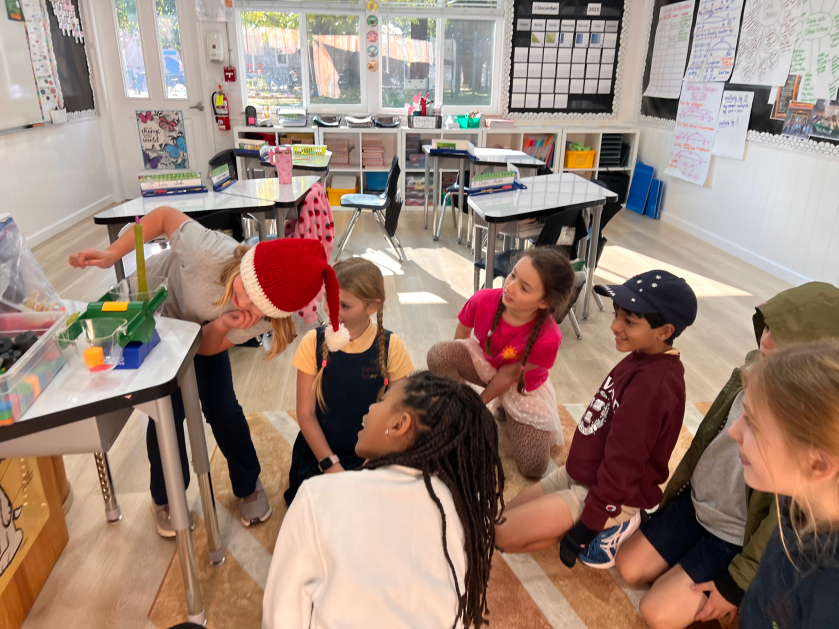
What do a paper clip, an eraser, and a handful of classroom treasures have in common? In the third-grade classroom, they are all helping build big mathematical thinking, one gram at a time.
As part of their daily Number Corner routines, third graders have launched into a month-long, hands-on math investigation focused on measurement and estimation. Each day, a different student takes the lead by selecting an object to place on the pan balance and measuring its mass in grams. The excitement is palpable as classmates gather around to make predictions and watch the scale tip. Reactions like, “I didn’t think it would weigh that much!” spark meaningful conversations about size, weight, and accuracy.
This hands-on approach transforms abstract numbers into something students can see, touch, and reason about. As a class, students are working toward a shared goal: reaching 1 kilogram, or 1,000 grams, by the end of the month. Achieving that goal requires more than mathematical skill—it calls for collaboration, patience, and perseverance. Each day, students estimate how many grams are still needed, strengthening number sense while practicing flexible thinking and reflection.
Equally important, this routine fosters student agency. Children make choices, ask thoughtful questions, and learn from one another, shaping the learning experience through their curiosity and observations. The result is a joyful blend of engaging academics, social-emotional growth, and hands-on discovery.
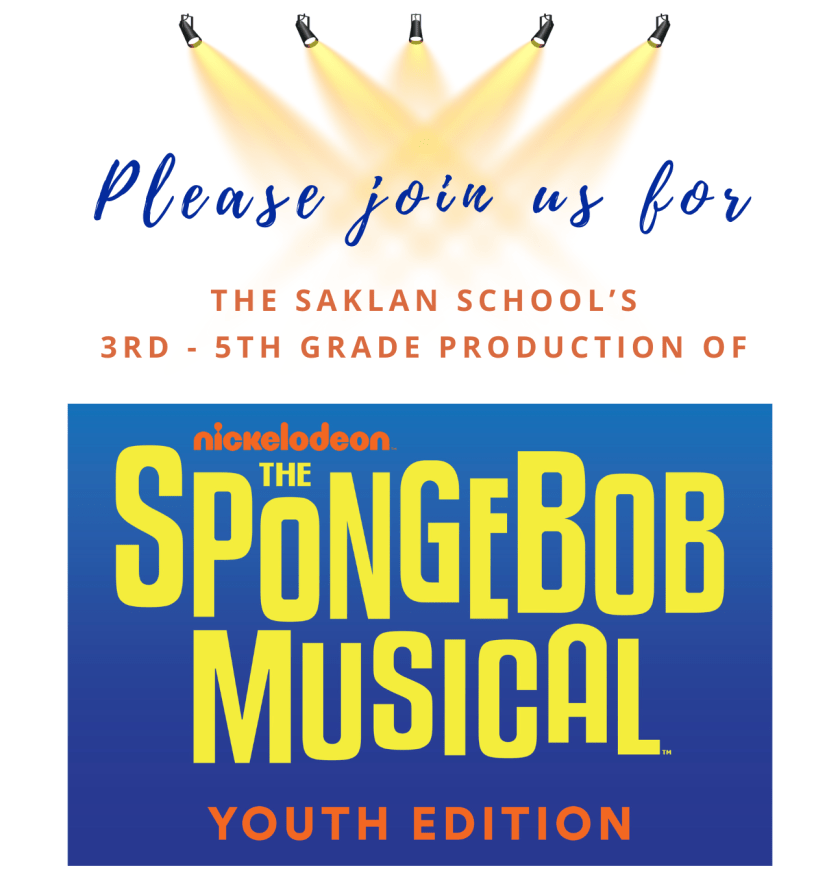
All Saklan community members are invited to join us for The Saklan School’s 3rd – 5th grade production of The SpongeBob Musical on Friday, December 19th at 10:30 a.m. The show will take place in the Holy Trinity Cultural Center (next door to Saklan). Doors will open at 10:15 a.m.
If you will attend and haven’t already done so, please RSVP here. There is no cost to attend; we want to ensure we have enough seats for all!
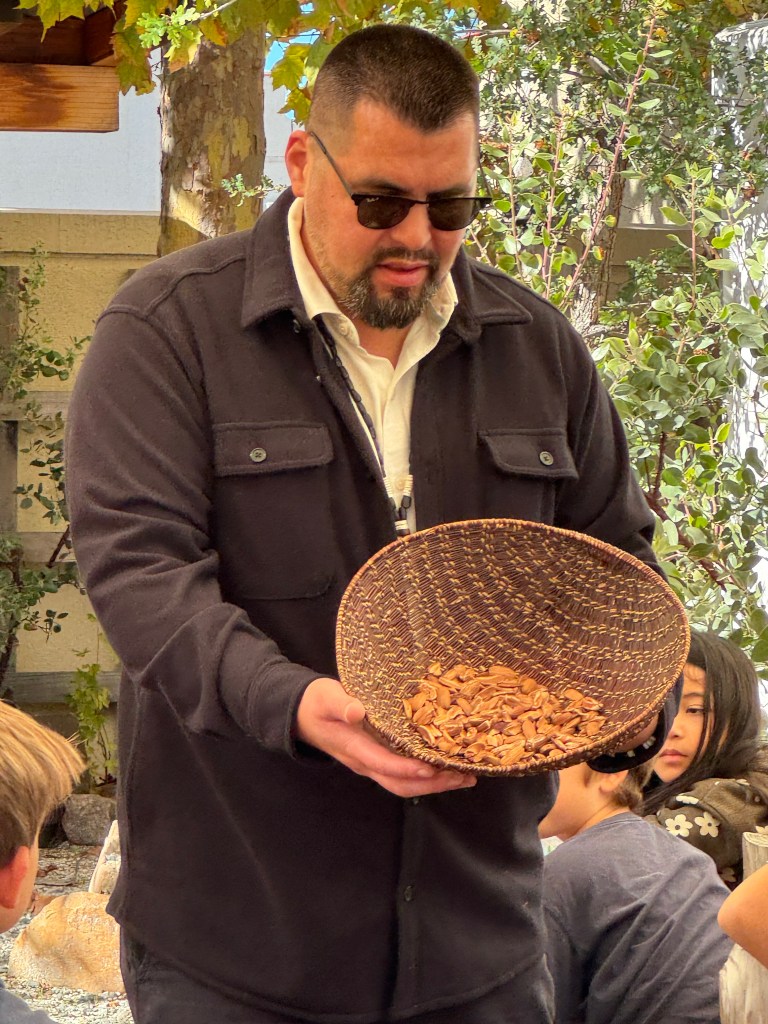
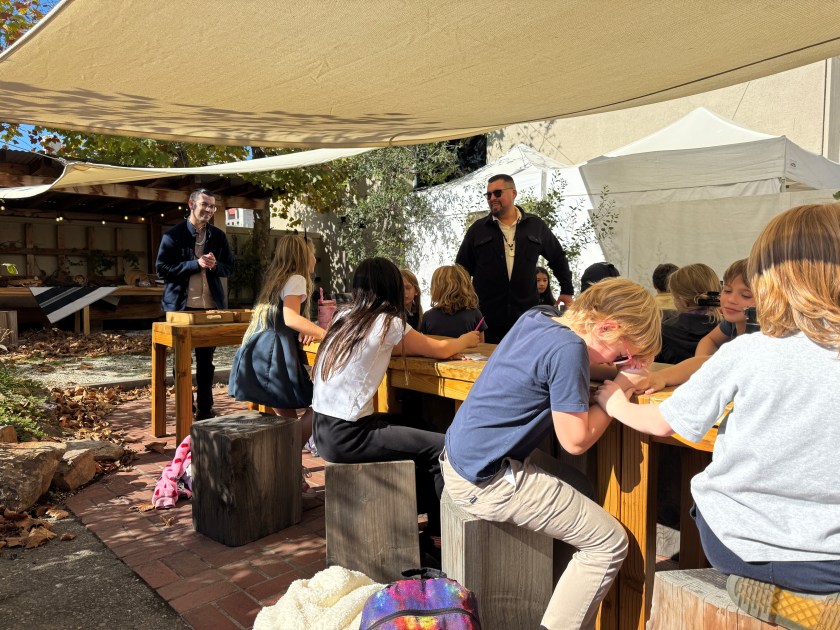
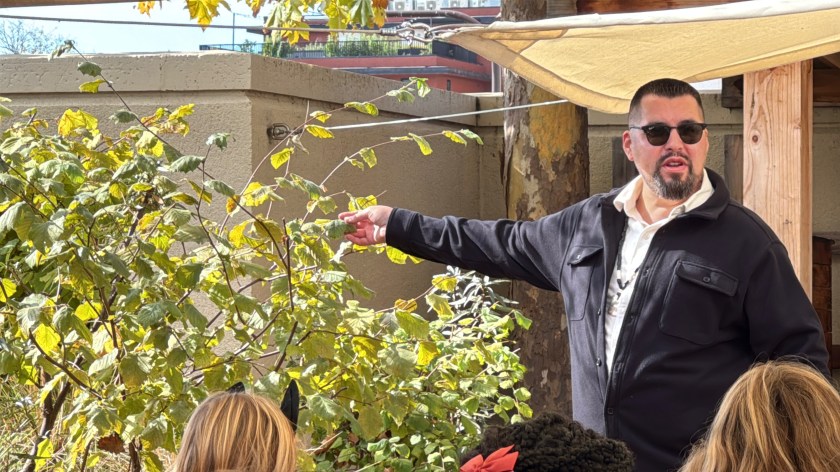
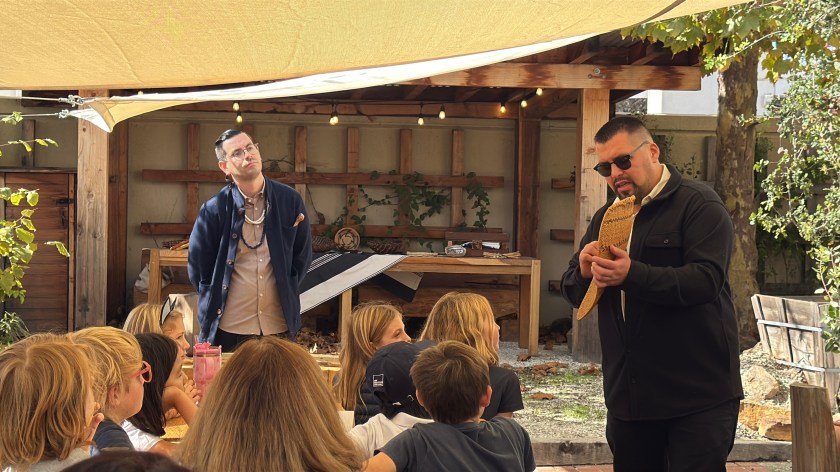
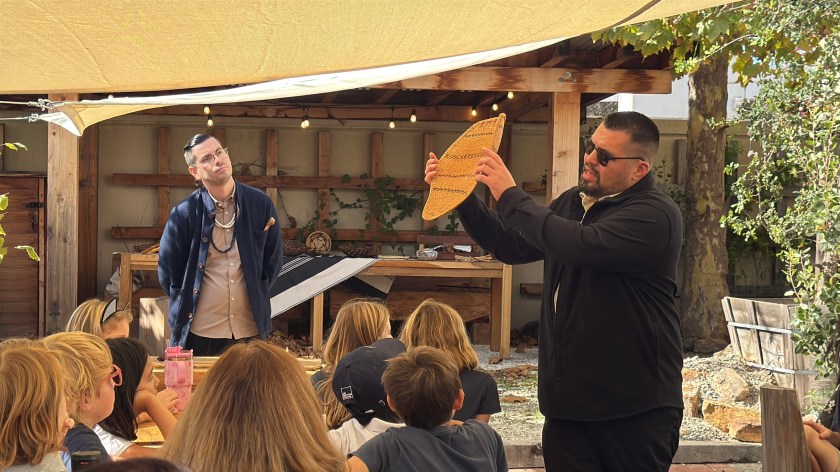
The third and fourth grade students recently spent a memorable day on the UC Berkeley campus visiting Café Ohlone as part of their Project Based Learning units. During this field experience, students stepped into a living story of culture, language, and resilience. Café founders Vincent Medina and Louis Trevino welcomed the group with warmth and generosity, sharing the many ways they keep Ohlone traditions alive through language, food, and community.
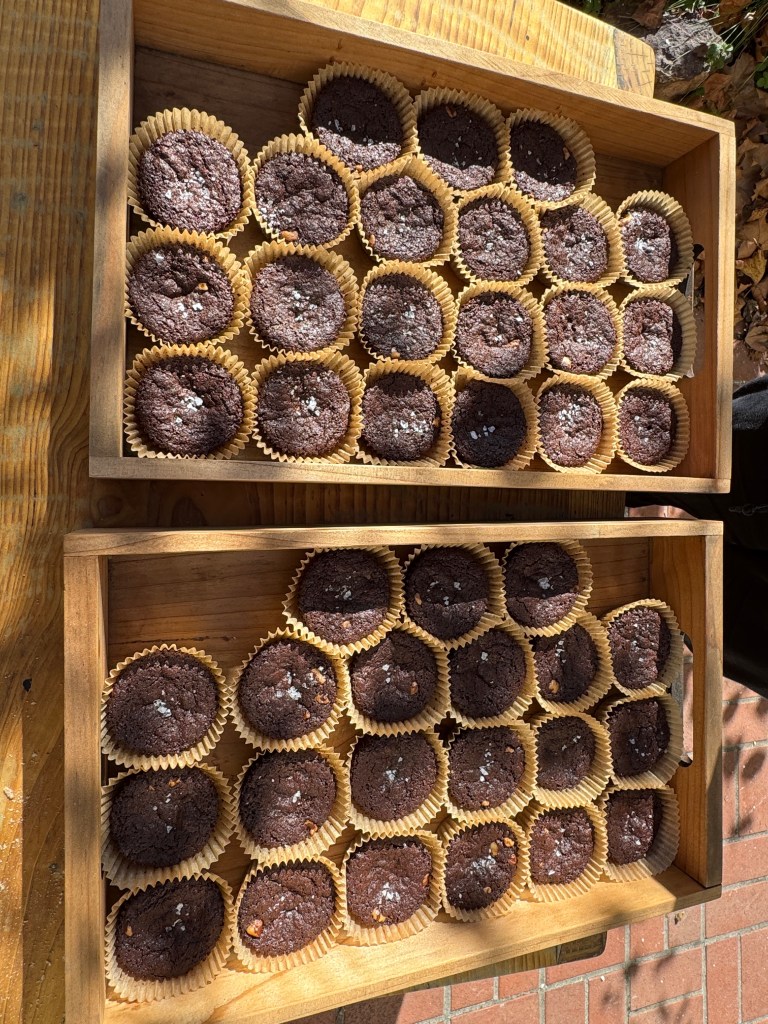
As students listened, they learned about the deep and enduring relationship the Ohlone people have with the land—how native plants serve as food, material for basketry, and sources of medicine. They were especially fascinated to discover that acorns, a staple of the Ohlone diet, require six months of careful preparation before becoming soups and breads.
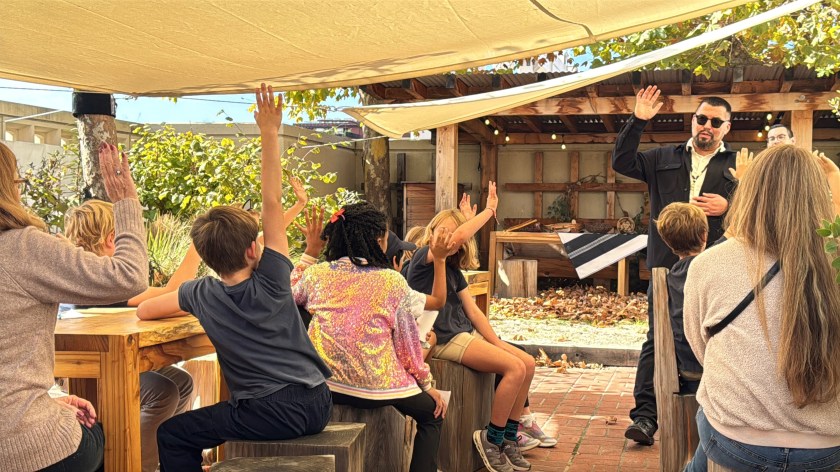
Student curiosity sparked a steady stream of thoughtful questions, so many that Vincent and Louis kindly extended their presentation to continue the dialogue. Students were eager to understand how traditional foods, languages, and customs continue to shape Ohlone life today. Vincent and Louis emphasized one message above all: Ohlone people are still here, actively preserving, practicing, and celebrating their culture.
A highlight for many students was learning to say several words in Chechenyo, the traditional Ohlone language. Speaking the language offered students a meaningful way to honor and connect with the living culture they had just encountered.
This field experience deeply enriched students’ exploration of their driving question. By connecting firsthand with Ohlone voices, students gained a more nuanced understanding of history, identity, and belonging—and a lasting appreciation for the resilience and vibrancy of the Ohlone community.
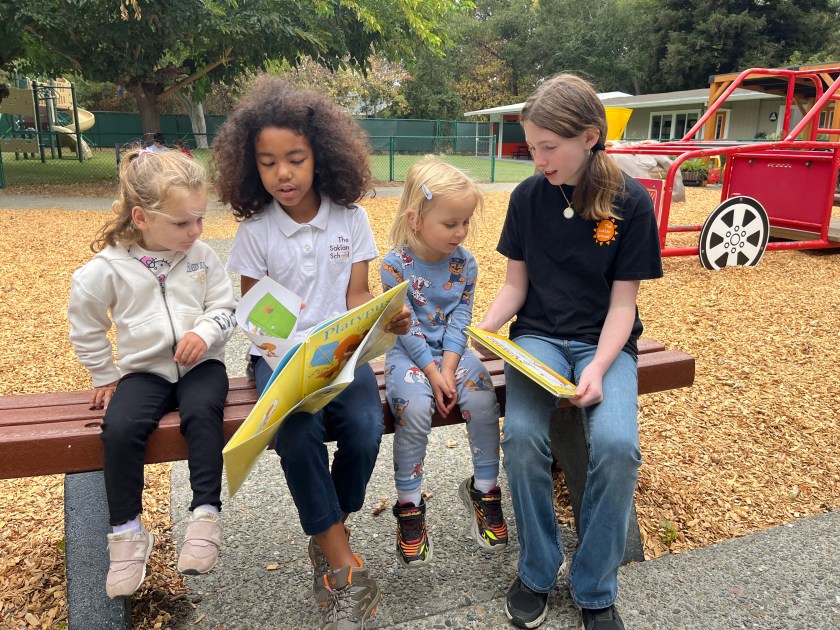
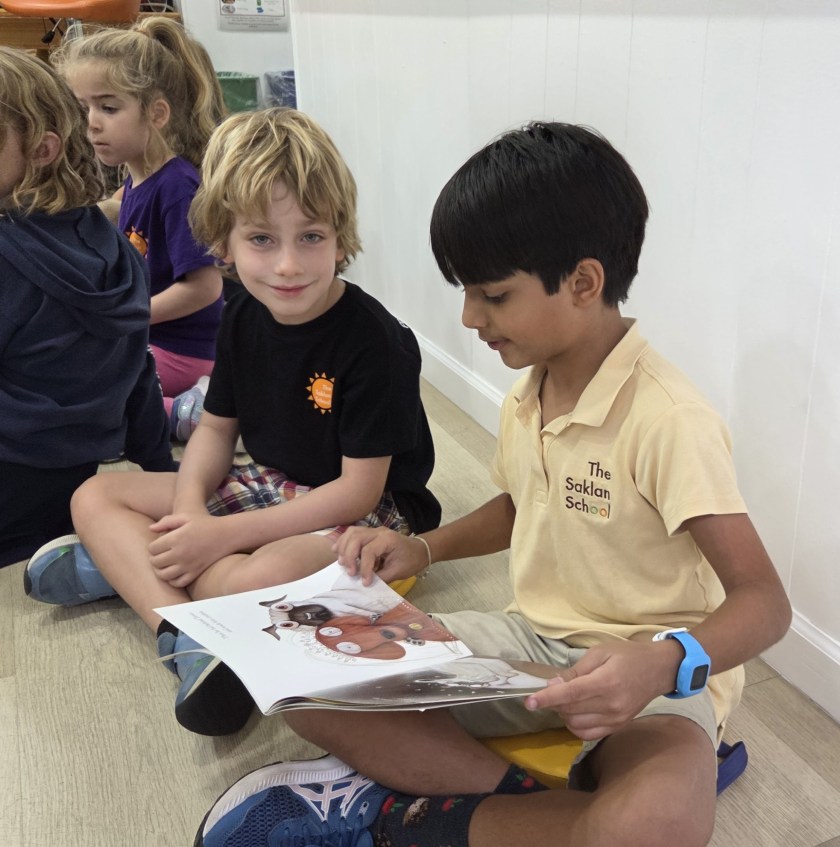
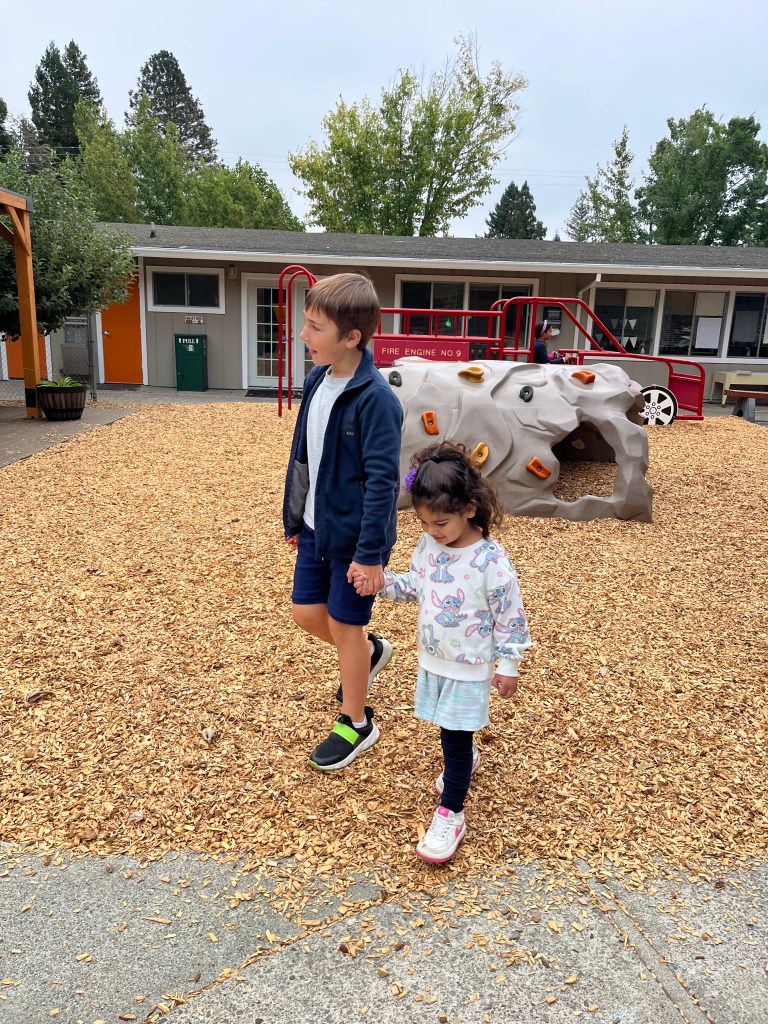
This morning, campus was buzzing with excitement as we launched our Learning Buddy program for the year! Designed to encourage cross-grade friendships, foster responsibility and mentorship, and make learning engaging and fun, Learning Buddies are a treasured Saklan tradition.
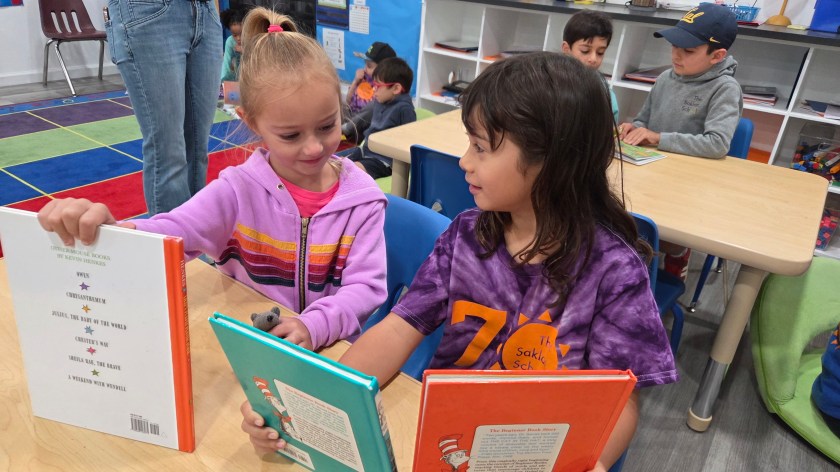
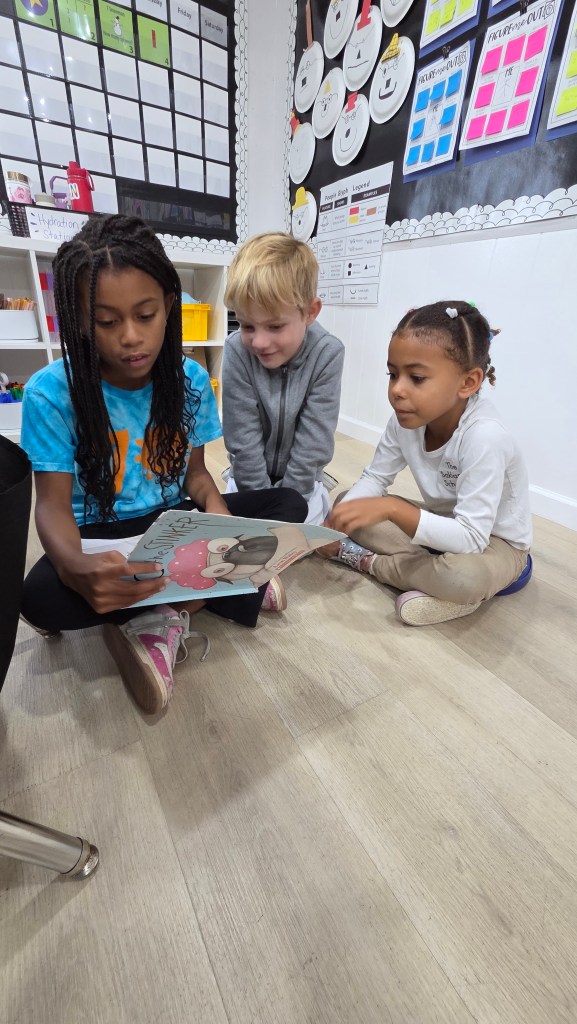
During their first meeting, buddies took time to get to know one another before diving into some shared reading. Older students modeled strong reading behaviors—using expression, fluency, and confidence—while also listening attentively as their younger buddies proudly read aloud.
The joy was evident on both sides: older students embraced their roles as mentors, while younger students felt supported, inspired, and eager to spend more time with their new friends. By the end of the morning, many were already asking the same question: When do we get to meet with our buddies again?
We look forward to seeing these relationships blossom throughout the year as students learn, grow, and shine together.
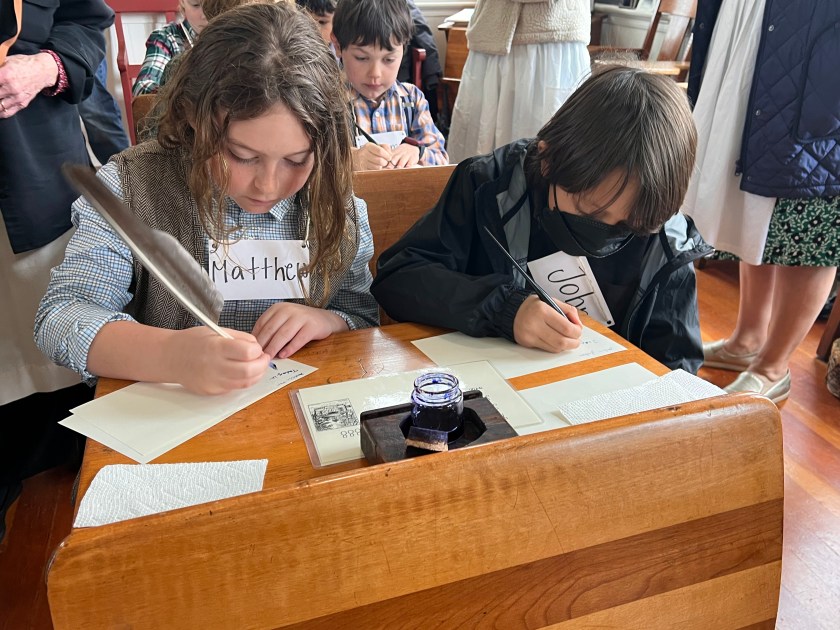
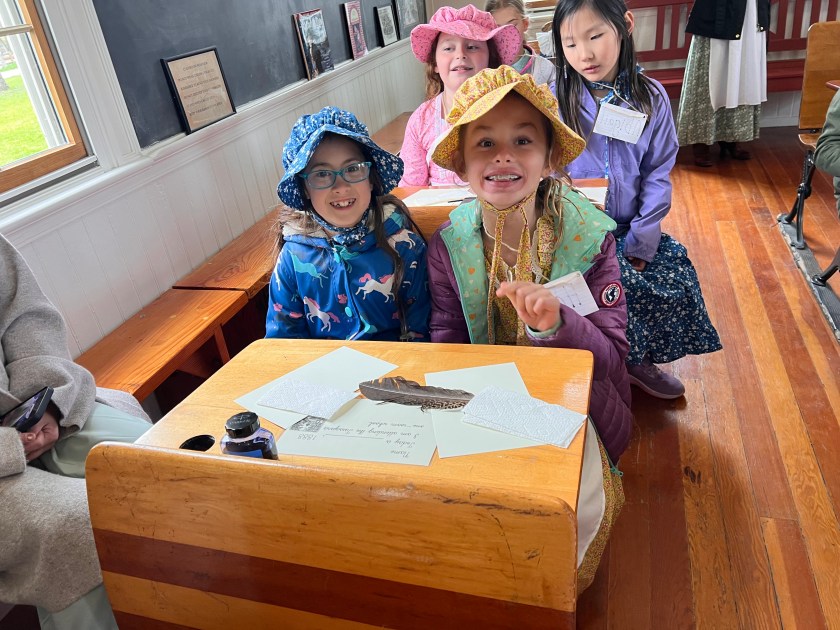
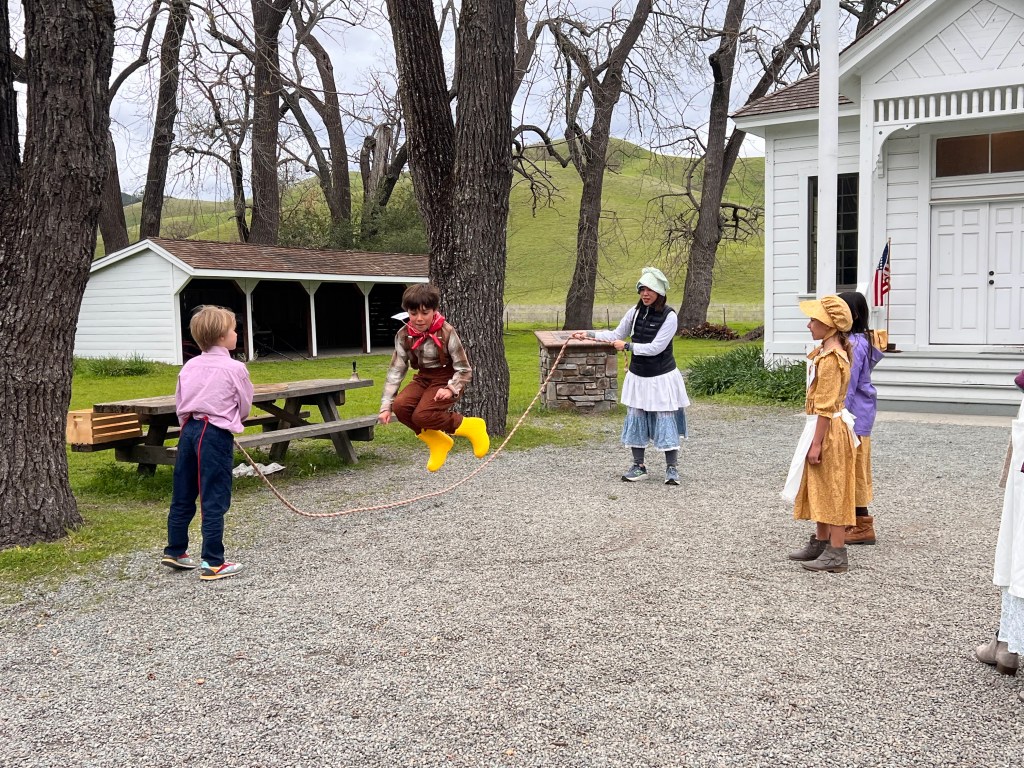
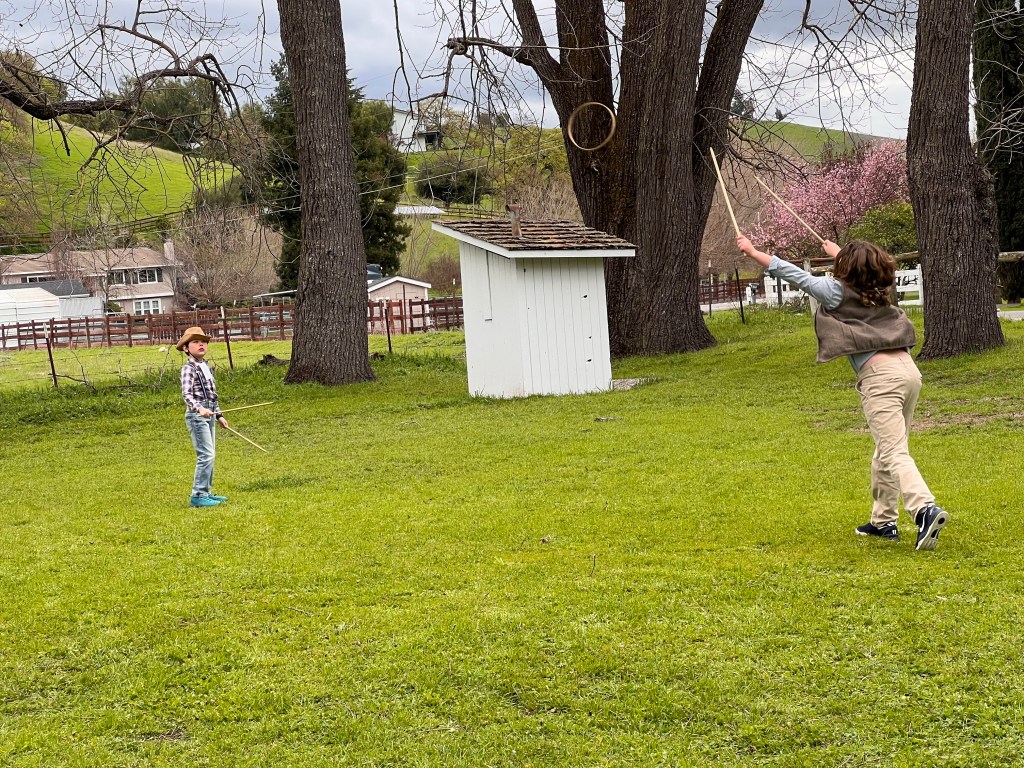
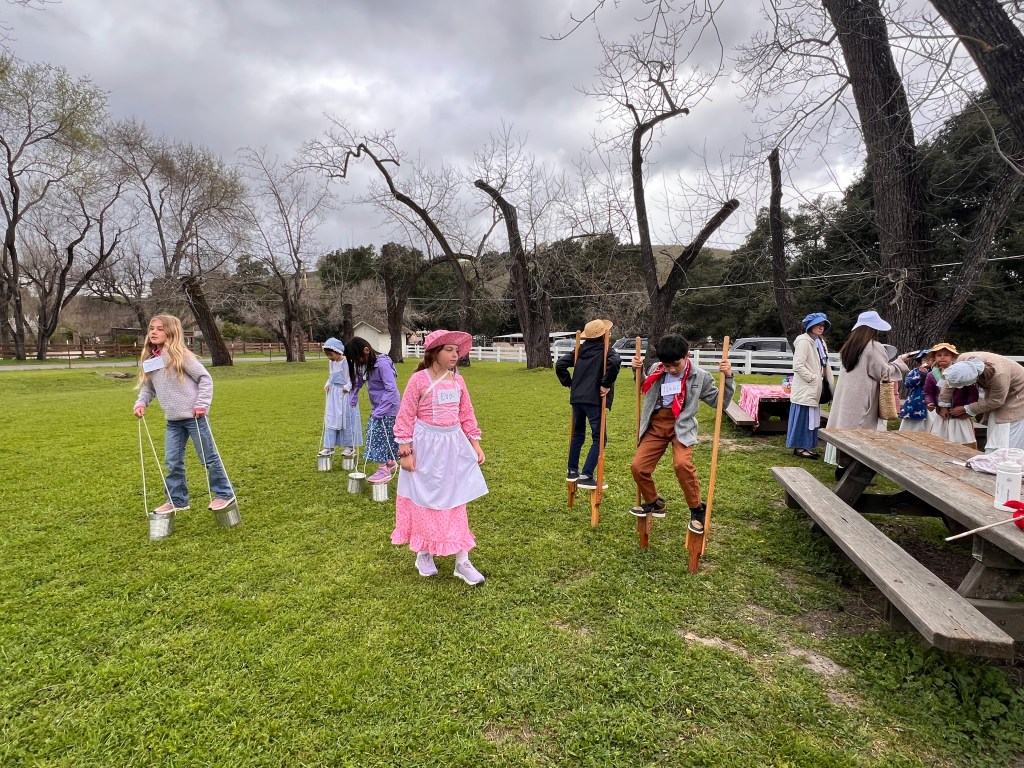
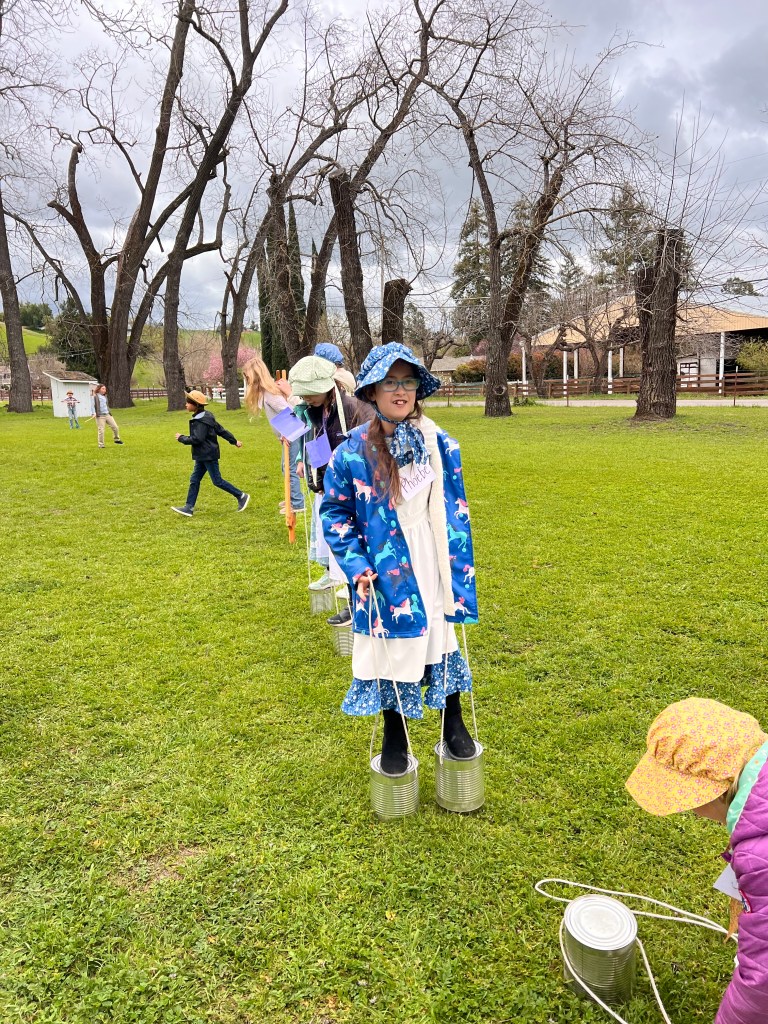
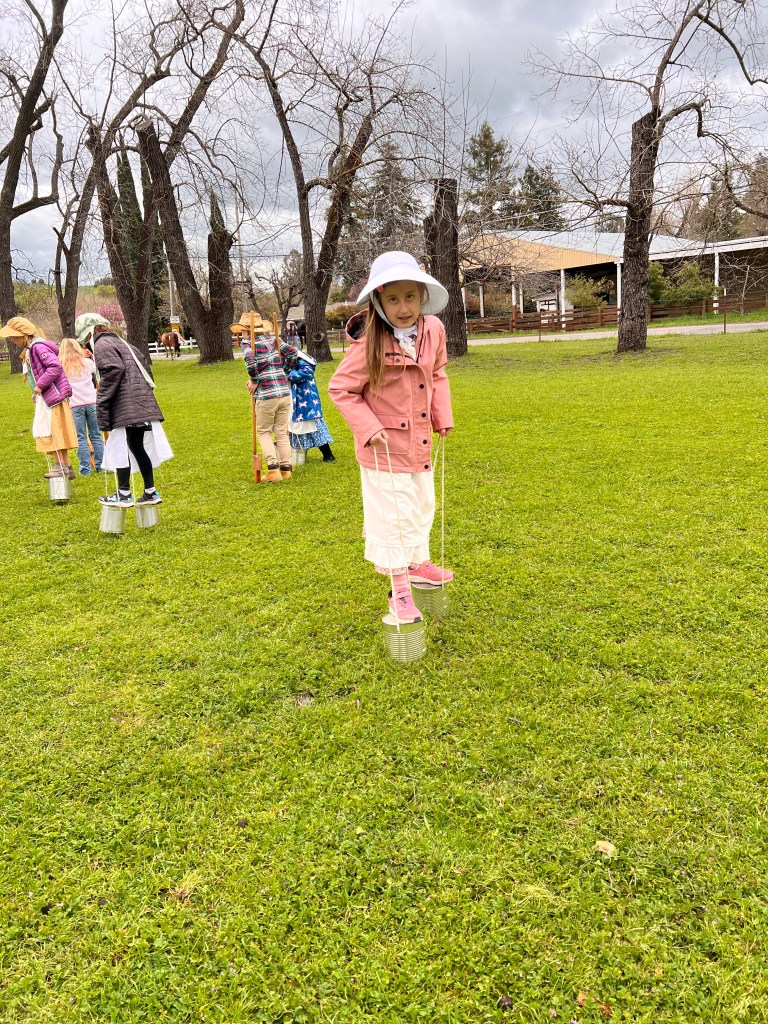
The third graders recently took a journey back in time to 1888, stepping into the shoes of pioneer children at the historic Tassajara One-Room Schoolhouse. Dressed in their finest pioneer attire and carrying lunches in baskets or kerchiefs tied to sticks, they experienced a school day just as children did over 130 years ago—when Grover Cleveland was president and the U.S. had only 38 states!
During their visit, students read from McGuffey Readers (published in 1879), practiced math on slate boards with chalk, and even tried their hand at cursive writing using quill pens dipped in ink. It was a hands-on, immersive glimpse into the past that brought history to life in an engaging way!
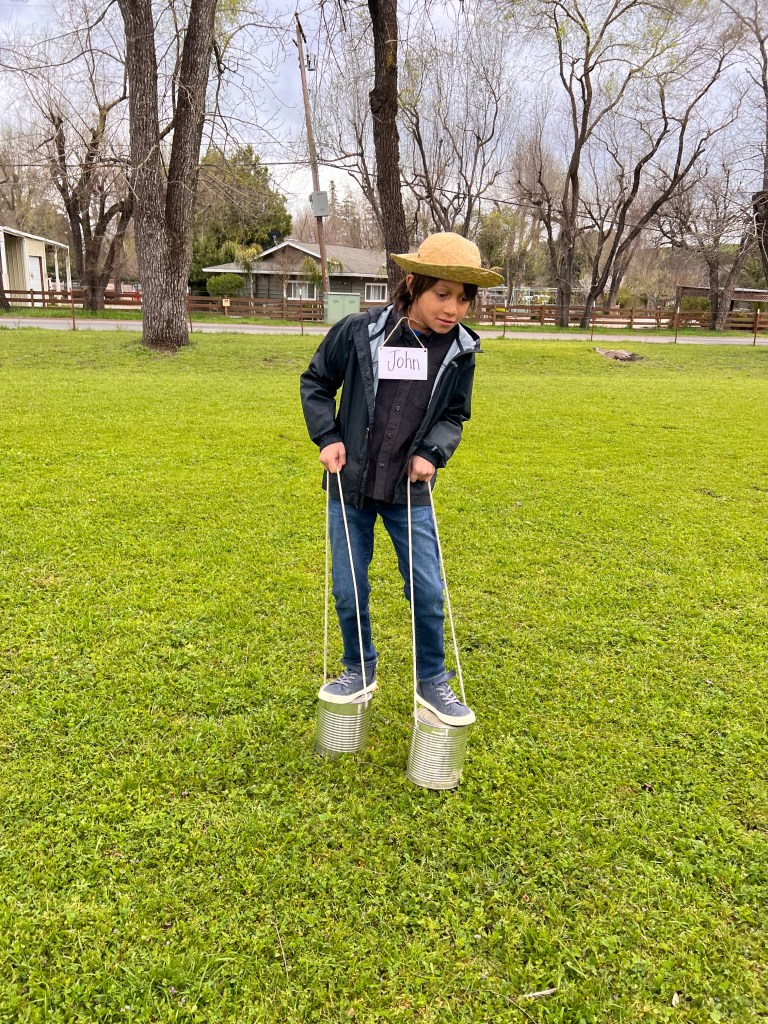
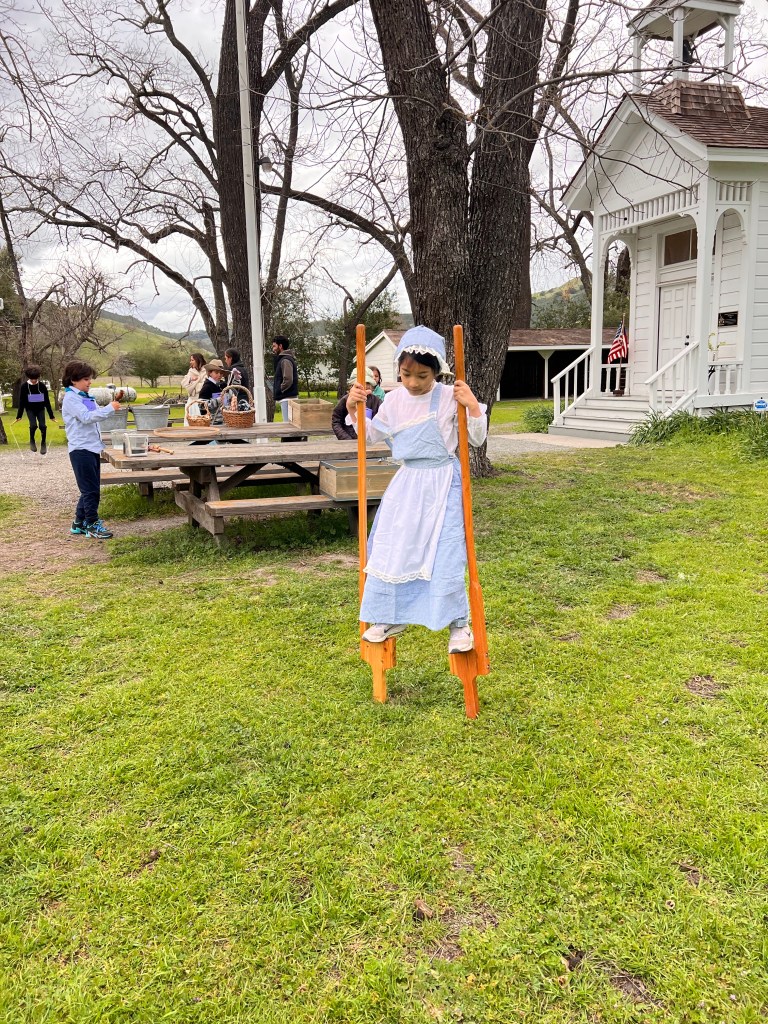
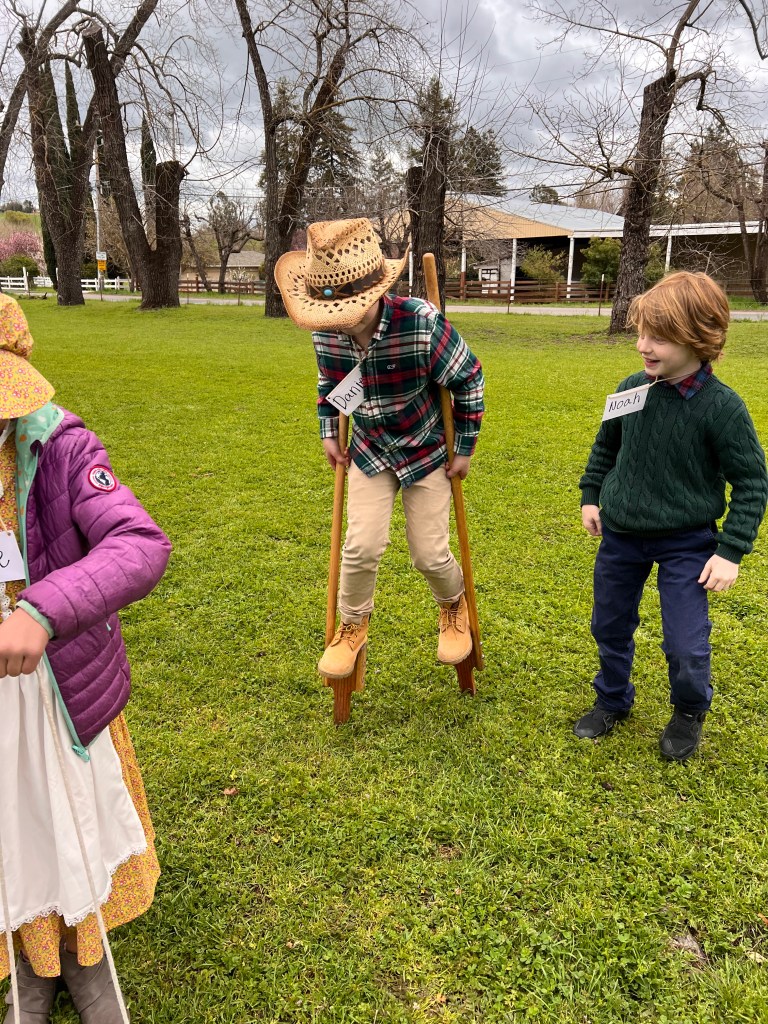
Recess was just as much fun as the school day itself! The third graders jumped rope, walked on cans and wooden stilts, and even sang songs while playing instruments popular in the 1800s. They also explored inventions and news articles from the time, gaining a deeper understanding of daily life in 1888. By the end of the day, they all agreed—school was definitely fun in the past!
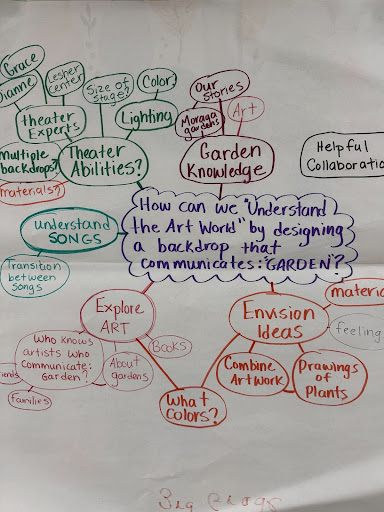
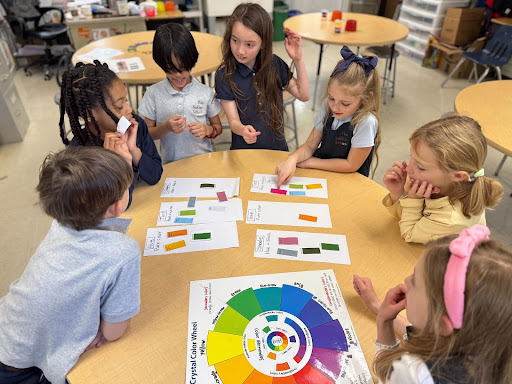
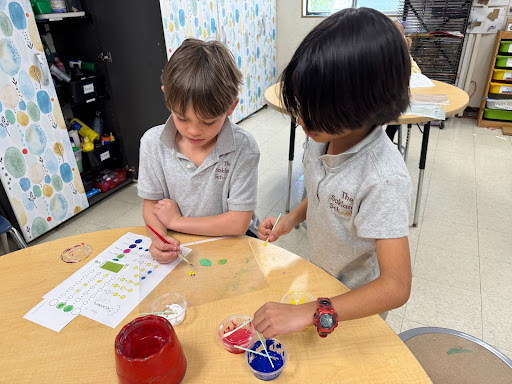
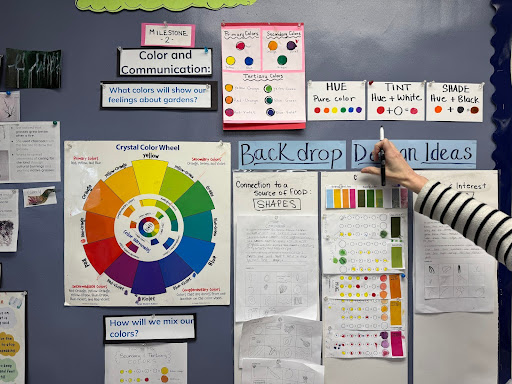
One of the most special elements of Saklan Project-Based Learning is the ways in which annual units take on different elements each year. For the last three years 2nd and 3rd grade students have designed the backdrop for our spring concert at the Lesher Center as part of a PBL unit on color and communication. This unit centers on the driving question: How can we understand the art world to design a backdrop that communicates “garden?”
This year there has been an intentional focus on one particular Studio Habit of Mind: Understanding the Art World. This studio habit, one of eight developed by the researchers at Project Zero, focuses on the study of art history and contemporary practices to learn how to act as an artist in collaboration with other artists in broader society.
The unit began with students sharing their own experiences of gardens. This process activated their prior knowledge and began to elicit ideas, feelings, and questions connected to the concert theme. Next, they completed a whole class brainstorm of ideas, colors, experiences, feelings, and connections to the driving question. This work helped guide the decisions about which artists students would focus their learning on as they worked toward the design and creation of the concert backdrop.
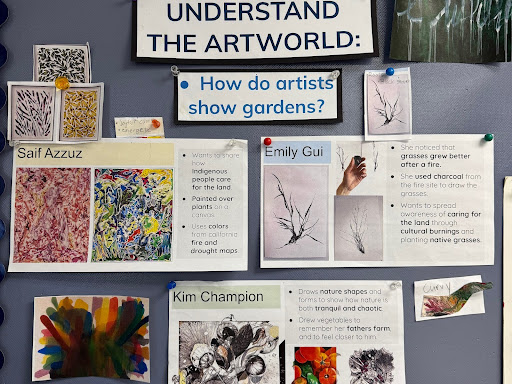
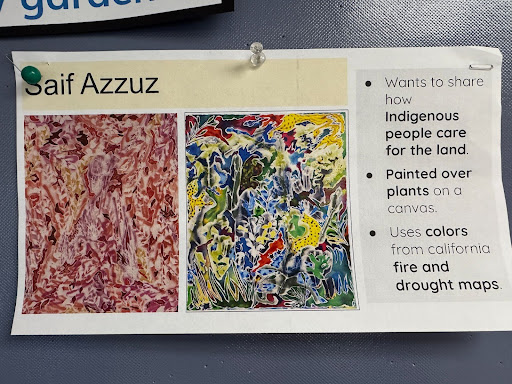
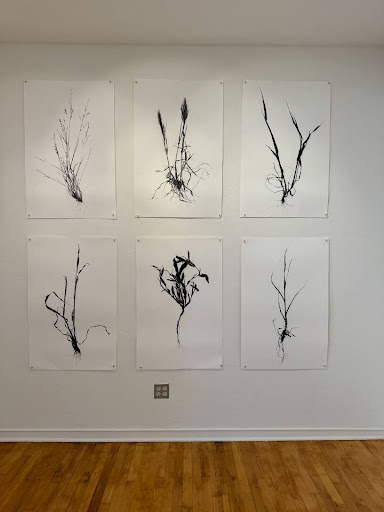
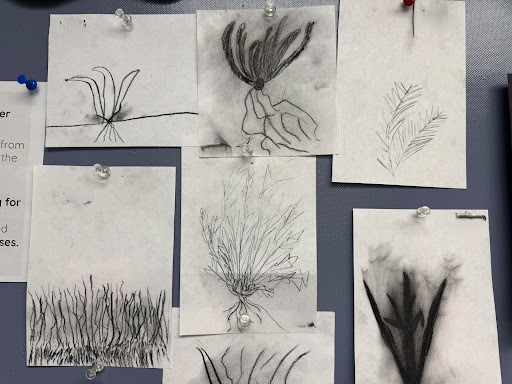
The unit then moved on to explore artists whose work focuses on gardens, nature, and tending to the environment. Made with charcoal scavenged from the scorched earth after a wildfire, Emily Gui’s drawings of wild grasses that emerged after the fire, connected to the 3rd graders’ research on native plants earlier this year. It was also a jumping off point to help expand the students’ definition of what a garden may mean to different peoples. They compared drought maps to the work of Saif Azzuz, which often focuses on the importance of tending the California landscape through the Indigenous wisdom of cultural burns and the varied medicinal uses of native plants, as seen in his recent installation at Stanford Research Park. Finally, students considered the impact of color, and what happens to our interpretation of artworks when color is removed using works by Kim Champion. It struck students that when the color was removed from her art, often much of the meaning was lost and the figures became harder to identify.
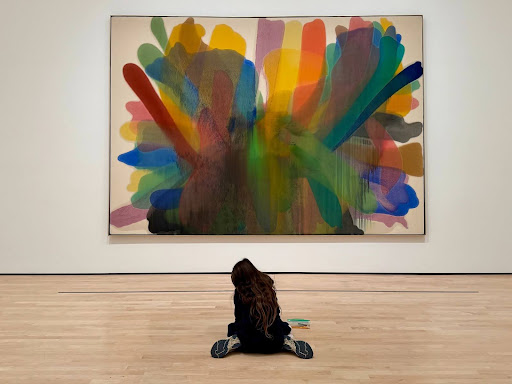
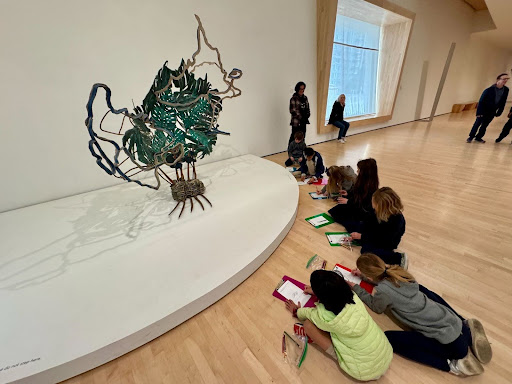
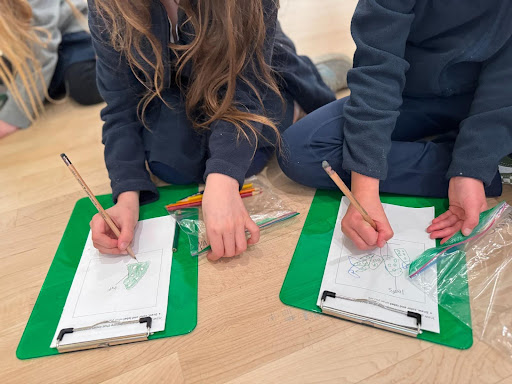
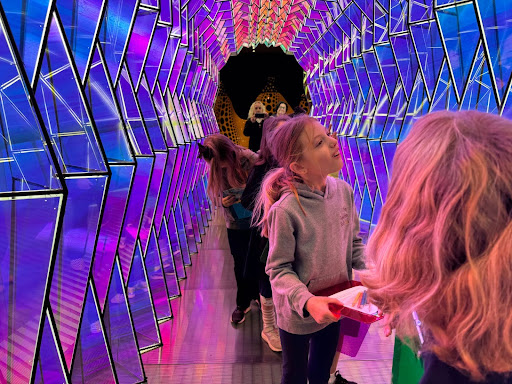
Visiting SFMOMA as part of this PBL unit was a highlight for our second graders. This opportunity to engage with large works in a museum space gave students a chance to observe a variety of ways artists convey the theme of garden. They explored many different types of works and interpretations of our theme.
After exploring different artists’ interpretations of garden, students reflected on the feelings and connections to the theme that they wanted to express through their backdrop art. Three distinct groups emerged. One group most associated gardens with the feelings of excitement and joy, another with a sense of awe for life, and a third associated gardens with calm. Each feeling group identified colors to communicate those feelings using their growing understanding of the art world.
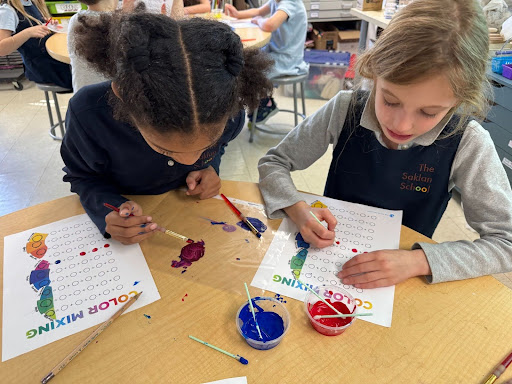
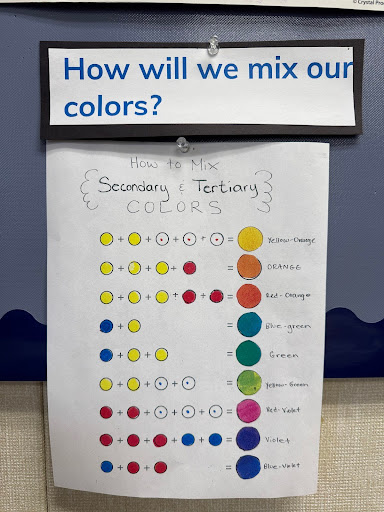
Knowing how colors impact each other when side by side and gaining an understanding of the need for balance between colors were the next key elements to successful communication through color that students began to explore. Color mixing recipes were iterated on to figure out how to mix just the right tint, shade, or hue of the desired colors.
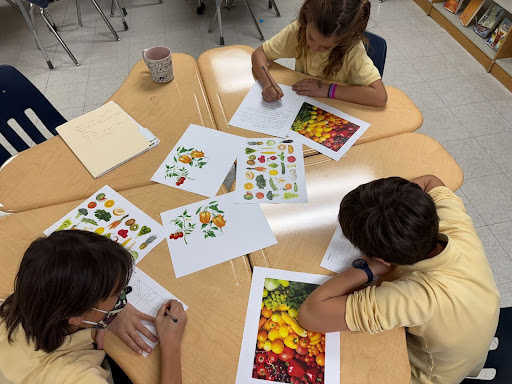
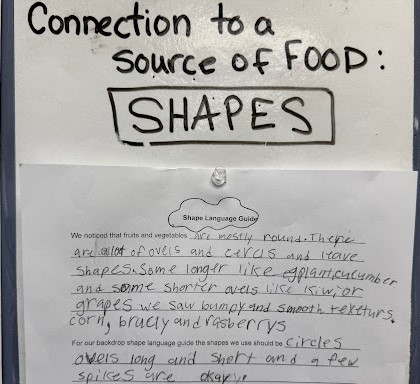
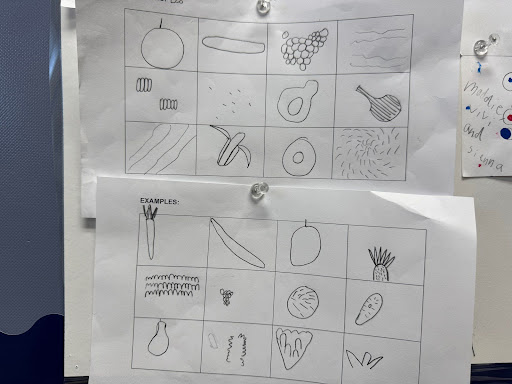
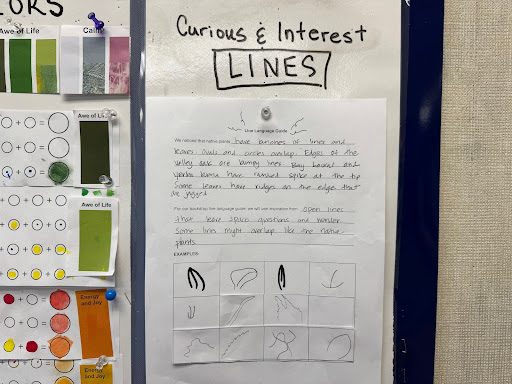
Additionally two small groups considered the ways line and shape can help us communicate our theme. One group felt a sense of curiosity when considering the theme of “garden” and worked to create a line language for our backdrop. Another considered the connection between the theme of “garden” and fruits and vegetables.
At the concert, look for the line and shape language they developed among the beautiful colors the students have so carefully selected and balanced. You may spot many ovals, circles, and textures that mimic overlapping yerba buena leaves, curved lines like the edges of a valley oak leaf and its branches, or the texture of corn on the cob.
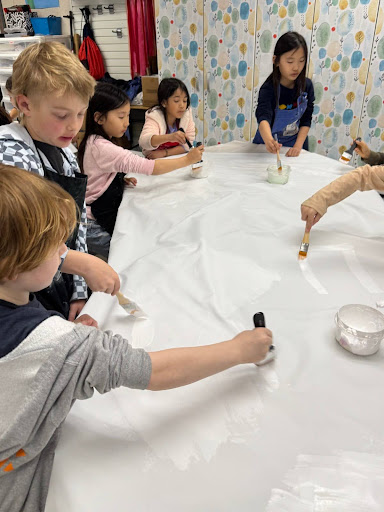
The students are now preparing the backdrop canvases by applying a base coat and will begin painting their version of “garden” very soon. We are excited to unveil the finished product at the All-School Concert on Friday, March 21st. See you there!





 FRIDAY BLOG
You must be logged in to post a comment.