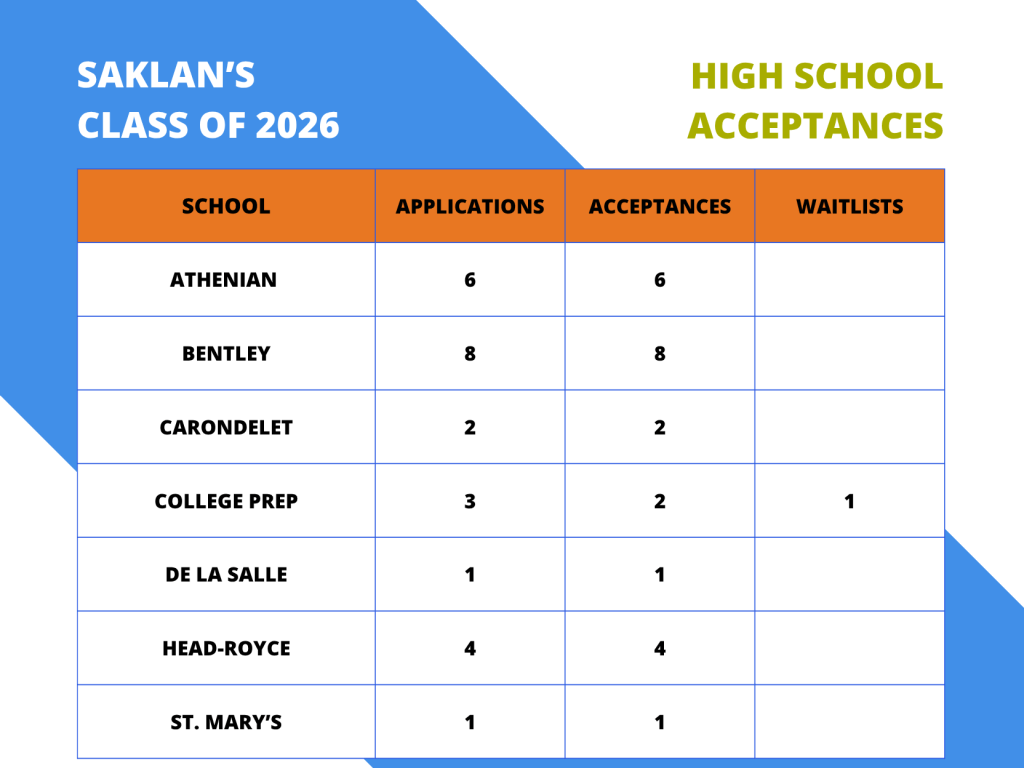
There are some years when the numbers tell a strong story on their own. This is one of those years. Saklan’s 8th-grade class submitted 25 applications to local independent high schools and earned 24 acceptances, along with 1 waitlist.
That is an outstanding result, and one we are proud to celebrate.
Our students received offers from an excellent group of schools, including Athenian, College Prep, Head-Royce, Bentley, Carondelet, De La Salle, and St. Mary’s. But as strong as those outcomes are, what matters most to me is what they reflect.
They reflect years of growth—students who are deeply known by their teachers and supported along the way. They reflect young people who have learned to think critically, speak with confidence, navigate challenges, and contribute meaningfully to a community. Most importantly, they reflect students who are not only academically prepared but ready to step into their next chapter with confidence, character, and curiosity.
At Saklan, we work hard to do both: challenge students and know them deeply. We want them to leave here with strong skills, certainly, but also with the confidence that comes from being seen, supported, and stretched over time.
Saklan alum Levi Kim, now at Brown, spoke at our auction about the impact Saklan had on him. He talked about the adaptability, critical thinking, empathy, and creativity he developed here — and how those qualities have mattered well beyond middle school. That is what we hope for our students. Yes, a Saklan education helps open doors. But more importantly, it helps students walk through those doors ready to thrive.
That is what makes these admissions results so meaningful.
I am proud of this class and of the way they represented themselves throughout the process. They showed who they are, and these results reflect that. We are excited to see where their journeys lead next.
Eighth-grade algebra students continued their exploration of quadratic equations with a recent lesson grounded in curiosity and discovery. They were presented with two equations:
x² + 4x + 1 = 0 (x + 2)² = 3
After solving both, students noticed something surprising: each equation led to the same solution. This prompted a class discussion about efficiency: which equation was easier to solve, and why? Students quickly recognized that the second equation was both faster and more straightforward, sparking interest in how more complex equations could be transformed into this simpler form.
That question led to the introduction of a new method: completing the square.
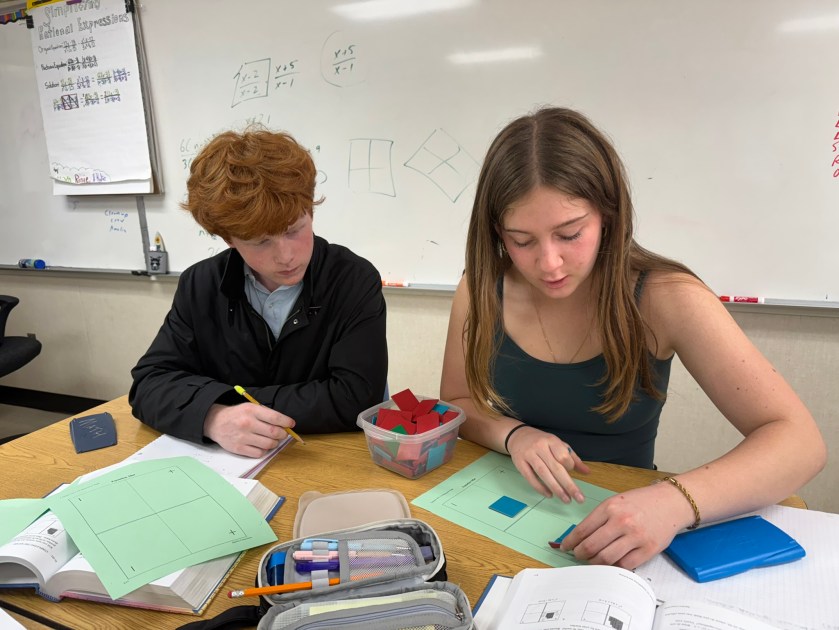
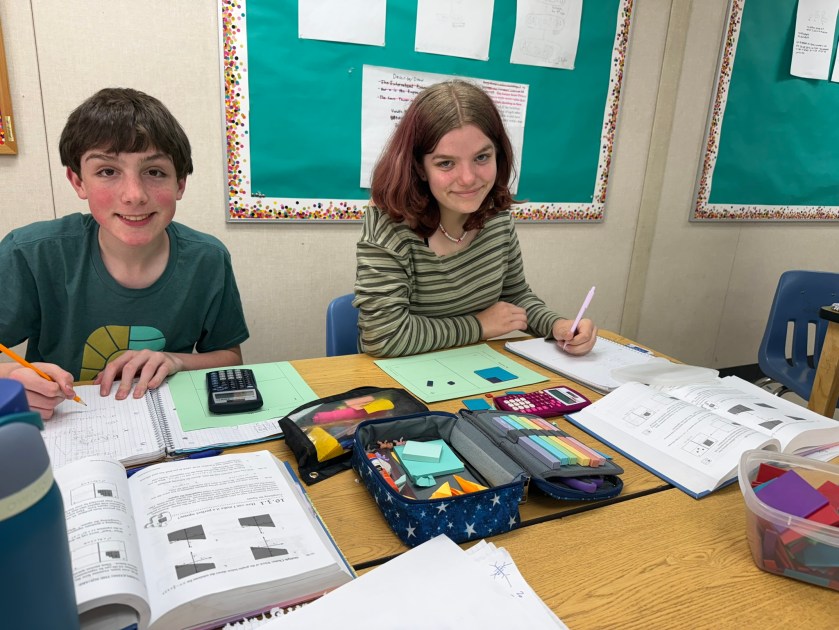
To build understanding, students began by working with algebra tiles on equation mats, physically arranging pieces to form perfect squares. This hands-on approach helped them see how a trinomial in standard form could be reorganized into a squared expression—and what adjustments were needed to make that transformation possible.
With practice, students transitioned from concrete models to abstract reasoning. As a class, they discussed how to generalize the process and apply it without tiles. They even developed their own formula for completing the square, deepening their conceptual understanding.
Through exploration, collaboration, and reasoning, Saklan’s eighth graders didn’t just learn a new method; they discovered it. This kind of learning empowers students to approach complex problems with confidence, creativity, and a strong sense of mathematical thinking.
Seventh graders at Saklan recently completed an engaging Project-Based Learning (PBL) unit focused on one of today’s most urgent environmental challenges: single-use plastics.
The project began with a look close to home. Students explored the impact of plastic waste found locally in Moraga and also examined the debris that washes up on beaches in Hawai‘i while studying the Pacific ecosystem. These investigations were guided by the driving question: What can we do to help reduce single-use plastics in my area?
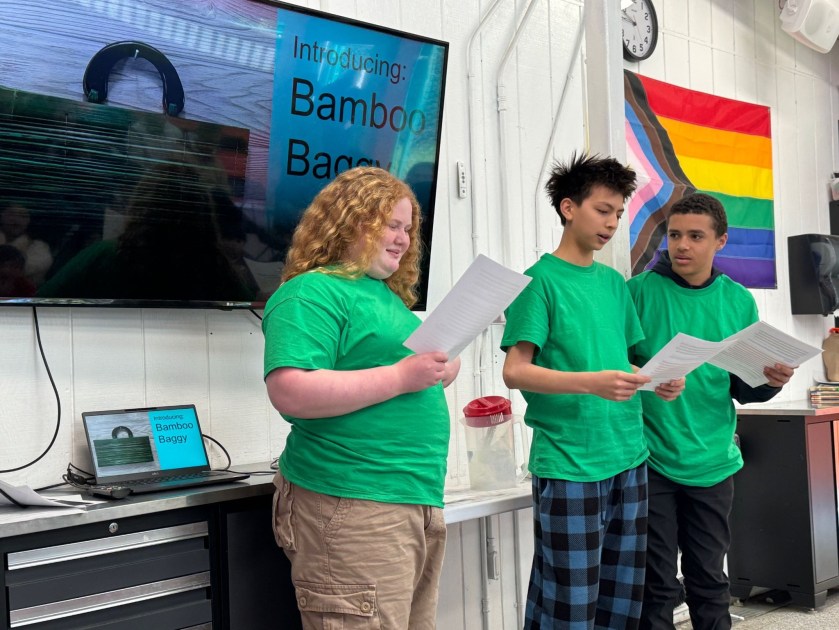
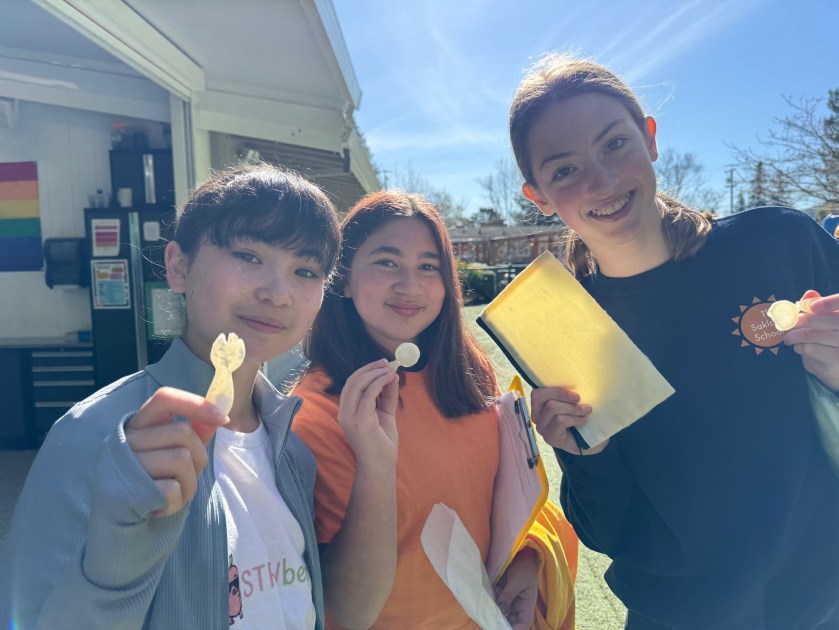
Working in teams, students combined research, creativity, and problem-solving to develop their own eco-friendly solutions. Their ideas included biodegradable straw wrappers, edible silverware, reusable snack bags made from sustainable materials, and renewable bamboo shopping bags.
Throughout the project, students followed the engineering design process: brainstorming ideas, building prototypes, testing their designs, and refining them along the way. The classroom quickly became a hub of experimentation, collaboration, and innovation.
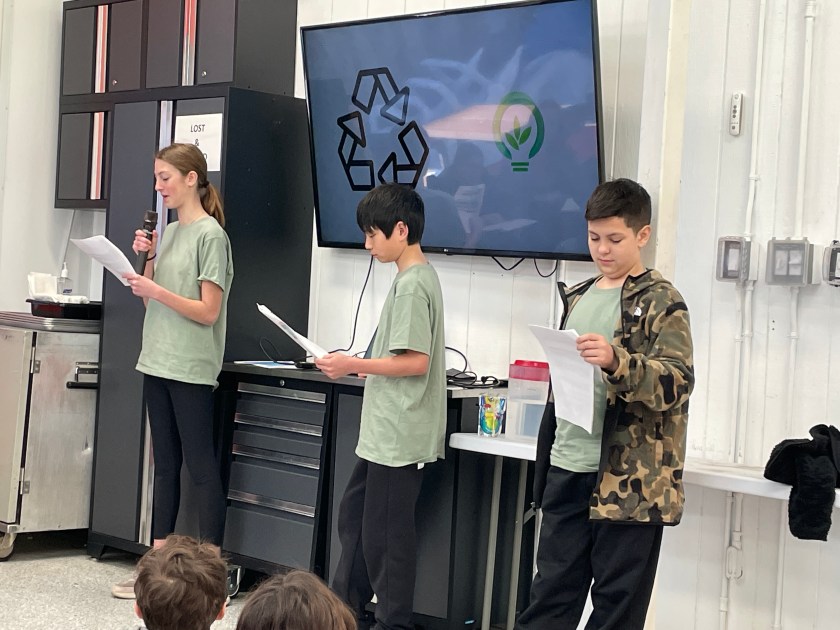
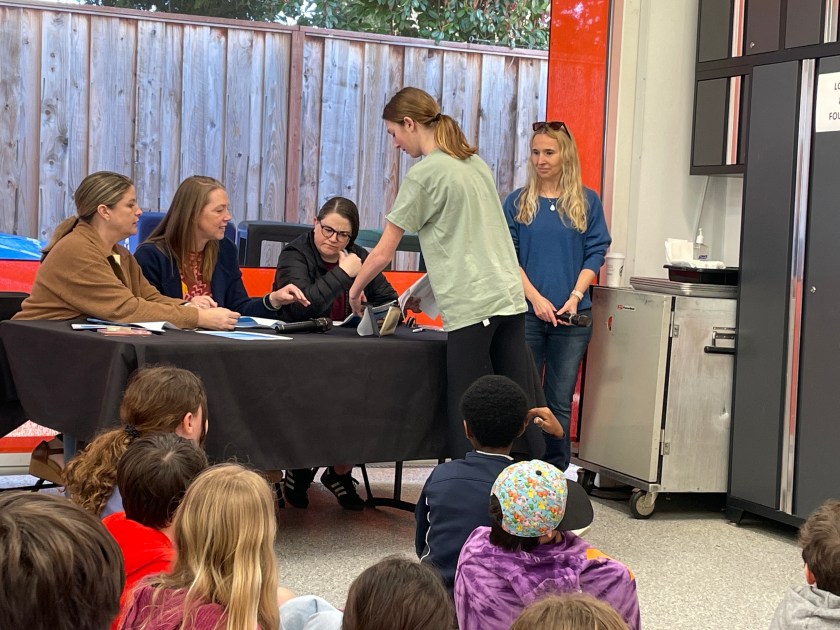
The unit culminated in a lively presentation to the “Sharks of Saklan,” a panel that evaluated each team’s proposal in a real-world style entrepreneurial pitch. Students confidently presented their prototypes and explained the research and thinking behind their designs. The panel praised their creativity, teamwork, and thoughtful approach to addressing a global environmental issue.
Students also extended their work beyond the classroom by writing persuasive letters to companies, encouraging them to consider adopting their ideas—or similar environmentally responsible alternatives. Now, the class is eagerly waiting to see whether any companies respond.
This project beautifully highlighted Saklan’s commitment to learning by doing. By tackling a real-world challenge, students not only deepened their understanding of environmental science but also experienced what it means to think creatively, collaborate with others, and imagine solutions that could make a positive impact on the planet.
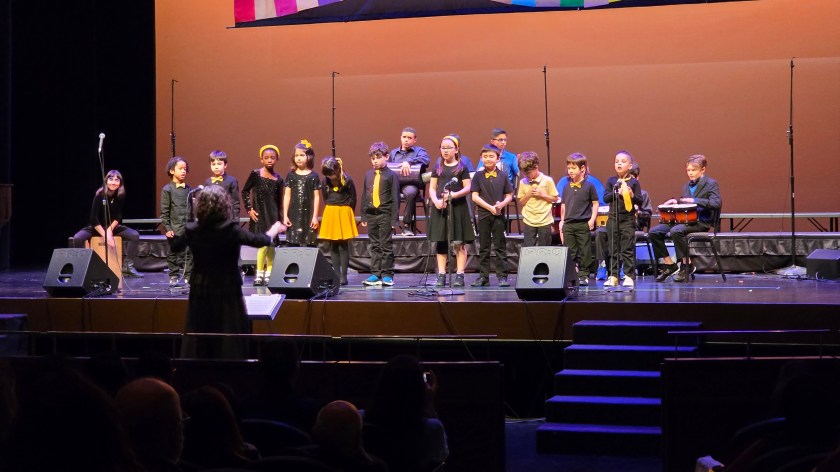
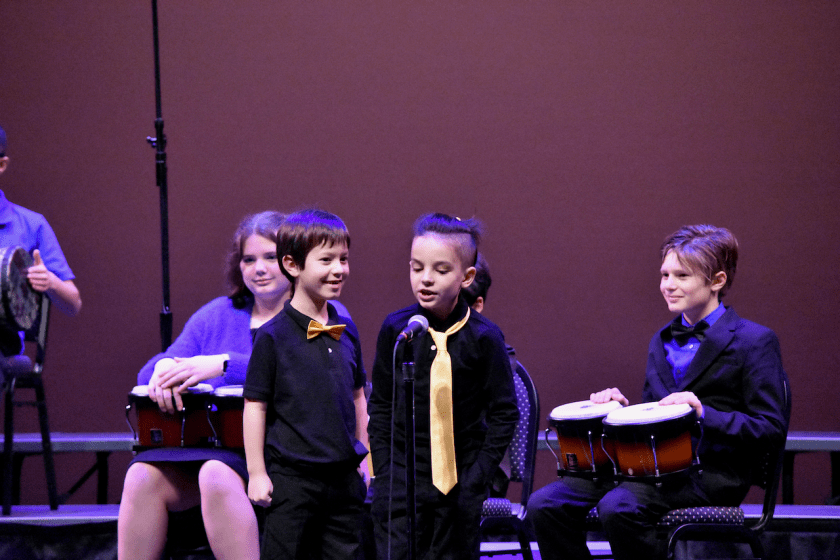
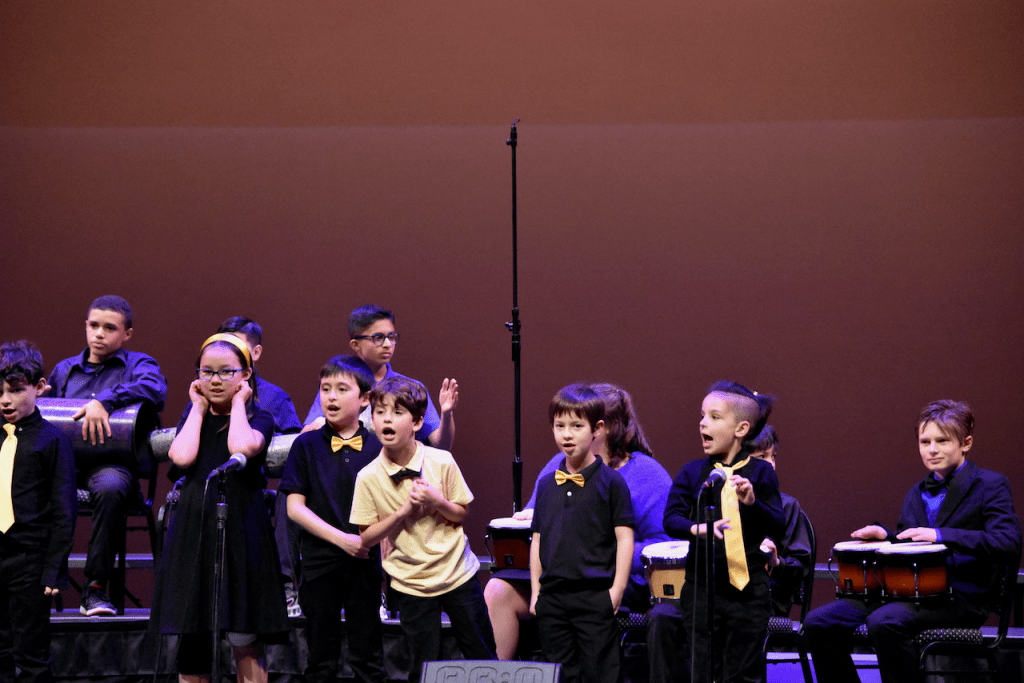
It isn’t often that a class of middle school students gets to compose music for which second graders write lyrics, but that is exactly what our music teacher, Dianne, facilitated in her recent PBL unit. Many of you even witnessed the culminating moment of that collaboration at our all-school concert at the Lesher Center this past month!
Guided by the concert theme of belonging and music content standards, Dianne developed the driving question, “How do we, as composers, express ‘belonging’ in song?”
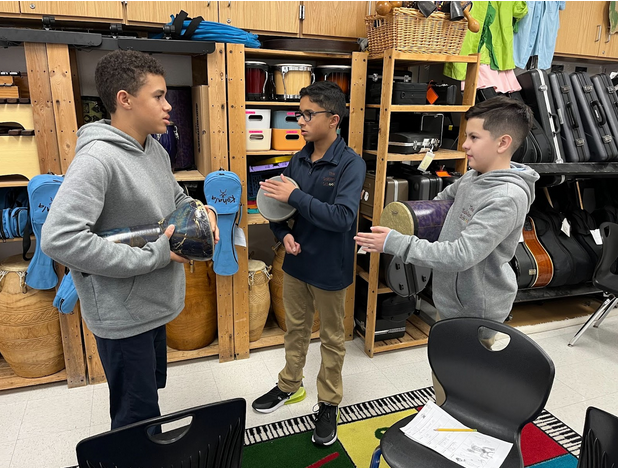
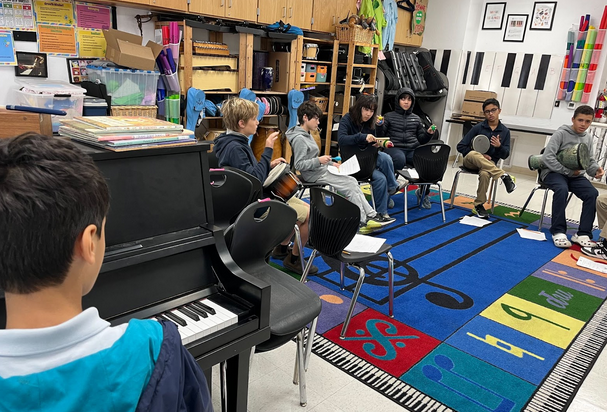
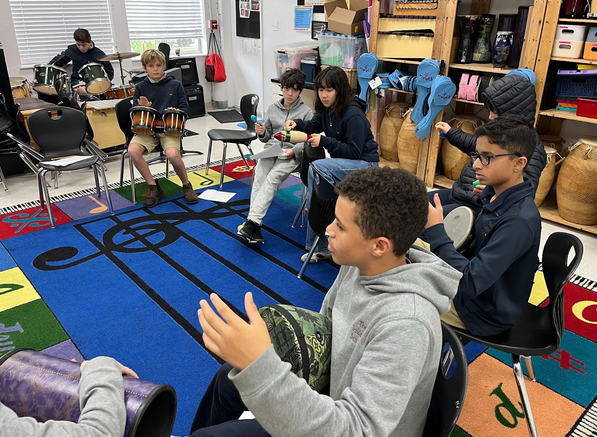
Middle school percussion students began by watching videos of composers. They discussed the process of composing a piece of music by themselves and as part of a collaborative team. With that wisdom in mind, they began to brainstorm ideas for appropriate instrumentation and dynamics to effectively communicate the concert theme of belonging. After experimentation and various rounds of sharing, feedback, and revision, they decided on disparate stormy sounds to start using tom drums and a brush along a cymbal. Student musicians then wanted the song to move to a cohesive driving beat highlighted by bright-sounding instruments such as djembe and bongos.
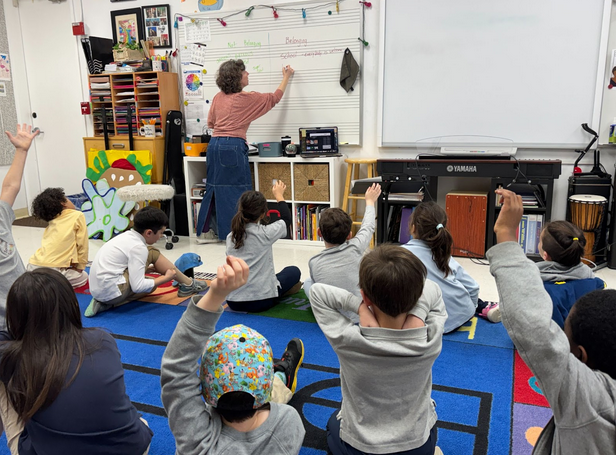
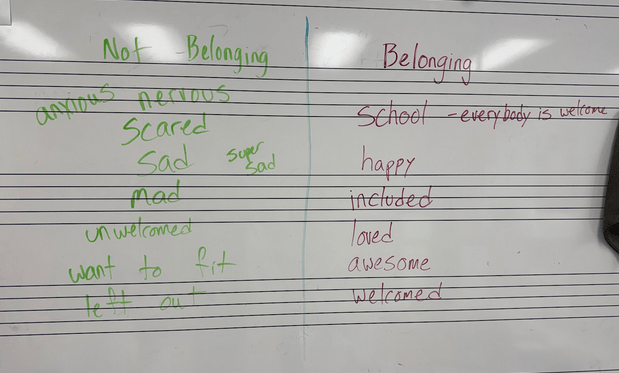
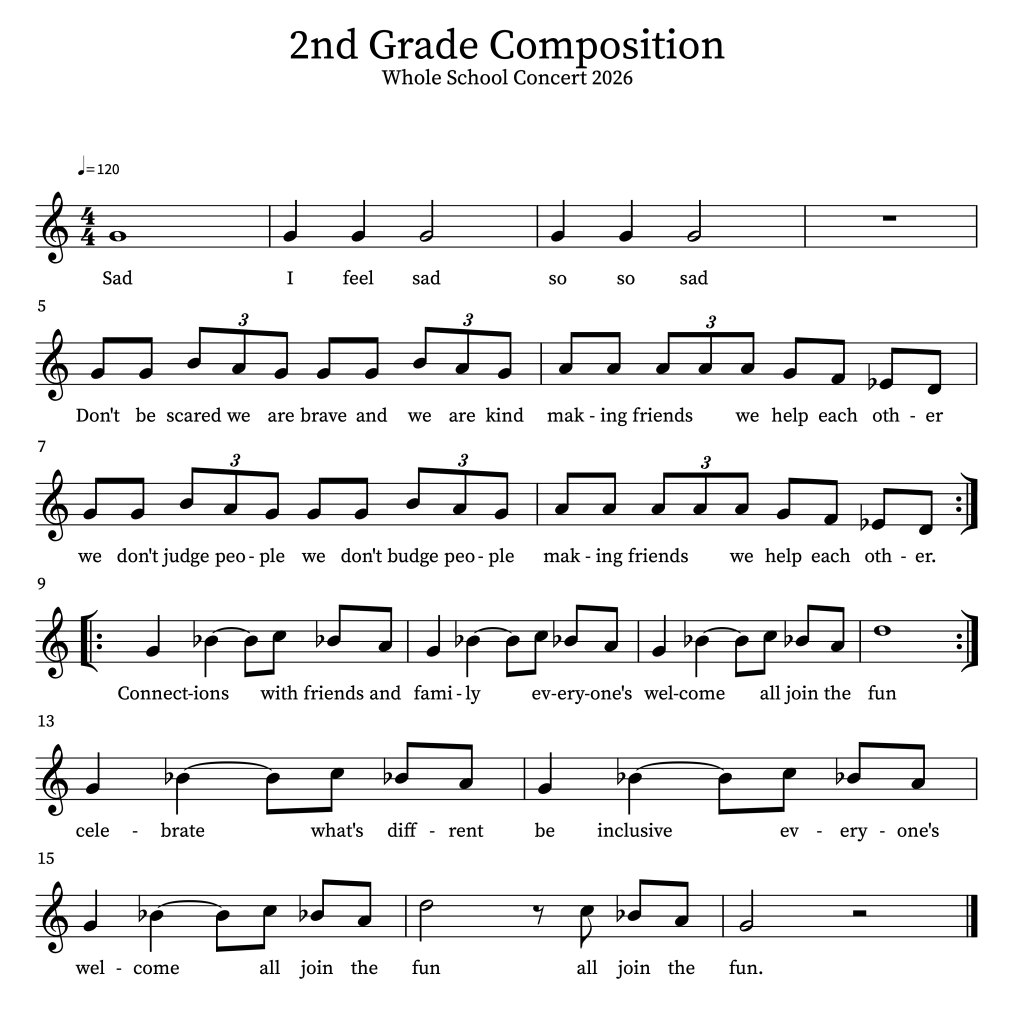
Both their music track and a chart of the song were then passed along to the second graders, who had been identifying words and phrases to express belonging. While listening to the middle school students’ track, they arranged their words and phrases on the chart while discussing the elements of song structure. Together, they built an intro, verses, and a chorus that further explored and communicated belonging.
Both the music and lyrics explored the journey of not feeling connected to others before coming together musically and with lyrics that reinforced the theme. See the complete lyrics below!
As a teacher, Dianne’s real excitement came from watching the students support one another.
“The beauty of collaborating in composition is that middle school and lower school students got a chance to hear each other’s voices and ideas. The middle school musicians created a backdrop to lift up lower school voices while the second graders got a window into middle school music classes, which will hopefully inspire them in their musical endeavors.”
This particular Project Based Learning unit is a beautiful example of what can happen when we blend high-quality project unit design with our Saklan values of thinking creatively, acting compassionately, and living courageously. Indeed, both groups of students needed to employ all three of these mindsets to complete this work together.
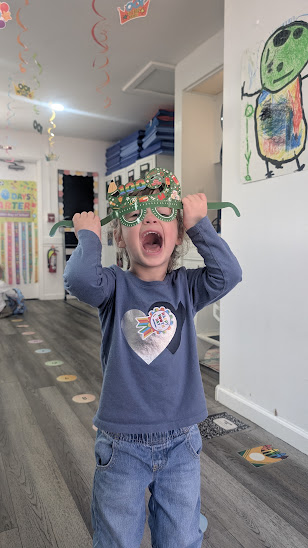
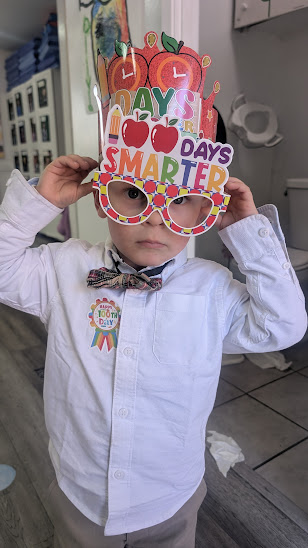
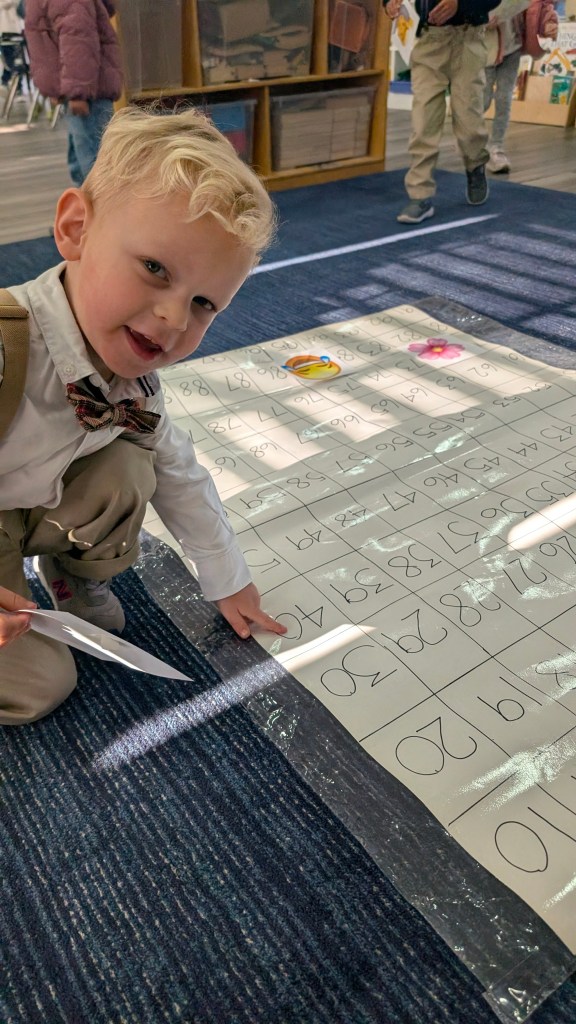
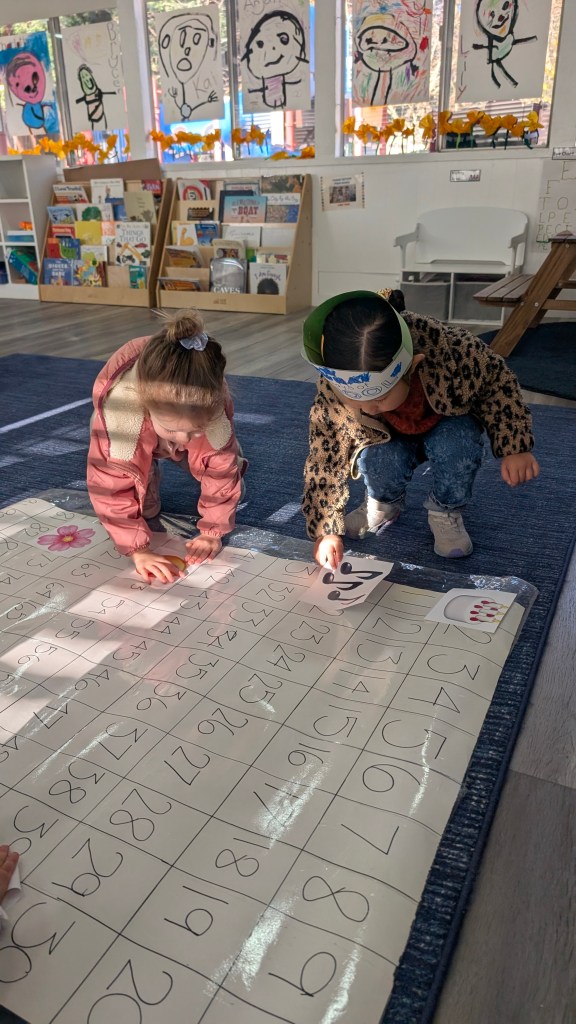
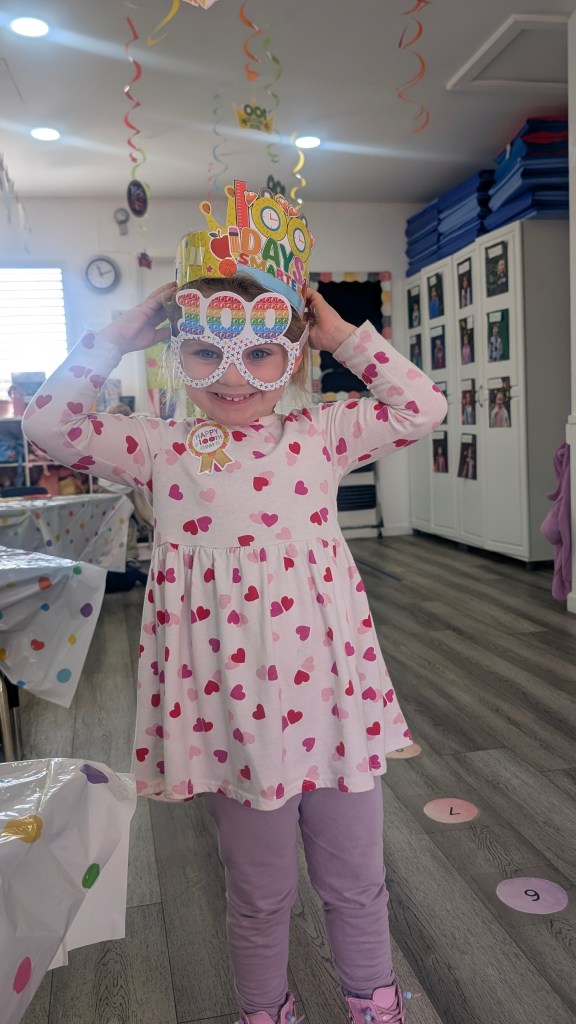
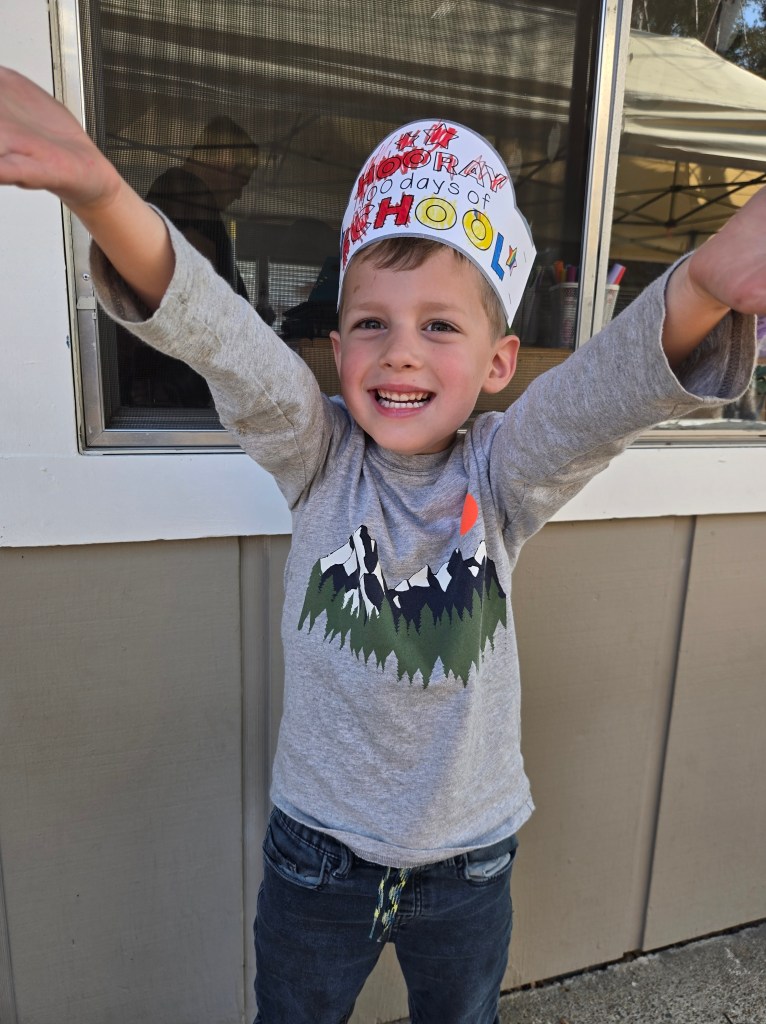
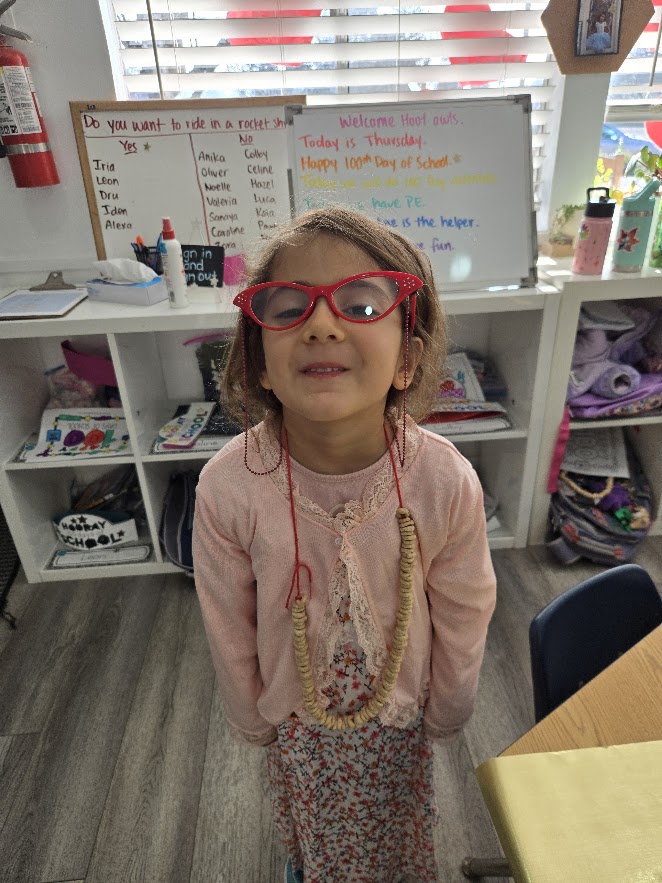
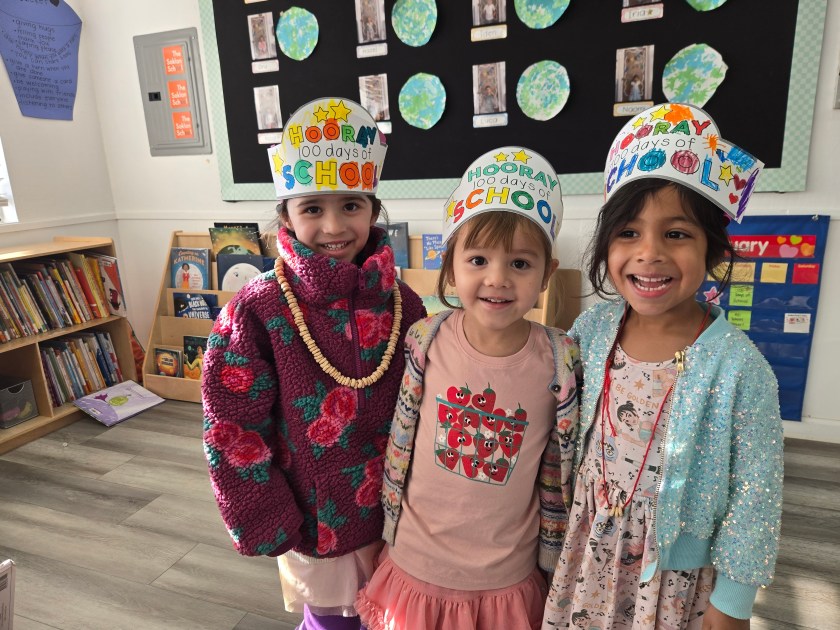
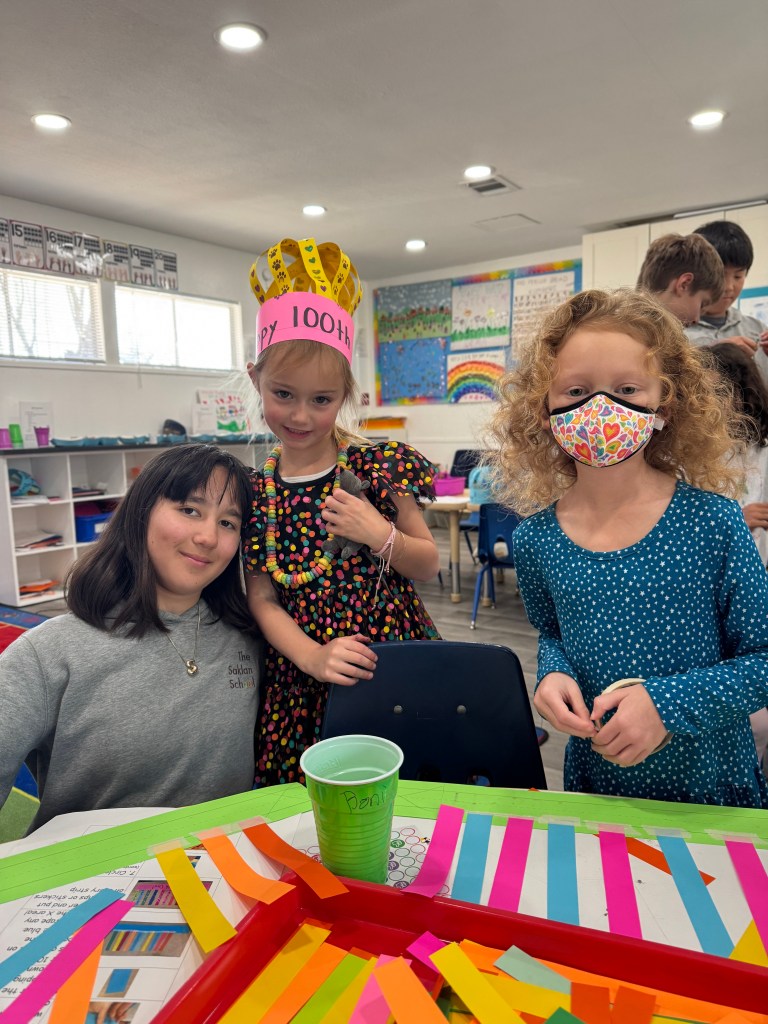
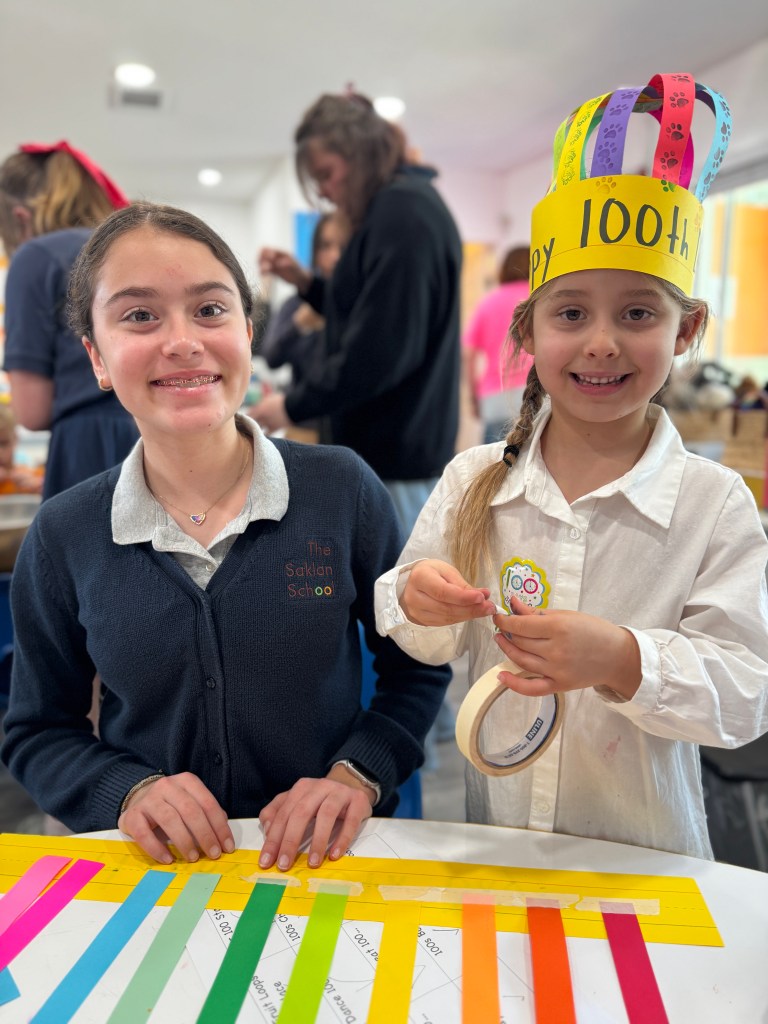
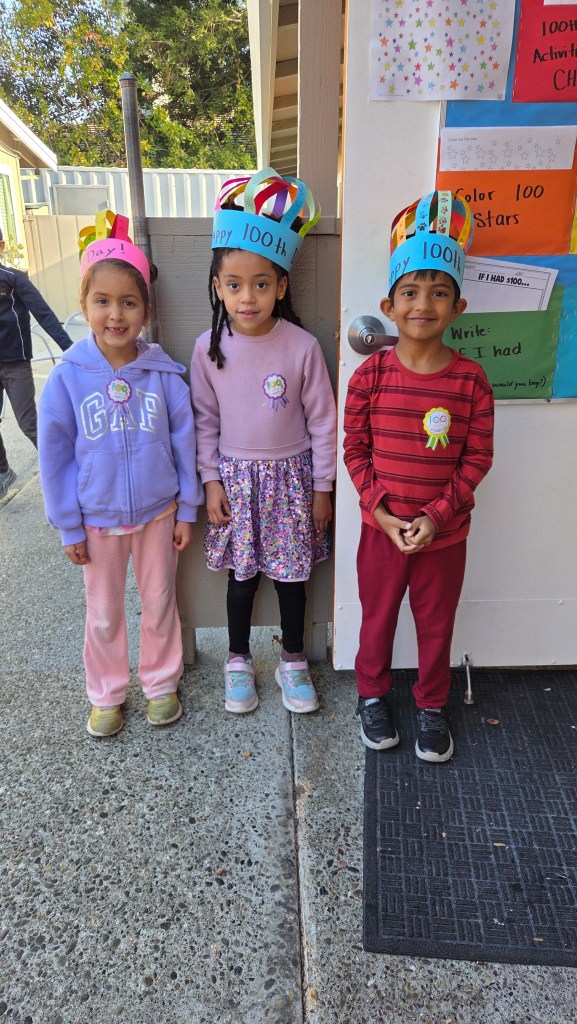
On Thursday, February 5th, Saklan students joyfully celebrated the 100th day of school, a milestone that highlights just how much growth can happen in 100 small, meaningful steps. The day was filled with math, movement, creativity, and laughter across every grade level.
The Owlets marked the occasion with a classroom-wide search for 100 hidden emojis. Many students arrived dressed as 100-year-olds, fully embracing their roles and staying in character throughout the day, adding an extra layer of fun to the celebration.
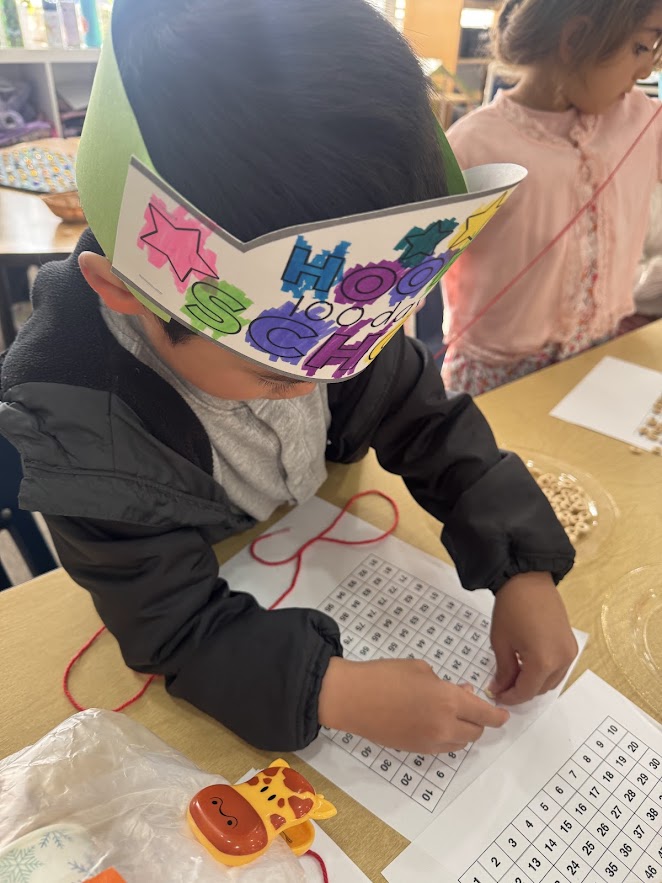
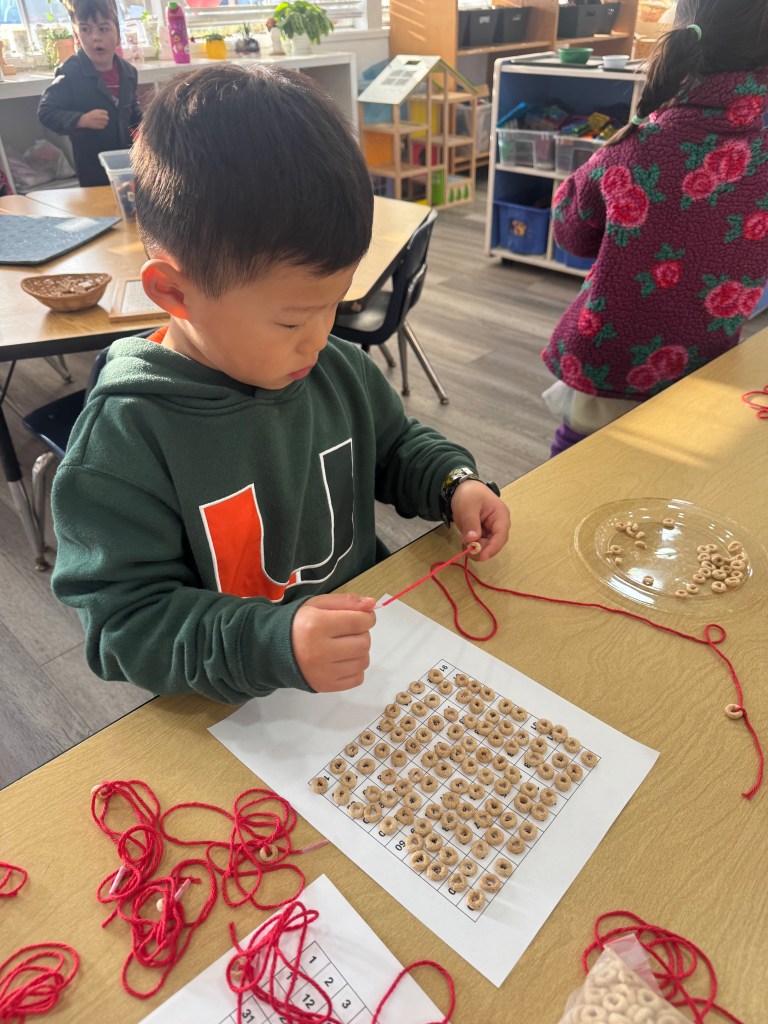
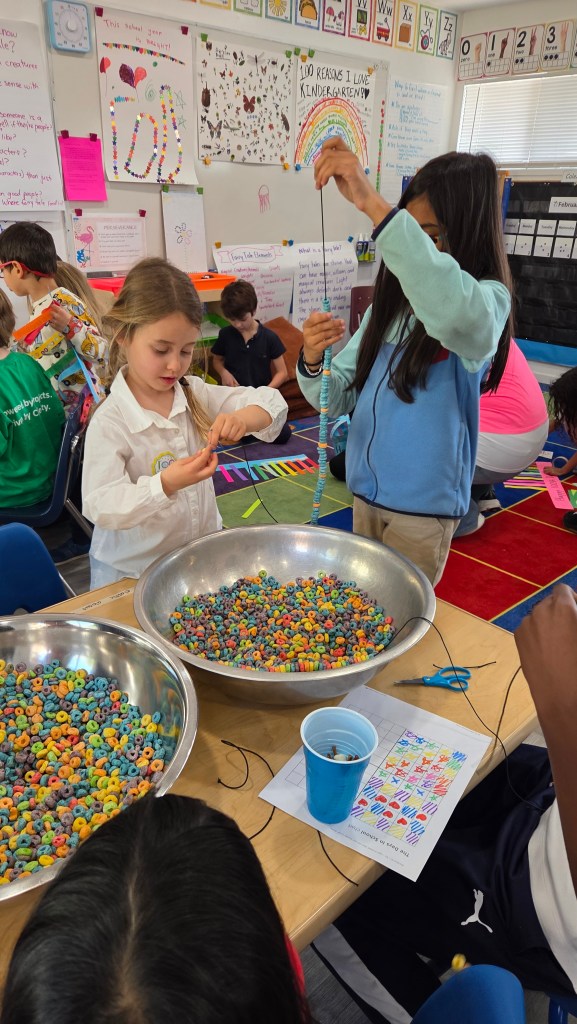
The Hoot Owls dove into hands-on activities centered around the number 100. They carefully counted out 100 Cheerios to create necklaces, participated in a 100-star scavenger hunt, and explored different ways to represent 100 using classroom materials. The celebration culminated in a special lunch party complete with photos and festive crowns.
Kindergartners explored the concept of 100 in playful and delicious ways. They created their own 100th-day snack by combining 10 different treats, 10 pieces of each, bringing math to life in a tangible (and tasty) way. Students designed colorful hundred grids, crafted crowns, and proudly wore 100-Fruit-Loop necklaces. Movement was also part of the fun, as students danced for 100 seconds and completed 100 jumping jacks.
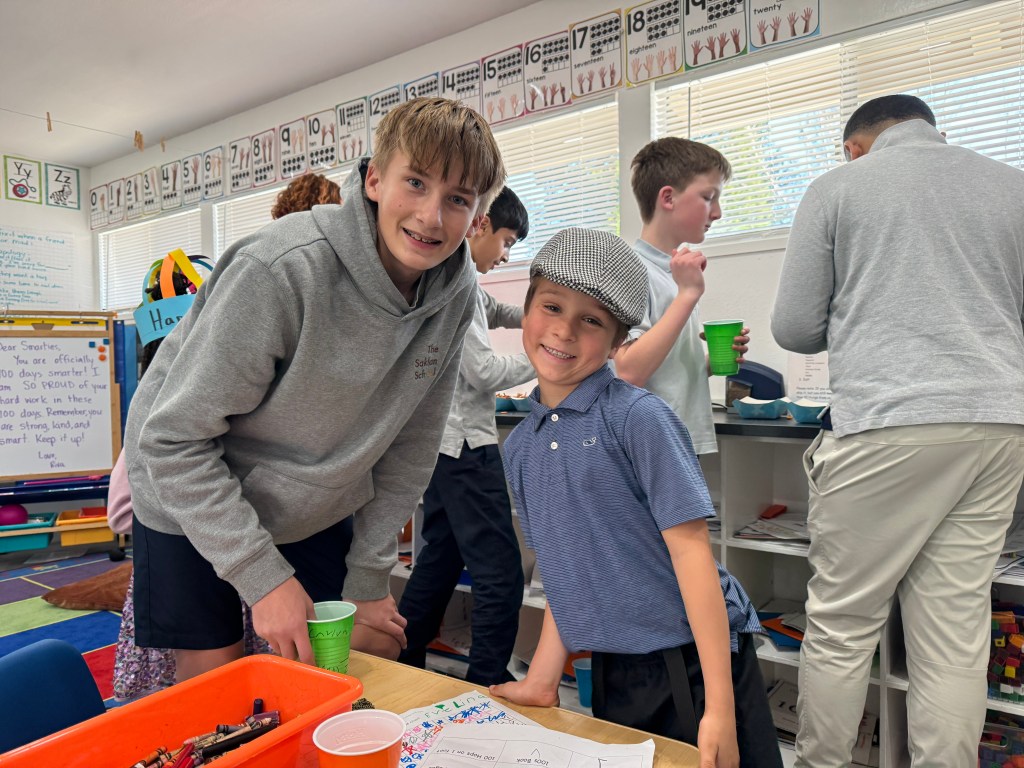
Throughout the day, students from grades 1 through 8 joined the kindergartners in celebration, fostering a strong sense of cross-grade connection and belonging. These shared experiences foster confidence, joy, and a sense of community, reminding students that they are part of something larger.
First graders also embraced the milestone with engaging math and writing activities focused on the number 100. They counted, created, reflected, and celebrated how much they have learned and grown over the past 100 days.
The 100th day of school at Saklan was more than just a number; it was a celebration of perseverance, progress, and the vibrant community that supports every student’s journey.
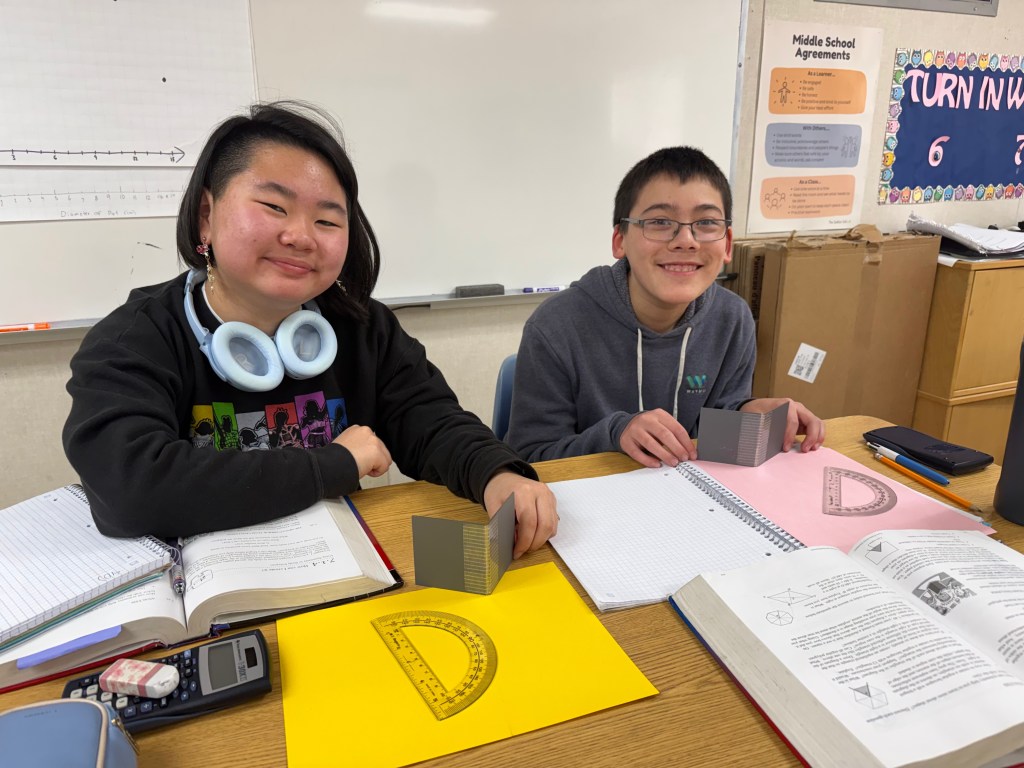
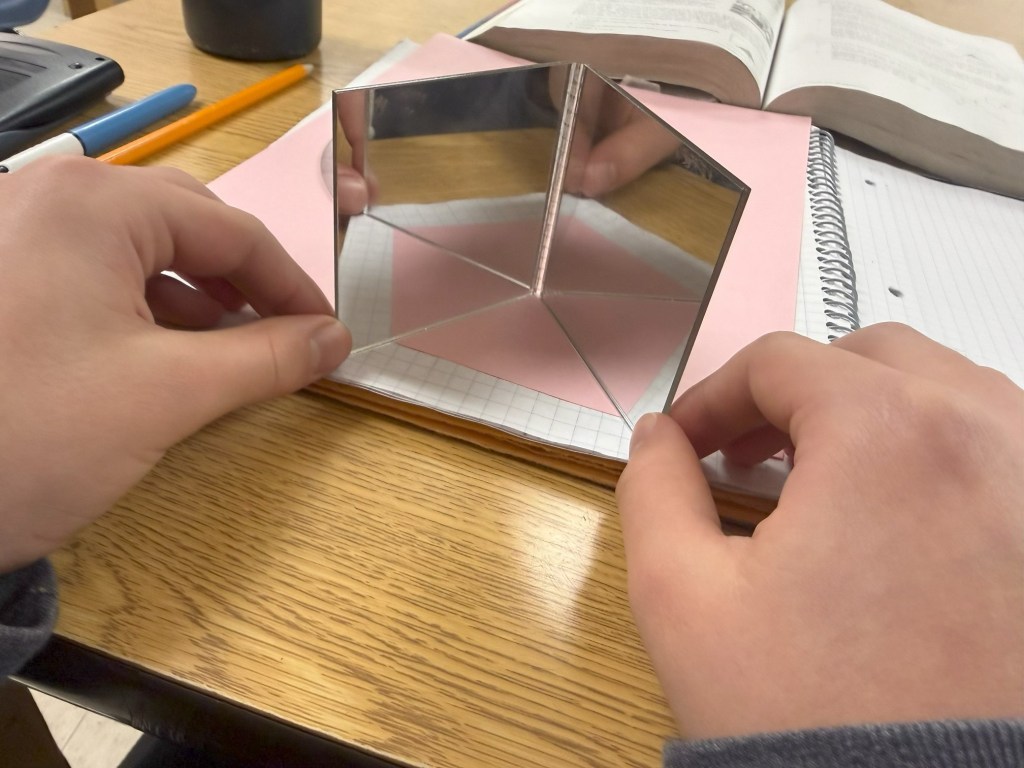
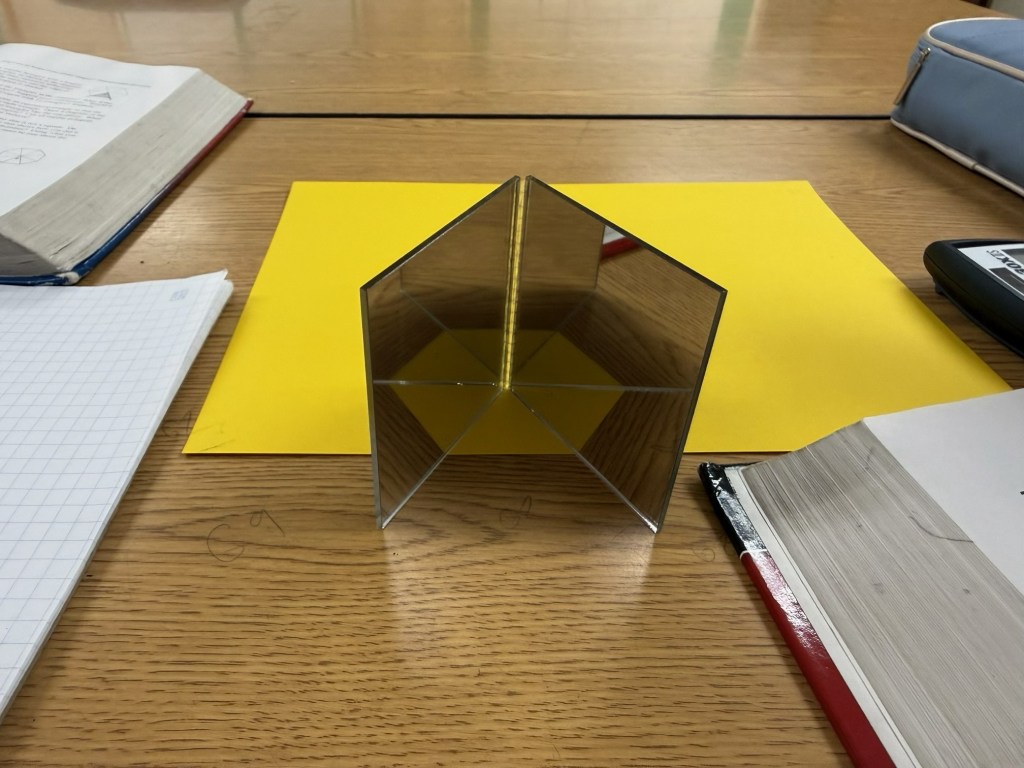
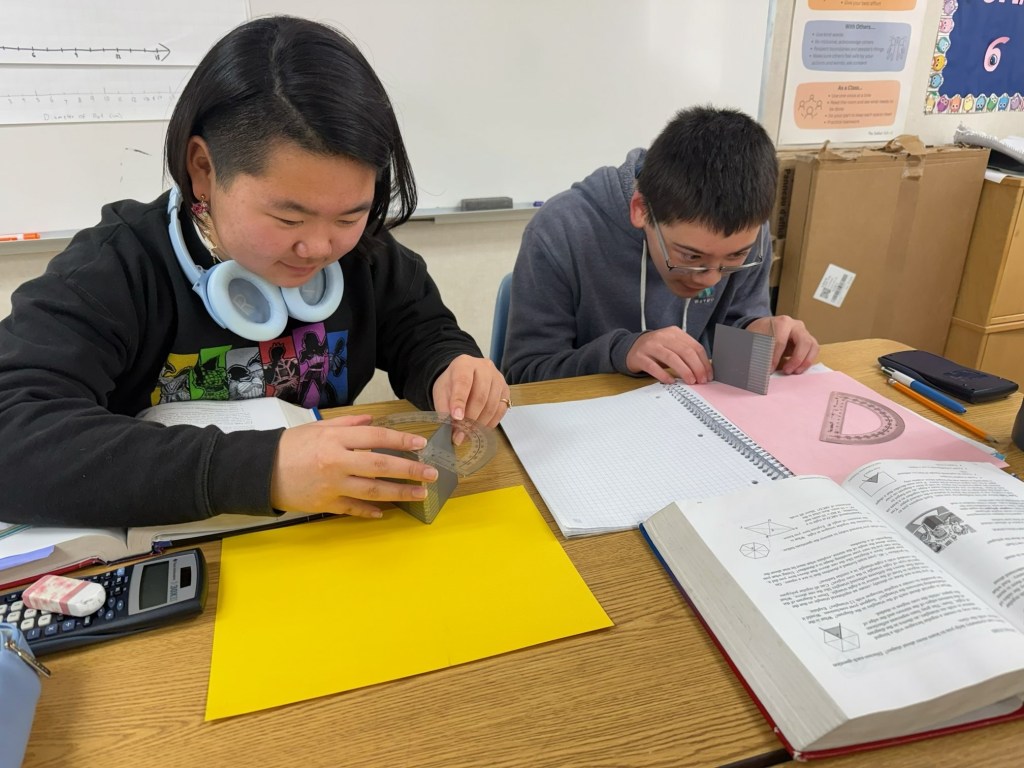
Last week, eighth-grade geometry students began a study of polygons and quadrilaterals using hinged mirrors, protractors, and colored paper to construct and analyze a variety of shapes. As they built regular hexagons, equilateral triangles in two different ways, and a rhombus that was not a square, students measured the angles formed by the mirror and noticed clear patterns, such as a 60° central angle for a hexagon and a 90° angle for a rhombus.
When students attempted to create a circle, they reasoned that a shape with infinitely many sides would require an angle of zero, leading to thoughtful discussion. Along the way, students made connections between reflection, congruent triangles, and perpendicular bisectors, strengthening their ability to observe patterns, explain their thinking, and build understanding through hands-on exploration.
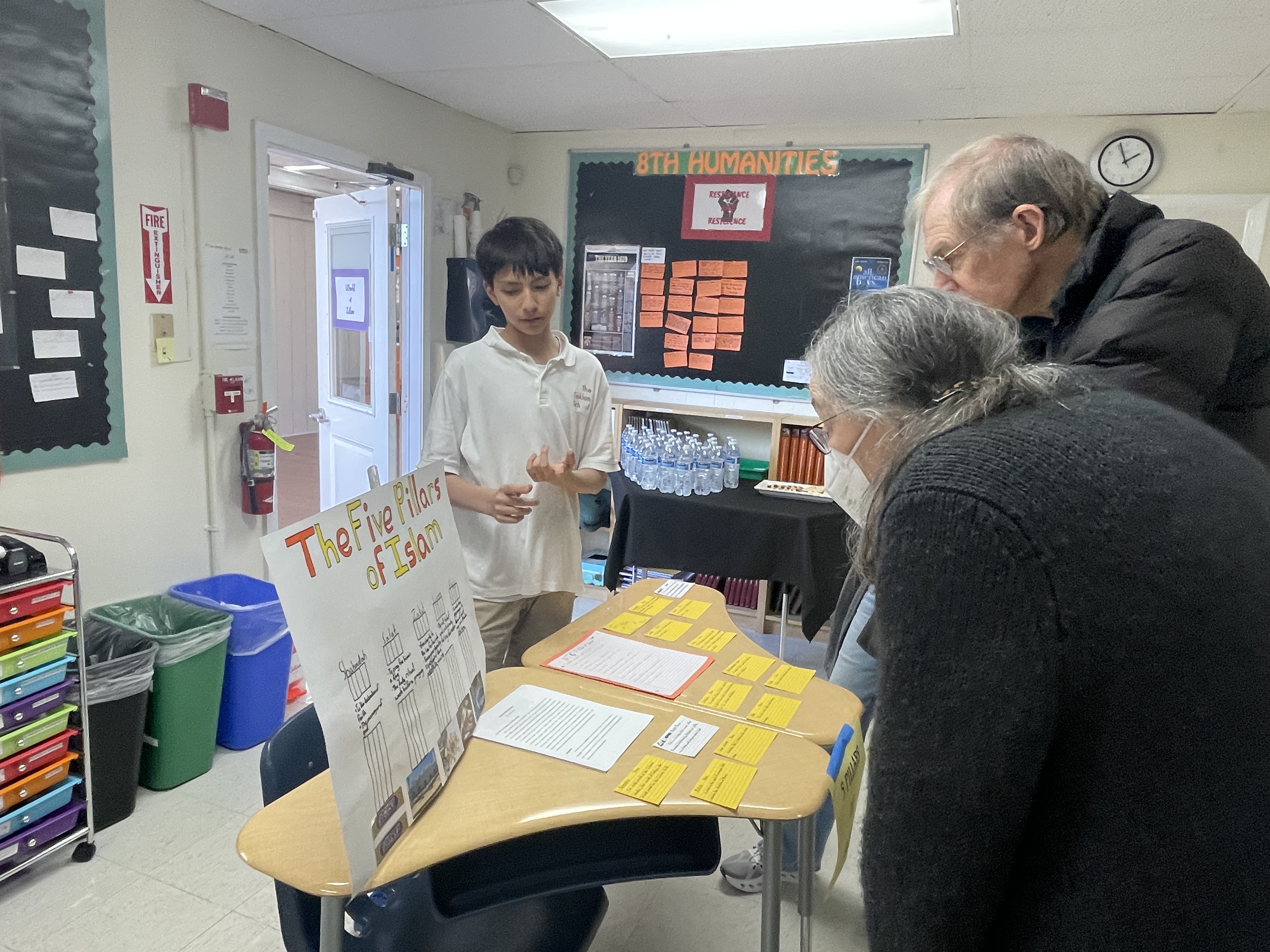
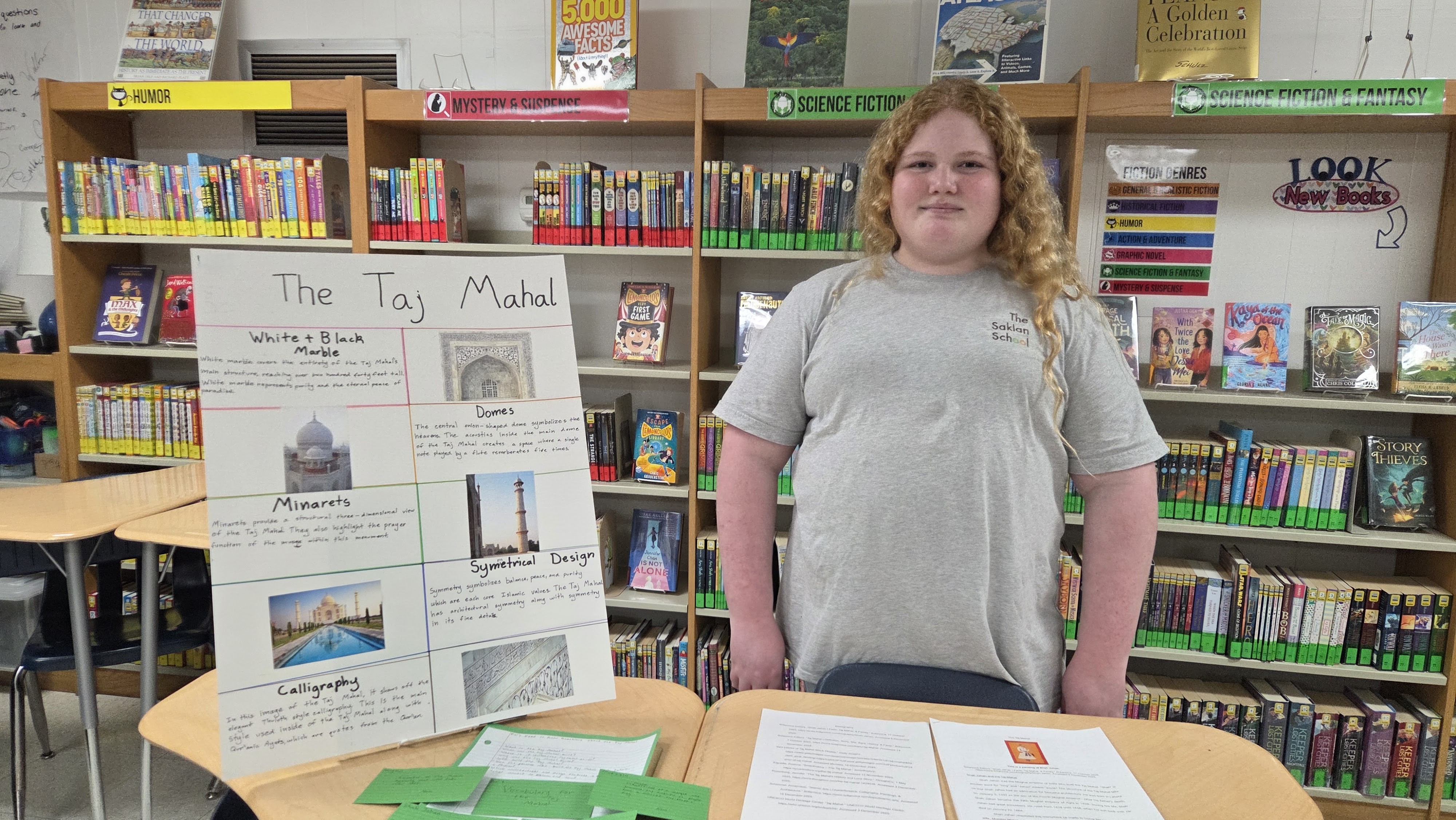
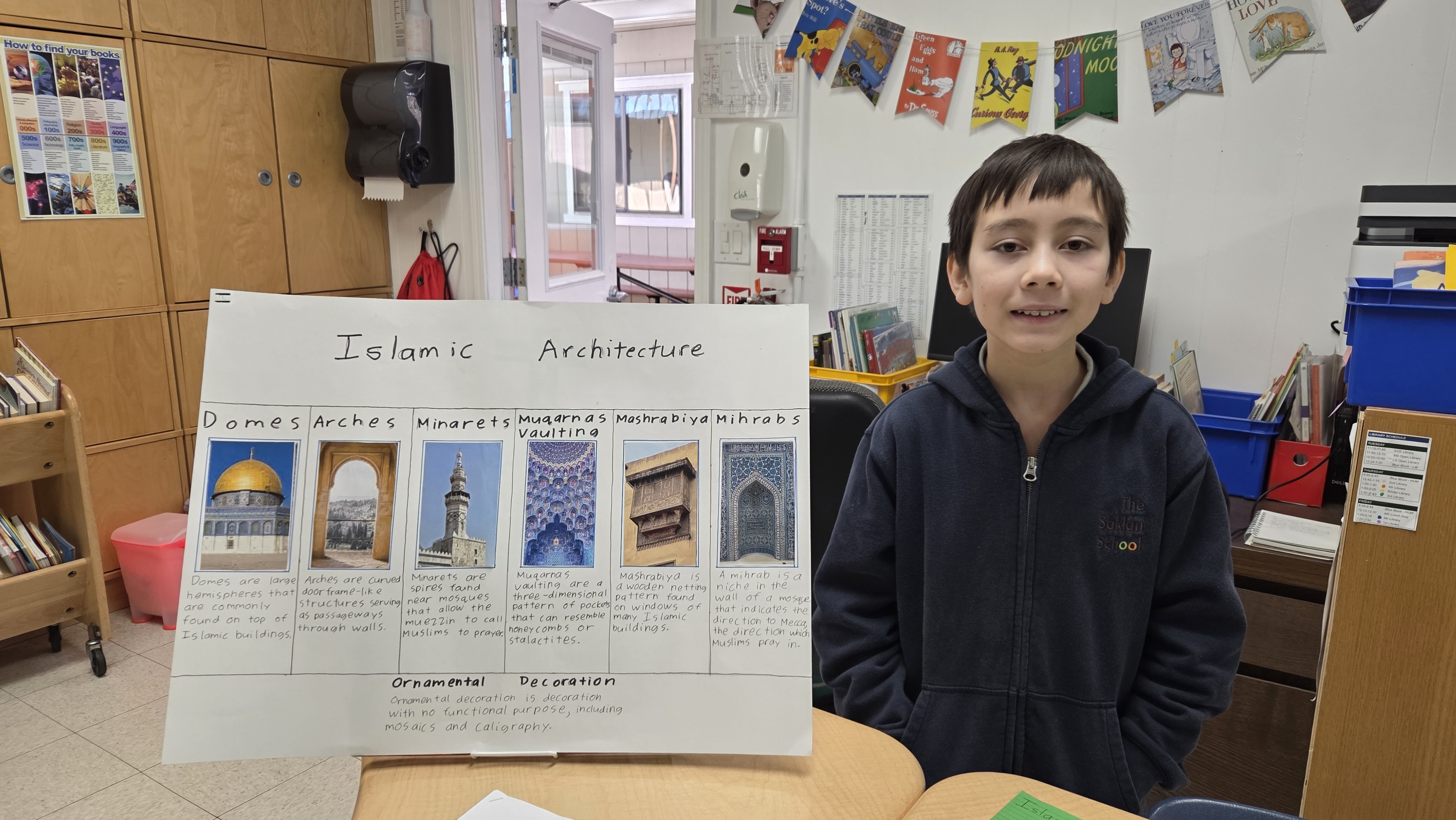
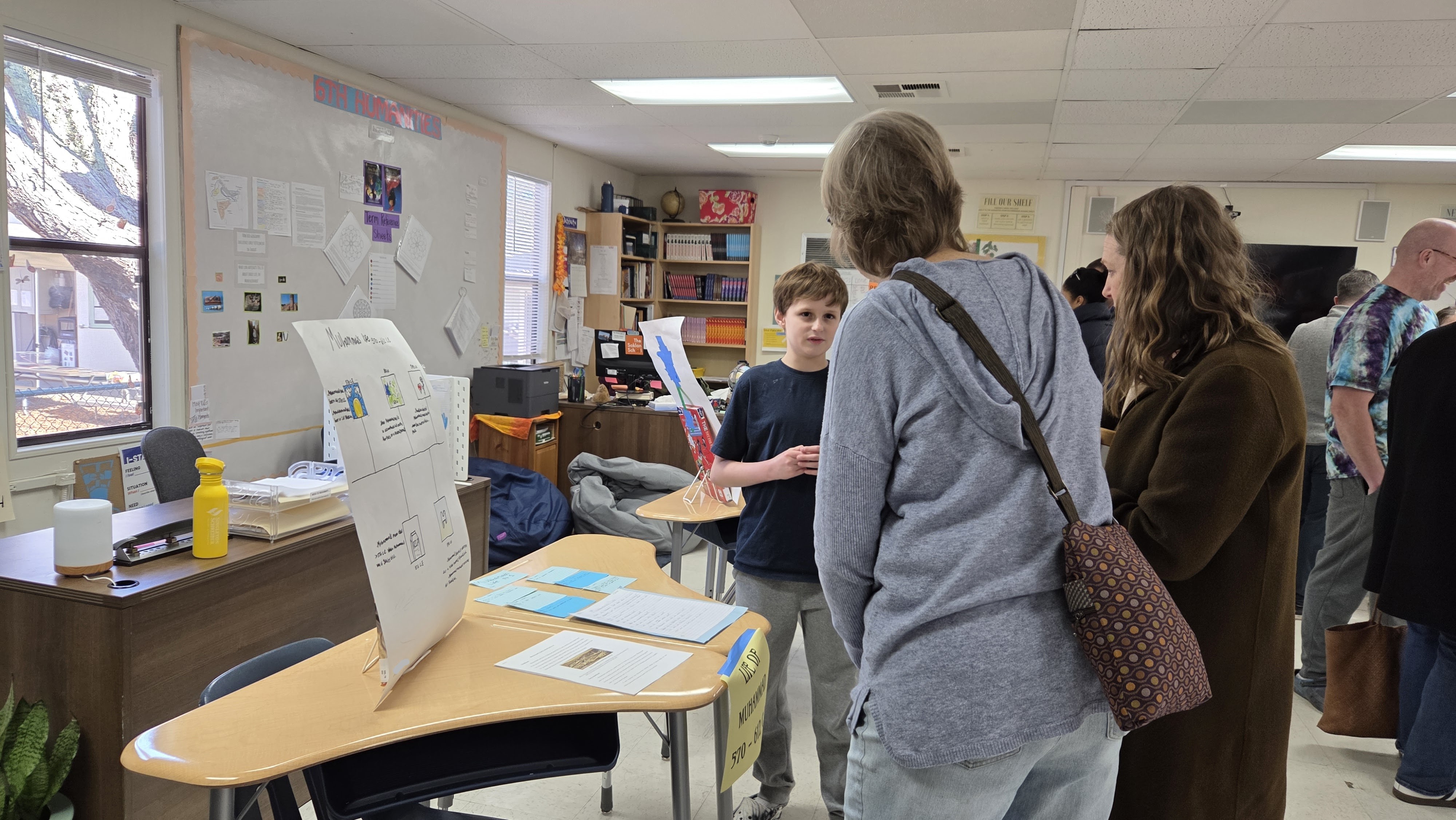
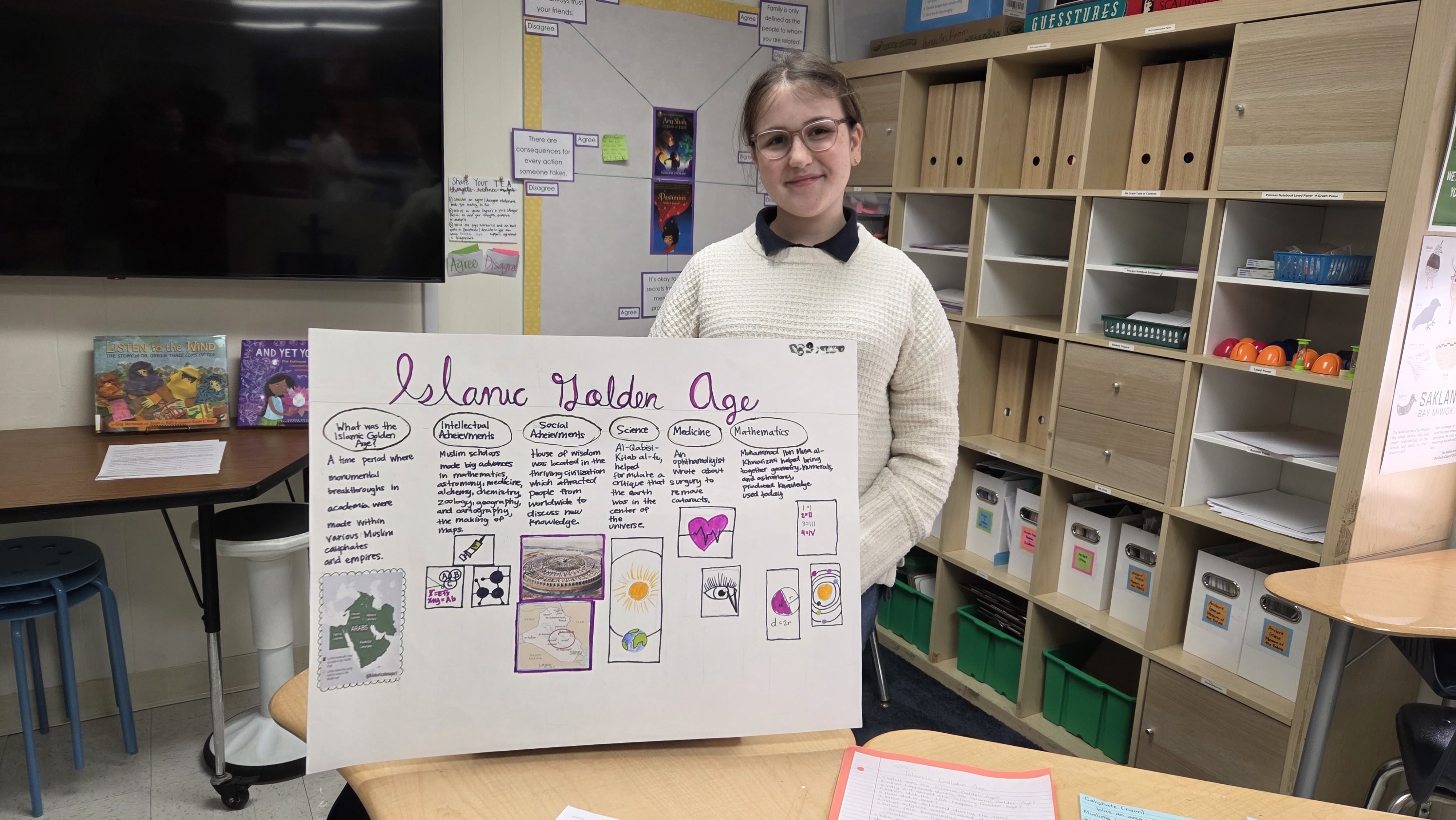
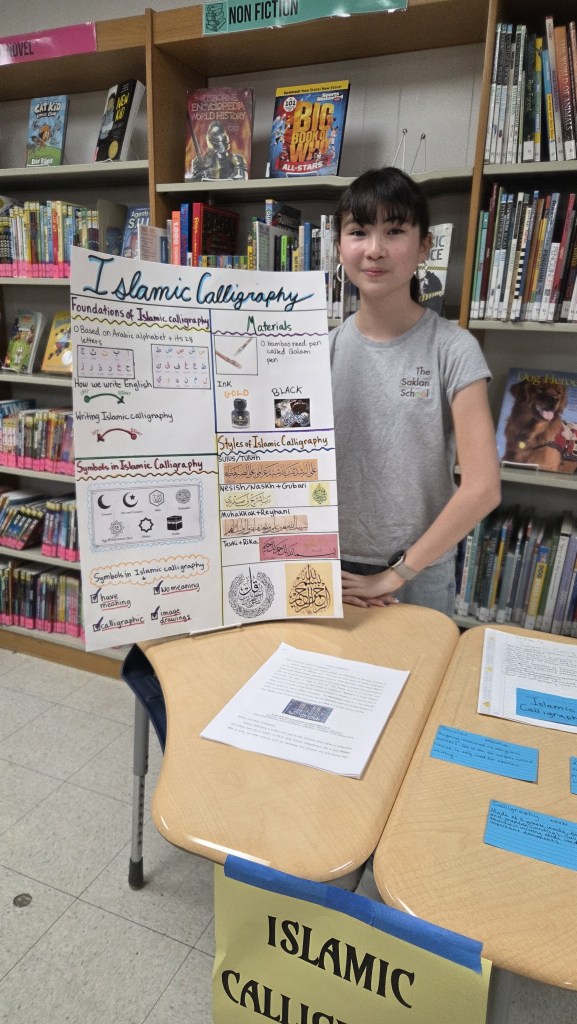
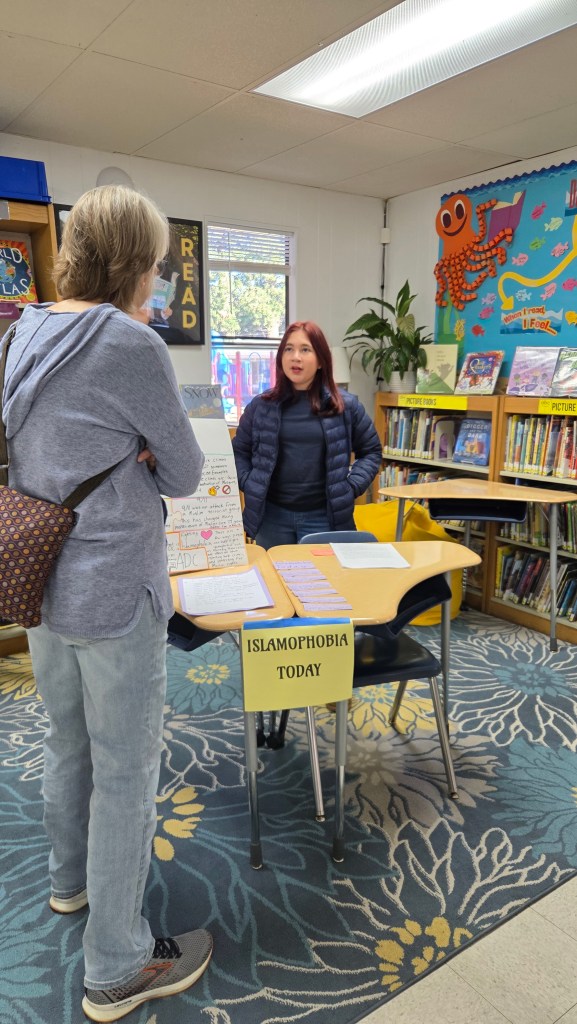
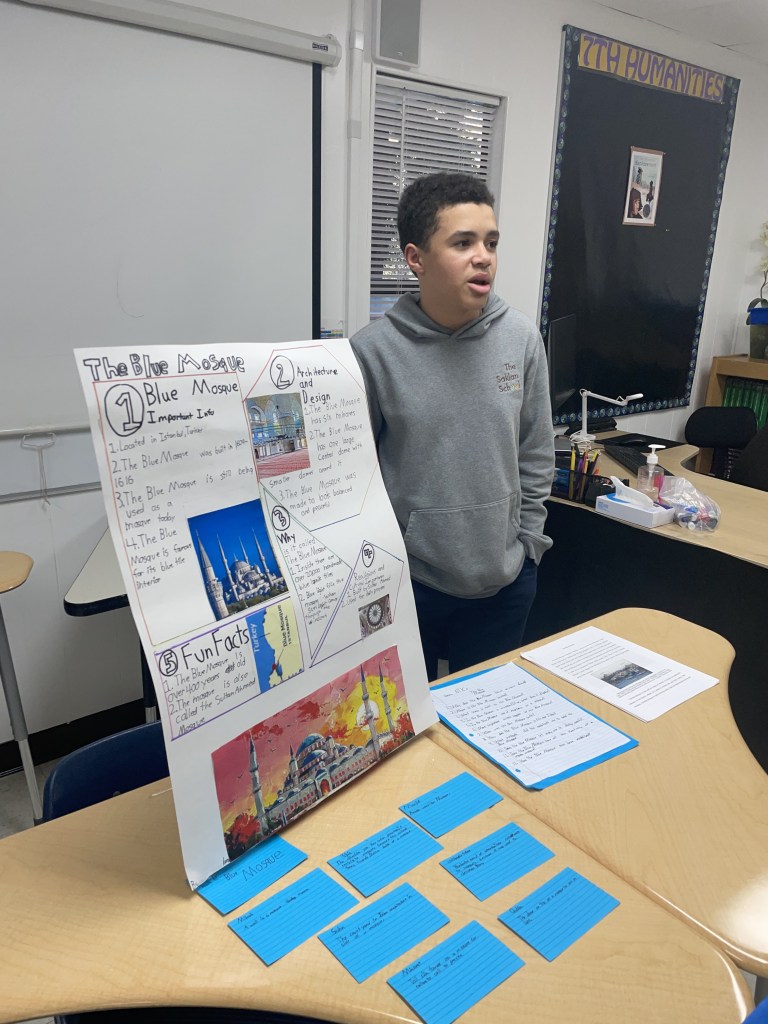
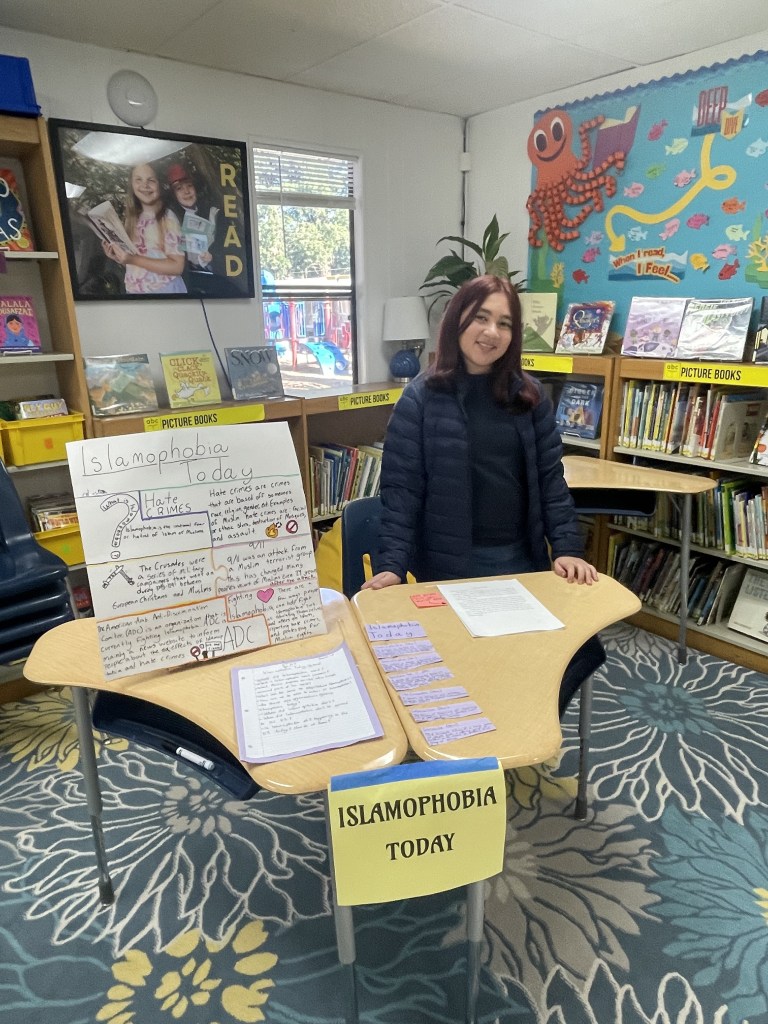
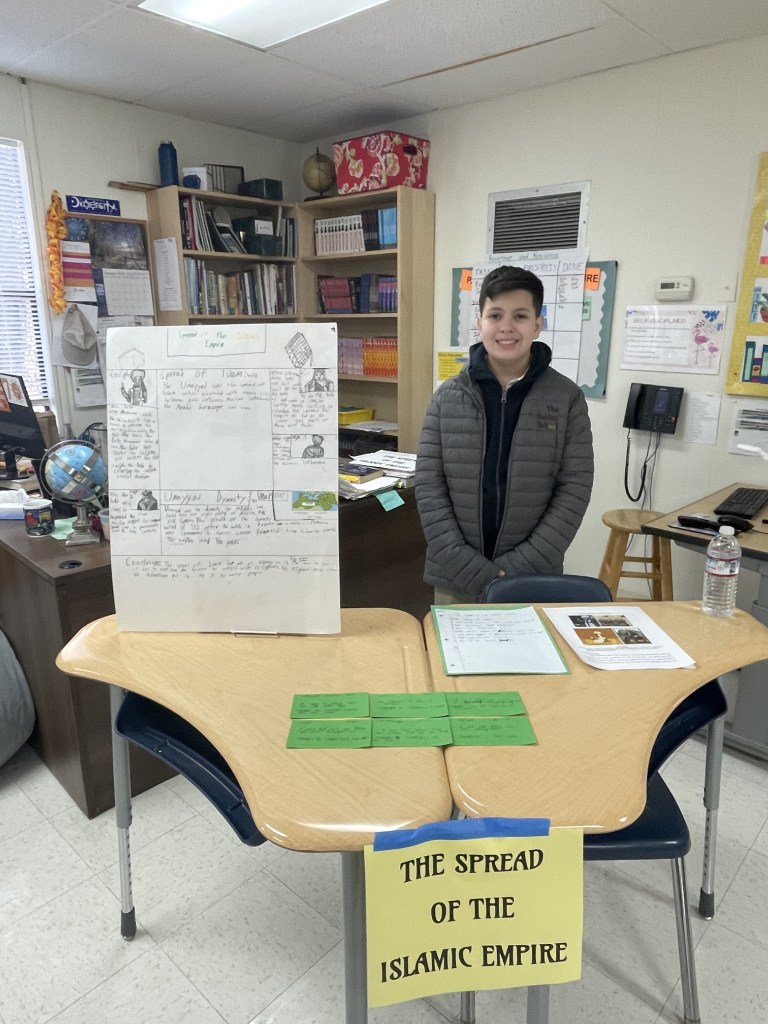
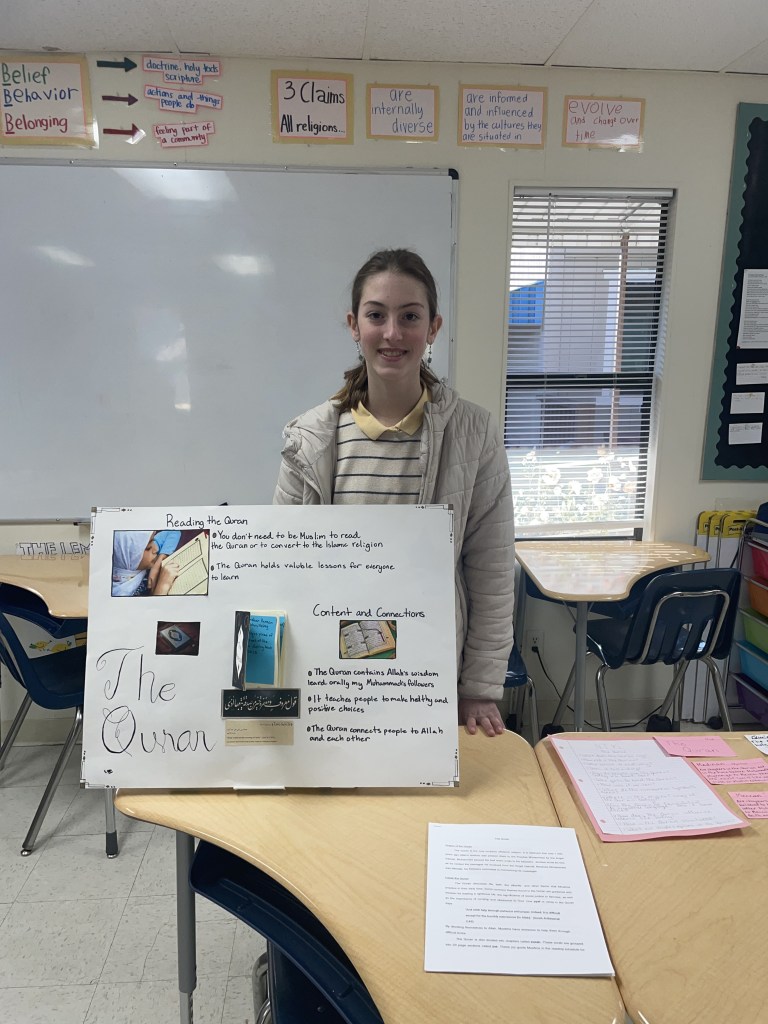
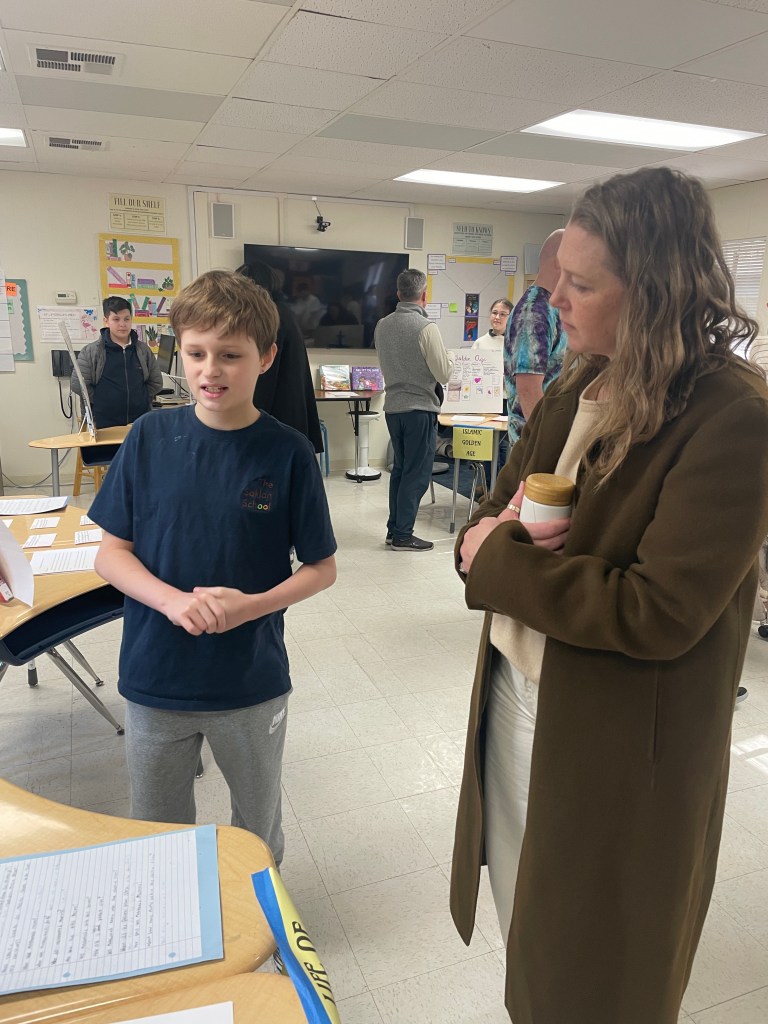
The 7th-grade students shared their learning with members of our Saklan community at their World of Islam Symposium for the culmination of their World of Islam independent study unit in Humanities.
For this unit, each student selected a topic they were interested in, then researched and evaluated sources relating to their topic. Next, they wrote and answered their own questions based on what they were learning from examining their print and digital sources. As they gathered more knowledge about their topics, they discussed what they were learning with one another. They then used their questions and answers to write a multiple-paragraph research paper.
At the Symposium, each student displayed their final paper, vocabulary cards, Need to Know questions, and an infographic poster to accompany their short oral presentation about their topic. They then answered follow-up questions from visiting parents, teachers, and their 6th and 8th-grade peers.
The 7th graders want to debunk negative stereotypes of Muslims by fostering a better understanding of Islamic history, culture, and beliefs. We thank our young scholars of Islam for this experience!
If you attended CLAS on December 12th, you heard the 7th-graders share facts they learned from their World of Islam unit in Humanities. Today, more than 1.9 billion people follow the teachings of the Prophet Muhammad, and Islam is the world’s fastest-growing religion. Yet despite its global reach, the origins, beliefs, and faith-based practices of Muslims are often misunderstood in Western societies.
As students prepared for their CLAS presentations, Humanities teacher Jennifer asked them to reflect on a deeper question:
Is there anything you have learned that might help people be more tolerant of Muslims today? If yes, please explain it.
The students’ responses demonstrated thoughtfulness, empathy, and a growing awareness of the power of education and understanding. Here are a few of their responses:
“People can educate themselves and others on the religion of Islam and challenge negative stereotypes.” – Amelia
“They are a very kind community helping the homeless and other things.”– Jason
“I think that the world isn’t perfect, and some people won’t listen to people who won’t be inclusive to others who don’t look the same as them or who are of another nationality. But if people really try to show those kinds of people that others are still human, this world could be a bit better.” – Caleb
“Yes, from reading the book Once Upon an Eid, I have learned that many Muslims, refugees or not, have faced lots of unfair discrimination because of their clothing and what their school textbooks say. However, when I learned about Muslim culture and wondrous celebrations, I realized that people who discriminate against Muslims don’t know how full of life Muslim culture is. Also, they clearly haven’t met a Muslim, because Muslims are normal people just like you and me.” – Willow
These reflections highlight the heart of Saklan’s Humanities program: encouraging students to think critically, ask meaningful questions, and develop empathy through learning.
The 7th graders will share their comprehensive research and learning with the community at the World of Islam Symposium on Monday, January 12, 2026, from 1:45 – 2:45 p.m. in the Humanities Room and Library. All Saklan families are warmly invited to attend and engage with this thoughtful and important work.
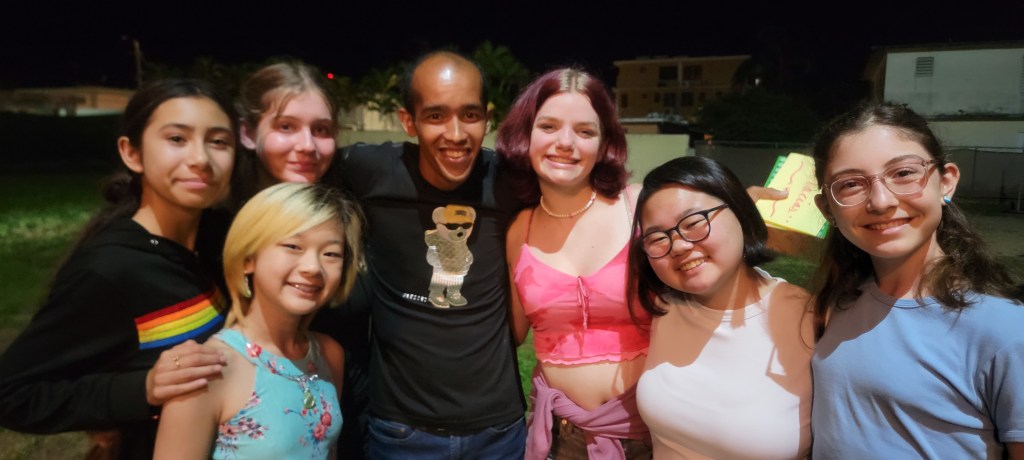
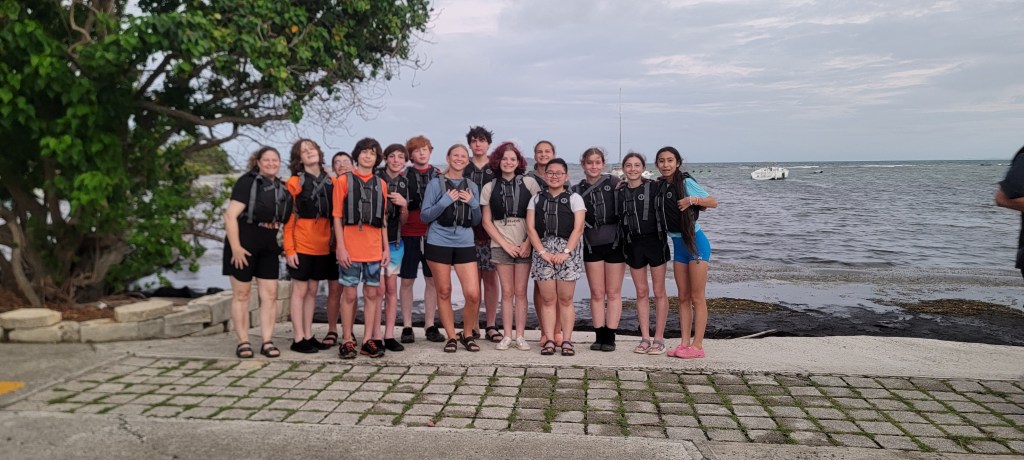
Earlier this month, Saklan’s 8th graders completed a meaningful service learning field experience in Puerto Rico. We shared highlights from the beginning of the trip in last week’s blog; below, we invite you to catch up on the final days through reflections written by the students themselves. Throughout the week, students documented their learning, service, and growth in a daily blog, capturing both the work they did and the connections they formed along the way.
Day 3: Filling in Walls with Cement
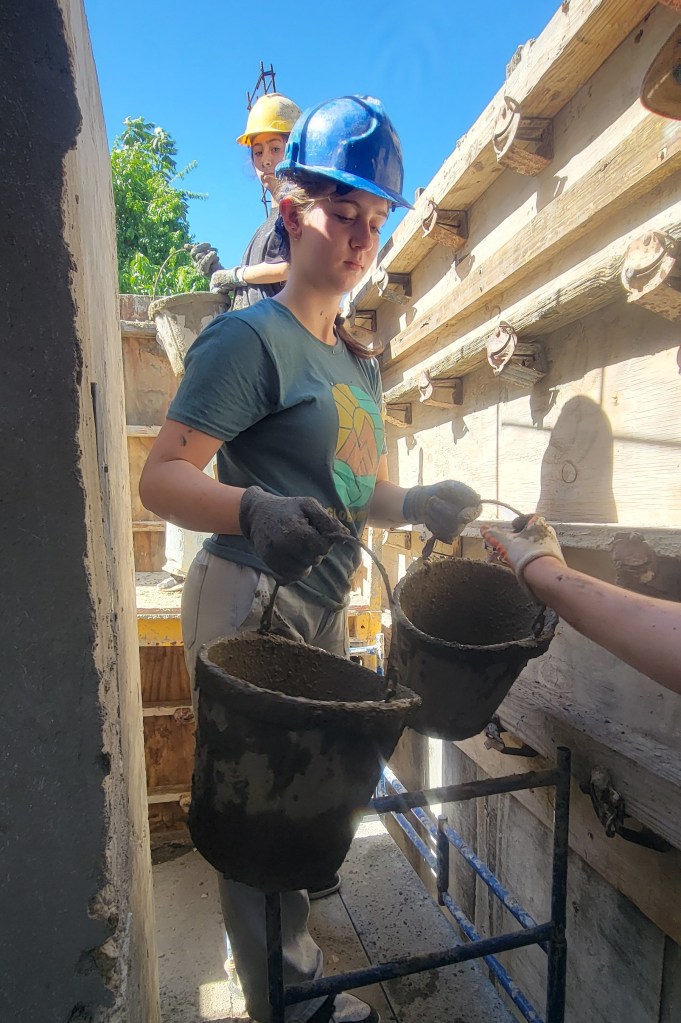
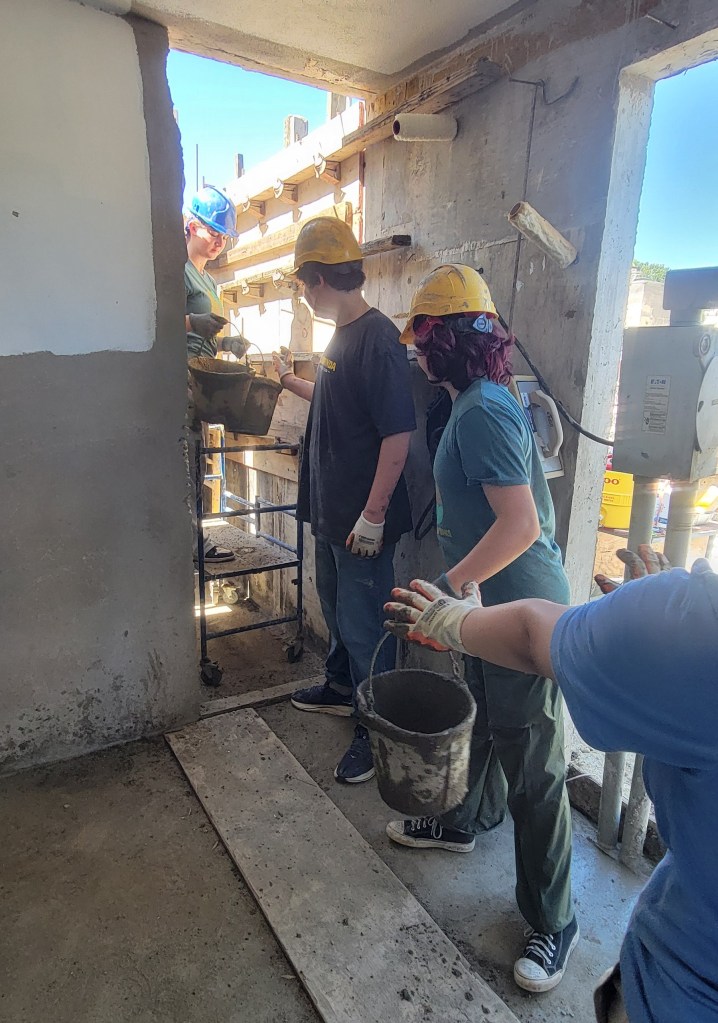
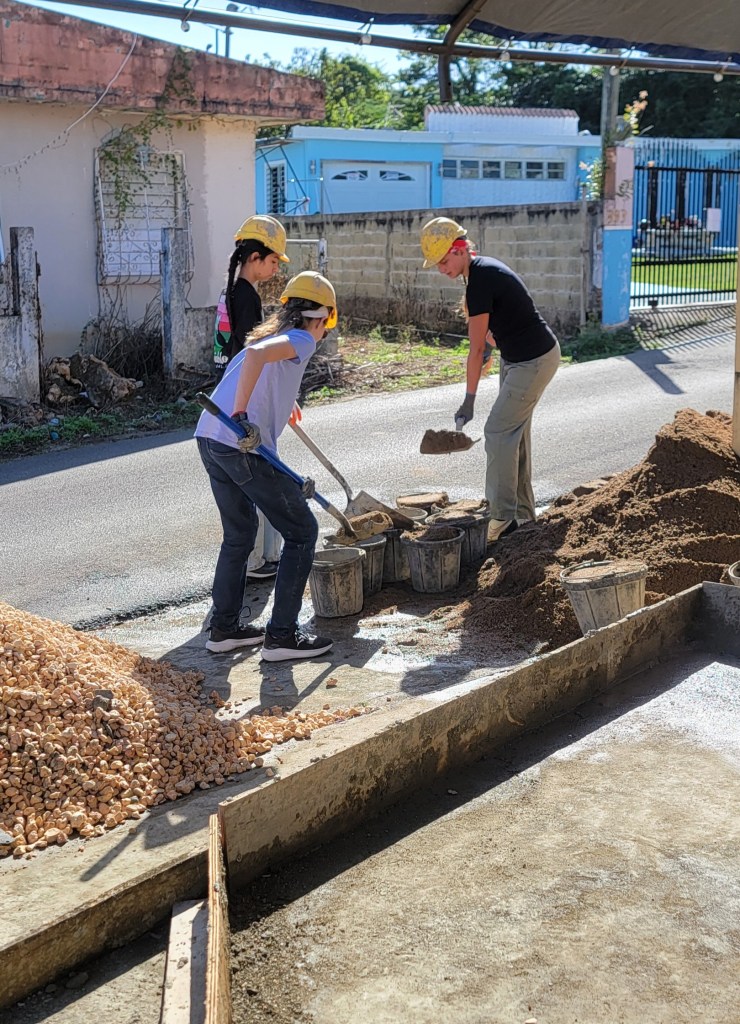
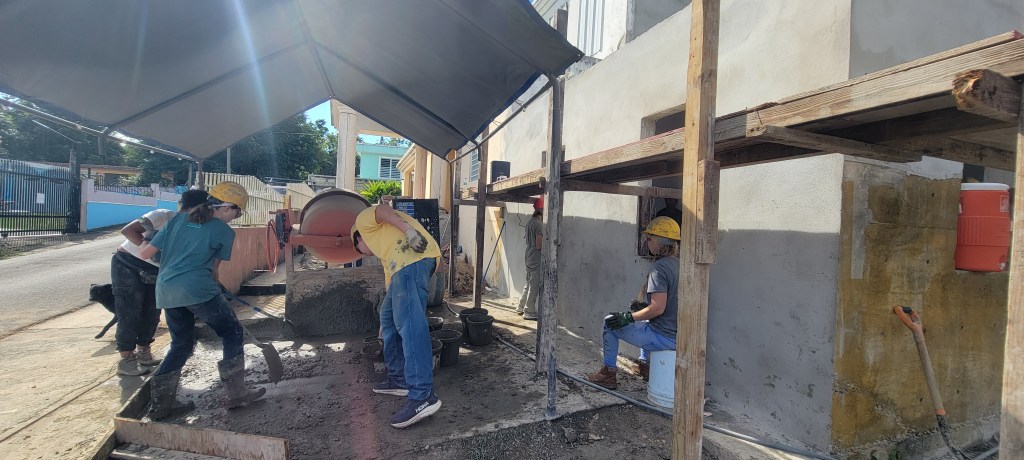
Today, when we woke up, we were greeted by a delicious waffle breakfast. By the end of breakfast, we were ready to rumble and headed to the construction site. Angel told us that today we were going to be filling in the walls with cement. The jobs for today were: shoveling, passing buckets, and filling in the wall. We worked tirelessly and filled in the first wall in only 45 minutes! During our breaks, we were surprised to receive different snacks like fruit, CapriSuns, and Gatorade. After each break, we switched around our jobs and learned more skills for rebuilding houses.
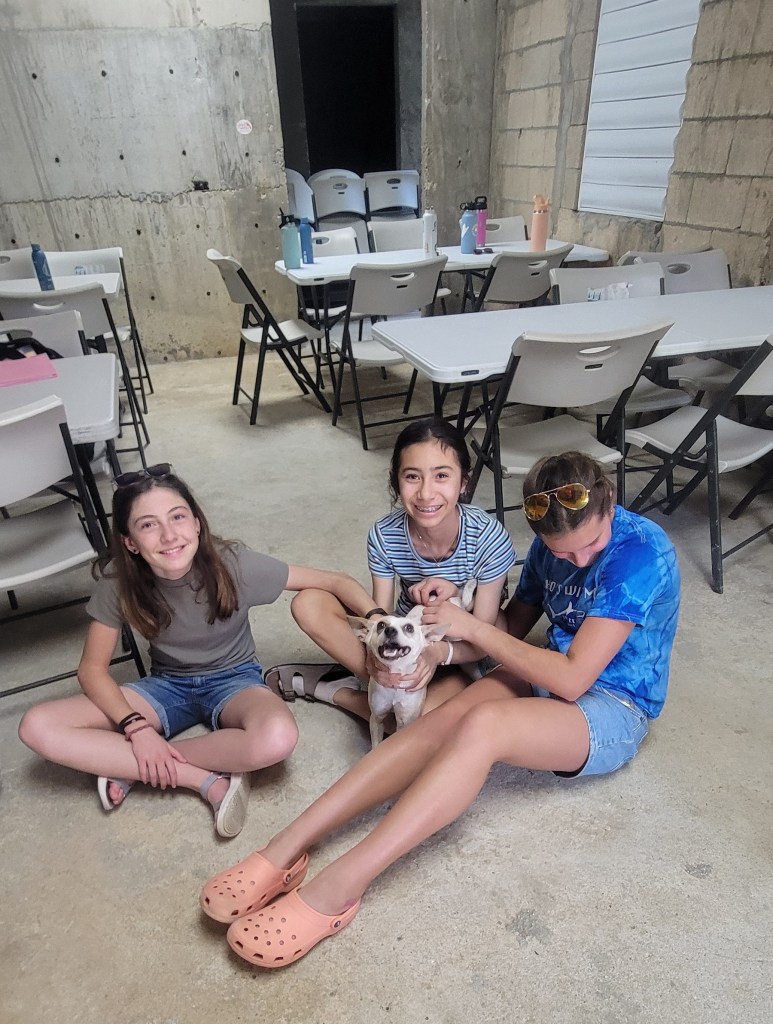
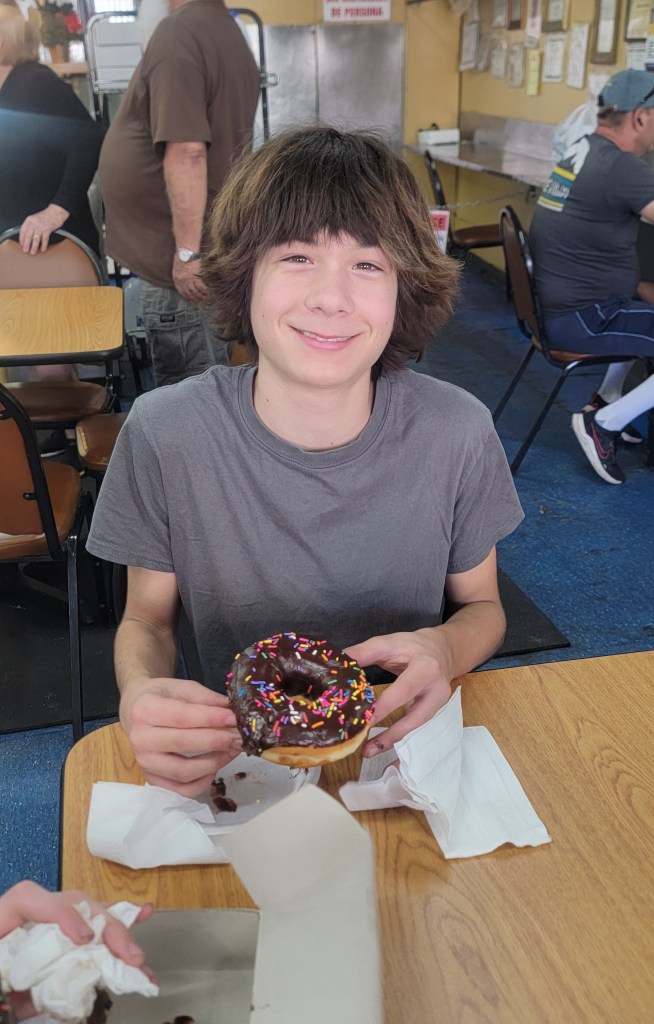
When we were finished with construction, we were welcomed back to Maria’s house with a very delicious lunch, and a very friendly dog that we called Lil Brunc. Our delicious lunch today was rice, beans, chicken nuggets, and salad. After our lunch, we headed to a local bakery where Ms. O bought us giant donuts the size of Lil Brunc! Then, we went to a nearby supermarket where we bought a bunch of delicious and exclusive Puerto Rican snacks. After that, we went back to the Big Yellow House to get ready for the beach. The beach was super fun, and when we got back, we all ate a really delicious meal. Then we enjoyed the rest of our day with group activities and free time.
Day 4: Last Day in the Big Yellow House
Today was an amazing day to close our stay at the Big Yellow House! We woke up to the delightful scent of French toast and sausages. After applying sunscreen and bug spray, we returned to the work site to finish filling in the wall. During our work, we were given tasty ice pops by Yulissa, the person for whom we were building the room. After a few hours of hard work, we filled in the wall completely.
We ate a lunch that consisted of burgers and French fries, along with fruits of many kinds. We returned to the Big Yellow House and had a few extra hours of beach time, because we had finished early. At the beach, we used our creativity to dig holes and play with rocks in the sand. After a fun time at the beach, we headed home to pack up our luggage for our last night at the Big Yellow House.
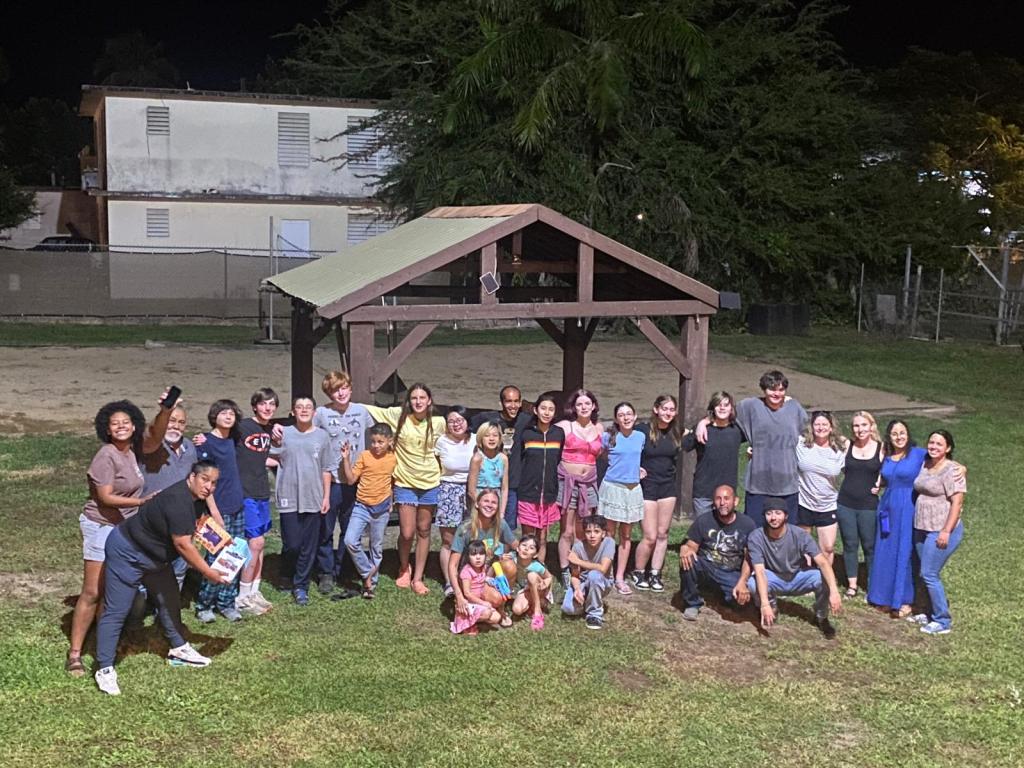
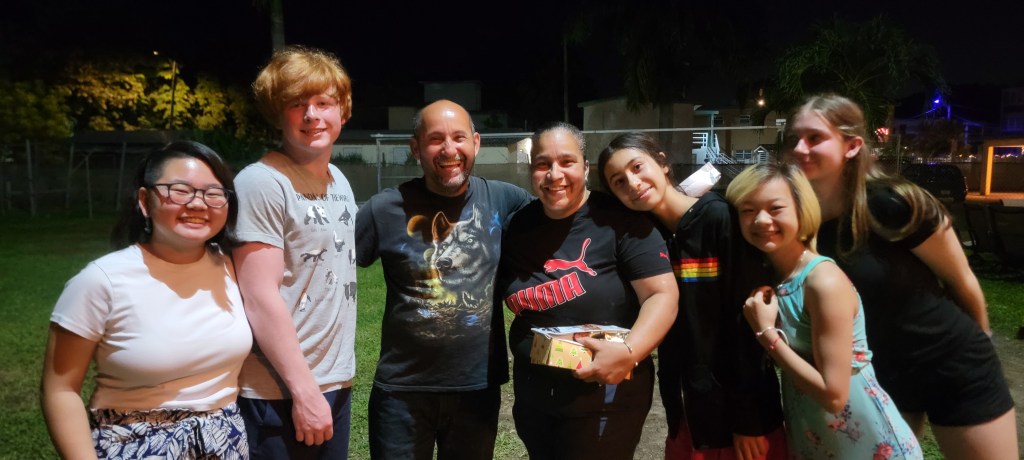
The group prepared thank you cards written to the community we worked with over the week. Once everything was ready, we spent time with Miss O and Miss Kim to reflect on our experiences with the community so far through journaling. For our final dinner at the Big Yellow House, we invited the community to share it with us. We had a delicious dinner of chicken breast, pork chops, yellow rice, and potatoes. After everyone had finished their food, our class played games with the other kids in the community. To close up our dinner, we had a final meeting about our overall thoughts on our three days at the work site. Before we said our final goodbyes, the community gave us each a bracelet as a thank you and as a reminder of our time here in Puerto Rico.
After everyone left, we all pitched in to help clean up and turned in for our final night at the Big Yellow House. We cannot wait for our upcoming adventures during our last full day here in Puerto Rico!
Day 5: El Yunque Rainforest
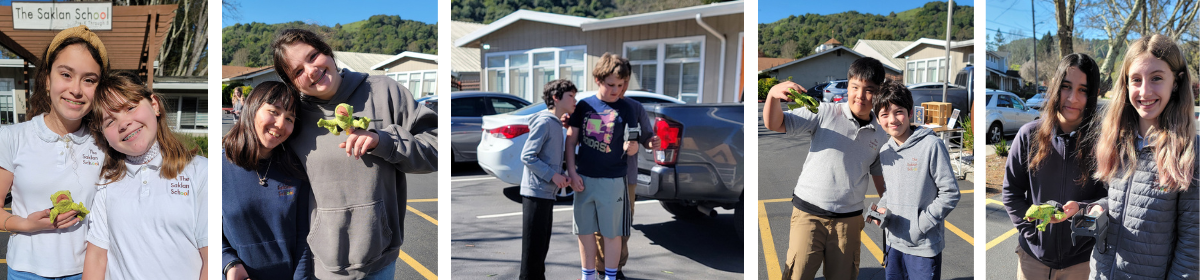
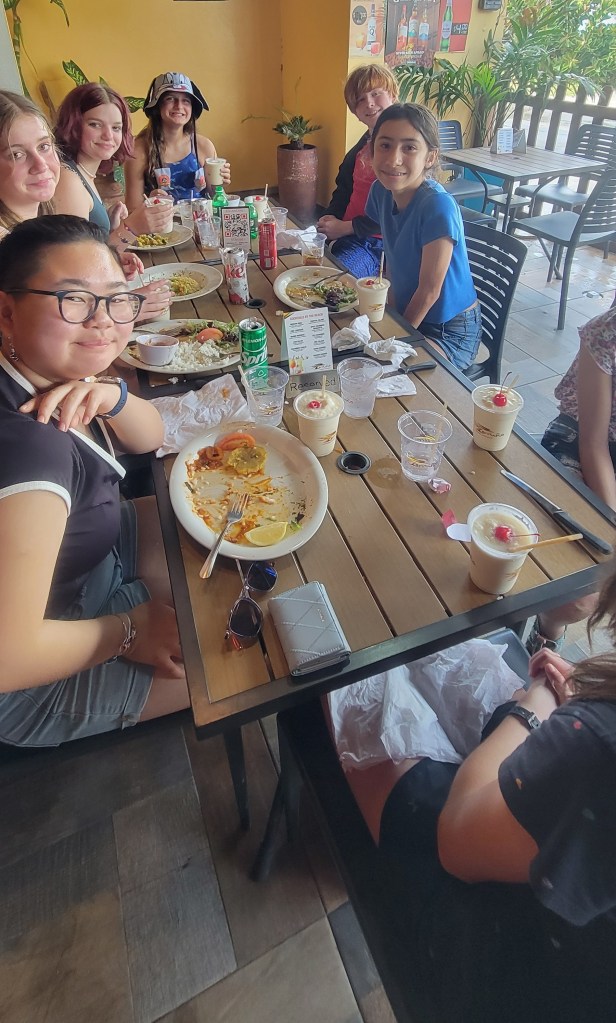
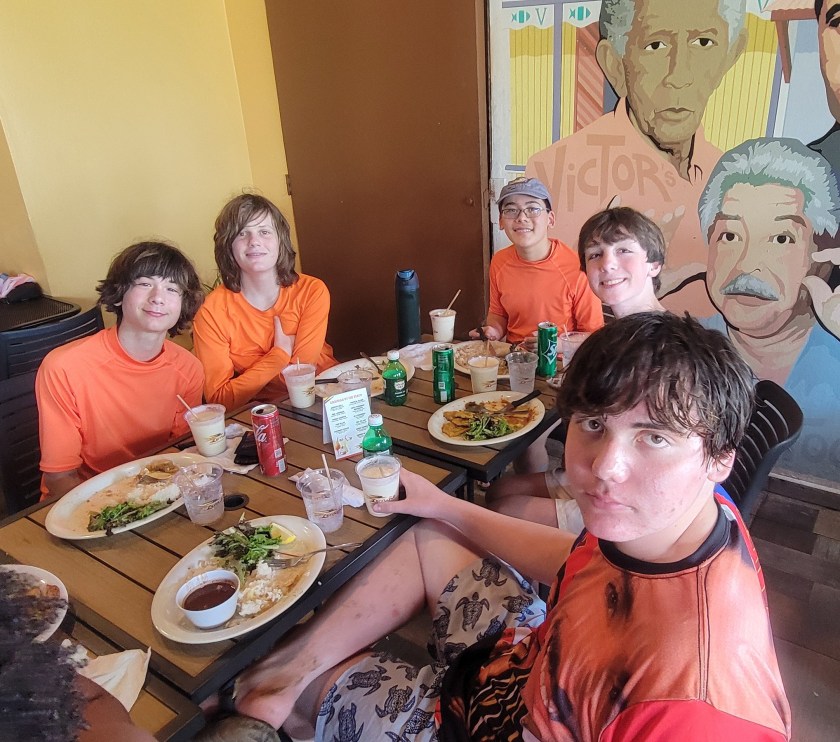
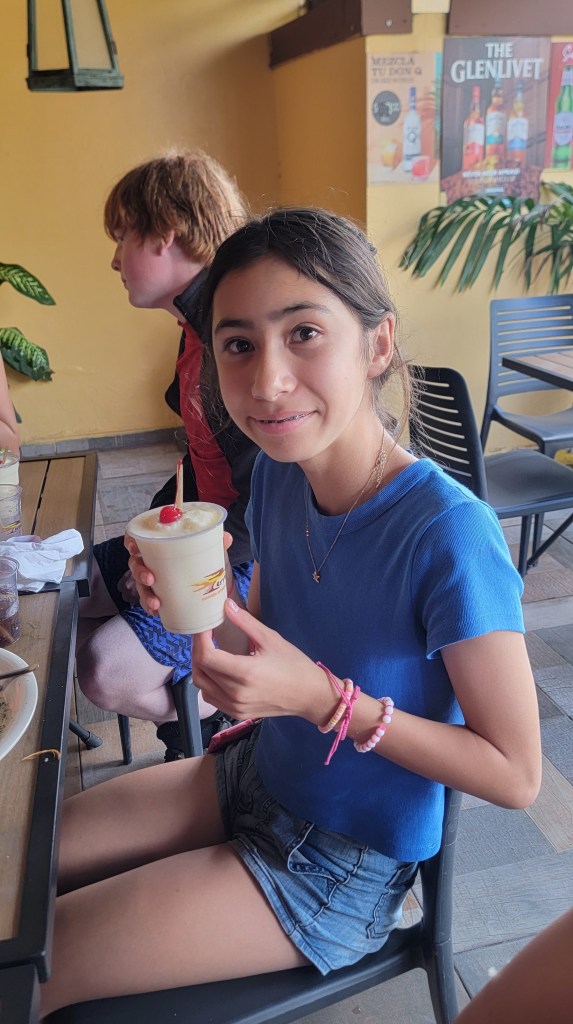
Today we started off with an early wake-up to eat a breakfast of delectable waffles, sausages, French toast, and fruit. We packed up everything and got in the vans for a one-hour drive to El Yunque Rainforest. At El Yunque, we went down a short and muddy trail to a beautiful but cold river, which we swam in for a nice, peaceful morning. After trekking back up the muddy trail, in our vans, we headed to the El Yunque Visitor Portal, where we had to run through random bursts of rain to get inside. At the Visitors Portal, we learned about how the local ecosystem works, shopped at souvenir vendors, and adopted a Puerto Rican stuffed parrot, where all the proceeds go to a recovery fund for this endangered species. Once we headed back to the vans, we ate lunch at Rest. El Terruño. There we ate some traditional Puerto Rican food, and tasted the island’s national drink, the Piña Colada (the non-alcoholic version!).
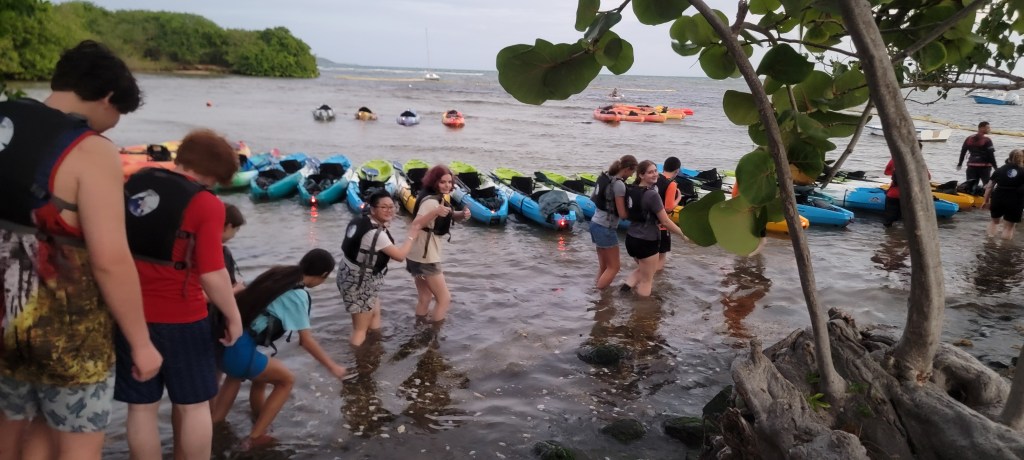
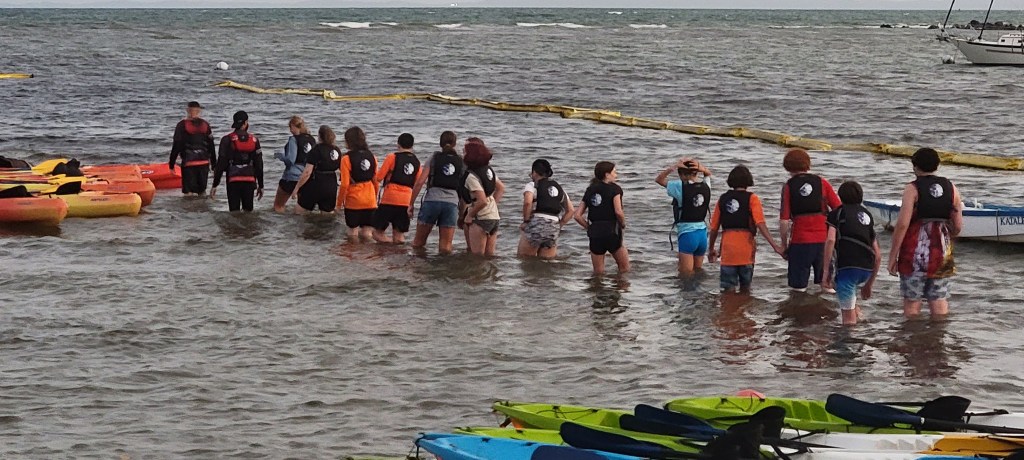
After the delicious lunch, we had an hour to visit and buy from the kiosks that were on the street. Once we were finished shopping, we made the trip to Casa Coral, which is where we get to stay for one short night! There, we settled in and checked out the beach. We had an early dinner of pizza and got in the van one last time to head to Biobay kayak tours. We paddled a mile and a half each way through tangled mangrove roots with our partners to see the bioluminescence of the microscopic things living in the bay. Back at Casa Coral, we shared about what we had learned on the trip and what we will take back home. We will miss our time here in Puerto Rico!
Through service, collaboration, and reflection, Saklan’s 8th graders deepened their understanding of community, responsibility, and global connection. Their time in Puerto Rico left a lasting impression, one they will carry forward long after returning home.
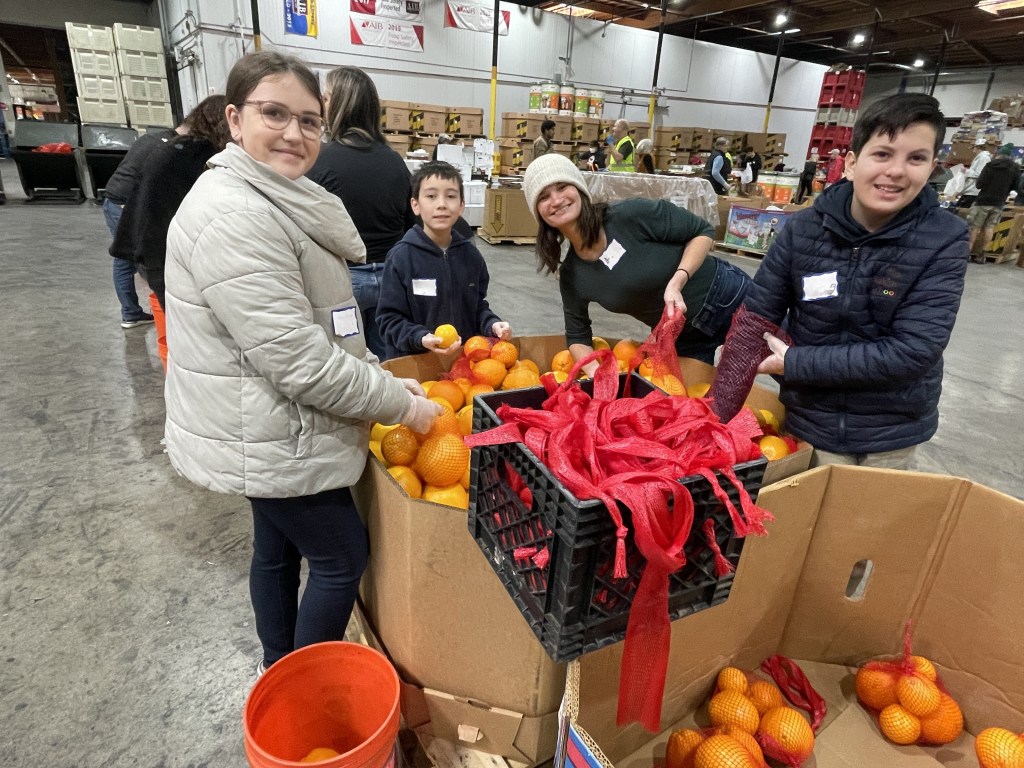
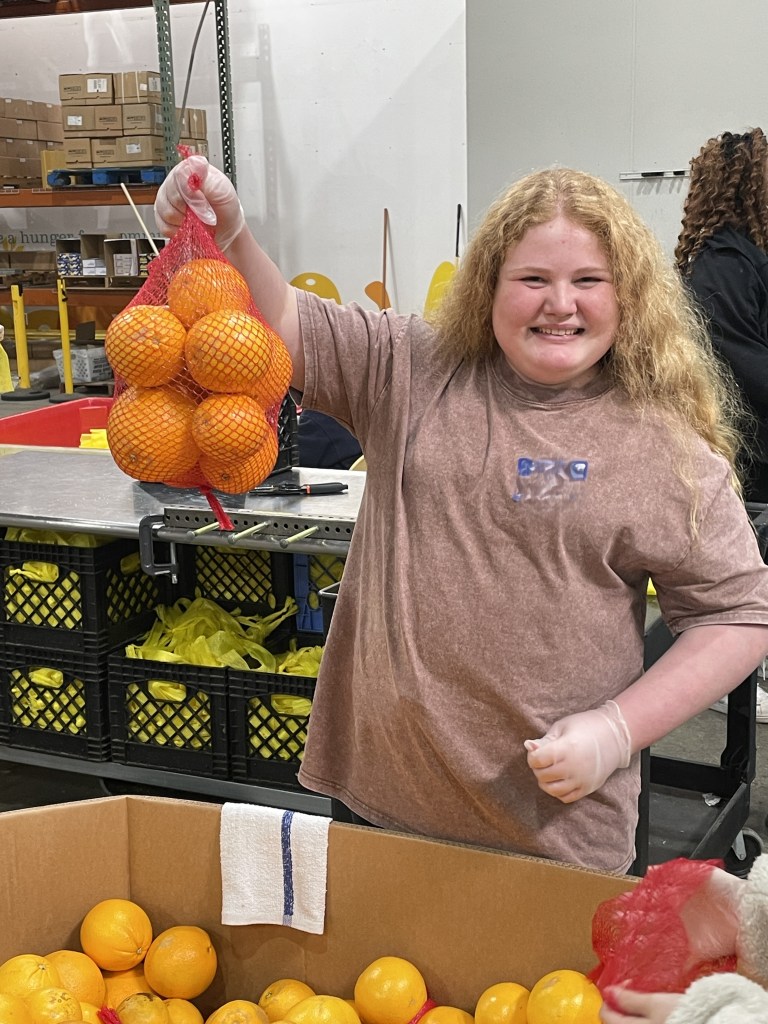
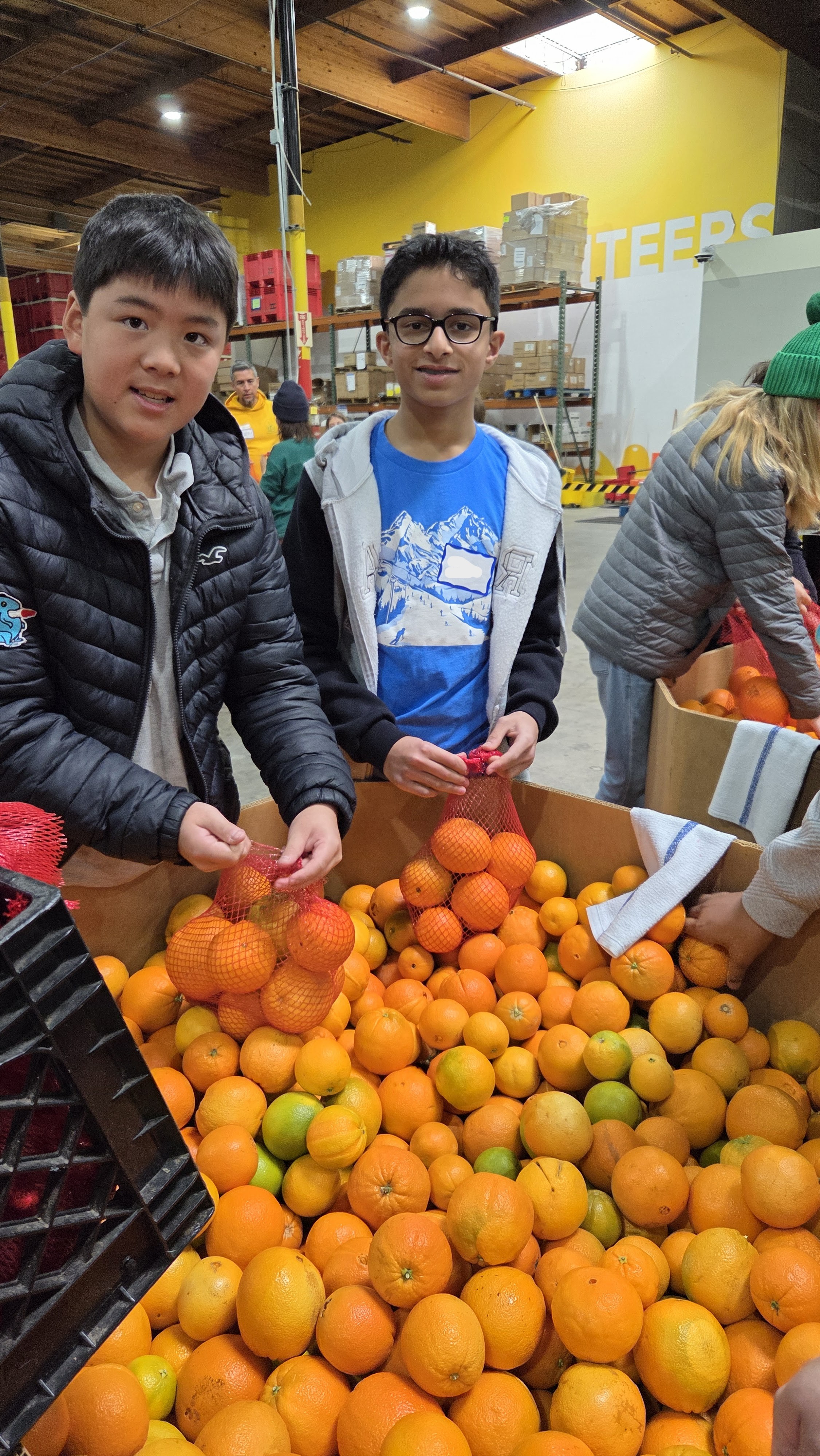
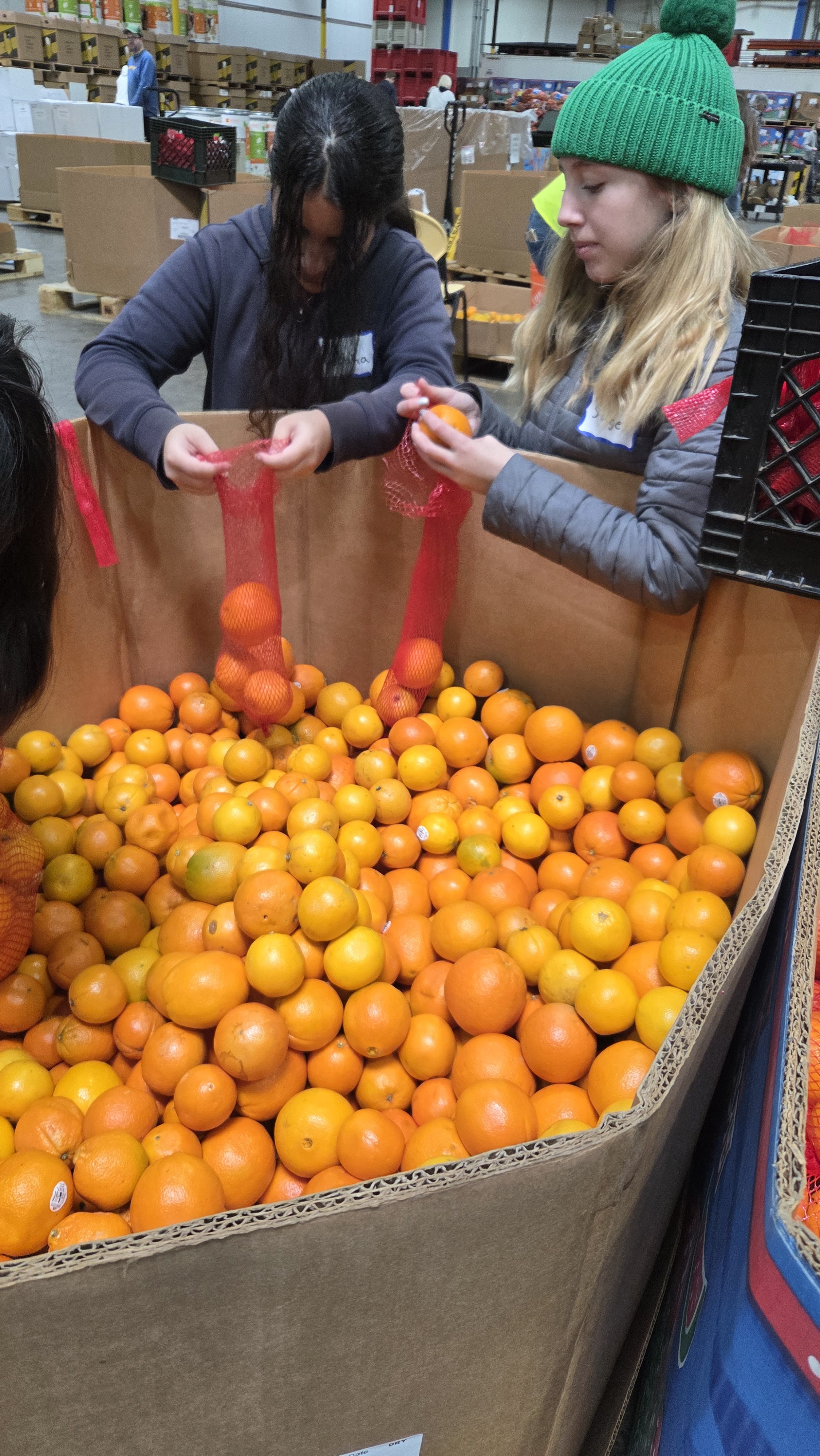
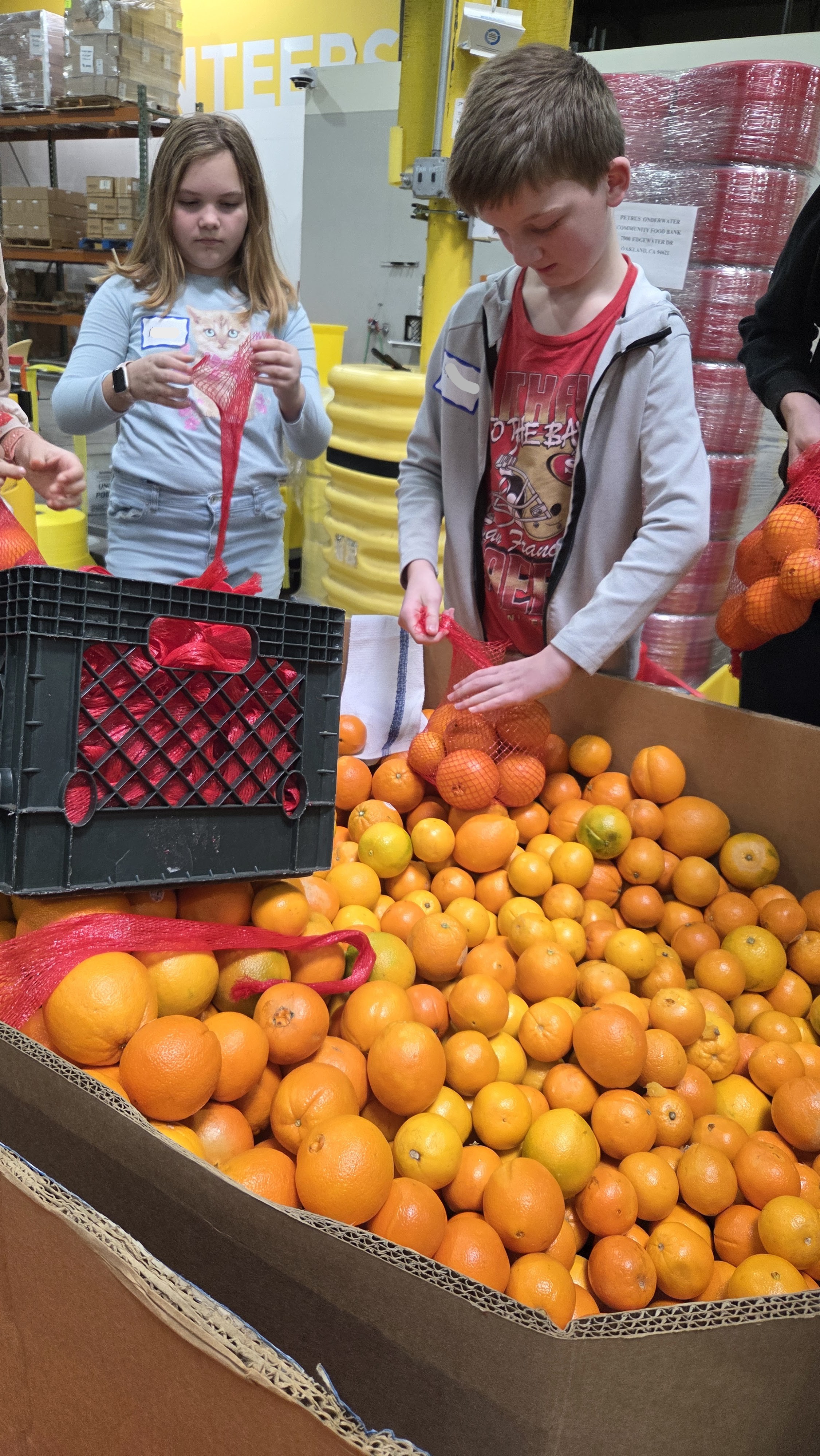
This week, our 6th and 7th graders stepped beyond the classroom and into the heart of service as they spent two mornings volunteering at the Alameda County Community Food Bank. Their hard work, teamwork, and compassion made a meaningful impact.
On Monday, the 7th-grade class rolled up their sleeves and got straight to work, sorting and bagging an impressive 3,200 pounds of apples and oranges. The room buzzed with energy as students picked through the fruit, sorting it into family-sized bags. The class collaborated efficiently and encouraged one another to keep the momentum going.
The very next day, it was the 6th graders’ turn. With equal enthusiasm and determination, they tackled a mountain of produce and successfully bagged 6,860 pounds of oranges! Their focus, teamwork, and positivity were inspiring to watch.
These service-learning experiences help students understand the real needs within our broader community and the powerful role they can play in addressing them.
We extend a huge thank you to the Alameda County Community Food Bank for welcoming us, and to our students for their hard work, kindness, and commitment to making the world a better place, one bag of fruit at a time.



 FRIDAY BLOG
You must be logged in to post a comment.