When to Speak Up, When to Let It Go

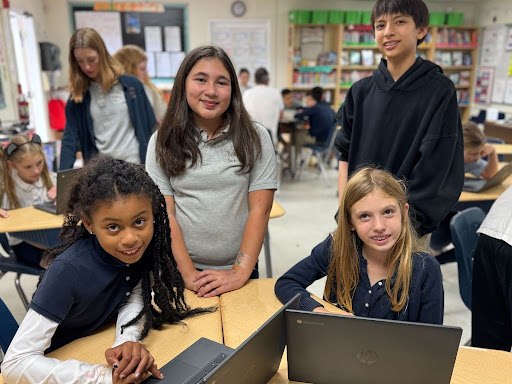
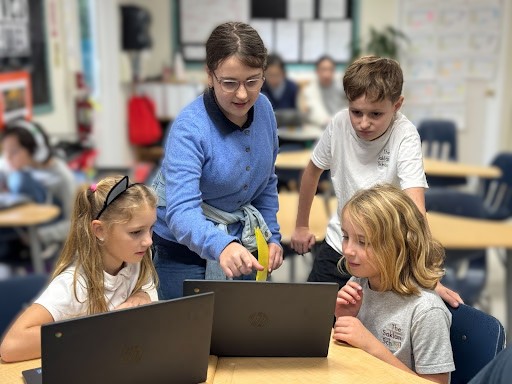
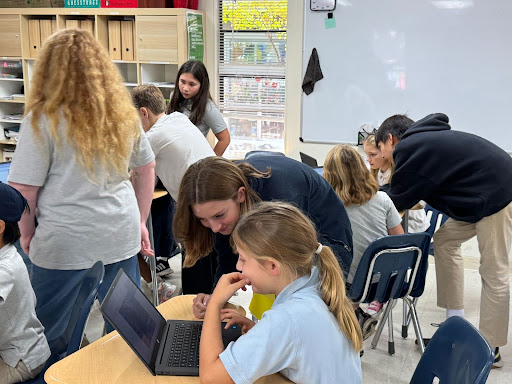
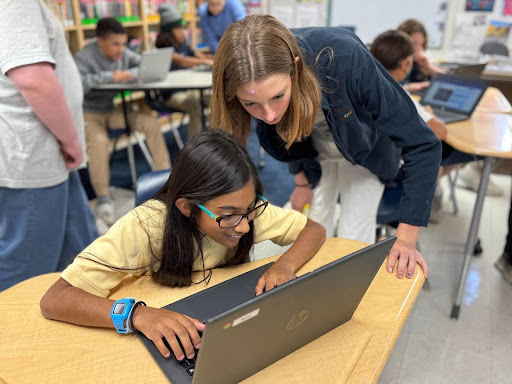
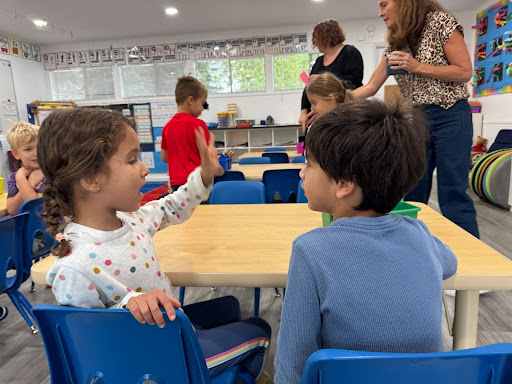
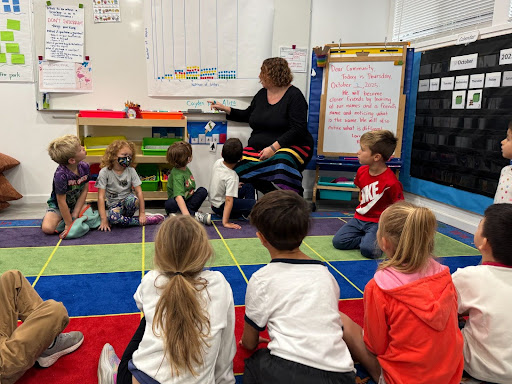
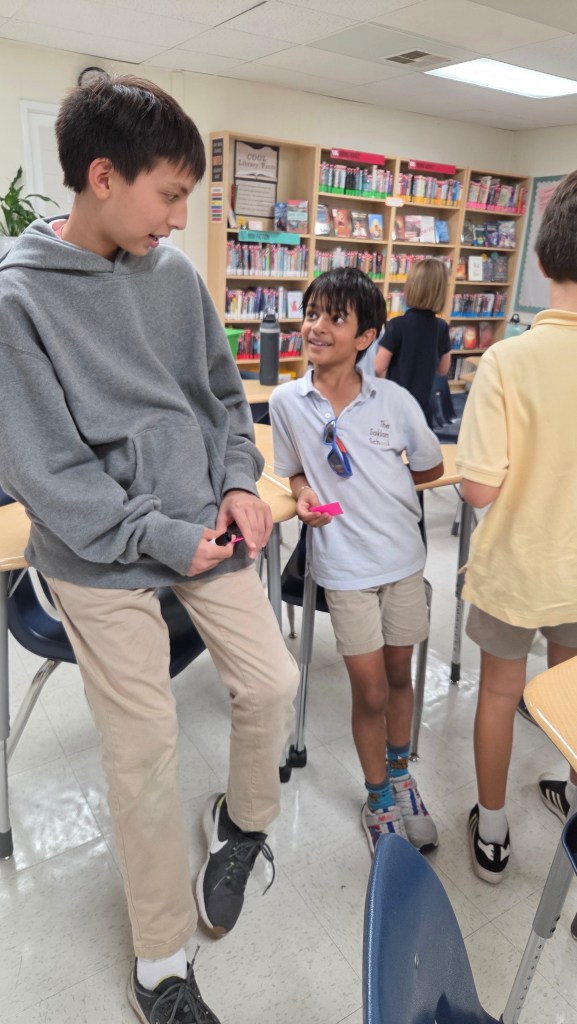
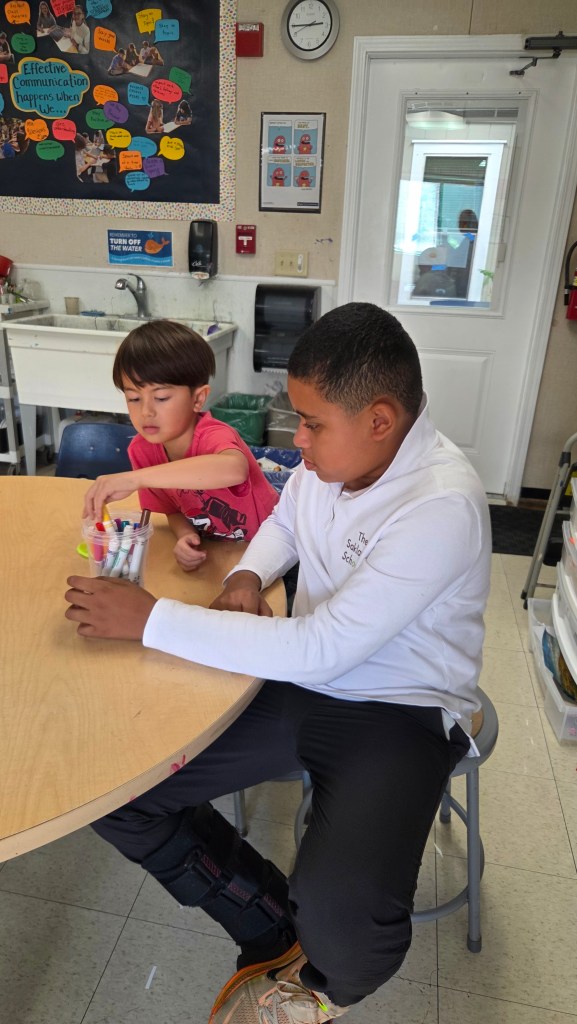
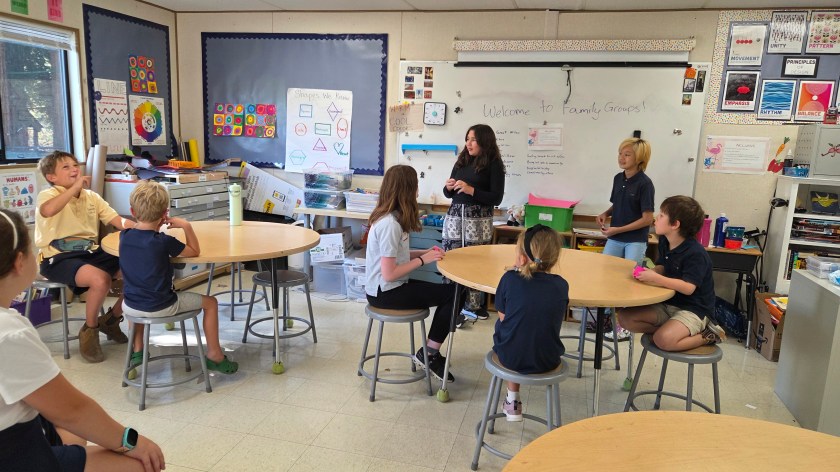
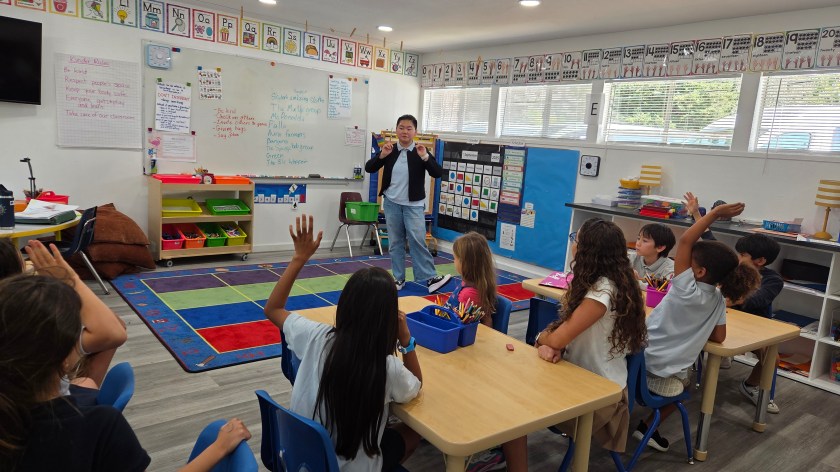
Over the past few weeks, the Kindergarten class has been engaging in thoughtful conversations and activities designed to help them understand an important social-emotional skill: knowing when to report a problem to a teacher and when it’s best to “let it go.”

The journey began with a classroom discussion about how the word “tattling” is often used to describe someone telling a teacher about a peer’s behavior. But terms like “tattletale” carry a negative tone, and at Saklan, teachers want students to feel safe and supported when seeking help. So, the kindergartners and Riva decided together to use the word “reporting” instead—a more neutral and empowering term that acknowledges that asking for help is never a bad thing.

However, the class also recognized that not all situations require adult intervention. Some students were beginning to feel like they were being “policed” by their classmates, prompting the need for clear guidelines around what situations are appropriate to report.

Together, the class created a simple, helpful framework:

  • If someone’s body or feelings are hurt, always report it to a teacher.
  • If there’s a conflict but no one is hurt, try to handle it on your own (and ask for help with conflict resolution if needed).
  • If someone is simply making a mistake, let it go.

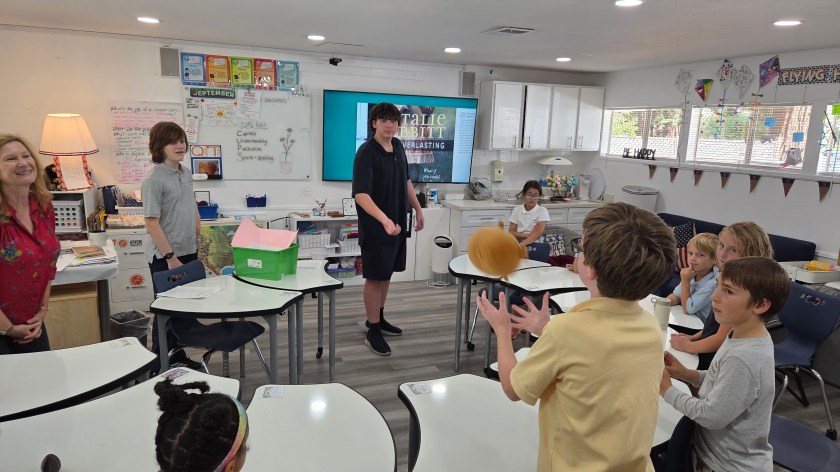
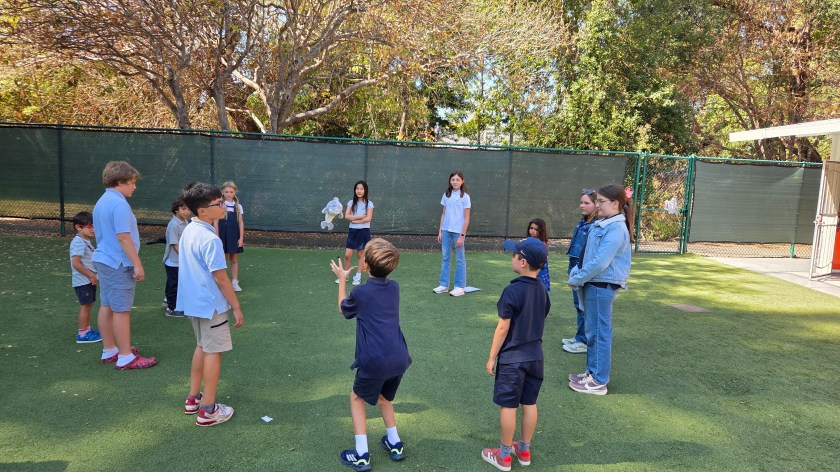
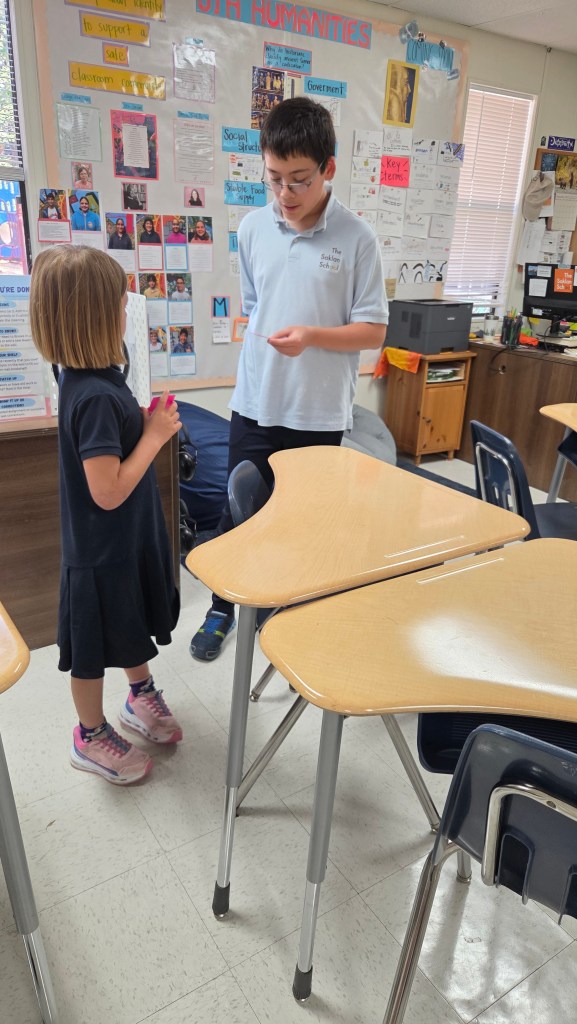
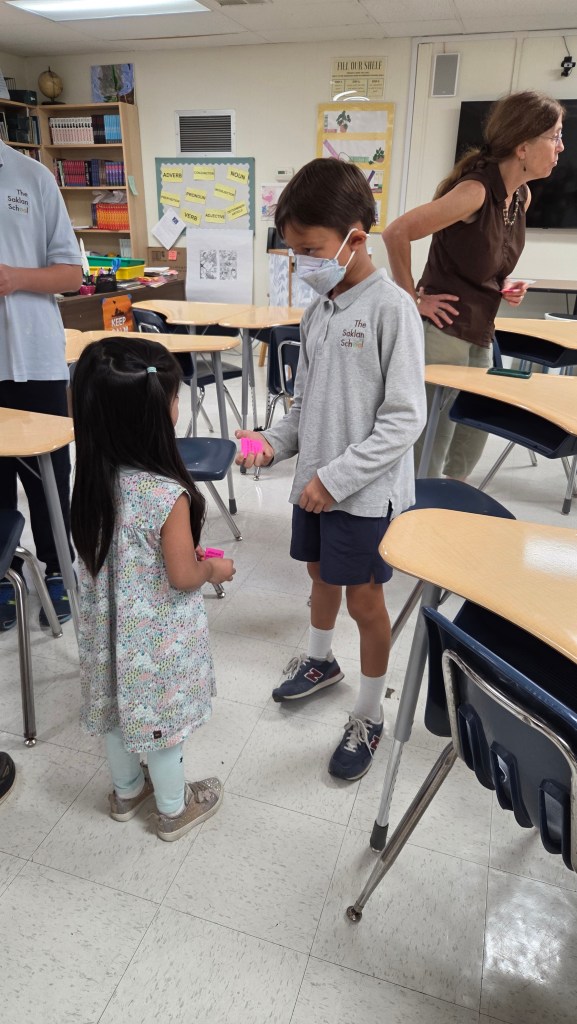
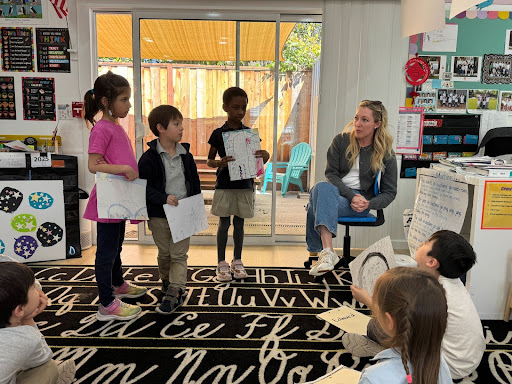
Students practiced applying this framework by discussing different scenarios and categorizing them as “report it,” “handle it,” or “let it go.” The thoughtful conversations that followed showed how seriously kindergartners took their role in creating a safe and kind classroom community.

To make the guidelines even more accessible, especially for younger students and non-readers, students illustrated different examples to accompany the categories. These illustrations were compiled into a chart, now displayed in the classroom. If a student ever feels uncertain about whether they should report something, they can refer to the chart to help make the decision themselves.

This exercise not only supported the class in developing self-awareness and empathy but also reinforced problem-solving and communication skills that will serve them well beyond kindergarten.

#SocialEmotionalLearning

Community, Curiosity, and Culminations: May at Saklan

May is a flurry of events and amidst all the special happenings, are PBL culminations! These student-driven showcases of learning are the perfect opportunity for family and friends to come together, and you’re invited! Owlet, Hoot Owl, Kindergarten, 1st, 3rd, 5th, and 6th grade families, do you know what’s coming? Read on for opportunities for all of us to come together in community to support our learners. 
Early Childhood Education

Our ECE students spend many weeks during a project unit building expertise on a topic of high interest. They learn from experts, head out into the field to get their questions answered, and represent what they have learned through a wide variety of methods: dictating stories, creating 3D models, drawing pictures, and much more! 

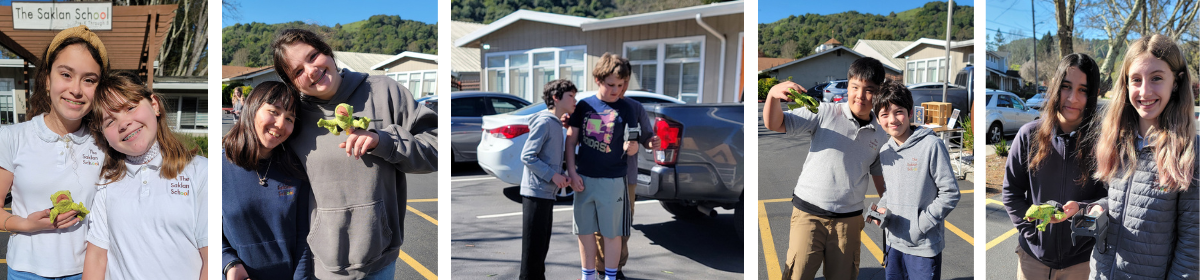
This semester, both ECE classes have been learning all about bugs! The ECE yard has been an exciting place as students buzz around finding, observing, and sharing critters they find on the yard. Come support our youngest learners and hear all they have learned about bugs on the morning of May 20th after drop off! 

Lower School and Middle School

In LS and MS, our students always begin with a driving question. This question drives the content learning for 5-10 weeks, depending on the product and content standards being covered. Each year the question may remain the same, but how the students answer it, interpret their research, and create a public product shifts. This helps keep the authenticity and student engagement high as teachers are also rigorously assessing content standards. 

After all their hard work, students welcome the opportunity to demonstrate their knowledge with the support of the community. Save the dates below to see how our LS and MS have answered the following driving questions! 

GradeDriving QuestionCulmination Information
KHow can writing our own fairy tales help us spread magic and joy?Friday, May 16th after CLAS
1How do homes keep us safe?Friday, May 16th during CLAS with reception after
3How can we become eco-friendly entrepreneurs who create products people want?Friday, May 23rd after CLAS 
6How are we still connected to ancient Greek culture, language, and mythology today?Friday, May 23rd after CLAS

Doing a project is much different than Project Based Learning, and attending culminating events is a great way to support our learners and see strong Project Based Learning in action. We hope you can join us!

#SaklanPBL

Head’s Corner: How Life Imitates Project Work (and Vice Versa)

Pop Quiz! Which of the following statements applies to Project Work at Saklan?

 A. At the start of a Project, the end product is unknown
B. Project often takes unexpected twists and turns
C. Project is driven by prior experience and curiosity
D. All of the above

The answer, of course, is D—but you knew that already.

Now, go back and reread A, B, and C. This time, replace the word “Project” with “Life.”

That isn’t just a clever switch—it’s the reason project-based learning prepares students so well for life. Through project work, our students are practicing the very skills they’ll use every day: embracing uncertainty, exploring new ideas, and following their curiosity wherever it leads.

That’s what’s been on my mind lately, especially as we turn our attention to this year’s Fund-a-Need. What began as a straightforward plan to update some of our traditional play structures has grown into something much more meaningful, just like a good project.

The shift started with something small: a water spigot installed near the redwoods. That’s all it took. The kids flocked there, drawn by the natural beauty, the water, and the freedom to imagine. What emerged was an impromptu play zone, rich with storytelling, collaboration, and creativity.

Then came a visit from a landscape architect. And just like that, our focus shifted—from replacing monkey bars to reimagining our redwood grove as a nature-based play and exploration space, inspired by the children themselves.

This is what happens when we listen to kids, honor their play, and trust in the process. It’s life. It’s Project. It’s learning in motion.

This year’s Fund-a-Need will help bring this vision to life. With your support, we can transform our redwood grove into a place where imaginations continue to bloom.

Let’s build a space worthy of their creativity.

Staff Spotlight: Maggie

You may think that to know Maggie is to know her love of hippos– just check out how many of them her students have lovingly gifted her over the years next time you’re in the Hoot Owl classroom! But Maggie brings so much more to our ECE! Saklan is lucky to have such a dedicated, conscientious, and thoughtful Director of Early Childhood Education and lead teacher of our Pre-K Hoot Owl class. Take a moment to read about what she loves most about teaching our youngest learners.

The ECE students love to be outside, rain or shine. What do you think is the most important part of outdoor play for this age group?

Outdoor play isn’t just fun; it’s one of the most impactful parts of our students’ day. For young learners, the playground is more than just a place to run and climb—it’s where some of the most important learning happens. One of our primary goals in ECE is teaching social-emotional skills, and outdoor play is where these lessons come to life. It’s where children navigate real-life situations: negotiating over toys, practicing patience while waiting for a turn on the swing, or learning how to respond with empathy when someone gets hurt.

Outdoor play also builds confidence. We are lucky to have such a large playground, giving our students a lot of opportunities to build their gross motor skills. A favorite recent moment? One of our Owlets, who used to ask for only “medium big pushes” on the swing, now gleefully asks for “big pushes!” Moments like these show us how outdoor spaces empower children to take safe risks, try new things, and celebrate their own growth.

Whether it’s showing off a new trick on the Fire Truck or proudly calling a teacher to “come watch,” our students light up with joy and confidence as they take safe risks and master new skills on the playground. Seeing how proud of themselves the students are as they show you the amazing flip they just learned learned to do is one of my favorite parts of each day. Maintaining a safe, updated, and dynamic outdoor play space is essential to supporting these magical, everyday learning experiences.

Your newest project unit is on bugs! How does the ECE yard support learning outside of the walls of the classroom? 
In all my years of teaching early childhood, one thing has always been true—nothing captures a young child’s attention quite like a bug. They could be running in a race with each other, and the moment someone spots a bug, everything stops. Then, there will soon be a big crowd, with someone shouting “I can’t see” and trying to squeeze their way in for a closer look. With our current project on bugs, the playground has transformed into an outdoor science lab. It’s so cute watching them carefully use bug catchers and magnifying glasses to get a closer look. These moments are powerful, allowing the students to have hands-on learning experiences and explore their natural curiosity in real time.

A few years ago, we added a small raised garden with help from one of our ECE teachers and her dad. Since then, we’ve grown veggies to support various units and teach them where food comes from. We’ve seen that a garden space like this means they are more willing to try new foods when they have a hand in helping grow it. Recently, the Hoot Owls have been digging for worms and putting them in our garden bed because they learned that worms are helpful decomposers that our garden needs. The yard isn’t just a place to run and play—it’s a true extension of our classroom. It offers space to wonder, explore, experiment, and grow. Providing a dynamic outdoor environment is one of the best ways we can support their development.

What do you hope your students learn from you that you don’t explicitly teach? 

I really hope I impart my great love for hippos to my students. Just kidding! (mostly…) I hope my students learn to be able to laugh even when things get hard. I always like to joke around with my class whenever I get the opportunity. I like to joke around when I make mistakes, because I want them to learn not to be too hard on themselves. Life is about having fun and laughing with those around you. Nothing beats hearing the kids laugh because of silliness!

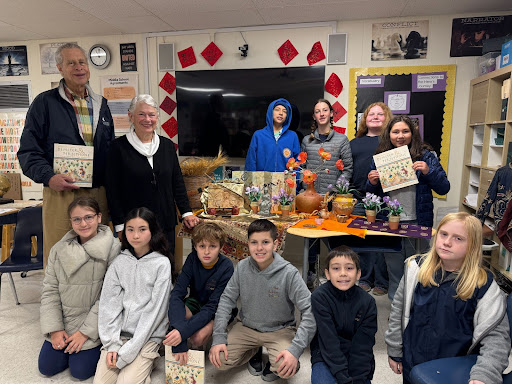
Each year around the mid-autumn festival you have made model mooncakes in the ECE. What are your favorite parts of bringing your traditions to the classroom and/or opening space for families and students to share theirs?

I love having families come in to share their family traditions. Even if people share the same culture, how they celebrate can be completely different. We have a wealth of experts right in our classroom to share about so many cultures and traditions, so why not take advantage?! 

When members of our community come in to share their knowledge or experiences, the classroom lights up with engagement. The students are very excited to learn from a real-life person they know! I also personally love learning about others’ traditions. Growing up, I didn’t experience that in my classroom, and if I did, it was very basic stuff. I would feel ashamed of my family’s traditions because I was different. I don’t want anyone else to feel that way. I want my class to feel love and pride for their heritage and traditions. What better way to develop that love and pride than to have their family and community members share, learn, and celebrate together?

Developing a Community of PBL Practitioners

Just like our students engage in productive struggle during Project Based Learning units, Saklan teachers improve our project curriculum through collaboration and reflection. Sometimes, this happens through informal conversations—while waiting at the copy machine or stopping by a colleague’s classroom during a prep period. At other times, our educators come together in more structured settings such as full faculty training sessions, tuning and reflection protocols for project units, and small-group Professional Learning Communities (PLCs). Below are reflections from staff on how these collaborative practices support them in developing strong, impactful PBL units for Saklan students.

Reflection protocols at the end of a unit are a great way to consider how to make a PBL unit better with help from others. They give teachers a chance to step back to look again with objectivity, just like we ask our students to do. The surprising result for me is how excited and motivated I am by this style of reflection. This collaborative approach is really motivating because it is something I could not do on my own.

– Yette Prizeman, 2nd Grade Teacher

I love the tuning protocols because having other people’s ideas helps me improve my projects immensely. Even if I feel like I have a good handle on the driving question, learning goals, project path, and products, during the discussion, things always come up that I didn’t think of. It really proves that more minds in the room means better outcomes. The process also feels very supportive and validating.

– Riva Zippin, Kindergarten Teacher

Taking part in a Professional Learning Community practice this year has made me focus on how to make group work more equitable and how to have the students own their project time. It has given me more tools to help show the students skills to help them work on their own time management. Additionally, I have enjoyed working alongside my coworkers and learning from them. Being in such a small school, it’s hard to find time for these meaningful conversations, and the PLC format allowed time for this discussion. 

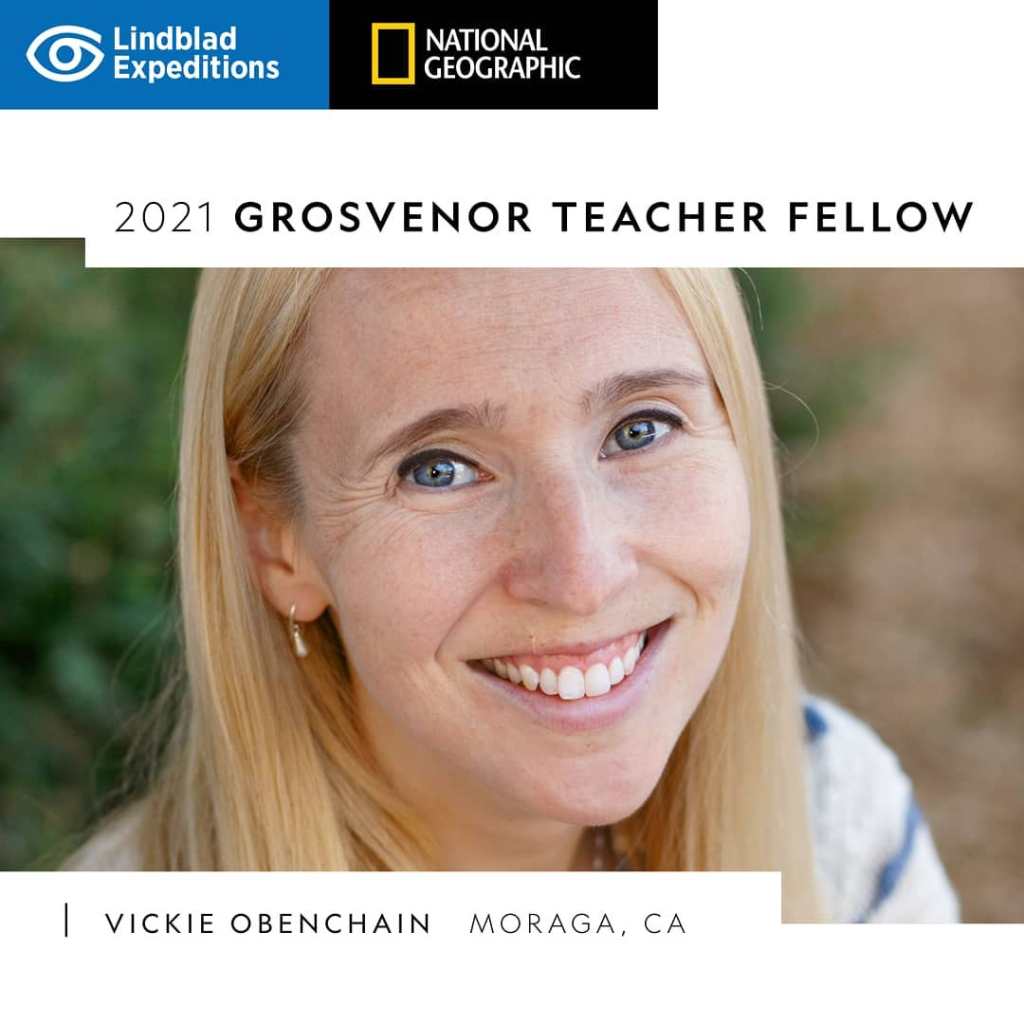
– Vickie Obenchain, Science Specialist

In the ECE we work closely together on our units but not usually with Lower School or Middle School staff as much. The PLC groups help paint a clearer picture of what is happening in other classrooms and share ideas.

– Erin DeMoss, ECE Teacher

Working in a cross-divisional PLC small group focused on rubrics allowed us to imagine ways we can align rubrics across grade levels. Each year, the students can focus more on the content and less on the format of a rubric, which increases student independence and self-monitoring of learning. A format to share resources and talk together as teachers about ways to improve our assessment is door-opening. Discussions with colleagues open a new realm of understanding the experiences, successes, and hurdles of different teachers across divisions.

– Lauren Haberly, Art Specialist

These reflections highlight how a culture of collaboration and continuous improvement not only strengthens our PBL curriculum but also builds a vibrant professional community—one where educators grow together to create meaningful, student-centered learning experiences.

#SaklanPBL

Staff Spotlight: Lisa

Connected to Saklan way back when it was named Carden School. Lover of the Matterhorn at Disneyland. Excited about innovative math instruction. Served as not only a teacher but also the Saklan PA President and Chair for the Board of Trustees. Can you guess who we are highlighting as this month’s Staff Spotlight? Our third-grade teacher, Lisa Rokas, has worn many hats here at Saklan. Read on to learn more about her decades-long journey at The Saklan School.

How did you first hear about the Saklan School?

I have a long history with Saklan. I grew up in Orinda and attended Miramonte High School. My brother, who is 6 years younger than me, attended Saklan (which was named Carden School at the time). Once I had my driver’s license I used to drive him to and from school. Fast forward to when my son was in kindergarten, I decided to look for alternatives to our local public school and my mom suggested I look at Saklan. My son joined in first grade back in 2004, and my daughter joined the following year in kindergarten. I have been connected to the school ever since.

What about the Saklan community has kept you so invested and engaged in different ways over the years? 

I have worn many hats here at Saklan. When my kids were students at Saklan I joined the Parent Association, where I held many roles, including auction chair and PA President. I started on the Board of Trustees as the Parent Association representative and eventually served as Board Chair for a number of years. I made lifelong friends with many of my fellow board members on both the board of trustees and parent association, as well as many strong friendships with Saklan faculty and staff. One memorable moment includes dressing up as pink cotton candy ladies for the end-of-year carnival. When my daughter graduated from Saklan in 2014, I couldn’t imagine saying goodbye to a place where I had been so connected for so many years. I decided to go back to teaching, my first profession before having kids. I started teaching at Saklan in the fall of 2014 and have had the honor of teaching here ever since. Saklan is truly a part of my family and my home away from home.

What has been your favorite project based learning unit in your time here and why?

My favorite project based learning unit each year has been our third grade Saklan/ Bay Miwok Unit where we learn about the local indigenous peoples from the Moraga Valley. Our driving question is “How can we show respect to the people whose ancestral land our school is on?” I especially love this project because each year the third graders have found different ways to answer our driving question in meaningful ways; such as writing a land acknowledgement and creating murals and posters including traditional language and symbols representing Saklan culture. This year students researched indigenous plants we hope to plant on our campus. We have had the opportunity to work closely with Vincent Medina and Louis Trevino, the cofounders of Cafe Ohlone who both have Ohlone heritage and who are focused on sustaining their traditional Ohlone culture. The most important lesson the students learn is that Saklan/Bay Miwok/ Ohlone people are still here and their culture and traditions are still being practiced and celebrated.

We know your love for Disneyland runs deep, what is your favorite season to visit the park and the snack and/or ride you look forward to most?

I do love Disneyland! It is one of my absolute favorite places! I enjoy visiting anytime of the year, but my favorite time to visit is during November or December when the holiday decorations are up. It is so festive! I especially love watching Fantasmic on the Rivers of America and also the fireworks from Main Street! My favorite ride ever since I was kid is still the Matterhorn Bobsleds, and my favorite snacks at Disneyland are definitely their fresh-popped buttery popcorn or churros from the snack carts. Thankfully, I have passed on my love of Disneyland to my kids so that they still enjoy going to the park with me.

From Cottage Industry to Factory Floor 

Hands-on Learning about the Industrial Revolution

In their Humanities lessons, 8th graders are studying how technological and social changes during the Industrial Revolution transformed the lives of Americans across all social classes in the early 20th century. Alongside their examination of historical events, students are reading the historical fiction novel Uprising, which follows the intersecting stories of three young women before and during the tragic Triangle Shirtwaist Factory fire in Manhattan on March 25, 1911.

Through hands-on simulations, students have explored how technological innovations altered the manufacturing process during the Industrial Age. They examined how craftspeople who once worked from home were replaced by factory systems, where individuals performed repetitive tasks to perfect a single part of the production process.

Hand-Crafted Products

Each student started as a master craftsperson whose task was to assemble one pair of in-line skates from start to finish. The skates had to be cut out, the blades glued on, and the final product colored. Each student kept track of the time it took for their single pair of skates to be assembled. 

A total of 10 pairs of skates were produced, with a production time per pair ranging from 14 to 29 minutes.

Moving to the Factory Assembly Line

Next, the students took their assigned jobs on the factory production line to mass produce in-line roller skates for the “Get In Line Skating Company” in the Humanities Room. Their individual work tasks ranged from cutting out the right or left blade, cutting out the right or left boot, gluing or taping the blades to the right or left boot, and coloring the skates. 

Each pair of skates had to pass final inspection by Luke, or they went back to the assembly line. Like real assembly line workers, the students were not allowed to sit down or remain idle during their work time. And talk of “unions” or “strikes” was strictly prohibited.

As the students worked, they considered how American and immigrant workers in the first American factories completed repetitive tasks for 12 hours per day, 6 days a week, often having their pay cut if a product was considered defective by their bosses. The student workers also discussed what they learned about the unsafe working conditions at the Triangle Shirtwaist Factory, where workers were locked inside to prevent theft. After the fire started in 1911, 146 young women died from being trapped on the top three floors of the Asch Building with only one fire escape and one working elevator.

In the much safer Humanities Room, the 8th-grade students manufactured 18 pairs of skates in 40 minutes. 

#SaklanHandsOn

Defying Gravity

Since February, the 8th graders have been diving into physics in science class, exploring the forces of gravity, air resistance, and friction. Through a series of engaging, hands-on labs, they’ve been putting their knowledge to the test—seeing firsthand how these forces interact and impact objects on our planet.

The students started exploring gravity and air resistance by creating different-sized parachutes and dropping them from the ceiling of the science lab. Students could see the pull of gravity on the parachutes and how air resistance could be used to slow that force down by measuring the time each took to descend. Next, students worked on designing, creating, and launching rockets to see how to defy air resistance and gravity.

Last week, the class worked with projectiles that used both vertical and horizontal motion. Different paper airplane designs created more air resistance than others. The students saw how these forces act on objects and how various features of an object can affect these forces.

This week, students took their physics learning to the next level with an exciting experience to iFly in Union City where they explored terminal velocity in a real wind tunnel! They discussed how mass, air resistance, and surface area affect falling objects, then put theory into practice by suiting up and experiencing it firsthand. Students got to “fly” in the wind tunnel, feeling the exact force needed to keep them floating or falling at terminal velocity—a thrilling, hands-on lesson in action!

Students then made guesses at which toys thrown in the wind tunnel would fall the fastest or slowest based on size, mass and surface area! A lot was learned and experienced. 

#SaklanHandsOn #SaklanFieldExperience

Journey Back to the Gold Rush

The Saklan 4th graders recently embarked on an unforgettable journey to Coloma, where history came alive in the heart of Gold Rush country. Stepping into the past, they laced up their miner boots and experienced life as it was in 1849, guided by their enthusiastic program leader, Tim.

The adventure began with a visit to a bustling mining camp, where the aroma of freshly baked cornbread filled the air. The students purchased ingredients from a general store, just as miners once did, and patiently waited as the bread cooked over an open fire in a cast-iron Dutch oven. While the cornbread baked, they learned essential pioneer skills—sewing, washing clothes on a washboard, and working together to build a shelter. Living the life of a Coloma miner along the riverbanks provided a first-hand glimpse into the daily challenges and triumphs of those seeking fortune in the golden hills.

Of course, no trip to Coloma would be complete without the thrill of gold panning! Armed with pans and determination, the young prospectors eagerly sifted through pay dirt from the American River, their excitement growing with every swirl of water. Shouts of EUREKA! rang through the air as gold fever took hold, mirroring the elation of those who had once sought their fortunes in the very same spot.

The journey through time deepened when the group met with a local Miwok cultural leader, who shared stories and traditions from an indigenous perspective. Through this powerful experience, the students gained a richer understanding of the impact of the Gold Rush on the Native American communities of California.

On the second day of their adventure, the students hiked through Coloma’s rolling hills, exploring key historical sites, including Sutter’s Mill, where the first famous gold nugget was discovered. Standing on the very ground where history was made, they connected even more deeply with the past.

As they packed up their belongings and bid farewell to Coloma, the 4th graders carried with them more than just memories—they brought home a deeper understanding of the trials and triumphs of those who came before them.

#SaklanFieldExperience #SaklanHandsOn

Adventure in Space

The Hoot Owls have taken on a new inquiry topic: Space! Space is something that the class was very curious about, and just like any new inquiry, they started by asking questions. Amongst their many wonders, the Hoot Owls shared:

  • “How come there is no gravity in space?”
  • “Why is there an eclipse?” 
  • “What are the little red rovers on different planets?” 

The class read Moon! Earth’s Best Friend by Stacy McAnulty, in which they discovered that the moon has different phases. Next, to address one of the student’s questions, “Why is there a moon in space?” the class watched a video about the formation of the moon. The Hoot Owls then created moon representations to showcase what they learned about the moon phases. 

Since the Hoot Owls were very curious about gravity, the class watched a video that taught them that gravity is a strong force that pulls things toward the center. They learned that gravity is what keeps people on Earth and why things fall to the ground. 

Next, the class read Sun! One in a Billion by Stacy McAnulty, which taught them that the sun is a dwarf star that gives us light. From Earth! My First 4.54 Billion Years by Stacy McAnulty, the class learned that Earth started as a big flaming ball of hot molten lava, and then it cooled with long periods of rain until it formed land. The Hoot Owls also learned about the four parts that make up the Earth: the crust, mantle, outer core, and inner core. They were amazed to learn that the sun’s gravitational pull keeps the Earth orbiting around the sun.

To reflect on what they learned, the class made Earth representations by looking at a globe and water-coloring what they saw. They are also working to create a representation of the solar system in our classroom.