Being Respectful in Family Groups

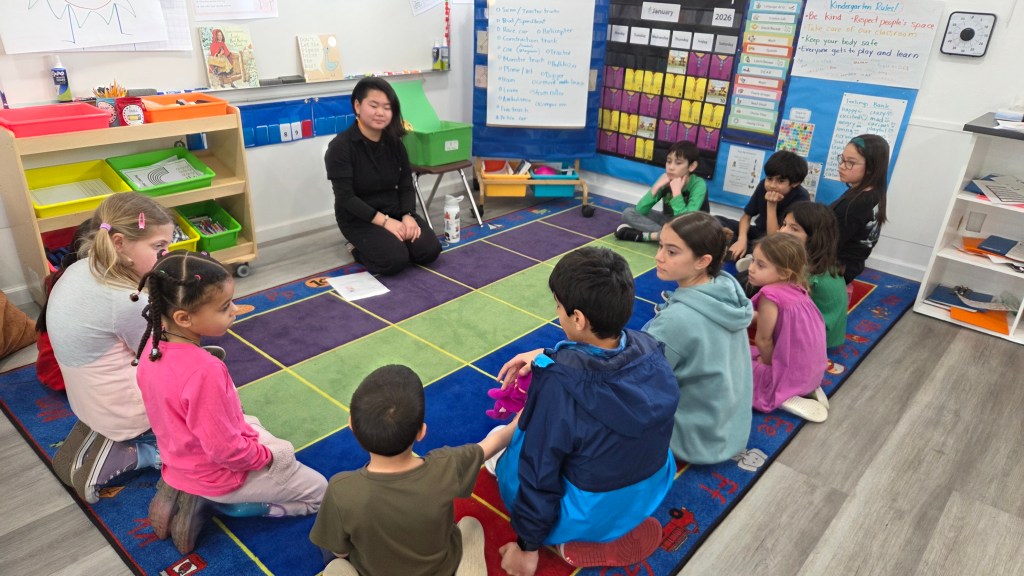
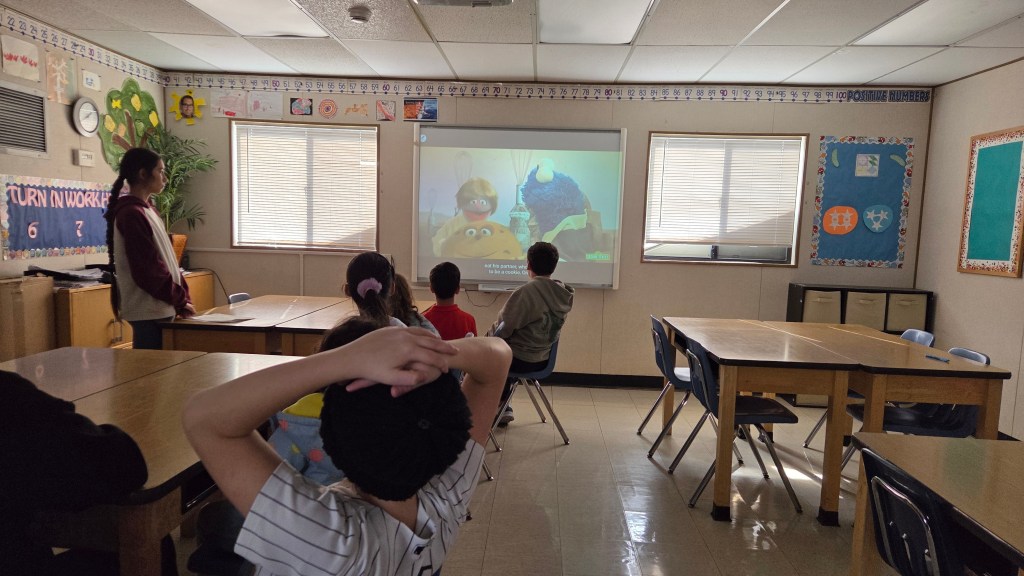
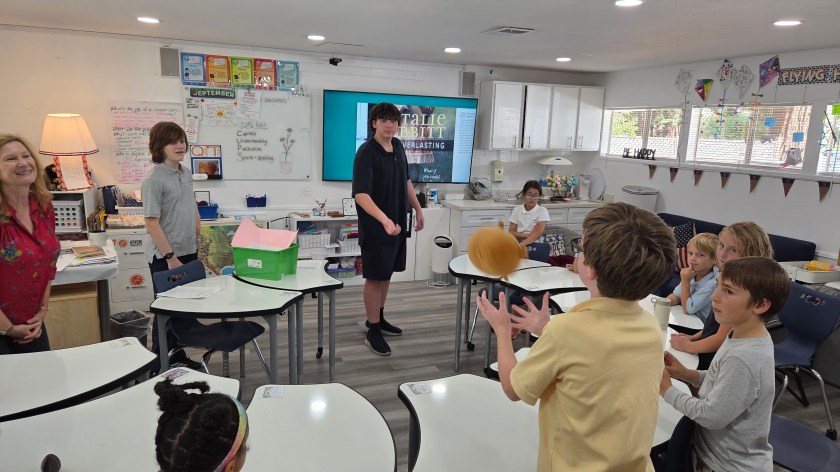
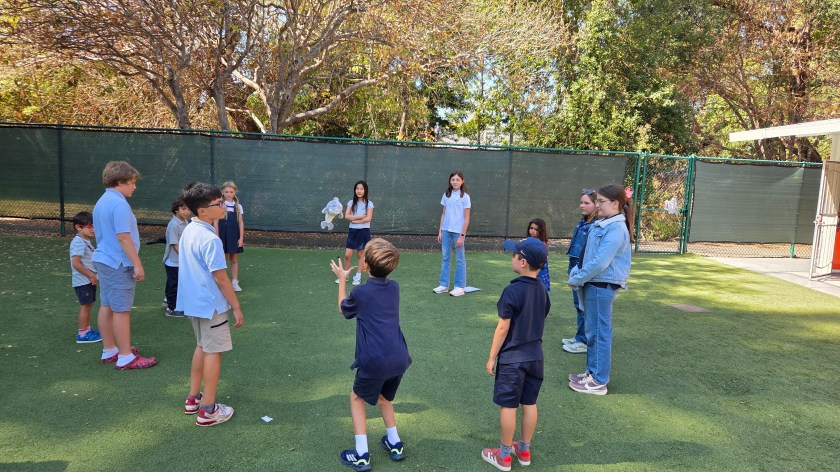
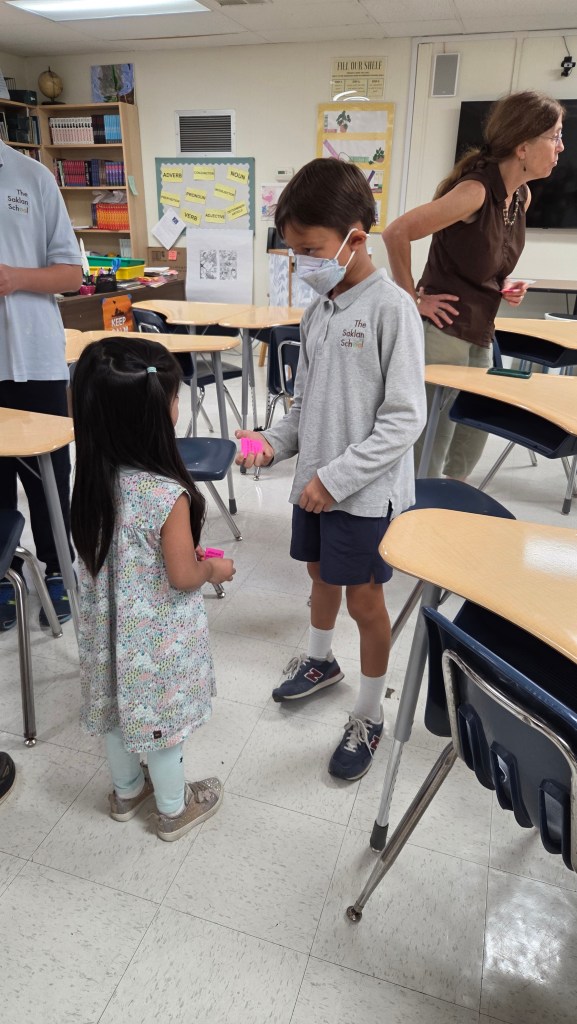
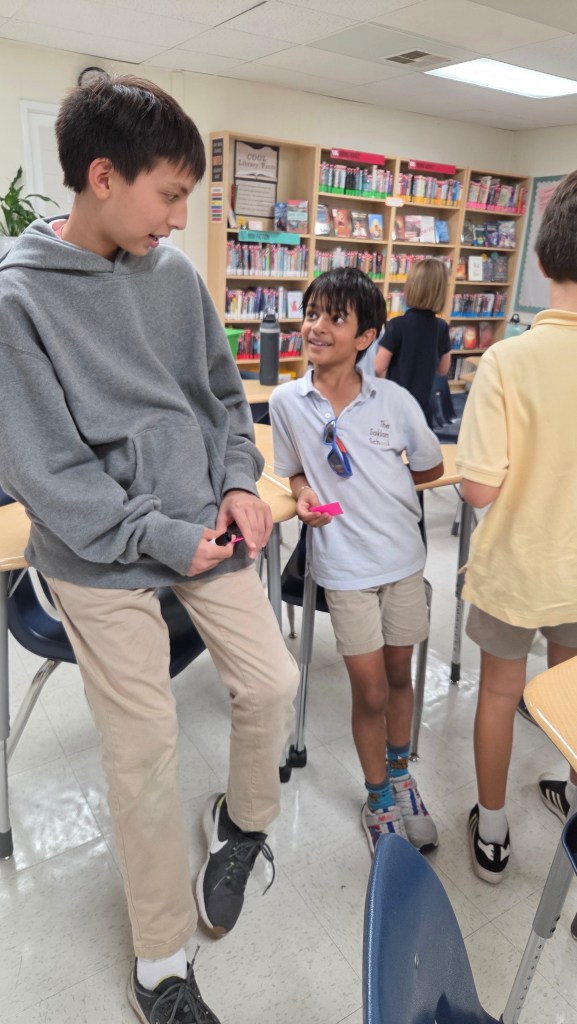
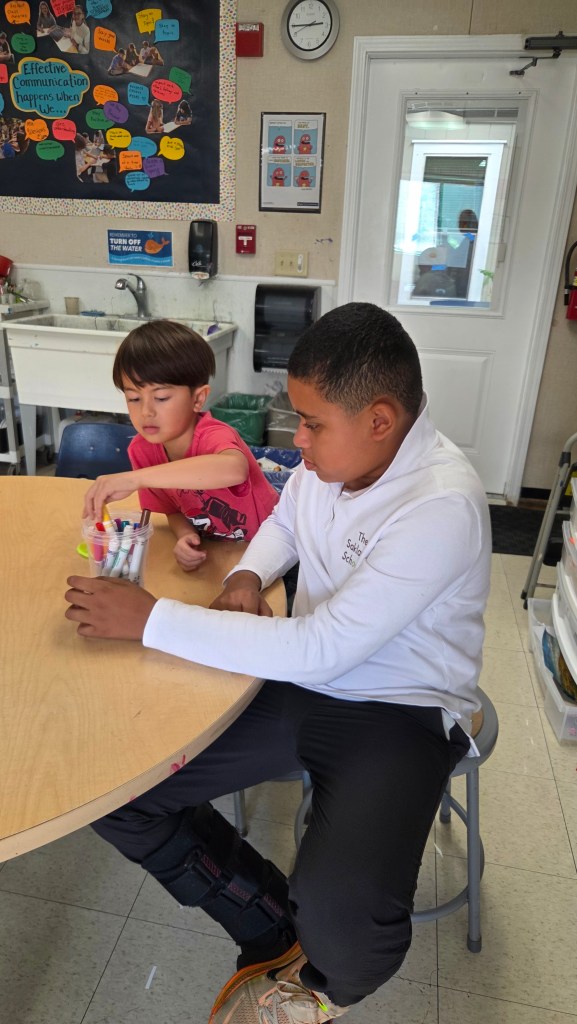
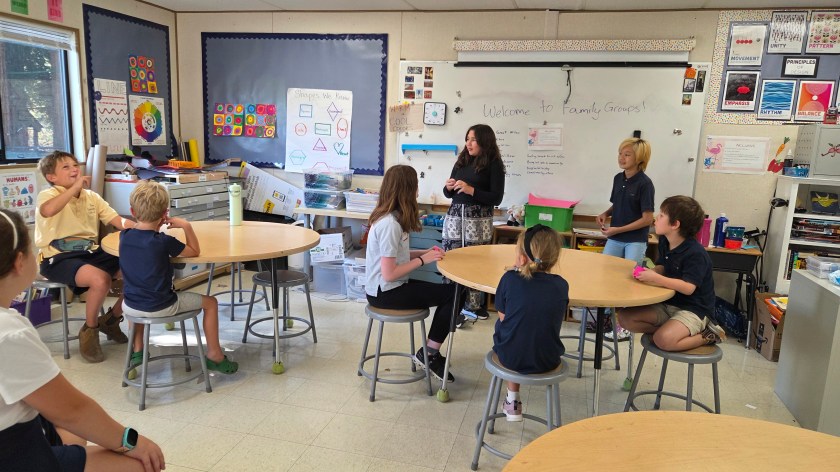
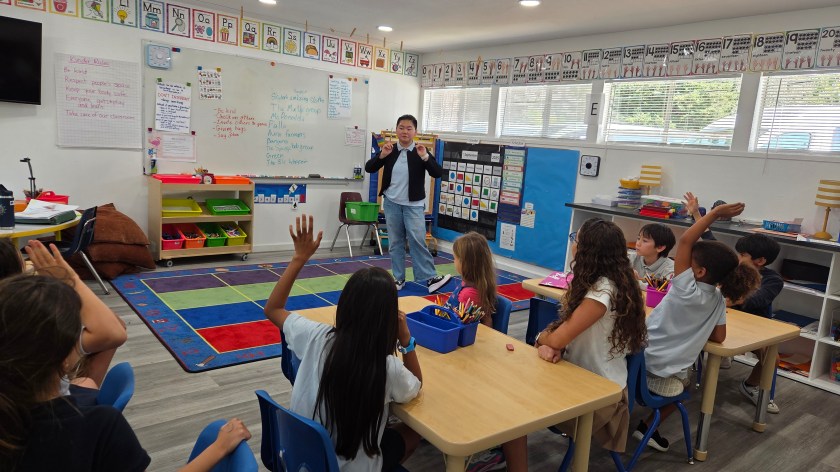
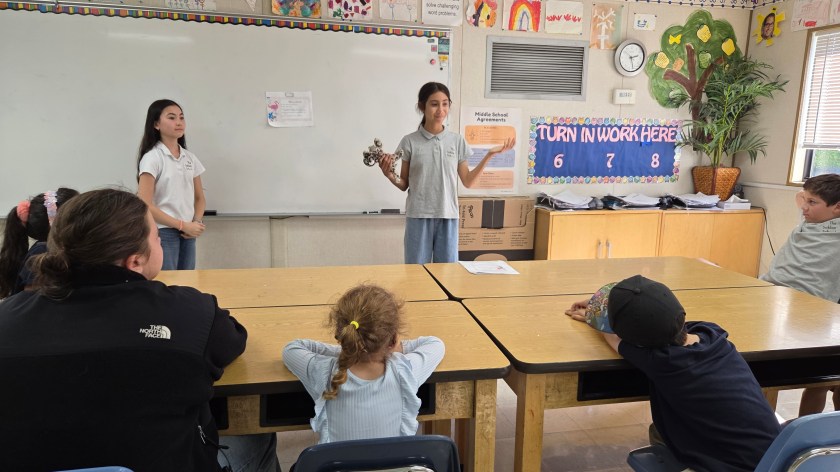
This week, Saklan students gathered for their second Family Group meeting of the year! These cross-grade groups are a treasured tradition at Saklan—bringing together students from different grades to connect, learn from one another, and strengthen our sense of community.

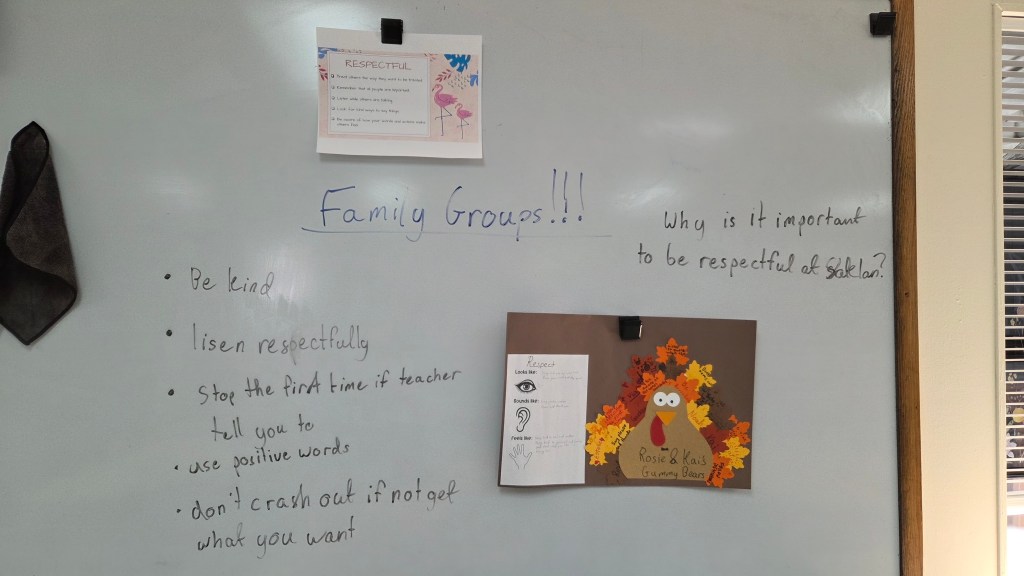
The Family Groups focused their attention on this month’s social-emotional learning (SEL) theme: being respectful. Together, groups read the “Respectful” posters that have been displayed around campus and discussed what respect feels like, looks like, and sounds like. Students shared thoughtful insights, describing respect as feeling “happy,” “heard,” and “like you matter.” They observed that respect looks like including others, making eye contact, and listening attentively—and sounds like calm voices, kind words, and polite “please” and “thank yous.”

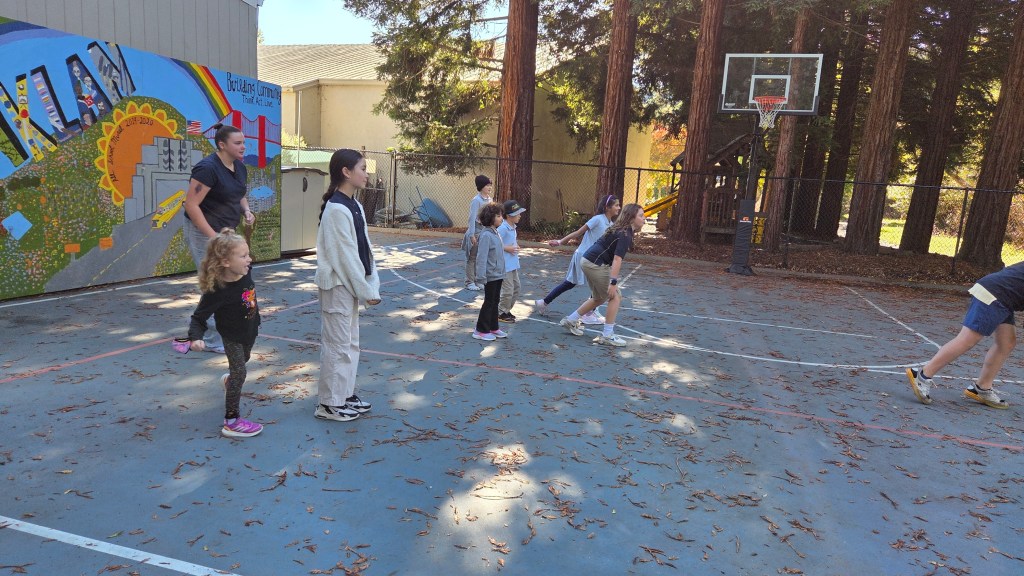
Next came an interactive activity called “Let’s Agree on Respect.” As 8th graders read short scenarios aloud, students decided whether each situation showed respect or not, moving to one side of the room or the other to indicate their choice. The movement and discussion helped bring abstract ideas about respect into a real-world context, giving students the chance to reflect on everyday moments when respect really matters.

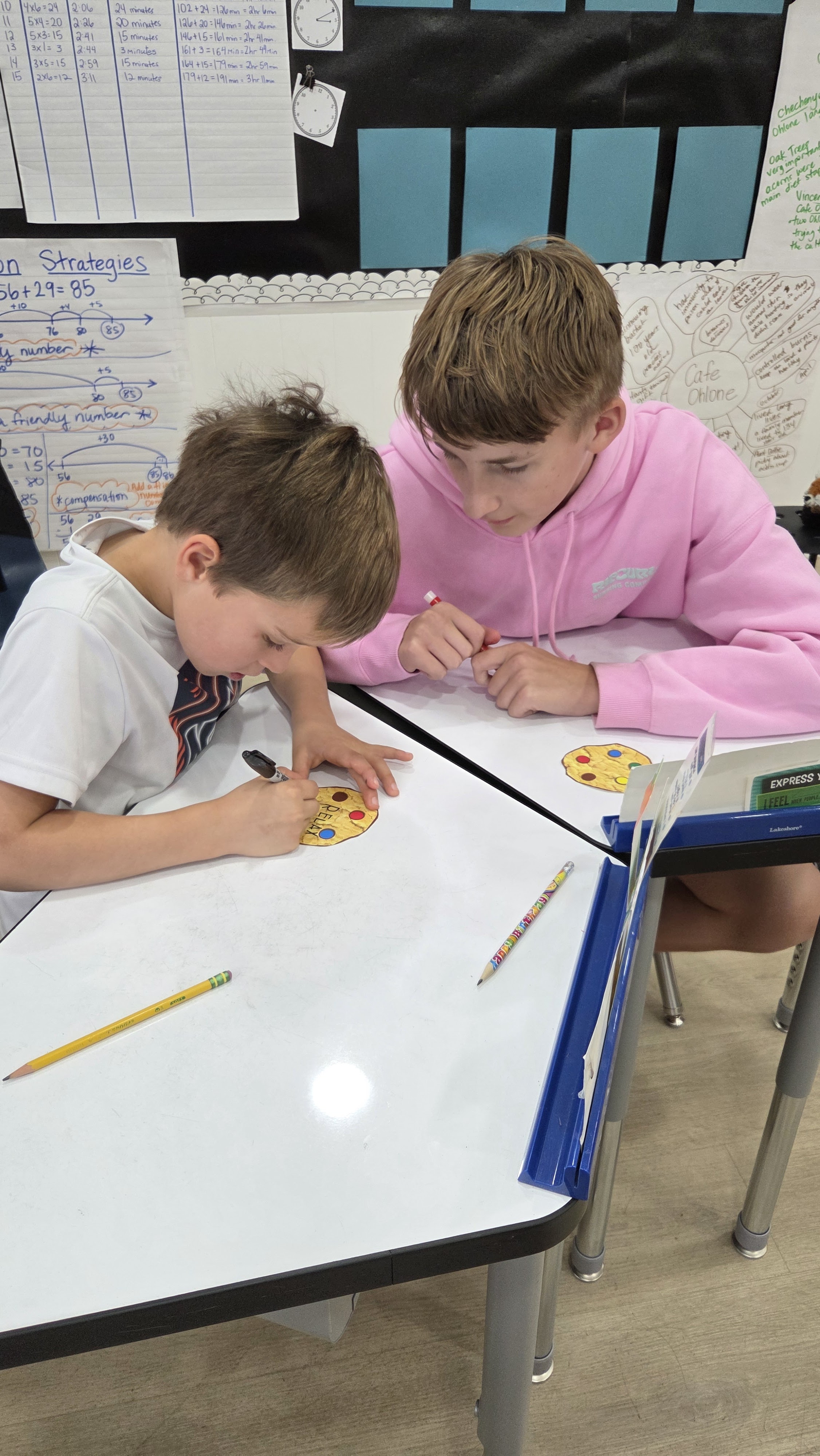
Finally, students brainstormed ways they personally show respect: through actions like active listening, apologizing when wrong, waiting patiently, or helping others. Each student then wrote their example on a paper leaf, which became part of their Family Group’s colorful “Respect Turkey.” The leaves, decorated with care and creativity, symbolize the many ways Saklan students contribute to a culture of kindness and consideration.

Through shared conversation, creativity, and connection, this Family Group meeting reminded everyone that being respectful is more than just words; it’s something we feel, see, and hear every day in our community.

#SaklanFamilyGroups

Head’s Corner: Foundations Built With Care

I recently reread Kim Brooks’ New York Times piece, “We Have Ruined Childhood.” While the piece pointed out all the things in society that make childhood seem like an internship for adulthood, it left me optimistic. Optimistic, because it reminded me why what we do at Saklan matters so much. In a world that’s forgotten what kids really need—connection, curiosity, play—we get to build something different every day. We get to show what childhood should look like.

What stood out most to me in Brooks’ article was her point that kids today have fewer chances to practice the social-emotional skills that make us human—to start friendships, navigate conflict, solve problems, or just be with others without adults steering the moment. Working with Denise Pope from Challenge Success (an organization Saklan has partnered with), Brooks highlights a simple but powerful truth: kids need family time, strong relationships, independence, and agency.

This is where Saklan matters.

We’ve made a conscious choice to prioritize what research tells us children actually need. How to communicate. How to handle disappointment. How to work through disagreement. How to persist when things get hard. We deliberately create time and space for students to develop those vital human skills. These aren’t add-ons to our curriculum. They’re at the heart of what we do.

And here’s what’s remarkable: this approach doesn’t just create happier, healthier kids (though it absolutely does that). It also leads to stronger academics. Counterintuitive? Maybe. But the research bears it out. Time and again, studies show that when children have space to play, to create, to connect with others, and to develop social-emotional skills, their academic performance improves. They become more engaged learners. They develop genuine curiosity. They build resilience.

This doesn’t mean we’re perfect or that we’ve solved every challenge facing modern childhood. But it does mean we’re intentional. We understand that school should be a place where children learn to be fully human—intellectually curious, emotionally resilient, socially connected, and creative. Childhood isn’t a race to adulthood. It’s a foundation to be built with care.

Warmly, 

David

Head’s Corner: Connection + Agency = Exceptional Academics

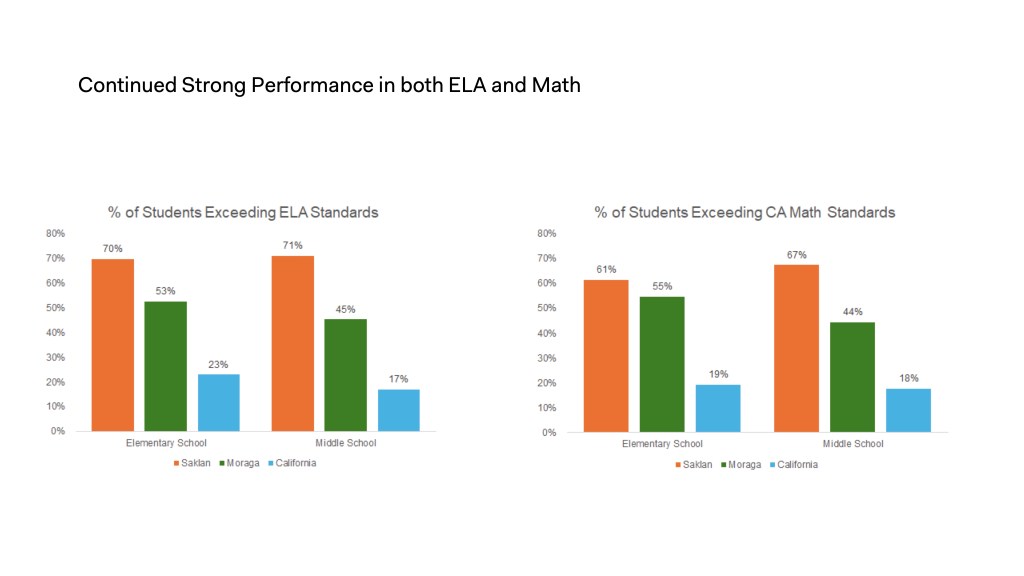
I have never been a fan of standardized testing, mostly because it is often used to focus on the wrong way to approach learning. Standardized testing is used to promote the lie that high achievement comes from drilling content or teaching to the test. Saklan presents a counterargument. Our approach of doing school differently produces exceptional results, not because we chase scores, but because we prioritize two powerful drivers of learning: connection and agency.

People learn best from those with whom they have a genuine connection. In an previous blog, I shared a quote from David Brooks’s, “Students learn from people they love.” At Saklan, “love in learning” comes first. Teachers know and care for their students deeply, not only as learners but as whole individuals. That trust provides the foundation for intellectual risk-taking, perseverance, and curiosity. Connection isn’t a “soft” factor—it’s an accelerator of academic achievement.

Equally important is student agency—the belief that students should have a meaningful voice and choice in their education. Agency shifts learning from something done “to” students to something done “with” them. When students are trusted as co-authors of their education, they engage more fully, reflect on their growth, and take pride in their accomplishments. In our classrooms, this takes the form of Project Based Learning, where student questions and curiosities drive inquiry, and ownership fuels motivation.

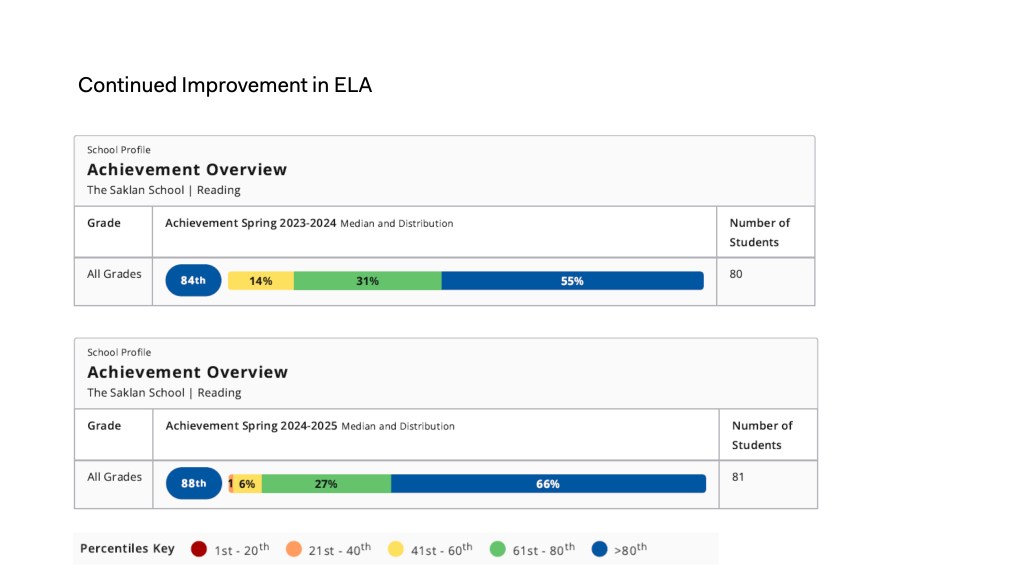
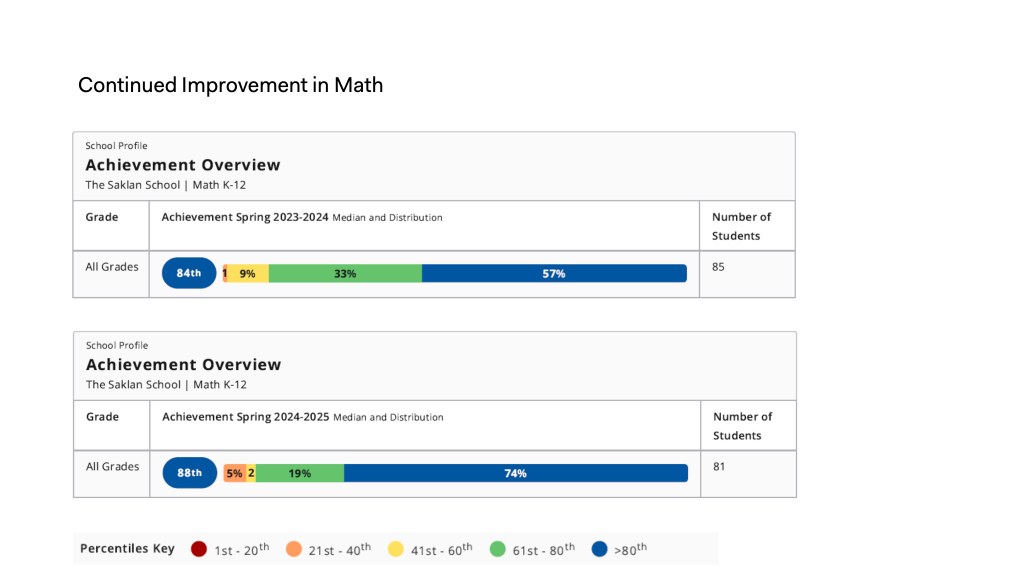
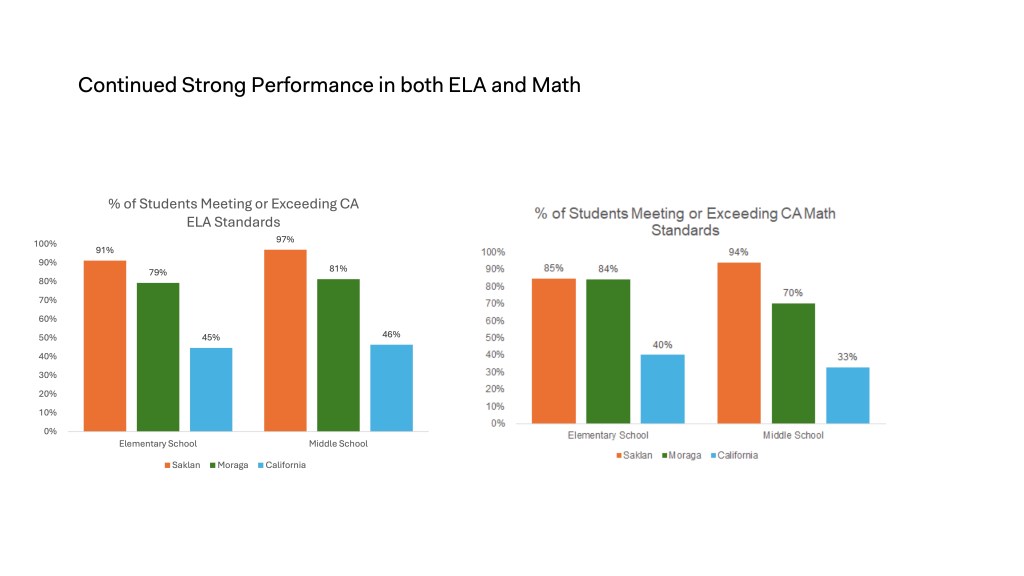
When connection and agency are at the center of a school’s culture, exceptional academic results follow naturally. Our MAP scores offer external validation of what we witness daily: students who are not only mastering content but also developing resilience, adaptability, and a lifelong love of learning. The data is proof of concept—showing that deep relationships and authentic student engagement are not at odds with academic rigor; they are the very things that create it.

Too often, schools measure success by numbers alone, forgetting the human conditions that allow those numbers to flourish. The lesson from Saklan’s experience is clear: emotional connection and student agency are not “nice to haves” but the key ingredients to a strong academic program.

#HeadsCorner

Growing Together in Family Groups

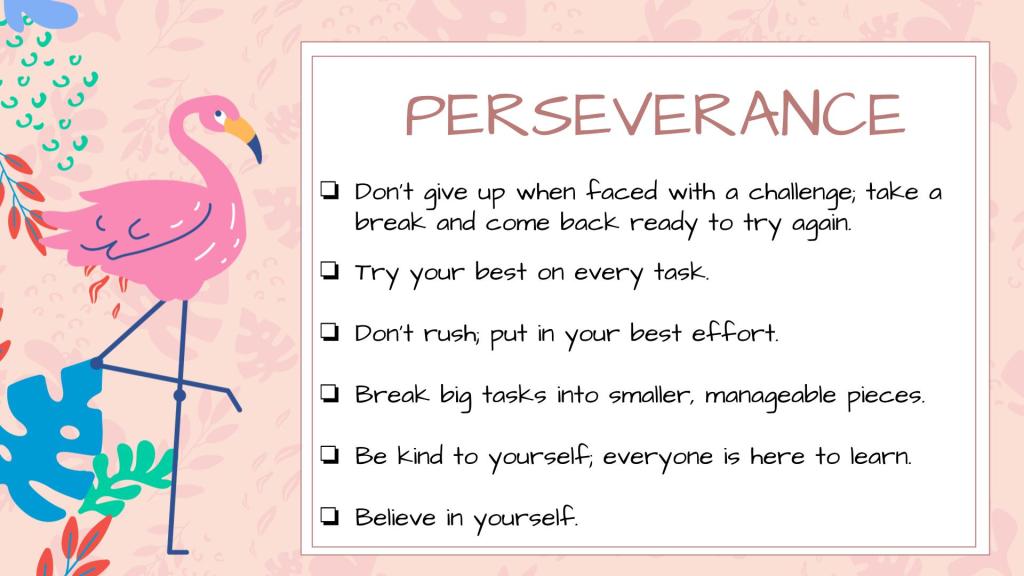
This week, Saklan Family Groups kicked off with a special focus on inclusivity—what it means, why it matters, and how we can practice it together. Family Groups, which bring Kindergarten – 8th grade students together, are designed to build connection, community, and a sense of belonging.

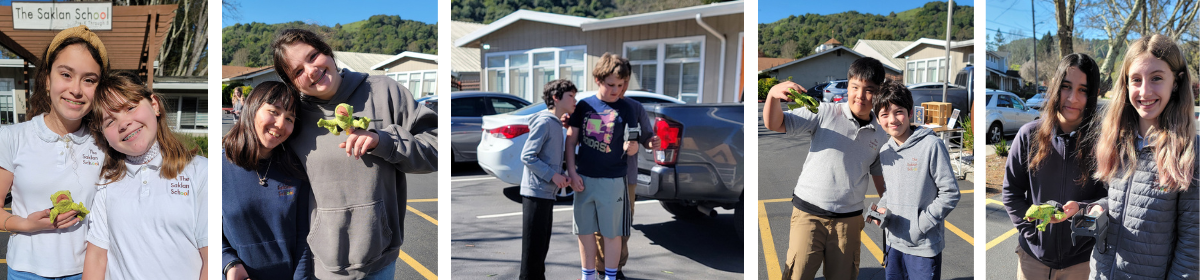
The group time began with a warm welcome as students gathered in their designated Family Group rooms—spaces they will return to throughout the year. Each student introduced themselves by sharing their name, grade, and a favorite thing, before jumping into fun icebreakers like the Stuffed Animal Name Game Toss. Laughter and teamwork quickly arose.

From there, the groups turned their attention to the heart of the lesson: inclusion. Students talked about what it means to be inclusive—welcoming others, working with new partners, showing kindness—and why it’s important at Saklan. Together, they brainstormed ways inclusivity creates a comfortable, supportive environment where friendships can grow.

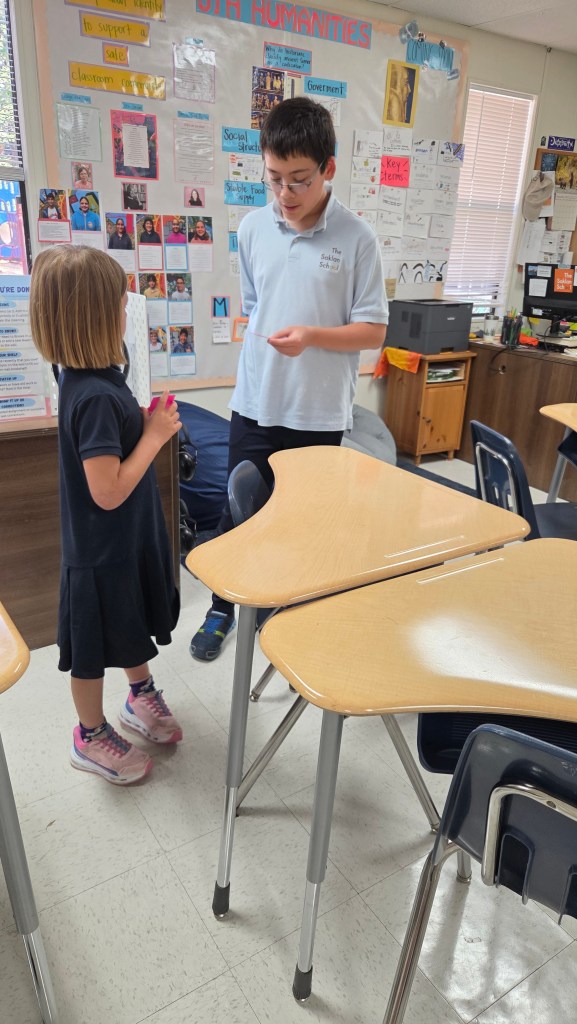
One highlight was the “Flamingo Mingle” activity, where students paired up to ask and answer fun questions. This gave everyone the chance to discover new things about one another and helped spark connections across grade levels.

To close, students reflected on times they felt included at Saklan—whether being invited to join a game, sitting with someone new at lunch, or being encouraged to share about themselves. These examples were captured on a community poster, alongside a colorful “flock” of decorated flamingos. Each student designed their flamingo to represent their unique personality and interests, celebrating both individuality and belonging.

By the end of the session, each Family Group had chosen a name, crafted their inclusive flock poster, and most importantly, taken steps toward building a caring, connected community. It was a joyful reminder that when we celebrate both who we are as individuals and who we are together, we make Saklan stronger.

#SaklanSEL

Resilient Students

Saklan’s social-emotional learning topic for February is to be resilient. During the month, all Saklan students will discuss what resilience means and look for ways to show their resilience on campus and at home. At the end of the month, 1st – 8th graders will meet with their Family Groups to further discuss how to be resilient and participate in collaborative activities.

#SaklanSEL

Head’s Corner: Eating Sushi & Playing Piano

What Do Eating Sushi and Playing Piano Have in Common?

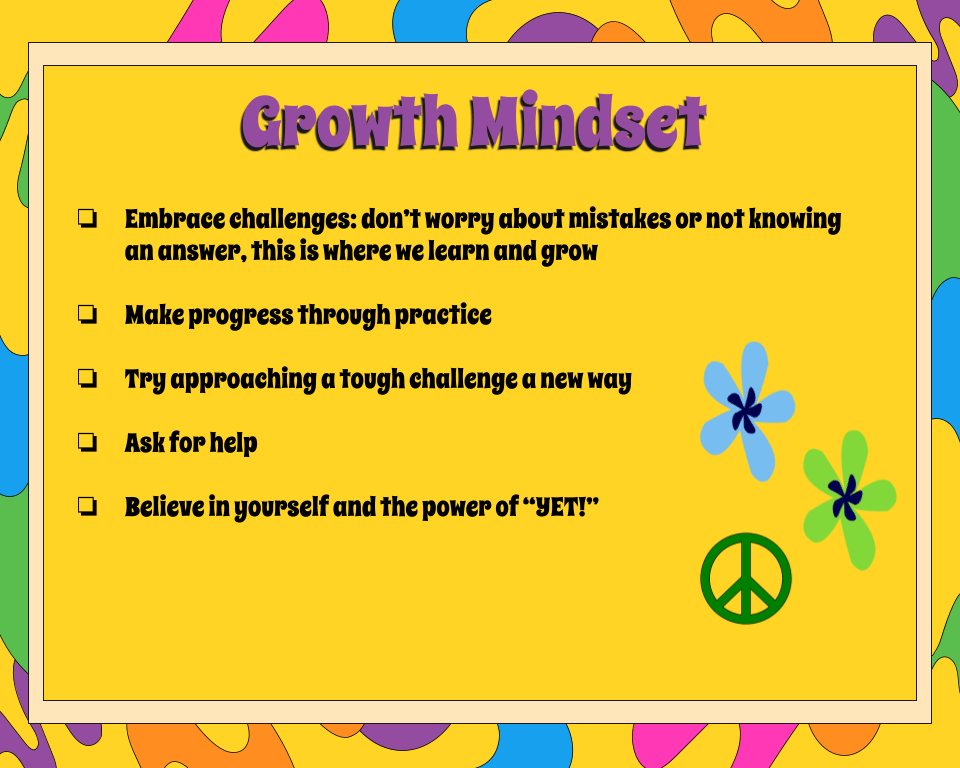
During Family Groups last week, students explored the concept of growth mindset – the belief that abilities and intelligence can be developed through effort, learning, and persistence. This idea, fundamental to our approach at Saklan, was developed by Stanford researcher Carol Dweck, and contrasts with a “fixed mindset” that sees abilities as static and unchangeable (think “I’m no good at math,” or “I can’t draw.”)

As I listened to their conversations, two insights perfectly captured this concept. One first-grade student shared how “eating sushi” exemplified developing new abilities – from initial resistance to eventual enjoyment. The eighth-grader in the group then remarked, “When I play hard pieces on the piano, I get better,” recognizing how tackling challenges develops skills.

These observations illustrate a growth mindset in action. Whether at the piano bench or the sushi bar, our abilities grow through practice, persistence, and embracing challenges. In our Family Groups, together, our older and younger students discover important social and emotional traits, creating bonds beyond the Family Group.

What makes these monthly gatherings special is how naturally such insights emerge through these peer interactions. While Standford researchers study growth mindset in laboratories, our students discover its power through shared experiences, creating a space where they teach and inspire each other across all grade levels.

#HeadsCorner

Growth Mindset

Saklan’s social-emotional learning emphasis for January is to have a growth mindset. Throughout the month, all Saklan students will be practicing how to embrace challenges and view them as learning opportunities.

At the end of January, the first – eighth graders will meet with their family groups and participate in cross-grade level discussions and activities to gain an even greater understanding of growth mindset. We value these opportunities to help our students understand and integrate new SEL concepts each month. Thank you to our 8th graders for leading these opportunities for the 1st – 7th graders, and to our SEL coordinators Vickie Obenchain and Lisa Rokas for organizing such a unique program for our students.

#SaklanSEL