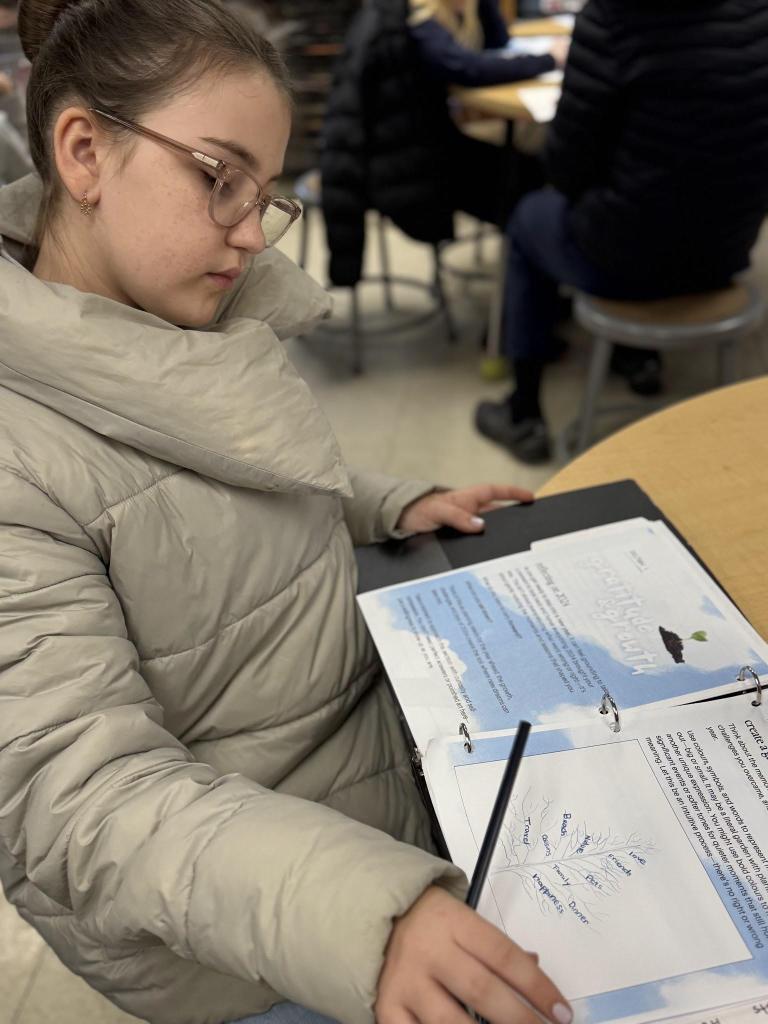
Students in first through eighth grade entered the new year through a series of therapeutic art activities in art class. Therapeutic art, or mindful art making, focuses on the creative process to relieve stress, calm the mind and body, or spark joy. Stepping out of winter break and into a new semester of learning and academic structure can stir up a range of feelings (for students, teachers, and families alike), and art can provide an opportunity to express these emotions, thoughts, and experiences in a way that words sometimes cannot.
For each lesson, students were given a basket full of colorful art supplies and a small packet of drawing and writing prompts centered around reflecting on 2024 and exploring the values and energy they’d like to carry into 2025. Students were encouraged to work through the exercises in any order and to change or adapt the prompt in any way that felt authentic or comfortable to them at that moment. The goal was to connect with themselves and the process rather than create a polished, final product.
The mindfulness mini-unit was a great compliment to this month’s school-wide social-emotional focus: growth mindset. As students began another semester of projects, art making, and learning, Lauren used these activities an opportunity to remind them to approach the journey with curiosity, creativity, and compassion.
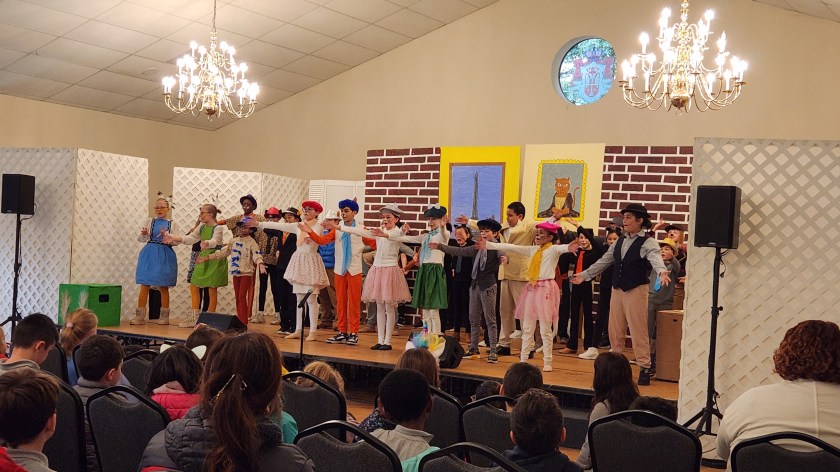
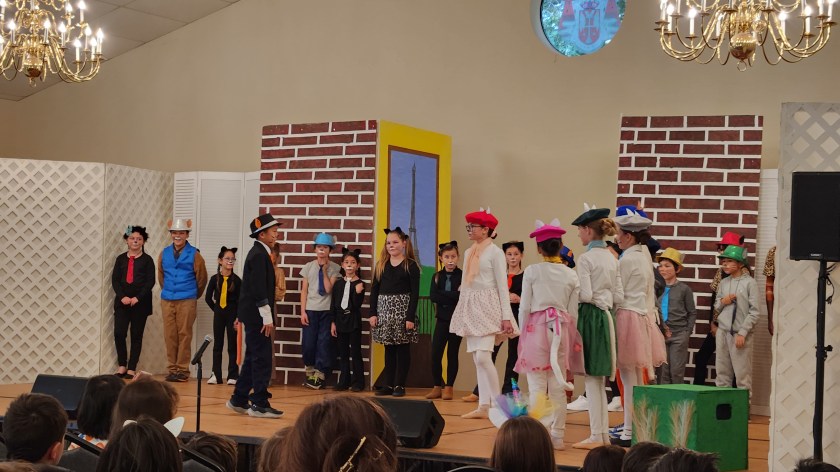
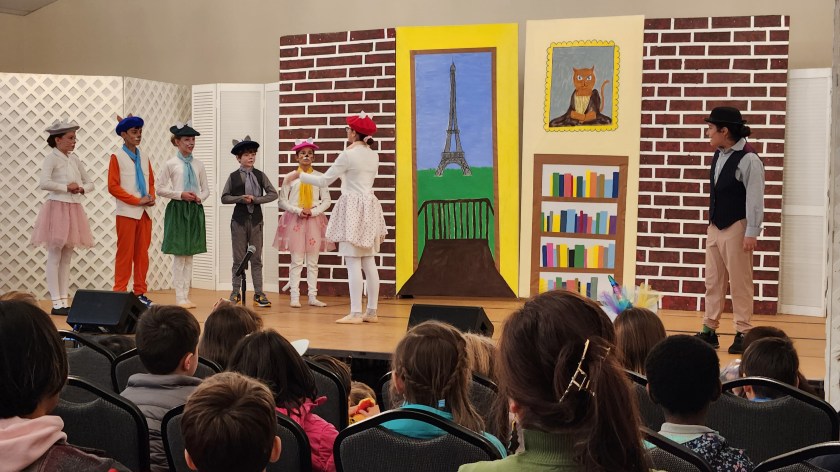
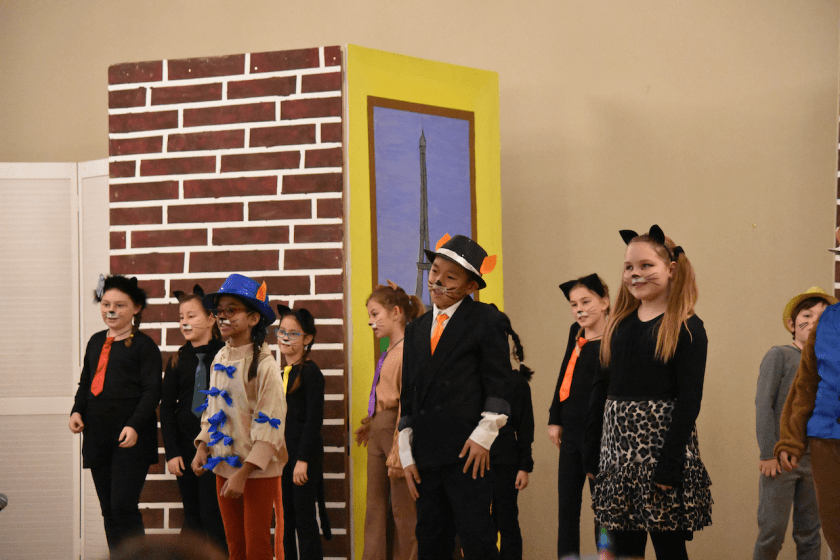
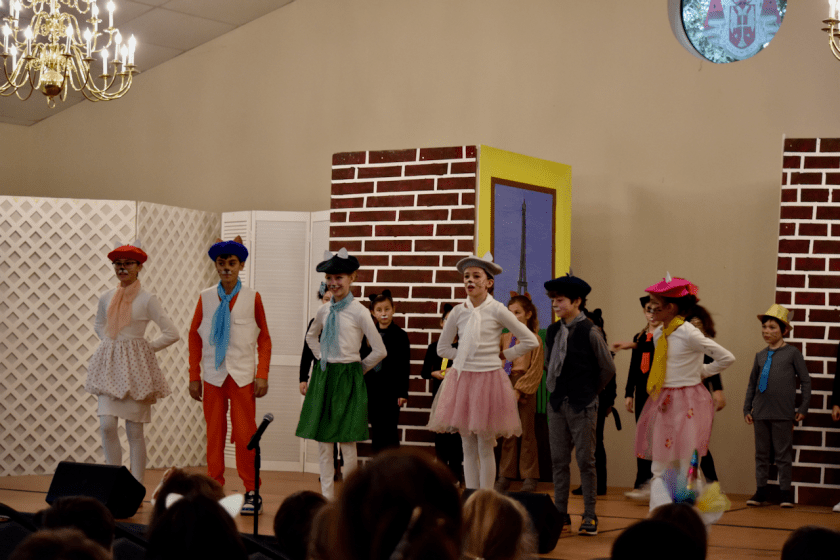
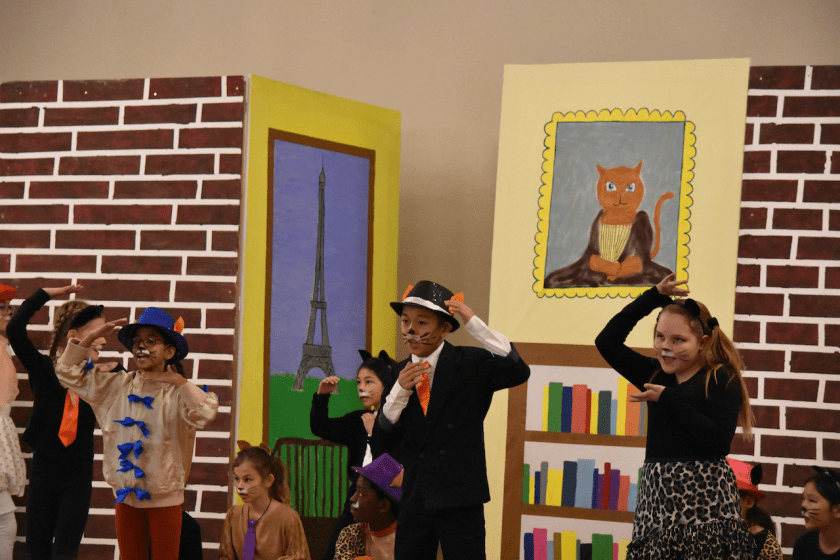
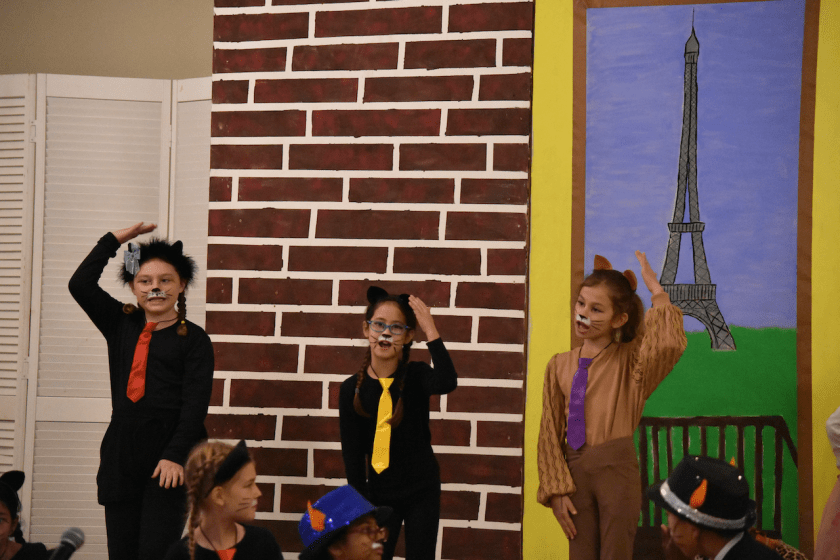
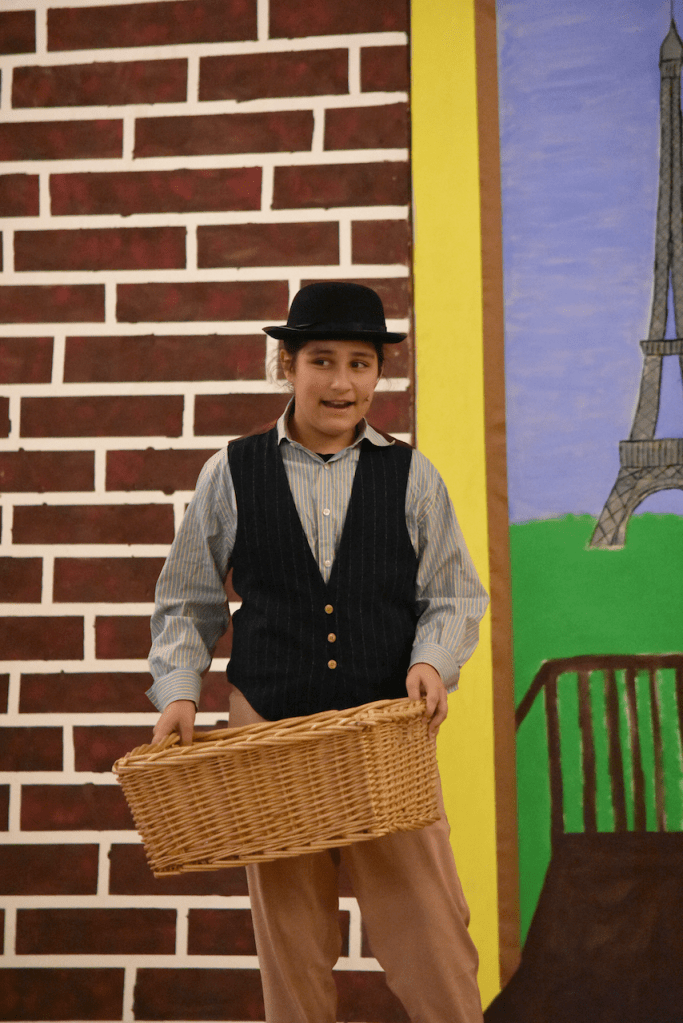
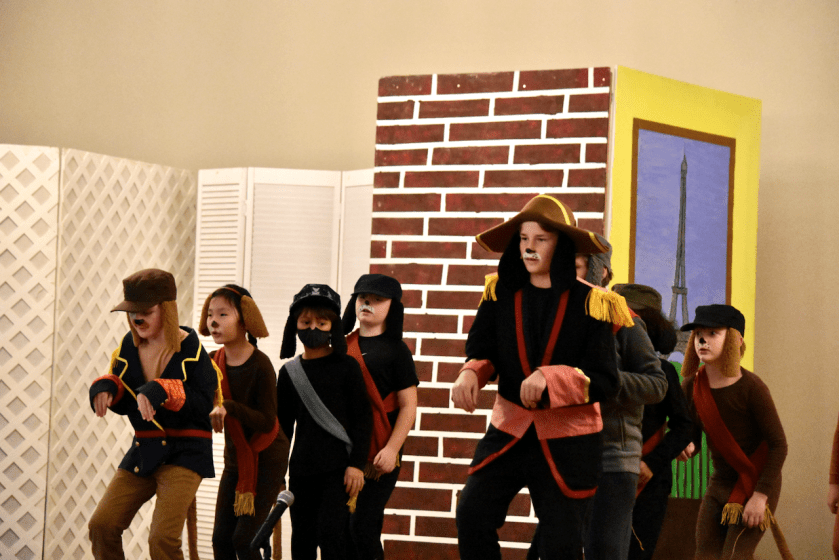
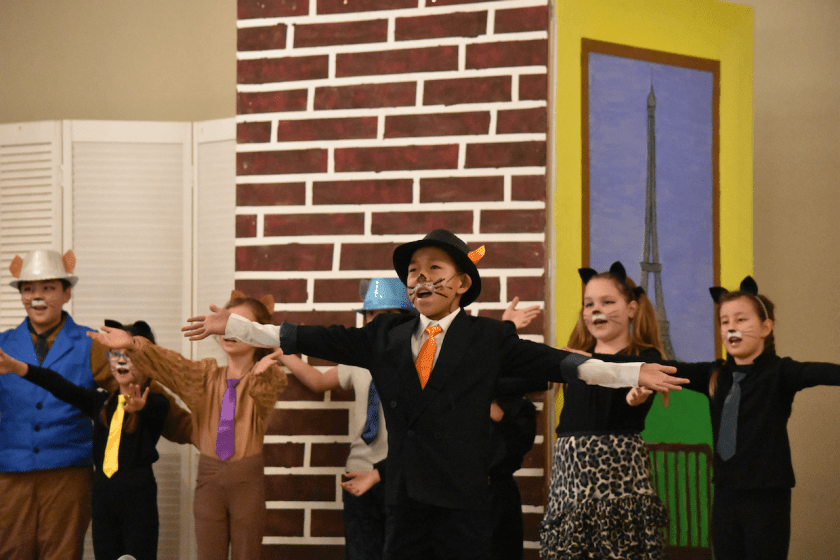
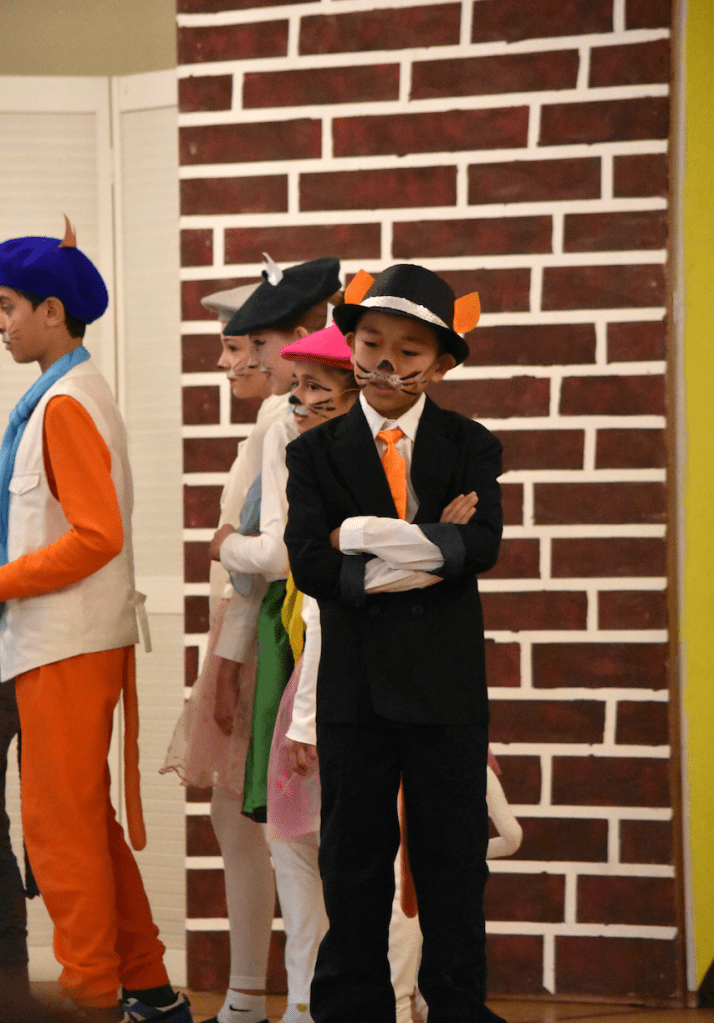
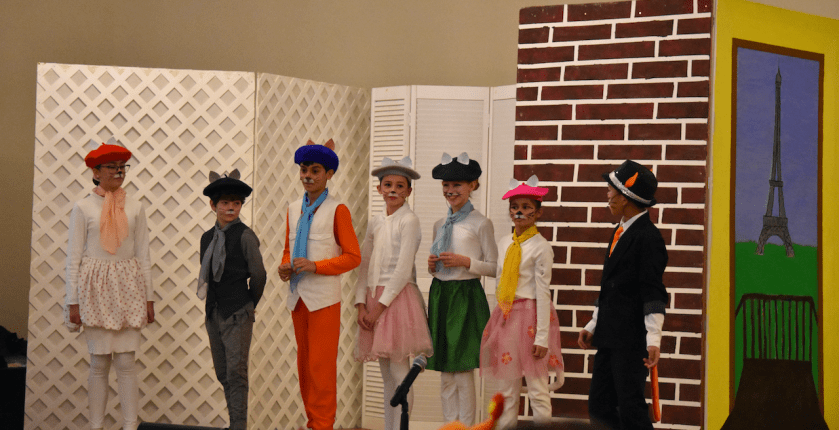
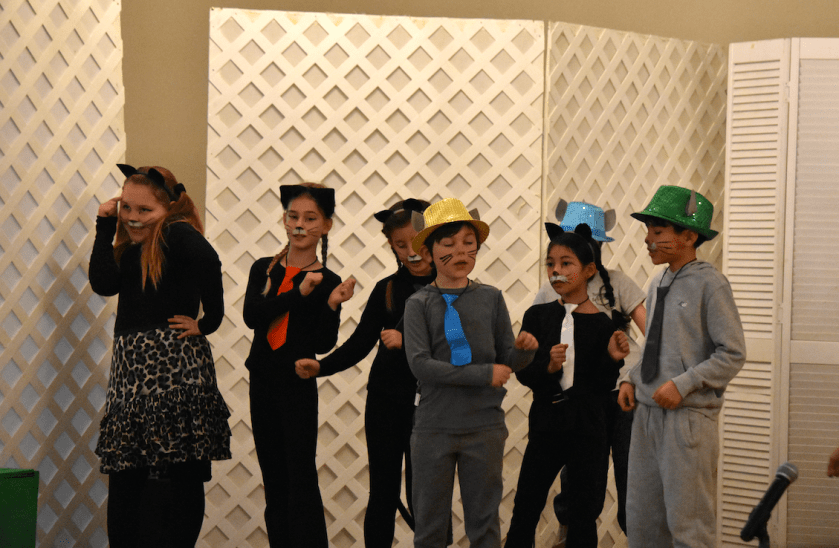
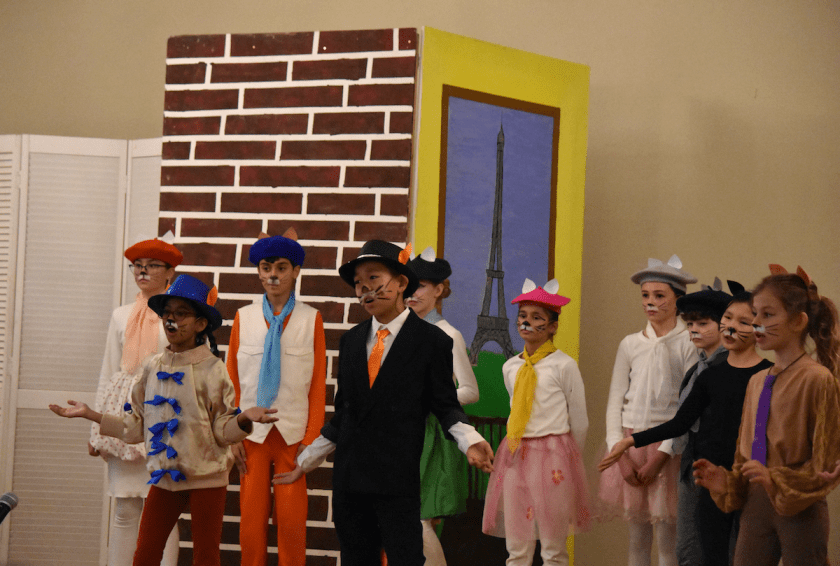
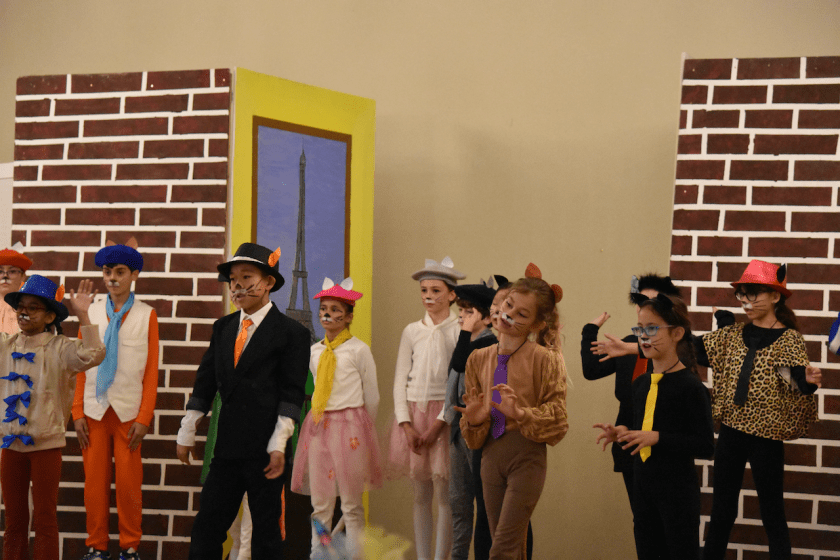
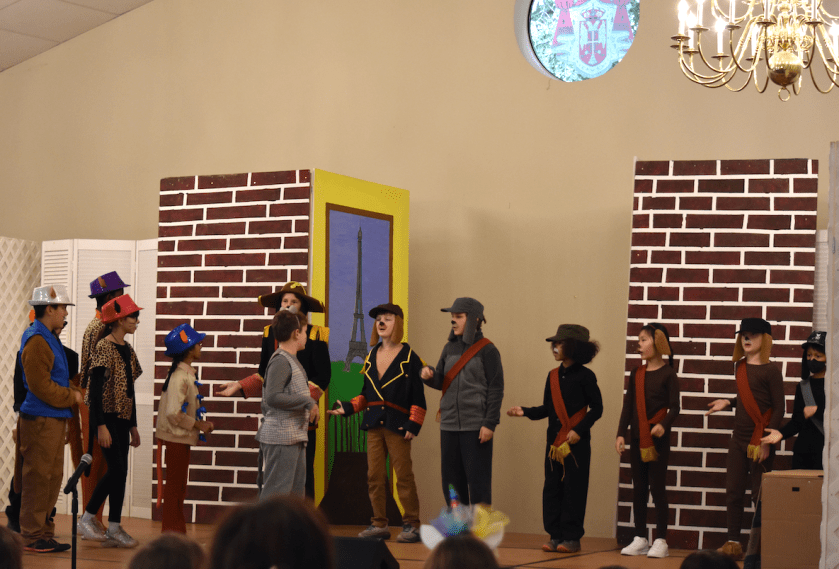
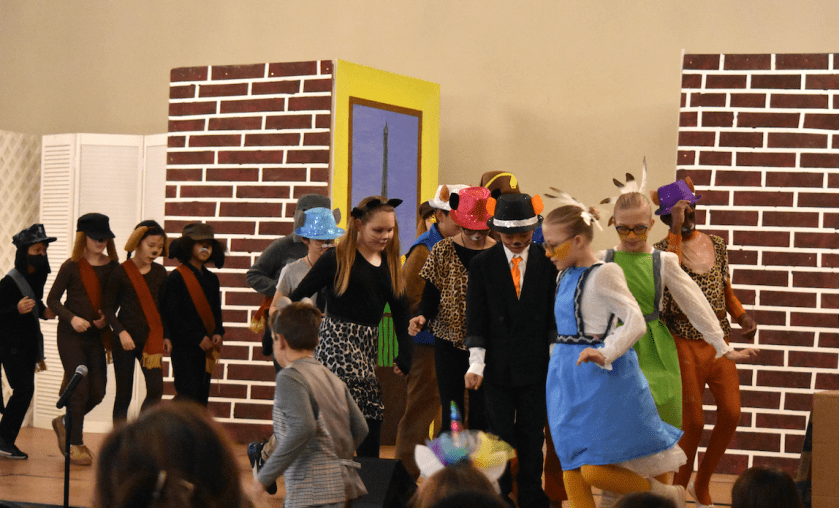
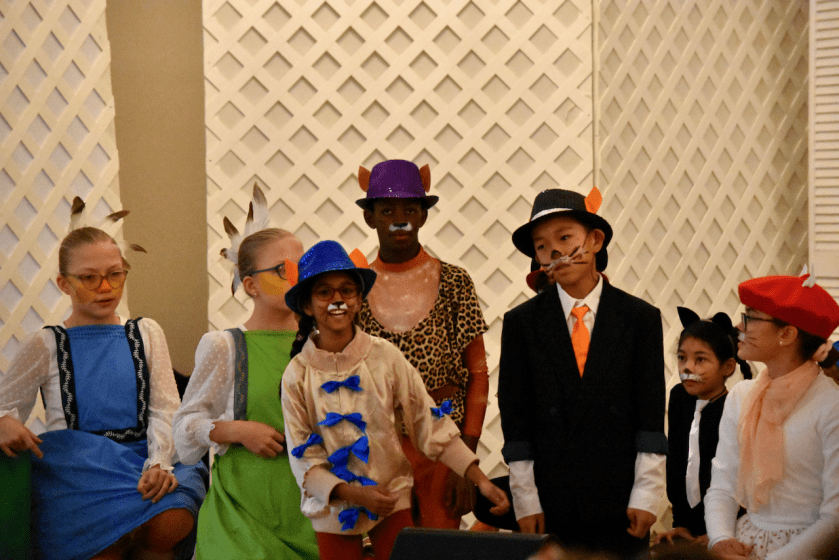
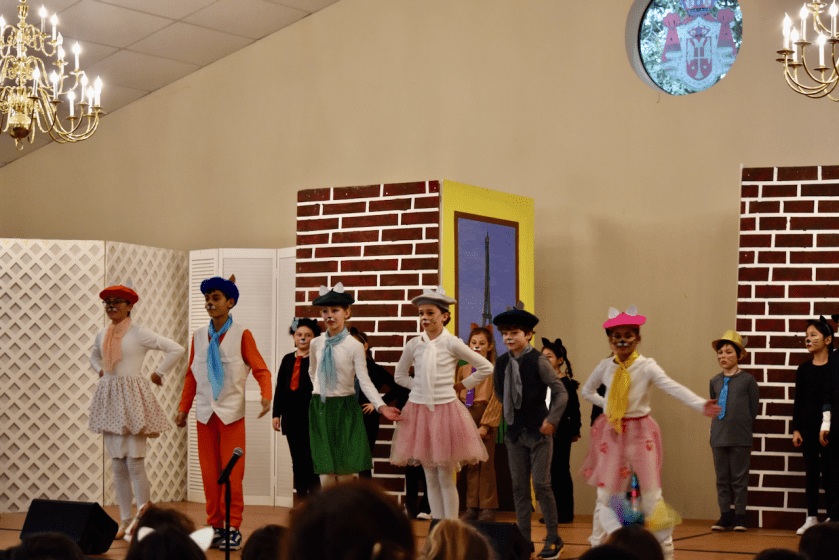
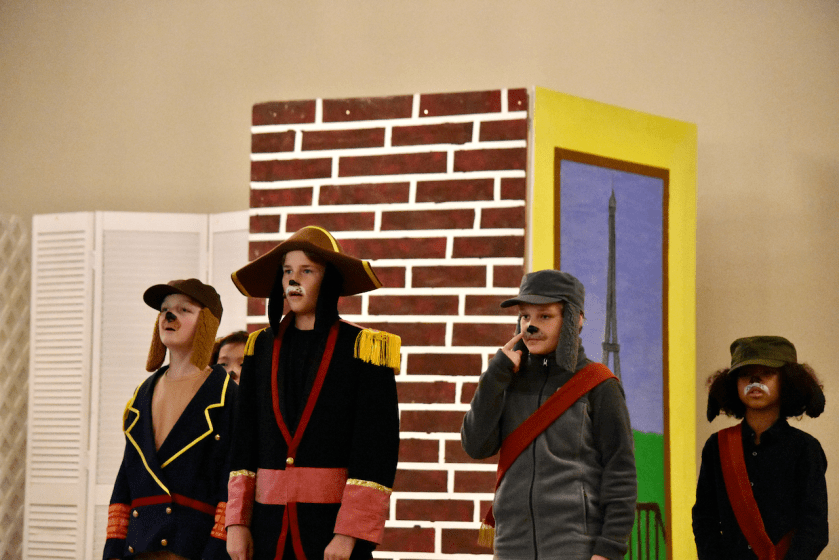
Congratulations to our third, fourth, and fifth-grade students on their wonderful performance of The Aristocats Kids right before Winter Break!
From memorizing lines, finding costumes, designing sets, and applying makeup, it takes a village to bring these productions to life. Thank you to all the performers for the courage and creativity they put into their characters. Thank you to the parents who helped run lines, arranged for base costumes, and worked on hair and makeup. Thank you to all who joined us for the show and cheered on the cast.
Additionally, we have a few special thank yous we would like to share:
Special thanks to Dianne Hurvitz for directing the lower school students’ wonderful performance. Her hard work, dedication, and love for the students were evident throughout the show.
Special thank you to Javier Yacarini and John Miazga for all their work constructing the stage and the set.
And a very special thank you to Jayme Feldhammer for her work on the costumes.
It was a fabulous show! We hope you enjoy the photos from the performance below.
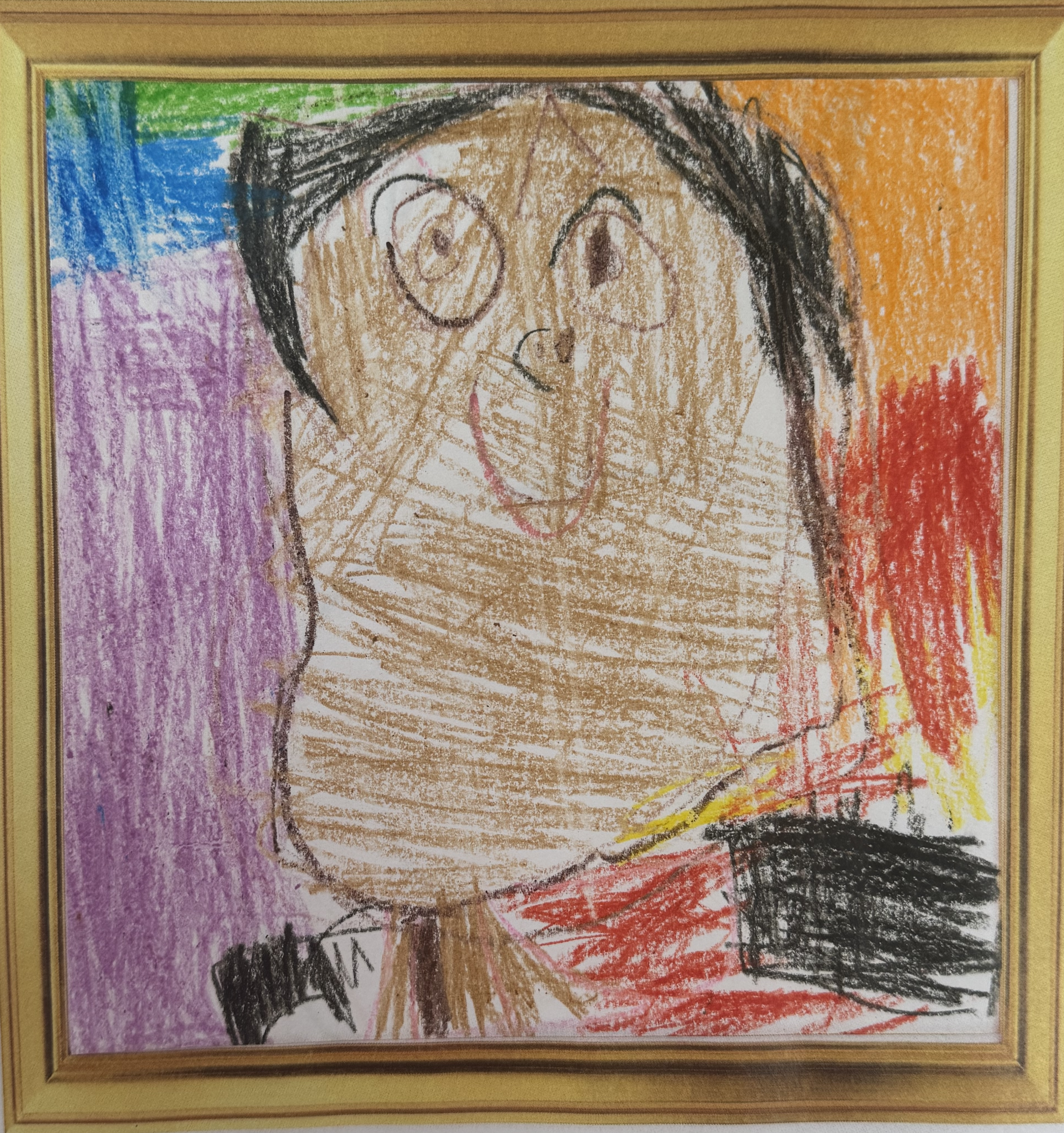
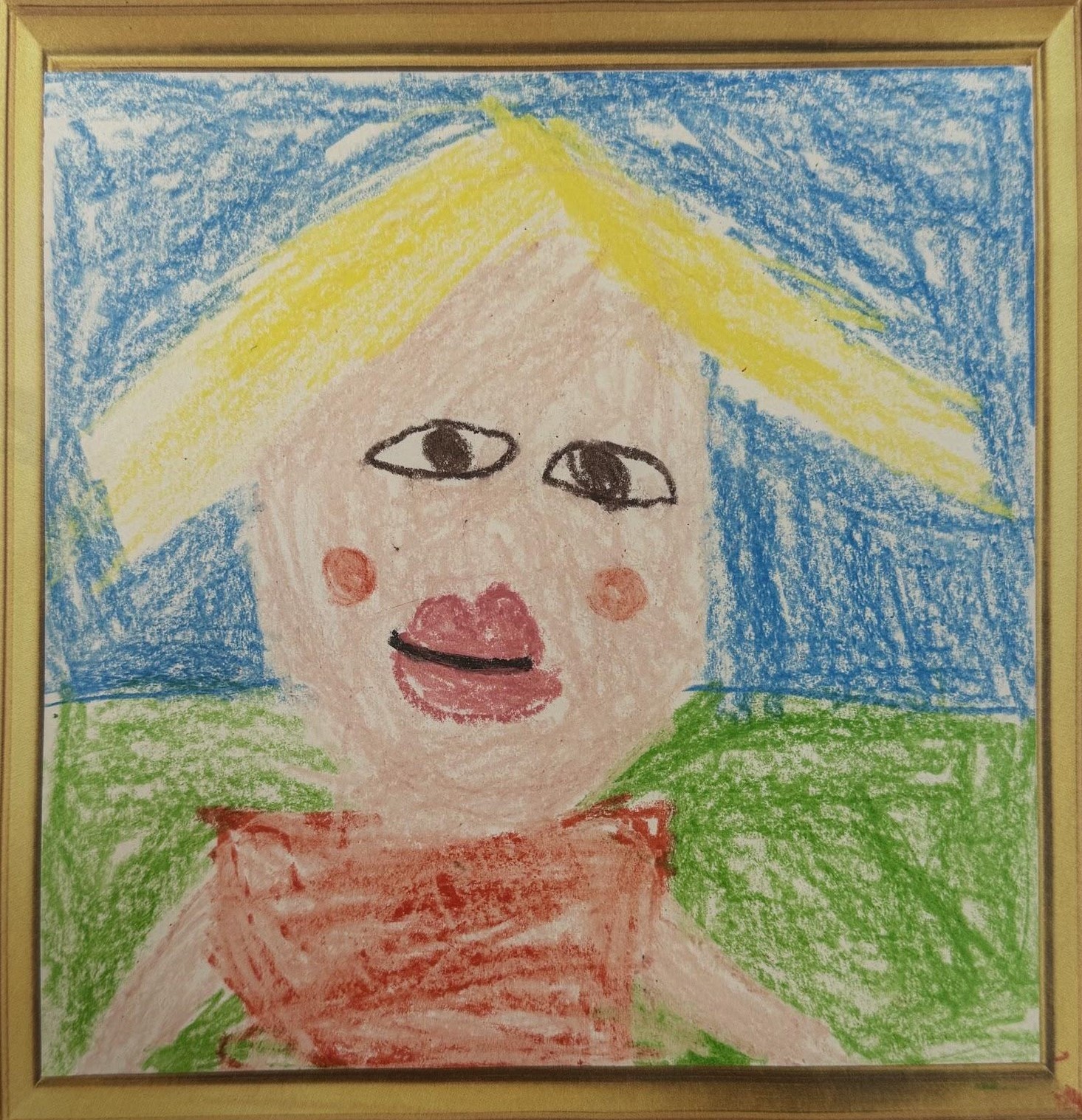
In art class, kindergartners recently worked on representing themselves through portraits. First, students observed well-known self-portraits by Vincent VanGogh and Frida Kahlo, and then used the art elements of line, shape, and color to create their own self-portrait drawings.
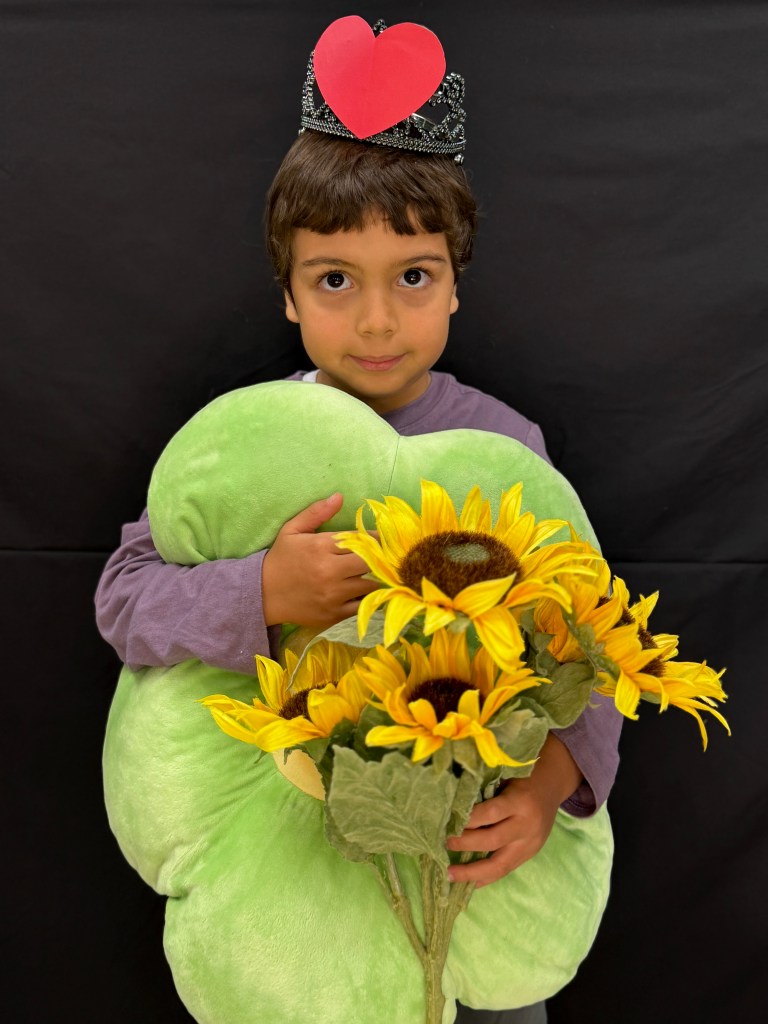
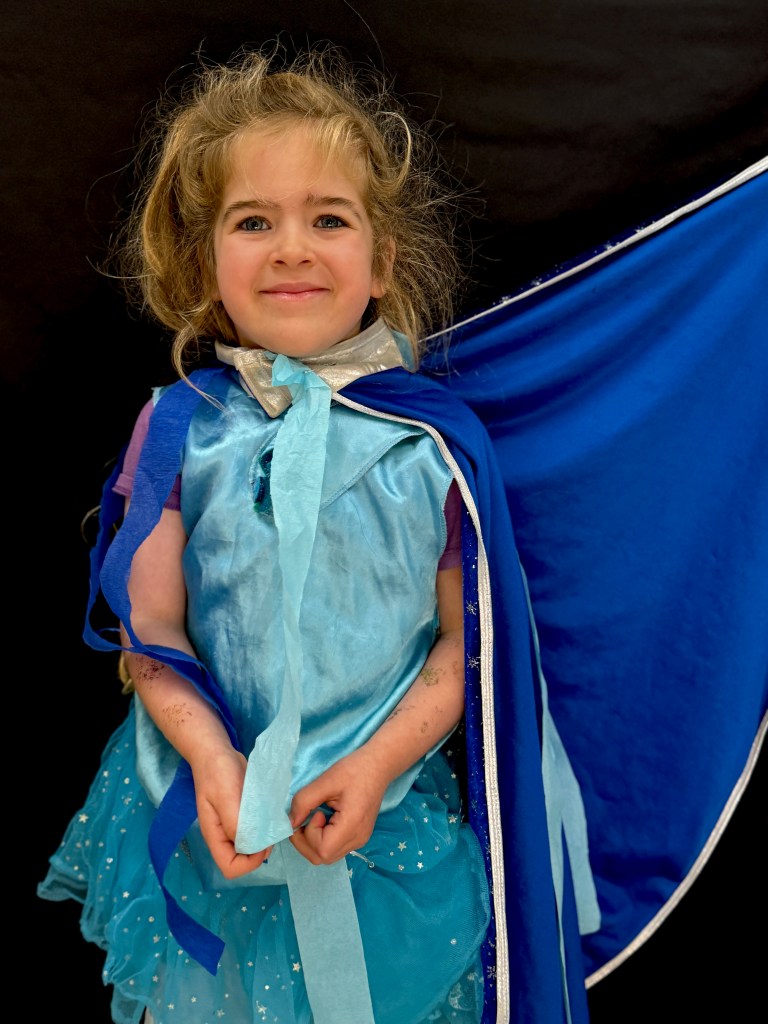
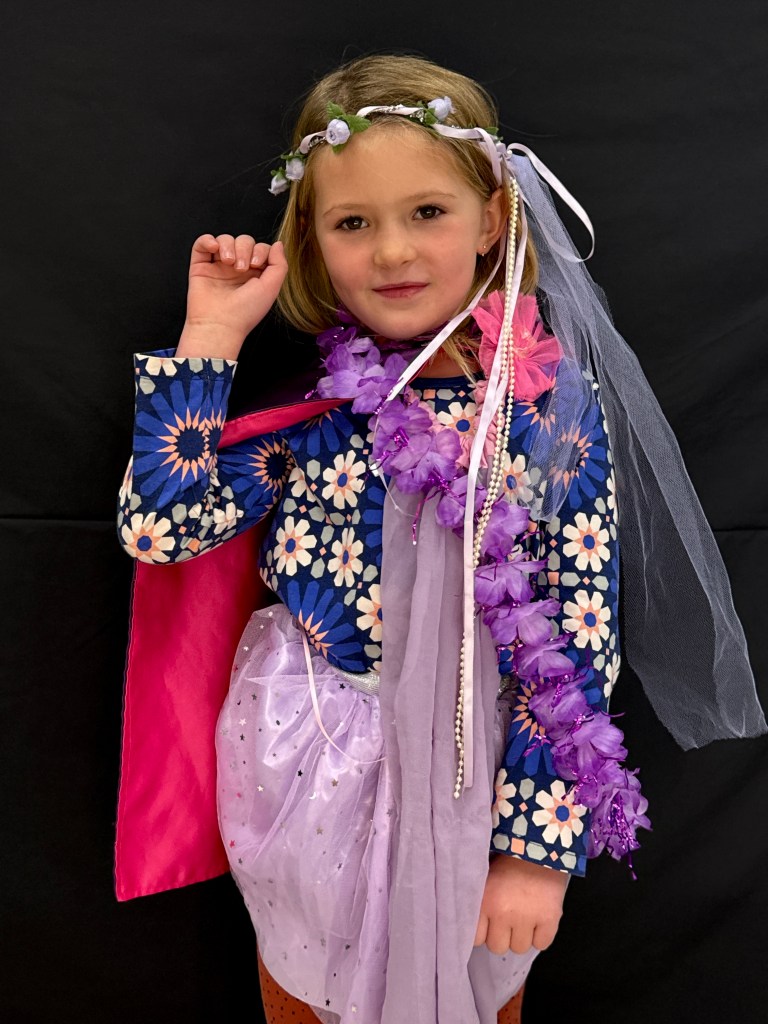
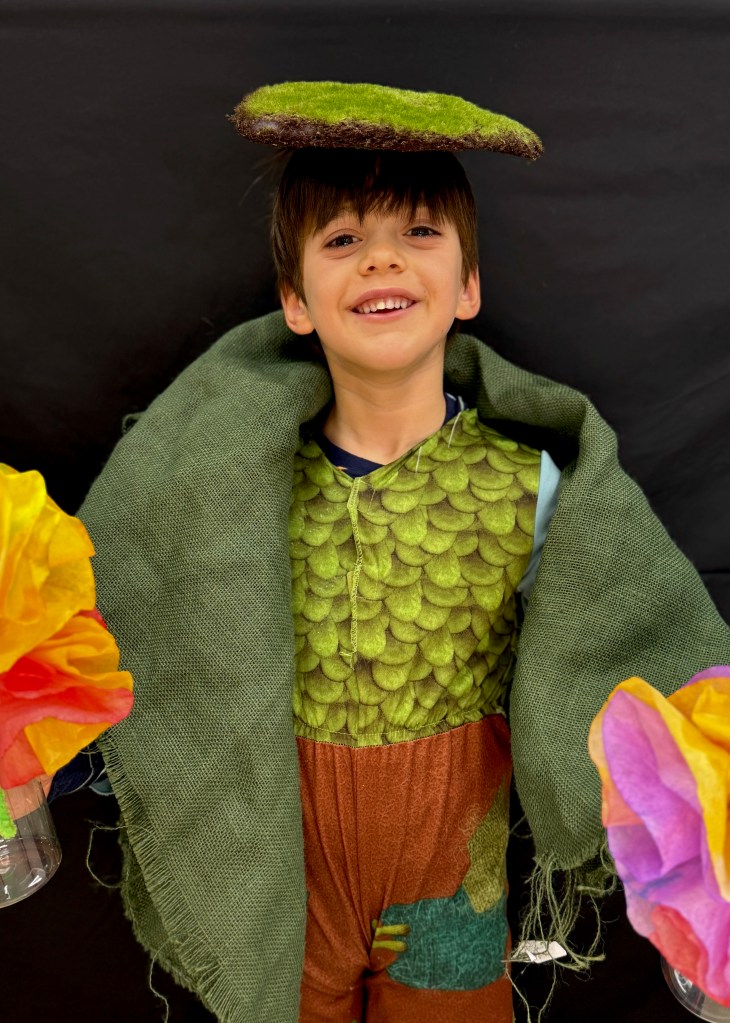
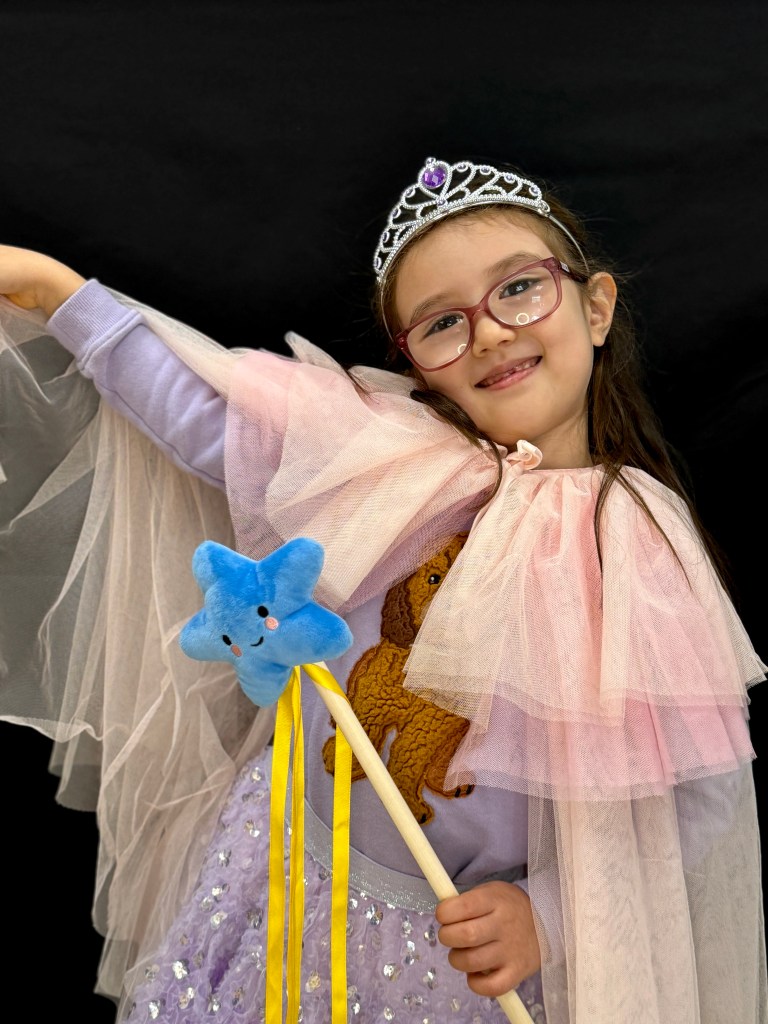
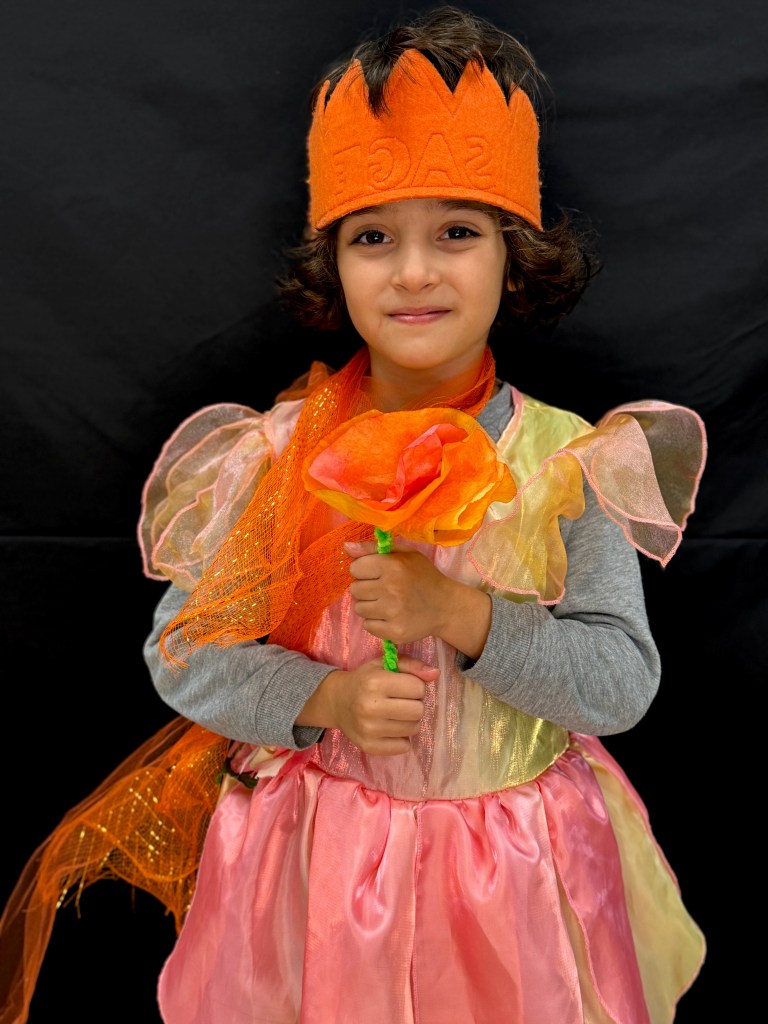
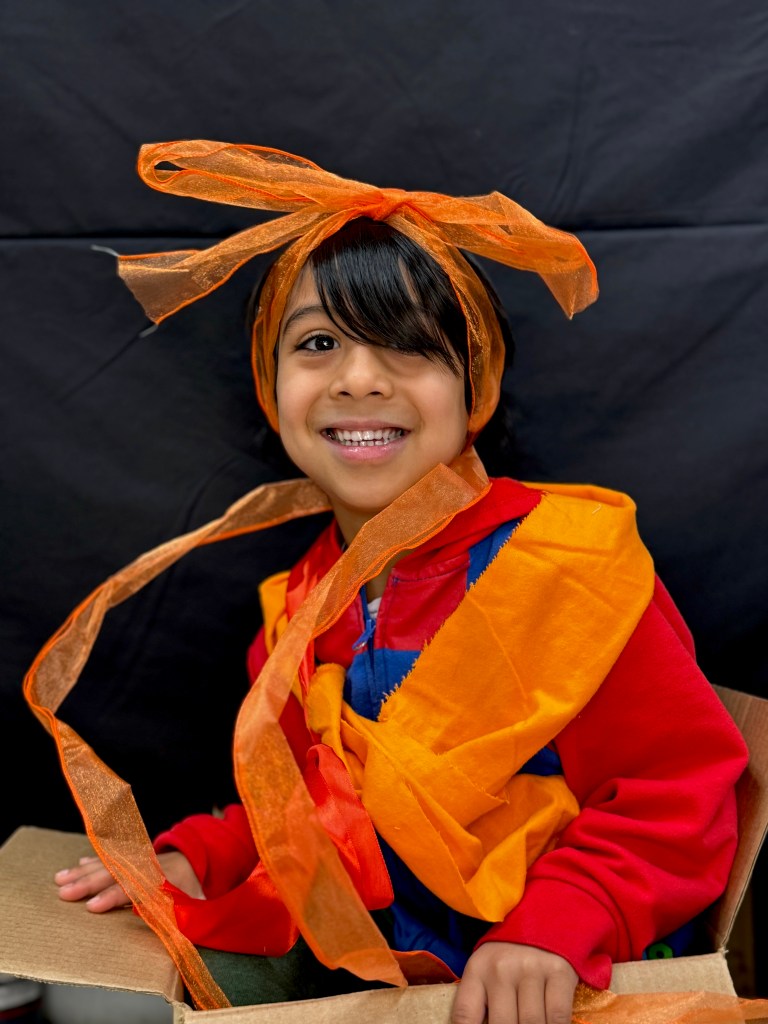
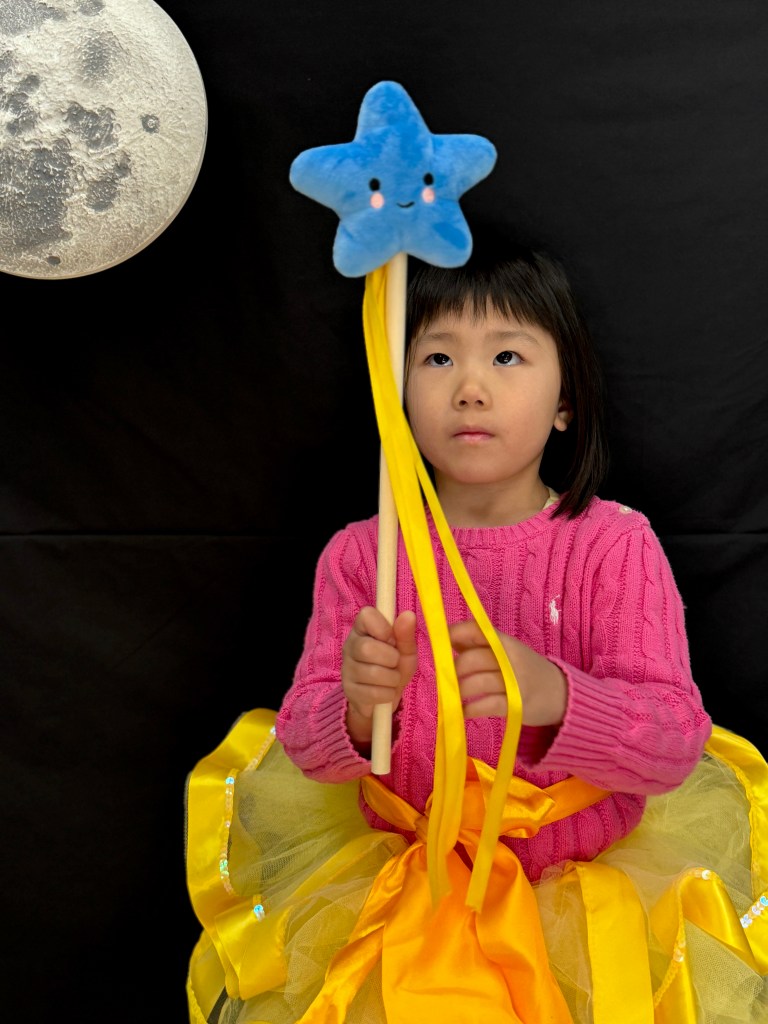
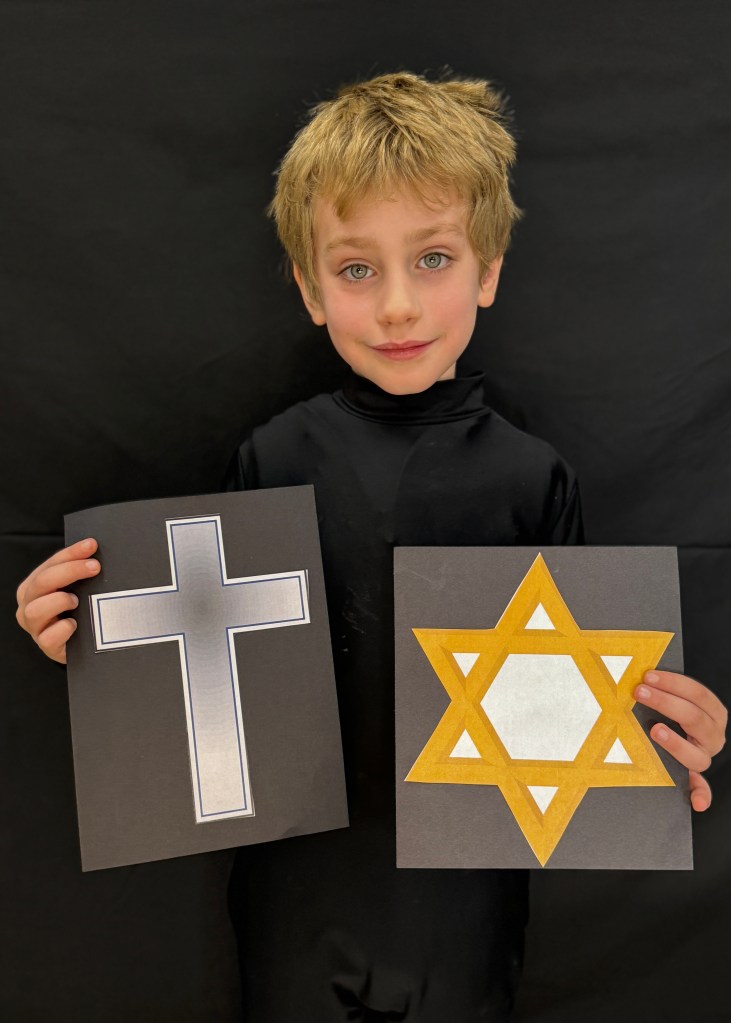
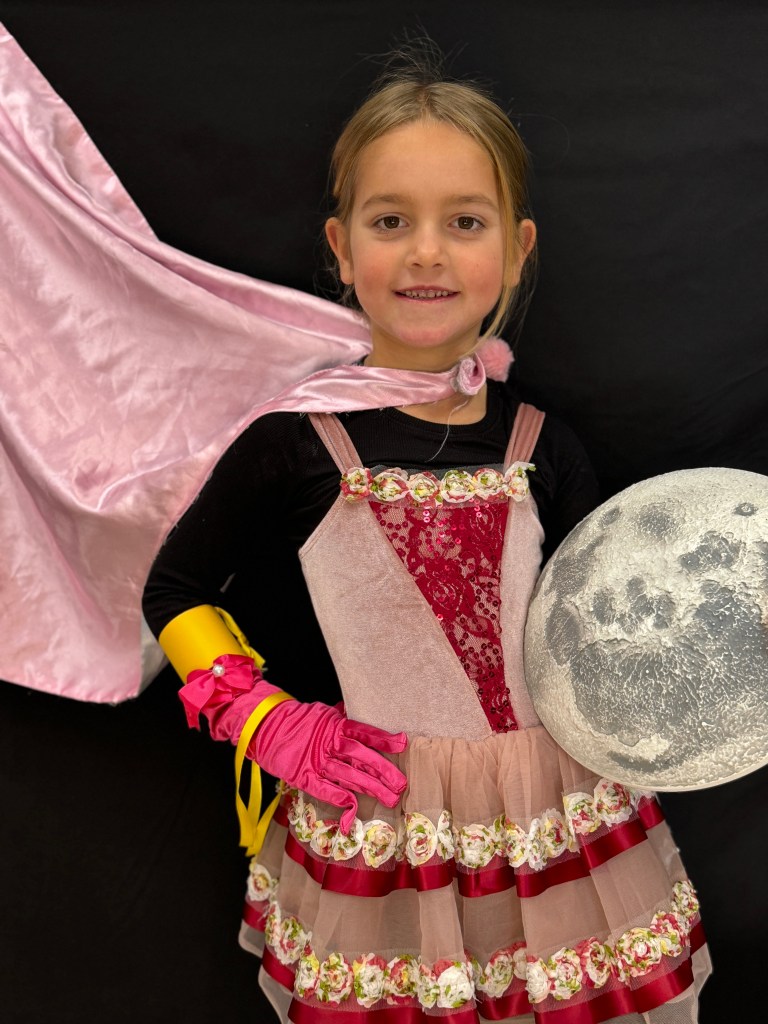
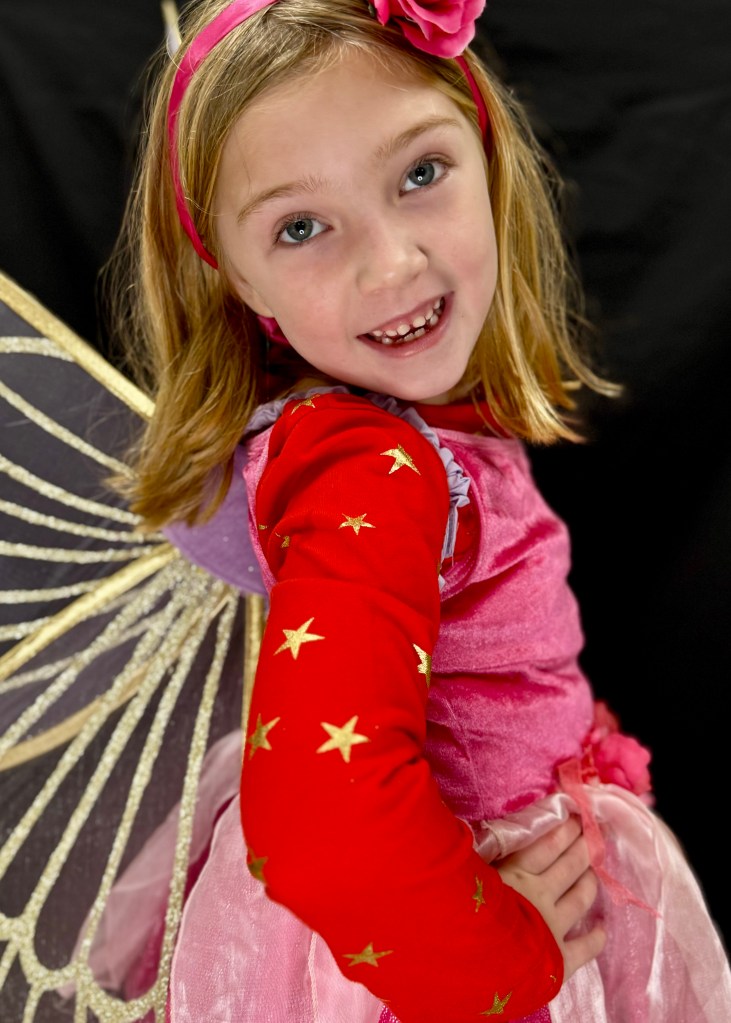
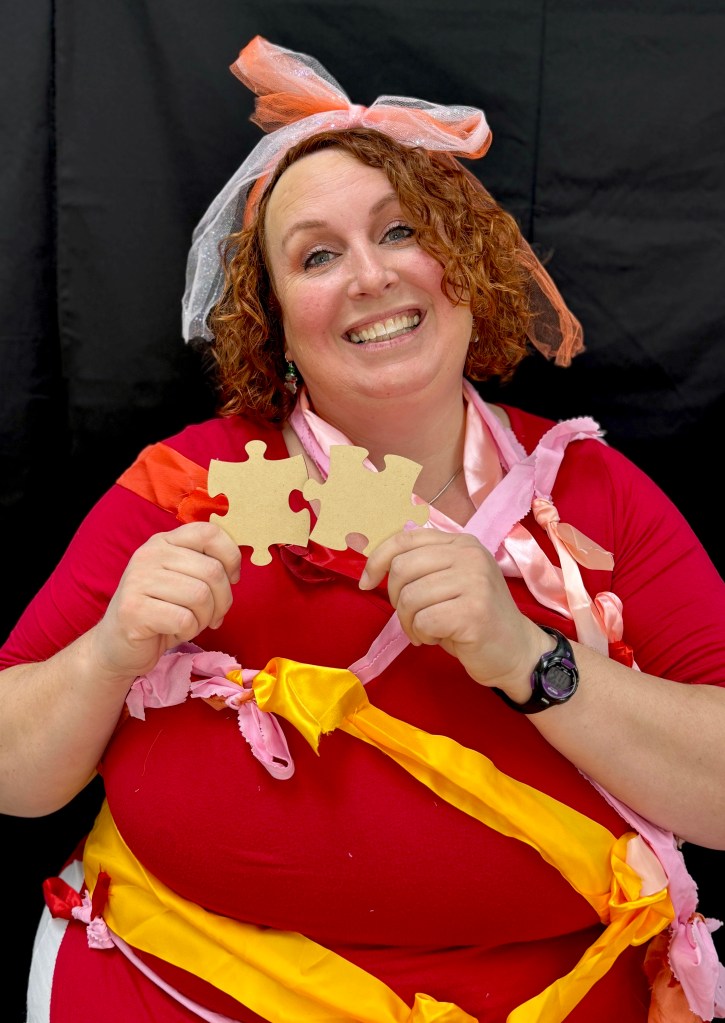
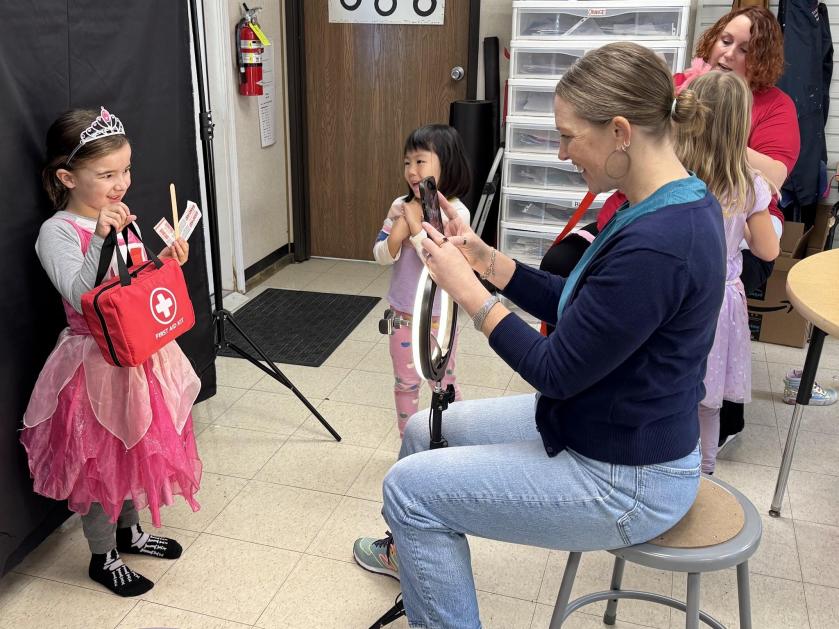
Next, the kindergartners observed the artwork of contemporary artist Cindy Sherman, who photographs herself dressed up as different imagined characters. In collaboration with their PBL unit exploring the driving question of “How can learning about each other’s names make us better friends?” students planned their own Cindy Sherman-inspired photoshoot that visualized the meaning and stories behind their names. Each student posed for photographs wearing costumes and props that not only represented their names but that superbly matched their unique personalities. Check out their photos below!
The 6th graders recently wrapped up their second milestone in their Project Based Learning unit, Artifact or Art Opinion. The driving question for the unit is, “Who do artifacts really belong to?”
During this unit, students explore arguments for and against the repatriation of Egyptian artifacts. They develop an understanding of museums, the history of archaeological practices, museum bias, perspective taking, and of course, dive into the content standards connected to ancient Egyptian civilization. This year, it has been great fun to add in mini lecture recordings and videos from the Egyptologist that Linda and Vickie traveled with over the summer, too!
The unit kicked off in early October with an entry event highlighting a modern example of an artifact purchased by the Met that was, in fact, stolen! This helped the class to wonder how do museums end up with the artifacts they have in their collection? They then selected mystery Egyptian artifacts held at museums outside of Egypt to research. Through studying their artifacts, students began to build an understanding of what these artifacts are and why they are important. During their research, the 6th graders learned about ancient Egyptians and started sorting through some of the complexities of each artifact’s provenance. Students learned sometimes it is tricky to get to the bottom of how a museum acquired a particular artifact!
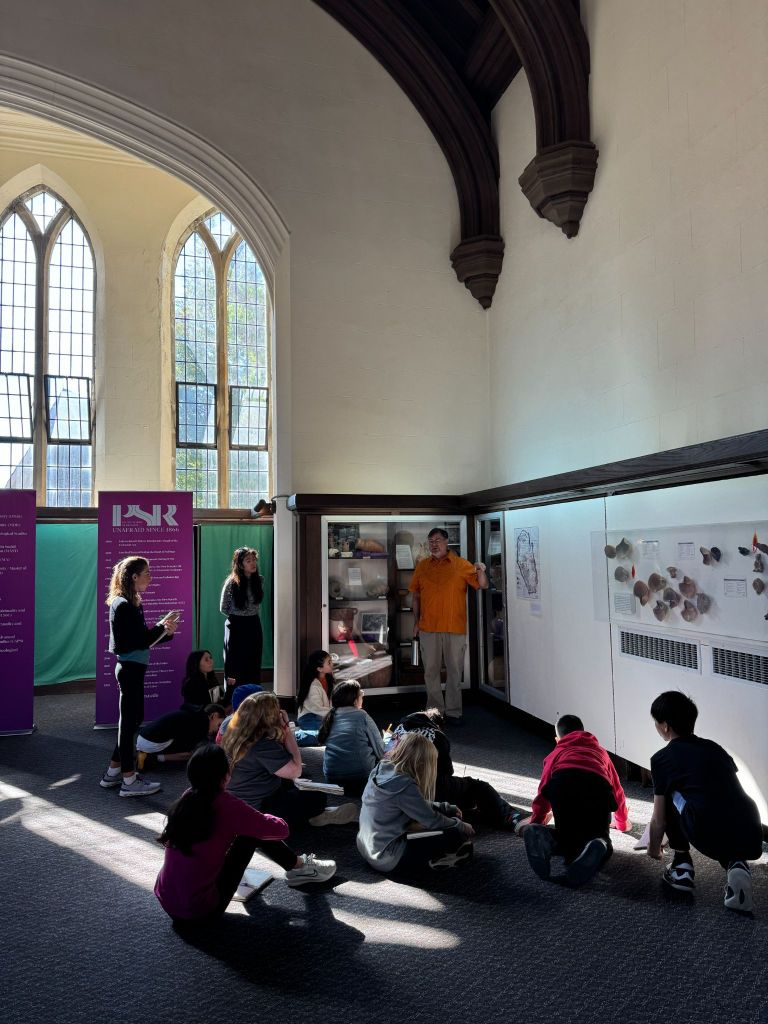
Recently, the sixth graders met with two experts who helped them start to understand how museum and archaeological practices have changed over time. They visited a small museum in Berkeley at the Pacific School of Religion called the Badè Museum. There, the class met with archaeologist and Museum Director Dr. Aaron Brody to understand the unique history of the collection and their perspective on repatriation.
Sixth graders also zoomed in with archaeologist, Dr. Hannah Wellman, who shared a detailed timeline about changing archaeological practices, mummification, and the impact of context in a museum exhibit.
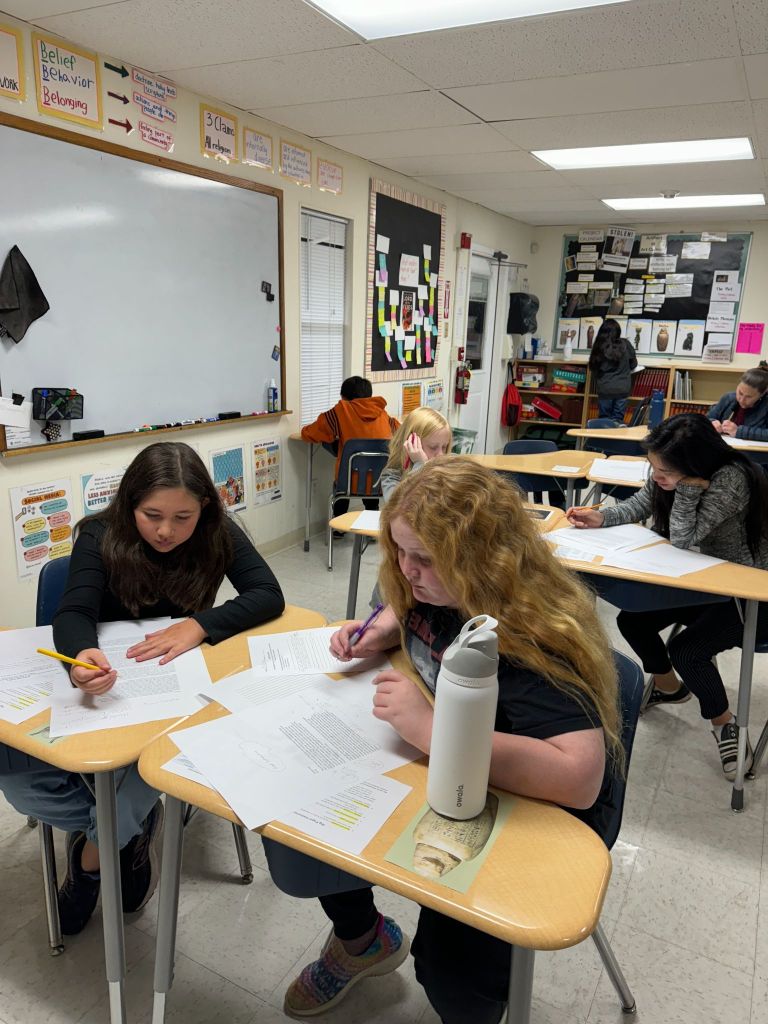
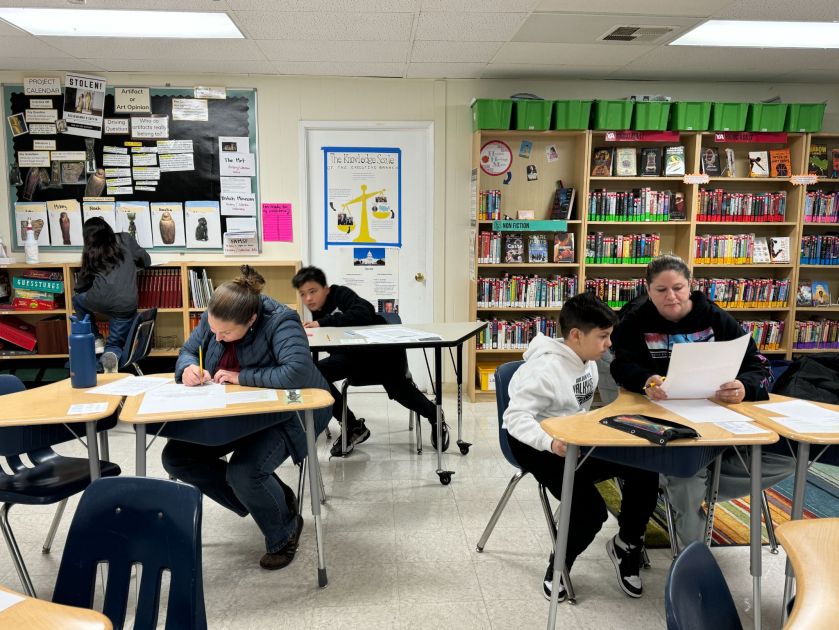
Students have been working on compiling all their research from the first two milestones into a research paper. After a first draft, teacher conferences, and initial revisions, they participated in a feedback routine called “Big Paper” with the help of David, Emily, and Kim. The 6th graders did a great job providing constructive feedback, glows, and questions to improve each other’s work.
In the final two milestones, students will learn how ancient and modern public art help individuals express their opinions and share their own answers to the driving question with the community. The sixth graders will showcase their work in this project at CLAS on November 22. We hope to see you there!
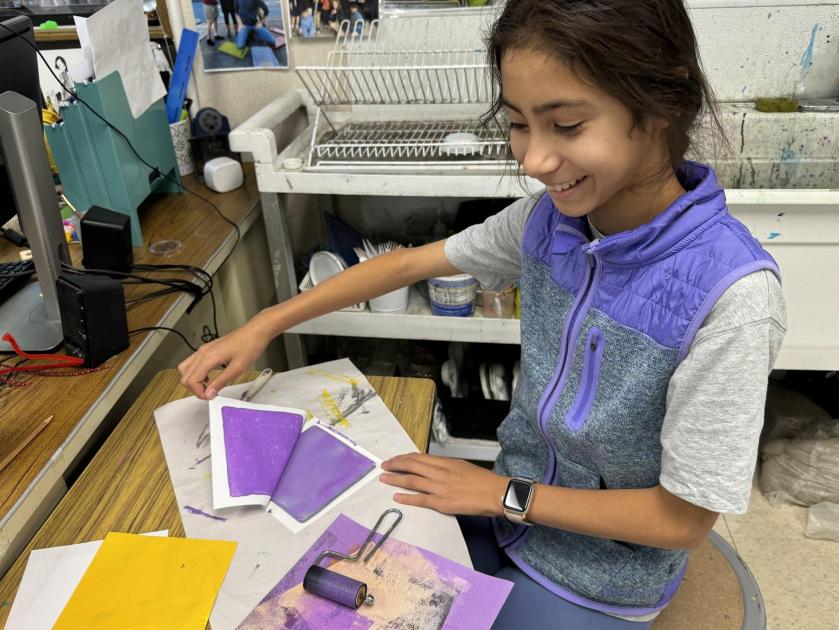
Middle school artists are currently stretching their reflection skills through learning the artform of “gelli-printing.” Gelatin printing is a form of printmaking that uses a flexible, reusable surface to create layered, textured images. Although the process is quite simple when practiced, the many variables of printmaking, such as applying the appropriate amount of ink, rolling it smoothly without creating lines or drying out the ink, and holding and rubbing the print long enough (but not too long), can be challenging to master. To help with this process, students keep a daily log in which they set a goal and then reflect on and record their progress. Each time they set a goal, they review practices to help them achieve it during that class period.
As part of the unit, students are experimenting with various materials and techniques. For example, students use stencils to mask out areas and found materials, such as leaves, fabric, and string, to create layered textures.
For their final product, students will write a process statement for a single print of their choice. Soon, they will continue the unit by learning a reductive form of printmaking: linoleum block printing.












 FRIDAY BLOG
You must be logged in to post a comment.