Smiles, Songs, and Spooky Fun

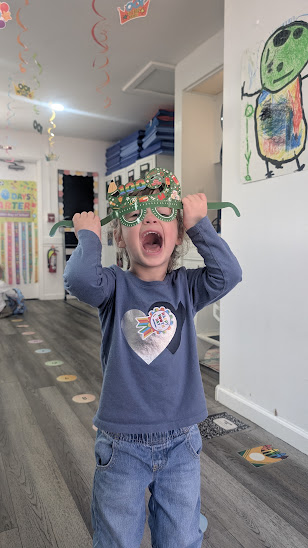
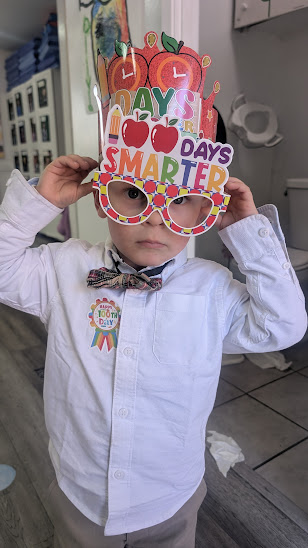
What a fun and festive Halloween day we had at Saklan! From the moment students arrived on campus, excitement was in the air. The morning kicked off with our beloved Costume Parade, a joyful tradition that brought the entire Saklan community together. It was wonderful to see so many smiles, creative costumes, and parents cheering from the sidelines!

While the day was filled with laughter and fun, it was also infused with compassion and connection; two hallmarks of the Saklan spirit.

For our Kindergarteners, first graders, and 8th-grade choir members, the morning brought a visit to Moraga Royale, where they performed Halloween-themed songs for the residents. Their performance was met with warm applause and smiles all around!

Later in the day, our Middle School Student Council hosted a spooky celebration for Preschool through 8th-grade students, complete with Halloween story readings and trips through a haunted house they had designed themselves.

The afternoon concluded with classroom parties featuring food, games, and laughter.

A huge thank you to all our amazing families who helped make the day so memorable. Your time, creativity, and enthusiasm make events like this so special for our students, and remind us all what a strong, joyful community Saklan truly is.

#SaklanConnectedCommunity

From Horses to Hounds: The Hoot Owls Explore Pets

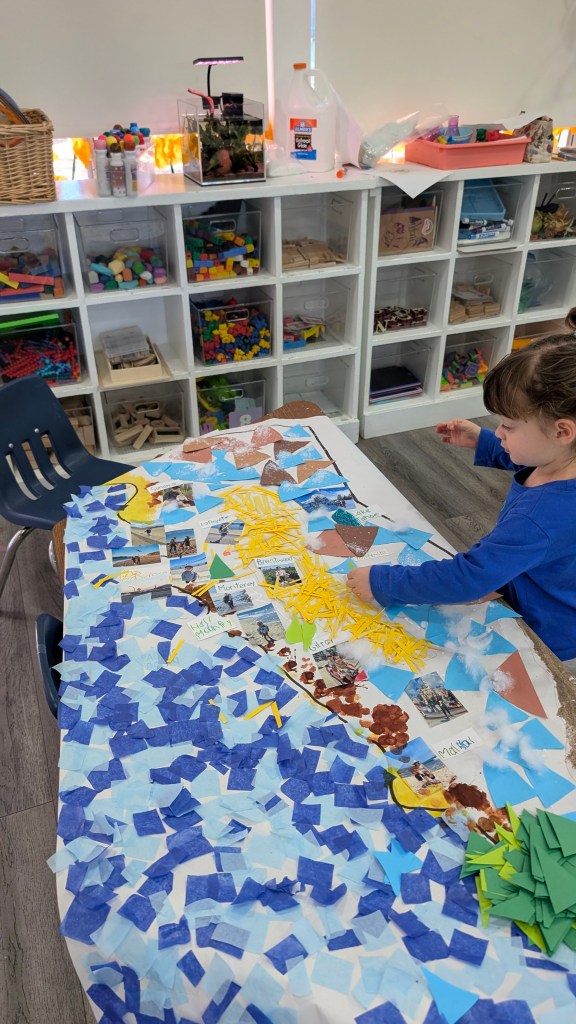
As part of their Pets Project, the Hoot Owls have been exploring how to care for different kinds of animals—both big and small! When teachers noticed several students showing a special interest in the horses and stable set in the classroom, they decided to dive deeper into learning about how to care for horses.

The class discovered that horses can make wonderful pets, but they also require a lot of care and space. Together, the Hoot Owls learned that horses need shelter, lots of hay and grass to eat, and regular brushing to stay clean. They also learned that taking care of a horse includes cleaning up after them—using shovels to tidy up their stalls! Students found out that horses can be ridden using saddles and reins, which led to lots of imaginative play. To represent what they learned, the class created their own model horse brushes, water and food troughs, and even shovels for stable cleanup.

Next, the Hoot Owls turned their attention to one of the class’s favorite animals—dogs! They were thrilled to welcome two special guests: Saul, Saklan’s Middle School Math Teacher, and Mel, who brought along their two dogs, Banksy and Bixby. The Pre-K students came prepared with thoughtful questions, and Saul and Mel were happy to share their expertise.

The class learned that the amount of food a dog needs depends on its size and age. Banksy eats one small bowl of food at dinner, while Bixby eats twice a day—and even uses a special puzzle bowl to slow down his eating. Students also discovered that dogs can earn treats when they perform tricks. Banksy has already mastered “sit” and “roll over,” while Bixby is still learning!

Exercise was another key topic. The students were amazed to hear that Banksy and Bixby had already walked a full mile before arriving at school! To stay active and engaged, dogs also need toys like ropes, chew toys, and stuffies. The class discussed how important it is to keep dogs clean—by brushing them, especially as they grow their thick winter coats, and giving them baths when needed. They also loved hearing about Banksy and Bixby’s matching jackets and learning that collars and leashes are important tools to keep dogs and people safe.

After the visit, the Hoot Owls had the opportunity to apply what they learned by creating their own “pet care kits” for small toy dogs. They made leashes, collars, food and water bowls, treat bags, toys, and even jackets! Each student thoughtfully considered what their dog would need and designed items to help care for their new pet.

Through hands-on exploration, creativity, and expert insight, the Hoot Owls deepened their understanding of what it truly means to care for an animal. From brushing a horse to walking a dog, these young learners are discovering that responsibility, empathy, and kindness are at the heart of being a good pet owner.

#SaklanProjectWork

Why I Give: Partnering with Saklan to Shape the Future

There is no greater investment of your time, treasure, and energy than your children. My children are fortunate enough to get a world-class education that is delivered with compassion and love. Saklan recognizes who my children are as individuals and rises to the challenge of meeting them in their learning environment. Both of my sons have thrived at Saklan and are gaining the resilience, compassion, and creativity it takes to lead in the world. Saklan is changing the way learning occurs, and I feel very fortunate to have the opportunity to help take part in this. I wholeheartedly believe in the mission of thinking creatively, acting compassionately, and living courageously, and I wish to partner with all the educators at Saklan to bring this mission to the world. Please join us in thinking about donating your time, treasure, and talent to such a worthy cause. 

Join Etienne Lacrampe and family in supporting Saklan by making an AGF gift today!

Kind & Courteous Students

At Saklan, social-emotional learning (SEL) is an important part of helping students grow not only as learners, but also as compassionate, connected members of their community. Each month, we focus on a different SEL theme that helps students build empathy, self-awareness, and respect for others.

This month’s theme of kind and courteous invites students to reflect on the small, everyday actions that make a big difference in creating a positive school culture.

Through classroom discussions, role-playing, and real-life practice, students will explore what it truly means to be kind and courteous—both in words and in actions. By making kindness a daily habit, Saklan students continue to strengthen the sense of belonging and respect that makes our community so special.

#SaklanSEL #SaklanCommunity #EducatingtheWholeChild
Head’s Corner: Loving the Teen You Have by Joining the Resistance 

Last week, Saklan co-hosted a conversation with Dr. Ann-Louise Lockhart, author of Love the Teen You Have, in partnership with ParentMap—a consortium of schools that brings thoughtful authors and researchers to school communities like ours.

Dr. Lockhart’s message to parents was simple but radical: join the resistance. Resist the urge to fix, control, or over-teach your teens. Resist the pressure to be perfect. Resist the voice that says if you just say it one more time, they’ll finally listen. This conversation was full of gems—here are some of my takeaways.

Meet Them Where They Are and Join the Resistance

When your child resists, don’t fight it—join it. If your teen doesn’t want to talk, don’t push. Maybe text. Maybe just sit quietly beside them. Be attuned to what they need in the moment, not what you need. Joining the resistance isn’t about giving in; it’s about shifting from confrontation to connection. It’s realizing that presence—not persuasion—is what keeps the door open.

Do Less, Be Present

When our kids were little, we tried to make every moment a teachable one—narrating, correcting, guiding. But the older they get, the less that works. Teens don’t need a constant teacher; they need a calm, steady presence. Sometimes love means doing less—being available, not instructional. It can be surprising how zen it can feel just to “be” with them.

Nagging Is Kryptonite

Few things shut a teenager down faster than repetition. Nagging doesn’t motivate; it hardens resistance. Instead of asking the same question again, try curiosity: “I’ve noticed that assignment’s been hard to start—what do you think’s getting in the way?” That one shift invites conversation instead of combat.

Connection Over Correction

Everything comes back to relationships. When we focus less on managing behavior and more on understanding emotion, we help teens develop self-regulation and trust. They don’t need perfect parents—they need present ones.

At Saklan, this message resonates deeply. Our teachers know that learning—academic, social, or emotional—happens in the space between curiosity and connection. And our partnership with parents is strongest when we, too, resist the urge to over-manage and instead choose to be attuned, curious, and grounded.

So this weekend, take a breath, step back, and love the teen you have—right where they are.

You can view the recording of the conversation with Dr. Ann-Louise Lockhart here, using the access password: edTalks*2526.

Warmly,
David

#HeadsCorner

Puberty & Mental Health Talk on Monday

If you haven’t already signed up for Monday’s Parent Ed Talk on how puberty impacts children’s emotions, stress, and mental health, do it today — you won’t want to miss this one!

Join the Saklan Parent Association on Monday, November 3, at 6:00 p.m. for an engaging and informative evening with Dr. Megan Johnson, Clinical Psychologist and former Saklan parent. Dr. Johnson will share insights into how this developmental stage often brings heightened sensitivity and increased risk for anxiety or depression, while also presenting a powerful opportunity for growth, resilience, and recalibration.

Parents will come away with a deeper understanding of what’s happening during puberty and practical strategies to support their children through these changes with empathy and confidence.

This talk will cover:

  • What puberty is – key physical, brain, and hormonal changes.
  • Why it matters for mental health – increased sensitivity to stress, social pressures, and risk for anxiety/depression.
  • Opportunities for resilience – how support from families, schools, and culture can recalibrate stress systems and foster positive development.
  • Practical strategies for parents – tools to guide kids through puberty with empathy, confidence, and connection.

This event is open to the greater Lamorinda community, so feel free to invite friends or family to join. 

#SaklanParentEd

Who Do Artifacts Really Belong To?

Sixth graders have begun their first PBL unit of the year, in which they seek to answer the driving question: Who do artifacts really belong to? During this unit, students will develop an understanding of what cultural heritage is, how artifacts tell the stories of people’s lives, the role of museums, the history of changing archaeological practices, ancient Egyptian civilization, history research skills, as well as sijo poetry, narrative, expository, and argumentative writing.

Recently, they’ve been thinking about the purpose of ancient artifacts, such as Nedjemankh’s stolen gold coffin, and about their connections to their own treasured possessions. The class read The One Thing You’d Save, by Linda Sue Park, before writing personal narratives about their own treasured artifacts. Students got lots of practice giving and receiving both teacher and peer critique on these pieces before turning in their final drafts.  

Last week, they zoomed with an archaeologist, Dr. Hannah Wellman. She shared the evolution of ancient mummification practices, as well as changes in legal practices and ethical arguments regarding the treatment of ancient Egyptian cultural heritage. Dr. Wellman’s example of Nefertiti’s Bust as an example of the significance of museum context of artifacts gave the class a great launching point for discussions in preparation for visiting the Badè Museum this week. 

Dr. Aaron Brody, an archaeologist and Badè Museum director, taught the sixth graders about their collection, the benefits of a high degree of context for artifacts, and why repatriation in this case may not be ideal or desired for the museum or the country of origin. Both experts helped the class understand how repatriation conflicts came to be and why people have reached different conclusions about repatriation in various situations. 

#SaklanPBL

Being Respectful in Family Groups

This week, Saklan students gathered for their second Family Group meeting of the year! These cross-grade groups are a treasured tradition at Saklan—bringing together students from different grades to connect, learn from one another, and strengthen our sense of community.

The Family Groups focused their attention on this month’s social-emotional learning (SEL) theme: being respectful. Together, groups read the “Respectful” posters that have been displayed around campus and discussed what respect feels like, looks like, and sounds like. Students shared thoughtful insights, describing respect as feeling “happy,” “heard,” and “like you matter.” They observed that respect looks like including others, making eye contact, and listening attentively—and sounds like calm voices, kind words, and polite “please” and “thank yous.”

Next came an interactive activity called “Let’s Agree on Respect.” As 8th graders read short scenarios aloud, students decided whether each situation showed respect or not, moving to one side of the room or the other to indicate their choice. The movement and discussion helped bring abstract ideas about respect into a real-world context, giving students the chance to reflect on everyday moments when respect really matters.

Finally, students brainstormed ways they personally show respect: through actions like active listening, apologizing when wrong, waiting patiently, or helping others. Each student then wrote their example on a paper leaf, which became part of their Family Group’s colorful “Respect Turkey.” The leaves, decorated with care and creativity, symbolize the many ways Saklan students contribute to a culture of kindness and consideration.

Through shared conversation, creativity, and connection, this Family Group meeting reminded everyone that being respectful is more than just words; it’s something we feel, see, and hear every day in our community.

#SaklanFamilyGroups

Why I Give: A Parent’s Perspective on Saklan’s Impact

I give my time and money because I can see the direct impact my support has on the school and on all three of my daughters, who have attended. I also give because I want Saklan to thrive and for more children to experience the curiosity-driven, hands-on learning environment that makes it so special. I see how the resources are invested in my kids each day, from continuing to strengthen project-based learning to retaining our amazing teachers or building a more intentional playground!

Specifically, when resources are put toward project-based learning, students are able to get out into the community more often, allowing them to engage in meaningful ways. I’ve seen the long-term impact firsthand. One of my daughters recently completed a middle school project using knowledge she first gained in third grade. That kind of retention is the direct result of Saklan’s hands-on, inquiry-driven approach. She didn’t just memorize facts about the indigenous people of our area—she truly understood the history and significance of their culture.

Most importantly, all of my kids love school and love learning. That is perhaps the most impactful gift Saklan could ever give them.

Join Erin Moorhead and family in supporting Saklan by making an AGF gift today!

SaklanGiving #SaklanCommunity
Learning Through Light, Color, and Connection

Over the past week, many Saklan students learned about Diwali, the festival of lights, which is observed by Hindus, Jains, and Sikhs around the world—including members of our own community. Diwali lasts for five days in October or November and honors the triumph of light over darkness and good over evil.

To deepen their understanding, students read books about the festival and participated in hands-on activities that brought Diwali’s traditions and meanings to life.

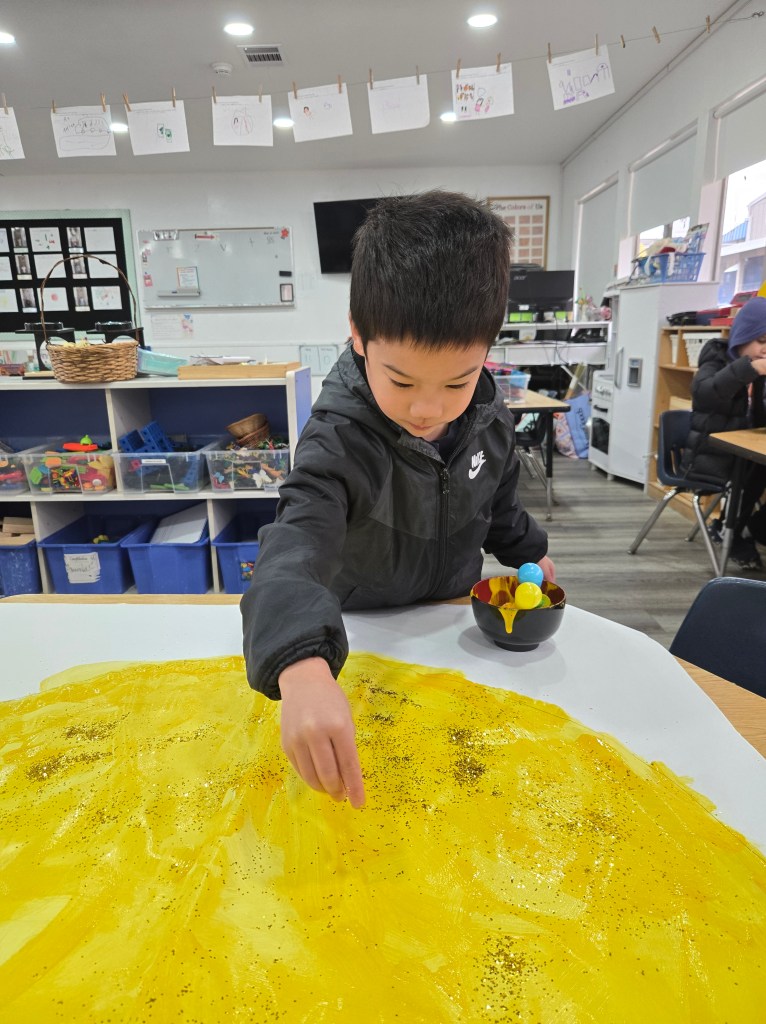
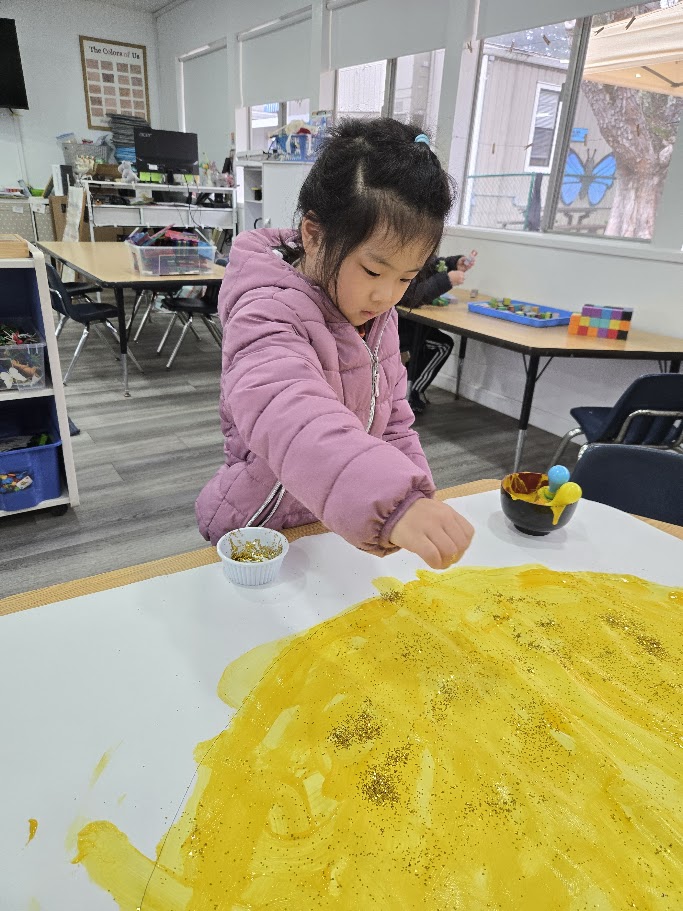
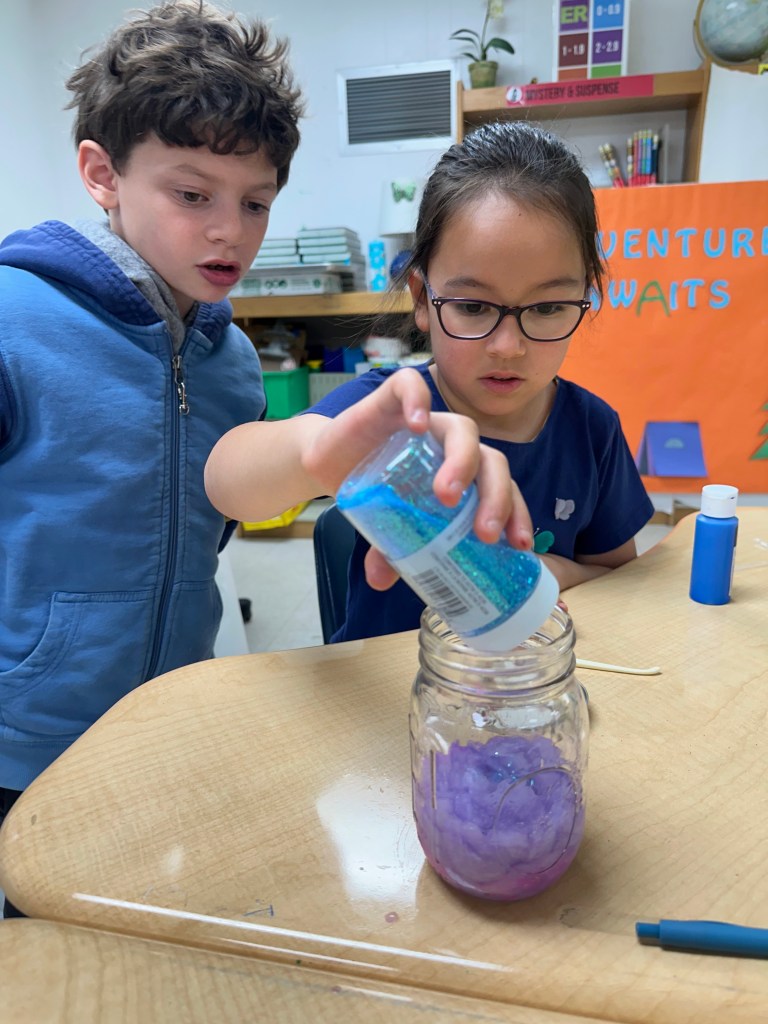
Kindergarten, first grade, and second grade students gathered in the pavilion to meet with Saklan parents Molly and Manju, who read Diwali by Hannah Eliot. Inspired by the story, students created vibrant rangoli—decorative designs traditionally made on the floor or tabletops using colored powders, rice flour, sand, or flower petals—to celebrate the spirit of joy, color, and togetherness that defines the festival.

In fifth grade, two students, along with their parents, led their classmates in a beautiful Diwali celebration. Together, they explored the meaning of the five days of Diwali, the symbolism of the auspicious colors red and yellow, and the ways families honor the festival through stories, food, and traditions. Students created their own diyas—small oil lamps traditionally made of clay—and colorful rangoli designs, discovering how light, color, and creativity represent hope and goodness shining through.

Two sixth graders also shared their family traditions, teaching classmates about Diwali’s symbolism and the use of marigold garlands and diyas. After learning and crafting, the class enjoyed traditional sweets—gulab jamun and milk cake—while connecting their discussion to the novel The Night Diary and previewing their upcoming study of ancient India and Hinduism.

A heartfelt thank-you to the students and parents who shared their traditions and stories with us! Celebrations like this strengthen our community and remind us of the beauty of learning from one another—honoring the many ways light, family, and culture connect us all.

#SaklanCommunity