The Saklan School is a private Pre-K through 8 school located in Moraga, CA. Our mission is to think creatively, act compassionately, and live courageously.
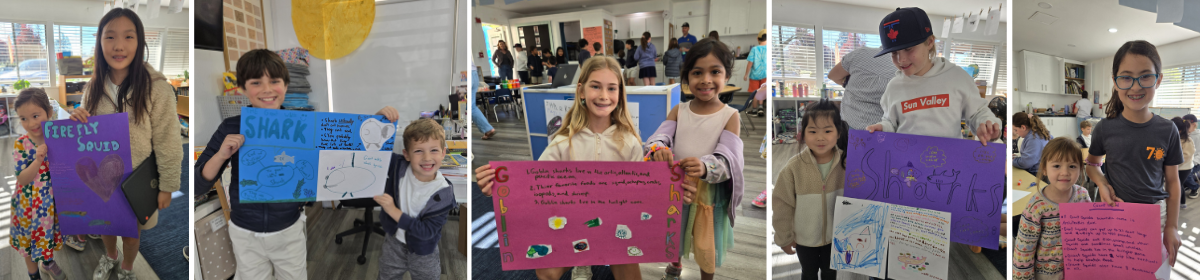
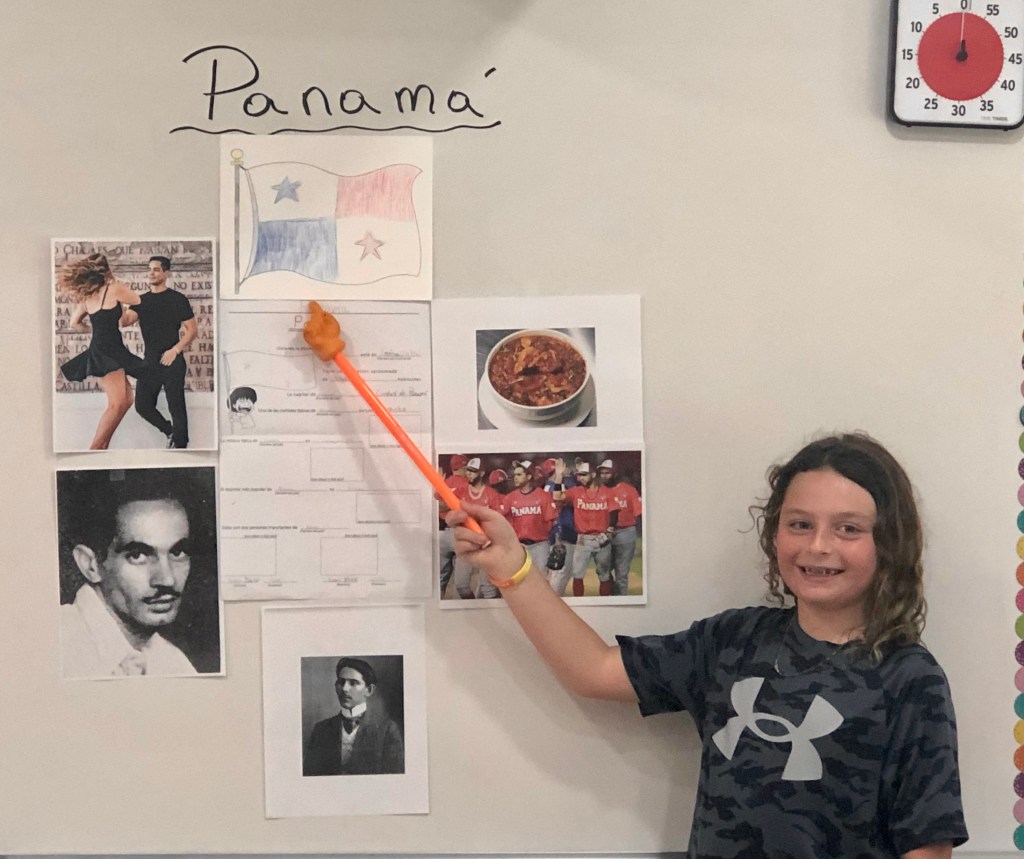
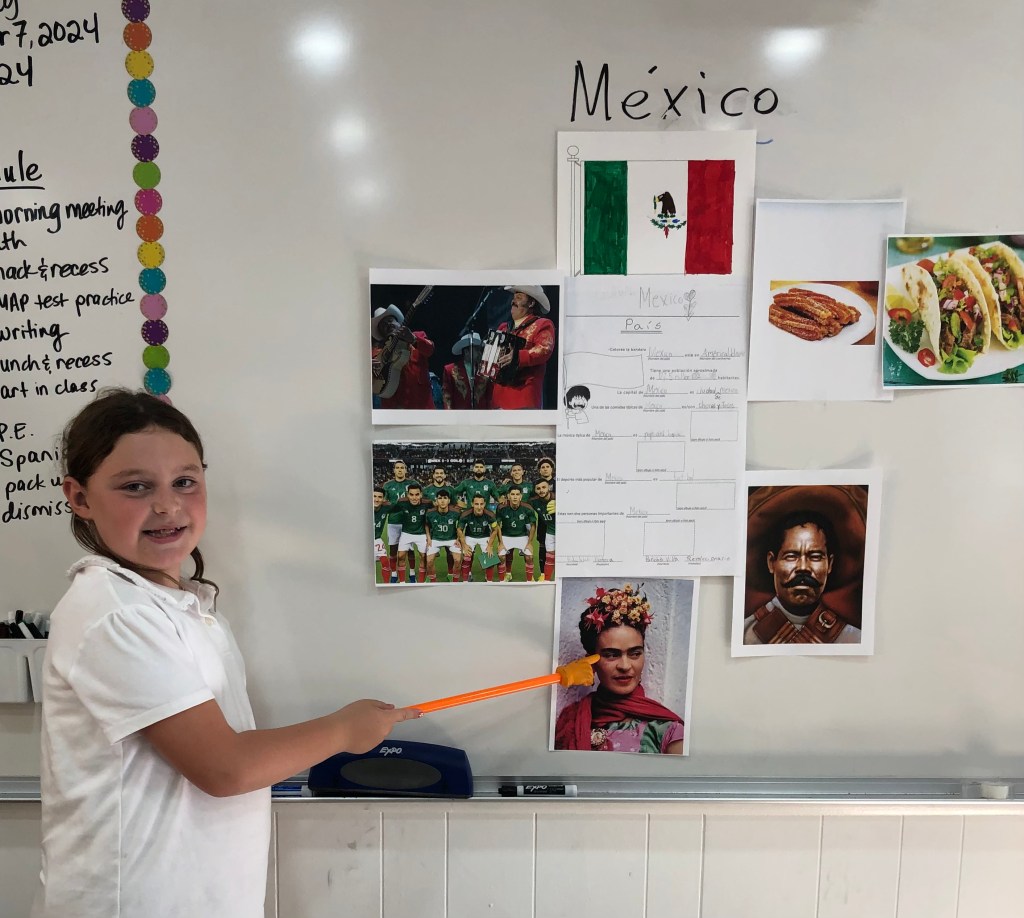
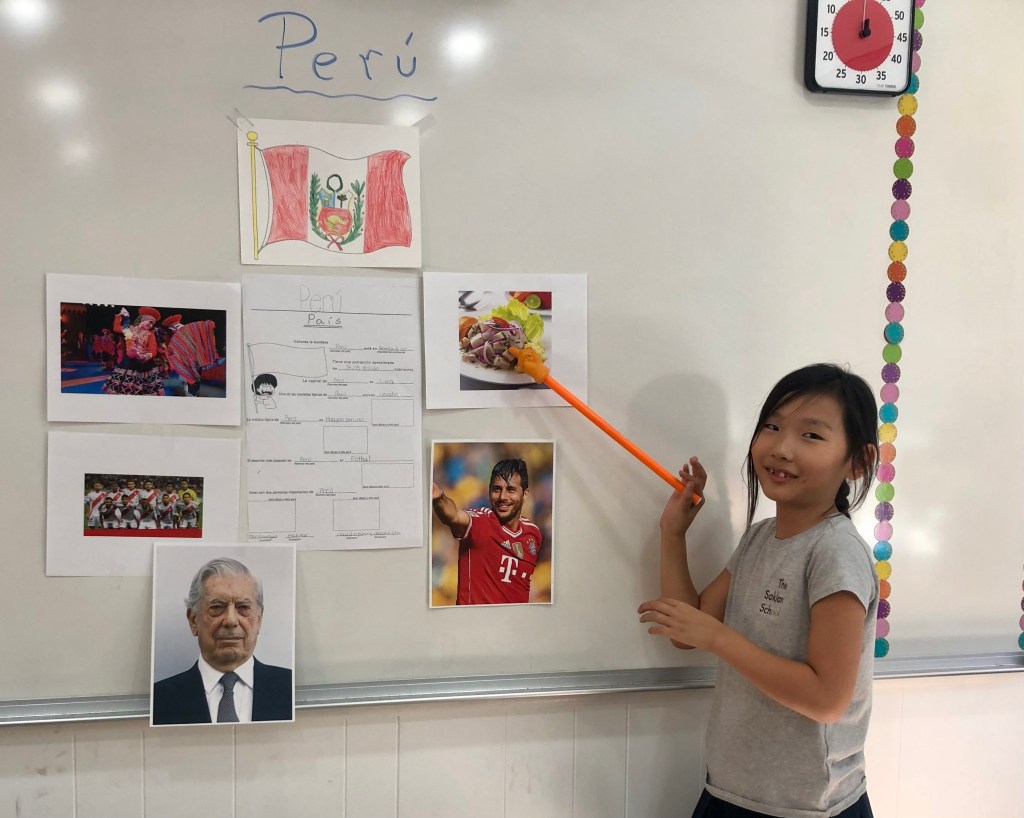
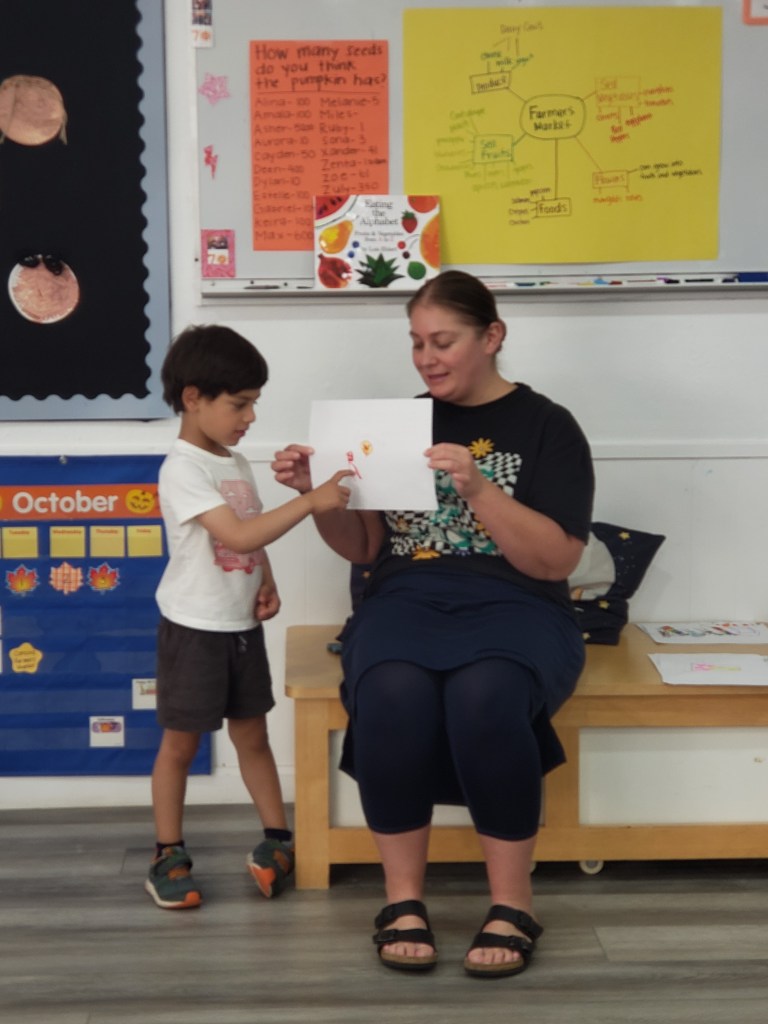
Third graders have been learning about Spanish-speaking countries around the world. They learned that there are 21 countries and about 500 million Spanish speakers in the world. Each student did a special project researching one specific country to find out:
Location of the country
Popular food in that country
Dance and music styles that are popular
Sports that are played
Important/well-known people from that country
Upon completion of their projects, each student presented their findings to the class.
The students had a great time learning and presenting about their Spanish-speaking country of choice!
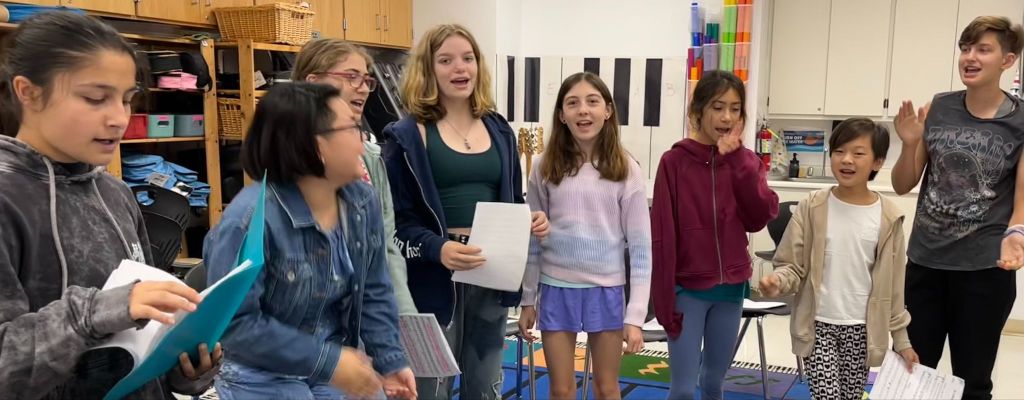
In middle school, student musicians move from a general music education program to an elective program. While all students still partake in the music program, they have a choice in their class each of the three years. This year, middle school musicians chose between choir, ensemble, and production. In choir, students focus on developing as singers; in ensemble, the focus is on developing as instrumentalists. Production allows students to develop skills in digital music production. All middle school students will be represented in the All-School Concert in March and will participate in the Middle School Musical in the spring.
In Choir, middle school students have been diving into the world of musical theater by exploring a variety of lively numbers. They’ve worked on “Good Morning” and “Moses Supposes” from Singing in the Rain, allowing students to embody different characters while singing. Students have also practiced “Little Shop of Horrors” in three-part harmony, working on blending their voices and mastering timing in this upbeat, fun piece. Also, they’ve explored “Happiness” from You’re a Good Man, Charlie Brown, and “Green Eggs and Ham” from Seussical, both challenging students with dynamic vocal ranges and expressive storytelling.
Mondays in Choir are “Music Theory Mondays,” where students practice reading rhythms and melodies, building their foundational skills in music notation. This structured focus on theory helps students become more confident in sight-reading and understanding the technical aspects of the music they perform. Through these activities, students develop their vocal technique and ability to engage with different characters and emotions.
Stay tuned to see what students have been learning in the ensemble and music production classes!
Saklan’s 24-25 Annual Giving Fund (AGF) officially begins next Thursday, October 24th with Orange Envelope Day! All Saklan families are invited to join us in celebrating Orange Envelope Day by dropping off the orange envelope and donor form that was mailed to you in the orange box in front of Saklan.
Thank you to those who have already made a gift. Below are important things to know about Saklan’s AGF.
What is the AGF?
The Annual Giving Fund is Saklan’s yearly fundraising drive that raises money to support the amazing people and programs that make Saklan special.
Why do we have it?
Saklan relies on the generous support of the community to create such a vibrant place for children to learn and develop. AGF gifts support things such as science lab equipment, professional development for faculty and staff, tuition assistance, field experiences and guest experts.
Is there a Goal?
This year, our goal as a school is to have 100% of families participate and raise $200,000. Join us by making a gift that is personally meaningful to you. For some families that may be $20, while for others that may be $20,000.
How can I make a gift?
You can make an AGF gift via the following methods:
Cash or a Check payable to The Saklan School
Online using a Credit Card – The online platform gives you the option to set up recurring payments that allow you to pay for your donation over several months.
Invoiced through the Saklan Business Office.
Have questions about Saklan’s AGF? Feel free to reach out to Cristen at development@saklan.org.
Thank you for your support of Saklan.
Orange Spirit Day
All Saklan students are invited to wear orange on Thursday to celebrate Orange Envelope Day! First – eighth graders wearing orange do not need to be in uniform.
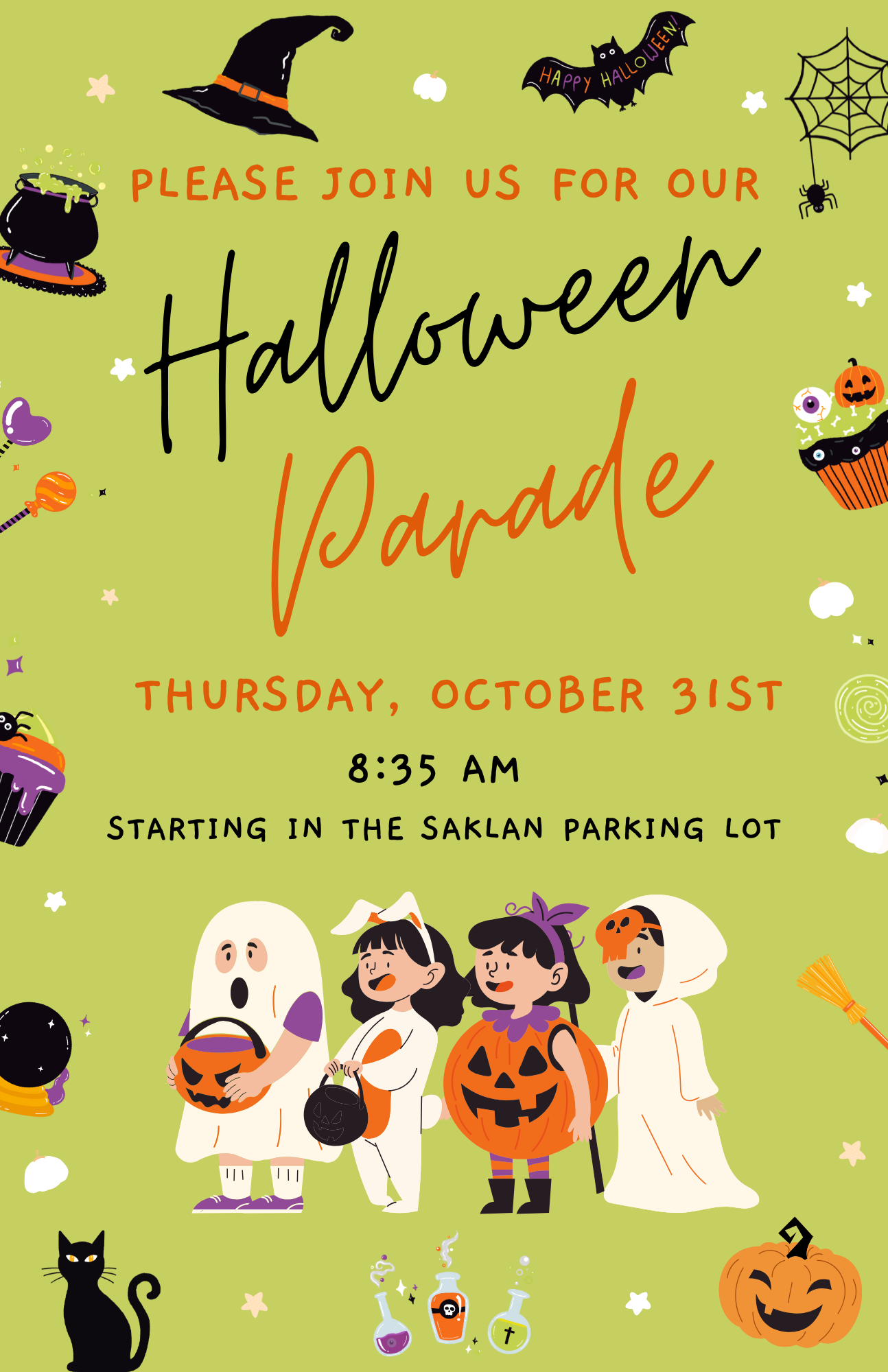
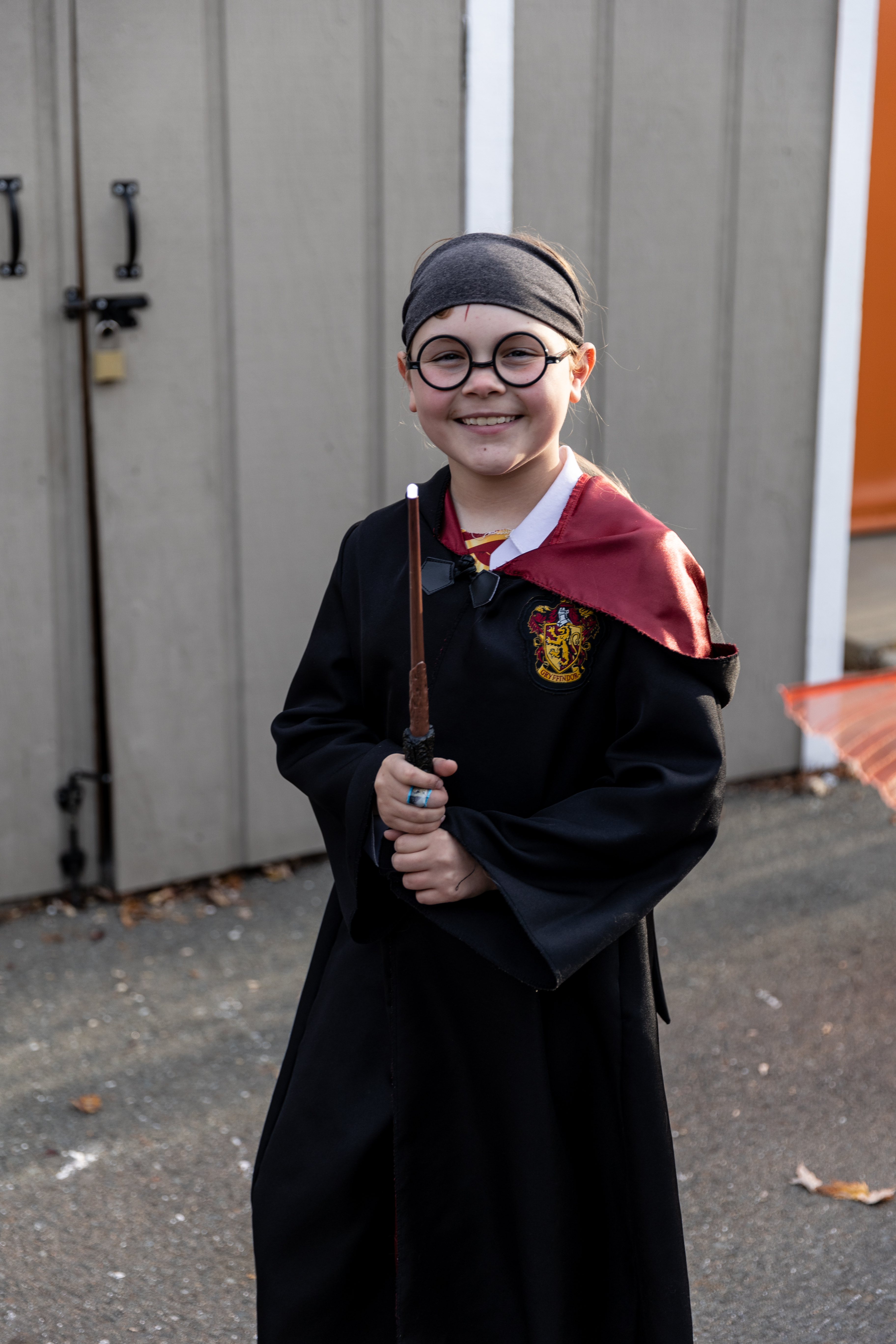
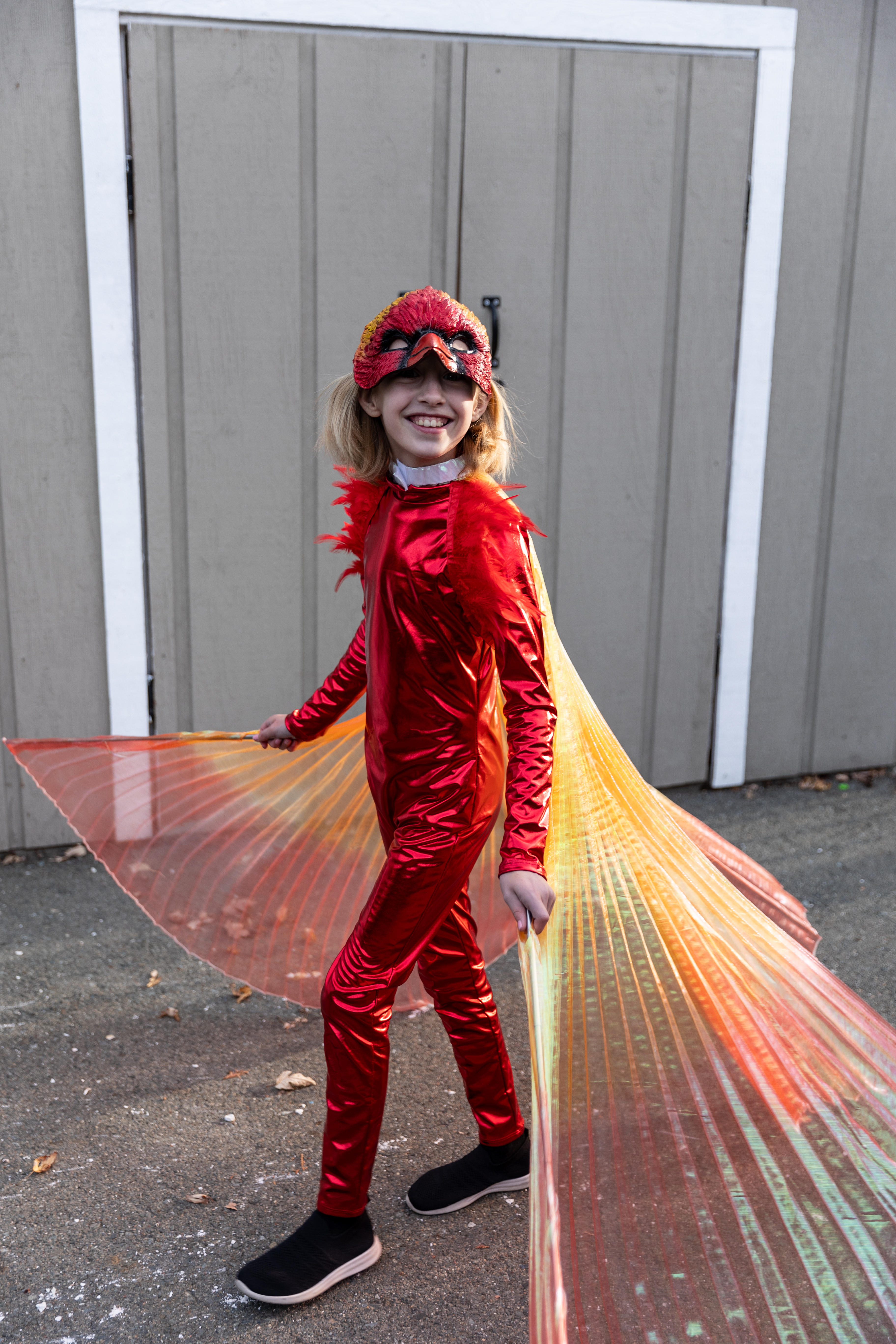
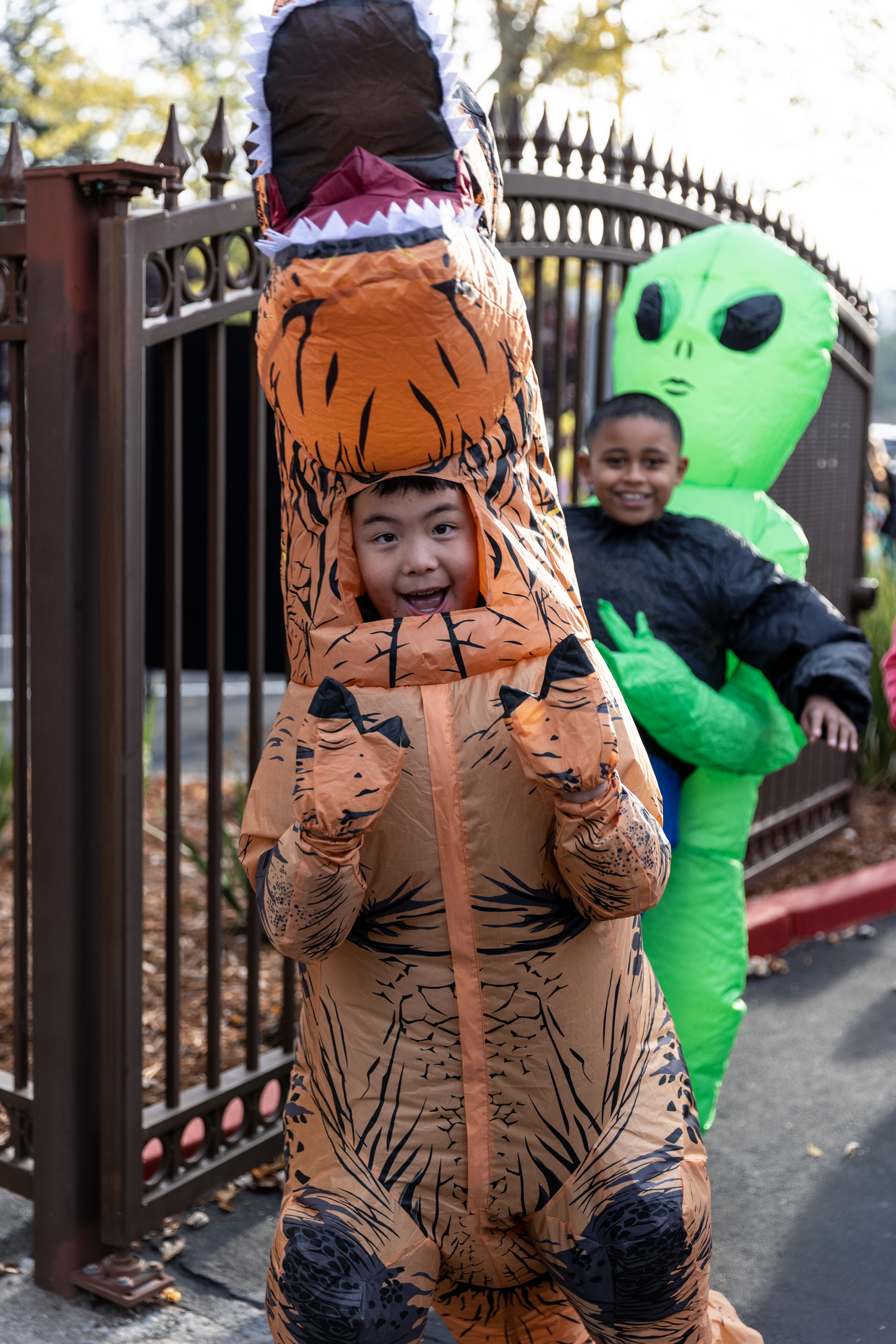
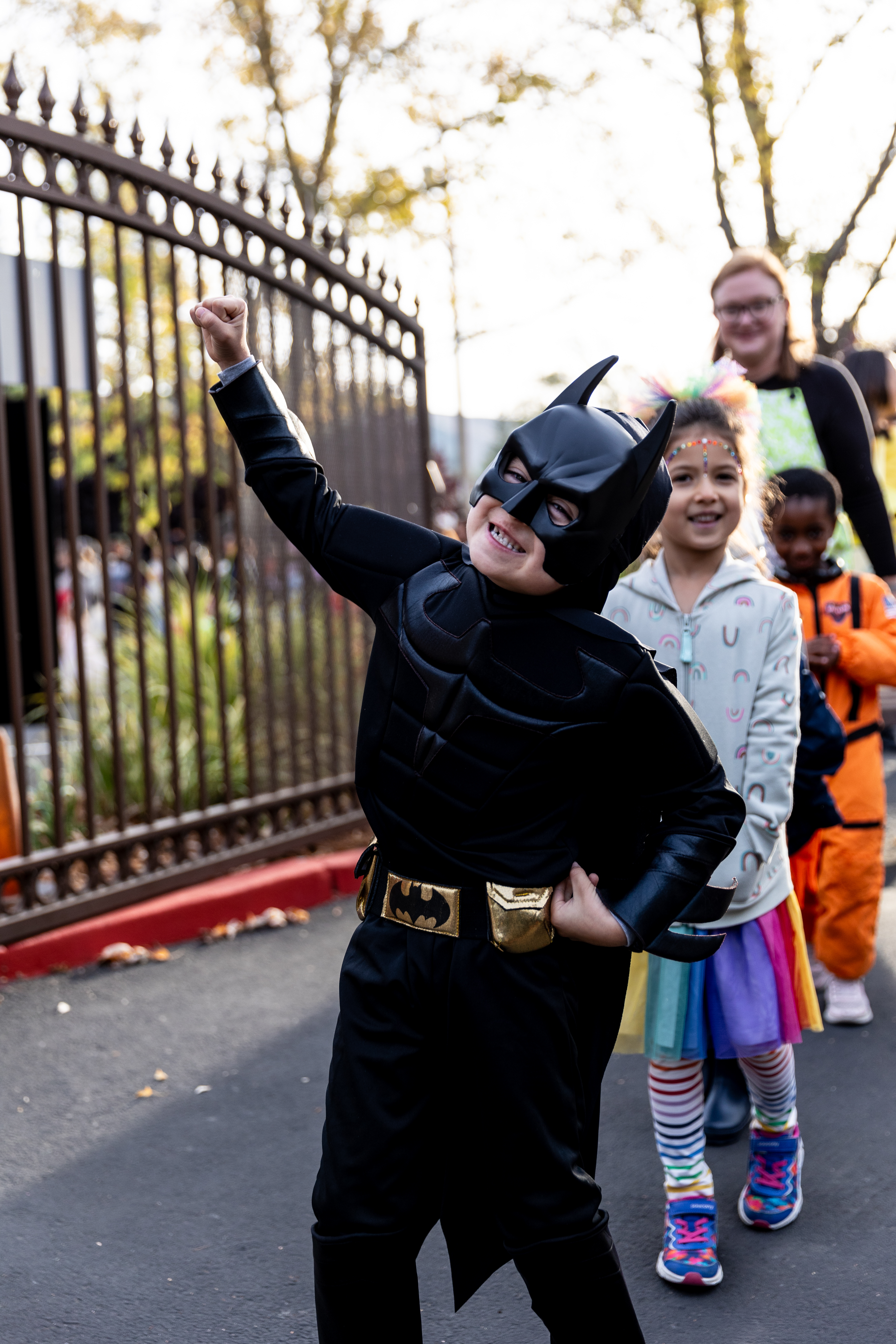
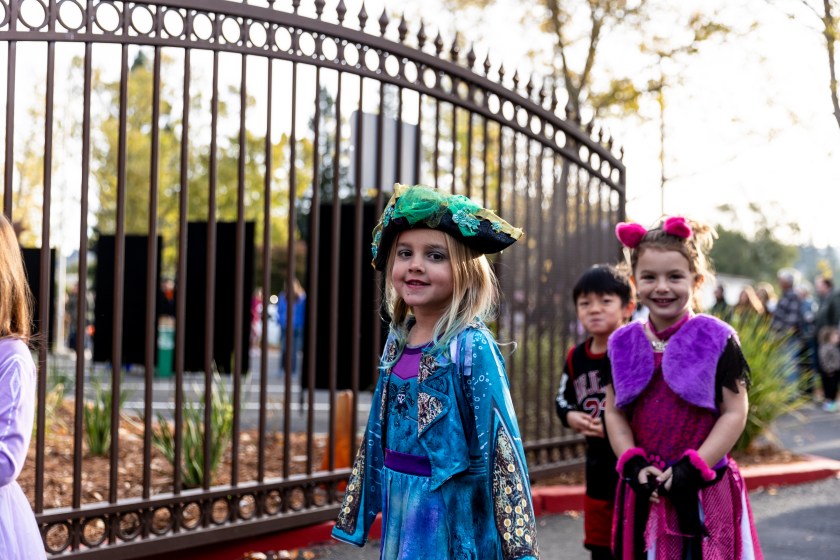
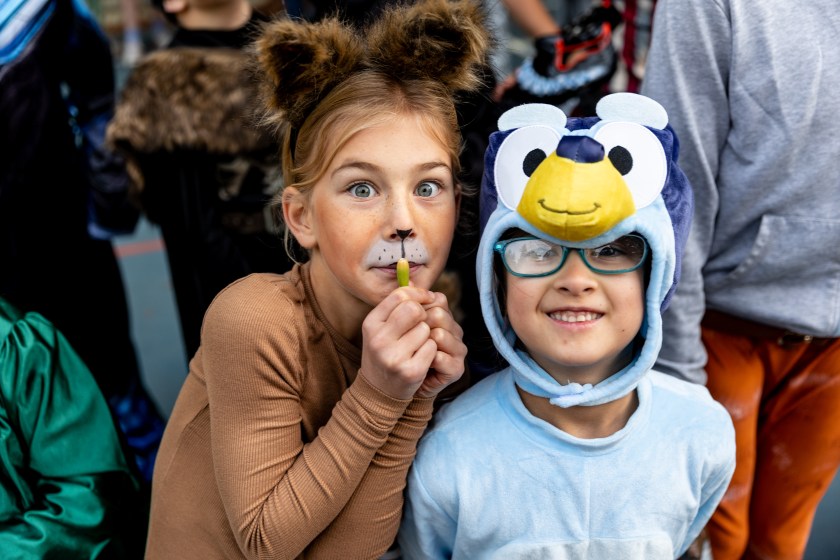
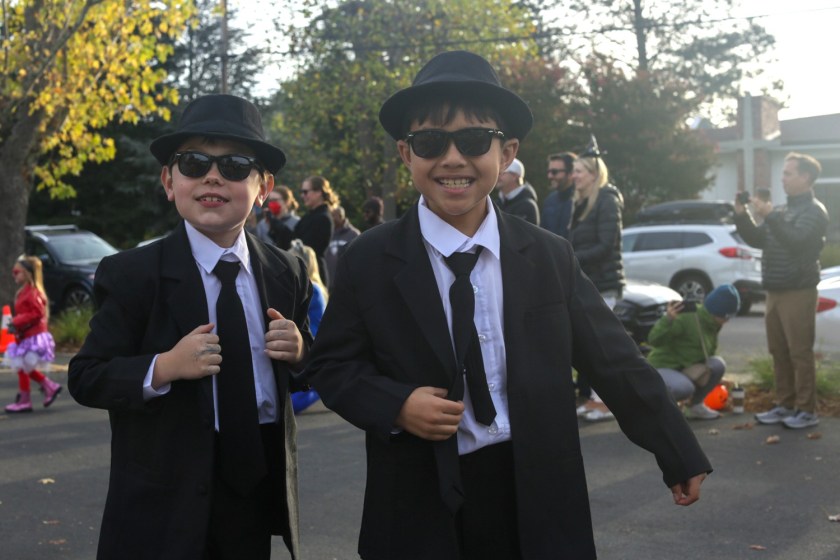
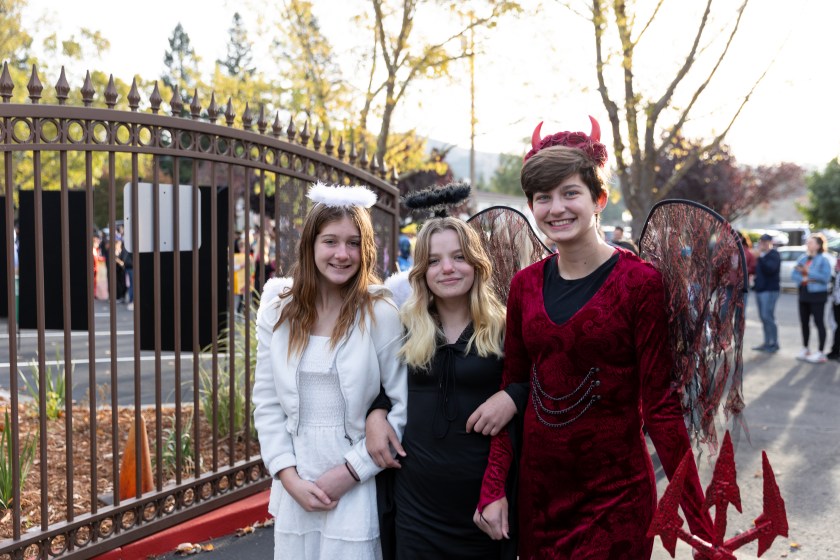
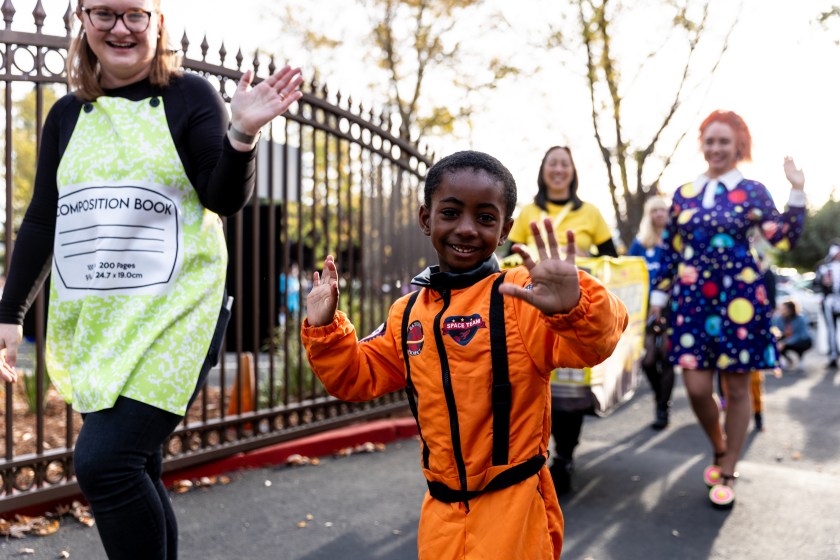
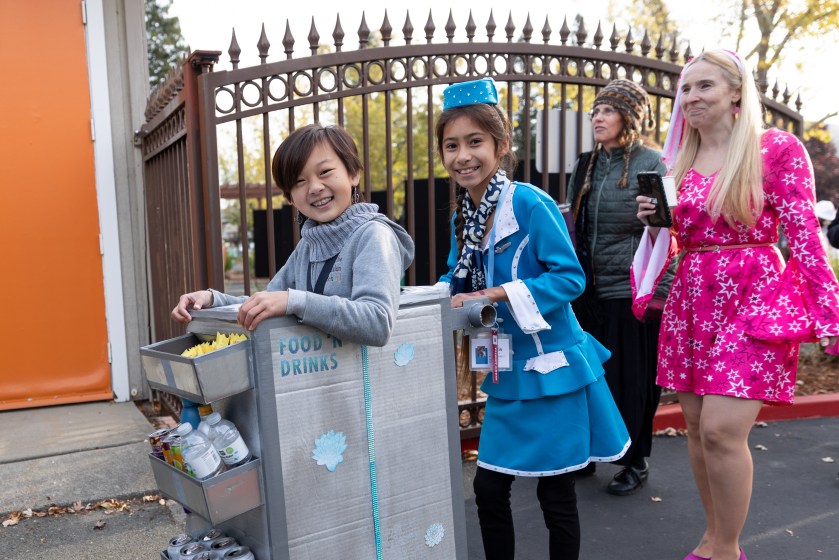
On Thursday, October 31st Saklan will celebrate Halloween! The day will begin with a Halloween Costume Parade at 8:35 a.m. The parade route will lead the students out the Admissions door, through the parking lot, and down the fire lane to the Saklan Sports Court for singing, dancing, and another look at all the costumes. For safety reasons, the parking lot will be closed. Families are invited to join us; cheering, clapping, and taking photos are highly encouraged!
All Saklan students are welcome to wear their costumes to school on Halloween. Costumes need to be appropriate for a school and all grade levels, Preschool – 8th grade.No toy weapons, no gore, and no culturally, ethnically, or racially insensitive costumes. If you have any questions, please contact David.
If your child’s costume isn’t comfortable for all-day wear, please send them with a change of clothes for later in the day – no uniforms necessary. Please send your child to school with a normal pair of shoes for outdoor play.
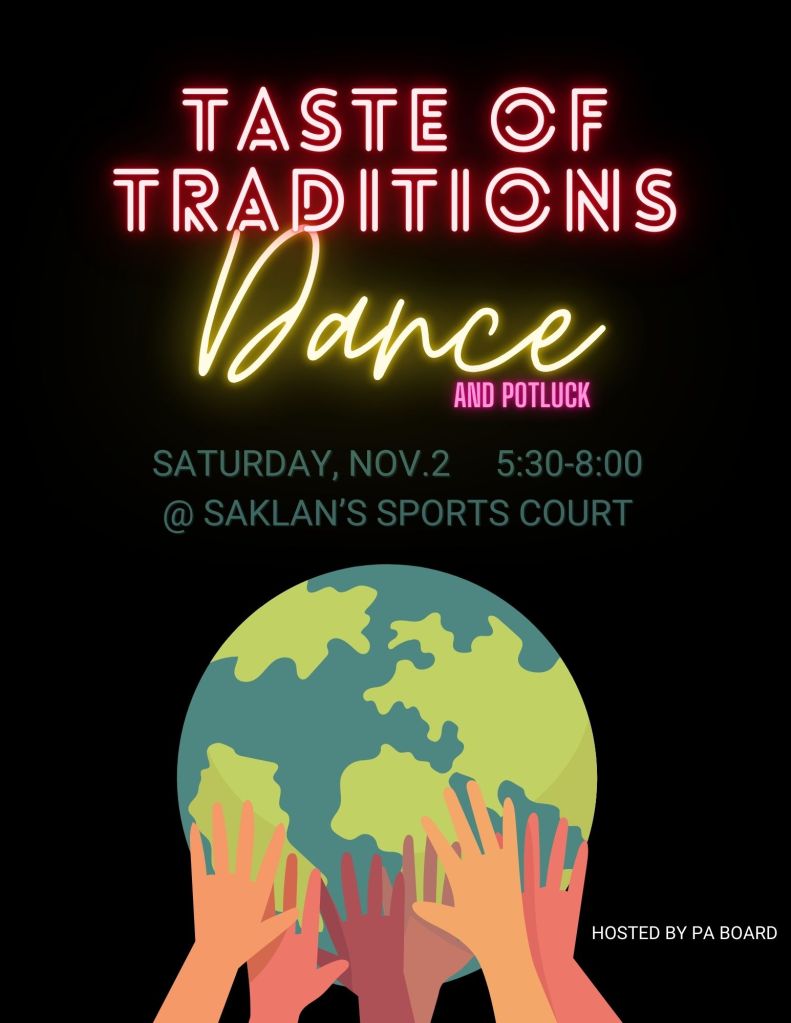
The Saklan PA invites you to our first annual Taste of Traditions Dance and Potluck on Saturday, November 2nd! The event will be held from 5:30 – 8:00 p.m. on the Saklan Sports Court.
Attendees are invited to bring a dish to share that reflects a family favorite or traditional dish shared in your family. Whether you’re able to bring a dish or not, your presence is what truly matters. The most important ingredient at this event is YOU, and we can’t wait to come together!
Last year, a Saklan Trustee and I had the privilege of attending the California Association of Independent Schools (CAIS) Heads and Trustees Conference. This annual gathering brings together nearly 500 school leaders and trustees, all focused on learning, sharing ideas, and discussing the future of independent schools.
During one of the many breakout sessions, we found ourselves mingling with trustees and heads from other independent schools, exchanging experiences and posing questions to each other. Among all the conversations that day, one in particular stood out. As we discussed various educational models, the topic of Project Based Learning (PBL) came up. A fellow school leader, well-acquainted with the educational landscape of the Bay Area, turned to the group and said: “There are lots of schools in the Bay Area claiming to be PBL schools, but Saklan is the only one really doing it.”
This simple statement was a powerful reminder of how far we’ve come. When we embarked on this journey to make PBL a cornerstone of Saklan’s approach, our goal wasn’t just to enhance academic rigor and engagement. We aimed to redefine what rigor and high engagement should look like in a modern school setting.
This week, we took another step in that journey by officially launching a video that showcases the incredible work we’ve been doing at Saklan. This is more than just a celebration of our accomplishments; it’s an invitation for others to see how we’re shaping the future of education—where students are deeply engaged, challenged, and, most importantly, truly prepared for the world ahead.
At Saklan, we’re not just talking about Project Based Learning. We’re living it. And we’re proud to say—we’re really doing it.
The Hoot Owls have begun a Project in which they are diving deep to learn about the Farmers’ Market! First, they worked on writing and illustrating stories about their real-life experiences at the farmers’ market. If the students hadn’t been to one, they imagined what it might be like. The Hoot Owls then took turns sharing their stories at circle time. This helps the children get more comfortable speaking in front of a large group and helps them feel proud of their work. Their fellow Hoot Owls asked questions about the stories, which allowed them to practice using the question sentence structure and to ask questions relevant to the topic.
The Hoot Owls also practice questioning skills with their Wonder Wall. The Wonder Wall is how the class keeps track of what students are curious about. The teachers help the class review the questions they have posed as they progress through the Project. When they uncover the answer to one of the questions they add it to their Topic Web. This web helps the class track what they already know and what they learn. Both the Wonder Wall and Topic Web are growing mediums to display the students’ curiosities and knowledge.
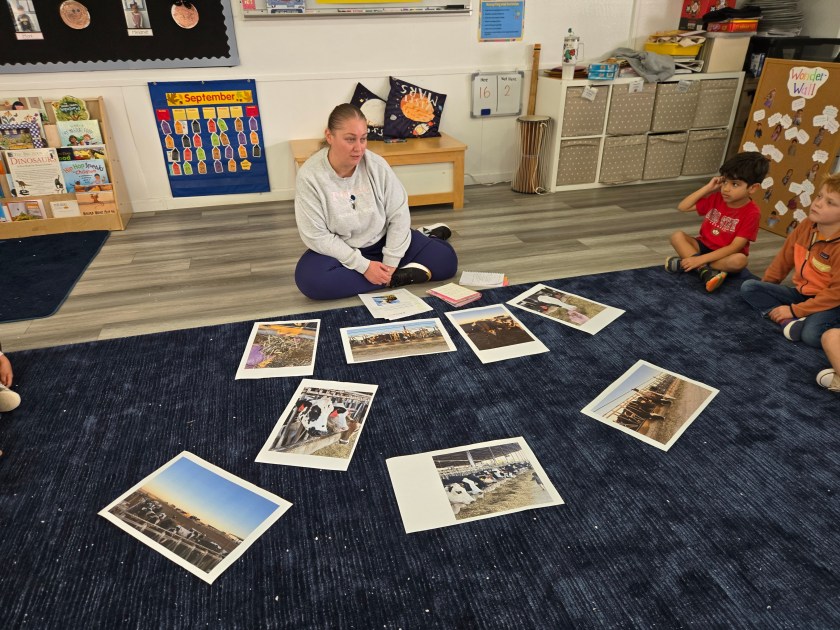
The Hoot Owls have enjoyed talking about things found at the farmers market: fruits, vegetables, cheese, flowers, crepes, popcorn, and more. The class wondered where cheese comes from, so they invited a dairy cow expert, Erin, to help answer their question. They also came up with other questions about cows:
“Do cows drink?”
“How do cows eat carrots?”
“How do baby cows drink the milk?”
The students learned that only baby cows, or calves, drink milk. Adult cows only drink water and can drink as much as 6 bathtubs per day! They discovered that cows eat 100 pounds of food daily, mostly hay, but sometimes carrots, other vegetables, or grains. The Hoot Owls found out that cows only have teeth on their bottom jaw, the top is just a hard leathery piece. To help digest food, cows have four chambers in their stomach. Calves drink milk from the mother’s udders. The udders are also where farmers milk the cows. The milk is then used to make items like cheese and yogurt.
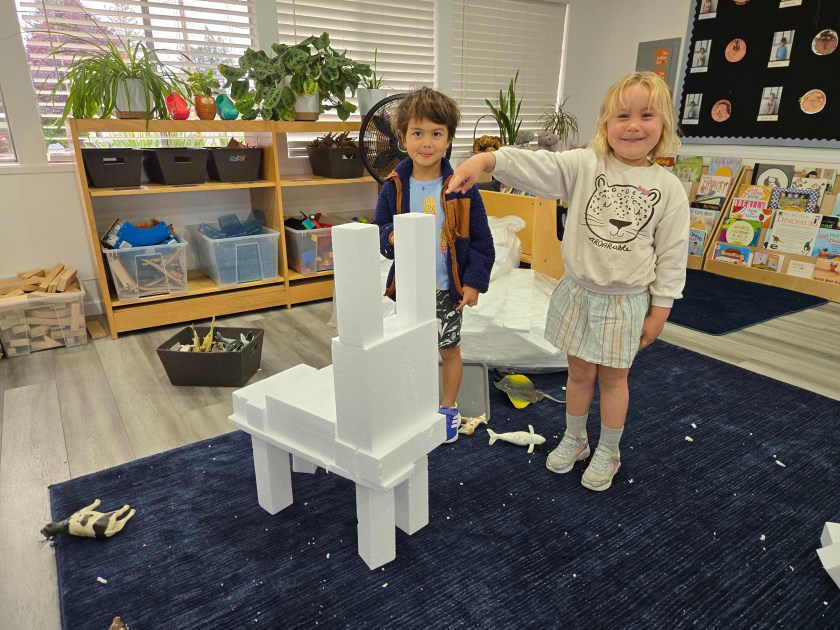
After learning new things, the students make representations. Not everyone makes the same things, as each student makes what they are interested in. Some molded a cow out of model magic and others built a cow using big Styrofoam pieces!
The Pre-K students are enjoying their journey to learn more about the Farmers’ Market. Stay tuned to see where this Project takes them!
This year’s Student Council election reminded us all that democracy is alive and well here at Saklan. Nineteen Middle School students submitted their candidacies for six Student Council offices, and the race was on! Voting took place on October 4th at the end of a vigorous and exciting campaign.
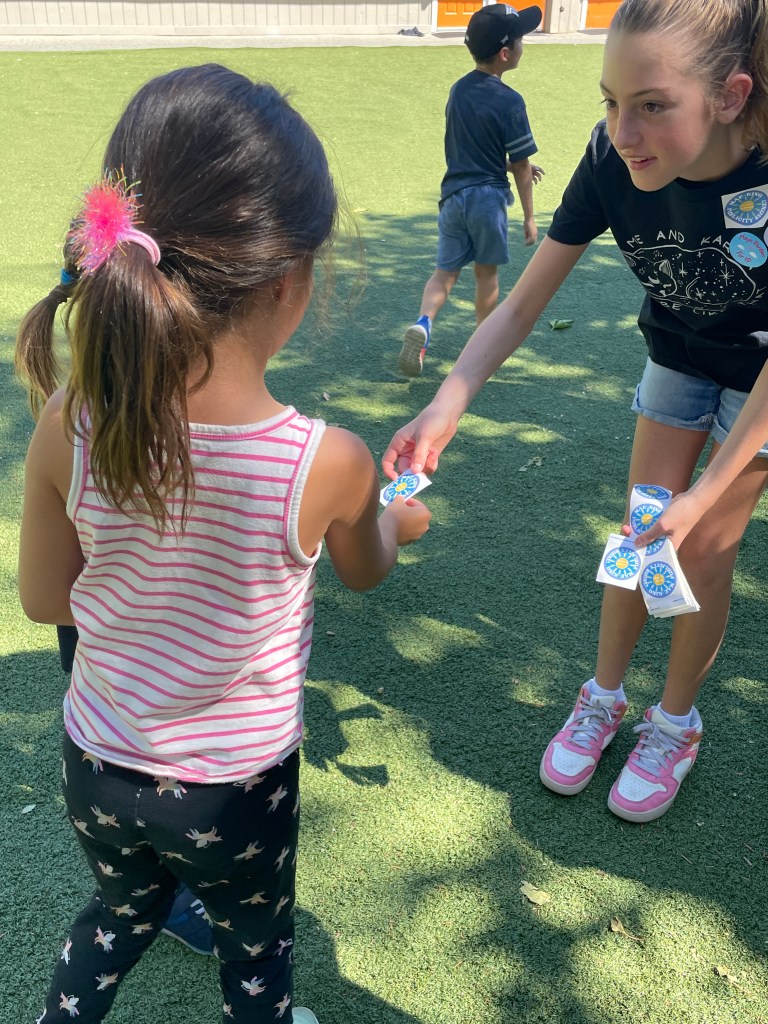
Earning a seat as a Student Council officer involves more than simply winning the popular vote. Each candidate had to submit a Letter of Intent, make a campaign poster, sit for an interview conducted by Jennifer Lettieri and Kim Parks, and share slogans and stickers with the Lower School students during lunch recess.
The culmination of their campaign was their speech at CLAS before balloting took place in grades 1 through 8. Candidates were awarded points for timeliness and quality when carrying out each of these tasks, and the candidates with the most points were the winners.
Lower School Student Council representatives were selected by their classmates and respective homeroom teachers in grades 1-5.
Congratulations to our 2024-2025 Student Council members!
Thursdays at The Saklan School sound different thanks to African Drumming classes. Learn more about the classes and instructor in the post below, written by guest blogger and Saklan African Drumming Teacher, Isaac Narell.
Alfred and Kobla Ladzekpo came to the United States in the 1960s to teach Ewe music. The Ladzekpos came from a village in the southern Volta region of Ghana called Anyako, an Ewe village. Ewe is one of over 20 languages spoken in Ghana. Ewe music is divided into styles. Each Style has songs (for singing), drum patterns and dance steps. The singing, drumming and dancing together form the musical style.
Alfred Ladzekpo taught at the California Institute of the Arts (Calarts) for over 40 years, and I was fortunate to study with him from 2002-2006. He became my mentor and my friend.
Alfred’s main goal with his students at Calarts was to show them how to be an effective musician in his style of music. Ewe music is an oral tradition. Musicians coming from different backgrounds begin a new process of learning through listening. Alfred reveled in every opportunity he had to lecture his students on the importance of listening. Despite the simplicity of the message, every student who embraced this concept came away from Alfred’s class as an improved musician.
As a young musician, my fascination with Ewe music was sparked by my admiration of its construction. Ewe music weaves a complex counterpoint through all of its elements that rival the greatest art forms of humanity. I was enamored with the sophistication of the drumming patterns and the ability of musicians to dialogue through musical language. The lead drummer directs the ensemble into new dance moves, drumming patterns, or songs, by playing a call on the drum. Everyone has to listen or they might miss the call!
This felt like a secret language and my friends and I were hooked. We took every opportunity to learn from Alfred and eventually, we were helping him teach his classes and performing in his professional ensemble at schools and community events. Later in life, I found another beautiful side to the art form.
The main function of music in Ewe culture is to promote community. People gather in social groups for musical performances. These groups perform at funerals and weddings and are the backbone of both religious and secular events. This is extremely valuable in our recent culture fueled by social media. People crave interaction and Ewe music is a world-class option for community building.
I teach Ewe music as a celebration of West African brilliance. Through honoring and respecting Ewe culture I have found that we can bring value to our school not only through the acute development of musicianship but through the strengthening of our community.
Kindergarten has been learning about self-regulation. While self-regulation is something that everyone is always working on and practicing, it helps to make our strategies and tools for self-regulation visible for others to better understand.
First, it’s important to make sure we all know what calm feels like so that in moments of upset or silliness, we can get ourselves back to calm. The class read a story about a very moody cow and compared how it feels in their bodies when they are mad versus when they are calm. Next, they read a story about a boy who had a horrible day and discussed things he could have done to feel better throughout the day. Then Riva introduced the “break chair” to the class, which is a tool that students can use to calm down after upset, overstimulation, anger, distraction, etc. She modeled how to use it, and then the class shared what they noticed. A student modeled for the class as well, and again the students shared what they noticed. Then came the kindergartners’ favorite part, sending Riva to take a break in the chair. But, Riva did the WRONG thing! Hilarity ensued, and even Riva couldn’t keep a straight face, as everyone was cracking up. Since introducing this self-regulation tool, Riva has been thrilled to see many students using the Break Chair throughout the day. It’s clearly a tool that works for them!
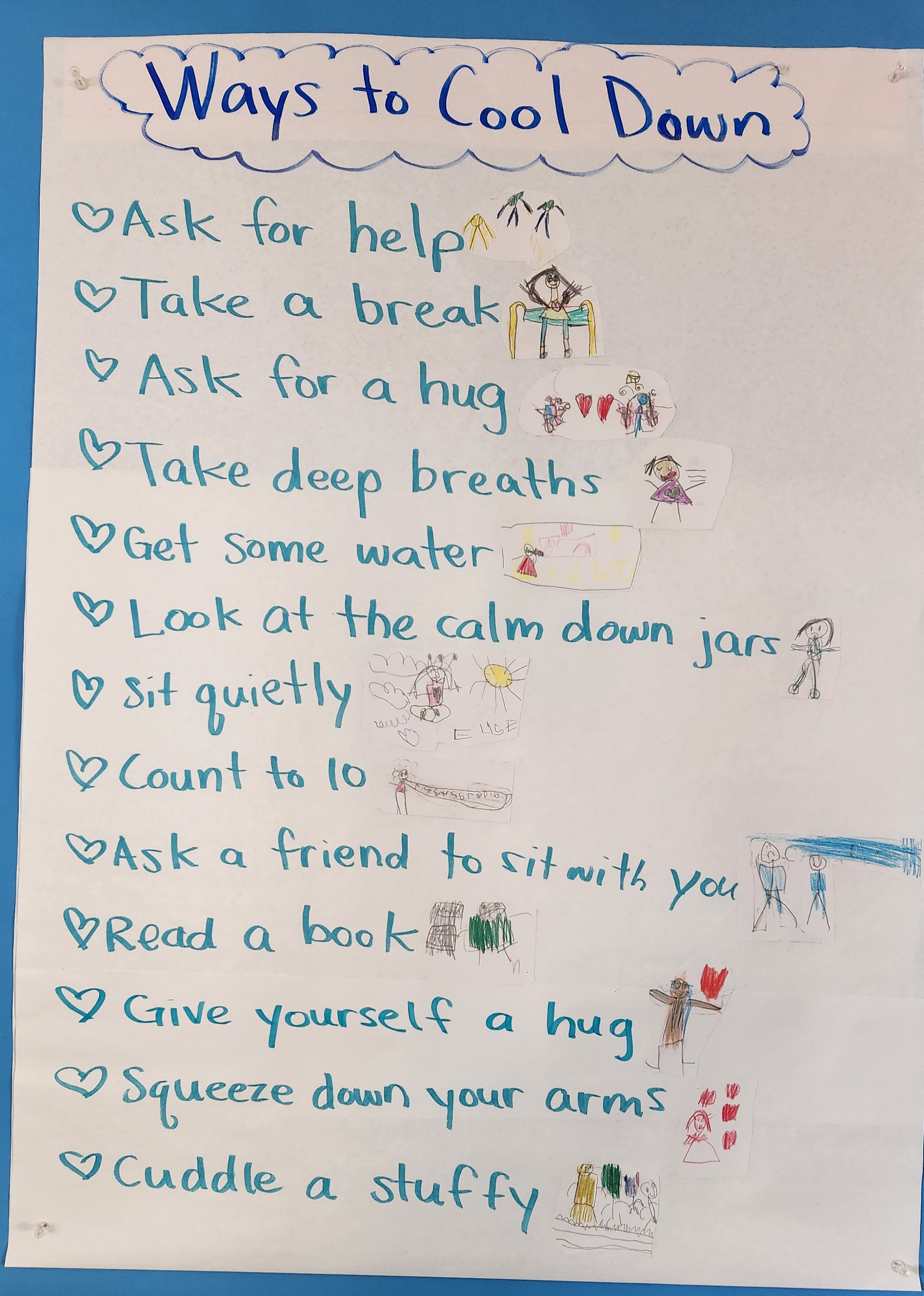
The self-regulation discussions and activities culminated in the class creating a list of “Ways to Cool Down,” which will hang in the Kindergarten classroom all year. Anytime someone needs help, they can check the list and try one of the many excellent strategies their peers came up with.
If you need help calming down, feel free to ask one of our resident self-regulation experts in the kindergarten room!


















 FRIDAY BLOG
You must be logged in to post a comment.