
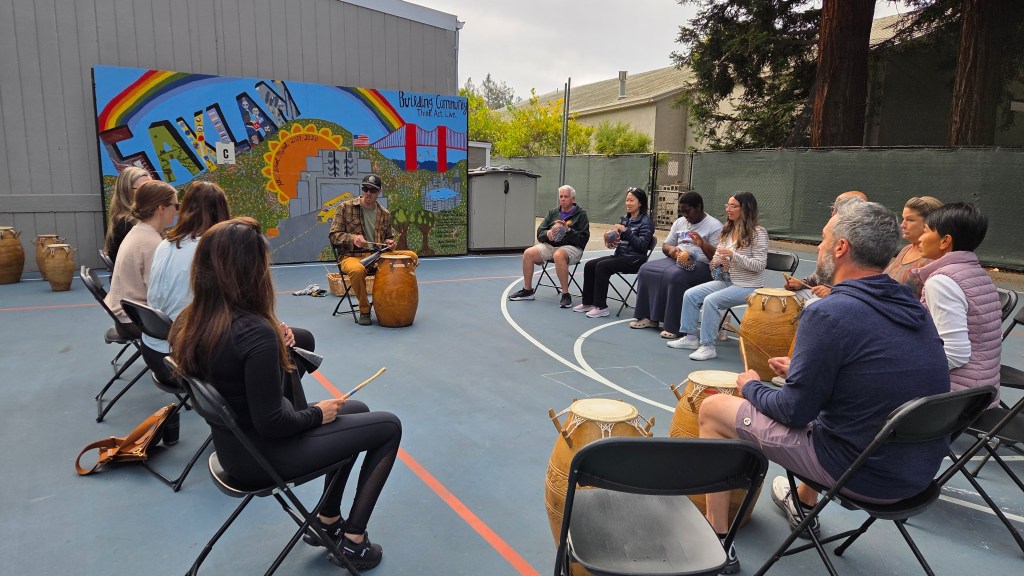
Last Friday morning, a group of Saklan parents gathered with Isaac to experience our West African drumming program firsthand.
Isaac introduced us to movements from West African music traditions and explained what they communicate to an audience. For us, those first dance steps offered another lesson: learning very often requires a willingness to step outside your comfort zone.
Dancing (sometimes awkwardly) with other adults makes us vulnerable — and connected — through movement and laughter. It was a useful reminder of what we ask of our children every day—to take risks, try new things, and trust the people around them.
As we moved into drumming, Isaac emphasized the importance of listening. He remarked that in West Ghanaian culture, there is a strong emphasis on listening over speaking, and that our first responsibility in making music together is to listen to others before adding our own contributions.
That idea reaches well beyond music. Collaboration and learning depend on noticing what others are doing, making room for their contributions, and adjusting our own. In a classroom, a conversation, or a group of musicians, listening helps us find our place while staying connected to the whole.
We ended by talking about the many kinds of learning involved in making music: attention, memory, movement, coordination, and connection with others. We left with a deeper appreciation of what our students experience in the drumming program—and why it has a meaningful place at Saklan.
For me, the morning brought several of our beliefs about learning to life. We learn through experience. We grow when we feel comfortable enough to take a risk. And we contribute more thoughtfully when we first make the effort to connect and listen.
Isaac gave us a chance to practice all three, together.
#SaklanHeadsCorner #SaklanHandsOn #SaklanCommunity



You must be logged in to post a comment.