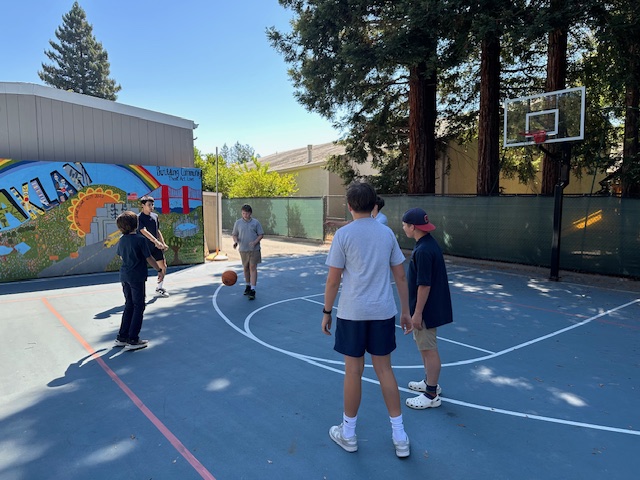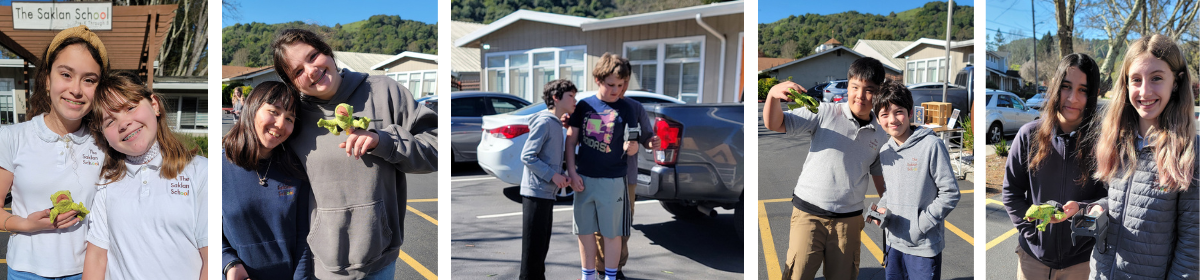
Saklan Student Council at Work

Snack Shack

Every Saklan student knows how rewarding a snack can be at the end of a busy day of learning and having fun with one another here at school. Our dedicated and resourceful Student Council has been busy planning the return of Snack Shack this year!

Student Council officers and representatives in grades 1 through 8 selected the final items for sale based on desirability, minimizing waste, and setting reasonable prices ranging from 50 cents to $3.00 per item. Yummy snacks for sale this year will include: Goldfish crackers, gummies, chips, Veggie Straws, Hello Panda, Pirate’s Booty, Rice Krispies treats, La Croix bubble water, Honest Juice, and Martinelli’s apple drinks. 

Last year’s Student Council voted to allocate most of the proceeds from Saklan’s Snack Shack to support Sustainable Coastlines Hawaii, a non-profit organization. Their mission is to inspire communities to care about coastlines. Additionally, each February, our 7th-grade students have the opportunity to work with this organization to clean up a section of Waikiki Beach in Oahu, Hawaii, helping to reduce the amount of microplastics in the local environment. Last year, our Saklan students sifted the sand and removed 30 pounds of microplastics! By purchasing snacks at Snack Shack, this money is converted into donations to support Sustainable Coastlines Hawaii’s vital work. Stay tuned for which charity or cause this year’s Student Council selects!

Snack Shack will open outside David’s office from 3:00 p.m. to 3:30 p.m. every Thursday.  Saklan students are invited to come by and purchase a snack from our hardworking Student Council members. Cash only, please. 

Food Drive

The Saklan Student Council is partnering with the Town of Moraga to collect food donations for the Food Bank of Contra Costa and Solano. All families are invited to contribute non-perishable food items (no glass, please) to support our local community. Here are the most needed items:

  • Nut butters (peanut, almond)
  • Jam/jelly/honey
  • Canned tuna and chicken (in water)
  • Boxed macaroni and cheese
  • Shelf-stable milk
  • Applesauce 
  • Beans/lentils (dry or canned)
  • Rice 
  • Whole grain cereals/crackers
  • Oat/oatmeal/farina
  • Whole wheat/grain pasta
  • Canned soups/vegetables/tomato products (low sodium, easy open)
  • Nonperishable ready-to-eat meals: chili, ravioli, meats, etc. (low sodium)

Drop off non-perishable food items in the containers located outside the Saklan office. All collection containers will remain on campus until Thanksgiving Break.

Thank you, students and parents, for your support of our Student Council.

#SaklanCommunity #SaklanLeadership

Head’s Corner: Loving the Teen You Have by Joining the Resistance 

Last week, Saklan co-hosted a conversation with Dr. Ann-Louise Lockhart, author of Love the Teen You Have, in partnership with ParentMap—a consortium of schools that brings thoughtful authors and researchers to school communities like ours.

Dr. Lockhart’s message to parents was simple but radical: join the resistance. Resist the urge to fix, control, or over-teach your teens. Resist the pressure to be perfect. Resist the voice that says if you just say it one more time, they’ll finally listen. This conversation was full of gems—here are some of my takeaways.

Meet Them Where They Are and Join the Resistance

When your child resists, don’t fight it—join it. If your teen doesn’t want to talk, don’t push. Maybe text. Maybe just sit quietly beside them. Be attuned to what they need in the moment, not what you need. Joining the resistance isn’t about giving in; it’s about shifting from confrontation to connection. It’s realizing that presence—not persuasion—is what keeps the door open.

Do Less, Be Present

When our kids were little, we tried to make every moment a teachable one—narrating, correcting, guiding. But the older they get, the less that works. Teens don’t need a constant teacher; they need a calm, steady presence. Sometimes love means doing less—being available, not instructional. It can be surprising how zen it can feel just to “be” with them.

Nagging Is Kryptonite

Few things shut a teenager down faster than repetition. Nagging doesn’t motivate; it hardens resistance. Instead of asking the same question again, try curiosity: “I’ve noticed that assignment’s been hard to start—what do you think’s getting in the way?” That one shift invites conversation instead of combat.

Connection Over Correction

Everything comes back to relationships. When we focus less on managing behavior and more on understanding emotion, we help teens develop self-regulation and trust. They don’t need perfect parents—they need present ones.

At Saklan, this message resonates deeply. Our teachers know that learning—academic, social, or emotional—happens in the space between curiosity and connection. And our partnership with parents is strongest when we, too, resist the urge to over-manage and instead choose to be attuned, curious, and grounded.

So this weekend, take a breath, step back, and love the teen you have—right where they are.

You can view the recording of the conversation with Dr. Ann-Louise Lockhart here, using the access password: edTalks*2526.

Warmly,
David

#HeadsCorner

Raising Healthy Eaters Without the Stress

Join us at noon on Tuesday, Sept. 30, for a live ParentEd Talk with Jennifer Anderson, registered dietitian and founder of Kids Eat in Color. Jennifer will help you cut through the noise to find what works for your family. With her food-freedom approach — trusted by more than 2 million parents — you’ll discover feeding wins, practical tricks for every age, how to spot unreliable nutrition advice, and tools to help kids build healthy relationships with food and their bodies. 

Register here for the Zoom webinar using promo code SAKSCHL to attend for free (a $10 value). You’ll also gain access to the event recording, so you can watch it anytime, anywhere.

About Jennifer Anderson

Jennifer Anderson, MSPH, RDN, is a registered dietitian, public health expert, and mom of two who’s on a mission to make mealtime less stressful for families. She’s the founder of Kids Eat in Color, a go-to resource with a social media following of over 2 million parents. 

With a master’s degree from the Johns Hopkins School of Public Health, Jennifer brings professional expertise — plus a healthy dose of real-life experience — to the table. Before launching Kids Eat in Color, she ran youth nutrition programs at a food bank, performed research in urban food deserts and consulted for the USDA’s SNAP-Ed program.

About ParentEd Talks

The Saklan School is excited to partner with ParentMap to offer our school community FREE access to ParentEd Talks for the 2025–2026 school year. This dynamic series of parent education webinars explores the most pressing issues parents face today, such as declining youth mental health, complexities of ADHD, and the hidden impacts of technology.

#SaklanParentEd

Simplifying Kids’ Nutrition Parent Ed Event

Feeding kids shouldn’t be this stressful. It’s hard enough getting a meal on the table, but today’s parenting landscape adds a flood of sensationalized nutrition advice — leaving you more overwhelmed and confused than ever.

Join ParentMap and The Saklan School on Sept. 30 for a live ParentEd Talk with Jennifer Anderson, registered dietitian and founder of Kids Eat in Color. Jennifer will help you cut through the noise to find what works for your family. With her food-freedom approach — trusted by more than 2 million parents — you’ll discover feeding wins, practical tricks for every age, how to spot unreliable nutrition advice, and tools to help kids build healthy relationships with food and their bodies. 

Register here for the Zoom webinar using promo code SAKSCHL to attend for free (a $10 value). You’ll also gain access to the event recording, so you can watch it anytime, anywhere.

About Jennifer Anderson

Jennifer Anderson, MSPH, RDN, is a registered dietitian, public health expert and mom of two who’s on a mission to make mealtime less stressful for families. She’s the founder of Kids Eat in Color, a go-to resource with a social media following of over 2 million parents. 

With a master’s degree from the Johns Hopkins School of Public Health, Jennifer brings professional expertise — plus a healthy dose of real-life experience — to the table. Before launching Kids Eat in Color, she ran youth nutrition programs at a food bank, performed research in urban food deserts and consulted for the USDA’s SNAP-Ed program.

About ParentEd Talks

The Saklan School is excited to partner with ParentMap to offer our school community FREE access to ParentEd Talks for the 2025–2026 school year. This dynamic series of parent education webinars explores the most pressing issues parents face today, such as declining youth mental health, complexities of ADHD, and the hidden impacts of technology.

#SaklanParentEd

Catching Up with Coach Rob

Rob Hood, or Coach as the students call him, is Saklan’s Head of Sports and Wellness. He can often be seen sharing high-fives with students and staff as he walks through campus towards the sports court. Reflecting on the first few weeks of school, Rob shared his approach to fitness, health and wellness.

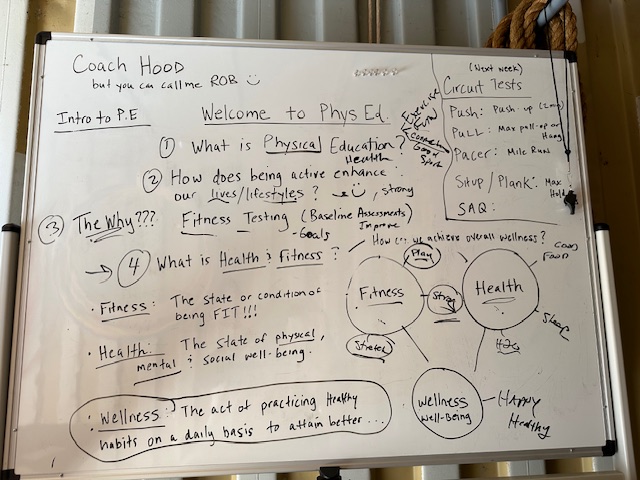
At the start of our first unit, Fitness & Health, the 6th–8th graders took charge of creating a vision board that explored what Physical Education means, as well as the key components of fitness, health, and wellness. Together, we brainstormed ideas, with students identifying how different aspects of well-being connect to each component. This collaborative effort allowed us to design a holistic vision of wellness. I later shared this learning with the lower school students.

Following our vision board activity, we approached some of the P.E. components with a week of fitness testing. Students had the option to participate in a few exercises to test strength, muscular and cardiovascular endurance, and flexibility, assess their current fitness state, and set goals for the future. In addition to longer-term goals, I ask students to assess themselves daily to encourage more mindfulness and reflection related to their overall health and well-being. 

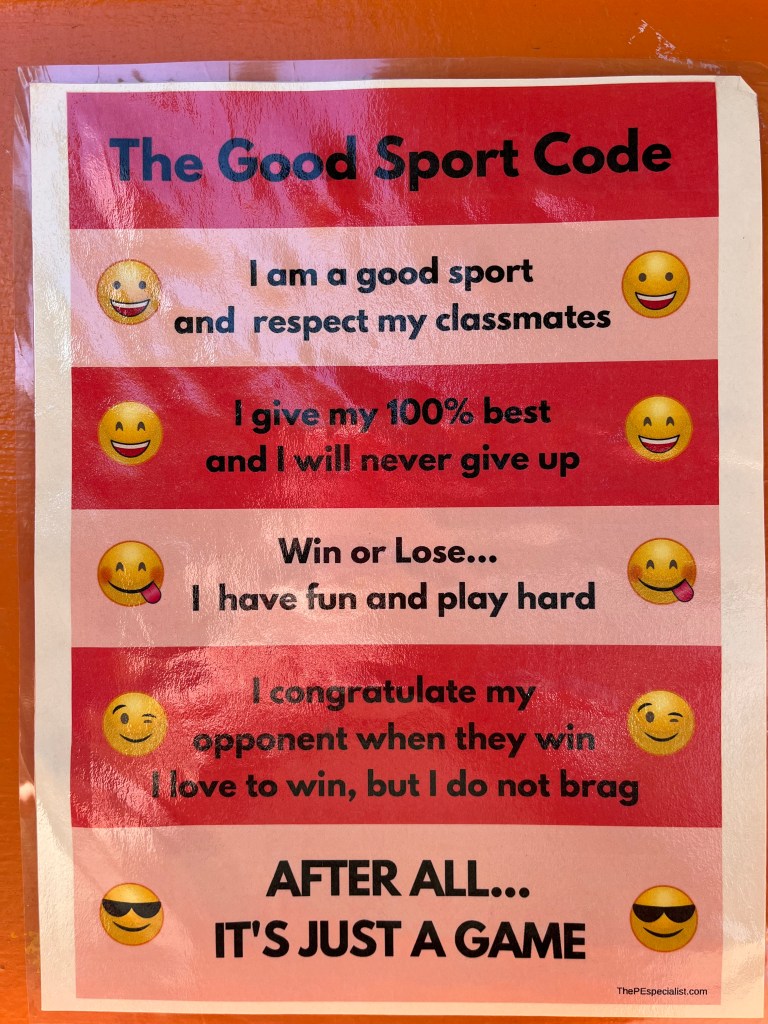
In my physical education classes, students are encouraged to be safe and respectful, demonstrate good sportsmanship, and resolve conflicts constructively, as shown in the community agreements below.

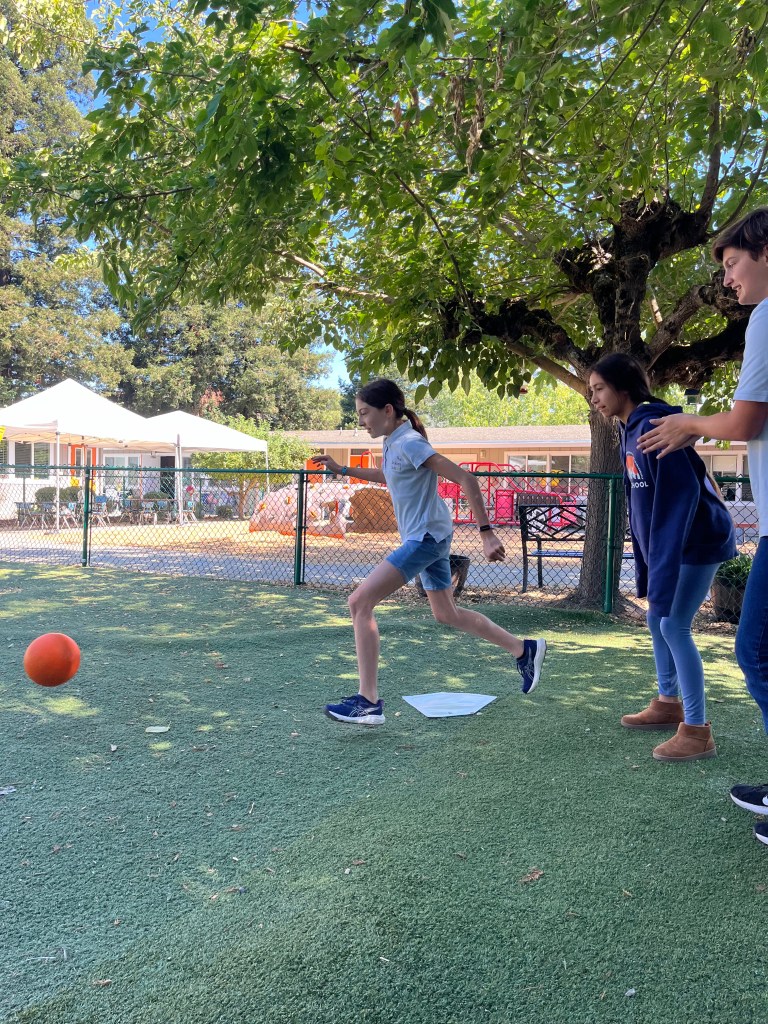
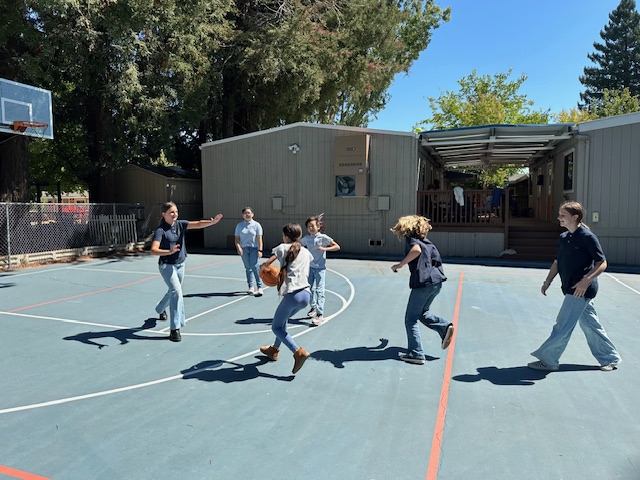
In our first few weeks, we’ve started exploring Physical Education as more than just playing games. It’s an approach to improving our health—physically, mentally, emotionally, and socially—while also helping students build essential life skills for healthy and happy lifestyles.