Farmers’ Market Project

The Hoot Owls have begun a Project in which they are diving deep to learn about the Farmers’ Market! First, they worked on writing and illustrating stories about their real-life experiences at the farmers’ market. If the students hadn’t been to one, they imagined what it might be like. The Hoot Owls then took turns sharing their stories at circle time. This helps the children get more comfortable speaking in front of a large group and helps them feel proud of their work. Their fellow Hoot Owls asked questions about the stories, which allowed them to practice using the question sentence structure and to ask questions relevant to the topic. 
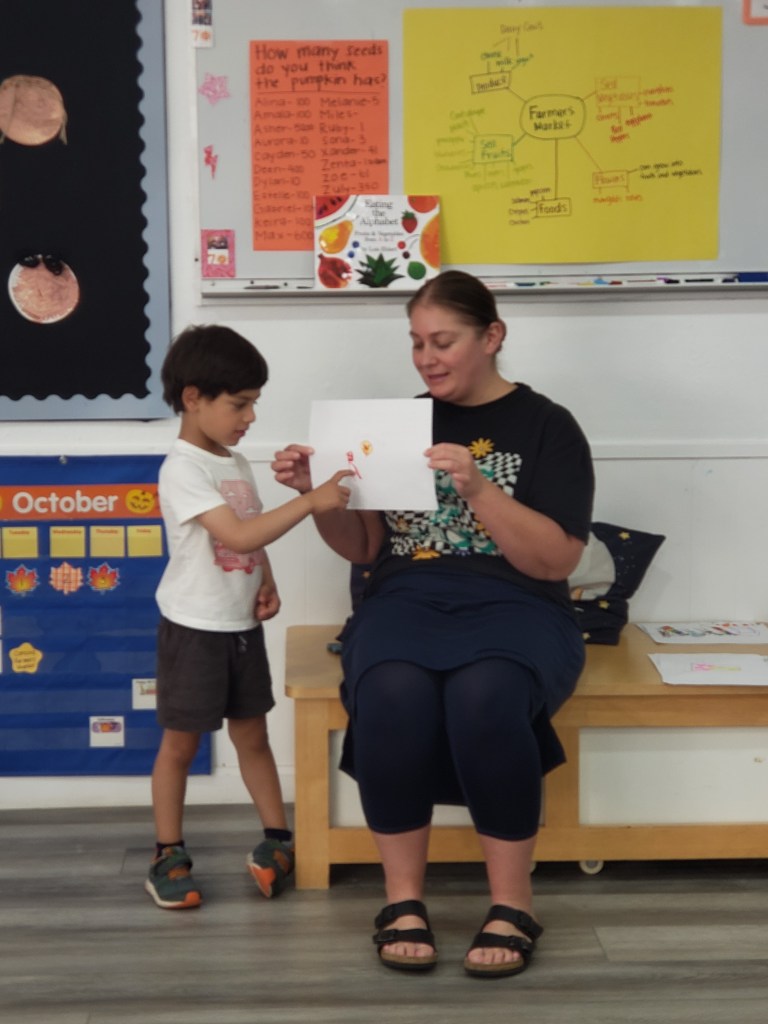
The Hoot Owls also practice questioning skills with their Wonder Wall. The Wonder Wall is how the class keeps track of what students are curious about. The teachers help the class review the questions they have posed as they progress through the Project. When they uncover the answer to one of the questions they add it to their Topic Web. This web helps the class track what they already know and what they learn. Both the Wonder Wall and Topic Web are growing mediums to display the students’ curiosities and knowledge.

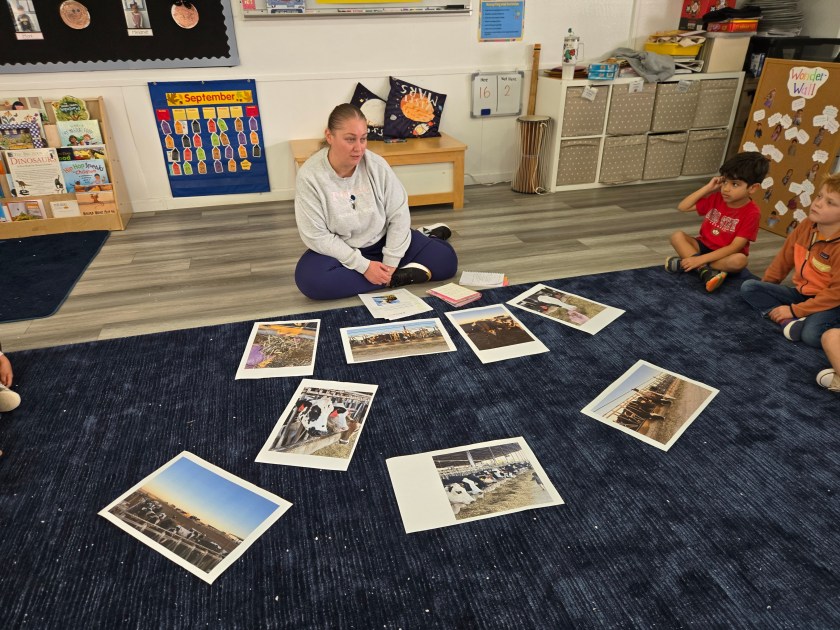
The Hoot Owls have enjoyed talking about things found at the farmers market: fruits, vegetables, cheese, flowers, crepes, popcorn, and more. The class wondered where cheese comes from, so they invited a dairy cow expert, Erin, to help answer their question. They also came up with other questions about cows:

  • “Do cows drink?”
  • “How do cows eat carrots?”
  • “How do baby cows drink the milk?”

The students learned that only baby cows, or calves, drink milk. Adult cows only drink water and can drink as much as 6 bathtubs per day! They discovered that cows eat 100 pounds of food daily, mostly hay, but sometimes carrots, other vegetables, or grains. The Hoot Owls found out that cows only have teeth on their bottom jaw, the top is just a hard leathery piece. To help digest food, cows have four chambers in their stomach. Calves drink milk from the mother’s udders. The udders are also where farmers milk the cows. The milk is then used to make items like cheese and yogurt.

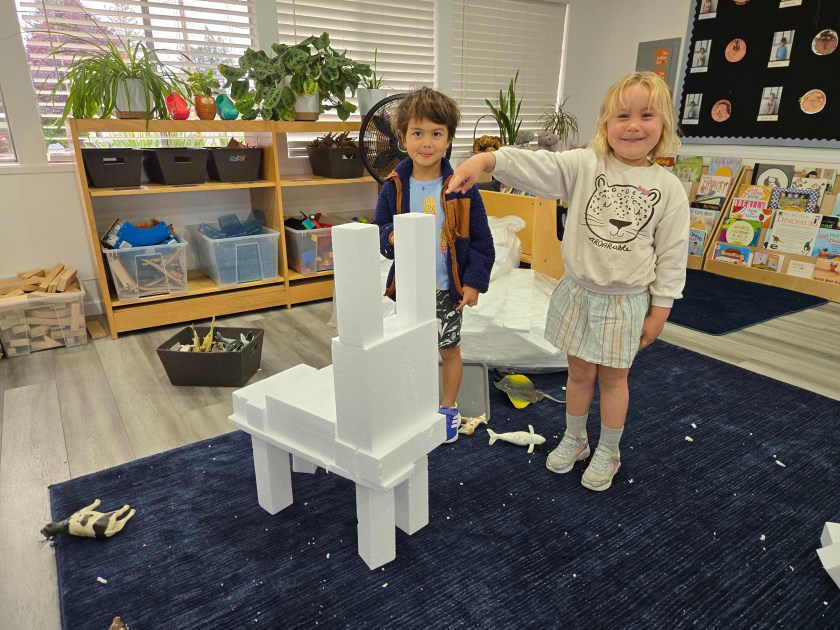
After learning new things, the students make representations. Not everyone makes the same things, as each student makes what they are interested in. Some molded a cow out of model magic and others built a cow using big Styrofoam pieces!

The Pre-K students are enjoying their journey to learn more about the Farmers’ Market. Stay tuned to see where this Project takes them!

#Prekindergarten #SaklanProjectWork

Democracy at Saklan

This year’s Student Council election reminded us all that democracy is alive and well here at Saklan. Nineteen Middle School students submitted their candidacies for six Student Council offices, and the race was on! Voting took place on October 4th at the end of a vigorous and exciting campaign. 

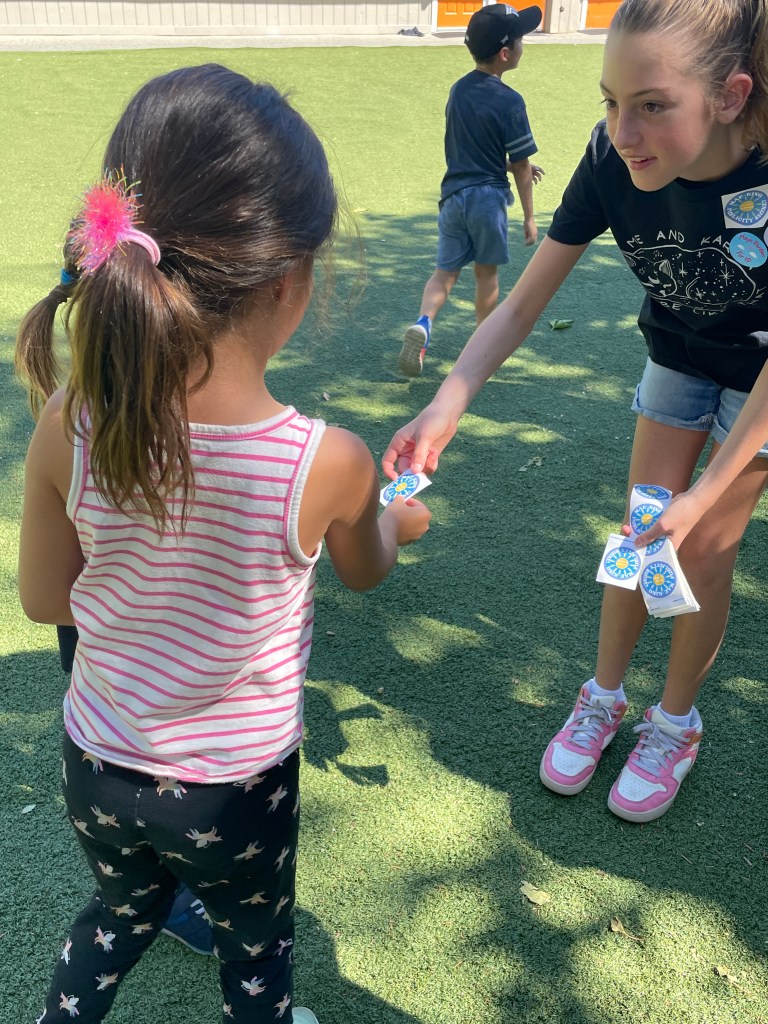
Earning a seat as a Student Council officer involves more than simply winning the popular vote. Each candidate had to submit a Letter of Intent, make a campaign poster, sit for an interview conducted by Jennifer Lettieri and Kim Parks, and share slogans and stickers with the Lower School students during lunch recess.

The culmination of their campaign was their speech at CLAS before balloting took place in grades 1 through 8. Candidates were awarded points for timeliness and quality when carrying out each of these tasks, and the candidates with the most points were the winners.

Lower School Student Council representatives were selected by their classmates and respective homeroom teachers in grades 1-5. 

Congratulations to our 2024-2025 Student Council members!

Middle School Officers

  • President – Jack D
  • Vice President – Maya
  • Activities Co-Chairs – Aliya and Kai
  • Treasurer – Skyler
  • Publicity Co-Chair – Haley and Mae
  • Secretary – Corinne

Lower School Representatives

  • Grade 1 – Nico and Finn
  • Grade 2 – Isla and Maddie
  • Grade 3 – Leo, Miranda, William
  • Grade 4 – Leila and Adora
  • Grade 5 – Makena and Carson

#SaklanCourage #SaklanLeadership

Building Community With Ewe Music

Thursdays at The Saklan School sound different thanks to African Drumming classes. Learn more about the classes and instructor in the post below, written by guest blogger and Saklan African Drumming Teacher, Isaac Narell.

Alfred and Kobla Ladzekpo came to the United States in the 1960s to teach Ewe music. The Ladzekpos came from a village in the southern Volta region of Ghana called Anyako, an Ewe village. Ewe is one of over 20 languages spoken in Ghana. Ewe music is divided into styles. Each Style has songs (for singing), drum patterns and dance steps. The singing, drumming and dancing together form the musical style.

Alfred Ladzekpo taught at the California Institute of the Arts (Calarts) for over 40 years, and I was fortunate to study with him from 2002-2006. He became my mentor and my friend.

Alfred’s main goal with his students at Calarts was to show them how to be an effective musician in his style of music. Ewe music is an oral tradition. Musicians coming from different backgrounds begin a new process of learning through listening. Alfred reveled in every opportunity he had to lecture his students on the importance of listening. Despite the simplicity of the message, every student who embraced this concept came away from Alfred’s class as an improved musician.

As a young musician, my fascination with Ewe music was sparked by my admiration of its construction. Ewe music weaves a complex counterpoint through all of its elements that rival the greatest art forms of humanity. I was enamored with the sophistication of the drumming patterns and the ability of musicians to dialogue through musical language. The lead drummer directs the ensemble into new dance moves, drumming patterns, or songs, by playing a call on the drum. Everyone has to listen or they might miss the call!

This felt like a secret language and my friends and I were hooked. We took every opportunity to learn from Alfred and eventually, we were helping him teach his classes and performing in his professional ensemble at schools and community events. Later in life, I found another beautiful side to the art form.

The main function of music in Ewe culture is to promote community. People gather in social groups for musical performances. These groups perform at funerals and weddings and are the backbone of both religious and secular events. This is extremely valuable in our recent culture fueled by social media. People crave interaction and Ewe music is a world-class option for community building.

I teach Ewe music as a celebration of West African brilliance. Through honoring and respecting Ewe culture I have found that we can bring value to our school not only through the acute development of musicianship but through the strengthening of our community.

#SakalanCommunity #SaklanArts

Self-Regulating Kindergarteners

Kindergarten has been learning about self-regulation. While self-regulation is something that everyone is always working on and practicing, it helps to make our strategies and tools for self-regulation visible for others to better understand.

First, it’s important to make sure we all know what calm feels like so that in moments of upset or silliness, we can get ourselves back to calm. The class read a story about a very moody cow and compared how it feels in their bodies when they are mad versus when they are calm. Next, they read a story about a boy who had a horrible day and discussed things he could have done to feel better throughout the day. Then Riva introduced the “break chair” to the class, which is a tool that students can use to calm down after upset, overstimulation, anger, distraction, etc. She modeled how to use it, and then the class shared what they noticed. A student modeled for the class as well, and again the students shared what they noticed. Then came the kindergartners’ favorite part, sending Riva to take a break in the chair. But, Riva did the WRONG thing! Hilarity ensued, and even Riva couldn’t keep a straight face, as everyone was cracking up. Since introducing this self-regulation tool, Riva has been thrilled to see many students using the Break Chair throughout the day. It’s clearly a tool that works for them!

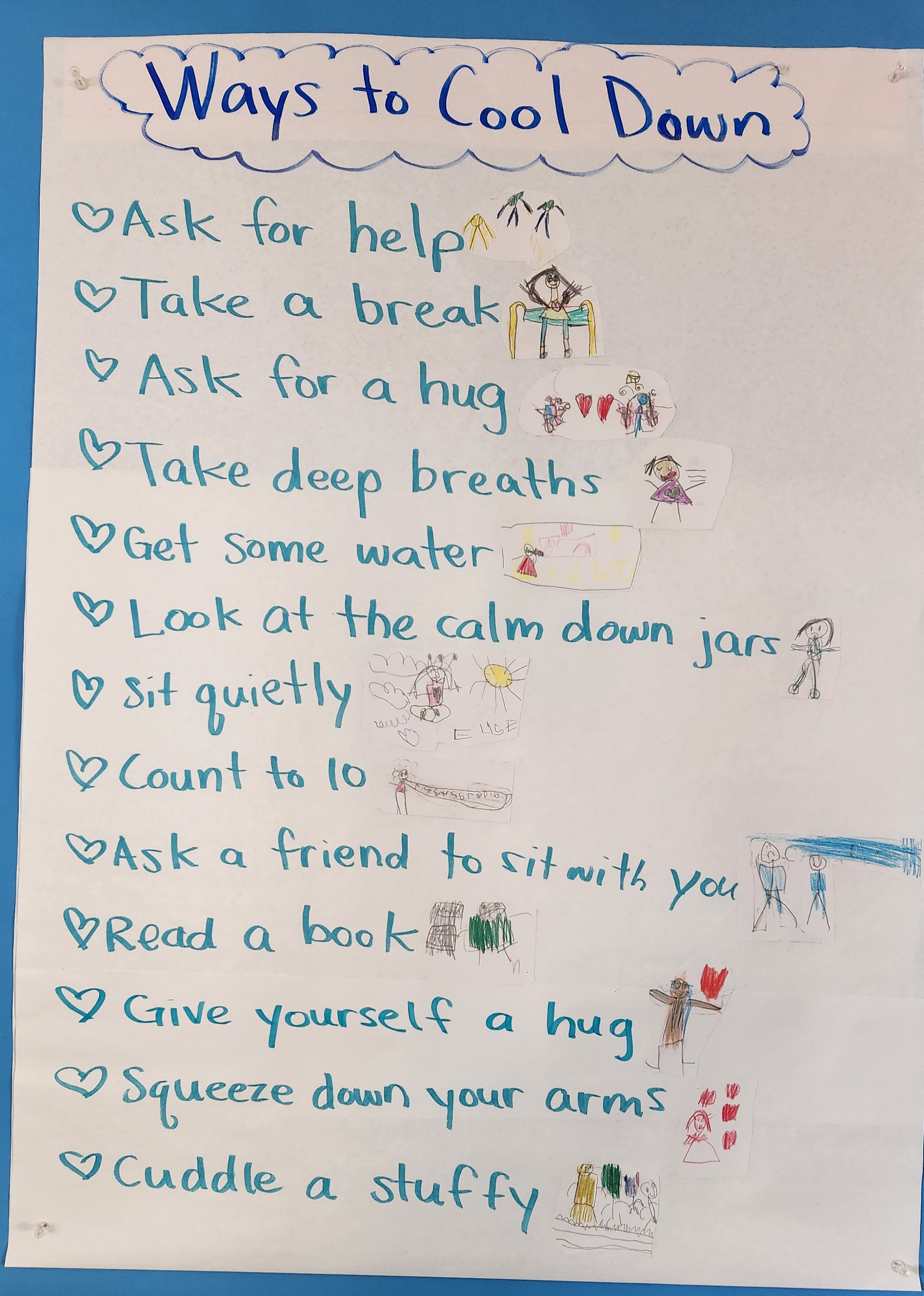
The self-regulation discussions and activities culminated in the class creating a list of “Ways to Cool Down,” which will hang in the Kindergarten classroom all year. Anytime someone needs help, they can check the list and try one of the many excellent strategies their peers came up with.

If you need help calming down, feel free to ask one of our resident self-regulation experts in the kindergarten room!

#SaklanSEL

Egypt + Humanities

Written by Guest Blogger & Saklan Project Curriculum Instructional Coach and 6th grade Humanities Teacher, Linda Lathrop

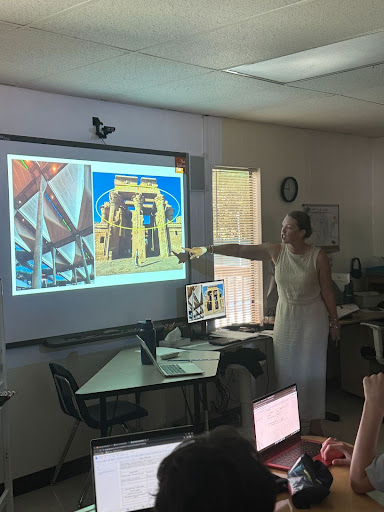
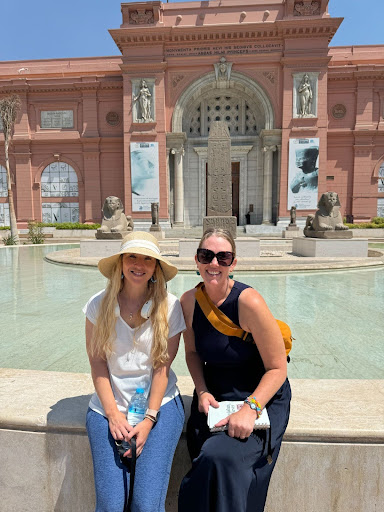
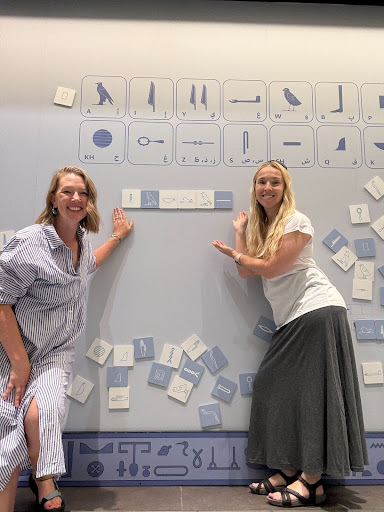
If you read the blog post from Saklan Science Specialist, Vickie Obenchain, on September 13th, or followed along with our adventures via Instagram, you know a bit about our 2 weeks exploring Egypt with the help of an excellent Egyptologist. The goal of our trip was to soak in as much information as possible and bring our experiences back to enrich classroom curriculum. 

Back at Saklan it was a pleasure watching the 8th graders apply knowledge from our hot air balloon trip over Luxor to their hot air balloon experiments in science. I know Vickie is looking forward to sharing all about camel adaptations with the 2nd graders during their animal adaptations PBL unit, and I even recently shared with 7th grade a presentation on the Library of Alexandria as part of their Community Spaces PBL unit too!

However, I can’t help but be most excited about how our trip informs the 6th grade humanities PBL unit: Artifact or Art Opinion. 

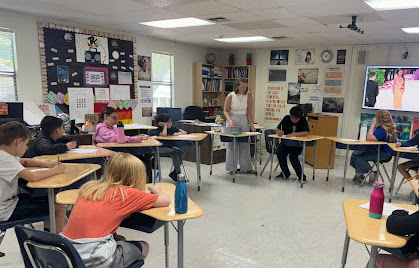
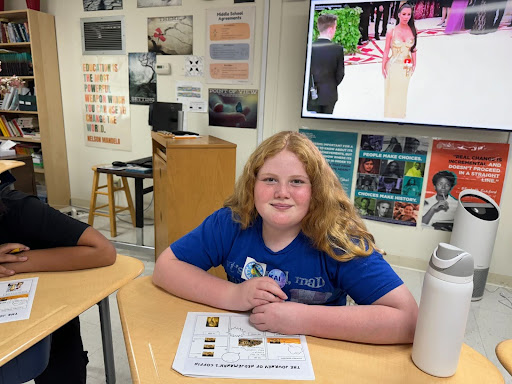
In this unit we explore the driving question, “Who does art really belong to?” To kick off our unit we imagine ourselves at the Met Gala of 2018. Believe it or not, a viral photo from that event helped uncover that the Met paid nearly $4 million dollars for a looted Egyptian artifact- the golden coffin of a high priest named Nedjemankh. 

In sixth grade over the next 7 weeks we will dive into researching specific Egyptian artifacts held outside of Egypt, explore the arguments for and against repatriation of artifacts, and learn directly from archaeologists and museum experts. In the end students will have developed arguments for how they believe the driving question is best answered- stay tuned! 

Thanks to our incredible summer experience in Egypt, this year students will get to expand upon the resources I have used in previous iterations of this PBL unit. I’ll be able to share my photos of ancient temples and tombs that speak directly to their classroom research, as well as video clips with mini lectures from our Egyptologist, to enrich the PBL experience. 

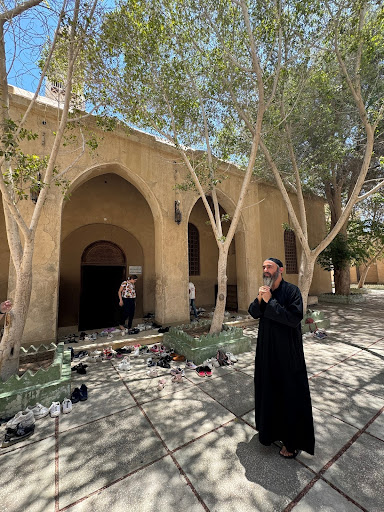
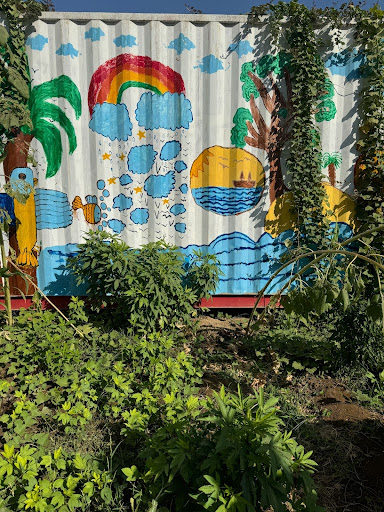
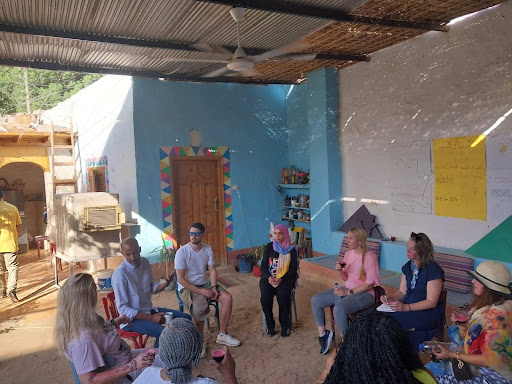
One additional highlight of the trip was visiting an after school program called the Funtasia Project in Luxor. A handful of these programs exist around the world and are designed to engage students in project work after school. This particular site in Luxor also collaborates with local schools and teachers to extend project learning into the academic day. We met with the leaders of the organization, as well as some students who took us on a bike tour through the neighborhood and later shared about the impact the program has had on their lives and educational experience. It was fascinating to learn that across an ocean and thousands of miles, there are students working to build their collaboration, communication, and complex thinking skills through project work, just like we are doing here at Saklan. 

It is hard to put into words all the ways witnessing these incredible historic sites has impacted what we can bring back to Saklan students. I remain humbled by the opportunity to attend this professional development trip and look forward to continued opportunities to weave our learning into Saklan units. 

Saklan Projects!

To learn more about project work at Saklan please join us for Saklan Projects! on Tuesday, October 22 at 6:00 p.m. This virtual presentation is for current and prospective families! During the event you will hear more about how teachers design projects to address learning goals and maintain academic rigor while providing immersive, joyful learning experiences for your children. RSVP today to receive the event link!
#SaklanPBL

Catching Up with Coach Rob

Rob Hood, or Coach as the students call him, is Saklan’s Head of Sports and Wellness. He can often be seen sharing high-fives with students and staff as he walks through campus towards the sports court. Reflecting on the first few weeks of school, Rob shared his approach to fitness, health and wellness.

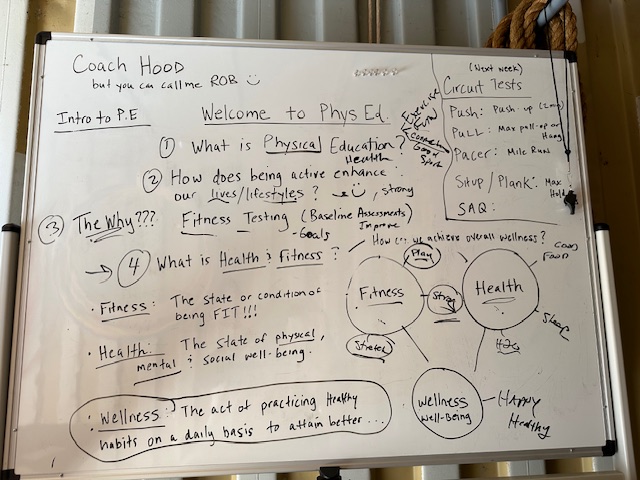
At the start of our first unit, Fitness & Health, the 6th–8th graders took charge of creating a vision board that explored what Physical Education means, as well as the key components of fitness, health, and wellness. Together, we brainstormed ideas, with students identifying how different aspects of well-being connect to each component. This collaborative effort allowed us to design a holistic vision of wellness. I later shared this learning with the lower school students.

Following our vision board activity, we approached some of the P.E. components with a week of fitness testing. Students had the option to participate in a few exercises to test strength, muscular and cardiovascular endurance, and flexibility, assess their current fitness state, and set goals for the future. In addition to longer-term goals, I ask students to assess themselves daily to encourage more mindfulness and reflection related to their overall health and well-being. 

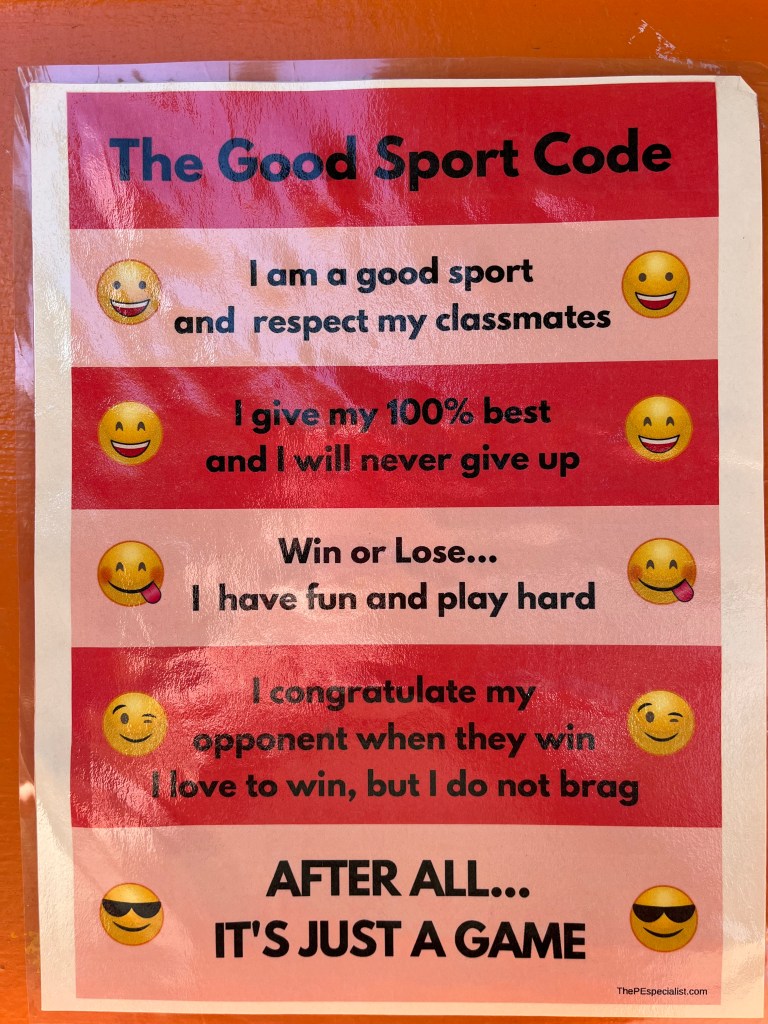
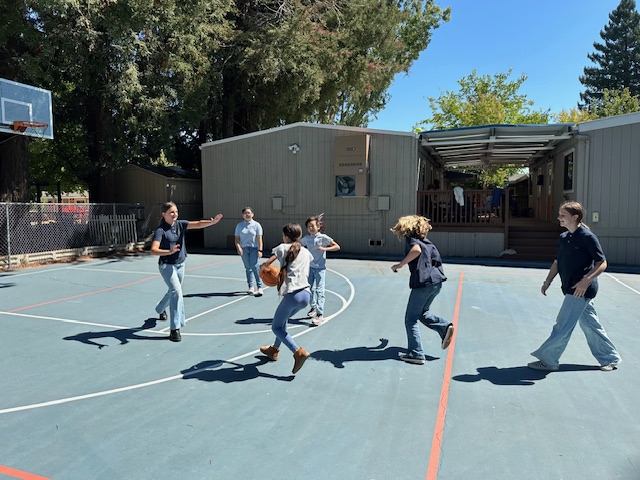
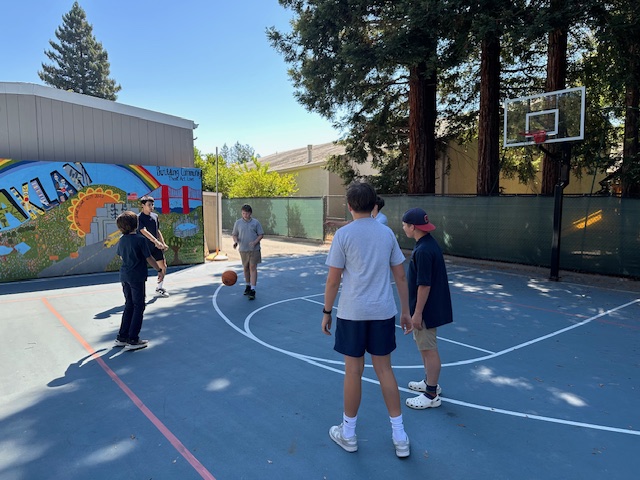
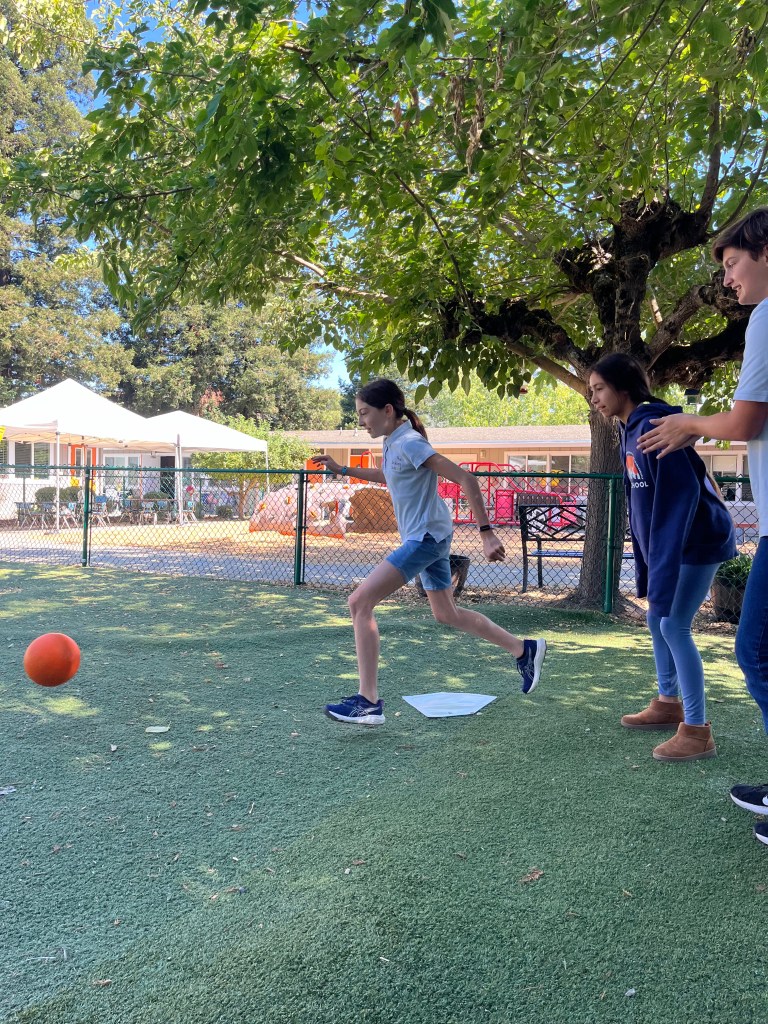
In my physical education classes, students are encouraged to be safe and respectful, demonstrate good sportsmanship, and resolve conflicts constructively, as shown in the community agreements below.

In our first few weeks, we’ve started exploring Physical Education as more than just playing games. It’s an approach to improving our health—physically, mentally, emotionally, and socially—while also helping students build essential life skills for healthy and happy lifestyles.

Nurturing Community

In their recent adventures, the Owlets explored the book Circles All Around Us by Brad Montague, which illustrates the concept of community and how we can nurture it. The key message is that by showing love and support to everyone around us, we help our circles grow.

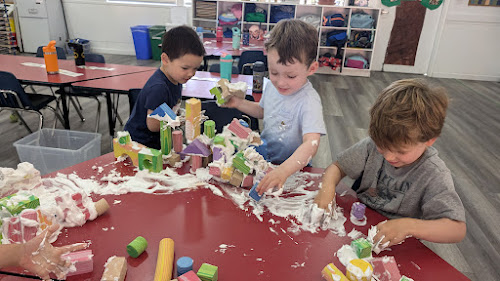
Following the story, the class started a fun community-building project! The Owlets got a little messy as they built different structures using foam blocks and shaving cream. This hands-on activity encouraged teamwork and problem-solving, as the children worked together to reach blocks and support one another. Throughout the process, the teachers stepped back, allowing the students to become problem solvers among themselves. The only assistance needed was a little extra shaving cream for added fun!

#SaklanCommunity

Recognizing & Managing Emotions

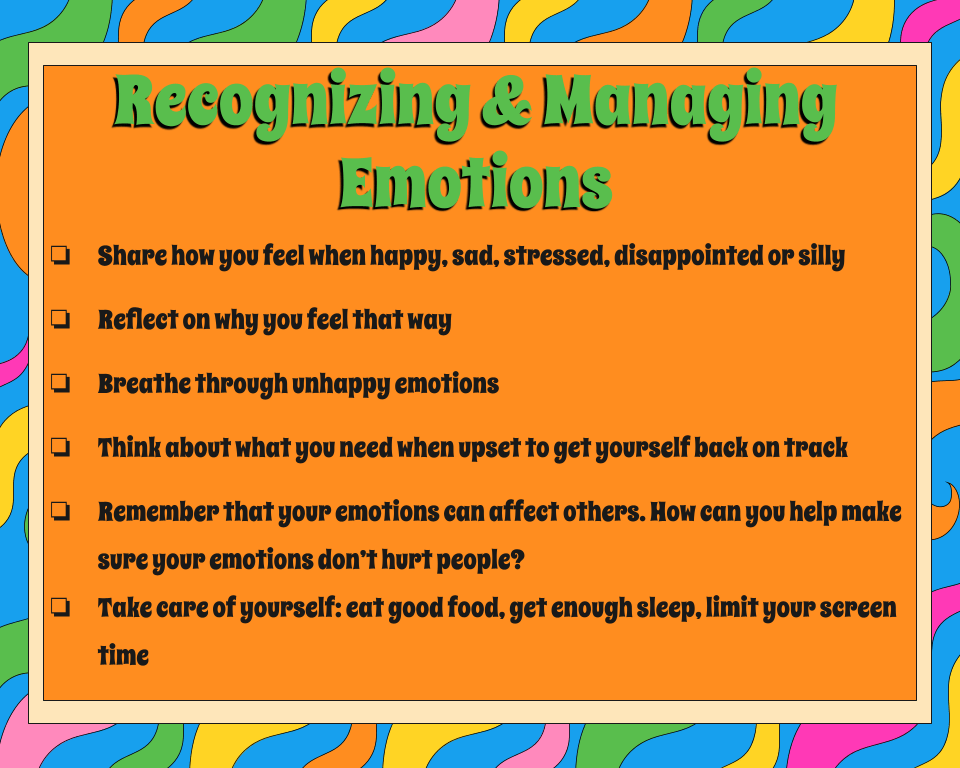
During the month of October, Saklan students will focus on recognizing and managing their emotions as part of our Social-Emotional Learning program. The image below is hanging in all classrooms, and the students will discuss what emotions are, how to recognize them, and how to manage them throughout the month, including in Advisory, Morning Meeting, and other class time activities.

One tool that is being shared with students to help them in their pursuit of recognizing the sharing emotions is the chart below. The colors and emojis make this a chart that is good for students of all ages to help them identify their current emotional state. The strategies at the bottom of the chart are meant to help students get back to The Green Zone, where they feel calm. This can be a great tool to use at home too!

On Tuesday, October 29th, first – eighth grade students will meet with their family groups to further discuss recognizing and managing emotions, and participate in collaborative activities to further illuminate this month’s focus.

#SaklanSEL

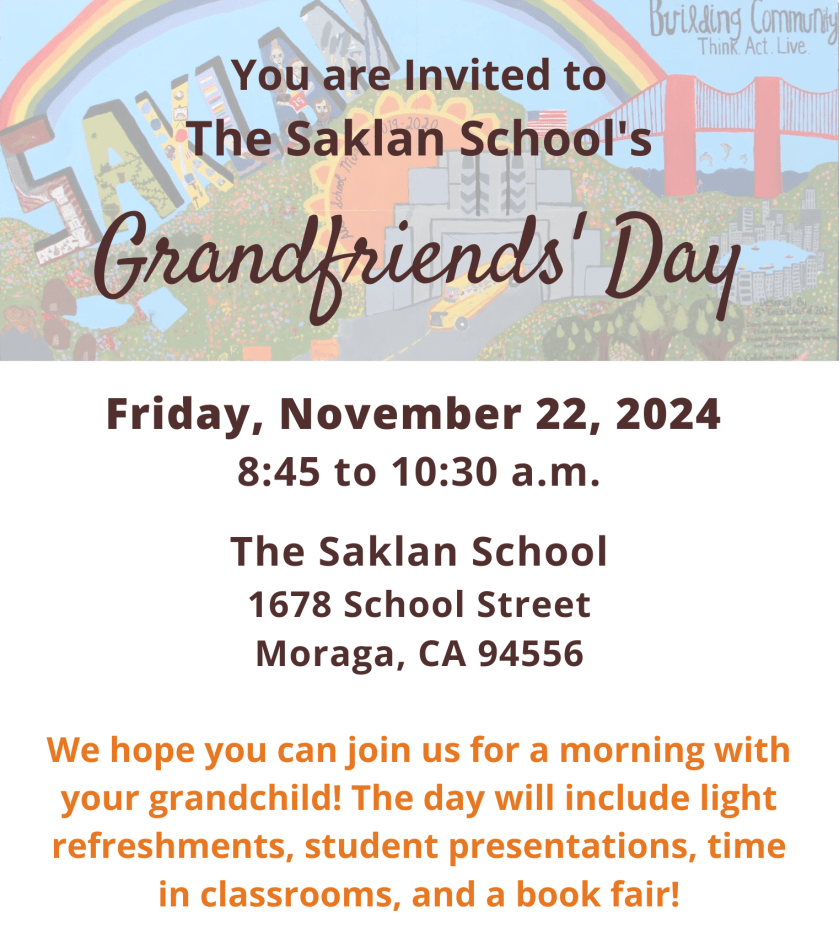
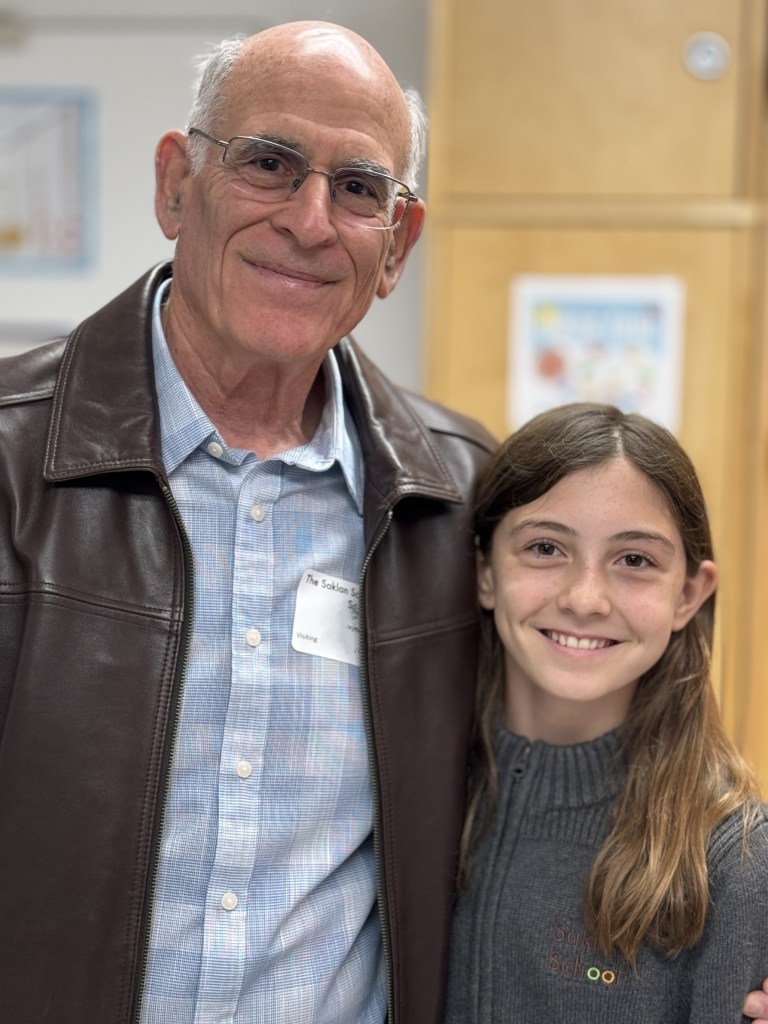
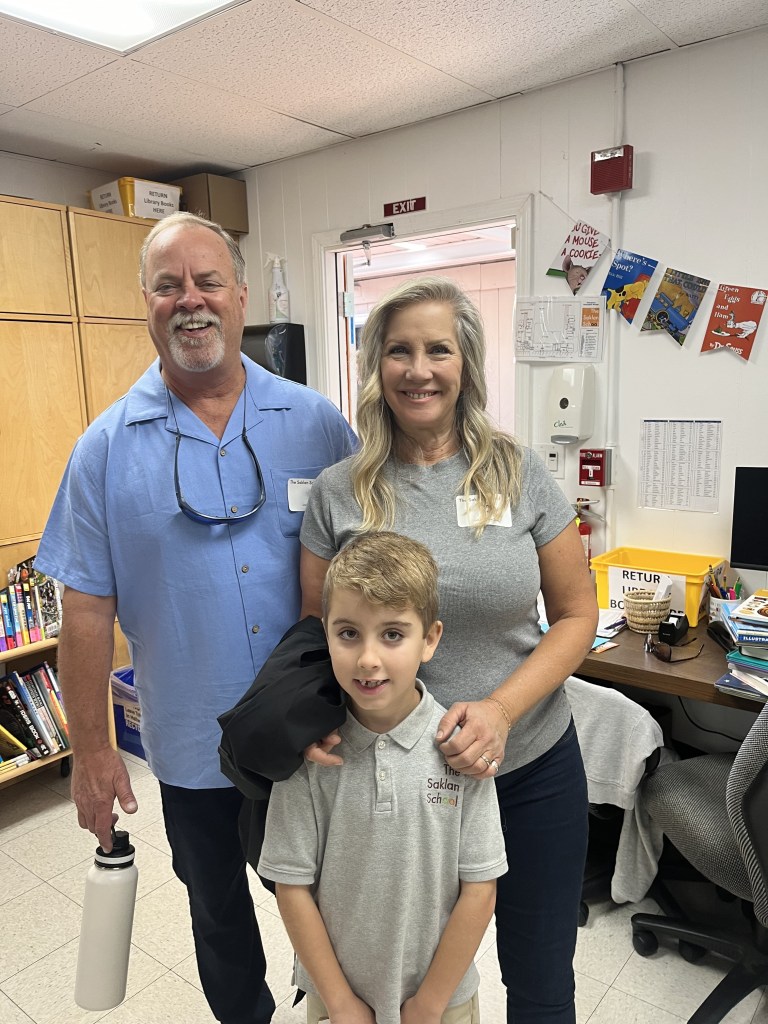
Grandfriends’ Day 2024

Saklan’s Grandfriends’ Day is on Friday, November 22, 2024 from 8:45 to 10:30 a.m.

Please share information with grandparents and special friends (a friend or family member that your child looks up to and/or has a grandparent-like relationship with) about this event, as we would love for them to join us! 

RSVP for Grandfriends’ Day Here!