Understanding The 5-D Process

pasted image 0-1

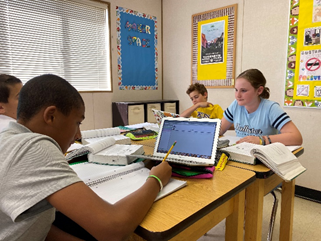
The 7th grade has been continuing their use of variables to represent an unknown number in a variety of contexts. In this chapter Mr. Zippin introduced the 5D Process as a new method to solve problems that our previous methods were too challenging or too time consuming to solve. In the 5D Process, the students carefully read the problem and write the important parts and relevant information in the Describe part. This is also the place where they could draw a picture if that would be helpful to solve for the unknown.

pasted image 0-2

The second D is the Define columns where the students carefully label the elements of the problem and define what they will be guessing. Mr. Zippin stresses that the columns must be carefully labeled and filled in with full math operations. The Do column is the place where they write out the full mathematical expression. The Decide column of their table is where the seventh graders check their answer with what they are trying to find and then decide what a good next guess would be. Finally, they end with a Declare that answers the question being asked by the problem.

pasted image 0-3

As they continue to use the 5D Process, they begin to add an additional line to our table, the variable. The students begin to recognize that the variable expression can be used to summarize the relationships in the 5D process. As they continue with the work, the seventh graders will write full single variable equations and solve them from words problems.

#SaklanAcademic

Mexican Folk Art

Middle School Learning by Doing Elective Class

A Cross Curriculum Elective Unit with Spanish & Art

Dia de los Muertos (Day of the Dead) originated several thousand years ago with the Aztec, Toltec, and other Nahua people, who considered mourning the dead disrespectful. For these pre-Hispanic cultures, death was a natural phase in life’s long continuum. The dead were still members of the community, kept alive in memory and spirit—and during Día de los Muertos, they temporarily returned to Earth. It takes place on November 1 and 2—All Saints’ Day and All Souls’ Day on the Catholic calendar—around the time of the fall maize harvest. It is celebrated throughout México and in recent years, has been adopted by many societies in the U.S.A.
IMG_4693

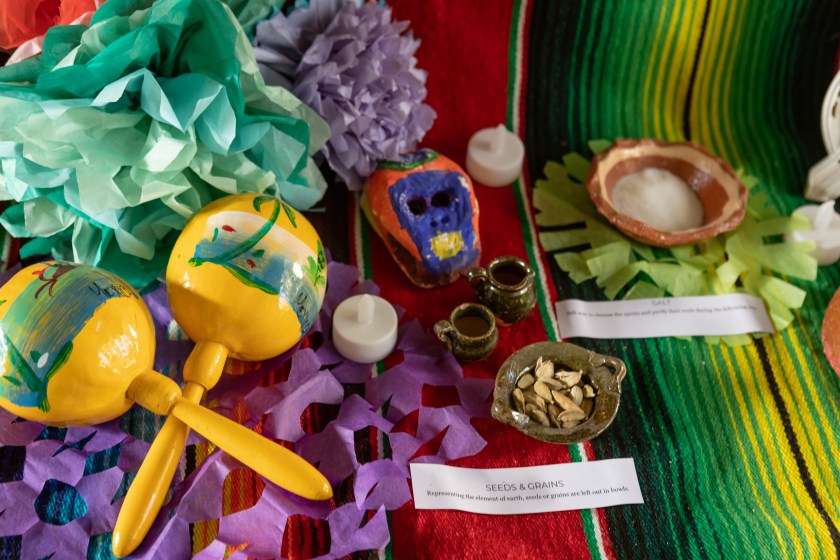
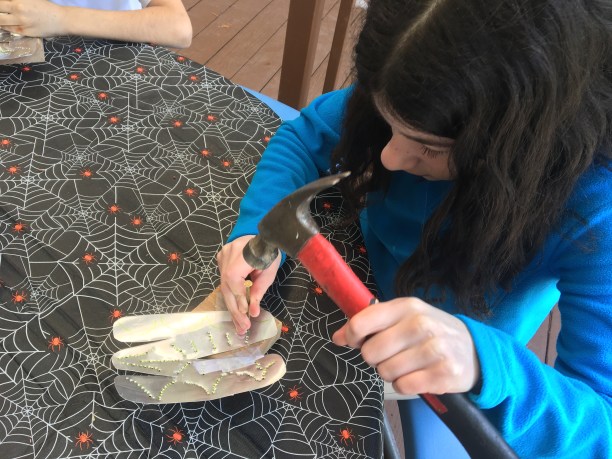
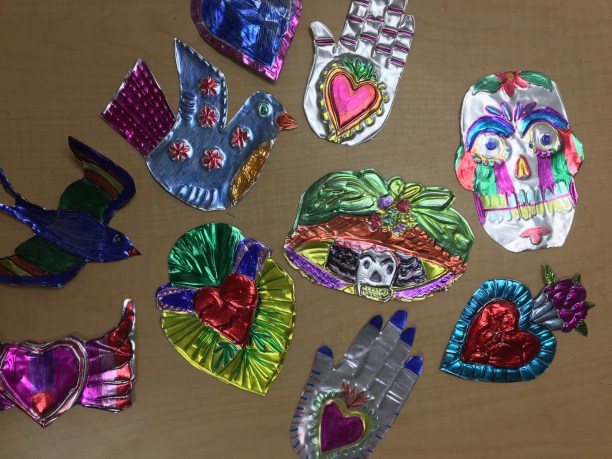
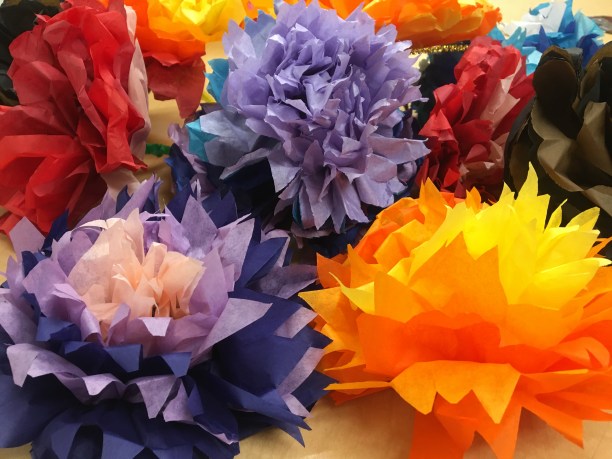
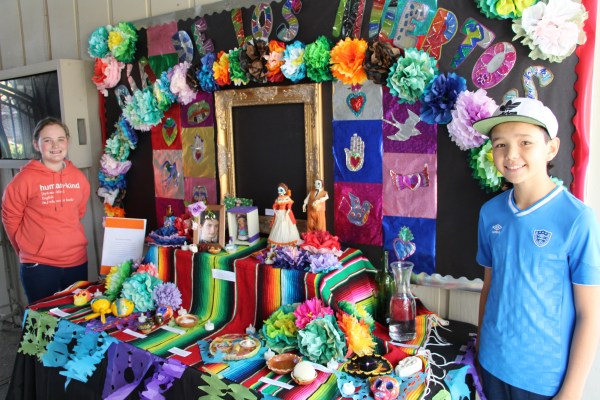
The ofrenda (offering) altar is constructed to help guide the spirits of family members back to the land of the living on the noche de muertos, the night of November 2. The altar holds all four elements- earth, wind, water, and fire. Representing the element of earth, seeds or grains are left out in bowls, while salt is left to cleanse the spirits and purify their souls during the following year. The students made all parts to the altar and learned the significance behind each of the elements. They created embossed metal folk art which is a technique that raises a 2 dimensional image into a 3 dimensional. With embossing, students craft traditional Mexican imagery that surrounds the photos of the loved ones that have passed and sit at the top of the altar. They also created the Dia de los Muertos Lettering using hammers and nails to create the raised and textured designs. They made flores de papel (tissue paper flowers) to build the Día de Los Muertos arch and papel picado (perforated paper). These perforated designs are still hand-cut in Mexico with tissue paper, making it a recognized Mexican folk art. Draped around altars and in the streets, the art represents the wind and the fragility of life.

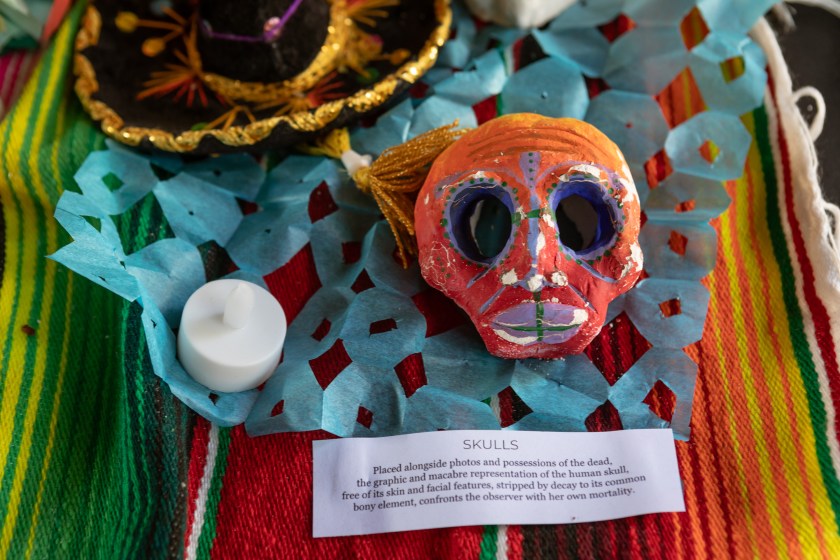
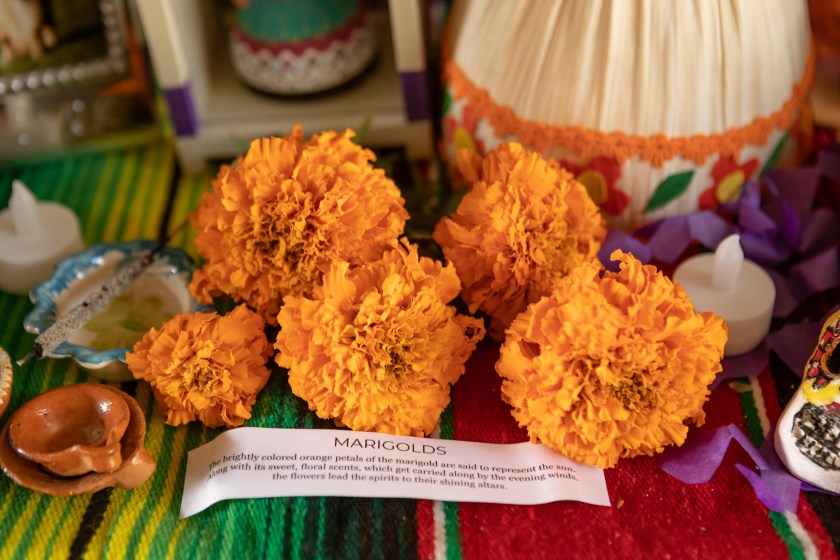
The ceramic skulls were made from past students who wanted them to be kept for the purpose of the altar every year. Placed alongside photos and possessions of the dead, the graphic representation of the human skull, confronts the observer with their own mortality. The brightly colored orange petals of the marigold flowers are said to represent the sun. Along with its sweet, floral scent, which gets carried along by the evening winds, the flowers lead the spirits to their shining altars. As twilight fades away, and family and friends gather around, the flickering lights begin to fill the nooks and recesses of the displays with a warm glow, which helps guide the dead to their altar. This is the fire element and it is believed that color, light, and strong scent of the flowers and candles can guide the souls from cemeteries to their families’ homes.

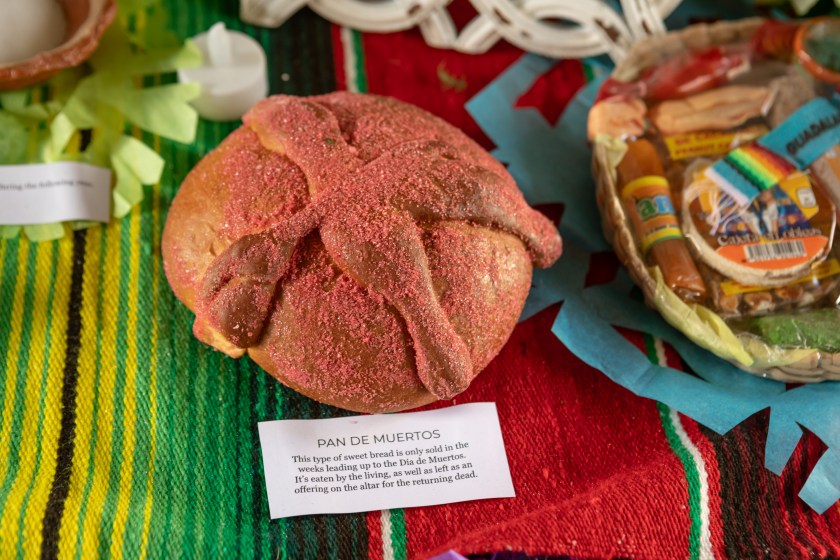
Pan de Muertos (bread of the dead) – which is a type of sweet bread that is only sold in the weeks leading up to the Día de Muertos. It’s eaten by the living, as well as left as an offering on the altar for the returning dead. The soap, a basin of water and the towel helps the spirits of the dead bathe and keep clean while they are back on earth. Pitchers of water are also left so the spirits can quench their thirst after a presumably long journey back home from the afterlife. This altar celebrates the loved ones we have lost within our community, as well as remembering and honoring those who have made an impact in our daily lives but were not directly related to us.

#SaklanWellRounded

The Birth Of Civilization

pasted image 0-5

The sixth grade students have been studying the beginnings of communities and human civilization as we know it in Humanities class. They started the unit by reading foundational background information from their textbook History Alive: The Ancient World. The reading gave a summary about how our close cousins called Homo sapiens or wise men decided to give up the nomadic life for a more sedentary one. After working through the text, Ms. Parks showed a National Geographic movie to the sixth graders called The Birth of Civilization to bring this historical time period to life.

pasted image 0-6

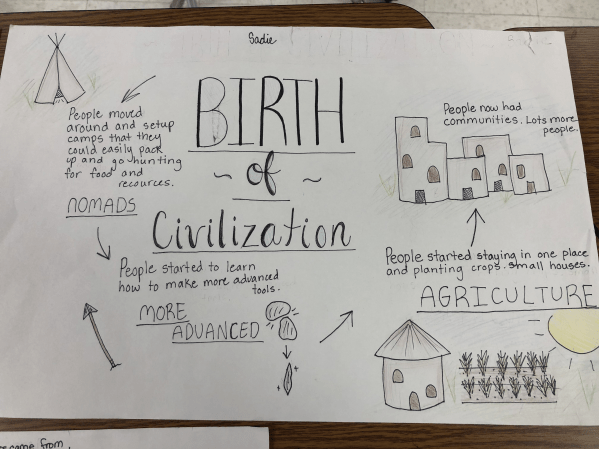
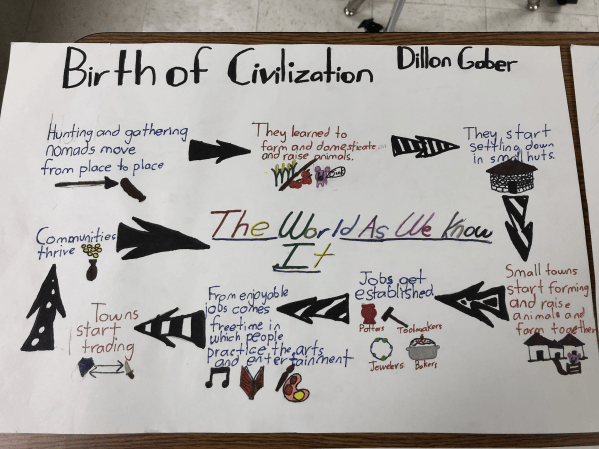
The Paleolithic Age, (aka The Old Stone Age), lasted roughly from 8000 to 3000 B.C. During this time, nomads roamed the Fertile Crescent in the Middle East hunting and gathering food. When they would run out of animals to hunt and plants to eat, they would move to find another area that could sustain their group or family. Obviously, this life was difficult and left these people in continual survival mode. When agriculture was finally understood and applied to a fertile land area, humans entered the Neolithic Age or New Stone Age around 3000 B.C. This was a great turning point for humankind. People began to settle together in larger groups and built permanent shelters or homes to live in. Now that people in the community were providing a stable food supply through farming and domestication of animals, other community members were able to work specialized jobs to contribute to the good of the group.Some common jobs during this time were blacksmiths, weavers, pottery makers, scribes, shamans, soldiers, and merchants. Once these communities could sustain their entire community, they began to want other goods that they did not have nearby. Out of this need, trading was born, merchants collected goods, and trade routes were made. Through trade routes, different ways of life and ideas were spread, which starting to educate and connect the world.

pasted image 0-7

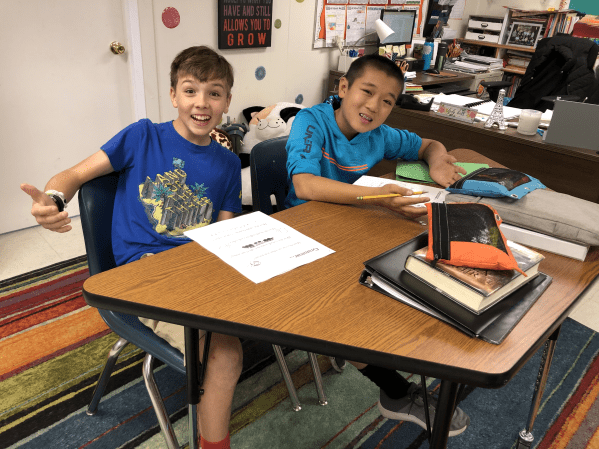
After learning all of this information, the sixth graders were assessed by taking a standard summative test that included sections that had multiple choice questions, map reading, analysis, and writing. Since each student was required to take notes during the movie, they were able to use their notes on this assessment. The other way Ms. Parks checked for student understanding was for each person to make a graphic organizer of ideas and pictures that told the story of humans moving from a nomadic life to a more community-based civilization. Please check out the pictures above that show a few great examples of their Birth of Civilization Mind Maps and enthusiastic sixth graders.

#SaklanCreative

Atomic Attire

The 8th grade has been learning about the periodic table. From researching what all the symbols mean to understanding what the atomic number and atomic mass tell us about each element, they are becoming more comfortable every day.

They have been working on their atomic attire shirt. Each student picked one element they wanted to get to know more about. They designed a shirt for it to show off and model for you all. While our 8th graders are still figuring out what they want to be, some may have the skills to be runway models! Click below to check out their video.

#SaklanCreative

Mexican Folk Art

IMG_1365

The Day of the Dead or Día de los Muertos is a Mexican holiday celebrated throughout México and, in recent years, it has been adopted by the U.S. On this day, families and friends come together to honor those who have passed and help support their spiritual journey.

IMG_1517

The students learned about the Mexican folk art called “hojalatería y pintura.” They created embossed metal folk art – a technique that raises a 2-dimensional image into 3-dimensional. With embossing, students crafted traditional Mexican imagery.

IMG_1518

They also made flores de papel china (tissue paper flowers) to decorate the arch for Día de Los Muertos. It is believed that the strong scent of the colorful flowers can guide the souls from cemeteries to their family homes.

#SaklanCreative

Sixth Grade Math

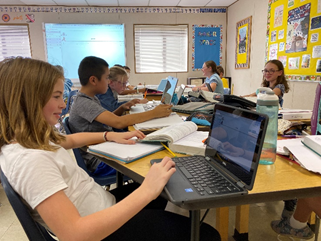
In Math, the sixth graders have been working with positive and negative integers. Addition of integers was introduced with Cecil, an acrobat who can move forward and backward on a tight rope. Using their computers, the students investigated how Cecil could travel along tight ropes of different lengths. They had to combine positive and negative integers to successfully navigate the increasingly difficult challenges.

pasted image 0

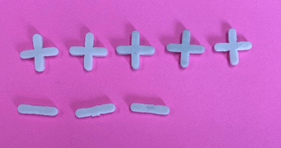
To continue this idea, Mr. Zippin introduced Integer Tiles. The Integer Tiles are small plus and minus pieces that represent positive and negative one. By laying out 5 plus tiles, we represent the number 5. If we lay out 3 minus pieces, we represent the number -3. By combining these eight tiles we are representing the expression 5 + (-3).  The students noticed that the three plus pieces, when combined with three minus pieces made three zeros. After discussing the identity property of addition, they knew that adding these three zeros did not change the sum so the total value of the expression was 2.

#SaklanHandsOn

Introduction to the Cell

pasted image 0-1

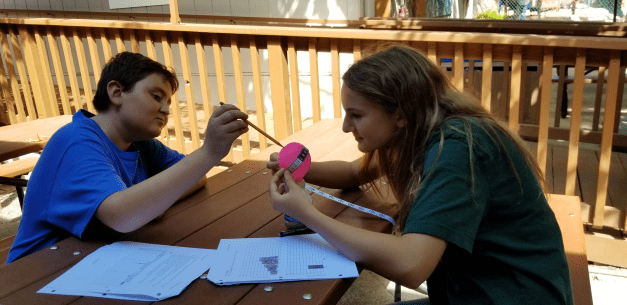
Biology this year starts off with understanding the basic building block of life, the cell. Seventh graders learn all the cell parts, discover plant cells and animal cells (their own cheeks) under a microscope, and then they learn how a membrane works. Students also learn why we produce carbon dioxide through cellular respiration and plants use that to produce oxygen in photosynthesis.

pasted image 0

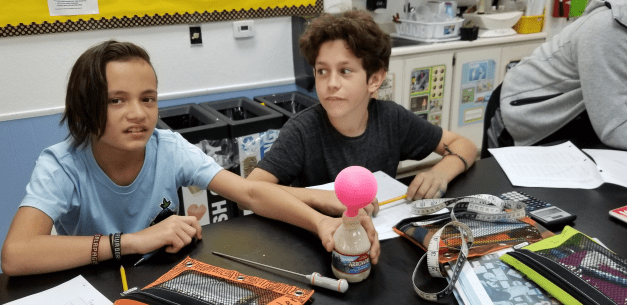
Students have discovered this through hands-on labs – seeing iodine move across a membrane to turn corn starch black by modeling diffusion and seeing a balloon fill up with carbon dioxide as yeast cells perform cellular respiration. All these functions are vital to a cell’s survival. 

#SaklanHandsOn

Yosemite Field Experience

This slideshow requires JavaScript.

Last week, the 6th grade took off to Yosemite for a week of hands-on science, team building, connecting with nature, learning about themselves, and becoming more independent. It was one of our best trips ever. Between hiking below Half Dome, climbing through giant sequoias, seeing amazing wildlife and supporting each other when they needed it, we know they won’t forget their Yosemite trip. Here are some of the thoughts from their week away.

“I learned that I really like hiking with my friends outdoors and I really enjoy crawling through caves”- Bjerre

“I learned a lot about myself in Yosemite. For one thing, I thought I hadn’t packed enough, but turns out I over packed! Also, I learned my first assumptions about people are not always right. I thought some people were annoying, but after spending a week with them, I realize they are funny, kind and I like hanging out with them.” – Cassidy

“I learned that people want to get to know me more, I just have to open up more to others. We all actually have a lot in common.”- Ethan

“I felt connected to nature on this trip when Thomas lead me to a tree in one of our activities. It felt different and unique.” – Mac

“I felt connected when I threw a rock and watched it ripple and what that affected and that I was changing the natural flow of things. That made me feel connected to the moment.” – Dillon

#SaklanExperiential

Create a Culture

IMG_3779

Each school year, 7th grade begins the year with the Create-a-Culture Project. This project offers the seventh grade students a wide array of activities that immerse them in all the elements that make up a culture. The main objective is to increase students’ understanding of what makes culture unique, as well as to help them see and appreciate the similarities and differences that exist among cultures. Students work in cooperative groups of three by designing a fictitious culture and deciding its history. Through that they will learn how cultures develop, change, and grow.

IMG_3794

The Create-a-Culture Project is divided into five sections: making decisions, creating the culture, project ideas, culminating activities, and the Culture Fair. They have been working creatively and cooperatively problem solving issues that arise. Ultimately, each student group has compromised and worked collaboratively to bring forth a completely original culture.

We are inviting all seventh grade parents to a culture fair on Tuesday, October 8, 2019 at 10:30am. The fair will allow parents to see and understand each of the six created cultures, as well as enjoy yummy food. We look forward to celebrating and showcasing all of the students’ hard work.

#saklancreative

Sustainable Gardening at Saklan

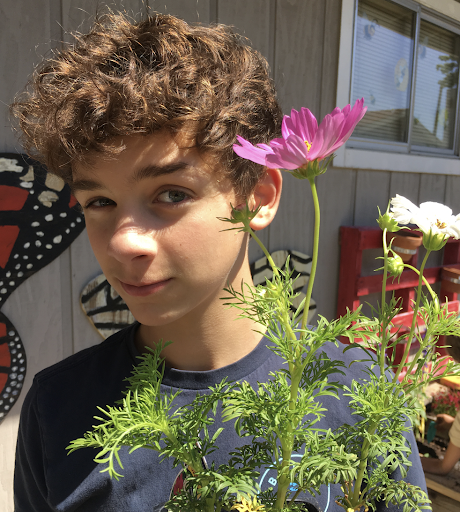
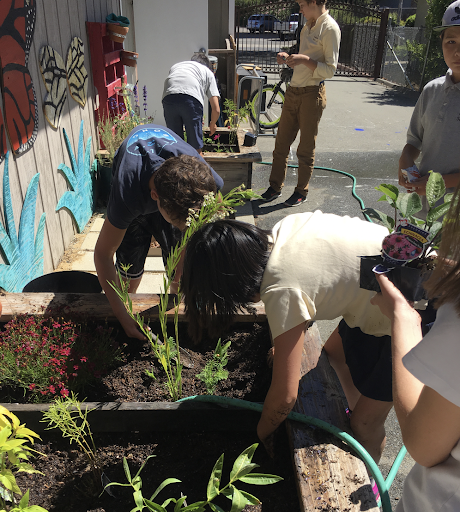
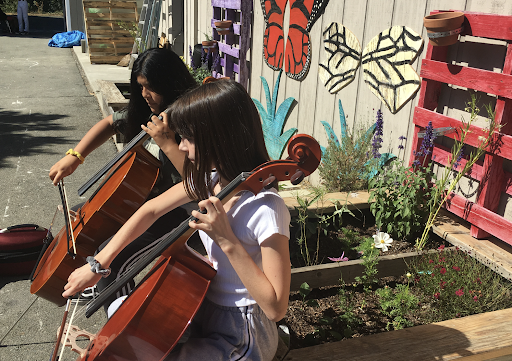
Three weeks ago, the Middle School kicked off their first “Learning By Doing” Session. These classes are designed to create project and experience based learning that cover a variety of topics. This September, the 6th grade prepared for their upcoming Yosemite Adventure, the 7th and 8th graders participated in Saklan’s African Ensemble, designed a new mural for the Sports Court wall ball area, and took on the challenge of redesigning the gardens and planters at Saklan to be more drought tolerant and sustainable.

chello

Over three weeks, 7 students designed a pollinator garden behind the science lab, and cleaned and re-potted the seven pots in front of the school. In the process, they discovered the difference between annuals and perennials, which types of plants attract bees and butterflies, why succulents are special, and how to plant and care for all of them. As Saklan strives to be part of a more sustainable culture, and educates our students about stewardship of the planet, we must begin with stewardship of the places they visit everyday. In addition to the philosophical benefits of gardening, the physical act of getting your hands dirty and caring for another living thing gives students a sense of real purpose.

Each student finished the class with their own succulent pot that they designed. If you want to see the fruits of their labors, come check out the new planters in front of the school, and check out the bees buzzing in the pollinator garden behind the science room!

#SaklanCares