Fractions Come to Life in Third Grade

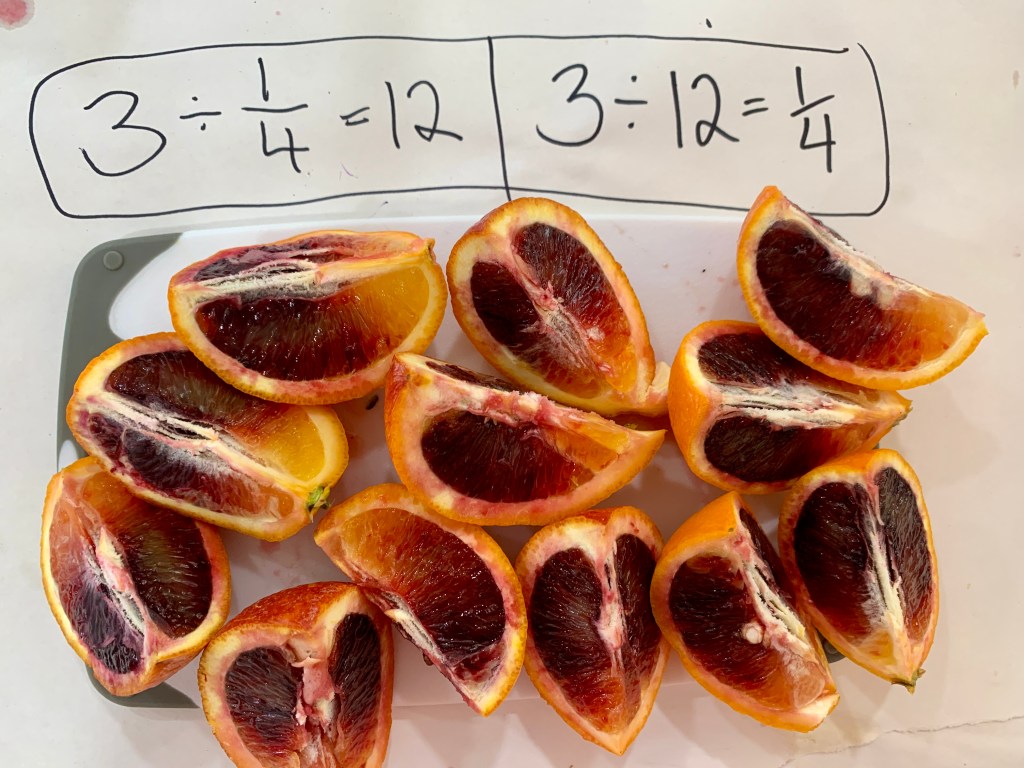
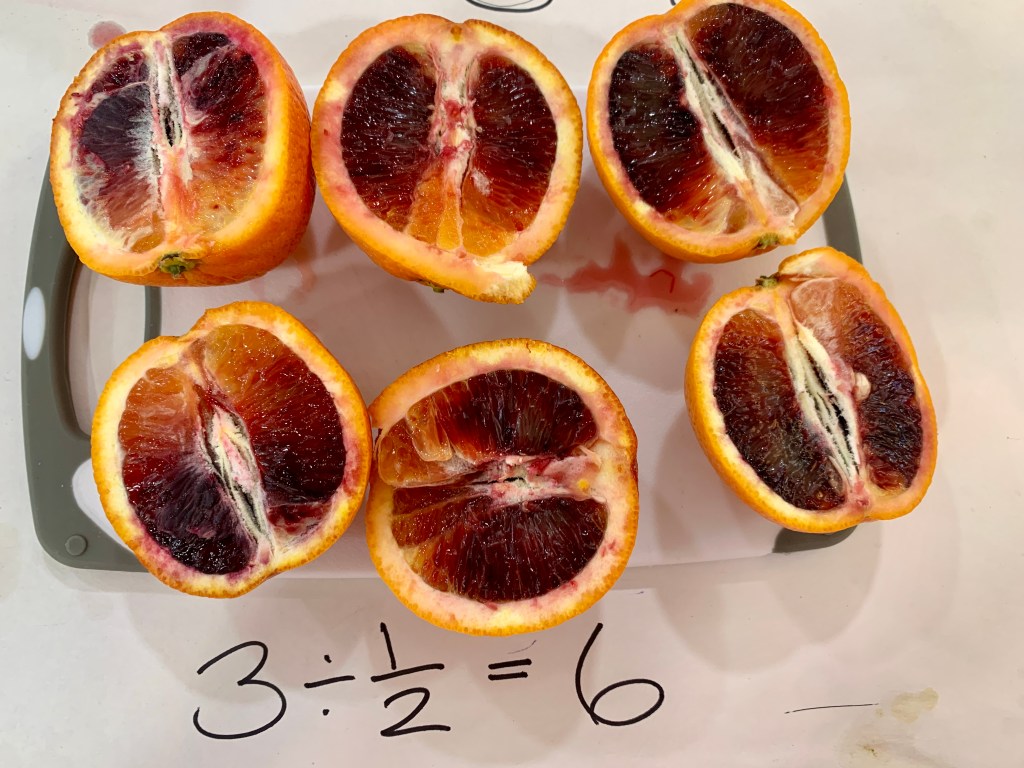
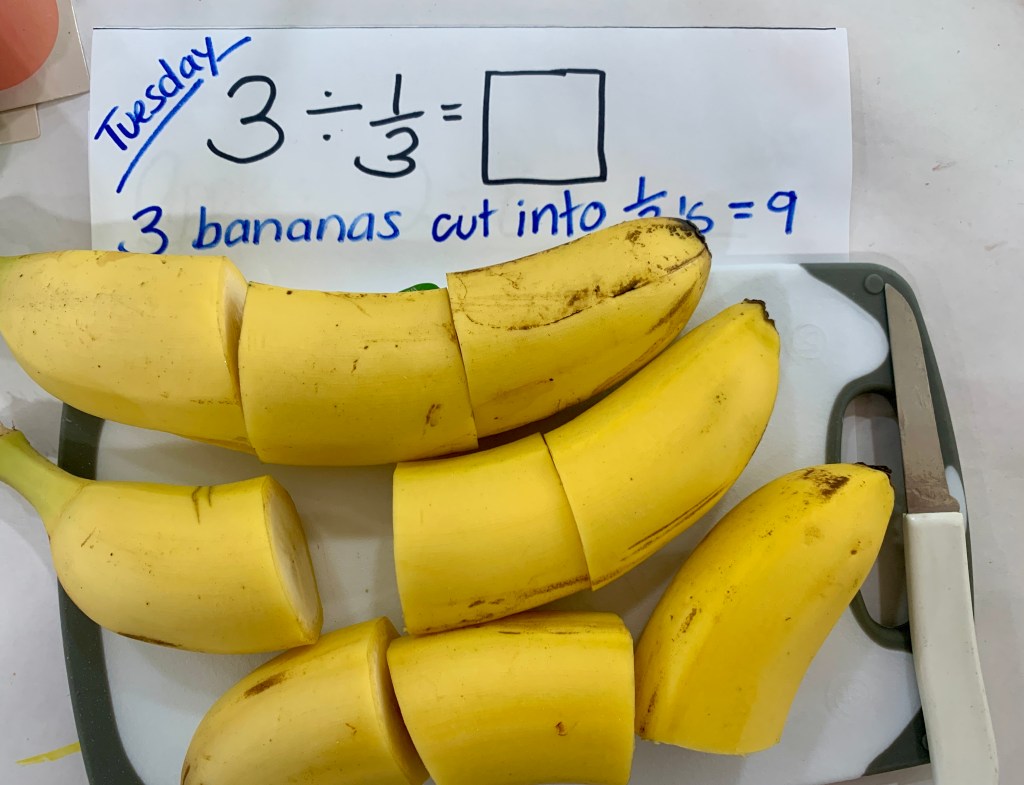
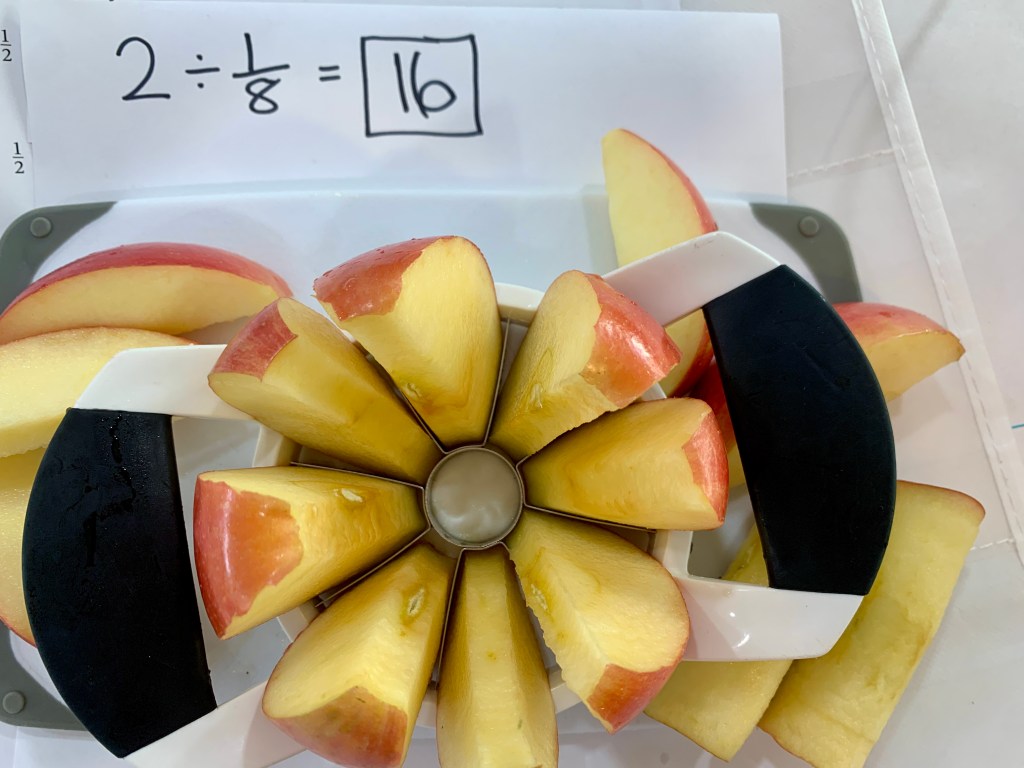
What do sunflower drawings, pattern blocks, rulers, and a classroom clothesline have in common? In third grade, they have all been bringing fractions to life.

Over the past several weeks in both Number Corner and their Bridges unit, third graders have been developing a meaningful understanding of fractions as numbers: not just pieces of shapes, but values that can be measured, compared, and located on a number line.

The learning began with a scenario challenge: How could an art club fairly share wall space for a mural? As students explored dividing the same whole among two, three, four, six, and even eight artists, they discovered the important role of the denominator and noticed how the size of each share changes as the whole is partitioned into more equal parts.

This foundational idea — that fractions represent equal parts of the same whole — helped students understand why fractions must refer to the same whole to be meaningfully compared.

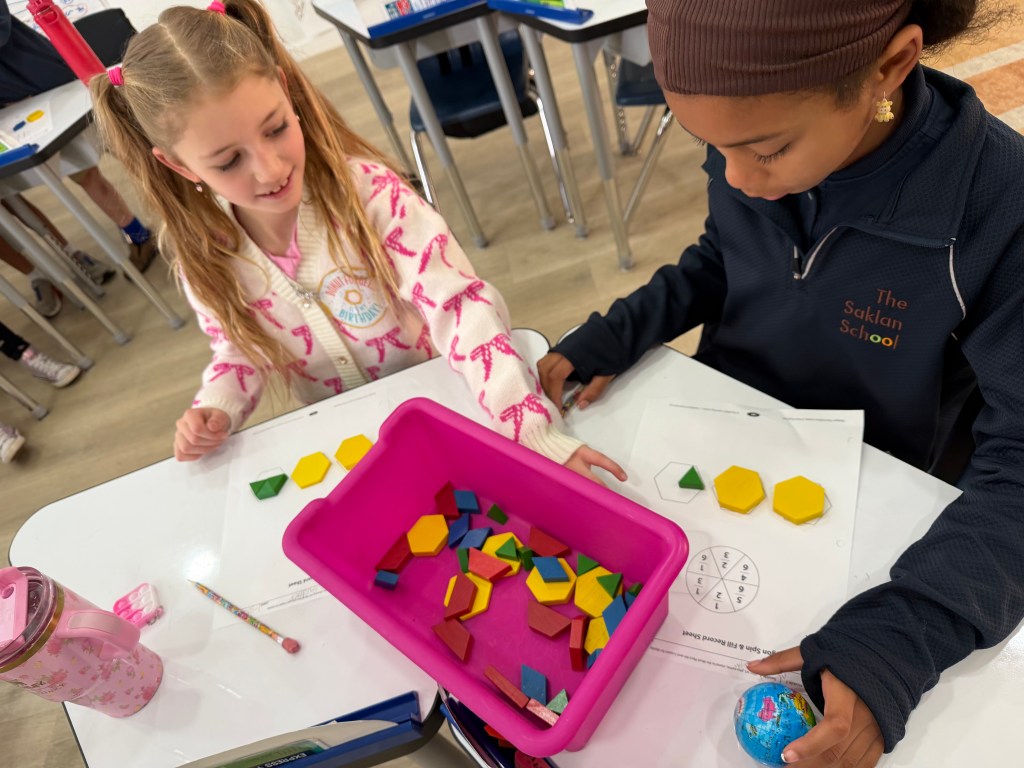
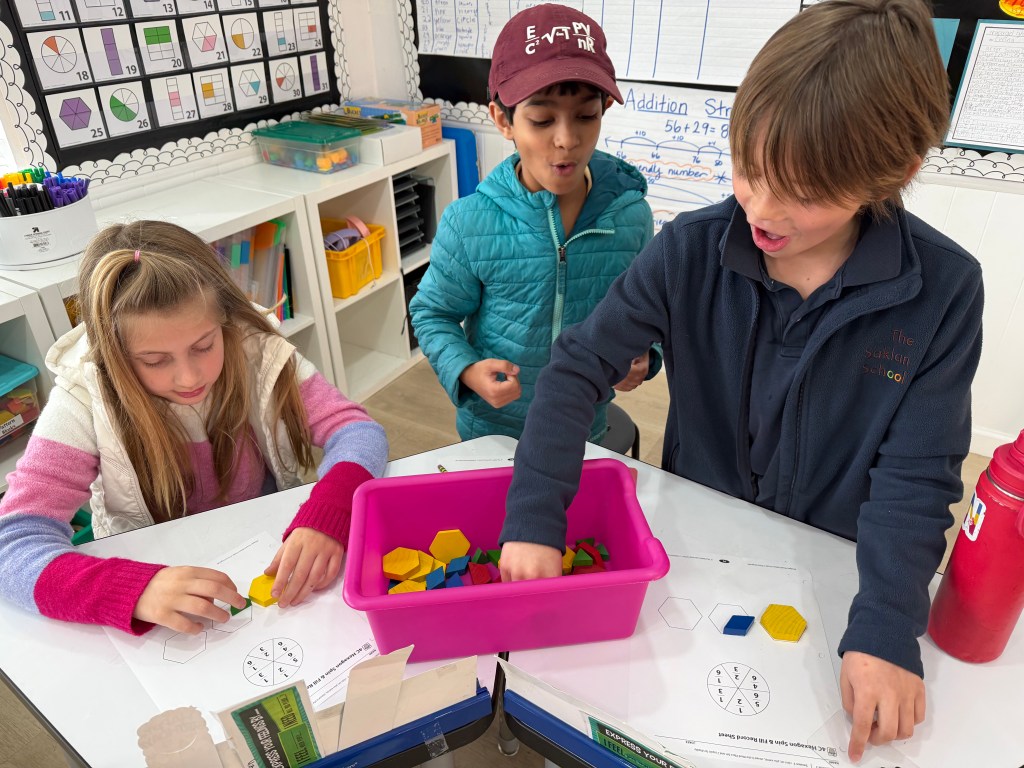
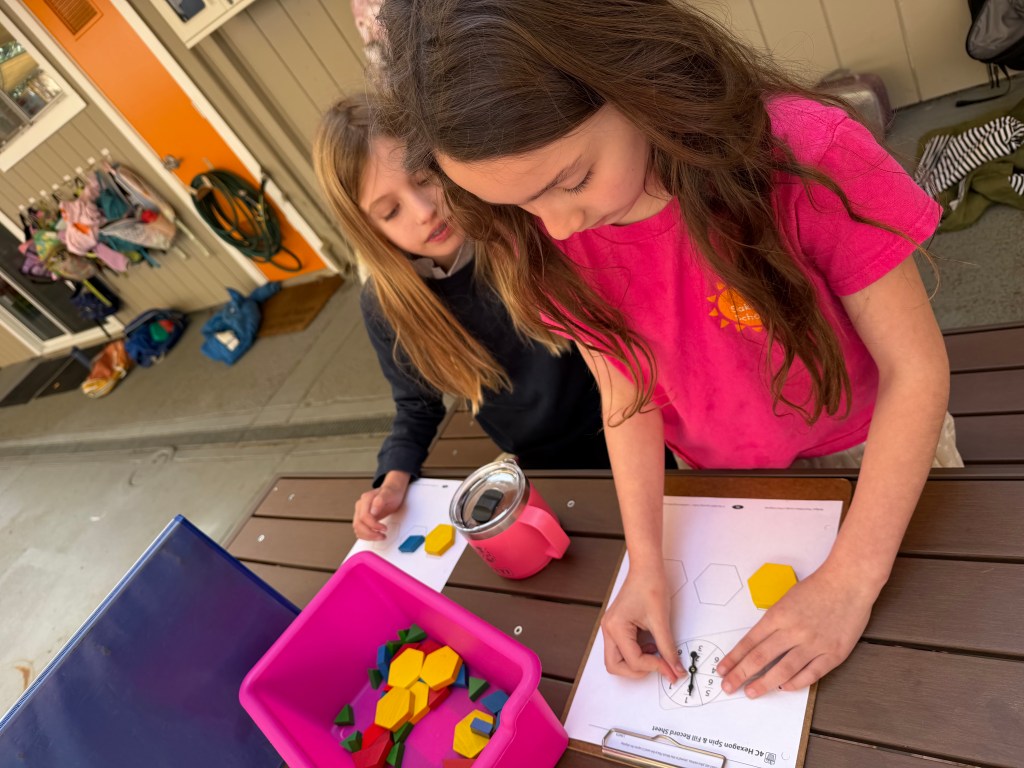
Hands-on exploration anchored the learning. Students folded paper into equal parts, modeled fractions with pattern blocks, and represented their thinking symbolically using numerators and denominators. Using a clothesline number line, students hung fractions in the correct location and justified their reasoning.

Through this visual and interactive experience, students discovered equivalent fractions and explored numbers greater than one, strengthening their understanding that fractions are numbers with precise locations and relationships.

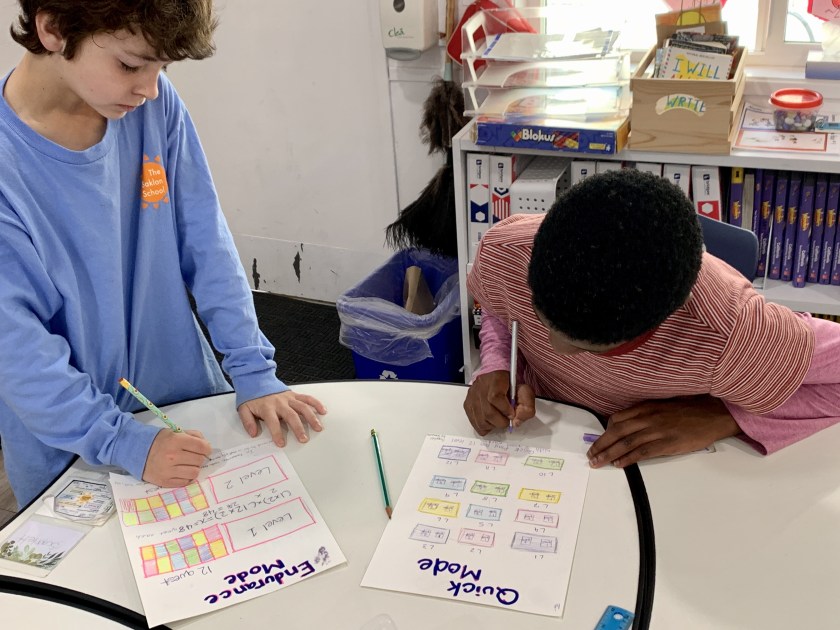
Fractions and measurement intersected when student pairs created detailed sunflower drawings and measured leaf lengths to the nearest ½ and ¼ inch. Workplace games like Fraction Tic-Tac-Toe and Hexagon Spin & Fill encouraged strategy, collaboration, and joyful practice.

These rich, hands-on experiences are building far more than fraction skills; they are strengthening mathematical confidence, perseverance, and flexible thinking.

#SaklanHandsOn

Exploring Polygons Through Reflection

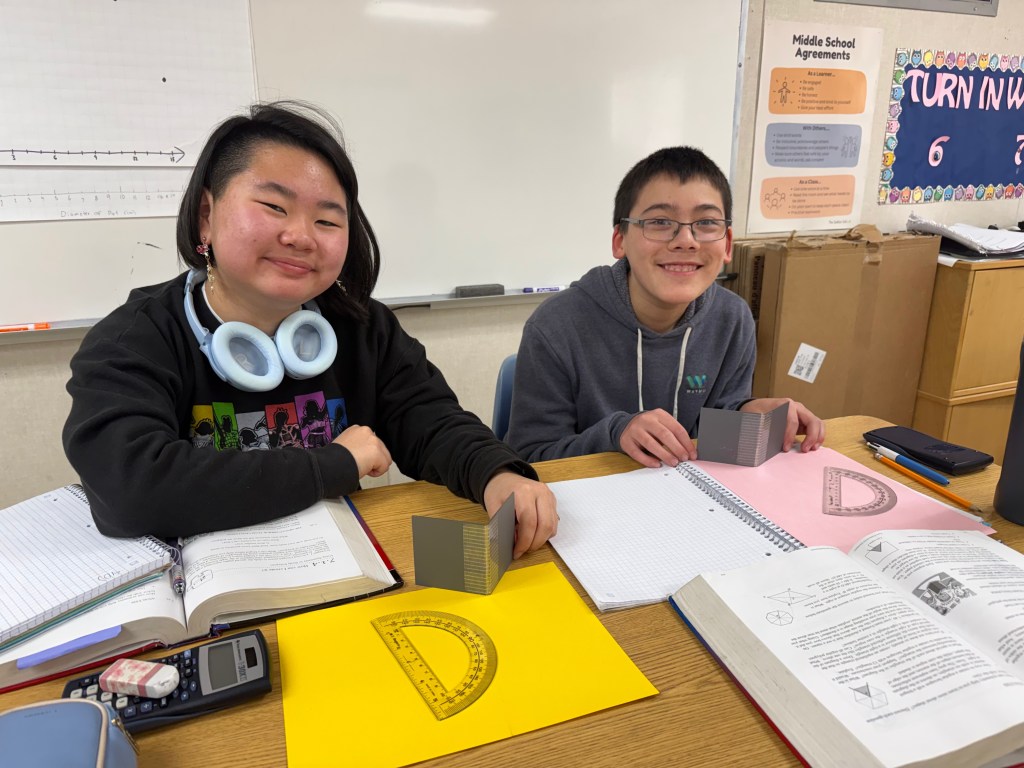
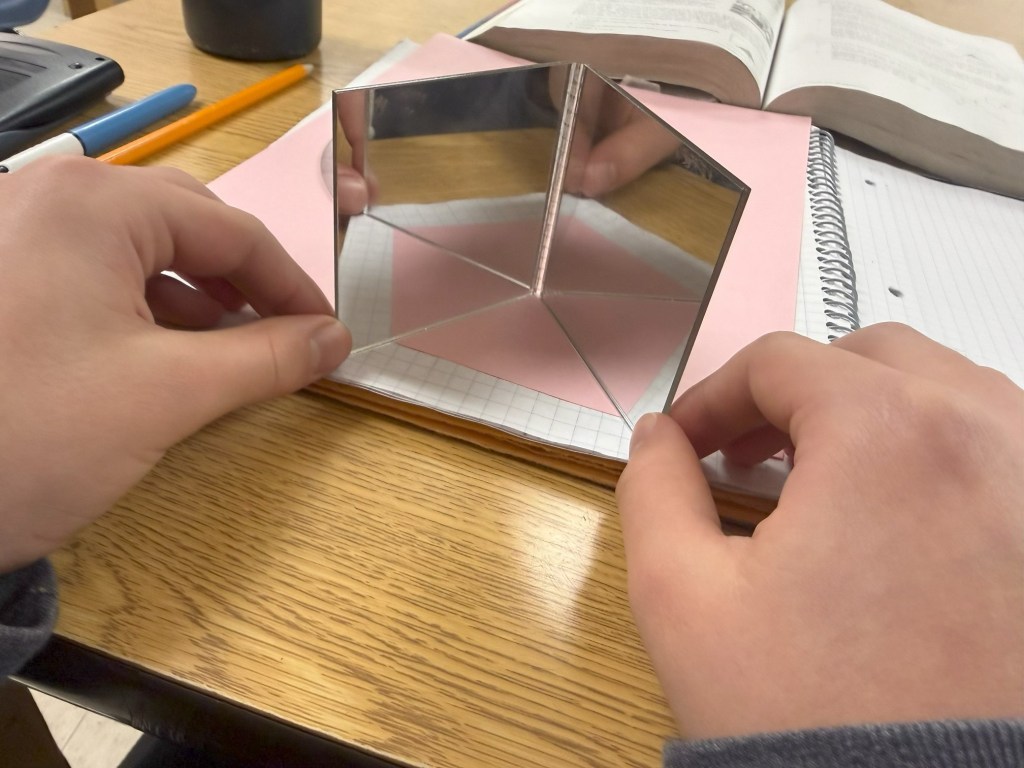
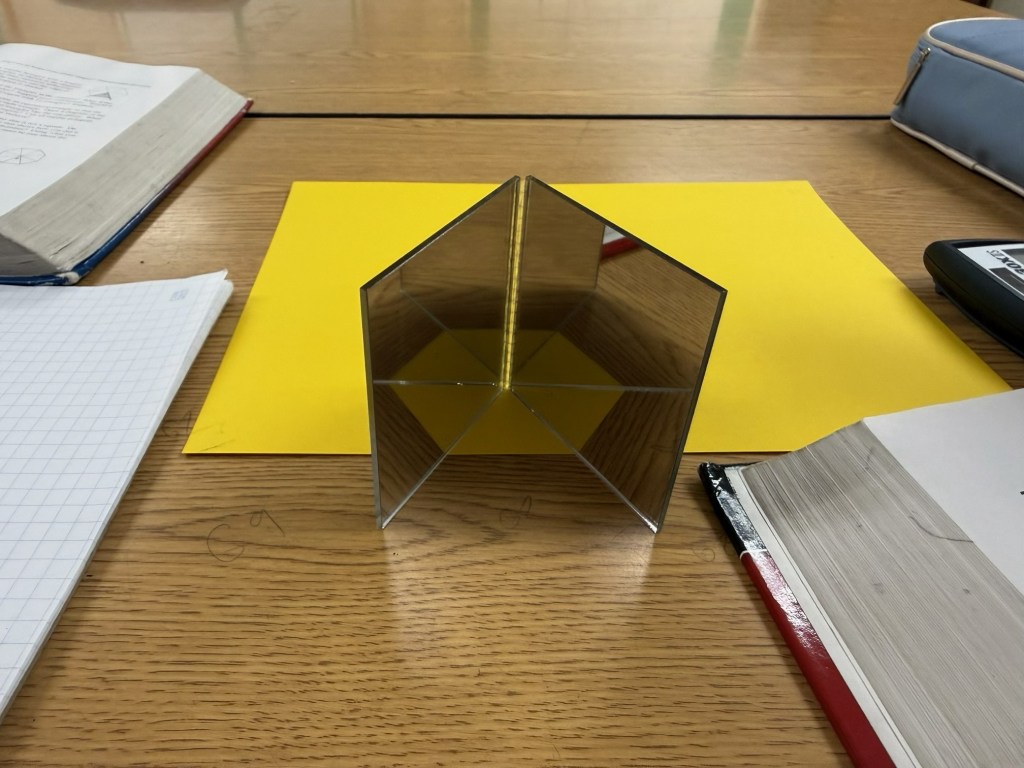
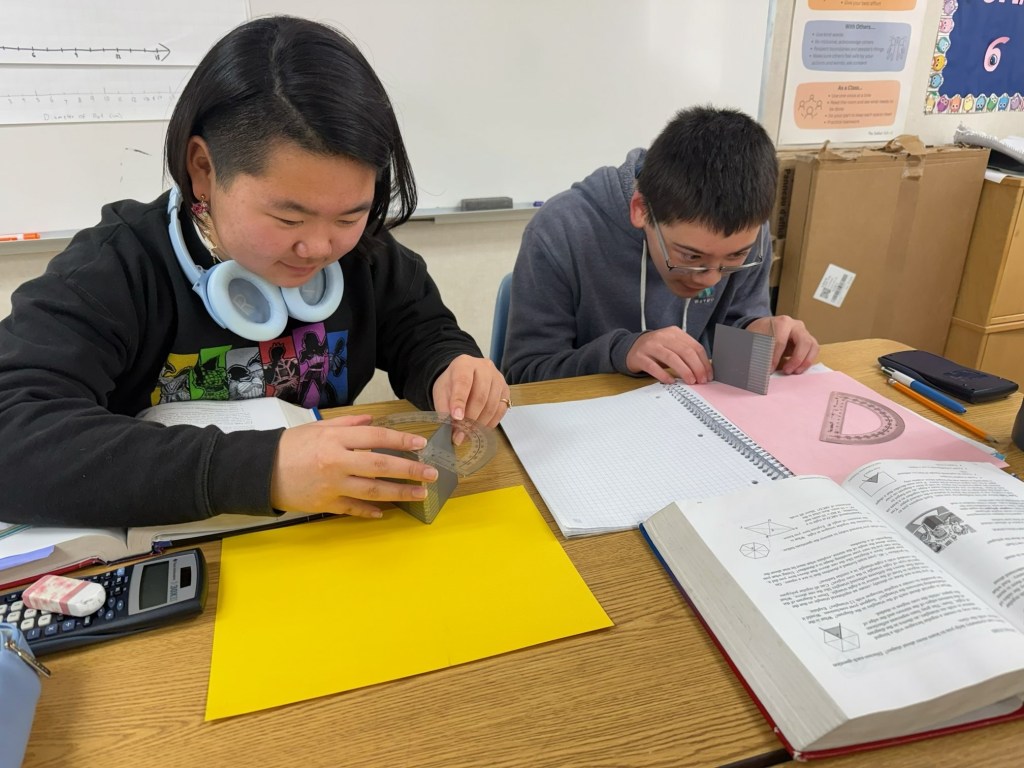
Last week, eighth-grade geometry students began a study of polygons and quadrilaterals using hinged mirrors, protractors, and colored paper to construct and analyze a variety of shapes. As they built regular hexagons, equilateral triangles in two different ways, and a rhombus that was not a square, students measured the angles formed by the mirror and noticed clear patterns, such as a 60° central angle for a hexagon and a 90° angle for a rhombus.

When students attempted to create a circle, they reasoned that a shape with infinitely many sides would require an angle of zero, leading to thoughtful discussion. Along the way, students made connections between reflection, congruent triangles, and perpendicular bisectors, strengthening their ability to observe patterns, explain their thinking, and build understanding through hands-on exploration.

#SaklanHandsOn

Building Big Math Thinking, One Gram at a Time

What do a paper clip, an eraser, and a handful of classroom treasures have in common? In the third-grade classroom, they are all helping build big mathematical thinking, one gram at a time.

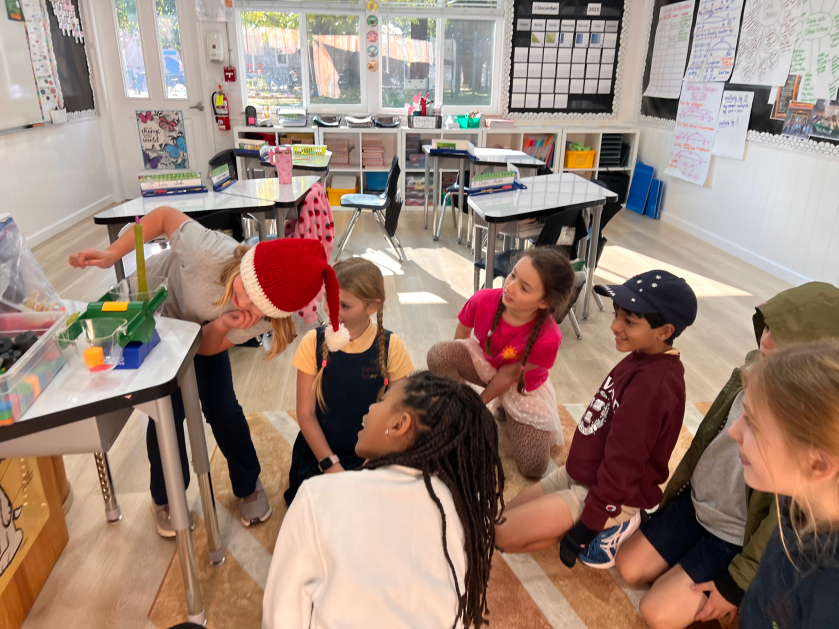
As part of their daily Number Corner routines, third graders have launched into a month-long, hands-on math investigation focused on measurement and estimation. Each day, a different student takes the lead by selecting an object to place on the pan balance and measuring its mass in grams. The excitement is palpable as classmates gather around to make predictions and watch the scale tip. Reactions like, “I didn’t think it would weigh that much!” spark meaningful conversations about size, weight, and accuracy.

This hands-on approach transforms abstract numbers into something students can see, touch, and reason about. As a class, students are working toward a shared goal: reaching 1 kilogram, or 1,000 grams, by the end of the month. Achieving that goal requires more than mathematical skill—it calls for collaboration, patience, and perseverance. Each day, students estimate how many grams are still needed, strengthening number sense while practicing flexible thinking and reflection.

Equally important, this routine fosters student agency. Children make choices, ask thoughtful questions, and learn from one another, shaping the learning experience through their curiosity and observations. The result is a joyful blend of engaging academics, social-emotional growth, and hands-on discovery.

#SaklanHandsOn