Middle School Students Live the Mission


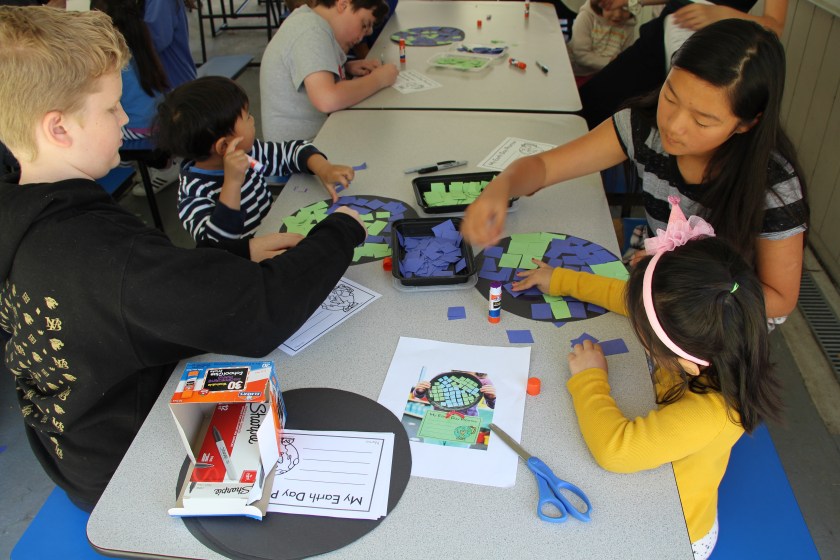
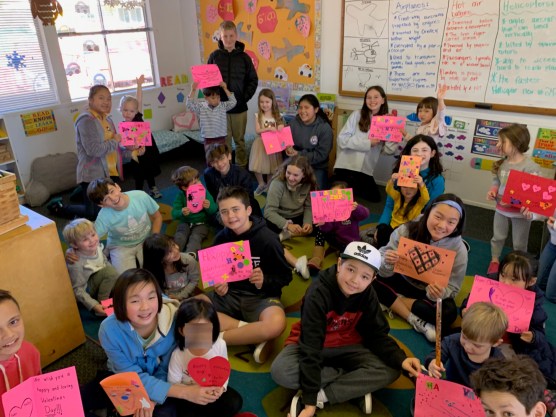
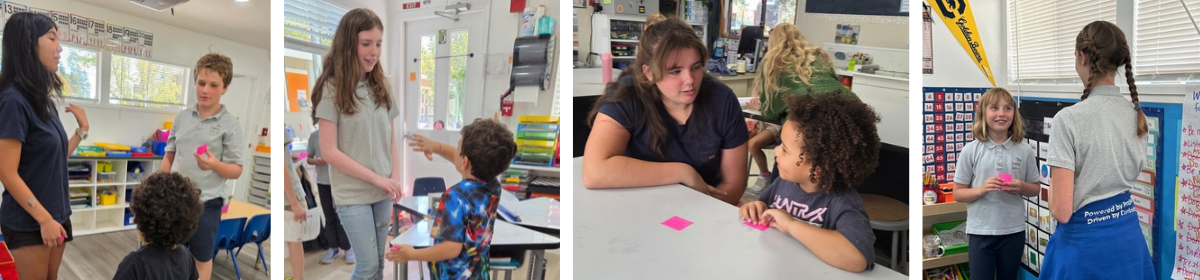
Last week, the Owlet and 6th grade buddies collaborated their creative skills by creating Valentines for our neighbors at Aegis of Moraga. This activity tied into our January Social-Emotional Learning (SEL) theme of inclusion, as we are extending our Saklan Valentine celebration to others in our community. The buddy program at Saklan allows for students from various grade levels to build relationships, practice communication skills, and teaches the older buddies essential leadership skills. It is a well-loved tradition! #SaklanConnected #SaklanCompassionate #SaklanCreative
Exploring the world-class art museums in our nation’s capital is often one of the most challenging, mind-bending activities for many 8th graders during our DC field study. Many kids go into these places with severely limited, preconceived notions about what art is. Of course, one of the project’s goals is to vanquish (or at least diminish) such prejudices. It’s always fun to see how far students stretch their minds throughout the course of their cultural investigations. While in Washington and after we return to school, the kids process what they learned in many different ways. The extraordinary multimedia presentations below on the National Gallery of Art and the Hirshhorn exemplify the value of our experiential learning activities and Saklan’s commitment to providing students with rich opportunities to flex their creativity.
Kyle Yasumura on the National Gallery:
His final takeaway: “I will rethink what I see as art because until now I just thought that anything could be art as long as you thought of it that way, but now I’ve realized that sometimes art is about the craftsmanship and not whether you just call it art.”
Juliet Pecher on the Hirshhorn:
“I now have a broader perspective of what art is and will apply it to my own work.”
Indeed! #SaklanExperiental
For the grand finale of the Washington D.C. project this year, the 8th graders had a complete freedom of choice in terms of how they could approach a multimedia presentation on their subject matter. Just like with their essays, the primary guiding principle was that they would have to prove their argument with plenty of evidence from their research. Ari Tamkin went above and beyond with this animated video on Civil Rights icon Martin Luther King, Jr. The question she was answering: “How does the MLK memorial represent US cultural values?” Check out her response above!
Tumbling down from the sky and landing in our play yard, our Owlets and Hoot Owls had a special visitor this week. They were deliriously excited, to say the least. A pigeon! Close up and personal! They were amused and had many questions. Their curiosity was uncontainable. Look! He has a green bracelet! What is it? Why is it here? Is it hurt?
Our little Friend was tagged with his “name” and his owner’s information. After a little bit of detective work on the American Racing Pigeon Union site, we were able to find out that he was lost and where he came from.
To make a 2-day story short, our Feathered Friend is at home with Matt from Concord. Matt says “Thank you” to our Owlets and Hoot Owls for showing compassion and concern for the safety and well-being of our Feathered Friend.

Last month, Jerry the traveling teddy bear, spent time on our campus. He interacted with many of our students, took part in discussions, ate lunch with the students, attended field trips, watched the lower school play, and saw how students in California live. He will take the knowledge on to Connecticut and then on to Europe before he returns to Hong Kong.
The traveling teddy bear program is designed to help encourage students to learn about other areas of the world, and to also share one of the UN Sustainable Development goals with students around the world. Jerry shared the responsible consumption and production goal. He was proud to see our students recycling and composting.
You can read about his journey here.

The Saklan Student Council hosted a community toy drive this past holiday season for the non-profit organization called Bananas, which is located in Oakland. Bananas’ mission is to help raise happy, confident children by providing resources and support to families and childcare providers. If you are interested in learning more about Bananas, please click here.

The Student Council officers chose this local organization for three reasons. First, the officers wanted to help other children have a joyful holiday. Second, they wanted to support local organizations that work with Bay Area families. Third, Bananas company mission is similar to Saklan’s in that we both want to raise confident children who are compassionate, happy human beings. Our Student Council Co-Presidents, Max Budowski and Harrison Leenhouts, delivered the toys to Bananas. Fortunately, our Saklan families donated so many toys, games, books, children’s clothing, diapers, and baby furniture that it filled the organization’s office. As you can see from Max and Harrison’s smiles, they are proud of Saklan’s generosity. Thank you for supporting this worthy cause!
The Owlets had fun again with their big 6th grade buddies last week. Before they met with their big buddies, the Owlets learnt what thoughtfulness is, and then their big buddy explained it again. Then they made an ornament that said “Thoughtfulness is…”
Big and little buddies discussed how they are thoughtful and the big buddy wrote their responses on the ornament. Some of what the Owlets and big buddies said was:
Ms. Joy made 2 Christmas trees, one for the Owlets door and one for the middle school area, that has their thoughtfulness ornaments on them.

The 8th grade Humanities class recently wrapped up its month-long, collaborative, map-making, research project on US cultural geography. Academically, the students were challenged to understand how the way people live affects where they live (and vice-versa). On this level, the project is about making connections from the land to the people and trying to grasp the breadth of interconnections that goes into everything.
Students must work individually, in small groups, and as a cohesive class to discover and find a way to visually represent the personality of each state in an effort to understand cultural similarities and differences in various parts of the country. They also learn how to problem-solve creatively and work efficiently in a deadline situation.

For maximum creativity on the artistic part of the project, the kids tried to employ “Think Like a Genius” methods, including looking at problems from multiple angles, making novel combinations, and using symbolism. In terms of working together, they were asked to follow a number of “Cooperation Guidelines,” including listening, asking strong questions, encouraging others with positive feedback, disagreeing in an agreeable way, and the ever-popular STAY ON TASK. They would track their progress with weekly reflections, and regular formative assessments also led to greater self-awareness and personal growth as the project proceeded.
The result is a beautiful map, a solid introduction to US cultural values, a more cohesive class, and a toolbox of powerful strategies for collaboration, critical thinking, and creative problem-solving.
You must be logged in to post a comment.