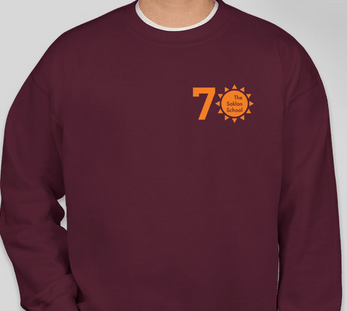
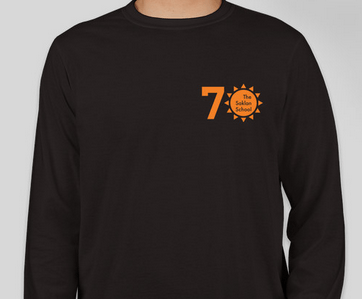
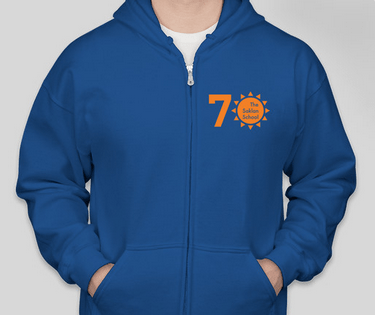
As part of the 70th Anniversary Spirit Wear, Saklan is excited to offer sweatshirts and long-sleeve shirts! The order deadline for these items is November 15th. Items will arrive at Saklan the first week of December.
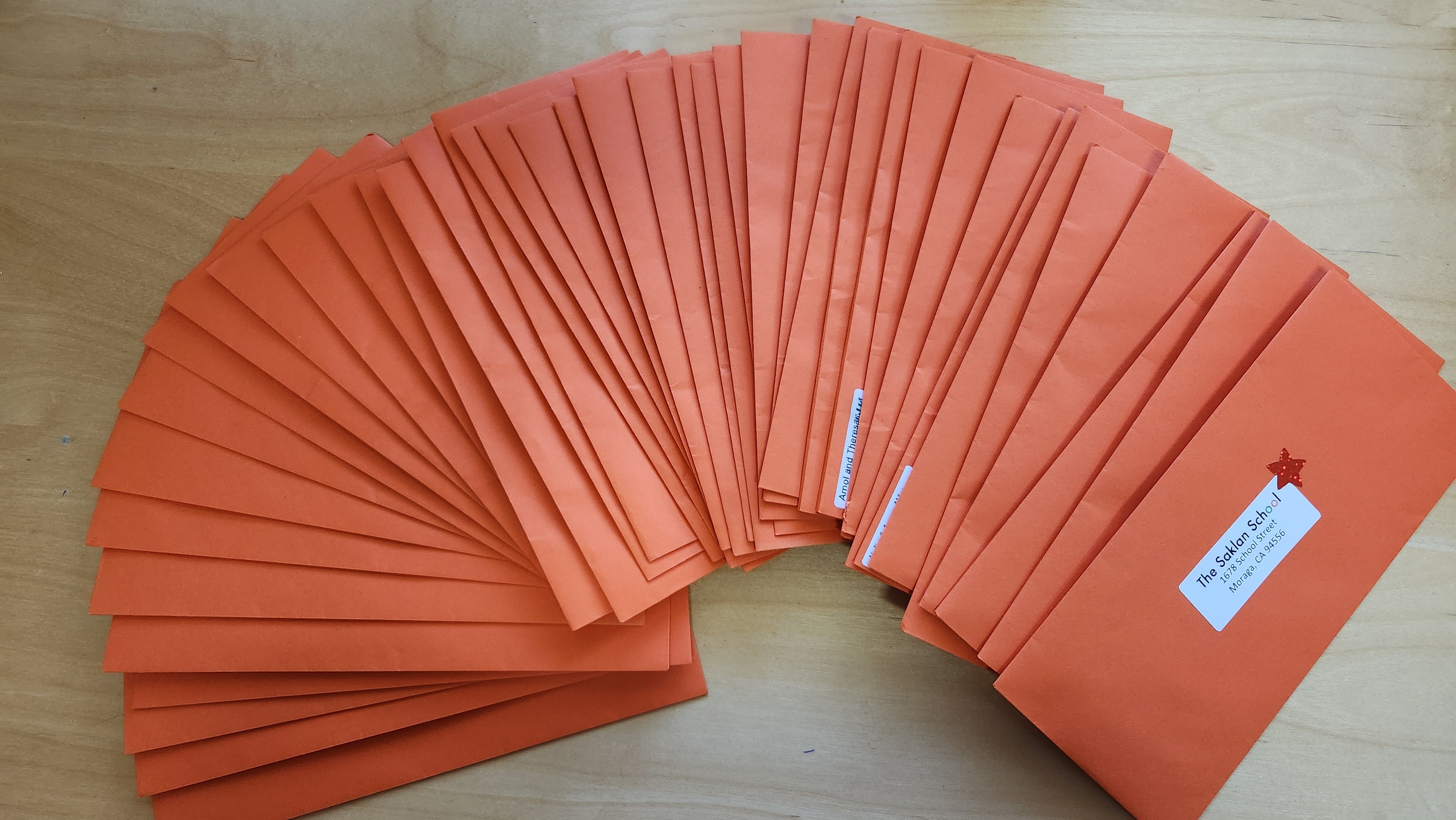
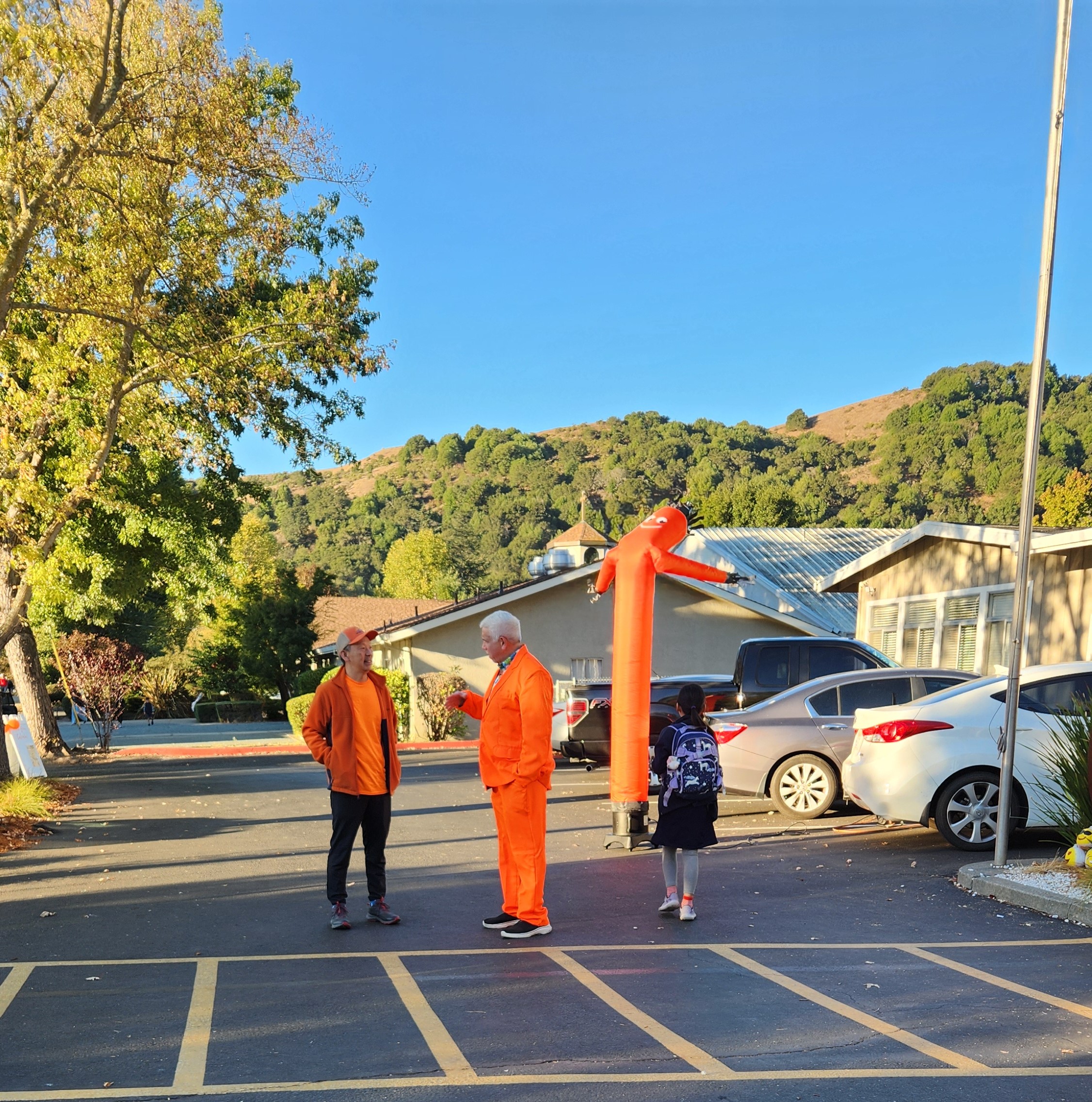
Thursday, October 24th, marked Saklan’s fourth annual Orange Envelope Day! Kicking off our Annual Giving Fund (AGF) with lots of enthusiasm, students and parents dropped their orange donation envelopes in the orange box and rang the cowbell to mark the occasion. The envelopes, along with the orange sky dancer, brought lots of joy and attention to drop off and pick up!
Thank you for helping to make it historic. Orange Envelope Day 2024 yielded 48 gifts and participation from 44% of our families- our best Orange Envelope Day to date! Go Saklan!
Thank you so much to everyone who participated in Orange Envelope Day! It speaks volumes about our community that families are willing to contribute a meaningful gift to the AGF. Each gift supports our commitment to hands-on, Project Based Learning and fostering a sense of belonging and connection with every student. Moreover, it strengthens the bond of shared common values between all of us.
Thank you for believing in Saklan to partner with you in your child’s educational journey. Thank you to those who have already shown their support for the AGF. We are a little over halfway to our goals of raising $200,000 and reaching 100% participation.
Help us reach 100% participation by making a gift that is meaningful to you and your family today. Gifts can be made online or by completing the donor form that was included in your AGF mailing and returning it to the Saklan Office.
Saklan’s 24-25 Annual Giving Fund (AGF) officially begins next Thursday, October 24th with Orange Envelope Day! All Saklan families are invited to join us in celebrating Orange Envelope Day by dropping off the orange envelope and donor form that was mailed to you in the orange box in front of Saklan.
Thank you to those who have already made a gift. Below are important things to know about Saklan’s AGF.
What is the AGF?
The Annual Giving Fund is Saklan’s yearly fundraising drive that raises money to support the amazing people and programs that make Saklan special.
Why do we have it?
Saklan relies on the generous support of the community to create such a vibrant place for children to learn and develop. AGF gifts support things such as science lab equipment, professional development for faculty and staff, tuition assistance, field experiences and guest experts.
Is there a Goal?
This year, our goal as a school is to have 100% of families participate and raise $200,000. Join us by making a gift that is personally meaningful to you. For some families that may be $20, while for others that may be $20,000.
How can I make a gift?
You can make an AGF gift via the following methods:
Cash or a Check payable to The Saklan School
Online using a Credit Card – The online platform gives you the option to set up recurring payments that allow you to pay for your donation over several months.
Invoiced through the Saklan Business Office.
Have questions about Saklan’s AGF? Feel free to reach out to Cristen at development@saklan.org.
Thank you for your support of Saklan.
Orange Spirit Day
All Saklan students are invited to wear orange on Thursday to celebrate Orange Envelope Day! First – eighth graders wearing orange do not need to be in uniform.
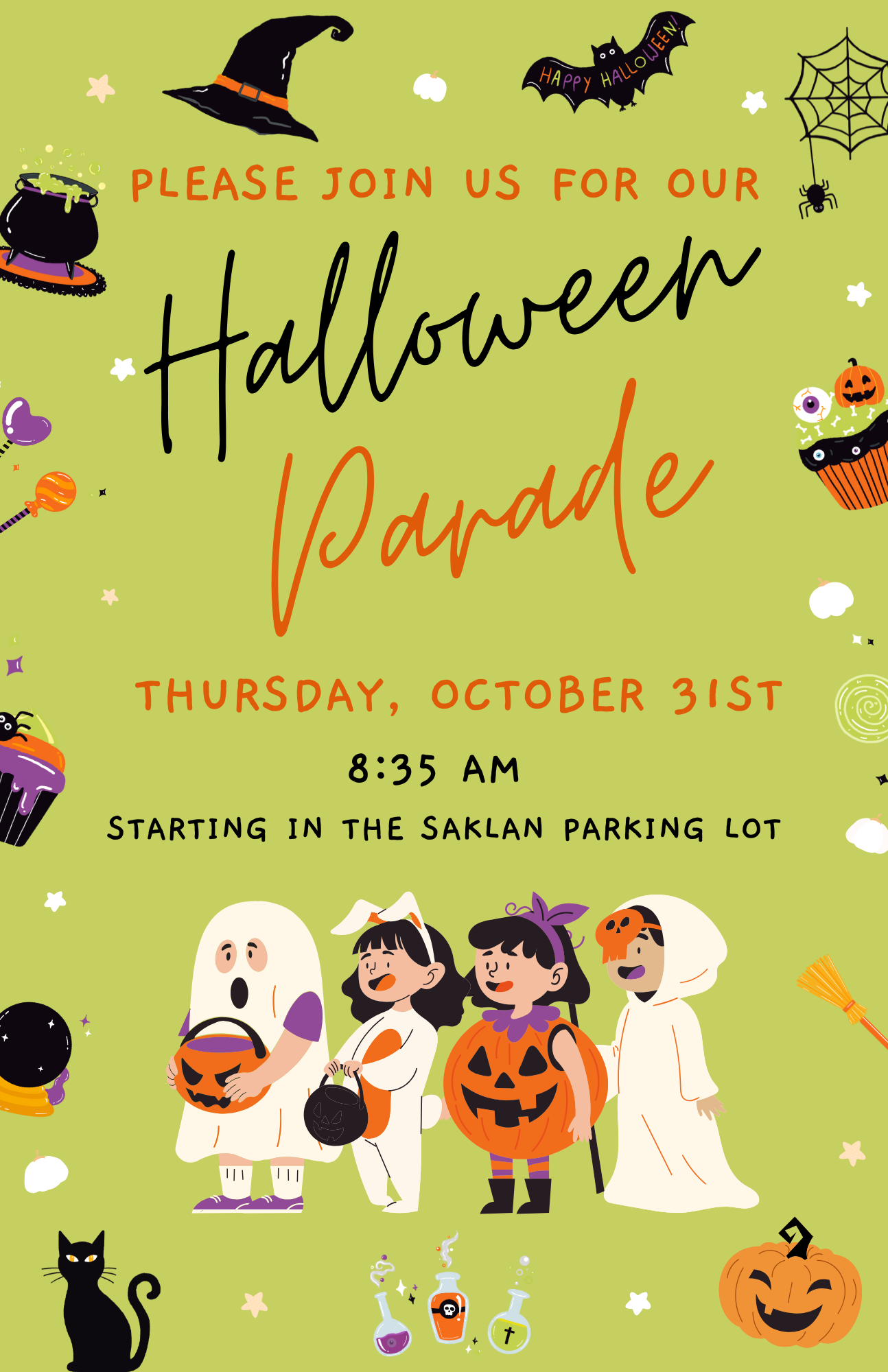
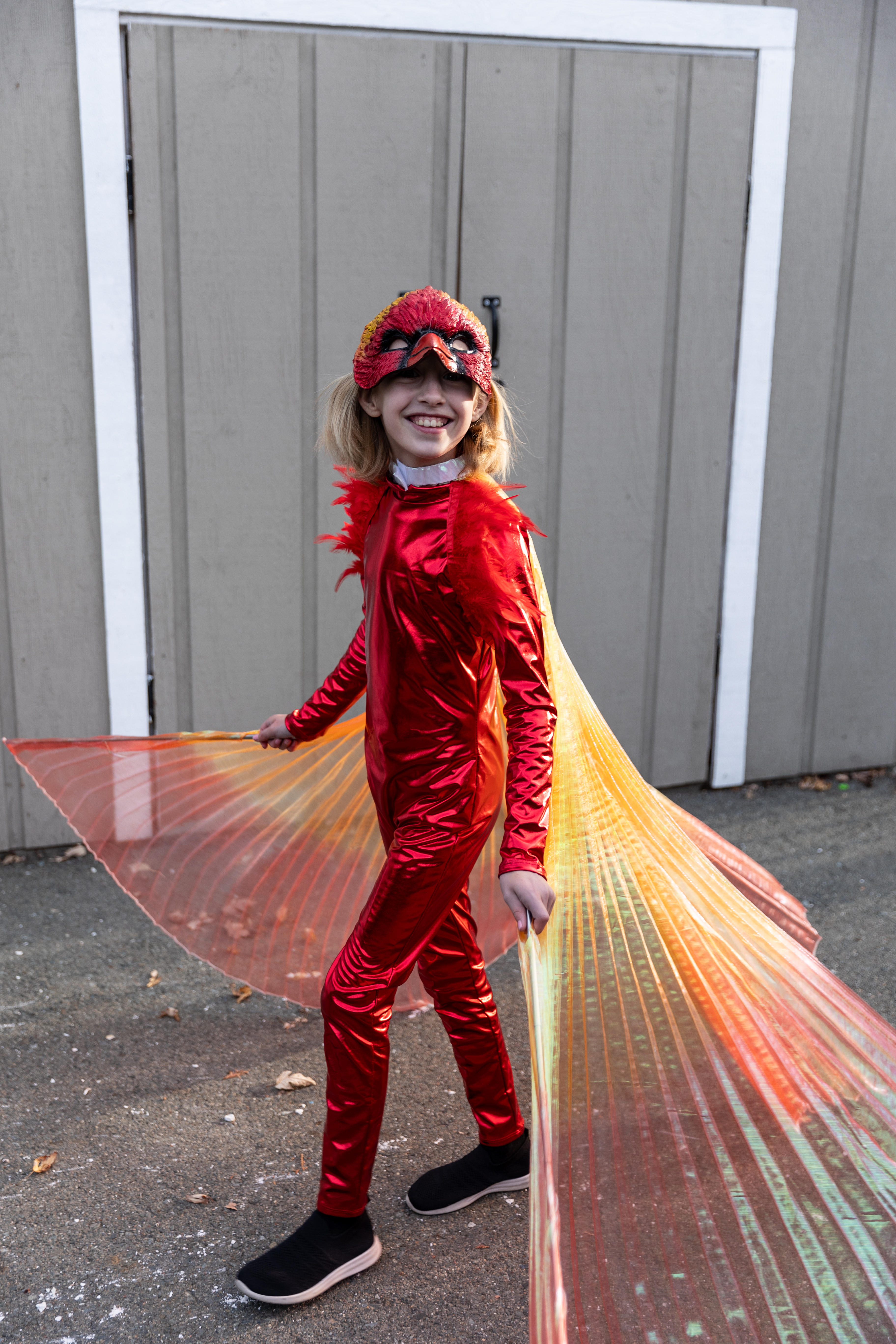
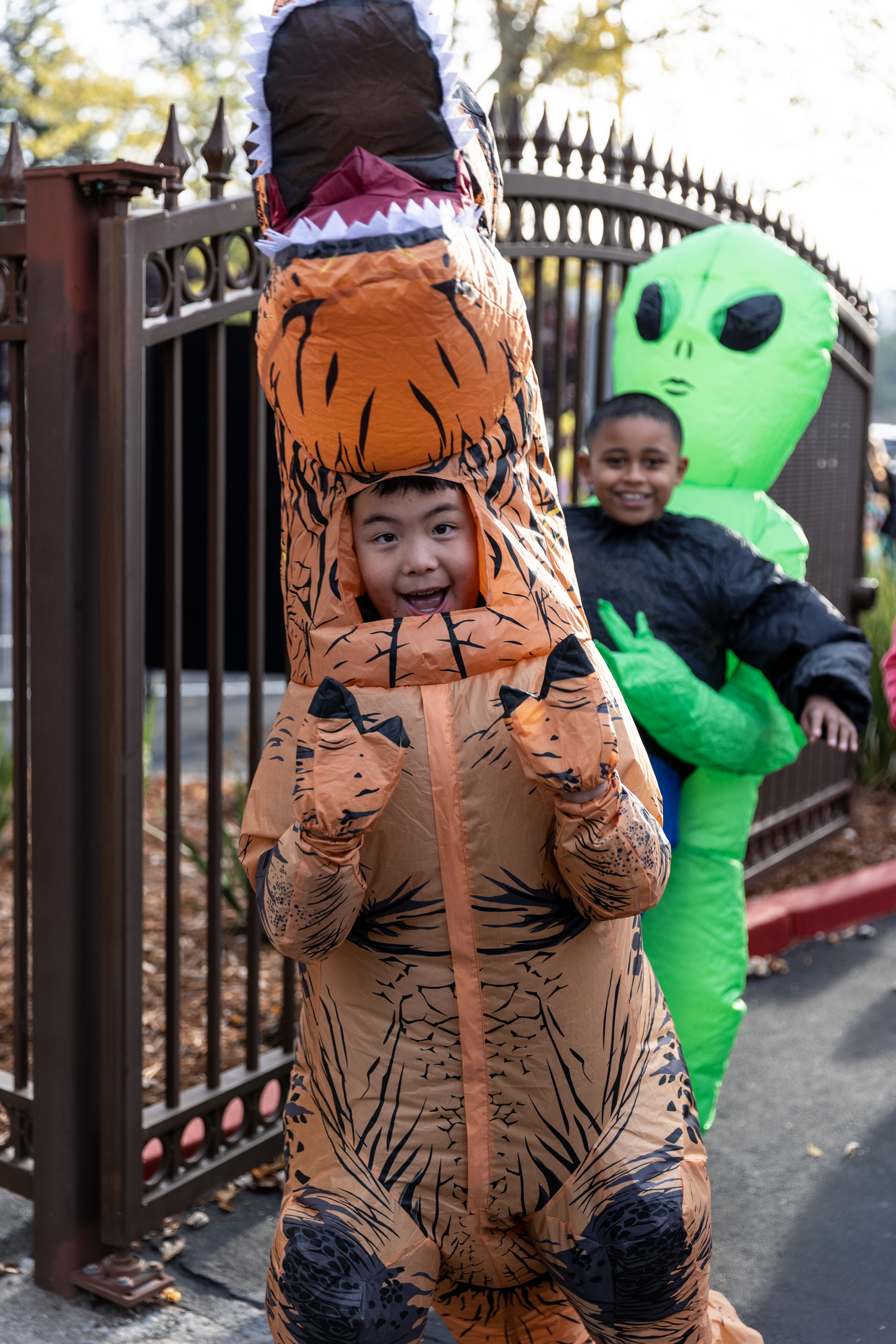
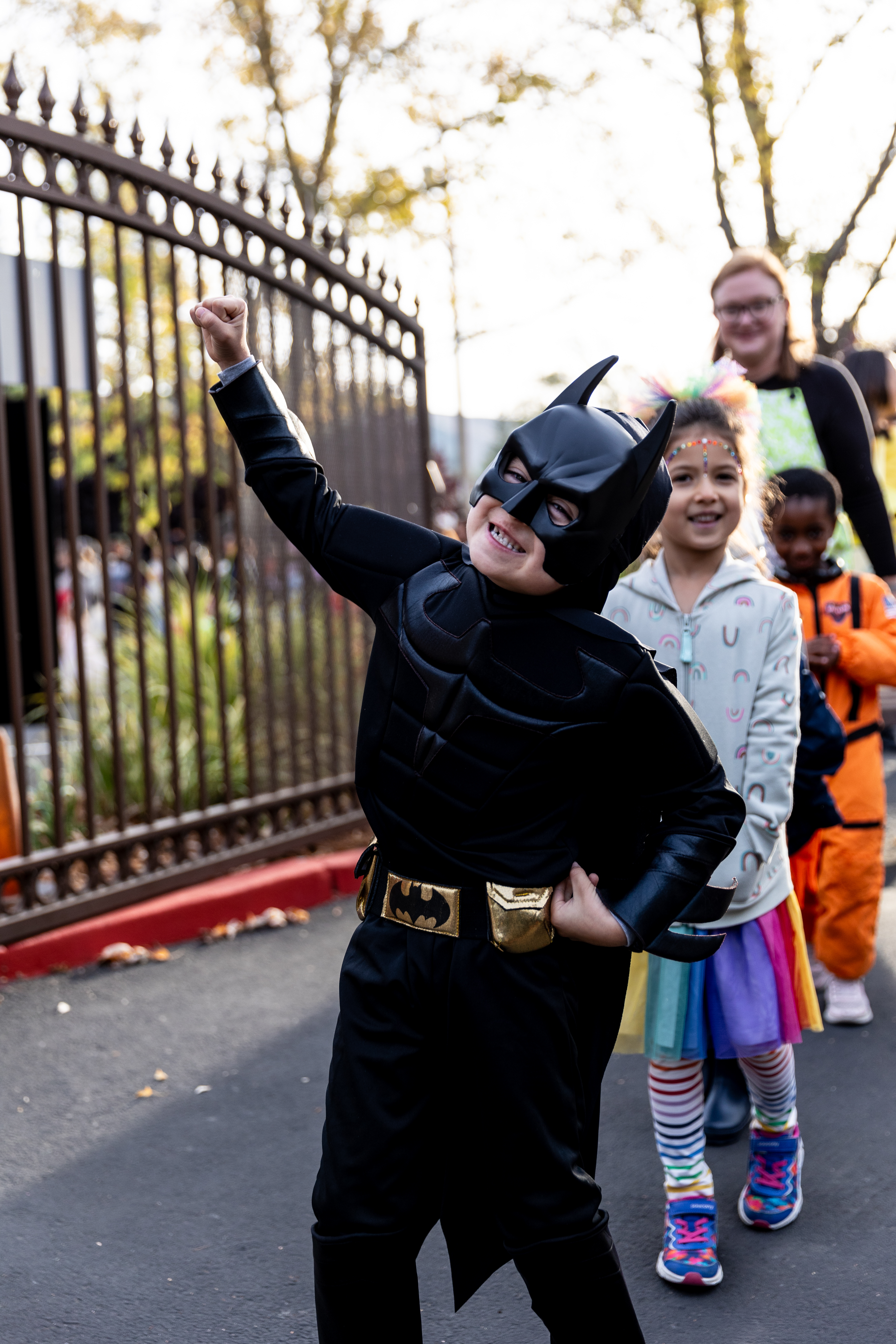
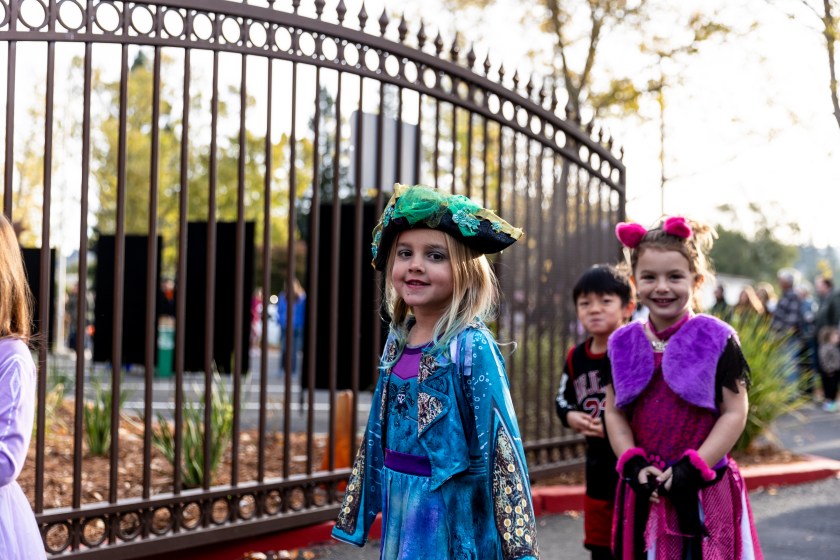
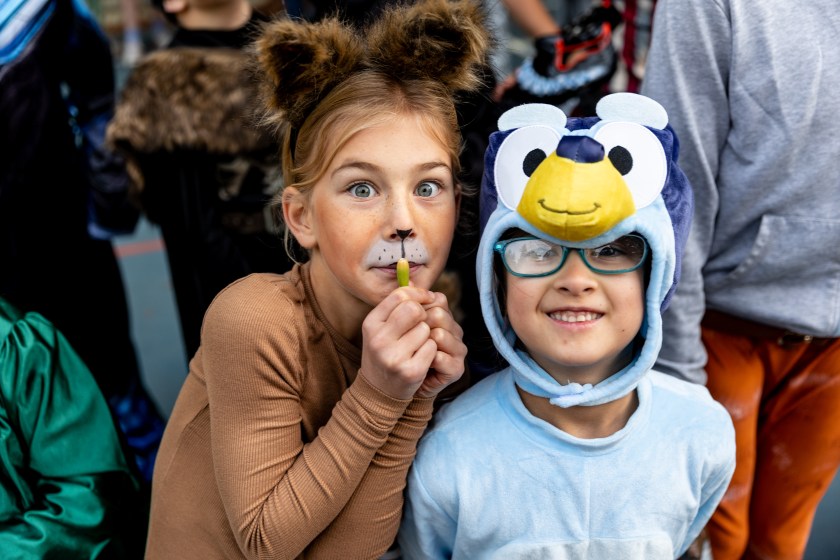
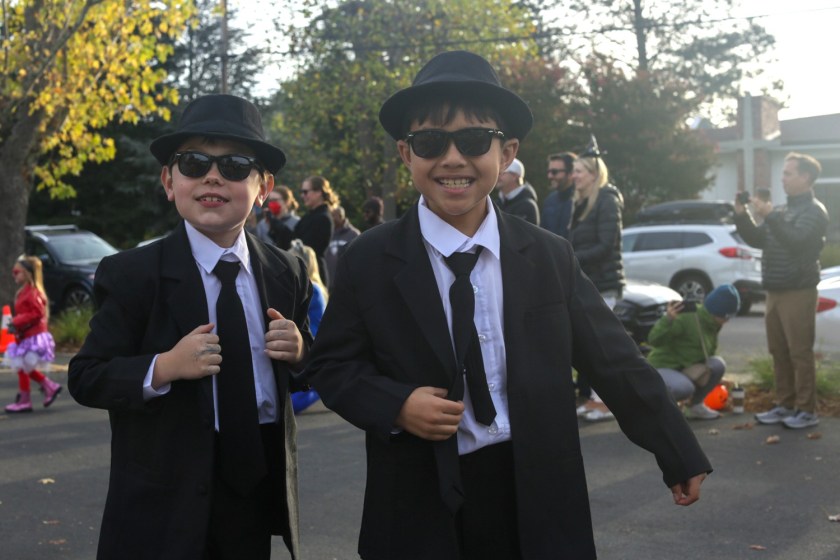
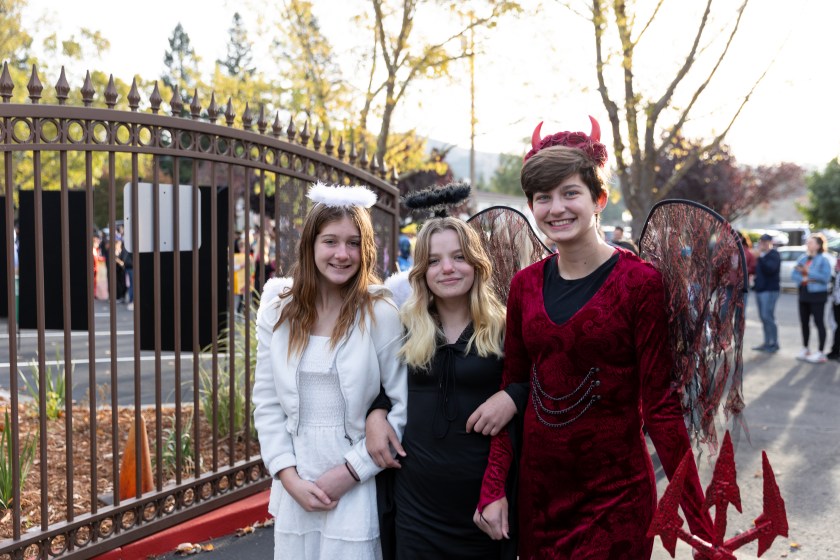
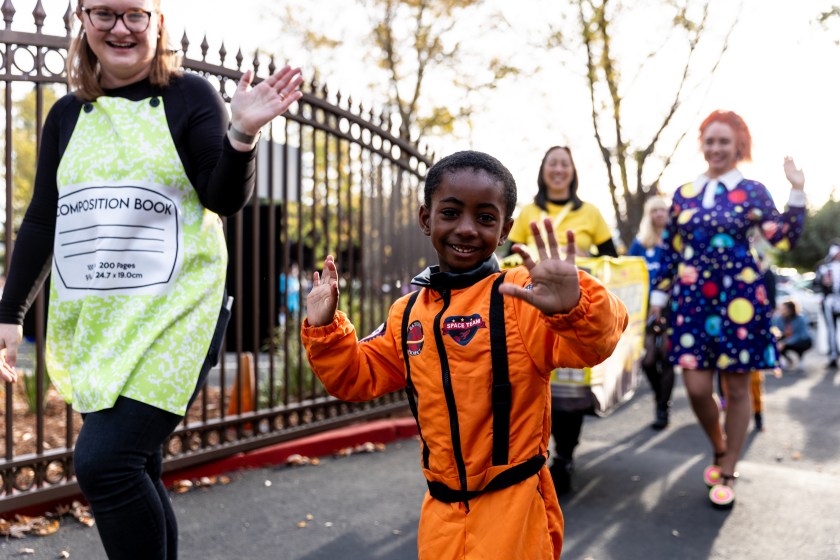
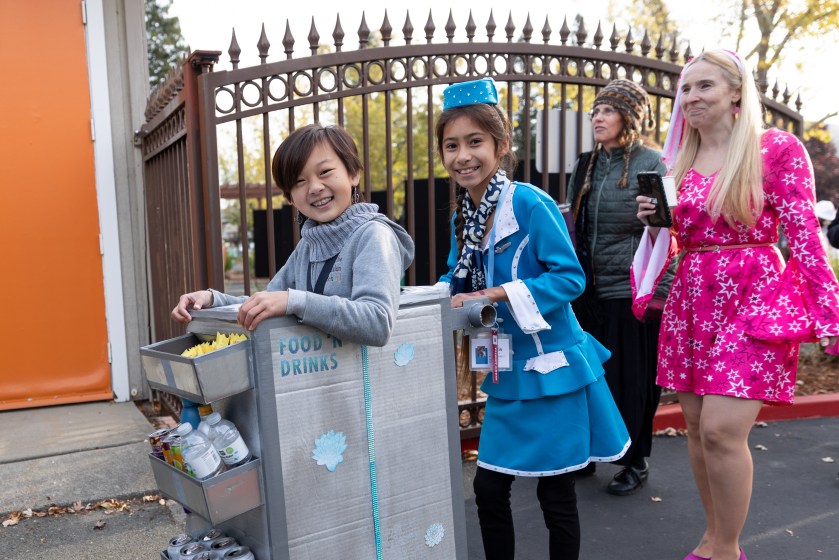
On Thursday, October 31st Saklan will celebrate Halloween! The day will begin with a Halloween Costume Parade at 8:35 a.m. The parade route will lead the students out the Admissions door, through the parking lot, and down the fire lane to the Saklan Sports Court for singing, dancing, and another look at all the costumes. For safety reasons, the parking lot will be closed. Families are invited to join us; cheering, clapping, and taking photos are highly encouraged!
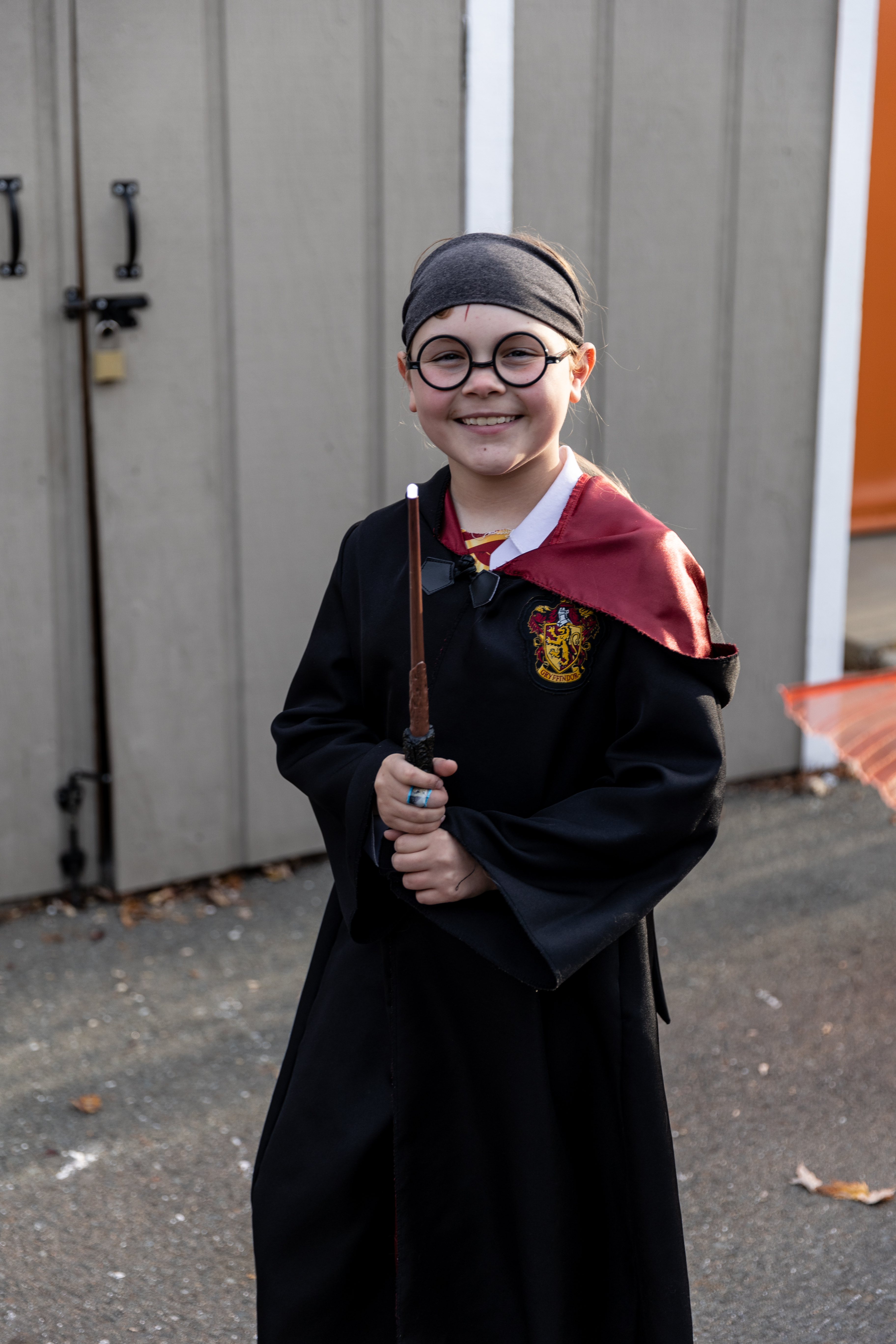
All Saklan students are welcome to wear their costumes to school on Halloween. Costumes need to be appropriate for a school and all grade levels, Preschool – 8th grade.No toy weapons, no gore, and no culturally, ethnically, or racially insensitive costumes. If you have any questions, please contact David.
If your child’s costume isn’t comfortable for all-day wear, please send them with a change of clothes for later in the day – no uniforms necessary. Please send your child to school with a normal pair of shoes for outdoor play.
This year’s Student Council election reminded us all that democracy is alive and well here at Saklan. Nineteen Middle School students submitted their candidacies for six Student Council offices, and the race was on! Voting took place on October 4th at the end of a vigorous and exciting campaign.
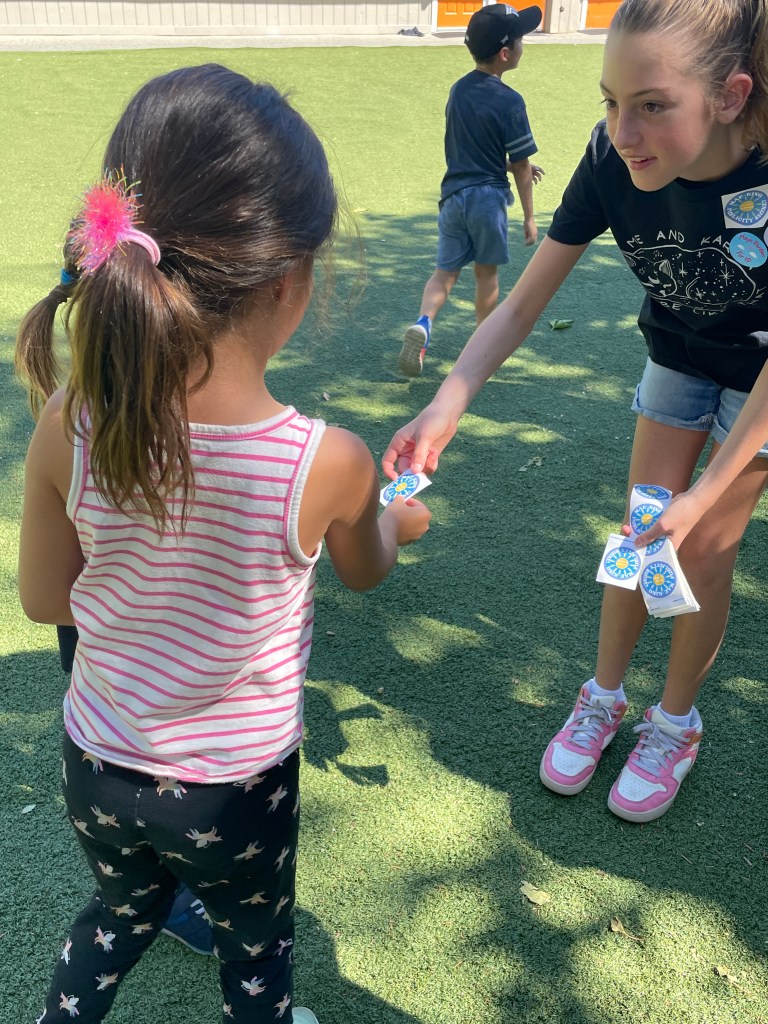
Earning a seat as a Student Council officer involves more than simply winning the popular vote. Each candidate had to submit a Letter of Intent, make a campaign poster, sit for an interview conducted by Jennifer Lettieri and Kim Parks, and share slogans and stickers with the Lower School students during lunch recess.
The culmination of their campaign was their speech at CLAS before balloting took place in grades 1 through 8. Candidates were awarded points for timeliness and quality when carrying out each of these tasks, and the candidates with the most points were the winners.
Lower School Student Council representatives were selected by their classmates and respective homeroom teachers in grades 1-5.
Congratulations to our 2024-2025 Student Council members!
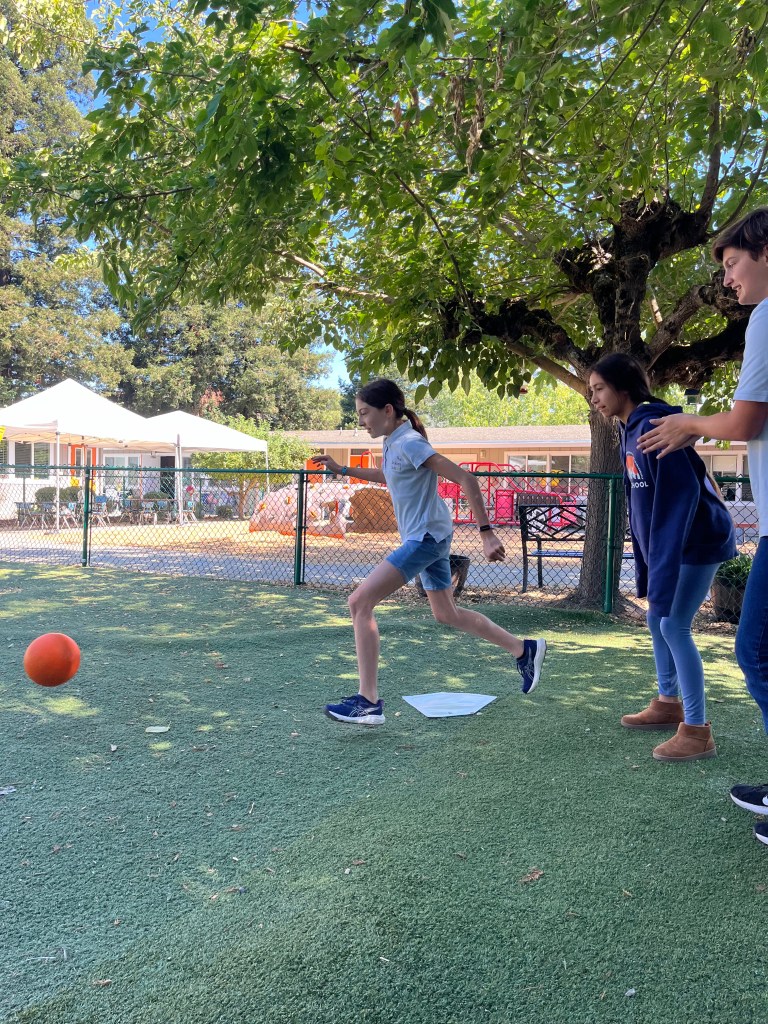
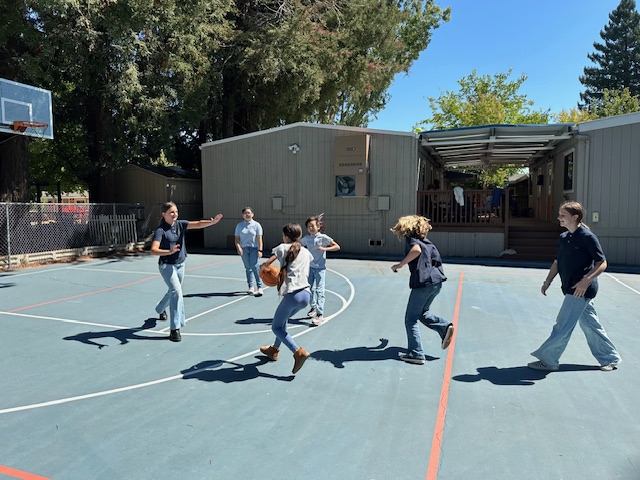
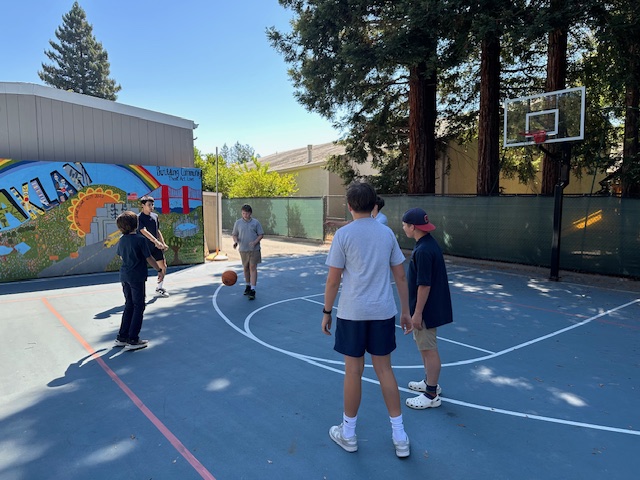
Rob Hood, or Coach as the students call him, is Saklan’s Head of Sports and Wellness. He can often be seen sharing high-fives with students and staff as he walks through campus towards the sports court. Reflecting on the first few weeks of school, Rob shared his approach to fitness, health and wellness.
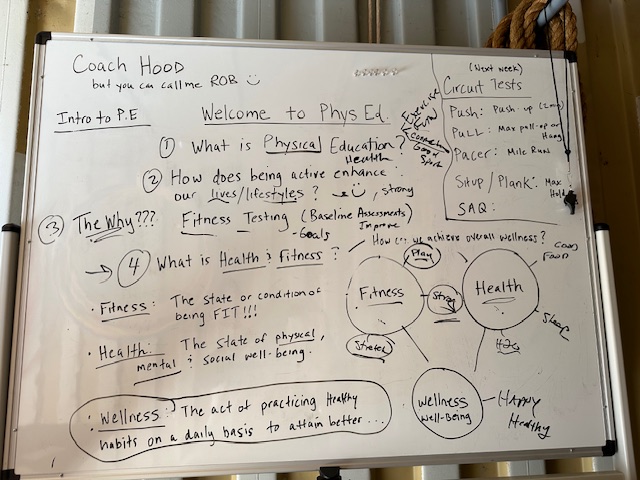
At the start of our first unit, Fitness & Health, the 6th–8th graders took charge of creating a vision board that explored what Physical Education means, as well as the key components of fitness, health, and wellness. Together, we brainstormed ideas, with students identifying how different aspects of well-being connect to each component. This collaborative effort allowed us to design a holistic vision of wellness. I later shared this learning with the lower school students.
Following our vision board activity, we approached some of the P.E. components with a week of fitness testing. Students had the option to participate in a few exercises to test strength, muscular and cardiovascular endurance, and flexibility, assess their current fitness state, and set goals for the future. In addition to longer-term goals, I ask students to assess themselves daily to encourage more mindfulness and reflection related to their overall health and well-being.
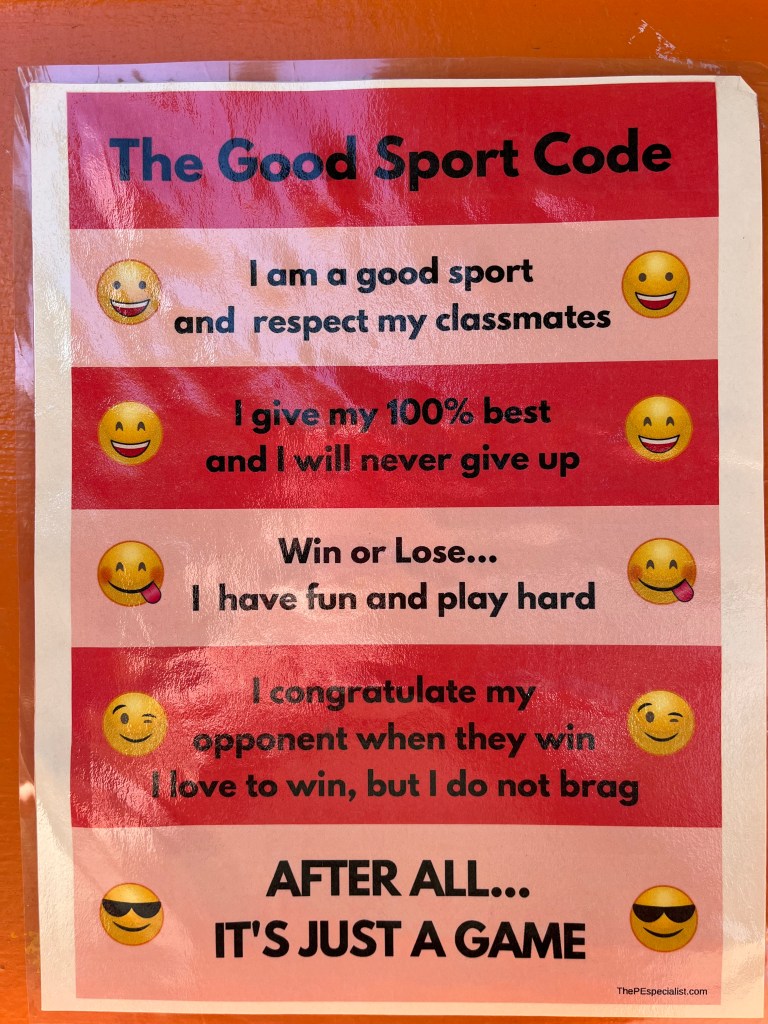
In my physical education classes, students are encouraged to be safe and respectful, demonstrate good sportsmanship, and resolve conflicts constructively, as shown in the community agreements below.
In our first few weeks, we’ve started exploring Physical Education as more than just playing games. It’s an approach to improving our health—physically, mentally, emotionally, and socially—while also helping students build essential life skills for healthy and happy lifestyles.
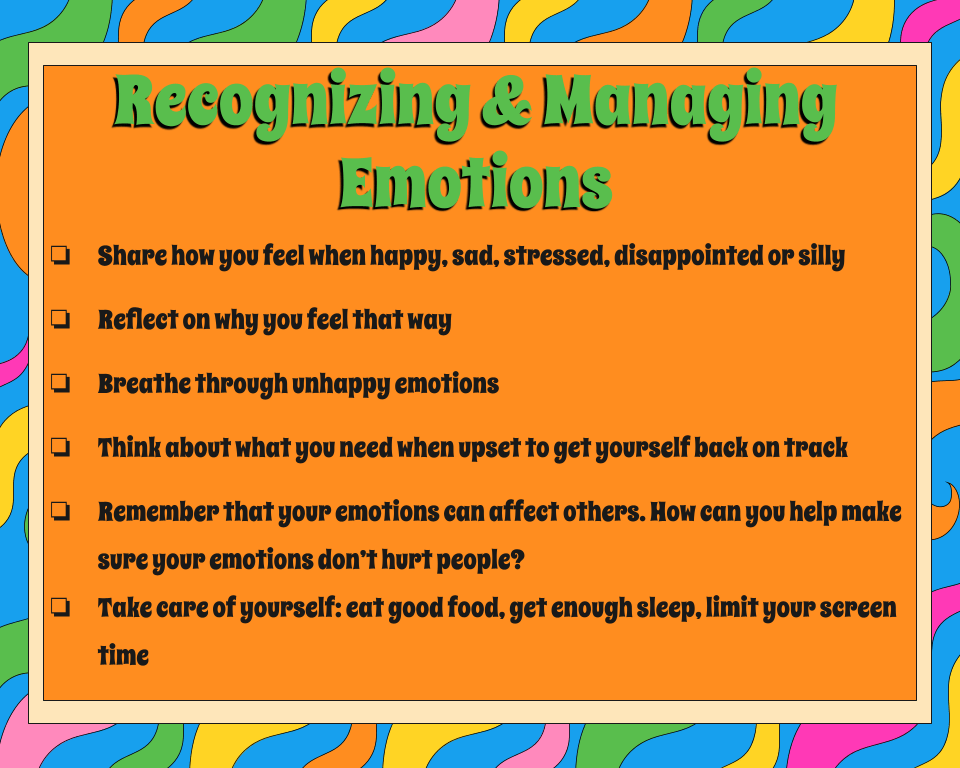
During the month of October, Saklan students will focus on recognizing and managing their emotions as part of our Social-Emotional Learning program. The image below is hanging in all classrooms, and the students will discuss what emotions are, how to recognize them, and how to manage them throughout the month, including in Advisory, Morning Meeting, and other class time activities.
One tool that is being shared with students to help them in their pursuit of recognizing the sharing emotions is the chart below. The colors and emojis make this a chart that is good for students of all ages to help them identify their current emotional state. The strategies at the bottom of the chart are meant to help students get back to The Green Zone, where they feel calm. This can be a great tool to use at home too!
On Tuesday, October 29th, first – eighth grade students will meet with their family groups to further discuss recognizing and managing emotions, and participate in collaborative activities to further illuminate this month’s focus.
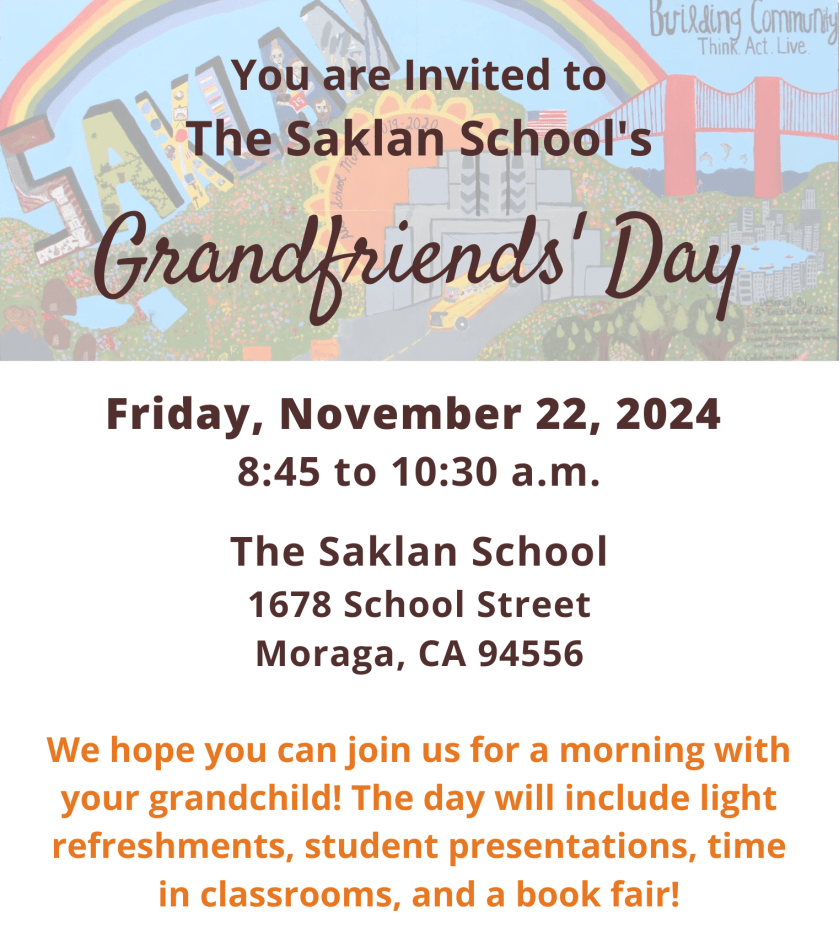
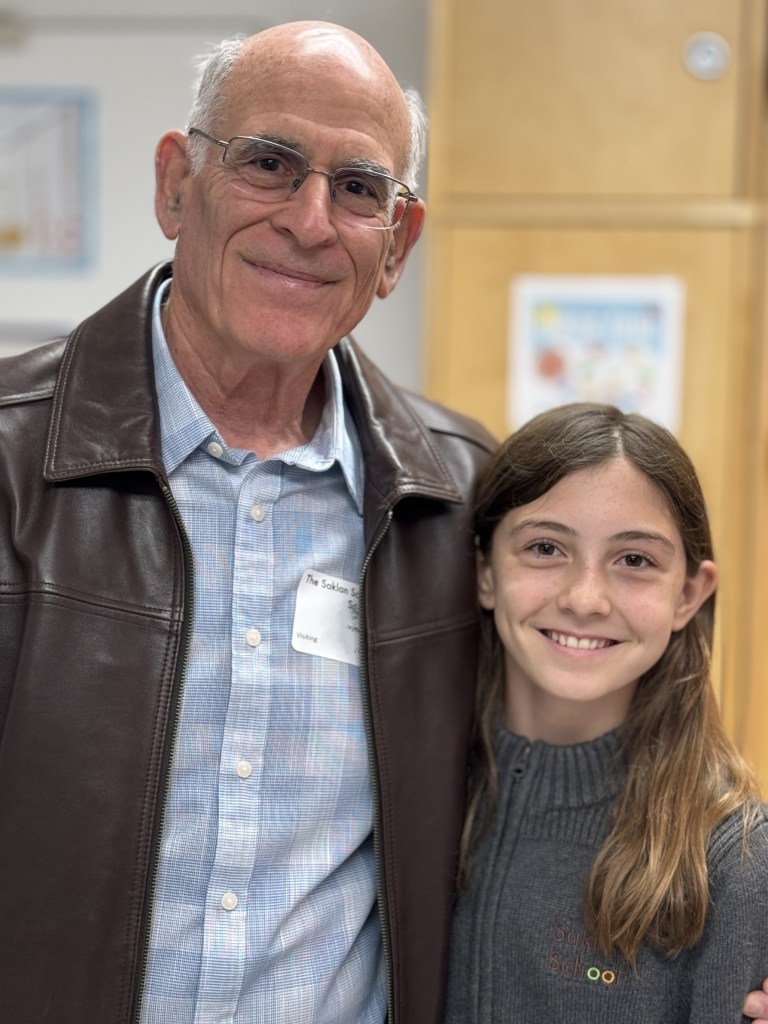
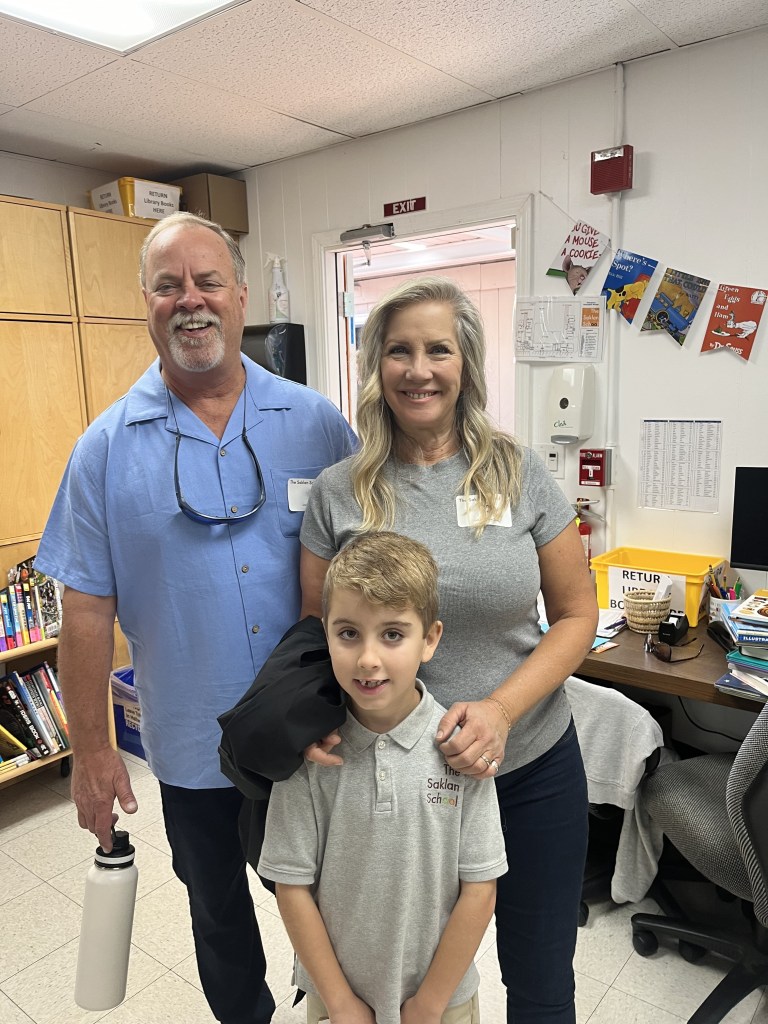
Saklan’s Grandfriends’ Day is on Friday, November 22, 2024 from 8:45 to 10:30 a.m.
Please share information with grandparents and special friends (a friend or family member that your child looks up to and/or has a grandparent-like relationship with) about this event, as we would love for them to join us!
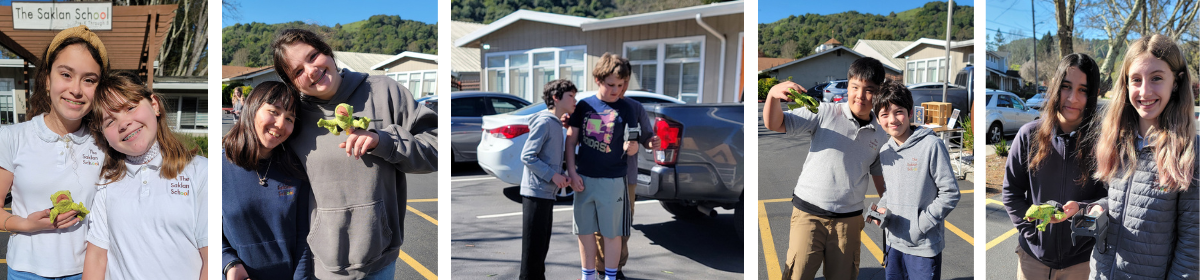
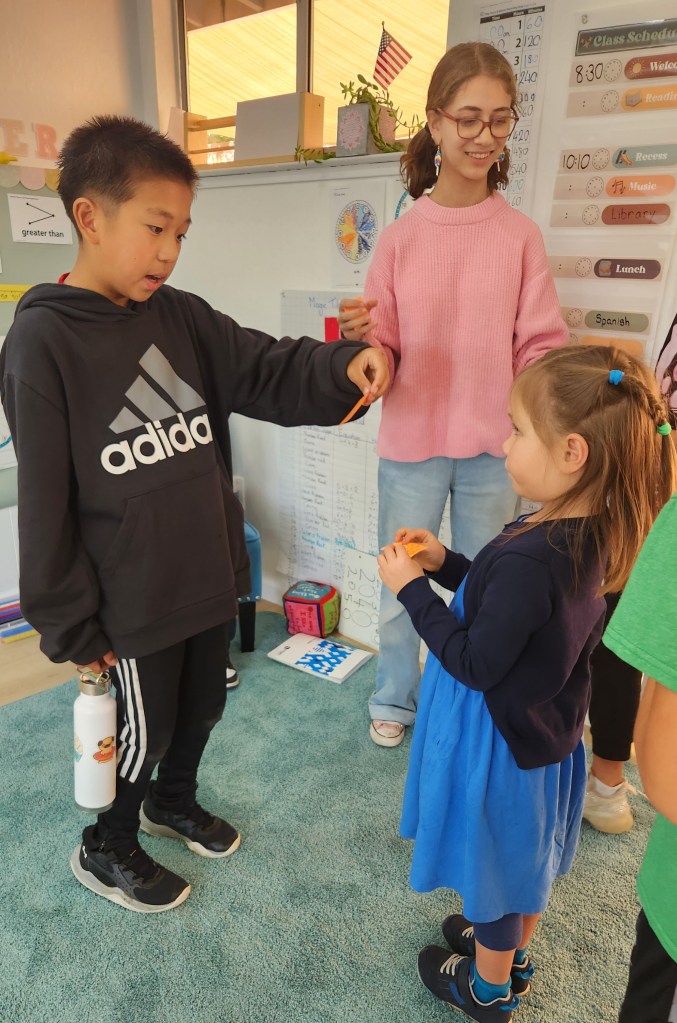
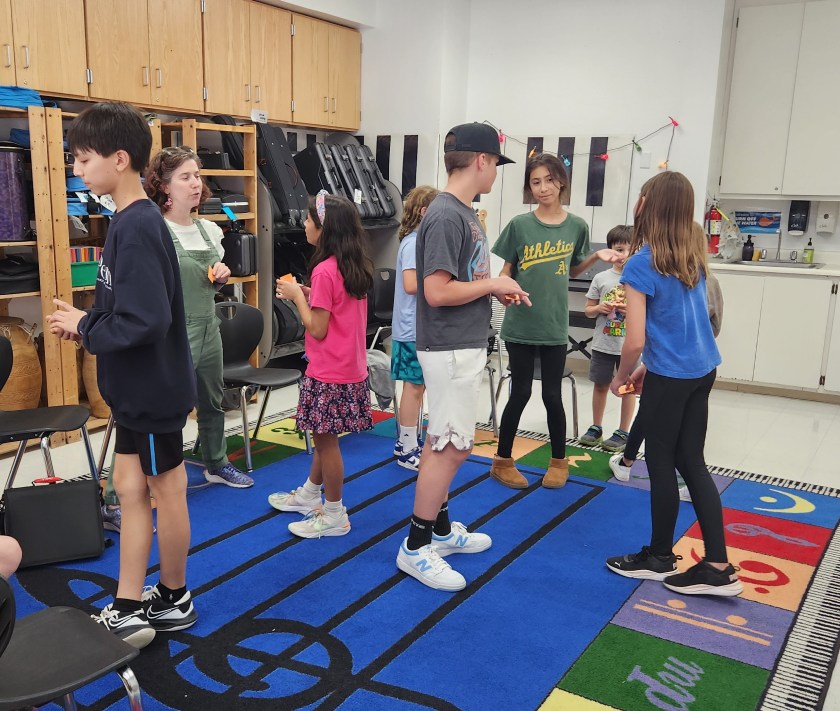
On Wednesday, September 25th, the Saklan first through eighth graders were very excited to meet with their family groups for the first time this year! During the meeting, the students in each group introduced themselves, shared a few of their favorite things, and did a stuffed animal name toss to help them learn each other’s names. Then they shared suggestions for names of their family group.
Next, each group had a discussion of what it means to be accepting and inclusive and why these traits are important, including to help others them feel comfortable and to make friends. Each family then participated in a get-to-know-you mingle to help them learn something new about everyone in their group, as it is often easier to be inclusive and accepting when we have things in common.
The 8th graders then explained to their family group that as they go through the year together, they are a group made up of awesome individuals and they each bring their own strengths to the group. These strengths make them a great team, and throughout the year, the group leaders will ask all family members to share their own perspectives.
Each group member was then given a flower to draw or write one way they felt accepted and included at Saklan. These flowers then creaeted a lovely bouquet. Check out their flowers (and Family Group names) below!
The 2025-2026 admissions season officially begins on Monday! Saklan has several events planned to help prospective families better understand our programs and philosophy:
All prospective and current families are invited to attend these events. Feel free to invite friends or family members to join these events as well!
We encourage Pre-K families to join a Lower School virtual event and for our 5th grade families to join one of our Middle School Open Houses, to see what’s ahead during your child’s experience at Saklan.
If you can’t join us for one of the events listed above but are interested in learning more about Saklan, we will gladly give individual tours at a mutually convenient time. To schedule a tour or more about the admissions process, please reach out to the Saklan Admissions Office at admissions@saklan.org.
Ready to Take the Next Step?
New student applications for the 2025-2026 school year will open on Monday! This application is for students not currently enrolled in Saklan. Applications will happily be accepted through Friday, January 24, 2025, for priority consideration for the 25-26 school year.
Current families, please note that re-enrollment information for current Saklan students will be shared in January.






















 FRIDAY BLOG
You must be logged in to post a comment.