CLASY Resilience

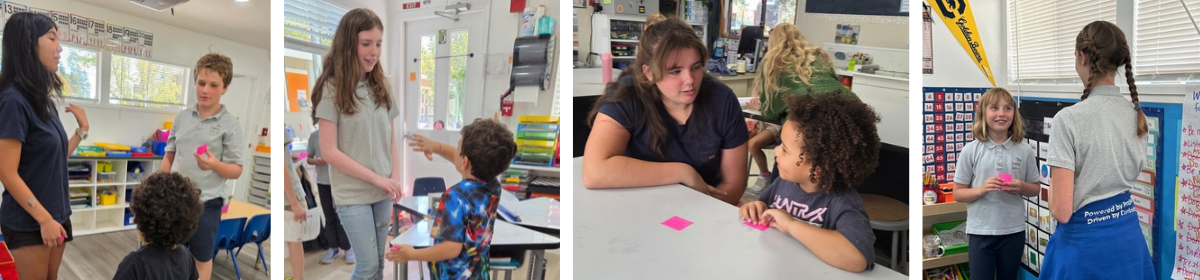
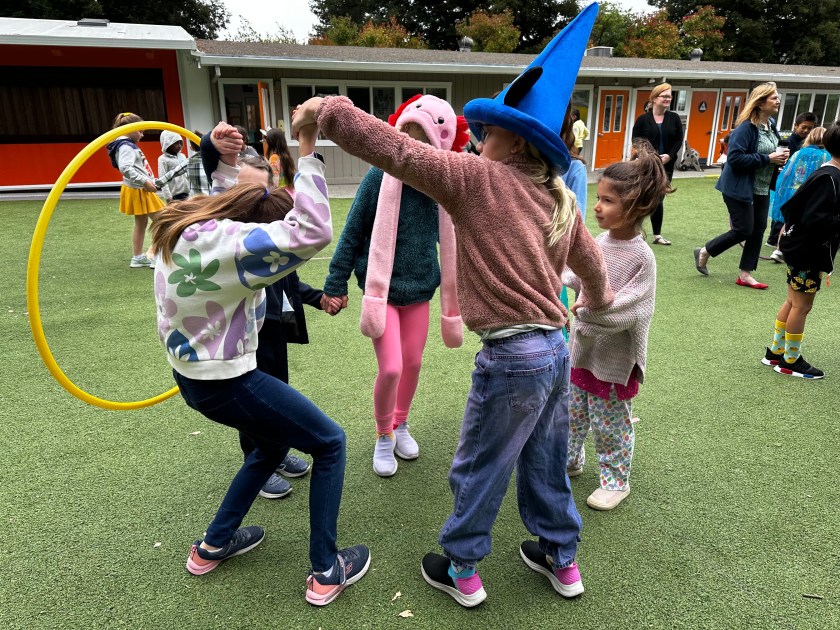
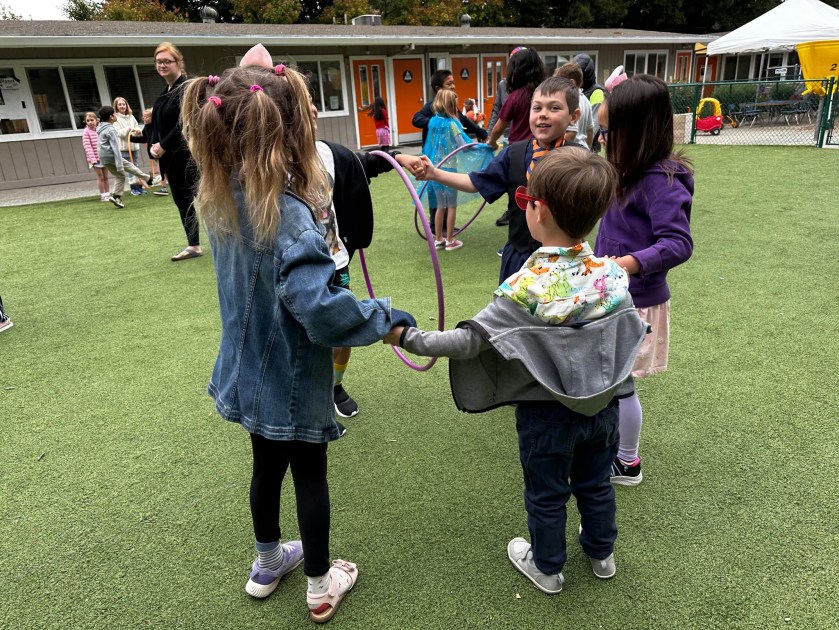
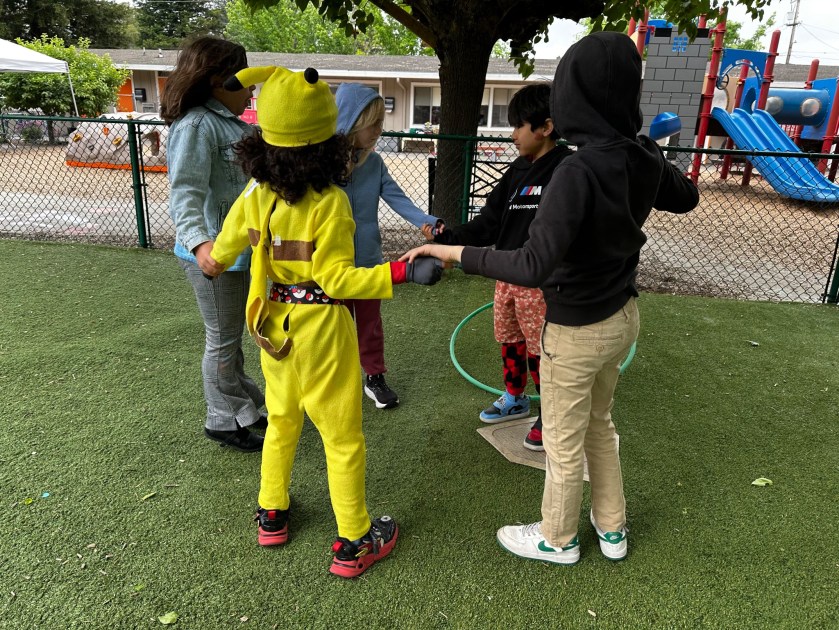
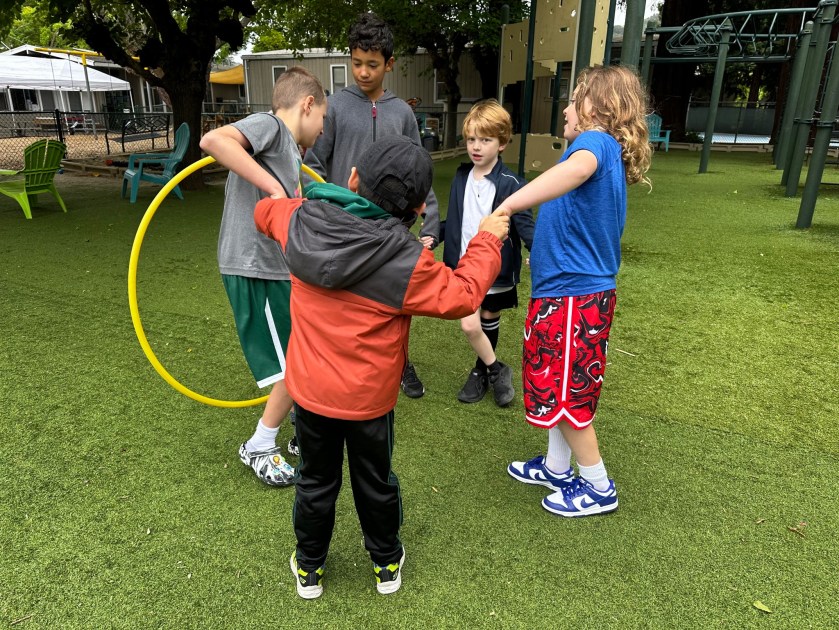
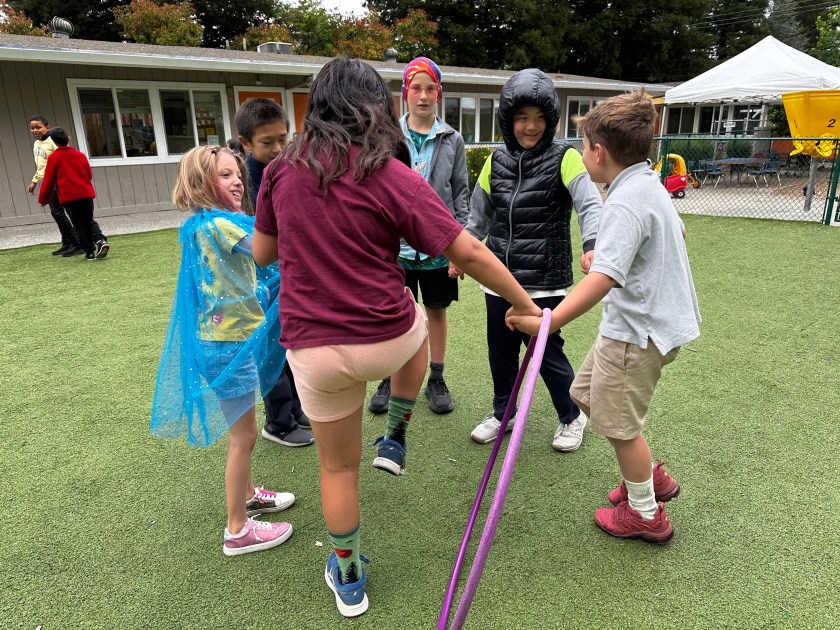
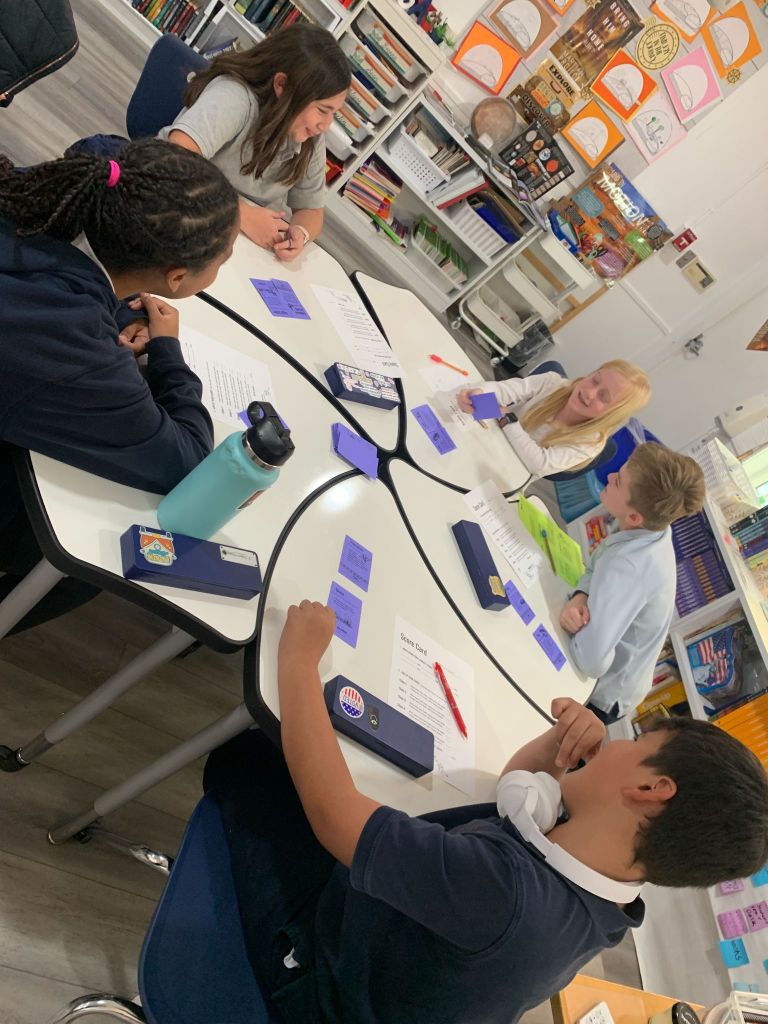
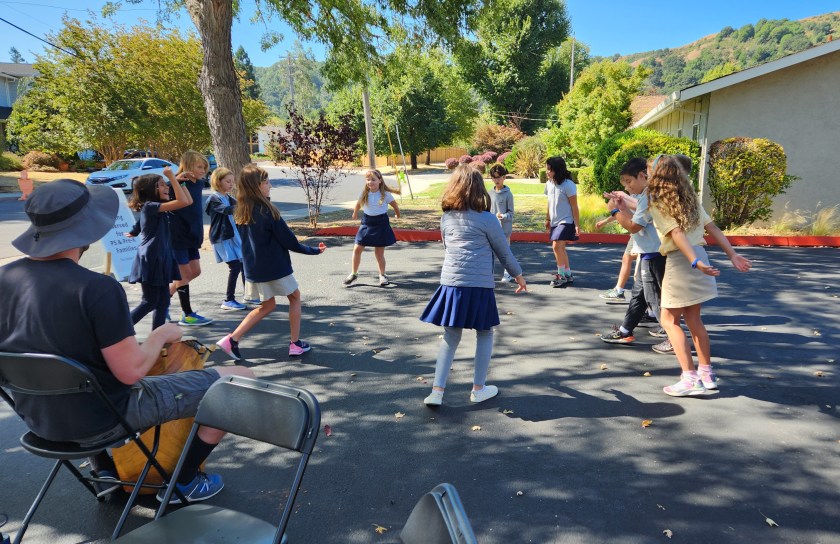
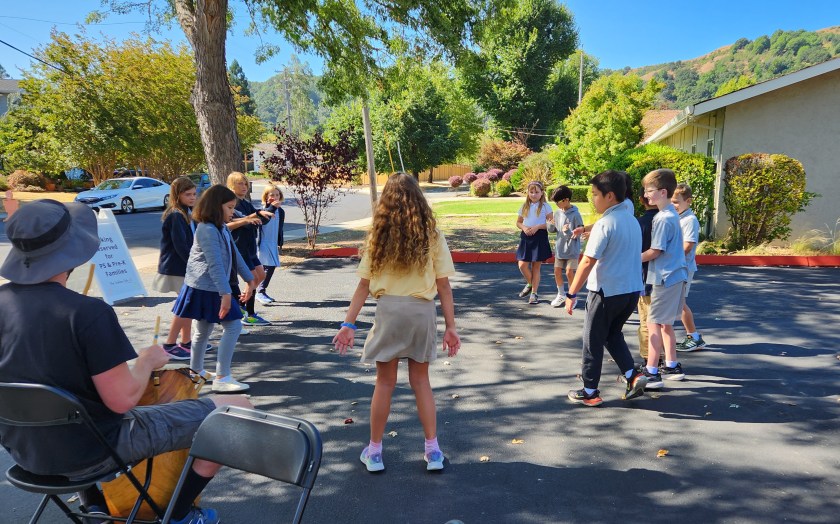
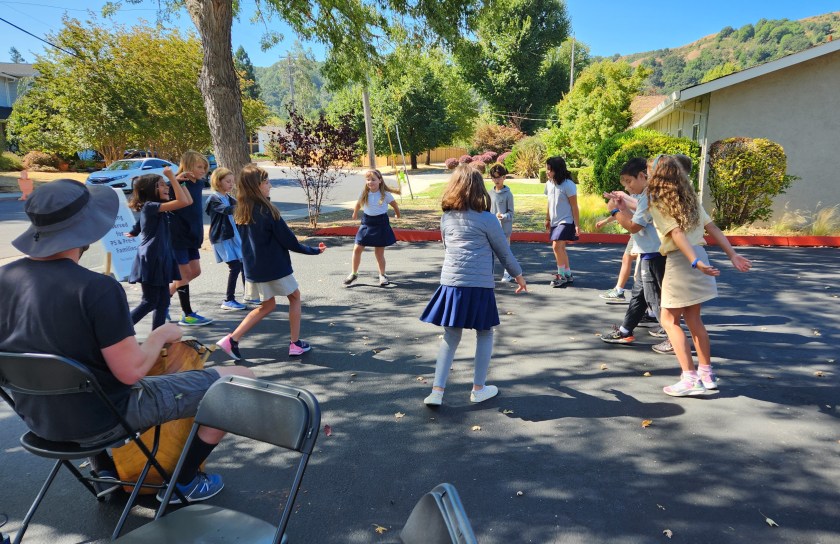
Last Friday, the lower school students had their very last CLASY meet up of the year. For our social and emotional learning this month all students have been thinking about what it means to be resilient. They have been talking about what people can do when things are hard, including to keep going, positive self talk, and breaking down difficult tasks into smaller chunks. During this CLASY the Kindergarten – 5th grade students worked on a tricky activity with their friends: passing a hula hoop around a circle while everyone was holding hands, and thus couldn’t use their hands.

The students were delightfully surprised that hard work could be so much fun! 

#SaklanSEL

Protecting the Earth’s Resources

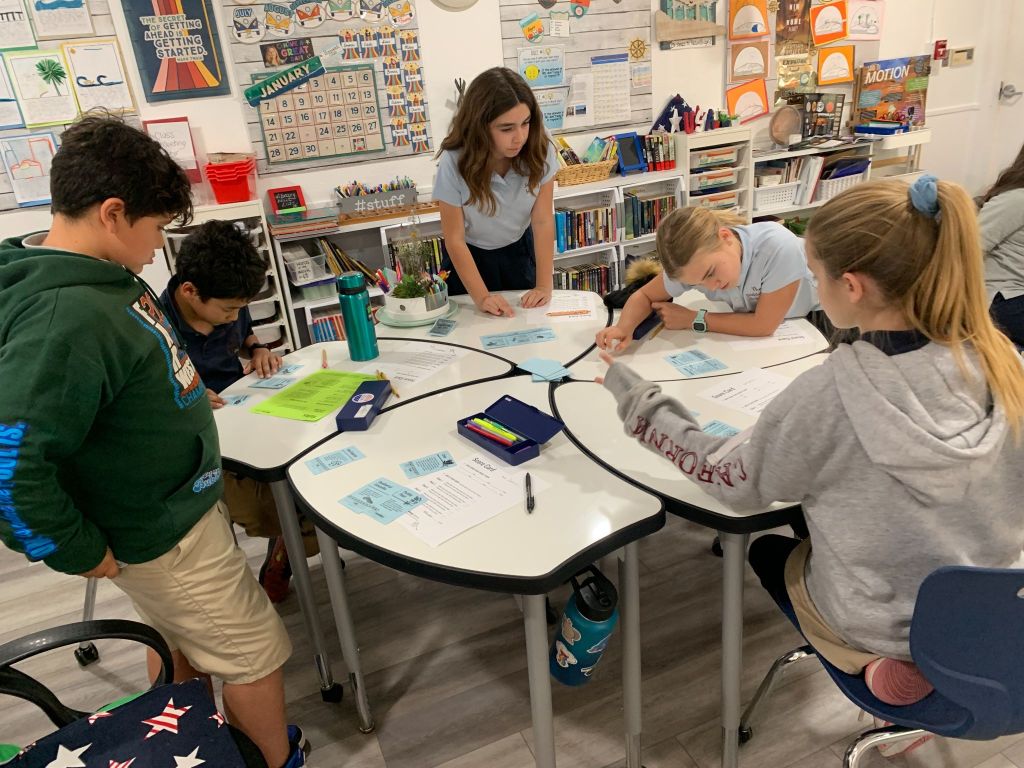
The fifth graders recently learned about imbalance in the Earth’s cycles. Peta shared her love of camping and kayaking at the Russian River, and how this year, she observed a massive algae bloom at the river. The class then learned that harmful algae blooms have been seen in lakes, ponds, rivers, and estuaries all over the world in recent years.

Thinking about causes, and their learning so far this year, the 5th graders brainstormed possibilities: pollution, global warming, too much carbon dioxide, oxygen, chemicals, overeating, or waste/poop… students’ ideas were great, and reflected engagement, thought, and understanding of the topics they explored within The Martian Project (even the poop idea, which turns out to be true!).

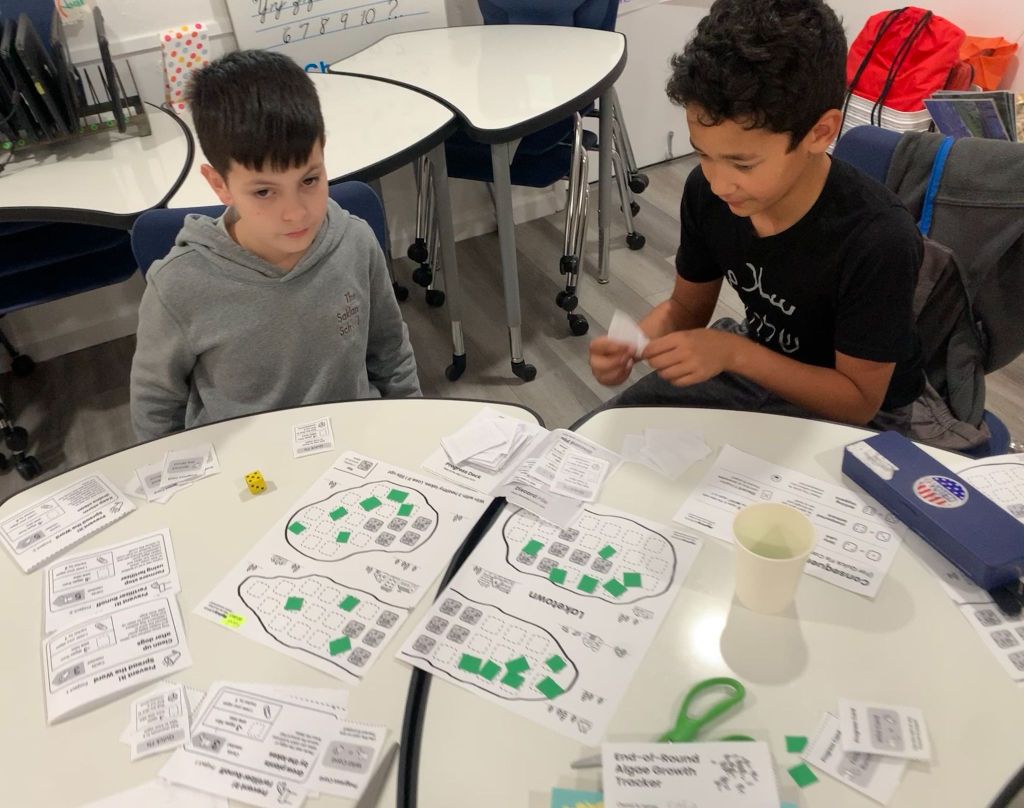
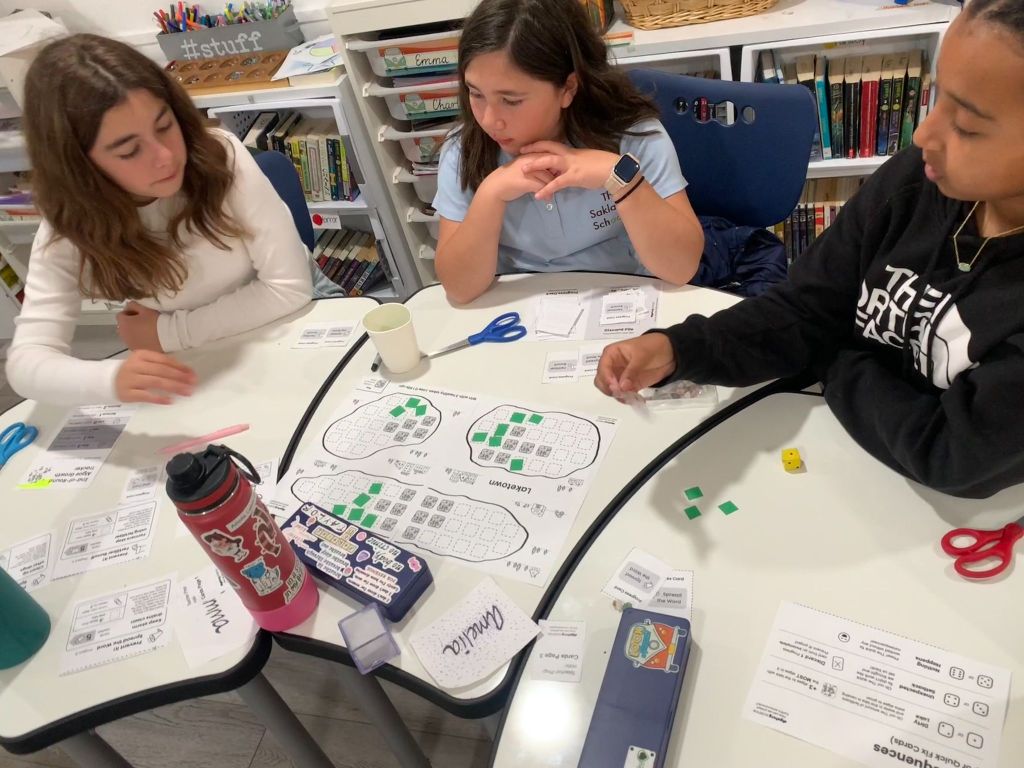
Learning that algae is normally a healthy food for fish and turtles, the students discovered that too much of a good thing isn’t always good; it chokes out oxygen, rots and gives off harmful chemicals. Fifth graders wondered if this trend was catastrophic, or if it could be reversed and how, and wanted to learn about solutions. With the stage set for the learning objective, students learned about engineering solutions from simple “quick fixes” such as treating ponds with chemicals, at a high environmental cost, to longer-term  solutions such as adding clay or plants to reduce runoff. Solutions were modeled through small-group “save the lakes” games, with teams working through solutions until all had saved their lakes by returning balance to their ecosystems. 

The goal? To obtain and combine science ideas through models, in order to help a community plan how to respond to, prevent, and protect the Earth’s resources.

The Suns are Back

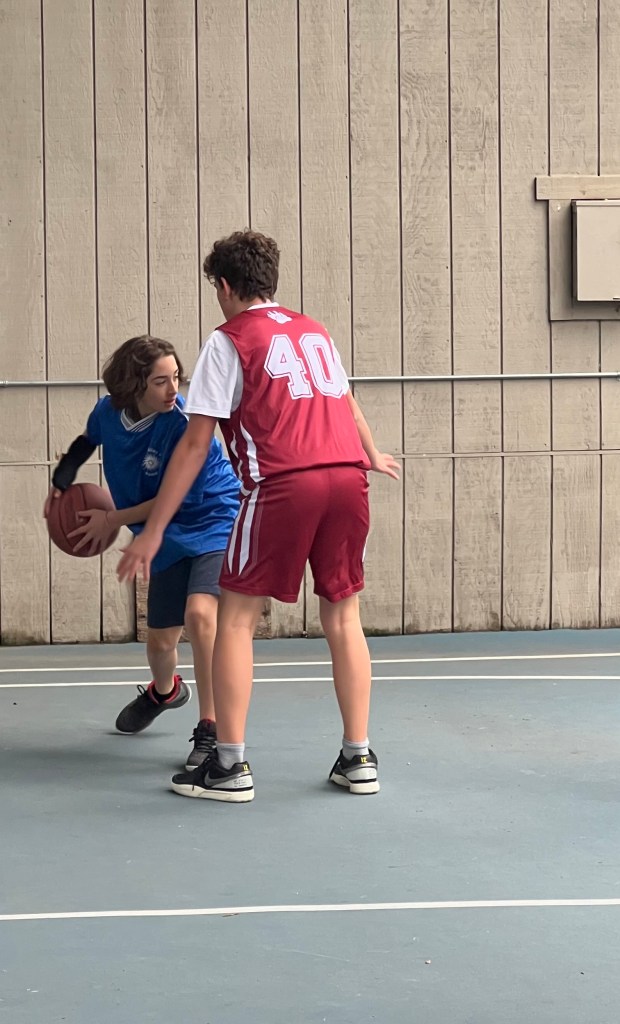
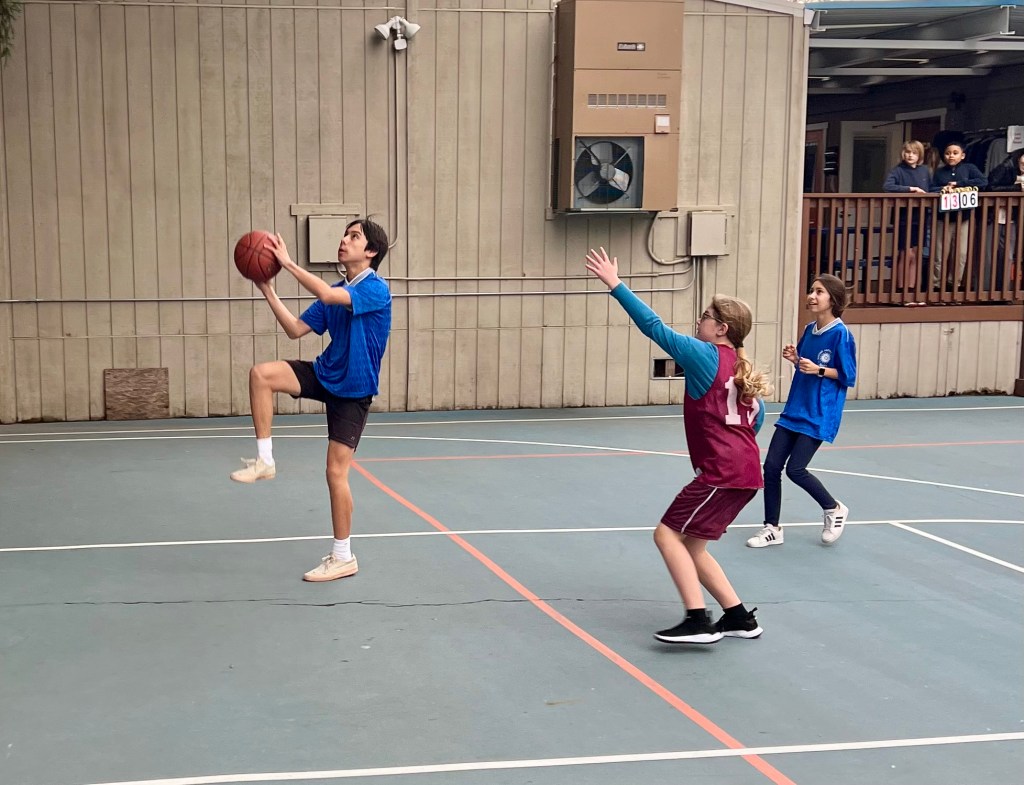
Saklan hadn’t played basketball games against another school since before the pandemic, but this month the Suns returned to the court! Recently a team of Saklan 4th – 8th graders played two games against the Contra Costa Jewish Day School Grizzlies. Both games were close and well played. Saklan had a big turn out of courageous students willing to put on jerseys. A big thank you to: Aliya 6th, Braden 7th, Cameron 4th, Hailey 6th, Jameson 8th, Jack 7th, Kiran 8th, Lucien 6th, Mori 8th, Oliver 8th, Riley 5th, Sam 8th, Sean 5th, Sebastien 4th,  and Yiannis 8th.  These students, without any formal practice, took on a middle-school aged varsity level basketball team and won one home game and lost a close away game. Way to go Saklan!

Basketball Club continues on Mondays, Tuesdays, and Thursdays at 3:00 p.m. All 4th – 8th graders are invited to join in the fun out on the Sports Court. As we move towards March, Volleyball Club will start alongside Basketball Class on Mondays, Tuesdays, and Thursdays. Stay tuned for more info about volleyball games planned for April and May. Go Suns!

#SaklanCourageous #SaklanSports

The Martian Project

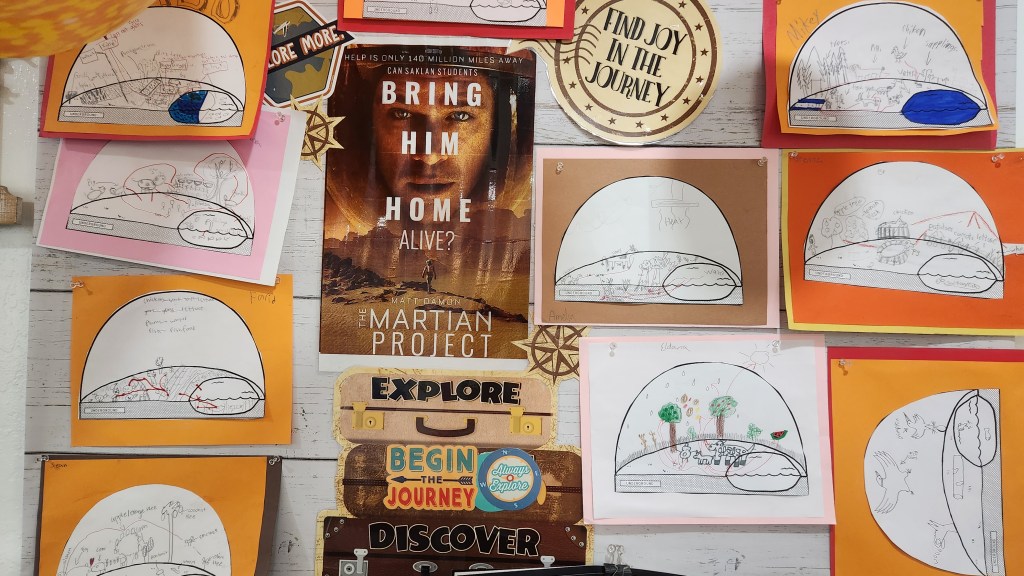
The entry event into the newest fifth grade project was an engaging watch-party featuring Ridley Scott/20th Century FOX studios’ The Martian.  Students’ interest was peaked when Mark Watley (Matt Damon) was left for dead on Mars after his suit was breached in a storm and he awoke to realize he had survived, but perhaps not for long. With a food supply of about 9 months, but four years before a rescue mission arrives, Mark has to put his botany skills to the test if he is to survive.  Munching potato chips, students watched Mark cultivate one dozen potatoes NASA had sent with them for Thanksgiving dinner (which NASA actually does for the ISS Astronauts), and create a water cycle to help his crop grow.  

In this unit, students will call on their prior learning of hydrology and the water cycle, as well as the planets and solar system, as they design and create their own ecosystems that cycle hydrogen, oxygen, and carbon dioxide, to germinate and grow an edible plant for at least 35 Sols (and they’ll do the math to figure out how many Earth days that is).  Along the way, students will learn about food chains, food webs, producers, consumers, decomposers, photosynthesis, the carbon/oxygen cycle, and a total system collapse, in seven milestone lessons. Math, language arts, scientific illustration and history/social studies are all threaded through the project, alongside games such as the “food chain game” which students enjoyed playing last week.

Respectful Students

Saklan’s social-emotional learning emphasis for January is to be respectful. Throughout the month, all Saklan students will be learning what it means to be respectful and practicing strategies for showing respect both at school and at home.

On Friday, January 26th, the first – eighth graders will meet with their family groups and take part in cross-grade level discussions and activities to gain an even greater understanding of respect. We value these opportunities to help our students understand and integrate new SEL concepts each month. Thank you to our 8th graders for leading these opportunities for the 1st – 7th graders, and to our SEL coordinators Vickie Obenchain and Lisa Rokas for organizing such a unique program for our students.

#SaklanSEL

30 Minutes to Launch

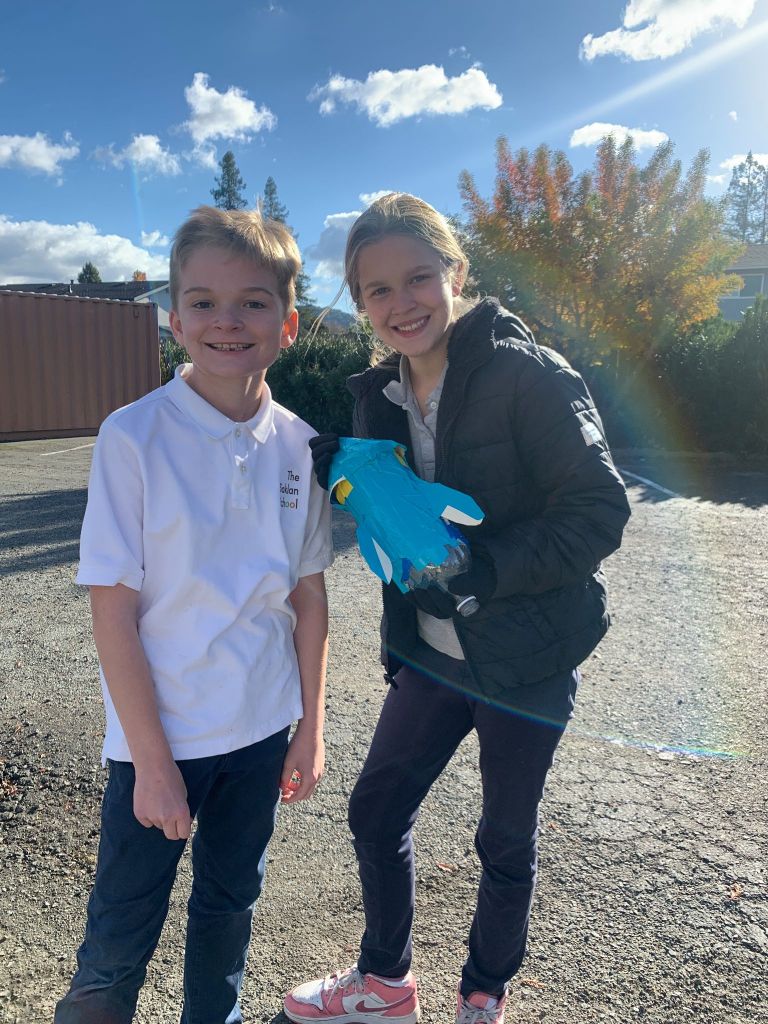
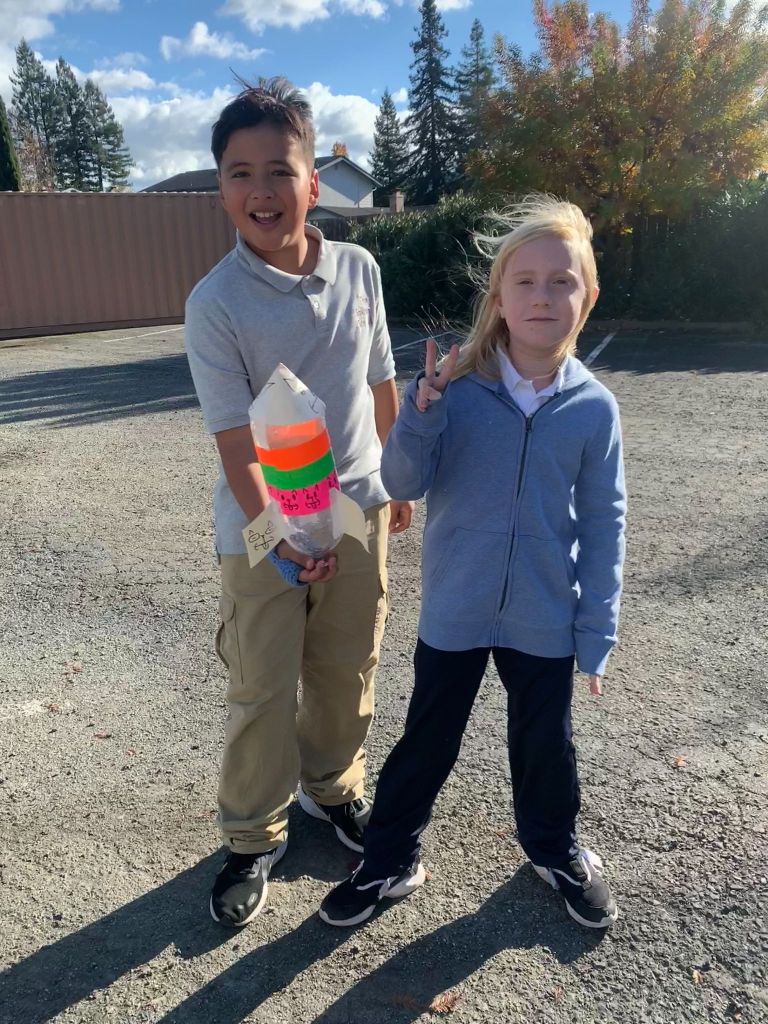
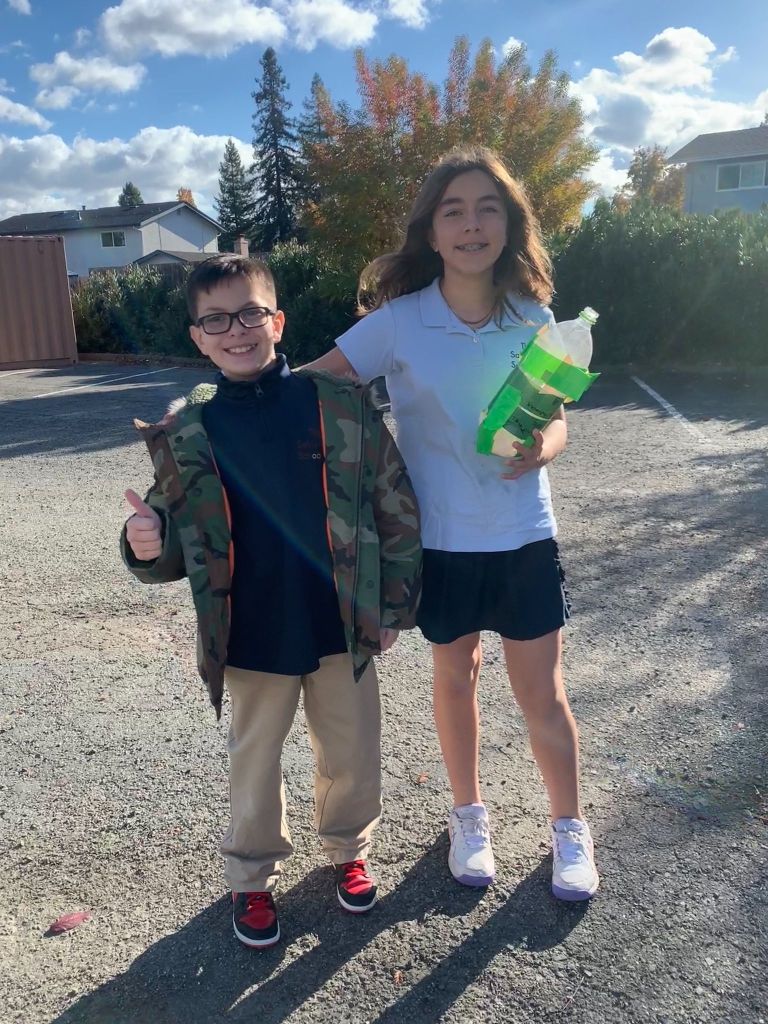
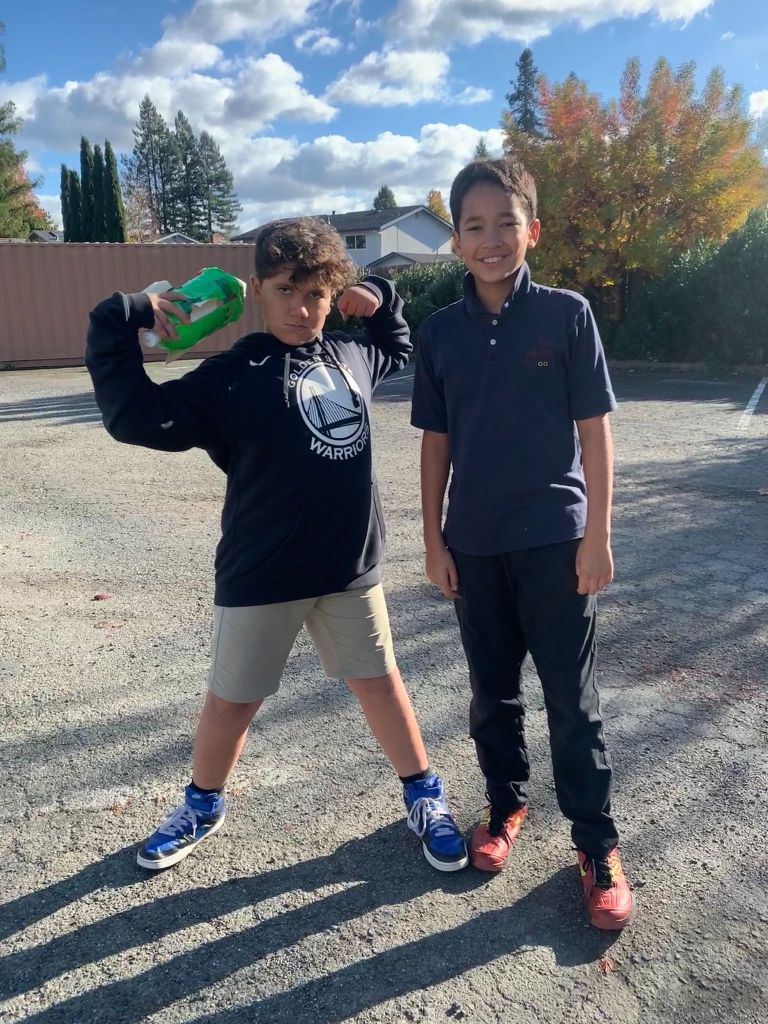
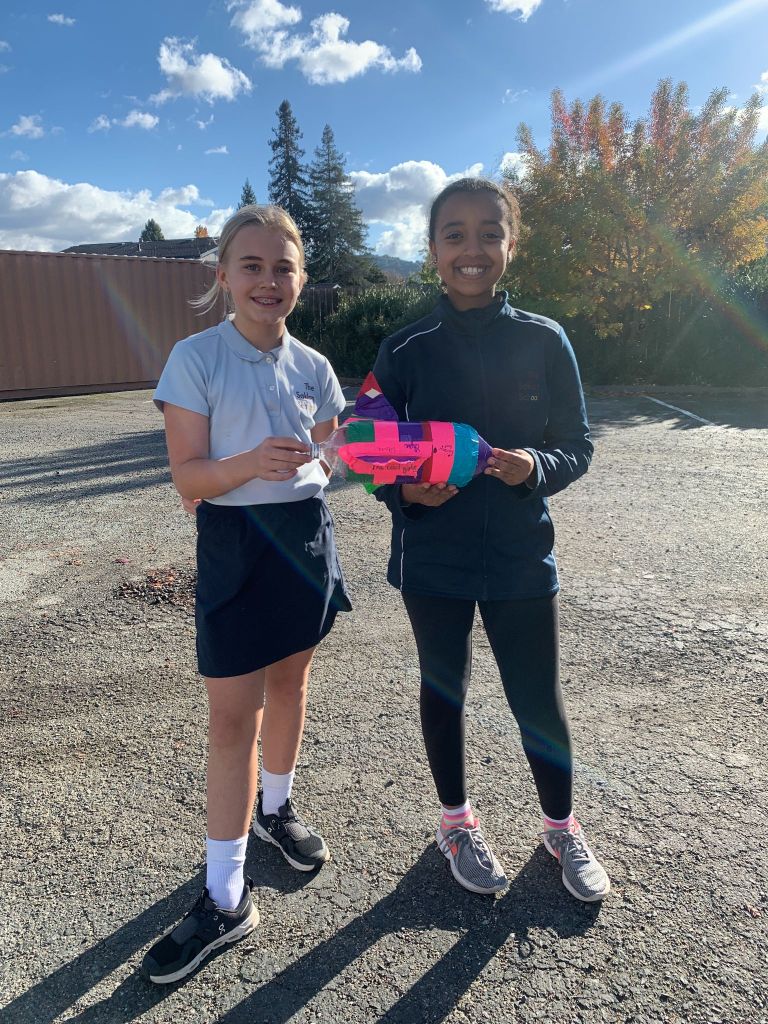
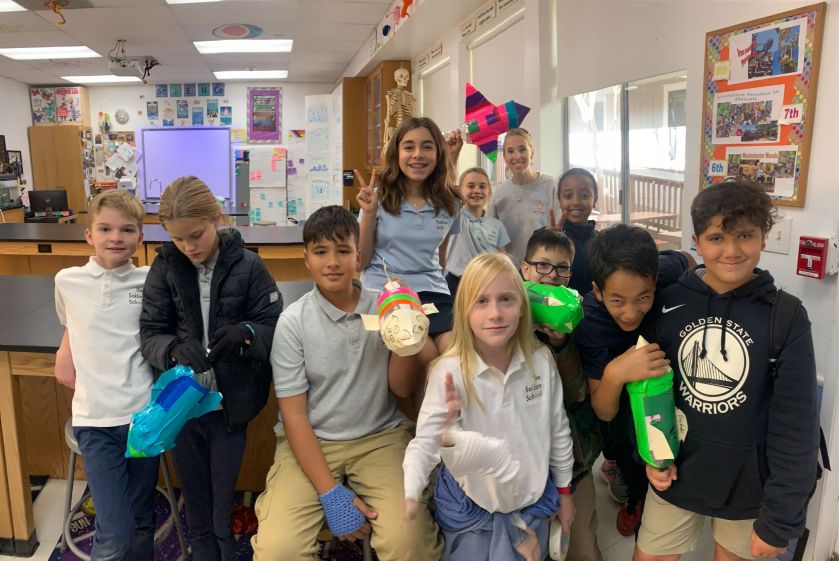
The fifth grade students recently wrapped up their hands-on space unit, taught by Ms. O, with a STEAM (science, technology, engineering, art, and math) challenge to design and build a rocket. When students work in teams, they learn and practice desirable “soft skills” such as active listening, clear communication, cooperation, and flexibility, whilst also learning the “hard-skill” academics – both are valuable for life, hence rockets were designed and built in partner-teams.  Each team had access to a soda bottle, lightweight card, tape in many colors, markers, and scissors.  They also had two constraints: time and weight, and had to make decisions around those factors, while building a launchable rocket in under 30 minutes.

Check out the teams, rockets, and smiles following successful launches here at the Saklan Space Station in the images below!

#SaklanHandsOn

A Big Bang

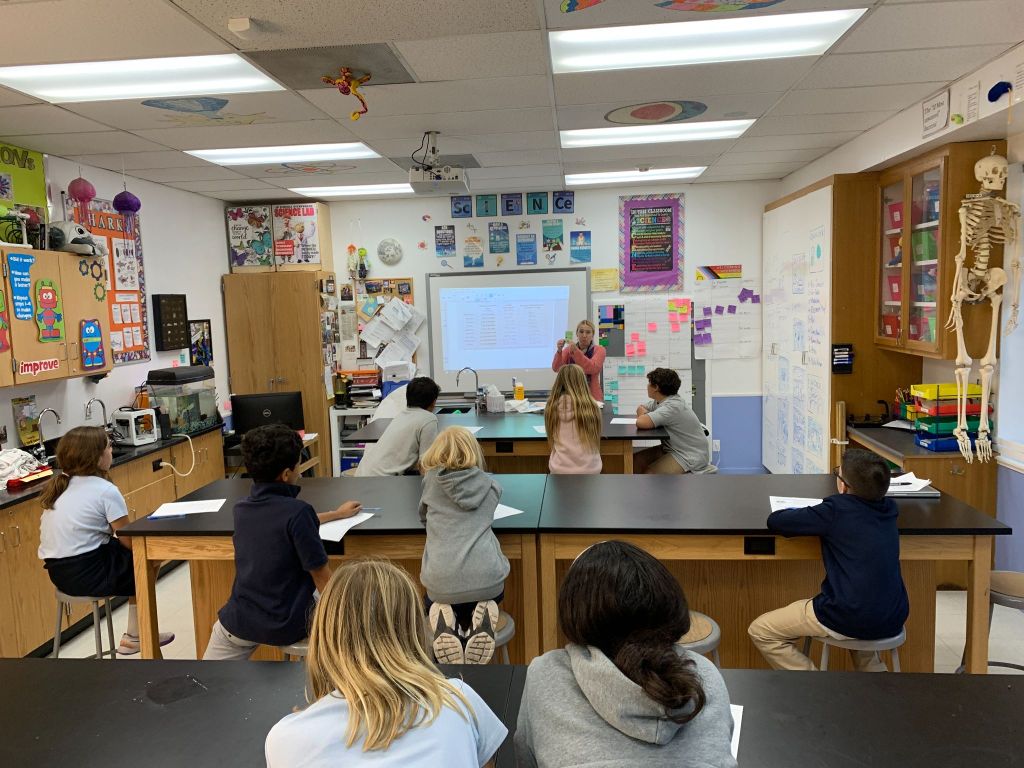
The fifth graders have been visiting the science lab to learn about our solar system. The lessons kicked off with a bang, quite literally. Students were introduced to the theory that the solar system began with a big bang, and because understanding abstract concepts is made easier with hands-on models, Ms. O stood on the center desk and popped a balloon filled with confetti.  Students counted up confetti pieces that spread in various grid areas around the room after her “big bang,” seeing that those closest would have been pulled towards each other by the gravitational forces all objects have.  

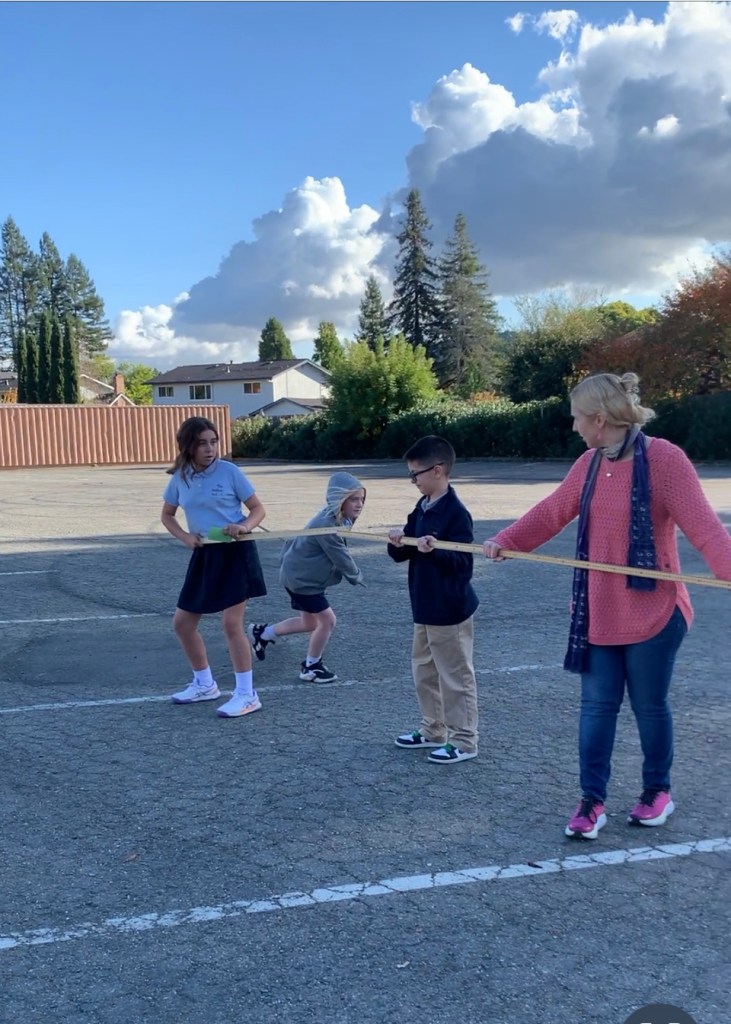
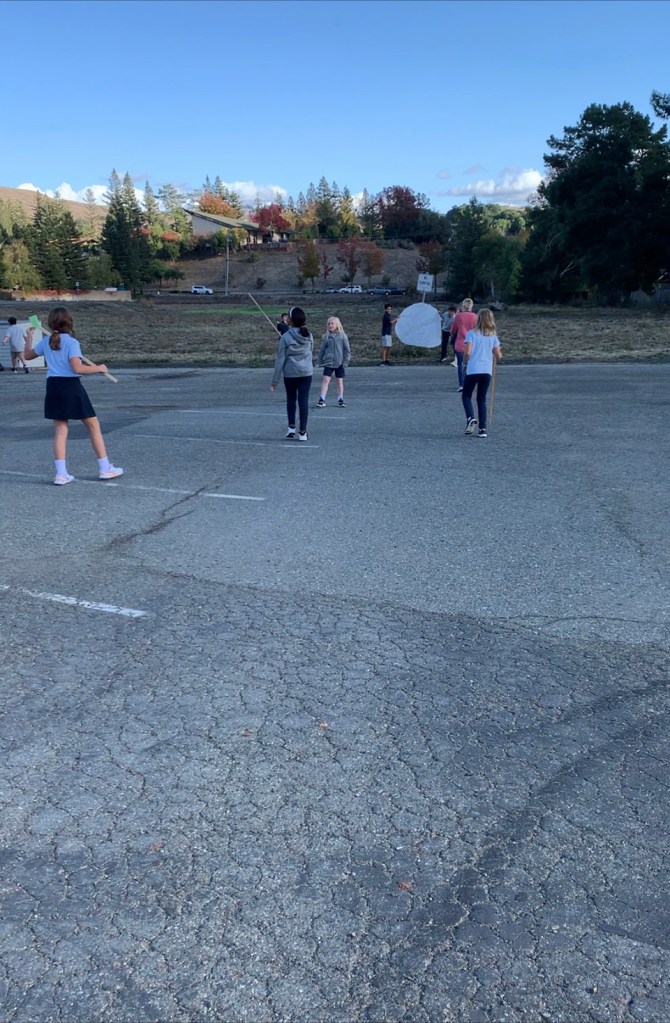
In the next lesson, students created scaled planets and a sun. They then carried them across the street to the church parking lot, to help understand the relative distance between the sun and its closest planet.  After placing the sun at the far end of the parking lot, students counted off 38 meters, using meter sticks, from the sun to hold up Mercury, which was one confetti dot in size compared to the 140cm diameter sun! That the sun is a small star is quite mind boggling when its relative size is created in this hands-on way.

#SaklanHandsOn

Refining & Rethinking As We Grow in Knowledge

A PBL Unit kicks off with an entry event, otherwise known as a “hook,” that engages students’ curiosity.  In fifth grade, students study USA history and geography, and so for an entry event into their latest PBL unit, the fifth grade class examined a 3D map of the USA, and noted the flat center that makes up the Great Plains region. Students examined photographs and personal accounts from the early 1930s; the “chocolate-rich soils” that drew many to profitable wheat, corn, and livestock farming during the Great Depression, creating the area’s nickname as “The Breadbowl” of the nation.  

Students then examined photographs and heard personal accounts of the 1939-1949 Dust Bowl Disaster. What caused the year-upon-year sand storms that killed livestock, buried crops, and drove farmers off their once-fertile lands?  The class charted initial ideas, and will collect “clues” in the form of a growing body of knowledge and experiences each week, and then try to answer the complex question (that puzzled scientists for years) at the end of the unit.

Milestone One

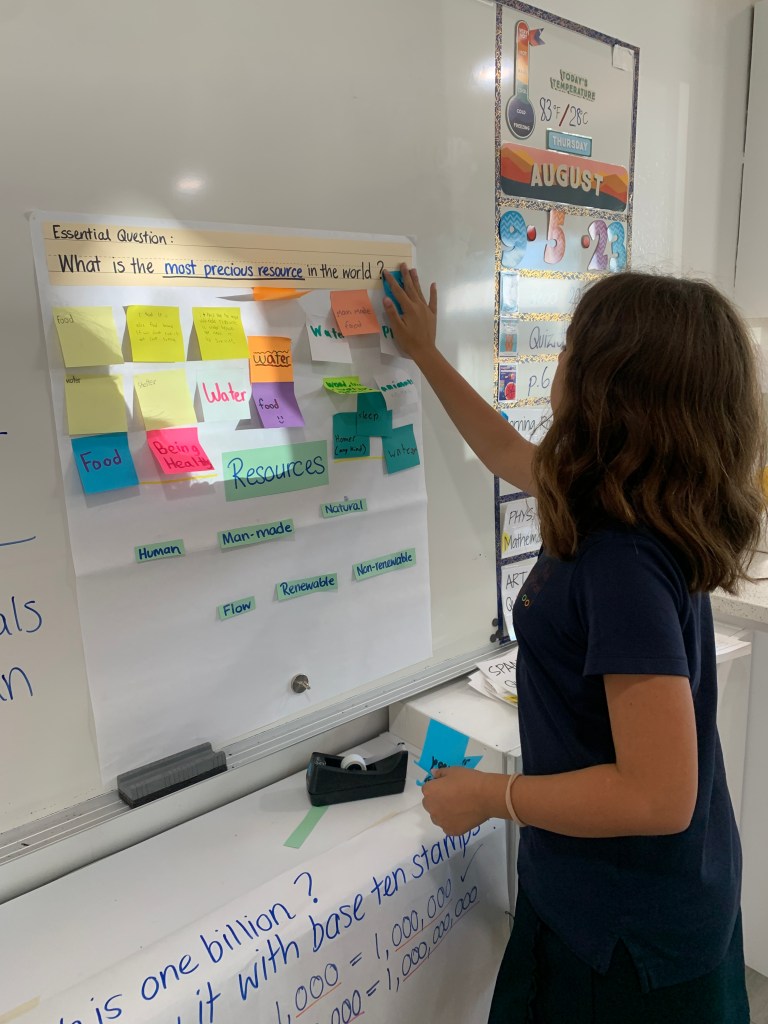
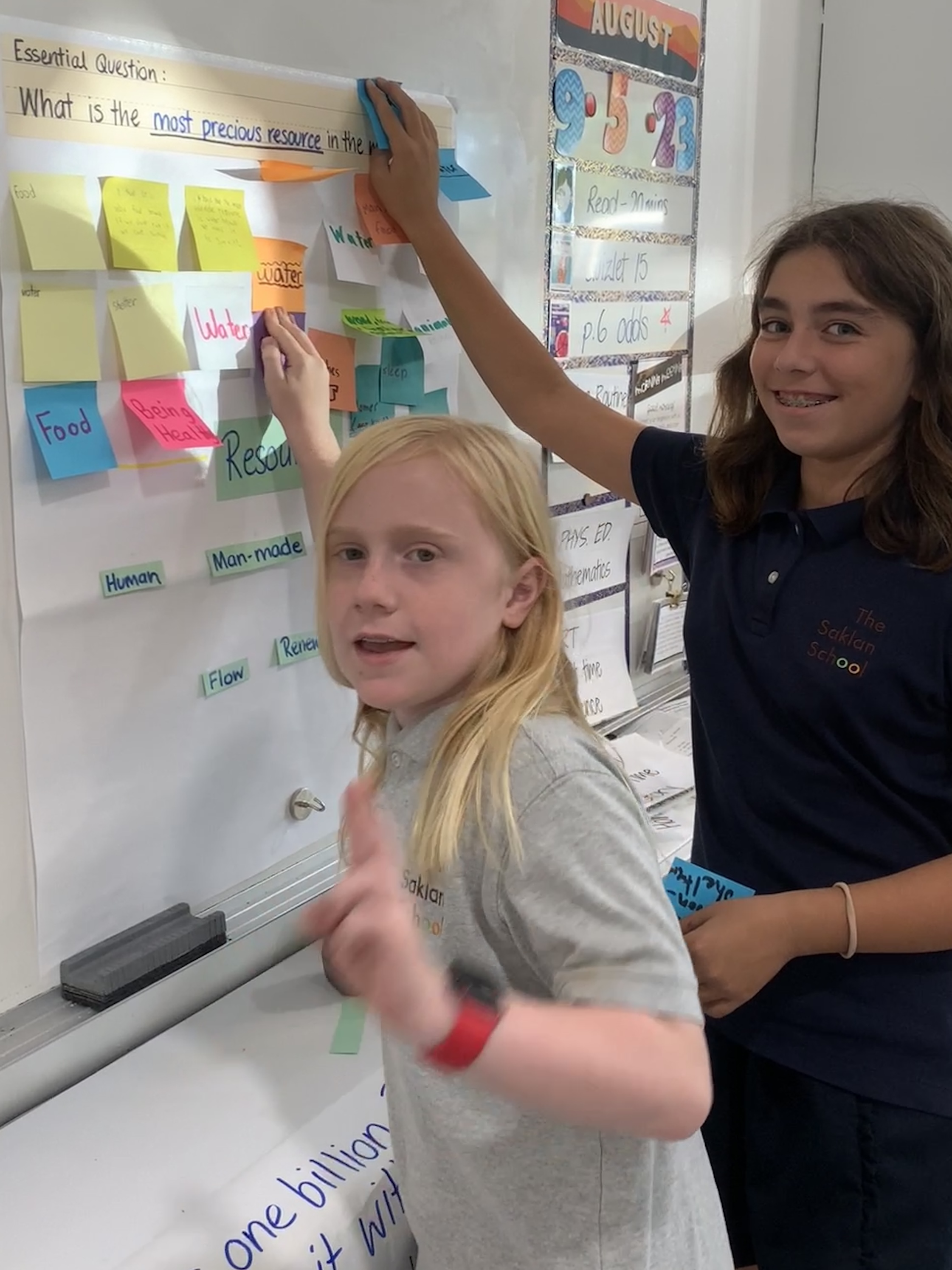
Learning steps necessary to reach an end goal is a “milestone” in PBL.  The first milestone in the fifth grade unit is for students to understand the value of water as a precious natural resource.  After defining “resource,” students wrote their answers to the question, “What is the most precious resource in the world?” They posted these on a chart that remains on the classroom wall throughout the unit.  Food, water, and shelter made up the top responses.  Sleep, and being healthy were other thoughtful answers; the 5th graders knew that gold, diamonds, and X-boxes were not it!

Next, students learned about fisherman Jose Alvarenga, lost at sea for 438 days after a storm flooded the engine of his fishing boat. Using buckets to collect fresh rainwater, and his bare hands to catch any sea life he could, Jose was able to get just enough fresh water and food to survive for fourteen months. Students learned that people can survive just three weeks without food, and only three days without water! To conclude, students revisited their thought-board and refined their “…most precious resource” answers, reflecting how we refine and rethink things as we grow in knowledge, skills, and experiences in a lifelong learning process.

With this, the fifth grade Earth Science PBL Unit “Water doesn’t just fall from the sky, you know” was underway. Students will learn about the interconnected nature of the earth’s four spheres, with emphasis on the hydrosphere and an application of learning at the end.

Stay tuned to learn about the next milestone in the fifth grade hydrology PBL unit!

#SaklanPBL

Why I Teach Ewe Music

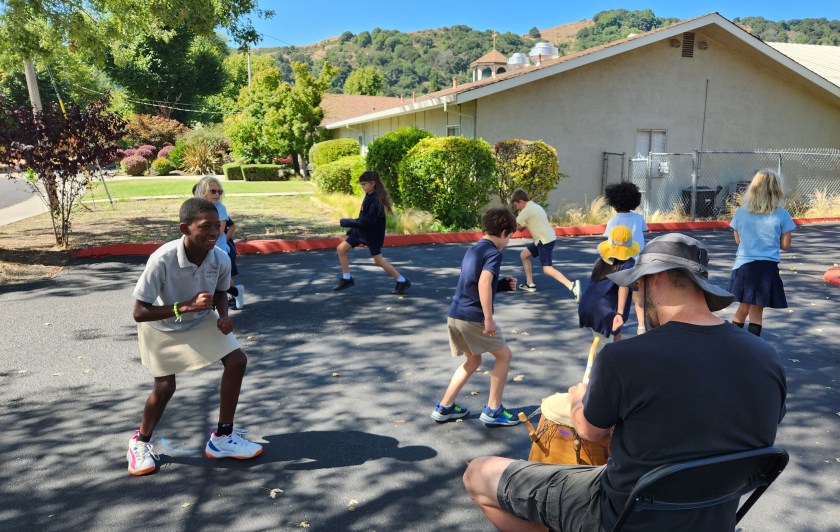
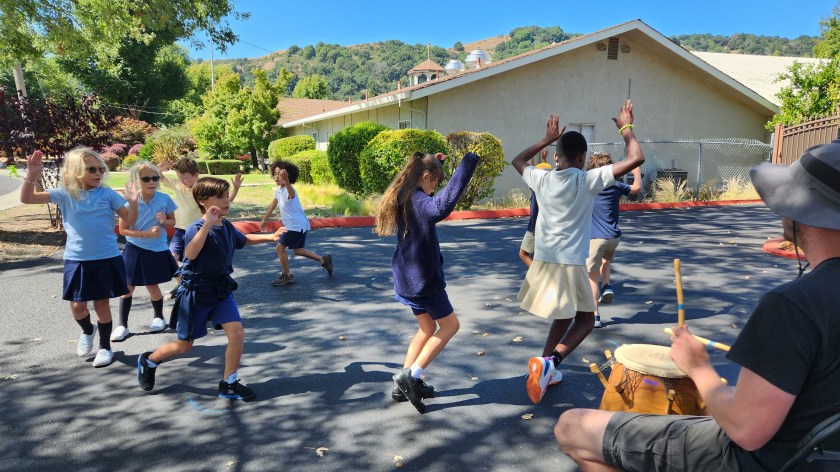
Alfred and Kobla Ladzekpo came to the United States in the 1960s to teach Ewe music. The Ladzekpos came from a village in the southern Volta region of Ghana called Anyako, an Ewe village. Ewe is one of over 20 languages spoken in Ghana. Ewe music is divided into styles. Each Style has songs (for singing), drum patterns and dance steps. The singing, drumming and dancing together form the musical style.

Alfred Ladzekpo taught at the California Institute of the Arts (Calarts) for over 40 years, and I was fortunate to study with him from 2002-06. He became my mentor and my friend.

Alfred’s main goal with his students at Calarts was to show them how to be an effective musician in his style of music. Ewe music is an oral tradition. Musicians coming from different backgrounds begin a new process of learning through listening. Alfred reveled in every opportunity he had to lecture his students on the importance of listening. Despite the simplicity of the message, every student who embraced this concept came away from Alfred’s class an improved musician.

As a young musician my fascination with Ewe music was sparked by my admiration of its construction. Ewe music weaves a complex counterpoint through all of its elements that rival the greatest artforms of humanity. I was enamored with the sophistication of the drumming patterns and the ability for musicians to dialogue through a musical language. The lead drummer is able to direct their ensemble into new dance moves, drumming patterns, or songs,
by playing a call on the drum. Everyone has to listen or you might miss the call!

This felt like a secret language and my friends and I were hooked. We took every opportunity to learn from Alfred and eventually we were helping him teach his classes and performing in his professional ensemble at schools and community events. Later in life I found another beautiful side to the artform.

The main function of music in Ewe culture is to promote community. People gather in social groups for musical performances. These groups perform at funerals and weddings and are the backbone of both religious and secular events. This is extremely valuable in our recent culture of social media and social distancing. People are craving interaction and Ewe music is a
world class option for community building.

I teach Ewe music as a celebration of West African brilliance. Through honoring and respecting Ewe culture I have found that we can bring value to our school not only through the acute development of musicianship but through the strengthening of our community.

In community,

Isaac

#SakalanCommunity #SaklanArts

Awesome and Terrifying Moments

Auditions are both awesome and terrifying. As a young actor (and an adult actor too!) I can remember my whole body being tied up in knots and awash in emotions I couldn’t name in the days and weeks leading up to an audition. 

What finally helped me was the technique I learned, not just singing technique, but the practice of continuously putting myself in situations that were both awesome and terrifying.  Never being a kid who experienced a lot of inner peace, this practice of scaring myself and recovering was like lifting weights; it never got easier, I just got stronger.

Every student at Saklan in 3rd grade and older will audition at least once this school year. Together, we do the hard thing, and realize that even if everything doesn’t go exactly the way we wanted, we are still okay, and there are still many good things that can come from it. We talk about flexibility and open mindset, and even how to deal with disappointment in a healthy way. The students who have been through this process help the younger ones, and as they progress through grades, we can clearly see that this practice pays dividends in coping strategies and developing courage.  

This week, as the cast list comes out for our first production of the year, Frozen KIDS, congratulate our 3rd-5th grade students on the audition process as well as their roles, and take time to remember the awesome and terrifying moments in your life that helped shape you. 

Warmly,

Grace

#Saklancourageous