Urban, Suburban & Rural

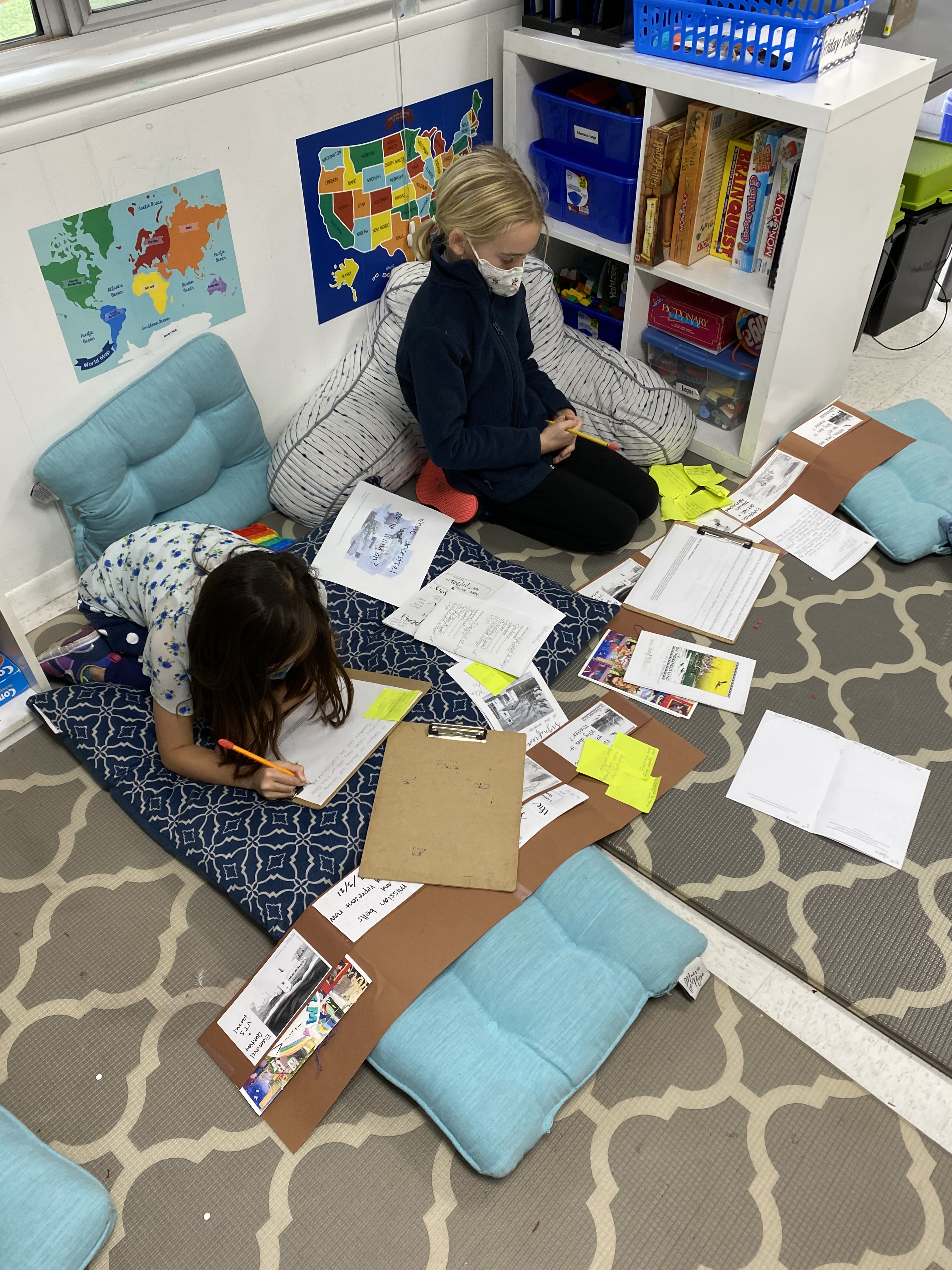
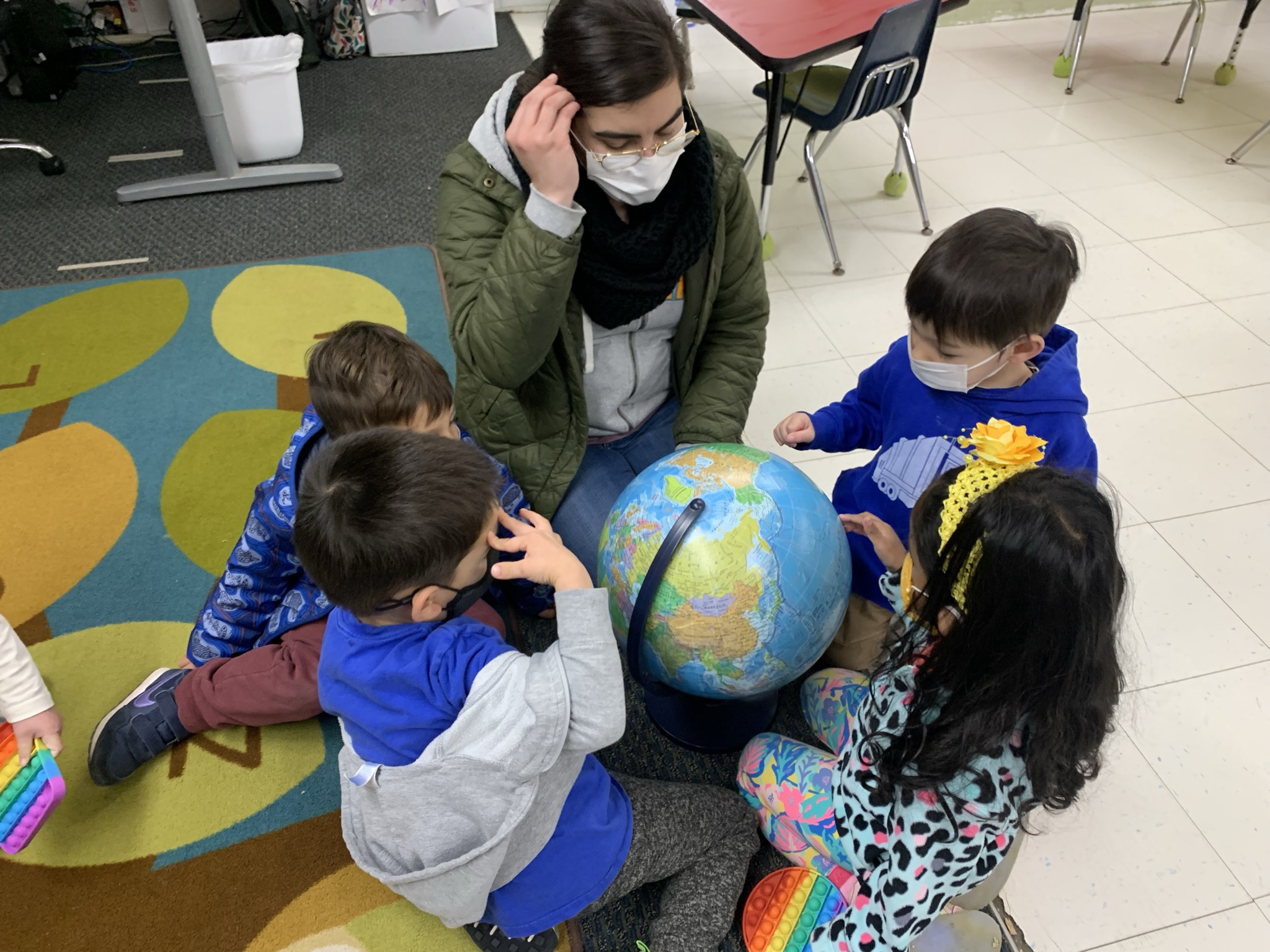
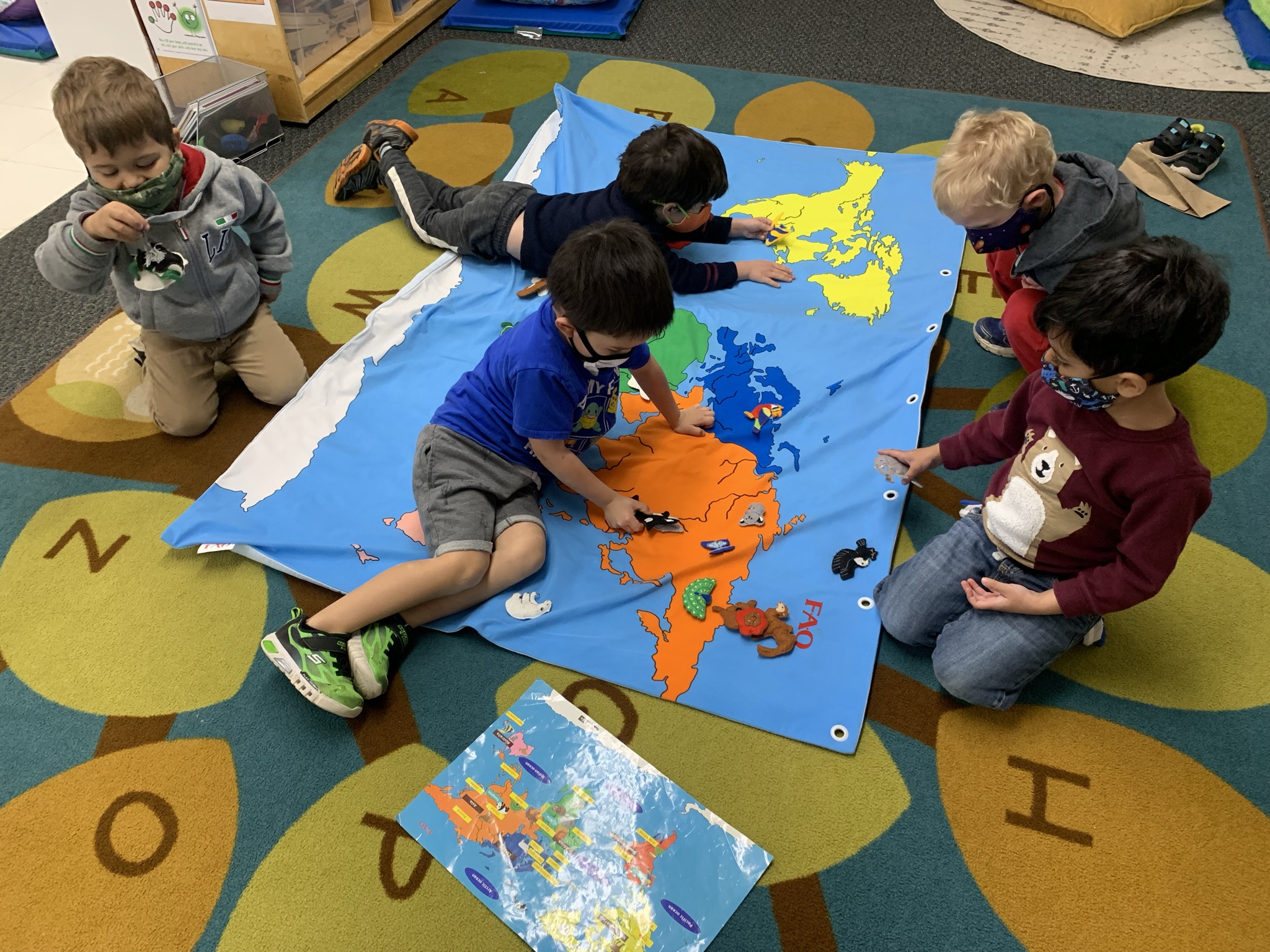
The first graders have been learning about rural, urban, and suburban communities. They read stories, such as Town Mouse, Country Mouse, to get a sense of the differences between the communities, and compared the communities of two characters: Miss Rumphius, who lived in an urban community, and Miss Arizona,who lived in a rural community. To illustrate their learning, the students made Venn diagrams and drawings to show the similarities and differences between the communities.

The first graders also enjoyed learning about producers, consumers, goods and services, and the role each plays in the different communities. To finish up the unit, the students wrote a book on what kind of community they would like to move to in the future.

#SaklanAcademic

The Saklan Library is Open!

Saklan students are finally enjoying library time IN the Saklan Library! Last year, Saklan’s library was homeroom for eighth grade, making it off-limits to students in other cohorts due to COVID restrictions. Lower school grades still had adapted library classes in the pavilion with animated story time and book check out from a curated bin. The experience has been revamped this year! The students walked into the library for the first time with eyes wide and faces smiling as they realized their access to books had immeasurably improved over the previous year’s curated box. The Saklan Library currently has over 4,400 books and more are being added each day.

Students browse for their books of choice by using the Non-Fiction Dewey Decimal System or Fiction Genres. Students can also search for their books by reading level, an important detail for younger readers. The middle school students have a Young Adult Library in the humanities classroom with books that are geared towards the interests and reading levels of middle school students. They can browse and check out books as wanted. 

The library is keeping up with multi-book series readers and non-fiction enthusiasts by continually adding to the book collection. We gratefully accept book donations should families have favorites they are finished with. The librarians, Mrs. Meredith and Mrs. Joy, have specifically focused on new additions that support ideas of inclusion, diversity, kindness and other pillars of Saklan’s mission. 

Anyone in the Saklan Community can search the online catalog and place holds on books for their child. This feature is especially loved by the teachers and allows them to request books that support their classroom curriculum. Browse the collection and request books here: Go to OPAC. If needed, the library name is “Saklan” and no password is required. Books can be searched by title, author, subject, location (genre), or reading level. Click the “Request Hold” button when viewing results by ITEM. 

We would love to hear from you! Email library@saklan.org with questions, concerns and ideas. 

Friendly Family Groups

On Thursday, September 30th, the Saklan first through eighth graders met with their family groups for the first time this year! During the in-person meetings, the eighth graders led discussions of what it means to be friendly.

After hearing The Fruit Salad Friend read aloud, each group talked about how they can be a good friend both in school and in the community. The groups then made their own friendship salads, showcasing the most important friendship traits. Check out the salads below!

#SaklanCompassion #FamilyGroups #SaklanLeadership

Head’s Corner

MAP Testing – Measures of Academic Progress

Over the next two weeks, if your student is in grades 2*- 8, they will spend a few hours taking the NWEA MAP (Measures of Academic Progress) test. The MAP test is a “standardized” test in Language Arts, Reading, and Math, but is different from most other standardized tests.

The MAP test is computerized and adaptive; as students take the tests, the program feeds them either more challenging or more accessible questions, depending on their performance on earlier questions. In addition, the algorithm is designed to find a student’s strengths and challenges in the subject area. 

When we administered the test last spring, I recall 8th graders lamenting that it was the most challenging test they had ever taken, and they thought they must have failed. But, it turns out, those same students scored above the 90th percentile. The test was hard because it worked to stretch them, feeding them questions meant for 10th and 11th grade students.  

While the MAP test will benchmark students to other students across the country, that is not the emphasis. Instead, the test provides data for teachers, parents, and students alike that will help leverage strengths and fill gaps. Each teacher receives a report on their class and individual students to assess their competency in a subject area. In addition, parents receive a report on their child that offers suggestions for improvement and links to resources that will spur academic growth.

Compared to other standardized tests which would take a week or more of instructional time to complete, the MAP test is not timed and takes approximately 50-70 minutes (some students are done in 45 minutes, others take 80) per subject area to complete. Therefore it is less intrusive to our instructional day.

We look forward to sharing the information gathered from the MAP test as we move into the year and share your child’s results during conferences.

For more information on the MAP test, please click here

Warm regards,

David 

*This is the first year we are testing 2nd graders. They will only be taking the reading portion of the test – it will last between 45 and 75 minutes.  

Overnight Field Experiences Return

Last week, the 6th graders participated in the first overnight field experience we have been able to offer in 18 months. They attended Westminster Woods, an environmental education and character development program, nestled in 200 acres of redwood forest in Sonoma County. Students hiked through the redwood forest, scoured the Dutch Bill Creek, took part in many team building challenges and ventured through an incredible high-ropes challenge course under the redwood canopy.

Students not only learned about ecology, teamwork and the natural environment, but they got to learn more about each other as well. Here are some of highlights from the experience:


“I think Saklan has us go on these field experiences to learn about ourselves and our class. We now feel like we are all friends.”

James


“I faced some of my biggest fears (heights) on this experience. And trusting my classmates made that easier.”

Kori
“I think these trips are important because it makes you try new things. I was scared when I left home about what the week might be like, but then I was so happy I went!”

Kiran


“I feel like I am more connected to my class after this week. I feel this way because we learned more about each other. So many people have such interesting traits, I thought it was cool to get to know more about them.”

Eleanor


“I felt really connected to my class after the ropes course. We had to work together to get through the activities.”

Mori


“Something I will never forget is taking my blindfold off and finding we were at the top of a hill and had an amazing view of a valley, that was cool!”

Ada

Miss O and Mr. Zippin joined the students for the week at Westminster Woods. Upon returning to campus, they shared that they loved seeing how the students were are to able bond through the experience and how compassionate they were to each other. The week was filled with moments where the students were lending a hand to each other when they needed it and encouraging people they only met 3 weeks ago as if they had known each other for years.

It was a great week!

#SaklanFieldExperience #SaklanCompassionate

A CLAS Act

If you were able to join us last Friday for CLAS, our bi-weekly community gathering, you know what a terrific job our 5th graders did hosting and presenting their fall haiku poems. The fifth graders ran the assembly, introduced presenters, and delivered their poems with calm, collected confidence. However, what looked seamless didn’t start off that way. The students began practicing for CLAS on Wednesday, and with specific feedback about posture, pace, volume, and eye contact, each student’s presentation improved.

The fifth graders took all the feedback they received about public speaking during the week and gave great presentations to the Saklan community on Friday morning. While we are incredibly proud of the fifth graders for their courage to stand up in front of their peers and parents and share their poems, equally important is what was reinforced behind the scenes. This was a great opportunity to show the students that practice, effort and persistence pays off. While some things in life come easily, others take more effort, and with practice, being open to feedback, and lots of work, we can all grow and improve.

#SaklanCourageous

Colors of Pre-K

Last week, the Hoot Owls read the book The Colors of Us, by Karen Katz. In the story, a little girl notices all the beautiful and different skin colors of the people in her community. Her mom is an artist and teaches her how to mix black, white, red and yellow paint to make the skin colors of the people that she sees. She then paints portraits of the members of her community, declaring them “the colors of us!”

After reading the story, the Hoot Owls mixed paints to create their own self-portraits. The students tried to get as close as they could to their own skin color; each Pre-K student decided when the color was correct, or close enough. Next the Hoot Owls looked into mirrors and added their eyes, eyebrows, nose, mouth and hair to their portraits.

#SaklanDiversity

Hot Air Balloons

In chemistry, the eighth graders created hot air balloons to test the ideas of buoyancy and Archimedes’ principle, along with Charles’ law and thermal expansion. Using paper, glue and tape, the students worked in teams to engineer balloons that would create the largest lift when filled with heated air.  

In the church parking lot, the students worked together to fill their balloons and create lift. Some balloons went higher than others, but all took off!  Some groups had to make alterations on the fly, and some tried adding different amounts of air or waiting for wind gusts, but they finally got lift off!

While flying their hot air balloons, and with the help of the wind, the students noticed how fluids move in and push matter. Additionally, the engineering process was in full effect with the eighth graders as they attempted to fly their balloons. When hitting snags in their designs or having environmental challenges, the students were able to problem solve and determine changes they could make to their designs or process to get their balloons off the ground!

#SaklanAcademic #SaklanHandsOn