Kindergarten Studies Owls

Kindergartners have been having fun with Science by studying owls. The students can tell how many bones an owl has in its neck compared to a human and the difference between our eyes and an owl’s eyes. They learned an owl’s most powerful sense (note how all we do is related) is the sense of hearing. And, did you know owls do not build nests?
IMG_2362

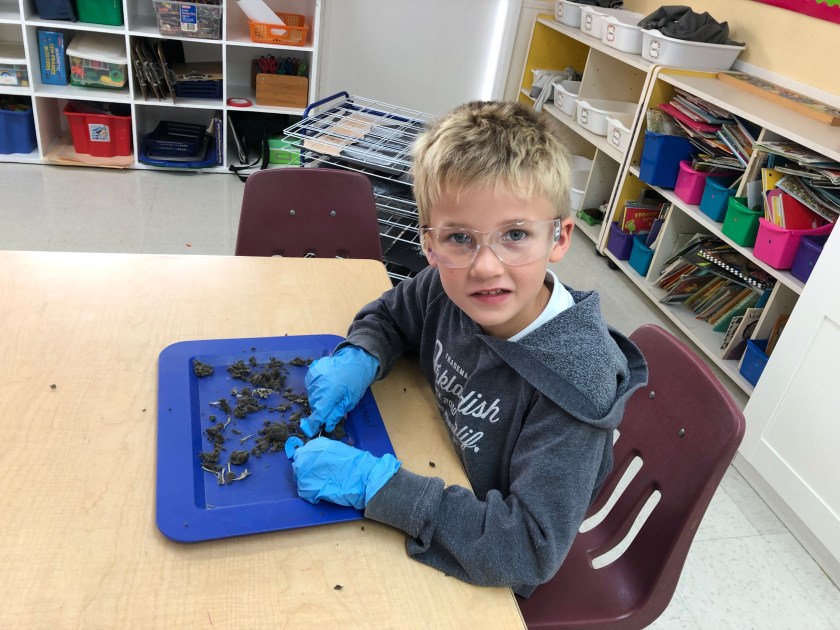
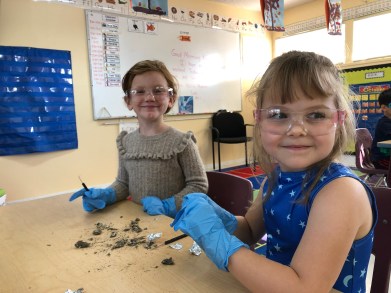
Finally, the class discovered what owls eat by dissecting an owl pellet. Using tools borrowed from Ms. O’s Science lab and a chart, the students noted skulls of birds and rodents, jaw bones and leg bones. The class heard some wonderful stories about owls including, Owl Moon, White Owl, Barn Owl, and our favorite, Owl Babies. Next time you are in the Kidnergarten room, notice the children’s paintings depicting a scene from Owl Babies.
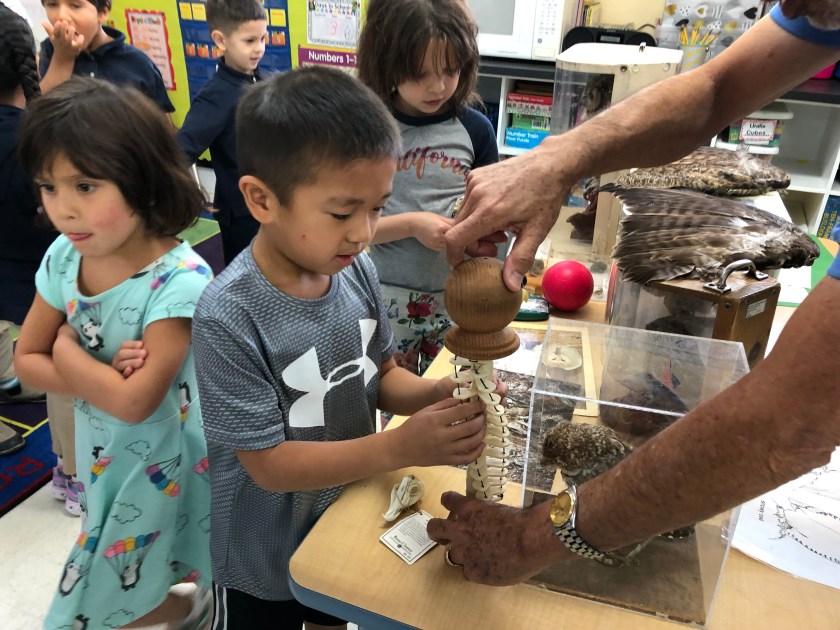
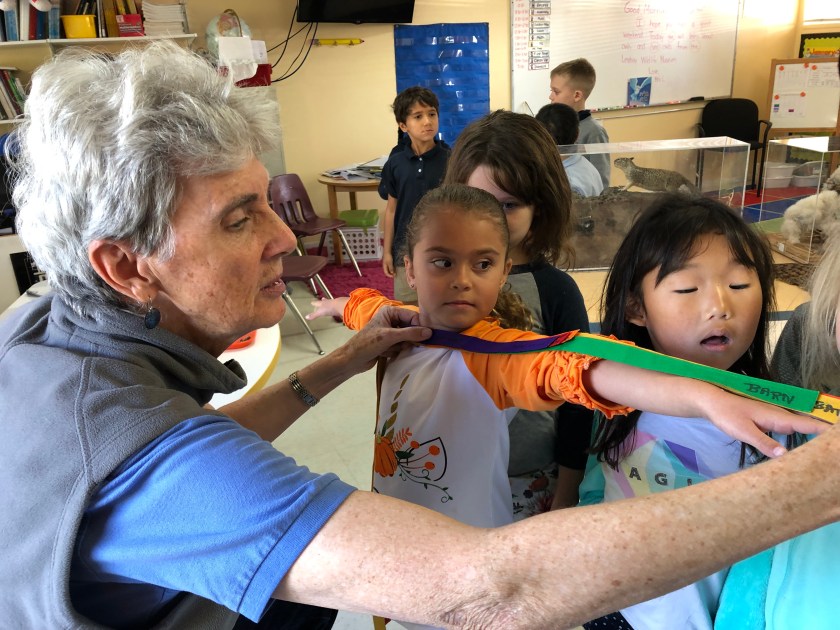
The class ended their study of owls with the field experience of a visit from Lindsay Wildlife Museum where the children compared owl wings to hawk wings, touched talons from an owl, and saw a live barn owl similar to the one in the book we read. Kindergartners love owls!

#SaklanHandsOn
Sixth Grade Math

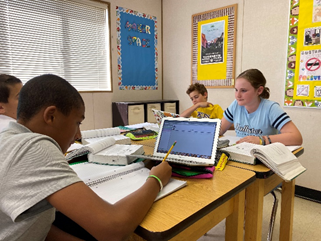
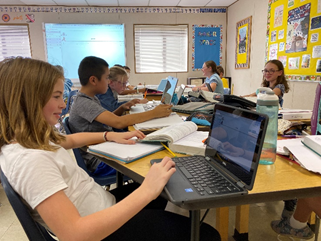
In Math, the sixth graders have been working with positive and negative integers. Addition of integers was introduced with Cecil, an acrobat who can move forward and backward on a tight rope. Using their computers, the students investigated how Cecil could travel along tight ropes of different lengths. They had to combine positive and negative integers to successfully navigate the increasingly difficult challenges.

pasted image 0

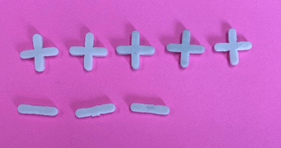
To continue this idea, Mr. Zippin introduced Integer Tiles. The Integer Tiles are small plus and minus pieces that represent positive and negative one. By laying out 5 plus tiles, we represent the number 5. If we lay out 3 minus pieces, we represent the number -3. By combining these eight tiles we are representing the expression 5 + (-3).  The students noticed that the three plus pieces, when combined with three minus pieces made three zeros. After discussing the identity property of addition, they knew that adding these three zeros did not change the sum so the total value of the expression was 2.

#SaklanHandsOn

El Corazon del Pueblo

Second and third graders have been learning about Día de los Muertos or Day of the Dead in Spanish class. Day of the Dead is a Mexican holiday where families welcome back the souls of their deceased relatives for a brief reunion that includes food, drink and celebration. A blend of Mesoamerican ritual, European religion and Spanish culture, the holiday is celebrated each year on November 1-2. This holiday involves family and friends gathering to pray for and remember friends and family members who have died, and helping support their spiritual journey. In Mexican culture, death is viewed as a natural part of the human cycle. Mexicans view it not as a day of sadness but as a day of celebration because their loved ones awake and celebrate with them. In 2008, the tradition was inscribed in the Representative List of the Intangible Cultural Heritage of Humanity by UNESCO.

Traditions connected with the holiday include building private altars called ofrendas, honoring the deceased using calaveras, Aztec marigolds, and the favorite foods and beverages of the departed, and visiting graves with these as gifts. Visitors also leave possessions of the deceased at the graves.

Sugar skulls represent a departed soul, it has the name written on the forehead and is placed on the home ofrenda or gravestone to honor the return of a particular spirit. Sugar skull art reflects the folk art style of big happy smiles, colorful icing and sparkly tin and glittery adornments.

Last week, second and third graders went on a field experience to El Corazon de Pueblo in Oakland to make sugar skulls. Students were very excited to learn how to make the dough for sugar skulls, put them in molds and then decorate them with colorful icing.

#SaklanExperiential

Head’s Corner

Why Do We Have An Annual Fund?

As you may know, for many independent schools, fundraising can account for up to ten percent of the school’s annual budget. While Saklan’s reliance on fundraising is lower than the average independent school, we still count on the generous support of our community. It is with this in mind that I ask you to participate in the Saklan Annual Giving Fund.

heart

As I mentioned during back to school night, Saklan could make our budget work without our fundraising efforts. But it would be a very different school. Your generosity has changed who we are. Just last year, we have used the funds raised during the AGF and Auction to support many initiatives. To name a few:

  • We have substantially buttressed our financial assistance budget to help families afford a Saklan education.
  • We have increased the number of professional development opportunities available to teachers, helping them bring best practices back to the classroom.
  • There have been a substantial increase in the amount of fieldwork and real-world learning opportunities, giving students authentic learning experiences.

We have received 100% AGF participation from our faculty, staff, and Board of Trustees. My hope is to see 100% participation from our parent community. Our goal is to raise $100,000 from the parent community between now and the end of December. We will realize both those “100s” through your generosity and participation.

I realize that all our families give much to Saklan. Between tuition, time, and trusting us with your children – you make significant sacrifices for Saklan. I know you do it for your children and the work we do with them each day. As importantly though, your generosity is changing the conversation of what education should be for all children.

With gratitude,

David

#SaklanGives

Field Experience to Cal Academy of Sciences

IMG_5197

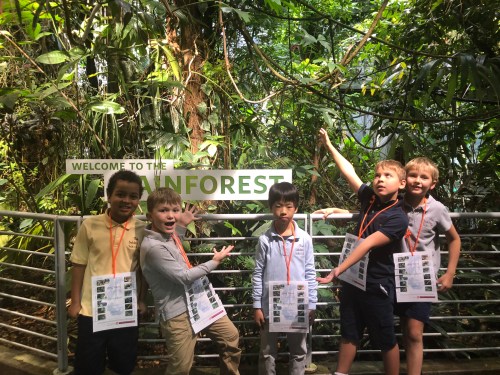
Last Wednesday, the third grade class spent a wonderful day at the California Academy of Sciences in Golden Gate Park. The students attended an interactive show in the planetarium where they learned about the movement of the sun and moon, and other solar system planets. They explored the three-story rainforest exhibit and completed a scavenger hunt finding many different species of plants and animals.

IMG_5281

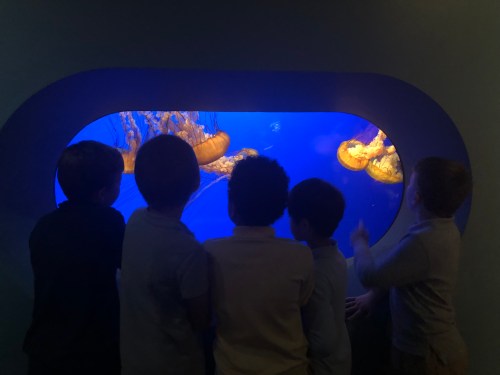
The third graders experienced an earthquake simulation of both the Loma Prieta earthquake and the 1906 San Francisco earthquake. They also visited the living roof, penguin exhibit, aquarium and much more! It was a full day of science learning!

#SaklanExperiential

Fall is Here!

IMG_5785

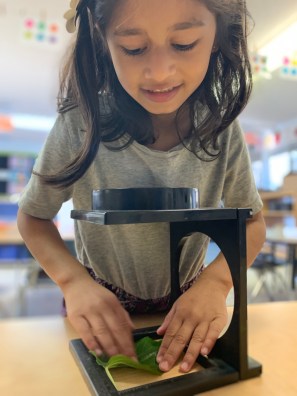
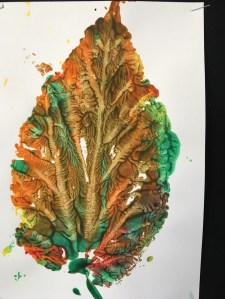
As part of their fall theme, Hoot Owls began to study leaves. First, Hoot Owls examined real leaves under their class magnifying glasses. Miss Jessica pointed out the leaf’s veins and explained their purpose. Hoot Owls love using magnifying glasses.

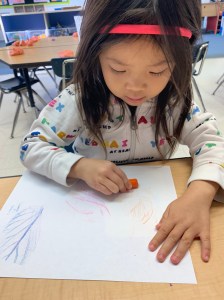
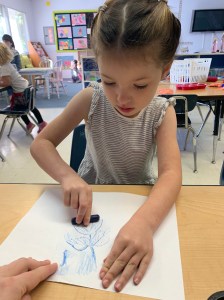
Next, the Hoot Owls did leaf rubbings using the flat side of a crayon. It was magical to watch the leaf shape emerge through the paper.

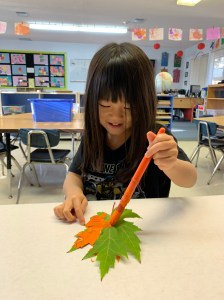
Lastly, the Hoot Owls made leaf prints. Step one: choose a real leaf. Step two: paint the leaf with fall colors. Step three: firmly press a piece of paper over the leaf. Step four: pull off the paper to reveal a beautiful leaf print!

#SaklanCreative

Introduction to the Cell

pasted image 0-1

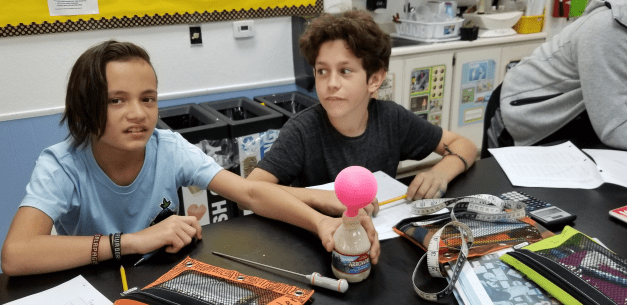
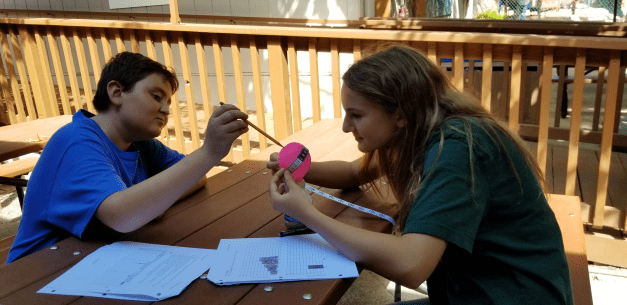
Biology this year starts off with understanding the basic building block of life, the cell. Seventh graders learn all the cell parts, discover plant cells and animal cells (their own cheeks) under a microscope, and then they learn how a membrane works. Students also learn why we produce carbon dioxide through cellular respiration and plants use that to produce oxygen in photosynthesis.

pasted image 0

Students have discovered this through hands-on labs – seeing iodine move across a membrane to turn corn starch black by modeling diffusion and seeing a balloon fill up with carbon dioxide as yeast cells perform cellular respiration. All these functions are vital to a cell’s survival. 

#SaklanHandsOn

Meet Music Substitute Kimberley Lloyd

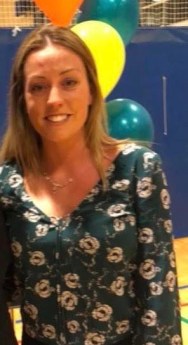
KimberleyWe are pleased to introduce Kimberley Lloyd, our long-term substitute for Mrs. Chaffey. Mrs. Chaffey will be on Family Leave from October 21st until January 6th.
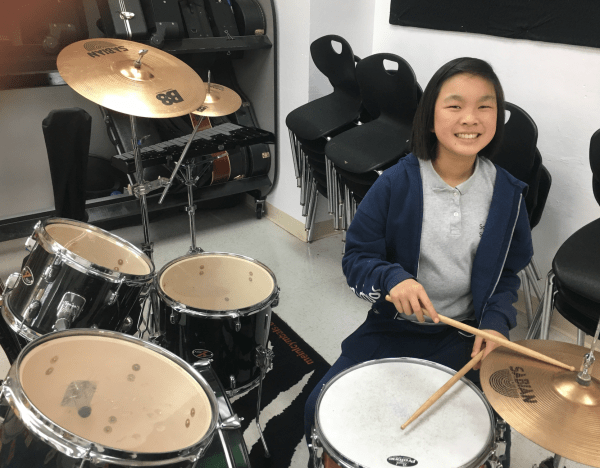
Kimberley is currently studying for her Masters of Music at Holy Names University in Oakland. She holds a Bachelor of Education Honours with a specialization in Music from the Royal Scottish Academy of Music and Drama. She has eight years of experience teaching music in schools. Before she moved to the Bay Area, Kimberley was teaching 5th through 12th grades in Australia using the Kodaly method.

Kimberley is experienced in chorale teaching and leading musical ensembles. She is very passionate about her choirs and she works hard to make sure that her students not only enjoy choir but that they produce quality sound. She has also led percussion groups and other small ensembles. Kimberley believes that the positive benefits of playing as a group are wide reaching; it boosts children’s confidence and enhances their aural skills. Engaging students in learning to read music notation and develop aural and practical skills is a basic and necessary skill that she is passionate about. She uses a variety of teaching approaches,materials and tasks to ensure that her students are engaged and motivated.

Kimberley has been here this week to meet the students and work with Mrs. Chaffey. We are excited to officially welcome Ms. Lloyd on Monday!

#SaklanWellRounded

Middle School Music Ensembles

Screen Shot 2019-10-01 at 12.43.17 PM

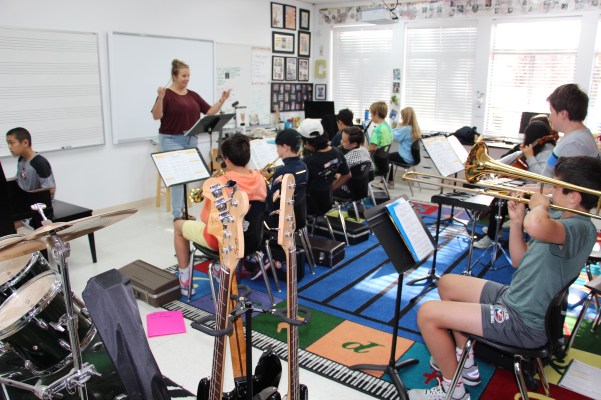
As the first month of school winds down, the middle school music ensembles are beginning to ramp up the energy, and are diving deep into technical concepts and tonal flexibility.

IMG_3065.JPG

The Band class is beginning to work on expanding their focus and ability to read notes on a page, and extending their range. The Orchestra is finishing a tonal and rhythmic review, and the Choir is in the midst of basic sight singing using moveable “do”. They are also working on the Beatles piece Let It Be., and a Choral Mix from Hamilton.

IMG_3947

Philosophically, students are really focusing on the way their unique abilities and talents contribute to the ensemble, and discovering that the way they play and practice directly affects others around them. We are beginning to discover that we fly or fall together, and that in order to succeed, every person needs to be a part of play. As our philosophies and brains change, it is incredibly exciting to see the beginnings of true musicians.

#SaklanWellRounded

INKtober 2019

Inktober

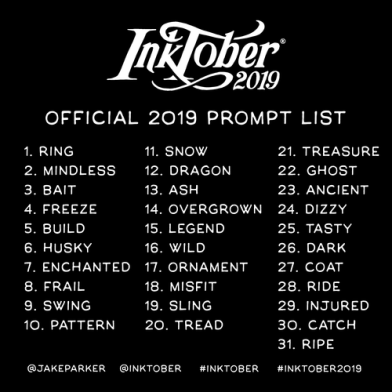
It’s that time of year again! It’s INKtober! Every day for the month of October, students 5th-8th have a homework challenge to create a drawing based upon a word of inspiration. INKtober was started by artist Jake Parker in 2009 and has become more popular every year. Jake wanted to develop his drawing skills and create good working habits.

Inktober is for students to become more comfortable, confident, and creative with drawing. They are to draw for at least 10 minutes a day and can color in their drawings if they choose. They can choose a theme like Halloween or challenge themselves to draw something they find hard, like people or hands. A lot of great work comes from this project every year! You can participate with your kids, too!

#SaklanCreative