
Eighth-grade students have been reading the historical fiction novel Uprising, which tells the intersecting stories of three young women before and during the tragic Triangle Shirtwaist Factory fire in Manhattan on March 25, 1911. Two of the protagonists are newly arrived immigrants from Southern and Eastern Europe.
To provide historical context for the story and develop historical empathy, the class began their study by answering the question: Why do people migrate? Answers included “to escape war and political persecution,” “to find better work,” and “to join their families.”
Their next discussion question was: What issues would you need to consider if you chose to move to another country? Among the issues the 8th graders identified were the need to learn a new language as well as the need to learn about and adapt to new cultural norms and practices.
The students brainstormed their own lists for their final discussion question: What are human rights?
They shared their answers verbally, and then they practiced “upholding” human rights in the classroom.
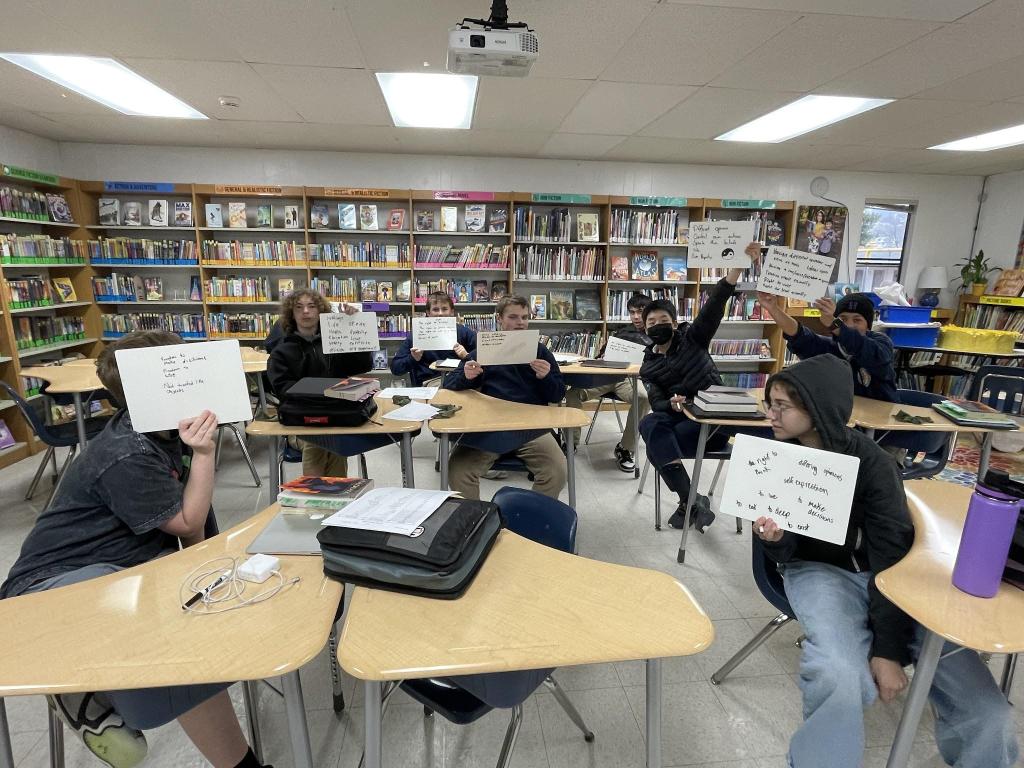
The class then compared their list of human rights to an abridged version of the Universal Declaration of Human Rights (UDHR). They discussed how and why the document was created by the United Nations in 1949. Next, the eighth graders circled those rights they feel are the most important, and then discussed why those specific rights are so important to them.
Subsequently, the students examined some facts and debunked common myths about immigration and migrants before analyzing this bar graph showing the numbers of immigrants who came to the U.S. and the locations of their origins.
Each student then selected a card telling the true-life story of a migrant who came to the United States sometime between the 1790s and the 2000s. They wrote down the reasons why this person migrated and which Articles in the UDHR were relevant to that person’s experience.


After each student shared their person’s story and relevant UDHR Articles in date order, the class compiled an Immigration Timeline, which tells the true stories of 40 migrants to the United States.

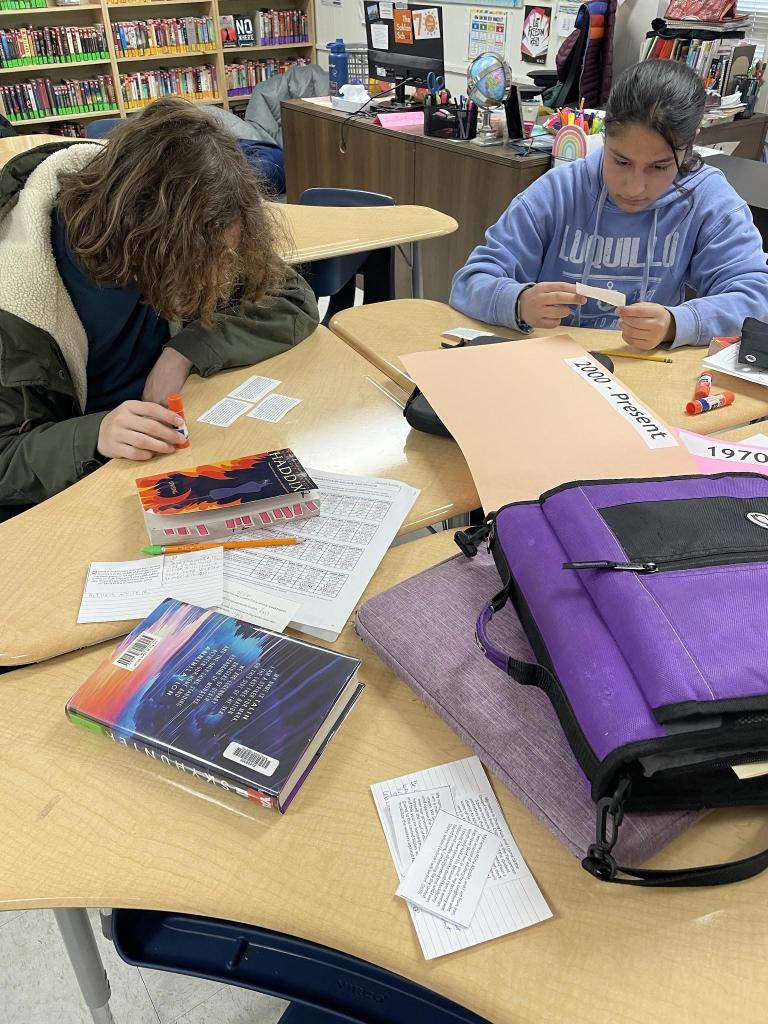
The class finished up with a gallery walk during which the students read all of the life stories on the timeline, identified the most common reasons why immigrants came to the U.S. throughout history, and made connections to the specific violations of the migrants’ human rights that motivated them to do so.

 FRIDAY BLOG
You must be logged in to post a comment.