Inclusive Family Groups

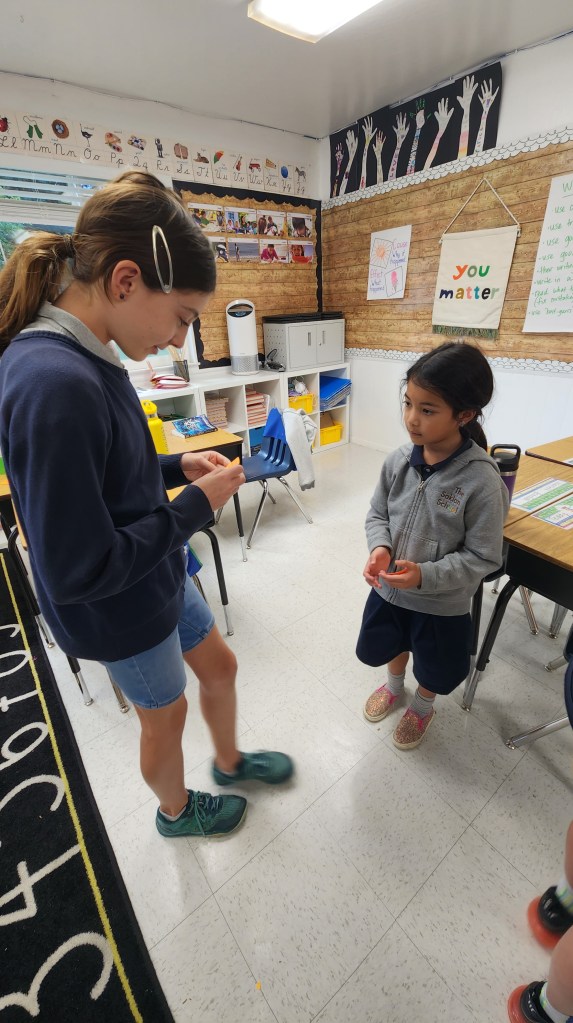
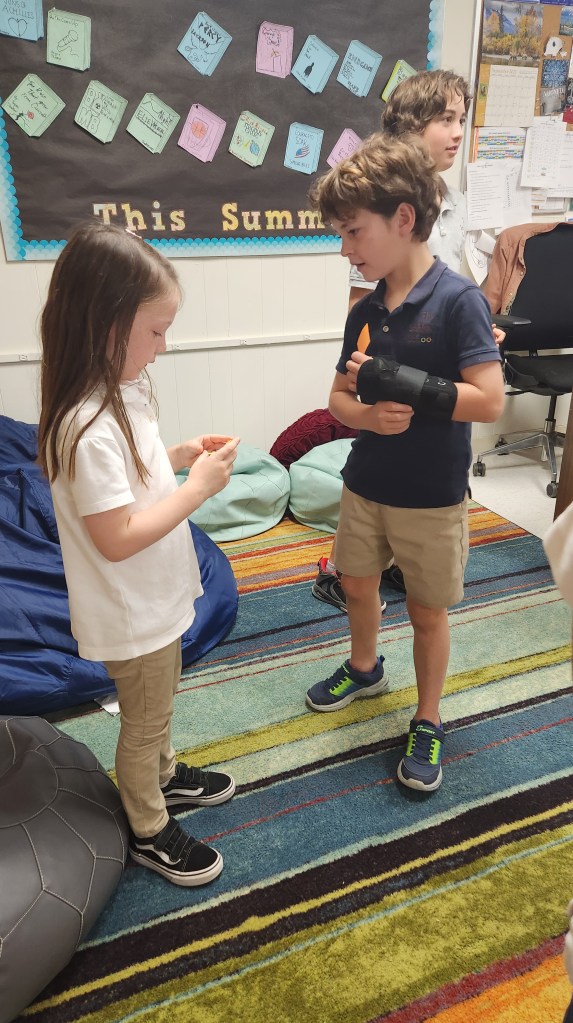
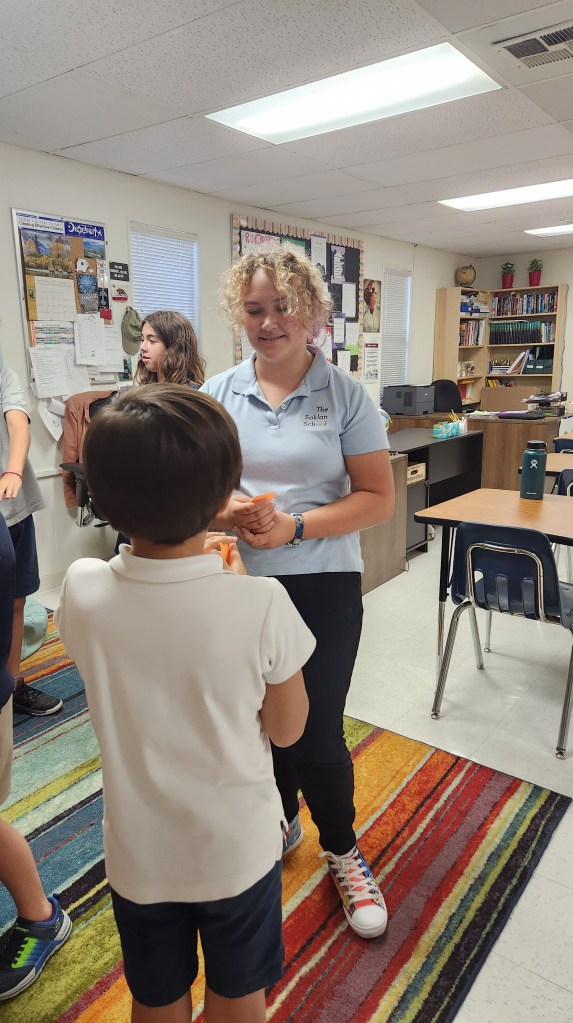
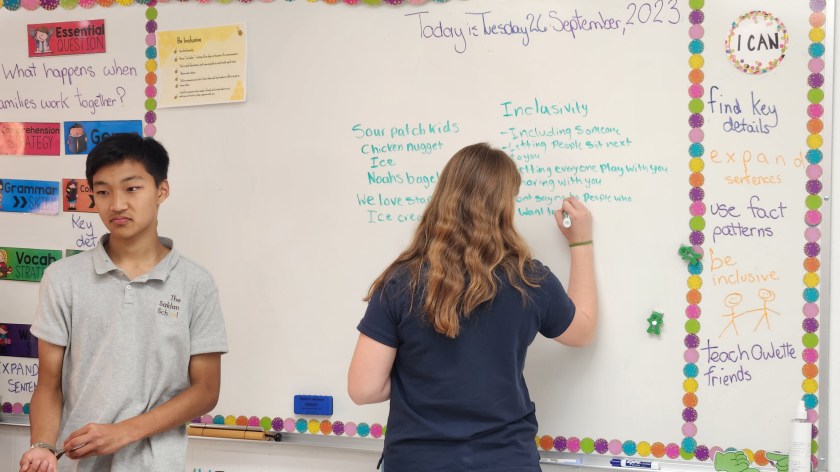
On Tuesday, September 26th, the Saklan first through eighth graders were very excited to meet with their family groups for the first time this year! During the meeting, the students in each group introduced themselves and shared a few of their favorite things. Next, each group had a discussion of what it means to be inclusive and why it is important that we are inclusive, including to help others them feel comfortable and to make friends. Each family then played a game to help them learn something new about everyone in their group, as sometimes its hard to be inclusive when you don’t know much about each other.
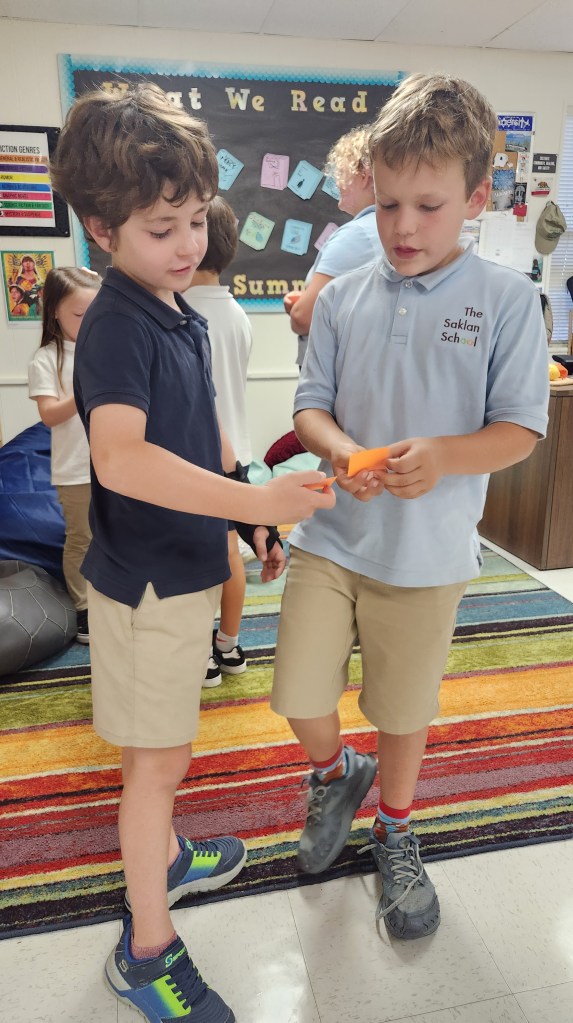
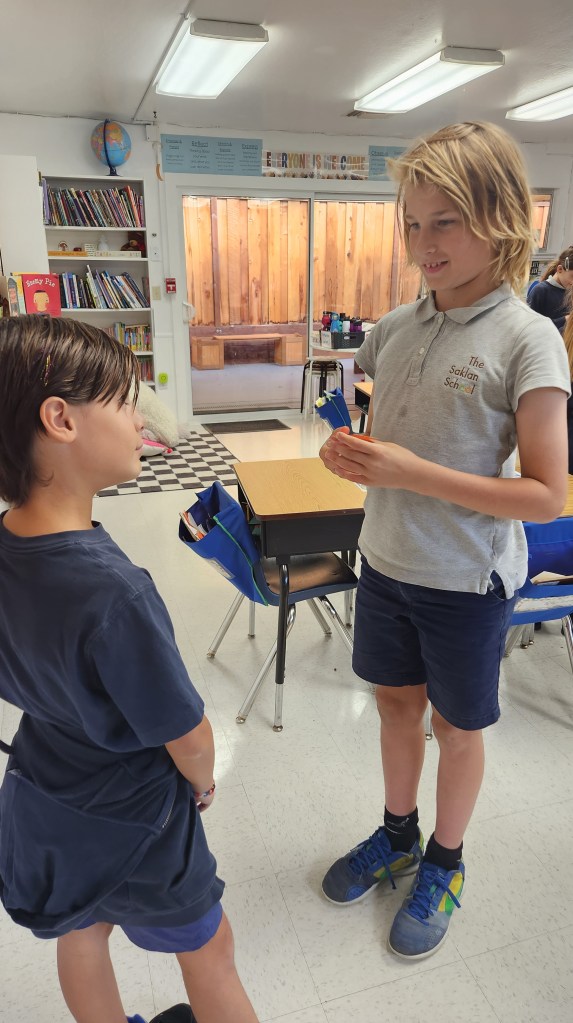
The 8th graders then explained to their family group that as they go through the year together, they are a group made up of awesome individuals and they each bring their own strengths to the group. Some may have amazing sports or singing talents. Some maybe be amazing observers or great listeners. These strengths make them a great team, and throughout the year, the group leaders will ask all family members to share their own perspectives.
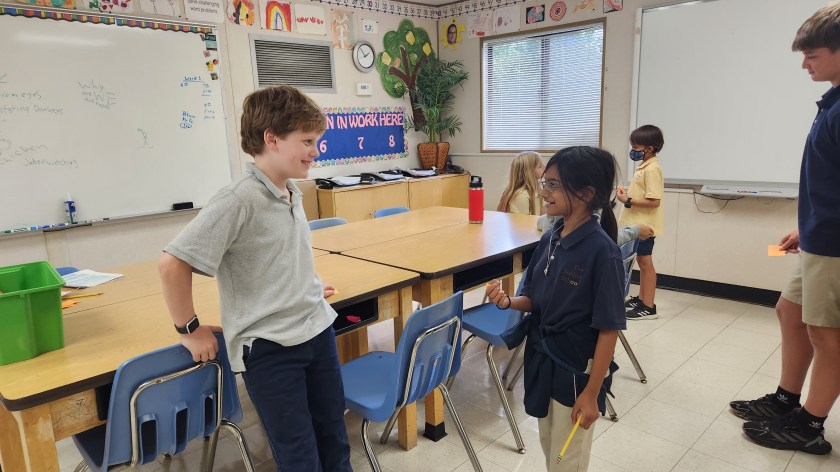
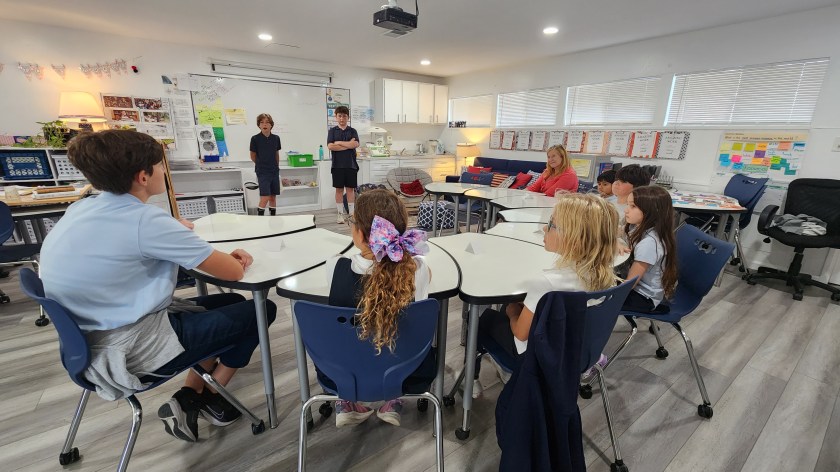
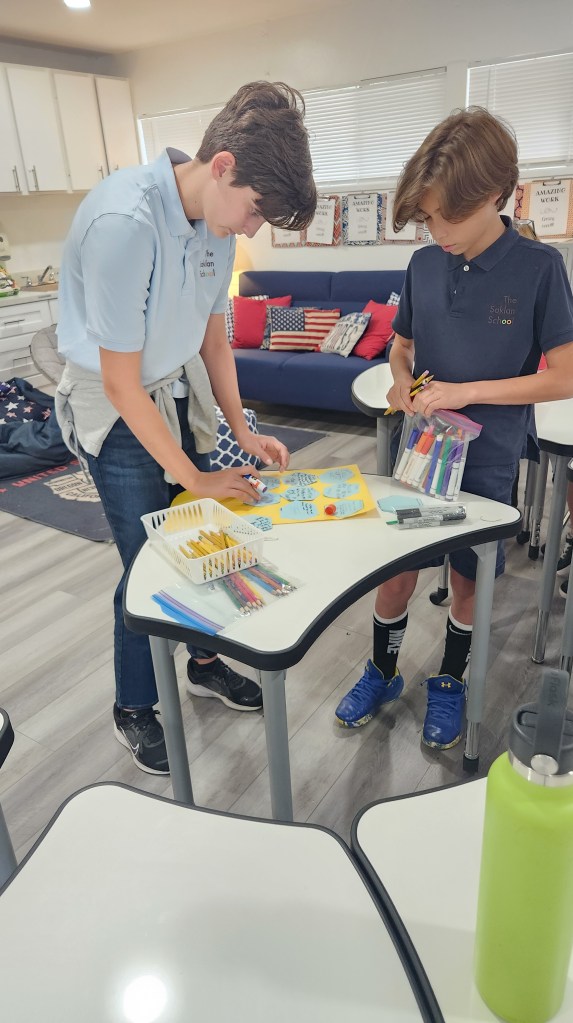
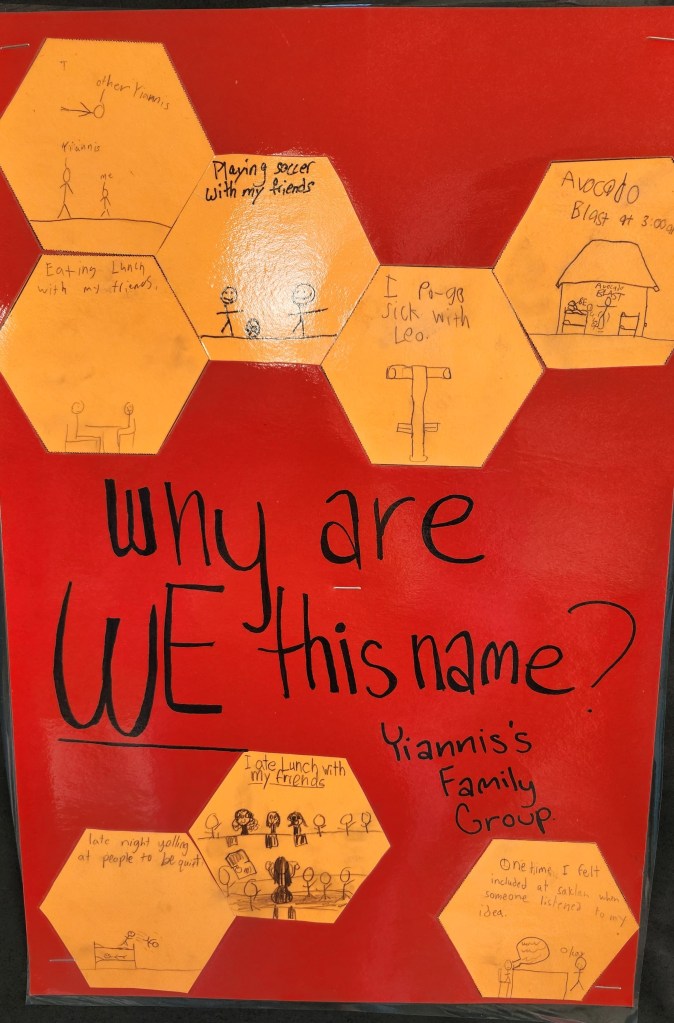
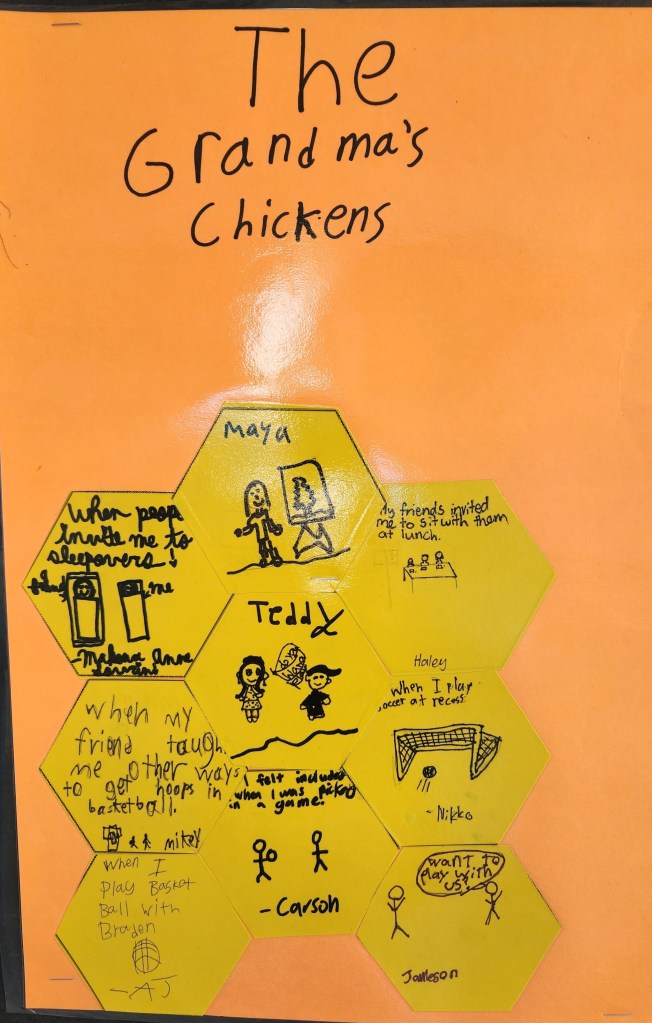
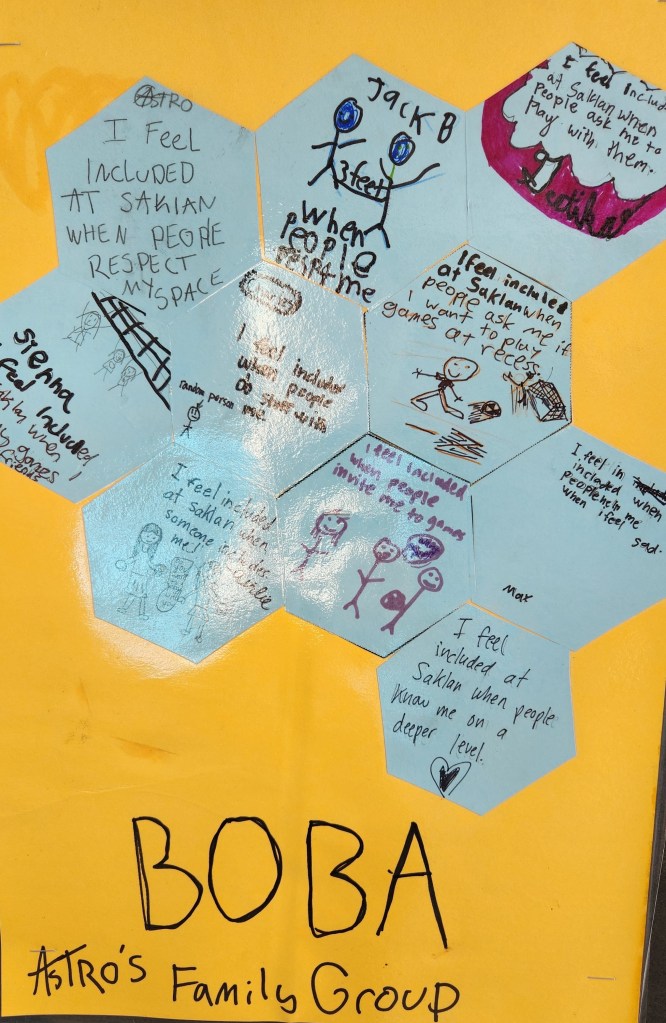
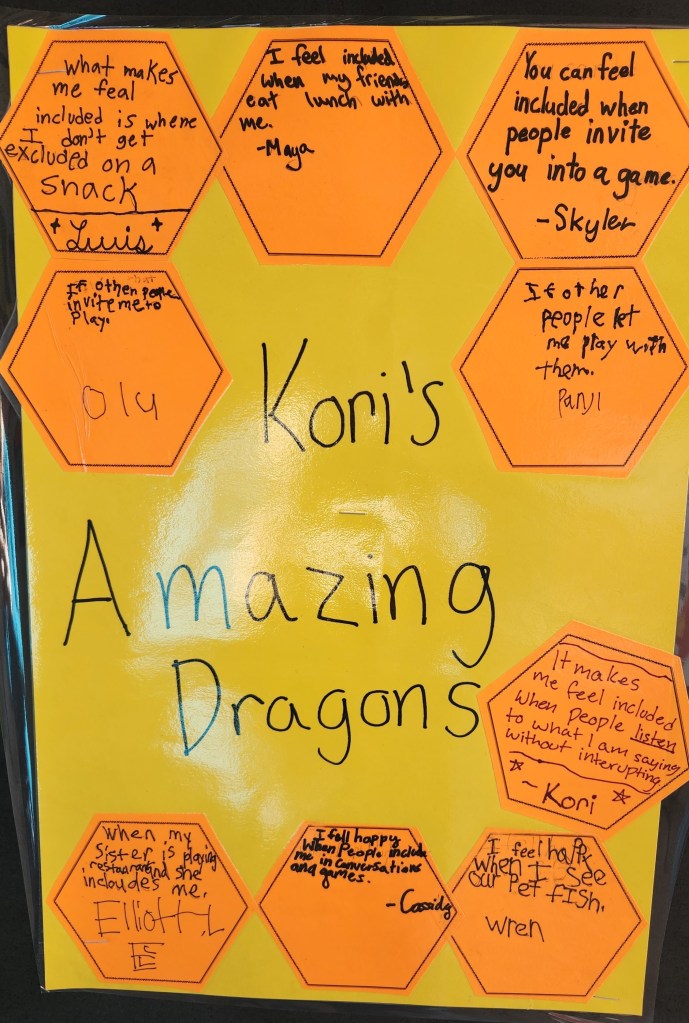
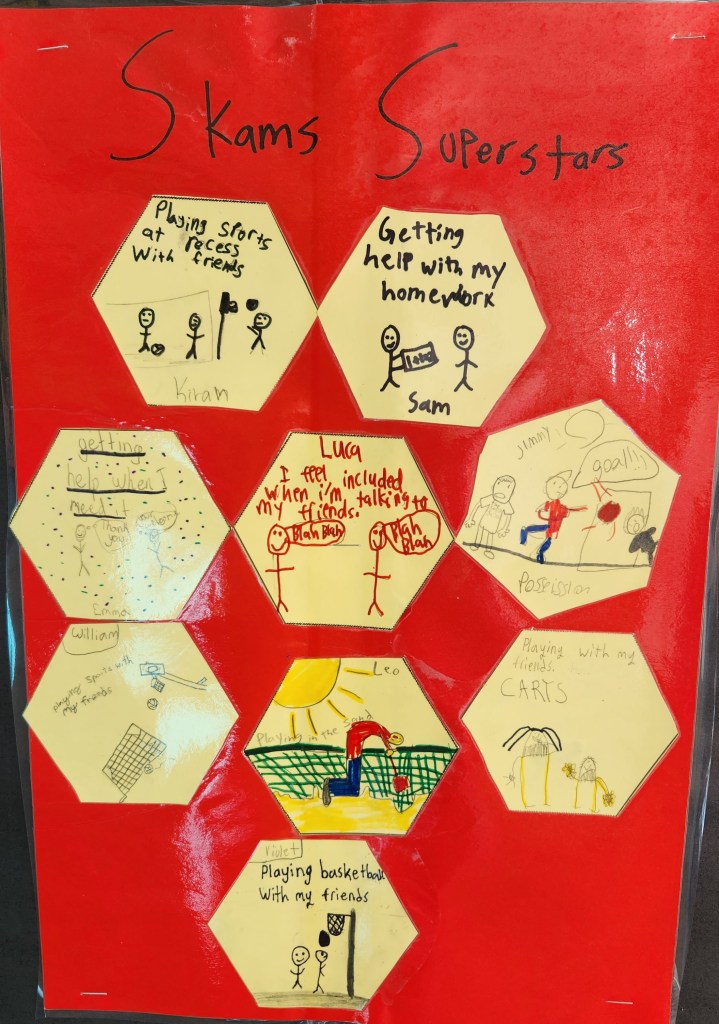
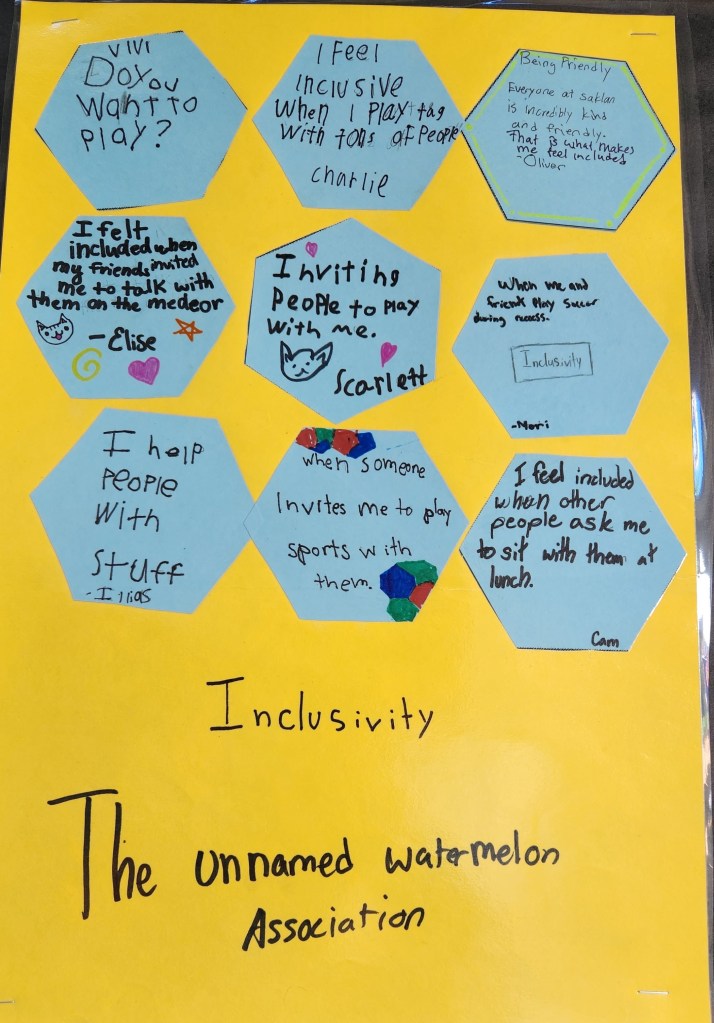
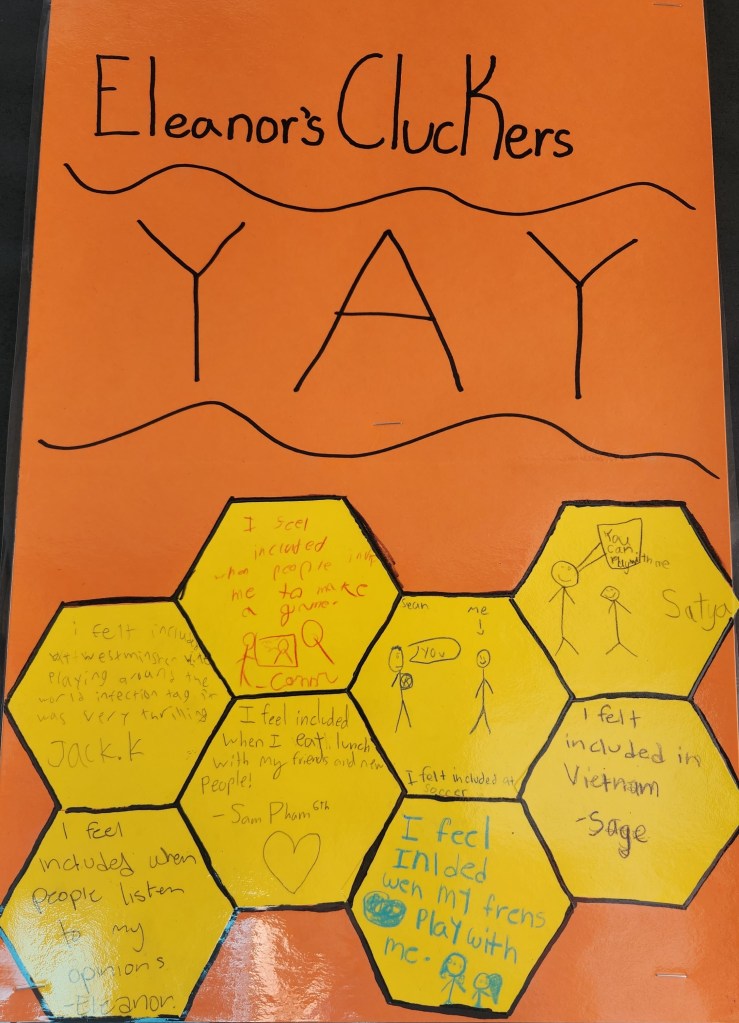
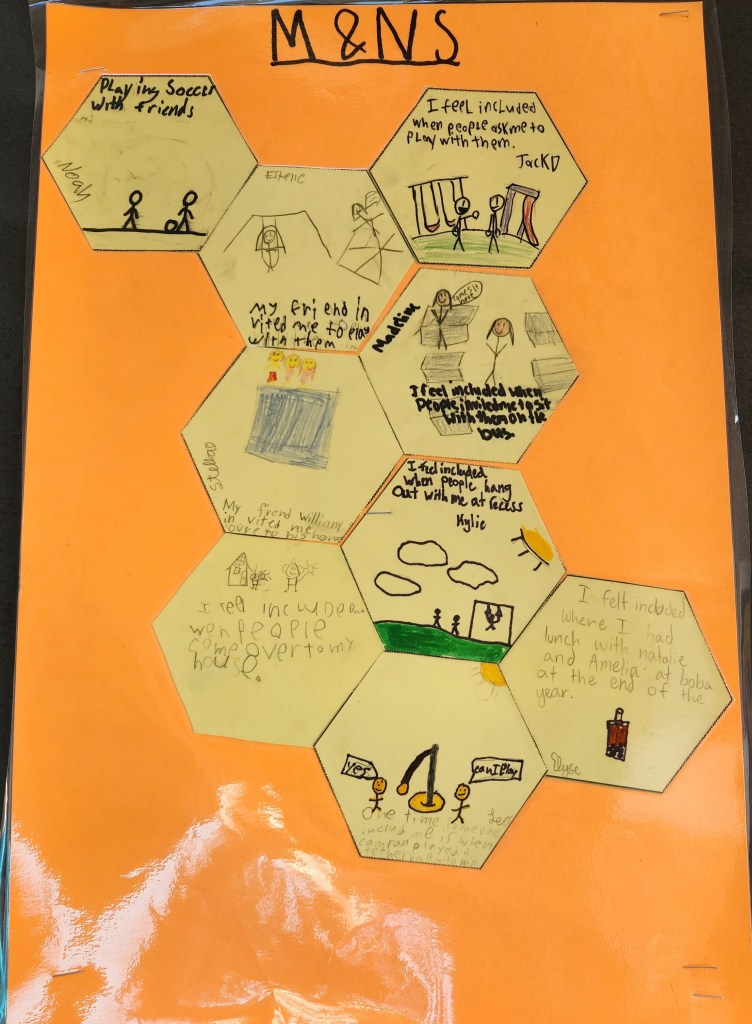
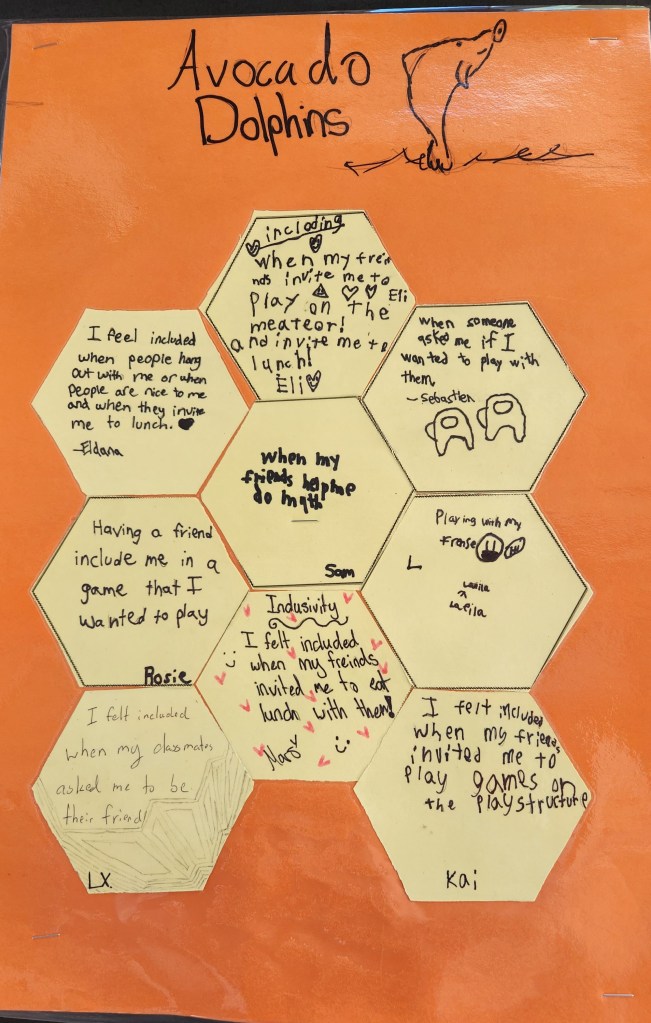
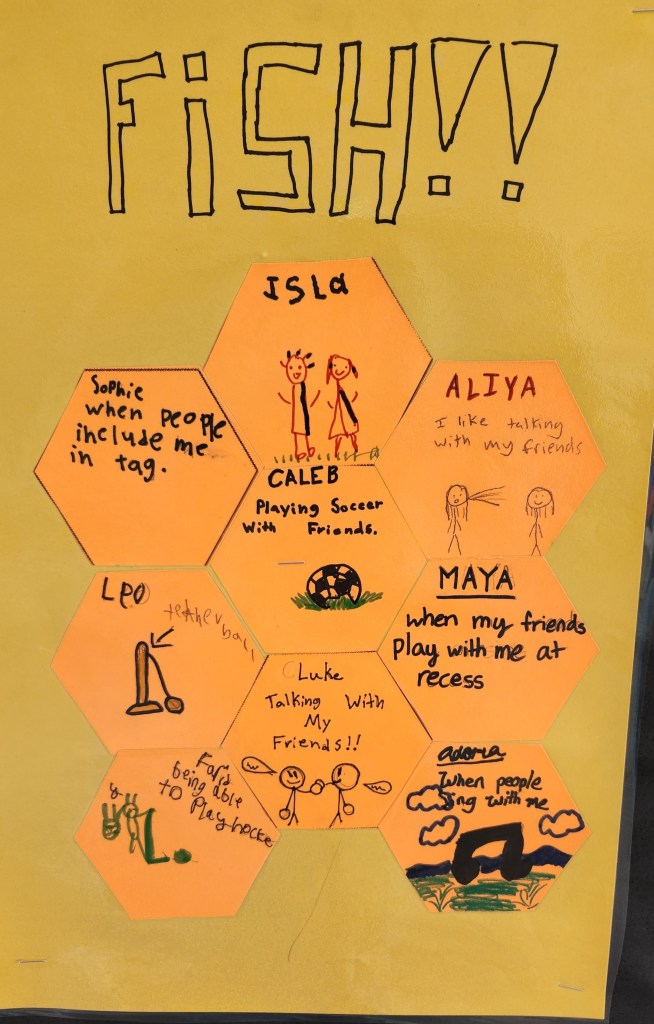
Each member of the group was then given a puzzle piece to draw or decoratively write one way they have felt included at Saklan. These puzzle pieces were then all put together, with their family group name written on top. Check out their puzzles (and names) below!
#SaklanSEL #SaklanCommunity
See You Sunday!

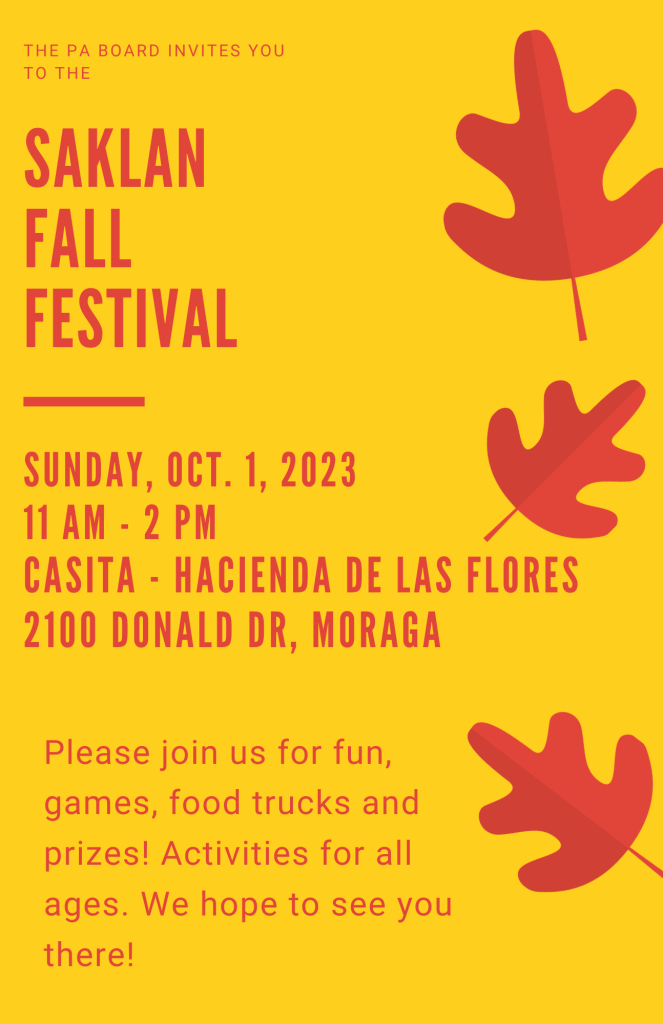
We look forward to seeing you at The Saklan School’s Fall Festival this Sunday, October 1st from 11:00 a.m. – 2:00 p.m.!

Join us at the Casita at Hacienda de los Flores for face painting, a photo booth, fall crafts and tons of fun! There will also be food trucks, lawn games, a whipped cream pie challenge, and a Fall Food Showcase. This will be fun for the whole family!

#SaklanFallFestival #SaklanCommunity

Refining & Rethinking As We Grow in Knowledge

A PBL Unit kicks off with an entry event, otherwise known as a “hook,” that engages students’ curiosity.  In fifth grade, students study USA history and geography, and so for an entry event into their latest PBL unit, the fifth grade class examined a 3D map of the USA, and noted the flat center that makes up the Great Plains region. Students examined photographs and personal accounts from the early 1930s; the “chocolate-rich soils” that drew many to profitable wheat, corn, and livestock farming during the Great Depression, creating the area’s nickname as “The Breadbowl” of the nation.  

Students then examined photographs and heard personal accounts of the 1939-1949 Dust Bowl Disaster. What caused the year-upon-year sand storms that killed livestock, buried crops, and drove farmers off their once-fertile lands?  The class charted initial ideas, and will collect “clues” in the form of a growing body of knowledge and experiences each week, and then try to answer the complex question (that puzzled scientists for years) at the end of the unit.

Milestone One

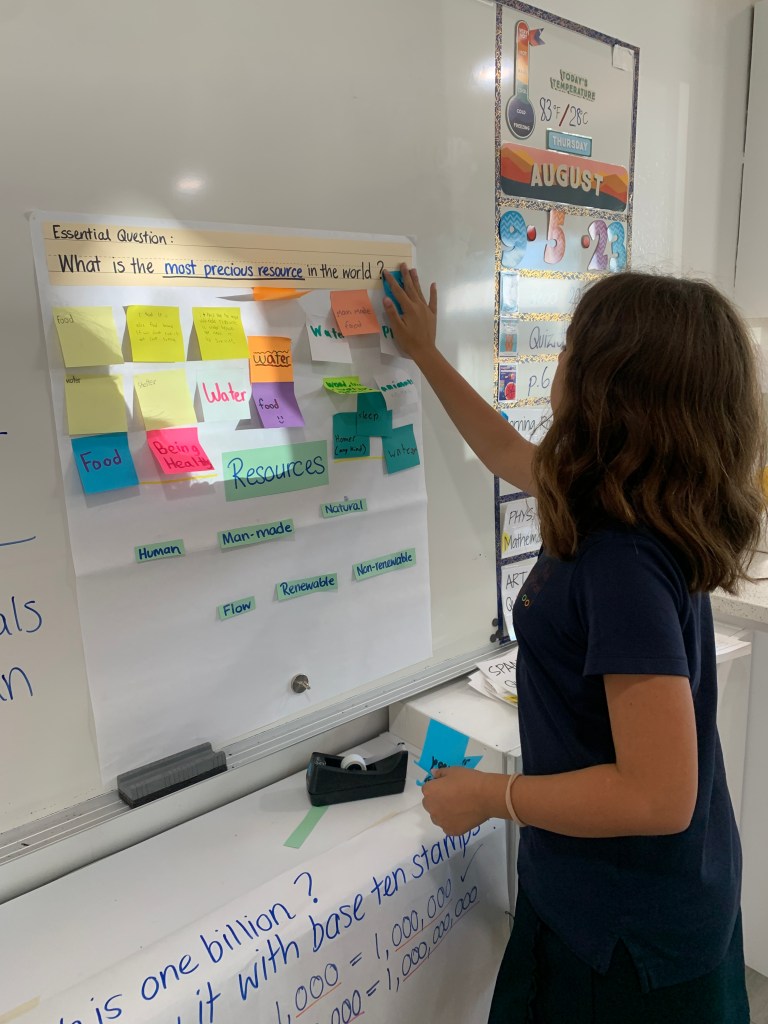
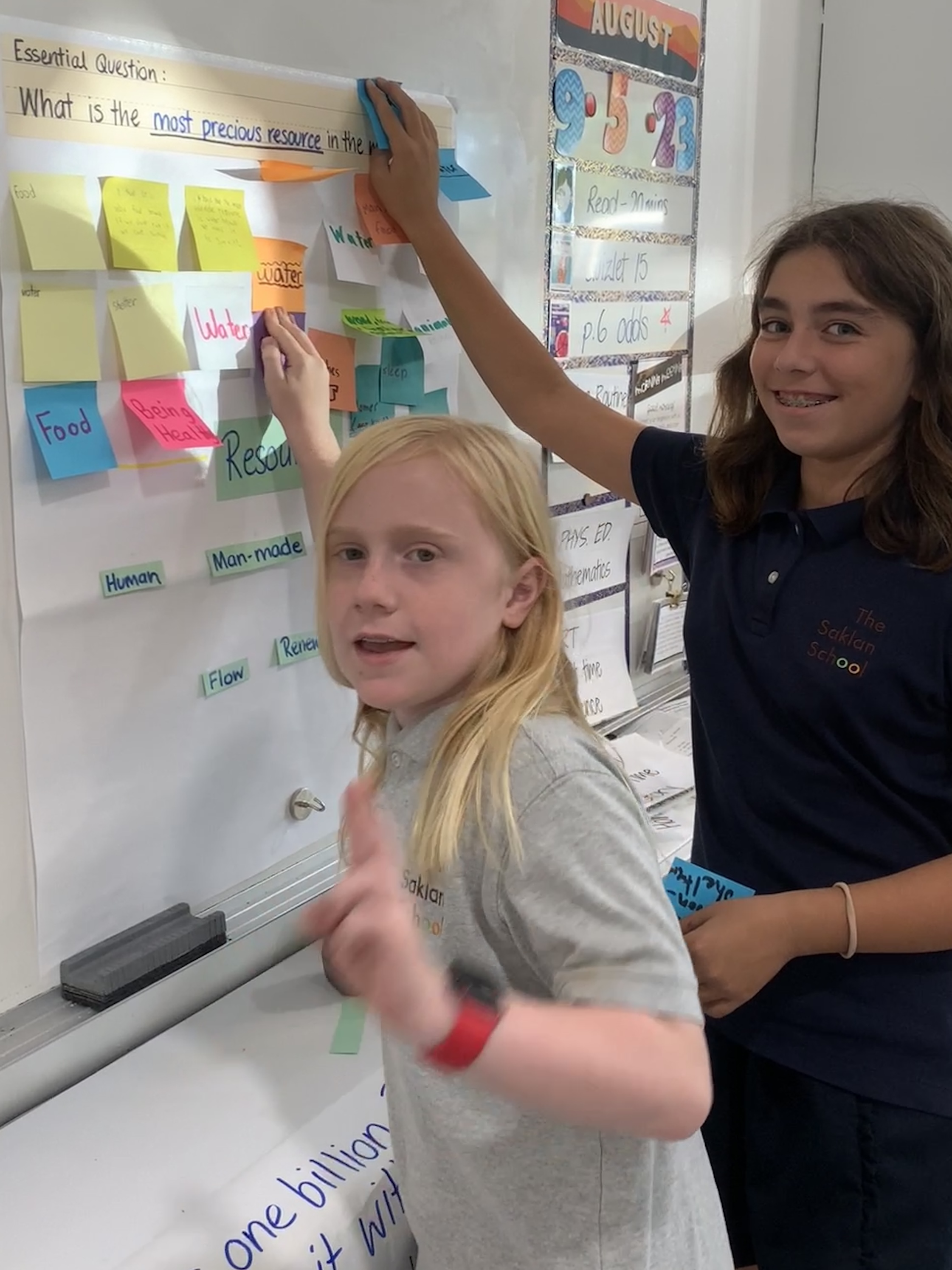
Learning steps necessary to reach an end goal is a “milestone” in PBL.  The first milestone in the fifth grade unit is for students to understand the value of water as a precious natural resource.  After defining “resource,” students wrote their answers to the question, “What is the most precious resource in the world?” They posted these on a chart that remains on the classroom wall throughout the unit.  Food, water, and shelter made up the top responses.  Sleep, and being healthy were other thoughtful answers; the 5th graders knew that gold, diamonds, and X-boxes were not it!

Next, students learned about fisherman Jose Alvarenga, lost at sea for 438 days after a storm flooded the engine of his fishing boat. Using buckets to collect fresh rainwater, and his bare hands to catch any sea life he could, Jose was able to get just enough fresh water and food to survive for fourteen months. Students learned that people can survive just three weeks without food, and only three days without water! To conclude, students revisited their thought-board and refined their “…most precious resource” answers, reflecting how we refine and rethink things as we grow in knowledge, skills, and experiences in a lifelong learning process.

With this, the fifth grade Earth Science PBL Unit “Water doesn’t just fall from the sky, you know” was underway. Students will learn about the interconnected nature of the earth’s four spheres, with emphasis on the hydrosphere and an application of learning at the end.

Stay tuned to learn about the next milestone in the fifth grade hydrology PBL unit!

#SaklanPBL

Why I Teach Ewe Music

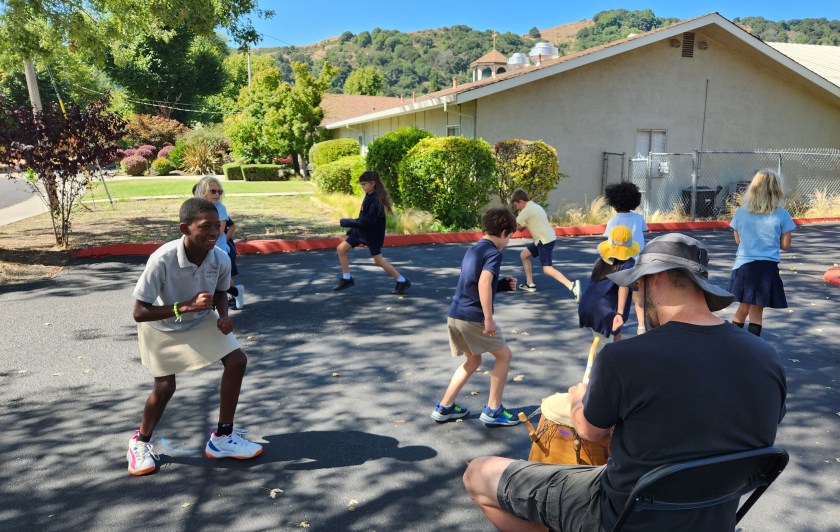
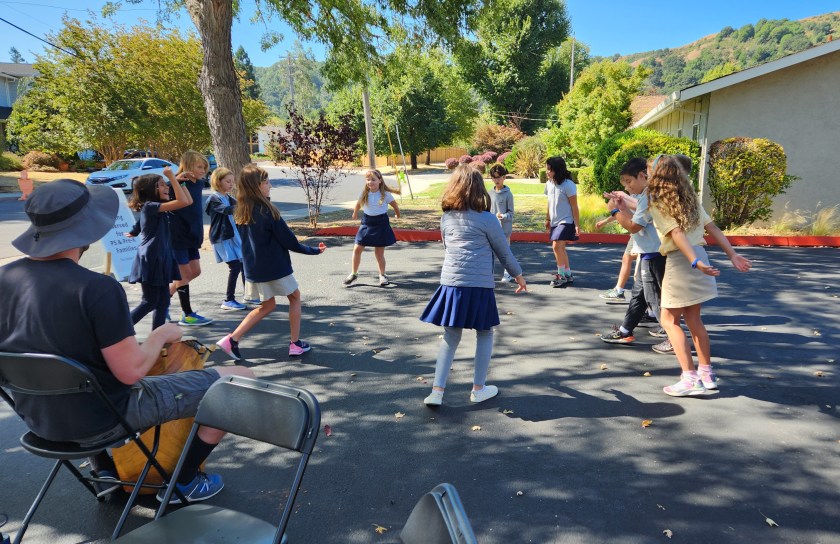
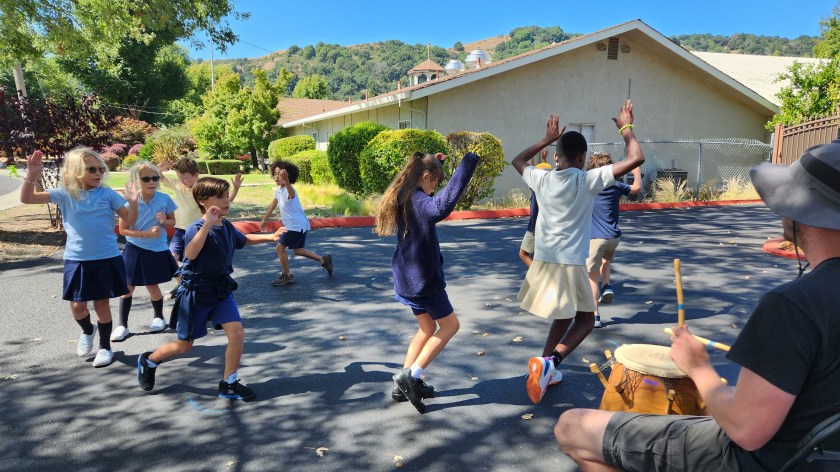
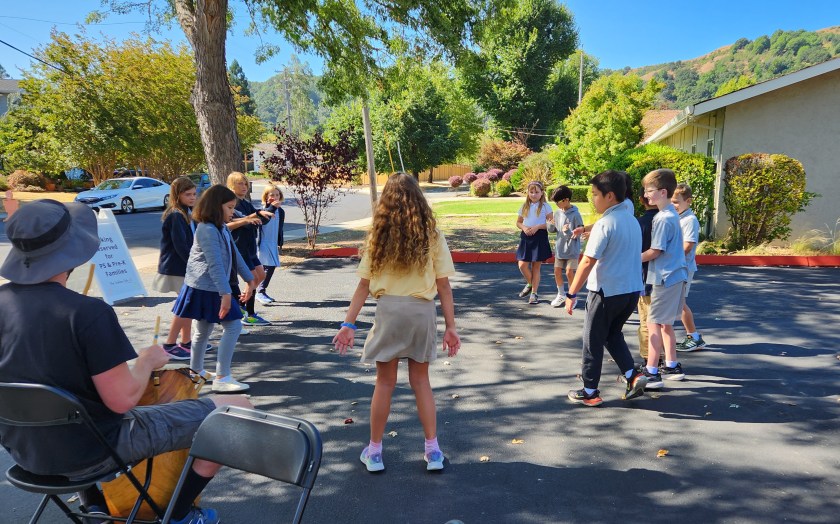
Alfred and Kobla Ladzekpo came to the United States in the 1960s to teach Ewe music. The Ladzekpos came from a village in the southern Volta region of Ghana called Anyako, an Ewe village. Ewe is one of over 20 languages spoken in Ghana. Ewe music is divided into styles. Each Style has songs (for singing), drum patterns and dance steps. The singing, drumming and dancing together form the musical style.

Alfred Ladzekpo taught at the California Institute of the Arts (Calarts) for over 40 years, and I was fortunate to study with him from 2002-06. He became my mentor and my friend.

Alfred’s main goal with his students at Calarts was to show them how to be an effective musician in his style of music. Ewe music is an oral tradition. Musicians coming from different backgrounds begin a new process of learning through listening. Alfred reveled in every opportunity he had to lecture his students on the importance of listening. Despite the simplicity of the message, every student who embraced this concept came away from Alfred’s class an improved musician.

As a young musician my fascination with Ewe music was sparked by my admiration of its construction. Ewe music weaves a complex counterpoint through all of its elements that rival the greatest artforms of humanity. I was enamored with the sophistication of the drumming patterns and the ability for musicians to dialogue through a musical language. The lead drummer is able to direct their ensemble into new dance moves, drumming patterns, or songs,
by playing a call on the drum. Everyone has to listen or you might miss the call!

This felt like a secret language and my friends and I were hooked. We took every opportunity to learn from Alfred and eventually we were helping him teach his classes and performing in his professional ensemble at schools and community events. Later in life I found another beautiful side to the artform.

The main function of music in Ewe culture is to promote community. People gather in social groups for musical performances. These groups perform at funerals and weddings and are the backbone of both religious and secular events. This is extremely valuable in our recent culture of social media and social distancing. People are craving interaction and Ewe music is a
world class option for community building.

I teach Ewe music as a celebration of West African brilliance. Through honoring and respecting Ewe culture I have found that we can bring value to our school not only through the acute development of musicianship but through the strengthening of our community.

In community,

Isaac

#SakalanCommunity #SaklanArts
Got Used Sneakers?

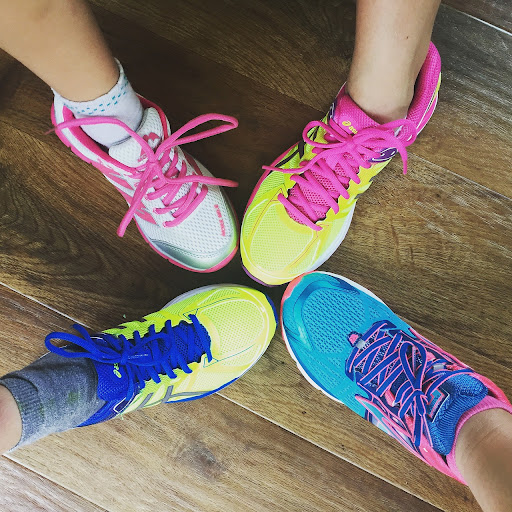
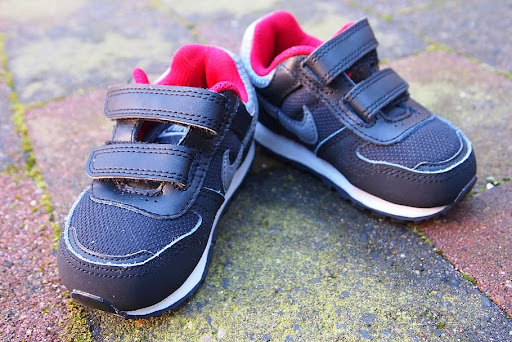
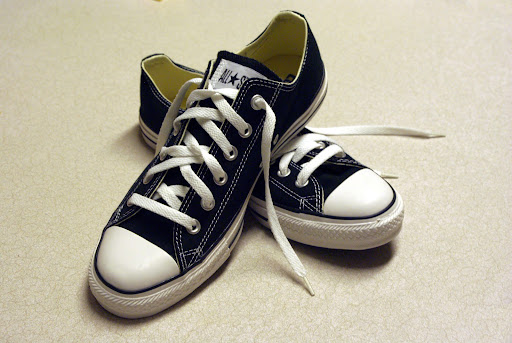
The sixth grade students will be learning about human environmental impact and how they can help as part of science this year. During this study, they will have the opportunity to participate in service learning, an educational approach that combines learning objectives with community service in order to provide learning opportunities that help tackle real-world problems in one’s community.

The sixth grade has partnered with GotSneakers, an organization that helps keep sneakers out of landfills by recycling or reusing them. Each pair donated can earn their class money, which they will use to help with species conservation. Examples of how they may use the funds include:

  • Donations to wildlife centers 
  • Symbolic species adoptions
  • Materials to build bird boxes

Please help the sixth graders by donating any size sneakers you no longer want.

Starting next week, a bin will be placed in the breezeway during the last week of every month. Please place your unwanted pair of sneakers in the box during that time. Any size and brand of sneakers are welcome. But, sneaker-style shoes only, please!

#SaklanServiceLearning

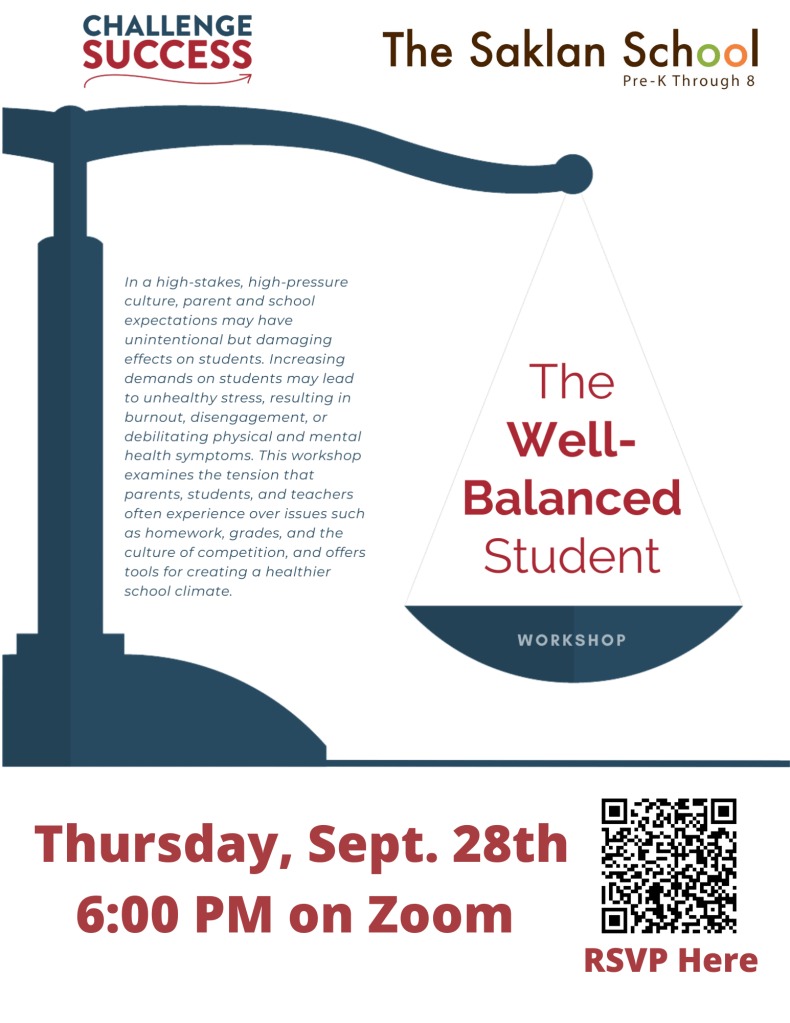
Raising Well-Balanced Kids

In a high-stakes, high-pressure culture, parent and school expectations may have unintentional negative effects on students. Join us for our first parent education event of the year on Thursday, September 28th, to learn how to prioritize our kids’ well-being so that they thrive in school and beyond. In this workshop, Challenge Success will share practical strategies for families who want to raise well-balanced kids.

RSVP today to receive the Zoom link!

This parent workshop will be presented on Zoom by Challenge Success, a non-profit affiliated with the Stanford University Graduate School of Education. Challenge Success partners with school communities, like The Saklan School, to elevate student voice and implement research-based, equity-centered strategies that improve well-being, engagement, and belonging for all K-12 students.

This event is open to all Saklan families and the greater Bay Area community. Feel free to share the event info with your friends and family!

#SaklanPA #SaklanParentEd

Cheerios & Cheddar Bunnies

Does your family purchase Cheerios, Annie’s Cheddar Bunnies, or Blue Buffalo pet food? If so, you can turn those purchases (and more) into money for Saklan through the Box Tops for Education program. Box Tops for Education is a quick and easy way to support Saklan!

Wondering how it works? All you have to do is buy participating products and use the Box Tops app to scan your store receipt. The app identifies eligible products and earnings are credited to your designated school. Even if you’re shopping online or doing grocery pickup, you can still submit your digital or email receipt with the Box Tops app.

Use this link to download the Box Tops app and get started scanning today!

Don’t want to download an app? Turn your receipts into the front office, and a member of the Saklan admin team will use the app to scan it for you. After scanning with the app, all receipts will be shredded.

Thank you for your support of Saklan!

Awesome and Terrifying Moments

Auditions are both awesome and terrifying. As a young actor (and an adult actor too!) I can remember my whole body being tied up in knots and awash in emotions I couldn’t name in the days and weeks leading up to an audition. 

What finally helped me was the technique I learned, not just singing technique, but the practice of continuously putting myself in situations that were both awesome and terrifying.  Never being a kid who experienced a lot of inner peace, this practice of scaring myself and recovering was like lifting weights; it never got easier, I just got stronger.

Every student at Saklan in 3rd grade and older will audition at least once this school year. Together, we do the hard thing, and realize that even if everything doesn’t go exactly the way we wanted, we are still okay, and there are still many good things that can come from it. We talk about flexibility and open mindset, and even how to deal with disappointment in a healthy way. The students who have been through this process help the younger ones, and as they progress through grades, we can clearly see that this practice pays dividends in coping strategies and developing courage.  

This week, as the cast list comes out for our first production of the year, Frozen KIDS, congratulate our 3rd-5th grade students on the audition process as well as their roles, and take time to remember the awesome and terrifying moments in your life that helped shape you. 

Warmly,

Grace

#Saklancourageous

Helpers in Our Community

Inspired by the book Circles All Around Us by Brad Montague, the Owlet class will spend time this fall learning about different types of communities. Starting with a small circle for each child, then expanding into larger circles of family, school, and neighborhood, the children will learn what it means to be a part of a community. The goal is for the Owlets to answer the driving question: “How can we be helpers in our communities?”

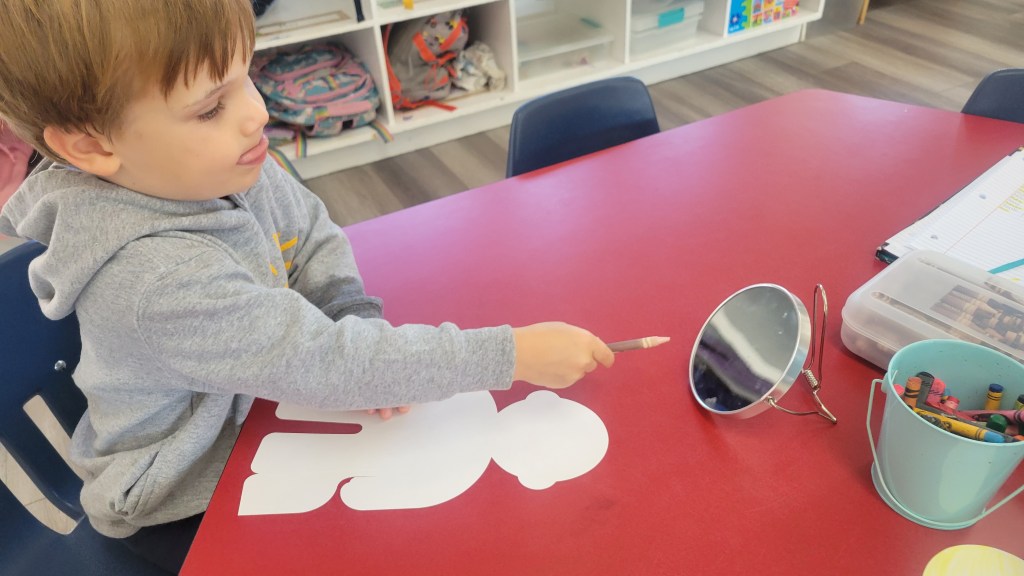
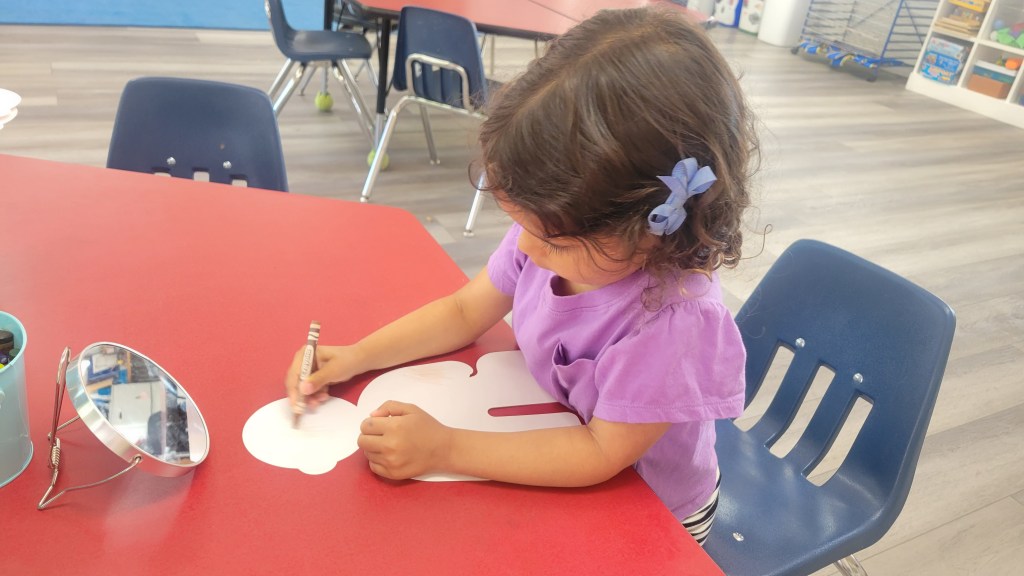
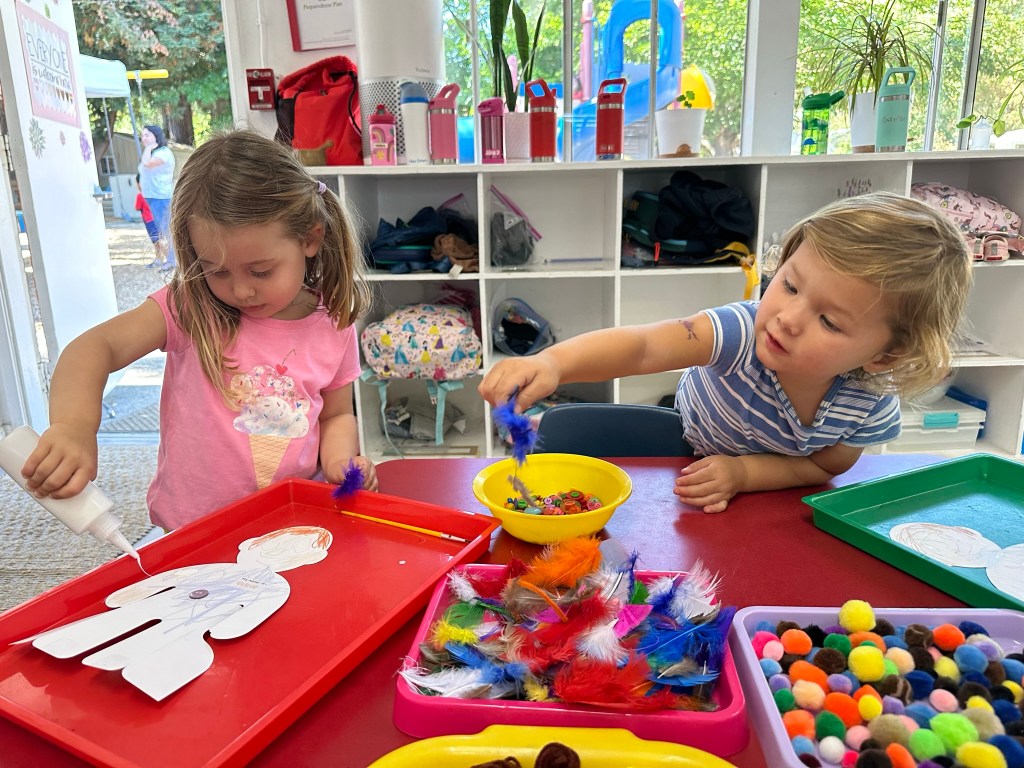
The Preschoolers began their unit by examining the smallest circle of community: their self. At circle time, Philippa read the book The Skin You Live In by Michael J. Tyler. The Owlets learned that all people are different shades and all the colors are beautiful. For self portraits, each Owlet looked through skin toned crayons and found a shade that matched; everyone found the perfect color! Then they looked at a mirror to see what color their hair and eyes are. The Owlets practiced drawing the different shapes of their faces and holding crayons with a pincer grip. Next, the students were offered some loose materials to portray their clothes and hair, including buttons, yarn, feathers, ribbon, and pom-poms. They all turned out so unique and beautiful!

Guest Experts Needed

To supplement this project-based learning unit, the Owlet teachers are currently looking for guest experts to visit their classroom and talk about their roles in their community. Additionally, other classes are currently in need of experts who work in city planning, architecture, and chefs/ kitchen staff or meal services. If you would like to visit as a guest expert, or have a suggestion of a member of the greater community to reach out to, please email Linda Lathrop, Saklan’s Project and Inclusion Specialist, at llathrop@saklan.org

Special New Friends

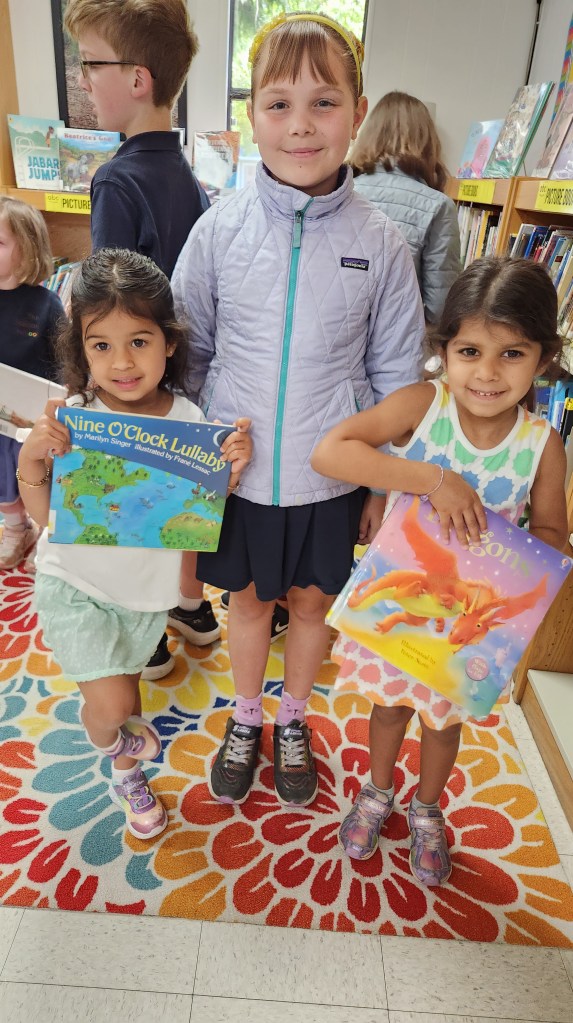
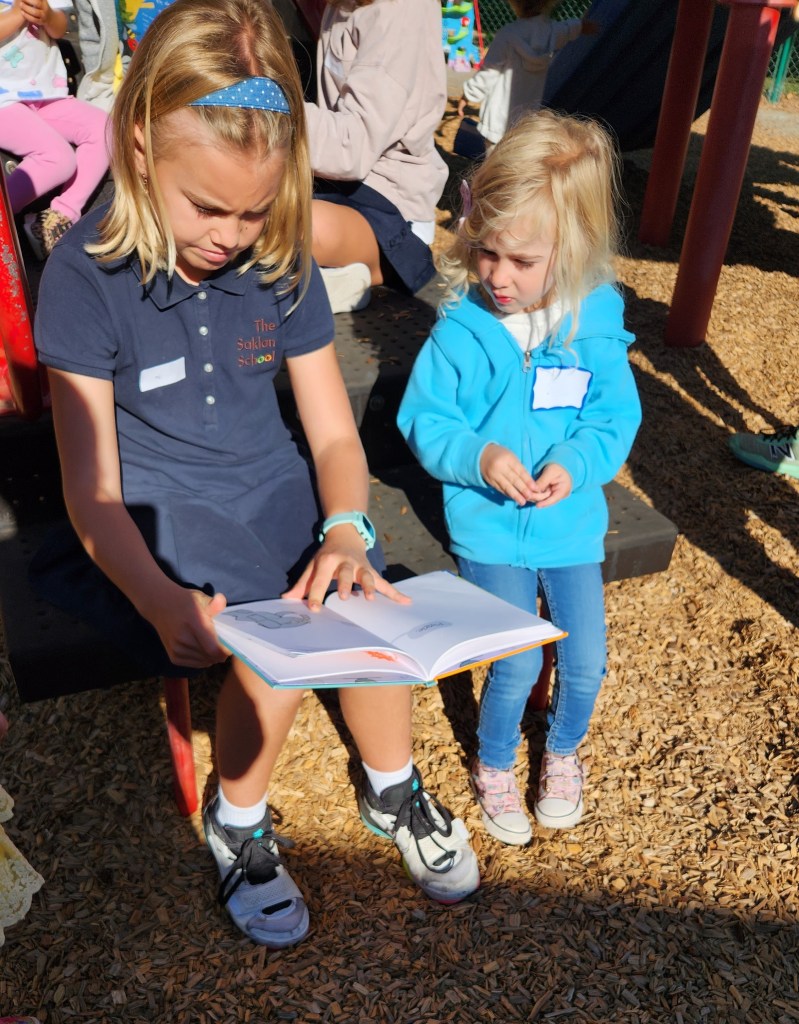
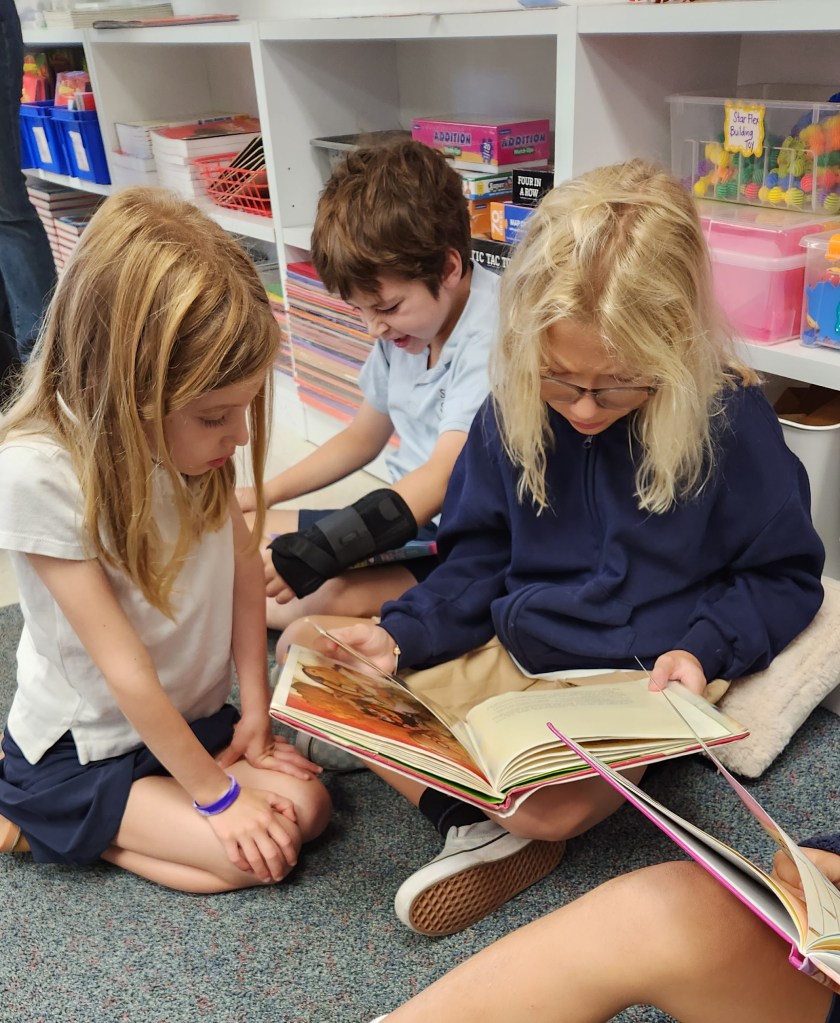
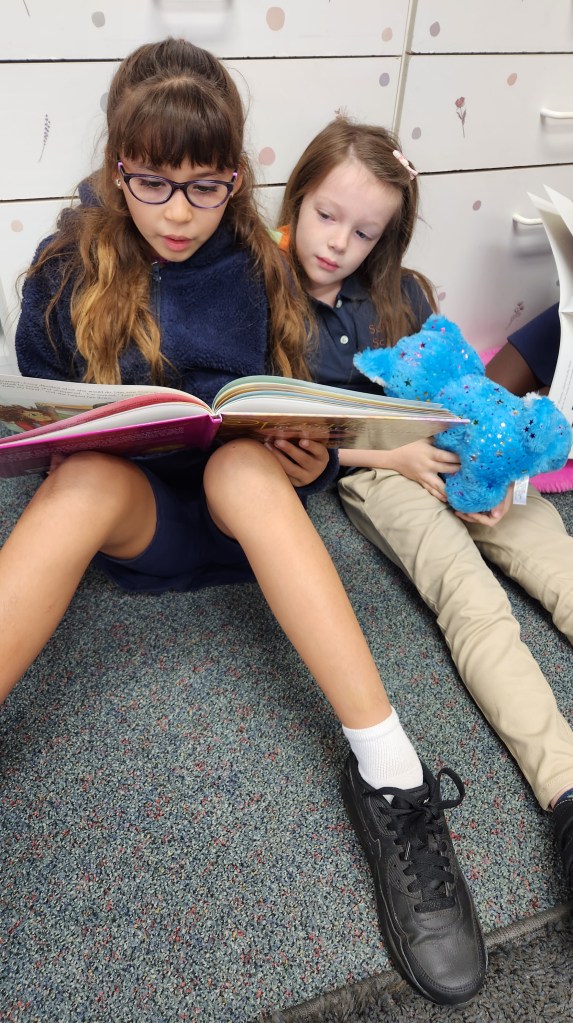
Last Friday morning there was much excitement on campus as our Preschool – 5th grade students met some special new friends – their learning buddies! Learning buddies are a purposeful way to encourage cross-grade friendships, help students develop a sense of responsibility and practice mentorship, and make learning fun!

During the first meeting, the buddies took time to get to know each other and did some reading together. The older buddies marvelously modeled good reading behaviors by reading with expression and fluency for their younger buddies. Some of the older buddies were also honored to listen to their younger buddies read too.

Once a month the buddies will get together to spend time reading, learning and playing together. The buddy program is not only fun for the students, but helps to build empathy and community on campus.

#SaklanBuddies #SaklanCommunity