Cereal Box and Commercials Project


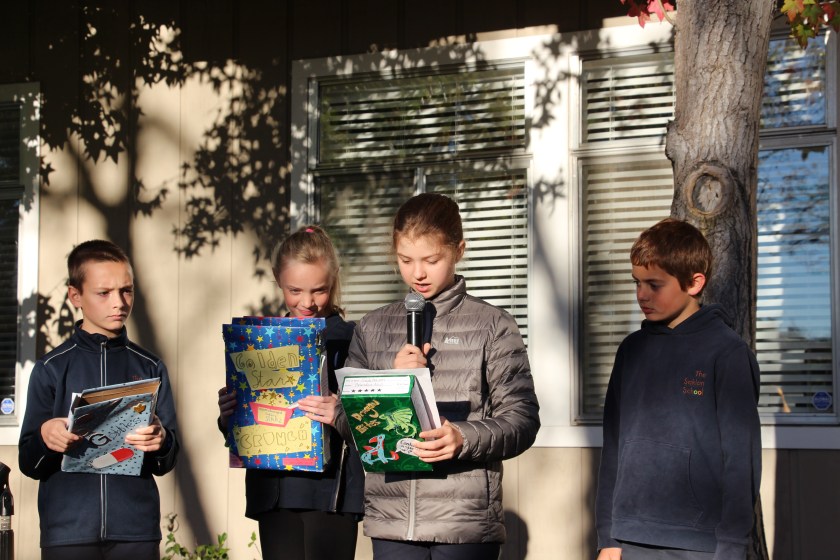
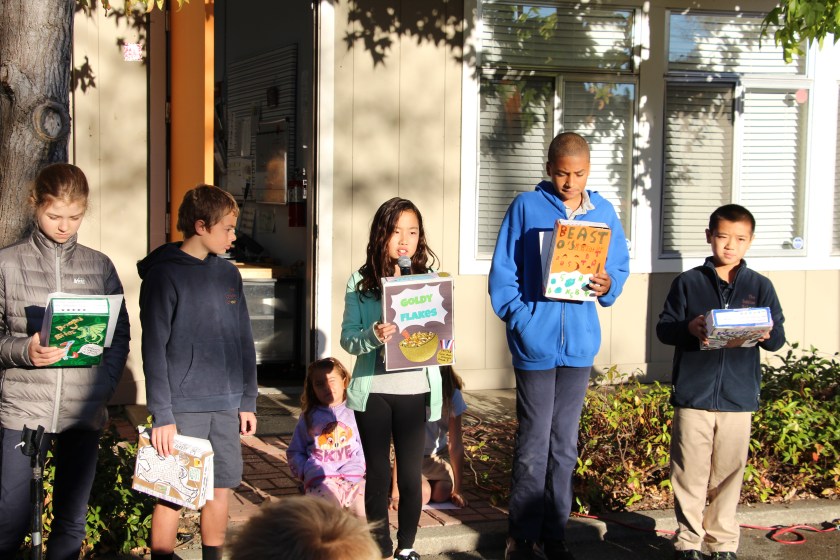
Each student read a book of their choice. After students read their books, they created a new brand of cereal that was related to their story somehow. The cereal boxes have creative names and illustrations on the front. The sides of the boxes explain the main characters, setting and story summary. Inside the boxes, students made a free prize, just like some real cereals have. Also, book recommendations were included.

Another part of the report was for students to create their own commercial presentations that we gave to our classmates. The purpose of the commercial was to “sell” their cereal and get kids to read their book.

If you are looking for a good book to read, our cereal box reports might give you some ideas. We will be putting our boxes in the library for you to look at. Way to go fifth graders!!
Little Engineers At Work

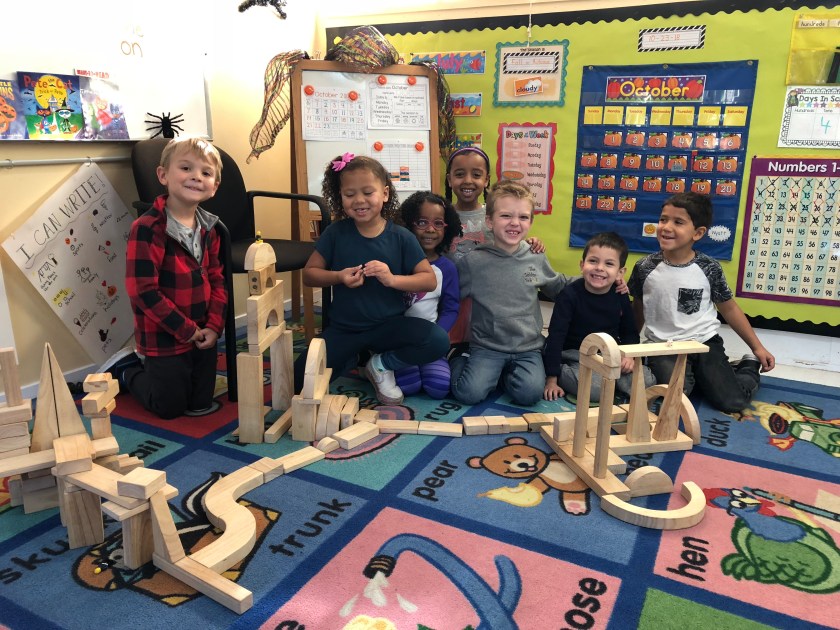
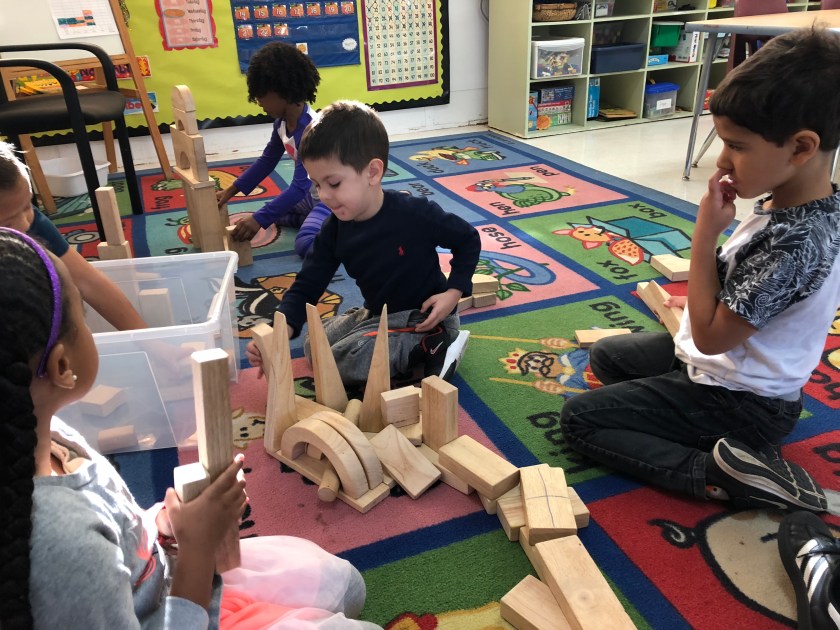
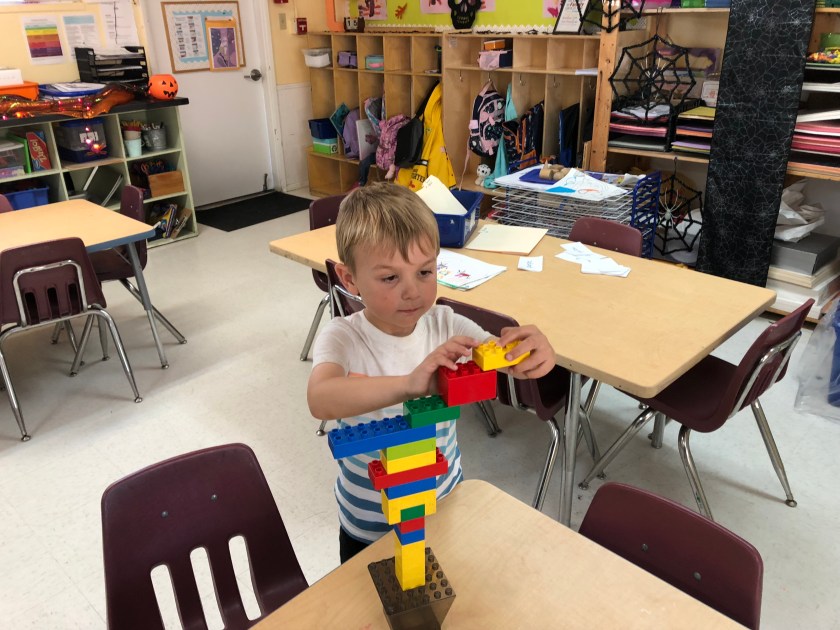
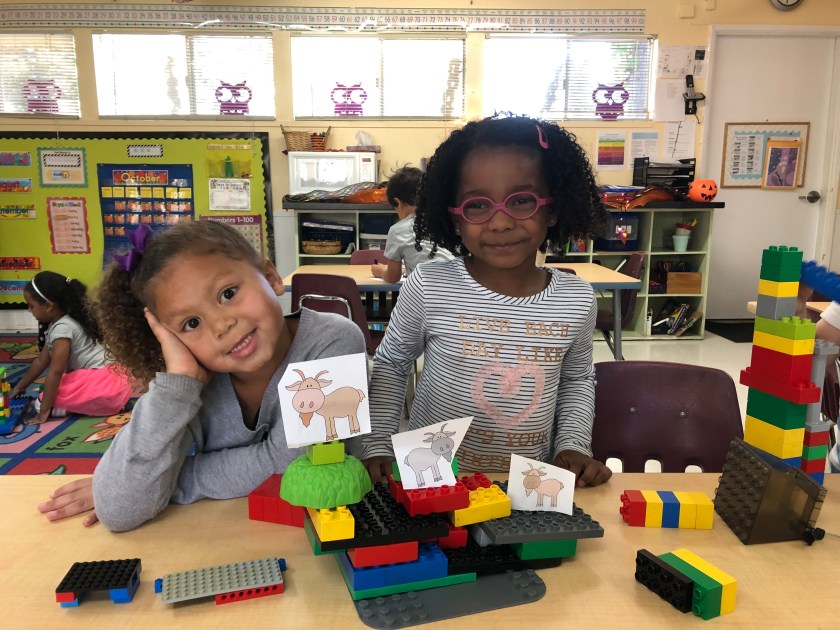
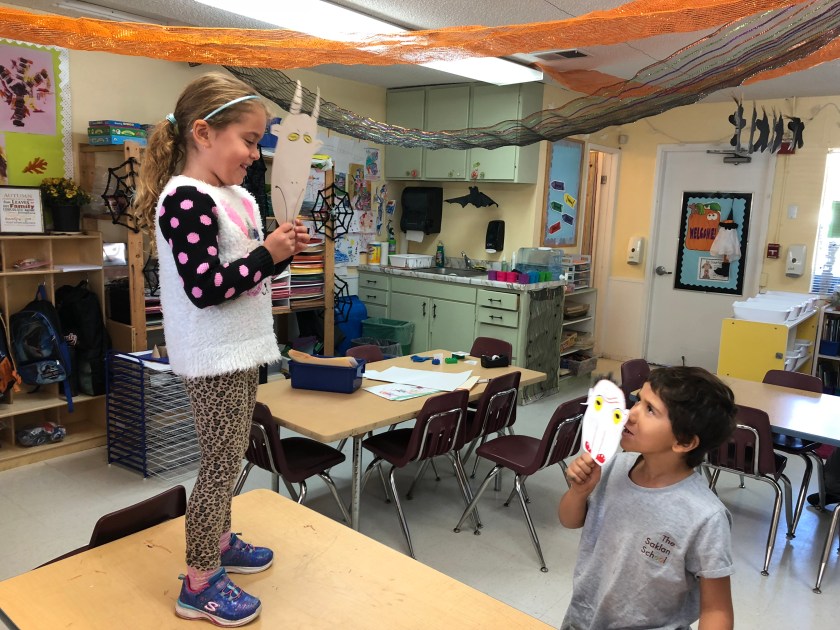
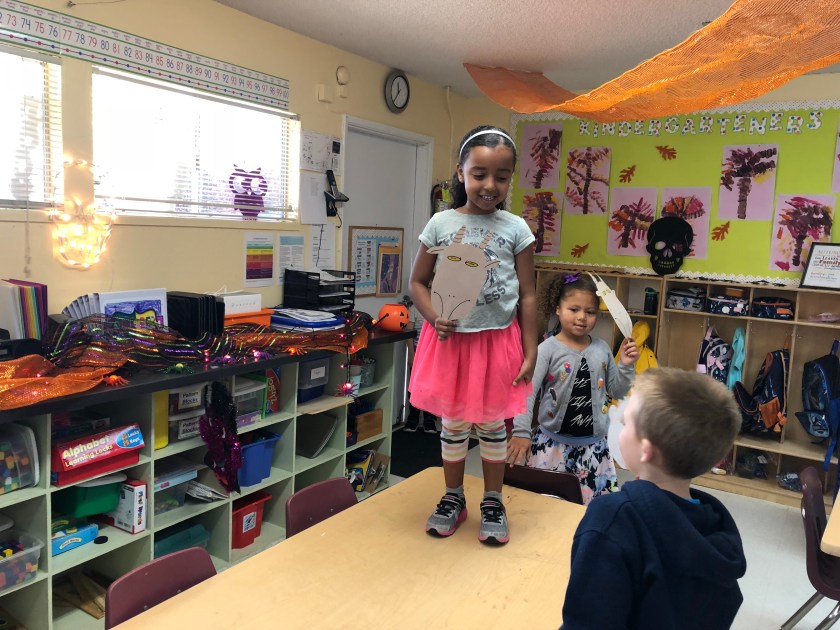
Kindergartners have been learning about bridges. The children learned the name and structural style of a few different bridges: arch, beam and suspension. They read a few versions of Three Billy Goats Gruff, about three hungry, billy goats and a troll that lives under a bridge.

The children, using one of the class tables as a bridge, acted the story. One afternoon, they walked to the bridge on the walking path behind Saklan. The children trip, trapped over the bridge, looked for a troll beneath it, and identified it as a beam bridge. A few even noticed the beams were cylinders! Finally, the children built their own bridges using Duplos, Legos and blocks. Little engineers at work!

Food Bank

This slideshow requires JavaScript.

Last Thursday, the middle school went to the Alameda County Food Bank. They worked for a little over an hour and helped pack produce to go out to needy families in Alameda County. Our students helped package 6,333 pounds of oranges to go out to those in need; seniors, families and children.
The students also got a tour of the facility and learned how most of their clients are not who they envisioned to be hungry. Most are people with jobs, who are having to decide between rent or food, or between medicine or food. One in six Alameda County residents receive help from the food bank and of them children and elderly make up the largest group. In fact, one in every three children are getting help with the assistance of the food bank.
We were proud to help such a great organization and live our mission.

United States’ Cultural Geography

20181017_105635 (2)

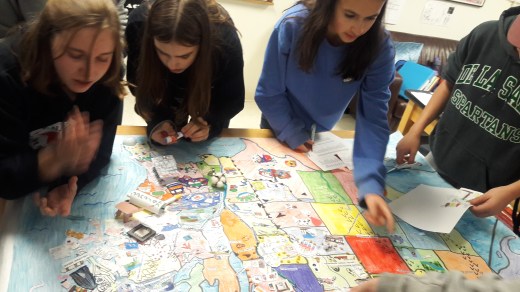
The 8th grade Humanities class recently wrapped up its month-long, collaborative, map-making, research project on US cultural geography. Academically, the students were challenged to understand how the way people live affects where they live (and vice-versa). On this level, the project is about making connections from the land to the people and trying to grasp the breadth of interconnections that goes into everything.

Students must work individually, in small groups, and as a cohesive class to discover and find a way to visually represent the personality of each state in an effort to understand cultural similarities and differences in various parts of the country. They also learn how to problem-solve creatively and work efficiently in a deadline situation.

20181017_101804 (2)

For maximum creativity on the artistic part of the project, the kids tried to employ “Think Like a Genius” methods, including looking at problems from multiple angles, making novel combinations, and using symbolism. In terms of working together, they were asked to follow a number of “Cooperation Guidelines,” including listening, asking strong questions, encouraging others with positive feedback, disagreeing in an agreeable way, and the ever-popular STAY ON TASK. They would track their progress with weekly reflections, and regular formative assessments also led to greater self-awareness and personal growth as the project proceeded.

The result is a beautiful map, a solid introduction to US cultural values, a more cohesive class, and a toolbox of powerful strategies for collaboration, critical thinking, and creative problem-solving.

Hoot Owls Learn About Trees

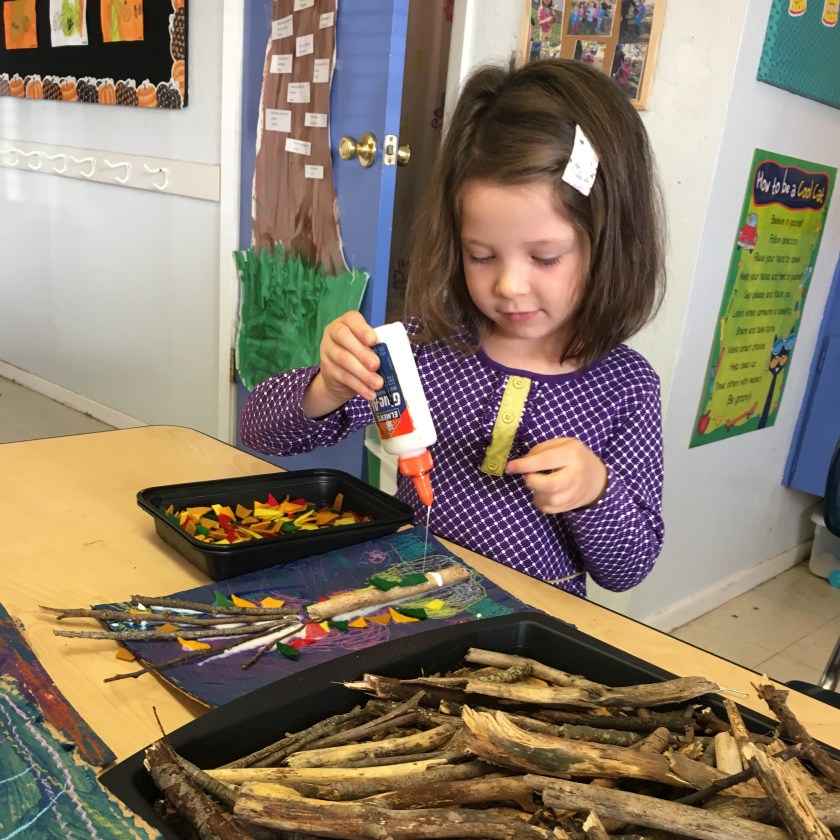
The Hoot Owls have been very busy learning about deciduous trees! They have been working on a multi-step project to create their own unique trees. First, they painted a background on cardboard. Next, they experimented with oil pastels on top of the dry paint. Finally, they constructed the tree using real tree branches and small felt leaves.

They learned about the main parts of trees, the roots, trunk, bark, branches and leaves! They discussed some fun facts about the oldest and tallest trees in the world. Both are in California! They also thought about all the different animals and bugs they have seen living in trees. They used the left over branches to build log cabins.

Spooky Stories

IMG_5501

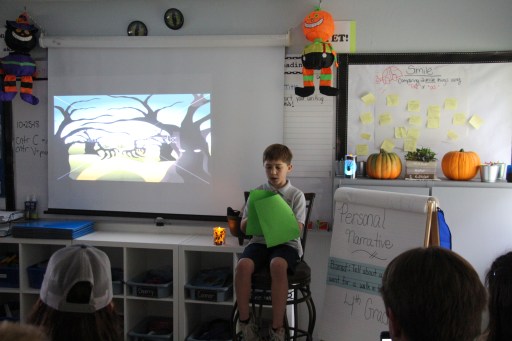
Just in time for Halloween, the fourth graders shared their personal narrative spooky, fictional stories about walking in the woods. They used their plot diagram skills from reading to make sure they told complete stories. The number one goal for each student  was to write with elaboration (including similes) to paint clear pictures in the mind of the reader. Who knew they were such great story tellers?

IMG_5510

Each student did an amazing job practicing their public speaking skills and delivering truly chilling tales that the parents really enjoyed!

Discovery Voyage

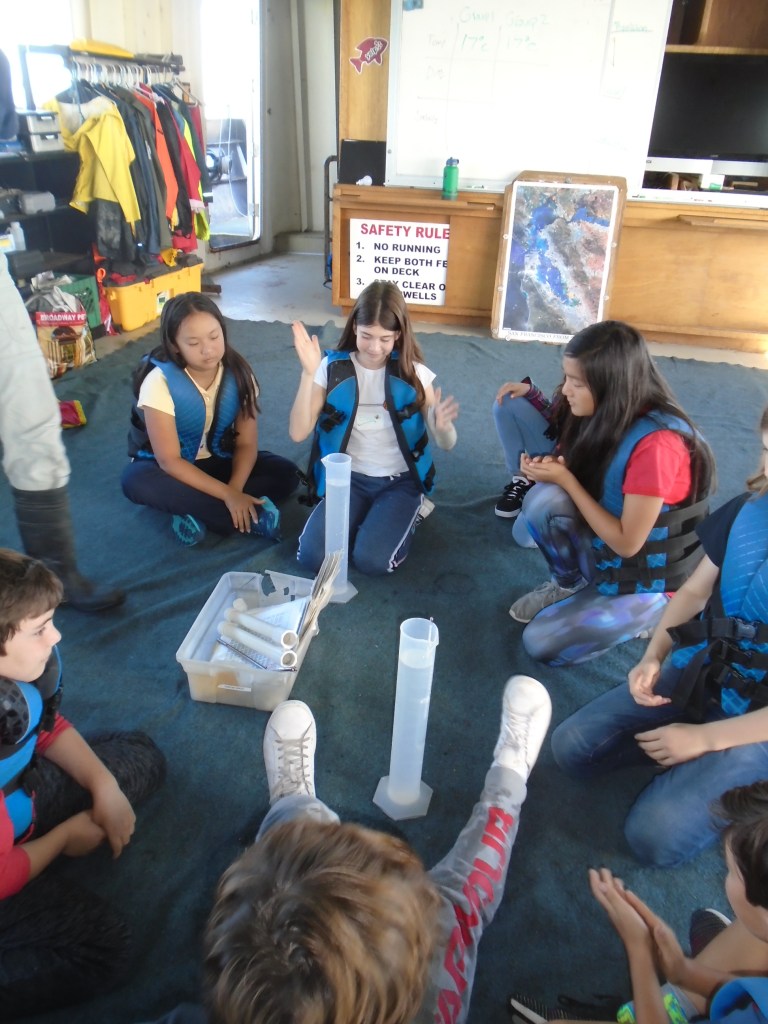
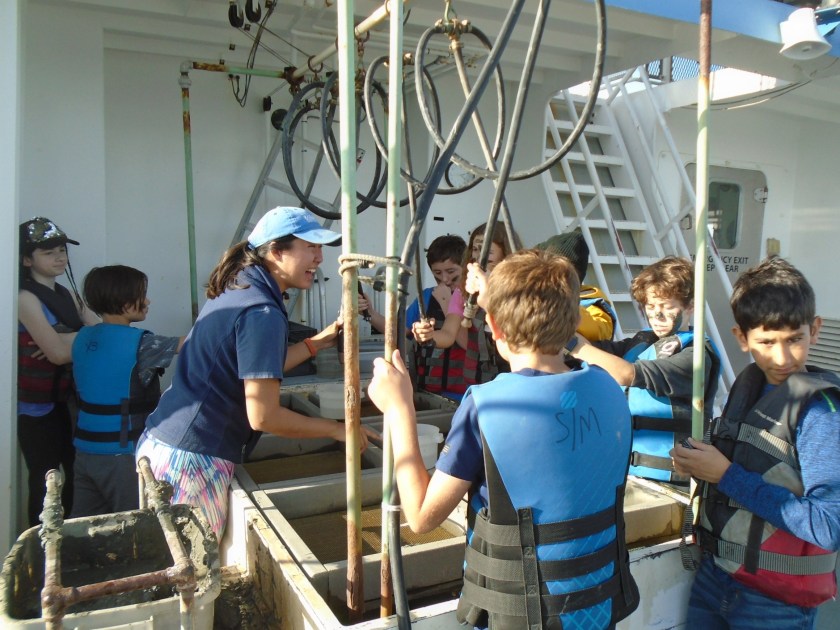
Since Ms. O., our Science Teacher, worked with NOAA this summer on a research vessel, she wanted to share that experience with her students! Two weeks ago, the 5th and 6th grade students joined the Marine Science Institute for a four-hour expedition of the San Francisco Bay aboard a 90-foot research vessel, the R.V. Robert G. Brownlee. The students discovered what lives in the estuary and how we are connected to it. They rotated through three stations using scientific methods and equipment to examine different types of life.

First, they went to hydrology to understand the water quality, and then performed a plankton tow to see the basis of the food chain. After, they used a mud grab to collect a benthic mud sample to look for invertebrates. And lastly, they worked together to deploy a 16-foot trawl net to bring fishes on board. In small groups, they studied the fishes using dichotomous keys. Students were inspired to observe and touch the live animals that they collected. Between sharks, crabs, halibut and sting rays, they saw a bunch of cool marine life!

Journal Writing in Kindergarten

IMG_6265

Kindergartners began journal writing in October. They started with the reading of Good Dog, Carl, by Alexandra Day. This is a book with only pictures, no words. Good Dog, Carl, demonstrated to the children that a story can be told through pictures allowing them to tell a story through pictures, too. The children drew and then shared their stories with the class. After a week, the children began labeling some of the objects in their pictures during journal time. They sounded out words or the initial sound/letter in their label. Eventually, the children will begin writing sentences using inventive spelling. They are working towards the agreement between picture and words. Kindergartners are always excited to see Journal time on the class schedule.

Head’s Corner

IMG-3001 (1)

How to Raise a Creative Child. Step One: Back Off

This morning we had our first Lower School Open House of the year with 17 people in attendance. As we prepared for the presentation, I started to think about the creativity part of our mission statement and how we encourage creativity in students. That process led me to one of my favorite articles on creativity. While the writer Adam Grant is talking about parenting, what he has to say applies to schools just as well. The read is well worth your ten minutes. Click here to read the article.

Warm regards,

David

Traveling Teddy Bear is Coming to Saklan

This November, you will notice a Teddy Bear on campus. This Teddy Bear is named Jerry and is an international traveler. Jerry is part of the Traveling Teddy Bear Project that connects students around the globe.
The Traveling Teddy Bears Project was started in 2014 with the goal of connecting young children in classrooms across the globe. This year, each of the bears is supporting one of the 17 Sustainable Development Goals to help spread awareness in schools around the globe. You can learn more about these goals here.

Jerry will be supporting the goal of Responsible Consumption and Production. Jerry believes that we need to protect our earth and resources by reducing waste.

Jerry started out his journey in Hong Kong visiting a Kindergarten class. He currently is in Australia hanging with some 1st and 2nd graders. From there he will be coming to Saklan. You can keep up on his travels here.