Atomic Attire

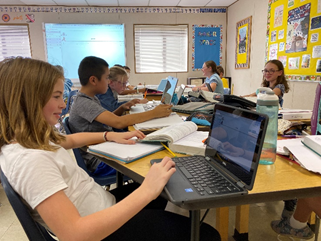
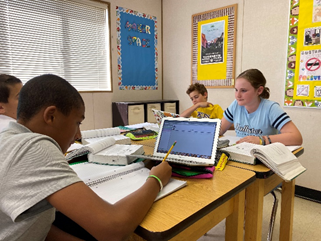
The 8th grade has been learning about the periodic table. From researching what all the symbols mean to understanding what the atomic number and atomic mass tell us about each element, they are becoming more comfortable every day.

They have been working on their atomic attire shirt. Each student picked one element they wanted to get to know more about. They designed a shirt for it to show off and model for you all. While our 8th graders are still figuring out what they want to be, some may have the skills to be runway models! Click below to check out their video.

#SaklanCreative

Fall Family Get Together

Pumpkin Carving Picture

Although this fall has been challenging for many of our families with power outages and fires, it was the intense winds that changed the course of our Pumpkin Decorating and Carving Get Together last weekend. Moraga Commons was blowing too intensely to make it an enjoyable afternoon. We would still like to give much love and appreciation to Lori O’Keefe and the PA for organizing and planning an enticing fall gathering for our community. The number of RSVP’s is a great indicator that we would love to continue this tradition for years to come. Thank you again, Lori, for the inspiration!

#SaklanCommunity

Dry Ice Experiment

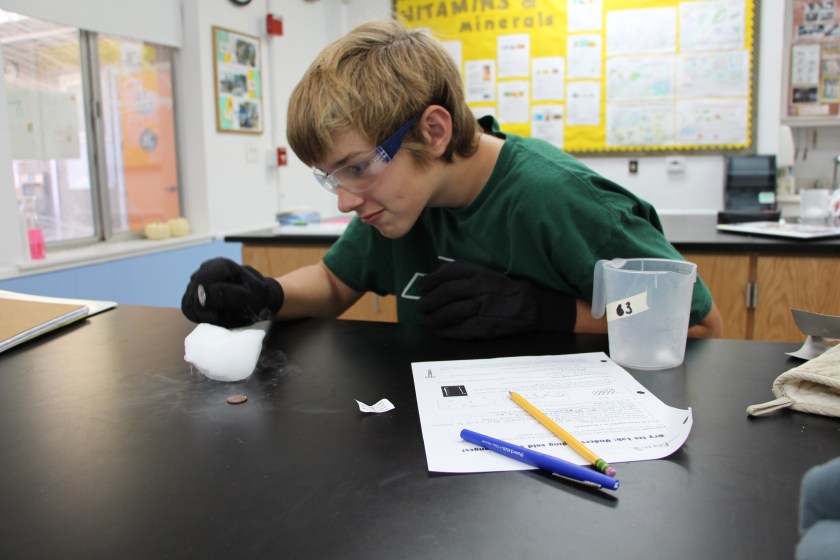
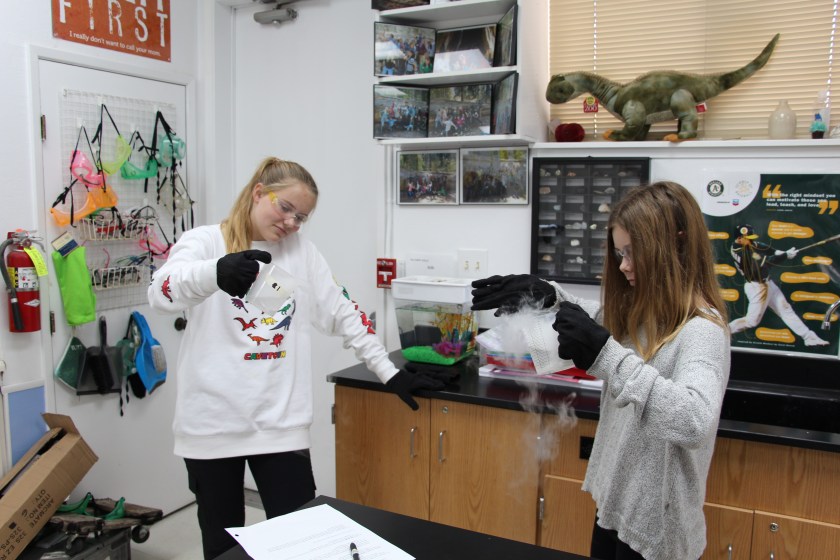
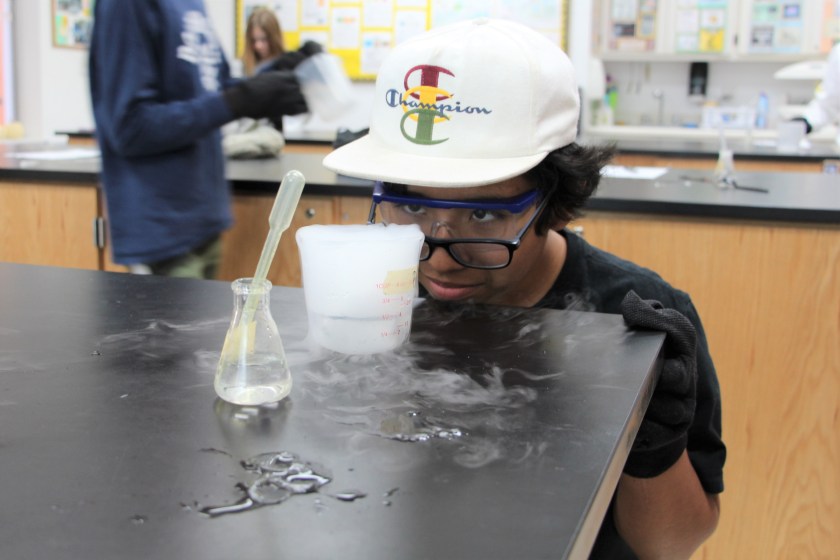
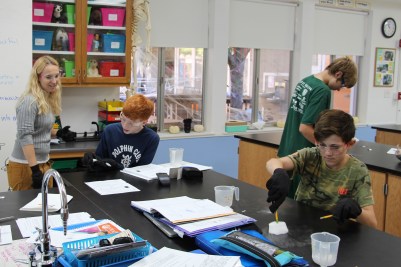
8th grade is in the middle of their chemistry unit. They have been learning about the periodic table and different properties of these elements. This week, the 8th grade was looking at boiling and freezing points. It’s hard to imagine a liquid oxygen molecule or a solid gas since we are used to living at a comfortable climate. So to understand this, students investigated dry ice or frozen carbon dioxide. At a cool -109 degrees F (approximately) and the classroom at a temperature of 68 degrees F, this drastic temperature change creates a sublimation state change for the dry ice; it changes straight from a solid to a gaseous form.

Students began to understand how the quick change creates a dense gas or fog coming off the dry ice. This dense air sank and created a bubble of air the students could use to float the block on top of the counter. They pushed pennies into the block to see how matter responds at that temperature and how solid gases react to warmer solids colliding into them. By adding water to the block, they saw the water bubble (boil) with white gas filled bubbles and then freeze the water they had once put over the dry ice.

IMG_4232a

They then related their understanding of what was happening in our solar system. As frozen gases orbit through space, when they come close to stars, they melt, much like our dry ice was doing on the table, and produce a gaseous tail. We recognize these orbiting frozen gas balls as comets.

#SaklanHandsOn

Mexican Folk Art

IMG_1365

The Day of the Dead or Día de los Muertos is a Mexican holiday celebrated throughout México and, in recent years, it has been adopted by the U.S. On this day, families and friends come together to honor those who have passed and help support their spiritual journey.

IMG_1517

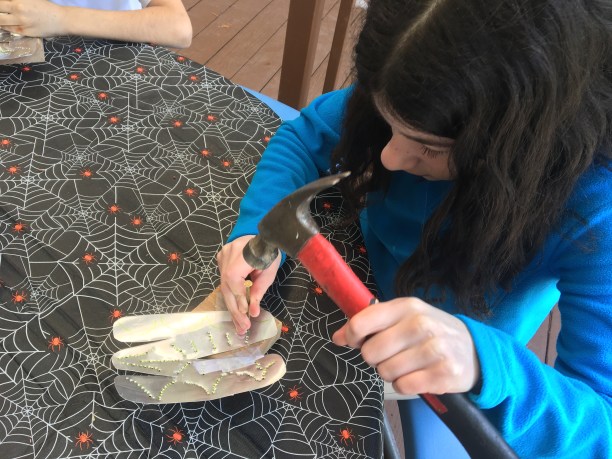
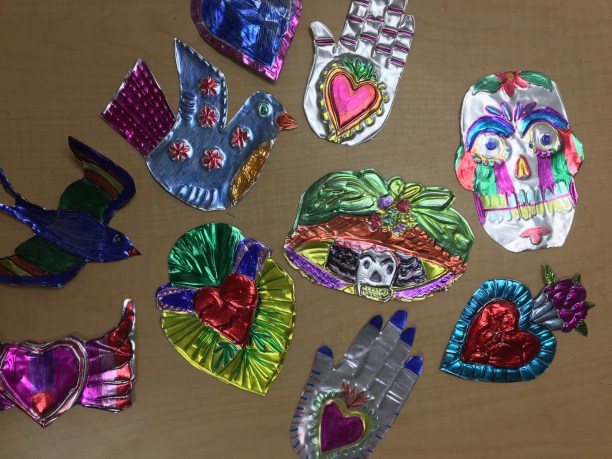
The students learned about the Mexican folk art called “hojalatería y pintura.” They created embossed metal folk art – a technique that raises a 2-dimensional image into 3-dimensional. With embossing, students crafted traditional Mexican imagery.

IMG_1518

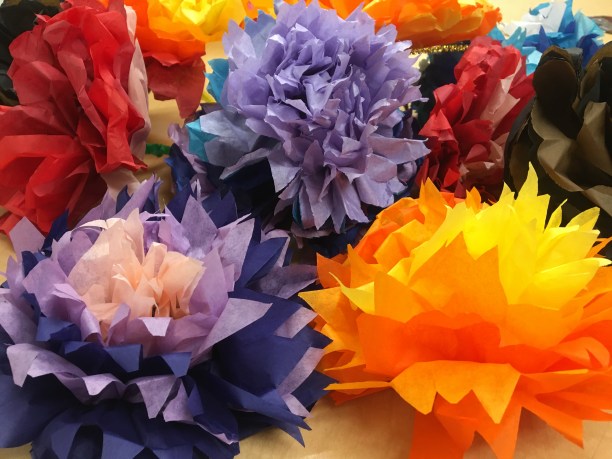
They also made flores de papel china (tissue paper flowers) to decorate the arch for Día de Los Muertos. It is believed that the strong scent of the colorful flowers can guide the souls from cemeteries to their family homes.

#SaklanCreative

Kindergarten Studies Owls

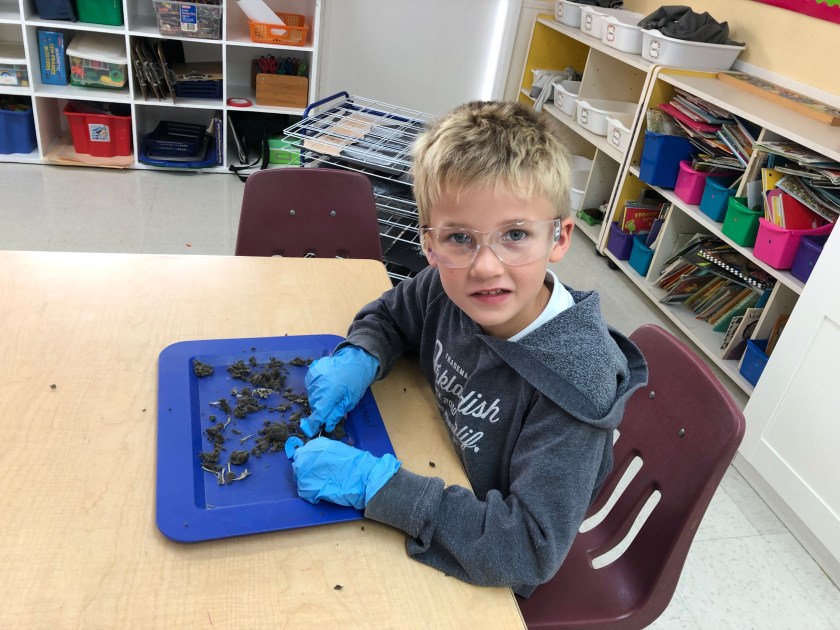
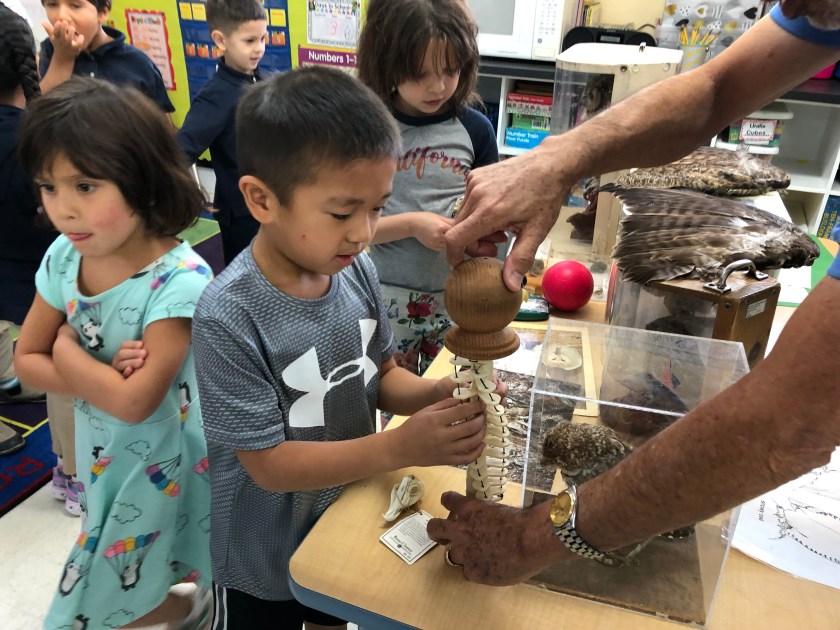
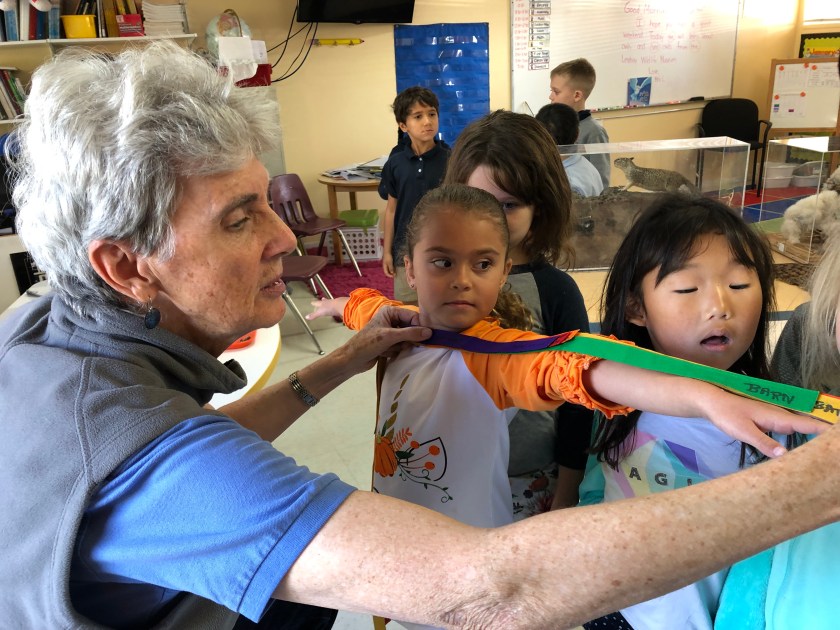
Kindergartners have been having fun with Science by studying owls. The students can tell how many bones an owl has in its neck compared to a human and the difference between our eyes and an owl’s eyes. They learned an owl’s most powerful sense (note how all we do is related) is the sense of hearing. And, did you know owls do not build nests?

IMG_2362

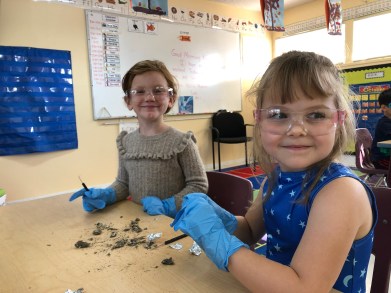
Finally, the class discovered what owls eat by dissecting an owl pellet. Using tools borrowed from Ms. O’s Science lab and a chart, the students noted skulls of birds and rodents, jaw bones and leg bones. The class heard some wonderful stories about owls including, Owl Moon, White Owl, Barn Owl, and our favorite, Owl Babies. Next time you are in the Kidnergarten room, notice the children’s paintings depicting a scene from Owl Babies.

The class ended their study of owls with the field experience of a visit from Lindsay Wildlife Museum where the children compared owl wings to hawk wings, touched talons from an owl, and saw a live barn owl similar to the one in the book we read. Kindergartners love owls!

#SaklanHandsOn

Sixth Grade Math

In Math, the sixth graders have been working with positive and negative integers. Addition of integers was introduced with Cecil, an acrobat who can move forward and backward on a tight rope. Using their computers, the students investigated how Cecil could travel along tight ropes of different lengths. They had to combine positive and negative integers to successfully navigate the increasingly difficult challenges.

pasted image 0

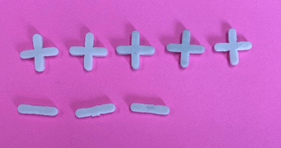
To continue this idea, Mr. Zippin introduced Integer Tiles. The Integer Tiles are small plus and minus pieces that represent positive and negative one. By laying out 5 plus tiles, we represent the number 5. If we lay out 3 minus pieces, we represent the number -3. By combining these eight tiles we are representing the expression 5 + (-3).  The students noticed that the three plus pieces, when combined with three minus pieces made three zeros. After discussing the identity property of addition, they knew that adding these three zeros did not change the sum so the total value of the expression was 2.

#SaklanHandsOn

El Corazon del Pueblo

Second and third graders have been learning about Día de los Muertos or Day of the Dead in Spanish class. Day of the Dead is a Mexican holiday where families welcome back the souls of their deceased relatives for a brief reunion that includes food, drink and celebration. A blend of Mesoamerican ritual, European religion and Spanish culture, the holiday is celebrated each year on November 1-2. This holiday involves family and friends gathering to pray for and remember friends and family members who have died, and helping support their spiritual journey. In Mexican culture, death is viewed as a natural part of the human cycle. Mexicans view it not as a day of sadness but as a day of celebration because their loved ones awake and celebrate with them. In 2008, the tradition was inscribed in the Representative List of the Intangible Cultural Heritage of Humanity by UNESCO.

Traditions connected with the holiday include building private altars called ofrendas, honoring the deceased using calaveras, Aztec marigolds, and the favorite foods and beverages of the departed, and visiting graves with these as gifts. Visitors also leave possessions of the deceased at the graves.

Sugar skulls represent a departed soul, it has the name written on the forehead and is placed on the home ofrenda or gravestone to honor the return of a particular spirit. Sugar skull art reflects the folk art style of big happy smiles, colorful icing and sparkly tin and glittery adornments.

Last week, second and third graders went on a field experience to El Corazon de Pueblo in Oakland to make sugar skulls. Students were very excited to learn how to make the dough for sugar skulls, put them in molds and then decorate them with colorful icing.

#SaklanExperiential

Head’s Corner

Why Do We Have An Annual Fund?

As you may know, for many independent schools, fundraising can account for up to ten percent of the school’s annual budget. While Saklan’s reliance on fundraising is lower than the average independent school, we still count on the generous support of our community. It is with this in mind that I ask you to participate in the Saklan Annual Giving Fund.

heart

As I mentioned during back to school night, Saklan could make our budget work without our fundraising efforts. But it would be a very different school. Your generosity has changed who we are. Just last year, we have used the funds raised during the AGF and Auction to support many initiatives. To name a few:

  • We have substantially buttressed our financial assistance budget to help families afford a Saklan education.
  • We have increased the number of professional development opportunities available to teachers, helping them bring best practices back to the classroom.
  • There have been a substantial increase in the amount of fieldwork and real-world learning opportunities, giving students authentic learning experiences.

We have received 100% AGF participation from our faculty, staff, and Board of Trustees. My hope is to see 100% participation from our parent community. Our goal is to raise $100,000 from the parent community between now and the end of December. We will realize both those “100s” through your generosity and participation.

I realize that all our families give much to Saklan. Between tuition, time, and trusting us with your children – you make significant sacrifices for Saklan. I know you do it for your children and the work we do with them each day. As importantly though, your generosity is changing the conversation of what education should be for all children.

With gratitude,

David

#SaklanGives

Field Experience to Cal Academy of Sciences

IMG_5197

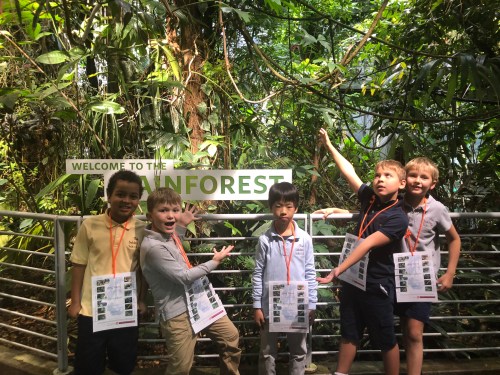
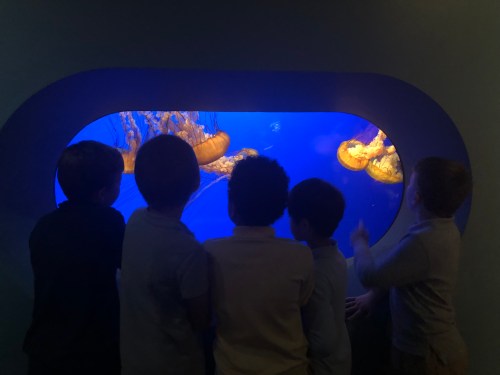
Last Wednesday, the third grade class spent a wonderful day at the California Academy of Sciences in Golden Gate Park. The students attended an interactive show in the planetarium where they learned about the movement of the sun and moon, and other solar system planets. They explored the three-story rainforest exhibit and completed a scavenger hunt finding many different species of plants and animals.

IMG_5281

The third graders experienced an earthquake simulation of both the Loma Prieta earthquake and the 1906 San Francisco earthquake. They also visited the living roof, penguin exhibit, aquarium and much more! It was a full day of science learning!

#SaklanExperiential
Fall is Here!

IMG_5785

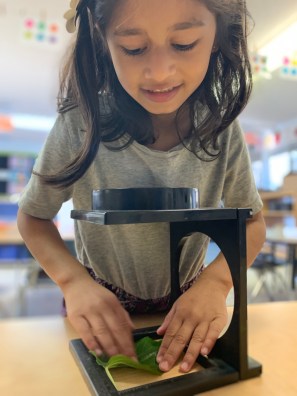
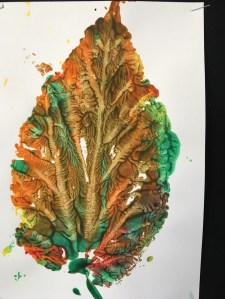
As part of their fall theme, Hoot Owls began to study leaves. First, Hoot Owls examined real leaves under their class magnifying glasses. Miss Jessica pointed out the leaf’s veins and explained their purpose. Hoot Owls love using magnifying glasses.

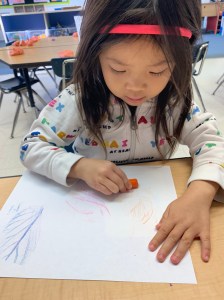
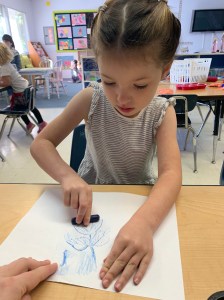
Next, the Hoot Owls did leaf rubbings using the flat side of a crayon. It was magical to watch the leaf shape emerge through the paper.

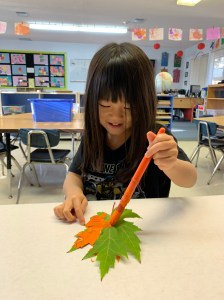
Lastly, the Hoot Owls made leaf prints. Step one: choose a real leaf. Step two: paint the leaf with fall colors. Step three: firmly press a piece of paper over the leaf. Step four: pull off the paper to reveal a beautiful leaf print!

#SaklanCreative