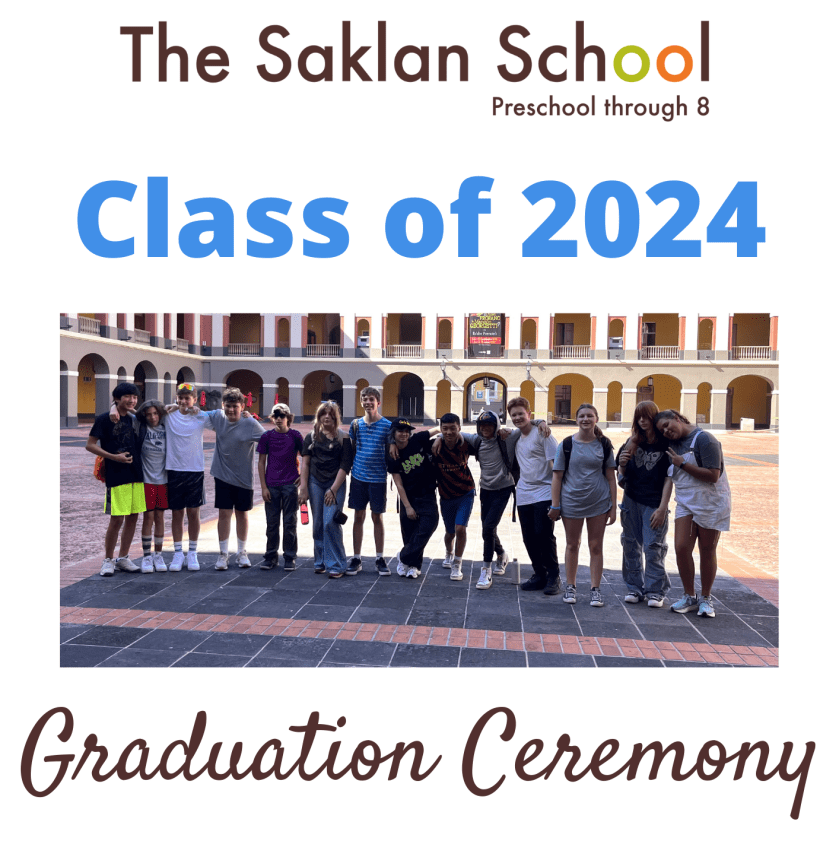
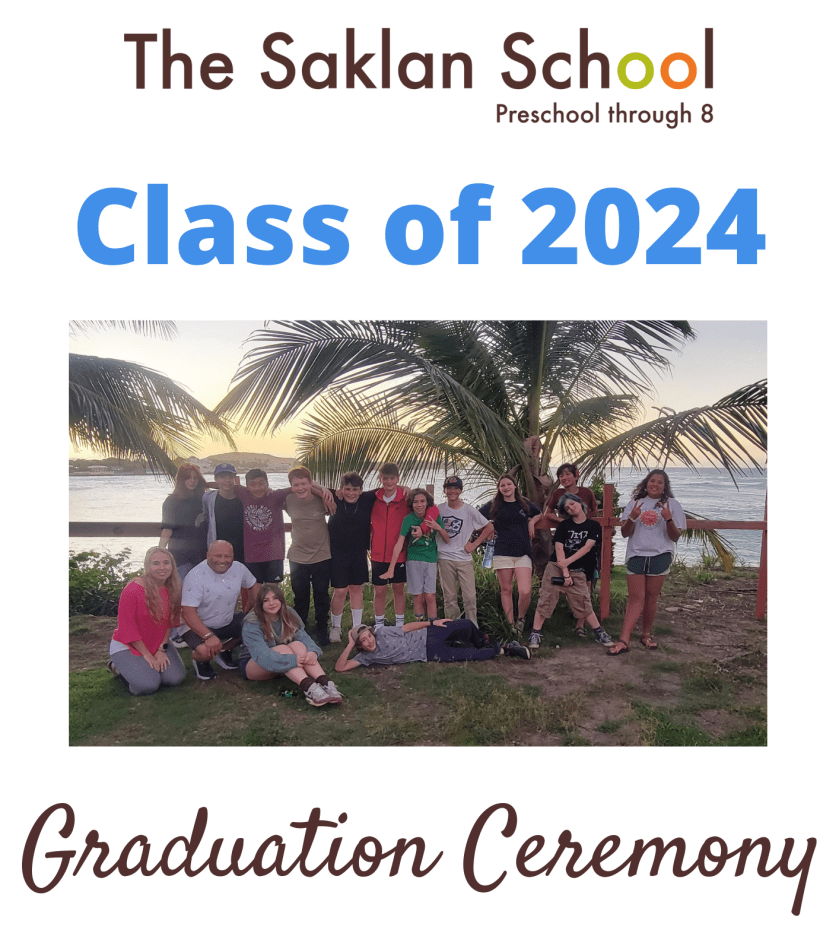
Class of 2024 Graduation

Your are Cordially Invited to Attend

Thursday, June 6, 2024

10:00 AM on the Saklan Sports Court

We are excited to invite you to a graduation ceremony celebrating the Saklan Class of 2024! This year’s ceremony will be held on Thursday, June 6th at 10:00 a.m. on the Saklan Sports Court. RSVP is requested for those who will be joining us.

Seating: Will begin at 9:45 a.m.

What to Bring: The event is being held outdoors and weather can vary this time of year. Please prepare for potential sun (hats/sunscreen/glasses/water bottle) or for breezier cool weather (sweaters/jackets).

RSVP: Please RSVP by May 31st, 2024.

We look forward to celebrating the Class of 2024 with you!

#SaklanGraduation #Classof2024

Final Call for Sneakers

As we shared at the beginning of the year, the sixth grade partnered with GotSneakers, an organization that helps keep sneakers out of landfills by recycling and reusing them. Each pair of shoes donated earned their class money, which they will be donating to the World Wildlife Federation to symbolically adopt a species being affected by climate change. 

As of May 1st the 6th graders have:

  • Recycled over 8 large bags of sneakers with over 138 pairs in them.
  • Saved over 4,140 pounds of CO2 from our atmosphere
  • Saved over 311,466 gallons of water

Thank you to everyone who helped support this initiative. Your donations have really helped the environment. 

It isn’t too late to donate sneakers! The 6th graders will be collecting shoes through Friday, May 31st. Thank you all for donating your old and unused sneakers, they not only were kept out of landfills but were also helping to protect species. 

2024 Middle School Musical

The Saklan Middle School students have been rehearsing for their culminating project for music class, a performance of Into The Woods. Every student in the Middle School is participating in the production, whether it is acting in a main role, taking care of props, helping with costumes, or being a stage hand. It is a true collaborative effort to produce an amazing final product. 

On Friday, May 17th the students will perform at 7:00 p.m. in the Town Hall Theatre in Lafayette. The entire community is invited to the show. Tickets are required for attendance and can be purchased by clicking on the button below.

We hope you can join us for what is sure to be a wonderful show!

#SaklanMusicals #SaklanCreative

Shared Power

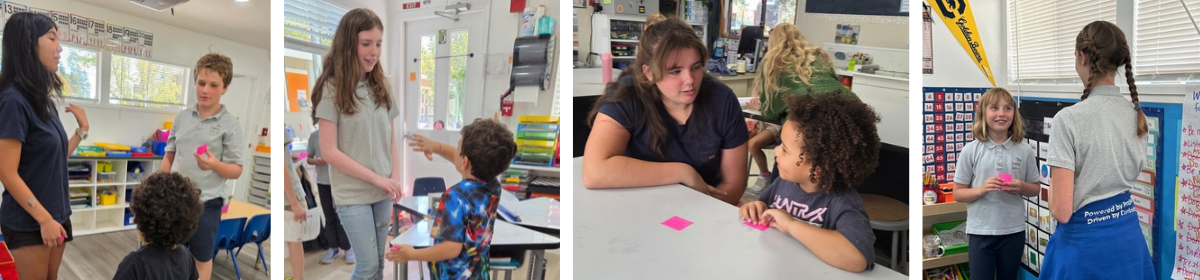
Fostering a sense of belonging is one of the most important things we can do in our classrooms. When students feel seen, known, and valued, they become free to take on new academic risks and challenges. 

At Saklan we extend the importance of belonging beyond SEL curriculum, morning meeting, or advisory. In Project Based Learning students bring their authentic wonders and ideas to the academic day, peer feedback, and collaborative work. 

Through showing the value of what they have to offer to the learning experience, students are reminded that we all have ways we can help support our community, ways our community can help us, and, most importantly, none of us alone is smarter than all of us together!  

Shared power is a core equity lever of projects at Saklan. By sharing power the class takes ownership over their growing knowledge which deepens the students’ sense of belonging and purpose in the classroom. 

Authentically incorporating students’ unique interests and talents, providing them options and agency in making decisions within the project, and creating a sense of interdependence among the teacher and students are all ways shared power show up in high quality project learning. 

Here are a few examples of how students are bringing their own unique identities, ideas, and questions to support academic learning in our projects. 

Owlets: Voice and Choice in Rainforest Representations 

Choice is provided for even our youngest learners. In their rainforest project unit, Owlets have had the freedom to respond to their growing knowledge in a variety of ways. After a visit from a reptile expert, students created models to represent what they learned. They chose an element of the experience that was exciting to them and selected which materials they would use to create the representation of what they learned. 
Owlets see the importance of their voice by developing their own wonders. The teachers reinforce student voice by making space to respond directly to these authentic student inquiries. One Owlet wondered how much rainfall there is in the rainforest each year. After some research the class discovered there is an average annual rainfall of 7 feet in the rainforest. They collaboratively made this chart to show 7 feet of rain! They even measured themselves (and their teachers) against all this rainfall!
We hope you can join the Owlets for their rainforest culmination celebration where you can see all they have learned about rainforests on May 31st after CLAS!

6th grade: Interdependence Through Critique, Revision, and Co-Creation of Rubrics

This PBL unit requires students to create a final product based on their own unique interpretation of the driving question, “How are we still connected to Ancient Greek culture, language, and mythology today?” 

While building knowledge and pursuing individual research paths, students also develop a deep sense of belonging and shared power in the classroom through interdependence. One major aspect of this was co-writing their grading rubric for the project through generating, sorting, and refining criteria and rubric language together. 

Throughout the project they receive feedback and support from peers and teachers through small group work and feedback protocols like Big Paper and a modified version of the Charrette Protocol. 

This critique and revision cycle is designed specifically to show students that their ideas matter. These practices intentionally lift up student voices, ideas, and opinions within the guardrails of our content standards and teacher learning goals. 

#SaklanPBL

Student-led Socratic Discussions

In their Languge Arts classes, the 6th and 8th grade students participated in Socratic-style seminar discussions to showcase their understanding of their class novels. The discussions were 100% student-led with 0% teacher involvement.

In a Socratic seminar discussion, students ask and answer all of the questions. The teacher remains silent. The students sit in a circle or around a seminar table where every participant can make eye contact with all other participants while speaking or actively listening. The discussion moves freely as the students answer one another’s questions, build on the commentary of others, and, of course, invite one another to contribute to keep the discussion going.

The 8th graders wrapped up their reading of the novel Uprising with two Socratic discussions inside the “fishbowl.” The novel Uprising tells the intersecting stories of three young women before and during the tragic fire in the Triangle Shirtwaist Factory in Manhattan on March 25, 1911. Along with reading the novel, the students analyzed the benefits and downsides of the Industrial Revolution in American life at the turn of the twentieth century. 

To prepare for the discussion, students generated their own questions about the novel’s main themes, especially characterization. The 8th graders also shared their analyses of meaningful passages from the novel and real historical events before inviting other participants to add to their ideas.

While one-half of the class participated in the discussion inside the fishbowl, the other half sat around the room outside the discussion table to observe and listen to their peers. The discussion lasted for 20 minutes before the two groups switched roles.

While the discussion was underway inside the fishbowl, each observer tracked specific elements of the discussion in their Observer Notes. They logged specific types of commentary as they occurred, including when a speaker connected the discussion topic to a broader theme, when someone built on another person’s comment, or when an analytical question was asked to the whole discussion group.

The 6th graders finished reading the novel Flowers for Algernon, which is about a mentally disabled man who triples his intelligence through an operation. For their cumulative project, the class also held a Socratic Seminar. In the discussion, students evaluated the various themes present in the novel, such as the relationship between EQ and IQ. Students made connections with the nonfiction topics discussed in class, such as the story of Adam and Eve, Plato’s Allegory of the Cave, and eugenics. When reflecting on their performance, the 6th graders were most proud of their ability to support one another’s intellectual thinking. 

In both grades, the students were surprised at how quickly time flew by inside the fishbowl. The discussion participants in both grades asked if they could have more time to continue as they felt they had much more to discuss.

The Power of Learning by Doing

Embark on an exciting journey with Saklan Middle School’s Learning by Doing (LBD) program! Every Thursday afternoon, students have the unique opportunity to delve into new interests, discover new skills, and make new friends as they choose from a wide array of LBD classes. These vibrant sessions, tailored to student interests, needs, and teacher passions, provide a platform for hands-on learning.

Imagine your student diving into chess strategy, challenging their knowledge with Geography quiz games, or learning about the richness of Indian culture and cuisine. From the rhythm of West African drumming to the camaraderie of basketball, there’s something every student can engage with and enjoy. Also, the fourth Thursday of each month brings the excitement of off-campus lunch—a favorite among students!

What truly distinguishes Saklan is our commitment to nurturing a community of lifelong learners. Our middle school faculty leads engaging LBD classes and invites parents and students to share their expertise. Imagine your student learning and teaching their peers, sparking passion and curiosity in others through their LBD class. This is the spirit of collaboration and inclusion that defines our LBD program.

This year, our sixth-grade students have showcased extraordinary creativity and courage by stepping into the role of LBD instructors. Stephen, Rebecca, and Aliya used Saklan’s new i-Pads (made possible by generous fund-a-need donations to last year’s auction) to film short video skits that were scripted joyfully in the first LBD class. The laughter and fun of each LBD period was palpable. The students learned how to edit by adding sounds and music and incorporating text and images to make their videos silly and fun. Although the film topics were completely student-created, they learned invaluable filming and editing techniques.

Another excellent sixth-grade LBD class just finished this week. It was titled “Rice and Reading,” which are two things that Sam loves. In each class session, Sam brought a new delicious rice dish to share. Students ate the yummy food and then rested in comfort to read their favorite books.

Join us in celebrating the spirit of innovation and empowerment that defines Saklan Middle School’s LBD program—a true highlight of the middle school experience!

Pan con Tomate

In Spanish class, students often combine aspects of the Spanish curriculum with other subjects to show how learning a language goes beyond the classroom. Take Spanish and food, for example. Students’ knowledge evolves when they are exposed to different Spanish-speaking countries in the classroom, but that doesn’t compare to tasting what it would be like to be in Spain. Sometimes, the best way to learn is through different experiences, and students love food! In the Middle School Blue Block Spanish class, students prepared pan con tomate, a typical appetizer of Cataluña, a community in Spain. It is a relatively simple recipe with few ingredients required, but the payout is outstanding; the students learn vocabulary while eating and sharing the food they prepare themselves! 

Field Experiences That Intentionally Enrich Learning

The 6th grade humanities class recently went to the San Francisco Legion of Honor to explore key ancient Greek artifacts as part of the kick off to their final humanities Project Based Learning unit of the year. 

PBL units traditionally begin with an entry event, the purpose of which is to intentionally ignite student authentic curiosity about the driving question, “How are we still connected to ancient Greek culture, language, and mythology today?” Students explored the Hall of Antiquities searching for 3 key artifacts, a statue of Asklepios, a rare gold wreath, and an amphora of Herakles, before finding other artifacts that were of interest to them and generating need to know questions.

In addition to an engaging entry event, another cornerstone of Project Based Learning is honoring student voice and choice and creating opportunities for sustained, authentic inquiry. As they continue to build knowledge and consider their need to know questions, students will not just cover the standards on ancient Greece but select their own way to answer their driving question and pursue one research area in more depth. Last year students researched a wide variety of connections on themes from education to health care, military power to the role of Olympic athletes, and much more! We can’t wait to see what sparks the interest of students this year!

A fun bonus was seeing the excitement on students’ faces when a few of them were able to locate the mystery artifact they researched in our fall PBL on ancient Egypt! It was a fun challenge to see if they could spot the artifact they spent so much time researching back in October! Many were surprised at either how big or how tiny it looked in person! 

#SaklanPBL

Public Products with a Purpose

High level Project Based Learning units at Saklan extend beyond the walls of the classroom. When students feel a sense of authentic purpose, projects become richer and more relevant for our learners. As they demonstrate understanding of academic standards, they are also engaging in sustained inquiry, thinking creatively, and acting compassionately. 

The product in each PBL unit looks different depending on a number of factors including the academic learning goals, division, and student interest. However, our work at Saklan differentiates itself by final products being more than a retelling of academic content via a poster or report. Instead Saklan students demonstrate their proficiency in academic standards through the process of answering a question or solving a problem that matters to them.

This unique blend of honoring students’ interests and maintaining academic rigor empowers students to make change and impact their community. Through high quality Project Based Learning Saklan students learn that their opinions are valued, that they have creative solutions to problems that exist in our communities, and that they can take action to make a difference. 

Below are some outstanding examples of public products from PBL units at Saklan this year that help answer a question, solve a problem, or support our community needs. 

2nd Grade

  • Driving Question: “Can colors change people’s feelings?”
  • Public Product: Concert backdrop

A concert backdrop is an essential element to our annual Saklan concert. This year our second graders took on the authentic task of designing and creating the backdrop for this important community event. 

They first developed their understanding of the art world by experiencing Yayoi Kusama’s installations at SF MoMA and diving deep to understand how artists like Joseph Albers, Erin Fong, Anne Patterson communicate emotion through either a single or a combination of colors both in painting and in large-scale installations. Considering their new understanding of color theory, students engaged in a process of design, critique, and revision before deciding as a group on the direction of their concert backdrop design. From there they stretched and explored with various materials for the background before ultimately settling on ribbon and fabric since it would flow and also be weighty enough to not tangle. They helped tie the hundreds of ribbons to the 8 foot dowels that were installed professionally in our concert space at the Lesher Performing Arts Center for our annual spring concert.  

For an additional second public project, students have been working in collaborative small groups to cut and redesign the original installation, creating smaller hanging pieces for our school auction later this month! Now their art that communicates love and serves our community will take on a new life and get to go home with a few lucky families!

7th Grade

  • Driving Question: “How can we reduce single use plastic?”
  • Public Product: Design of sustainable alternatives to single use plastic

Plastic trash and microplastics in our oceans are a real and relevant issue that seventh graders worked to address through design innovations and creativity. 

After a field experience at the Monterey Bay Aquarium and service learning on the beaches of Oahu, seventh graders considered the impact of plastics on the environment, particularly on ocean animals and what they can do to be change makers. Students designed solutions to single use plastics and presented their designs and prototypes to a panel of adults, including a local designer and small business owner, in a Shark Tank style presentation. Through this experience they grew in their capacity to think creatively about solutions to problems that exist outside the walls of Saklan and consider how they can be part of the change they want to see in the world around them.

1st and 8th grades

  • Driving Question: “How do homes keep us safe?”
  • Public Product: Bag lunches for distribution with 10,000 Lunches

An ideal Saklan graduate is an empathetic, inclusive, and kind leader. First graders lived into those descriptors during the final milestone of a months-long Project Based Learning unit on homes. 

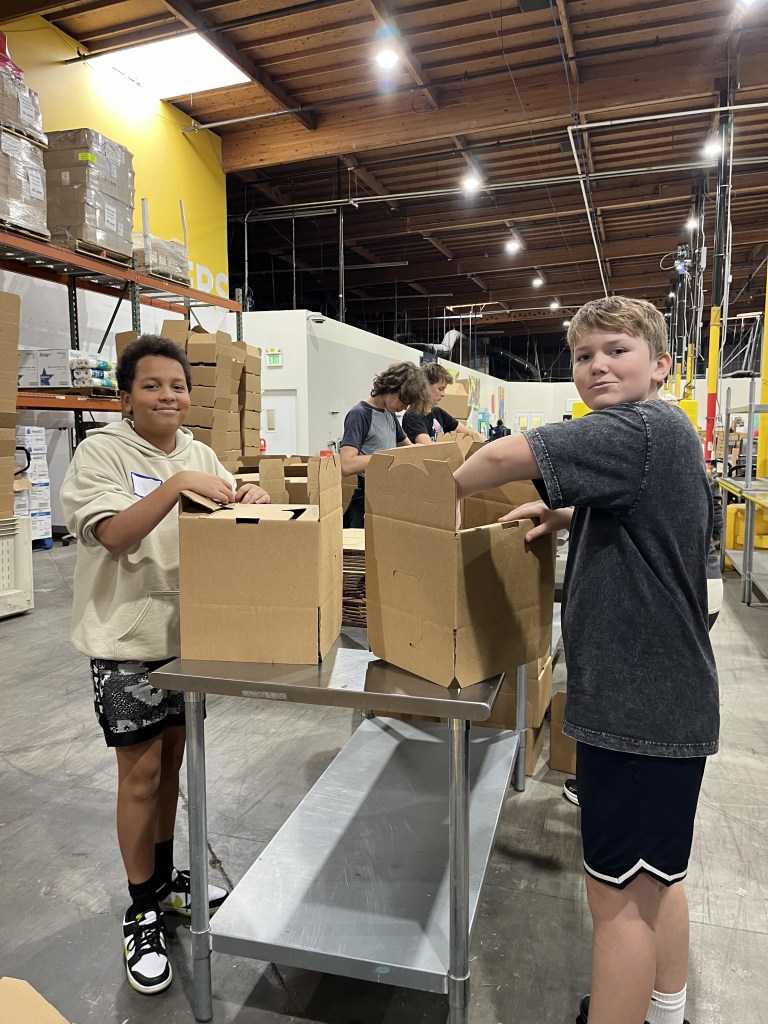
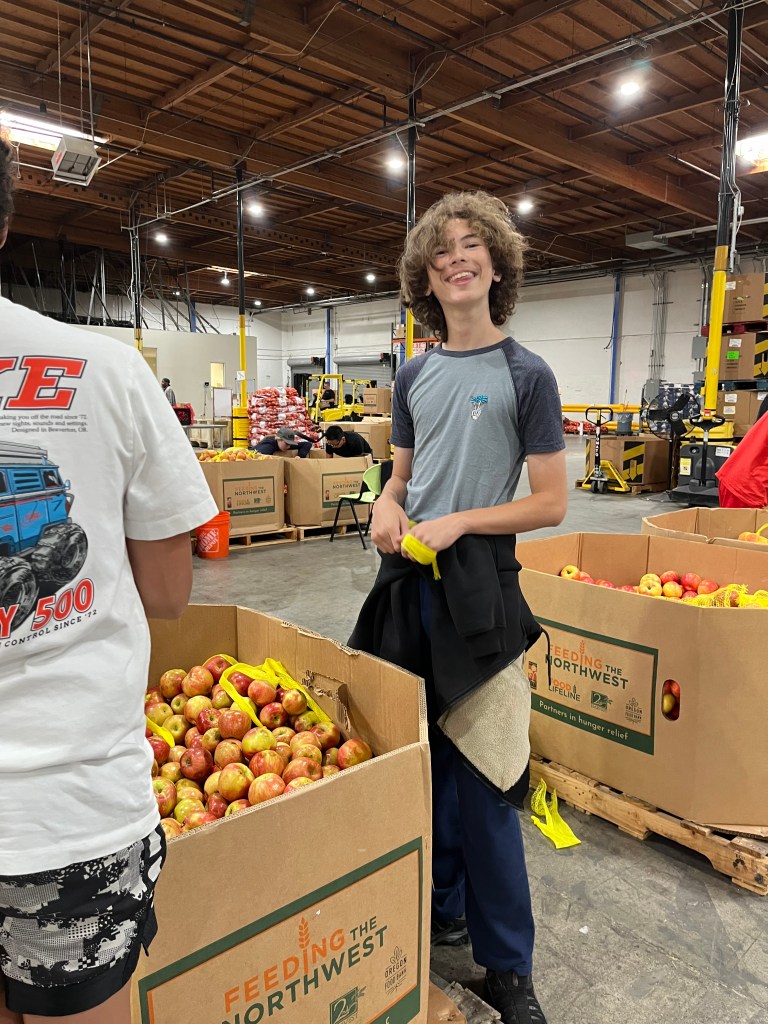
The Homes unit in first grade is a cross-curricular unit that integrates informational reading and writing, geometry, weather, social studies, and art. This year students moved from geometry and shapes that can be used to make a strong structure to learning from our 8th graders about what can happen when people lose their homes due to natural disasters, like hurricanes. In their final milestones, first graders learned how communities can come together when housing insecurity impacts food insecurity and were inspired to think about how they can be helpers too. Together 1st and 8th graders helped their family groups bag 200 lunches for a local organization called 10,000 Lunches that aims to support local people experiencing housing and food insecurity.

#SaklanPBL

Fruits of Their Labor

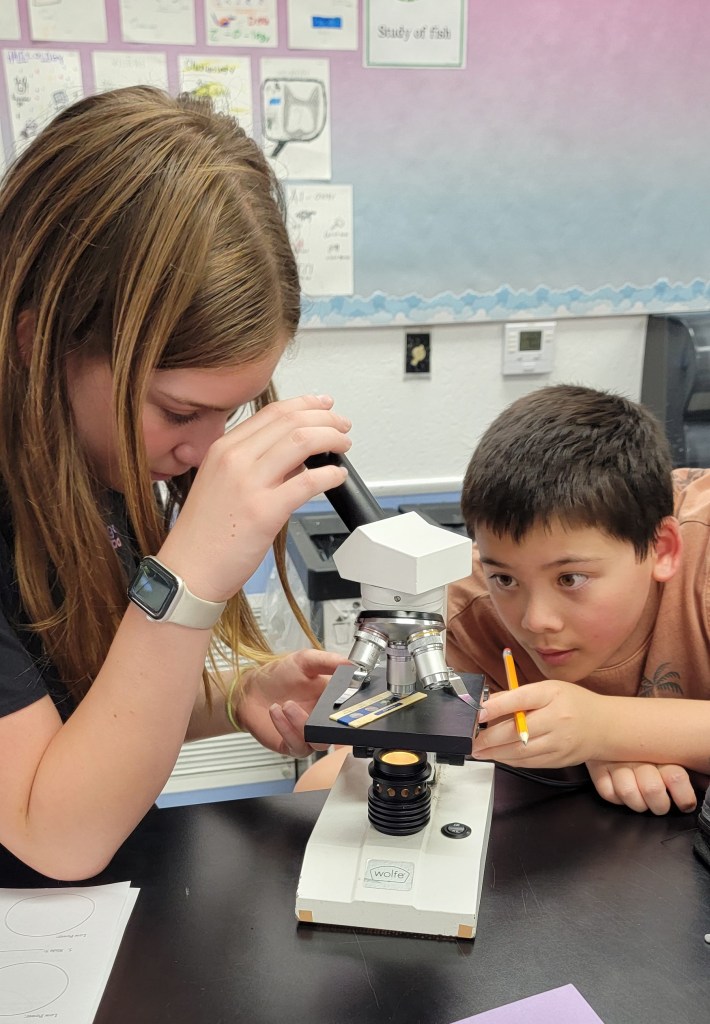
Generosity from last year’s auction fund-a-need donors allowed for the purchase of a vertical indoor garden for Saklan’s Science Lab. The garden holds 30 different plants: many lettuces, herbs, vegetables and some flowers. This year the 6th graders have been tending to these plants as part of their earth science curriculum, in which they study both nutrient cycling in the environment and healthy food choices. The students have researched their plants, kept biweekly measurements and drawings, and now are getting to enjoy the fruits of their labor!

Right before Spring Break, students got to enjoy lettuce (butterhead, red and green tatsoi, hon tsai tai, red sail and montecarlo) from the garden! They enjoyed eating the sweet basil they grew mixed with some mozzarella and tomatoes from the store (their tomatoes are still green). They also added mint leaves to lemonade. 

Next they hope to enjoy the cauliflower, tomatoes, peppers and more of the herbs they have grown! 

#SaklanHandsOn