Field Experiences That Intentionally Enrich Learning

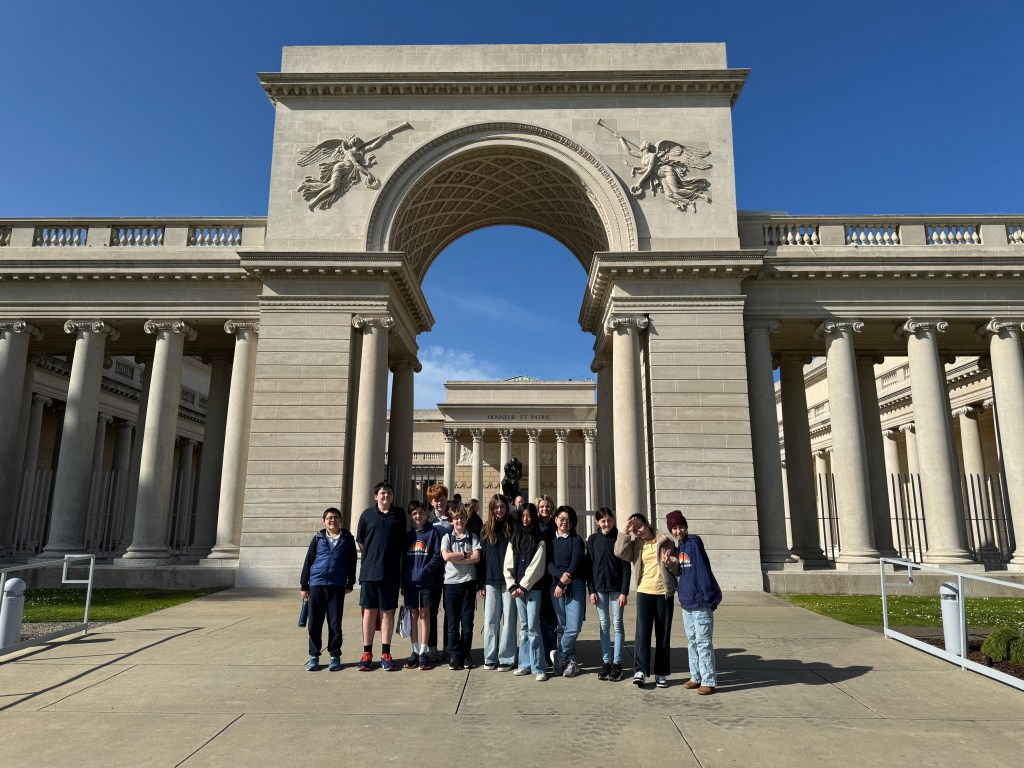
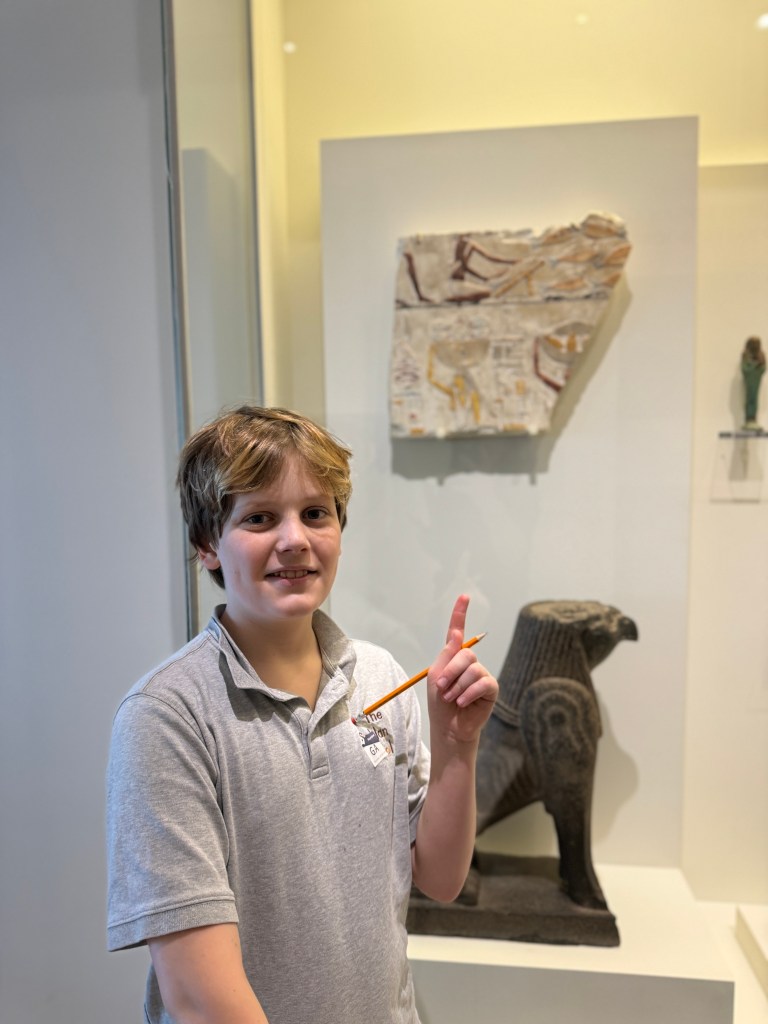
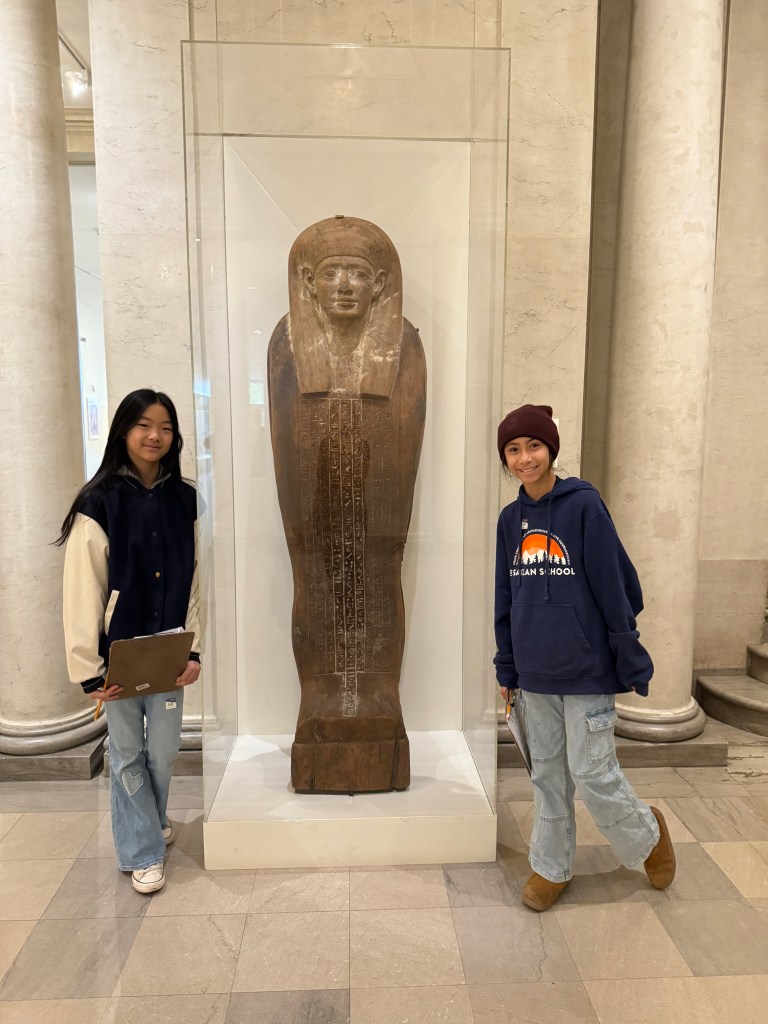
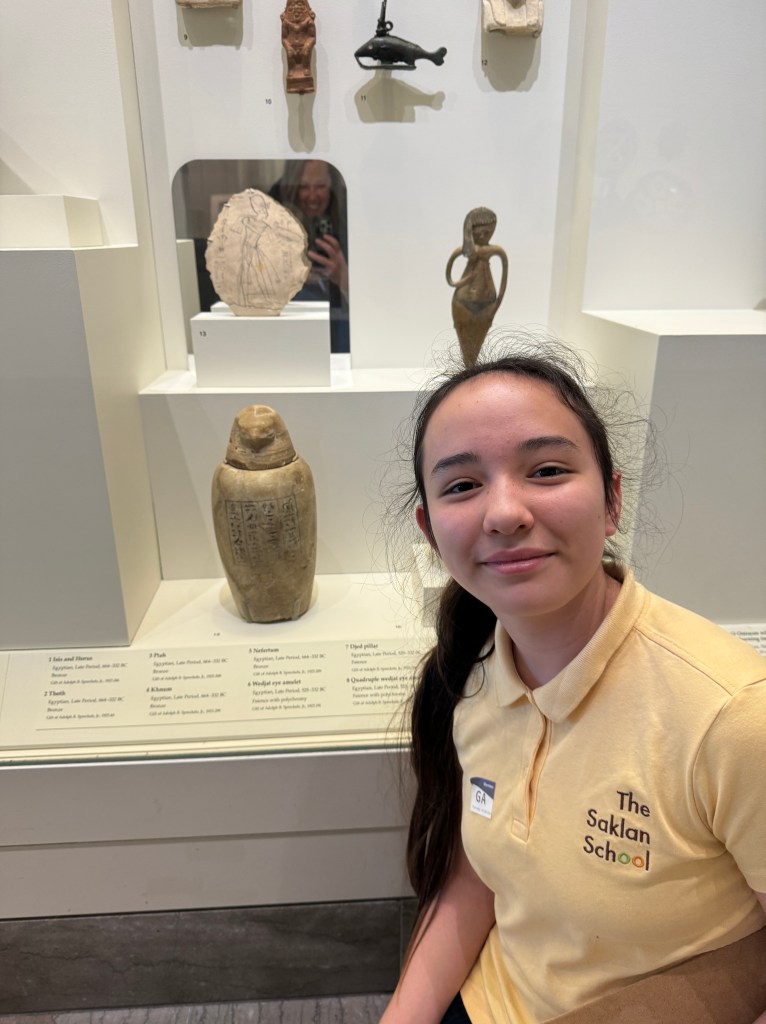
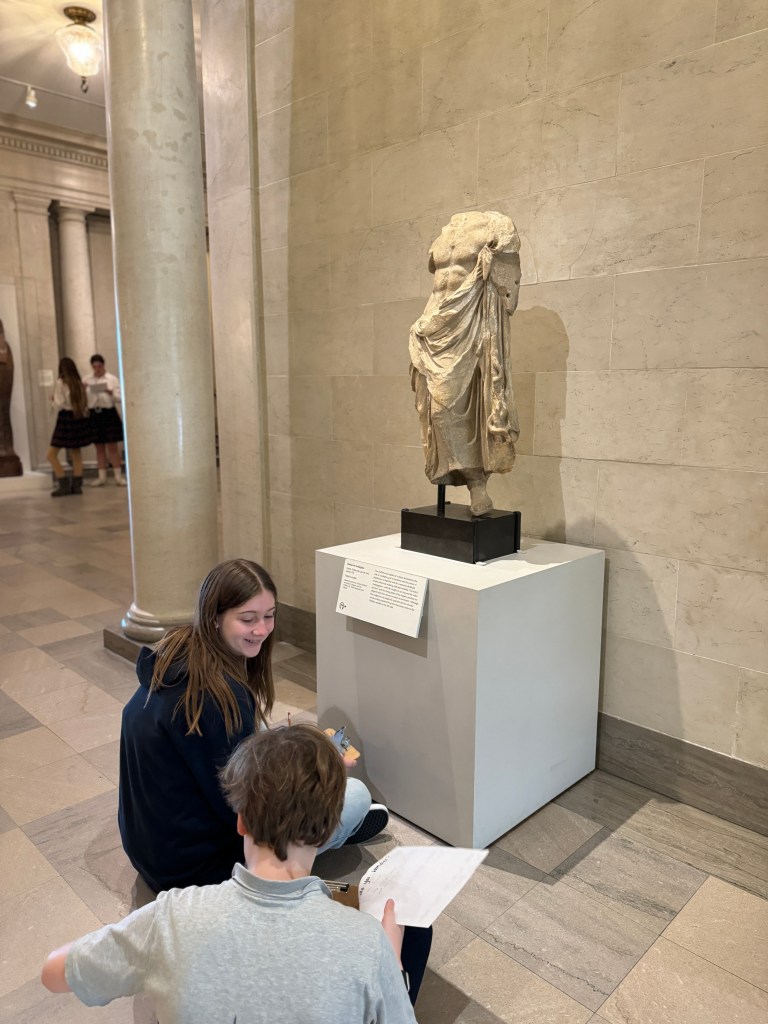
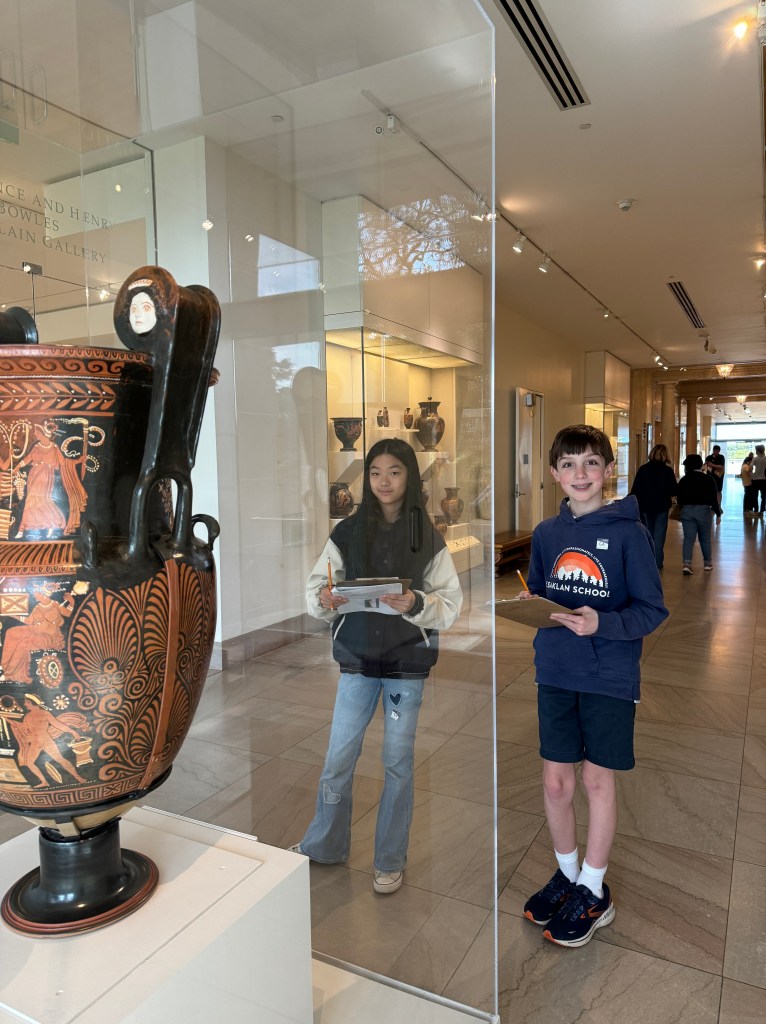
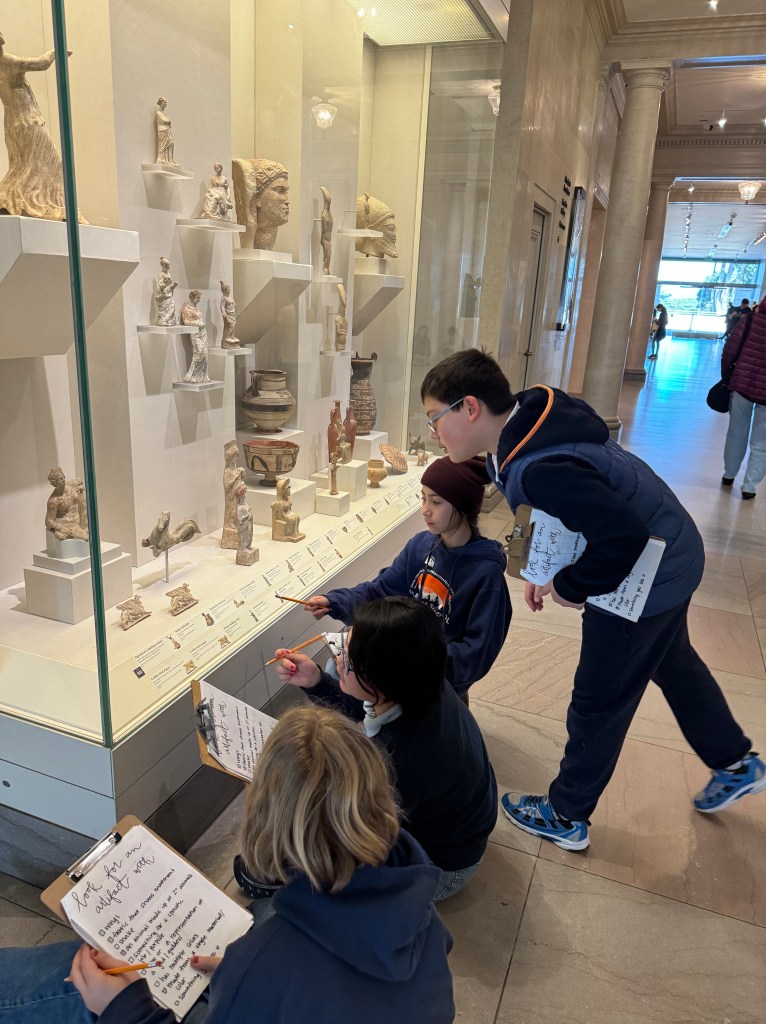
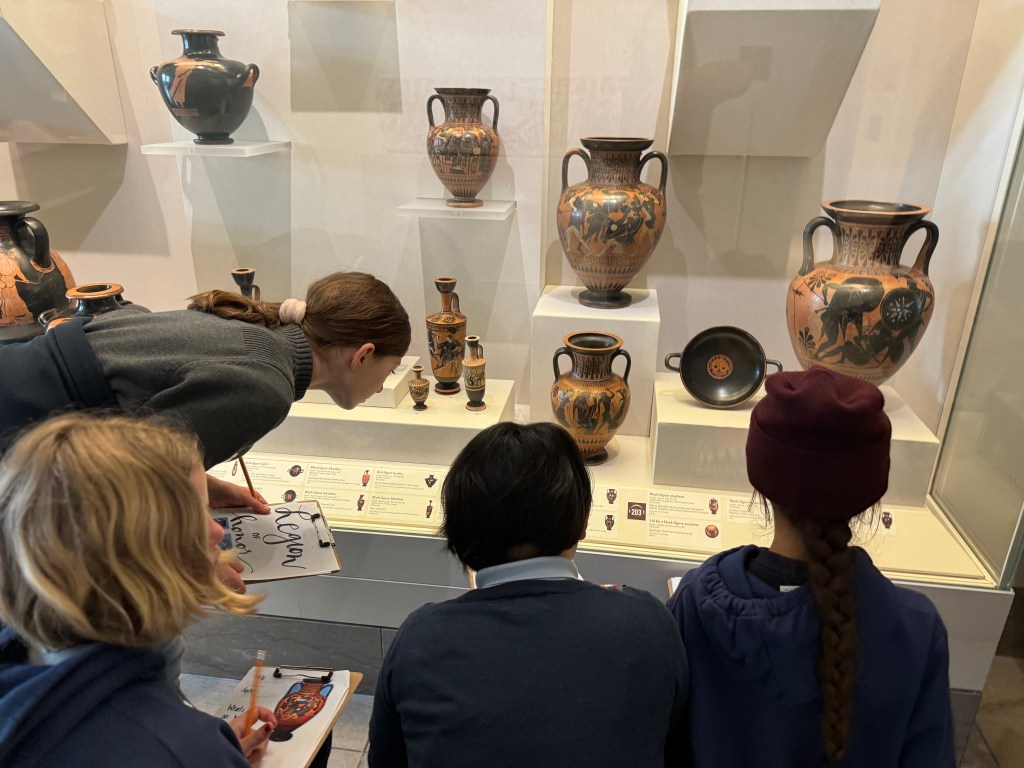
The 6th grade humanities class recently went to the San Francisco Legion of Honor to explore key ancient Greek artifacts as part of the kick off to their final humanities Project Based Learning unit of the year. 

PBL units traditionally begin with an entry event, the purpose of which is to intentionally ignite student authentic curiosity about the driving question, “How are we still connected to ancient Greek culture, language, and mythology today?” Students explored the Hall of Antiquities searching for 3 key artifacts, a statue of Asklepios, a rare gold wreath, and an amphora of Herakles, before finding other artifacts that were of interest to them and generating need to know questions.

In addition to an engaging entry event, another cornerstone of Project Based Learning is honoring student voice and choice and creating opportunities for sustained, authentic inquiry. As they continue to build knowledge and consider their need to know questions, students will not just cover the standards on ancient Greece but select their own way to answer their driving question and pursue one research area in more depth. Last year students researched a wide variety of connections on themes from education to health care, military power to the role of Olympic athletes, and much more! We can’t wait to see what sparks the interest of students this year!

A fun bonus was seeing the excitement on students’ faces when a few of them were able to locate the mystery artifact they researched in our fall PBL on ancient Egypt! It was a fun challenge to see if they could spot the artifact they spent so much time researching back in October! Many were surprised at either how big or how tiny it looked in person! 

#SaklanPBL

Public Products with a Purpose

High level Project Based Learning units at Saklan extend beyond the walls of the classroom. When students feel a sense of authentic purpose, projects become richer and more relevant for our learners. As they demonstrate understanding of academic standards, they are also engaging in sustained inquiry, thinking creatively, and acting compassionately. 

The product in each PBL unit looks different depending on a number of factors including the academic learning goals, division, and student interest. However, our work at Saklan differentiates itself by final products being more than a retelling of academic content via a poster or report. Instead Saklan students demonstrate their proficiency in academic standards through the process of answering a question or solving a problem that matters to them.

This unique blend of honoring students’ interests and maintaining academic rigor empowers students to make change and impact their community. Through high quality Project Based Learning Saklan students learn that their opinions are valued, that they have creative solutions to problems that exist in our communities, and that they can take action to make a difference. 

Below are some outstanding examples of public products from PBL units at Saklan this year that help answer a question, solve a problem, or support our community needs. 

2nd Grade

  • Driving Question: “Can colors change people’s feelings?”
  • Public Product: Concert backdrop

A concert backdrop is an essential element to our annual Saklan concert. This year our second graders took on the authentic task of designing and creating the backdrop for this important community event. 

They first developed their understanding of the art world by experiencing Yayoi Kusama’s installations at SF MoMA and diving deep to understand how artists like Joseph Albers, Erin Fong, Anne Patterson communicate emotion through either a single or a combination of colors both in painting and in large-scale installations. Considering their new understanding of color theory, students engaged in a process of design, critique, and revision before deciding as a group on the direction of their concert backdrop design. From there they stretched and explored with various materials for the background before ultimately settling on ribbon and fabric since it would flow and also be weighty enough to not tangle. They helped tie the hundreds of ribbons to the 8 foot dowels that were installed professionally in our concert space at the Lesher Performing Arts Center for our annual spring concert.  

For an additional second public project, students have been working in collaborative small groups to cut and redesign the original installation, creating smaller hanging pieces for our school auction later this month! Now their art that communicates love and serves our community will take on a new life and get to go home with a few lucky families!

7th Grade

  • Driving Question: “How can we reduce single use plastic?”
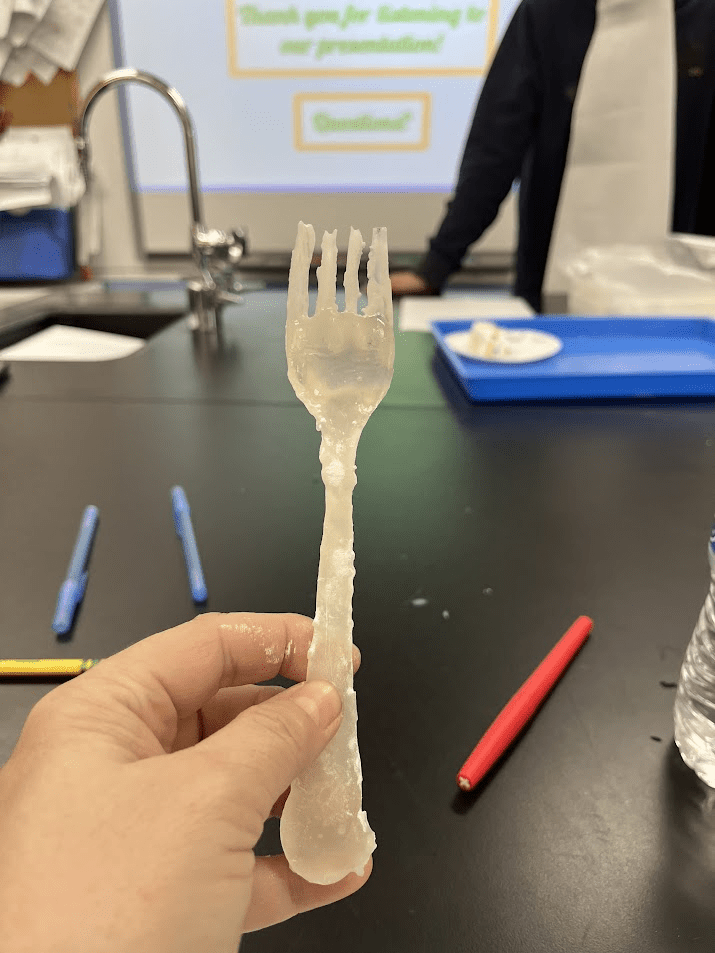
  • Public Product: Design of sustainable alternatives to single use plastic

Plastic trash and microplastics in our oceans are a real and relevant issue that seventh graders worked to address through design innovations and creativity. 

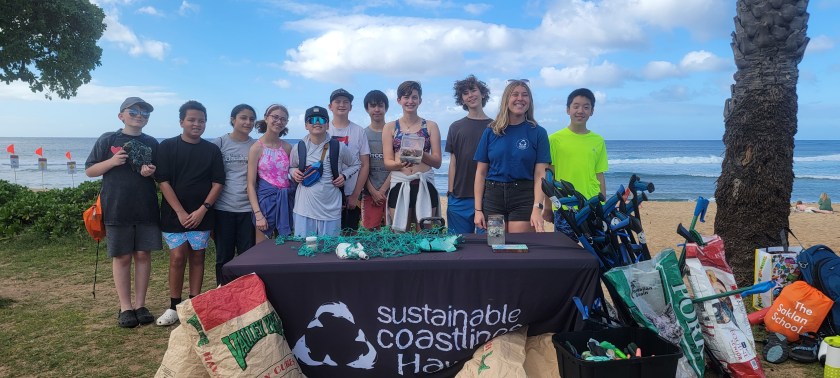
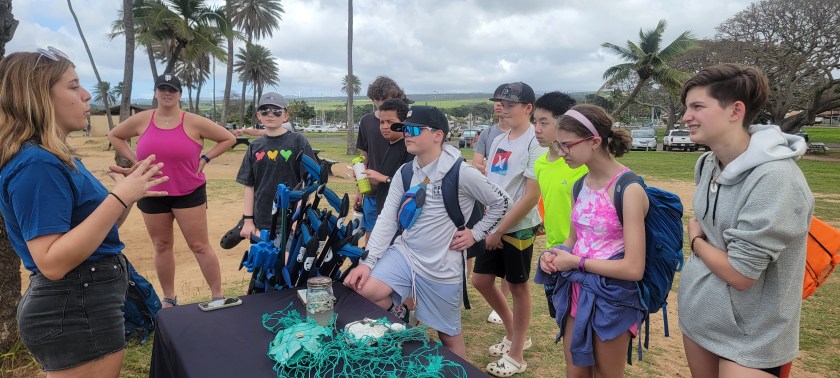
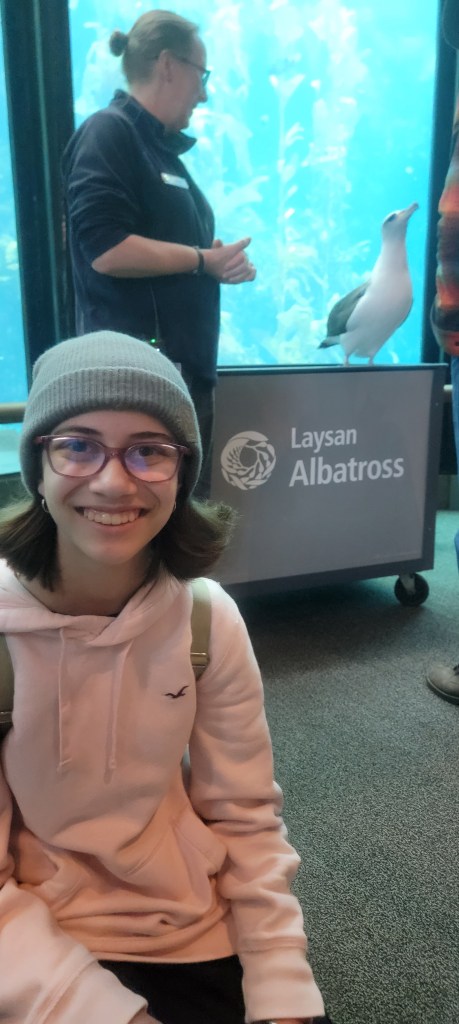
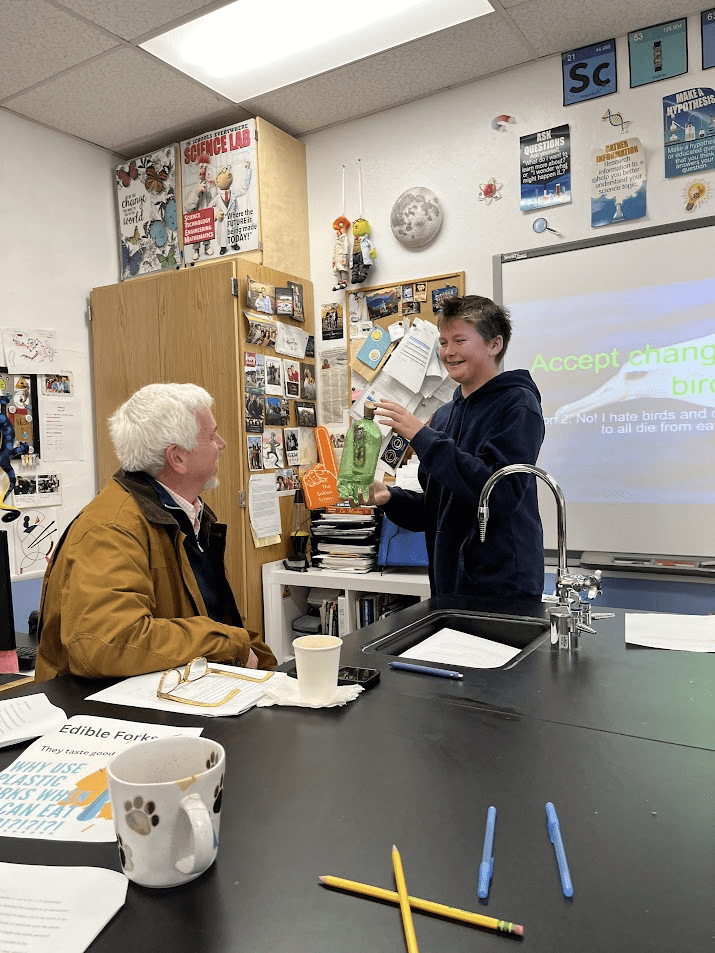
After a field experience at the Monterey Bay Aquarium and service learning on the beaches of Oahu, seventh graders considered the impact of plastics on the environment, particularly on ocean animals and what they can do to be change makers. Students designed solutions to single use plastics and presented their designs and prototypes to a panel of adults, including a local designer and small business owner, in a Shark Tank style presentation. Through this experience they grew in their capacity to think creatively about solutions to problems that exist outside the walls of Saklan and consider how they can be part of the change they want to see in the world around them.

1st and 8th grades

  • Driving Question: “How do homes keep us safe?”
  • Public Product: Bag lunches for distribution with 10,000 Lunches

An ideal Saklan graduate is an empathetic, inclusive, and kind leader. First graders lived into those descriptors during the final milestone of a months-long Project Based Learning unit on homes. 

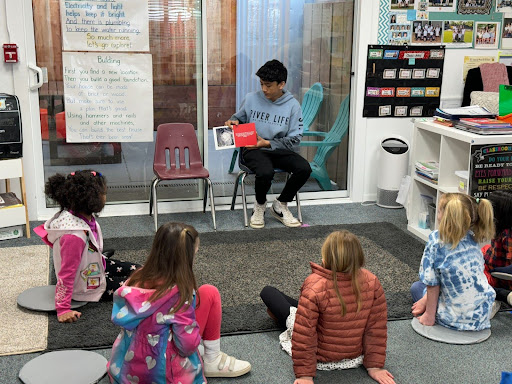
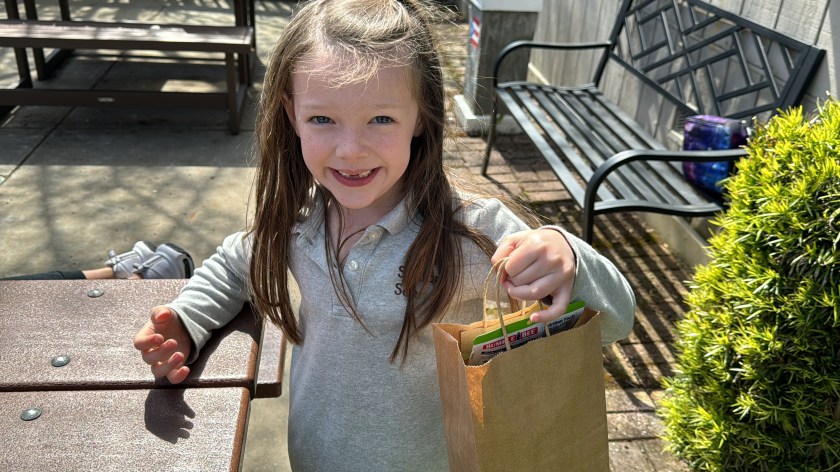
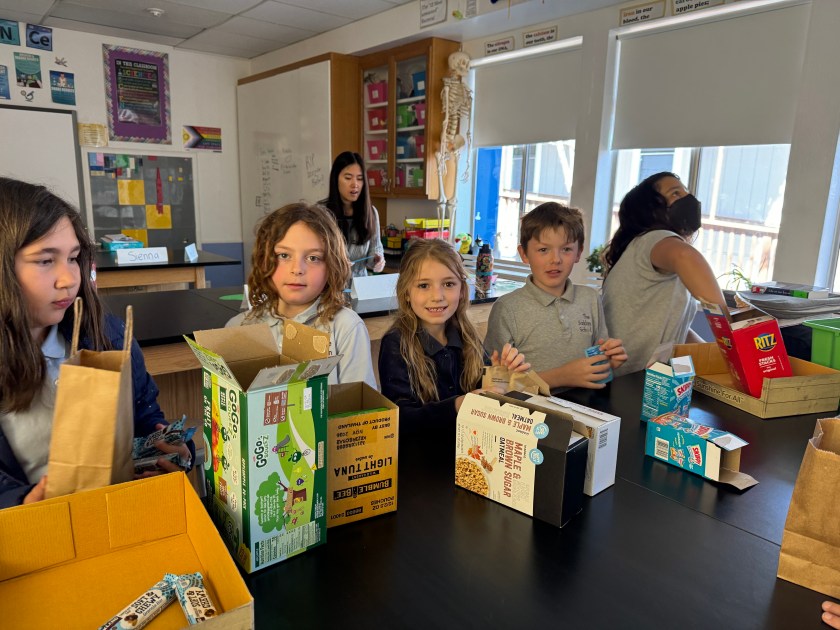
The Homes unit in first grade is a cross-curricular unit that integrates informational reading and writing, geometry, weather, social studies, and art. This year students moved from geometry and shapes that can be used to make a strong structure to learning from our 8th graders about what can happen when people lose their homes due to natural disasters, like hurricanes. In their final milestones, first graders learned how communities can come together when housing insecurity impacts food insecurity and were inspired to think about how they can be helpers too. Together 1st and 8th graders helped their family groups bag 200 lunches for a local organization called 10,000 Lunches that aims to support local people experiencing housing and food insecurity.

#SaklanPBL

Fruits of Their Labor

Generosity from last year’s auction fund-a-need donors allowed for the purchase of a vertical indoor garden for Saklan’s Science Lab. The garden holds 30 different plants: many lettuces, herbs, vegetables and some flowers. This year the 6th graders have been tending to these plants as part of their earth science curriculum, in which they study both nutrient cycling in the environment and healthy food choices. The students have researched their plants, kept biweekly measurements and drawings, and now are getting to enjoy the fruits of their labor!

Right before Spring Break, students got to enjoy lettuce (butterhead, red and green tatsoi, hon tsai tai, red sail and montecarlo) from the garden! They enjoyed eating the sweet basil they grew mixed with some mozzarella and tomatoes from the store (their tomatoes are still green). They also added mint leaves to lemonade. 

Next they hope to enjoy the cauliflower, tomatoes, peppers and more of the herbs they have grown! 

#SaklanHandsOn

Pi Day Fun

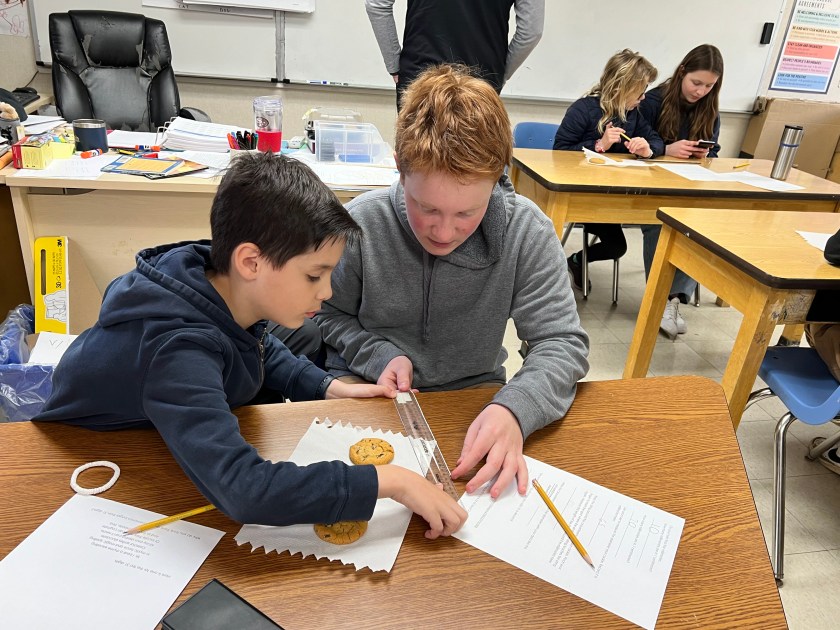
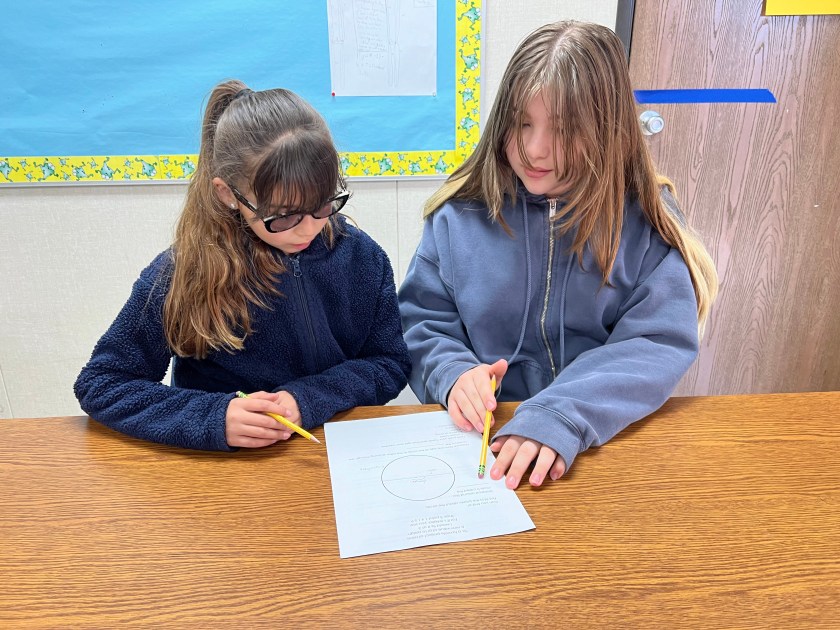
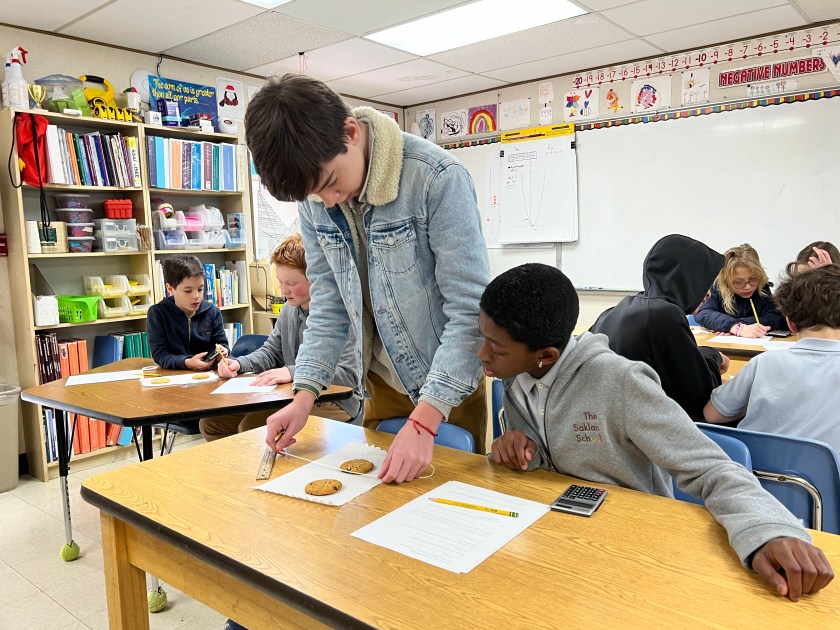
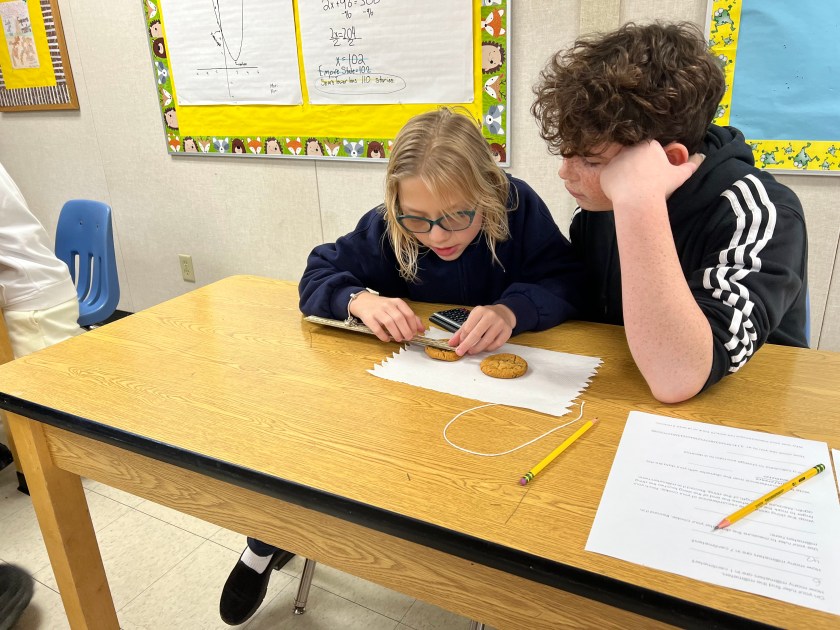
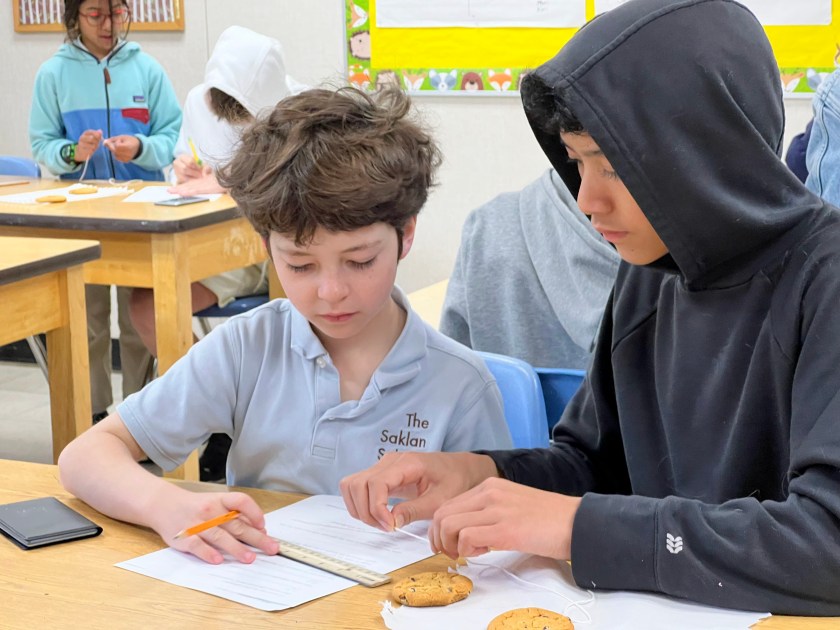
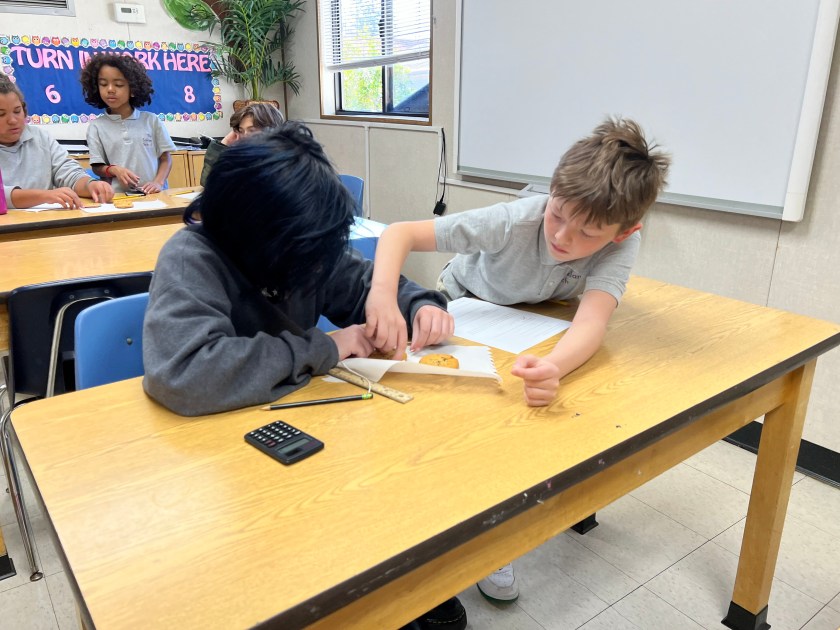
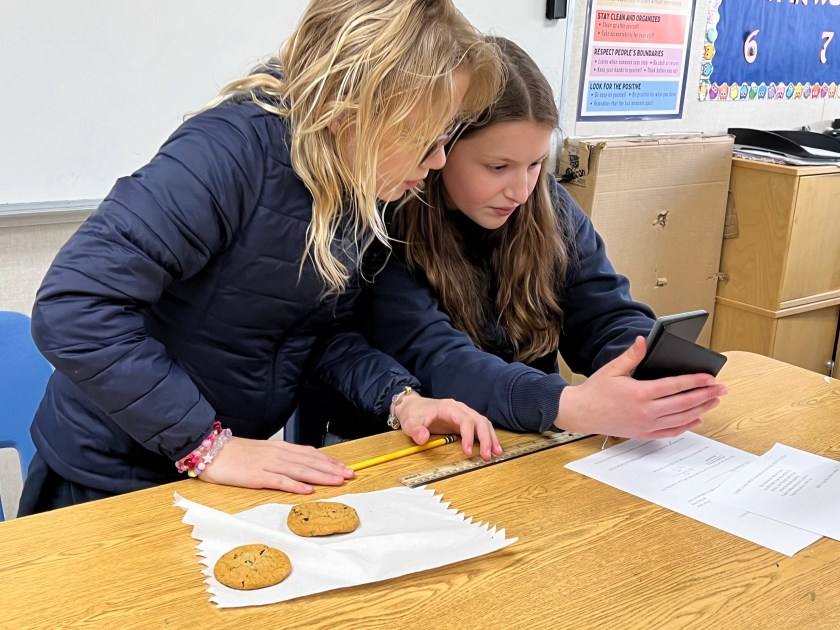
To celebrate Pi Day (3/14) at Saklan, the 8th graders taught a special lesson to the third graders. Students worked together in pairs to measure the diameter and then the circumference of a cookie. They then calculated their own pi by making the ratio of circumference over diameter. No one got exactly 3.14159, but some groups came very close! The students had a group discussion about their results and concluded that two of the reasons they may not have gotten exactly 3.14159 was because the cookies weren’t perfectly round and using a string to calculate circumference might have led to errors.

To close the lesson, the pairs made memory mnemonics to help them remember the first ten digits of pi. A couple interesting ones were:

Can I make a small sculpture of purple glass now?

3 1 4 1 5 9 2 6 5 3

Can I have a large tangerine or orange juice now?

3 1 4 1 5 9 2 6 5 3

Groups that had extra time worked on writing a Pi-ku. These are like Haikus, but instead of only three lines with the syllable pattern 5-7-5, they can go on infinitely (or at least 32 lines) and follow the pattern of pi. Here are a couple examples: 

Cookies are (3)     

Warm (1)                        

Bees in a hive (4)    

swarm (1)                     

I take my ruler (5)  

In a cooler to the cookie jar (9) 

I like (2)

To jump in a lake (6)

With a massive snake (5)

Soccer is (3)

Fun (1)

And exciting (4)

You (1)

Kick a ball and run (5)

Basketball is also very fun (9)

And hard (2)

Running takes a lot of (6)

Hard work and training (5)

#SaklanHandsOn

Lunar New Year Celebration

The sixth-grade students joined together during their Language Arts and Humanities classes on Friday, February 9th, to learn, share, and celebrate the Lunar New Year. 2024 is the year of the wood dragon, which happens every 60 years.

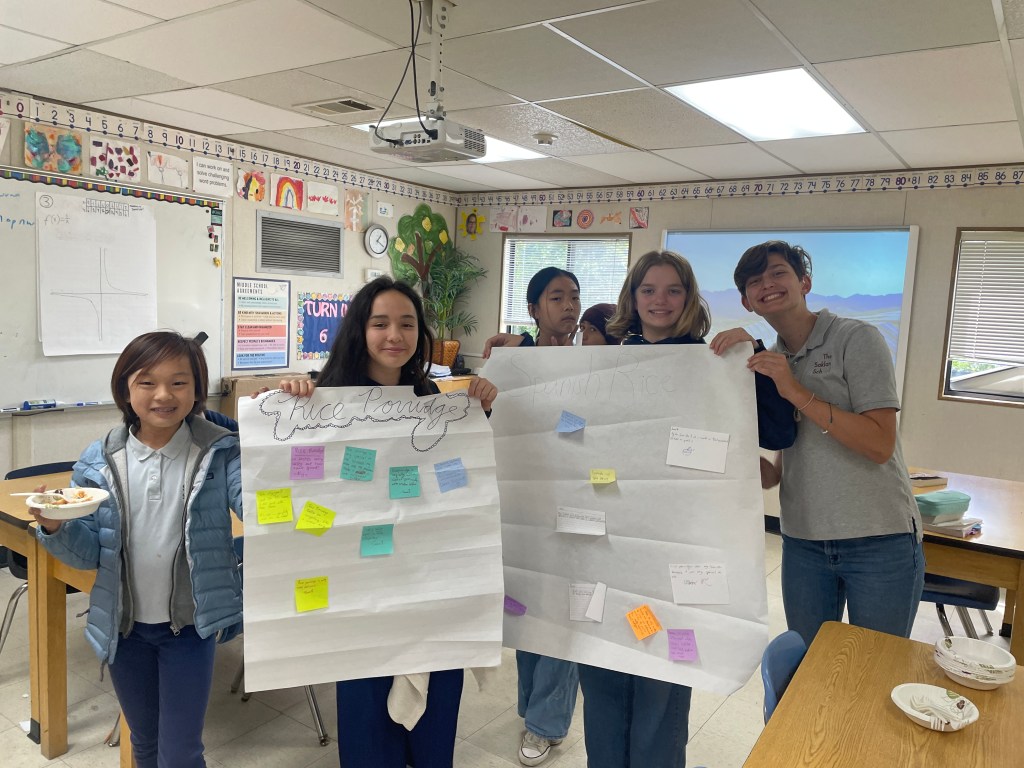
Saklan students and teachers brought in elements of their own Lunar New Year family traditions from Korea, China, Japan, and Vietnam. These students shared and explained the symbolism behind red envelopes, special food, celebratory dress, and unique New Year customs. The sixth-grade class read about ancient Chinese oracle bones and the origins of the Chinese language. Then, using the students’ experiences from their fourth-grade calligraphy art instruction, they brushed the character for “good luck” before joining to have a potluck lunch. Students brought special New Year foods, and everyone enjoyed a few dishes from China Moon.

 After lunch, Christina led a combined group of sixth and eighth grade students through various meanings behind New Year traditions. Students learned how colors and gestures symbolize different ideas in Asian cultures. Christina shared a Vietnamese tradition that happens on Tet, or the first day of the New Year. This tradition honors your ancestors or loved ones by having family members create a beautiful altar and share offerings. With this knowledge, students made fruit offerings and wrote the names of deceased people they wanted to honor. The “five-fruit tray” on the ancestral altar during the Tet Holidays symbolizes the admiration and gratitude of the Vietnamese to Heaven and Earth and their ancestors.

Overall, the Lunar New Year was a special day for all who participated and learned about or shared their culture with their classmates. Activities like this help increase a sense of belonging in our community as students learn more about one another and gain understanding, allowing them to be more empathetic to one another. Thank you to all the sixth-grade students willing to be courageous and share about their own culture and family.

#SaklanCommunity

The Suns are Back

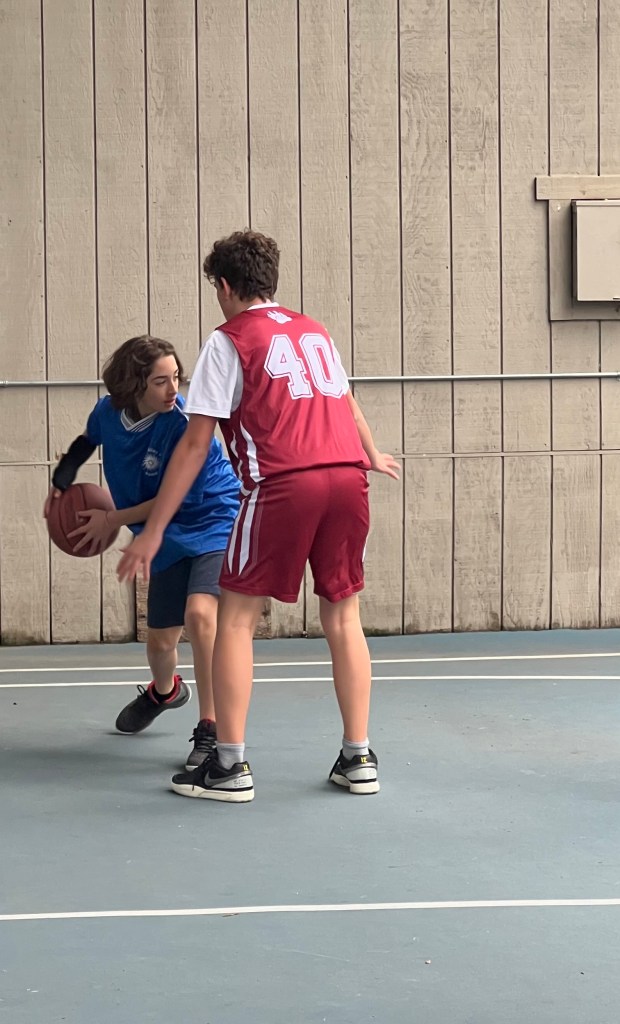
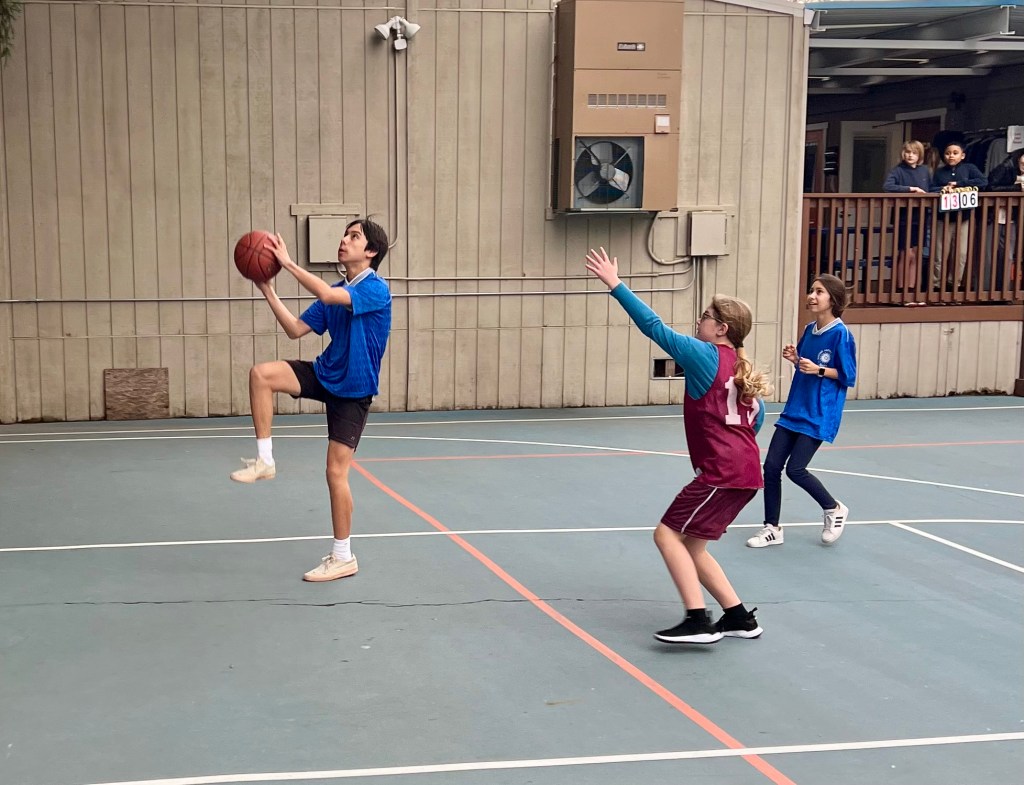
Saklan hadn’t played basketball games against another school since before the pandemic, but this month the Suns returned to the court! Recently a team of Saklan 4th – 8th graders played two games against the Contra Costa Jewish Day School Grizzlies. Both games were close and well played. Saklan had a big turn out of courageous students willing to put on jerseys. A big thank you to: Aliya 6th, Braden 7th, Cameron 4th, Hailey 6th, Jameson 8th, Jack 7th, Kiran 8th, Lucien 6th, Mori 8th, Oliver 8th, Riley 5th, Sam 8th, Sean 5th, Sebastien 4th,  and Yiannis 8th.  These students, without any formal practice, took on a middle-school aged varsity level basketball team and won one home game and lost a close away game. Way to go Saklan!

Basketball Club continues on Mondays, Tuesdays, and Thursdays at 3:00 p.m. All 4th – 8th graders are invited to join in the fun out on the Sports Court. As we move towards March, Volleyball Club will start alongside Basketball Class on Mondays, Tuesdays, and Thursdays. Stay tuned for more info about volleyball games planned for April and May. Go Suns!

#SaklanCourageous #SaklanSports

Saklan’s Snack Shack

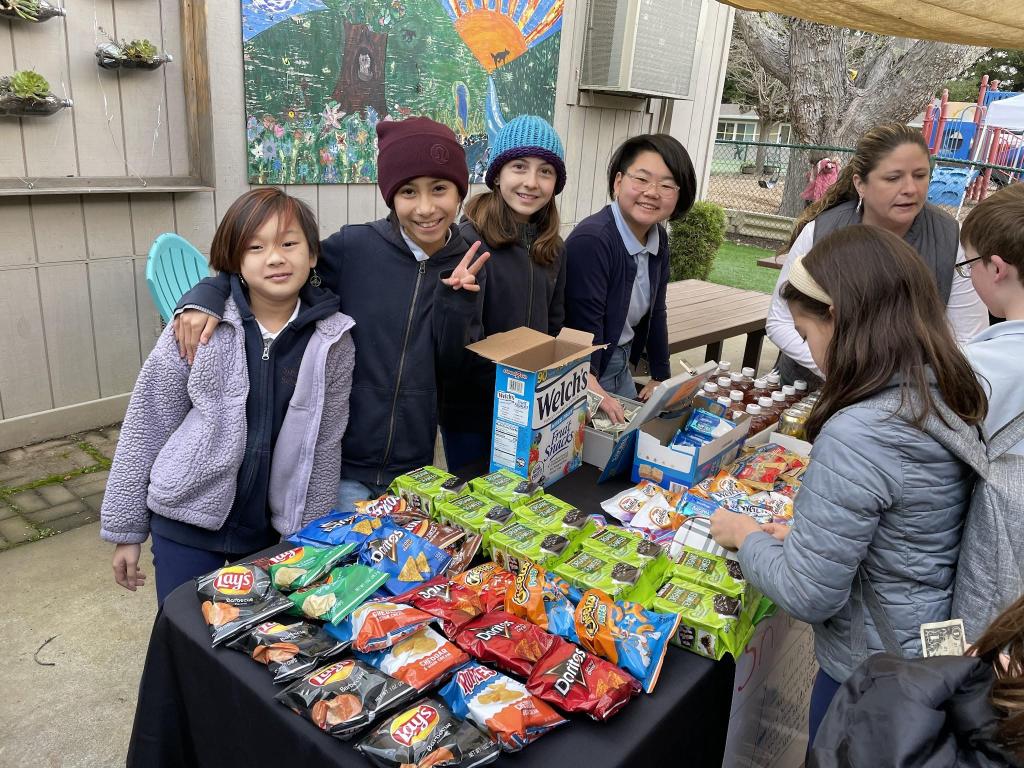
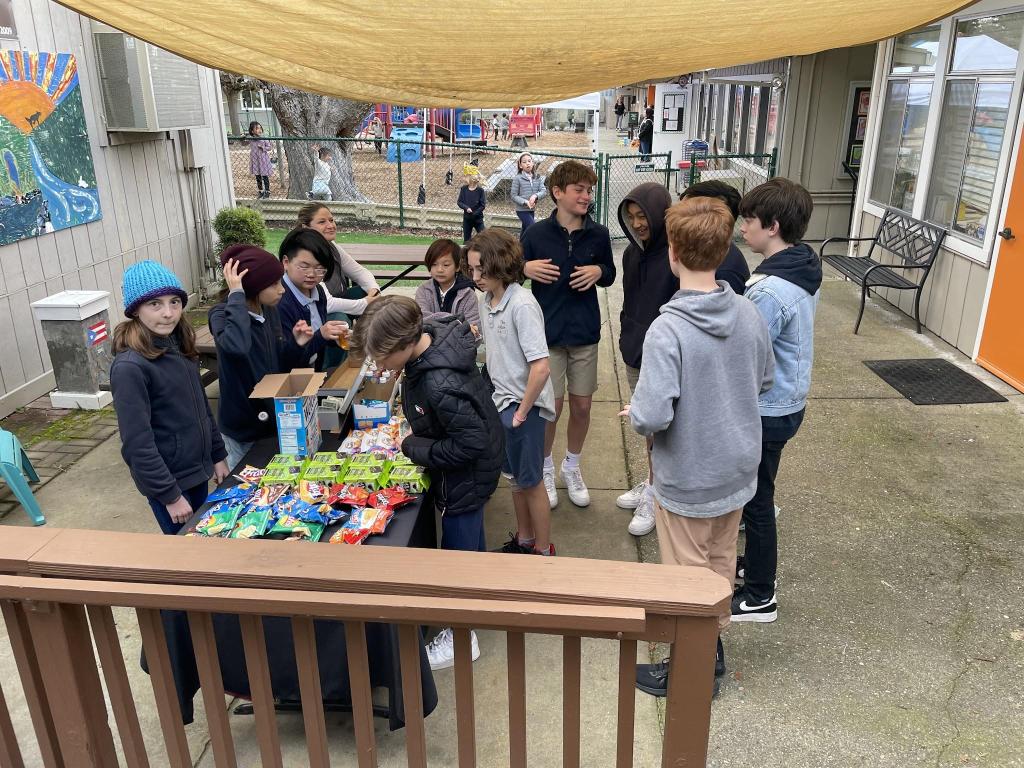
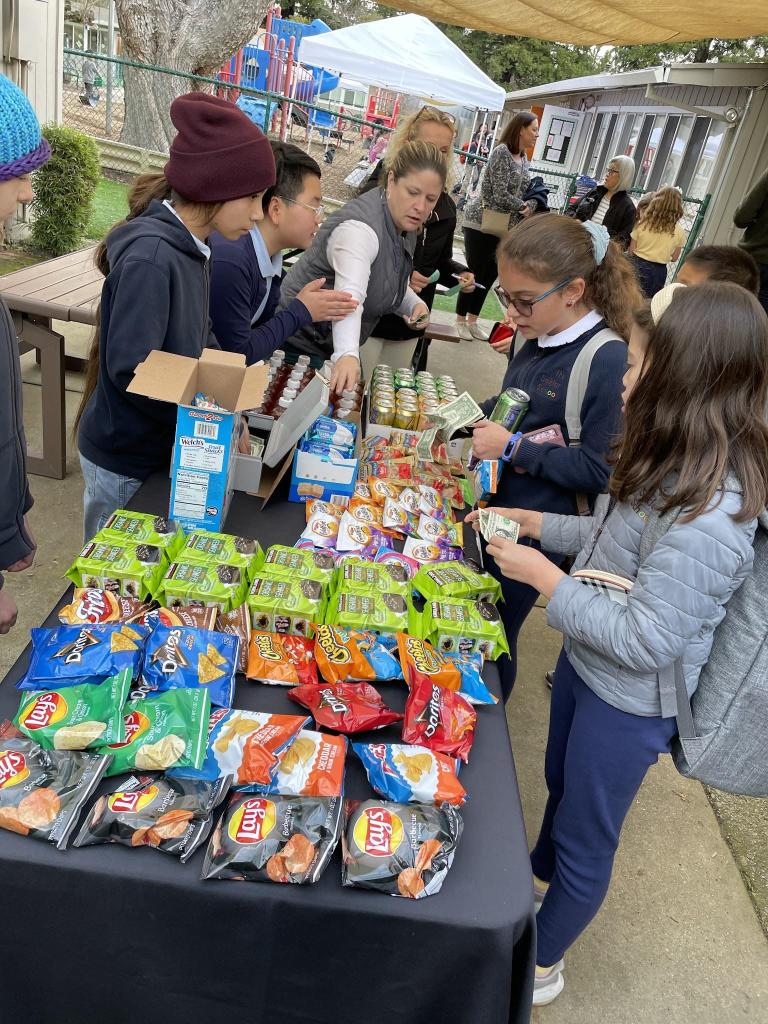
Every Saklan student knows how rewarding a snack can be at the end of a busy day of learning and having fun with one another here at school. Our dedicated and resourceful Student Council heeded the requests from the entire student body–and Snack Shack is back!

Student Council officers and representatives in grades 1 through 8 decided on the final items for sale based on desirability, minimizing waste, and being able to set reasonable prices ranging from 50 cents to $2.00 per item. Yummy snacks for sale include: gummies, chips, Hello Panda, La Croix bubble water, and Martinelli’s apple drink. The money earned from the Snack Shack will be donated to a charity chosen by Student Council (stay tuned for an update on the chosen charity in March).

Snack Shack is open outside David’s office from 3:00 p.m. to 3:30 p.m. every Thursday.  Students in grades 1 through 8 are invited to come by and purchase a snack from our hardworking Student Council members. Cash only, please. 

Thank you, students and parents, for supporting our Student Council.

Snack on!

#StudentLeadership #StudentCouncil

Learning in the Field: Hawaii Edition

Last week the 7th graders went to Oahu, Hawaii to spend the week learning about evolution: the evolution of species and the evolution of culture on the Hawaiian islands.

Students spent part of the week learning about different native animals and specific adaptations they have for their survival there on the island and with the impact of human actions, such as invasive species, farming, war and now plastic trash. To do this, they walked through the tropical forest of Waimea Falls, learned about the Dole Plantation and the pressure of having a reliable brand, snorkeled in Hanauma Bay to observe fish adaptations, and cleaned up a beach with Sustainable Coastlines Hawaii.

The second part of the week was spent looking at the impact of westerners on the island and on the Polynesian culture. Students discovered art, daily life and music of different Polynesian islands at the Polynesian Cultural Center. Then they learned about the monarchy of the Hawaiian people and the overthrow of their government while visiting the Iolani Palace. Lastly, they saw the effect of war, as they visited the resting place of the USS Arizona.

And while so much learning was going on, there was also tons of fun! From beach walks and swims to snow cones and shopping, the 7th graders were all smiles!

#SaklanFieldExperience

Species Interactions

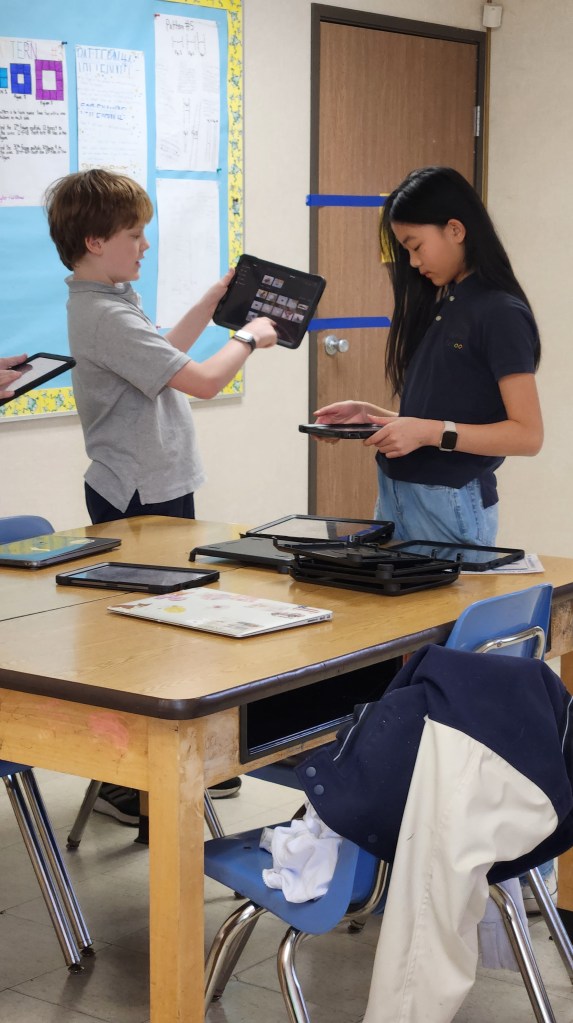
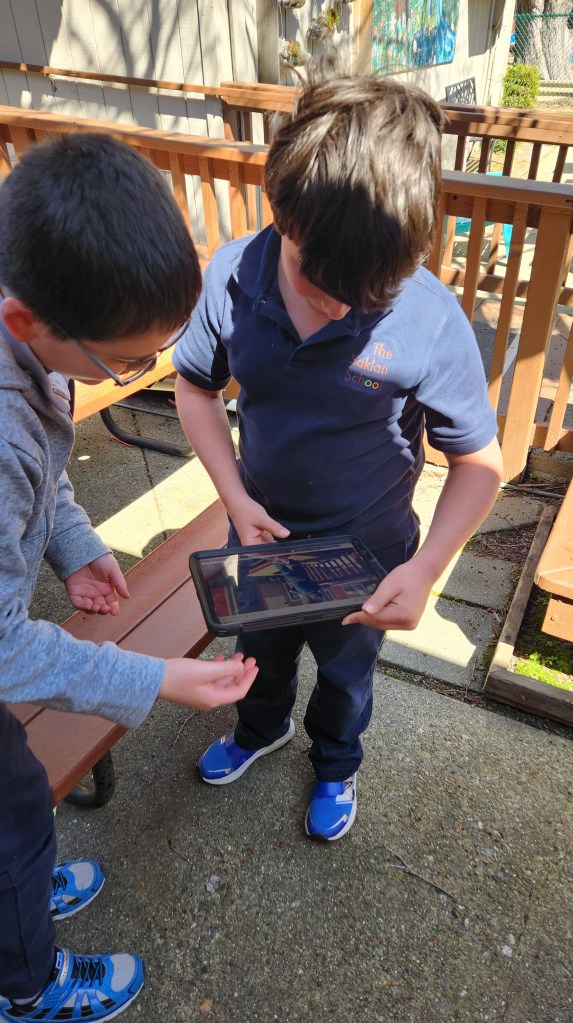
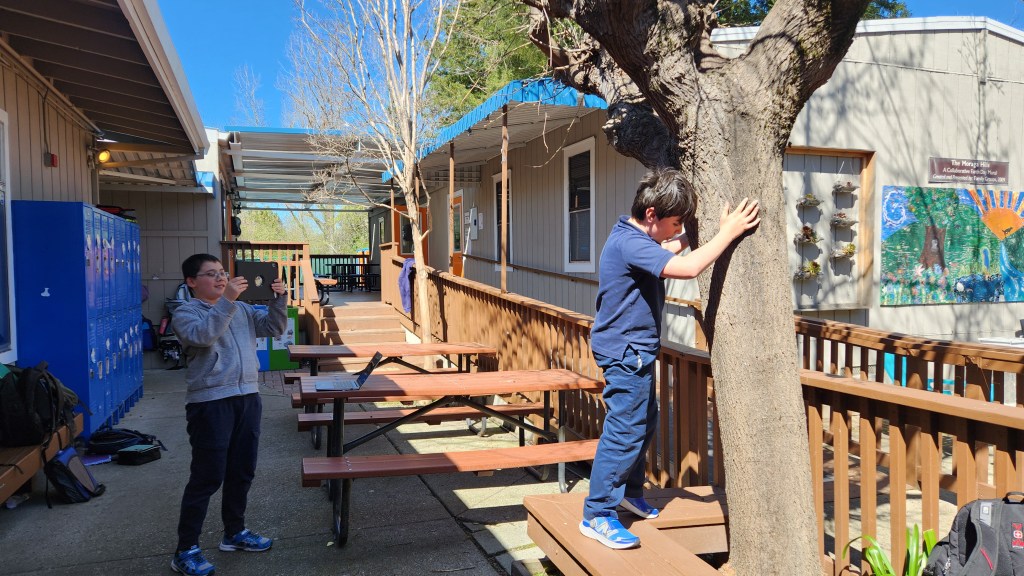
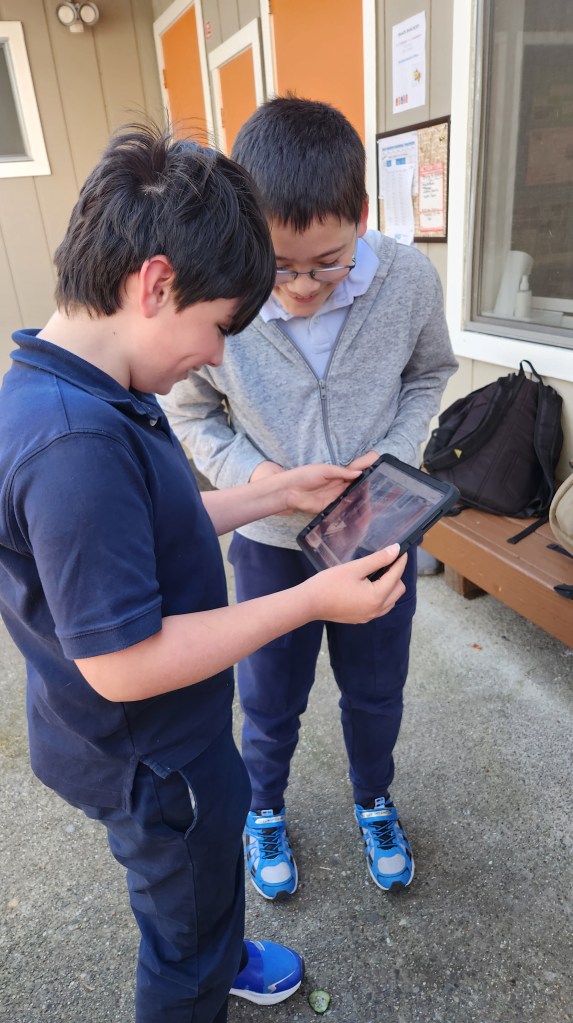
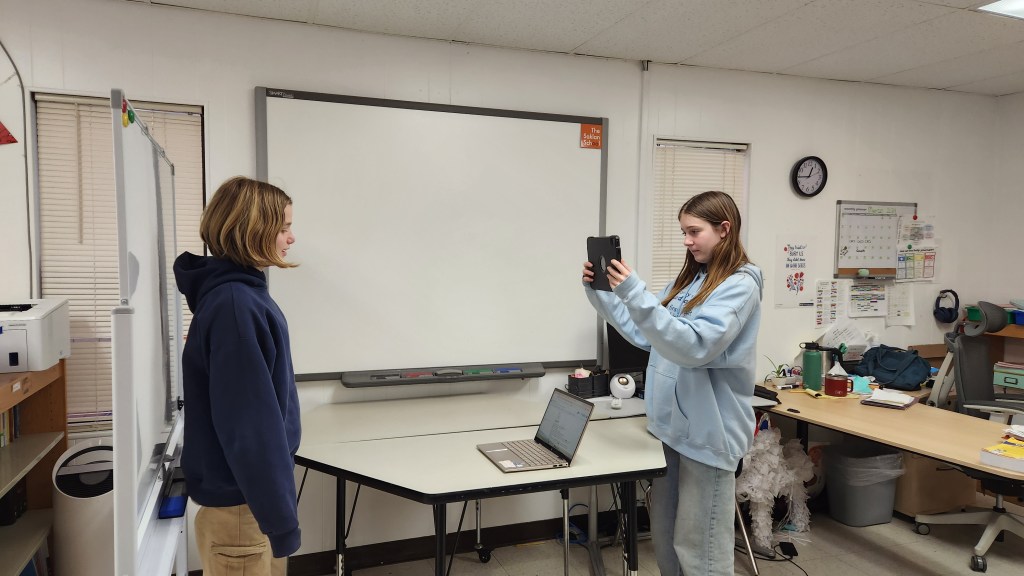
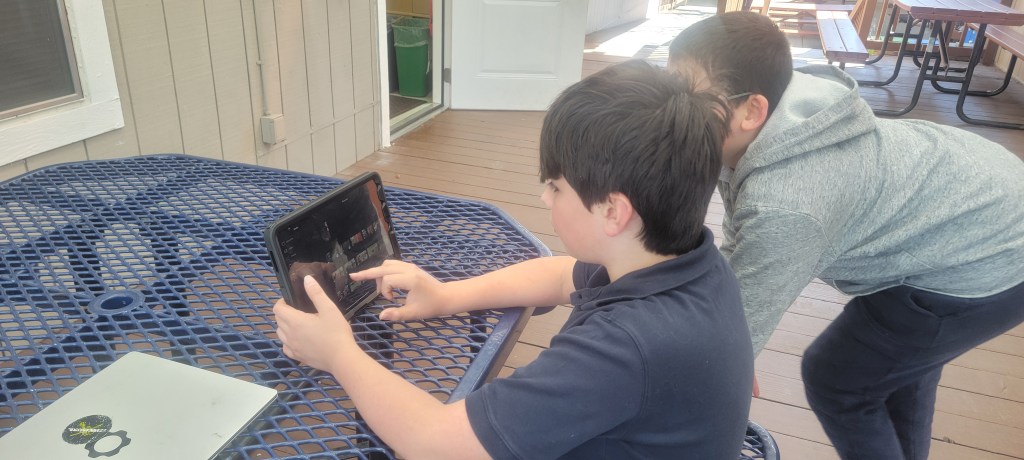
In Science, the sixth graders have been studying ecology, a branch of biology that looks at relationships among living organisms and their physical environment, and focusing on specific forms of species interactions. Working with a partner, the students were asked to portray the relationship of two species found in nature. Each group of students was tasked with taking pictures of their organisms portrayal, and then using the pictures to make a comic strip. The sixth graders used their laptops to create the fascinating comics below! 

DIY Stenciling

In January, 8th grader Astro led an LBD (Learning By Doing) 3-session course for middle school students, on DIY stenciling. Astro is heavily inspired by 80’s punk graffiti, which popularized the use of stencils in street art and clothing, and has been honing his craft of stenciling on clothing and canvas for the past 2 years. 

In his course, Astro demonstrated how to make a paintable stencil, by first tracing an image onto a piece of paper, covering it in packing tape, then carefully cutting out the “positive space” with a craft knife. In the final session, each student used the stencil that they made to paint an image onto a t-shirt or canvas. 

Although the process sounds simple, students quickly learned the challenges of cutting small details, and evenly dabbing paint onto fabric. Astro’s quick response to students in need of support demonstrated his patience, experience, and deep understanding of the art form. 

As students worked, they listened to Astro’s carefully curated playlist of 80’s and 90’s grunge and punk music. Astro did an excellent job of planning and teaching his lessons, and students were really excited to take home their new, wearable art. 

#SaklanCreative #SaklanLeadershipOpportunities