Native American Conversations

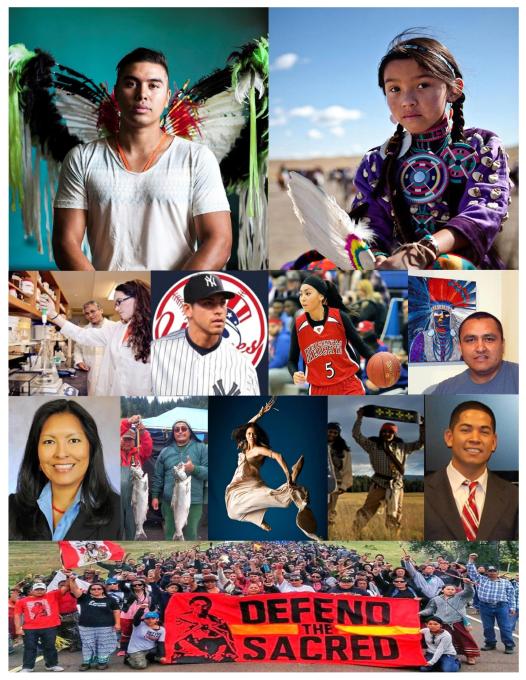
The 8th grade Humanities class kicked off the school year with a dynamic, collaborative learning experience: Native American Conversations. The objectives of this weeklong project were multifold: 1) practice personal responsibility and critical-thinking skills; 2) practice cooperation/participation and teaching skills; 3) explore a wide range of Native American “fascinating facts” across 500+ years of history; 4) ask questions, make inferences, and develop a multiple-perspective understanding of Native American cultures in North America; 5) personalize and aim to put into real-world action what was learned.
Native American Booklet Cover pic-page-001

The students first partnered up in four “expert” groups to critically analyze four distinct sections of information. Each section included a range of topics, from “Young People Then & Now” to “Diverse Languages” to “Native American Creativity” to “2016 Dakota Access Pipeline Water Protection Protest.” The students worked together in their expert groups to ensure individual understanding of the material by reading closely, taking notes, asking questions, sharing ideas, and making connections (i.e., “big picture” inferences). After this research period within the context of the expert groups, the students split into “jigsaw” groups, which comprised experts from each group. Here’s a visual (each letter represents a student): Expert Groups: AAAA, BBBB, CCCC, DDDD. Jigsaw Groups: ABCD, ABCD, ABCD, ABCD.

Each student then assumed the role of teacher. So all the A’s taught everyone in their jigsaw group what they learned about the “A” topics. The B’s did the same, and so on. In this way, all of the students had to take on the challenge of being both teacher and student—and everyone was responsible for engaging with every single topic.

After each teach-in, the students wrote reflections to articulate what they learned (observations/information/inferences), how they learned (self-analysis of how their brains connected the info and ideas), and what they’re now going to (try to) do in their personal lives with what they learned. These takeaways are where you can really see the impact of what you’re bringing into the classroom.

Here are some standouts: 1) “I will now be more resourceful and less wasteful with what I have to show more respect for the Earth.” 2) “I will now be more grateful for everything that I have.” 3) “I will stand up for what I believe in and vote when I’m able to.”

This project is an ideal introductory activity to get the students comfortable with the expectations and responsibilities of 8th grade Humanities. It brings them together as a class and demonstrates the power of solidarity. It’s also a perfect intro to the Cultural Geography Project, which is already challenging—and rewarding!—the kids in similar ways. Onward…
Geography: The Next Frontier?

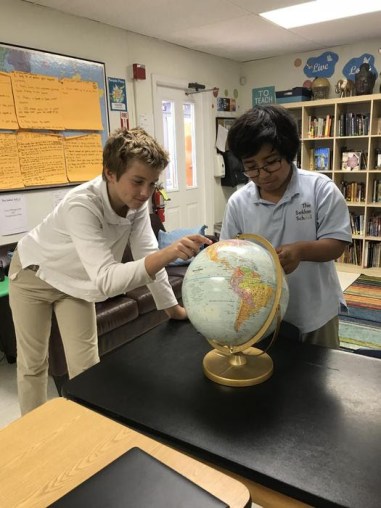
In 6th and 7th grade Humanities class, students are working on world geography. As many of you know, Americans are notoriously bad at remembering landmarks in the United States or identifying African countries. These are just a few examples of what students struggle with when answering questions about geography. I have included a link to an article that discusses students’ knowledge of geography throughout the world, but it definitely focuses on American students. 

unnamed-1

Our goal this year is that Saklan middle school students will be in that small percentage of kids that will know basic, yet important, world geography. Also, our world is becoming increasingly small due to technology. Isn’t it reasonable to expect our students to know the location of most countries in the world? As we see it, understanding world geography is a proactive step into the next frontier of learning and educating our students for a global work environment.

Currently, the 6th graders are learning all 52 of the African countries. And, the 7th graders are studying the 42 European countries. Each world region will be chosen to enhance and support our students’ knowledge in relation to their topic of study.

Remembering September 11, 2001

6th grade with sign

In 6th grade Humanities class, students have been studying the events of 9/11/01 by watching a DVD called “What We Saw.” This film was produced by CBS News. Dan Rather, a retired news anchor, narrates bits of important news coverage from 9/11 and the rescue efforts made in the following days. September 11, 2011 is the second attack on American soil, the first being Pearl Harbor. Many students know very little about the actual event because it did not happen in their lifetime. In order to understand the massive impact that 9/11 had on America and the world, students wrote questions, interviewed an adult that experienced 9/11, and typed up a one-two page response on what they learned. Below are the questions students were assigned in order to solidify the most important aspects of the project:

  • What did you learn from the interview process?
  • How did this particular perspective add to your knowledge or view of history or of the event?
  • In what ways was your interviewee biased or not? Why?
  • How do you think the world has changed since 9/11/01?
  • How has the interview made you feel about the event? The United States? Other countries?

We are fortunate that Mr. Greg Ruppert, an 8th grade student’s father, was one of the lead FBI investigators on researching the financial funding of the 9/11 terrorists. He is coming to speak to Saklan’s sixth and seventh grade classes on Monday, October 1 from 12:45-1:45 pm. Parents are invited to come see Greg speak about his experience in following the technological money trail and how this helped catch some of the responsible parties.  Please send an email to kparks@saklan.org if you are interested in attending Greg’s presentation.

Family Groups


This slideshow requires JavaScript.

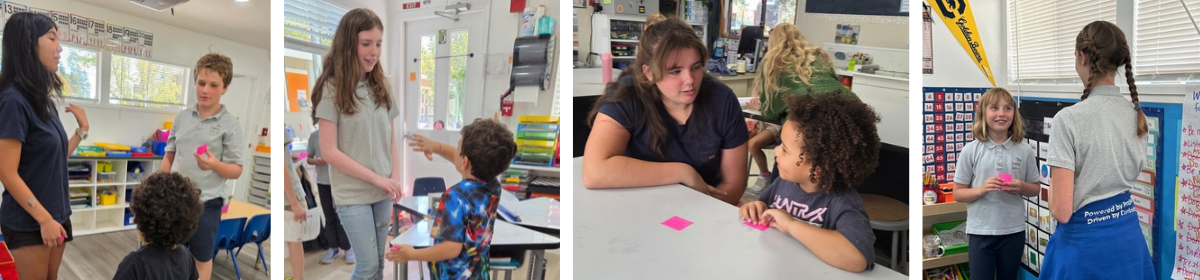
This month, Family Groups discussed collaboration: working as a team, taking turns, listening to ideas, doing your best, and encouraging others. Students read the book: The Dot, where a girl is encouraged to find out she is actually a great “dot” artist. She ends up encouraging others to find out what they are good and what they bring to the community. Students were then asked to create their own dot with something they are good at and bring to their community. Each family group worked together to build paper and sticky dot towers.

Middle School Advisory Starts with a Fun Activity

For the first two Advisory periods this year, the middle school students were challenged to a special ice-cream contest.

First, they had to think up as many different flavors as they could. These ranged from delicious sounding caramel and cookie dough or all grape skittle ice-cream to the more acquired tastes of Halibut or black olive. After this sustained creativity session, the kids had to think up three or four flavors per advisory that they wanted to make and try.

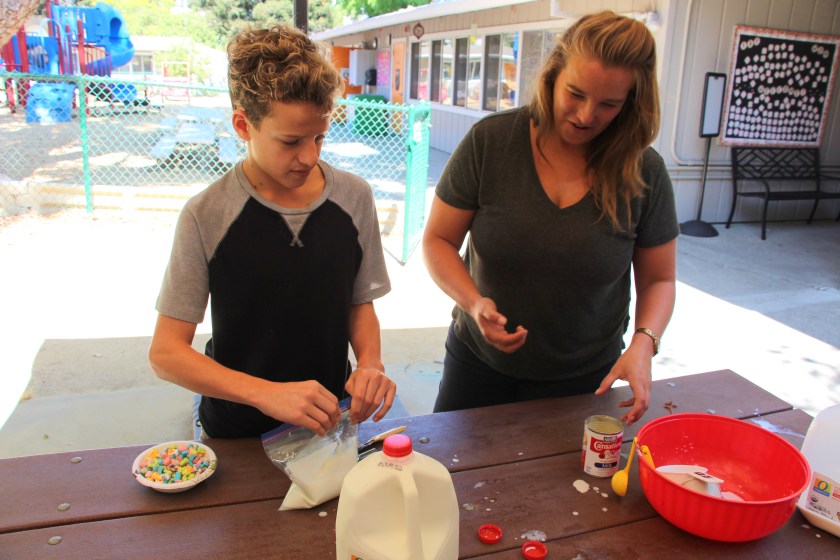
The next Advisory period consisted of making the ice cream the old-fashioned way, by hand. The middle-school students filled zip-lock bags with milk, sugar, and whatever flavoring they chose to make. They then put these sealed bags in a larger zip-lock with rock salt and ice. After ten minutes of shaking, the milk froze and ice cream was made.

Ms. Shay, Mr. Javier, and Mr. O’Connell helped judge which flavors best fit the four categories, Most Creative, Surprisingly Good, Most Surprising Overall, and Most Courageous.

The winners of ice cream creation contest were:

Most creative flavor – The judges were wowed by this amazing combination, Strawberry basil. It was made with fresh chopped strawberries, basil picked this morning from Lindsay’s garden, and a sprinkling of lemon and lime juice. C’est magnifique!

Surprisingly Good – Danny’s Whole Hog Ice Cream contained no hog whatsoever. It was inspired by a Winnipeg, Canada cater and was a combination of dragon fruit, smoothie, San Pellegrino soda ice cream, mango, and caramelized lemon made separately and then lovingly combined in the exact right percentages.

Most Surprising overall flavor – Canadian Max’s Special – This expertly mixed confection consisted of toasted eggo waffles, real Canadian syrup, and melted butter! Yum!

Most Courageous – This ice cream was the big winner and would have won 3 of the four categories.  BLT ice cream made with homemade bacon, real heirloom tomatoes from Clark’s garden, and fresh lettuce. The Judges raved, “ Wow! That’s good” and “Yum!”

Honorable mention – Spicy Chocolate ice cream was artistically arranged in a Gordon Ramsay type ramekin of ice cream, gently broken cone, and soft, white marshmallow.

Earth Day

This slideshow requires JavaScript.

This week, we celebrated Earth Day with a series of activities at school that involved our Family Groups. The program included a presentation by Classroom Safari – an educational and entertaining adventure into the wild. The animal ambassadors shared interesting facts about the animals diets, enemies, and special adaptations that help them survive. The students were excited about learning conservation and seeing animals from around the world. After the presentation, the students in Family Groups discussed what the idea of Responsibility has to do with animals and Earth Day.

Earth Day was organized by our wonderful Science Teacher, Vickie Obenchain, and supports our program of environmental education to make Saklan students aware of the issues that are confronting our planet.

Sighting and Angle of Elevation

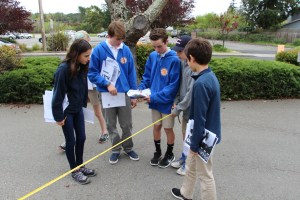
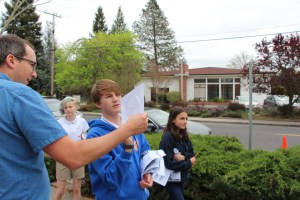
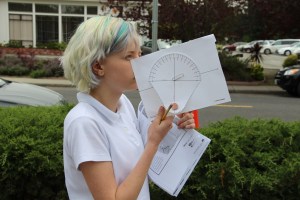
In seventh grade Algebra, the students used Slope-o-meter to measure the slopes of inaccessible objects with a method called sighting.

To find the slope of the roof of the building next door to Saklan, the students held out their Slope-o-meter and lined up the bottom edge with the slope of the roof. Then they sketched the slope and recorded their measurement. Thank you for another fun lesson Mr. Zippin!

EF Tours Trip to Iceland

DSC01570

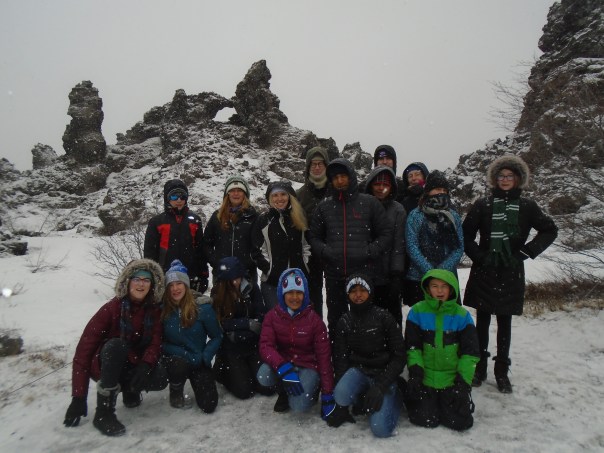
During Spring Break, Miss O and Ms. Parks lead an EF Tours trip to Iceland with 15 participants. It was a beautiful week filled with geothermal wonders – hot springs, volcanic craters, and subarctic fauna. The students traveled to the Gullfoss waterfall, saw the famous black-sand beaches of Vic and the Lava Centre in Hvolsvollur.

Japanese Exchange Students

Yesterday, 15 Japanese exchange students and 2 teachers from Shanon Seminar School spent the day at Saklan!

This slideshow requires JavaScript.

In the morning they were paired up with our 7th grade students. Our 7th graders presented PowerPoints about American culture like sports, music, food, etc. The Japanese students then shared family stories/experiences of World War II which tied in perfectly with the 7th grade history curriculum. Both groups participated in a Science class together and ate lunch together.

After lunch, the Japanese exchange students spent time with the Kindergarten and first grade classes, making origami and playing. “This was the best day of the year!” said one enthusiastic first grader at the end of the day!

Hopefully this is just the first of many global exchanges to come to Saklan!