The Power of Gratitude

As we head into Thanksgiving week, I, like many of you, have been thinking about the power of gratitude. We get so busy that it is easy to miss all the opportunities to be grateful. The research clearly points to the fact that sharing gratitude has as much a positive effect on the giver as it does on the receiver. We routinely practice and model gratitude in our classrooms with students but sometimes forget to do it as adults. That being the case, I thought I would take a moment to share some gratitude. 

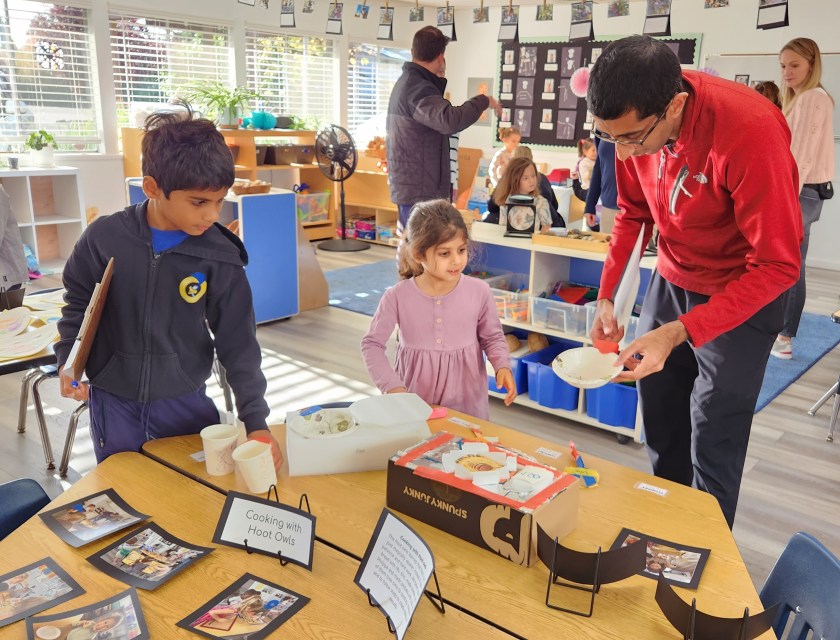
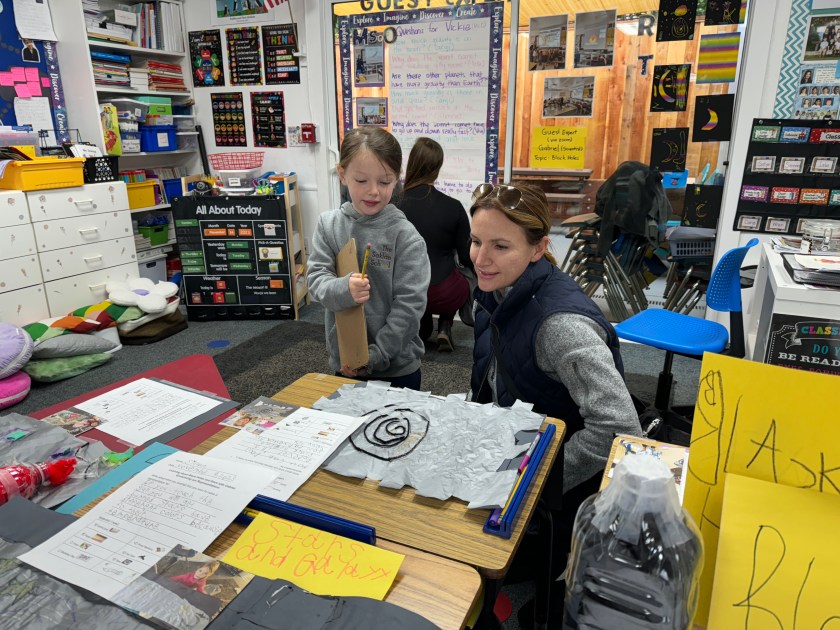
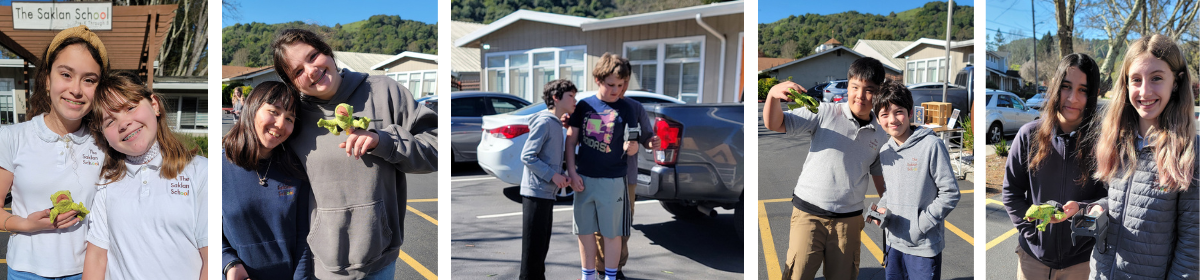
  • I’m grateful for all the Grandfriends who joined us for our Grandfriends’ Day this morning.  Their presence in the lives of our students helps students become more compassionate, courageous people.
  • I am grateful that our community is built upon the values of kindness, belonging and empathy.
  • I’m grateful for a parent community that is supportive of the work we do here at Saklan, to the point where we have reached 78% AGF participation. 
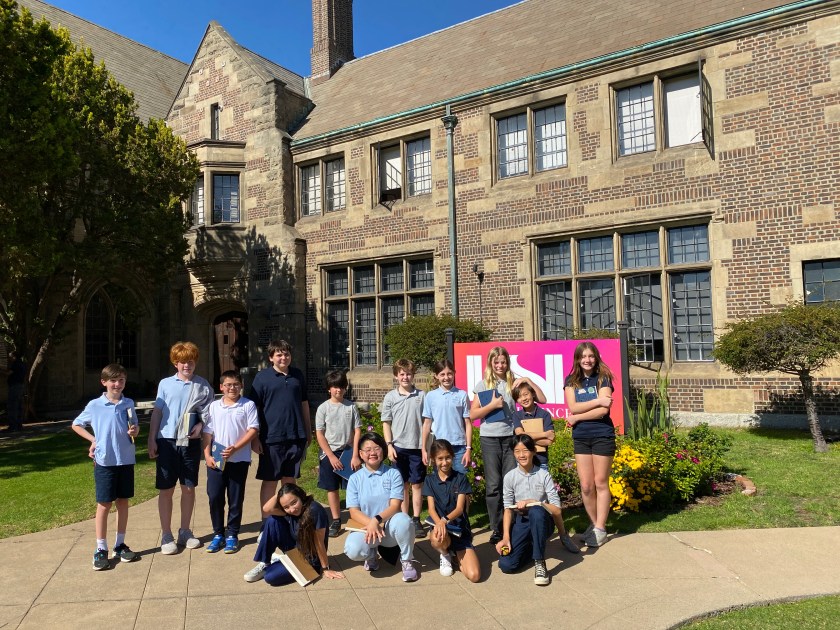
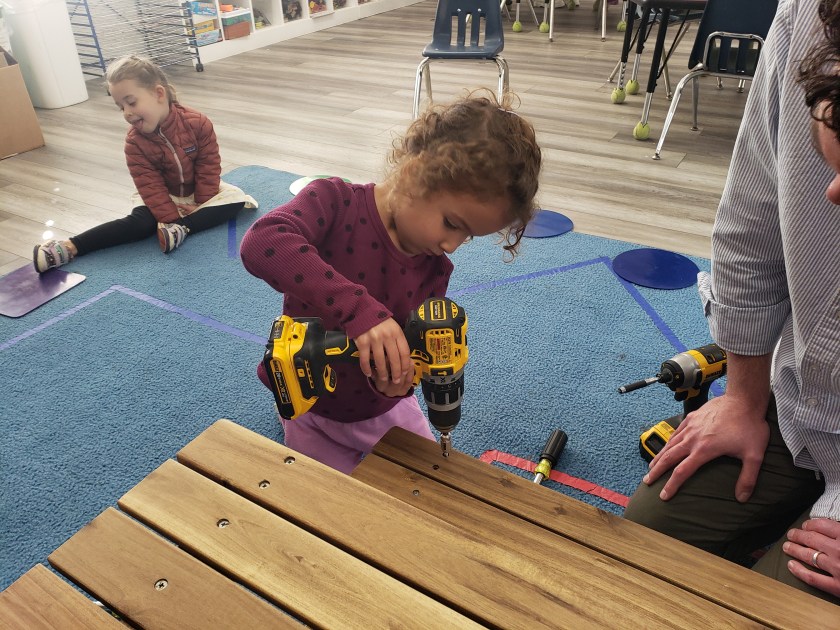
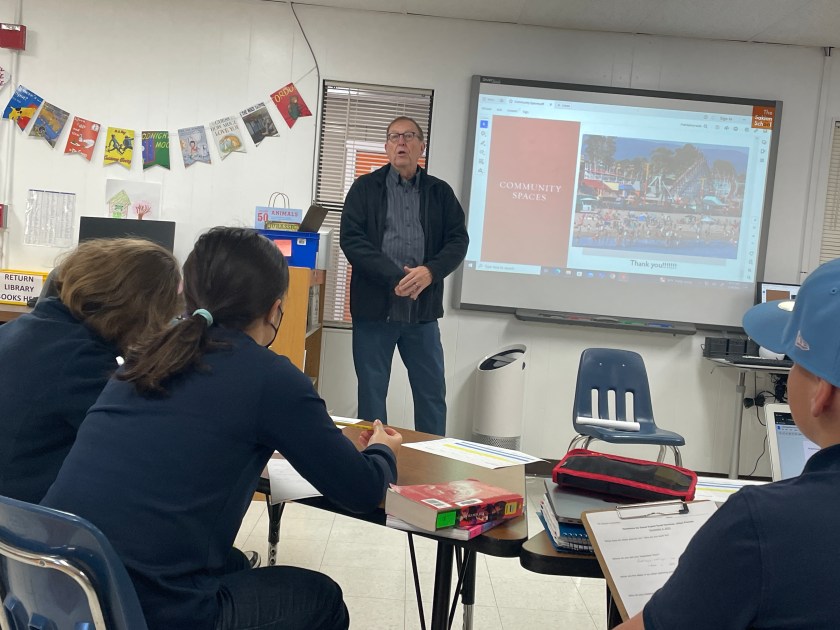
  • I’m grateful for working with faculty and staff who love children and have embraced project-based learning. In the first 12 weeks of school, they have run 12 projects, invited over 35 guest experts onto campus and taken students on over 25 field experiences. 

Lastly, I am grateful to be able to take next week to slow down, spend time with my family, and truly appreciate how fortunate I am.  

With gratitude,

David  

Getting School Right

A couple of weeks ago, Adam Grant wrote an opinion piece, “What Most American Schools Do Wrong,” in the New York Times. The article speaks to our typical approach to education that does not leverage two critical tools teachers have in helping students excel. His discovery of the tools comes after examining why countries like Finland and Estonia consistently outperform other bigger and richer countries.

The tools: knowledge of students and relationships. Not testing, not longer school days, not increased homework.

Grant speaks of the power of “looping” – the practice of teachers moving up a grade level with students. The effect is teachers have a profound grasp of a student’s strengths and challenges and a nuanced understanding of each student. They can then take that understanding and build a meaningful relationship with the student while uncovering the hidden potential of each child. 

What Grant is hitting on, though, is how big of an impact seeing each student as an individual can have on their educational journey. At Saklan, our small class sizes and focus on relationships allow us to take “uncut gems” and see “beyond the surface and recognize the brilliance beneath.”  

There is no secret to helping students love learning and excelling academically. It starts with focusing on the person before you and building the relationship; from there, challenging them academically and helping them reach their full potential comes naturally. In other words, one can’t Bloom until you Maslow.

#SaklanConnected #SaklanHeadsCorner

Working Together

Be curious, not judgemental.

Walt Whitman

This quote (recently made famous by Ted Lasso) replaces an old favorite of mine: “If you only believe 50% of what your children say about us, we will only believe 50% of what they say about you.” While the quote is tongue-in-cheek, it emphasizes that misunderstandings can occur between home and school when we only understand one perspective. But it does not ask us to be curious and learn. When it comes to raising good people (the children we share), we need to be curious and suspend judgment.

Yesterday, as a faculty, we spent time talking about parent-teacher conferences. One of our conversation points was delving into the anxiety all participants (yes, even teachers) can feel during these meetings. As we prepare for conferences, it is essential to remember that we (parents and teachers) have the same goal in mind: to help young people grow to become fulfilled, self-actualized adults. This work is complicated and bumps in the road are inevitable, but our children benefit when we remain curious and work together. 

Please keep this in mind next week as you discuss your child’s progress at conferences. We are a team and we look forward to sharing your child’s glows and grows with you.

In gratitude,

David

#HeadsCorner #SaklanCommunity

Pathways to Success

“Do as I say, not as I do”

Betty O’Connell

As a child, I did not appreciate my mom’s words about the misalignment between her values and actions. It just sounded like a way for an adult to make a child do something they were not doing. After last week’s webinar by Challenge Success, I can see my mom was on to something many families struggle with. 

For those of us who attended The Well-Balanced Student workshop by Laura Easley of Challenge Success, there were some “ah ha” moments as many of us realized we are a bit like “my mother.” Our actions do not always match our “stated” values, and our children can be confused and stressed by this misalignment.  

One of my takeaways from the webinar was how much children believe the path to success is a straight line from school to a successful career and happiness. As adults, we understand that life is full of mistakes, and they help us grow as people, build resilience, and open new opportunities. Children overwhelmingly believe one must get good grades to get into an excellent university to have a successful and happy life. 

But life is more like the path below, failures, u-turns, and redo’s. 

80% of adults report that their path to success and happiness is similar to the squiggly line, but the message that children internalize is that the only way is the narrow path. 

More importantly, though, the webinar drove home the importance of PDF: Playtime, Downtime, and Family Time. Challenge Success does a great job defining what makes each of these “times” highly effective in creating a healthy family and children. Take a moment to check out their tip sheets here

Lastly, for further resources, you can check out the Challenge Success Resource Center, which has plenty of excellent tips and information on healthy children and families. 

In partnership,

David

If you would like to view a recording of the webinar, click here

Why Is Accreditation On My Mind?

This past week, I was in Merced for three days, evaluating the work of a small private school. From going into classrooms or talking with parents to examining their financial practices and playing Dodgeball with their students- I (and a team of three others) were “in their business.” 

Our work was to examine every aspect of the school, assessing if they were in alignment with their accrediting body as well as fulfilling the promise of their mission. The school had submitted a 160-page report reflecting on its practices and culture. Our job was to see how accurate their self-reflection was, give feedback, and help them set goals for the next six years.  

Saklan is in the middle of that accreditation process right now. Over the past nine months, the faculty and staff have been working on our own California Association of Independent Schools Accreditation Self-Study. The report will be submitted in December, and there will be a team of 4-5 accreditation members visiting Saklan for four days in March. Once they visit, they will submit their report with “notable strengths” and recommendations for improvement. 

They examine not just how well we are doing in the areas of teaching and learning but also whether our culture is in alignment with our mission and core values. Do our financial practices and governance follow best practices? Do we have a process for continual improvement? And lastly, have we been honestly self-reflective in our self-study report? 

The process is intense and exhausting but also validating and rewarding. It helps us understand our strengths, but also where we need to improve. It is an exercise in self-reflection and learning- which is what we are about. I look forward to sharing our school with the visiting committee in March, as I am so proud to be part of this community.

Sincerely,

David

#HeadsCorner

Head’s Corner: Survey Says…

At Saklan, we Maslow in order to Bloom. 

Last Spring, we ran two surveys. The first was a Belonging Survey we did with students (grades 2-8), parents, and teachers. The second survey was given to the parent community, asking them to reflect on their family’s overall Saklan experience.

The surveys provided valuable insights into our strengths and areas of potential growth. The findings consistently highlighted that fostering a strong sense of belonging is at the core of our identity and valued by our community. Of everything to digest, though, one of my biggest takeaways was how well we  “Maslow in order to Bloom .” 

Any first-year education student is familiar with Bloom’s Taxonomy. His hierarchy applies to learning, moving from the most basic recall level and progressing to synthesizing and creating.

While the lower levels of the hierarchy are foundational, it is the upper levels where we want to take students. It is where learning is most exciting and why Saklan focuses on deep and meaningful project work.  It also happens much more deeply if students feel they are in a safe place to make mistakes and feel connected to others.

Hence, the importance of Abraham Maslow and his Hierarchy of Needs. In short, Maslow emphasized how vital our basic needs are. Maslow believed that mental well-being starts with ensuring food, shelter, and safety. Once those are secure, feeling love and belonging become the foundation for reaching our full potential. 

That foundation of belonging is an accelerant to rich and meaningful learning. In other words, you can’t Bloom until you Maslow. This is the core of who we are at Saklan and why we do what we do.

#HeadsCorner

Head for the Day

It’s been a fun, bright, sunny morning at Saklan; Spring is finally here! I had the privilege of visiting lots of classrooms and noticed many good things. This reminded me of the connections made here at Saklan and how we reinforce them every single day. 

During Morning Meeting, all of the students were listening, paying attention to each other, and using kind, inside voices. In Humanities, I recognized that the 7th graders were collaborating with their table groups and participating respectfully in the discussions. During CLASY, the lower school students were doing fun activities in mixed ages outside. Everyone was smiling and working together.

My time walking around campus this morning made me reflect on some of my favorite Saklan experiences. One of the highlights from this year was the Family Group World Cup. Family Groups played soccer games against each other during lunch recess. It was so fun to cheer on other people, and it brought the whole school together!

Another fun thing that we do at Saklan is the All-School Concert. It’s where all the kids have an opportunity to use their voices to sing, play instruments, and have a fun time. Even the preschool students get to be on stage and participate!

Field experiences are a great part of Saklan because it helps make connections with what we are learning and with each other. One of my favorite field experiences is when I went to Coloma. It was fun because we had a lot of activities and got to tell spooky stories in the cabins. It bonded our class together.

This is what makes Saklan such a great place. Thank you to the teachers and staff members for all that you do!

Sincerely,

Natalie

SaklanConfident #SaklanConnected #HeadsCorner

Cross-Generational Joy

Some 50ish years ago, Grandpa Schulte taught me how to throw a baseball and would take me to Tiger games. The seats were as lousy as the Tigers, and I never became Aurelio Rodriguez. Grandpa O’Connell let me drive his rusty red tractor around the farm and taught me how to play poker (to my mother’s chagrin). There is not one living plant in my house, and I gave up thinking I would profit from cards long ago.  

Grandparents have a unique ability to provide love, support, and guidance that is different from that of parents. They have the bandwidth to validate children’s feelings and offer patience and understanding when things get tough. They savor every moment they have with children, knowing that their time together is limited.

Which brings me to Grandfriends’ Day. A core value of Saklan is the power of experiential learning. Today our grandfriends enjoyed a field experience into our students’ lives. They had their hand taken and were led into a world of education different from what they knew as a student. They engaged in morning meeting activities that emphasized connection and cross-generational understanding. They gained insight into a child’s life through The Saklan Art Show. They held conversations about project and field work that helped grandfriends understand what makes Saklan exceptional. 

But most importantly, Grandfriends’ Day gave someone in their lives an opportunity to share what is important to them. They were able to learn from, validate, and bond more deeply with a special person in their life. And that, at the end of the day, is what matters most.

To those that were able to share your grandfriends with us today, thank you. It was a pleasure to witness the cross-generational joy and light being spread around our campus. 

With gratitude,

David

#HeadsCorner #SaklanGrandfriendsDay

Hope and Joy for our Future

Thinking back on my own elementary school experience, what stands out to me is rote repetition, memorization, and regurgitation. Not much thought or research was put into what or how we were taught; it was just the way it always was.

As I wander through the classrooms here at Saklan now, even in the preschool where my own daughter has the privilege to explore, I am struck by how much more inspiring, fun, and memorable school is for these students. And that gives me so much hope and joy for our future.

Learning at Saklan is interactive, collaborative, mindful, relevant, and thought provoking. And now, more than ever, it is being infused with more Project-Based Learning. I am so proud to see how that has been changing the way the students see their role in learning and in the greater world.

In one short year, Project Work has led to exciting changes at Saklan. There is a buzz that was reflected in the success of the fund-a-needs presented at last Saturday’s auction. In order to continue and enhance their Project Work, teachers have responded with specific requests. 

Grace spoke about the power of professional development and how her past experience with the Broadway Teachers Workshop in New York City reconnected her to her 13 year old self in a way that allowed her to further connect to and inspire her students. 

Lauren spoke of her passion for bringing media arts literacy to our students, through digital art and graphic design learning tools that will apply across subjects and grade levels, helping students produce and share final products with the wider community. 

Peta reminded us how much design and architecture can influence the learning environment.  She asked for support in redesigning her classroom to integrate furniture that promotes collaboration

If you are as inspired as our teachers are and would like to donate to these initiatives, you can make a gift here. We thank you for your support.

In gratitude,

David

The Power of a Single Individual

On September 20th, 2017, Hurricane Maria struck Puerto Rico with 155 mph winds and 40 inches of rainfall. The small community of Villa Del Rio was impacted like much of the island; houses blown off foundations, roofs torn off, down trees making roads impassable, and no running water or electricity for months. For Villa Del Rio, the worst thing may have been the isolation. For eight months, no one from the U.S. or Puerto Rican Government showed up to help. The community of Villa Del Rio was on its own. That meant rebuilding houses, fixing power lines, clearing roads, and sourcing clean water. It meant putting the community’s needs before the individual’s. 

There are so many things that we want our 8th graders to take away from their service learning field experience in Puerto Rico. The confidence from succeeding in an environment well outside their comfort zone. The reward of doing hard manual work shoulder-to-shoulder with those rebuilding their lives. The understanding that even in a community that has lost so much, generosity, kindness, and warmth are still a key part of the social fabric. 

But the stories from people like Angel created the most significant moments.

Angel and his wife Maria were one of the founders of Villa Del Rio. He and his family had homesteaded in a tent for years until the Puerto Rican government issued land deeds. As a carpenter, he built his house from the ground up and raised his family. On September 20th, 2017, Hurricane Maria ripped the roof off his house and drenched his family’s possessions.

After the hurricane, Angel and his family lived under a flimsy blue tarp that covered what was once a beautifully crafted wooden roof. While Angel could have chosen to repair his roof after the storm, he saw others in his community that had greater need. Over the next four years, Angel used his carpentry skills to help his neighbors pick themselves up and rebuild while still sleeping under a leaky tarp roof. It was only when GlobalWorks insisted that the next project be his home that the tarp was replaced with a concrete roof. 

To work alongside people as selfless as Angel was transformational. It was a masterclass in the power of gratitude, love, and putting others first. Most of all, though, it was a life lesson in the power of a single individual to make the world a better place. 

With gratitude,

David

If you’d like to learn more about our students’ experience from their perspective, click here.

#HeadsCorner #SaklanFieldExperience