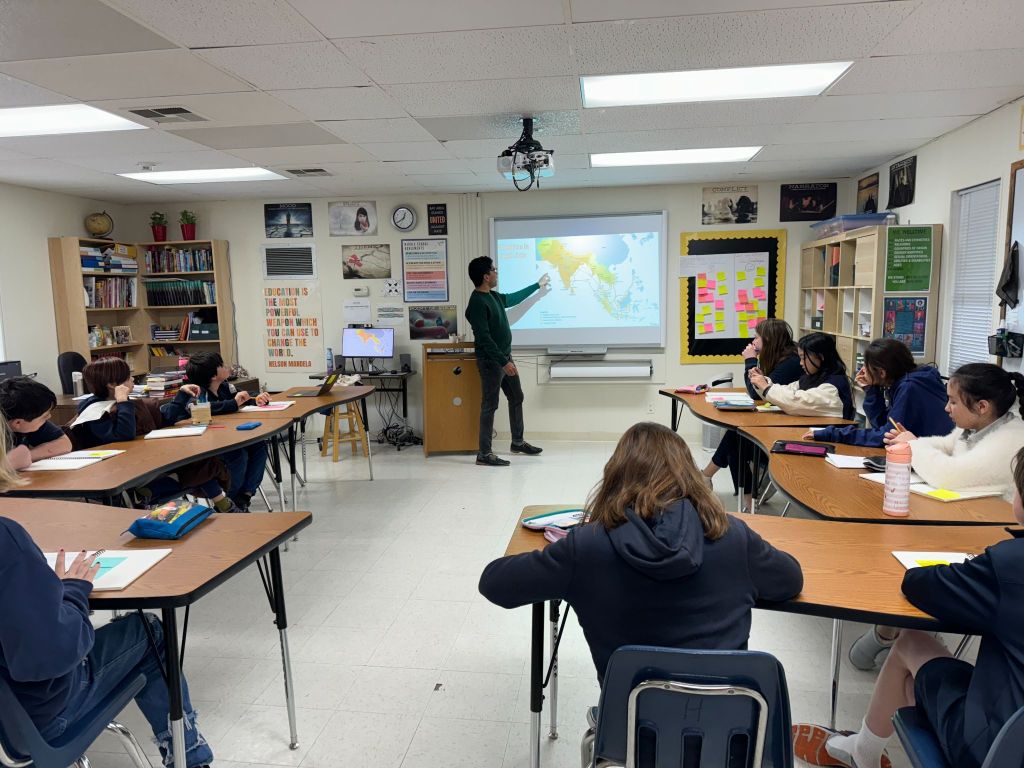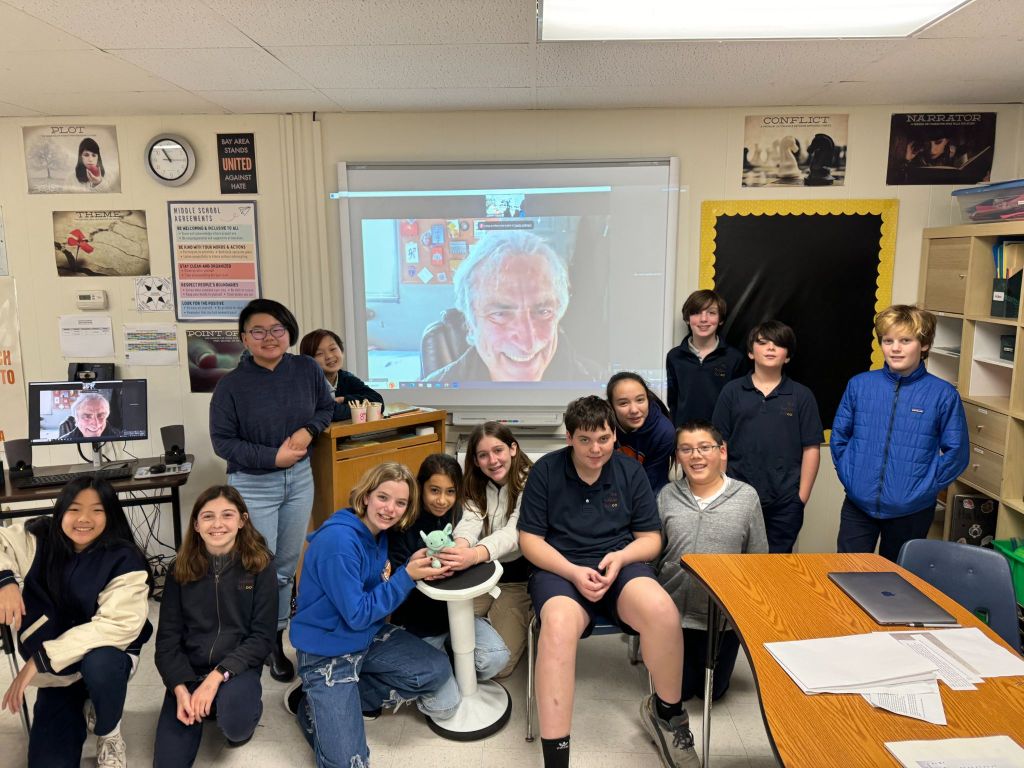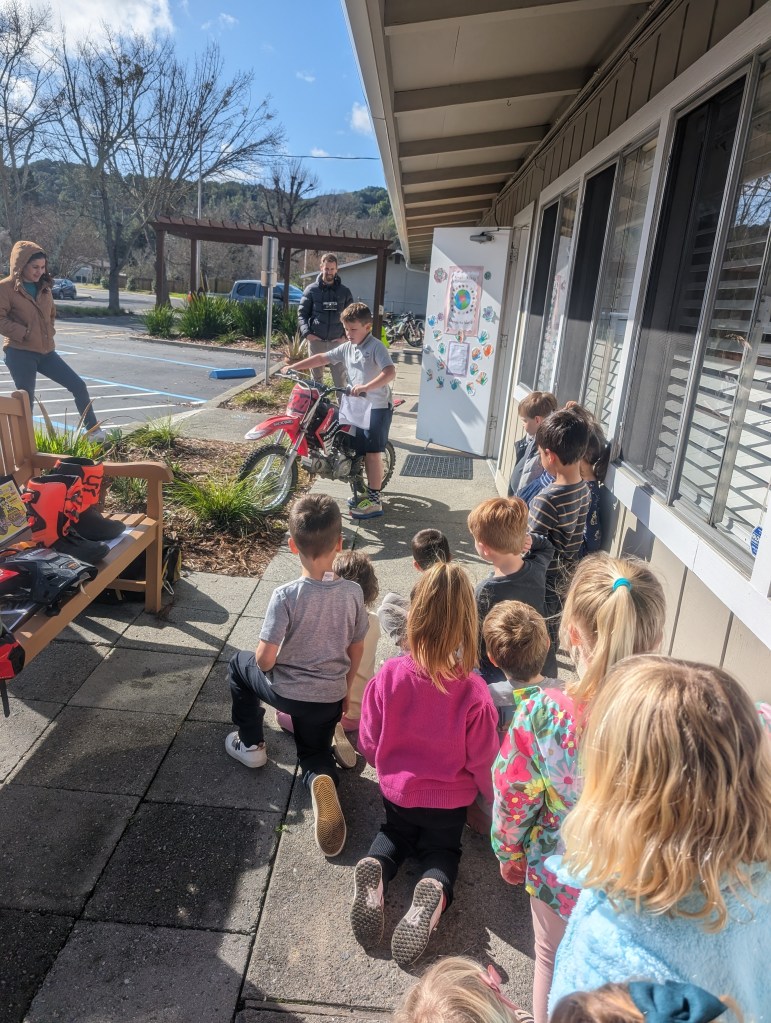
In Science, the sixth graders have been studying ecology, a branch of biology that looks at relationships among living organisms and their physical environment, and focusing on specific forms of species interactions. Working with a partner, the students were asked to portray the relationship of two species found in nature. Each group of students was tasked with taking pictures of their organisms portrayal, and then using the pictures to make a comic strip. The sixth graders used their laptops to create the fascinating comics below!
Author: The Saklan School Friday Blog
Summer Registration Now Open
A summer of creative exploration awaits your child during Summer@Saklan! This summer, camp will run in one-week sessions from June 17th – August 2nd, and is open to all children ages 3 – entering 3rd grade. Each session of camp consists of fun art and science-related activities including: art, crafts, cooking, science experiments, games, and more. Additionally, Friday afternoons will feature fun activities including water play, a bounce house, and special guests such as a magician or puppeteer. Summer@Saklan is sure to be tons of fun!
To learn more about Summer@Saklan 2024, check out the summer webpage today!
We look forward to another amazing summer of hands-on learning, growing friendships and lots of fun!
Beyond Dessert: Saklan’s Rich Recipe for Project Based Learning
Last week, I attended a Trustee and Heads of School conference hosted by CAIS (California Association of Independent Schools). As I spoke with other heads of school, I could not help but brag about the project work our students are doing at Saklan. One of my many takeaways from these conversations was how often the term Project Based Learning (PBL) is misused.
These conversations led me to start to think about a litmus test for what real PBL is and what it is not. The questions below only begin to scrape the surface, but I hope they help define what we at Saklan mean by Project Based Learning.
Is the learning rooted in a driving question that has relevance for the students?
At Saklan, we start our project work with a simple yet powerful approach: Each project begins with a question that resonates with the interests and real-life experiences of our students. This method ensures that each project is not just a learning task, but an exploration of students’ wonderings.
What “fuels” the project?
Student questions and curiosities steer and fuel our project work. We see our role as facilitators, guiding them through their learning journey, but allowing their questions and ideas to lead the way. This student-centered approach ensures that learning is more engaging and meaningful, as each student connects personally with the subject matter.
Does the project reach beyond the classroom and into the real world?
We believe that authentic learning breaks the boundaries of the traditional classroom. By integrating field experiences and interactions with experts, our projects gain depth and relevance. These real-world connections are crucial, providing practical insights and inspiring students to delve deeper into their subjects.
Is the outcome meaningful and public?
The culmination of our project work is designed to extend beyond Saklan’s walls. Students present their findings and creations to authentic audiences, often emphasizing the importance of civic participation. This approach teaches them that their work can have a significant, real-world impact through a myriad of avenues such as exhibitions, educational presentations, or published work.
True project based educators often talk about a project being either a dessert (fun, tasty, empty calories) or a main course (nutritious, substantial, and enjoyable). The questions above are a litmus test of how to distinguish one from the other. At Saklan, we are moving beyond dessert and focusing on the main course.
#HeadsCorner
DIY Stenciling
In January, 8th grader Astro led an LBD (Learning By Doing) 3-session course for middle school students, on DIY stenciling. Astro is heavily inspired by 80’s punk graffiti, which popularized the use of stencils in street art and clothing, and has been honing his craft of stenciling on clothing and canvas for the past 2 years.
In his course, Astro demonstrated how to make a paintable stencil, by first tracing an image onto a piece of paper, covering it in packing tape, then carefully cutting out the “positive space” with a craft knife. In the final session, each student used the stencil that they made to paint an image onto a t-shirt or canvas.
Although the process sounds simple, students quickly learned the challenges of cutting small details, and evenly dabbing paint onto fabric. Astro’s quick response to students in need of support demonstrated his patience, experience, and deep understanding of the art form.
As students worked, they listened to Astro’s carefully curated playlist of 80’s and 90’s grunge and punk music. Astro did an excellent job of planning and teaching his lessons, and students were really excited to take home their new, wearable art.
#SaklanCreative #SaklanLeadershipOpportunities
A Lesson from Toothpaste
On Monday, Saklan’s 1st – 8th graders gathered in Family Groups to discuss January’s SEL focus, being respectful. The students shared what being respectful feels, looks and sounds like.
Each family group leader placed a large R on a note card, representing Respect, and then talked about what respect looks like when it comes out of one’s mouth, including the words, tone, facial expressions and even body language. Next, a volunteer squeezed toothpaste on the R to help freshen it up. Then, the volunteer was surprised to learn that the R actually stood for Rude, and was asked to put the toothpaste back into the tube – a near impossible task, just as taking disrespectful and hurtful works back can be. The families then discussed how to clean up such a mess. Groups talked about making an honest apology, checking in with the person to see what they need to feel better, and finding ways to do better in the future.
The 8th graders then shared that respect often comes when people feel like they are seen and know one another. Students then each added items to a snowflake to represent them and their interests, and then shared them with their family group, to learn more about each other. The snowflakes are now hanging on the bulletin board by the entrance to Saklan; check them out to learn more about other members of our community.
#SaklanSEL #SaklanCommunity
Moving Up Excitement
On Wednesday morning, the Saklan preschool – seventh grade students participated in Moving Up Day. For the preschool – 5th grade students, they had the opportunity to move up to the classroom of their rising grade and spend time with the teacher, learning about what the next year holds and getting to know the teacher better. The 6th and 7th grade students (and a few 8th graders) helped host 5th grade students on the middle school side of campus and show them what a day in the life of a middle schooler is like. The students and teachers alike were buzzing with excitement!
This annual tradition allows the students to get a snapshot of what next year will hold. The teachers planned special activities that highlighted their grade level and enjoyed getting to know their rising students a little better. Morning meeting activities, awkward games, questions, stories, tangrams, classroom scavenger hunts, and enthusiasm for next year filled the classrooms! If you know a child that “moved up” on Wednesday, please ask them all about it. They will likely have something enthusiastic to share!
Movie Night on Sunday
The Saklan Parent Association is looking forward to seeing you this Sunday, February 4th for Movie Night! Bring the whole family to watch Sing in the Founders Auditorium at the Orinda Community Center from 3:00 – 5:00 p.m.
Popcorn will be provided for all attendees. Please bring your reusable water bottle with you, as well as nut-free snacks, blankets, chairs, beanbags, pillows, or other items to get cozy (limited folding chair seating will be available).
See you there!
#SaklanCommunity
Diving Deep
The Hoot Owls have been diving deep into the ocean and exploring the many living things that call the ocean home! First, the class shared what they already knew about the ocean, and then mapped out a topic web. Next, the Hoot Owls started a new wonder wall for all their ocean questions, wonders, and what they hope to learn more about.
Then they started reading books about the ocean and sea animals. First up was “Ocean! Waves for All” by Stacy McAnulty, illustrated by David Litchfield. It gave the class a great overview of the world underwater. The students learned that there are many different creatures that live deep in the ocean and some can glow in the dark! The Owls learned that people need to help protect the water and animals that live in it. They also learned about the different zones in the ocean: Sunlight, Twilight, Midnight, Abyss and the Trenches. To further illustrate their learning, the Hoot Owls recreated the ocean zones on their classroom door. The students have also enjoyed tracing and decorating different ocean animals, and then determining which zone of the ocean they live in.
Importance of a Backbone
The Kindergarten class has been going to the Science Lab in January to learn about living and nonliving things. Once they determined what was living and what was not, they discussed many of the varieties of life on our planet. From worms, to dancing spiders, to turtles, and even themselves!
They spent one day learning about the importance of a backbone, and how cartilage helps us move and not splinter our bones when we bend. The students enjoyed protecting their spinal cord with noodle bones and gummy cartilage, and enjoyed munching on them afterwards!
#SaklanHandsOn #ScienceLab
The Mystery Spinner
Sixth grade math students are exploring probability. They recently investigated the role that the number of trials plays in the relationship between experimental and theoretical probability.
Mr. Zippin started the lesson by telling the sixth graders that he would be spinning a mystery spinner. He asked, “What do you need to know to figure out what the mystery spinner looks like?”
They answered that they would need to know what colors were on the spinner and the size of each sector. Instead of answering, Mr. Zippin spun the spinner once and announced “Green!” and asked “Do you think you have enough information to draw the spinner now?” The consensus was no, unless the spinner was all green.
Mr. Zippin then spun the spinner 5 more times and had the students keep track of the results. They then drew what they thought the spinner looked like after 6 spins. He spun the spinner 6 more times and again stopped. The students discussed with their teams what the spinner looked like and then drew the spinner based on the new information they received.
As a class, the sixth graders discussed when they thought they would have enough information to draw an exact spinner. There was a large range of opinions from 24 to 100. Mr. Zippin spun the spinner 36 more times for a total of 48 and had the students draw their final predictions of the spinner.
Then, the class looked at the spinner Mr. Zippin had spun and the teams discussed which of their predicted spinners was closest to the actual spinner. They noticed how the actual occurrences of each color compared to their theoretical predictions. As they spun the spinner more times, the experimental outcomes got closer to the theoretical probability. Take a look at the included pictures and see if you can guess what the Mystery Spinner looked like!
#HandsOnMath


You must be logged in to post a comment.