
Written by Guest Blogger & Saklan Science Teacher, Vickie Obenchain
We went to Egypt!! What?! 
Linda and I got to go on a field experience this summer thanks to the Saklan Summer Fund, Global Exploration for Educators Organization (GEEO), and Columbia University. We aimed to learn and explore Ancient Egyptian history, art, engineering, the Sahara Desert environment, and the Nile ecosystem firsthand. For this science teacher, I was completely blown away each day by the feats of engineering we saw, the connections I found to my curriculum, and how history came alive in a modern era. I’d love to share with you a few examples, knowing this experience will definitely find its way into many more grades and topics. First, the Sahara Desert climate is incredibly harsh, especially in July and August. Temperatures are over 100°F daily, creating hot winds, hot sand, no water, and almost no plant life, except for when your eyes play tricks on you, creating a mirage. Being out in it for more than an hour, as a human, was not comfortable.
However, the camel’s body is equipped to deal with all my body can not. Camels have two rows of long eyelashes and bushy eyebrows, which help protect their eyes from sand. Yet, if some sand does make its way into their eye, they can dislodge it with a translucent third eyelid (very helpful since they weren’t gifted hands). Camels have slit-like nostrils that can close to keep sand out of their respiratory systems, and when they do come across a dry, thorny desert plant, they have thick, tough lips that help them eat it without hurting themselves.
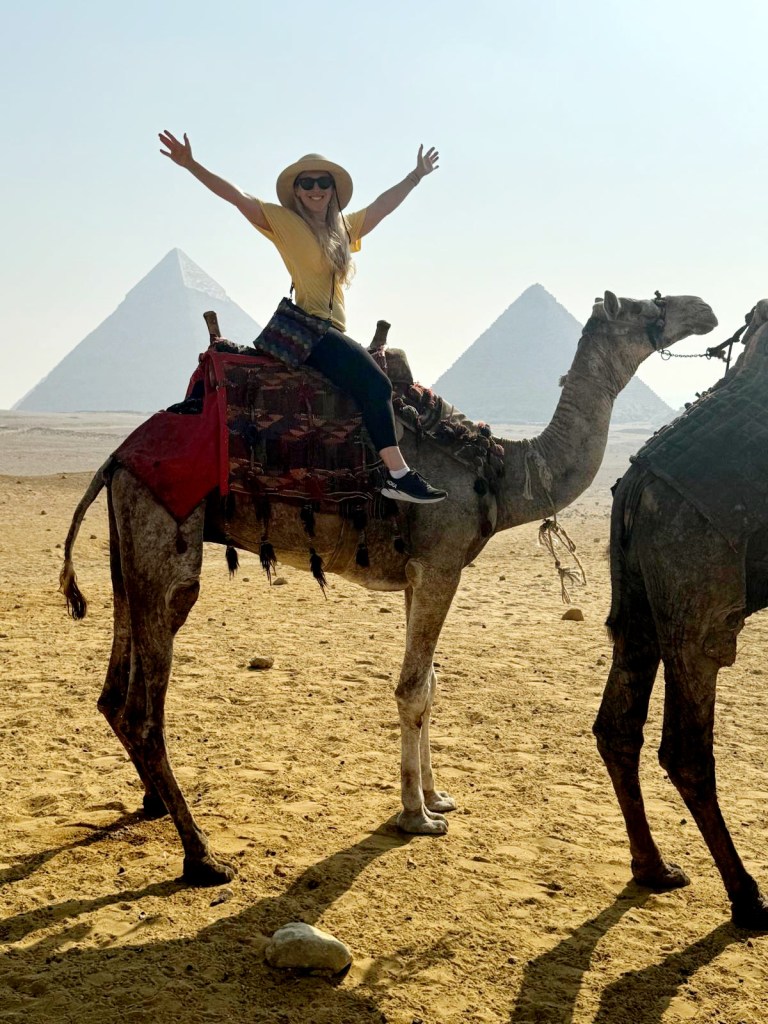


The long, shaggy fur on top of a camel’s body works as shade, as the thin fur elsewhere helps them lose heat. They have wide, flat feet with thick soles that help them walk easily across sand and spread their weight so they don’t sink (much like a snowshoe). Their long, tall legs keep their bodies off the hot sand and allow air to circulate under them.
Camels store energy-rich fat in their humps allowing them to survive for months without eating. And they can drink large amounts of water at once, sometimes up to 32 gallons, and they can retain that water in their bodies until their next big gulp.
Experiencing their height, grace, and adaptations up close was definitely a highlight for your temperate climate loving teachers. This first hand experience of the camel and experience in the Sahara Desert will tie in wonderfully to my 6th grade desert biome unit and adaptations of those organisms that live there.
Second, very early one morning, Linda and I left the group tour and decided to do an extra excursion. We hot air ballooned over the west bank of Luxor. After checking wind speed and direction, to make sure we didn’t end up in the Nile (or at the airport), the hot air balloons blasted heated air into the colorful balloons all around us. Once ours was upright, we quickly jumped into the basket and took off. We floated over the many temples, tombs, farms, and the Sahara Desert in this beautiful area. Just WOW!

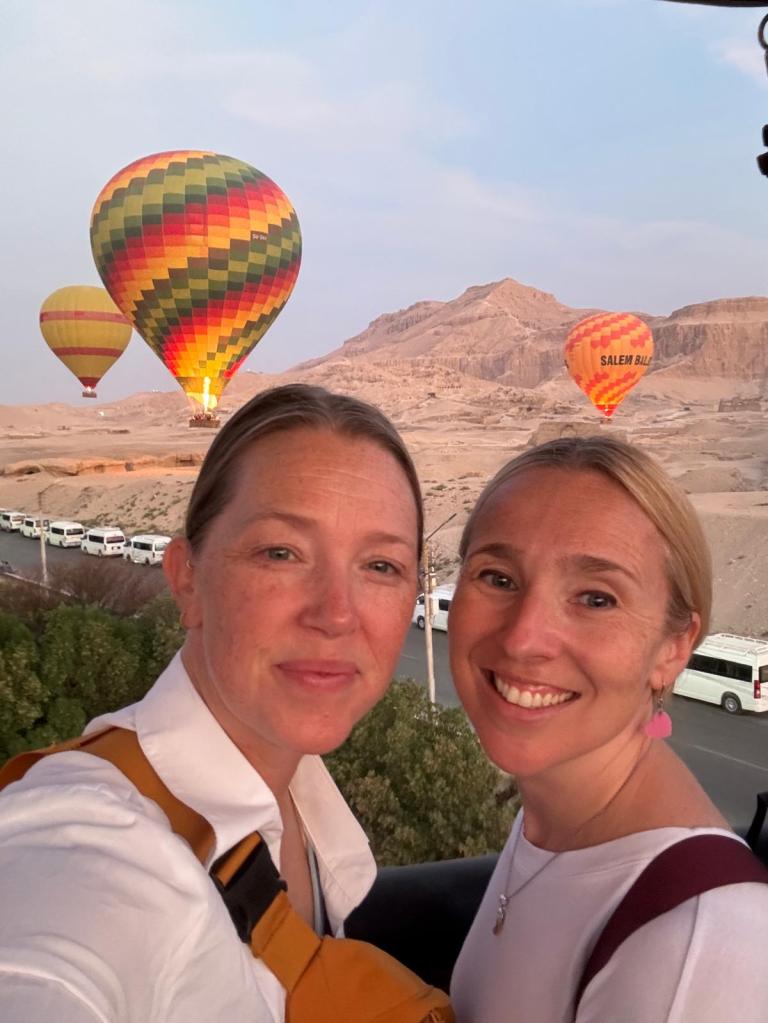

In my physical science course, the 8th graders create hot air balloons to help test the force of buoyancy and see both Archimedes Principle and Charles Law (aka: thermal expansion) to better understand fluid laws in their Chemistry class. Using paper, glue and tape, they engineer their own balloons that they think will create the largest lift when filled with heated air. We were a bit nervous to take part in this, but it was so awesome to see science at work to give us such an amazing experience in such a beautiful space.
If interested in seeing more of what we saw, learned, and wanted to share, checkout the Instagram account: missopetsapenguin.
#SaklanProfessionalDevelopment

 FRIDAY BLOG