
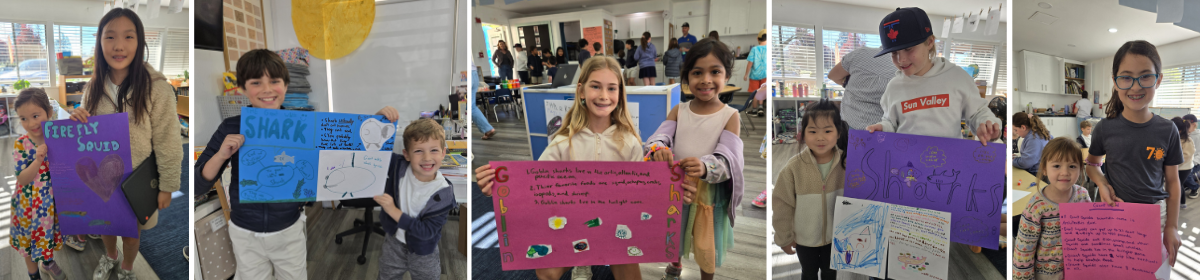
Third graders spent time last week setting up their Science Notebooks, which included an introductory lesson on how to sketch scientifically.
Scientists use sketches to record information for themselves as well as communicate information to others. They often sketch when they are doing field research, observing a plant or animal they cannot take back to the lab. Along with a drawing, a scientific sketch often includes labels and diagrams, questions and explanations.
However, you don’t have to be an artist to create a successful scientific sketch! You simply have to take time, observe closely, and record what you see. Recording what you see is different from drawing the picture you have in your head. Many of us have cartoon-like images in our head of trees, flowers, houses, apples, rabbits, etc. When you set out to sketch a real thing, it’s important to focus on the individual specimen in front of you, rather than the generalized image you carry in your head.
Third graders learned the criteria for a successful scientific sketch through the mnemonic: ABCDE. Scientific sketches should be:
- Accurate
- Big
- Colorful
- Detailed
- Explained
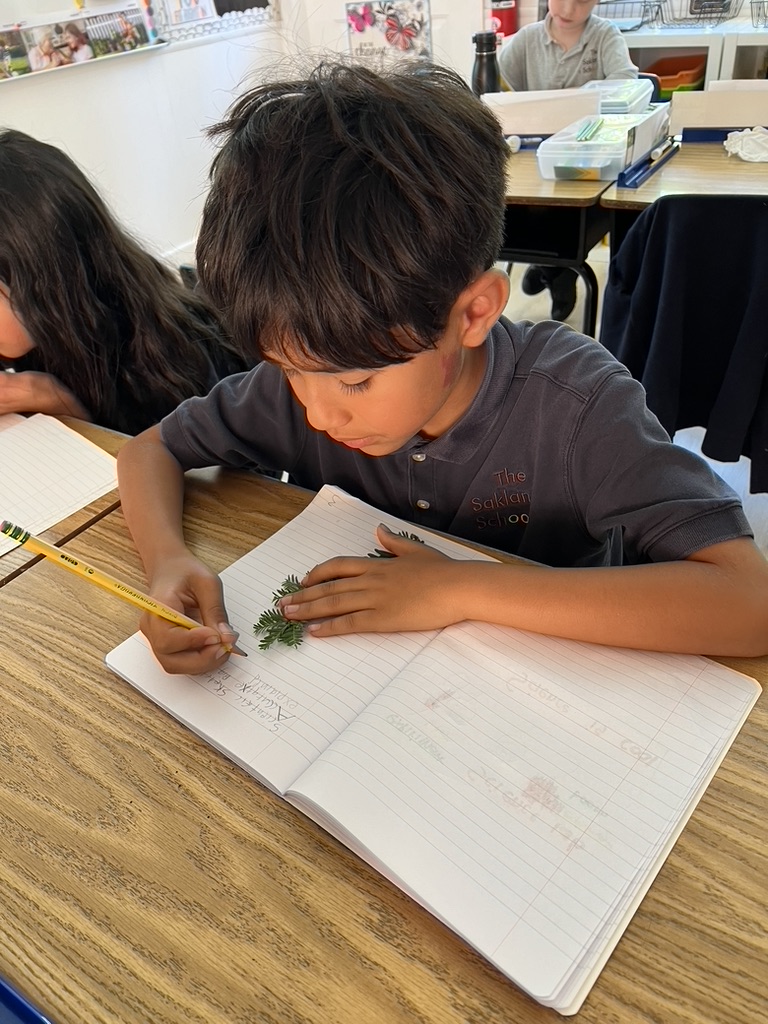
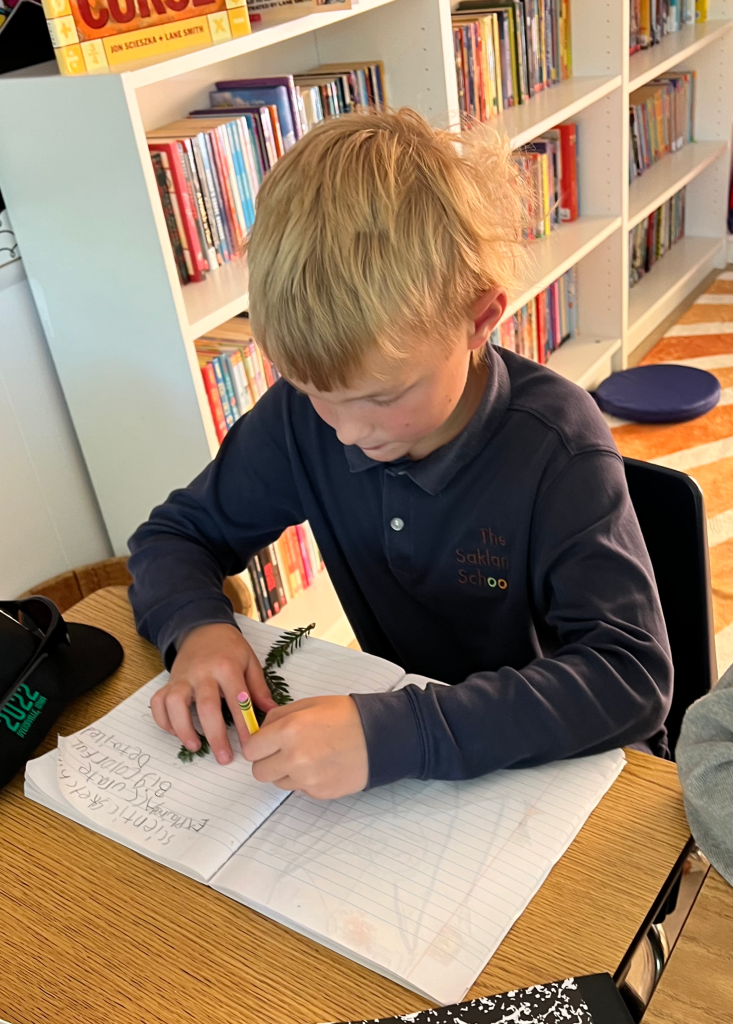
With their new knowledge of what a scientific sketch is, the third graders used their careful observation skills and practiced scientifically sketching a redwood leaf in their journal.



 FRIDAY BLOG