
Alfred and Kobla Ladzekpo came to the United States in the 1960s to teach Ewe music. The Ladzekpos came from a village in the southern Volta region of Ghana called Anyako, an Ewe village. Ewe is one of over 20 languages spoken in Ghana. Ewe music is divided into styles. Each Style has songs (for singing), drum patterns and dance steps. The singing, drumming and dancing together form the musical style.
Alfred Ladzekpo taught at the California Institute of the Arts (Calarts) for over 40 years, and I was fortunate to study with him from 2002-06. He became my mentor and my friend.
Alfred’s main goal with his students at Calarts was to show them how to be an effective musician in his style of music. Ewe music is an oral tradition. Musicians coming from different backgrounds begin a new process of learning through listening. Alfred reveled in every opportunity he had to lecture his students on the importance of listening. Despite the simplicity of the message, every student who embraced this concept came away from Alfred’s class an improved musician.
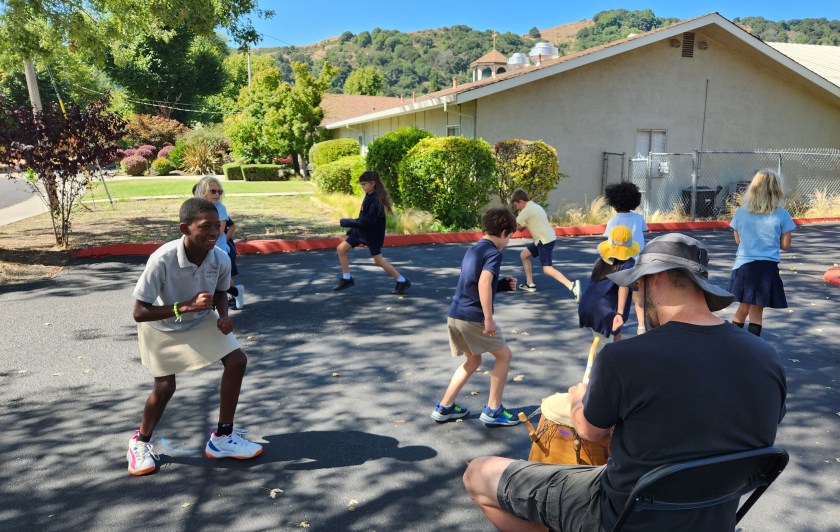
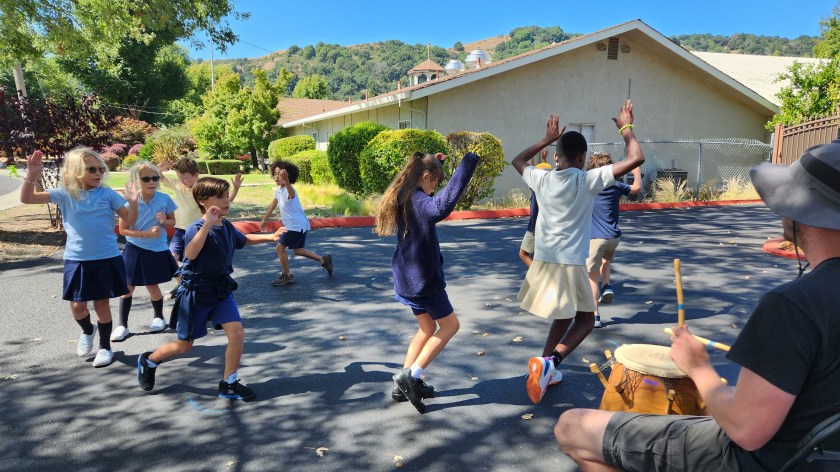
As a young musician my fascination with Ewe music was sparked by my admiration of its construction. Ewe music weaves a complex counterpoint through all of its elements that rival the greatest artforms of humanity. I was enamored with the sophistication of the drumming patterns and the ability for musicians to dialogue through a musical language. The lead drummer is able to direct their ensemble into new dance moves, drumming patterns, or songs,
by playing a call on the drum. Everyone has to listen or you might miss the call!
This felt like a secret language and my friends and I were hooked. We took every opportunity to learn from Alfred and eventually we were helping him teach his classes and performing in his professional ensemble at schools and community events. Later in life I found another beautiful side to the artform.
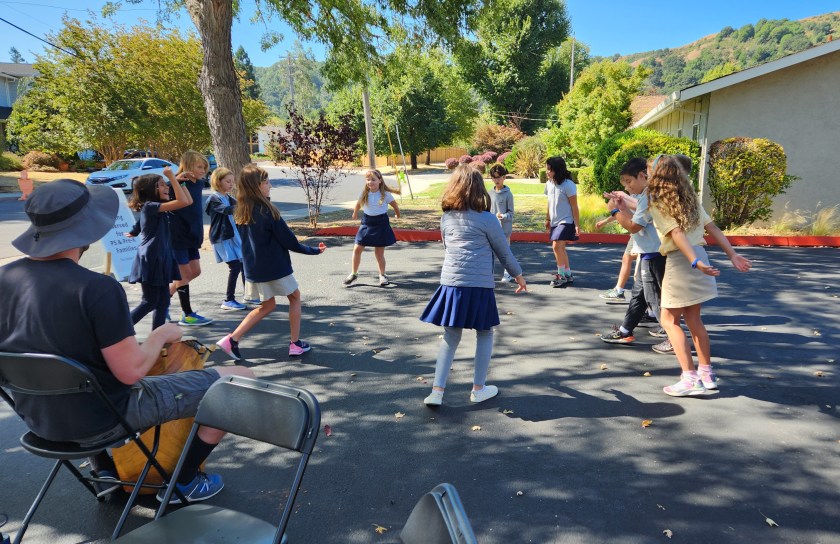
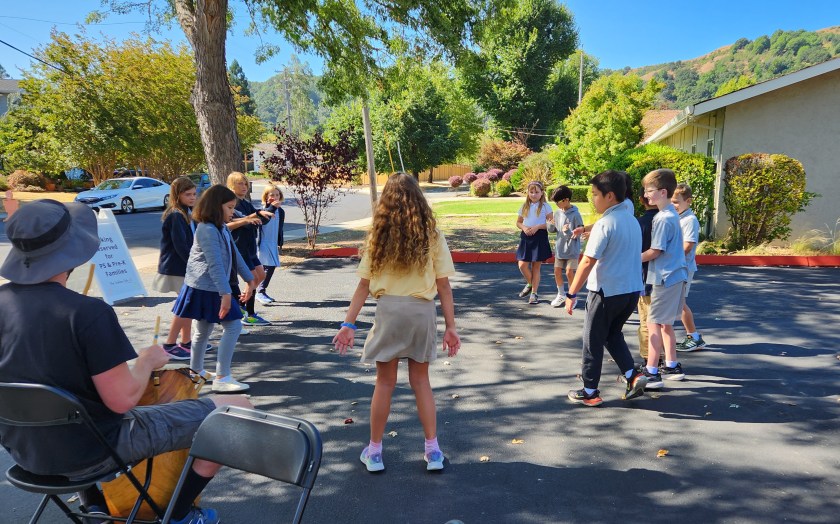
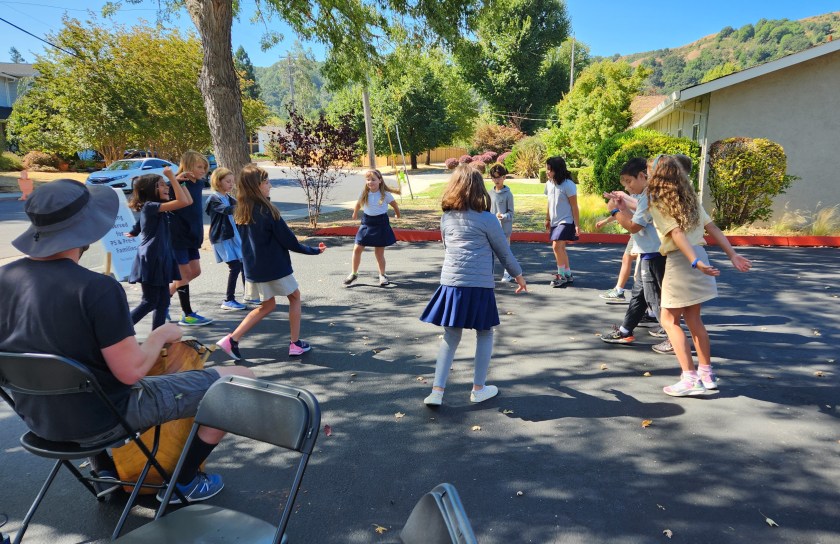
The main function of music in Ewe culture is to promote community. People gather in social groups for musical performances. These groups perform at funerals and weddings and are the backbone of both religious and secular events. This is extremely valuable in our recent culture of social media and social distancing. People are craving interaction and Ewe music is a
world class option for community building.
I teach Ewe music as a celebration of West African brilliance. Through honoring and respecting Ewe culture I have found that we can bring value to our school not only through the acute development of musicianship but through the strengthening of our community.
In community,
Isaac
#SakalanCommunity #SaklanArts

 FRIDAY BLOG